

Choosing the right wireless headphones can feel overwhelming with so many options available today. Two models that often come up in discussions are the Beats Solo 4 and the Marshall Monitor II ANC, but they take completely different approaches to delivering great audio. While both offer wireless convenience, they're designed for different users and situations. Let me break down everything you need to know to make the right choice.
Before diving into specifics, it's worth understanding what makes wireless headphones tick in 2024. The technology has advanced dramatically over the past few years, with improvements in battery chemistry allowing for much longer playback times, better Bluetooth codecs delivering higher quality audio, and sophisticated noise cancellation systems that can adapt to your environment.
When evaluating any wireless headphones, there are several key areas that matter most: sound quality (how good the music actually sounds), noise management (how well they block out distractions), battery performance (how long they last and how quickly they charge), comfort during extended use, and overall value for your money.
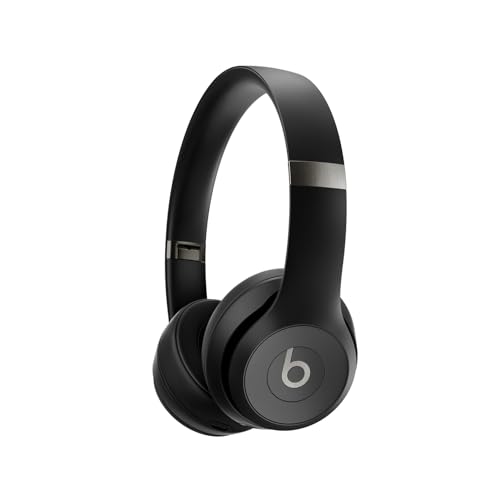
The Beats Solo 4, released in 2024, represents Apple's latest thinking on portable audio with some genuinely impressive technical achievements. Meanwhile, the Marshall Monitor II ANC, which hit the market in 2022, focuses on delivering that classic Marshall sound signature with active noise cancellation for users who need to block out the world.
The Beats Solo 4 marks a significant departure from the bass-heavy sound that Beats was known for in the past. Apple has completely reengineered the audio signature, moving toward what they call a "more neutral" sound profile. This means the bass, midrange, and treble frequencies are more balanced, making these headphones work well across different music genres rather than just hip-hop and electronic music.
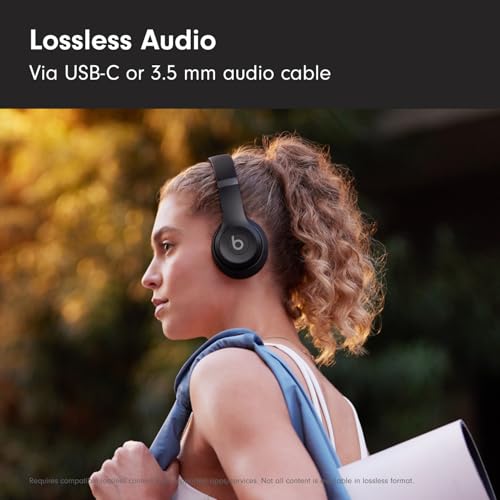
The technical centerpiece is a set of custom-built 40mm transducers (the speakers inside the headphones) that have been designed specifically to minimize what engineers call "electronic artifacts." Think of these as unwanted distortions that can make digital music sound harsh or unnatural. The Beats Solo 4 also includes a built-in DAC (digital-to-analog converter), which is essentially a tiny computer chip that converts the digital music files from your phone into the analog sound waves that your ears actually hear. This built-in DAC means you can experience lossless audio - music files that haven't been compressed and contain all the original recording information - when using either the USB-C or traditional 3.5mm cable connections.
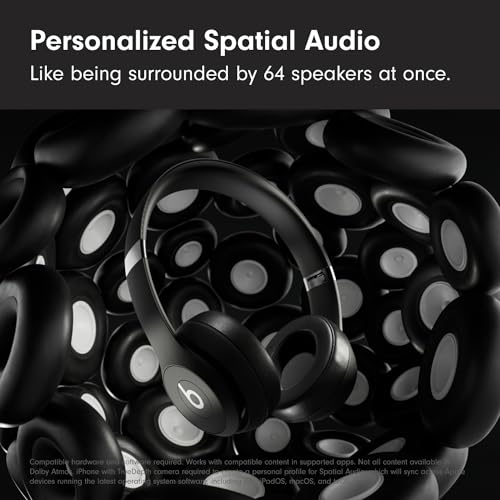
Perhaps most impressively, the Beats Solo 4 includes Spatial Audio with dynamic head tracking. Using built-in gyroscopes and accelerometers (the same sensors that know when you rotate your phone), these headphones can actually track how you move your head and adjust the sound accordingly. It's designed to simulate the experience of sitting in a room surrounded by speakers, and when it works well, it can make music feel much more immersive and three-dimensional.
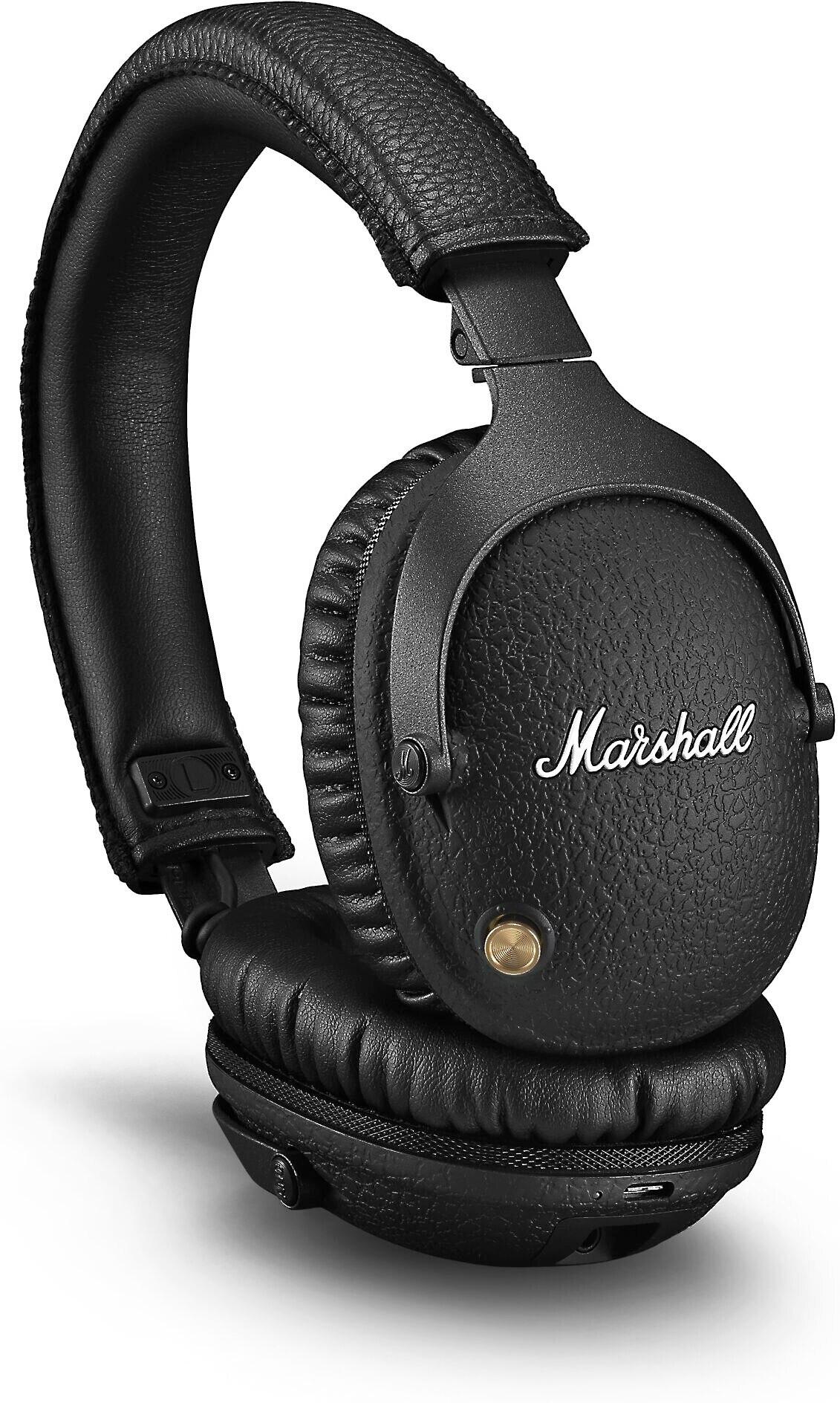
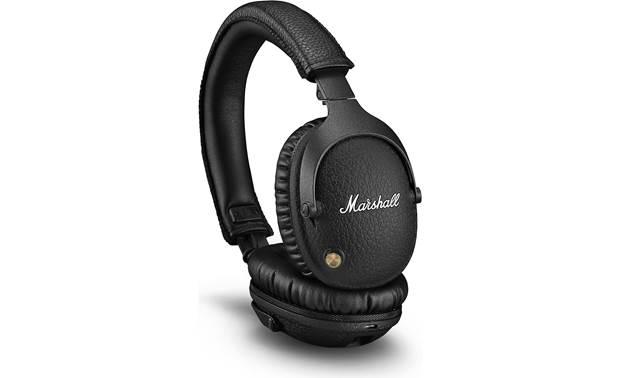
The Marshall Monitor II ANC takes a completely different approach, staying true to Marshall's decades-long reputation for guitar amplifiers and rock music equipment. These headphones are tuned specifically to enhance the kinds of music Marshall is famous for - rock, alternative, and anything with prominent guitar work.
The sound signature is what audiophiles call "warm," meaning it emphasizes the midrange frequencies where vocals and guitars live, while still providing punchy bass and clear treble. This tuning makes guitar solos sound more present and powerful, and vocals cut through the mix with clarity. If you're primarily listening to rock, metal, or folk music, this tuning can be incredibly satisfying.
The Marshall Monitor II ANC also includes customizable EQ (equalizer) settings through both physical controls and a smartphone app. An equalizer lets you boost or reduce specific frequency ranges - so if you want more bass or brighter treble, you can adjust it to your taste. The headphones come with three preset EQ curves that you can cycle through using the M-button on the side.
This is where these two headphones diverge most dramatically, and it's probably the most important factor in your decision.
The Marshall Monitor II ANC includes active noise cancellation (ANC), which is essentially a system that uses microphones to listen to the sounds around you, then generates "anti-noise" - sound waves that are the exact opposite of the ambient noise, canceling it out. It's like having a personal bubble of silence around your ears.
Modern ANC systems work particularly well against consistent, low-frequency sounds like airplane engines, air conditioning units, or the rumble of a train. The Marshall Monitor II ANC offers 10 different levels of noise cancellation that you can adjust through the companion app, plus a "monitoring mode" that actually amplifies ambient sounds when you need to hear what's happening around you.
The Beats Solo 4, on the other hand, relies entirely on passive noise isolation. This means the physical design of the headphones and ear cushions block sound the old-fashioned way - by creating a seal around your ears. While this works reasonably well for some situations, it's nowhere near as effective as active noise cancellation, especially for low-frequency sounds.
This difference is crucial depending on how you plan to use your headphones. If you commute on public transportation, travel frequently, or work in noisy environments, the ANC capability of the Marshall Monitor II ANC could be a game-changer for your listening experience.
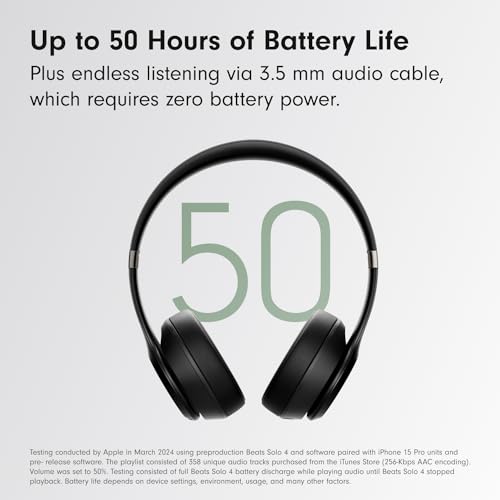
Here's where the Beats Solo 4 absolutely shines. Apple claims up to 50 hours of continuous wireless playback, which is genuinely impressive by any standard. To put this in perspective, you could listen for over two hours every single day for three weeks before needing to charge them.
This exceptional battery life comes from several factors: efficient Bluetooth 5.3 connectivity, optimized power management, and likely a larger battery pack than you'd typically find in on-ear headphones. The Beats Solo 4 also includes what Apple calls "Fast Fuel" charging - 10 minutes plugged in gives you about 5 hours of listening time, which is perfect for those "oh no, my headphones are dead" moments before a long flight.
The Marshall Monitor II ANC offers more typical battery performance: about 30 hours with noise cancellation turned on, or up to 45 hours with ANC disabled. While this is still quite good - many premium headphones struggle to reach 30 hours - it's notably shorter than what Beats offers.
From a practical standpoint, both headphones will easily last through a week of normal use, but the Beats Solo 4's battery advantage means less frequent charging and more peace of mind for extended travel or situations where you can't easily recharge.
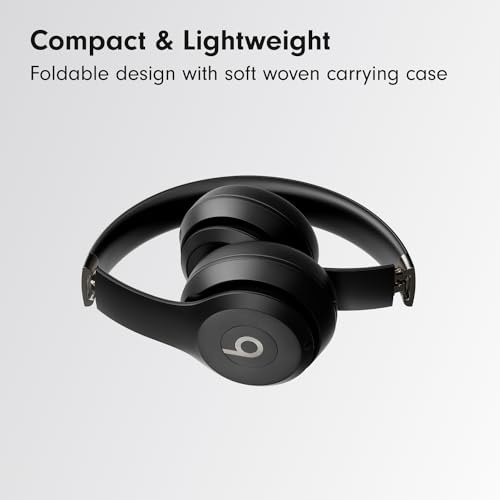
This is where personal preference and intended use really matter. The Beats Solo 4 uses an on-ear design, meaning the ear cushions sit directly on your ears rather than around them. This makes them more compact and portable - they fold up nicely and weigh only about 217 grams. The ear cushions use memory foam that Apple calls "UltraPlush," and they've angled the ear cups to better match the natural shape of your ears.
However, on-ear designs inherently put more pressure on your ears, and most people find them less comfortable for extended listening sessions. After an hour or two, you might start to feel some discomfort or fatigue.
The Marshall Monitor II ANC takes the over-ear approach, with larger ear cups that surround your entire ear. This distributes the headphones' weight around your ears rather than pressing down on them directly. At about 320 grams, they're heavier than the Beats, but most users find over-ear headphones much more comfortable for long listening sessions - we're talking 3+ hours without significant discomfort.
The choice here often comes down to priorities: do you value maximum portability and lighter weight, or do you prioritize comfort for extended use?
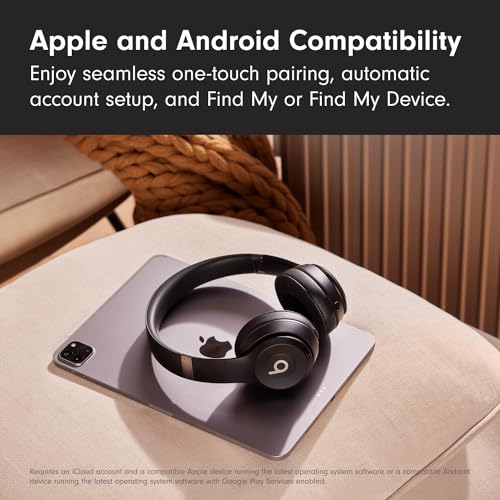
Both headphones offer solid Bluetooth connectivity, but with different strengths. The Beats Solo 4 uses Bluetooth 5.3, the latest standard, which typically provides better range, more stable connections, and improved power efficiency. If you're an iPhone or Mac user, you'll also get seamless integration with Apple's ecosystem - automatic pairing, easy device switching, and integration with Find My if you lose them.
The Marshall Monitor II ANC uses Bluetooth 5.0, which is still perfectly capable for most users. However, it only supports the basic SBC Bluetooth codec, which is somewhat limiting. Audio codecs determine how your music gets compressed and transmitted wirelessly - higher-quality codecs like AAC (which iPhones use) or aptX can deliver noticeably better sound quality over Bluetooth.
This codec limitation means that if you're streaming high-resolution music from services like Tidal or Amazon Music HD, you won't be able to take full advantage of that quality when using the Marshall Monitor II ANC wirelessly.
At the time of writing, there's a significant price difference between these models, with the Beats Solo 4 positioned as the more affordable option while the Marshall Monitor II ANC commands a premium price.
From a features-per-dollar perspective, the Beats Solo 4 offers exceptional value. That 50-hour battery life alone is worth considering - you're getting nearly twice the battery life of many competitors at a lower price point. Add in Spatial Audio, improved sound quality, and solid build quality, and it's an impressive package.
The Marshall Monitor II ANC asks you to pay a premium primarily for the active noise cancellation and over-ear comfort. Whether that premium is worth it depends entirely on how much you value those specific features. If you frequently find yourself in noisy environments or prioritize maximum comfort, the extra cost might be justified. If not, you might feel like you're paying extra for features you won't regularly use.
While both headphones are primarily designed for music, they can work well for movies and TV shows too. The Beats Solo 4's Spatial Audio feature can be particularly impressive for movie watching, creating a more immersive surround sound experience that makes action scenes and music-heavy content more engaging.
However, the Marshall Monitor II ANC's over-ear design and longer comfort factor make it better suited for binge-watching sessions or long gaming periods. The active noise cancellation can also help you stay immersed in content without being distracted by household noise.
For serious home theater use, you'd probably want to consider dedicated over-ear headphones with even larger drivers, but both of these models can certainly handle movie and TV duty when needed.
Let's get into some of the more technical aspects that might influence your decision. The Beats Solo 4's custom 40mm drivers are designed with what Apple calls "improved frequency response" - this means they're tuned to reproduce different frequencies (bass, mids, treble) more accurately and with less distortion.
The Spatial Audio implementation is particularly sophisticated, using real-time head tracking to adjust the stereo imaging as you move. This creates a convincing illusion that the sound is coming from fixed points in space around you, rather than just from the left and right sides of your head.
The Marshall Monitor II ANC focuses its technical prowess on the noise cancellation system. The headphones use multiple microphones to constantly monitor ambient sound and generate appropriate anti-noise signals. The ability to adjust ANC intensity through 10 different levels is particularly useful - sometimes you want full isolation, other times you just want to take the edge off background noise.
After considering all these factors, your choice really comes down to your specific needs and priorities.
Choose the Beats Solo 4 if you value exceptional battery life above almost everything else, want the latest audio technologies like Spatial Audio, prioritize portability and lighter weight, or are heavily invested in Apple's ecosystem. They're also the clear choice if you want premium features at a more accessible price point.
The Marshall Monitor II ANC makes sense if you frequently need to block out environmental noise, prioritize comfort for long listening sessions, love Marshall's rock-oriented sound signature, or specifically want the classic Marshall aesthetic and brand heritage.
Both headphones represent solid engineering and will serve most users well. The Beats Solo 4 pushes boundaries in battery life and modern features, while the Marshall Monitor II ANC delivers time-tested over-ear comfort with effective noise cancellation. Your choice should align with how and where you'll actually use them most often.
| Beats Solo 4 Wireless On-Ear Headphones | Marshall Monitor II ANC Headphones |
|---|---|
| Design Type - Impacts comfort and portability | |
| On-ear, lightweight (217g), foldable for travel | Over-ear, heavier (320g), better for long sessions |
| Active Noise Cancellation - Essential for commuting and noisy environments | |
| None (passive isolation only) | Yes, with 10 adjustable levels plus transparency mode |
| Battery Life - Determines how often you need to charge | |
| Up to 50 hours (industry-leading endurance) | 30 hours with ANC, 45 hours without ANC |
| Sound Signature - Affects which music genres sound best | |
| Neutral, balanced across all genres | Warm Marshall signature, optimized for rock/guitar music |
| Special Audio Features - Modern tech that enhances listening experience | |
| Spatial Audio with head tracking, lossless audio support | Custom EQ presets, Marshall app customization |
| Bluetooth Technology - Affects connection quality and audio fidelity | |
| Bluetooth 5.3 with advanced codec support | Bluetooth 5.0, SBC codec only (limits high-res streaming) |
| Comfort for Extended Use - Critical for long listening sessions | |
| 1-2 hours before ear fatigue (on-ear pressure) | 3+ hours comfortable wear (around-ear design) |
| Fast Charging - Convenience when battery runs low | |
| 10 minutes = 5 hours playbook (Fast Fuel) | 15 minutes = 5 hours playback |
| Ecosystem Integration - Matters if you use specific devices | |
| Seamless Apple integration, Find My support | Universal compatibility, Google Assistant support |
| Price Positioning - Value consideration at time of writing | |
| Budget-friendly with premium features | Premium pricing for ANC and Marshall heritage |
| Best Use Cases - Who should choose each model | |
| Apple users, long battery life priority, portability | Commuters, rock music fans, need noise isolation |
The Beats Solo 4 offers significantly better battery life with up to 50 hours of continuous playback, compared to the Marshall Monitor II ANC which provides 30 hours with noise cancellation enabled or 45 hours without ANC. For users who prioritize long-lasting battery performance, the Beats Solo 4 is the clear winner.
Yes, this is one of the biggest differences between these models. The Marshall Monitor II ANC features active noise cancellation with 10 adjustable levels, while the Beats Solo 4 only offers passive noise isolation. If you need to block out environmental noise for commuting or travel, the Marshall Monitor II ANC is essential.
The Marshall Monitor II ANC is more comfortable for extended use due to its over-ear design that sits around your ears rather than on them. The Beats Solo 4 uses an on-ear design that can cause discomfort after 1-2 hours, while the Marshall Monitor II ANC can be worn comfortably for 3+ hours.
The Marshall Monitor II ANC is specifically tuned for rock music with Marshall's signature warm sound that emphasizes guitar frequencies and vocals. While the Beats Solo 4 offers a more neutral sound that works across all genres, rock and metal fans will likely prefer the Marshall Monitor II ANC's specialized tuning.
The Beats Solo 4 is more portable, weighing only 217 grams compared to the Marshall Monitor II ANC's 320+ grams. The Beats Solo 4 also folds into a more compact size and includes a carrying case, making it ideal for travel and daily commuting.
Both models work with iOS and Android devices, but the Beats Solo 4 offers better integration with Apple devices including seamless pairing, Find My support, and Spatial Audio features. The Marshall Monitor II ANC provides universal compatibility with Google Assistant support but lacks advanced Apple ecosystem features.
Sound quality depends on your preferences. The Beats Solo 4 offers a modern, balanced sound with Spatial Audio technology and lossless audio support, while the Marshall Monitor II ANC provides Marshall's classic warm signature with customizable EQ options. The Beats Solo 4 works better across all music genres, while the Marshall Monitor II ANC excels with rock and guitar-heavy music.
Yes, both models support wired listening. The Beats Solo 4 includes both USB-C and 3.5mm cables and can play audio with zero battery power. The Marshall Monitor II ANC also includes a 3.5mm cable for wired use when the battery is depleted.
Both models offer similar fast charging capabilities. The Beats Solo 4 provides 5 hours of playback from a 10-minute charge, while the Marshall Monitor II ANC offers 5 hours from a 15-minute charge. The Beats Solo 4 has a slight advantage in charging speed.
Both work well for entertainment, but serve different needs. The Beats Solo 4's Spatial Audio creates an immersive surround sound experience for movies, while the Marshall Monitor II ANC's over-ear comfort and noise cancellation make it better for long binge-watching sessions without distractions.
The Beats Solo 4 typically offers better value with premium features like 50-hour battery life and Spatial Audio at a lower price point. The Marshall Monitor II ANC commands a premium for its active noise cancellation and over-ear design, making it worthwhile only if you specifically need those features.
For daily commuting, the Marshall Monitor II ANC is generally better due to its active noise cancellation that blocks out train, bus, and traffic noise. However, if your commute is quiet or you prioritize maximum battery life, the Beats Solo 4's 50-hour battery and lightweight design might be preferable.
We've done our best to create useful and informative comparisons to help you decide what product to buy. Our research uses advanced automated methods to create this comparison and perfection is not possible - please contact us for corrections or questions. These are the sites we've researched in the creation of this article: bestbuy.com - soundguys.com - rtings.com - cnet.com - youtube.com - rtings.com - therunningchannel.com - youtube.com - soundguys.com - rtings.com - beatsbydre.com - kubookstore.com - apple.com - panthertech.fiu.edu - beatsbydre.com - cnet.com - techwelike.com - beatsbydre.com - beatsbydre.com - soundguys.com - androidcentral.com - headphonereview.com - thestyleinspiration.com - headphonecheck.com - versus.com - blog.son-video.com - bhphotovideo.com - bestbuy.com - versus.com - bhphotovideo.com - stereoguide.com - marshall.com - api.bestbuy.com - soundstagesolo.com - marshall.com - youtube.com - youtube.com - electronicexpress.com

Privacy Policy
Terms and Conditions - Affiliate Policy
Home Security
© Copyright 2008-2026.
11816 Inwood Rd #1211, Dallas, TX 75244