

Portable projectors have come a long way from the clunky, dim devices of just a few years ago. Today's models pack impressive technology into compact packages, bringing big-screen entertainment anywhere you need it. Two standout options—the TCL C1 Google TV Portable Projector and the XGIMI Elfin Flip Portable Projector—represent different approaches to portable projection, each with compelling strengths depending on your needs and budget.
Before diving into specifics, it's worth understanding what separates portable projectors from their larger cousins. Traditional home theater projectors prioritize raw brightness and image quality above all else, often requiring ceiling mounts and dedicated dark rooms. Portable projectors make compromises to achieve convenience—they're dimmer but infinitely more flexible.
The key trade-off revolves around brightness versus size. Brightness in projectors is measured in lumens, which indicates how much light the projector can output. Higher lumens mean you can watch in brighter rooms, but they also typically mean larger, heavier, and more expensive devices. Most portable projectors fall between 200-500 lumens, which is adequate for darkened rooms but struggles against ambient light.
Smart features have become equally important. Modern portable projectors essentially function as streaming devices with built-in projection capabilities. This eliminates the need to connect external devices like Roku sticks or Apple TVs, streamlining setup significantly.
Released in 2024, the TCL C1 represents TCL's entry into the portable projector market with a clear value proposition. At the time of writing, it typically sells for significantly less than premium alternatives while delivering a surprisingly complete feature set.
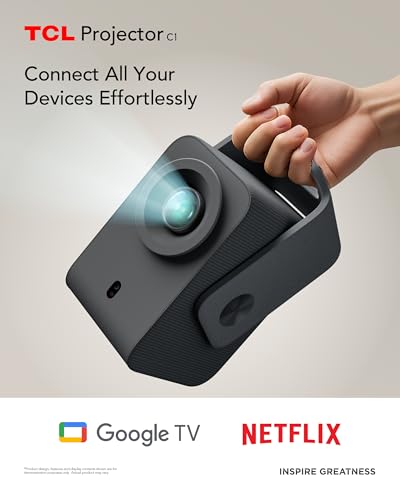
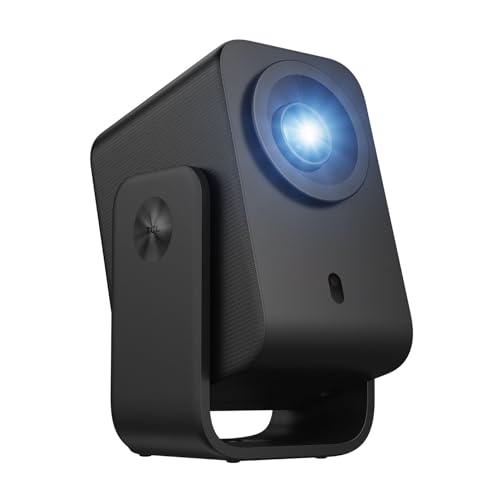
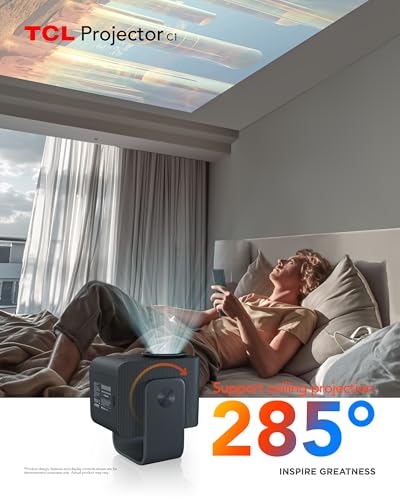
The C1's most distinctive feature is its gimbal design—essentially a built-in rotating mount that allows 285 degrees of adjustment. This means you can project onto walls, ceilings, or any surface within that range without moving the projector itself. The integrated handle makes it easy to carry, and the compact footprint is roughly the size of a CD case stack.
TCL equipped the C1 with a fully sealed optical engine, which prevents dust from entering the lens assembly over time. This might sound mundane, but dust accumulation is a common cause of image degradation in projectors, so this engineering choice suggests TCL prioritized long-term reliability.
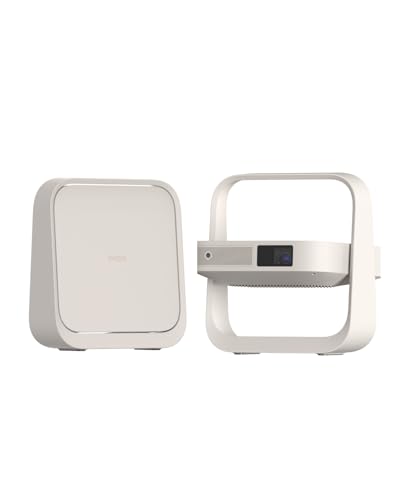
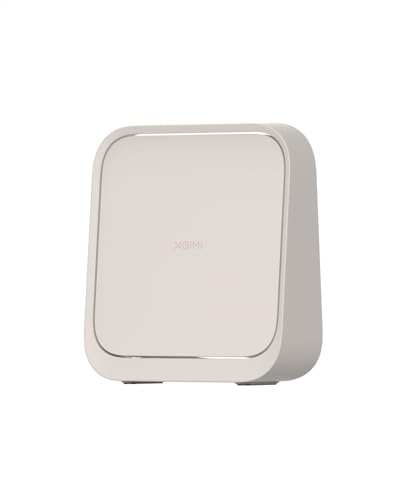
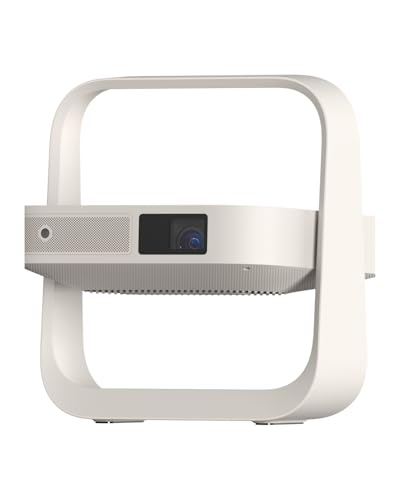
The XGIMI Elfin Flip, also released in 2024, takes a different approach. XGIMI focused on maximizing portability while delivering superior brightness and audio quality. The "flip" in its name refers to its unique folding mechanism—the projector literally flips open like a book, with the stand integrated into the body.
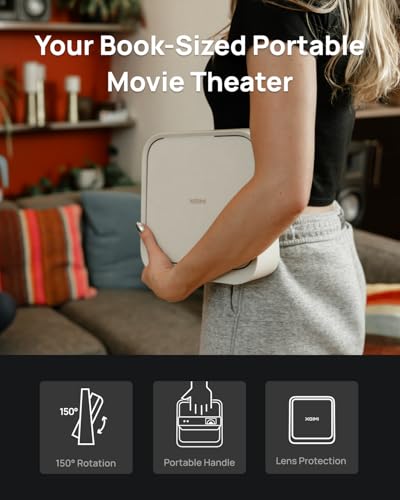
At just 2.5 inches thick, the Elfin Flip genuinely fits in a backpack like a large textbook. When folded, the lens is protected from scratches and dust. The 150-degree rotating stand provides excellent flexibility, though not quite matching the TCL C1's range.
XGIMI has established itself as a premium projector brand, and the Elfin Flip reflects that positioning with higher-quality components and more sophisticated image processing.
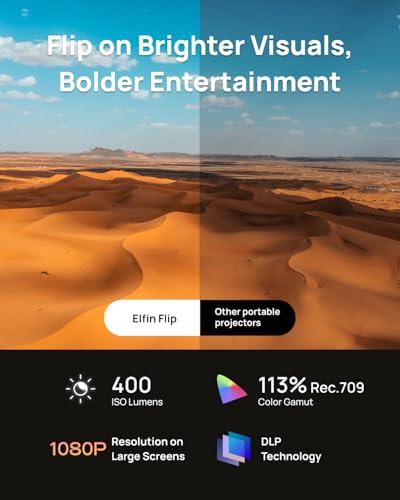
Let's address the elephant in the room: brightness determines where and when you can actually use these projectors. The TCL C1 outputs 230 ISO lumens, while the XGIMI Elfin Flip delivers 400 ISO lumens—a 74% improvement that matters significantly in real-world use.
ISO lumens represent a standardized measurement that provides more accurate real-world brightness than older ANSI lumen ratings. Both projectors use LED light sources, which offer consistent brightness over their rated 25,000-30,000 hour lifespans without the color degradation common in traditional lamp-based projectors.
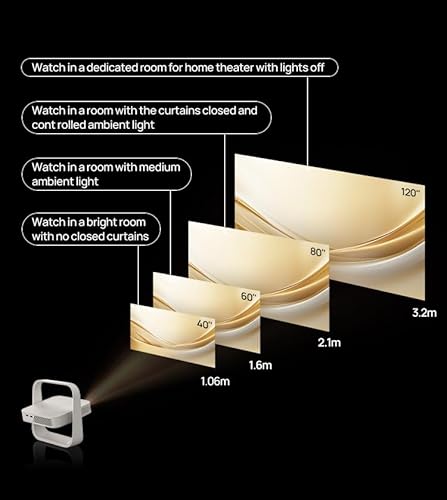
In practice, 230 lumens means the TCL C1 requires a dark room for optimal viewing. You can watch during the day with curtains drawn, but any ambient light washes out the image. The XGIMI Elfin Flip's 400 lumens provides more flexibility—you can leave some lights on or watch with partially open blinds, though it still struggles in bright rooms.
For home theater use, both projectors work best as evening entertainment devices. Neither replaces a TV for daytime viewing, but that's typical for this category. The brightness difference becomes most apparent in partially lit environments where the Elfin Flip remains watchable while the C1 becomes difficult to see.
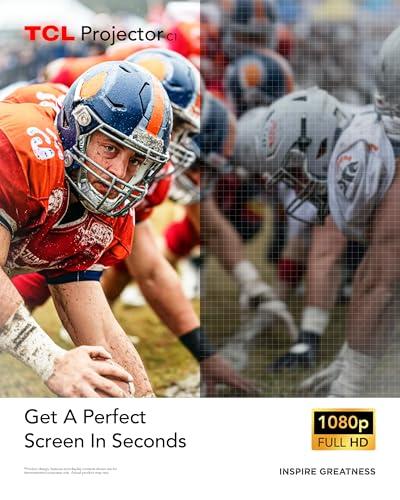
Both projectors offer native 1080p resolution, which means they display true high-definition content without upscaling. This resolution remains the sweet spot for portable projectors—4K would be nice but significantly increases cost and power consumption.
The TCL C1 employs LCD technology with LED backlighting, while the XGIMI Elfin Flip uses DLP (Digital Light Processing) technology. DLP typically offers better contrast ratios and sharper images, especially for fast motion, but LCD can provide more accurate colors. In practice, both technologies work well for this application.
The Elfin Flip supports HDR10 (High Dynamic Range), which enhances contrast between bright and dark areas for more realistic images. It also covers 113% of the Rec.709 color gamut—essentially meaning it can display more vivid colors than standard displays. The TCL C1 lacks HDR support but includes TCL's TrueHue technology, which optimizes colors frame-by-frame.
Based on user reports, the XGIMI Elfin Flip delivers more vibrant colors and better contrast, particularly noticeable in dark scenes. The TCL C1 provides competent image quality that impresses given its price point, with accurate if less saturated colors.
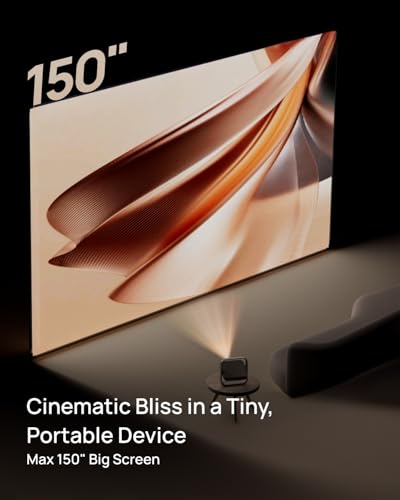
For screen size, both projectors handle 40-120 inch images well, with the Elfin Flip extending to 150 inches. Larger isn't always better with portable projectors—the sweet spot typically falls around 80-100 inches where brightness and sharpness balance optimally.
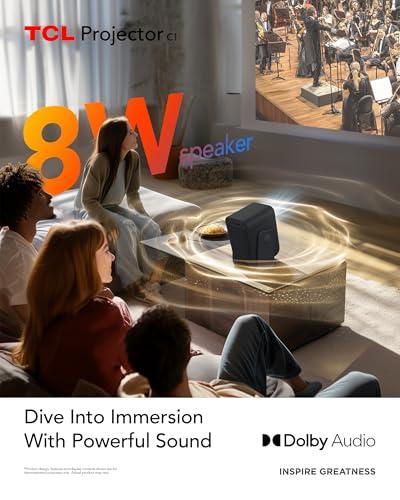
Audio represents another significant difference between these projectors. The TCL C1 includes a single 8-watt Dolby Audio speaker, while the XGIMI Elfin Flip features dual 3-watt Harman Kardon speakers.
Despite lower total wattage, the Elfin Flip's dual speakers provide better stereo separation and more refined sound thanks to Harman Kardon's audio tuning expertise. User feedback consistently rates its audio quality higher, with clearer dialogue and better balanced sound across frequencies.
The C1's single speaker produces adequate volume for small rooms but lacks the spatial audio experience of stereo speakers. However, TCL cleverly programmed the projector to function as a Bluetooth speaker when not displaying content, adding versatility.
Both projectors include 3.5mm audio outputs and Bluetooth connectivity for external speakers or headphones. For serious home theater use, external audio remains preferable, but the Elfin Flip's built-in speakers reduce that necessity more effectively.
This category showcases each manufacturer's different philosophies. The TCL C1 runs Google TV, essentially the same platform found on premium smart TVs. This provides access to over 10,000 apps, including officially certified Netflix—something many projectors lack due to licensing restrictions.
Google TV's interface excels at content discovery, using your viewing history to recommend movies and shows across different streaming services. Voice control through Google Assistant works reliably, and Chromecast support enables easy casting from mobile devices.
The XGIMI Elfin Flip uses Android TV, which offers broader app compatibility through the Google Play Store but with a less refined interface. It includes pre-installed popular streaming apps and supports screen mirroring through Miracast and Chromecast.
Both platforms work well, but Google TV feels more polished and integrated. The TCL C1's Netflix certification particularly matters if that's your primary streaming service, as many projectors require workarounds or external devices for Netflix access.
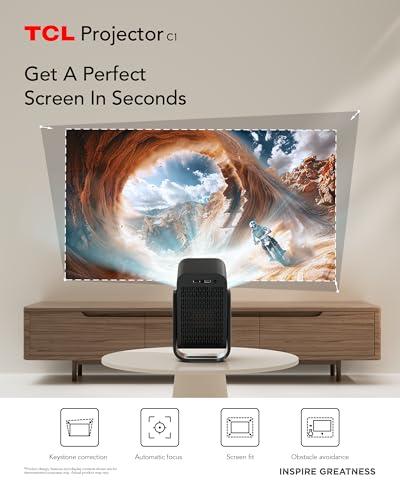
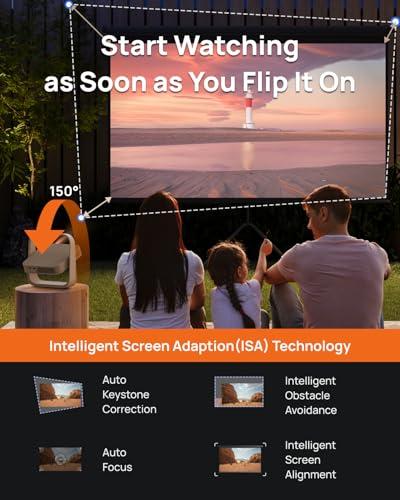
Both projectors excel at automated setup—a crucial advantage over older models that required manual focus and keystone adjustments. Auto-focus uses sensors to achieve sharp images instantly, while keystone correction ensures rectangular pictures even when projecting from angles.
The TCL C1 includes obstacle avoidance that detects objects in the projection path and adjusts the image accordingly. Its gimbal design makes positioning intuitive—just point and project.
The XGIMI Elfin Flip features Intelligent Screen Adaptation (ISA), which goes beyond basic auto-adjustments to optimize the entire image automatically. This includes detecting projection surfaces and adjusting brightness and color accordingly.
Both projectors achieve the "plug and play" experience that makes portable projectors appealing to non-technical users. Setup typically takes under 30 seconds from power-on to viewing.
While both qualify as portable, they approach it differently. The XGIMI Elfin Flip prioritizes pure portability with its ultra-slim profile and lighter weight. It genuinely fits in laptop bags and backpacks without dominating space.
The TCL C1 trades some portability for projection flexibility. Its gimbal mechanism and integrated handle make it easy to carry and position, but the bulkier design requires more bag space.
For frequent travelers or users with limited storage, the Elfin Flip's form factor provides clear advantages. For home use where the projector stays in one location most of the time, the C1's projection flexibility matters more than compact size.
At the time of writing, the TCL C1 typically costs significantly less than the XGIMI Elfin Flip—often 40-60% less depending on sales and availability. This price difference fundamentally changes the value equation.
The C1 delivers approximately 80% of the Elfin Flip's performance at a much lower price point. For budget-conscious buyers or first-time projector owners, this represents exceptional value. You get a complete smart TV experience, adequate brightness for dark rooms, and thoughtful design features.
The Elfin Flip commands its premium through meaningful improvements: 74% more brightness, superior audio quality, better portability, and enhanced color reproduction. These improvements matter, but whether they justify the price difference depends on your specific needs and budget.
Neither projector replaces a dedicated home theater setup, but both can create engaging large-screen experiences in appropriate environments. The key is setting realistic expectations and optimizing your viewing space.
For dedicated home theater use, consider the XGIMI Elfin Flip if your budget allows. Its higher brightness and better contrast provide more cinema-like experiences, while the superior audio reduces reliance on external speakers for casual viewing.
The TCL C1 works well for bedroom home theaters or secondary viewing spaces where the budget is tight. Its ceiling projection capability even enables unique installations like overhead bedroom entertainment.
Both projectors benefit from proper screen surfaces rather than blank walls. A quality projector screen or even a white sheet significantly improves image quality and perceived brightness.
Both projectors handle gaming adequately, though neither matches dedicated gaming displays for competitive play. Input lag—the delay between controller input and screen response—remains reasonable for casual gaming on both models.
The XGIMI Elfin Flip includes a dedicated Game Mode that optimizes settings for reduced latency and enhanced responsiveness. Console gaming works well on both projectors, with the large screen size providing an immersive experience that smaller displays can't match.
For retro gaming or party games, both projectors excel. The large image size enhances multiplayer experiences, and the easy setup means you can quickly create gaming experiences anywhere.
LED light sources in both projectors are rated for 25,000-30,000 hours of use, representing roughly 10-15 years of typical home use. Unlike traditional lamp-based projectors, LED sources maintain consistent brightness throughout their lifespan without periodic replacements.
The TCL C1's sealed optical engine provides long-term advantages by preventing dust accumulation that degrades image quality over time. This engineering choice suggests TCL prioritized durability over initial cost savings.
Both projectors should receive software updates that add features and improve performance over time, though Google TV on the C1 typically receives more frequent updates due to Google's active development.
The decision ultimately depends on your priorities and budget. Choose the TCL C1 Google TV Portable Projector if you're entering the portable projector market for the first time, prioritize value over peak performance, primarily watch in dark environments, or want the most comprehensive smart TV experience with Google TV and Netflix certification.
The XGIMI Elfin Flip Portable Projector makes sense if you need better brightness for partially lit rooms, frequently travel with your projector, prioritize audio quality, or want the latest portable projector technology with premium build quality.
Both projectors represent the current state of portable projection technology—automated setup, smart streaming integration, and surprisingly good image quality in compact packages. The TCL C1 proves you don't need to spend premium prices for a satisfying experience, while the XGIMI Elfin Flip demonstrates what's possible when budget constraints are relaxed.
For most people, the TCL C1 provides the better starting point. Its combination of features, performance, and value creates an excellent introduction to portable projection. Users who discover they need more brightness or portability can always upgrade later, while those who start with premium models rarely need to downgrade.
The portable projector market continues evolving rapidly, with manufacturers improving brightness, reducing size, and adding features annually. Both the TCL C1 and XGIMI Elfin Flip represent solid choices that should remain relevant for years, providing big-screen entertainment wherever you need it.
| TCL C1 Google TV Portable Projector | XGIMI Elfin Flip Portable Projector |
|---|---|
| Brightness - Most critical spec for determining where you can watch | |
| 230 ISO lumens (requires dark rooms) | 400 ISO lumens (works in partially lit rooms, 74% brighter) |
| Display Technology - Affects image sharpness and color | |
| LCD with LED light source | DLP with 0.23" DMD chip (typically sharper motion) |
| Resolution - Both deliver crisp HD content | |
| Native 1080p with 4K input support | Native 1080p Full HD |
| Color Performance - Impact on image vibrancy | |
| TrueHue frame-by-frame optimization | HDR10 support + 113% Rec.709 color gamut (more vivid) |
| Audio Quality - Determines if external speakers needed | |
| Single 8W Dolby Audio speaker | Dual 3W Harman Kardon speakers (better stereo, premium tuning) |
| Smart TV Platform - Affects app selection and ease of use | |
| Google TV with Netflix certification (10,000+ apps) | Android TV with Google Play Store access |
| Portability Design - How easy to carry and set up | |
| 3.9 lbs with gimbal handle, CD case footprint | 2.6 lbs, book-sized (2.5" thin), flip mechanism |
| Projection Flexibility - Range of positioning options | |
| 285° gimbal rotation (including ceiling projection) | 150° integrated stand rotation |
| Screen Size Range - Flexibility for different rooms | |
| 40-120 inches optimal | 80-150 inches (60-120 recommended) |
| Auto Setup Features - How quickly you can start watching | |
| Auto-focus, keystone correction, obstacle avoidance | Auto-focus, keystone, ISA (Intelligent Screen Adaptation) |
| Connectivity Options - Versatility for different devices | |
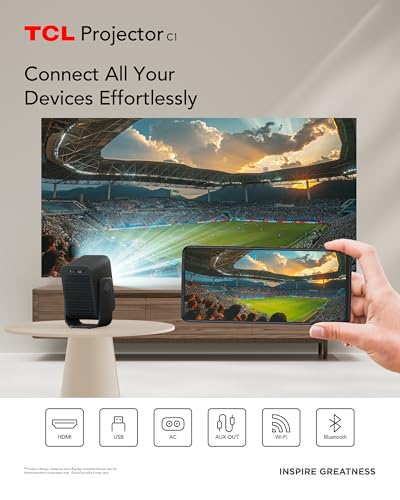
| HDMI 2.1, USB-A, Wi-Fi 5, Bluetooth 5.1, 3.5mm out | HDMI, USB, Wi-Fi 5, Bluetooth 5.1 |
| Lamp Life - Long-term reliability and replacement costs | |
| 30,000 hours LED (no replacement needed) | 25,000 hours LED (no replacement needed) |
| Unique Features - Standout capabilities | |
| Fully sealed optical engine, Bluetooth speaker mode | Flip design with lens protection, Game Mode |
| Best For - Ideal use cases | |
| Budget-conscious buyers, dark room viewing, Google TV fans | Travel use, partially lit rooms, premium audio priority |
The XGIMI Elfin Flip Portable Projector is significantly brighter at 400 ISO lumens compared to the TCL C1 Google TV Portable Projector at 230 ISO lumens. This 74% brightness advantage means the XGIMI Elfin Flip can handle partially lit rooms better, while the TCL C1 requires darker environments for optimal viewing.
The TCL C1 Google TV Portable Projector provides exceptional value with Google TV integration, Netflix certification, and solid performance at a budget-friendly price point. While the XGIMI Elfin Flip Portable Projector offers superior brightness and audio quality, the TCL C1 delivers about 80% of the performance for significantly less cost.
The XGIMI Elfin Flip Portable Projector features dual 3W Harman Kardon speakers that provide better stereo separation and premium audio tuning. The TCL C1 Google TV Portable Projector has a single 8W Dolby Audio speaker that's adequate for casual viewing but lacks the refined sound quality of the Elfin Flip.
The XGIMI Elfin Flip Portable Projector wins for pure portability with its ultra-slim 2.5-inch profile and lighter 2.6-pound weight that fits easily in backpacks. The TCL C1 Google TV Portable Projector is bulkier at 3.9 pounds but offers more projection flexibility with its 285° gimbal design.
Both projectors can create engaging home theater experiences in dark rooms. The XGIMI Elfin Flip Portable Projector provides better contrast and brightness for more cinema-like viewing, while the TCL C1 Google TV Portable Projector offers excellent value for bedroom or secondary home theater setups with its ceiling projection capability.
The TCL C1 Google TV Portable Projector excels with its Google TV platform, offering Netflix certification and access to over 10,000 apps with superior content recommendations. The XGIMI Elfin Flip Portable Projector uses Android TV with Google Play Store access, but the TCL C1's interface is more polished and integrated.
Both the TCL C1 Google TV Portable Projector and XGIMI Elfin Flip Portable Projector work adequately for casual gaming. The Elfin Flip includes a dedicated Game Mode for optimized performance, while both projectors offer low enough input lag for console gaming on large screens.
The XGIMI Elfin Flip Portable Projector delivers superior image quality with DLP technology, HDR10 support, and 113% Rec.709 color coverage for more vibrant colors and better contrast. The TCL C1 Google TV Portable Projector provides competent image quality with accurate colors through TrueHue technology, impressive for its price range.
The TCL C1 Google TV Portable Projector handles 40-120 inch screens optimally, while the XGIMI Elfin Flip Portable Projector supports 80-150 inches with 60-120 inches recommended. Both projectors work best in the 80-100 inch range where brightness and sharpness balance effectively.
Both the TCL C1 Google TV Portable Projector and XGIMI Elfin Flip Portable Projector excel at automated setup with auto-focus, keystone correction, and obstacle avoidance. The TCL C1's gimbal design makes positioning intuitive, while the Elfin Flip's Intelligent Screen Adaptation provides slightly more sophisticated automation.
The XGIMI Elfin Flip Portable Projector reduces the need for external speakers with its superior Harman Kardon audio system suitable for small to medium rooms. The TCL C1 Google TV Portable Projector works for casual viewing but benefits more from external audio for serious home theater use.
The TCL C1 Google TV Portable Projector makes an excellent first portable projector with its combination of affordability, complete Google TV ecosystem, and solid performance in dark rooms. Choose the XGIMI Elfin Flip Portable Projector if you need better brightness, frequently travel with your projector, or prioritize premium audio quality over budget considerations.
We've done our best to create useful and informative comparisons to help you decide what product to buy. Our research uses advanced automated methods to create this comparison and perfection is not possible - please contact us for corrections or questions. These are the sites we've researched in the creation of this article: youtube.com - thegadgetflow.com - notebookcheck.net - shopabunda.com - youtube.com - youtube.com - youtube.com - youtube.com - tcl.com - androidauthority.com - manuals.plus - westcoast.co.uk - us.xgimi.com - projectorcentral.com - tvsbook.com - us.xgimi.com - bikmantech.com - projectorreviews.com - tvsbook.com - us.xgimi.com - youtube.com - youtube.com - richersounds.com - us.xgimi.com - youtube.com - walmart.com - global.xgimi.com - youtube.com - global.xgimi.com - us.xgimi.com

Privacy Policy
Terms and Conditions - Affiliate Policy
Home Security
© Copyright 2008-2026.
11816 Inwood Rd #1211, Dallas, TX 75244