

The portable projector market has exploded in recent years, transforming from clunky, dim devices into surprisingly capable entertainment hubs. These compact units promise big-screen experiences without the complexity of traditional home theater setups, but choosing the right one requires understanding some key trade-offs. Today we're comparing two popular options: the budget-focused TCL C1 Google TV Portable Projector and the premium Samsung Freestyle 2nd Gen Smart Projector.
Before diving into specifics, let's establish what makes these devices tick. Unlike traditional projectors that require separate streaming devices, portable smart projectors integrate everything into one unit—the projection system, speakers, and smart TV platform. Think of them as all-in-one entertainment systems that happen to project onto walls instead of having built-in screens.
The "smart" part refers to built-in operating systems (like Android TV or Samsung's Tizen) that provide direct access to Netflix, YouTube, and other streaming apps. This eliminates the cable mess and complexity of connecting external devices, though it also means you're dependent on the projector's processing power and app support.
The most crucial limitation to understand upfront: brightness. While a decent TV might output 400-600 nits of brightness, portable projectors typically manage only 200-300 lumens—roughly equivalent to a dim table lamp. This means they work best in dark rooms, making them ideal for movie nights but poor for daytime use or brightly lit spaces.
The TCL C1 represents the budget-conscious approach to portable projection. Released in the early 2020s, it capitalizes on TCL's TV manufacturing expertise and Google's robust streaming platform. TCL has steadily improved their projectors' color accuracy and smart features while maintaining aggressive pricing.
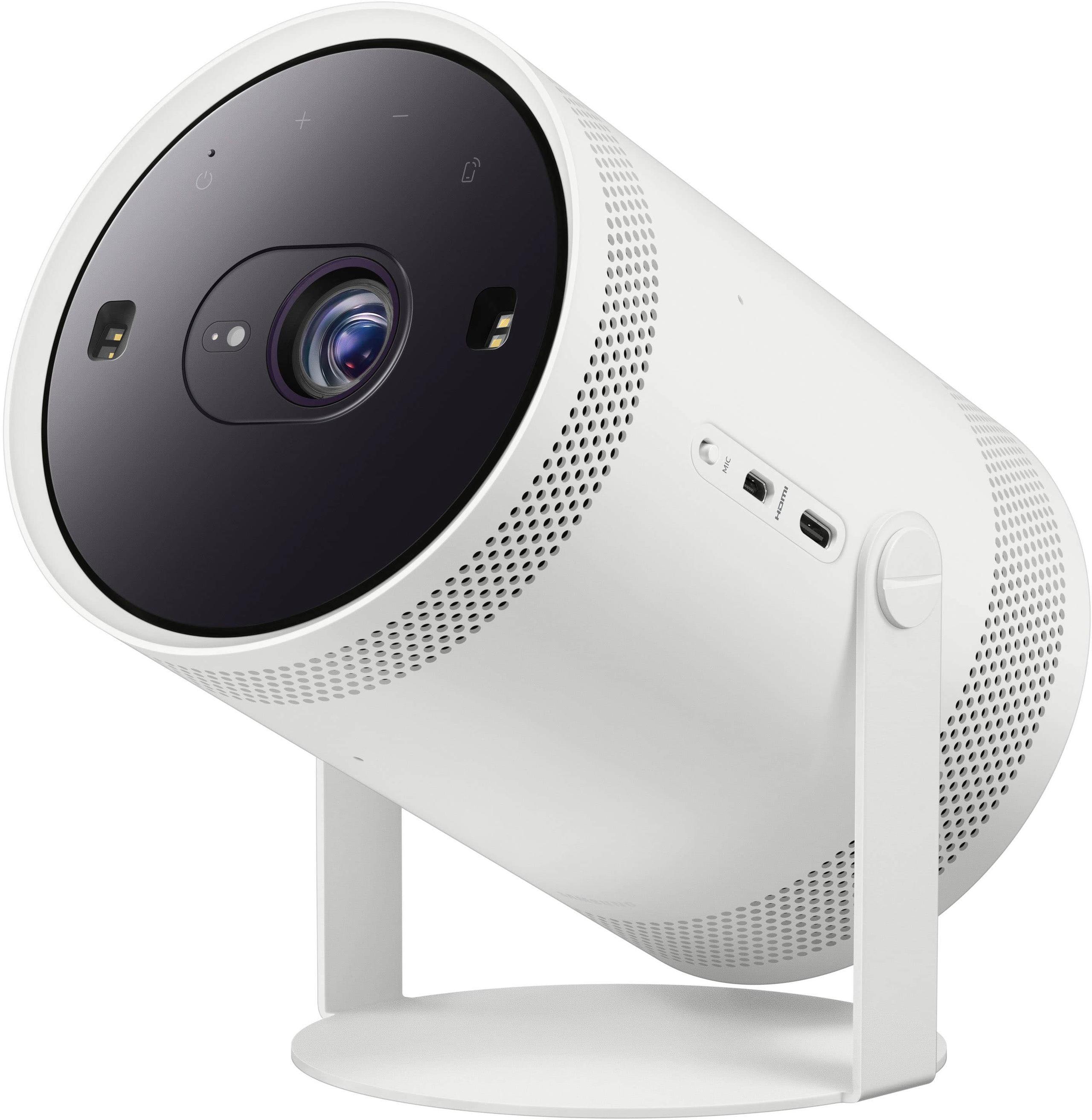
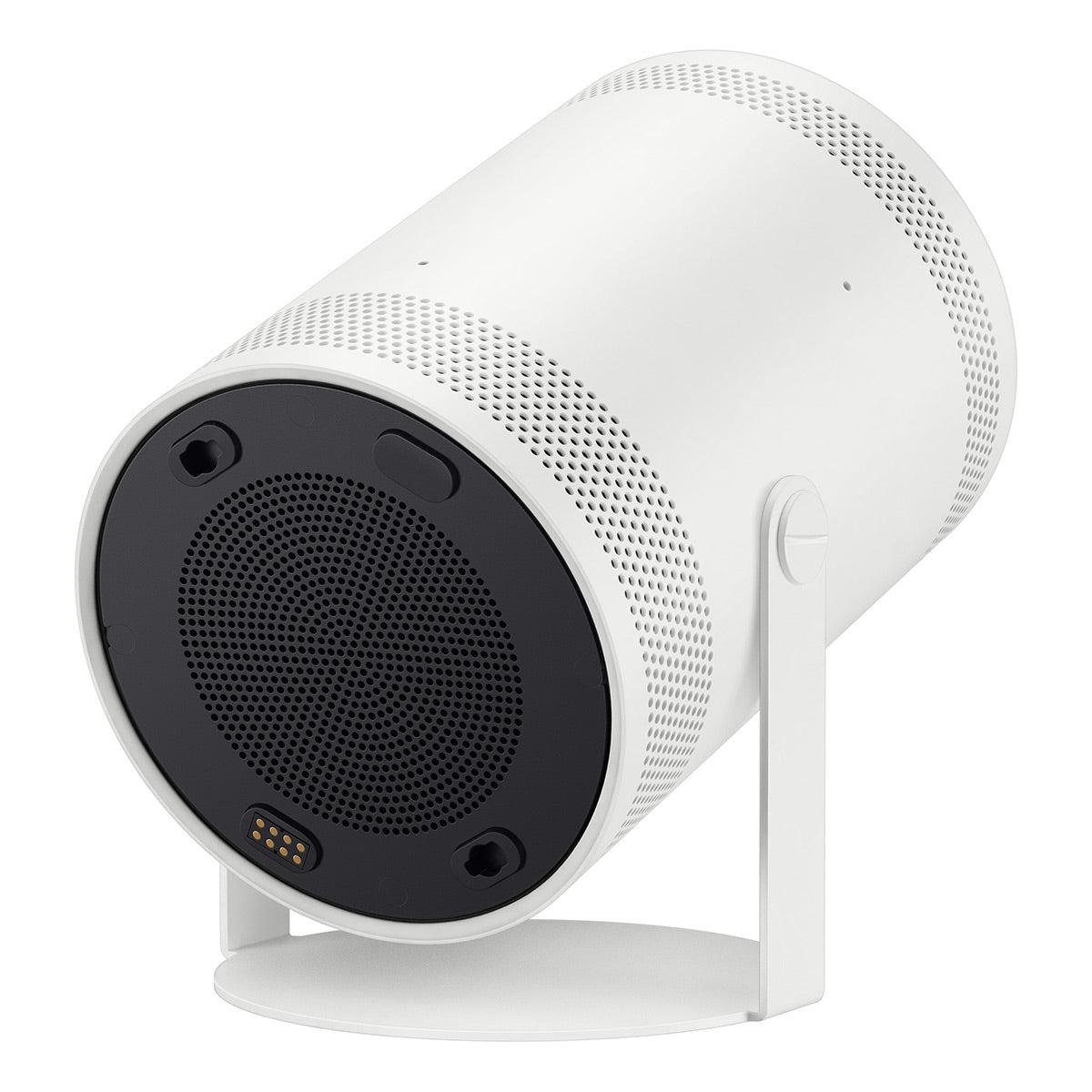
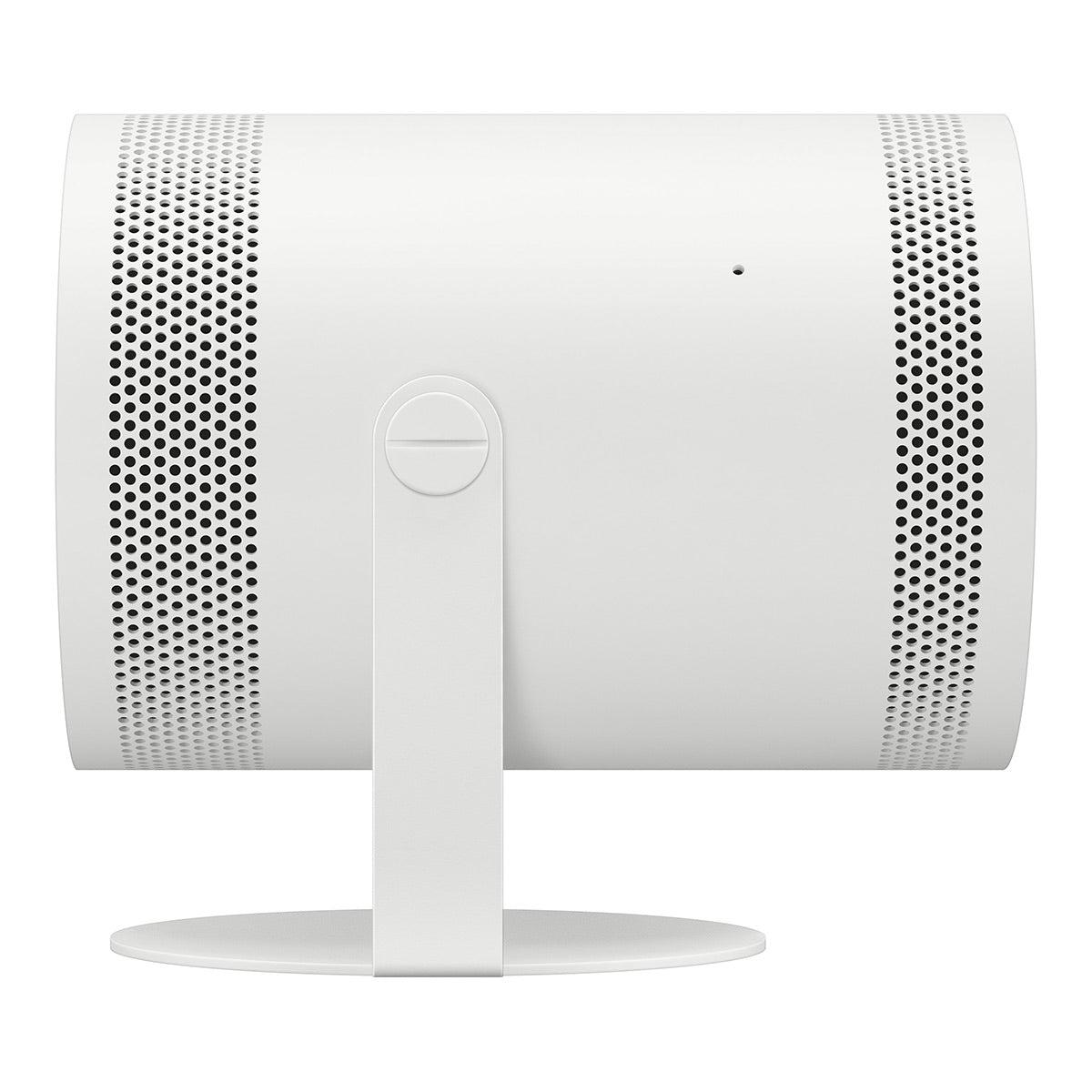
Samsung's approach differs significantly. The Freestyle 2nd Gen, launched in 2023 as a successor to the 2022 original, prioritizes innovative design and premium positioning. Samsung redesigned the entire form factor around a cylindrical body with a rotating cradle—a bold departure from traditional boxy projectors.
Since these devices launched, the portable projector market has seen improvements in color processing, automatic setup features, and wireless connectivity. Both projectors benefit from these advances, though they implement them differently.
Brightness: The Make-or-Break Specification
Both projectors claim around 230 lumens, though they use different measurement standards. The TCL C1 specifies 230 ISO lumens while the Samsung Freestyle 2nd Gen uses 230 ANSI lumens. Without getting too deep into measurement technicalities, both deliver similar real-world brightness—enough for dark-room viewing but inadequate for ambient light.
In practical terms, you'll need to dim the lights significantly for either projector. Our research into user experiences consistently shows both work well for evening movie watching but struggle during daytime use, even with curtains drawn. This brightness limitation is the single biggest constraint on where and when you can use these devices.
Resolution and Sharpness
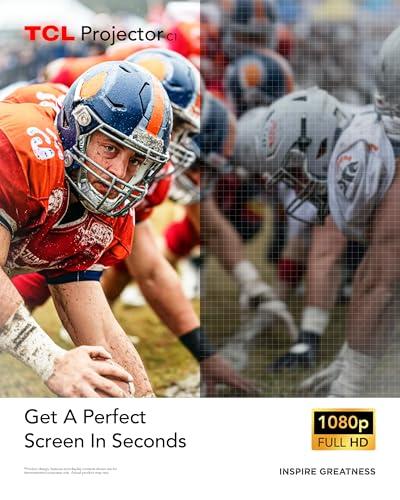
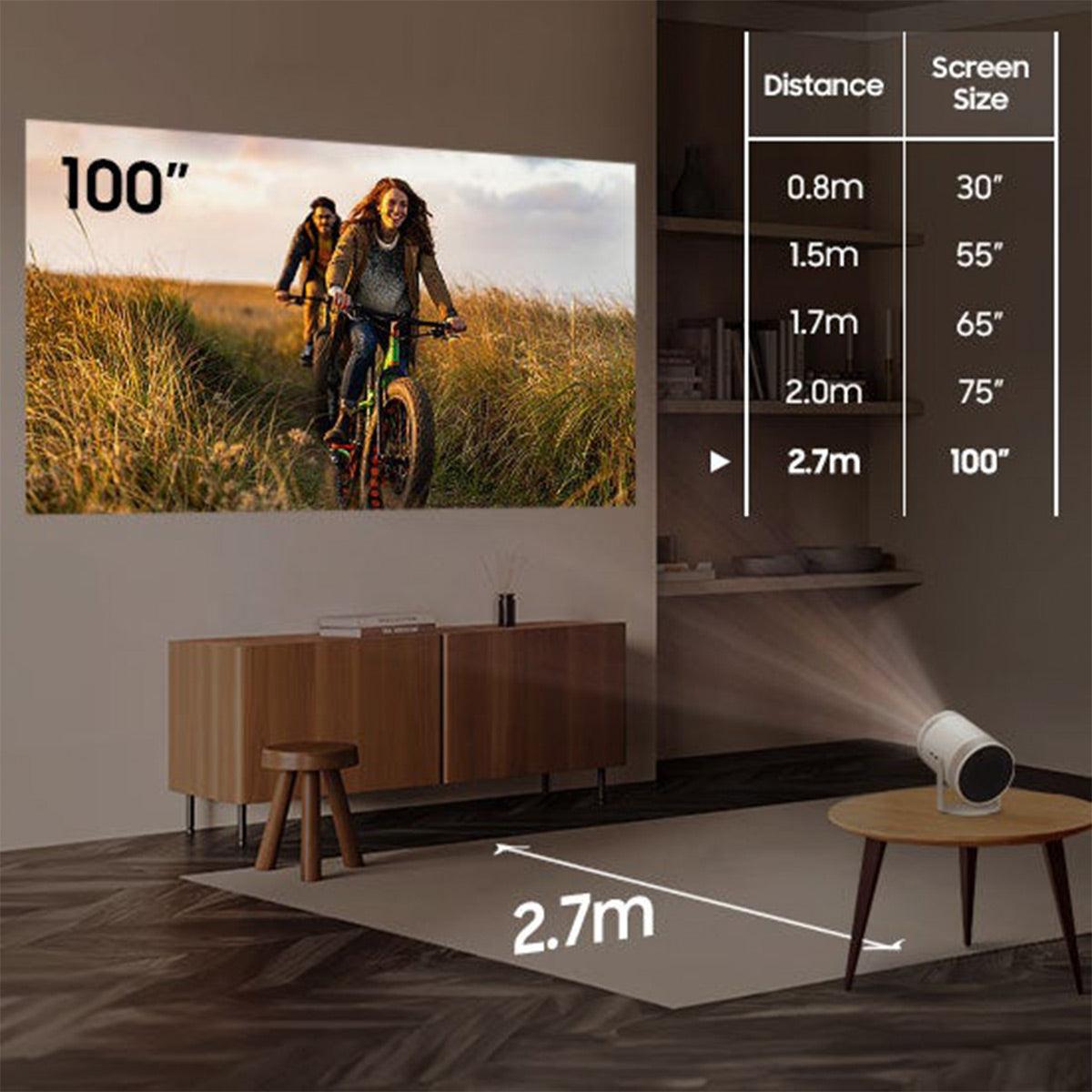
Both projectors deliver native 1080p (1920x1080 pixels) resolution, which provides crisp detail on screens up to about 100 inches. The TCL C1 adds 4K pass-through capability, meaning it can accept 4K signals from gaming consoles or streaming devices and downscale them intelligently to 1080p. This doesn't create true 4K detail, but it can improve color and contrast compared to native 1080p sources.
The sharpness advantage goes to whichever projector focuses better, and here the TCL C1 excels. Its auto-focus system consistently delivers sharp images according to user reviews, while some Samsung users report occasional focus hunting or softness.
Color Accuracy and Processing
This is where the projectors diverge significantly. The TCL C1 incorporates TrueHue technology, which analyzes each frame and optimizes color and contrast in real-time. Based on user feedback, this produces more film-like images with natural skin tones and better shadow detail.
The Samsung Freestyle 2nd Gen uses DLP (Digital Light Processing) technology, which typically provides better contrast ratios—Samsung claims 100,000:1 versus the TCL's 1500:1. However, DLP can sometimes produce a "rainbow effect" where fast-moving scenes show brief color separation, though most users don't notice this.
Screen Size Capabilities
The TCL C1 projects from 40 to 120 inches diagonally, while the Samsung Freestyle 2nd Gen maxes out at 100 inches. For most living rooms, this difference matters less than you might think—both easily fill typical viewing spaces. However, if you want truly massive projection for backyard movie nights, the TCL's larger capability provides more flexibility.
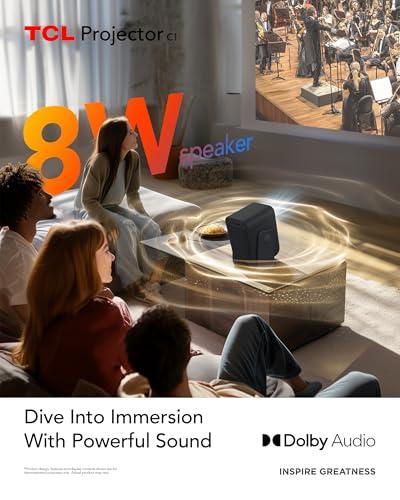
Audio quality separates these projectors dramatically. The TCL C1 includes dual 8-watt speakers with Dolby Audio processing, creating surprisingly robust sound for its size. User reviews consistently praise its ability to fill small to medium rooms without external speakers—crucial for portable use.
The Samsung Freestyle 2nd Gen takes a different approach with a single 5-watt speaker designed for 360-degree sound distribution. While this provides even audio coverage, the lower power output means weaker overall volume and less dynamic range. Most Samsung users recommend pairing it with external speakers for serious movie watching.
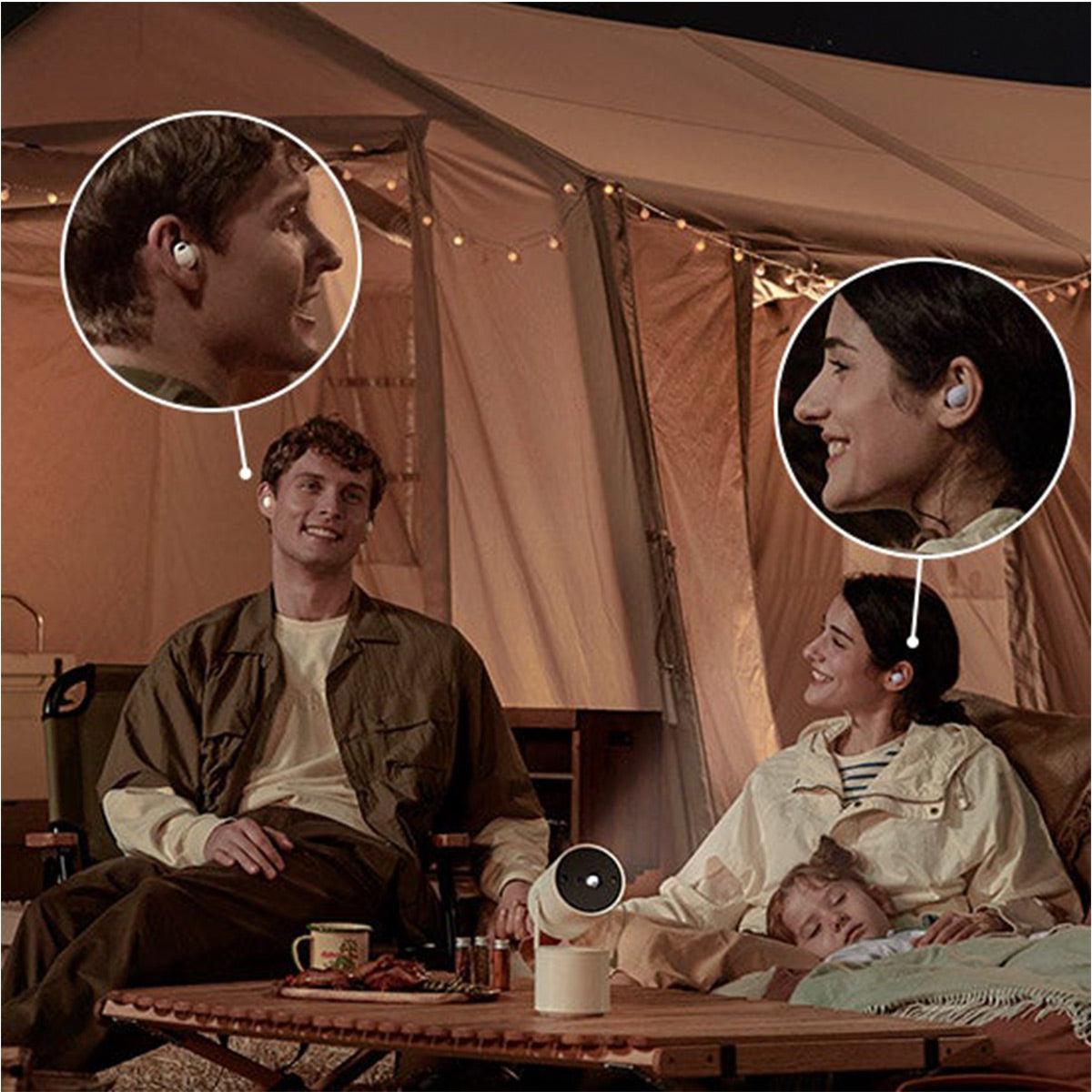
This audio difference has practical implications. If you plan to move your projector frequently between rooms or take it camping, the TCL C1's superior built-in audio reduces the need to pack additional speakers.
Operating System Comparison
The TCL C1 runs Google TV 11, providing access to over 10,000 apps including certified Netflix, YouTube, Disney+, and Amazon Prime Video. Google TV's interface organizes content across services, making it easy to find shows regardless of which streaming platform hosts them. The voice remote supports Google Assistant for hands-free control.
Samsung's Freestyle 2nd Gen uses Tizen OS, the same platform powering Samsung's smart TVs. While Tizen offers excellent performance and smooth navigation, it has fewer apps available compared to Google TV. However, it includes Samsung's Gaming Hub, which allows cloud gaming without a console—a unique feature we'll explore more later.
Setup and Usability
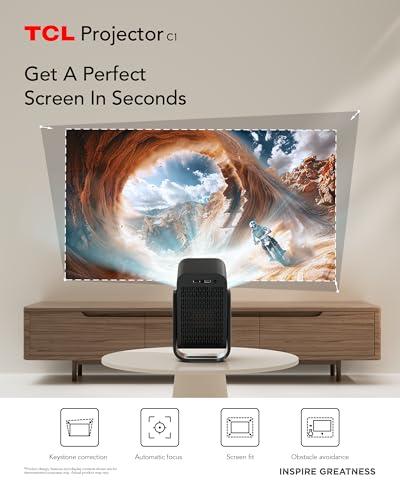
Both projectors excel at automatic setup, though they approach it differently. The TCL C1 includes comprehensive auto-correction: auto-focus, omni-directional keystone correction (which fixes trapezoidal distortion when projecting at angles), screen-fit adjustment, and obstacle avoidance. Users consistently report plug-and-play experiences—just power on and start watching.
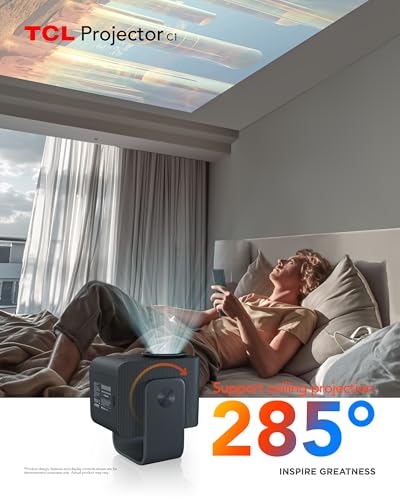
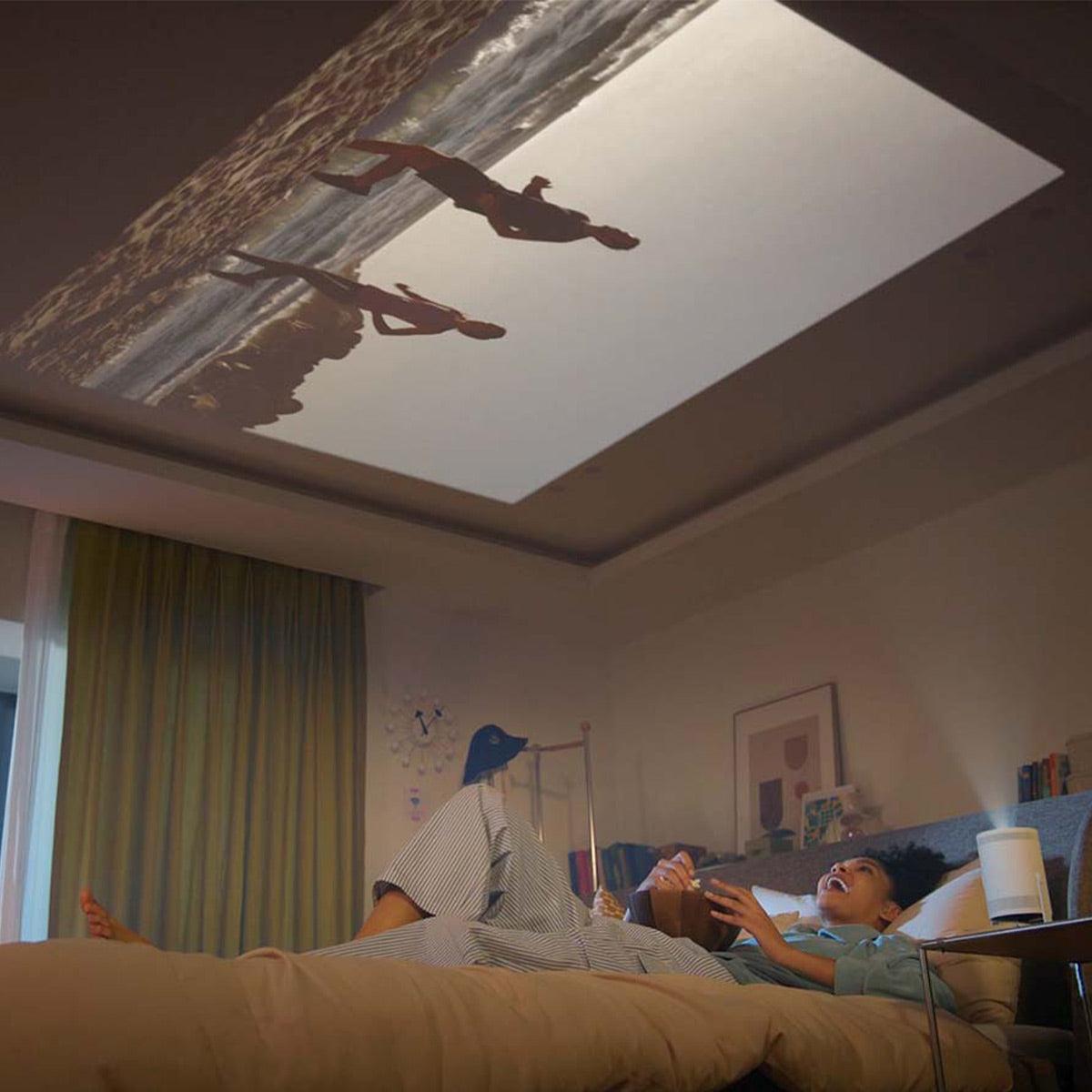
The Samsung Freestyle 2nd Gen offers similar auto-correction features but focuses more on its unique form factor advantages. The 180-degree rotating cradle allows projection in virtually any direction, including straight up for ceiling viewing—perfect for bed-time entertainment.
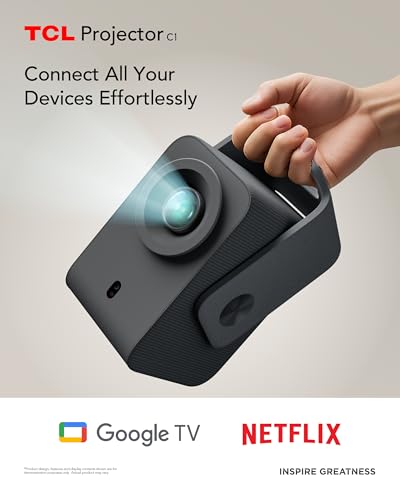
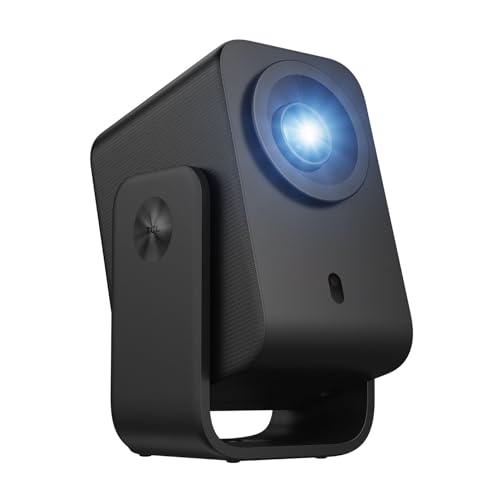
These projectors represent fundamentally different design philosophies. The TCL C1 embraces practical functionality with a conventional box shape, gimbal stand, and integrated handle. It's designed to be moved easily and set up quickly without fanfare.
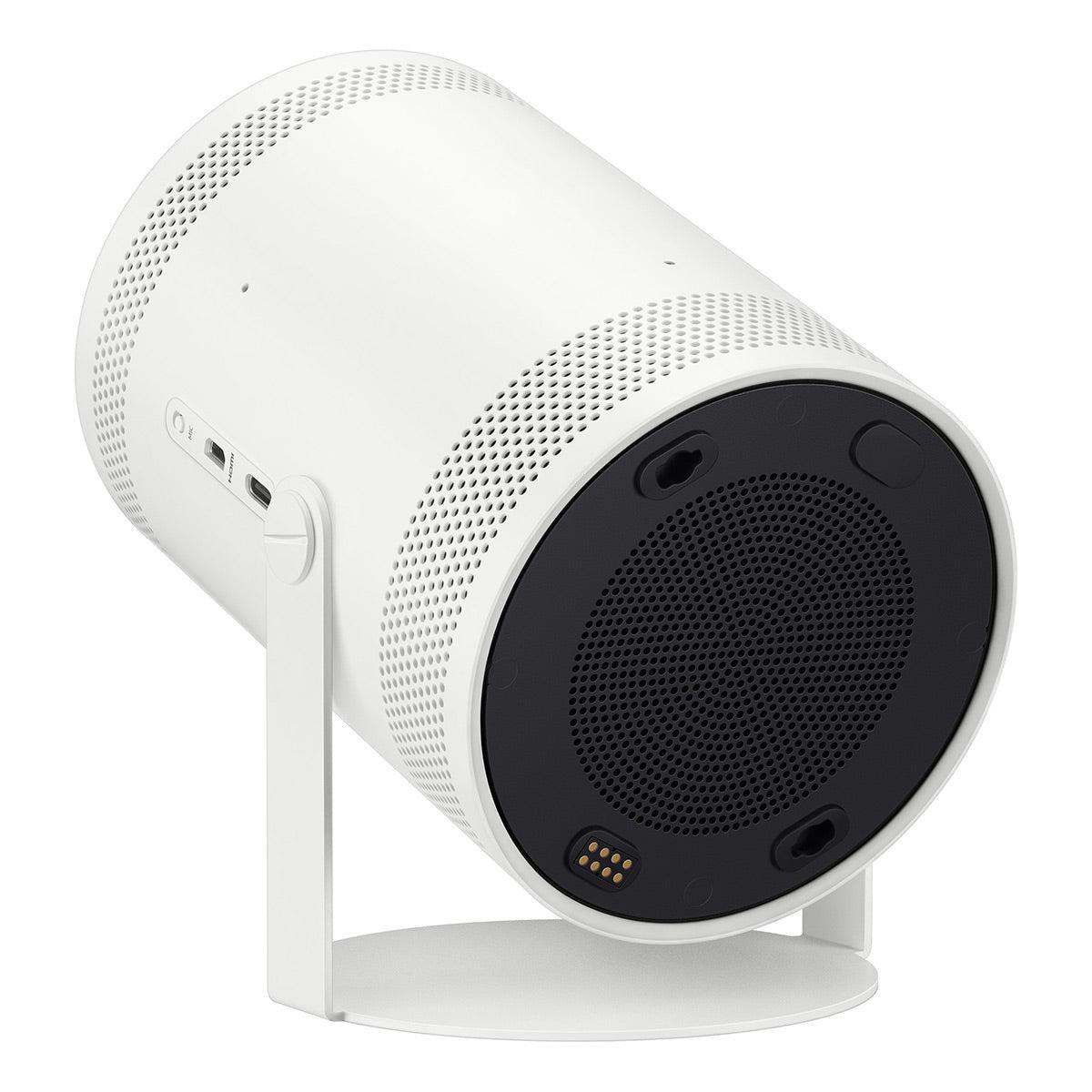
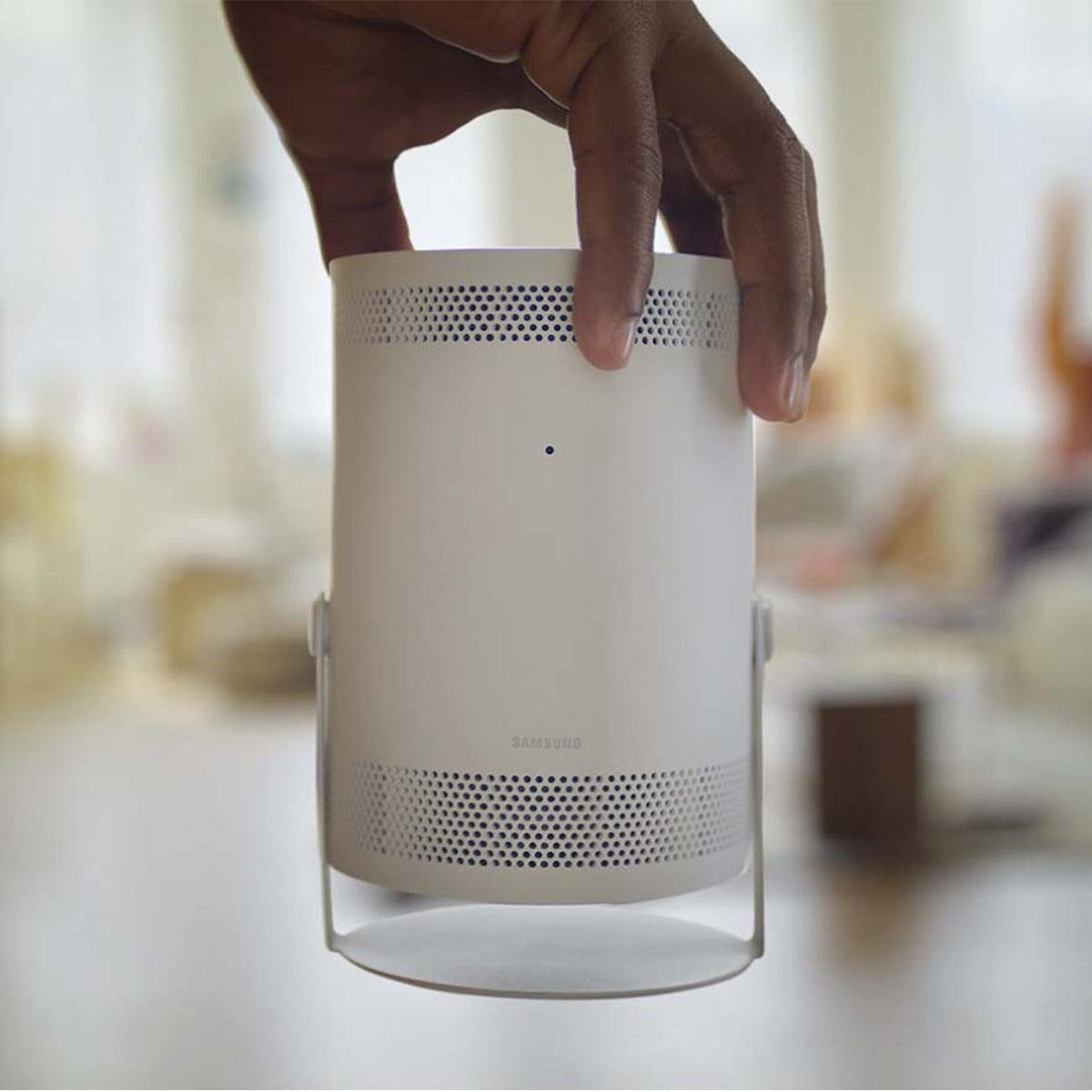
The Samsung Freestyle 2nd Gen makes a bold design statement with its cylindrical form factor. This isn't just aesthetic—the shape enables the rotating projection system and creates a more compact footprint when positioned on shelves or nightstands. However, it sacrifices some practical features like multiple ports and larger speakers for visual appeal.
Weight differences matter for portability. The TCL C1 weighs 3.9 pounds compared to the Samsung's 1.8 pounds—a significant difference when carrying in bags. The Samsung's cylindrical shape also packs more efficiently than the TCL's rectangular profile.
Gaming capabilities differentiate these projectors substantially. The TCL C1 supports gaming through its HDMI 2.1 port with reportedly low input lag, making it suitable for console gaming. However, its gaming features are limited to what any HDMI projector provides.
The Samsung Freestyle 2nd Gen revolutionizes portable gaming through Samsung Gaming Hub. This cloud-based system lets you play Xbox Game Pass, NVIDIA GeForce Now, and other streaming game services by connecting a Bluetooth controller directly to the projector—no console required. For users interested in casual gaming without purchasing dedicated hardware, this represents significant value.
Samsung also includes Smart Edge Blending, which allows multiple Freestyle projectors to combine their images seamlessly. While most users won't purchase multiple projectors, this feature enables ultra-wide aspect ratios or immersive installations for enthusiasts.
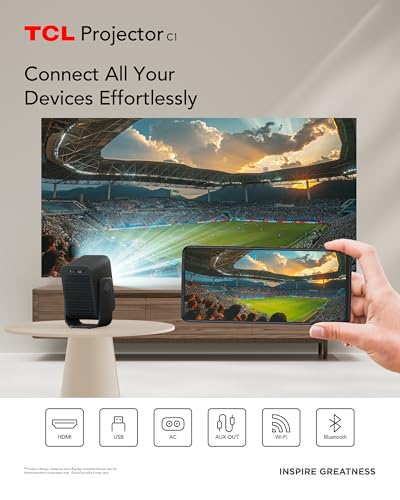
Port selection reveals each manufacturer's priorities. The TCL C1 includes standard HDMI 2.1, USB-A 2.0, and 3.5mm audio output—enough for most users' needs. The standard-sized ports work with existing cables without adapters.
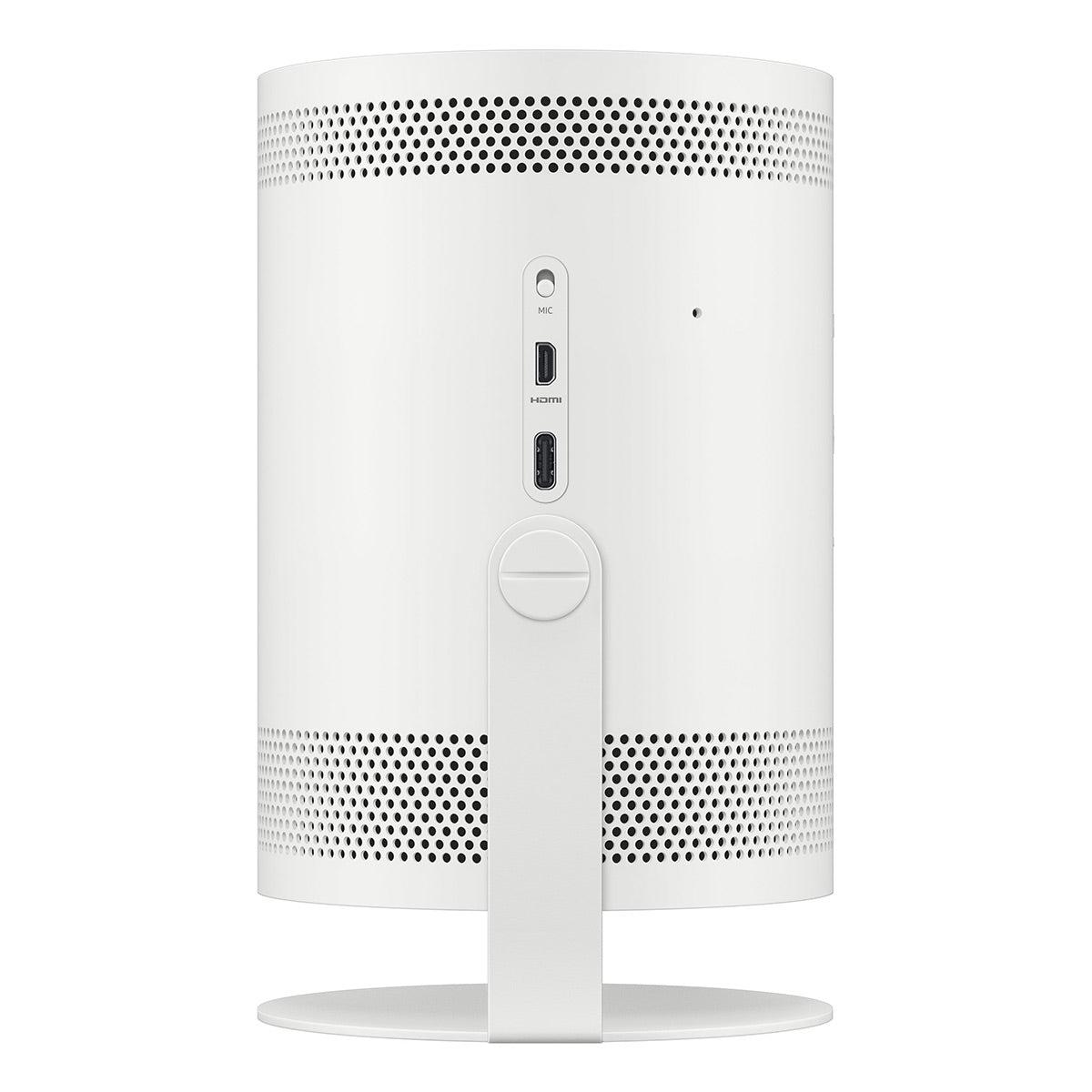
The Samsung Freestyle 2nd Gen minimizes ports to maintain its sleek design, offering only micro-HDMI. This requires adapters for standard HDMI cables, adding complexity and potential failure points. However, its superior wireless capabilities (Wi-Fi 5 and Bluetooth 5.2 versus the TCL's Wi-Fi AC and Bluetooth 5.1) provide better streaming performance.
Both projectors require wall power—neither includes batteries. This limits true portability compared to some competitors but enables brighter projection and better processing power.
At the time of writing, these projectors occupy vastly different price segments, with the Samsung Freestyle 2nd Gen commanding roughly triple the TCL C1's price. This creates a clear value discussion.
The TCL C1 delivers exceptional performance-per-dollar, providing 90% of the Samsung's core projection capabilities at roughly one-third the cost. Its Google TV platform, superior audio, and larger screen capability make it compelling for budget-conscious buyers.
The Samsung Freestyle 2nd Gen justifies its premium through unique features like Gaming Hub, innovative design, and superior build quality. However, its core projection performance doesn't dramatically exceed the TCL's, making the premium difficult to justify for pure image quality.
Neither projector suits dedicated home theater applications. Both lack the 2000+ lumen brightness needed for large screens in controlled lighting environments, and their compact speakers can't match dedicated audio systems. However, they excel as secondary entertainment devices for bedrooms, apartments, or casual viewing.
For home theater use, consider these as supplements rather than replacements for traditional setups. They're perfect for impromptu movie nights, guest room entertainment, or situations where permanent installation isn't feasible.
Choose the TCL C1 if you:
Choose the Samsung Freestyle 2nd Gen if you:
The TCL C1 represents the sweet spot for most users seeking portable projection. Its combination of solid image quality, excellent Google TV platform, superior audio, and aggressive pricing delivers exceptional value. The automatic setup features work reliably, and the larger screen capability provides future flexibility.
The Samsung Freestyle 2nd Gen serves users who prioritize innovation and premium positioning over pure value. Its unique design enables projection scenarios impossible with traditional projectors, and Gaming Hub provides genuinely useful functionality for gamers. However, the significant price premium requires careful justification.
For most buyers, the TCL C1 provides the best balance of performance, features, and value in the portable projector category. The Samsung Freestyle 2nd Gen makes sense for users with specific needs for its unique features or those who prioritize design innovation over cost efficiency.
Both represent solid choices in their respective market segments, but understanding your priorities—value versus innovation—will guide you to the right decision.
| TCL C1 Google TV Portable Projector | Samsung Freestyle 2nd Gen Smart Projector |
|---|---|
| Brightness - Critical for determining where you can use the projector | |
| 230 ISO lumens (requires dark rooms, struggles with ambient light) | 230 ANSI lumens (similar performance, also needs dark environments) |
| Price Category - Affects overall value proposition | |
| Budget-focused (often available at promotional pricing) | Premium positioning (roughly 3x more expensive) |
| Design Philosophy - Impact on portability and setup flexibility | |
| Conventional box with 285° gimbal and handle (practical, functional) | Innovative cylindrical with 180° rotating cradle (ultra-portable, design-forward) |
| Weight - Matters for frequent transport | |
| 3.9 lbs (heavier but includes more features) | 1.8 lbs (lighter, more backpack-friendly) |
| Maximum Screen Size - Determines viewing experience potential | |
| 120 inches diagonal (better for larger spaces) | 100 inches diagonal (adequate for most rooms) |
| Audio Power - Critical for standalone use without external speakers | |
| Dual 8W Dolby Audio speakers (fills small-medium rooms effectively) | Single 5W 360° speaker (requires external audio for best experience) |
| Smart Platform - Affects app selection and streaming experience | |
| Google TV with 10,000+ apps including certified Netflix | Samsung Tizen OS with fewer apps but smoother performance |
| Gaming Features - Important for console-free gaming | |
| Standard HDMI gaming support with low input lag | Samsung Gaming Hub for cloud gaming without consoles |
| Connectivity Ports - Determines external device compatibility | |
| HDMI 2.1, USB-A 2.0, 3.5mm audio (standard cables work) | Micro HDMI only (requires adapters for standard cables) |
| Auto-Setup Features - Reduces manual adjustments needed | |
| Auto-focus, omni-directional keystone, screen-fit, obstacle avoidance | Auto-focus, auto-keystone, auto-leveling |
| Unique Advantages - Standout features that differentiate each model | |
| Sealed optical engine prevents dust, 4K pass-through, larger projection | 180° rotation for ceiling projection, Smart Edge Blending, Gaming Hub |
| Best For - Target user scenarios where each excels | |
| Budget-conscious users wanting maximum features per dollar | Design enthusiasts and cloud gaming users willing to pay premium |
The TCL C1 Google TV Portable Projector offers significantly better value, delivering similar core projection performance at roughly one-third the price of the Samsung Freestyle 2nd Gen Smart Projector. The TCL provides more features per dollar, including better audio, more ports, and a larger maximum screen size.
Neither the TCL C1 nor the Samsung Freestyle 2nd Gen works well in bright rooms. Both output around 230 lumens, which requires dimmed lighting or darkness for optimal viewing. You'll need to control ambient light for either projector to produce watchable images.
The TCL C1 Google TV Portable Projector has significantly better audio with dual 8W Dolby speakers compared to the Samsung Freestyle 2nd Gen's single 5W speaker. The TCL can fill small to medium rooms without external speakers, while the Samsung often needs additional audio equipment.
The Samsung Freestyle 2nd Gen Smart Projector excels for gaming with its Samsung Gaming Hub, allowing cloud gaming without a console. The TCL C1 supports traditional console gaming through HDMI with low input lag but lacks cloud gaming features.
The Samsung Freestyle 2nd Gen is more portable at 1.8 pounds with a cylindrical design that packs efficiently. The TCL C1 Google TV Portable Projector weighs 3.9 pounds but includes a handle and gimbal stand for easier setup and positioning.
Yes, both projectors support ceiling projection. The TCL C1 uses a 285-degree gimbal system, while the Samsung Freestyle 2nd Gen features a 180-degree rotating cradle. Both make ceiling viewing easy for bedroom entertainment.
The TCL C1 Google TV Portable Projector offers access to over 10,000 apps through Google TV, including certified Netflix. The Samsung Freestyle 2nd Gen uses Samsung's Tizen OS, which has fewer available apps but runs more smoothly.
Neither projector is ideal for dedicated home theater setups. Both lack the brightness (2000+ lumens) needed for large-screen viewing in controlled lighting. They work better as secondary entertainment devices for bedrooms, apartments, or casual viewing scenarios.
Picture quality is comparable between the TCL C1 and Samsung Freestyle 2nd Gen, both offering 1080p resolution. The TCL includes 4K pass-through and TrueHue color processing, while the Samsung uses DLP technology with higher contrast ratios. Both perform similarly in dark rooms.
The TCL C1 Google TV Portable Projector projects up to 120 inches diagonally, while the Samsung Freestyle 2nd Gen Smart Projector maxes out at 100 inches. For most living rooms, this 20-inch difference is minimal, but the TCL offers more flexibility for larger spaces.
Both projectors offer excellent auto-setup features. The TCL C1 includes auto-focus, keystone correction, screen-fit, and obstacle avoidance. The Samsung Freestyle 2nd Gen provides similar auto-corrections with the added benefit of its rotating design for flexible positioning.
For most first-time buyers, the TCL C1 Google TV Portable Projector is the better choice due to its exceptional value, superior built-in audio, and comprehensive Google TV platform. Choose the Samsung Freestyle 2nd Gen only if you specifically need cloud gaming features or premium design aesthetics and can justify the significantly higher cost.
We've done our best to create useful and informative comparisons to help you decide what product to buy. Our research uses advanced automated methods to create this comparison and perfection is not possible - please contact us for corrections or questions. These are the sites we've researched in the creation of this article: youtube.com - thegadgetflow.com - notebookcheck.net - shopabunda.com - youtube.com - youtube.com - youtube.com - youtube.com - tcl.com - androidauthority.com - manuals.plus - westcoast.co.uk - techradar.com - tech.slashdot.org - youtube.com - bestbuy.com - youtube.com - youtube.com - rtings.com - samsung.com - samsung.com - samsung.com - thesmarthomehookup.com - nfm.com - samsung.com - abt.com - projectorcentral.com - valueelectronics.com - target.com - samsung.com - samsung.com - images.samsung.com - abt.com - youtube.com - samsung.com - samsung.com - walts.com - bhphotovideo.com - shi.com - youtube.com - publicsector.shidirect.com - provantage.com - abcwarehouse.com

Privacy Policy
Terms and Conditions - Affiliate Policy
Home Security
© Copyright 2008-2026.
11816 Inwood Rd #1211, Dallas, TX 75244