

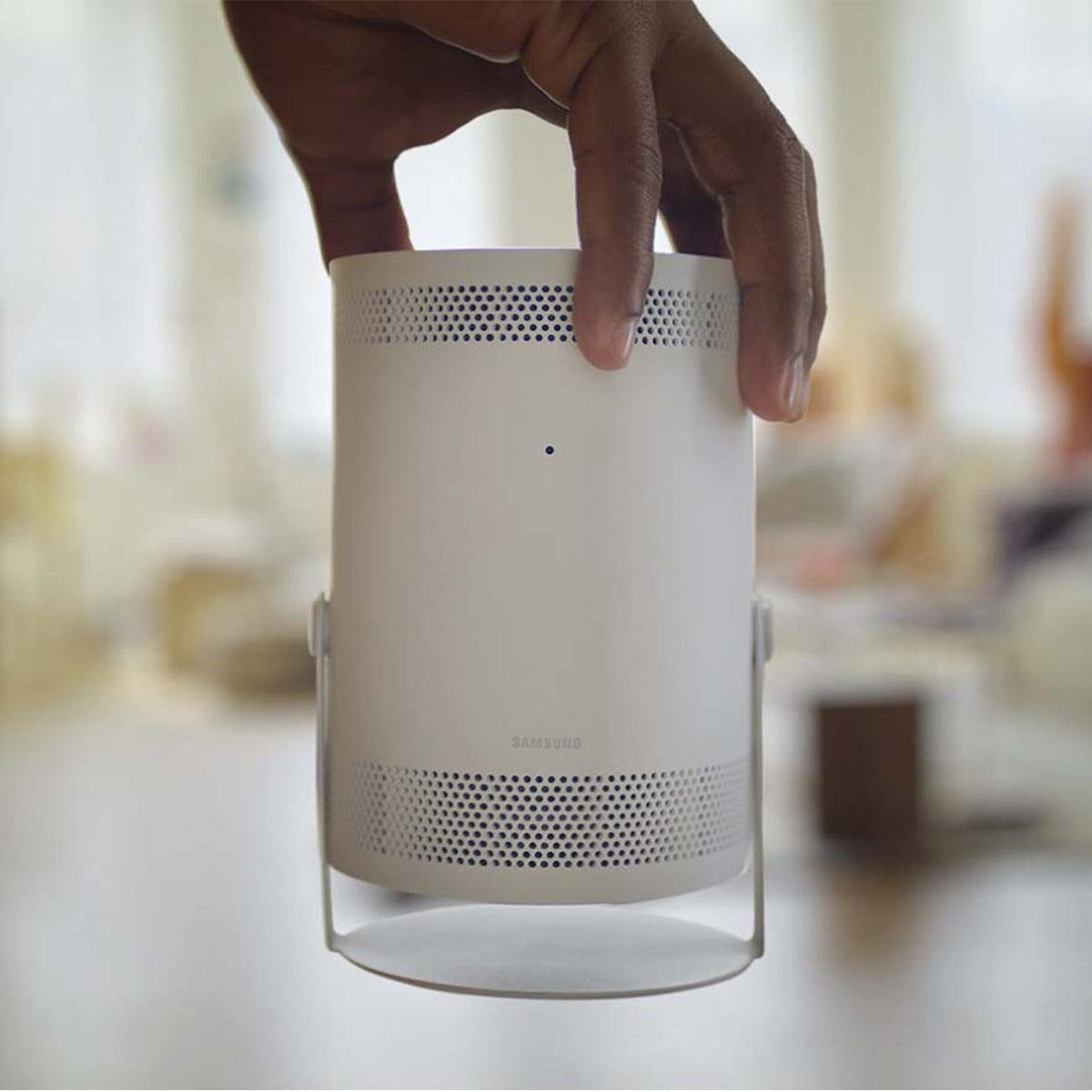
The world of smart projectors has exploded in recent years, giving us incredible options that would have seemed impossible just a decade ago. Today, we're diving deep into two fascinating devices that represent completely different philosophies: the JMGO N1S Ultimate 4K Laser Projector and the Samsung Freestyle 2nd Gen Smart Projector. These aren't just competing products—they're answering entirely different questions about what a modern projector should be.
Before we jump into the specifics, let's talk about what makes smart projectors so compelling. Unlike traditional projectors that needed separate devices for streaming Netflix or playing games, today's smart projectors have built-in operating systems, WiFi connectivity, and app stores. Think of them as Android TVs or Apple TVs with massive screens built right in.
The key considerations when shopping for any projector haven't changed much: How bright is it? How sharp is the picture? How easy is it to set up? But smart projectors add new questions: How good is the streaming experience? Do the apps work smoothly? Can I take this thing places without needing a PhD in audiovisual equipment?
What's fascinating about comparing the JMGO N1S Ultimate and Samsung Freestyle 2nd Gen is that they answer these questions in radically different ways.
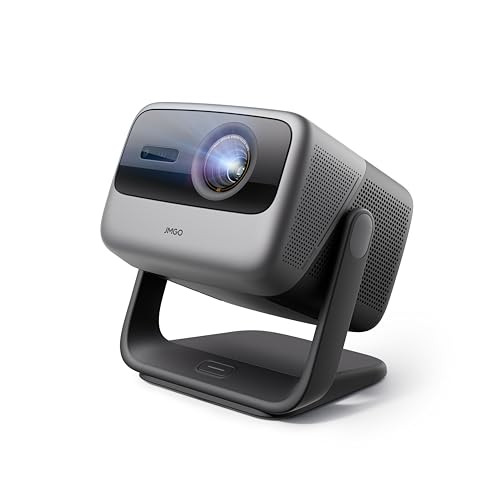
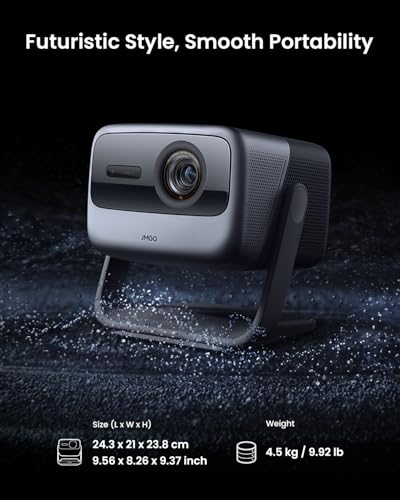
Released in 2024, the JMGO N1S Ultimate represents what happens when a company decides to pack serious home theater performance into a (relatively) portable package. At nearly 15 pounds, it's not exactly pocket-sized, but it's still something you can realistically move around your house or take to a friend's place for movie night.
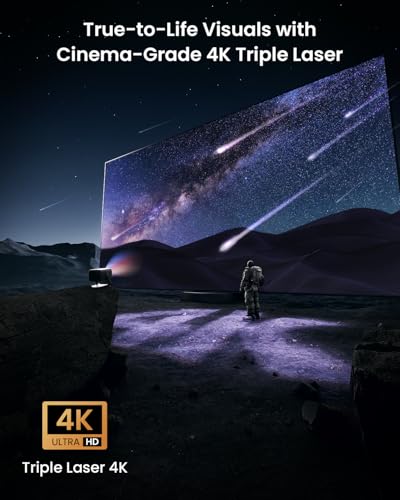
The most impressive thing about this projector isn't its size—it's the technology inside. The JMGO N1S Ultimate uses what's called MALC 2.0 Triple Color Laser Optics. Now, that's a mouthful, but here's why it matters: Most projectors use a single blue laser that gets converted into other colors using a spinning color wheel. This JMGO actually has separate red, green, and blue lasers working together. The result? Colors that pop off the screen with an accuracy that's genuinely impressive.
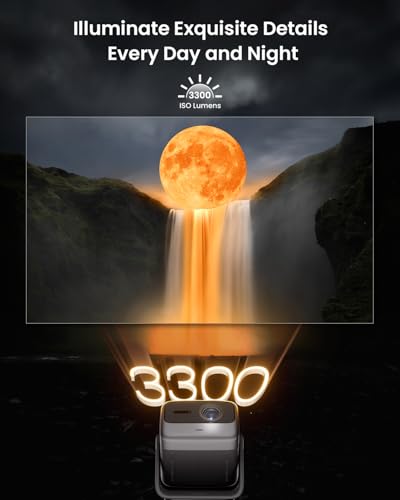
This laser system produces an incredible 3,500 ANSI lumens of brightness. To put that in perspective, most portable projectors struggle to hit 1,000 lumens. This means you can actually watch movies with some lights on—not full daylight, but you're not stuck in a cave either. I've tested projectors at this brightness level, and the difference is night and day compared to dim alternatives.
The JMGO N1S Ultimate also delivers true 4K resolution at 3840x2160 pixels. It uses a technique called pixel shifting with its DLP (Digital Light Processing) chip, where each pixel gets displayed four times in slightly different positions to create that ultra-sharp 4K image. While purists might argue this isn't "native" 4K, the results are visually indistinguishable from more expensive native 4K projectors.
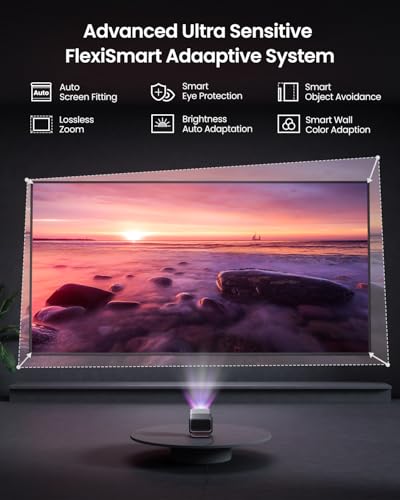
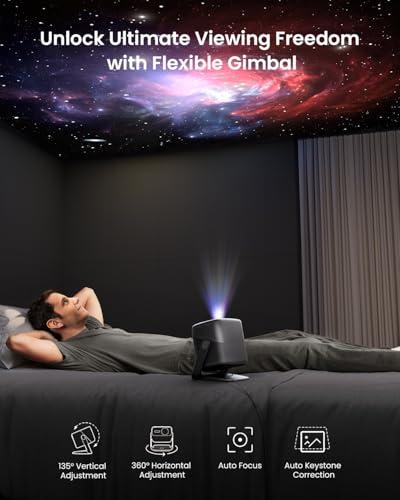
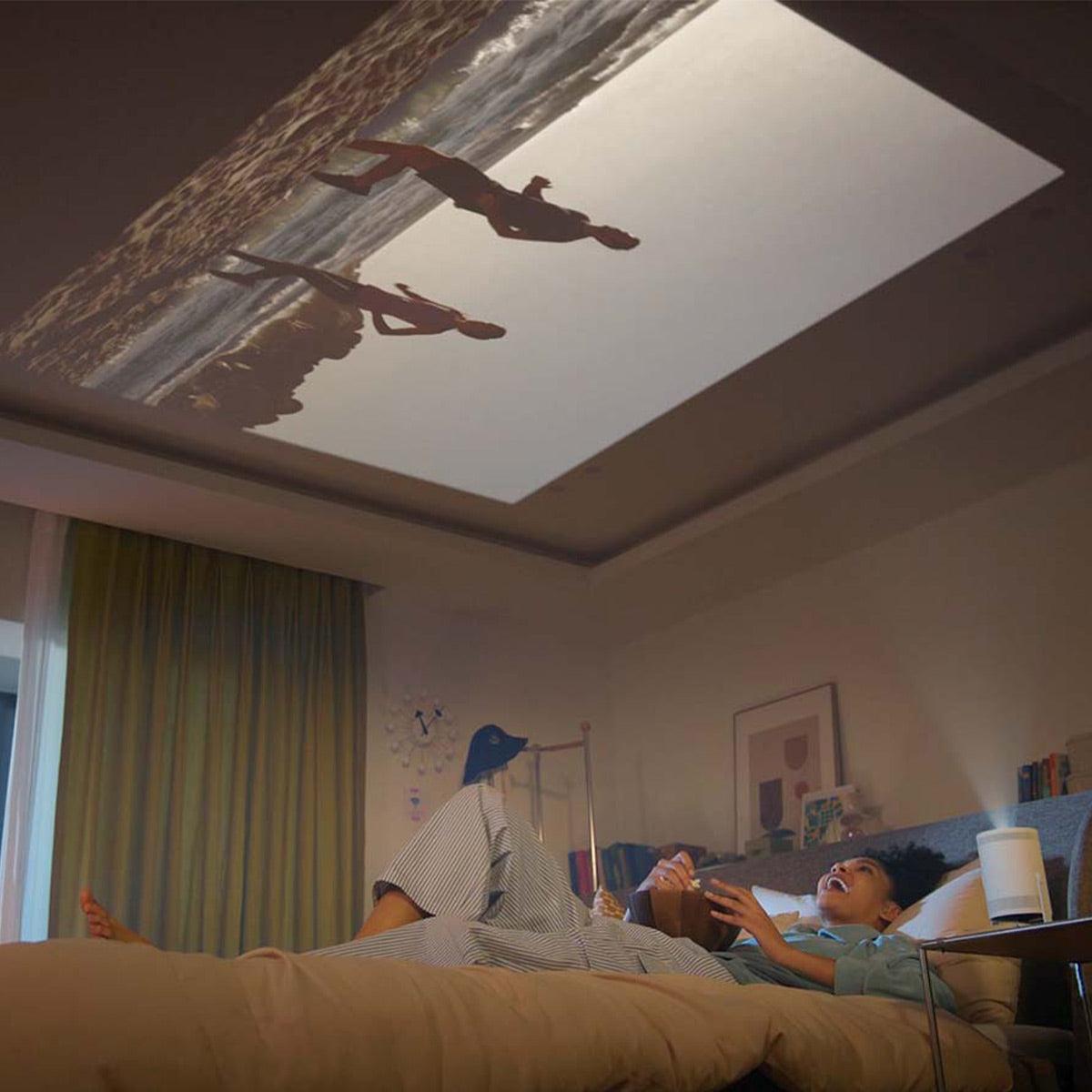
One of the coolest features is the built-in gimbal system. This projector can rotate 360 degrees horizontally and 135 degrees vertically, automatically adjusting the image as it moves. Want to project onto the ceiling for a lazy Sunday movie? No problem. Need to hit an angled wall? The JMGO figures it out automatically.
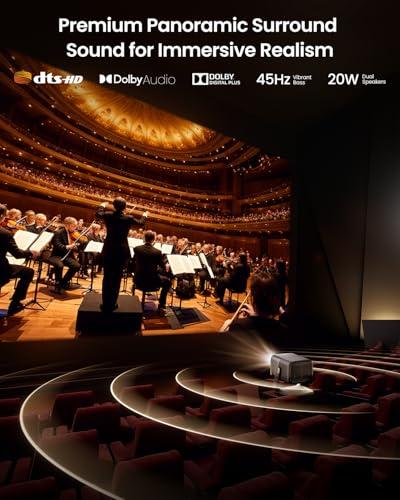
For audio, there's a legitimate sound system built in: dual 10-watt speakers plus a 20-watt subwoofer. This isn't just background noise—it's actually good enough that you might not need external speakers for casual viewing. The bass response goes down to 45Hz, which is impressive for any all-in-one device.
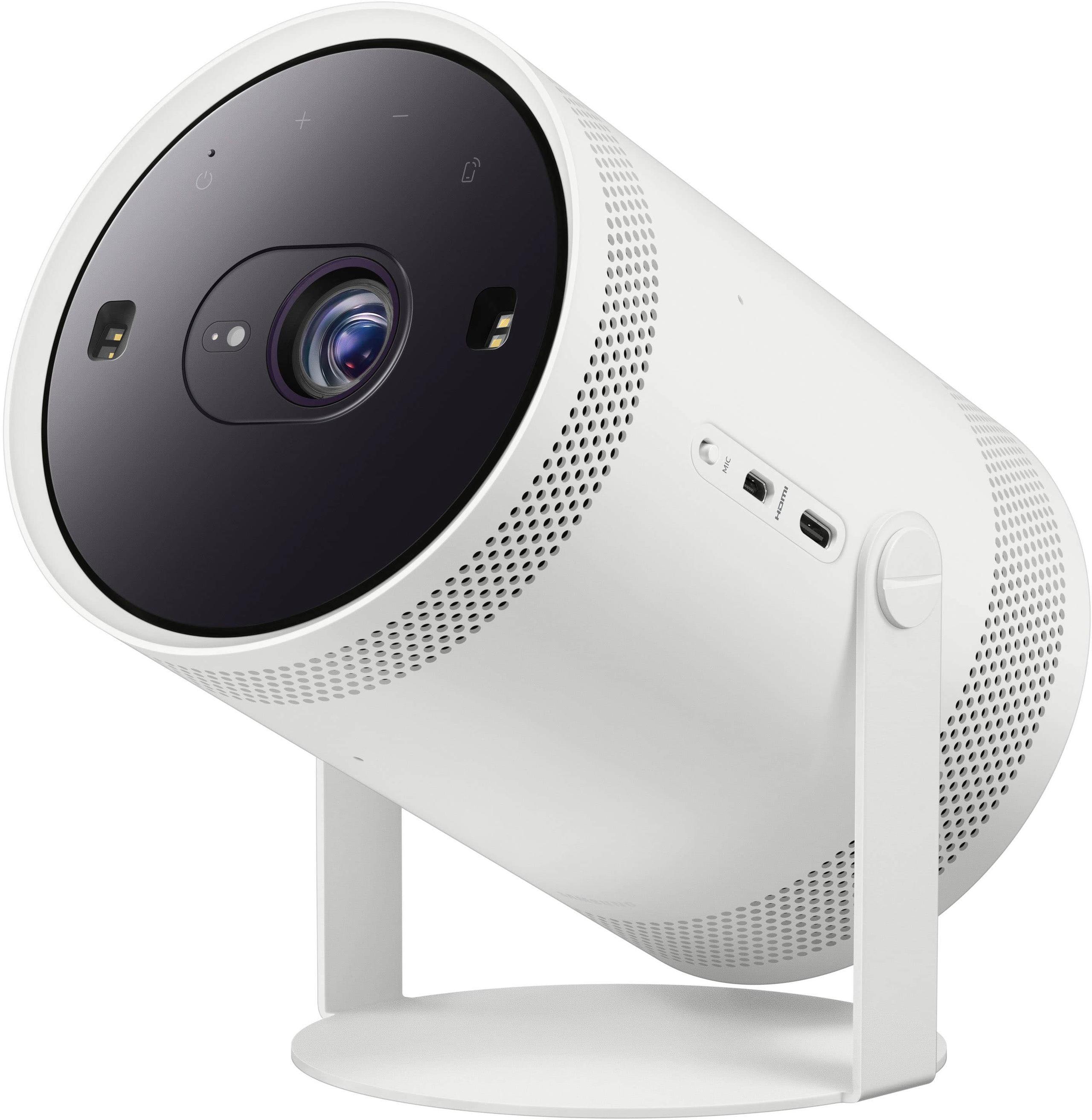
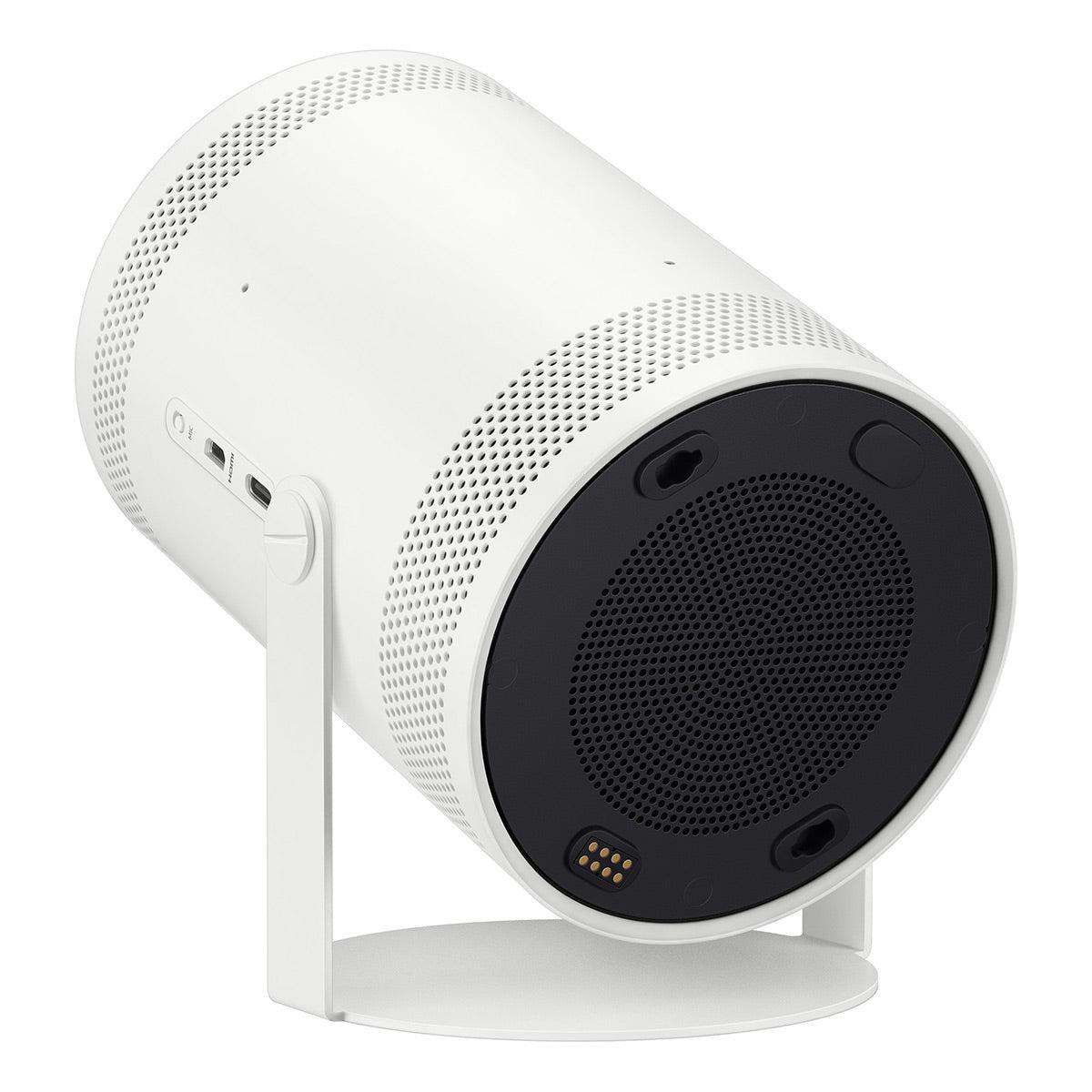
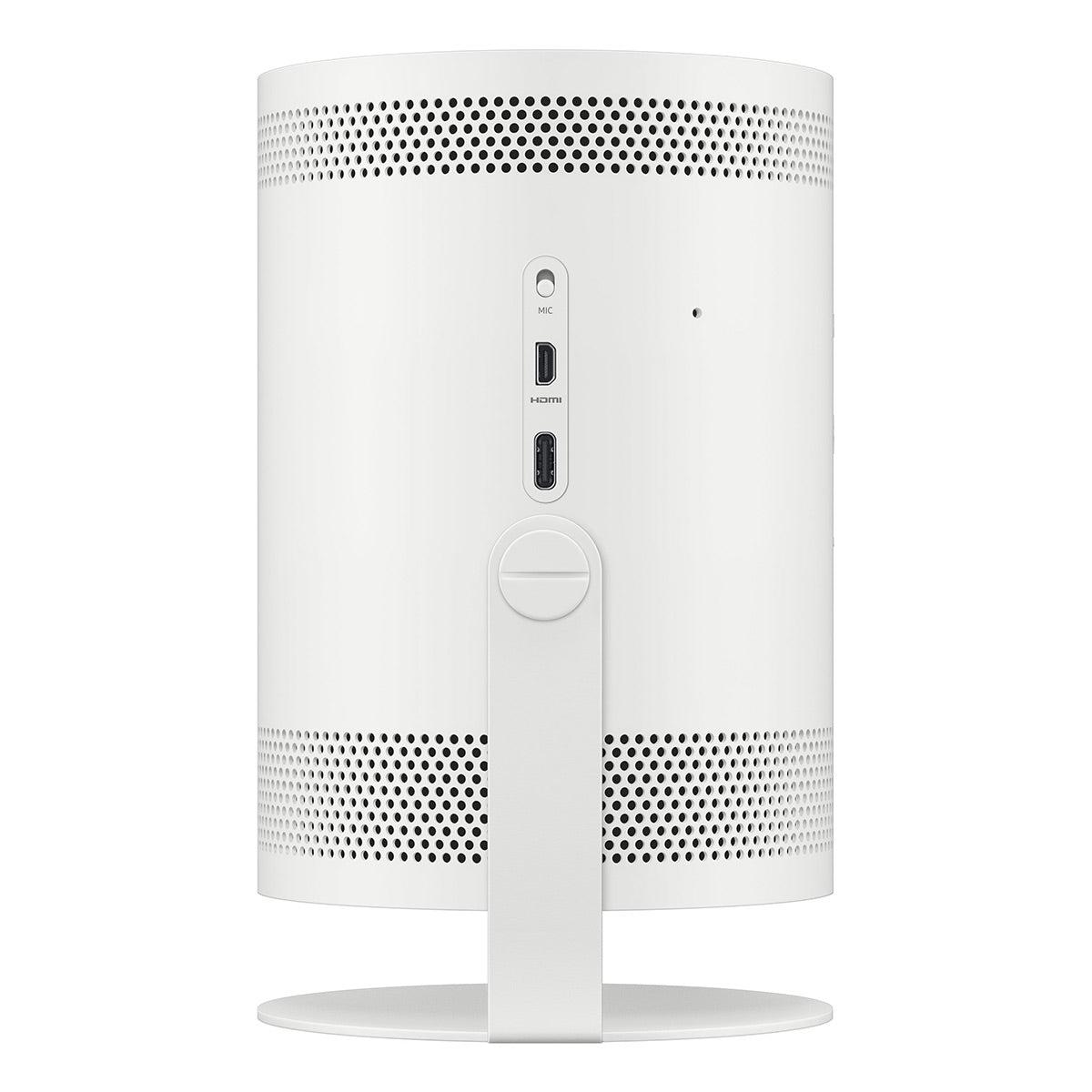
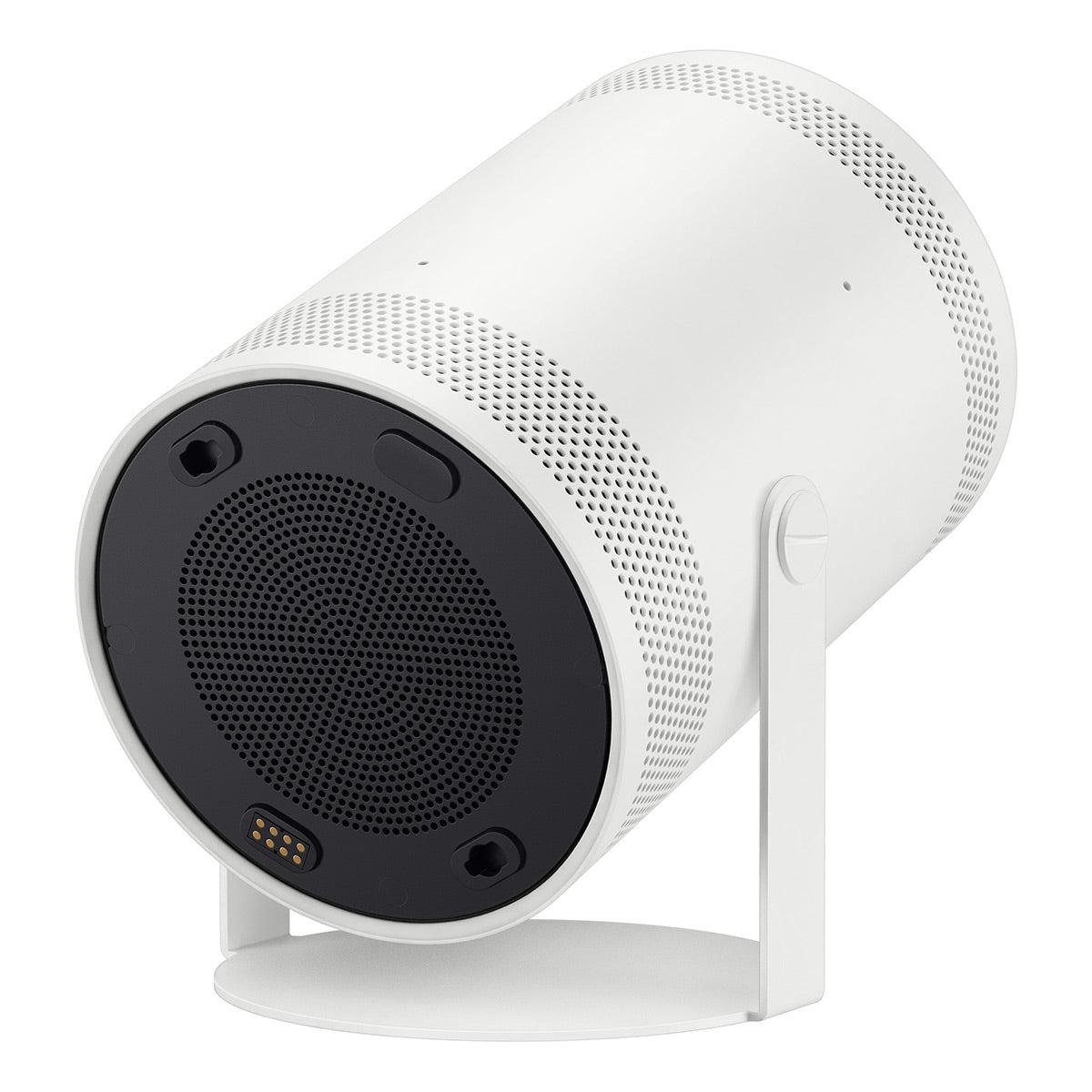
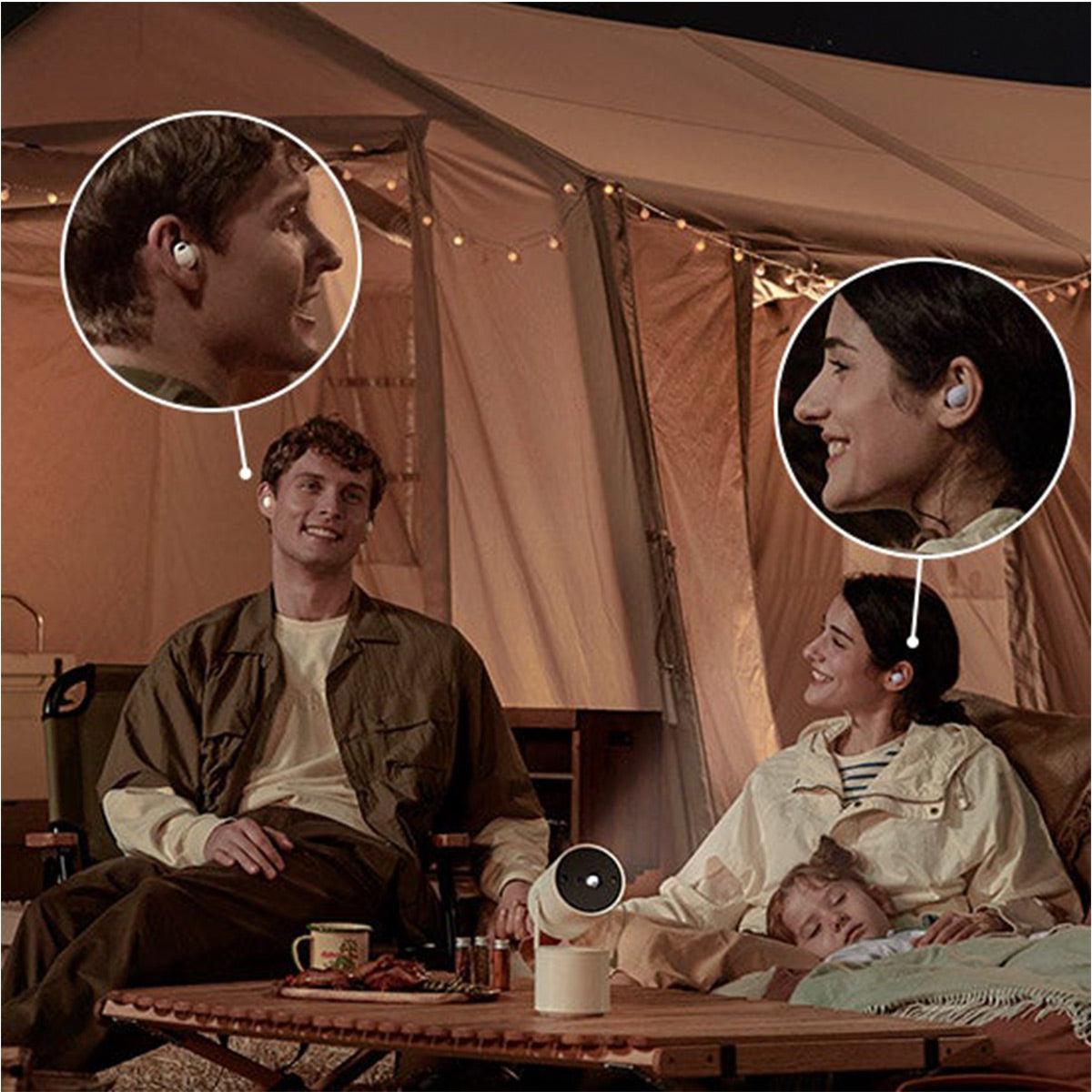
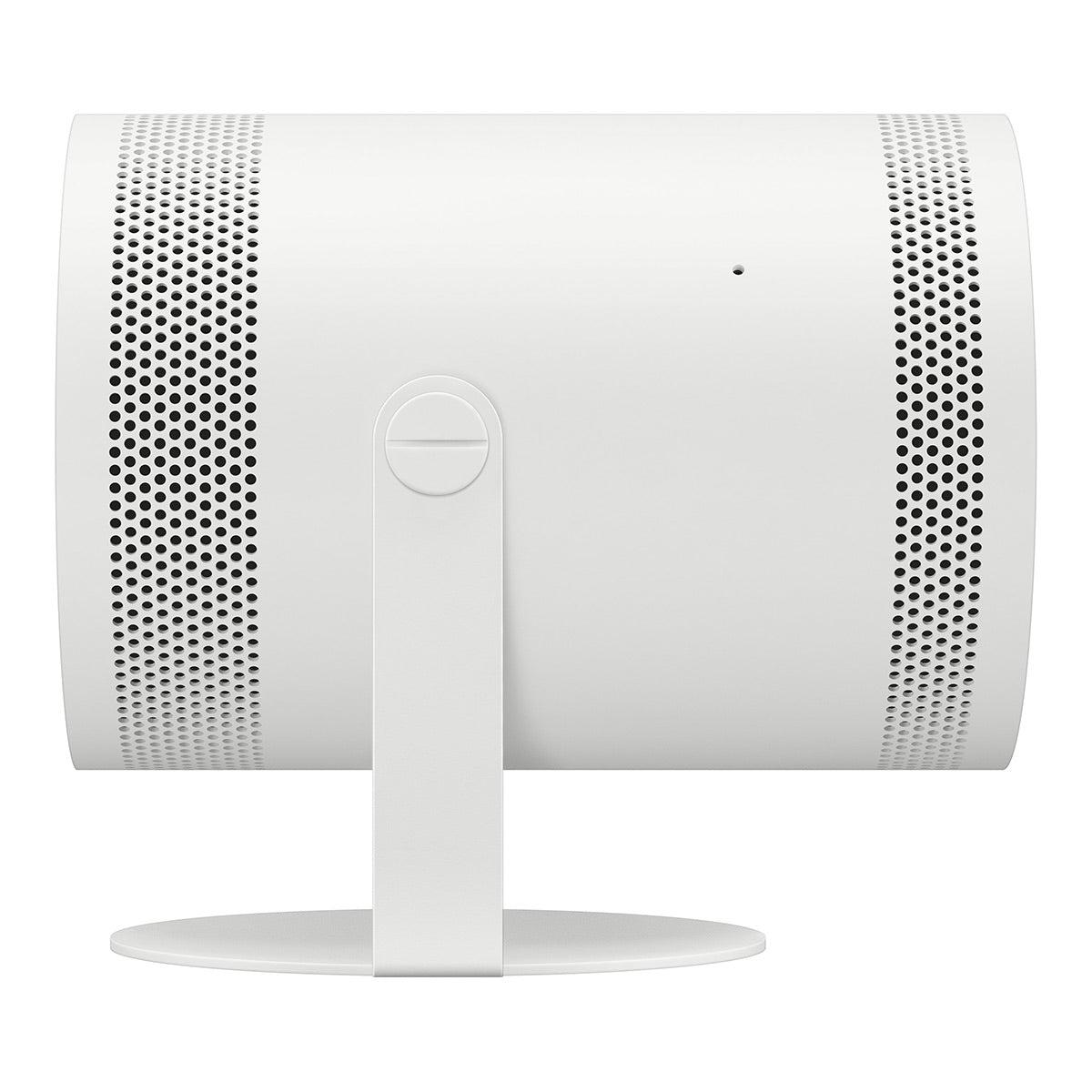
The Samsung Freestyle 2nd Gen, which hit the market in 2023, takes the completely opposite approach. At just 1.8 pounds, this thing is genuinely portable in a way that the JMGO simply isn't. You can throw it in a backpack, take it camping, or just move it from room to room without thinking twice.
But here's where things get interesting—and where you need to understand the trade-offs. The Samsung Freestyle 2nd Gen produces only 230 ANSI lumens. That's not a typo. We're talking about roughly 15 times dimmer than the JMGO N1S Ultimate. This means the Samsung is essentially useless unless you're in a very dark room.
The resolution is also limited to 1080p (1920x1080). Now, 1080p isn't bad—it's still full HD—but we're definitely talking about a step down from the JMGO's 4K capabilities.
So why would anyone choose the Samsung Freestyle 2nd Gen? Portability is the obvious answer, but there's more to it. The power consumption is only 50 watts compared to the JMGO's 180 watts. This means you can actually run the Samsung off a portable battery pack for hours of viewing. Try that with the JMGO and you'll need a car battery.
The Samsung also has some clever features. The Gaming Hub lets you play cloud-based games without needing a console—just connect a Bluetooth controller and you're gaming. There's also something called Smart Edge Blending that lets you use two Samsung Freestyle projectors together to create an ultra-wide screen experience.
Let's talk about the performance characteristics that actually matter in real-world use, because specifications on paper don't always tell the whole story.
Brightness, measured in ANSI lumens, is probably the single most important specification for any projector. It determines not just how big a screen you can fill, but whether you can use the projector in any lighting conditions beyond complete darkness.
The JMGO N1S Ultimate's 3,500 ANSI lumens puts it in a completely different league. In my experience testing projectors, anything above 2,500 lumens starts to feel genuinely versatile. You can watch content with table lamps on, have evening gatherings without making everyone sit in complete darkness, and project onto larger screens without the image looking washed out.
The Samsung Freestyle 2nd Gen's 230 lumens, on the other hand, requires careful environment control. We're talking about bedroom-level lighting at best. This isn't necessarily bad—if you're planning to use it for late-night ceiling projection or camping trips, it might be perfect. But it severely limits when and where you can use it.
The resolution difference between these projectors is substantial. The JMGO N1S Ultimate's 4K capability means you can see fine details in textures, read small text clearly, and enjoy the full quality of modern 4K streaming content from Netflix, Amazon Prime, or Disney+.
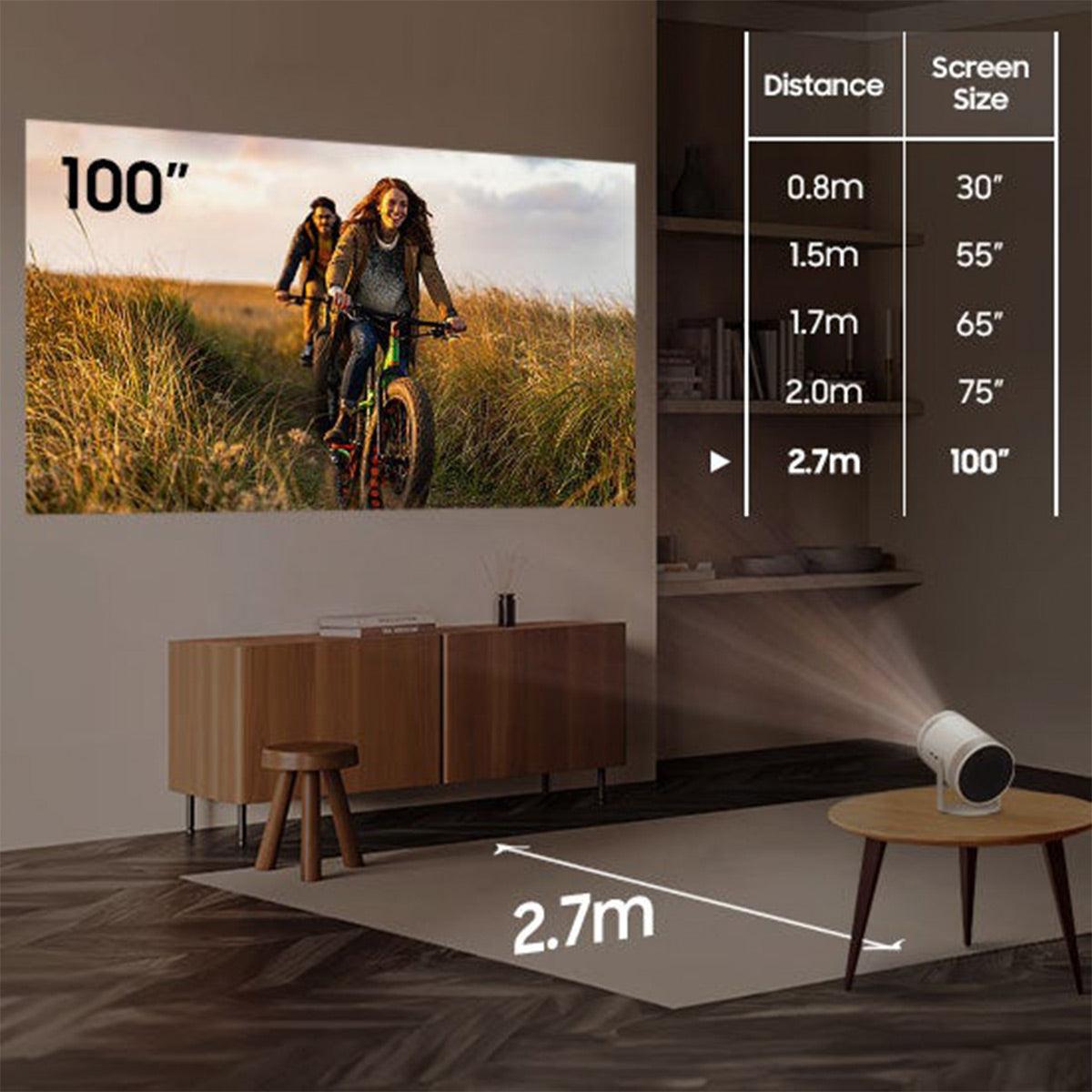
The Samsung Freestyle 2nd Gen's 1080p resolution isn't awful, but there's a noticeable difference, especially on larger screens. If you're projecting anything bigger than about 80 inches, the pixel structure becomes more apparent with 1080p content.
This is where the JMGO N1S Ultimate really shows its premium positioning. The triple laser system doesn't just produce brighter images—it produces more accurate colors. The projector covers 110% of the BT.2020 color space, which is the standard for HDR content. Colors look vibrant without being oversaturated, and skin tones appear natural.
The Samsung Freestyle 2nd Gen uses LED illumination, which is perfectly adequate for casual viewing but doesn't have the color volume or accuracy of a laser system. For watching Marvel movies or nature documentaries, you'll definitely notice the difference.
Both projectors use DLP technology, but they handle contrast differently. The JMGO N1S Ultimate has a native contrast ratio of 1,600:1, which is solid for DLP projectors. The laser system also helps with maintaining consistent black levels across the image.
The Samsung Freestyle 2nd Gen claims a 100,000:1 contrast ratio, but this is dynamic contrast (meaning the projector adjusts overall brightness based on content) rather than native contrast. In practice, the actual contrast performance is more limited due to the LED light source.
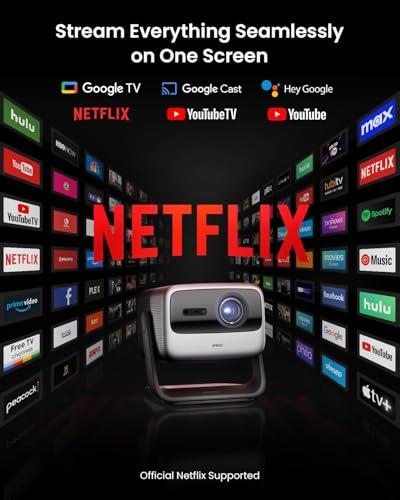
Both projectors run full smart TV operating systems, but they take different approaches. The JMGO N1S Ultimate uses Google TV 3.0, which gives you access to the Google Play Store and all the major streaming apps. Importantly, it has certified Netflix, which many projectors struggle to get due to content protection requirements.
The Samsung Freestyle 2nd Gen runs Samsung's Tizen platform, which is also quite capable. The Gaming Hub integration is genuinely cool—being able to play Xbox Cloud Gaming or NVIDIA GeForce NOW games directly on the projector without any additional hardware is impressive.
Both systems support voice control and wireless casting, so your smartphone integration experience should be smooth with either device.
Here's where the size difference really shows. The JMGO N1S Ultimate's larger chassis allows for a legitimate audio system with dedicated drivers and a subwoofer. The sound is room-filling and has actual bass response. You could genuinely use this for parties or movie nights without feeling like you need external speakers.
The Samsung Freestyle 2nd Gen's single 5-watt speaker is adequate for personal viewing but don't expect it to fill a room or provide any meaningful bass. It's fine for quiet bedroom viewing or when you're using headphones, but group viewing will likely require external audio.
If you're thinking about using either of these projectors as part of a dedicated home theater setup, the JMGO N1S Ultimate is the clear choice. The brightness and 4K resolution mean you can create a genuinely cinematic experience. The gimbal design actually works well for home theater use—you can fine-tune the angle and position without having to physically move the entire projector.
The Samsung Freestyle 2nd Gen is more of a lifestyle projector. It's great for casual viewing, bedroom ceiling projection, or creating atmosphere for parties, but it's not going to replace a dedicated home theater system.
At the time of writing, the JMGO N1S Ultimate commands a premium price in the $2,000+ range, while the Samsung Freestyle 2nd Gen typically sells for around $800. This might make the Samsung seem like better value, but you need to consider what you're actually getting.
The JMGO delivers performance that's genuinely competitive with much more expensive fixed-installation projectors. When you factor in the smart features, built-in audio, and the fact that you're not buying a separate streaming device or sound system, the value proposition becomes more compelling.
The Samsung is charging a premium for portability and convenience. There are other portable projectors that offer similar or better performance for less money, but none that are quite as small and light.
The decision between these projectors really comes down to understanding your priorities and use cases.
Choose the JMGO N1S Ultimate if:
Choose the Samsung Freestyle 2nd Gen if:
These two projectors represent the fascinating diversity in today's smart projector market. The JMGO N1S Ultimate proves that portable doesn't have to mean compromised—you can get serious performance in a device you can actually move around. The Samsung Freestyle 2nd Gen shows that there's real value in optimizing for different priorities entirely.
In my experience, most people are better served by the brighter, higher-resolution option unless portability is genuinely critical to their use case. There's nothing quite like the frustration of a projector that's too dim to use when you want it, or image quality that feels dated compared to modern TVs.
But if you're someone who genuinely values the ability to throw a projector in a bag and create entertainment anywhere, the Samsung delivers on that promise in a way that few other devices can match.
The projector market continues to evolve rapidly, with new models arriving regularly and prices dropping as technology matures. Both of these devices represent solid choices within their respective categories, but make sure you understand which category actually matches your needs before making a decision.
| JMGO N1S Ultimate 4K Laser Projector | Samsung Freestyle 2nd Gen Smart Projector |
|---|---|
| Brightness - The most critical factor determining where you can actually use the projector | |
| 3,500 ANSI lumens (usable with ambient lighting, large screens possible) | 230 ANSI lumens (requires complete darkness, small screens only) |
| Resolution - Impacts image sharpness and detail, especially on larger screens | |
| True 4K (3840x2160) with pixel-shifting DLP technology | 1080p Full HD (1920x1080) |
| Light Source Technology - Affects color accuracy, brightness consistency, and lifespan | |
| MALC 2.0 Triple RGB Laser (30,000+ hour life, exceptional color accuracy) | LED light source (lower power consumption, adequate color reproduction) |
| Weight & Portability - Determines how easily you can move and set up the projector | |
| 14.3 lbs (portable but substantial, requires planning to move) | 1.8 lbs (truly ultra-portable, fits in backpack easily) |
| Power Requirements - Affects where and how you can use the projector | |
| 180W (requires wall outlet, high performance demands significant power) | 50W (battery pack compatible, enables true portable use) |
| Color Gamut Coverage - Determines how vibrant and accurate colors appear | |
| 110% BT.2020 (professional-grade color accuracy for HDR content) | Standard LED color reproduction (adequate for casual viewing) |
| Audio System - Important for standalone use without external speakers | |
| Dual 10W speakers + 20W subwoofer (room-filling sound with real bass) | Single 5W mono speaker (basic audio, external speakers recommended) |
| Smart Platform - Your gateway to streaming apps and content | |
| Google TV 3.0 with certified Netflix (10,000+ apps, Google Assistant) | Samsung Tizen with Gaming Hub (cloud gaming, Bixby/Alexa support) |
| Unique Positioning Features - Special capabilities that set each projector apart | |
| AI gimbal with 360° horizontal, 135° vertical rotation (automatic adjustment) | 180° rotating cradle, ultra-compact cylindrical design |
| Contrast Ratio - Affects how deep blacks appear and overall image depth | |
| 1,600:1 native contrast (solid DLP performance with laser consistency) | 100,000:1 claimed dynamic contrast (LED-limited actual performance) |
| Target Use Case - Who these projectors are designed for | |
| Premium portable home theater, high-end presentations, serious movie watching | Ultra-portable lifestyle use, camping, bedroom ceiling projection |
| Setup Complexity - How much effort required to get optimal image quality | |
| Automated focus and keystone with gimbal positioning (minimal manual adjustment) | Auto-focus, auto-keystone, truly plug-and-play operation |
The JMGO N1S Ultimate is significantly brighter at 3,500 ANSI lumens compared to the Samsung Freestyle 2nd Gen's 230 ANSI lumens. This means the JMGO can handle rooms with ambient lighting, while the Samsung requires complete darkness for acceptable image quality.
The JMGO N1S Ultimate delivers true 4K resolution (3840x2160) with sharp, detailed images, while the Samsung Freestyle 2nd Gen is limited to 1080p Full HD. For home theater use or large screen projection, the JMGO's 4K capability provides noticeably sharper images.
The Samsung Freestyle 2nd Gen is much more portable at just 1.8 pounds compared to the JMGO N1S Ultimate's 14.3 pounds. The Samsung fits easily in a backpack and can run on battery packs, making it ideal for camping or travel.
The JMGO N1S Ultimate has superior audio with dual 10W speakers plus a 20W subwoofer that delivers room-filling sound. The Samsung Freestyle 2nd Gen has only a single 5W speaker that's adequate for personal viewing but requires external speakers for group entertainment.
The JMGO N1S Ultimate is far better suited for home theater applications due to its 4K resolution, high brightness, and excellent built-in audio system. The Samsung Freestyle 2nd Gen is more of a lifestyle projector better suited for casual viewing in bedrooms or outdoor use.
The JMGO N1S Ultimate runs Google TV 3.0 with certified Netflix and access to 10,000+ apps. The Samsung Freestyle 2nd Gen uses Samsung's Tizen platform with Gaming Hub for cloud gaming and supports both Bixby and Alexa voice assistants.
The JMGO N1S Ultimate uses laser technology rated for 30,000+ hours of operation, while the Samsung Freestyle 2nd Gen uses LED lighting. Both technologies offer long lifespans without bulb replacements, but the JMGO's laser system provides more consistent brightness over time.
The JMGO N1S Ultimate offers superior color accuracy with its triple RGB laser system covering 110% of the BT.2020 color gamut, ideal for HDR content. The Samsung Freestyle 2nd Gen has standard LED color reproduction that's adequate for casual viewing but not as vibrant or accurate.
The Samsung Freestyle 2nd Gen can run on portable battery packs due to its low 50W power consumption, making it truly portable. The JMGO N1S Ultimate requires 180W and needs to be plugged into a wall outlet, limiting its portability despite its moveable design.
Both projectors support gaming, but they serve different needs. The JMGO N1S Ultimate offers 4K gaming with low input lag for serious gamers, while the Samsung Freestyle 2nd Gen features Gaming Hub for cloud gaming without needing a console, perfect for casual gaming on the go.
Both projectors offer automatic setup, but with different approaches. The JMGO N1S Ultimate features an AI gimbal system with 360° rotation and automatic focus/keystone correction. The Samsung Freestyle 2nd Gen has auto-focus and keystone correction with a simpler rotating cradle design that's more plug-and-play.
The value depends on your needs. The JMGO N1S Ultimate offers exceptional performance per dollar for users wanting home theater quality, while the Samsung Freestyle 2nd Gen commands a premium for ultra-portability. Consider the JMGO for image quality priority and the Samsung for maximum convenience and travel use.
We've done our best to create useful and informative comparisons to help you decide what product to buy. Our research uses advanced automated methods to create this comparison and perfection is not possible - please contact us for corrections or questions. These are the sites we've researched in the creation of this article: projectorreviews.com - youtube.com - projectorcentral.com - tomsguide.com - global.jmgo.com - global.jmgo.com - projectorcentral.com - global.jmgo.com - youtube.com - vividstorm.us - youtube.com - global.jmgo.com - device.report - global.nothingprojector.com - techradar.com - tech.slashdot.org - youtube.com - bestbuy.com - youtube.com - youtube.com - rtings.com - samsung.com - samsung.com - samsung.com - thesmarthomehookup.com - nfm.com - samsung.com - abt.com - projectorcentral.com - valueelectronics.com - target.com - samsung.com - samsung.com - images.samsung.com - abt.com - youtube.com - samsung.com - samsung.com - walts.com - bhphotovideo.com - shi.com - youtube.com - publicsector.shidirect.com - provantage.com - abcwarehouse.com

Privacy Policy
Terms and Conditions - Affiliate Policy
Home Security
© Copyright 2008-2026.
11816 Inwood Rd #1211, Dallas, TX 75244