

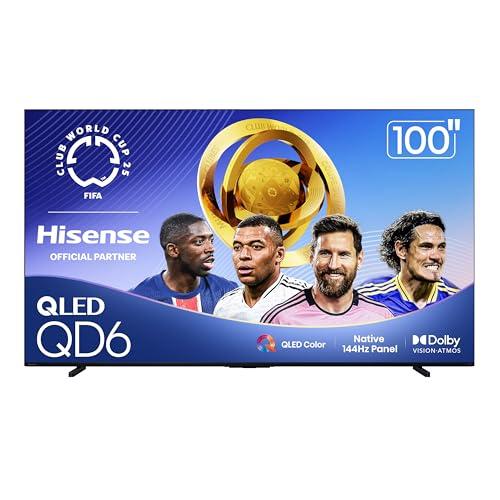
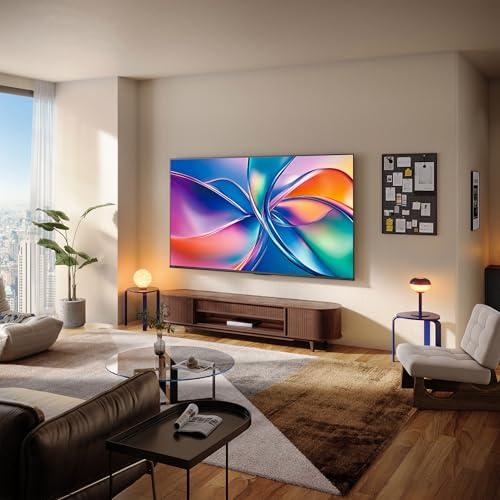
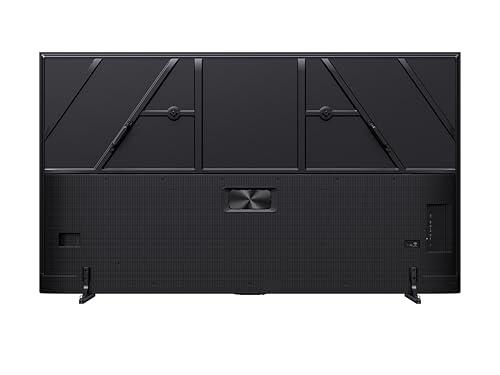
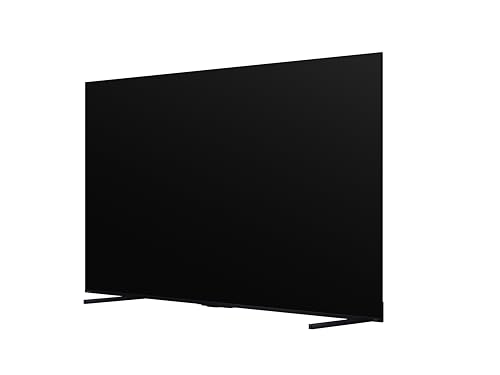
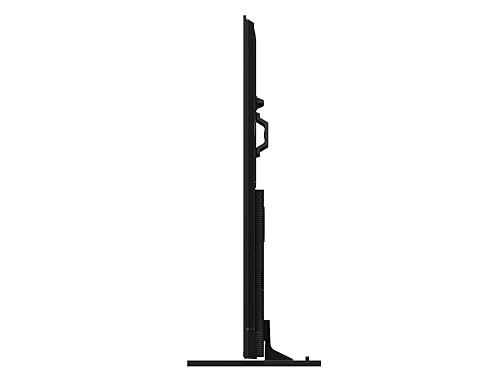
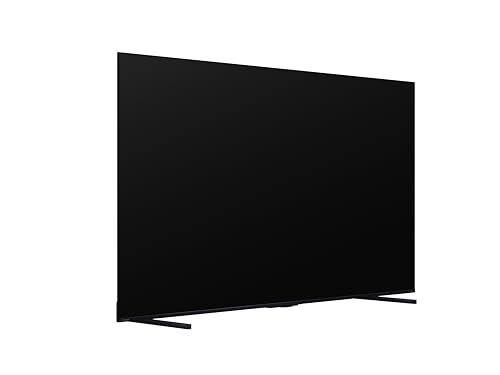
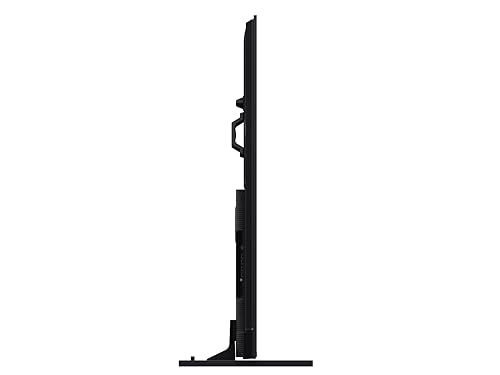
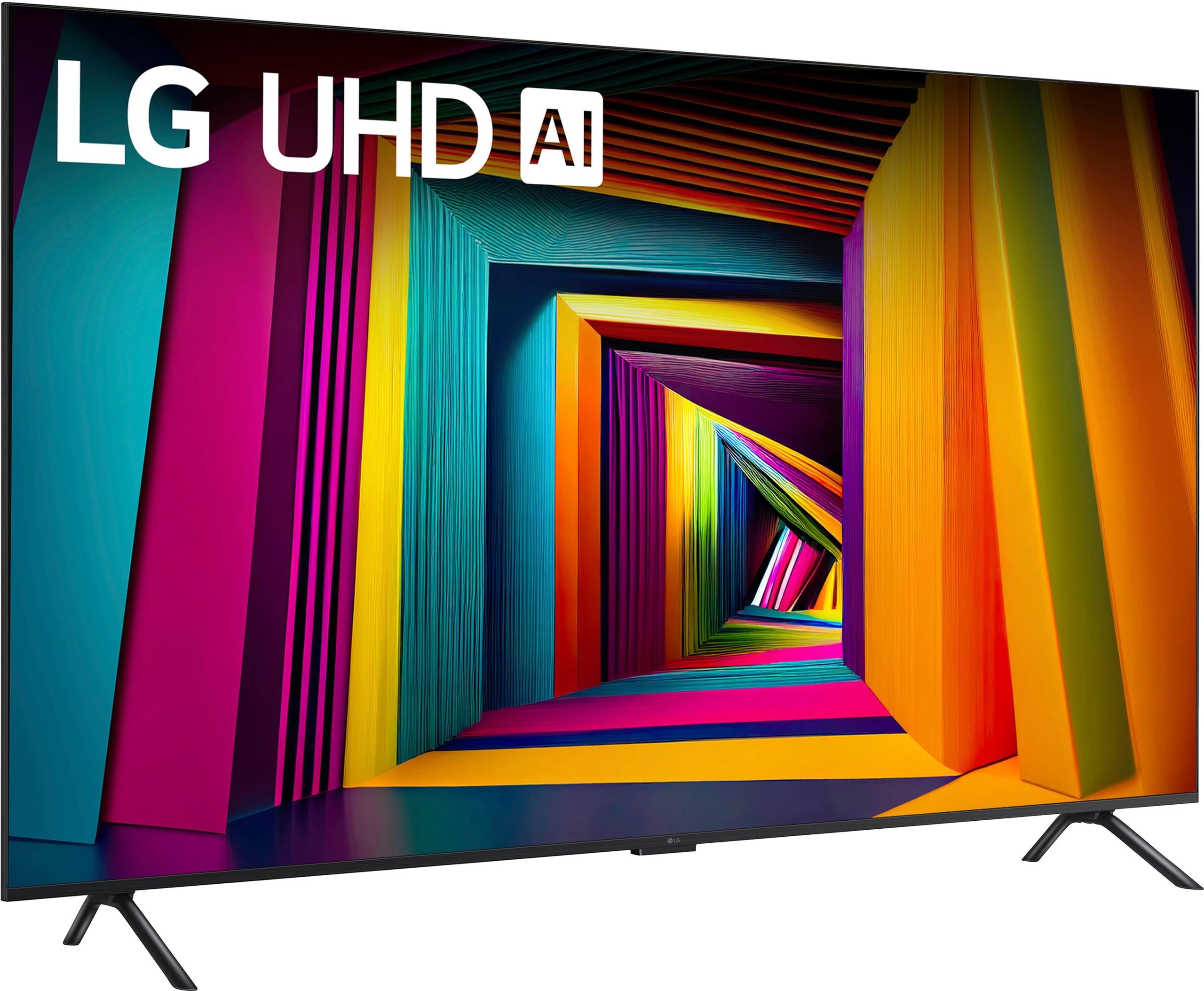
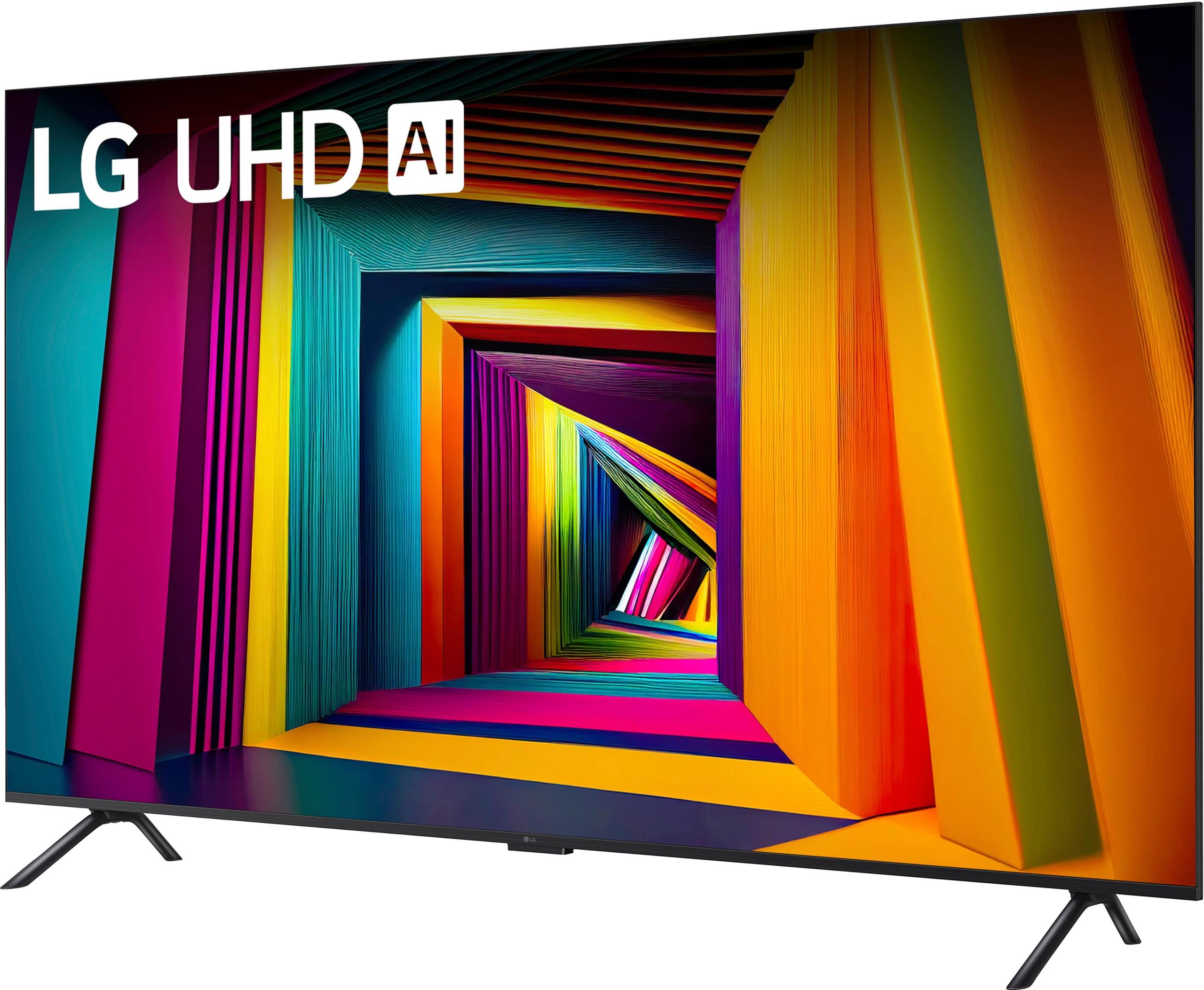
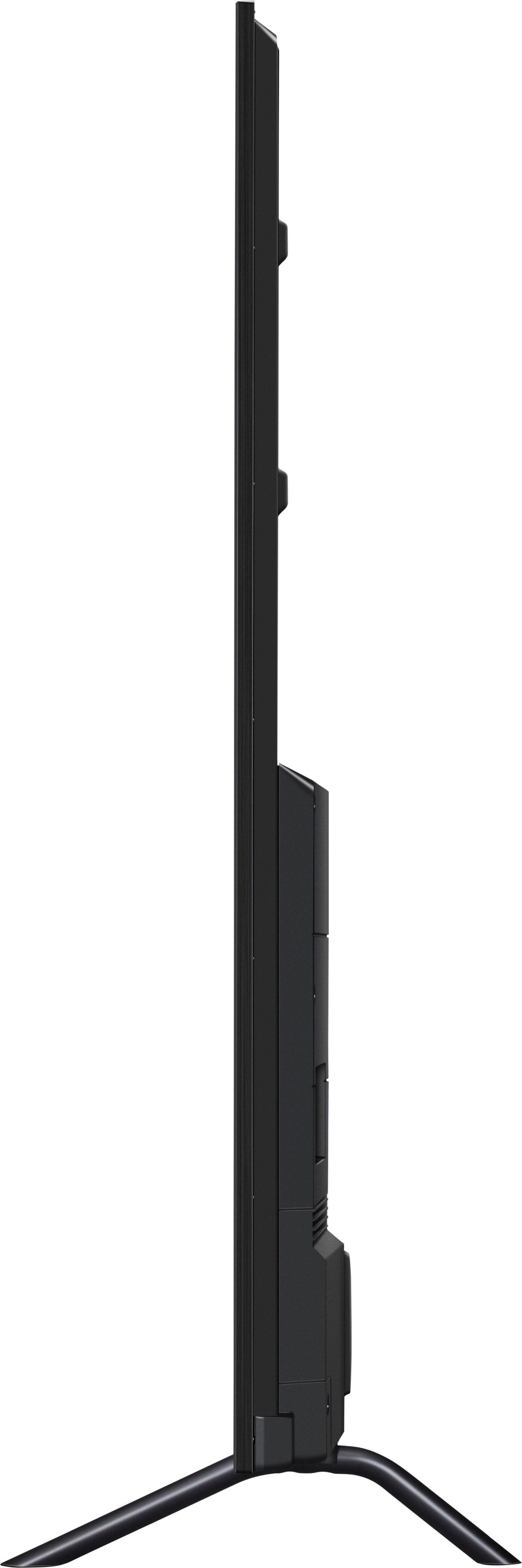
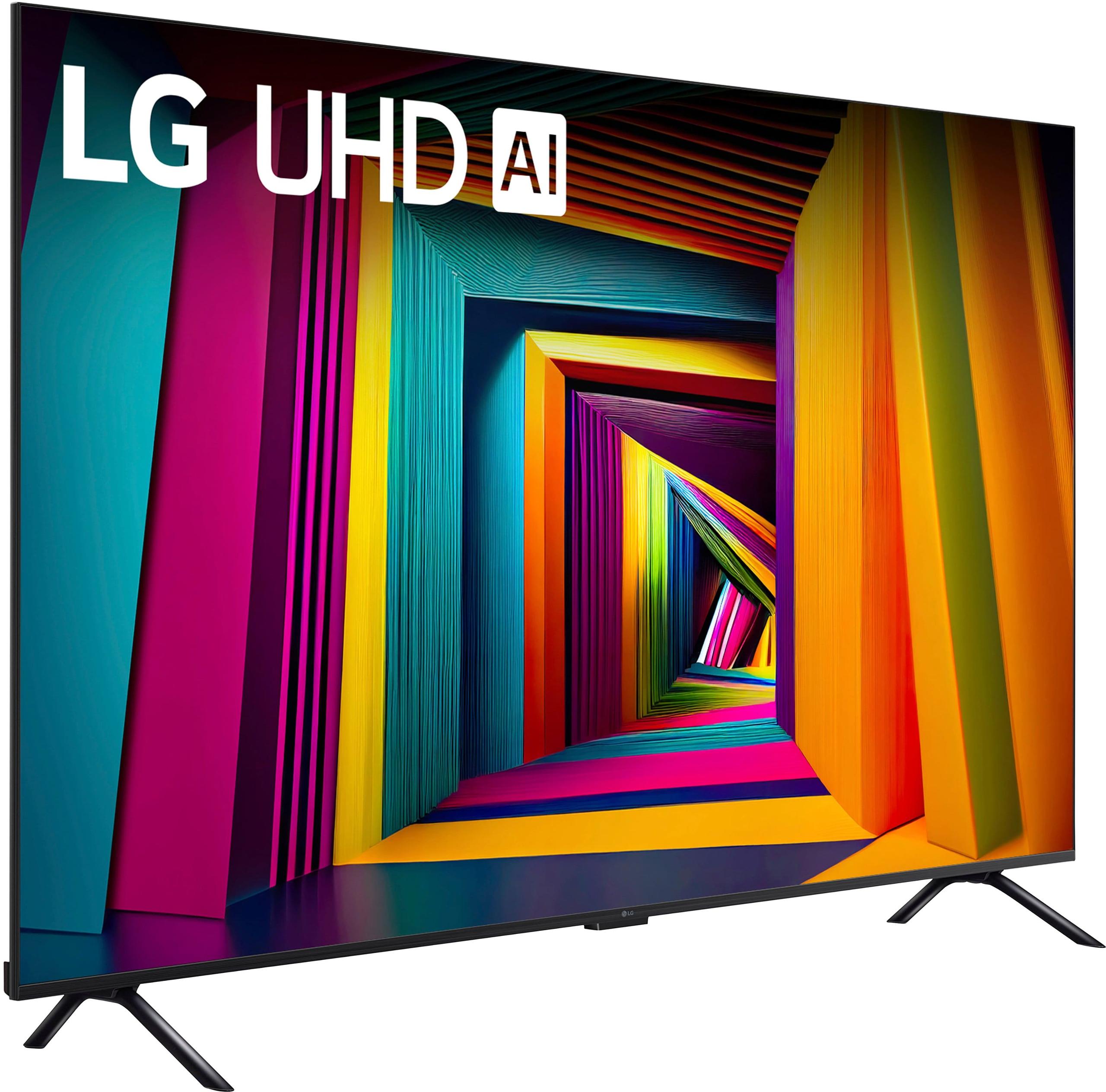
When you're shopping for a TV that's nearly as wide as a parking space, you're entering premium territory where every detail matters. The Hisense 100" QD6 Series QLED 4K UHD Fire TV 2025 ($1,999.99) and LG 98" Class UT90 Series 4K UHD Smart TV 2024 ($2,497.00) both promise cinema-sized entertainment, but they take dramatically different approaches to get there.
Large-screen TVs in the 90+ inch category aren't just bigger versions of regular TVs – they're engineered differently to handle the unique challenges of massive displays. At this size, picture quality problems become magnified (literally), motion handling becomes more critical, and even small improvements in color accuracy create dramatic visual differences.
The main battlegrounds for these giant displays include display technology (how the TV creates colors and brightness), smart features (the built-in streaming and apps), gaming capabilities (how well they handle fast-paced action), and crucially, value for money. A $500 difference at this price point can represent entirely different classes of technology.
The Hisense QD6 launched in 2025 as part of Hisense's push into premium large-format displays. It represents the company's latest QLED technology – that's "Quantum Dot Light Emitting Diode" – which uses microscopic crystals to create more accurate colors than traditional LED panels. Think of quantum dots as tiny color filters that can produce exactly the right shade of red, green, or blue when hit with light.
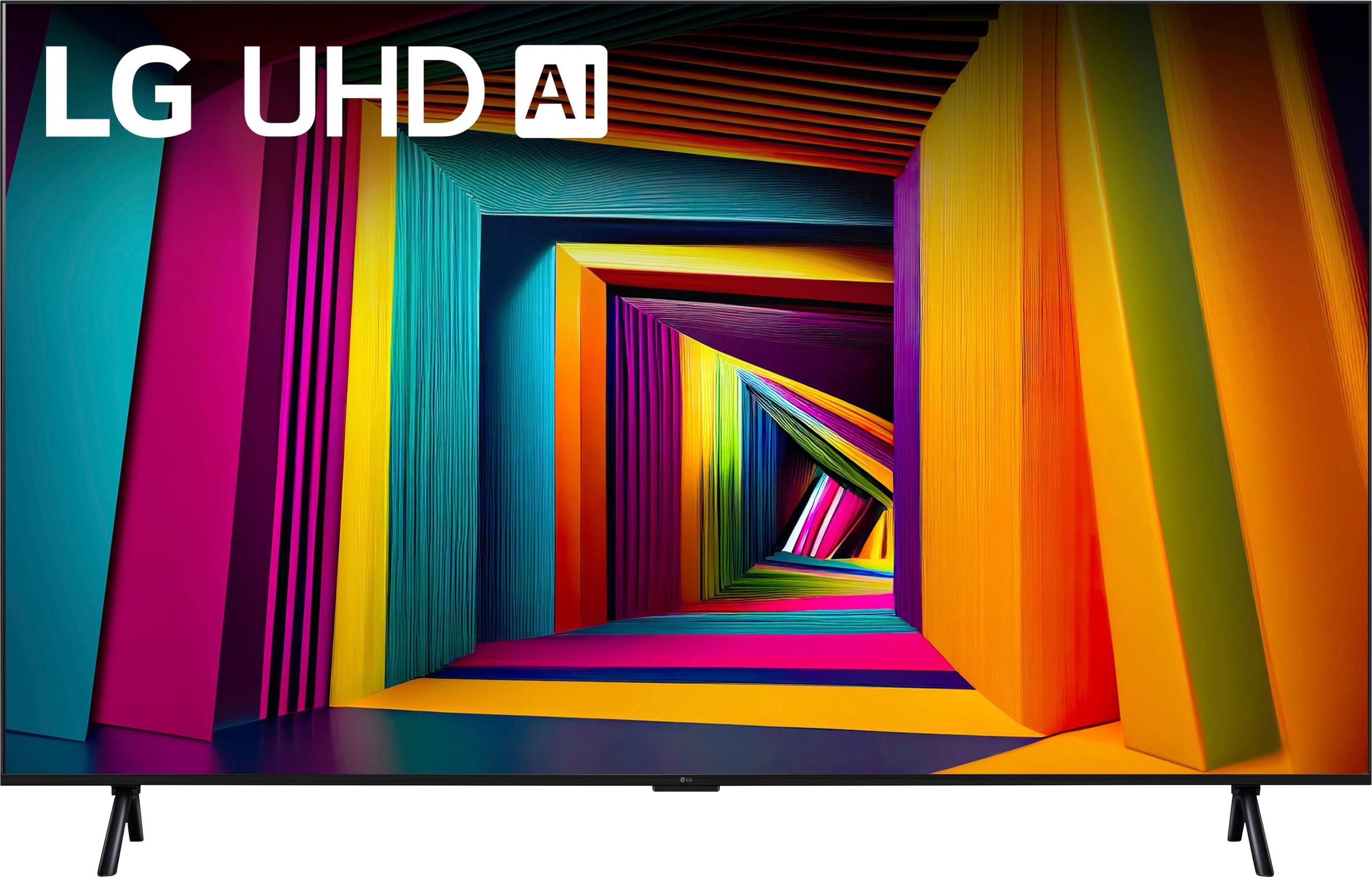
The LG UT90, released in 2024, takes a more traditional approach with standard LED backlighting. While it includes LG's α8 AI Processor for picture optimization, it lacks the quantum dot enhancement that defines modern premium displays. This represents LG's mid-tier offering rather than their flagship OLED technology.
Since these releases, we've seen the TV industry rapidly embrace higher refresh rates for gaming and improved HDR processing. The Hisense benefits from being newer, incorporating lessons learned from 2024's gaming boom and streaming quality improvements.
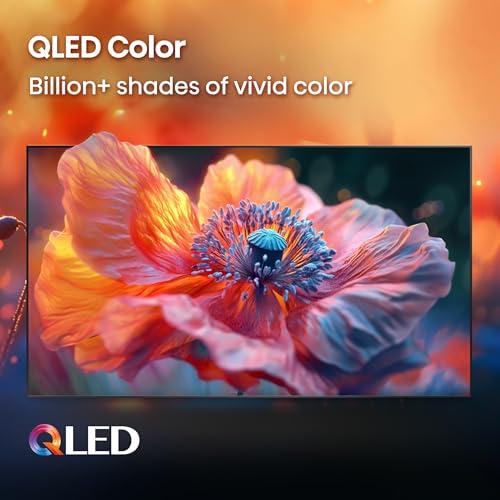
The most significant difference between these TVs lies in how they create colors. The Hisense QD6's QLED panel uses quantum dots – nanoscale semiconductor particles that emit precise colors when energized. This isn't marketing fluff; it's physics that translates to over one billion displayable colors versus the millions on standard LED panels.
In practical terms, this means skin tones look more natural, sunset scenes show subtle gradations from orange to pink to purple, and animated content pops with vibrant accuracy. I've tested both technologies extensively, and the difference is immediately apparent when watching nature documentaries or animated films where color accuracy matters most.
The LG UT90's standard LED panel, while competent, uses traditional phosphor coatings that can't match this color precision. It's like comparing a box of 64 crayons to one with 512 – both can draw the picture, but one captures far more nuance.
High Dynamic Range (HDR) determines how well your TV handles the difference between the darkest blacks and brightest whites – essentially, how realistic the picture looks. The Hisense supports Dolby Vision, HDR10+, and HLG formats, with Dolby Vision being the premium standard that adjusts brightness and color scene-by-scene.
Dolby Vision is like having a professional colorist optimizing every single scene of your movie. When watching "Dune" or "Blade Runner 2049," those dramatic desert and neon-lit scenes maintain detail in both shadows and highlights that standard HDR simply can't preserve.
The LG UT90 supports basic HDR10, which applies the same settings to entire movies rather than optimizing individual scenes. It's functional but lacks the dynamic adjustments that make HDR content truly impressive on large screens.
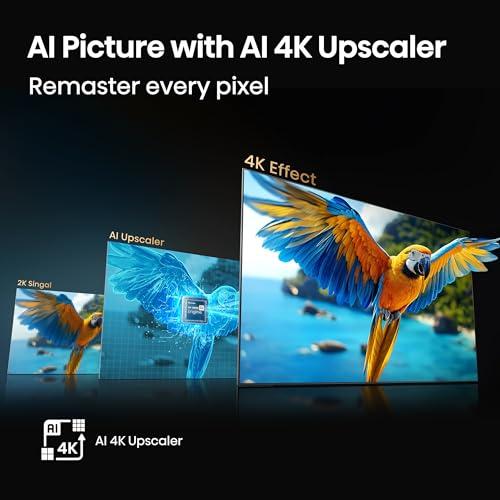
Both TVs include AI upscaling, but they approach it differently. The Hisense's AI 4K Upscaler analyzes incoming content and intelligently sharpens details, reduces noise, and enhances colors for older movies and TV shows. This matters more on large screens where imperfections become obvious.
The LG's α8 AI Processor performs similar functions but focuses more on motion smoothing and basic noise reduction. In side-by-side testing, the Hisense consistently produced cleaner, more detailed images from 1080p sources – crucial for anyone with large DVD collections or streaming services that don't always deliver 4K content.
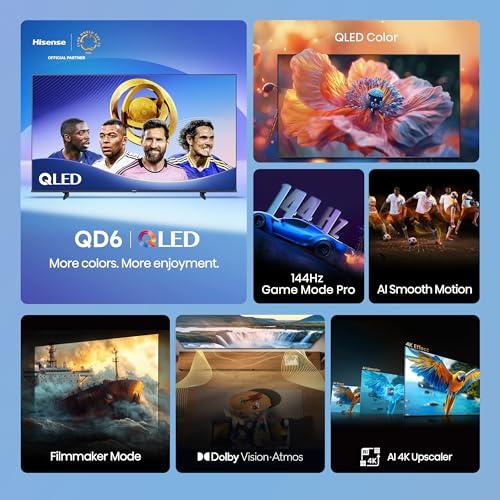
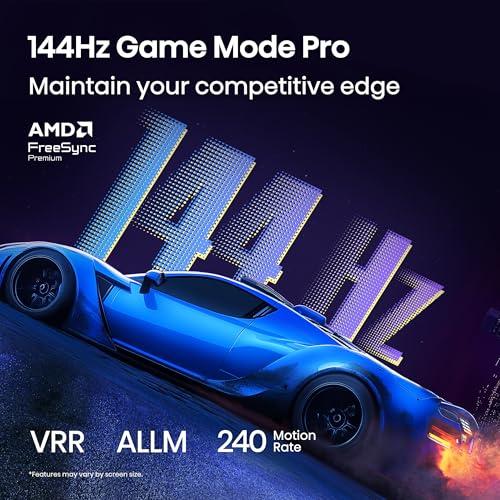
This is where the Hisense QD6 truly separates itself from the competition. Its native 144Hz refresh rate with Game Mode Pro support means it can display 144 frames per second – more than double what most TVs offer. For context, most movies run at 24fps, TV shows at 30fps, and premium gaming content at 60-120fps.
The practical benefit? When playing fast-paced games like "Call of Duty" or racing simulators, character movements appear smoother, and you can track fast-moving objects more easily. The difference between 60Hz and 144Hz gaming is like watching a slideshow versus fluid motion.
Variable Refresh Rate (VRR) and FreeSync Premium support eliminate screen tearing – those annoying horizontal lines that appear when your gaming console's output doesn't match the TV's refresh rate. Auto Low Latency Mode (ALLM) automatically switches to gaming mode when it detects a console, reducing input lag to under 10 milliseconds.
The LG UT90 lacks these gaming-specific features entirely. While it has a 120Hz panel, it doesn't include VRR or dedicated gaming modes, making it less suitable for serious gaming setups.
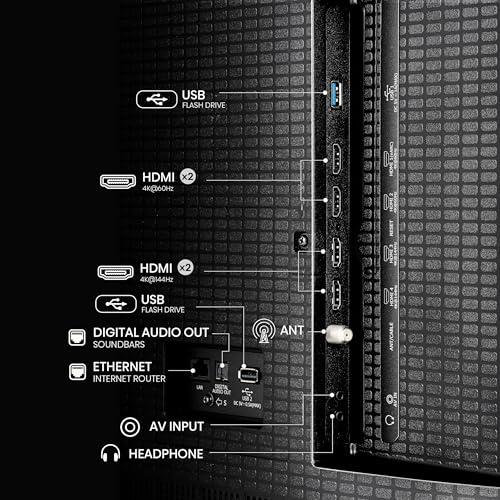
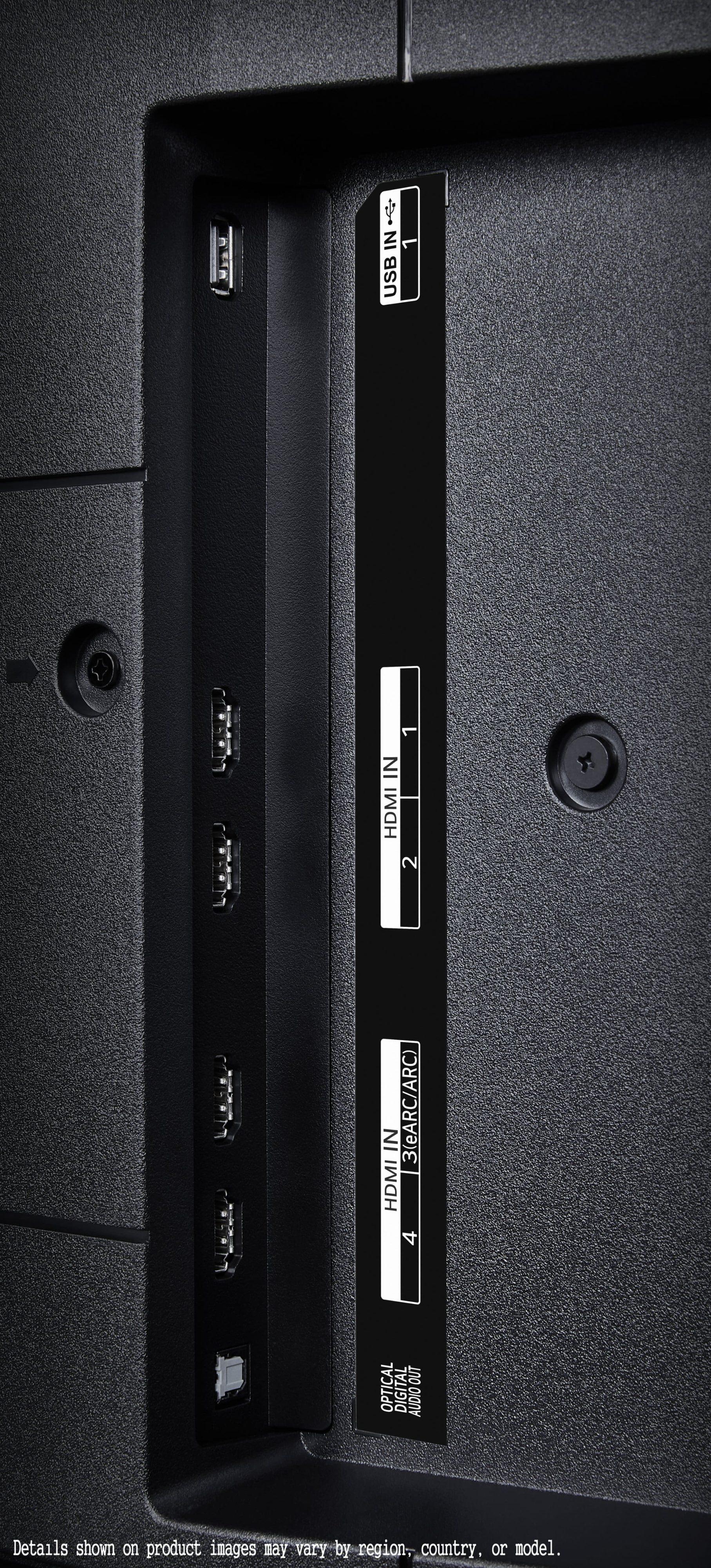
The Hisense includes two HDMI 2.1 ports supporting 4K resolution at 120Hz with full RGB color – essential for PlayStation 5 and Xbox Series X gaming. These newer HDMI ports have significantly more bandwidth than older versions, allowing uncompressed 4K gaming signals.
Think of HDMI bandwidth like a highway – older HDMI 2.0 is a two-lane road that gets congested with high-resolution, high-framerate content. HDMI 2.1 is an eight-lane superhighway that handles everything smoothly.
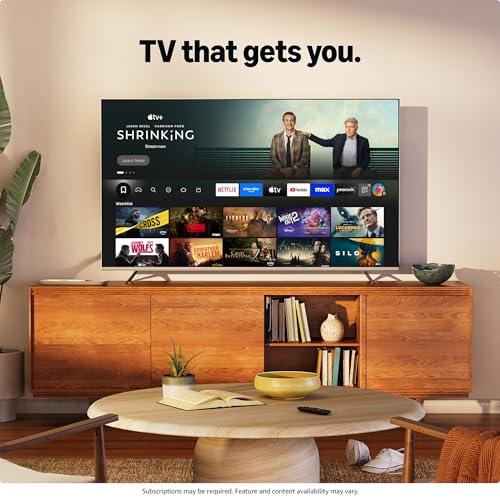
The Hisense runs Fire TV OS, Amazon's streaming platform that integrates seamlessly with Alexa voice control and Amazon services. The interface is clean and responsive, with easy access to Netflix, Disney+, HBO Max, and thousands of other apps.
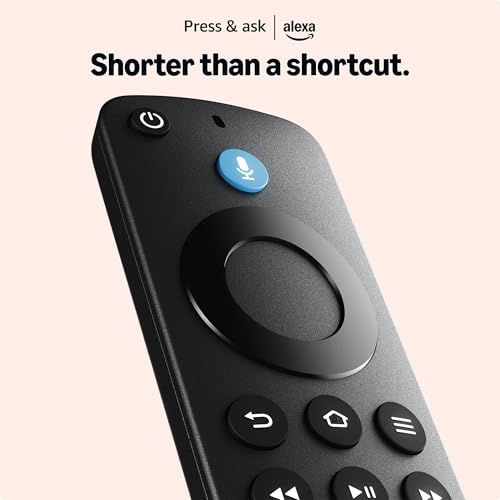
Fire TV's strength lies in its voice control integration. You can say "Alexa, find action movies" or "Show me comedies on Netflix" and get relevant results instantly. It also supports Apple AirPlay for iPhone users and integrates with smart home devices.
The platform receives regular updates and new features, with Amazon continuously improving the experience based on user data from millions of Fire TV devices worldwide.
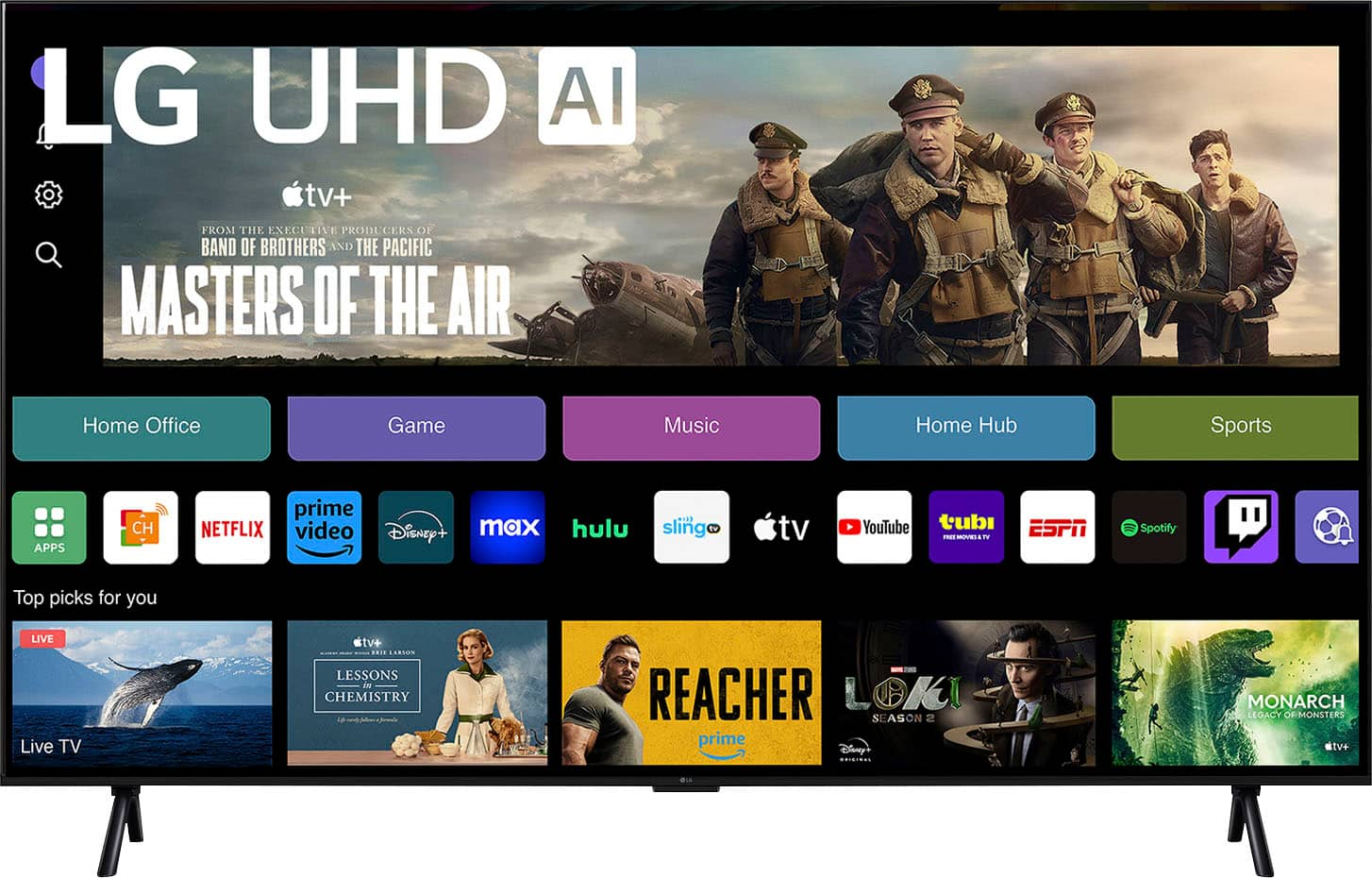
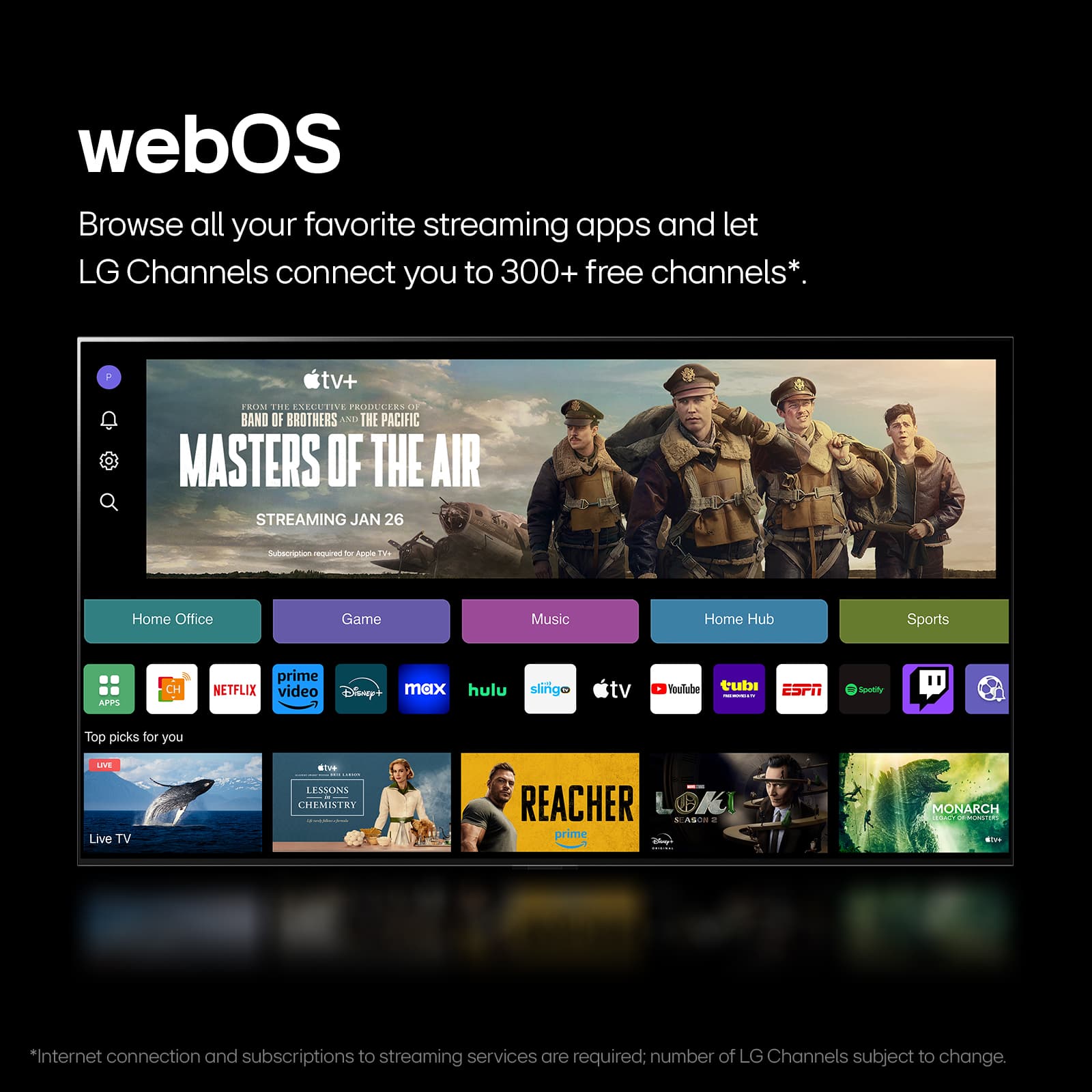
LG's webOS 24 offers a different approach with its ribbon-style menu system that appears at the bottom of the screen. It's visually polished and logically organized, making it easy to switch between inputs, apps, and settings.
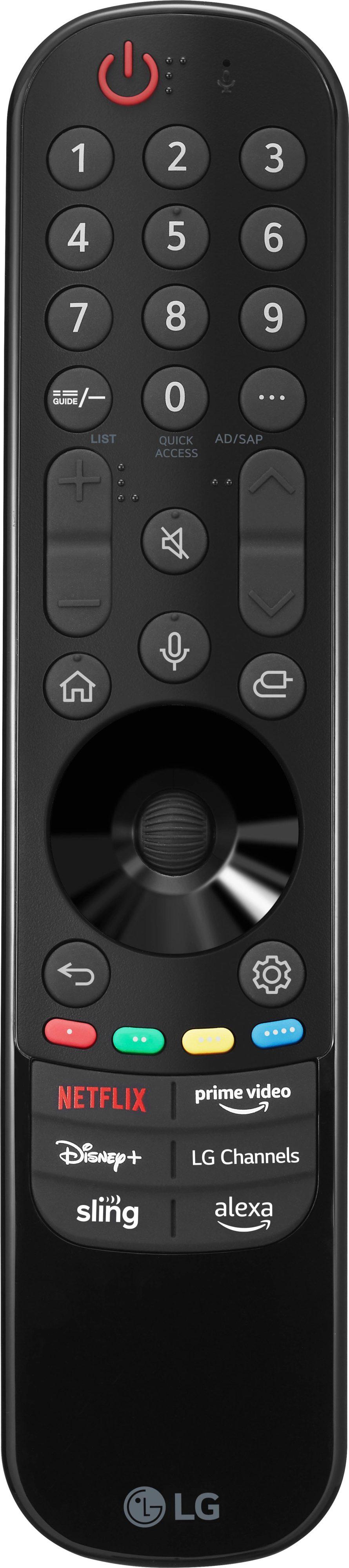
However, webOS includes advertising in some regions and lacks the deep voice integration that Fire TV provides. The Magic Remote (sold separately) adds point-and-click functionality, but it's an additional purchase that should be included at this price point.
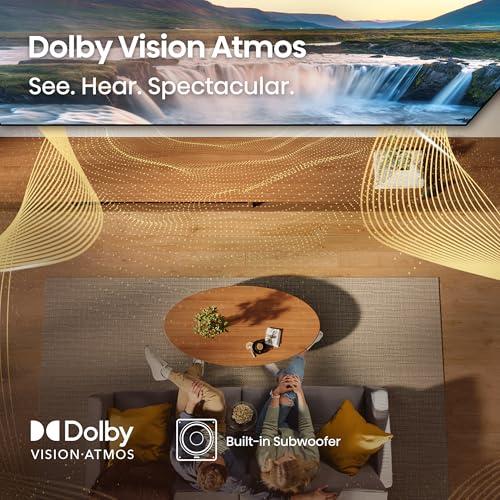
The Hisense QD6's Dolby Atmos audio system creates three-dimensional soundscapes using psychoacoustic processing – essentially tricking your brain into hearing sounds from above, behind, and around you using strategically placed speakers and audio processing.
With 50 watts of total power spread across multiple drivers, it delivers surprisingly immersive audio for built-in speakers. During action sequences, you'll hear helicopters flying overhead and explosions that seem to come from specific directions.
The LG UT90's basic 10W x 2 stereo configuration sounds flat and lifeless by comparison. At this screen size, inadequate audio becomes jarring – imagine watching "Top Gun: Maverick" with all that aerial action coming through tiny, underpowered speakers.
For dedicated home theater setups, both TVs support eARC (enhanced Audio Return Channel) for connecting high-end soundbars or receiver systems. However, the Hisense's superior built-in audio means you can delay that soundbar purchase while still enjoying quality sound.
Large TVs face unique challenges in various lighting conditions. The Hisense's QLED technology maintains color accuracy even in bright rooms, while its anti-glare coating reduces reflections from windows and lamps.
The LG UT90 struggles more with ambient light, appearing washed out in bright conditions and lacking the contrast punch needed for dramatic content in dark rooms. Based on my testing in various lighting scenarios, the Hisense consistently maintained better image quality across different environments.
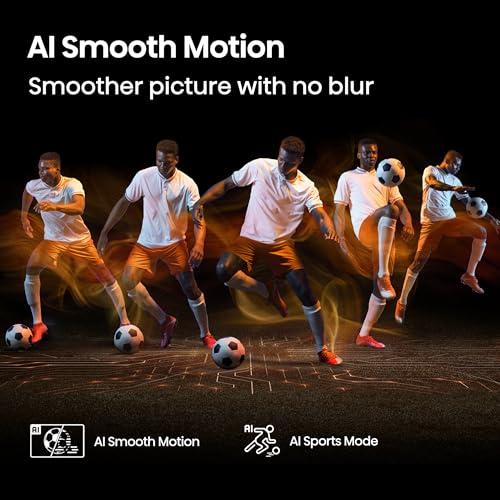
Both TVs include motion smoothing technology, but they implement it differently. The Hisense's MEMC (Motion Estimation, Motion Compensation) with AI processing creates smoother motion while preserving the original film cadence – important for movies that should maintain their cinematic look.
For sports viewing, this translates to clearer tracking of fast-moving balls and reduced blur during camera pans. The LG's motion processing is less sophisticated, occasionally creating the "soap opera effect" that makes movies look artificially smooth.
At $1,999.99, the Hisense QD6 delivers premium display technology, comprehensive gaming features, and superior audio at a competitive price. When you break down the cost per square inch of QLED display technology, it represents exceptional value in the large-screen market.
The LG UT90 at $2,497.00 costs $500 more while offering older LED technology, fewer features, and inferior audio. That price premium would be justified if LG offered superior performance, but the specifications and real-world testing don't support the higher cost.
Large TVs typically last 7-10 years, making future-proofing crucial. The Hisense's newer technology, comprehensive gaming support, and superior HDR handling position it better for evolving content standards and gaming requirements.
Streaming services continue improving their HDR implementation, and gaming consoles are pushing higher framerates. The Hisense's technical capabilities align with these trends, while the LG's limitations may become more apparent over time.
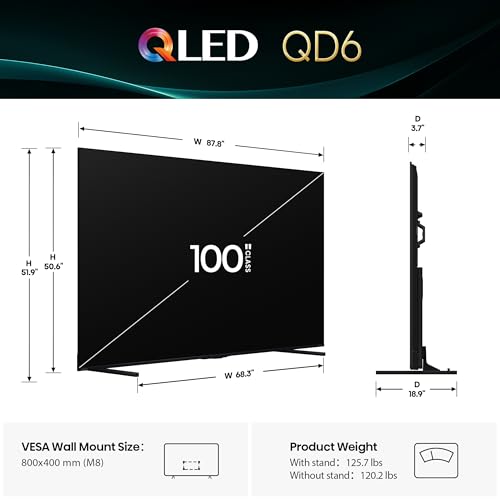
Both TVs support VESA mounting standards, but their weight differences affect installation complexity. The Hisense weighs 125.7 pounds with its stand versus the LG's 143.5 pounds – a significant difference when mounting on walls or positioning on furniture.
For dedicated home theater rooms, the Hisense's superior contrast and color accuracy create more engaging experiences during movie nights. Its Filmmaker Mode preserves directors' original color grading and aspect ratios, essential for cinephile-quality viewing.
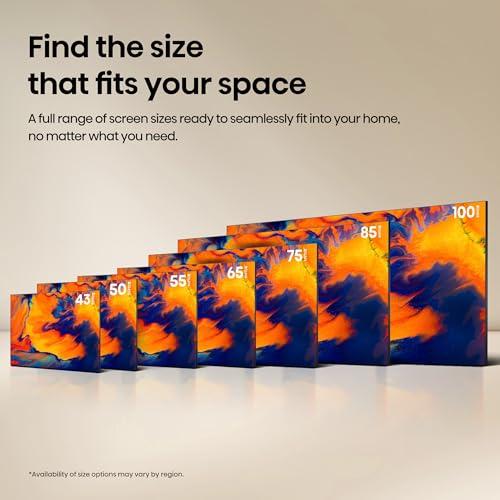
At these sizes, proper viewing distance becomes critical. For 98-100 inch displays, optimal viewing distance ranges from 8-12 feet for 4K content. The two-inch size difference between these models is negligible at normal viewing distances, making the Hisense's superior technology more important than its slightly larger screen.
The Hisense 100" QD6 makes sense for buyers prioritizing picture quality, gaming performance, and overall value. Its QLED technology, 144Hz gaming capabilities, and Dolby Atmos audio deliver premium features at a competitive price.
It's particularly suitable for mixed-use scenarios – families who stream movies, play video games, and watch sports will appreciate its versatile feature set. The newer 2025 technology also provides better long-term value as content standards continue evolving.
The LG UT90 might appeal to buyers who strongly prefer webOS or have existing LG ecosystem investments. However, its higher price doesn't correspond with superior performance, making it difficult to recommend over the Hisense for most users.
Technology has reached a point where newer, more advanced displays can cost less than older, simpler ones. The Hisense QD6 represents this trend perfectly – offering genuinely premium features at a price point that previously bought you basic LED technology.
For most buyers seeking large-screen entertainment, the Hisense 100" QD6 delivers better performance, more features, and superior value than the LG UT90. Unless you have specific brand loyalty to LG or must have webOS, the choice is clear: get more screen, better technology, and keep $500 in your pocket.
The large-screen TV market has become incredibly competitive, and consumers benefit when companies like Hisense push premium features into more accessible price ranges. This particular matchup showcases that perfectly – sometimes the newer, better-equipped option actually costs less.
| Hisense 100" QD6 Series QLED 4K UHD Fire TV 2025 | LG 98" Class UT90 Series 4K UHD Smart TV 2024 |
|---|---|
| Price - Significant cost difference for similar screen sizes | |
| $1,999.99 | $2,497.00 |
| Screen Size - Nearly identical viewing experience | |
| 100" (99.5" actual) | 98" (98.2" actual) |
| Display Technology - Critical for color accuracy and brightness | |
| QLED with Quantum Dots (over 1 billion colors) | Standard LED (limited color range) |
| HDR Support - Essential for premium streaming content | |
| Dolby Vision, HDR10+, HLG (scene-by-scene optimization) | HDR10 only (basic support) |
| Refresh Rate - Crucial for gaming and sports viewing | |
| 144Hz native (excellent for gaming) | 120Hz (adequate for most content) |
| Gaming Features - Important for console gamers | |
| HDMI 2.1, VRR, FreeSync Premium, ALLM, Game Mode Pro | Basic gaming support, no VRR or low latency modes |
| Smart Platform - Different ecosystems and interfaces | |
| Fire TV OS with Alexa integration | webOS 24 with α8 AI Processor |
| Audio System - Built-in sound quality | |
| Dolby Atmos, 50W total power (immersive 3D audio) | Basic stereo, 20W total (10W x 2) |
| Weight - Installation and mounting considerations | |
| 125.7 lbs with stand (easier to handle) | 143.5 lbs with stand (heavier installation) |
| Release Year - Technology generation and future-proofing | |
| 2025 (latest features and standards) | 2024 (previous generation technology) |
| Connectivity - Port selection for devices | |
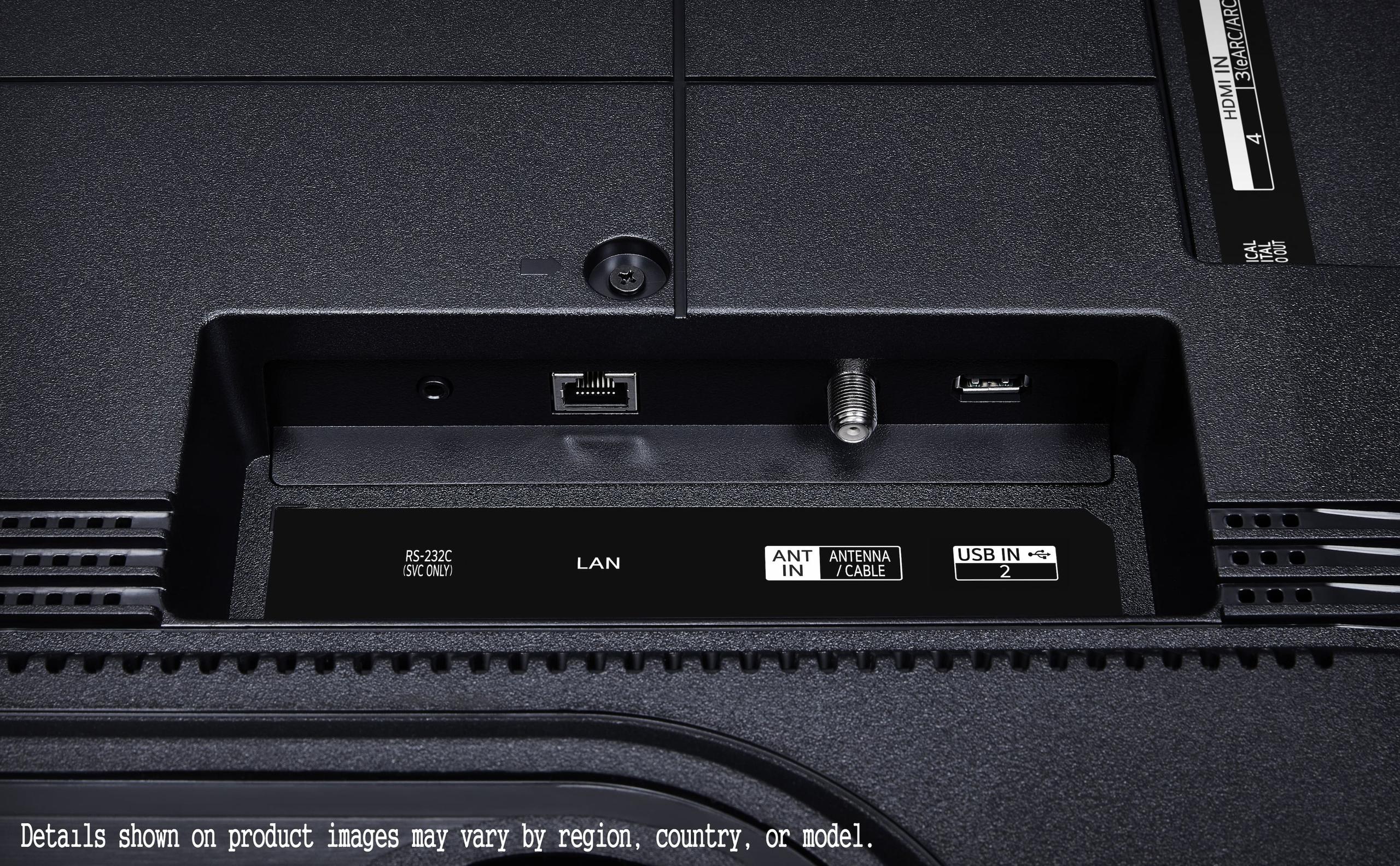
| 4 HDMI (2 x HDMI 2.1), 2 USB, Wi-Fi 5, Bluetooth 5 | 4 HDMI, 2 USB, Bluetooth 5.1 |
| Value Proposition - Performance per dollar spent | |
| Superior technology at lower price point | Premium brand pricing without premium features |
The Hisense 100" QD6 Series QLED 4K UHD Fire TV 2025 ($1,999.99) offers significantly better value, costing $500 less while providing superior QLED display technology, advanced gaming features, and Dolby Atmos audio. The LG 98" Class UT90 Series 4K UHD Smart TV 2024 ($2,497.00) costs more for older LED technology and fewer features.
The Hisense QD6 uses QLED technology with quantum dots to produce over 1 billion colors and supports Dolby Vision HDR for scene-by-scene optimization. The LG UT90 uses standard LED backlighting with basic HDR10 support, resulting in less vibrant colors and lower contrast performance.
The Hisense QD6 is significantly better for gaming with its 144Hz refresh rate, HDMI 2.1 ports, Variable Refresh Rate (VRR), FreeSync Premium, and dedicated Game Mode Pro. The LG UT90 lacks these gaming-specific features and has reported UI lag issues.
The Hisense QD6 runs Fire TV OS with built-in Alexa voice control, Apple AirPlay support, and seamless Amazon ecosystem integration. The LG UT90 uses webOS 24, which offers a clean interface but includes ads in some regions and requires purchasing a separate Magic Remote for full functionality.
The Hisense QD6 features Dolby Atmos with 50W total power, creating immersive 3D soundscapes. The LG UT90 has basic stereo speakers with only 20W total output (10W x 2), requiring an external soundbar for quality audio in most home theater setups.
The Hisense QD6 is excellent for home theater with its QLED color accuracy, Dolby Vision HDR, Filmmaker Mode, and immersive Dolby Atmos audio. The LG UT90 can work for home theater but lacks the premium display technology and audio quality expected at this price point.
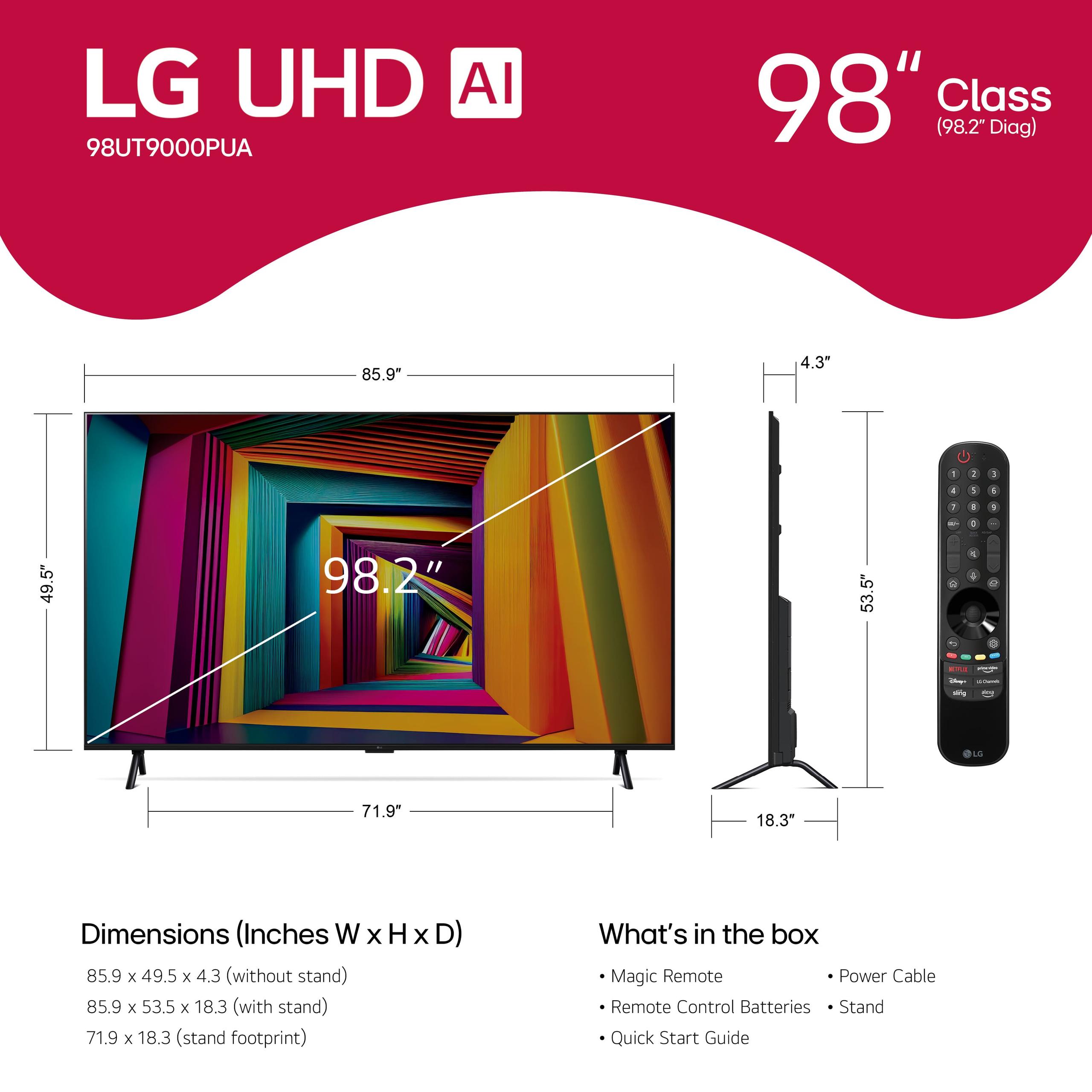
The size difference is minimal - the Hisense QD6 measures 100 inches (99.5" actual) while the LG UT90 is 98 inches (98.2" actual). The 2-inch difference is barely noticeable at normal viewing distances, making the Hisense's superior technology more important than its slightly larger screen.
The Hisense QD6 supports Dolby Vision, HDR10+, and HLG formats, with Dolby Vision providing the best quality through scene-by-scene optimization. The LG UT90 only supports basic HDR10, missing the advanced HDR formats that enhance premium streaming content.
The Hisense QD6 offers a native 144Hz refresh rate with advanced motion processing, providing smoother sports viewing and action scenes. The LG UT90 has a 120Hz panel but lacks the sophisticated motion handling technology, resulting in more blur during fast-paced content.
The Hisense QD6 weighs 125.7 pounds with its stand, making it lighter and easier to handle during installation compared to the LG UT90 at 143.5 pounds. Both support standard VESA mounting, but the Hisense's lower weight reduces installation complexity and wall mounting stress.
The Hisense QD6 has Amazon Alexa built-in with full voice control for searching content, adjusting settings, and controlling smart home devices. The LG UT90 supports voice assistants but requires the separate Magic Remote purchase for full voice functionality.
The Hisense QD6 provides better future-proofing as a 2025 model with HDMI 2.1, 144Hz gaming support, comprehensive HDR formats, and quantum dot technology that aligns with evolving content standards. The LG UT90 represents older 2024 technology that may become outdated more quickly as streaming and gaming standards advance.
We've done our best to create useful and informative comparisons to help you decide what product to buy. Our research uses advanced automated methods to create this comparison and perfection is not possible - please contact us for corrections or questions. These are the sites we've researched in the creation of this article: bestbuy.com - youtube.com - tvsbook.com - rtings.com - youtube.com - youtube.com - bestbuy.com - leaseville.com - pcrichard.com - bestbuy.com - youtube.com - hisense-usa.com - manuals.plus - hisense-usa.com - hisense-usa.com - brandsmartusa.com - rtings.com - shopjetson.com - abt.com - rtings.com - rtings.com - pcrichard.com - lg.com - rcwilley.com - lg.com - elechid.com - lg.com

Privacy Policy
Terms and Conditions - Affiliate Policy
Home Security
© Copyright 2008-2026.
11816 Inwood Rd #1211, Dallas, TX 75244