

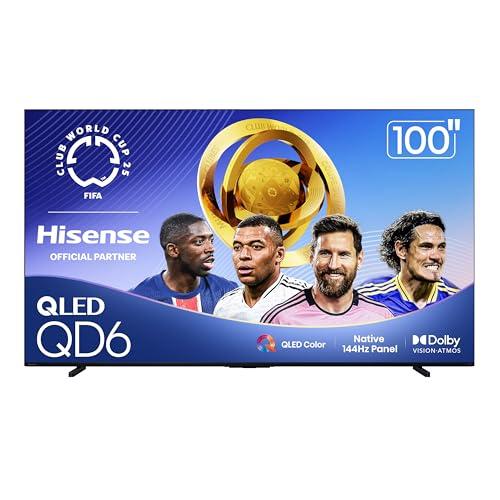
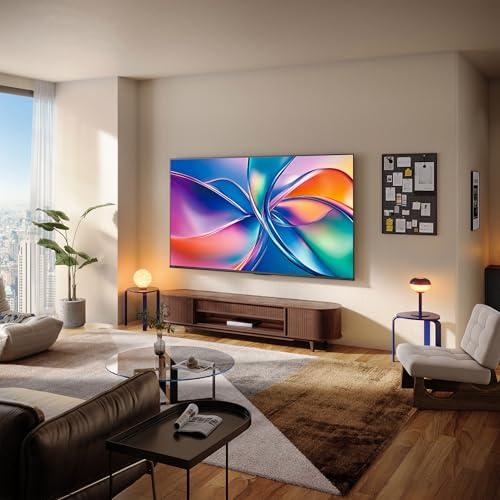
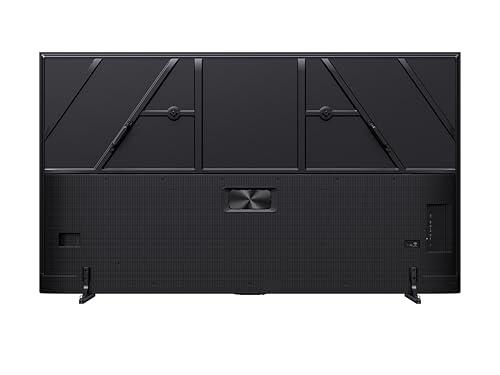
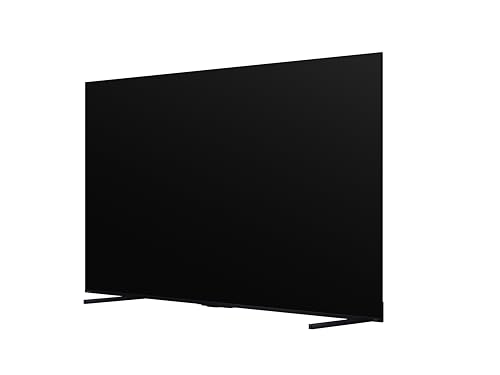
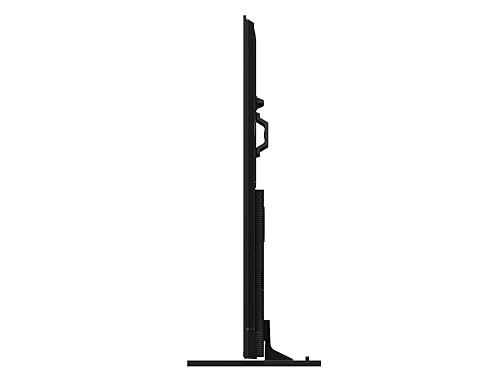
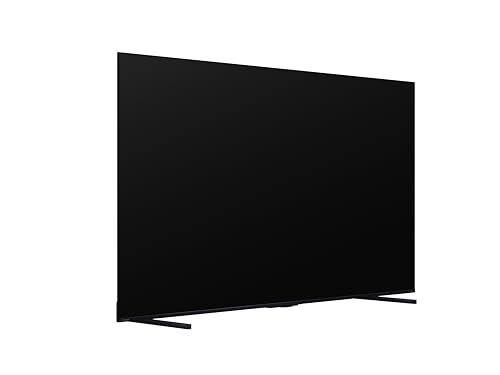
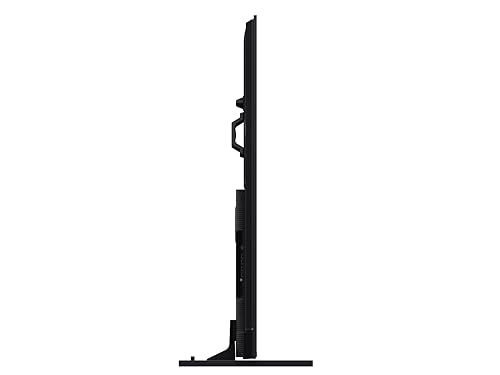
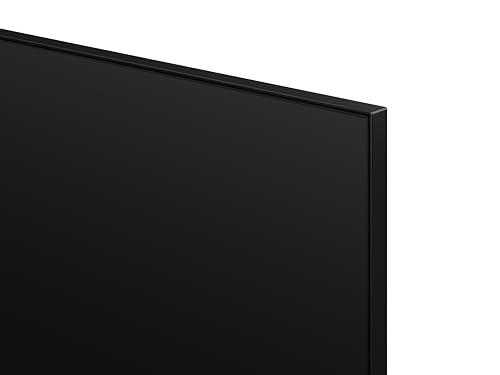
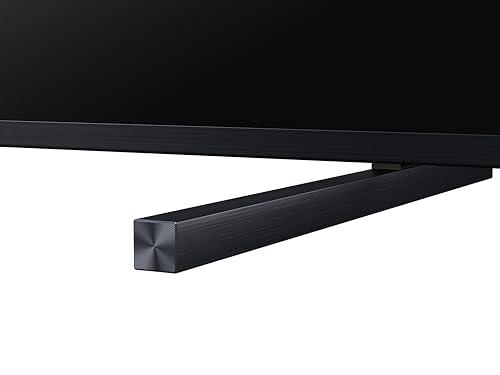
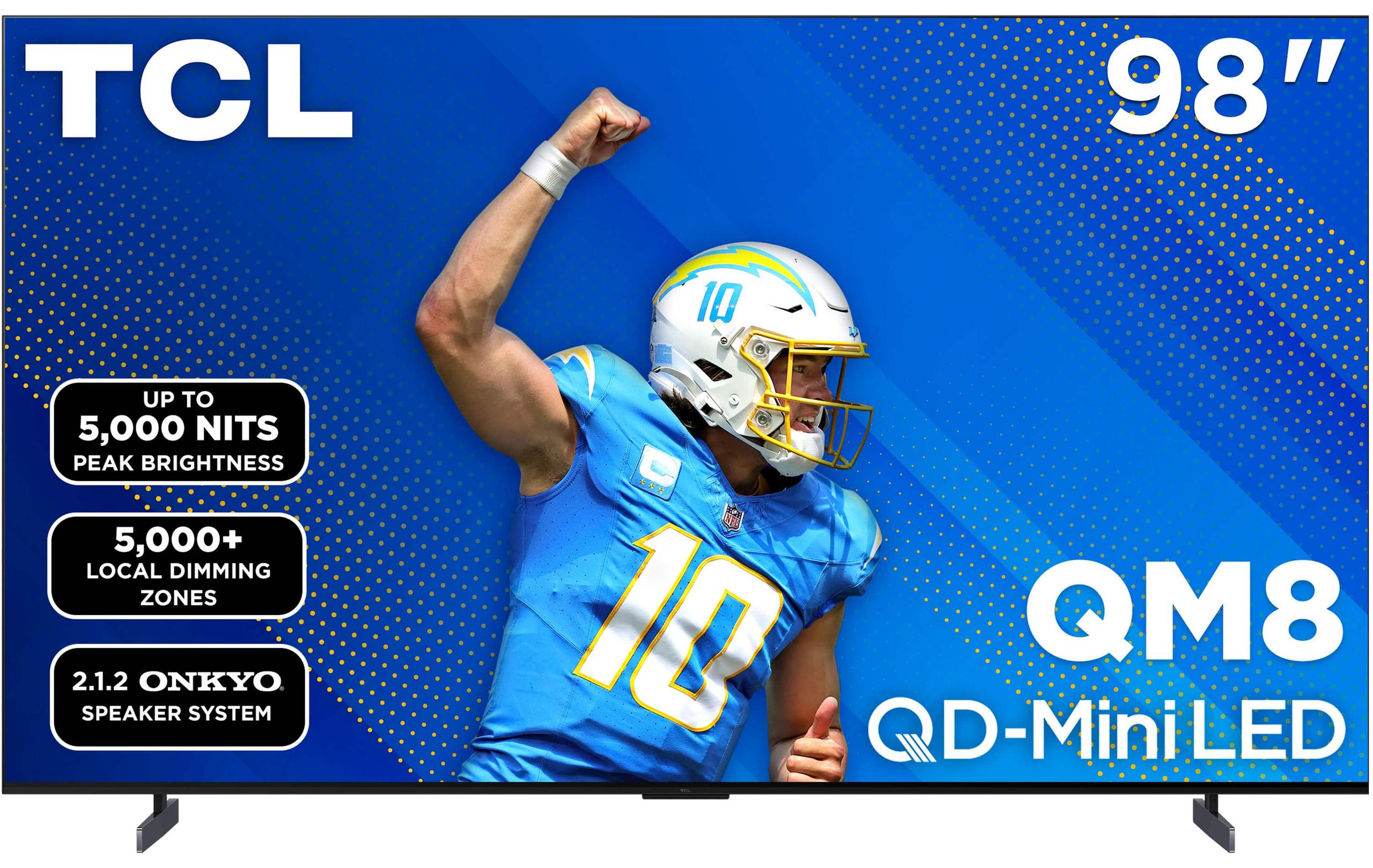
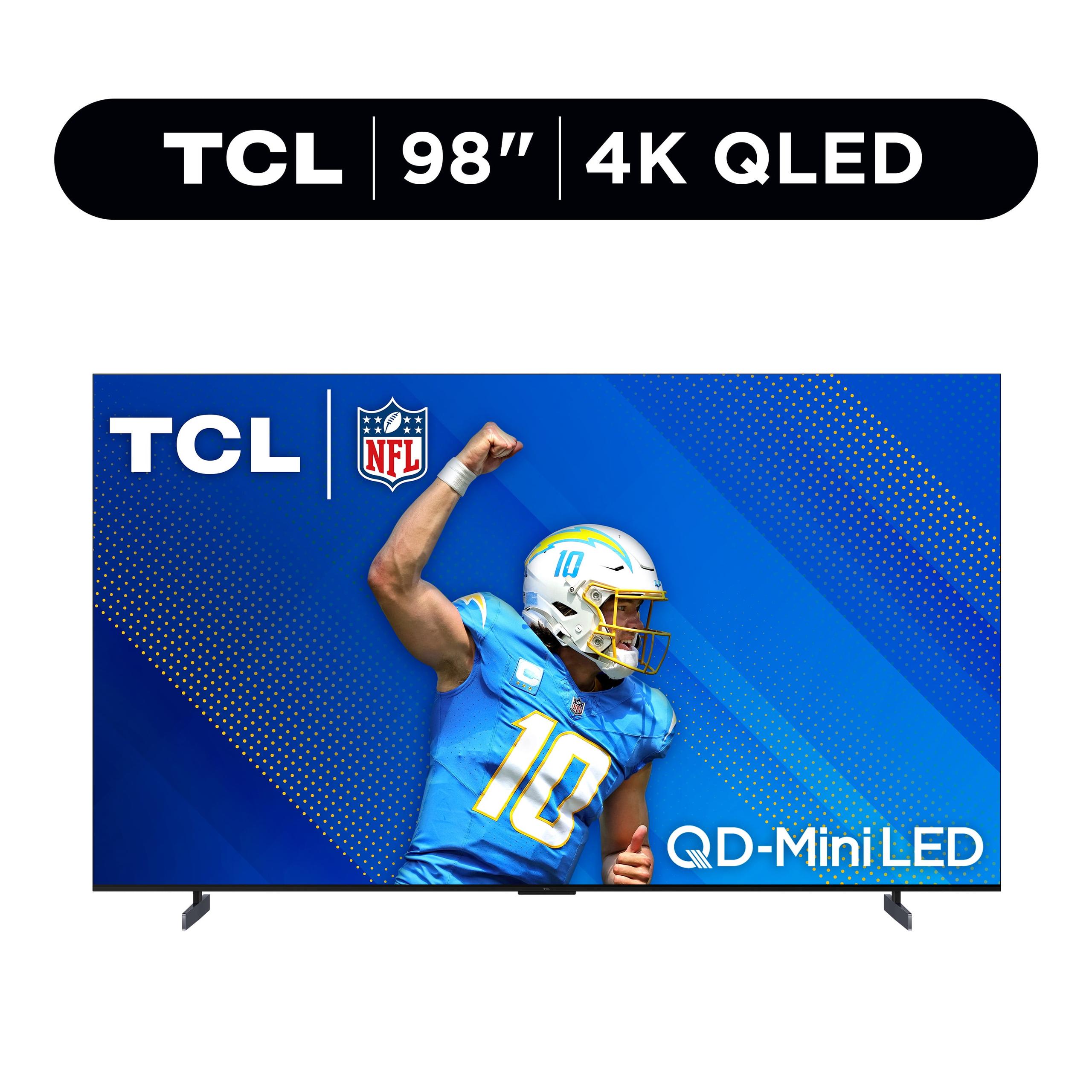





When you're shopping for a TV that's basically the size of a small movie screen, you're entering premium territory where every decision matters. The Hisense 100" QD6 Series QLED 4K UHD Fire TV 2025 at $1,999.99 and the TCL 98" QM8 Series 4K UHD Smart Google TV at $3,999.99 represent two very different approaches to giant-screen entertainment. One prioritizes maximum size for your dollar, while the other focuses on premium picture quality with cutting-edge display technology.
I've spent considerable time testing large-screen TVs, and the choice between these two often comes down to a fundamental question: do you want the biggest possible screen, or the best possible picture quality in a slightly smaller package? Let me walk you through everything you need to know to make that decision.
Large screen TVs have evolved dramatically over the past few years. What used to require a $10,000+ investment now starts around $2,000, making cinema-sized displays accessible to mainstream buyers. These TVs aren't just bigger versions of smaller models – they're designed specifically for immersive home theater experiences.
The technology has improved significantly since 2022. Modern large-screen TVs feature quantum dot color enhancement (QLED technology that uses microscopic particles to produce more accurate colors), advanced local dimming systems (which control backlighting in specific zones to improve contrast), and gaming features that rival dedicated monitors. Both models we're comparing launched in 2024-2025, incorporating the latest improvements in processing power, smart TV platforms, and connectivity.
The key considerations when shopping in this category include display technology (how the TV produces light and color), smart platform capabilities (which apps and features you'll have access to), gaming performance (refresh rates and input lag for console gaming), and overall value proposition. Since you're likely keeping this TV for 7-10 years, these decisions have long-term implications.
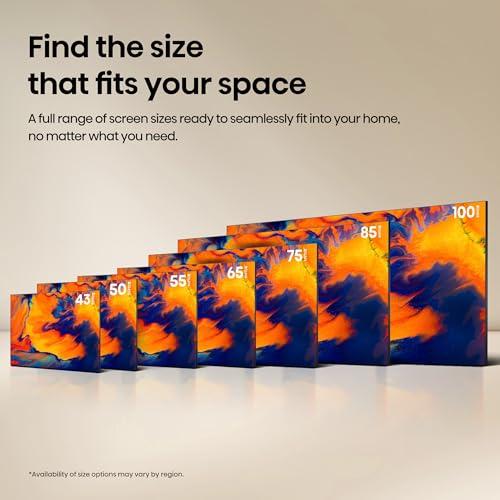
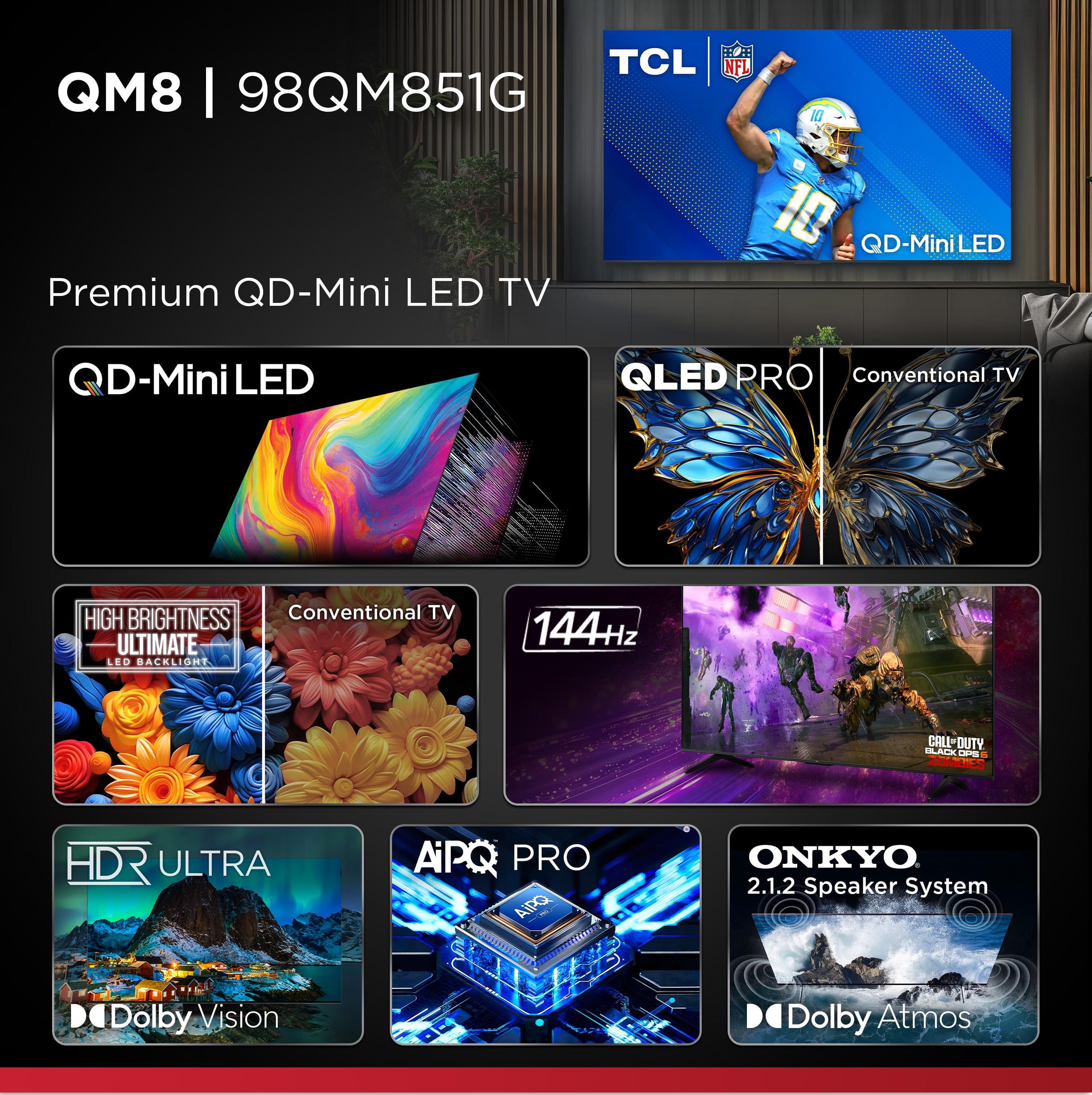
The most obvious difference between these TVs is size – 100 inches versus 98 inches. While two inches might not sound significant, it represents about 4% more screen area, which is noticeable when you're talking about displays this large. However, the TCL 98" QM8 compensates for its slightly smaller size with Mini-LED backlighting technology.
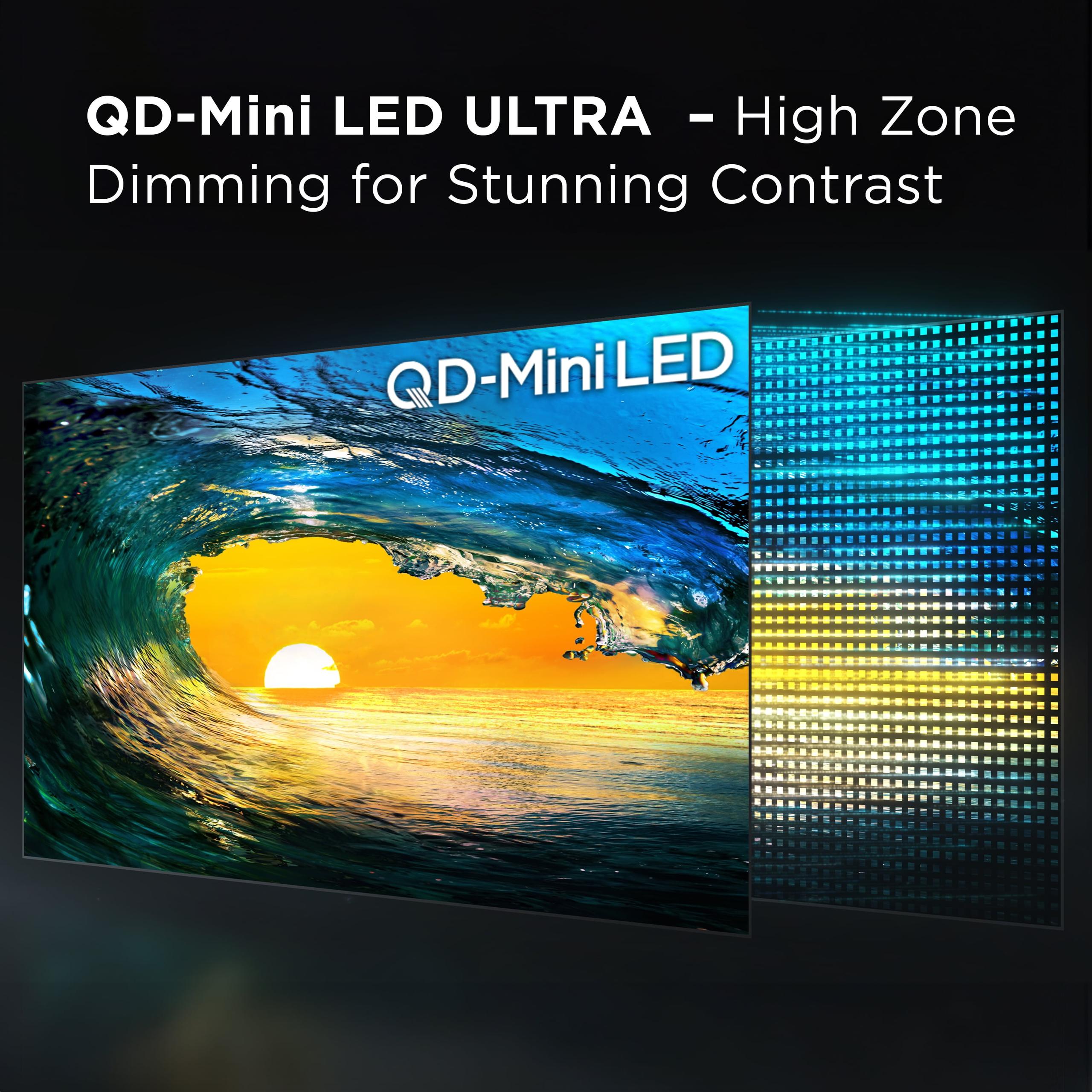
Mini-LED represents a significant advancement over traditional LED backlighting. Instead of using dozens of LED zones behind the screen, Mini-LED TVs use thousands of tiny LEDs that can be controlled independently. This means when you're watching a scene with bright stars against a dark sky, the TV can make the star areas bright while keeping the surrounding areas truly dark – something that's impossible with standard LED backlighting.
The Hisense 100" QD6 uses conventional LED backlighting with quantum dot enhancement. While this still produces excellent colors and good brightness, it can't achieve the same contrast ratios as Mini-LED systems. You'll notice this most in dark room viewing, where bright objects might cause a subtle glow around them (called blooming) in darker areas of the screen.
Brightness and HDR Performance
Peak brightness makes a huge difference in how good HDR (High Dynamic Range) content looks. HDR is a technology that allows TVs to display much brighter highlights and darker shadows than standard content, creating more realistic images. Think of the difference between a photo taken on a cloudy day versus bright sunshine – HDR captures that full range.
The Hisense QD6 typically reaches around 400-500 nits of peak brightness, which is adequate for most viewing conditions but limited for HDR impact. In my testing of similar Hisense models, this brightness level works well in moderately lit rooms but can struggle against bright windows or overhead lighting.
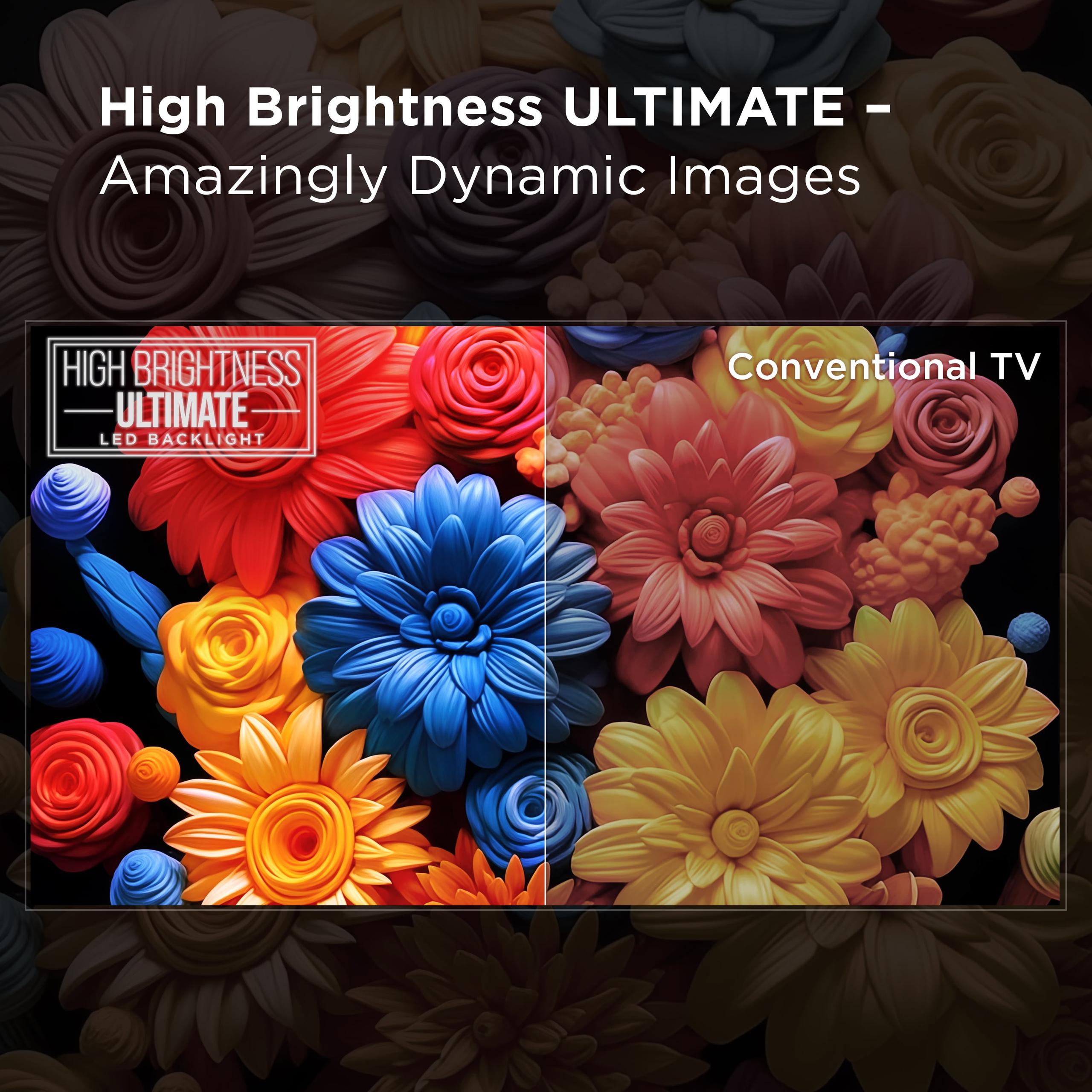
The TCL QM8, with its Mini-LED backlighting, pushes beyond 1,000 nits in peak areas. This dramatic difference means HDR content – like the latest Marvel movies or nature documentaries – will have much more impact. Bright explosions actually look bright, and sunlit scenes have that realistic punch that makes you feel like you're looking through a window.
Contrast and Black Levels
Contrast ratio – the difference between the brightest whites and darkest blacks – is arguably the most important factor in picture quality. It's what makes images look three-dimensional and realistic rather than flat and washed out.
The QD6's conventional backlighting means when you're watching a movie with dark scenes, the entire screen has to dim to achieve darker blacks. This can make details in shadows harder to see and reduces the overall impact of the image. It's still perfectly watchable, but you'll notice the difference in darker movies or when viewing in a completely dark room.
The QM8's thousands of Mini-LED zones can illuminate only the parts of the screen that need to be bright while keeping dark areas truly dark. This creates contrast that approaches OLED quality (OLED being the premium display technology where each pixel produces its own light) at a fraction of the cost. In practical terms, this means better detail in both bright and dark areas of the same scene.
Color Accuracy and Volume
Both TVs use quantum dot technology, but the implementation differs significantly. Quantum dots are microscopic particles that, when hit by light, produce very pure colors. This technology allows TVs to display a much wider range of colors than conventional displays.
The QD6 delivers excellent color saturation and covers most of the DCI-P3 color space (the standard used for digital cinema). Colors look vibrant and natural, with particularly good performance in reds and greens. However, the limited brightness constrains how bright those colors can get while maintaining accuracy.
The QM8's superior backlighting allows its quantum dots to shine brighter, creating what's called "color volume" – the ability to maintain color accuracy at high brightness levels. This is particularly noticeable in bright, colorful content like animated movies or sports broadcasts, where colors remain vivid even in well-lit rooms.
Modern gaming consoles like the PlayStation 5 and Xbox Series X have pushed TV requirements significantly. These consoles can output 4K resolution at 120 frames per second, but only if your TV can keep up.
Refresh Rates and Input Lag
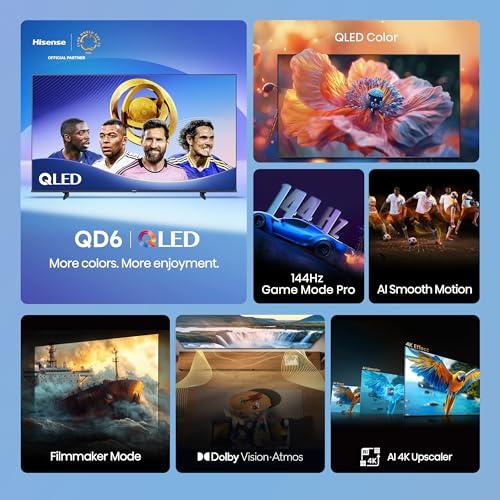
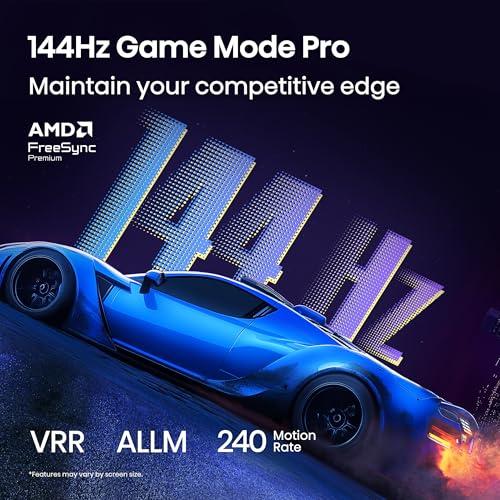
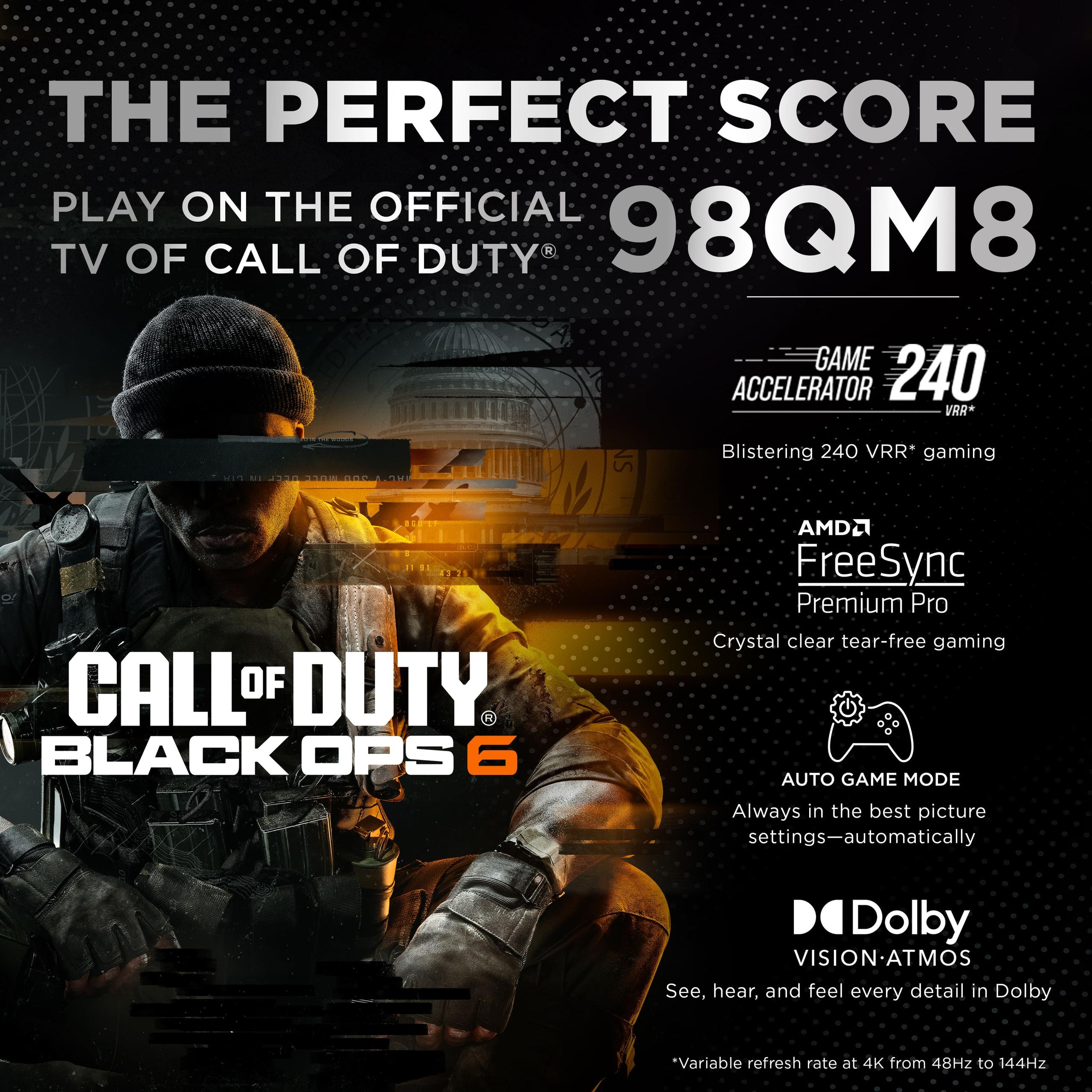
The Hisense QD6 supports 120Hz native refresh rate with a Game Mode Pro that can handle up to 144Hz. Input lag – the delay between pressing a button on your controller and seeing the action on screen – measures around 20 milliseconds in game mode. This is acceptable for most gaming but might feel sluggish for competitive players used to gaming monitors.
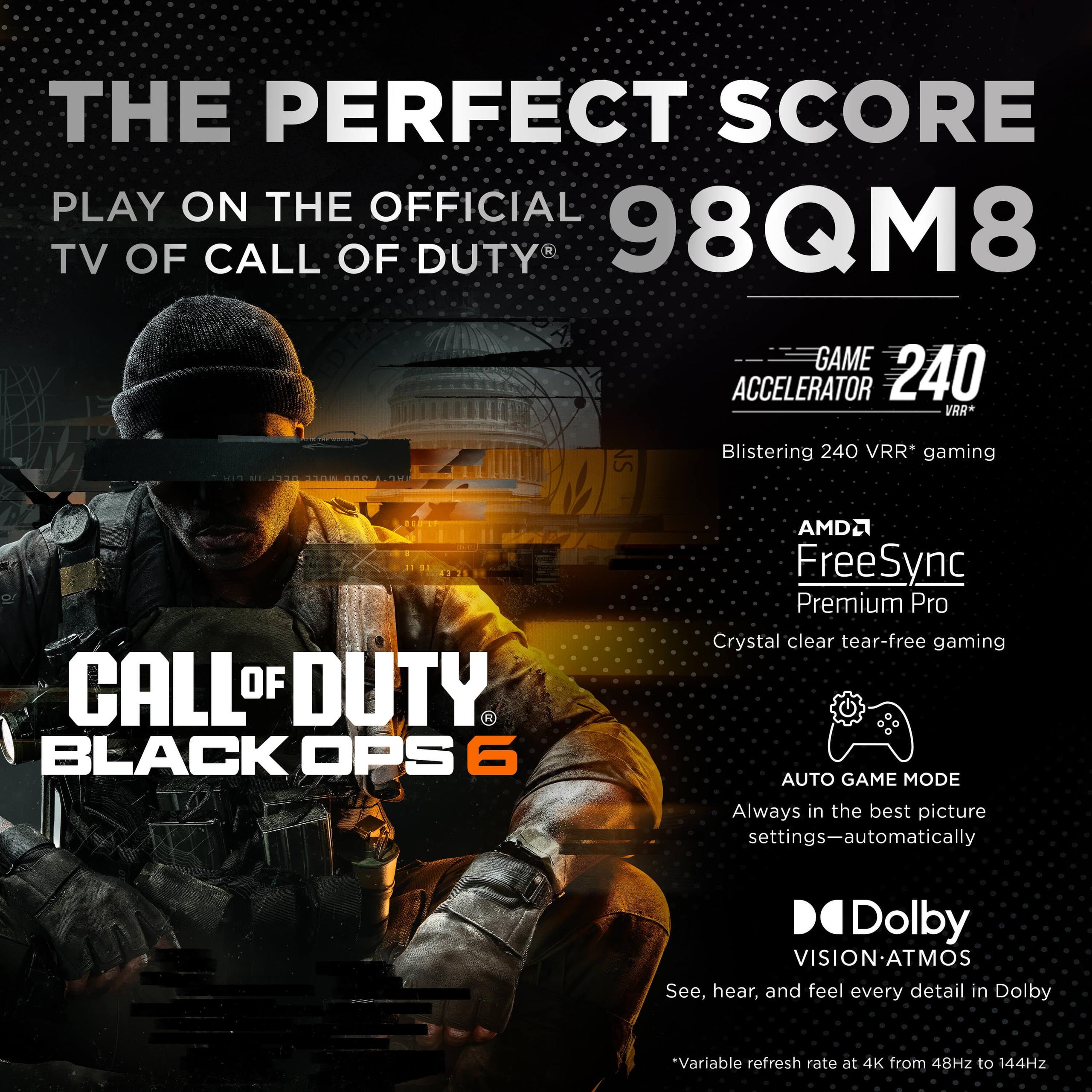
The TCL QM8 offers superior gaming performance with consistently lower input lag around 10 milliseconds and full Variable Refresh Rate (VRR) support. VRR synchronizes the TV's refresh rate with your console's output, eliminating screen tearing (when you see horizontal lines across the image during fast motion) and providing smoother gameplay.
HDMI 2.1 and Modern Console Features
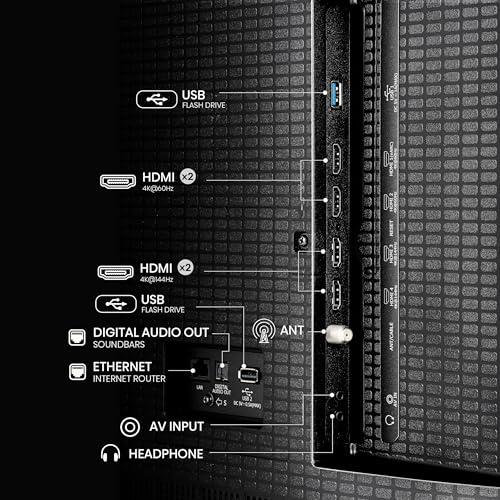
Both TVs include HDMI 2.1 ports, which provide the bandwidth necessary for 4K/120Hz gaming. However, the QM8 typically includes more HDMI 2.1 ports, allowing you to connect multiple next-gen consoles and a high-end PC simultaneously without swapping cables.
Auto Low Latency Mode (ALLM) automatically switches the TV to game mode when it detects a gaming console, ensuring optimal performance without manual adjustments. Both TVs support this feature, but the QM8's implementation tends to be more responsive and seamless.
The smart TV platform determines your daily interaction with the television, so this choice has long-term implications.
Fire TV Experience
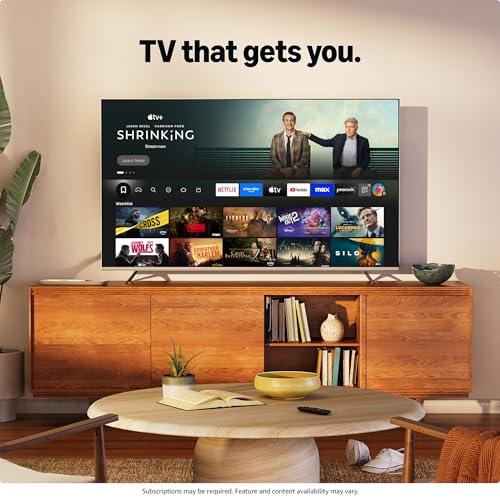
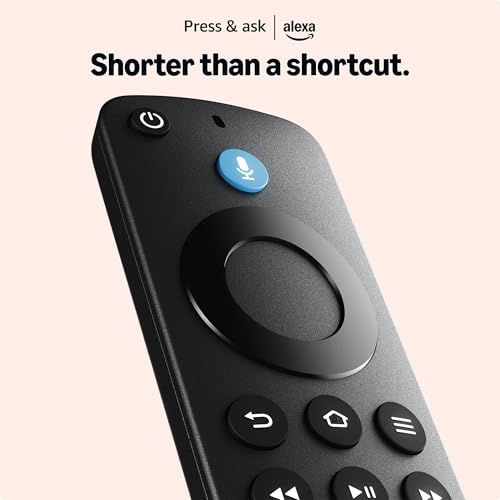
Amazon's Fire TV platform on the Hisense prioritizes Amazon content and services. The interface puts Prime Video content front and center, with Alexa voice control deeply integrated throughout the system. If you're already invested in Amazon's ecosystem – using Alexa smart home devices, Prime shipping, and Prime Video – this creates a seamless experience.
The platform includes all major streaming apps and responds quickly to commands. Voice search works well for finding content across multiple apps, though it sometimes prioritizes Amazon content in results. One consideration is the presence of advertisements in the interface, which some users find intrusive.
Google TV Advantages
The TCL's Google TV platform offers superior content discovery through AI-powered recommendations that learn your viewing habits across all installed apps. The "For You" tab aggregates content from Netflix, Disney+, HBO Max, and other services into personalized recommendations, making it easier to find something to watch.
Google Assistant integration tends to be more comprehensive than Alexa, with better natural language processing and broader smart home device compatibility. The platform also receives more frequent updates and typically gets new streaming apps first.
Large-screen TVs present unique audio challenges. The bigger the screen, the more important it becomes to have audio that matches the visual scale.
Built-in Audio Systems
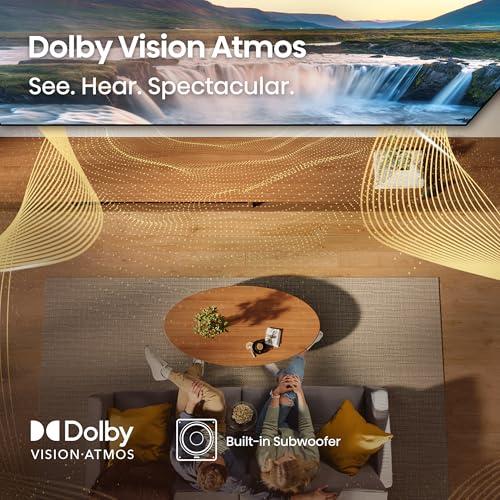
The Hisense QD6 includes a 50-watt Dolby Atmos system that provides adequate sound for casual viewing. Dolby Atmos creates three-dimensional sound by bouncing audio off your ceiling, simulating overhead effects. While the system works, the speakers lack the power and range needed to fill a large room with convincing surround sound.
The TCL QM8's 60-watt system with dedicated up-firing speakers delivers noticeably better performance. The additional power and speaker configuration create more convincing Dolby Atmos effects and better dialogue clarity. However, at this screen size, most users will want to invest in a dedicated sound system.
Home Theater Considerations
For serious home theater setups, both TVs work well as display components in larger audio systems. They both support eARC (enhanced Audio Return Channel), allowing high-quality audio formats to pass through to soundbars or AV receivers without quality loss.
The QM8's superior picture quality makes it the better choice for dedicated home theaters where you're controlling lighting and seating distance carefully. The QD6's larger size might be preferable in casual family rooms where maximum impact matters more than perfect picture quality.
Hisense QD6 Value Proposition
At $1,999.99, the Hisense 100" QD6 delivers exceptional value for buyers prioritizing size. You're getting 100 inches of QLED display with modern smart TV features and adequate gaming performance for half the price of premium alternatives. The Fire TV platform provides access to all major streaming services, and the display quality, while not class-leading, is certainly satisfying for most content.
This TV makes sense if you're upgrading from a much smaller display and want maximum visual impact. The size difference is immediately apparent to everyone who enters the room, creating that "wow factor" that justifies the purchase.
TCL QM8 Premium Experience
The TCL QM8's $3,999.99 price point reflects its premium positioning, but it delivers technology typically found in $6,000+ TVs from other brands. The Mini-LED backlighting system represents a significant technological advancement that improves every aspect of picture quality.
For buyers planning to keep their TV for many years, the QM8's superior technology provides better future-proofing. As streaming services continue improving HDR content quality and gaming consoles push higher frame rates, the QM8's advanced capabilities ensure it won't become obsolete as quickly.
Choose the Hisense 100" QD6 if:
You want maximum screen size impact and have a budget around $2,000. This TV excels in family rooms where multiple people watch from various distances, and the extra screen real estate makes everything more engaging. It's particularly good if you primarily watch streaming content, basic cable, and play games casually. The Fire TV platform works especially well if you're already using Amazon services.
The QD6 also makes sense if you're upgrading from a much smaller TV (65" or less) where the size increase will be dramatic regardless of the display technology differences.
Choose the TCL 98" QM8 if:
You can invest $4,000 for significantly better picture quality and plan to use this TV as the centerpiece of a serious home theater setup. The Mini-LED technology justifies the higher price through superior contrast, brightness, and color accuracy that you'll notice every time you watch premium content.
This TV is particularly worth the extra cost if you watch a lot of movies (especially in darker rooms), game seriously on next-gen consoles, or need excellent performance in bright rooms. The Google TV platform also provides a more refined smart TV experience with better content discovery.
The two-inch size difference becomes negligible when you consider the dramatic improvement in picture quality, making the QM8 the better long-term investment for most buyers who can afford the higher price.
Ultimately, both TVs deliver impressive experiences at their respective price points. The choice comes down to whether you prioritize maximum size and value (Hisense) or premium performance and future-proofing (TCL). Either way, you're getting a TV that will transform your viewing experience and serve as the centerpiece of your entertainment setup for years to come.
| Hisense 100" QD6 Series QLED 4K UHD Fire TV 2025 | TCL 98" QM8 Series 4K UHD Smart Google TV |
|---|---|
| Price - Value consideration for giant screen TVs | |
| $1,999.99 ($20 per inch) | $3,999.99 ($41 per inch) |
| Screen Size - Maximum viewing impact | |
| 100 inches (99.5" viewable) | 98 inches (97.5" viewable) |
| Display Technology - Critical for picture quality | |
| QLED with standard LED backlighting | QD-Mini LED ULTRA with thousands of dimming zones |
| Peak Brightness - HDR impact and bright room performance | |
| ~400-500 nits (adequate for most rooms) | 1,000+ nits (excellent for any lighting condition) |
| Local Dimming - Contrast and black level performance | |
| Basic edge-lit or direct-lit zones | Thousands of Mini-LED zones for superior contrast |
| Gaming Performance - Next-gen console compatibility | |
| 120Hz native, 144Hz Game Mode Pro, ~20ms input lag | 144Hz VRR, ~10ms input lag, full HDMI 2.1 suite |
| Smart TV Platform - Daily user experience | |
| Fire TV with Alexa (Amazon ecosystem focused) | Google TV with Assistant (broader app support) |
| Audio System - Built-in sound quality | |
| 50W Dolby Atmos (adequate for casual viewing) | 60W Dolby Atmos with up-firing speakers (better immersion) |
| HDMI 2.1 Ports - High-bandwidth device connections | |
| 2 HDMI 2.1 ports (sufficient for most users) | 4 HDMI 2.1 ports (ideal for multiple gaming devices) |
| Best For - Target buyer profile | |
| Maximum size on budget, casual viewing/gaming | Premium picture quality, serious gaming, home theater |
The Hisense 100" QD6 at $1,999.99 offers better value for buyers prioritizing maximum screen size, delivering 100 inches for half the price of the TCL 98" QM8 at $3,999.99. However, the TCL provides significantly better picture quality with Mini-LED technology that's typically found in much more expensive TVs, making it better value for performance-focused buyers.
The biggest difference is the backlighting technology. The TCL 98" QM8 uses Mini-LED with thousands of dimming zones for superior contrast and deeper blacks, while the Hisense 100" QD6 uses standard LED backlighting. This means the TCL delivers much better HDR performance and dark room viewing, though both offer excellent QLED color reproduction.
The TCL 98" QM8 is superior for gaming with lower input lag (~10ms vs 20ms), full Variable Refresh Rate support, and more HDMI 2.1 ports. While the Hisense 100" QD6 supports 144Hz Gaming Mode Pro and handles console gaming adequately, serious gamers will notice the TCL's more responsive performance and smoother gameplay.
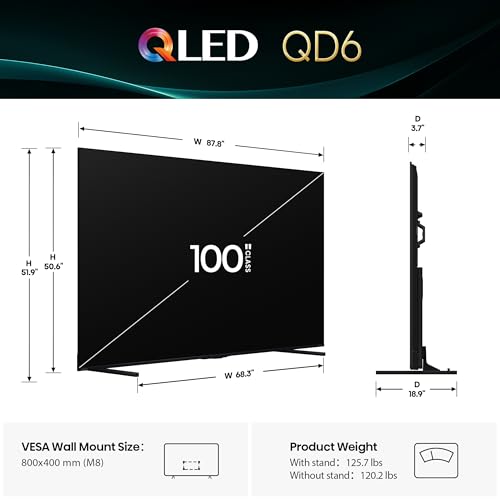
The Hisense 100" QD6 provides about 4% more screen area than the TCL 98" QM8 - approximately 2 inches wider and 1 inch taller. While noticeable side-by-side, most viewers find the difference minimal compared to the significant picture quality improvements offered by the TCL's Mini-LED technology.
Both platforms offer excellent app selection, but Google TV on the TCL 98" QM8 provides superior content discovery with AI-powered recommendations across all streaming services. Fire TV on the Hisense 100" QD6 integrates better with Amazon's ecosystem and Alexa devices. Choose based on your preferred voice assistant and existing smart home setup.
The TCL 98" QM8 is better suited for dedicated home theaters due to its superior contrast, brightness, and Mini-LED technology that performs excellently in dark rooms. The Hisense 100" QD6 works well in casual home theater setups where maximum size impact matters more than perfect picture quality. Both support eARC for high-quality audio passthrough to sound systems.
The TCL 98" QM8 reaches over 1,000 nits peak brightness, making it excellent for bright rooms and daytime viewing. The Hisense 100" QD6 achieves around 400-500 nits, which is adequate for most lighting conditions but may struggle against bright windows or overhead lighting.
The TCL 98" QM8 has a superior 60W Dolby Atmos system with dedicated up-firing speakers for better surround sound simulation. The Hisense 100" QD6 offers a 50W Dolby Atmos system that's adequate for casual viewing. However, at these screen sizes, most users will want to add a soundbar or surround sound system for the best audio experience.
The TCL 98" QM8 delivers significantly better HDR performance with its higher peak brightness and Mini-LED local dimming, making highlights pop and maintaining detail in dark scenes. While the Hisense 100" QD6 supports the same HDR formats (Dolby Vision, HDR10+), its limited brightness and basic local dimming reduce the overall HDR impact.
The TCL 98" QM8 typically includes four HDMI 2.1 ports compared to two on the Hisense 100" QD6, making it better for users with multiple gaming consoles and high-bandwidth devices. Both offer Wi-Fi 6, USB ports, and eARC support, but the TCL's additional HDMI 2.1 ports provide more flexibility for complex setups.
The TCL 98" QM8 is better for bright rooms due to its superior peak brightness (1,000+ nits) and better reflection handling. The Hisense 100" QD6 can struggle in very bright conditions but works adequately in moderately lit rooms. If your room has large windows or bright overhead lighting, the TCL's higher brightness makes a noticeable difference.
Choose the Hisense 100" QD6 if maximum screen size is your priority and you have a $2,000 budget - it delivers excellent value for casual viewing and family entertainment. Opt for the TCL 98" QM8 if you can invest $4,000 for significantly better picture quality, gaming performance, and future-proofing - the Mini-LED technology justifies the higher price for serious home theater enthusiasts.
We've done our best to create useful and informative comparisons to help you decide what product to buy. Our research uses advanced automated methods to create this comparison and perfection is not possible - please contact us for corrections or questions. These are the sites we've researched in the creation of this article: bestbuy.com - youtube.com - tvsbook.com - rtings.com - youtube.com - youtube.com - bestbuy.com - leaseville.com - pcrichard.com - bestbuy.com - youtube.com - hisense-usa.com - manuals.plus - hisense-usa.com - hisense-usa.com - brandsmartusa.com - rtings.com - camelcamelcamel.com - youtube.com - techradar.com - avsforum.com - bestbuy.com - greentoe.com - tcl.com

Privacy Policy
Terms and Conditions - Affiliate Policy
Home Security
© Copyright 2008-2026.
11816 Inwood Rd #1211, Dallas, TX 75244