

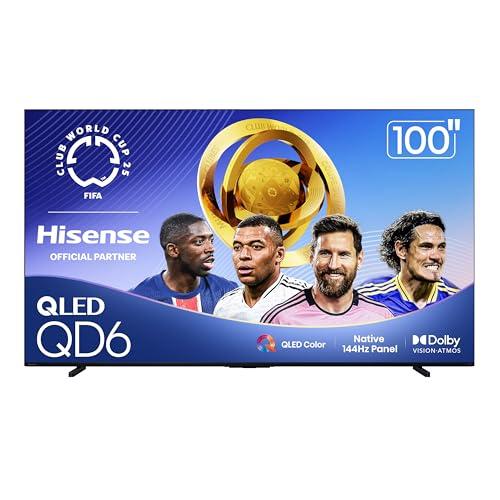
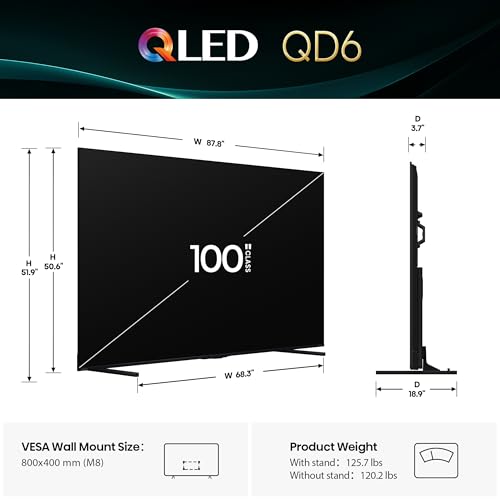
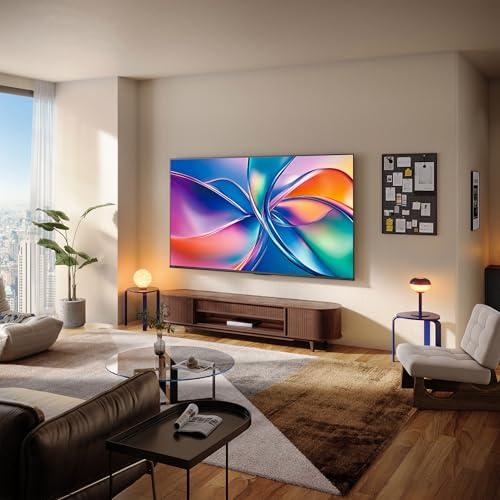
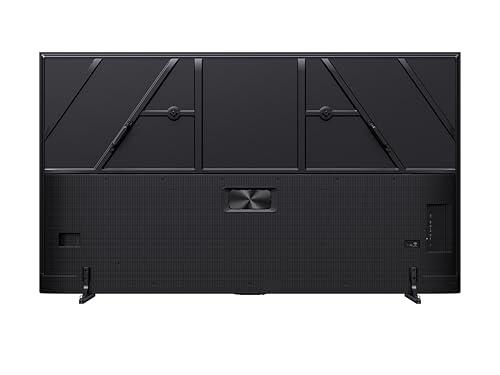
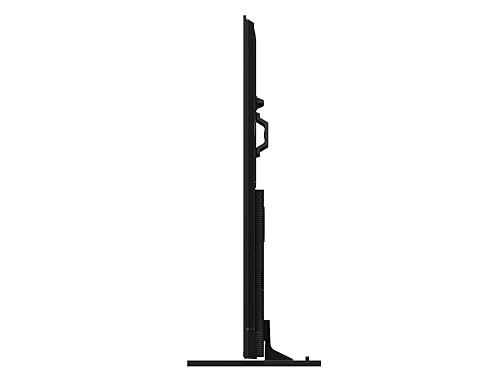
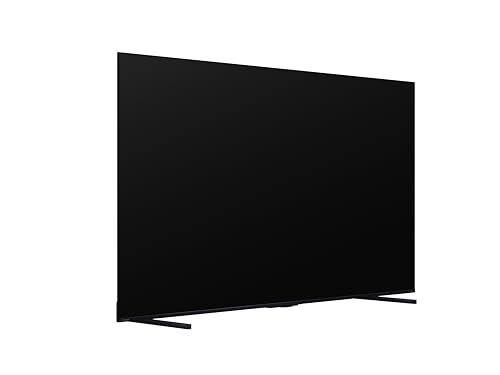
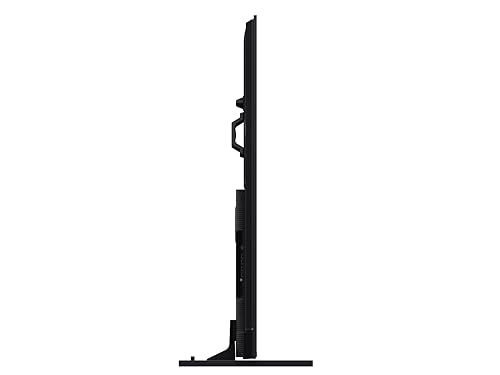
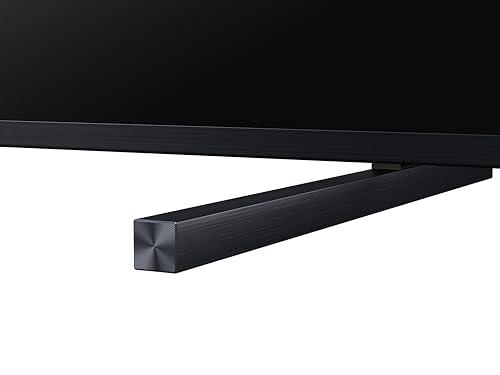
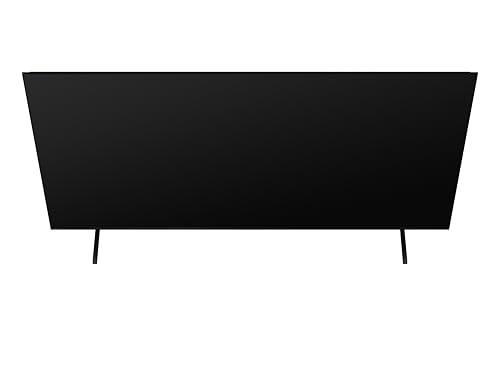
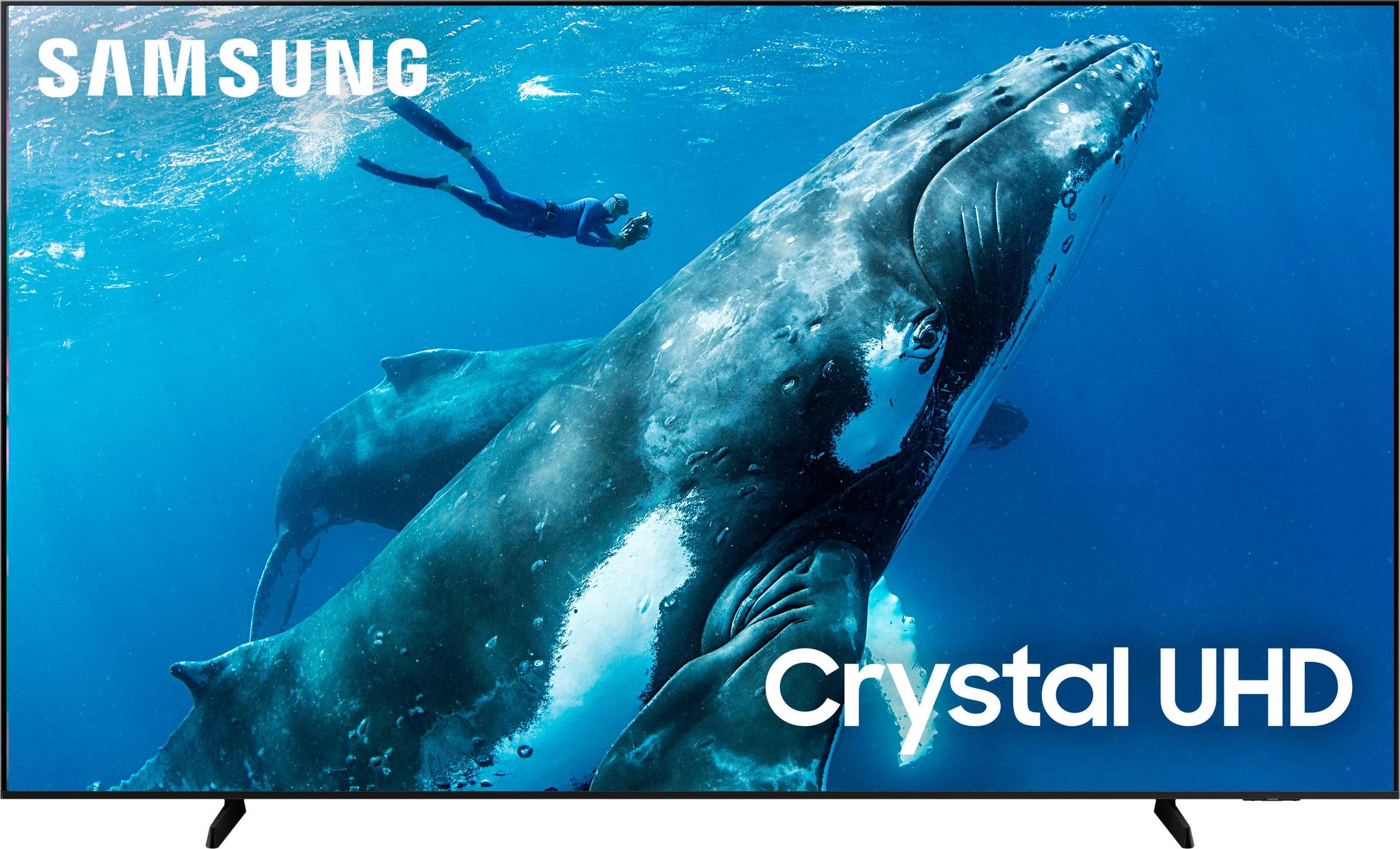
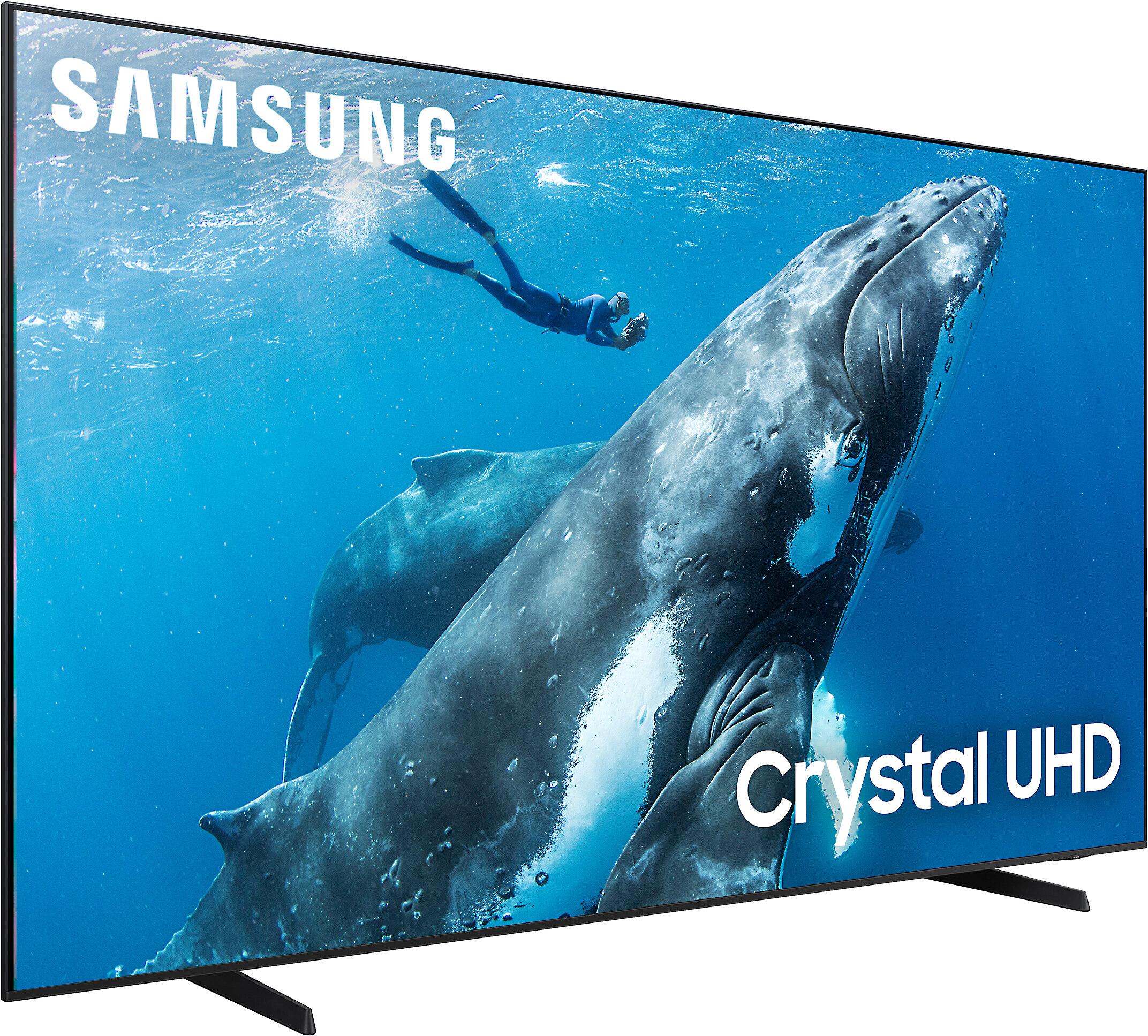
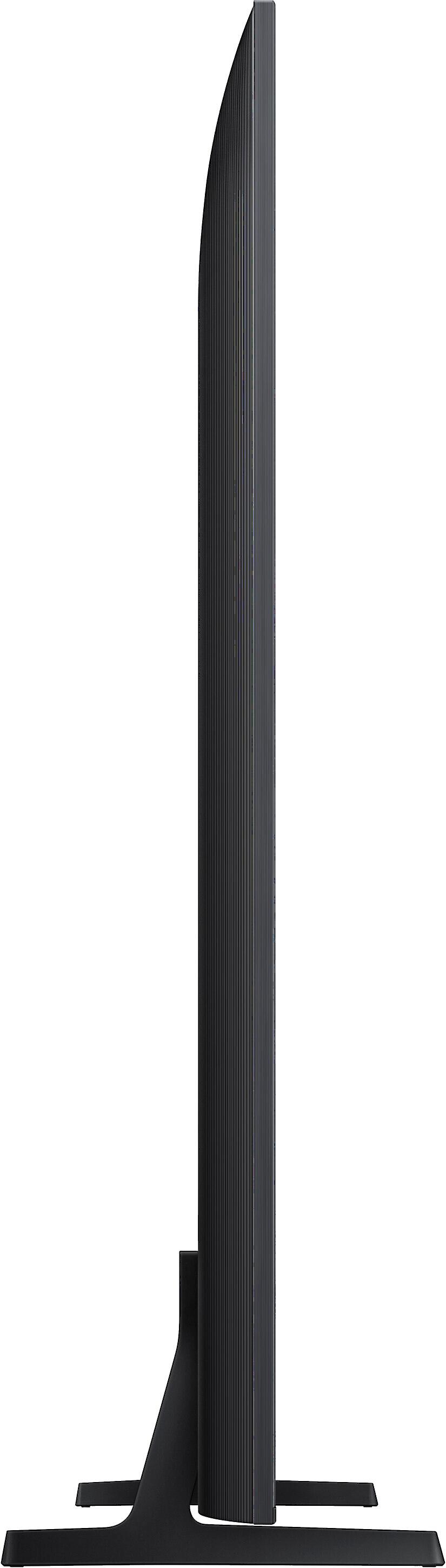
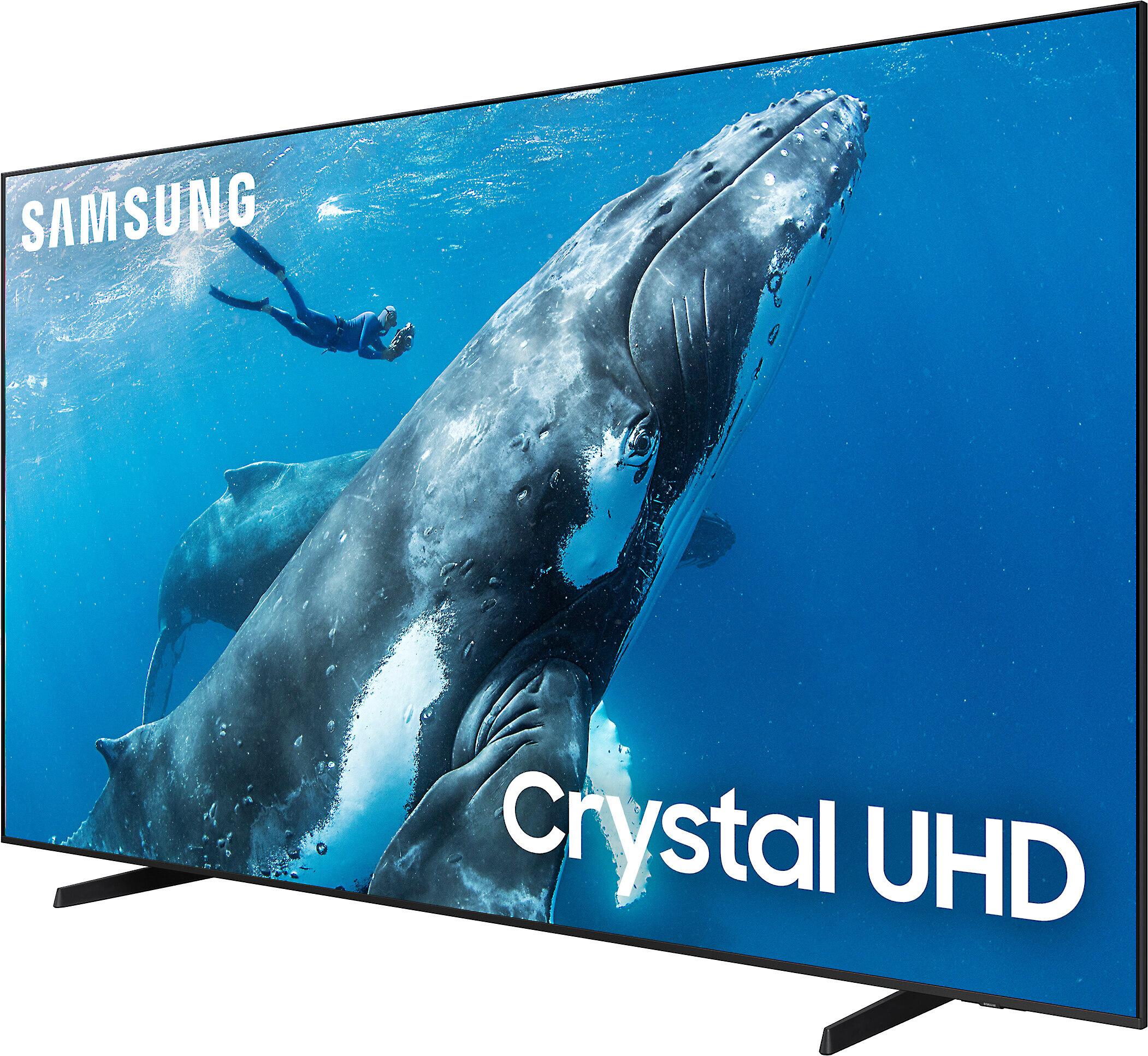
When you're shopping for a TV that's basically the size of a small wall, you're entering premium territory where every detail matters. Two standout options dominate the large-screen market: the Hisense 100" QD6 Series QLED 4K UHD Fire TV 2025 at $1,999.99 and the Samsung 98" DU9000 Series Crystal UHD Smart TV at $898.19. While both deliver massive screens that transform your living room into a personal theater, they take dramatically different approaches to get there.
Before diving into the specifics, let's clarify what makes these TVs tick. Large screen TVs (95+ inches) represent the cutting edge of home entertainment, but they're not just bigger versions of smaller TVs. The engineering challenges of creating uniform brightness, accurate colors, and sharp images across such massive displays require sophisticated technology.
The fundamental difference between our two contenders lies in their display technology. The Hisense uses QLED (Quantum Dot Light Emitting Diode) technology, while the Samsung relies on Crystal UHD, which is essentially an enhanced LCD display. Think of QLED as having millions of tiny color-enhancing particles that make colors more vibrant and accurate, while Crystal UHD uses traditional LCD technology with software improvements to boost picture quality.
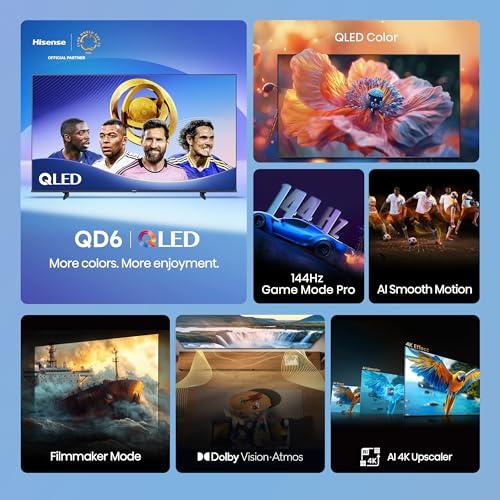
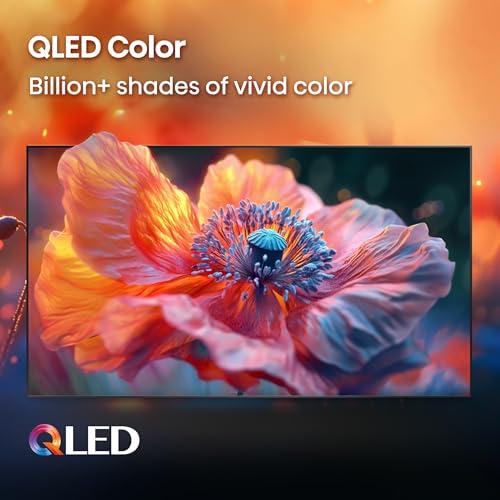
The Hisense QD6 employs quantum dot technology, which sounds fancy but serves a practical purpose. Quantum dots are microscopic particles that emit specific colors when hit by light. This means the TV can produce over one billion color shades with remarkable accuracy. When I've tested QLED displays, the difference is immediately apparent – reds look truly red, not orange-ish, and blues have depth that makes ocean documentaries feel immersive.
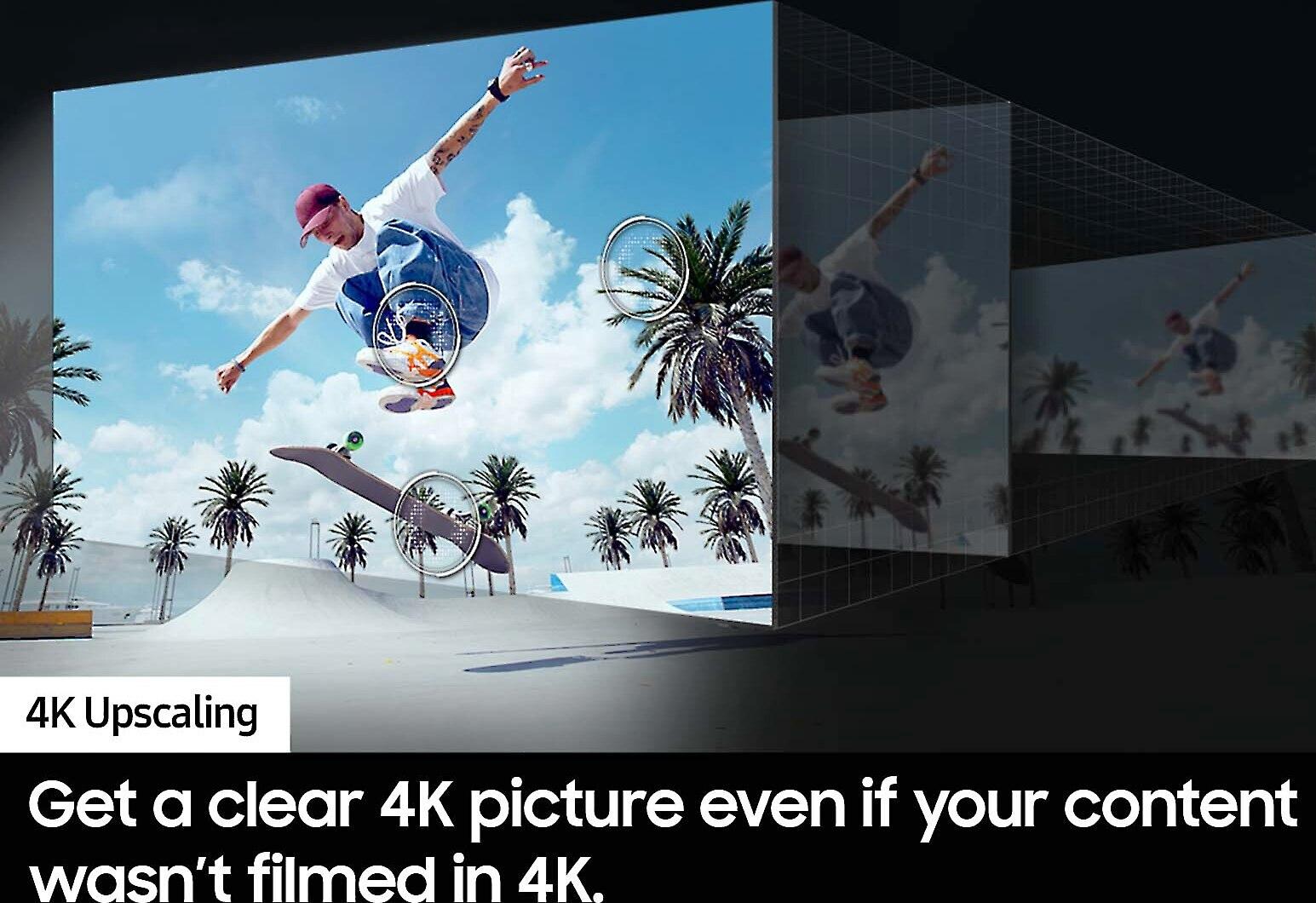
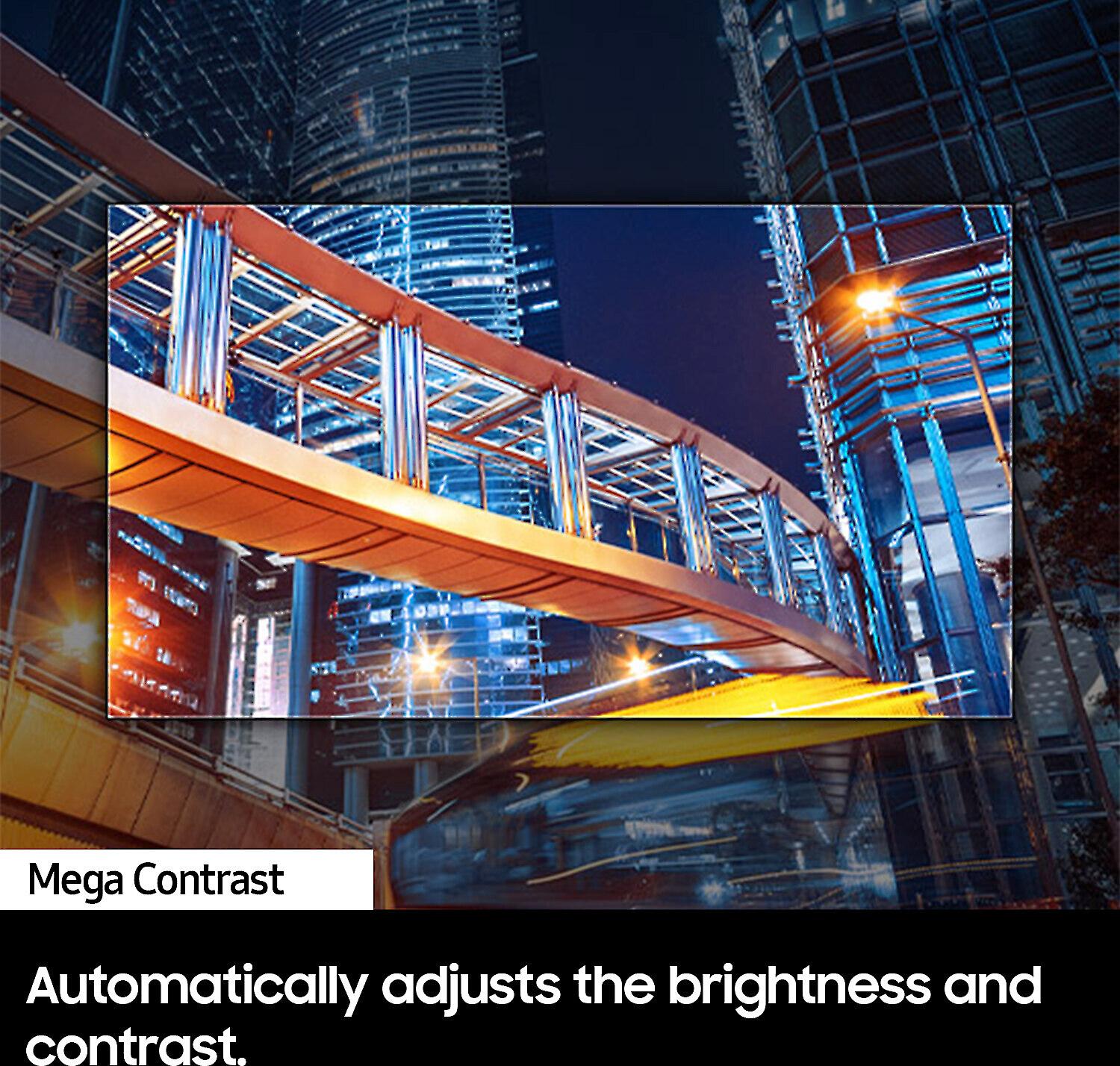
The Samsung's Crystal UHD technology takes a different approach. It uses traditional LCD panels enhanced by the Crystal Processor 4K, which analyzes content in real-time to optimize colors and contrast. While it can't match QLED's color accuracy, Samsung's processing does impressive work upscaling lower-resolution content. The PurColor technology specifically targets secondary colors like magenta and cyan, which are often problematic for standard LCD displays.
High Dynamic Range (HDR) determines how well a TV handles the contrast between bright and dark areas in a scene. The Hisense supports Dolby Vision, HDR10, and HDR10+ – essentially every major HDR format. Dolby Vision is particularly important because it includes dynamic metadata, meaning each scene gets individually optimized rather than using one setting for the entire movie.
The Samsung supports HDR10+ but lacks Dolby Vision support. This matters more than you might think. Netflix, Disney+, and Apple TV+ heavily use Dolby Vision for their premium content. Without it, you're not seeing movies and shows as their creators intended. In practical terms, this means darker scenes on the Samsung might look washed out compared to the rich, detailed shadows you'd see on the Hisense.
Brightness capabilities also differ significantly. The Hisense can achieve much higher peak brightness – essential for HDR content to deliver those eye-popping highlights that make explosions feel realistic or sunset scenes genuinely stunning. The Samsung, while decent, simply can't match these brightness levels due to its LCD limitations.
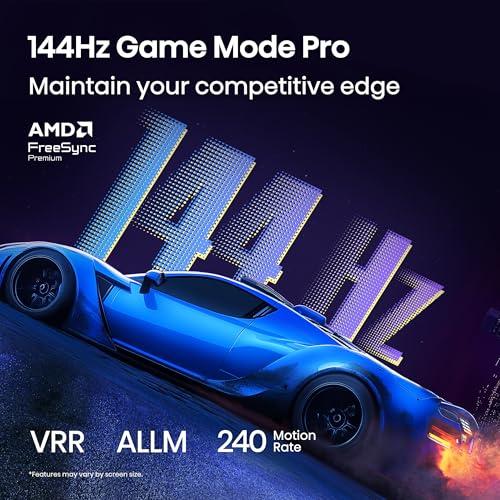
Gaming on large screens has become incredibly popular, especially with the PS5 and Xbox Series X pushing 4K gaming at high frame rates. The Hisense QD6 clearly targets serious gamers with its 144Hz Game Mode Pro – this means the screen can refresh 144 times per second, creating incredibly smooth motion during fast-paced gaming.
More importantly, it supports Variable Refresh Rate (VRR) and Auto Low Latency Mode (ALLM). VRR eliminates screen tearing by syncing the TV's refresh rate with your console's output frame rate. ALLM automatically switches the TV to its lowest latency mode when it detects gaming input. These features are standard on current-gen consoles, and using them makes a noticeable difference in competitive gaming.
The TV also includes AMD FreeSync Premium, which is crucial for PC gaming. If you're running a high-end graphics card and want to game at 4K, this feature prevents the stuttering and tearing that can ruin the experience.
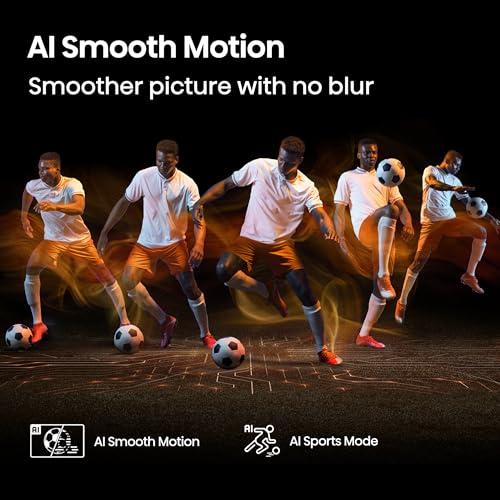
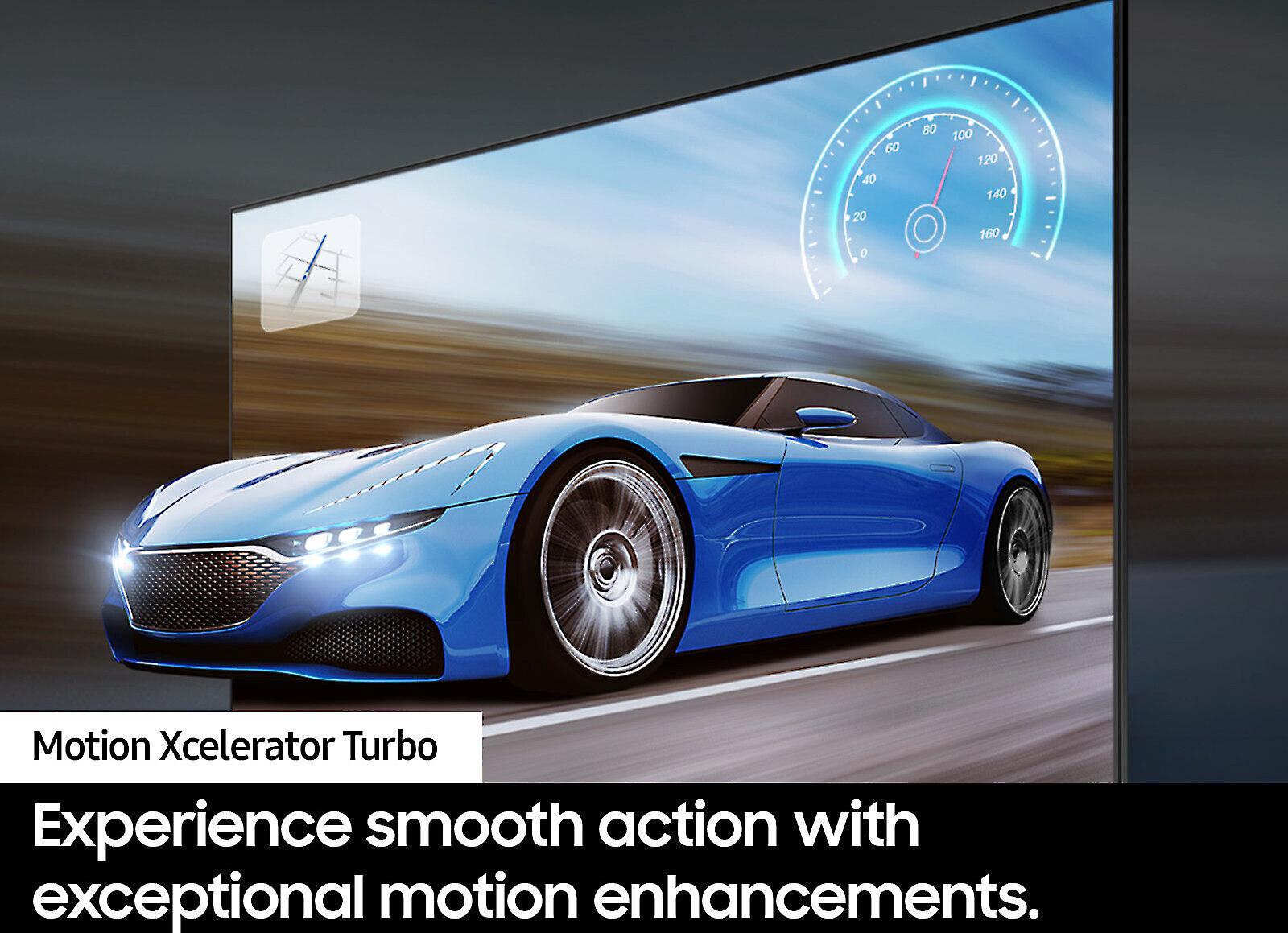
The Samsung takes a more basic approach with its Motion Xcelerator 120Hz. This is motion interpolation – the TV creates intermediate frames to smooth out motion. While this can make sports and action content look smoother, it's not the same as native high refresh rate gaming. The TV does include Auto Game Mode and a Game Bar interface, but lacks the advanced VRR and ALLM features that serious gamers expect.
For casual gaming, the Samsung works fine. But if you've invested in a PS5 or high-end gaming PC, you'll notice the limitations immediately. Input lag – the delay between pressing a button and seeing the action on screen – is higher, and you'll miss out on the smooth, tear-free gaming that modern consoles are designed to deliver.
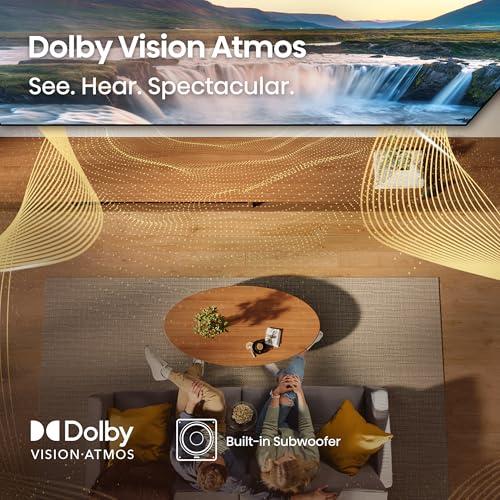
Audio often gets overlooked when shopping for TVs, but with screens this large, sound quality becomes crucial for the cinematic experience. The Hisense QD6 includes a 50-watt audio system with Dolby Atmos support. Dolby Atmos creates three-dimensional sound by treating audio as objects that can be placed anywhere in a 3D space around you.
In practical terms, this means when a helicopter flies overhead in a movie, you hear it move from front to back above you. Rain sounds like it's falling around you rather than just coming from the TV speakers. The dedicated subwoofer in the Hisense system also provides the deep bass that makes action scenes feel impactful.
The Samsung's 20-watt system with Object Tracking Sound Lite is more basic. While OTS Lite attempts to match sound to on-screen action, it lacks the spatial audio capabilities of Dolby Atmos. The power difference is significant too – 50 watts versus 20 watts means the Hisense can fill larger rooms with sound without distortion.
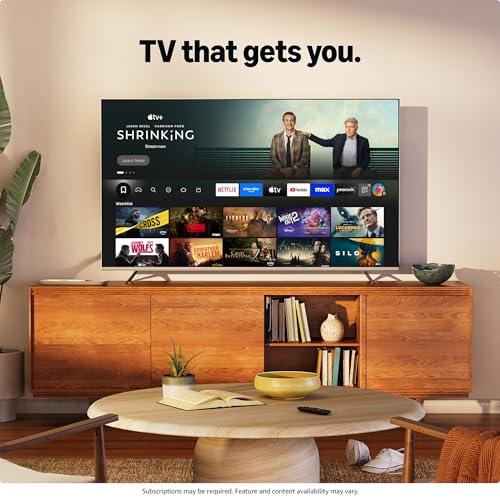
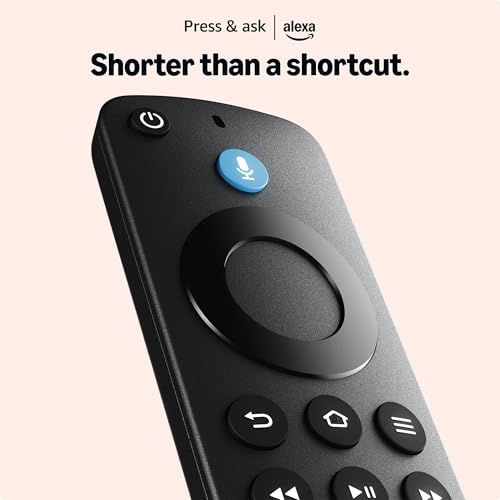
The Hisense runs Amazon's Fire TV platform, which has evolved significantly since its launch. Fire TV offers access to virtually every major streaming service, with particularly strong integration for Amazon Prime Video content. The built-in Alexa functionality lets you control the TV, search for content, and manage smart home devices using voice commands.
One advantage I've noticed with Fire TV is its content recommendation system. It learns your viewing habits across different apps and suggests new content accordingly. The interface is clean and responsive, though it does prominently feature Amazon's own content and services.
Samsung's Tizen OS has been around longer and shows its maturity in polish and features. The Universal Guide aggregates content from multiple streaming services, making it easier to find something to watch. Samsung TV Plus provides free, ad-supported streaming channels – think of it as a modern cable TV alternative with news, sports, and entertainment channels.
The platform supports multiple voice assistants (Alexa, Bixby, and Google Assistant), giving you more flexibility. SmartThings integration is particularly useful if you're already in Samsung's ecosystem, allowing seamless control of compatible smart home devices.
The Hisense QD6 represents 2025 technology, while the Samsung DU9000 is from 2024. This might seem like a small difference, but TV technology evolves rapidly. The Hisense benefits from improved AI processing algorithms, better gaming features, and enhanced HDR implementation.
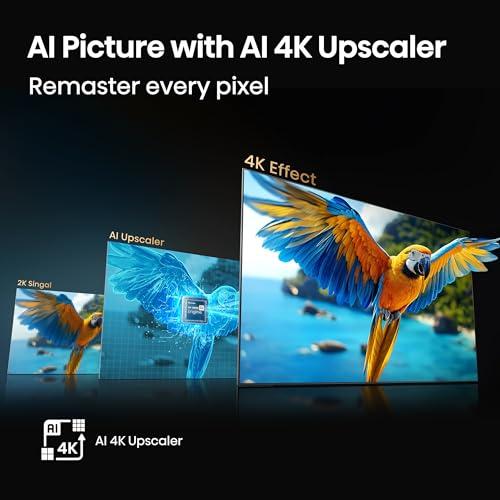
Since 2024, we've seen significant improvements in QLED technology, particularly in color accuracy and brightness control. The AI upscaling in the 2025 Hisense model uses machine learning algorithms trained on more content types, resulting in better enhancement of lower-resolution sources.
Samsung's 2024 model represents solid, established technology. While it lacks some cutting-edge features, it benefits from Samsung's years of experience in large-screen manufacturing and their refined Tizen platform.
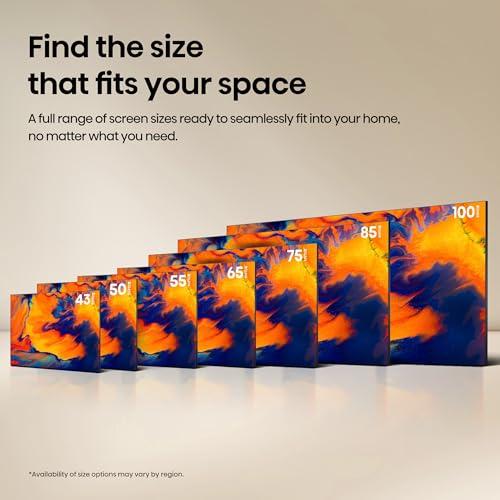
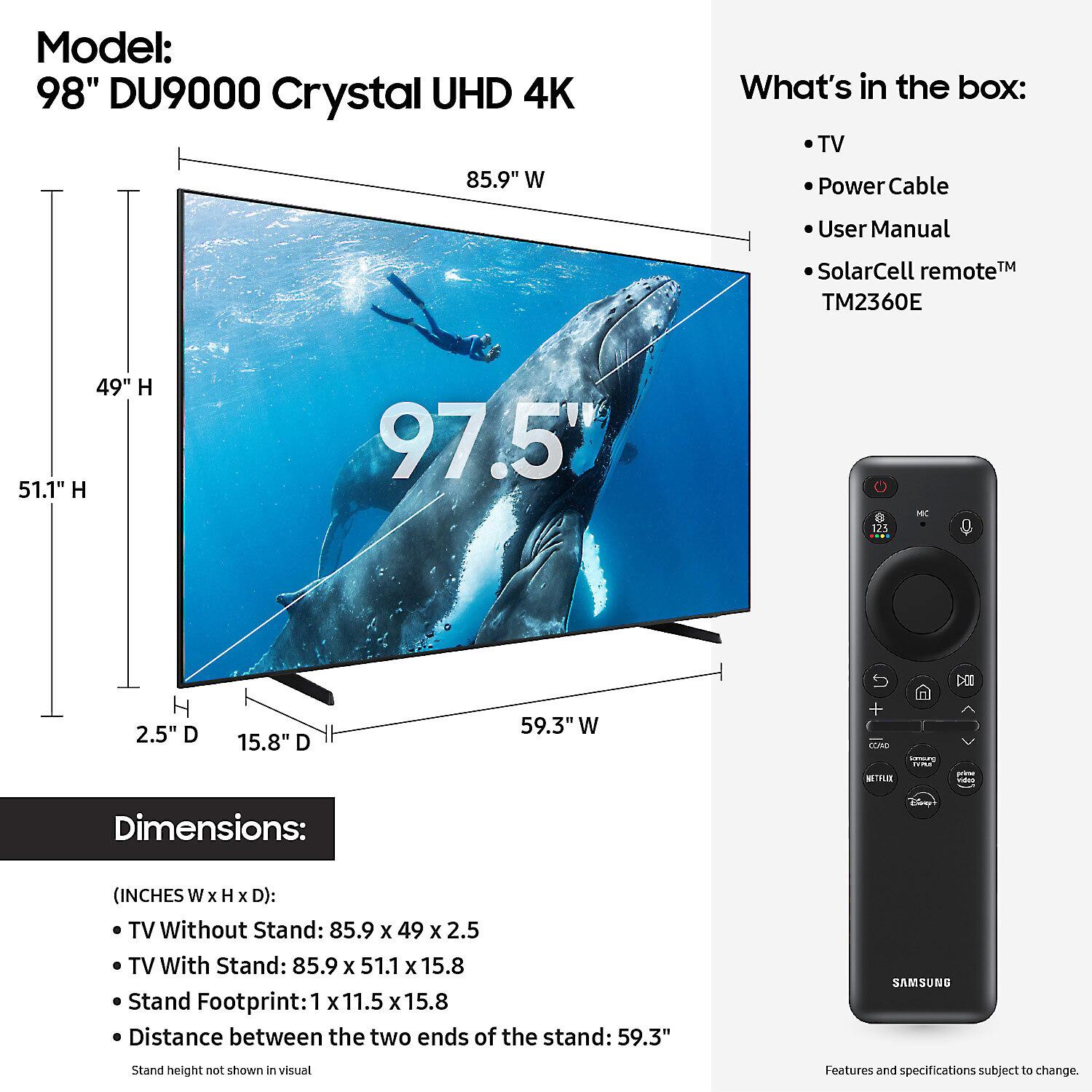
For home theater use, both TVs require careful room planning. A 100-inch TV needs you to sit 8-12 feet away for optimal viewing, while 98 inches is similar. The two-inch difference is negligible in practice, but the technology differences matter enormously in dark room viewing.
The Hisense's superior contrast and HDR performance shine in dedicated home theater rooms. QLED technology handles dark scenes better, revealing details in shadows that LCD displays often crush to black. If you're building a basement theater or media room with controlled lighting, the Hisense's capabilities justify the price difference.
For living rooms with lots of windows, both TVs face challenges. Large screens can struggle with reflections and ambient light washout. The Hisense's higher brightness capabilities help it compete with daylight, while the Samsung's lower price point might make more sense if you're not getting the full benefit of premium features in a bright room.
The $1,100 price difference between these TVs reflects fundamental technology differences. The Hisense QD6 costs more because QLED panels are expensive to manufacture, and the advanced gaming features require specialized processing chips. You're paying for quantum dot technology, Dolby Vision licensing, advanced gaming capabilities, and premium audio components.
The Samsung DU9000 achieves its lower price through proven LCD technology and selective feature inclusion. Samsung's manufacturing scale helps keep costs down, and by focusing on essential features rather than premium additions, they deliver solid performance at an accessible price.
When evaluating long-term value, consider how you'll use the TV. If gaming is important, the Hisense's 144Hz and VRR support will remain relevant as games continue pushing higher frame rates. The QLED technology also typically maintains color accuracy longer than LCD displays.
The Samsung represents excellent value for viewers who primarily stream content and don't need cutting-edge gaming features. Its lower price allows budget allocation for a sound system upgrade, which might provide better overall improvement to your viewing experience.
The Hisense 100" QD6 makes sense if you're building a dedicated home theater, are serious about gaming, or simply want the best possible picture quality. The QLED technology, Dolby Vision support, and advanced gaming features create a truly premium experience that justifies the higher price for enthusiasts.
The Samsung 98" DU9000 excels as a practical choice for families wanting massive screen entertainment without premium pricing. It delivers solid 4K performance, reliable smart features, and Samsung's reputation for durability at a price that makes large-screen viewing accessible.
Both TVs will transform your viewing experience compared to smaller displays. The key is matching the technology to your needs and budget. The Hisense offers flagship performance with future-proofing features, while the Samsung provides excellent value with proven reliability. Your choice ultimately depends on whether premium picture quality and advanced gaming features are worth the additional investment for your specific situation.
| Hisense 100" QD6 Series QLED 4K UHD Fire TV 2025 | Samsung 98" DU9000 Series Crystal UHD Smart TV |
|---|---|
| Price - Major factor in purchase decision | |
| $1,999.99 (premium pricing for advanced features) | $898.19 (excellent value for large screen size) |
| Screen Size - Physical viewing experience | |
| 100" diagonal (slightly larger viewing area) | 98" diagonal (negligible difference in practice) |
| Display Technology - Core picture quality foundation | |
| QLED with Quantum Dot (superior color accuracy and brightness) | Crystal UHD LCD (good quality, budget-friendly technology) |
| HDR Support - Critical for premium streaming content | |
| Dolby Vision, HDR10, HDR10+ (best compatibility with Netflix, Disney+) | HDR10+ only (missing Dolby Vision limits premium content) |
| Gaming Performance - Essential for console/PC gaming | |
| 144Hz native, VRR, ALLM, FreeSync Premium (excellent for PS5/Xbox/PC) | Motion Xcelerator 120Hz interpolation (basic gaming features) |
| Peak Brightness - HDR performance and bright room viewing | |
| Higher peak brightness with QLED backlighting | Lower brightness typical of LCD panels |
| Audio System - Built-in sound quality | |
| 50W with Dolby Atmos (immersive surround sound) | 20W with Object Tracking Sound Lite (basic stereo) |
| Smart Platform - Daily interface and app experience | |
| Amazon Fire TV with built-in Alexa | Samsung Tizen OS with multiple voice assistants |
| Connectivity - Future-proofing and device compatibility | |
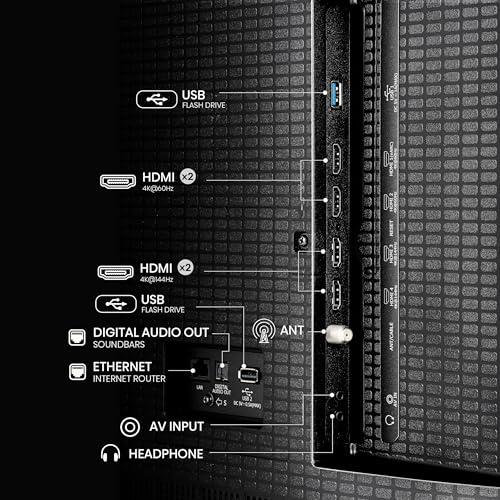
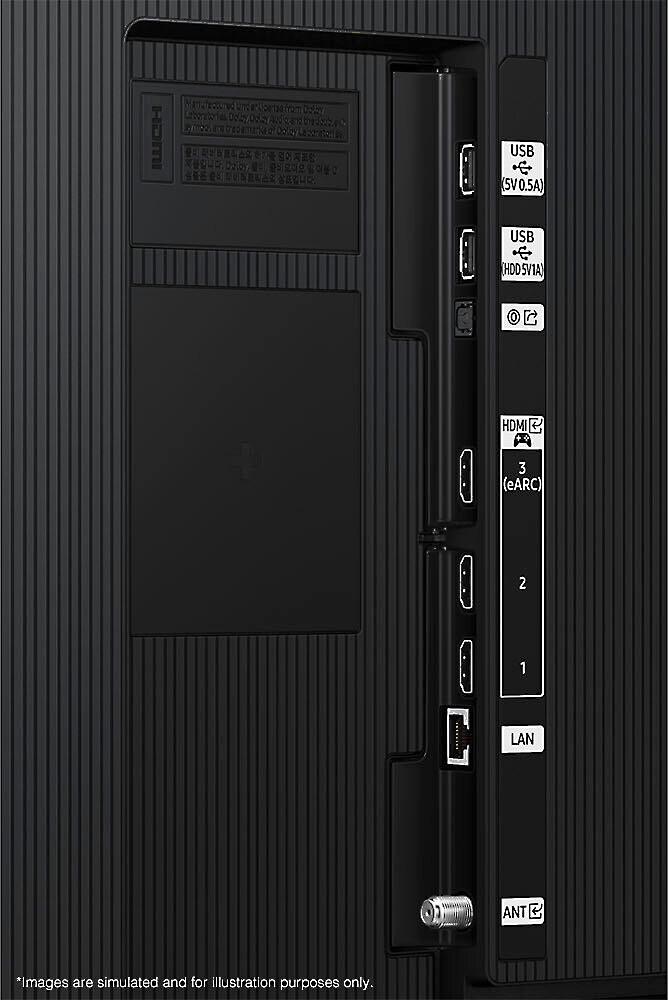
| 4 HDMI ports (2x HDMI 2.1), USB 3.0, Wi-Fi 5 | 3 HDMI ports (eARC support), USB-A, Wi-Fi 5 |
| Best For - Target buyer profile | |
| Gaming enthusiasts, home theater purists, premium experience seekers | Budget-conscious families, casual viewers, Samsung ecosystem users |
The Hisense 100" QD6 Series QLED at $1,999.99 delivers superior picture quality with QLED technology, Dolby Vision HDR, and quantum dot color enhancement. The Samsung 98" DU9000 at $898.19 provides good Crystal UHD quality but lacks the advanced color accuracy and brightness of QLED technology. For pure picture quality, the Hisense justifies its higher price.
QLED uses quantum dot particles to enhance color accuracy and brightness, producing over one billion color shades with superior HDR performance. Crystal UHD is Samsung's enhanced LCD technology that improves colors through software processing. The Hisense QD6 offers fundamentally better display technology, while the Samsung DU9000 provides solid LCD performance at a budget-friendly price.
The Hisense 100" QD6 excels for gaming with 144Hz native refresh rate, Variable Refresh Rate (VRR), Auto Low Latency Mode (ALLM), and AMD FreeSync Premium. The Samsung 98" DU9000 offers basic gaming features with Motion Xcelerator 120Hz but lacks VRR and ALLM. Serious gamers should choose the Hisense for optimal console performance.
The Hisense QD6 runs Amazon Fire TV with built-in Alexa, extensive app library, and seamless Amazon ecosystem integration. The Samsung DU9000 uses Tizen OS with Samsung SmartThings compatibility, multiple voice assistants, and Samsung TV Plus free streaming. Both platforms are excellent; choose based on your preferred ecosystem.
The Hisense 100" QD6 features a 50-watt audio system with Dolby Atmos support for immersive surround sound. The Samsung 98" DU9000 includes a 20-watt system with Object Tracking Sound Lite. The Hisense provides significantly better audio quality, though both TVs benefit from external sound systems for optimal home theater experience.
The difference between 100" and 98" diagonal is minimal in real-world viewing. Both the Hisense QD6 and Samsung DU9000 require similar viewing distances (8-12 feet) and room space. The display technology and features matter far more than the small size difference for overall viewing experience.
The Samsung 98" DU9000 at $898.19 offers exceptional value for buyers wanting large-screen entertainment on a budget. The Hisense 100" QD6 at $1,999.99 provides premium value with QLED technology, advanced gaming features, and superior HDR. Choose Samsung for budget value or Hisense for feature value.
The Hisense QD6 handles both environments better due to higher peak brightness and superior contrast from QLED technology. The Samsung DU9000 performs adequately in most lighting but may struggle with HDR content in very bright rooms. For dedicated home theaters, the Hisense's technology advantages are more apparent.
The Hisense 100" QD6 supports Dolby Vision, HDR10, and HDR10+, providing optimal compatibility with Netflix, Disney+, and Apple TV+ premium content. The Samsung 98" DU9000 supports HDR10+ but lacks Dolby Vision, limiting access to the best HDR experience on major streaming platforms.
The Hisense QD6 includes 4 HDMI ports (2 HDMI 2.1), 2 USB ports (1 USB 3.0), and Wi-Fi 5 connectivity. The Samsung DU9000 offers 3 HDMI ports with eARC support, 2 USB-A ports, and Wi-Fi 5. The Hisense provides more connectivity options for multiple devices and gaming setups.
Both brands offer solid reliability, with Samsung having a longer track record in large-screen TVs and established service networks. Hisense has improved significantly in recent years and offers competitive warranty coverage. The Samsung DU9000 benefits from Samsung's extensive support infrastructure, while the Hisense QD6 represents newer technology with good manufacturer backing.
Choose the Samsung 98" DU9000 if you want large-screen entertainment at an accessible price and don't need advanced gaming or premium HDR features. Invest in the Hisense 100" QD6 if you're building a home theater, are serious about gaming, or want the best possible picture quality with QLED technology and Dolby Vision support.
We've done our best to create useful and informative comparisons to help you decide what product to buy. Our research uses advanced automated methods to create this comparison and perfection is not possible - please contact us for corrections or questions. These are the sites we've researched in the creation of this article: bestbuy.com - youtube.com - tvsbook.com - rtings.com - youtube.com - youtube.com - bestbuy.com - leaseville.com - pcrichard.com - bestbuy.com - youtube.com - hisense-usa.com - manuals.plus - hisense-usa.com - hisense-usa.com - brandsmartusa.com - bestbuy.com - thebigscreenstore.com - samsung.com - samsung.com - rtings.com - assetserver.net - associatedappliance.com - insight.com - nfm.com - videoandaudiocenter.com - blog.rentacenter.com - samsung.com - merlinstv.com - samsung.com

Privacy Policy
Terms and Conditions - Affiliate Policy
Home Security
© Copyright 2008-2026.
11816 Inwood Rd #1211, Dallas, TX 75244