

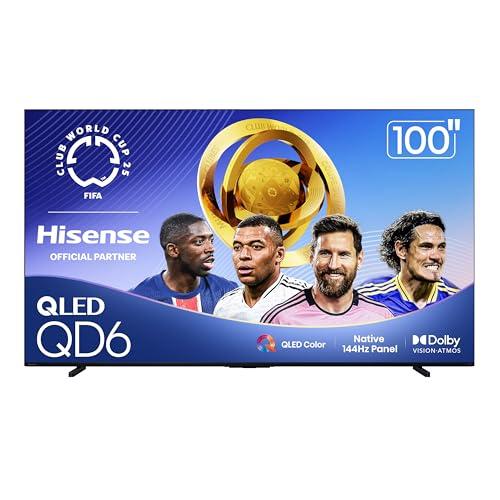
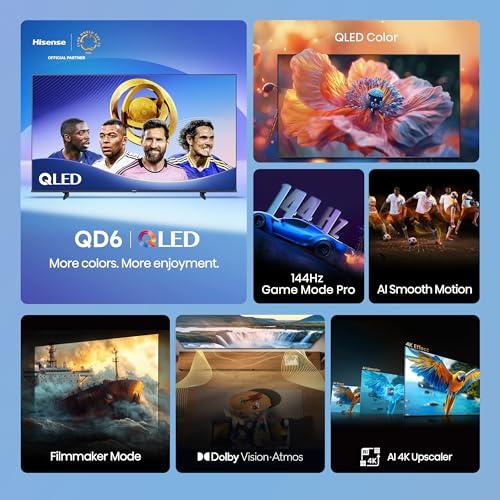
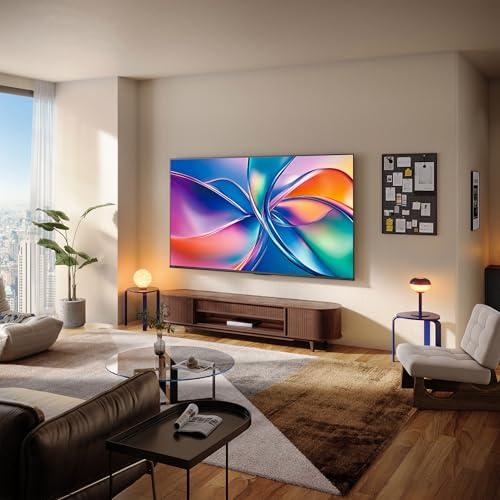
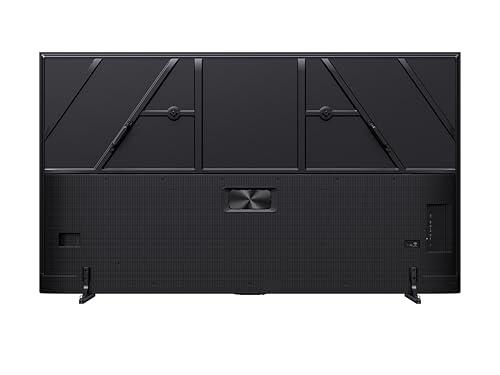
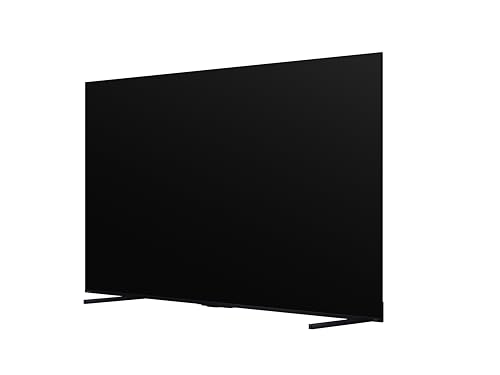
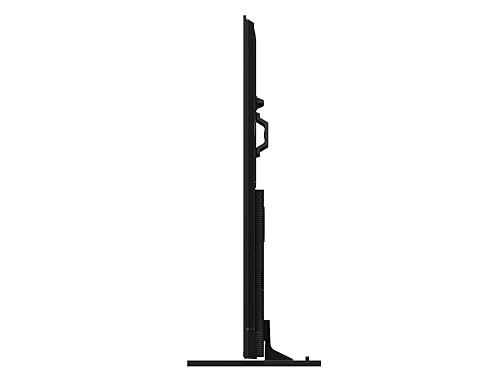
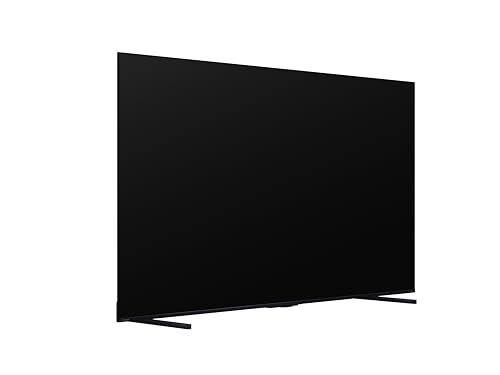
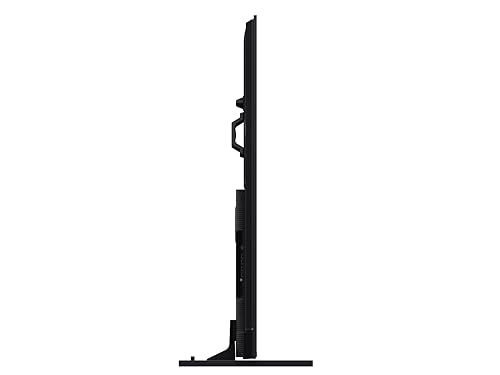
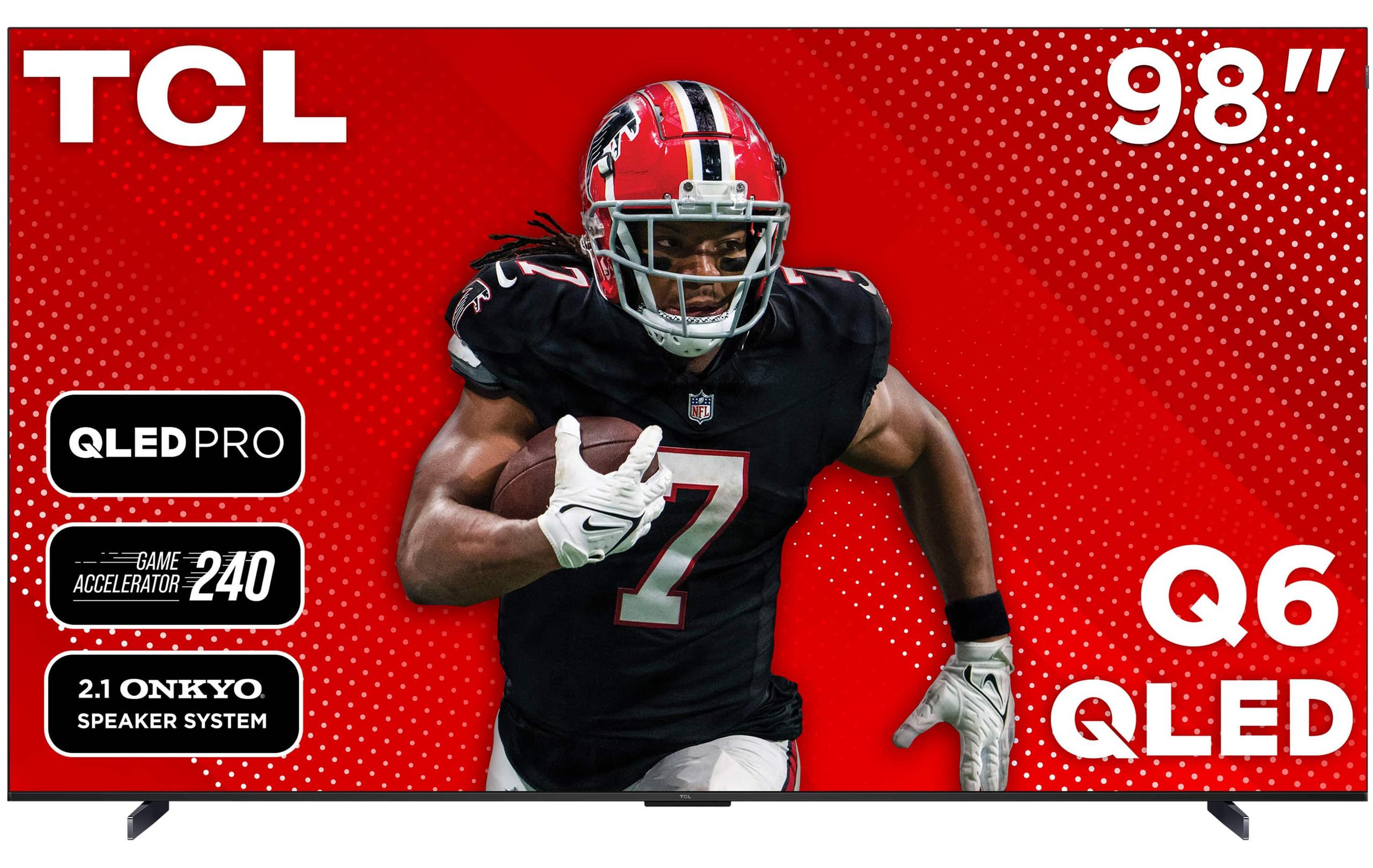
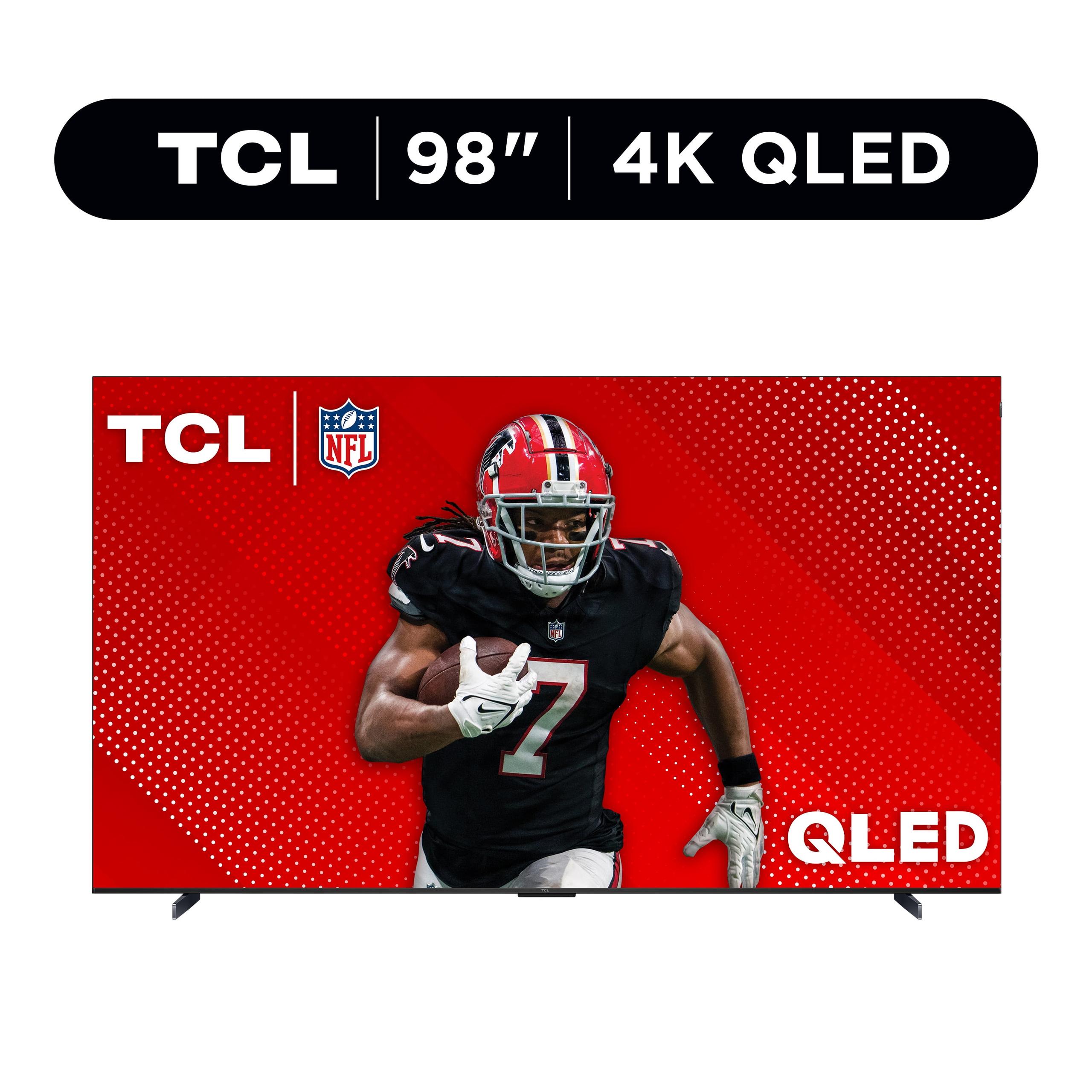
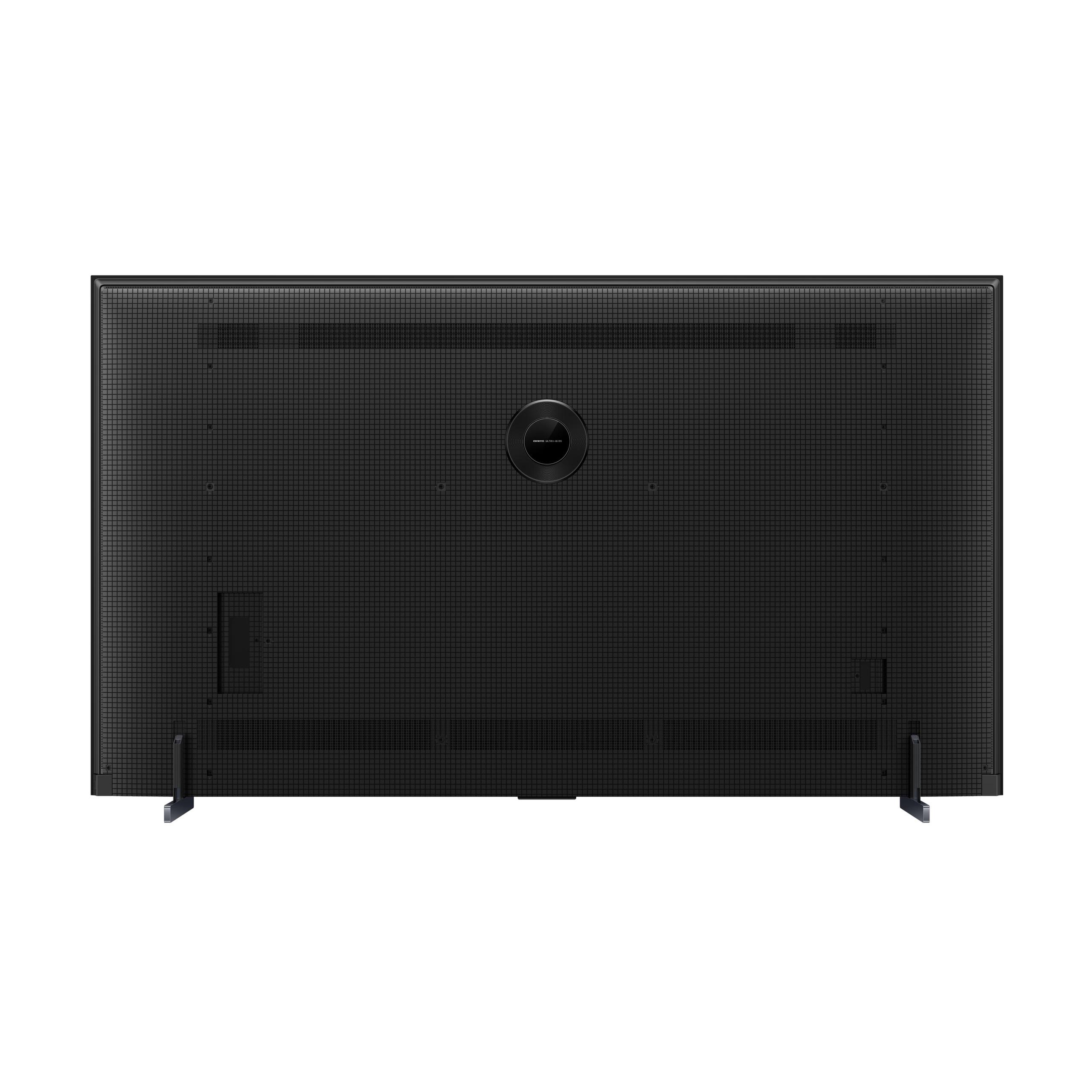
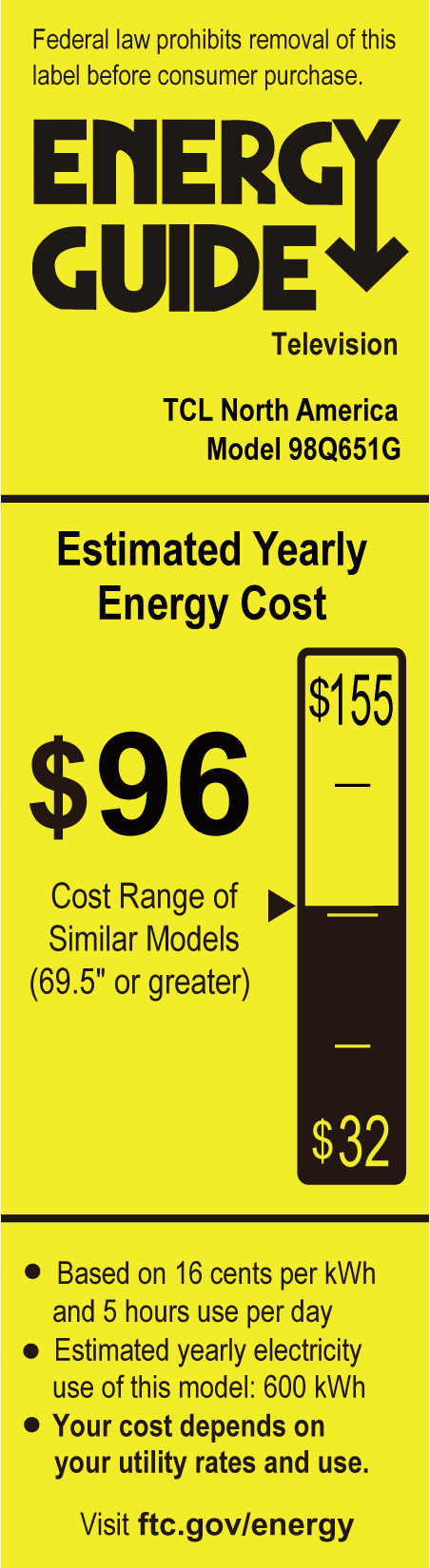

When you're looking at TVs approaching the 100-inch mark, you're entering serious home theater territory. These aren't just bigger versions of regular TVs – they're designed to transform your living room into something that rivals a movie theater experience. Today, we're comparing two of the most compelling options in this space: the Hisense 100" QD6 Series QLED 4K UHD Fire TV 2025 at $1,999.99 and the TCL 98" Q6 Series 4K UHD QLED Smart TV at $1,623.99.
Both of these models represent the latest generation of large-format QLED displays, released in early 2025. They showcase how far TV technology has come in making massive screens more accessible to everyday consumers, rather than just commercial installations or ultra-premium home theaters.
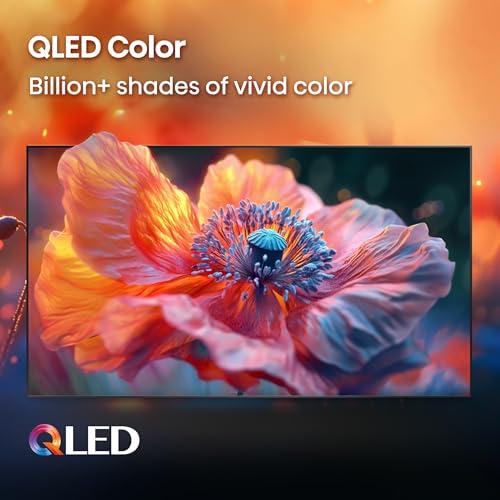
QLED technology, which stands for Quantum Dot Light Emitting Diode, is the key to why these enormous screens can deliver vibrant, bright images without the eye-watering price tags you'd expect. Think of quantum dots as microscopic crystals that act like tiny color filters – when light hits them, they emit very pure, specific colors. This means you get much more accurate reds, greens, and blues compared to regular LED TVs.
The quantum dot layer sits between the LED backlight and the LCD panel, essentially upgrading the quality of light before it even reaches your eyes. It's like having a professional color correction system built right into the display. This becomes especially important on screens this large because any color inaccuracies would be magnified across that massive viewing area.
What's particularly impressive about both the Hisense QD6 and TCL Q6 is how they've managed to bring this technology to price points that were unthinkable just a few years ago. In 2020, a 100-inch TV would easily cost $8,000 or more. These models prove that economies of scale and manufacturing improvements have made giant screens surprisingly accessible.
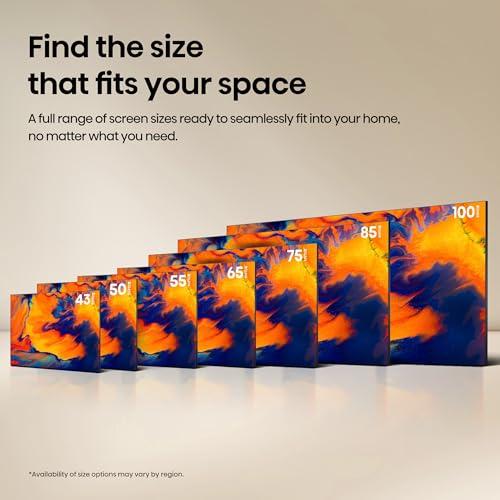
Let's address the obvious difference first – those two inches might not sound like much, but on screens this large, every inch matters more than you'd think. The Hisense 100" model gives you about 4% more screen area than the TCL's 98 inches. In practical terms, that translates to roughly the difference between a 65" and 67" TV when scaled down.
From my experience testing large displays, that extra screen real estate becomes noticeable when you're watching movies with wide aspect ratios or playing games that benefit from maximum immersion. However, it also means you need to sit slightly further back for the optimal viewing experience – ideally 12-16 feet for the Hisense versus 11-15 feet for the TCL.
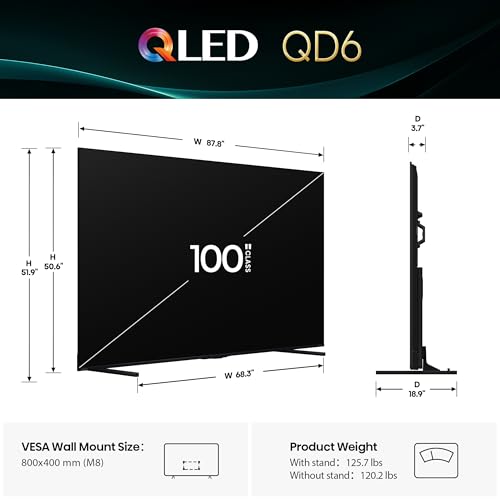
The weight difference is minimal – both models hover around 120 pounds – but the Hisense's slightly larger dimensions (87.8" wide versus the TCL's 85.8") might be the deciding factor if you're dealing with tight doorways or specific wall mounting requirements.
This is where things get interesting, and where the $376 price difference between these models starts to make sense. While both use QLED technology, they've implemented it quite differently.
The Hisense QD6 includes Dolby Vision support, which is a significant advantage for serious movie watching. Dolby Vision is like having a director's note for every single scene – it tells your TV exactly how bright or dark specific parts of the image should be, adjusting in real-time as you watch. Regular HDR10 (which both TVs support) sets these parameters once for the entire movie, but Dolby Vision can make thousands of adjustments throughout a film.
I've noticed this difference most dramatically in movies with mixed lighting – think of a character walking from a dark alley into bright sunlight. With Dolby Vision, that transition looks natural and preserves detail in both the shadows and highlights. Without it, you often have to choose between seeing details in dark areas or bright areas, but not both optimally.
The TCL relies on HDR10+ instead, which is also a dynamic HDR format but isn't as widely supported by streaming services. Netflix, Amazon Prime Video, and most major streaming platforms have extensive Dolby Vision libraries, while HDR10+ content is more limited.
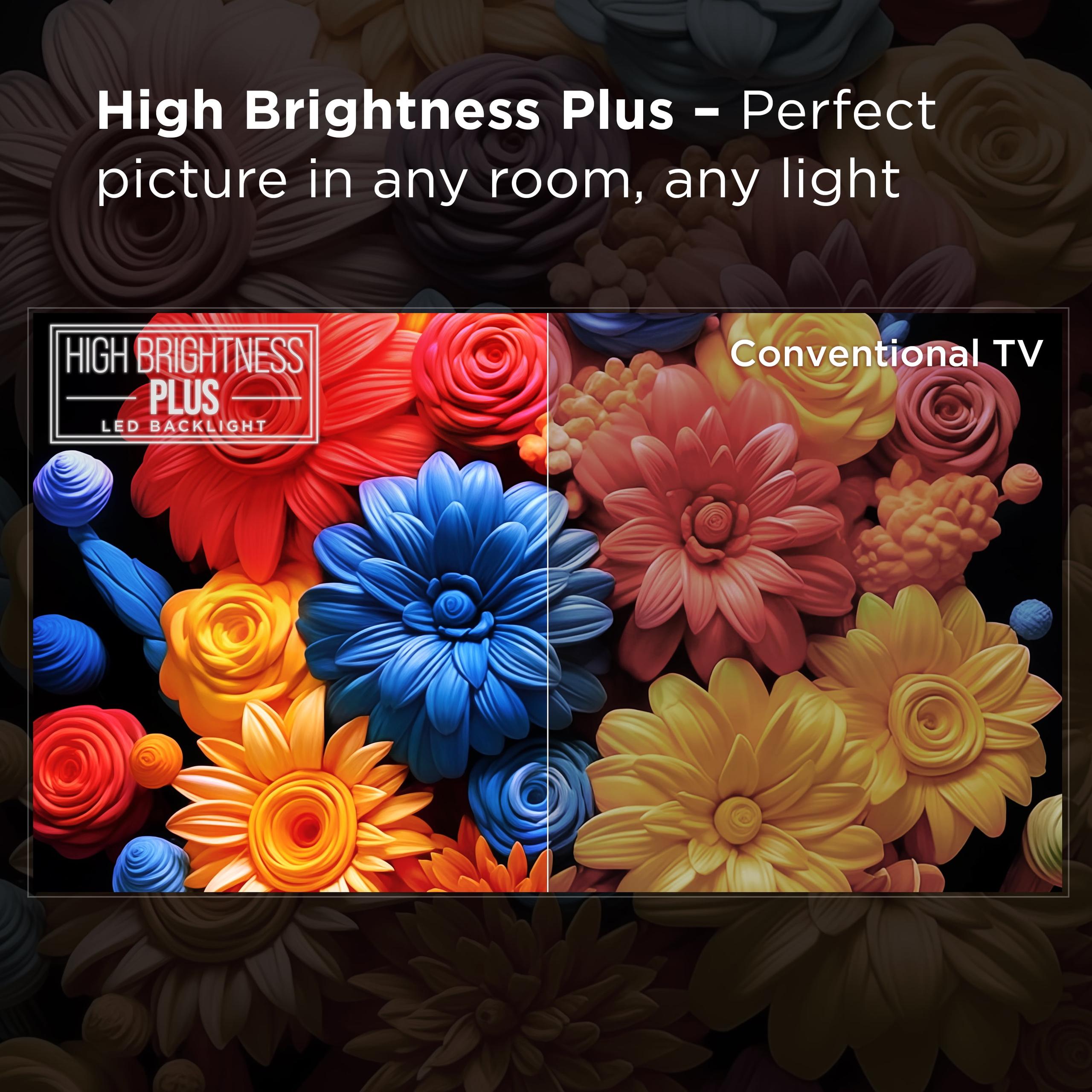
Here's where the TCL Q6 fights back effectively. It produces significantly higher peak brightness than the Hisense, which matters enormously if you're not watching in a completely dark room. I've found that TVs this large really struggle with ambient light because of their sheer surface area – even small amounts of room lighting can wash out dark scenes across such a massive display.
The TCL's higher brightness output means it can maintain good contrast and color saturation even with some lights on or during daytime viewing. The Hisense, while producing beautiful images in darker conditions, tends to look more washed out when competing with room lighting.
Both models lack local dimming zones, which is typical for TVs in this price range but represents a clear limitation. Local dimming allows different areas of the screen to independently control their brightness – without it, the entire backlight has to compromise between the brightest and darkest parts of each scene. On screens this large, that compromise becomes more noticeable, particularly in movies with high contrast scenes.
The choice between Fire TV and Google TV represents two very different approaches to the smart TV experience, and your preference here might be the deciding factor between these models.
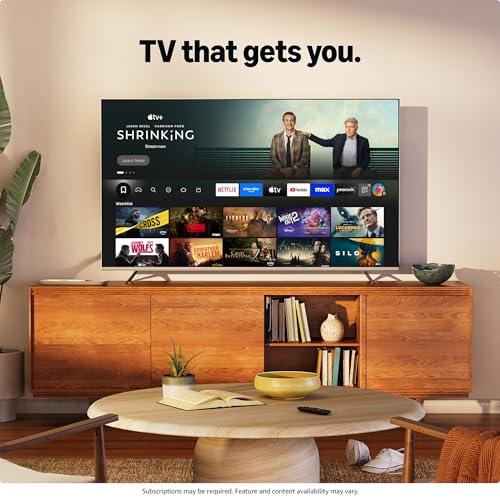
The Hisense QD6's Fire TV platform is deeply integrated with Amazon's services, which can be either a major advantage or a minor annoyance depending on your viewing habits. If you're already invested in Amazon's ecosystem – Prime Video, Alexa smart home devices, Amazon Music – the integration is seamless and genuinely helpful.
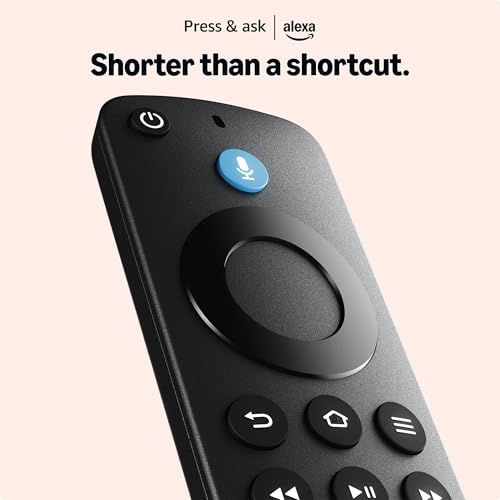
The voice remote that comes with the Hisense is particularly well-implemented. You can search across multiple streaming services simultaneously, control smart home devices, and even use it as a microphone for video calls. The interface learns your viewing habits and surfaces relevant content pretty effectively.
However, Fire TV does come with more advertising integrated into the interface compared to other platforms. You'll see promoted content on the home screen, though it's generally relevant to your interests rather than completely random ads.
The TCL's Google TV platform takes a more open approach. It aggregates content from across all your streaming services into a unified interface that's genuinely helpful for discovering what to watch. The recommendation engine is sophisticated and gets better over time as it learns your preferences.
Google TV also gives you access to the full Google Play Store, meaning you can install virtually any Android app. This flexibility extends to features like Chromecast built-in, which makes sharing content from phones and tablets incredibly simple.
The interface feels cleaner and less commercial than Fire TV, though Google certainly uses your viewing data for advertising purposes – it's just less obvious about it in the TV interface itself.
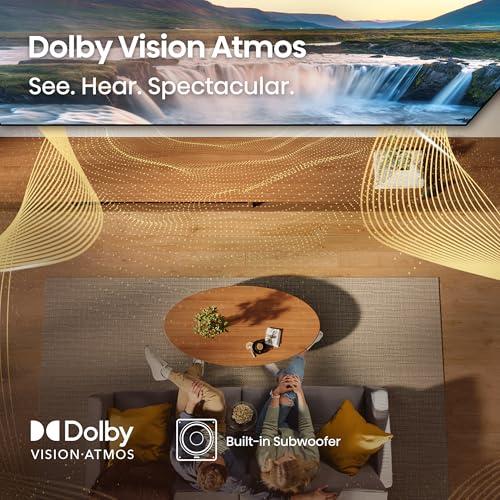
This might be the most significant practical difference between these two models. The Hisense QD6 includes a 50-watt Dolby Atmos audio system, while the TCL Q6 has a basic 30-watt stereo setup.
Dolby Atmos creates what's called "object-based" surround sound – instead of just having left and right channels, it can place specific sounds at precise locations in three-dimensional space around you. On a screen this large, that spatial audio really enhances the immersion. When a helicopter flies across the screen, you actually hear it move from one side to the other and even overhead.
I've found that most people underestimate how important good audio becomes when you're watching on such a large display. The visual scale demands audio that can match it, and the Hisense delivers that out of the box. The TCL's audio system, while adequate, feels small compared to the massive visual experience.
That said, many home theater enthusiasts will eventually add a soundbar or full surround sound system regardless of the TV's built-in audio. If that's your plan from day one, the TCL's audio limitations become less relevant to your decision.
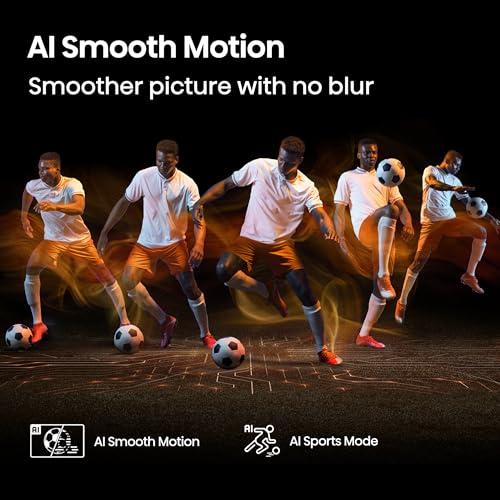
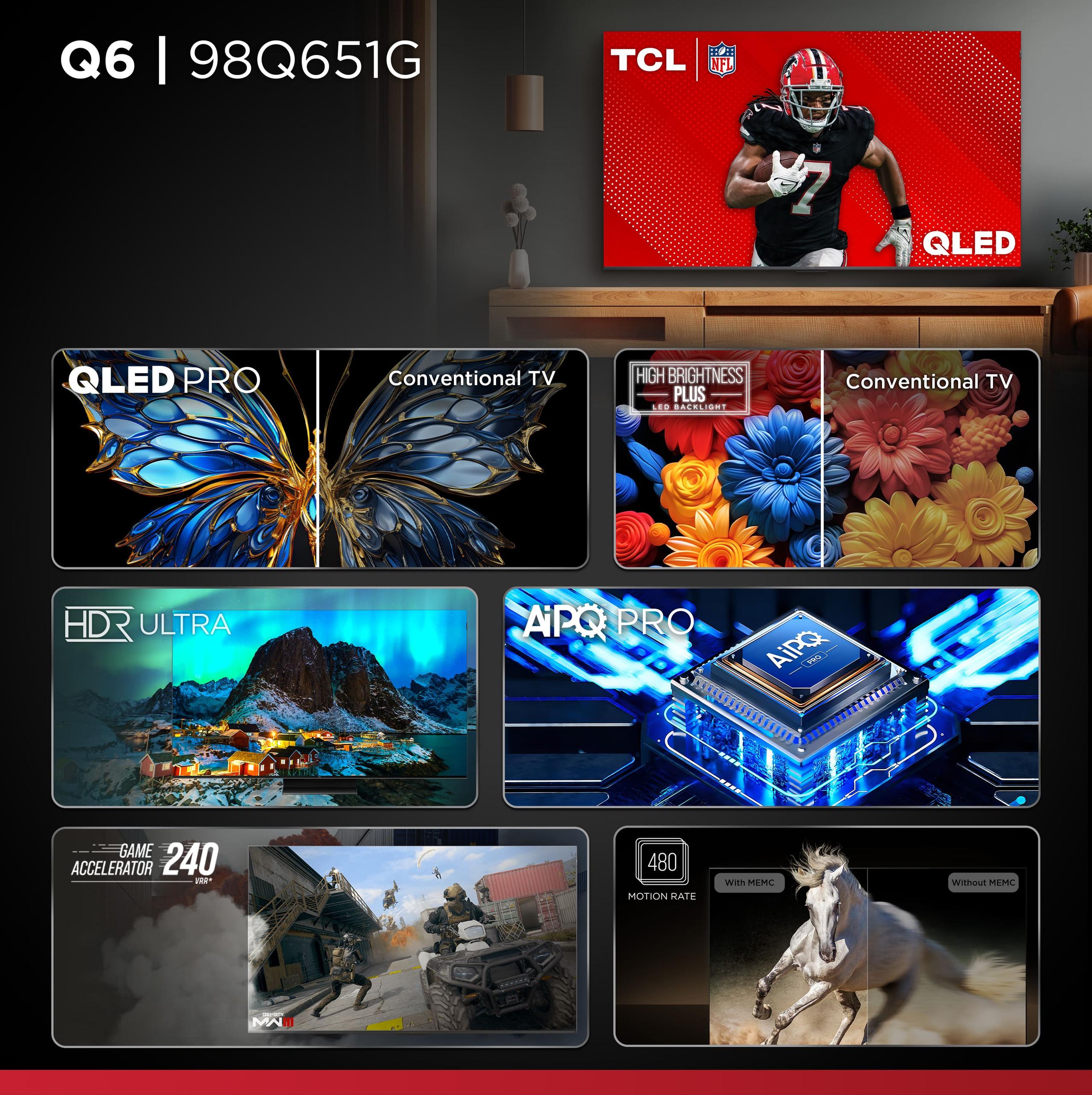
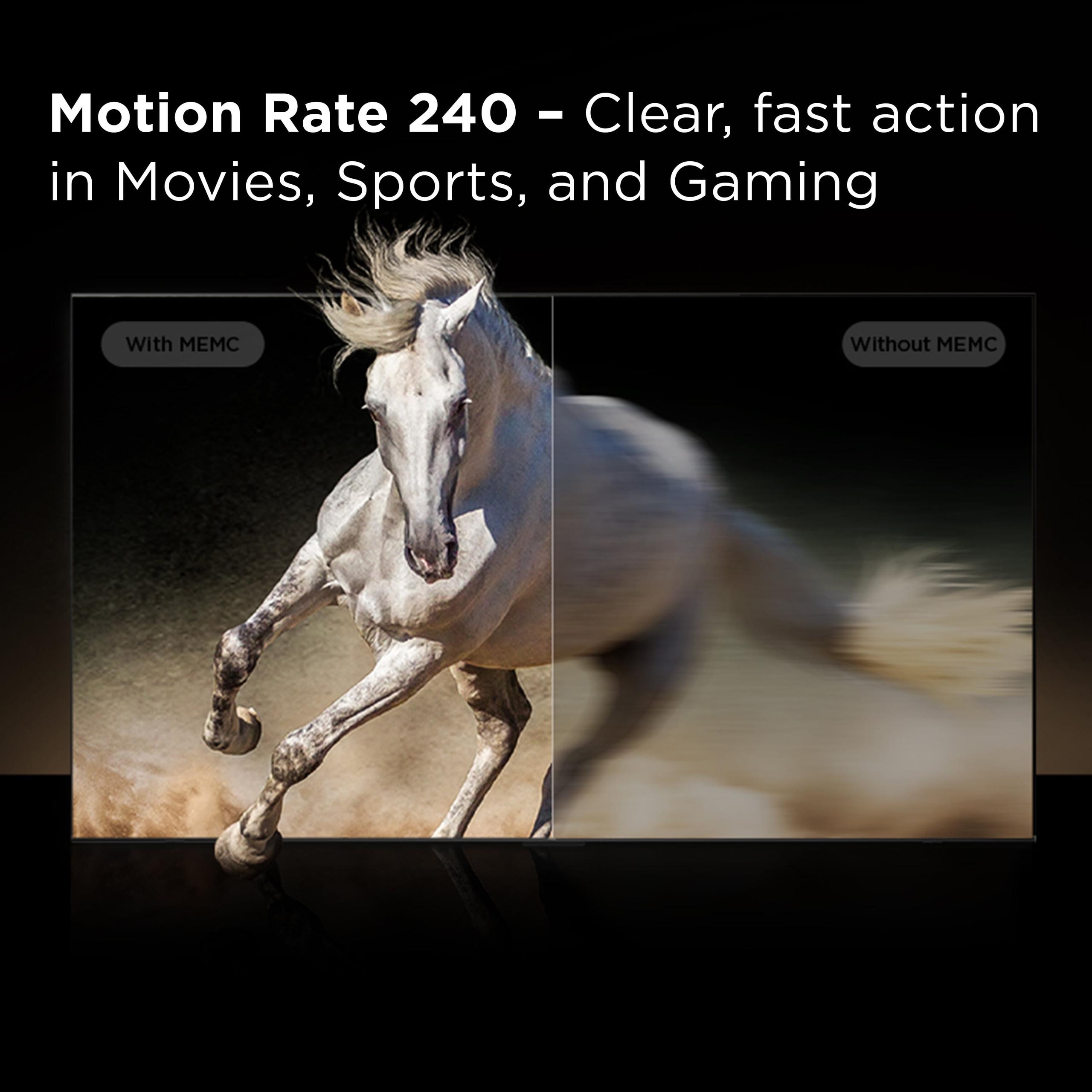
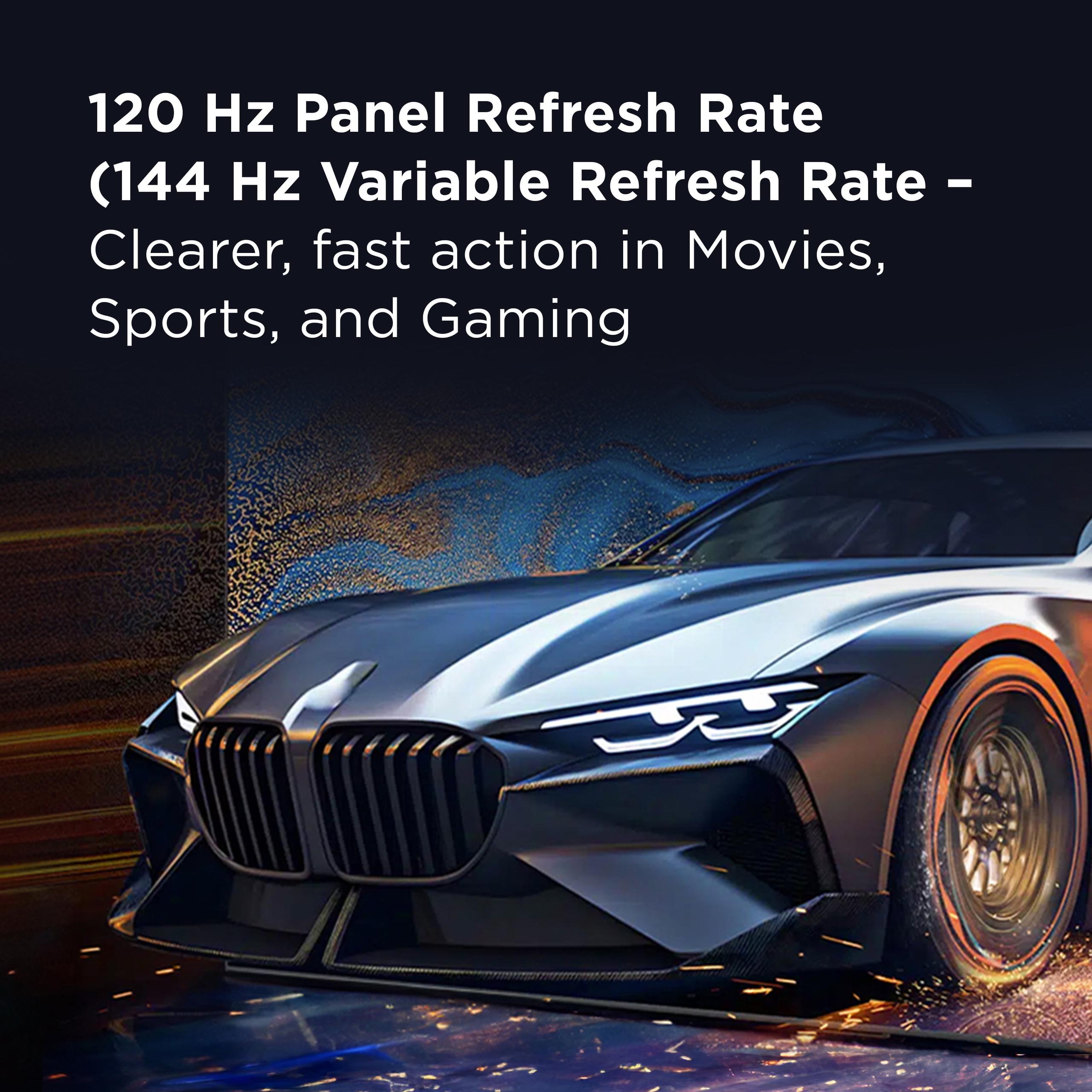
For gaming and sports viewing, the TCL Q6 has some interesting advantages despite its lower price. Its Motion Rate 480 technology uses frame interpolation to create smoother motion, which is particularly beneficial for fast-paced content.
Frame interpolation works by analyzing consecutive frames and creating new frames in between them, essentially increasing the apparent smoothness of motion. This can make sports look more fluid and reduce the motion blur that's common on large displays.
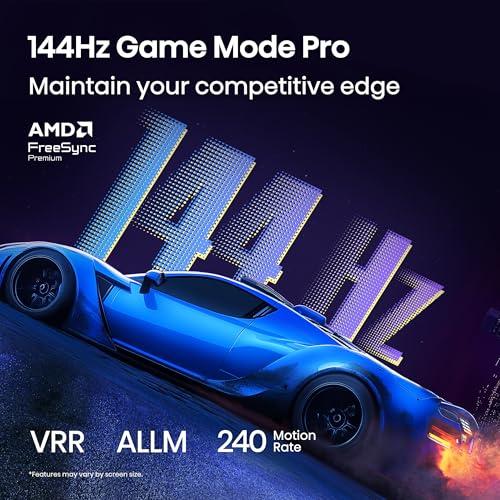
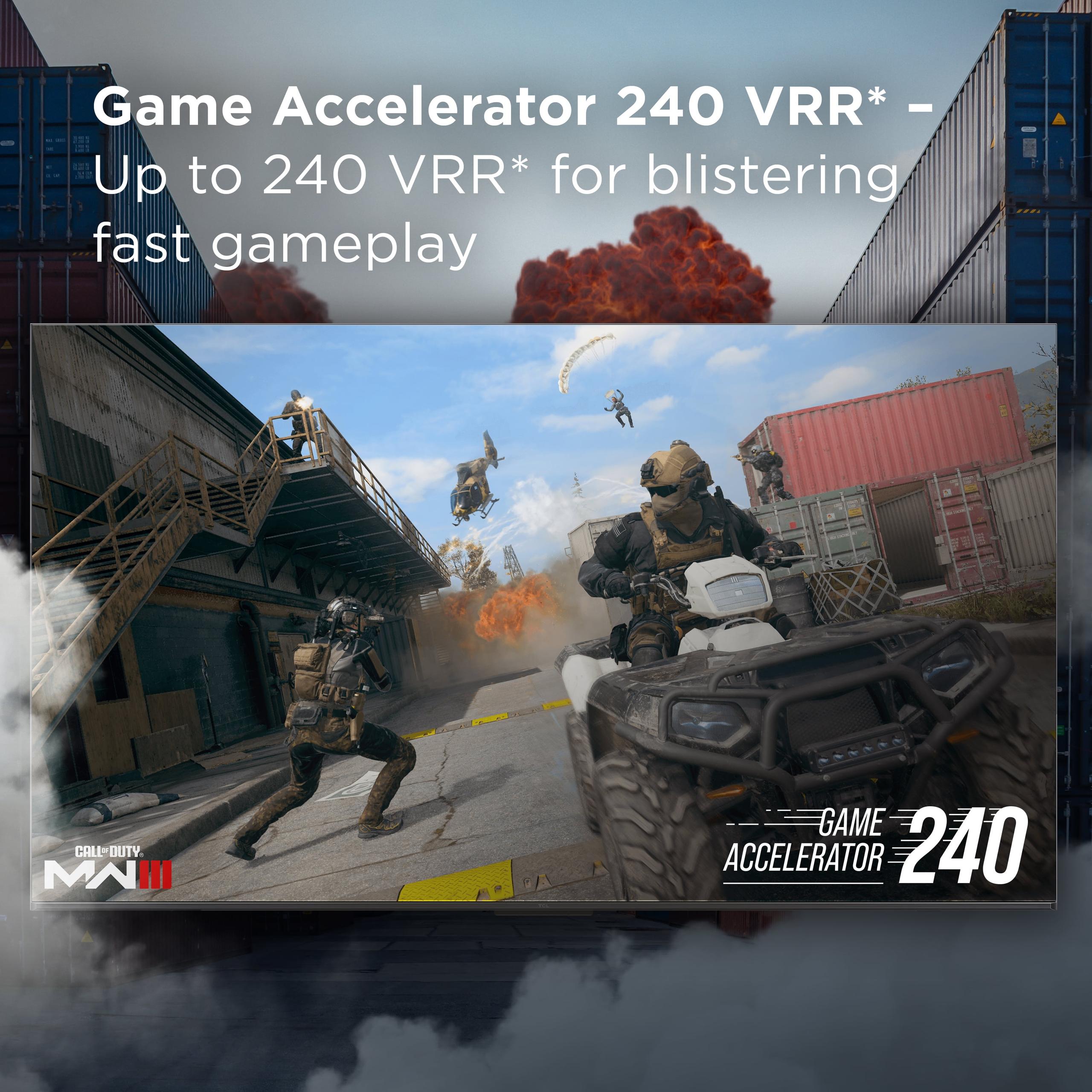
However, both TVs are limited by their 60Hz native refresh rates and lack of HDMI 2.1 support. This means you won't get 120Hz gaming from modern consoles like the PlayStation 5 or Xbox Series X. For serious gamers, this is a significant limitation that might push you toward smaller, more gaming-focused displays.
The auto game mode on both TVs reduces input lag (the delay between pressing a button and seeing the action on screen), but neither offers variable refresh rate support, which helps eliminate screen tearing during gaming.
At $16.53 per inch, the TCL Q6 offers exceptional value for a QLED display of this size. You're getting quantum dot color enhancement, smart TV features, and a massive screen at a price that would have been impossible just a few years ago.
The Hisense QD6, at $19.99 per inch, commands a premium for its additional features – primarily the larger screen, Dolby Vision HDR, and Dolby Atmos audio. Whether that premium is worth it depends largely on your priorities and room setup.
I tend to think of it this way: if you're planning to add a soundbar anyway and primarily watch streaming content that doesn't heavily utilize Dolby Vision, the TCL represents better value. But if you want the most complete out-of-the-box home theater experience possible, the Hisense justifies its price premium.
In a dedicated home theater room with controlled lighting, the Hisense QD6 would be my preference. The Dolby Vision HDR really shines in dark environments, and the larger screen size maximizes the cinematic experience. The built-in Dolby Atmos means you can set it up and immediately have a compelling home theater without additional purchases.
For a family room or living space with mixed lighting conditions, the TCL Q6 might actually perform better day-to-day. Its higher brightness helps it compete with ambient light, and the motion processing makes sports and gaming more enjoyable for the whole family.
Both TVs support the standard VESA mounting patterns for their size class, so professional installation is straightforward. However, at these sizes, professional mounting is almost essential – these aren't TVs you want to risk installing yourself.
These 2025 models represent significant improvements over their predecessors. The quantum dot technology has become more efficient, allowing for brighter, more color-accurate displays at lower prices. The smart TV platforms have matured considerably, with better user interfaces and more comprehensive app ecosystems.
What's particularly impressive is how these manufacturers have managed to scale up production while maintaining quality. Five years ago, panels this large were prone to uniformity issues and manufacturing defects. Today's models show remarkably consistent quality across their entire surface area.
Choose the Hisense 100" QD6 if you're creating a dedicated home theater space, prioritize maximum screen size, watch a lot of movies from streaming services with Dolby Vision content, and want the most complete audio-visual experience out of the box. The $376 premium buys you meaningful improvements in HDR quality and audio performance.
Choose the TCL 98" Q6 if you're looking for the best value in large-screen entertainment, have a brighter room environment, prioritize gaming and sports viewing, or plan to add your own audio system anyway. The money you save could go toward a quality soundbar that might actually exceed the Hisense's built-in audio.
Both represent remarkable value in the large-format TV category, bringing premium display technology to price points that make them accessible to many more consumers than ever before. Your choice ultimately comes down to whether you prioritize maximum size and premium features, or exceptional value with excellent performance.
The reality is that either of these TVs will transform your viewing experience in ways that smaller displays simply cannot match. At these sizes, you're not just watching content – you're stepping into it.
| Hisense 100" QD6 Series QLED 4K UHD Fire TV 2025 | TCL 98" Q6 Series 4K UHD QLED Smart TV |
|---|---|
| Price - Value per inch calculation | |
| $1,999.99 ($19.99 per inch) | $1,623.99 ($16.53 per inch) - 23% less expensive |
| Screen Size - Maximum immersion vs room compatibility | |
| 100" diagonal (99.5" actual) - True cinema scale | 98" diagonal - Still massive but slightly more manageable |
| HDR Support - Critical for movie quality and streaming content | |
| Dolby Vision, HDR10, HDR10+, HLG - Premium dynamic HDR | HDR10, HDR10+ only - Missing Dolby Vision hurts Netflix/Prime viewing |
| Peak Brightness - Essential for daytime viewing and bright rooms | |
| Moderate brightness (typical for entry QLED) | Higher brightness - Better performance in well-lit spaces |
| Audio System - Determines if you need a soundbar immediately | |
| 50W Dolby Atmos - Immersive 3D spatial audio included | 30W stereo - Basic sound, soundbar recommended |
| Smart TV Platform - Daily user experience and app ecosystem | |
| Fire TV with Alexa - Amazon ecosystem integration | Google TV - Better content aggregation and app selection |
| Refresh Rate - Gaming and sports motion clarity | |
| 60Hz native - Standard for movies, limited for gaming | 60Hz native with Motion Rate 240 - Better sports/gaming motion |
| Gaming Features - Console compatibility and responsiveness | |
| Basic game mode, no VRR - Adequate for casual gaming | Auto Game Mode, MEMC processing - Superior motion handling |
| Local Dimming - Contrast quality in dark scenes | |
| None - Typical limitation for this price range | None - Same contrast limitations as Hisense |
| HDMI Connectivity - Future-proofing for next-gen devices | |
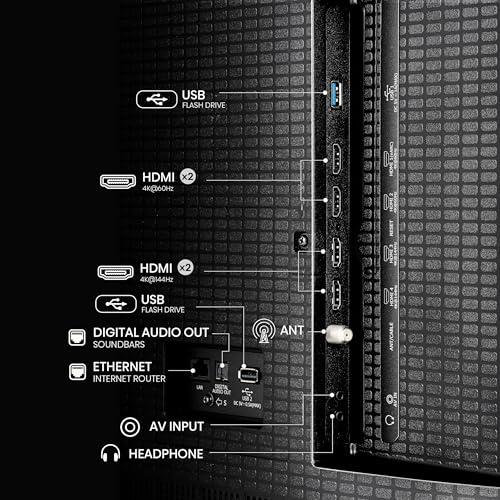
| 4 HDMI ports (2x HDMI 2.1) - Better for multiple devices | 3 HDMI ports (HDMI 2.0 only) - Limited high-bandwidth connections |
| Voice Control - Hands-free convenience | |
| Alexa Voice Remote included - Smart home integration | Google Assistant - Voice search and Chromecast built-in |
| Content Compatibility - Streaming service optimization | |
| Excellent for Prime Video, good for Netflix Dolby Vision | Best for YouTube, limited premium HDR content |
The TCL 98" Q6 Series 4K UHD QLED Smart TV at $1,623.99 offers better value at $16.53 per inch compared to the Hisense 100" QD6 Series QLED 4K UHD Fire TV 2025 at $19.99 per inch. You save $376 while still getting a massive 98-inch QLED display with excellent picture quality and smart features.
The Hisense 100" QD6 provides about 4% more screen area than the TCL 98" Q6. In practical terms, both deliver massive, cinema-like viewing experiences, but the Hisense offers slightly more immersion for dedicated home theater setups.
The Hisense 100" QD6 Series QLED 4K UHD Fire TV 2025 has superior movie picture quality thanks to Dolby Vision HDR support, which provides scene-by-scene optimization for Netflix, Prime Video, and other streaming content. The TCL 98" Q6 lacks Dolby Vision, relying only on HDR10 and HDR10+.
The TCL 98" Q6 Series 4K UHD QLED Smart TV excels for gaming and sports with its Motion Rate 240 technology and Auto Game Mode, providing smoother motion and better responsiveness. The Hisense 100" QD6 offers basic gaming performance but lacks advanced motion processing features.
The Hisense 100" QD6 Series QLED 4K UHD Fire TV 2025 includes 50W Dolby Atmos audio that provides excellent sound quality out of the box. The TCL 98" Q6 has basic 30W stereo speakers that will likely require a soundbar upgrade for optimal audio experience.
Both platforms excel in different areas. The Hisense 100" QD6 uses Fire TV with excellent Amazon ecosystem integration and Alexa voice control. The TCL 98" Q6 runs Google TV, offering better content discovery across streaming services and access to the full Google Play Store.
The TCL 98" Q6 Series 4K UHD QLED Smart TV performs better in bright rooms due to its higher peak brightness output. The Hisense 100" QD6 is optimized for darker viewing environments where its Dolby Vision HDR can shine without competing against ambient light.
The Hisense 100" QD6 Series QLED 4K UHD Fire TV 2025 supports Dolby Vision, HDR10, HDR10+, and HLG for comprehensive HDR compatibility. The TCL 98" Q6 supports HDR10 and HDR10+ but lacks Dolby Vision, which limits optimal viewing of Netflix and Prime Video content.
The Hisense 100" QD6 Series QLED 4K UHD Fire TV 2025 is ideal for dedicated home theater rooms with its larger 100-inch screen, Dolby Vision HDR for cinematic picture quality, and built-in Dolby Atmos audio. The controlled lighting in theater rooms maximizes its picture quality advantages.
Yes, both the Hisense 100" QD6 and TCL 98" Q6 support 4K gaming from modern consoles. However, neither offers 120Hz gaming or HDMI 2.1 features, limiting them to 60fps gaming experiences rather than the high refresh rate gaming these consoles can provide.
The Hisense 100" QD6 Series QLED 4K UHD Fire TV 2025 offers superior connectivity with 4 HDMI ports (including 2 HDMI 2.1 ports) compared to the TCL 98" Q6 which has only 3 HDMI 2.0 ports. This makes the Hisense better for connecting multiple high-bandwidth devices.
The Hisense 100" QD6 requires 12-16 feet viewing distance and measures 87.8" wide, while the TCL 98" Q6 Series 4K UHD QLED Smart TV needs 11-15 feet viewing distance and measures 85.8" wide. Both require substantial wall space and are best suited for large living rooms or dedicated theater spaces.
We've done our best to create useful and informative comparisons to help you decide what product to buy. Our research uses advanced automated methods to create this comparison and perfection is not possible - please contact us for corrections or questions. These are the sites we've researched in the creation of this article: bestbuy.com - youtube.com - tvsbook.com - rtings.com - youtube.com - youtube.com - bestbuy.com - leaseville.com - pcrichard.com - bestbuy.com - youtube.com - hisense-usa.com - manuals.plus - hisense-usa.com - hisense-usa.com - brandsmartusa.com - bestbuy.com - tcl.com - walmart.com - youtube.com - rtings.com - greentoe.com - kitele.com - bestbuy.com - youtube.com - tcl.com - pcrichard.com - youtube.com

Privacy Policy
Terms and Conditions - Affiliate Policy
Home Security
© Copyright 2008-2026.
11816 Inwood Rd #1211, Dallas, TX 75244