

Choosing a gaming monitor in 2025 feels like standing at a crossroads. Do you go for the cutting-edge innovation that promises to handle everything, or stick with the proven approach that excels at what it does best? This dilemma perfectly captures the choice between the ViewSonic XG275D-4K and the HP Omen 27k – two monitors that represent fundamentally different philosophies in the competitive 4K gaming space.
Both monitors were released in 2025, arriving at a time when the gaming monitor market has been rapidly evolving. Since 2022, we've seen manufacturers finally crack the code on affordable 4K displays that don't sacrifice gaming performance. The improvements in panel technology, particularly in IPS response times and refresh rate capabilities, have made 4K gaming monitors accessible to mainstream users rather than just enthusiasts willing to spend over $1000.
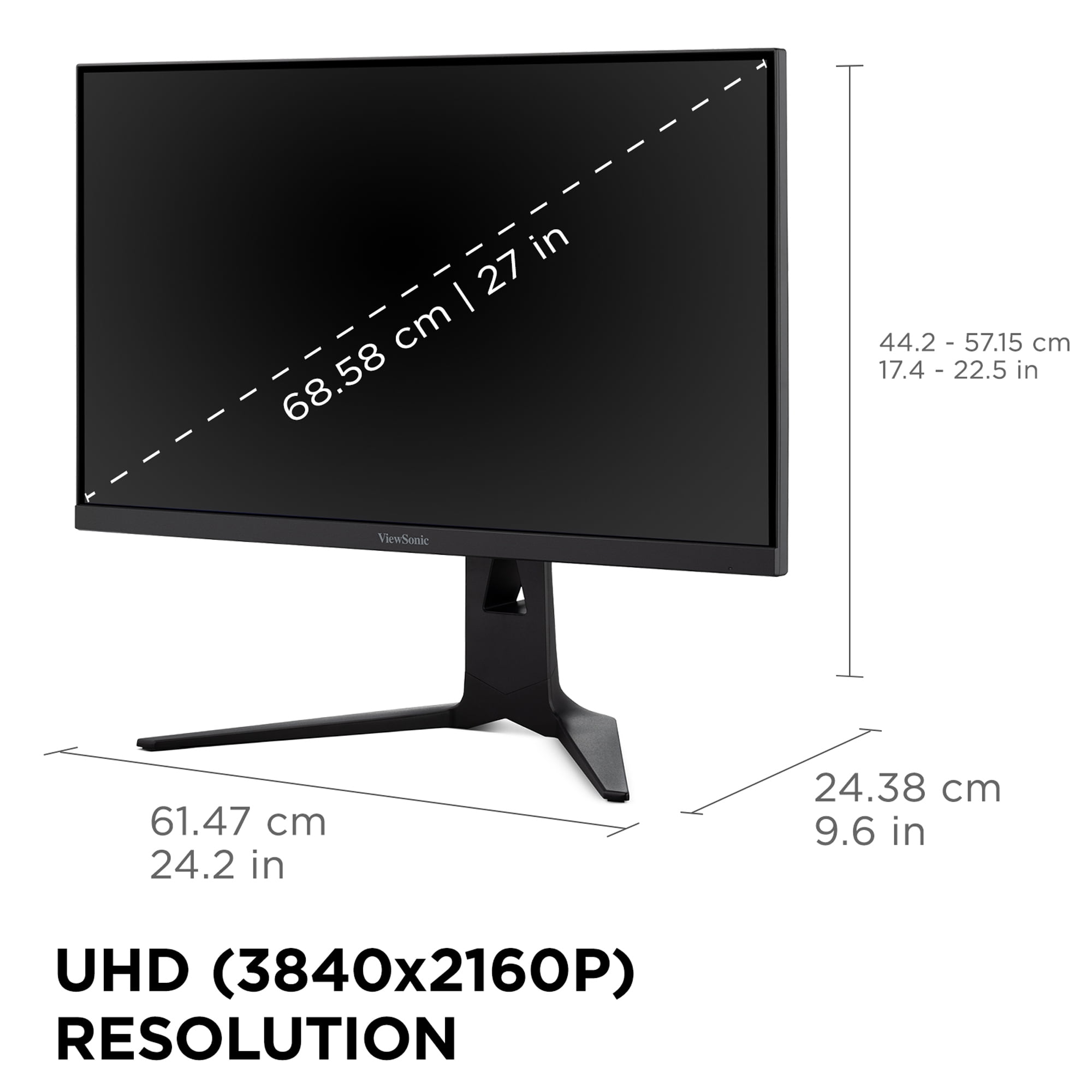
The 27-inch 4K gaming monitor category sits in a sweet spot that many gamers find irresistible. At this size, you get the pixel density (163 pixels per inch) that makes everything crisp and detailed without requiring the massive desk space that 32-inch monitors demand. These displays have become the go-to choice for gamers who want sharp visuals but still maintain competitive gaming performance.
What's fascinating about this category is how it's evolved to address a fundamental tension in gaming. Traditional wisdom suggested you had to choose: either get a 4K monitor for beautiful single-player games, or get a high-refresh monitor for competitive gaming. The monitors we're looking at today challenge that assumption, though they take very different approaches to solving the problem.
The key technical considerations that matter most in this category include response time (how quickly pixels can change colors), input lag (the delay between your controller input and seeing the result on screen), adaptive sync (technology that prevents screen tearing by synchronizing your graphics card with the monitor), and color accuracy (how faithfully the monitor reproduces colors compared to industry standards).
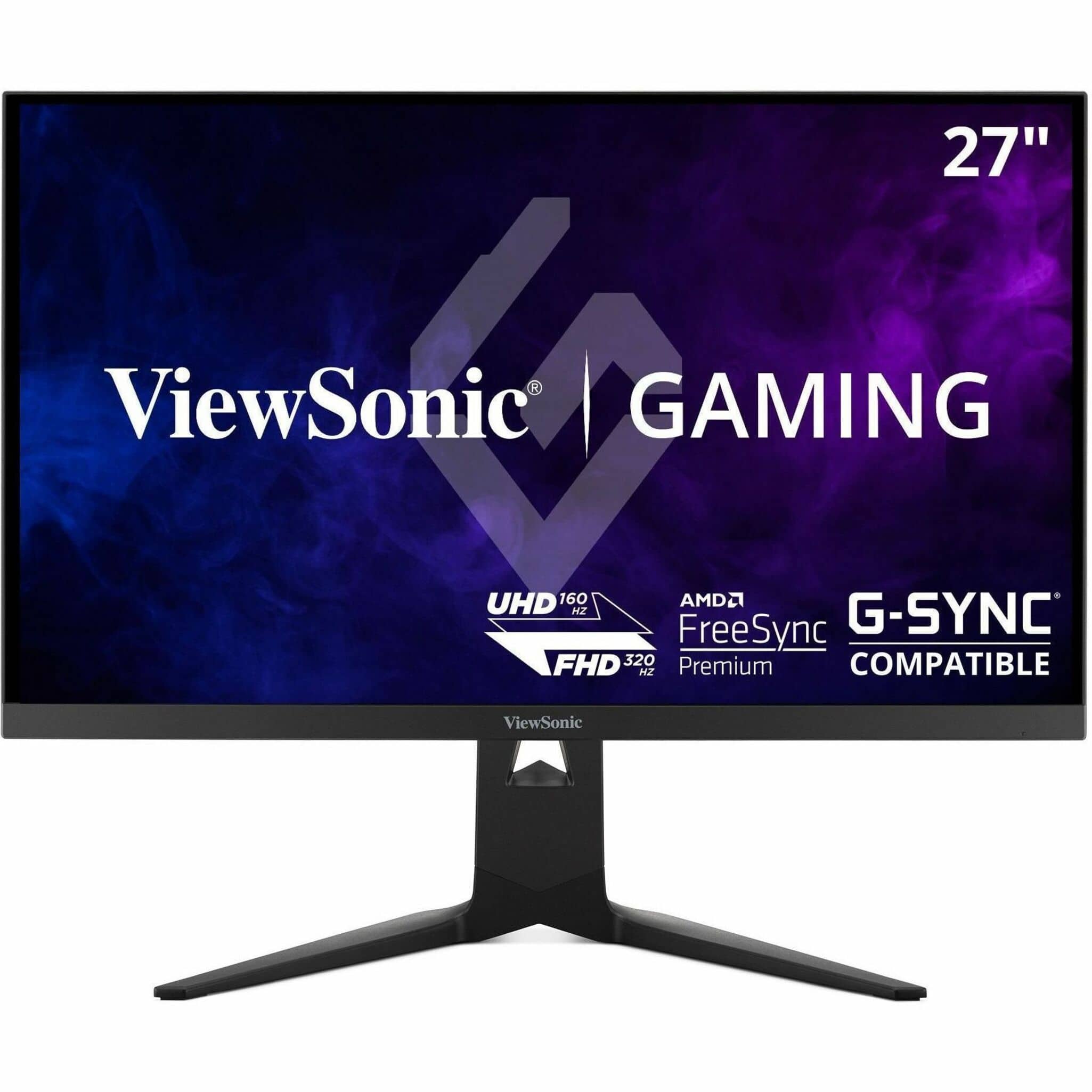
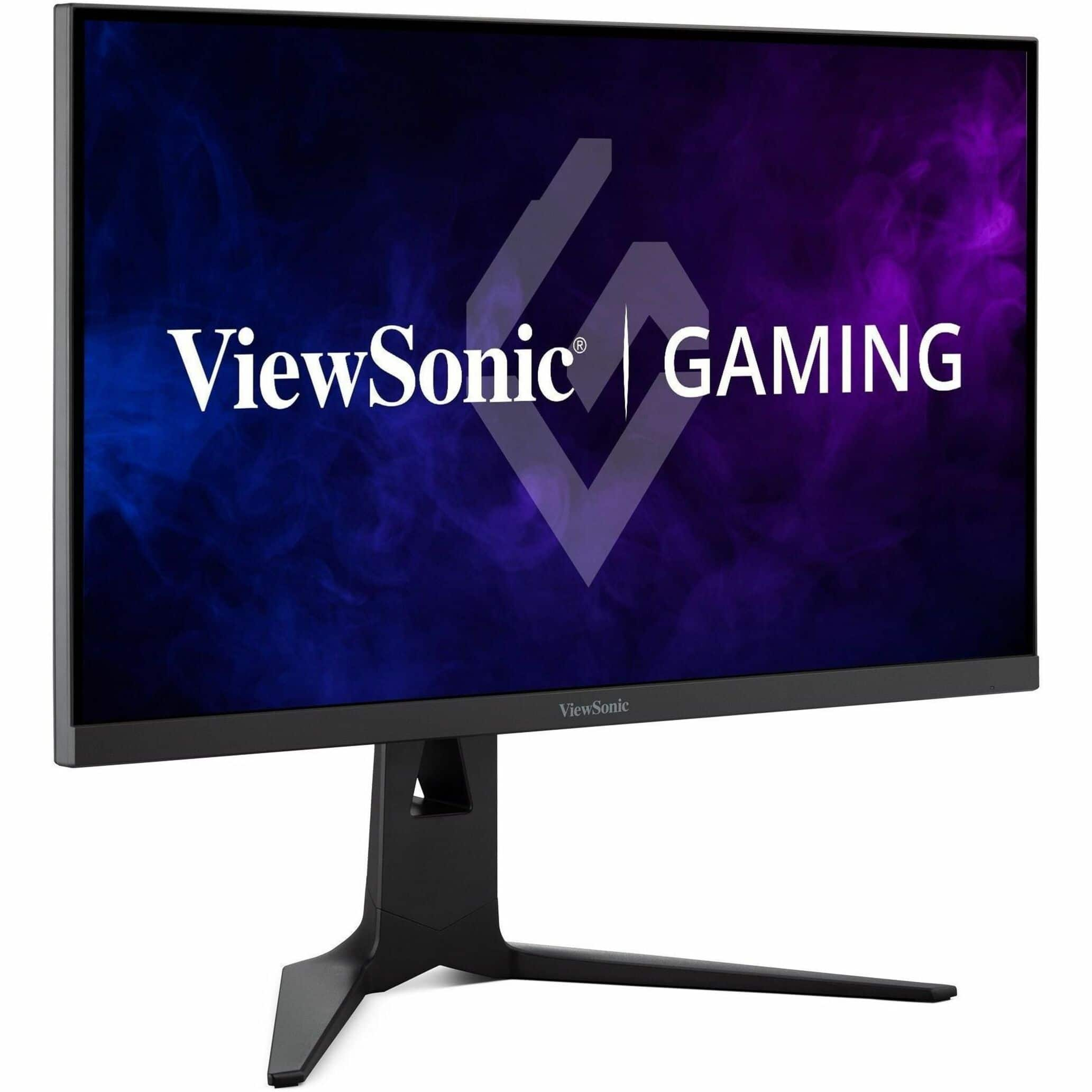
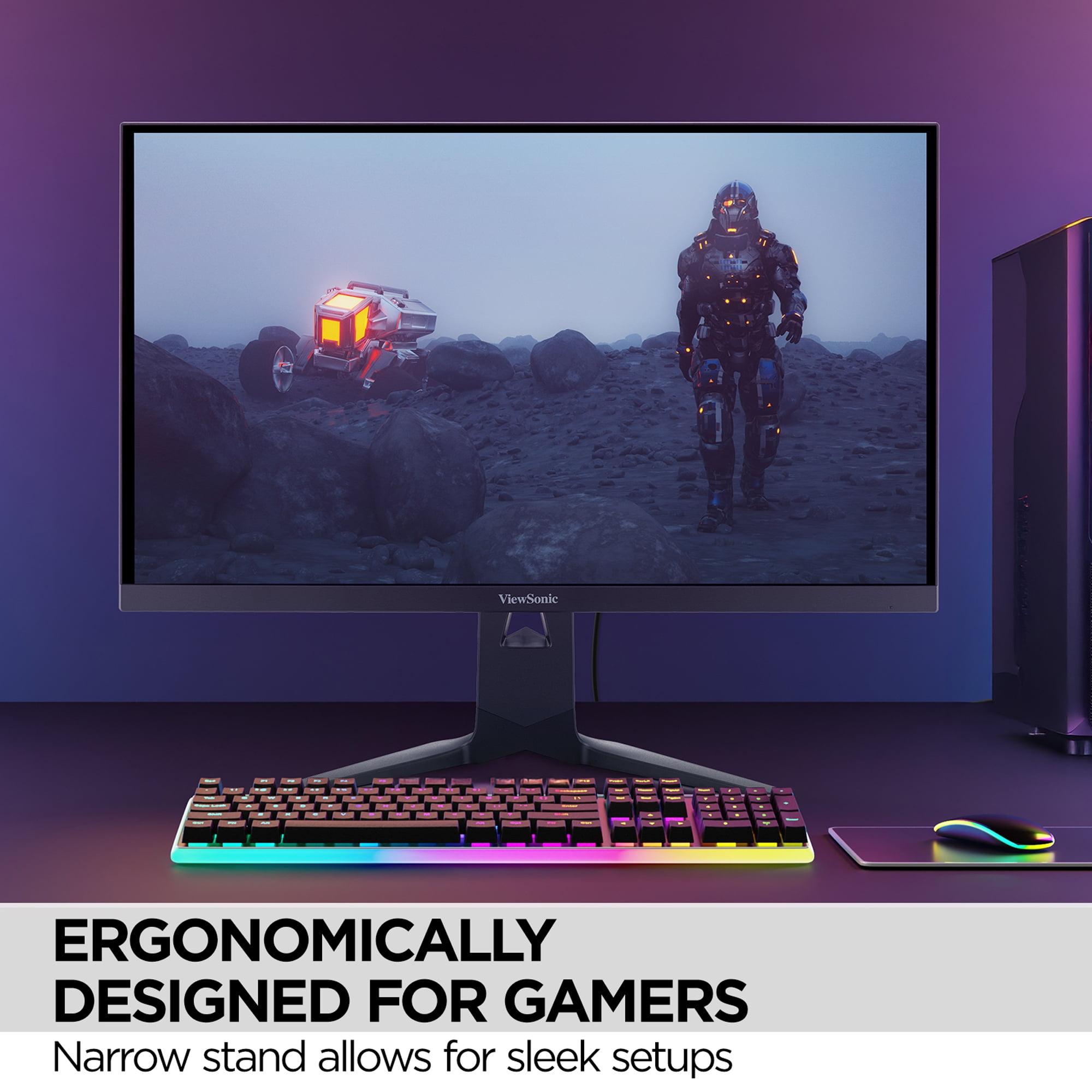
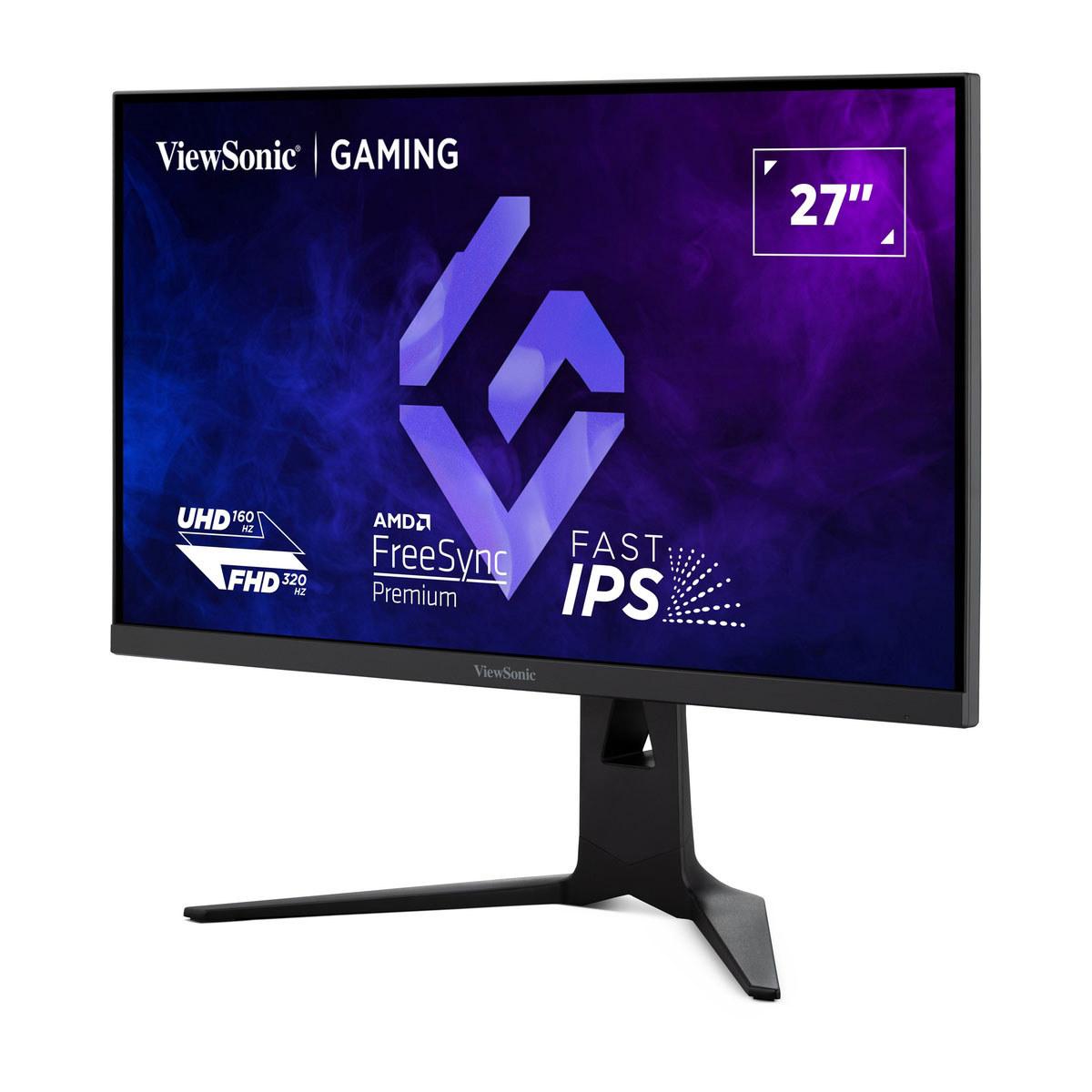
The ViewSonic XG275D-4K represents what I'd call the "have your cake and eat it too" approach. When ViewSonic's engineers designed this monitor, they tackled the fundamental gaming dilemma head-on: why should you need two different monitors when you could have one that adapts to your needs?
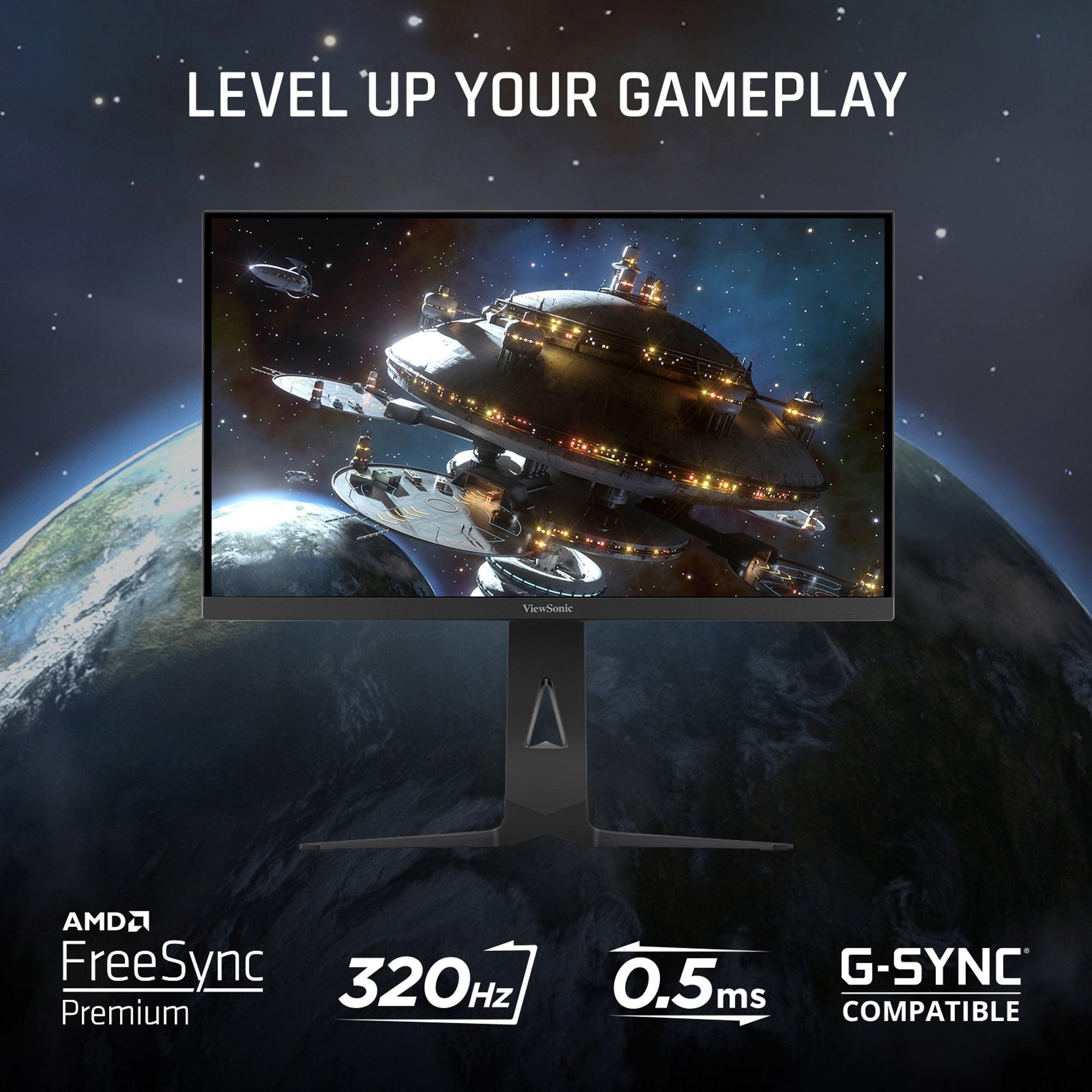
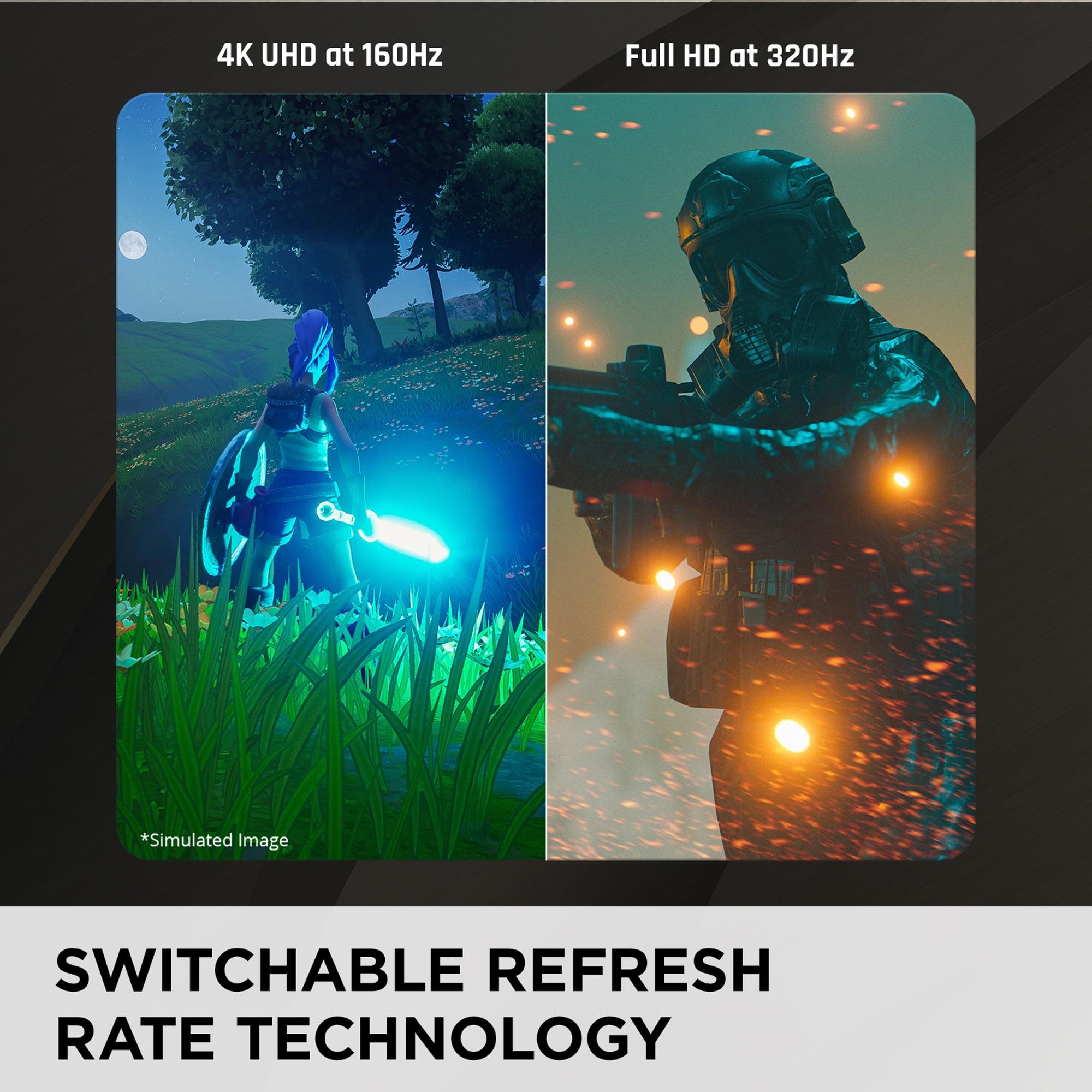
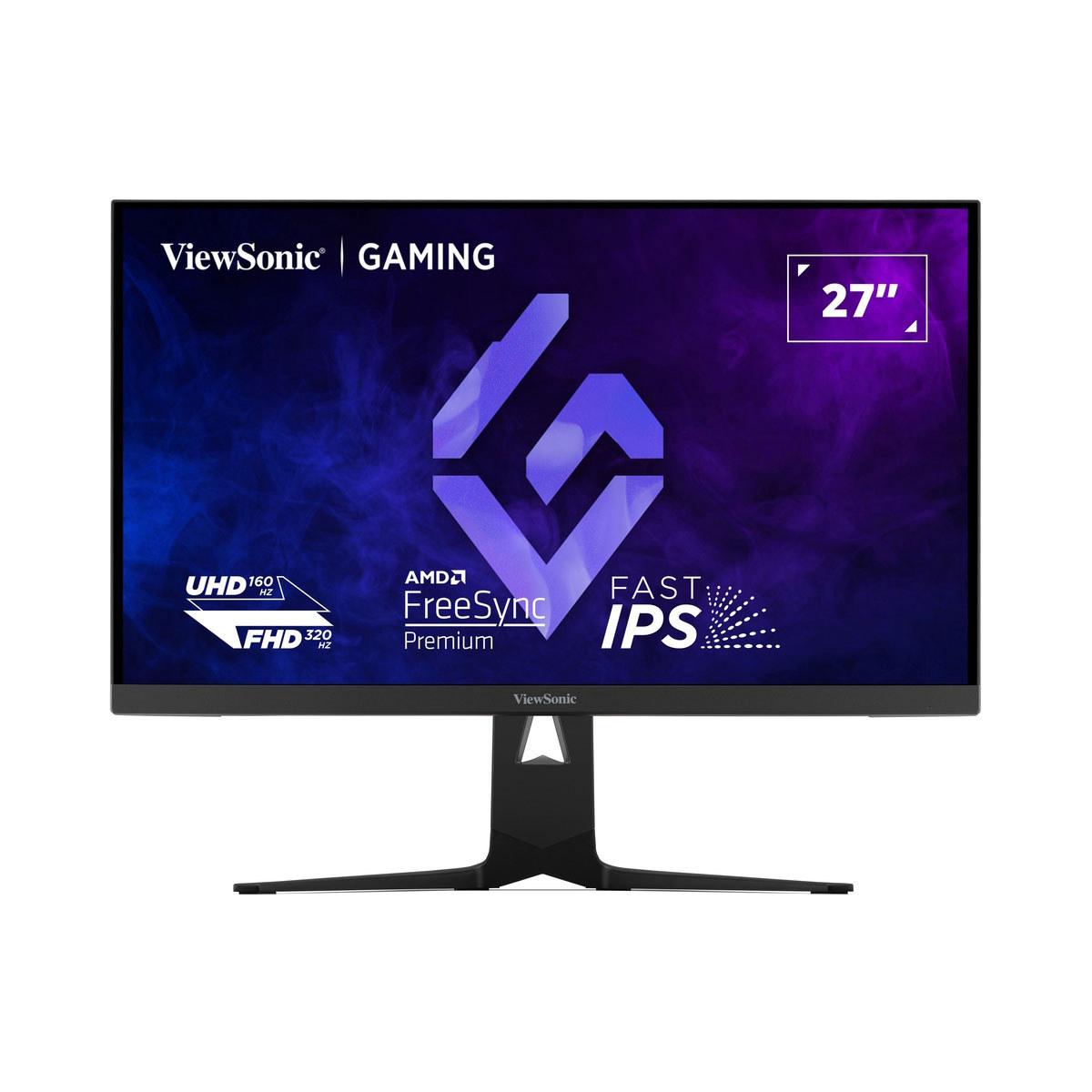
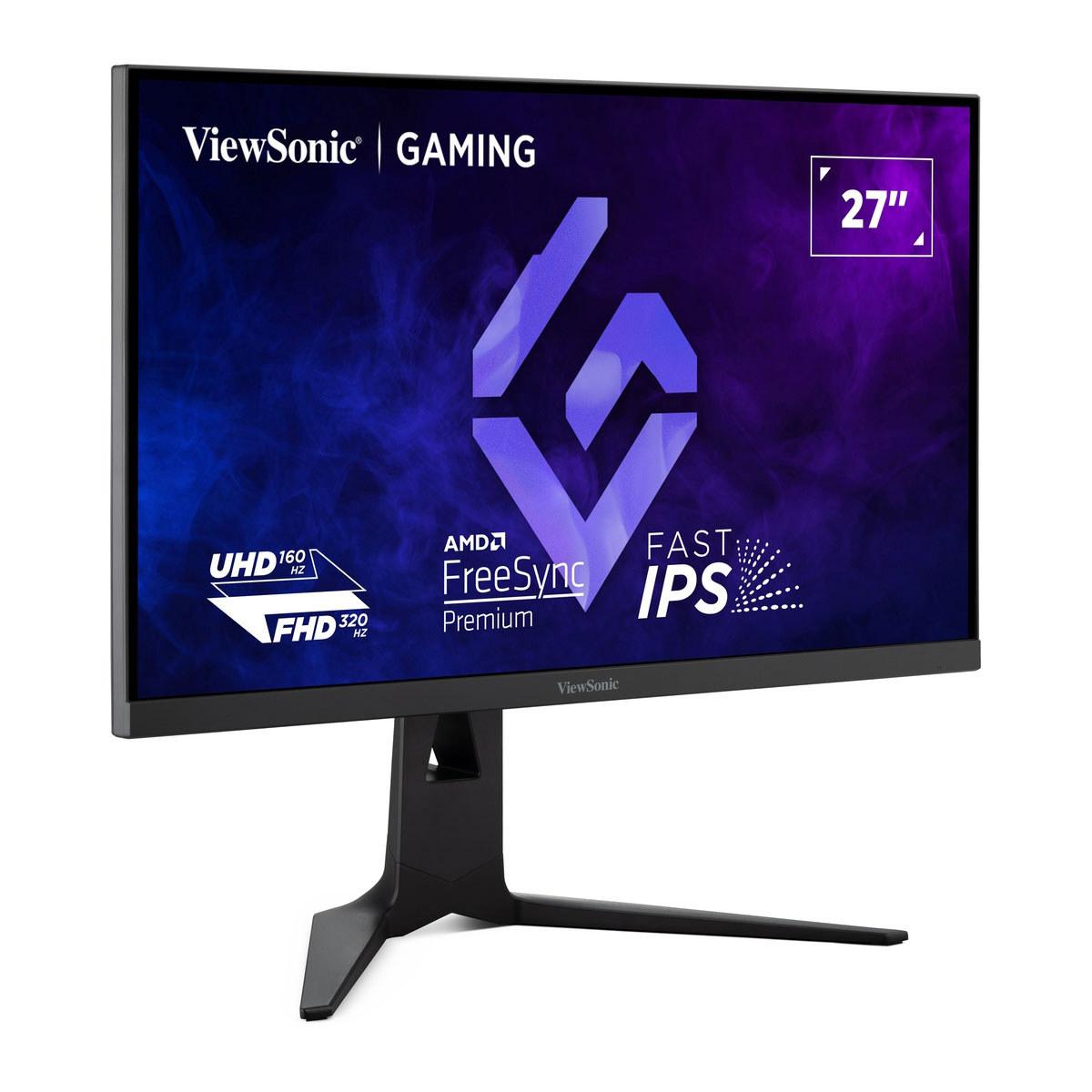
The star feature here is something ViewSonic calls "Switchable Dual-Mode Refresh Rate Technology." In practical terms, this means you can instantly toggle between two completely different operating modes with a single button press. In 4K mode, you get the full 3840x2160 resolution running at 160Hz – perfect for exploring vast open worlds or enjoying the latest AAA titles with stunning detail. Flip the switch, and suddenly you're running at 1920x1080 (Full HD) but with an absolutely blistering 320Hz refresh rate.
To put that 320Hz number in perspective, most competitive gamers are used to 144Hz or 240Hz monitors. The jump to 320Hz means the monitor is refreshing its image 320 times per second, compared to the 60 times per second of a standard monitor. This creates an almost surreal level of smoothness in fast-paced games like Counter-Strike 2 or Valorant, where every millisecond can mean the difference between landing a shot or getting eliminated.
The ViewSonic XG275D-4K achieves this through what's called a Fast IPS panel – a newer type of IPS (In-Plane Switching) technology that maintains the excellent color reproduction and viewing angles IPS is known for, while dramatically improving response times. The monitor boasts a 0.5ms MPRT (Motion Picture Response Time), which measures how long a pixel appears to be in motion during transitions. For context, this is exceptionally fast – many gaming monitors struggle to get below 1ms.
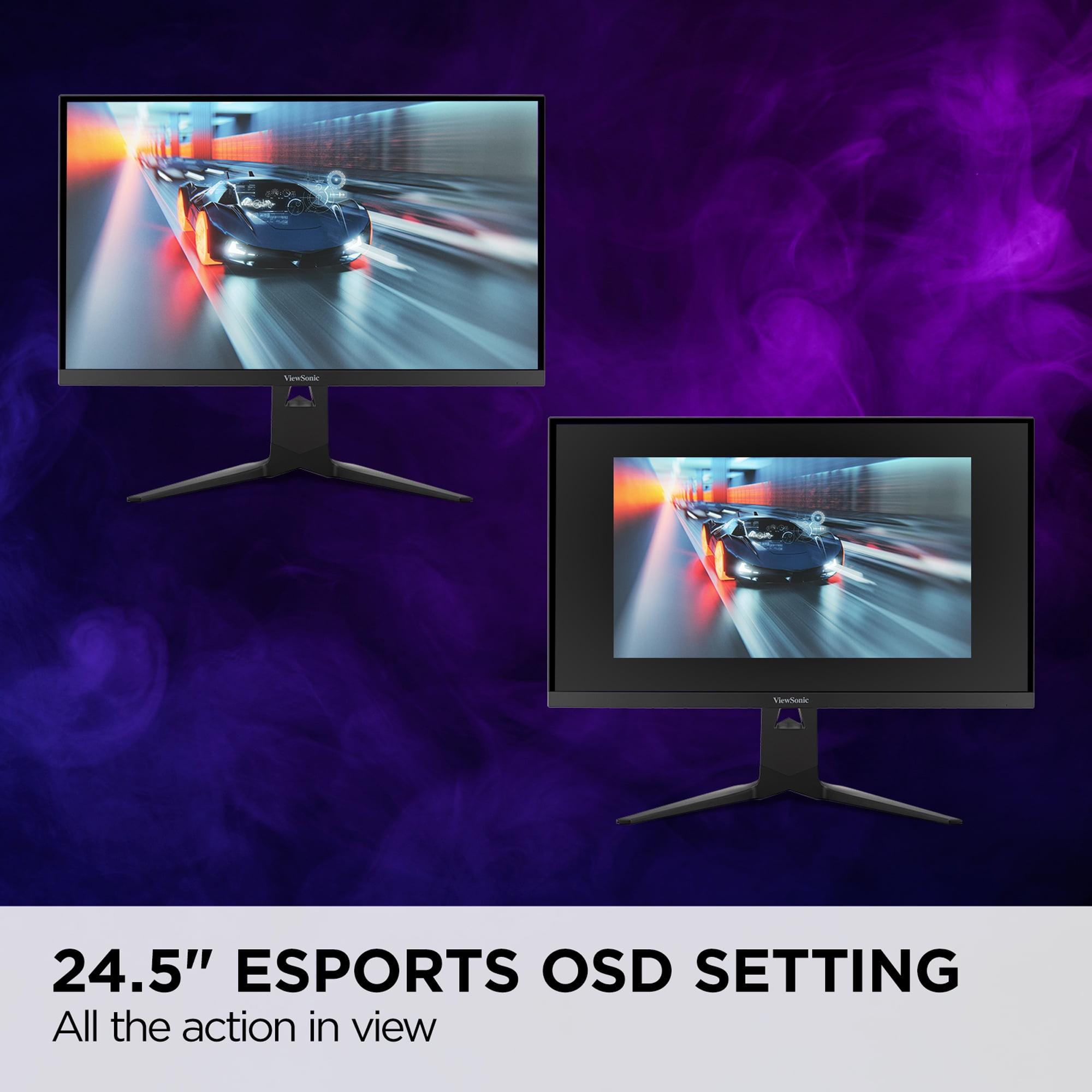
One detail that showcases the gaming focus is the inclusion of a "24.5-inch esports mode." This feature essentially creates a smaller viewport on the 27-inch panel, mimicking the experience of using a 24.5-inch monitor, which is the standard size used in professional esports tournaments. It's these kinds of thoughtful touches that show ViewSonic really understands their target audience.
However, there's a trade-off worth discussing. When you switch to the 1080p mode on the ViewSonic XG275D-4K, you're essentially taking a native 4K display and asking it to show a lower resolution image. This creates what's called scaling artifacts – a slight softness or fuzziness because the monitor has to interpolate (make educated guesses about) how to display fewer pixels on a screen designed for more pixels.
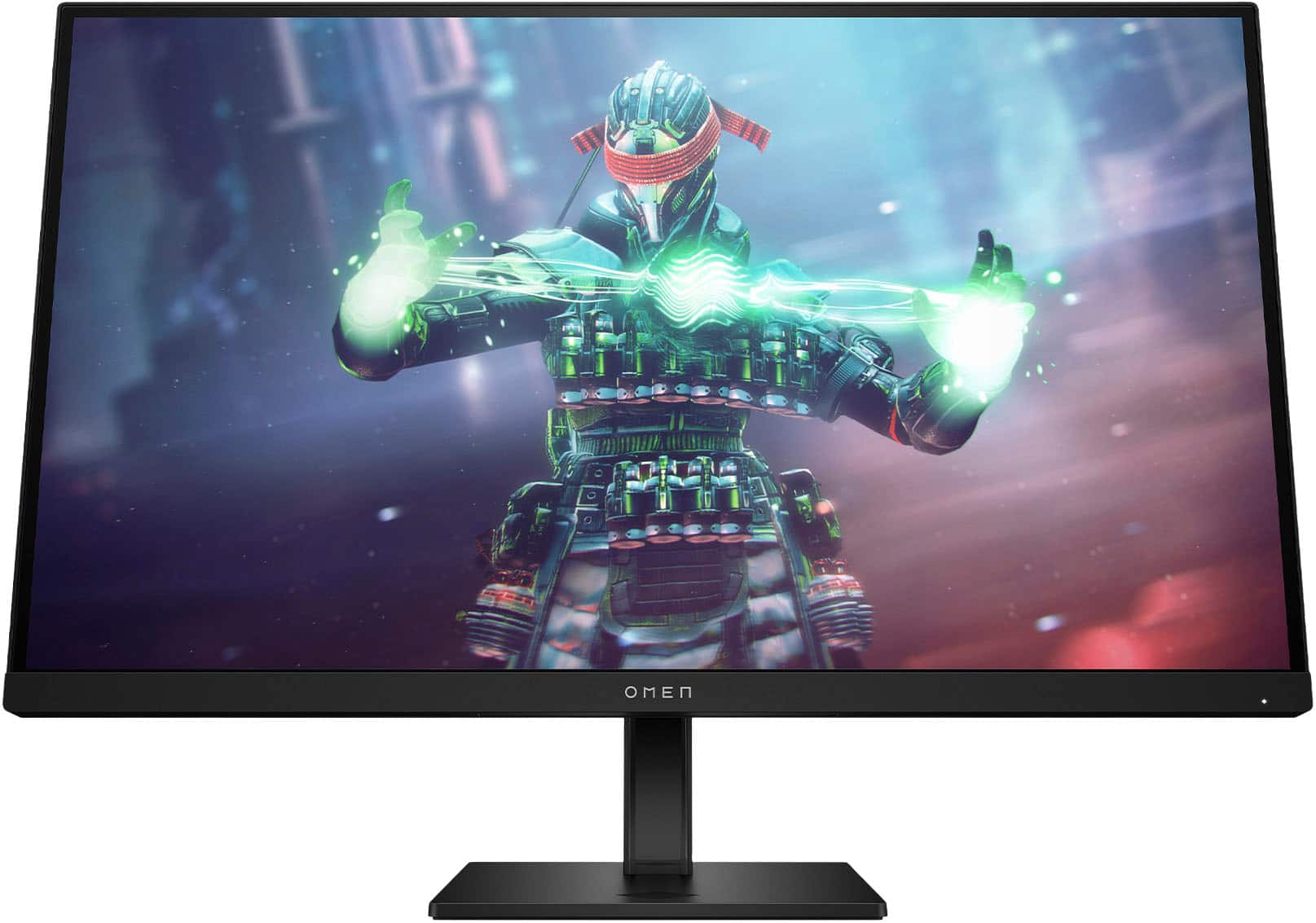
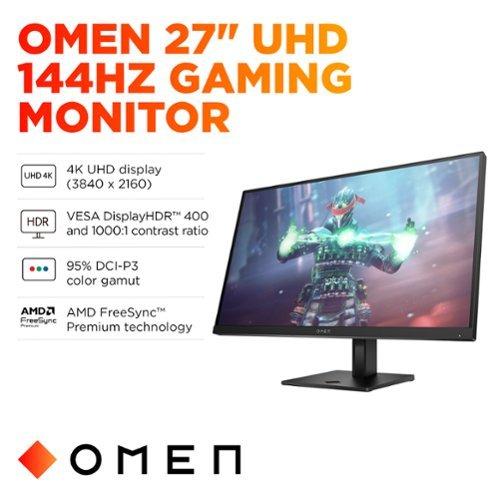
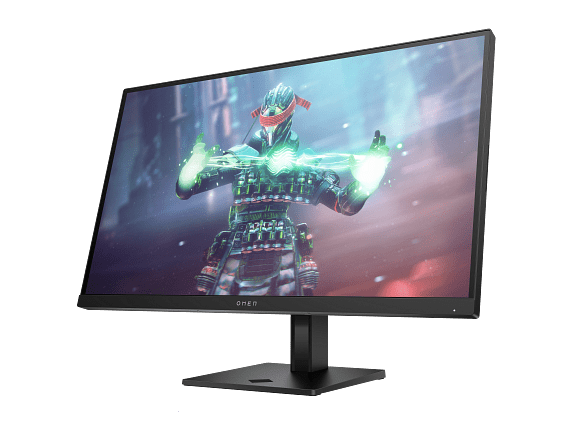
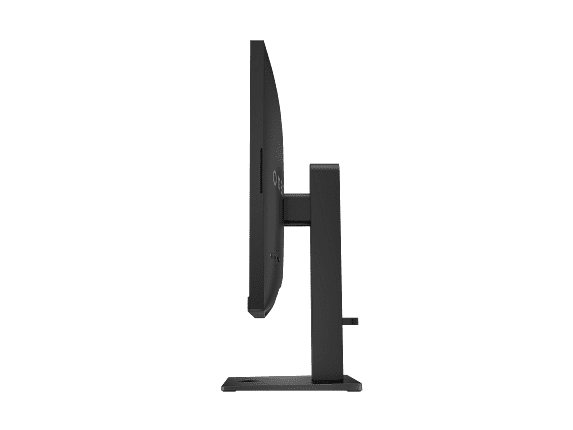
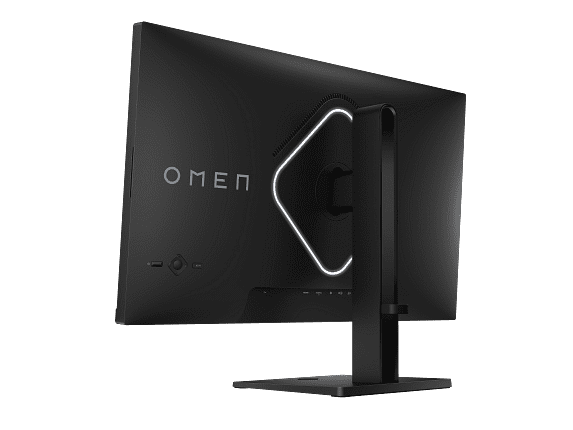
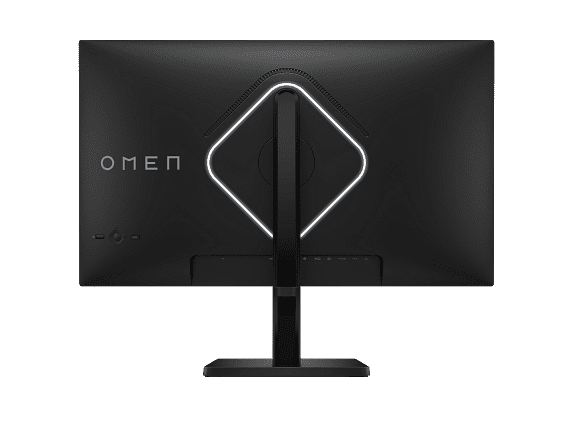
The HP Omen 27k takes what I'd call the "master of one" approach. Rather than trying to be everything to everyone, HP focused on delivering the absolute best 4K experience possible at 144Hz, then surrounding that core capability with thoughtful features that enhance the overall user experience.
Where the HP Omen 27k really shines is in its visual quality. The monitor uses what HP calls a true 8-bit panel, meaning it can display over 16 million colors natively without relying on FRC (Frame Rate Control) – a technique some monitors use to simulate more colors than they can actually display. The result is more accurate color reproduction, with professional-grade coverage of 99% of the sRGB color space and 95% of the DCI-P3 color space used in movie production.
This color accuracy advantage becomes particularly important if you do any content creation, photo editing, or simply want your games to look exactly as the developers intended. When I'm playing games like Red Dead Redemption 2 or Horizon Zero Dawn, the difference in color accuracy is immediately noticeable – sunsets look more natural, skin tones appear more realistic, and the overall visual experience feels more immersive.
The HP Omen 27k also implements better HDR (High Dynamic Range) support through VESA DisplayHDR 400 certification. This means the monitor can hit peak brightness levels of 400 nits or higher and uses an eight-zone edge-lit backlight system. While this isn't the most advanced HDR implementation available (premium monitors use hundreds of zones), it's significantly better than basic HDR support. The result is better contrast between dark and bright areas of the image, making explosions pop and dark scenes more atmospheric.
One of the most practical features of the HP Omen 27k is its built-in KVM switch. KVM stands for "Keyboard, Video, Mouse," and this feature allows you to control multiple connected devices with a single set of peripherals. Imagine having your gaming PC and work laptop both connected to the monitor – you can switch between them and control both with the same keyboard and mouse. It's incredibly convenient for people who use their setup for both gaming and productivity.
The connectivity options on the HP Omen 27k are particularly impressive. It includes HDMI 2.1, which is crucial for getting the full 4K experience from PlayStation 5 or Xbox Series X consoles. Many monitors still use HDMI 2.0, which limits console gaming to 4K at 60Hz rather than the 120Hz these newer consoles can actually deliver.
When we talk about gaming performance, several metrics matter more than others. Input lag – the time between when you press a button and when you see the result on screen – is crucial for competitive gaming. Both monitors perform well here, though the ViewSonic XG275D-4K has a slight edge in its 320Hz mode simply because higher refresh rates inherently reduce input lag.
Response time is where things get interesting. The ViewSonic XG275D-4K claims 0.5ms MPRT, while the HP Omen 27k advertises 1ms GtG (Gray-to-Gray). These are different measurement methods, making direct comparison tricky. MPRT measures motion blur, while GtG measures how quickly pixels can change from one shade of gray to another. In practical terms, both are fast enough for competitive gaming, but the ViewSonic's measurement suggests slightly better motion clarity.
The refresh rate difference is where personal preference really comes into play. The HP Omen 27k's 144Hz at 4K provides incredibly smooth gameplay that's noticeably better than 60Hz monitors. However, the ViewSonic XG275D-4K's 320Hz mode in 1080p creates an almost ethereal level of smoothness that competitive gamers often describe as a "competitive advantage."
This is where the HP Omen 27k really pulls ahead. The superior color accuracy means games look more vibrant and true-to-life. The better HDR implementation adds depth to shadows and makes bright areas pop without looking overexposed. When playing atmospheric games like Cyberpunk 2077 or The Witcher 3, these visual improvements create a more immersive experience.
The ViewSonic XG275D-4K certainly doesn't look bad – modern IPS panels provide good color reproduction by default. However, it's designed more for performance than visual perfection. The trade-off becomes apparent when you switch to 1080p mode, where the image quality takes a noticeable hit due to scaling.
The HP Omen 27k wins in pure connectivity options and flexibility. The KVM switch alone makes it incredibly practical for users who need to manage multiple devices. The comprehensive USB hub means you can connect peripherals directly to the monitor, reducing cable clutter.
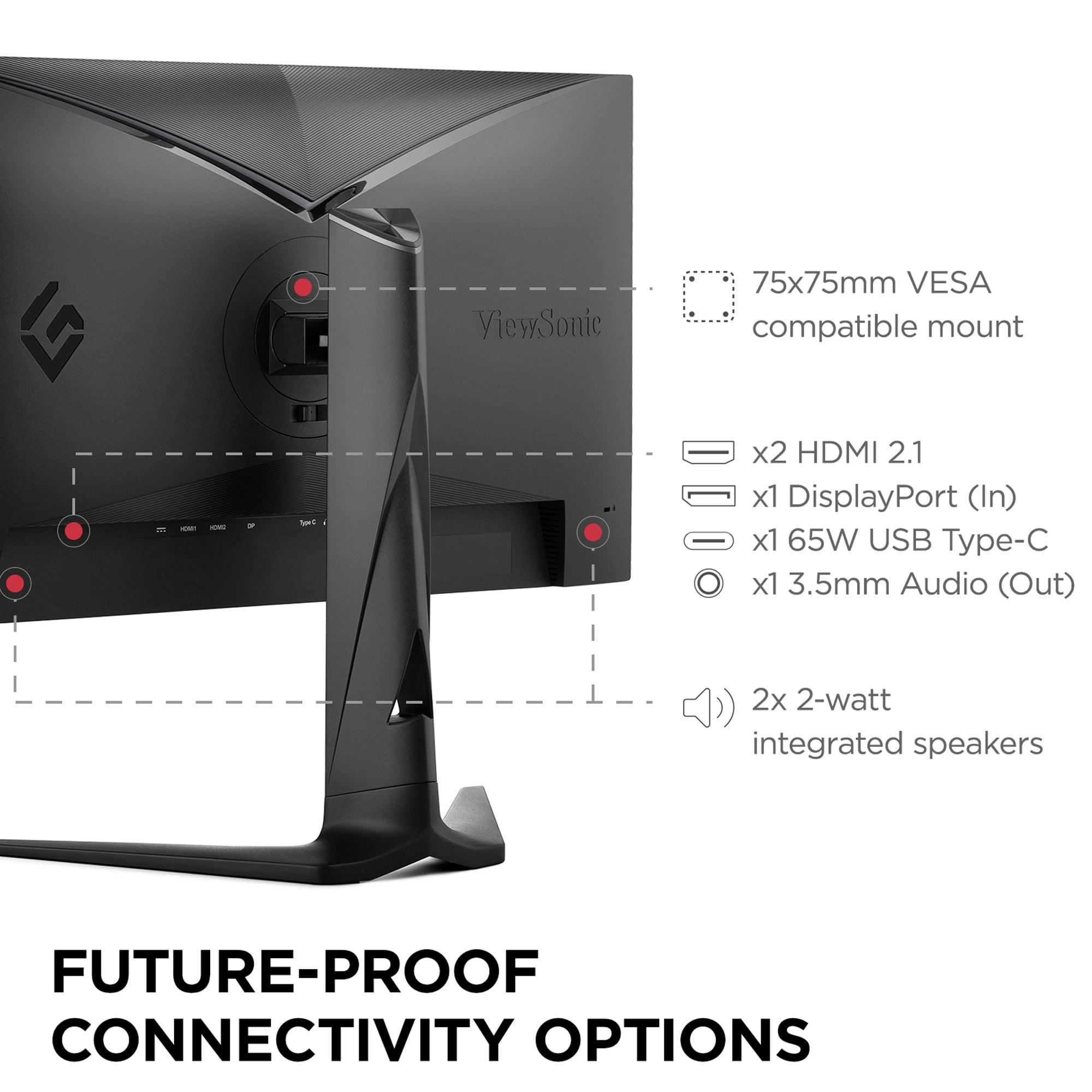
The ViewSonic XG275D-4K counters with 65W power delivery through its USB-C port, which is perfect for charging laptops or powering handheld gaming devices like the Steam Deck. This feature becomes increasingly valuable as portable gaming devices become more popular.
For home theater use, both monitors present interesting options, though neither is primarily designed for this purpose. The HP Omen 27k has advantages here due to its better HDR performance and color accuracy, making movies and TV shows look more cinematic. The HDMI 2.1 support also means you can use it with streaming devices or consoles for 4K content at higher frame rates.
The ViewSonic XG275D-4K could work in a home theater setup, but you'd primarily use it in 4K mode at 160Hz. The 320Hz capability isn't useful for movies or TV shows, which typically run at 24fps, 30fps, or 60fps.
At 27 inches, both monitors are better suited for desktop use than traditional living room viewing. For home theater use, you'd typically want something larger – 32 inches or more – to get the cinematic experience most people are looking for.
You're primarily a competitive gamer who occasionally enjoys single-player titles. The ability to switch to 320Hz for games like Apex Legends, Valorant, or Rocket League provides a genuine competitive edge. The dual-mode functionality means you don't have to choose between competitive performance and visual quality – you can have both as needed.
This monitor also makes sense if you have limited desk space and can't accommodate multiple monitors. Rather than having a 1080p monitor for competitive gaming and a 4K monitor for everything else, the ViewSonic XG275D-4K consolidates everything into one display.
Streamers and content creators who play a variety of games will appreciate the flexibility. You can showcase beautiful 4K gameplay for story-driven games, then switch to ultra-smooth 320Hz footage for competitive content.
You want the absolute best 4K gaming experience without compromises. If you primarily play single-player games, AAA titles, or games where visual quality matters more than competitive performance, the HP Omen 27k delivers superior image quality.
This monitor is ideal for users who need versatility beyond gaming. The excellent color accuracy makes it suitable for photo editing, graphic design, or any work that requires accurate colors. The KVM switch and comprehensive connectivity make it perfect for people who use the same setup for work and play.
Console gamers will particularly appreciate the HDMI 2.1 support, which ensures you're getting the full capabilities of your PlayStation 5 or Xbox Series X.
At the time of writing, both monitors offer excellent value in their respective approaches. The ViewSonic XG275D-4K typically costs less while offering more innovative features, making it an exceptional value for gamers who want cutting-edge capability. The HP Omen 27k usually commands a small premium but justifies it with better build quality, superior visual performance, and more comprehensive features.
The choice ultimately comes down to your gaming priorities. If you're excited by the possibility of 320Hz gaming and appreciate innovative approaches to solving traditional problems, the ViewSonic XG275D-4K represents the future of gaming monitors. If you prefer proven excellence and want the best possible 4K gaming experience with professional-grade features, the HP Omen 27k is the safer, more refined choice.
Both monitors represent significant improvements over what was available just a few years ago, and either would serve most gamers well. The real winner in this comparison is the gaming community – we now have genuinely excellent options that don't force us to make major compromises between performance and visual quality.
| ViewSonic XG275D-4K | HP Omen 27k |
|---|---|
| Refresh Rate Technology - Core gaming performance differentiator | |
| Dual-mode: 320Hz at 1080p / 160Hz at 4K with instant switching | Single-mode: 144Hz at native 4K consistently |
| Response Time - Critical for competitive gaming and motion clarity | |
| 0.5ms MPRT (exceptional motion blur reduction) | 1ms GtG with overdrive (solid performance, requires tuning) |
| Panel Type & Color Performance - Affects visual quality and professional use | |
| Fast IPS, 10-bit (8-bit + FRC), standard gaming colors | True IPS, native 8-bit, 99% sRGB / 95% DCI-P3 (professional-grade) |
| HDR Implementation - Important for immersive gaming and media | |
| Basic HDR10, 300-350 nits, 1000:1 contrast | VESA DisplayHDR 400, 400+ nits, 8-zone backlight, 7300:1 HDR contrast |
| Connectivity & Multi-Device Support - Determines setup flexibility | |
| USB-C with 65W power delivery, standard gaming ports | HDMI 2.1, built-in KVM switch, USB-C (no power), comprehensive USB hub |
| Adaptive Sync & Console Gaming - Ensures smooth gameplay across platforms | |
| AMD FreeSync Premium, NVIDIA G-SYNC Compatible | FreeSync Premium, G-SYNC Compatible, VESA AdaptiveSync, full 4K 120Hz console support |
| Unique Gaming Features - Specialized capabilities for different gaming styles | |
| 24.5" esports mode, instant dual-mode switching, RGB lighting | Professional color accuracy, KVM workflow, customizable aRGB |
| Build Quality & Ergonomics - Long-term usability and desk integration | |
| Gaming-focused design, full adjustability, anti-glare coating | Premium materials, refined ergonomics, professional appearance |
| Target Use Case - Who benefits most from each approach | |
| Competitive gamers who also enjoy immersive titles, space-constrained setups | Balanced gaming/productivity users, console gamers, content creators |
The ViewSonic XG275D-4K is superior for competitive gaming due to its revolutionary dual-mode technology. It can switch to 320Hz at 1080p resolution, providing ultra-smooth gameplay that gives competitive players a significant advantage in fast-paced games like Valorant, Counter-Strike 2, and Apex Legends. The 0.5ms response time also ensures minimal motion blur during rapid movements.
The key difference is their approach to refresh rates. The ViewSonic XG275D-4K offers switchable dual-mode refresh rates (320Hz at 1080p or 160Hz at 4K), while the HP Omen 27k provides a consistent 144Hz at native 4K resolution. This makes the ViewSonic more versatile for different gaming scenarios, while the HP focuses on delivering the best possible 4K experience.
The HP Omen 27k delivers superior picture quality with professional-grade color accuracy covering 99% sRGB and 95% DCI-P3 color spaces. It also features better HDR implementation with VESA DisplayHDR 400 certification and an 8-zone backlight system, creating more vibrant colors and better contrast compared to the ViewSonic XG275D-4K.
The HP Omen 27k is better optimized for next-gen consoles with its HDMI 2.1 port supporting full 4K at 120Hz gameplay. While the ViewSonic XG275D-4K can handle console gaming at 4K 160Hz, the HP's dedicated console features and better HDR make it the preferred choice for PlayStation and Xbox gaming.
The HP Omen 27k provides more comprehensive connectivity with a built-in KVM switch, multiple HDMI ports including HDMI 2.1, and a full USB hub. However, the ViewSonic XG275D-4K counters with USB-C power delivery at 65W, making it ideal for charging laptops and powering portable gaming devices like the Steam Deck.
The dual-mode feature on the ViewSonic XG275D-4K is valuable for gamers who frequently switch between competitive esports titles and immersive single-player games. It eliminates the need for multiple monitors, though users should note that 1080p mode on the 4K panel may introduce slight image softness due to scaling.
The HP Omen 27k excels for professional work with its superior color accuracy, true 8-bit panel, and consistent 4K performance. The built-in KVM switch also makes it ideal for users who need to manage both work and gaming setups. The ViewSonic XG275D-4K is more gaming-focused and less suitable for color-critical professional tasks.
The ViewSonic XG275D-4K offers a faster 0.5ms MPRT response time, providing exceptional motion clarity especially in its high-refresh modes. The HP Omen 27k features a 1ms GtG response time that requires careful overdrive tuning but still delivers solid gaming performance with less aggressive settings.
Both monitors offer excellent value in different ways. The ViewSonic XG275D-4K typically costs less while providing innovative dual-mode technology that replaces the need for multiple monitors. The HP Omen 27k usually commands a small premium but justifies it with superior build quality, better HDR, and professional-grade features.
Neither monitor is primarily designed for home theater use due to their 27-inch size, but the HP Omen 27k is better suited if needed, thanks to its superior HDR performance, color accuracy, and HDMI 2.1 support for streaming devices. For true home theater applications, larger displays (32+ inches) would be more appropriate than either the ViewSonic XG275D-4K or HP Omen 27k.
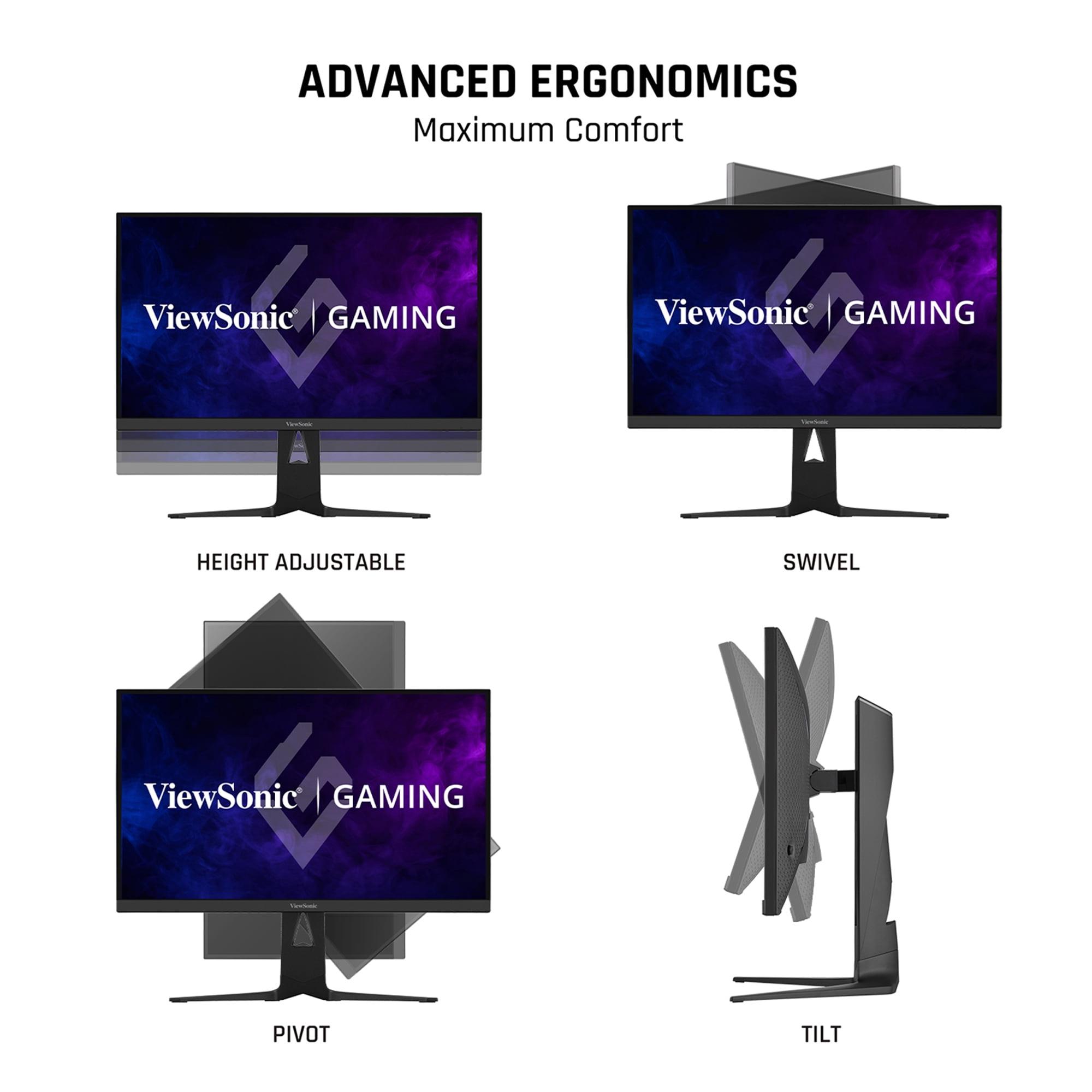
Both monitors offer comprehensive ergonomic adjustments including height, tilt, swivel, and pivot capabilities. The HP Omen 27k features slightly more premium build materials and refined adjustments, while the ViewSonic XG275D-4K focuses on gaming-specific features like esports mode and customizable RGB lighting.
Choose the ViewSonic XG275D-4K if you're primarily a competitive gamer who occasionally enjoys single-player titles, have limited desk space, or want cutting-edge refresh rate technology. Select the HP Omen 27k if you prioritize consistent 4K performance, need professional color accuracy, use multiple devices with KVM functionality, or want the best possible console gaming experience.
We've done our best to create useful and informative comparisons to help you decide what product to buy. Our research uses advanced automated methods to create this comparison and perfection is not possible - please contact us for corrections or questions. These are the sites we've researched in the creation of this article: cgmagonline.com - gamingshogun.com - techpowerup.com - notebookcheck.net - bestbuy.com - newegg.com - techpowerup.com - shi.com - viewsonic.com - viewsonic.com - prnewswire.com - viewsonic.com - viewsonic.com - shop.avispl.com - guru3d.com - viewsonic.com - viewsonic.com - viewsonic.com - viewsonic.com - tomshardware.com - windowscentral.com - digitaltrends.com - youtube.com - hp.com - youtube.com - hp.com - hp.com - displayspecifications.com - files.bbystatic.com - newegg.com - hp.com - hp.com - hp.com - hp.com - target.com - files.bbystatic.com - displayspecifications.com

Privacy Policy
Terms and Conditions - Affiliate Policy
Home Security
© Copyright 2008-2026.
11816 Inwood Rd #1211, Dallas, TX 75244