

Gaming monitors have evolved dramatically since 2020, transforming from simple displays into specialized performance tools that can make or break your competitive edge. Today's high-end gaming displays push boundaries in ways that seemed impossible just a few years ago—we're talking about refresh rates that exceed what most people can even perceive, response times measured in fractions of milliseconds, and color reproduction that rivals professional film equipment.
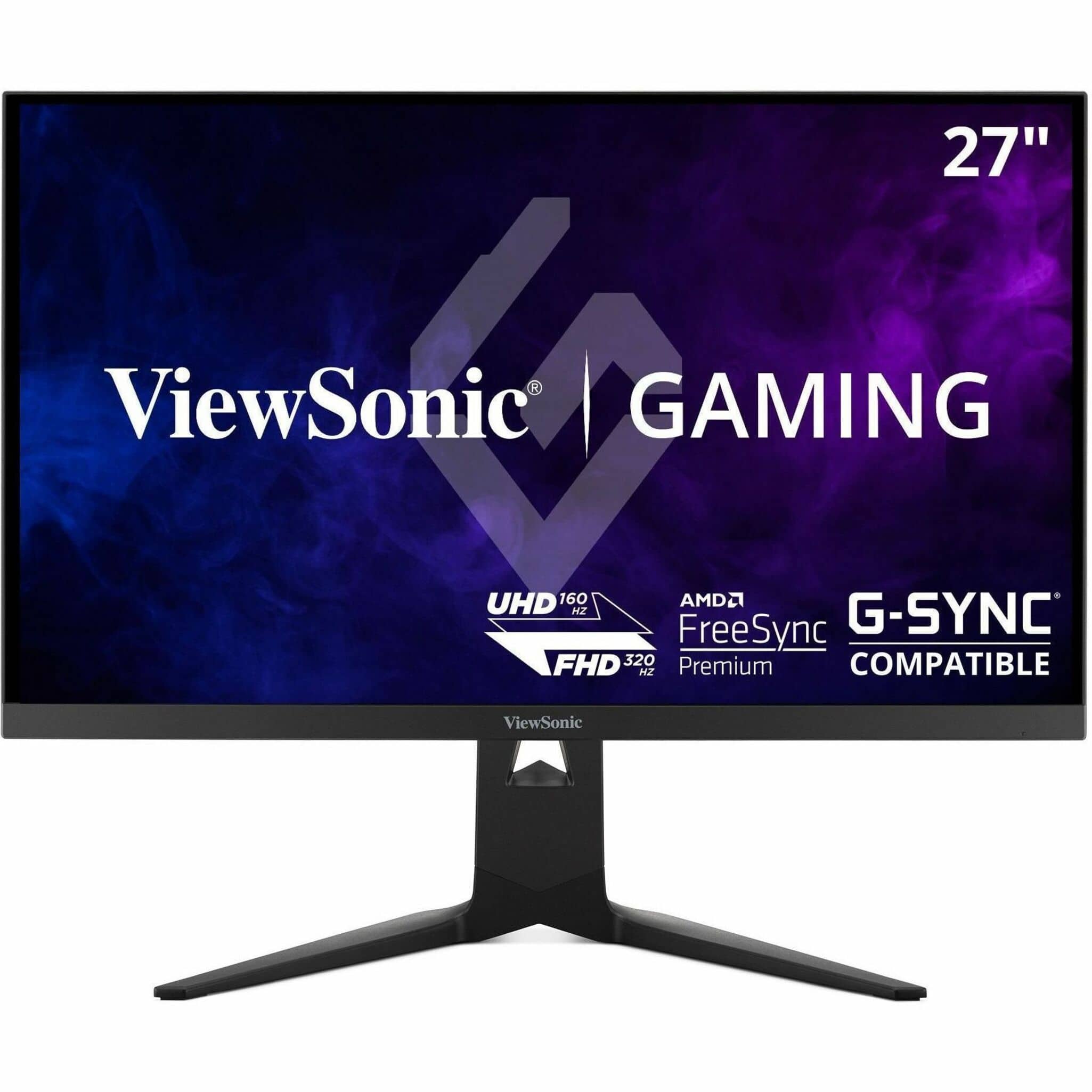
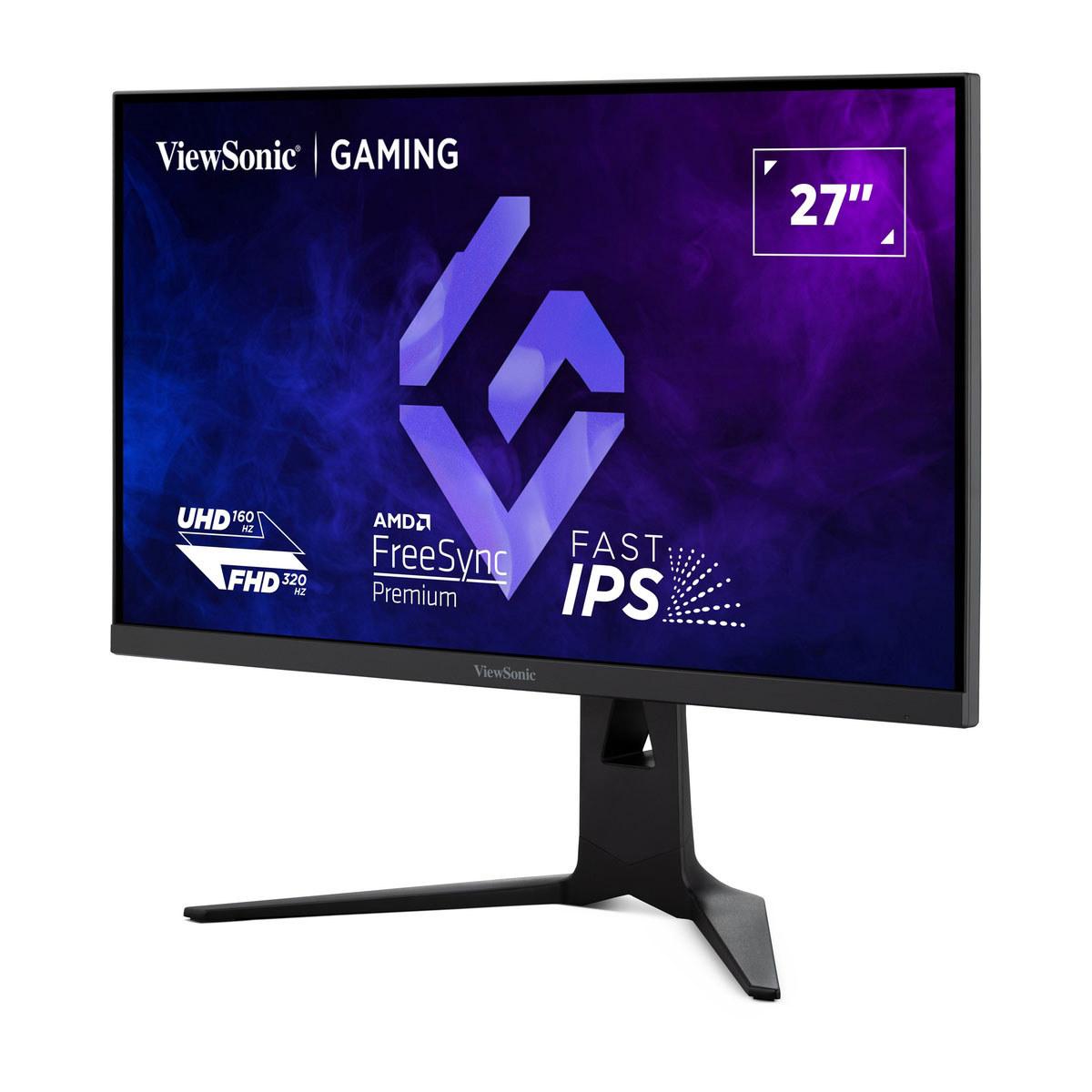
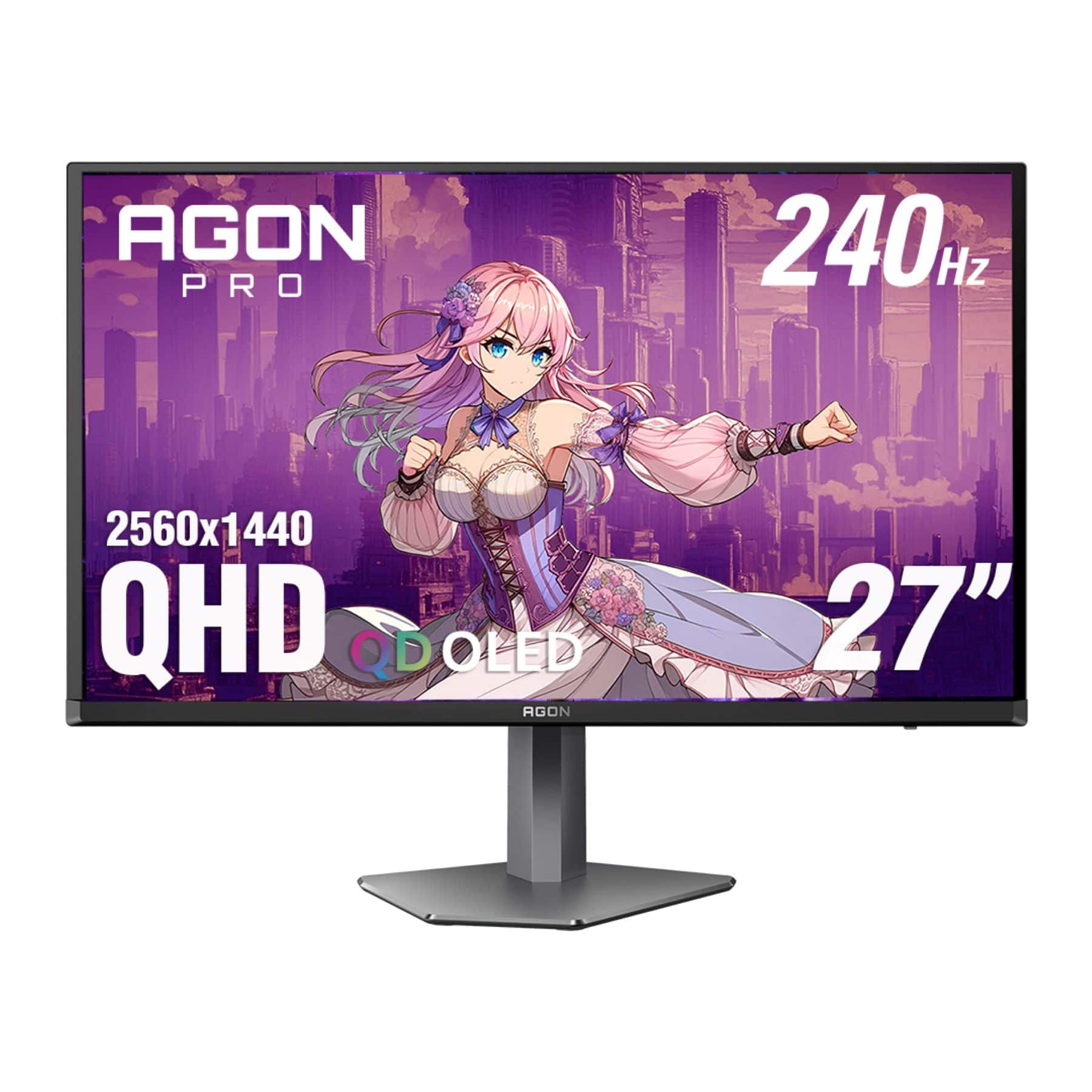
When ViewSonic released the XG275D-4K in 2025, they introduced something genuinely unique to the gaming monitor world: a display that literally transforms between two different performance modes at the press of a button. Around the same time, AOC's Agon Pro QD-OLED represented the democratization of premium OLED technology, bringing what was once $1000+ display tech down to more accessible price points.
These monitors represent two fundamentally different philosophies for tackling the same problem: how do you create the perfect gaming display when different games and scenarios demand completely different strengths?
The most fundamental difference between these monitors lies in their panel technology, which affects everything from how dark your blacks appear to how vibrant your colors look.
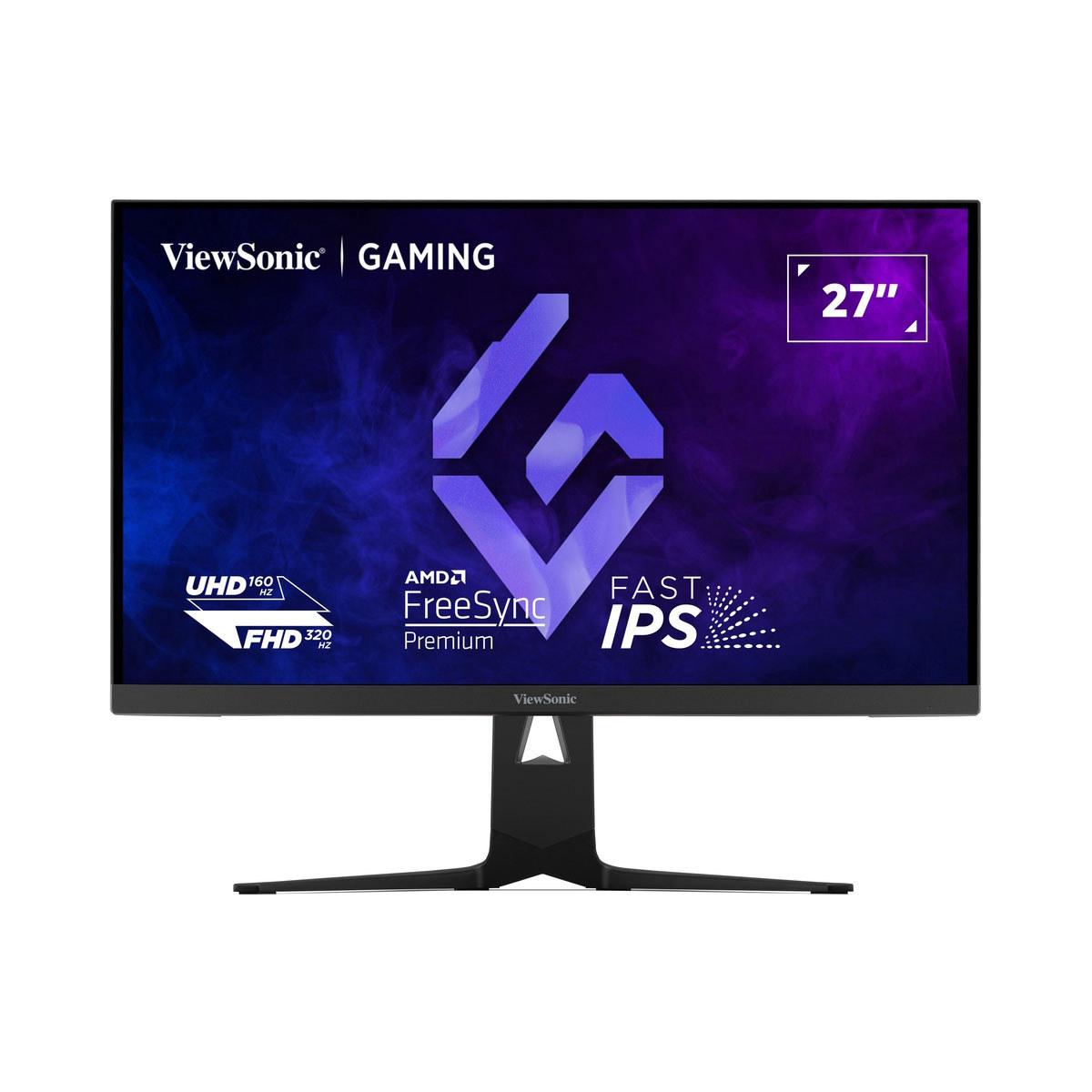
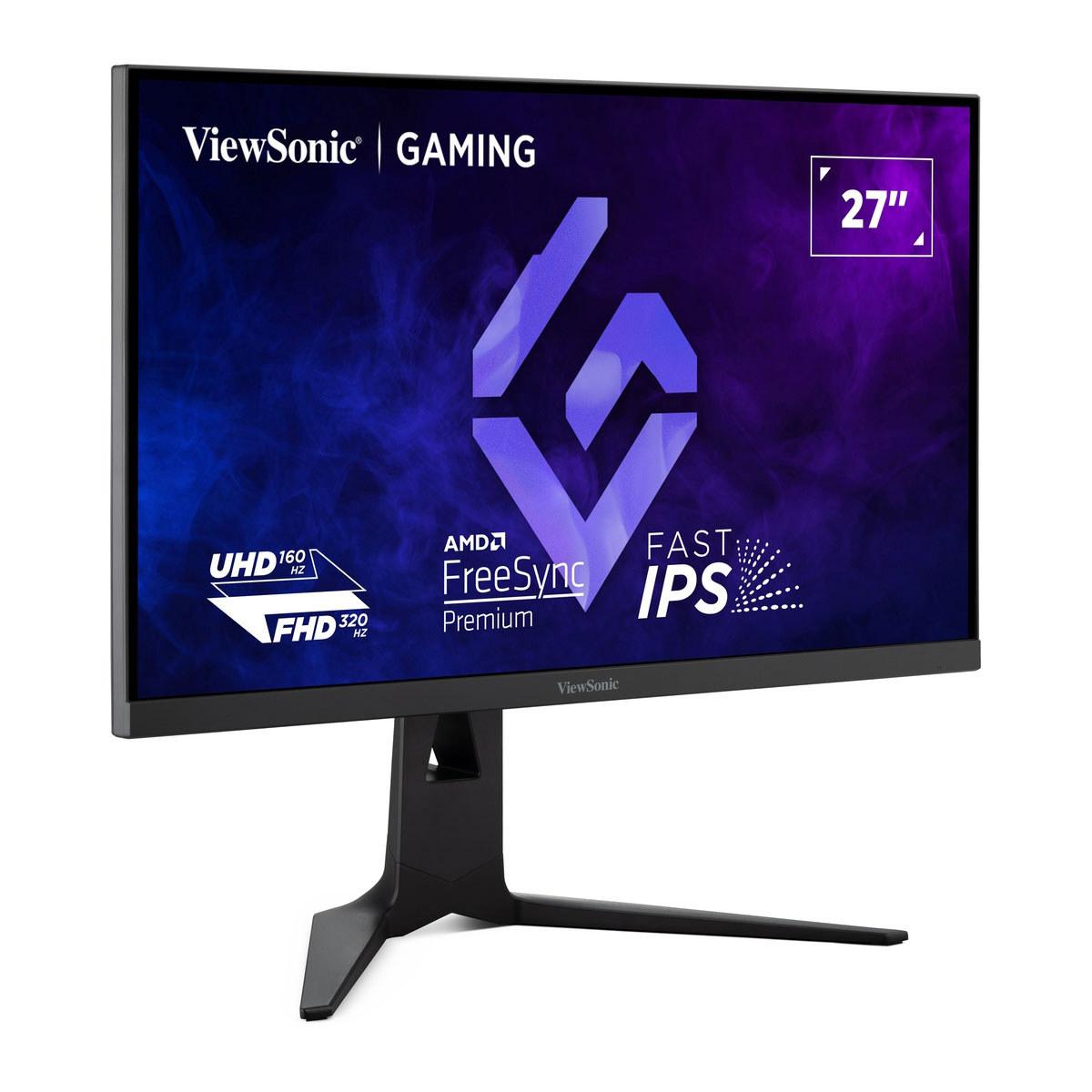
The ViewSonic XG275D-4K uses what's called a Fast IPS (In-Plane Switching) panel. Think of IPS as the reliable workhorse of display technology—it provides consistent colors from any viewing angle, maintains decent brightness levels, and doesn't suffer from the long-term degradation issues that plague some newer technologies. The "Fast" designation means ViewSonic has optimized the liquid crystals to change states more quickly, reducing the blurring you might see during fast motion.
However, IPS panels have an inherent limitation: they can't completely block their backlight. Even when displaying pure black, some light leaks through, resulting in what we call "IPS glow"—those slightly grayish blacks you might notice, especially in dark rooms.
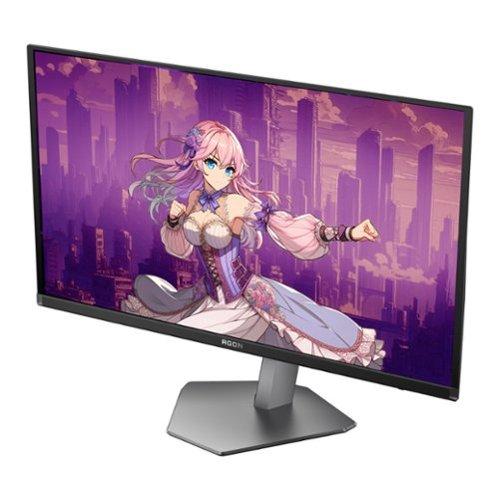
The AOC Agon Pro, on the other hand, uses QD-OLED technology, which sounds complicated but delivers breathtaking results. QD-OLED combines two cutting-edge technologies: OLED (Organic Light-Emitting Diode) pixels that produce their own light and can turn completely off for true black, plus Quantum Dot technology that enhances color purity and brightness. When an OLED pixel displays black, it's literally off—no light whatsoever. This creates an infinite contrast ratio that makes dark scenes in games look incredibly realistic.
I've spent considerable time with both panel types, and the difference is immediately apparent. Loading up a game like Cyberpunk 2077 or The Witcher 3 on the AOC monitor, those neon-lit cityscapes and shadowy forests have a depth and realism that IPS simply can't match. However, OLED isn't perfect—it can suffer from burn-in if static images are displayed too long, and it's generally more expensive to produce.
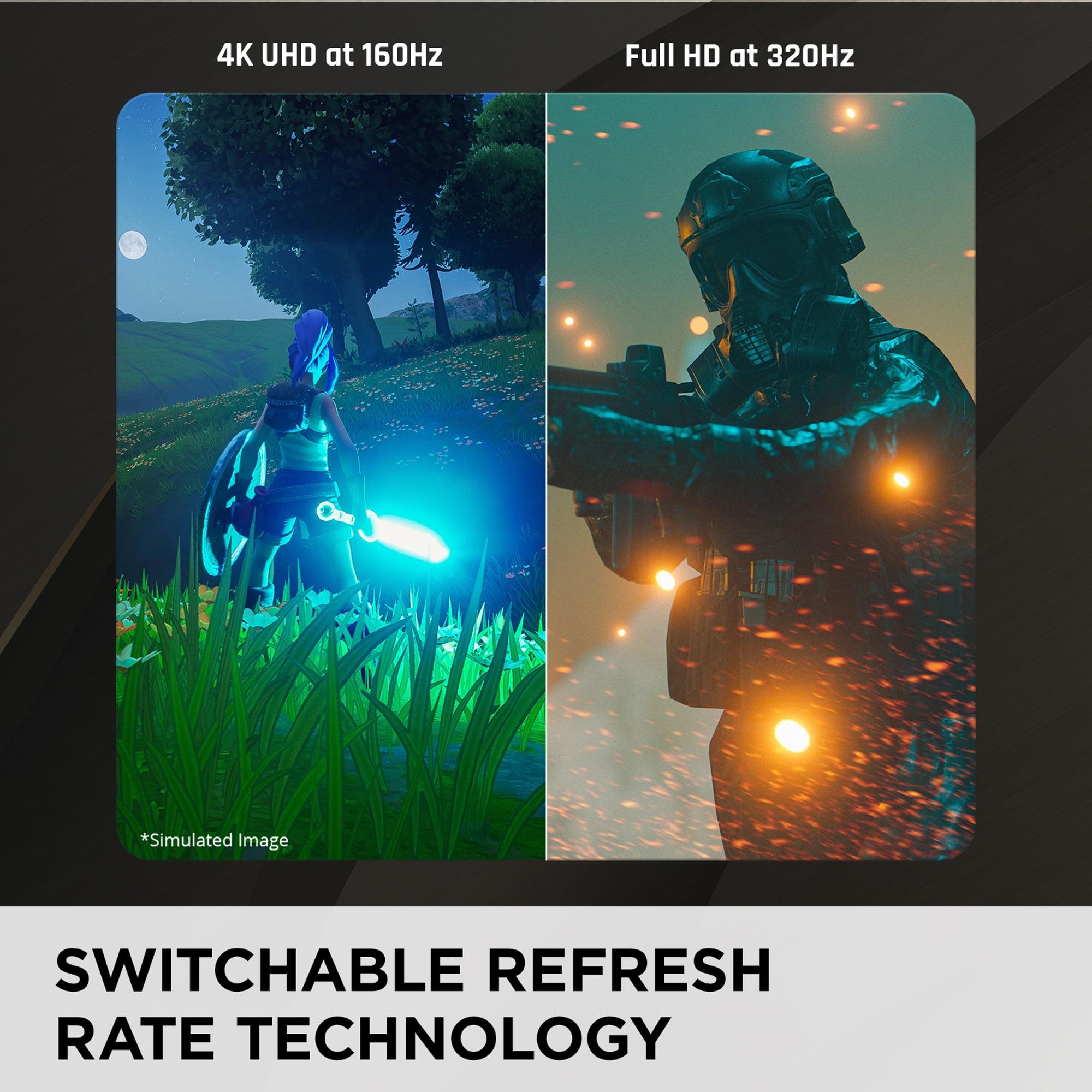
Here's where things get really interesting. The ViewSonic XG275D-4K doesn't just offer one refresh rate—it offers two completely different performance modes that you can switch between instantly.
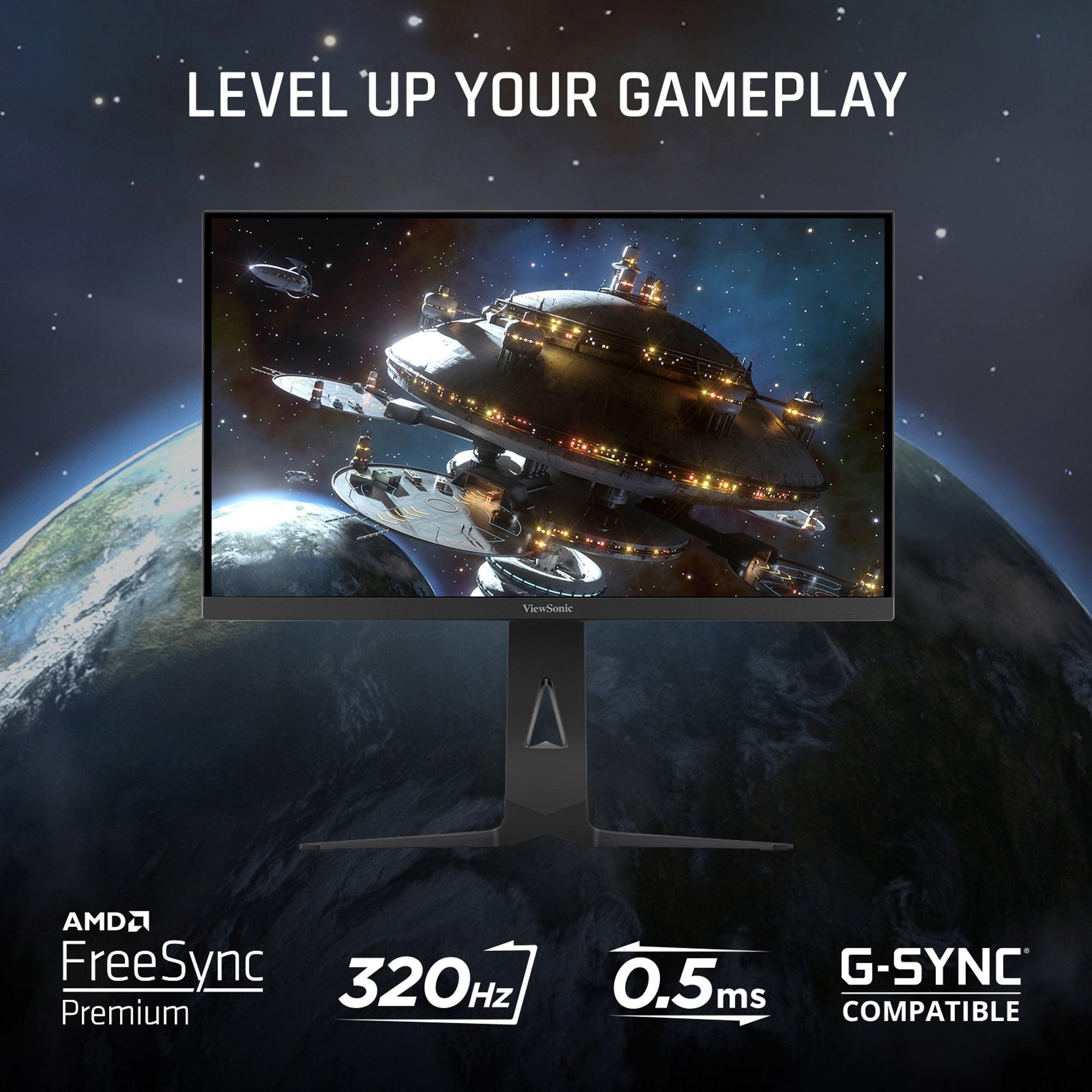
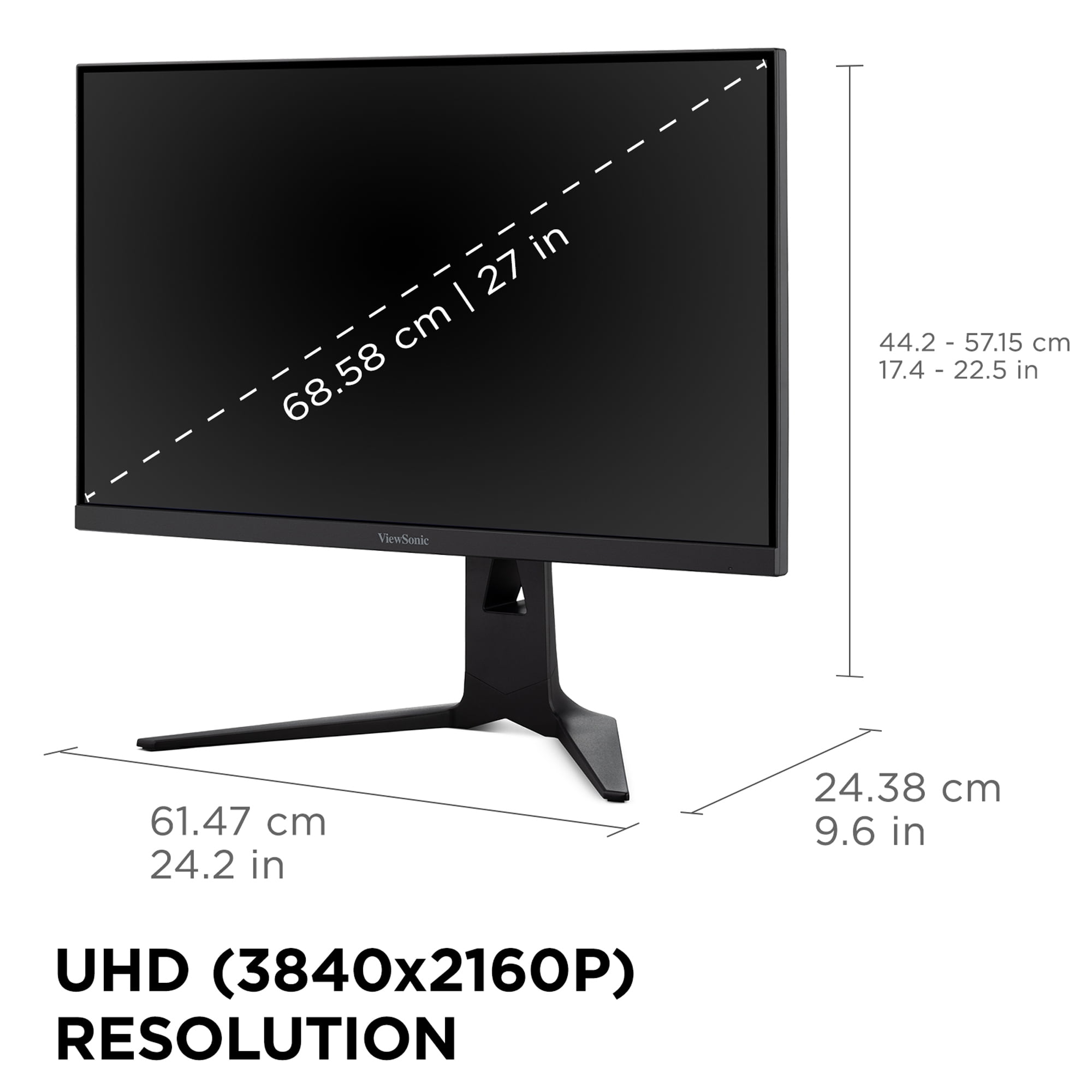
In its 4K mode, the monitor runs at 160Hz with a full 3840x2160 resolution. This means it redraws the entire screen 160 times per second, providing incredibly smooth motion while maintaining the sharp detail that 4K provides. Switch to competitive mode, and it drops the resolution to 1920x1080 but cranks the refresh rate up to a blistering 320Hz.
Why does this matter? Higher refresh rates reduce the time between frames, making motion appear smoother and reducing input lag—the delay between when you move your mouse and when that movement appears on screen. For competitive gamers, especially in fast-paced shooters like Counter-Strike 2 or Valorant, this can be the difference between landing a shot and missing it.
The AOC Agon Pro takes a different approach, offering a consistent 240Hz at its native 2560x1440 resolution. This QHD resolution (sometimes called 1440p) sits between 1080p and 4K, providing more detail than Full HD while being easier to drive at high frame rates than 4K.
At 240Hz, the AOC also boasts an incredibly fast 0.03ms response time (GtG, or gray-to-gray), compared to the ViewSonic's 0.5ms MPRT (Moving Picture Response Time). These different measurement methods make direct comparison tricky, but in practical terms, both deliver extremely fast pixel transitions that virtually eliminate motion blur.
For competitive gaming, every millisecond matters. Professional esports players often swear by specific refresh rates and response times, and there's real science behind their preferences.
The ViewSonic XG275D-4K's 320Hz mode at 1080p puts it at the absolute cutting edge of competitive gaming performance. At this refresh rate, each frame displays for just 3.125 milliseconds, compared to 4.17ms at 240Hz or 16.67ms at 60Hz. This might seem like splitting hairs, but in competitive scenarios where reaction times matter, these microseconds add up.
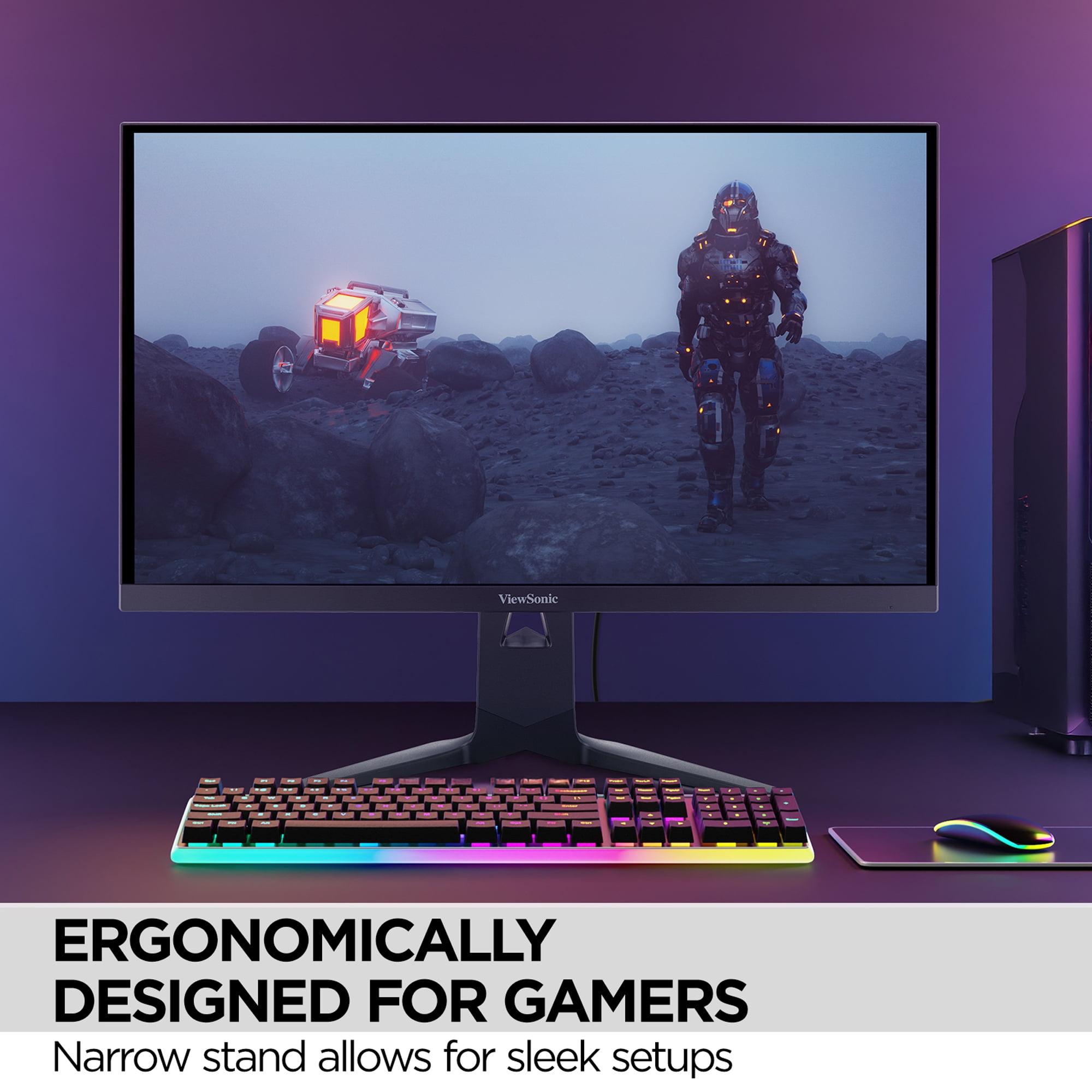
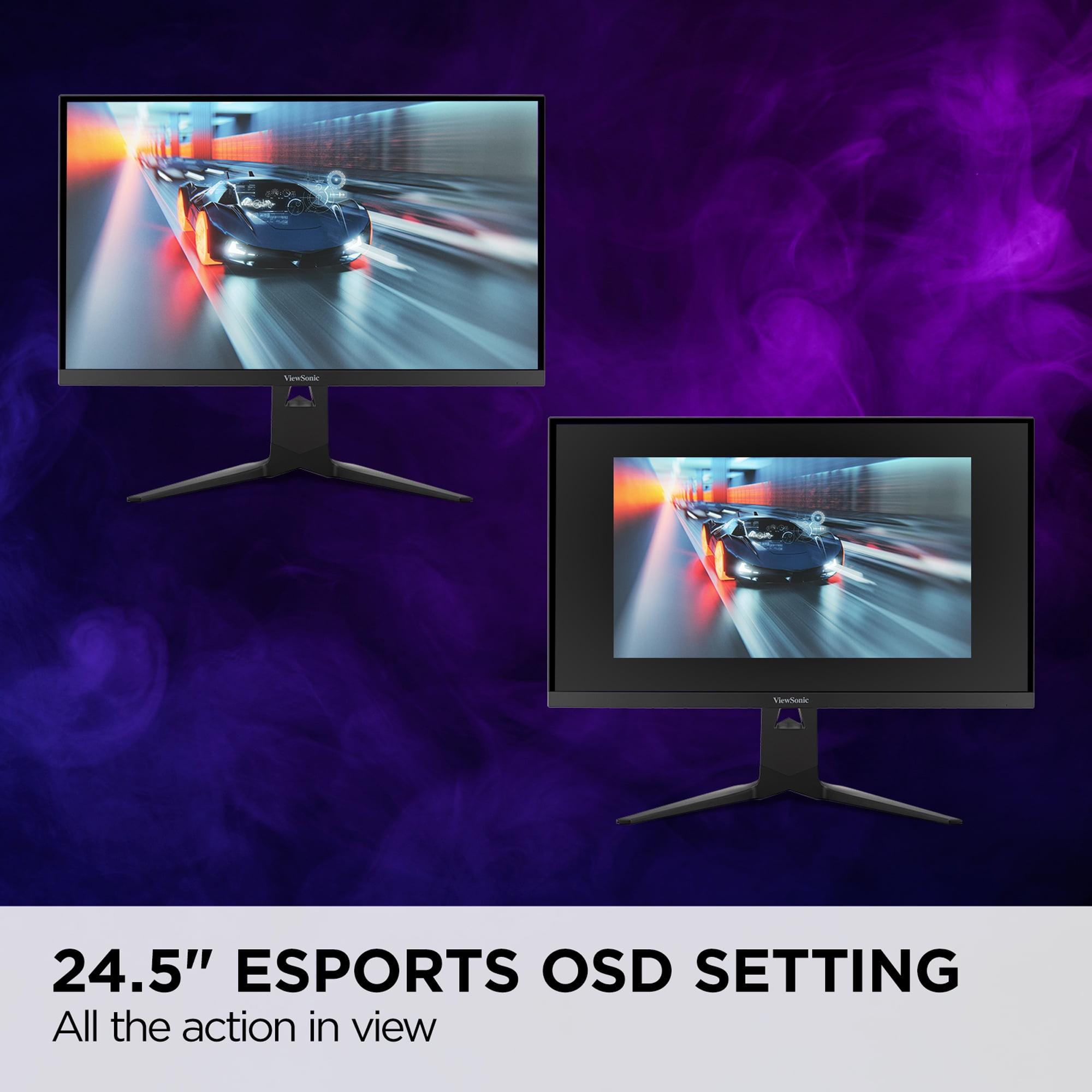
What makes the ViewSonic particularly clever is its dedicated 24.5-inch esports mode. This feature essentially creates a smaller display area within the 27-inch panel, mimicking the size of monitors commonly used in professional tournaments. It's like having a tournament-spec display when you need it, but with the flexibility to expand to the full screen for other games.
The AOC Agon Pro counters with its QD-OLED technology's inherent advantages. OLED pixels switch states nearly instantaneously—that 0.03ms response time isn't marketing fluff, it's a real advantage. More importantly for competitive gaming, OLED's perfect blacks mean you can spot enemies hiding in dark corners much more easily. I've noticed this particularly in games like Apex Legends or Call of Duty, where spotting movement in shadowy areas can determine the outcome of engagements.
The QD-OLED also excels in color accuracy, which might seem irrelevant for competitive gaming but actually helps with target identification. More accurate colors mean better distinction between different elements on screen, potentially helping you spot that sniper's glint or differentiate between friend and foe markers more quickly.
For single-player adventures and immersive experiences, the equation changes completely. Here, visual fidelity often trumps raw speed, and this is where the different approaches of these monitors become most apparent.
The ViewSonic XG275D-4K's 4K mode delivers exceptional detail that really shines in modern AAA games. Playing something like Red Dead Redemption 2 or Microsoft Flight Simulator at native 4K resolution reveals textures and details that simply aren't visible at lower resolutions. The ability to see individual blades of grass, read distant signage, or appreciate the intricate details in character models adds tremendously to immersion.
However, the ViewSonic's IPS panel shows its limitations in HDR content. With a peak brightness of only 300-350 nits and the inherent contrast limitations of IPS technology, HDR scenes don't have the punch they could. HDR (High Dynamic Range) is designed to show brighter brights and darker darks simultaneously, but the ViewSonic's modest brightness and contrast ratio mean HDR content often looks only marginally better than standard content.
The AOC Agon Pro takes a different approach, trading some resolution for dramatically better image quality. While 2560x1440 isn't as sharp as 4K on a 27-inch display, the difference is less noticeable than you might expect. What's immediately apparent is the incredible contrast and color reproduction.
OLED's infinite contrast ratio means that scenes with both very bright and very dark elements—like a sunrise over a shadowy landscape—look remarkably realistic. The monitor's VESA DisplayHDR True Black 400 certification indicates it can properly display HDR content, with bright highlights that pop against those perfect blacks.
I've found that games with strong artistic direction, like Horizon Zero Dawn or Ghost of Tsushima, look absolutely stunning on the AOC. The vibrant colors and perfect blacks create an almost three-dimensional quality that draws you into the game world in ways that traditional LCD panels simply can't match.
Modern gaming isn't just about PCs anymore, and both monitors handle console gaming differently.
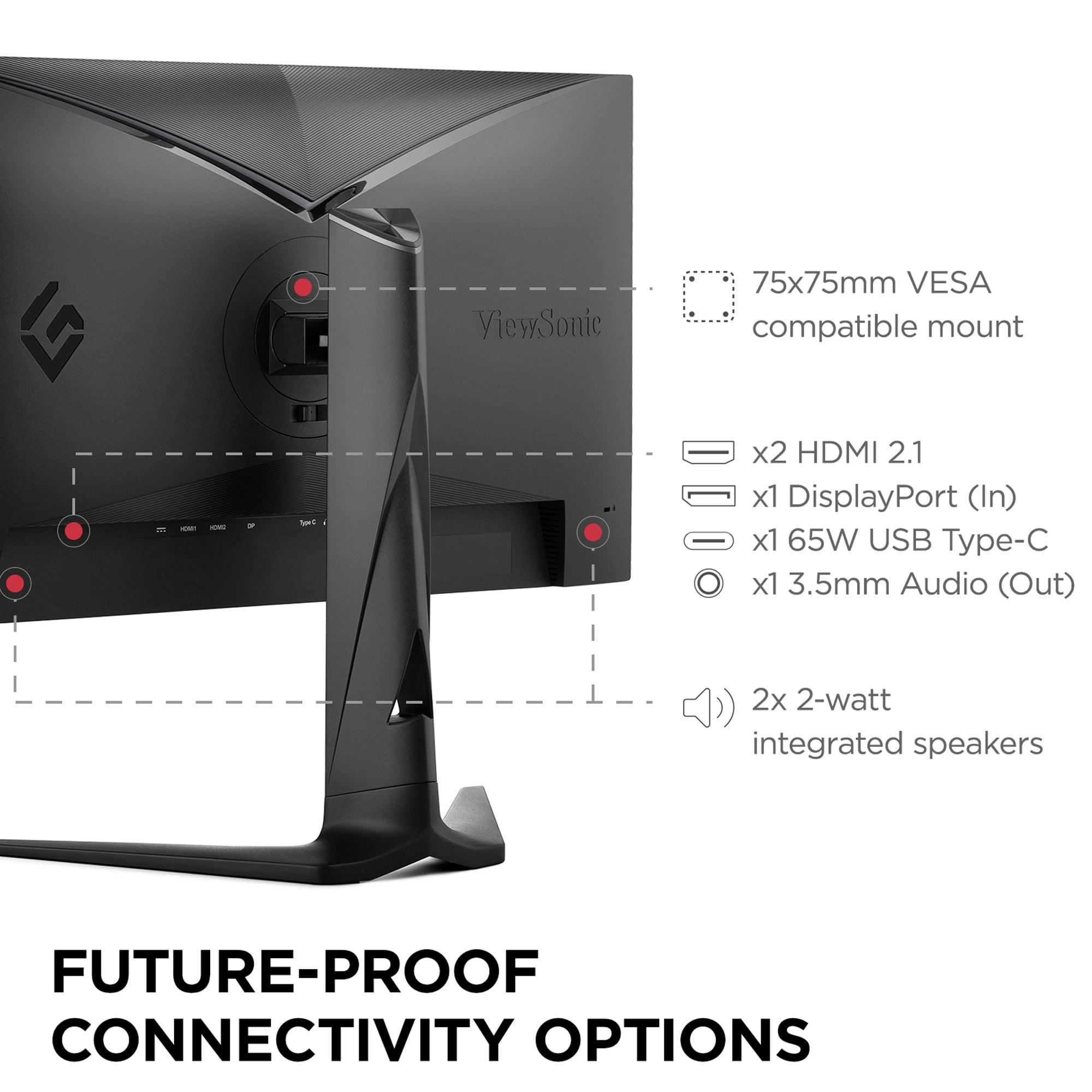
The ViewSonic XG275D-4K excels here with its HDMI 2.1 connectivity, enabling full 4K/120Hz from PlayStation 5 and Xbox Series X consoles. This is crucial because these consoles are designed around 4K gaming, and many titles now support 120fps modes that take advantage of high refresh rate displays.
The monitor's USB-C port with 65W power delivery also makes it perfect for Nintendo Switch gaming. You can dock your Switch directly to the monitor, charge it simultaneously, and enjoy games on the large screen without needing additional adapters or power supplies.
The AOC Agon Pro is somewhat limited by its HDMI 2.0 connectivity, which restricts consoles to either 4K/60Hz or 1440p/120Hz. While this isn't a dealbreaker—many console games still target 60fps—it does mean you're not getting the full potential from current-generation systems. However, the OLED's superior image quality means that even 60fps gaming looks more fluid than it would on an LCD panel, thanks to the instant pixel response.
There's also the consideration of input lag at different refresh rates. The AOC shows excellent input lag at its maximum 240Hz refresh rate, but this increases notably at 60Hz and 120Hz, which could affect console gaming responsiveness.
At the time of writing, both monitors occupy similar price ranges in the premium gaming display market, though their value propositions differ significantly.
The ViewSonic XG275D-4K essentially offers two monitors in one package. You're getting both a high-resolution display for immersive gaming and content creation, plus a high-speed esports display for competitive gaming. When you consider that dedicated 4K/160Hz and 1080p/320Hz monitors would cost significantly more if purchased separately, the ViewSonic represents excellent value for users who need both capabilities.
The monitor's comprehensive connectivity, including that 65W USB-C port, also adds value. This makes it an excellent choice for users who need to connect multiple devices—gaming PC, work laptop, gaming console—to a single display.
The AOC Agon Pro offers premium technology at what was, until recently, considered mid-range pricing. QD-OLED displays were premium-only products just a few years ago, often costing well over $1000. The AOC brings this technology to a much more accessible price point while including a three-year burn-in warranty that addresses one of the main concerns with OLED ownership.
For users who prioritize image quality above all else, the AOC represents exceptional value. The color accuracy alone makes it suitable for content creation work that would normally require dedicated professional monitors costing significantly more.
This is where the different technologies show distinct characteristics that potential buyers need to consider.
IPS panels like the one in the ViewSonic XG275D-4K are known for their longevity. They don't suffer from burn-in, maintain consistent performance over time, and typically have rated lifespans of 30,000+ hours. For users who plan to keep their monitor for many years, this consistency is valuable.
OLED panels have evolved significantly since their early implementations, but they still require more careful use. The AOC Agon Pro includes various protections against burn-in, including pixel shifting and automatic dimming of static elements. However, users who regularly display static content—like desktop icons, taskbars, or UI elements from games they play extensively—need to be more mindful.
That said, AOC's three-year burn-in warranty provides peace of mind, and modern OLED panels are much more resilient than earlier generations. For typical gaming use with varied content, burn-in is unlikely to be an issue within the warranty period.
While primarily gaming monitors, both displays can serve double duty in home theater setups, though with different strengths.
The ViewSonic XG275D-4K offers true 4K resolution, making it excellent for 4K streaming content from Netflix, Amazon Prime, or Apple TV+. The 27-inch size is ideal for desktop viewing, and the anti-glare coating helps in rooms with ambient lighting. However, the limited HDR performance means that HDR movies won't look as impressive as they could.
The AOC Agon Pro excels with movie content thanks to its superior contrast and color reproduction. Dark movie scenes—think of the atmospheric lighting in films like Blade Runner 2049 or Mad Max: Fury Road—look incredible with OLED's perfect blacks. The monitor's color accuracy also means that movies appear closer to their director's intent.
However, the 1440p resolution means 4K content is downscaled, losing some detail. For users who primarily watch 1080p or 1440p content, this isn't an issue, but 4K movie enthusiasts might notice the difference.
You're a versatile gamer who plays both competitive esports and immersive single-player games. The dual-mode functionality means you never have to compromise—you can enjoy the visual fidelity of 4K for exploration games and RPGs, then instantly switch to 320Hz for your ranked matches in competitive shooters.
You're also an excellent candidate if you use multiple devices. The comprehensive connectivity, especially that 65W USB-C port, makes it perfect for users who need to connect gaming PCs, work laptops, and gaming consoles to a single display. Content creators who need 4K resolution for video editing or graphic design work will also appreciate the resolution flexibility.
Console gamers should strongly consider this monitor, as it's one of the few that can take full advantage of current-generation systems' 4K/120Hz capabilities while also providing excellent PC gaming performance.
Visual quality is your top priority. If you're the type of gamer who turns up graphics settings and wants games to look as beautiful as possible, OLED's infinite contrast and vibrant colors will spoil you for other display technologies.
You primarily game on PC and don't need 4K resolution. The 1440p sweet spot provides excellent detail while being much easier to drive at high frame rates than 4K, making it perfect for users with mid-to-high-end graphics cards who want consistent high refresh rate gaming.
You also do color-critical work like photo editing, graphic design, or video production. The AOC's professional-grade color accuracy makes it suitable for creative work that would normally require dedicated professional monitors.
Both monitors represent excellent examples of how gaming display technology has evolved, but they solve the performance equation differently.
The ViewSonic XG275D-4K is the Swiss Army knife of gaming monitors—incredibly versatile and capable of adapting to any gaming scenario. It's perfect for users who refuse to be limited by a single use case and want one monitor that can handle everything from competitive esports to 4K content consumption.
The AOC Agon Pro is the specialist—it does one thing (delivering exceptional gaming visuals) better than almost anything else in its price range. It's ideal for users who know what they want and prioritize visual excellence above all other considerations.
Your choice ultimately depends on whether you value adaptability and future-proofing, or whether you prefer immediate visual excellence with the best image quality available at this price point. Both approaches have merit, and both monitors deliver on their respective promises admirably.
| ViewSonic XG275D-4K | AOC Agon Pro 27" QD-OLED |
|---|---|
| Panel Technology - Determines contrast, color quality, and long-term durability | |
| Fast IPS with anti-glare coating (no burn-in risk, consistent performance) | QD-OLED (infinite contrast, perfect blacks, premium color accuracy) |
| Resolution & Refresh Rate - Core performance specification for gaming smoothness | |
| Dual-mode: 4K at 160Hz OR 1080p at 320Hz (switchable) | Single mode: 2560x1440 at 240Hz (consistent performance) |
| Response Time - Critical for motion clarity and competitive gaming | |
| 0.5ms MPRT (very fast, eliminates most motion blur) | 0.03ms GtG (nearly instantaneous, best-in-class) |
| Contrast Ratio - Affects how deep blacks appear and overall image depth | |
| 1,000:1 (typical IPS limitation, some light bleed in dark scenes) | Infinite (OLED pixels turn completely off for true blacks) |
| HDR Performance - Important for immersive gaming and movie watching | |
| HDR10 support, 300-350 nits peak (entry-level HDR experience) | VESA DisplayHDR True Black 400 (significantly better HDR with deeper blacks) |
| Color Coverage - Affects color accuracy for gaming and creative work | |
| sRGB 128% size/99% coverage, DCI-P3 94% (good accuracy) | DCI-P3 99%, Adobe RGB 98%, sRGB 138% (professional-grade accuracy) |
| Gaming Features - Specialized functionality for competitive and casual gaming | |
| 24.5" esports mode, instant dual-mode switching, AMD FreeSync Premium | Low input lag optimization, customizable RGB lighting, G-SYNC Compatible |
| Connectivity - Determines device compatibility and setup flexibility | |
| 2x HDMI 2.1, 1x DisplayPort 1.4, USB-C with 65W power delivery | 2x HDMI 2.0, 2x DisplayPort 1.4, USB 3.2 hub, 3.5mm audio |
| Console Gaming Support - Critical for PS5/Xbox Series X compatibility | |
| Full 4K/120Hz support via HDMI 2.1 (optimal for current-gen consoles) | Limited to 4K/60Hz or 1440p/120Hz via HDMI 2.0 |
| Ergonomics & Build Quality - Affects comfort and desk setup | |
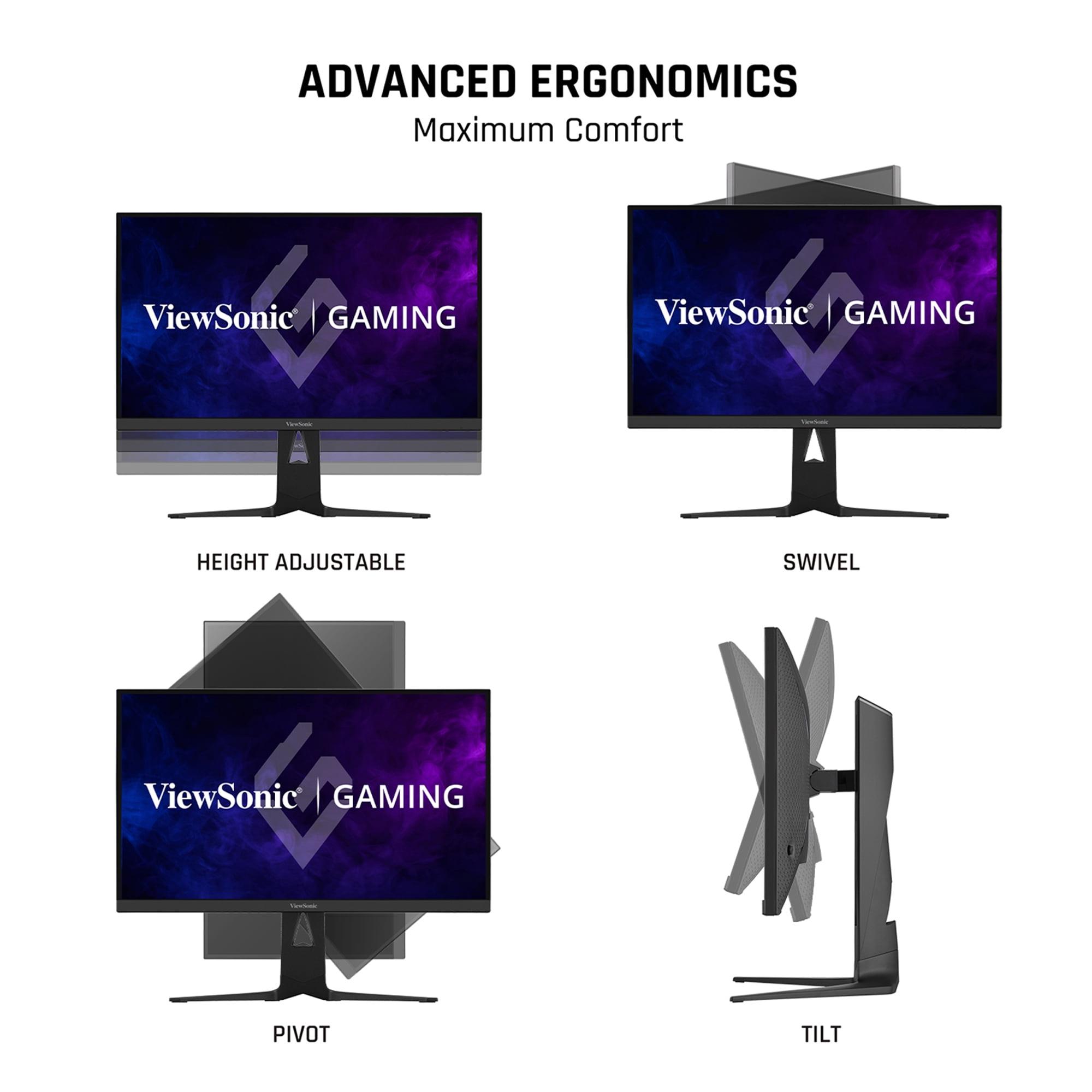
| Height/tilt/swivel/pivot adjustable, sturdy construction | eSports-optimized base, full ergonomic adjustments, premium build |
| Long-term Considerations - Durability and warranty coverage | |
| No burn-in risk, 30,000+ hour lifespan, standard warranty | Potential burn-in with static content, 3-year burn-in warranty included |
| Best Use Case - Who should choose each monitor | |
| Versatile gamers who need both 4K immersion and 320Hz competition | Visual quality enthusiasts who prioritize OLED's superior image quality |
The ViewSonic XG275D-4K edges out for pure competitive gaming with its 320Hz refresh rate at 1080p resolution. This ultra-high refresh rate provides the smoothest possible motion for esports titles like Counter-Strike 2 and Valorant. However, the AOC Agon Pro QD-OLED offers superior motion clarity with its 0.03ms response time and better dark scene visibility thanks to OLED technology, which can help spot enemies in shadows.
The ViewSonic XG275D-4K uses Fast IPS technology, which provides consistent colors and wide viewing angles but has limited contrast with some light bleed in dark scenes. The AOC Agon Pro QD-OLED uses QD-OLED technology that delivers infinite contrast with perfect blacks and more vibrant colors, creating a more immersive visual experience but with potential burn-in concerns over time.
The ViewSonic XG275D-4K is superior for console gaming, offering full 4K/120Hz support via HDMI 2.1 for PlayStation 5 and Xbox Series X. It also includes USB-C with 65W power delivery for Nintendo Switch docking. The AOC Agon Pro is limited to 4K/60Hz or 1440p/120Hz due to HDMI 2.0 connectivity, making it less optimal for current-generation consoles.
The ViewSonic XG275D-4K excels for 4K content with native 3840x2160 resolution, making it ideal for 4K Netflix, Amazon Prime, and Blu-ray content. The AOC Agon Pro QD-OLED offers superior contrast and color accuracy for movies but downscales 4K content to 1440p, losing some detail while providing better dark scene performance.
Both monitors serve content creators well but differently. The ViewSonic XG275D-4K provides 4K resolution essential for video editing and detailed graphic work. The AOC Agon Pro QD-OLED offers professional-grade color accuracy with 99% DCI-P3 and 98% Adobe RGB coverage, making it excellent for photo editing and color-critical work despite the lower resolution.
Yes, both support HDR but at different levels. The ViewSonic XG275D-4K offers basic HDR10 support with 300-350 nits brightness, providing entry-level HDR performance. The AOC Agon Pro QD-OLED features VESA DisplayHDR True Black 400 certification with significantly better contrast and deeper blacks, delivering a more impactful HDR experience for games and movies.
The ViewSonic XG275D-4K uses IPS technology that doesn't suffer from burn-in and maintains consistent performance over 30,000+ hours. The AOC Agon Pro QD-OLED requires more careful use to avoid burn-in from static images but includes a comprehensive 3-year burn-in warranty and modern OLED protections like pixel shifting.
The ViewSonic XG275D-4K provides HDMI 2.1, DisplayPort 1.4, and USB-C with 65W power delivery for versatile device connections. The AOC Agon Pro QD-OLED offers dual HDMI 2.0 ports, dual DisplayPort 1.4 connections, and a USB 3.2 hub, though it lacks the newer HDMI 2.1 standard and USB-C connectivity.
The ViewSonic XG275D-4K features unique dual-mode switching between 4K/160Hz and 1080p/320Hz with a dedicated button, essentially providing two monitors in one. The AOC Agon Pro QD-OLED operates at a consistent 1440p/240Hz without mode switching but offers customizable gaming presets and RGB lighting controls.
The AOC Agon Pro QD-OLED significantly outperforms in dark environments thanks to OLED's perfect blacks and infinite contrast ratio, creating incredibly immersive visuals in atmospheric games. The ViewSonic XG275D-4K shows some light bleed in dark scenes due to IPS technology limitations, making it better suited for well-lit gaming environments.
Both monitors cater to competitive gaming but differently. The ViewSonic XG275D-4K includes a dedicated 24.5-inch esports mode that mimics tournament-standard displays and offers 320Hz performance. The AOC Agon Pro QD-OLED provides exceptional motion clarity with 0.03ms response time and superior dark scene visibility, both valuable for competitive play.
The ViewSonic XG275D-4K wins for versatility with its dual-mode functionality, comprehensive connectivity including USB-C power delivery, and ability to handle everything from competitive gaming to 4K content creation. The AOC Agon Pro QD-OLED excels in visual quality and gaming performance but is more specialized, making it ideal for users who prioritize image quality over multi-purpose functionality.
We've done our best to create useful and informative comparisons to help you decide what product to buy. Our research uses advanced automated methods to create this comparison and perfection is not possible - please contact us for corrections or questions. These are the sites we've researched in the creation of this article: cgmagonline.com - gamingshogun.com - techpowerup.com - notebookcheck.net - bestbuy.com - newegg.com - techpowerup.com - shi.com - viewsonic.com - viewsonic.com - prnewswire.com - viewsonic.com - viewsonic.com - shop.avispl.com - guru3d.com - viewsonic.com - viewsonic.com - viewsonic.com - viewsonic.com - tomshardware.com - techpowerup.com - tomshardware.com - aoc.com - tftcentral.co.uk - aoc.com - rtings.com - bestbuy.com - youtube.com - displayspecifications.com - aoc.com - microcenter.com - guru3d.com

Privacy Policy
Terms and Conditions - Affiliate Policy
Home Security
© Copyright 2008-2026.
11816 Inwood Rd #1211, Dallas, TX 75244