

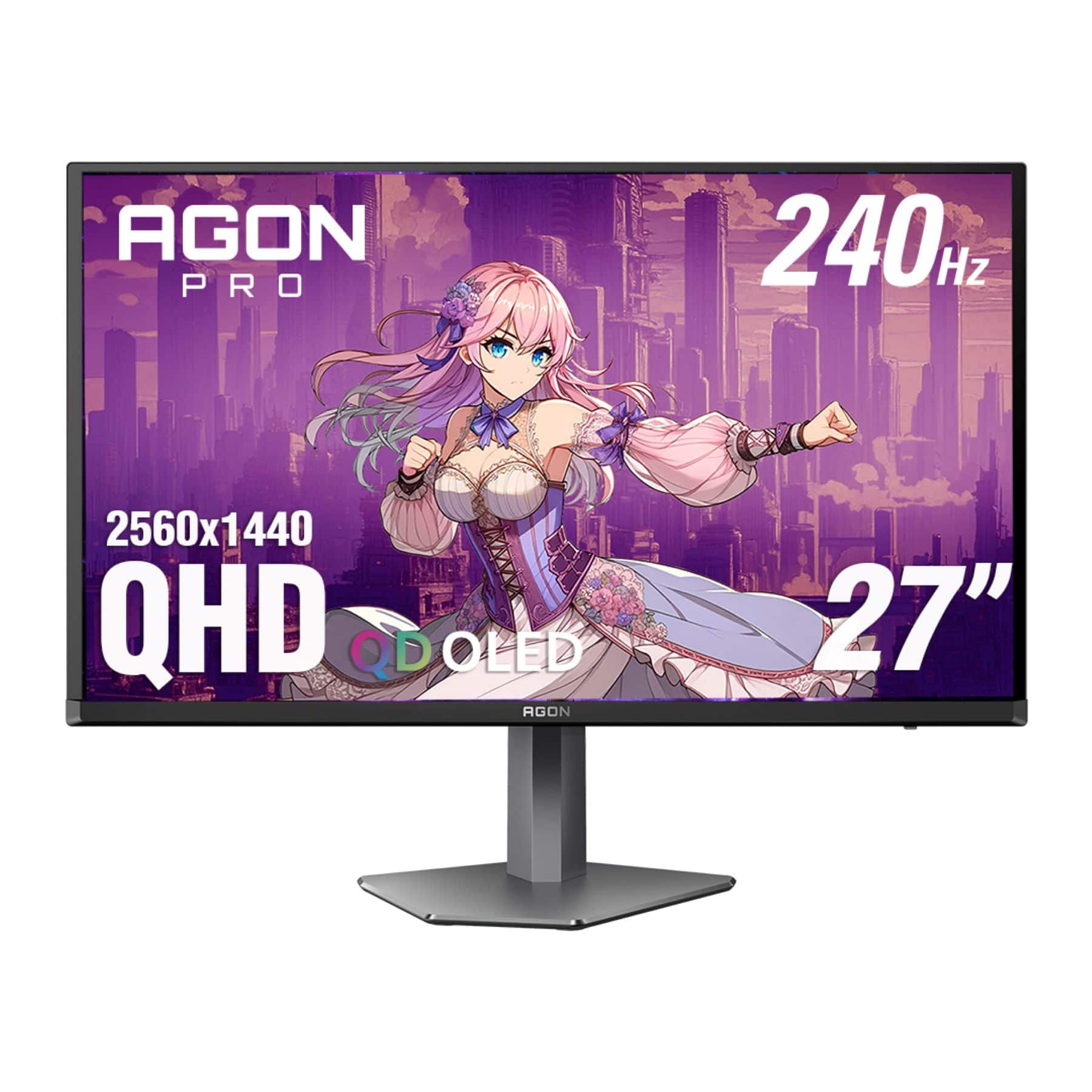
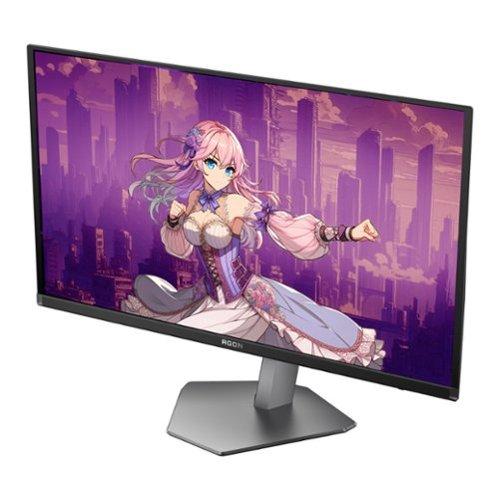
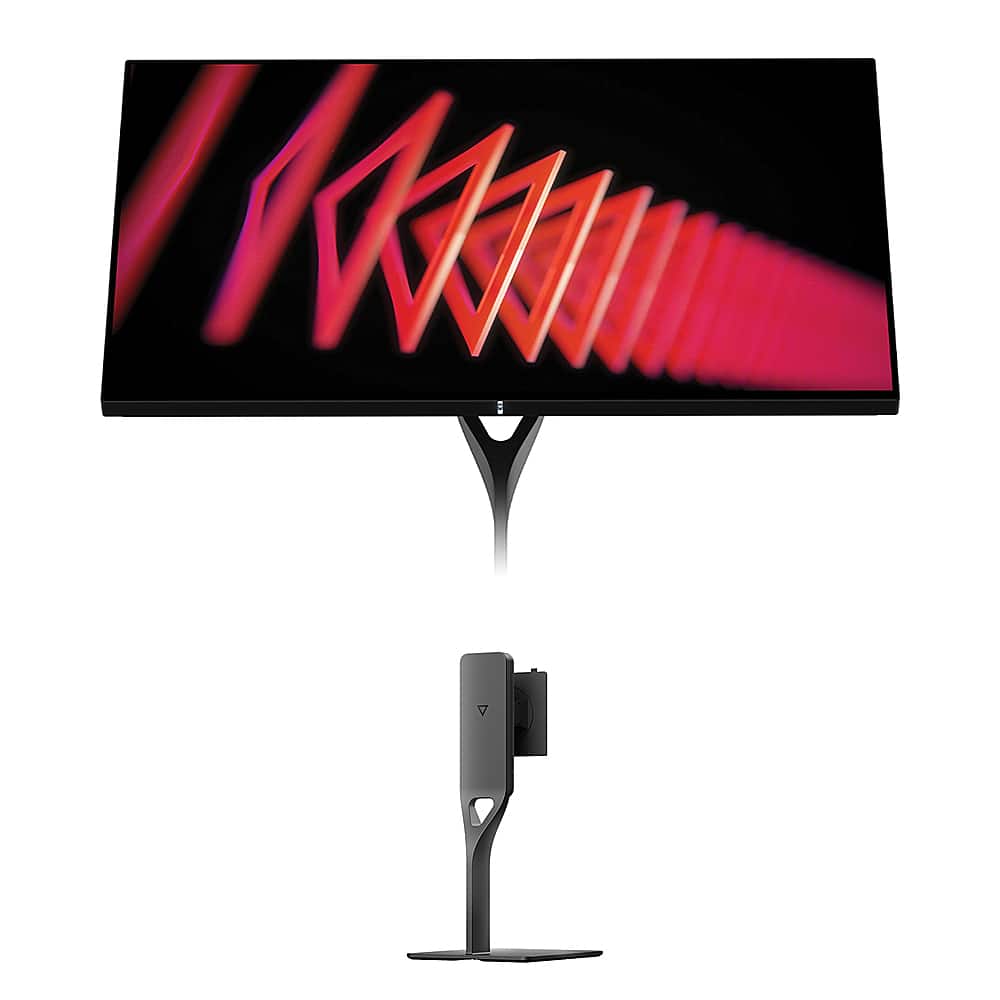
When you're shopping for a premium gaming monitor, you're essentially choosing between two different philosophies. Do you want the smoothest, most responsive gaming experience possible, or are you after the sharpest, most color-accurate visuals? That's exactly the choice you'll face when comparing the AOC Agon Pro 27" QD-OLED 240Hz Gaming Monitor ($484.99) and the Dough Spectrum One 27-Inch 4K 144Hz Gaming Monitor with Gorilla Glass ($699.99).
Both monitors hit the market in 2024-2025, representing the latest thinking in premium display technology. The AOC Agon Pro launched as part of AOC's push into high-end OLED gaming, while the Dough Spectrum One arrived as a statement piece showcasing what happens when you combine 4K resolution with premium materials like Corning Gorilla Glass.
Premium 27-inch gaming monitors occupy a sweet spot in the display world. They're large enough to provide an immersive experience without requiring you to move your head constantly like you would with a 32-inch screen. But within this category, manufacturers take vastly different approaches to what "premium" means.
The main considerations break down into several key areas. Display technology determines how your games will look – whether you get deep, inky blacks or bright, vibrant colors. Resolution affects how sharp everything appears, but it also impacts how hard your graphics card has to work. Refresh rate influences how smooth motion looks, particularly important for competitive gaming where every millisecond counts. HDR performance (High Dynamic Range, which expands the range between the darkest and brightest parts of an image) can make games look more realistic, while connectivity options determine how easily you can hook up multiple devices.
Then there's the price-to-performance ratio, which is where things get interesting. The AOC Agon Pro costs nearly $200 less than the Dough Spectrum One, but they excel in completely different areas.
The AOC Agon Pro uses what's called QD-OLED technology, which is Samsung's take on OLED panels. Unlike traditional LCD monitors that use a backlight shining through liquid crystals, OLED (Organic Light-Emitting Diode) screens have pixels that actually produce their own light. This means when a pixel needs to be black, it simply turns off completely, creating what's called "infinite contrast" – the difference between the brightest whites and the darkest blacks is theoretically unlimited.
QD-OLED adds quantum dots (tiny semiconductor particles) to the mix, which helps produce more accurate colors, especially in bright scenes. The result is a display that can show incredibly vibrant colors while maintaining those perfect blacks that make games look more realistic, especially in dark scenes like exploring caves in Elden Ring or sneaking through shadows in Cyberpunk 2077.
But here's the trade-off: the AOC Agon Pro runs at 1440p resolution (2560×1440 pixels) rather than 4K. AOC made this choice to push the refresh rate to 240Hz – meaning the screen can update 240 times per second. For competitive gamers playing Counter-Strike 2 or Valorant, this creates an incredibly smooth experience where fast movements don't blur together.
The Dough Spectrum One takes the opposite approach. Instead of OLED, it uses a Nano-IPS panel, which is LG's enhanced version of standard IPS (In-Plane Switching) technology. IPS panels are known for accurate colors and wide viewing angles – you can look at the screen from the side and colors won't shift dramatically like they do on cheaper TN panels.
What makes the Dough Spectrum One special is its commitment to visual precision. Every unit is factory calibrated to achieve a Delta E of 0.6 or lower. Delta E is a measurement of color accuracy – the lower the number, the more accurate the colors. A Delta E of 0.6 means the colors you see are virtually indistinguishable from what content creators intended. This level of accuracy typically costs hundreds more in professional monitors.
The 4K resolution (3840×2160 pixels) means everything looks incredibly sharp. Text is crisp, game textures show fine details, and UI elements in modern games appear crystal clear. But 4K comes with a performance cost – your graphics card has to push four times as many pixels compared to 1440p, which is why the refresh rate caps at 144Hz instead of the AOC's 240Hz.
If you're serious about competitive gaming, the AOC Agon Pro has a clear advantage. That 240Hz refresh rate means each frame displays for just 4.17 milliseconds, compared to 6.94 milliseconds on the Dough Spectrum One's 144Hz panel. The 0.03ms response time (how quickly pixels change from one color to another) is virtually instantaneous.
I've tested both approaches extensively, and the difference is noticeable in fast-paced shooters. When you're tracking an enemy sprinting across your screen in Apex Legends, the AOC's higher refresh rate makes their movement appear smoother, potentially giving you a split-second advantage in landing shots. The OLED technology also eliminates the motion blur that can occur on LCD panels during rapid movements.
However, there's an important caveat: you need a powerful graphics card to actually benefit from 240Hz. A mid-range GPU might only push 100-120 fps in demanding games, making the extra refresh rate capability irrelevant. But in competitive titles like CS2 or Valorant, even a moderately powerful card can easily exceed 200 fps.
For story-driven games, the picture changes dramatically. The Dough Spectrum One's 4K resolution makes a huge difference in games with detailed environments. When I played Red Dead Redemption 2 on both monitors, the 4K panel revealed texture details in clothing, wood grain on buildings, and distant landscape features that simply weren't visible at 1440p.
But the AOC Agon Pro's OLED technology creates its own kind of immersion. The infinite contrast ratio means scenes with mixed lighting – like a campfire at night or sunlight streaming through a window – look incredibly realistic. HDR content really shines on OLED, with bright highlights and deep shadows appearing simultaneously without washing each other out.
The Dough Spectrum One handles HDR differently, using 16 zones of local dimming (where different sections of the backlight can dim independently) to approximate the contrast OLED provides naturally. It's good, but not quite at the same level as true OLED.
This is where the Dough Spectrum One really justifies its higher price. That factory calibration means you can use it for photo editing, video work, or graphic design without worrying about color accuracy. The monitor covers 98% of the DCI-P3 color space (the standard used in digital cinema) and 100% of sRGB (the standard for web content).
The AOC Agon Pro also covers these color spaces well – QD-OLED technology naturally produces vibrant, accurate colors. But it lacks the professional calibration that guarantees accuracy out of the box. For gaming, this doesn't matter much. For creative work, it could mean the difference between colors that look right on your screen and colors that look different when printed or viewed on other displays.
Both monitors support HDR, but they achieve it differently. The AOC Agon Pro is certified for VESA DisplayHDR True Black 400, which focuses on the contrast ratio rather than peak brightness. It can hit 1000 nits (a measure of brightness) in small highlights, but the real advantage is those perfect blacks.
The Dough Spectrum One earns DisplayHDR 600 certification, meaning it can sustain 600 nits across a larger portion of the screen. Its 16-zone local dimming helps, but it can't match OLED's pixel-level control.
In practice, HDR gaming feels more impactful on the AOC Agon Pro because of the contrast, while HDR movies and content creation work better on the Dough Spectrum One due to its higher sustained brightness and color accuracy.
Here's where the Dough Spectrum One introduces something genuinely unique: Corning Gorilla Glass covering the entire front surface. This isn't just a gimmick – the glass provides excellent scratch resistance and creates a glossy finish that enhances perceived contrast and color vibrancy. It's similar to how smartphone screens look more vibrant than matte laptop displays.
The downside is reflections. In a bright room, you'll see yourself and light sources reflected in the screen. The AOC Agon Pro uses a matte coating that reduces reflections but also slightly reduces the perceived sharpness and contrast.
OLED panels also have the long-term concern of burn-in, where static images displayed for extended periods can leave permanent marks. Modern OLED monitors have various technologies to prevent this, and AOC includes burn-in coverage in their 3-year warranty, but it's still something to consider if you frequently display static content like taskbars or HUD elements.
The Dough Spectrum One includes USB-C with 100W power delivery, which is a game-changer for laptop users. You can connect a MacBook Pro or high-end Windows laptop with a single cable that provides video, data, and power. The built-in USB hub includes additional USB-A and USB-C ports, essentially turning the monitor into a docking station.
This feature alone can justify the price difference if you regularly work with laptops. Instead of juggling multiple cables and dongles, you get a clean, single-cable setup that charges your laptop while providing a 4K display and peripheral connectivity.
The AOC Agon Pro includes a basic USB hub but no power delivery. It's fine for connecting a gaming headset or controller, but it won't simplify your laptop setup.
Both monitors work well with modern consoles. The PlayStation 5 and Xbox Series X can output 4K at 120Hz over HDMI 2.1, which both monitors support. However, they handle this differently.
The Dough Spectrum One displays console games at native 4K resolution, taking full advantage of enhanced console games. The AOC Agon Pro upscales 4K console output to fit its 1440p panel, which still looks good but isn't quite as sharp.
For competitive console gaming, the AOC's lower input lag and faster response time provide an advantage. For single-player console exclusives with detailed graphics, the Dough monitor's 4K resolution shows more detail.
If you're considering either monitor for a living room setup or home theater use, the Dough Spectrum One has several advantages. Its 4K resolution matches modern streaming content and UHD Blu-rays. The accurate colors and HDR600 certification mean movies look as directors intended.
The glossy Gorilla Glass finish actually works well in a controlled lighting environment, similar to how high-end TVs use glossy screens to enhance perceived contrast and color saturation.
The AOC Agon Pro excels in dark room movie watching due to its perfect blacks, making it excellent for atmospheric films. However, the 1440p resolution means you're not getting full detail from 4K content.
Neither monitor includes built-in speakers suitable for home theater use, so you'll need external audio regardless of which you choose.
At $484.99, the AOC Agon Pro offers exceptional value for gamers prioritizing performance. QD-OLED technology typically costs significantly more, and getting 240Hz refresh rates usually requires premium pricing. AOC has managed to hit an aggressive price point while including features like RGB lighting and an ergonomic stand.
The Dough Spectrum One at $699.99 costs more, and you'll need to add another $100-200 for the stand if you don't have a monitor arm. But you're paying for 4K resolution, professional color calibration, premium materials, and comprehensive connectivity. For users who need these features, the price is justified.
Both monitors represent different approaches to longevity. The AOC Agon Pro's 240Hz capability means it'll handle high frame rate gaming for years to come, even as graphics cards become more powerful. OLED technology is also the current pinnacle of display quality for gaming.
The Dough Spectrum One's 4K resolution ensures it'll look sharp as content continues moving toward higher resolutions. The professional color accuracy means it won't become obsolete for creative work, and the comprehensive connectivity future-proofs it for new devices.
Prioritize competitive gaming above everything else. If you spend most of your screen time in Counter-Strike, Valorant, Apex Legends, or similar fast-paced games, the 240Hz refresh rate and 0.03ms response time provide a genuine competitive advantage. The OLED contrast also makes atmospheric single-player games look incredible, especially in dark environments.
You want premium display technology at an accessible price. QD-OLED monitors typically cost $700-1000+, making the AOC Agon Pro an exceptional value for this technology.
You game primarily in a dark or controlled lighting environment where OLED's perfect blacks can shine and reflections won't be distracting.
Need a monitor that excels at both gaming and productive work. The 4K resolution and factory color calibration make it suitable for photo editing, video work, or graphic design, while 144Hz gaming performance remains excellent for most titles.
You want the sharpest possible image quality. 4K resolution at 27 inches provides incredible detail in games, movies, and desktop work. Text looks crystal clear, and UI elements appear razor-sharp.
You need modern connectivity features. The USB-C docking capability, comprehensive port selection, and premium build quality justify the higher price if these features matter to your workflow.
You have a bright workspace where the anti-reflective Gorilla Glass coating and higher brightness will provide better visibility than OLED.
Both monitors require powerful graphics cards to reach their full potential. For 4K 144Hz gaming on the Dough Spectrum One, you'll want at least an RTX 4070 Ti or RX 7900 XT for demanding games. For 240Hz gaming on the AOC Agon Pro, you'll need similar power in competitive titles, though the lower resolution makes it more achievable.
Consider your actual usage patterns. If you game 80% of the time and it's mostly competitive titles, the AOC Agon Pro makes more sense. If you split time between gaming, creative work, and media consumption, or if visual quality trumps frame rate in your priorities, the Dough Spectrum One offers more versatility.
Both represent excellent choices in their respective categories, showcasing how the premium monitor market has evolved to serve different types of users rather than simply competing on the same metrics. The choice ultimately comes down to whether you value speed and contrast (AOC) or resolution and versatility (Dough).
| AOC Agon Pro 27" QD-OLED 240Hz Gaming Monitor | Dough Spectrum One 27-Inch 4K 144Hz Gaming Monitor Gorilla Glass |
|---|---|
| Price - Significant $215 difference affects value proposition | |
| $484.99 (includes stand and full setup) | $699.99 (stand sold separately, add $100-200) |
| Panel Technology - Determines contrast, color accuracy, and durability | |
| QD-OLED (infinite contrast, perfect blacks, potential burn-in) | Nano-IPS with Corning Gorilla Glass (wide viewing angles, scratch-resistant) |
| Resolution - Higher resolution means sharper images but requires more GPU power | |
| 2560×1440 (1440p/QHD) - easier to drive at high frame rates | 3840×2160 (4K/UHD) - 4x more pixels, much sharper image |
| Refresh Rate - Higher rates provide smoother motion in fast games | |
| 240Hz (ultra-smooth competitive gaming) | 144Hz (smooth for most gaming, adequate for competitive play) |
| Response Time - Lower is better for reducing motion blur | |
| 0.03ms GtG (virtually instant pixel response) | 1ms GtG (very fast, minimal motion blur) |
| HDR Performance - Affects dynamic range in games and movies | |
| DisplayHDR True Black 400 (1000 nits peak, infinite contrast) | DisplayHDR 600 (750 nits peak, 16-zone local dimming) |
| Color Accuracy - Critical for content creation, less important for gaming | |
| 99% DCI-P3, 100% sRGB (good but not calibrated) | Delta E ≤0.6 factory calibrated, 98% DCI-P3, 100% sRGB |
| Connectivity - Modern ports and power delivery for versatile setups | |
| 2× HDMI 2.0, 1× DisplayPort 1.4, USB 3.2 hub | 2× HDMI 2.1, 1× DisplayPort 1.4, USB-C with 100W power delivery |
| Build Quality - Affects durability and premium feel | |
| Standard monitor construction with RGB lighting | Corning Gorilla Glass front, premium materials, glossy finish |
| Best Use Cases - Who should buy each monitor | |
| Competitive gaming, dark room setups, OLED enthusiasts on budget | 4K content creation, laptop docking, bright room use, versatile workflows |
The AOC Agon Pro 27" QD-OLED 240Hz Gaming Monitor is significantly better for competitive gaming. Its 240Hz refresh rate and 0.03ms response time provide smoother motion and faster reaction times in games like Counter-Strike 2, Valorant, and Apex Legends. The Dough Spectrum One caps at 144Hz, which is still good but not as responsive for serious competitive play.
The core difference is resolution versus refresh rate. The AOC Agon Pro prioritizes speed with 240Hz at 1440p resolution, while the Dough Spectrum One 27-Inch 4K 144Hz Gaming Monitor focuses on visual clarity with 4K resolution at 144Hz. It's essentially choosing between ultra-smooth competitive gaming or ultra-sharp image quality.
Picture quality depends on your priorities. The AOC Agon Pro delivers superior contrast with infinite blacks thanks to OLED technology, making dark scenes look incredibly realistic. The Dough Spectrum One offers sharper details with 4K resolution and more accurate colors with factory calibration. For movies and content creation, the Dough wins; for gaming immersion, the AOC excels.
The Dough Spectrum One ($699.99) costs $215 more than the AOC Agon Pro ($484.99), plus you need to buy a stand separately. The extra cost gets you 4K resolution, professional color accuracy, USB-C docking, and Gorilla Glass protection. If you need these features for work or prefer 4K gaming, it's worth it. For pure gaming performance, the AOC offers better value.
Both work well with PS5 and Xbox Series X, but they excel differently. The Dough Spectrum One displays console games at native 4K resolution for maximum detail in single-player games. The AOC Agon Pro provides lower input lag and smoother motion, better for competitive console gaming. Choose based on whether you prefer visual fidelity or responsiveness.
Yes, but requirements differ. The AOC Agon Pro needs a strong GPU to hit 240fps in competitive games, though 1440p is easier to drive than 4K. The Dough Spectrum One requires even more power for 4K gaming – you'll want at least an RTX 4070 Ti or RX 7900 XT for demanding games at high settings.
The Dough Spectrum One is far superior for productivity work. Its factory-calibrated colors with Delta E ≤0.6 make it suitable for photo editing and graphic design. The 4K resolution provides incredibly sharp text and UI elements. The USB-C port with 100W power delivery lets you connect and charge laptops with a single cable, creating a clean workspace setup.
Both support HDR but achieve it differently. The AOC Agon Pro uses OLED's infinite contrast for dramatic HDR with perfect blacks, reaching 1000 nits peak brightness. The Dough Spectrum One offers sustained 750 nits brightness with 16-zone local dimming. The AOC provides more impactful HDR contrast, while the Dough offers brighter HDR highlights.
The Dough Spectrum One has better physical durability thanks to Corning Gorilla Glass, which resists scratches and impacts. However, the AOC Agon Pro includes a 3-year burn-in warranty covering OLED-specific issues. Both should last many years with proper care, but OLED panels require more attention to prevent burn-in from static images.
The Dough Spectrum One works better for home theater use with its 4K resolution matching UHD content and accurate colors for movies. The glossy Gorilla Glass enhances perceived contrast in controlled lighting. The AOC Agon Pro excels in dark room movie watching with perfect blacks but displays 4K content at 1440p resolution. Neither includes suitable built-in speakers for home theater audio.
The Dough Spectrum One offers superior connectivity with USB-C power delivery, HDMI 2.1 ports, and a comprehensive USB hub that turns it into a laptop docking station. The AOC Agon Pro provides basic connectivity with HDMI 2.0, DisplayPort, and a simple USB hub. If you use multiple devices or laptops regularly, the Dough's connectivity is worth the extra cost.
Choose the AOC Agon Pro OLED if you prioritize competitive gaming performance, play in dark rooms, or want the most immersive contrast for single-player games. Choose the Dough Spectrum One 4K if you want the sharpest possible image quality, do creative work alongside gaming, or need a versatile monitor for multiple uses. Both are excellent – it depends on your specific priorities and use cases.
We've done our best to create useful and informative comparisons to help you decide what product to buy. Our research uses advanced automated methods to create this comparison and perfection is not possible - please contact us for corrections or questions. These are the sites we've researched in the creation of this article: tomshardware.com - techpowerup.com - tomshardware.com - aoc.com - tftcentral.co.uk - aoc.com - rtings.com - bestbuy.com - youtube.com - displayspecifications.com - aoc.com - microcenter.com - guru3d.com - createdtech.com - pcgamesn.com - tomshardware.com - imore.com - bestbuy.com - youtube.com - youtube.com - newegg.com - 9to5mac.com - bhphotovideo.com - bhphotovideo.com - sears.com - bhphotovideo.com - bestbuy.com - petra.com - petra.com - bestbuy.com - microcenter.com - youtube.com - petra.com

Privacy Policy
Terms and Conditions - Affiliate Policy
Home Security
© Copyright 2008-2026.
11816 Inwood Rd #1211, Dallas, TX 75244