

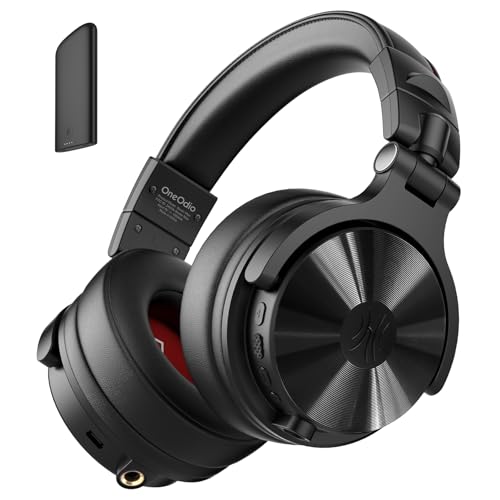

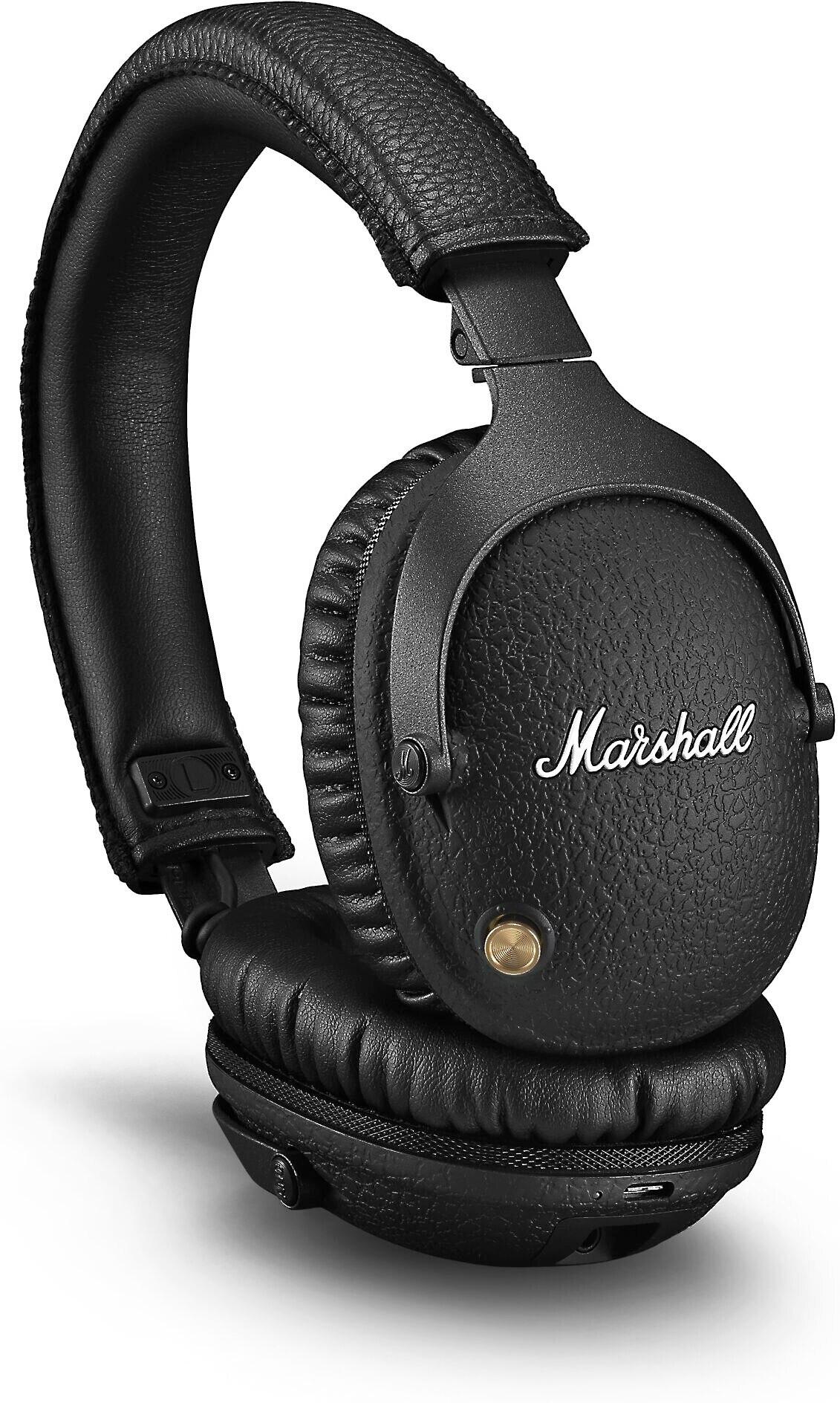
When I first started researching wireless headphones seriously, I was amazed by how different products in what seems like the same category can serve completely different purposes. The OneOdio Studio Max 1 and Marshall Monitor II ANC perfectly illustrate this point – both are premium over-ear wireless headphones, but they might as well live in different worlds when it comes to their intended use.
The wireless headphone market has exploded over the past few years, especially since major phone manufacturers started removing headphone jacks. But here's what I've learned: not all wireless headphones are created equal, and understanding what you actually need can save you from buyer's remorse.
The premium wireless headphone category has evolved rapidly since around 2020. We've seen major improvements in battery technology, audio codecs (the digital compression methods that determine sound quality over Bluetooth), and specialized features like active noise cancellation. What's particularly interesting is how brands have started targeting very specific use cases rather than trying to be everything to everyone.
The main considerations when choosing wireless headphones today include audio latency (the delay between when sound is created and when you hear it), sound quality, battery life, noise isolation, connectivity options, and comfort. But here's where it gets tricky – the importance of each factor depends entirely on how you plan to use them.
For instance, if you're a DJ who needs to cue up the next track while the current one is playing, even a fraction of a second delay can throw off your timing. But if you're commuting on a noisy train, you probably care more about blocking out engine noise than perfect audio timing.
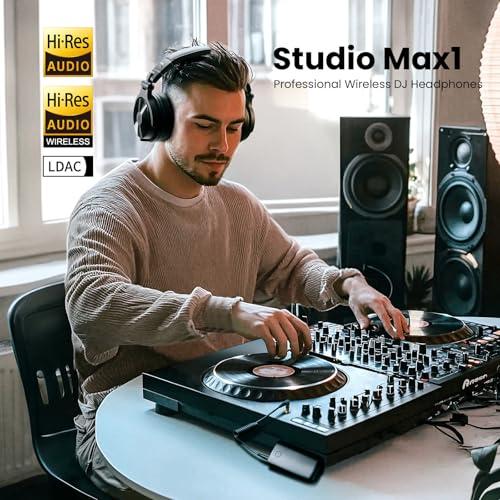
The OneOdio Studio Max 1, released in 2025, represents a fascinating approach to wireless audio. Instead of trying to compete directly with established consumer brands, OneOdio tackled a specific problem that had stumped the industry for years: making wireless headphones that actually work for professional DJ applications.
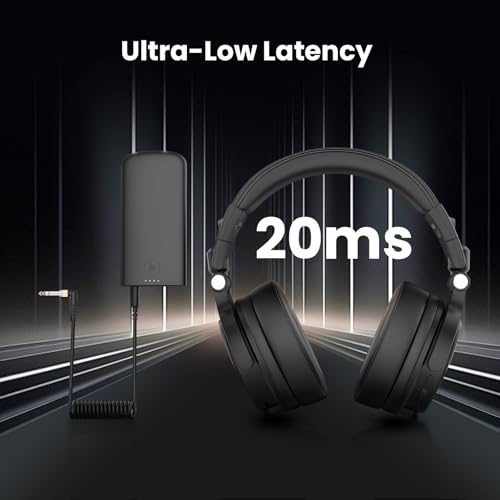
Traditional Bluetooth has a latency of around 150-200 milliseconds – that's about a fifth of a second. It doesn't sound like much, but when you're trying to match beats or cue tracks, it's like trying to have a conversation with someone via satellite phone. The delay makes precision work nearly impossible.
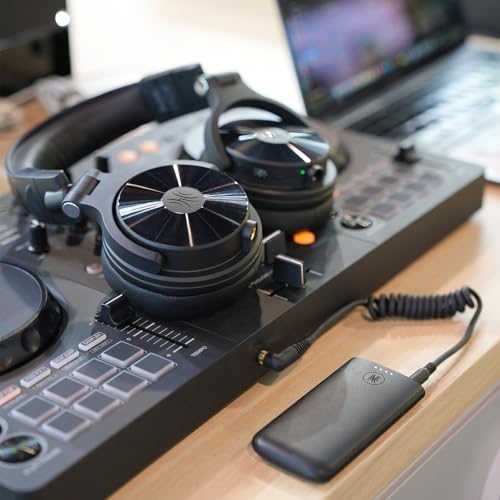
The OneOdio Studio Max 1 solves this with something called Rapid WILL+ technology, achieving just 20 milliseconds of latency through its included M1 wireless transmitter. To put that in perspective, that's about the same delay as sound traveling 22 feet through air. For DJs and musicians, this essentially eliminates the wireless penalty they've had to accept for decades.
The Marshall Monitor II ANC, on the other hand, focuses on what most people actually want from premium headphones: great sound quality, effective noise cancellation, and the iconic Marshall aesthetic that makes you look like you know something about music. Released as part of Marshall's push into the consumer headphone market, these represent a more traditional approach to premium wireless audio.
This is where the OneOdio Studio Max 1 absolutely dominates, and it's worth understanding why this matters so much. Audio latency affects more than just DJing – it impacts gaming (where hearing footsteps a split second late can mean losing a match), content creation (where you need real-time monitoring while recording), and even watching videos (where audio sync becomes noticeable).
The OneOdio Studio Max 1 offers four different connection modes, which I find incredibly practical. You've got the ultra-low latency mode via the M1 transmitter, standard Bluetooth 5.3 for casual listening, and two wired options (3.5mm and 6.35mm) for professional audio equipment. This flexibility means you're not locked into one connection type.
The Marshall Monitor II ANC sticks with conventional Bluetooth 5.0, which works perfectly fine for music listening and calls but won't cut it for professional monitoring work. However, this focus allows Marshall to optimize other aspects of the user experience.
Here's where personal preference really matters. The Marshall Monitor II ANC follows what I'd call the "audiophile consumer" approach – balanced, warm sound with detailed midrange frequencies that make guitars and vocals shine. Marshall's heritage in amplifiers really shows here; these headphones sound like music was meant to be enjoyed, not analyzed.
The OneOdio Studio Max 1 takes a more utilitarian approach. The sound is bass-heavy and punchy, which works well for DJ monitoring where you need to feel the kick drum and bass line clearly. However, some reviewers have noted that this tuning can make casual music listening feel a bit overwhelming or "closed-in" compared to more neutral headphones.
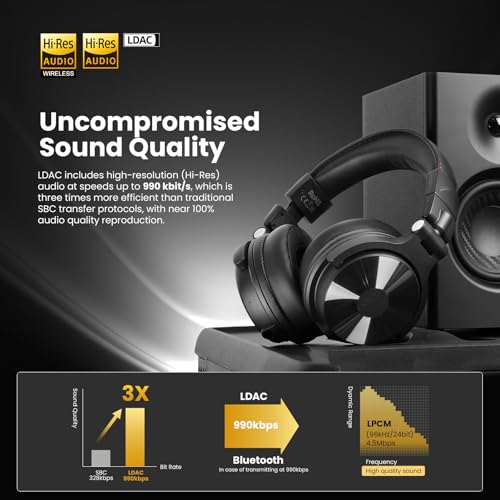
Both support high-resolution audio – the OneOdio Studio Max 1 is Hi-Res Audio certified and supports LDAC (Sony's high-quality Bluetooth codec), while the Marshall Monitor II ANC offers customizable EQ through its companion app. The difference is that Marshall optimizes for listening pleasure, while OneOdio optimizes for professional utility.
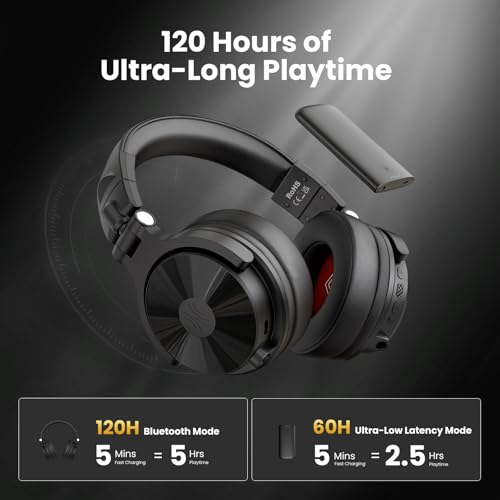
This is where the OneOdio Studio Max 1 absolutely blows everything else out of the water. At 120 hours of playback in Bluetooth mode, it's not just industry-leading – it's practically absurd. Even in the power-hungry ultra-low latency mode, you get 50 hours of use.
To put this in perspective, the Marshall Monitor II ANC offers 30 hours with ANC enabled or 45 hours without – which is actually quite good by industry standards. Most premium ANC headphones fall in the 20-30 hour range. But the OneOdio's battery life is so extreme that you could literally forget to charge them for weeks and still have power.
Both headphones support fast charging, but again the OneOdio Studio Max 1 takes it further – five minutes of charging gives you an hour of playback, compared to Marshall's 15 minutes for five hours. When you're rushing out for a gig or long flight, every minute counts.
The Marshall Monitor II ANC clearly wins this category because the OneOdio Studio Max 1 doesn't even try to compete here. Marshall's active noise cancellation isn't quite at Sony or Bose levels, but it's genuinely effective for reducing low-frequency noise like airplane engines or air conditioning hum.
What I appreciate about Marshall's implementation is the adjustability – you get 10 levels of noise cancellation through the app, plus a monitoring mode that lets ambient sound through when you need to hear announcements or have a conversation. This flexibility makes them much more practical for daily use.
The OneOdio Studio Max 1 relies entirely on passive noise isolation from its closed-back design and thick ear pads. This works fine in controlled environments like studios or quiet rooms, but it won't help you on a noisy commute.
Here's where the OneOdio Studio Max 1 really shows its professional DNA. Beyond the four connection modes I mentioned earlier, it includes multiple cables and the M1 wireless transmitter in the box. This means you can connect to everything from smartphones to mixing desks to vintage audio equipment that predates Bluetooth.
The rotating ear cups are another professional touch – they swivel 90 degrees for single-ear monitoring, which is essential for DJ work but also useful for content creators who need to monitor audio while staying aware of their environment.
The Marshall Monitor II ANC keeps things simpler with Bluetooth 5.0 and a 3.5mm backup cable. The focus is on ease of use rather than maximum compatibility, which honestly makes more sense for most people.
Both headphones can work for home theater use, but with different strengths. The OneOdio Studio Max 1's ultra-low latency mode could be excellent for late-night movie watching when you need to avoid disturbing others. The lack of audio delay means dialogue stays perfectly synced with lip movements, which is surprisingly important for immersion.
However, the Marshall Monitor II ANC might actually be better for most home theater setups. The balanced sound signature reproduces movie soundtracks more naturally, and if your living space has background noise (traffic, neighbors, HVAC systems), the active noise cancellation helps you hear quiet dialogue without cranking the volume.
Both headphones are built to last, but with different priorities. The OneOdio Studio Max 1 feels more industrial – it's heavier at around 330-350 grams and built to withstand professional use. The protein leather ear pads are comfortable, but the extra weight becomes noticeable during very long sessions.
The Marshall Monitor II ANC prioritizes long-term comfort with memory foam padding and a lighter overall design. The classic Marshall aesthetic with textured vinyl and brass accents gives them a premium feel that doesn't scream "professional audio gear."
At the time of writing, both headphones occupy similar price ranges in the premium wireless category, but they offer very different value propositions. The OneOdio Studio Max 1 provides capabilities that simply don't exist elsewhere in wireless headphones – if you need ultra-low latency wireless monitoring, your alternatives are basically nonexistent.
The Marshall Monitor II ANC competes in a much more crowded space against Sony, Bose, Sennheiser, and others. Its value comes from the combination of Marshall's signature sound, effective noise cancellation, and premium build quality.
From a pure features-per-dollar perspective, the OneOdio Studio Max 1 is almost absurdly packed with technology. You get the wireless transmitter, multiple cables, extreme battery life, and professional connectivity options. But much of this may be wasted if you don't need the professional features.
The OneOdio Studio Max 1 represents some genuinely innovative engineering. The Rapid WILL+ technology required developing custom wireless protocols and hardware that most established audio companies haven't bothered with. This makes it somewhat future-proof for professional applications, assuming the technology gains wider adoption.
The Marshall Monitor II ANC takes a more conservative approach, using proven technologies implemented well rather than pushing boundaries. This often results in a more polished user experience, even if it's less technically groundbreaking.
Choose the OneOdio Studio Max 1 if you're a DJ, musician, content creator, or serious gamer who needs real-time audio monitoring. The ultra-low latency wireless capability alone justifies the purchase for these use cases. The extreme battery life and multiple connectivity options are significant bonuses that make it incredibly versatile for professional work.
Also consider the OneOdio Studio Max 1 if you frequently use older audio equipment that lacks Bluetooth, travel extensively and can't deal with dead headphones, or work in audio production where precise timing matters.
Go with the Marshall Monitor II ANC if you want premium headphones primarily for music listening, commuting, or general daily use. The active noise cancellation, balanced sound signature, and lighter design make more sense for most people's actual listening habits.
The Marshall Monitor II ANC is also the better choice if you prioritize brand heritage and aesthetic appeal, need effective noise cancellation for noisy environments, or prefer the simplicity of a more focused feature set.
Both headphones excel in their intended roles, but they're solving different problems. The OneOdio Studio Max 1 breaks new ground by making wireless headphones viable for professional audio work – something that seemed impossible just a few years ago. The Marshall Monitor II ANC refines the established premium consumer headphone formula with Marshall's musical heritage and solid execution.
Your choice should align with your primary use case. If you need professional capabilities, the OneOdio is revolutionary. If you want an excellent daily driver for music and media consumption, the Marshall delivers exactly what most people are actually looking for in premium wireless headphones.
The wireless headphone market will continue evolving rapidly, but both of these products represent meaningful advances in their respective niches. Choose based on your needs rather than specifications alone, and you'll be happy with either decision.
| OneOdio Studio Max 1 Wireless DJ Headphones | Marshall Monitor II ANC Headphones |
|---|---|
| Audio Latency - Critical for DJs, gaming, and real-time monitoring | |
| 20ms ultra-low latency with M1 transmitter (professional grade) | ~150-200ms standard Bluetooth latency (fine for music listening) |
| Battery Life - How long between charges | |
| 120 hours Bluetooth / 50 hours low-latency mode (industry leading) | 30 hours with ANC / 45 hours without ANC (very good) |
| Active Noise Cancellation - Blocks external noise | |
| None (relies on passive isolation only) | Yes, with 10 adjustable levels plus transparency mode |
| Connectivity Options - Flexibility for different devices | |
| 4 modes: Ultra-low latency wireless, Bluetooth 5.3, 3.5mm, 6.35mm | Bluetooth 5.0 + 3.5mm wired backup |
| Sound Signature - Tuning philosophy | |
| Bass-heavy, punchy (optimized for DJ monitoring) | Balanced, warm (optimized for music enjoyment) |
| Weight - Comfort for extended use | |
| 330-350g (heavier, professional build) | 320g (lighter, consumer-focused comfort) |
| Driver Size - Affects sound quality and power | |
| 50mm neodymium drivers | 40mm dynamic drivers |
| Frequency Response - Audio range reproduction | |
| 20Hz - 40kHz (Hi-Res Audio certified, extended range) | 20Hz - 20kHz (standard audio range) |
| Special Features - Unique capabilities | |
| 90° rotating earcups for single-ear monitoring, M1 transmitter included | Multi-directional control knob, customizable M-button, Marshall app |
| Quick Charge - Emergency power boost | |
| 5 minutes = 1 hour playback | 15 minutes = 5 hours playback |
| Audio Codecs - Wireless sound quality | |
| LDAC, AAC, SBC, LC3 (high-resolution wireless) | SBC (standard quality) |
| Target User - Best suited for | |
| DJs, musicians, gamers, content creators | Commuters, general music listeners, office workers |
| Included Accessories - What's in the box | |
| M1 transmitter, multiple cables, carrying bag | 3.5mm cable, USB-C cable, carrying pouch |
The OneOdio Studio Max 1 Wireless DJ Headphones are specifically designed for DJs and music production with ultra-low 20ms latency, rotating earcups for single-ear monitoring, and multiple professional connectivity options. The Marshall Monitor II ANC Headphones are consumer-focused and have too much latency for professional DJ work, making the OneOdio Studio Max 1 the clear choice for professional audio applications.
Only the Marshall Monitor II ANC Headphones feature active noise cancellation with 10 adjustable levels and a transparency mode. The OneOdio Studio Max 1 Wireless DJ Headphones rely entirely on passive noise isolation and don't include any active noise cancellation technology, making the Marshall Monitor II ANC better for noisy environments like commuting.
The OneOdio Studio Max 1 Wireless DJ Headphones have exceptional battery life with 120 hours in Bluetooth mode and 50 hours using the low-latency transmitter. The Marshall Monitor II ANC Headphones offer 30 hours with ANC enabled or 45 hours without ANC. The OneOdio Studio Max 1 clearly wins for battery endurance.
The OneOdio Studio Max 1 Wireless DJ Headphones are excellent for gaming due to their 20ms ultra-low latency wireless mode, which eliminates audio delay that can affect competitive gaming. The Marshall Monitor II ANC Headphones have standard Bluetooth latency that may cause noticeable audio lag in fast-paced games, making the OneOdio Studio Max 1 the better gaming choice.
The Marshall Monitor II ANC Headphones offer a more balanced, warm sound signature optimized for music enjoyment with detailed midrange and customizable EQ. The OneOdio Studio Max 1 Wireless DJ Headphones have a bass-heavy, punchy sound designed for DJ monitoring that some find overwhelming for casual music listening. For pure music enjoyment, the Marshall Monitor II ANC is generally preferred.
Both can work for home theater, but serve different needs. The OneOdio Studio Max 1 Wireless DJ Headphones excel for late-night viewing due to their ultra-low latency keeping audio perfectly synced with video. The Marshall Monitor II ANC Headphones are better if your home has background noise, as the active noise cancellation helps you hear quiet dialogue without raising volume. Choose the OneOdio Studio Max 1 for sync accuracy or Marshall Monitor II ANC for noise isolation.
The Marshall Monitor II ANC Headphones are designed for all-day comfort with memory foam padding and lighter weight at 320g. The OneOdio Studio Max 1 Wireless DJ Headphones are heavier at 330-350g and built more for professional durability than extended comfort. For long listening sessions, the Marshall Monitor II ANC is generally more comfortable.
The OneOdio Studio Max 1 Wireless DJ Headphones excel here with multiple connection options including 3.5mm, 6.35mm jacks, and the M1 transmitter that can add wireless to older equipment. The Marshall Monitor II ANC Headphones only offer Bluetooth and 3.5mm connections. The OneOdio Studio Max 1 is far more versatile for vintage or professional audio gear.
The OneOdio Studio Max 1 Wireless DJ Headphones offer superior quick charging with 5 minutes providing 1 hour of playback. The Marshall Monitor II ANC Headphones need 15 minutes of charging for 5 hours of use. While both offer quick charging, the OneOdio Studio Max 1 is more convenient for emergency power boosts.
Both headphones support phone calls, but with different strengths. The Marshall Monitor II ANC Headphones are optimized for call quality with their consumer focus and ANC to reduce background noise during calls. The OneOdio Studio Max 1 Wireless DJ Headphones have call capability but are primarily designed for audio monitoring rather than communication, making the Marshall Monitor II ANC better for regular phone use.
This depends on your needs. The OneOdio Studio Max 1 Wireless DJ Headphones offer exceptional value for DJs and professionals needing ultra-low latency, extreme battery life, and multiple connectivity options. The Marshall Monitor II ANC Headphones provide better value for general consumers wanting quality sound, noise cancellation, and daily usability. Choose the OneOdio Studio Max 1 for professional features or Marshall Monitor II ANC for consumer convenience.
Marshall has decades of heritage in audio equipment and amplifiers, making the Marshall Monitor II ANC Headphones from a more established brand. OneOdio is newer to the market but the OneOdio Studio Max 1 Wireless DJ Headphones represent innovative technology that addresses real professional needs. While Marshall Monitor II ANC has brand recognition, both products offer solid build quality within their respective market segments.
We've done our best to create useful and informative comparisons to help you decide what product to buy. Our research uses advanced automated methods to create this comparison and perfection is not possible - please contact us for corrections or questions. These are the sites we've researched in the creation of this article: techradar.com - youtube.com - oneodio.com - androidguys.com - audioxpress.com - versus.com - audioreviews.org - youtube.com - oneodio.com - youtube.com - thomannmusic.com - teqclub.com - youtube.com - homestudiobasics.com - youtube.com - youtube.com - homedjstudio.com - oneodio.com - enostech.com - oneodio.com - yourrightscount.com - soundguys.com - androidcentral.com - headphonereview.com - thestyleinspiration.com - headphonecheck.com - versus.com - blog.son-video.com - bhphotovideo.com - bestbuy.com - versus.com - bhphotovideo.com - stereoguide.com - marshall.com - api.bestbuy.com - soundstagesolo.com - marshall.com - youtube.com - youtube.com - electronicexpress.com

Privacy Policy
Terms and Conditions - Affiliate Policy
Home Security
© Copyright 2008-2026.
11816 Inwood Rd #1211, Dallas, TX 75244