

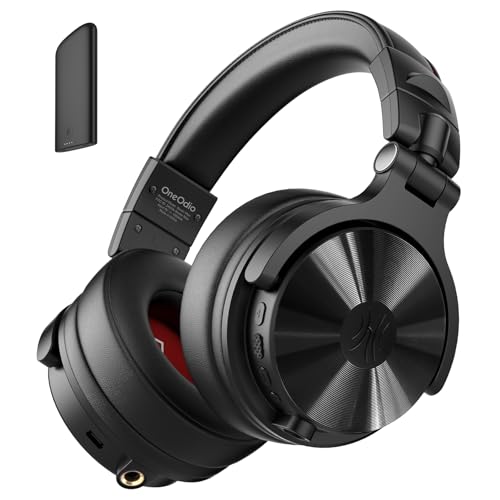
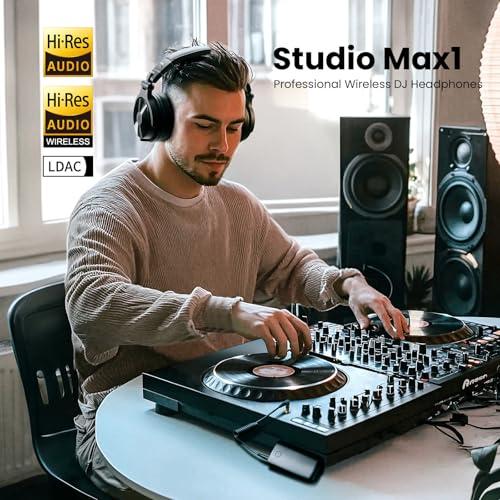






When you're shopping for high-end wireless headphones, you'll quickly discover that not all premium models are created equal. Today we're comparing two fascinating approaches to wireless audio: the OneOdio Studio Max 1, a specialized DJ headphone that launched in 2025, and the Technics EAH-A800, a premium consumer model that hit the market in 2023. These headphones represent completely different philosophies in wireless audio design, and understanding their differences will help you choose the right pair for your needs.
The wireless headphone market has exploded over the past few years, but these two models occupy very specific niches within that broader category. The OneOdio Studio Max 1 targets professional DJs and audio creators who need real-time wireless monitoring capabilities. The Technics EAH-A800, on the other hand, focuses on delivering the best possible everyday listening experience with advanced noise cancellation and audiophile-quality sound.
When evaluating any wireless headphones, there are several key factors to consider: audio quality and tuning philosophy, latency performance (how much delay exists between the source and your ears), battery life, connectivity options, comfort during extended use, and overall value for your specific needs. What makes this comparison particularly interesting is how each model prioritizes these factors differently based on their intended audience.
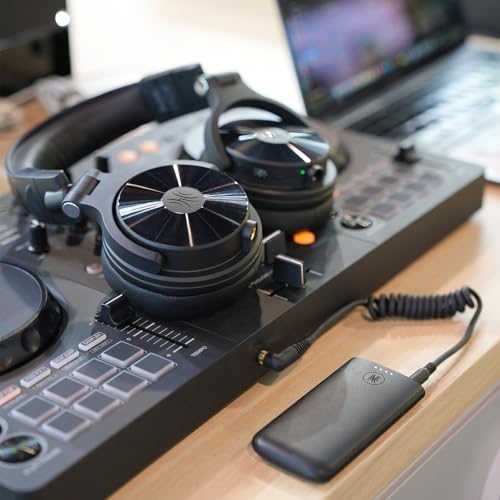
The OneOdio Studio Max 1 represents a breakthrough in professional audio technology. For decades, DJs have been tethered to their equipment by cables because wireless headphones simply couldn't deliver the real-time performance needed for live mixing. Traditional Bluetooth has a latency (delay) of 150-300 milliseconds, which might not sound like much, but it's enough to throw off a DJ's timing when beatmatching or cueing tracks.
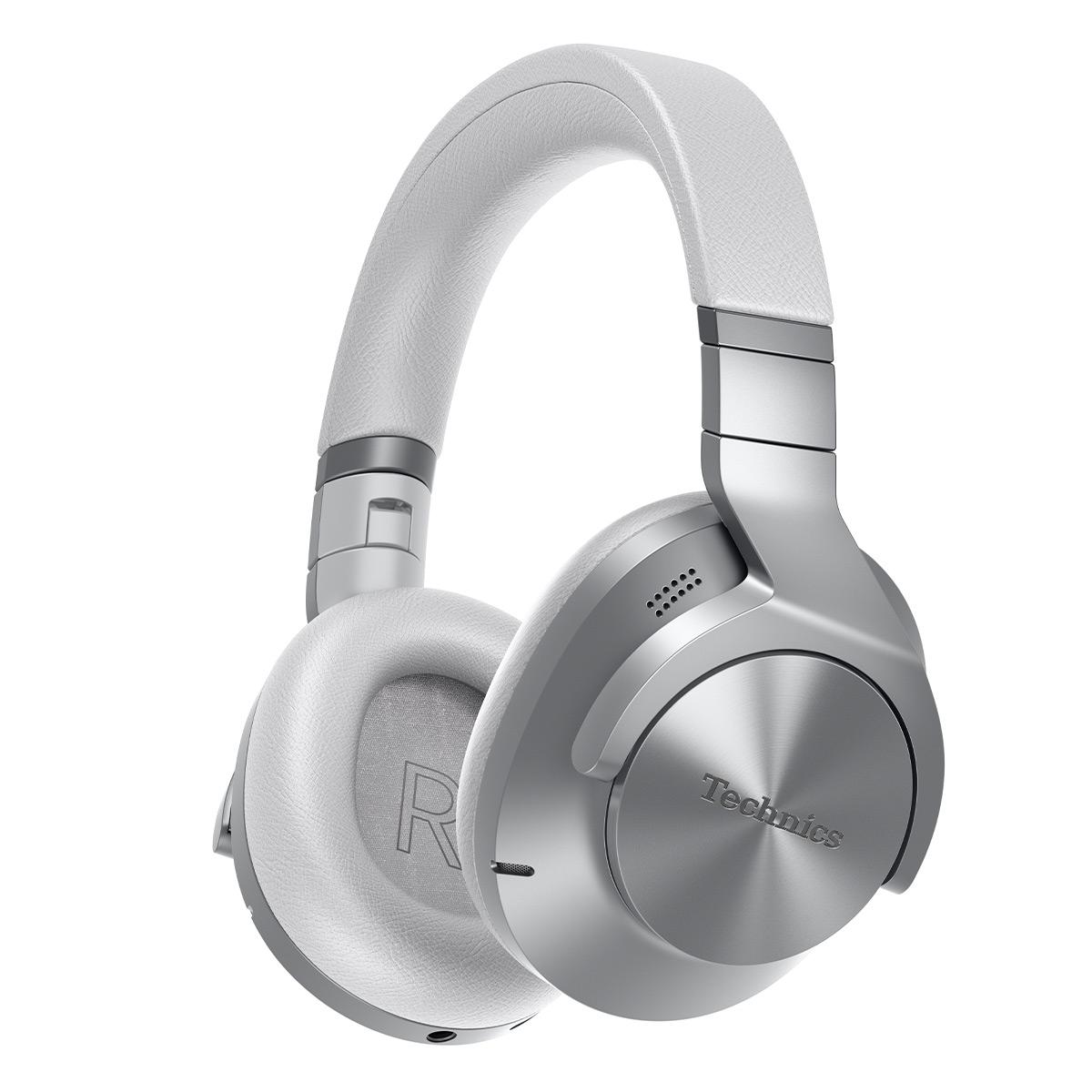
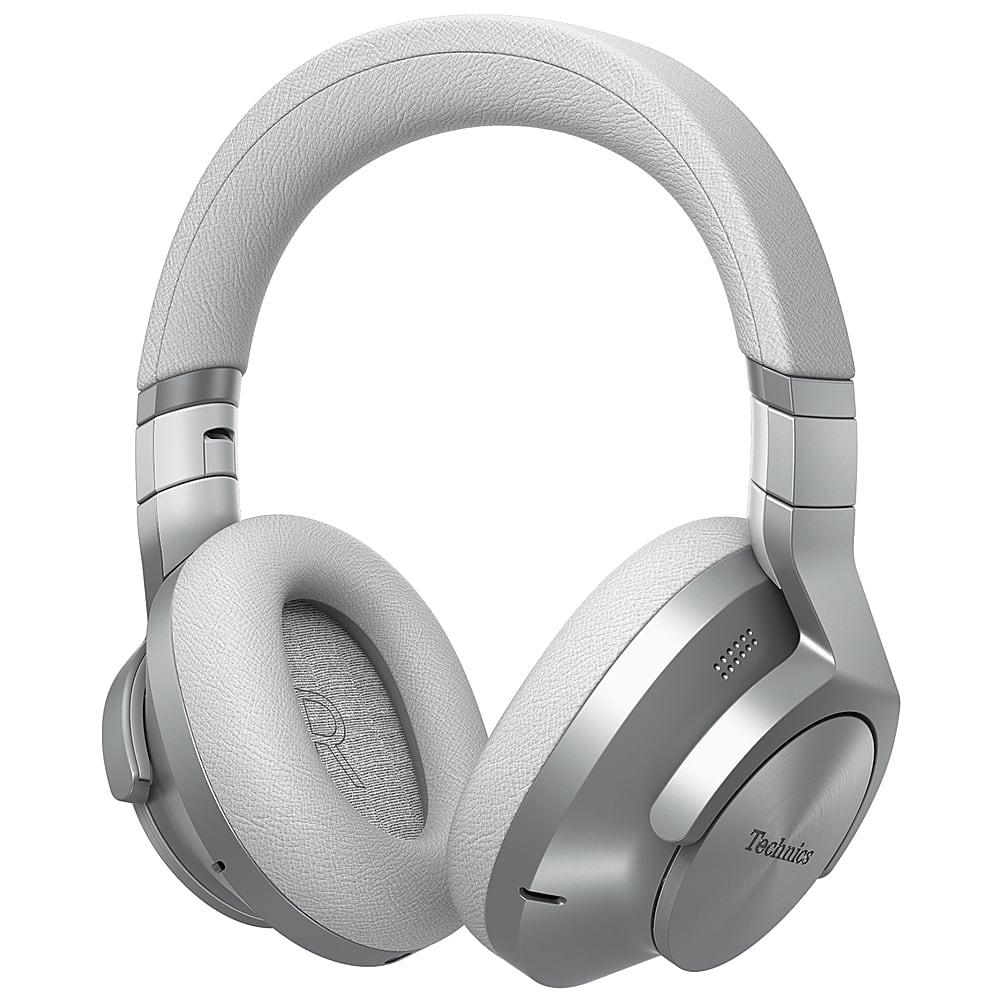
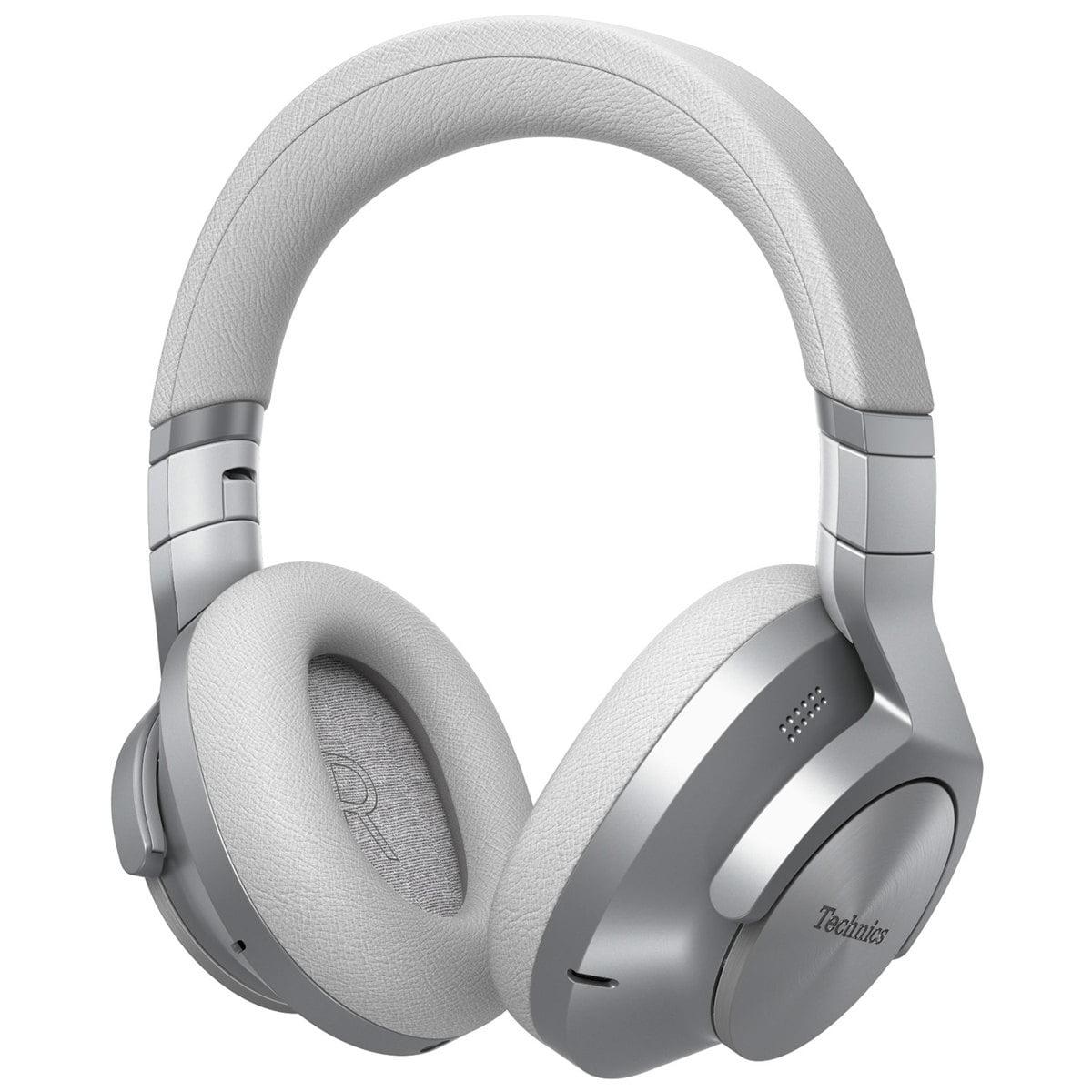
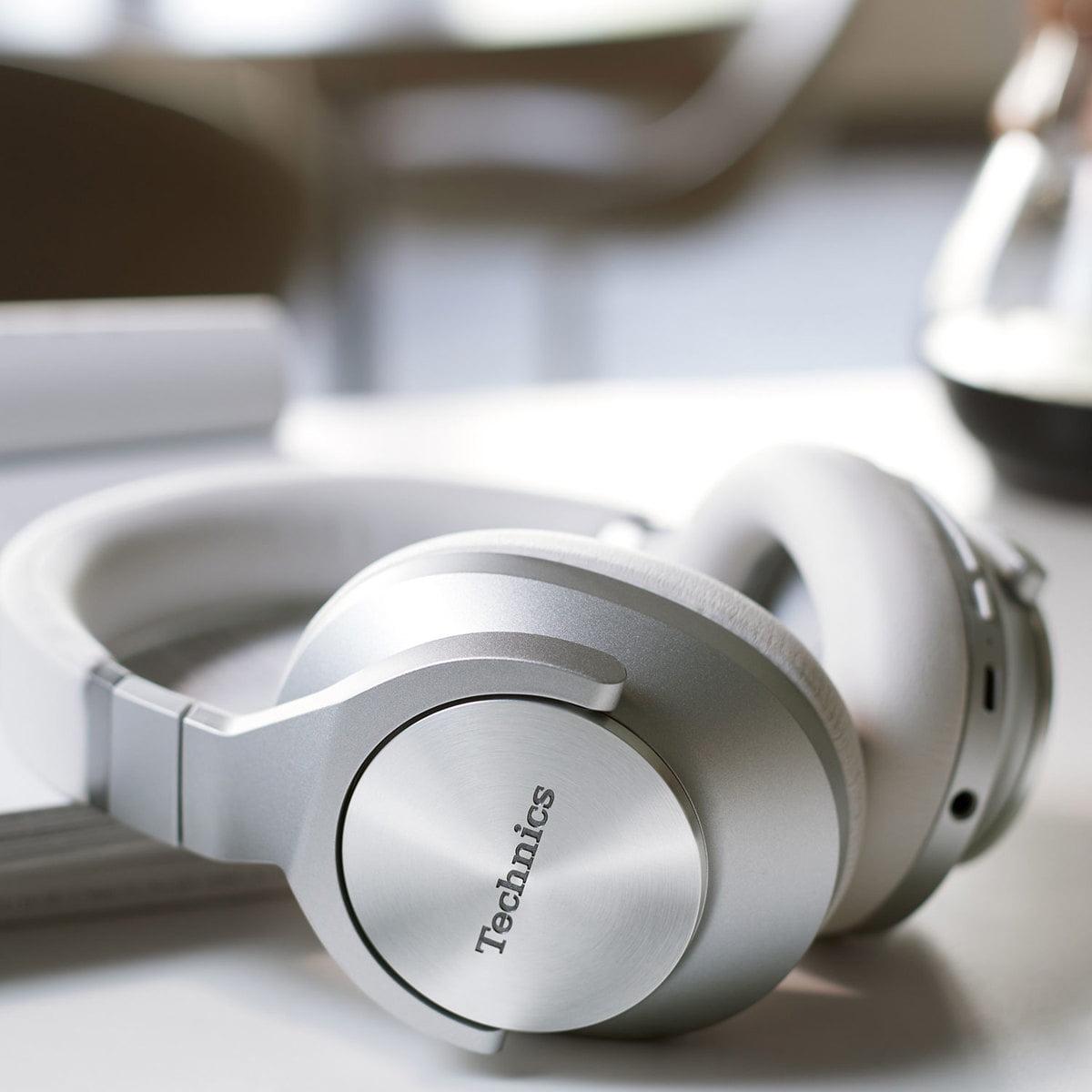
The Technics EAH-A800 takes the opposite approach, focusing on what most people actually want from premium headphones: exceptional sound quality, effective noise cancellation, and all-day comfort. Technics, with its legendary reputation in professional audio equipment, has applied decades of acoustic engineering expertise to create headphones that prioritize musical accuracy and listening pleasure.
The sound signature of headphones refers to how they emphasize different frequency ranges – bass, midrange, and treble. This is where these two models diverge significantly, and it's directly related to their intended use cases.
The OneOdio Studio Max 1 features 50mm neodymium drivers (the magnets that move the speaker cones) tuned specifically for DJ monitoring. This means they emphasize bass frequencies and provide a punchy, energetic sound that helps DJs identify the beat and low-end elements in tracks. However, this tuning philosophy comes with trade-offs. Several reviewers have noted that while these headphones excel for DJ work, they can sound "muddy" or bass-heavy for general music listening. The tuning was developed in collaboration with professional DJ Arianna, who spent six months fine-tuning the sound during her live performances.
The Technics EAH-A800 uses smaller 40mm drivers but with a more sophisticated three-layer diaphragm design made from PEEK (polyetheretherketone) and polyurethane materials. This construction allows for more precise control over sound reproduction. The tuning philosophy here is naturalistic and balanced – these headphones aim to reproduce music as the artist intended, without artificial emphasis on any particular frequency range. Reviewers consistently praise the Technics EAH-A800 for its rich, detailed sound with tight bass that doesn't overwhelm the midrange frequencies where vocals and most instruments live.
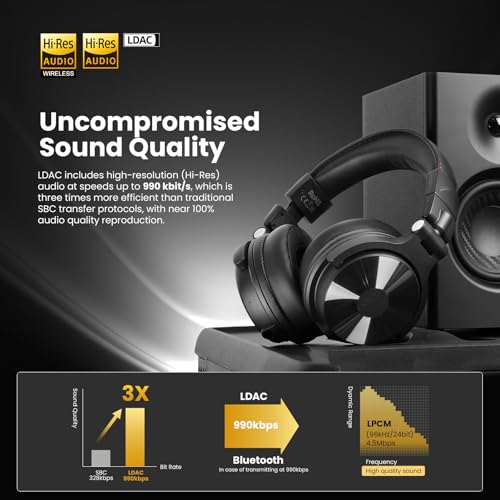
Both models support Hi-Res Audio, but they implement it differently. Hi-Res Audio refers to digital audio files with higher sampling rates and bit depths than standard CD quality, capturing more detail and nuance in the recording. The OneOdio Studio Max 1 supports the LDAC codec, which can transmit up to three times more data than standard Bluetooth codecs, maintaining much of that high-resolution detail wirelessly.
The Technics EAH-A800 also supports LDAC and is certified for both wired and wireless Hi-Res Audio playback. The difference is in implementation – while the OneOdio prioritizes maintaining low latency even when using these high-quality codecs, the Technics can focus purely on audio quality since it doesn't need to worry about real-time performance.
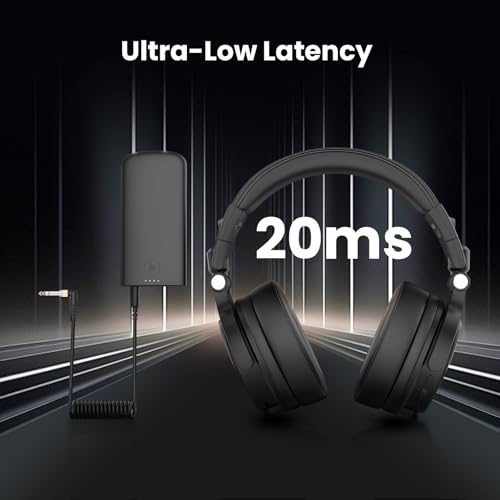
Here's where the OneOdio Studio Max 1 truly shines and sets itself apart from virtually every other wireless headphone on the market. The proprietary Rapid WILL+ technology achieves an astounding 20 milliseconds of latency when used with the included M1 transmitter. To put this in perspective, the blink of an eye takes about 300 milliseconds – this delay is so minimal that it's essentially imperceptible to human ears and reaction times.
This ultra-low latency is achieved through several innovations. First, the M1 transmitter uses a proprietary wireless protocol instead of standard Bluetooth, allowing for more efficient data transmission. Second, the headphones can connect in four different ways: standard Bluetooth, the proprietary low-latency wireless, traditional 3.5mm analog connection, and professional 6.35mm (quarter-inch) analog connection. This versatility means DJs can adapt to any setup, whether they're using modern DJ controllers, vintage equipment, or anything in between.
The Technics EAH-A800, being designed for consumer use, uses standard Bluetooth 5.2 with typical latency characteristics. While this isn't suitable for professional DJ work, it's perfectly fine for listening to music, watching videos (where slight delays can be compensated for), or making phone calls.
Battery life is where both headphones excel, but the OneOdio Studio Max 1 sets a new benchmark. With up to 120 hours of playback time in Bluetooth mode, these headphones can literally play for five straight days. Even when using the power-hungry M1 transmitter for ultra-low latency performance, they still deliver 50 hours of use. The quick-charge feature provides one hour of playback from just five minutes of charging – crucial when you're about to perform and discover your headphones are dead.
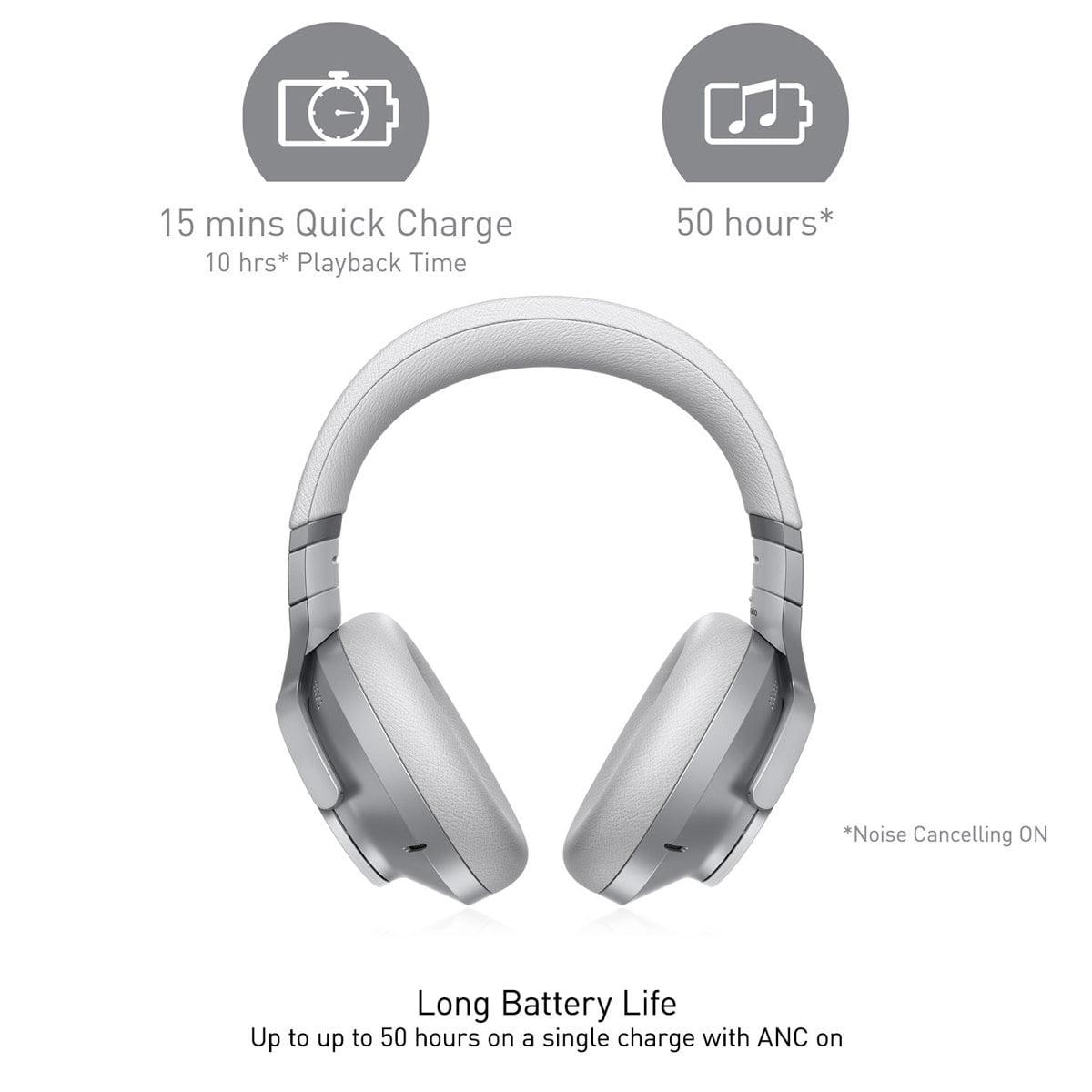
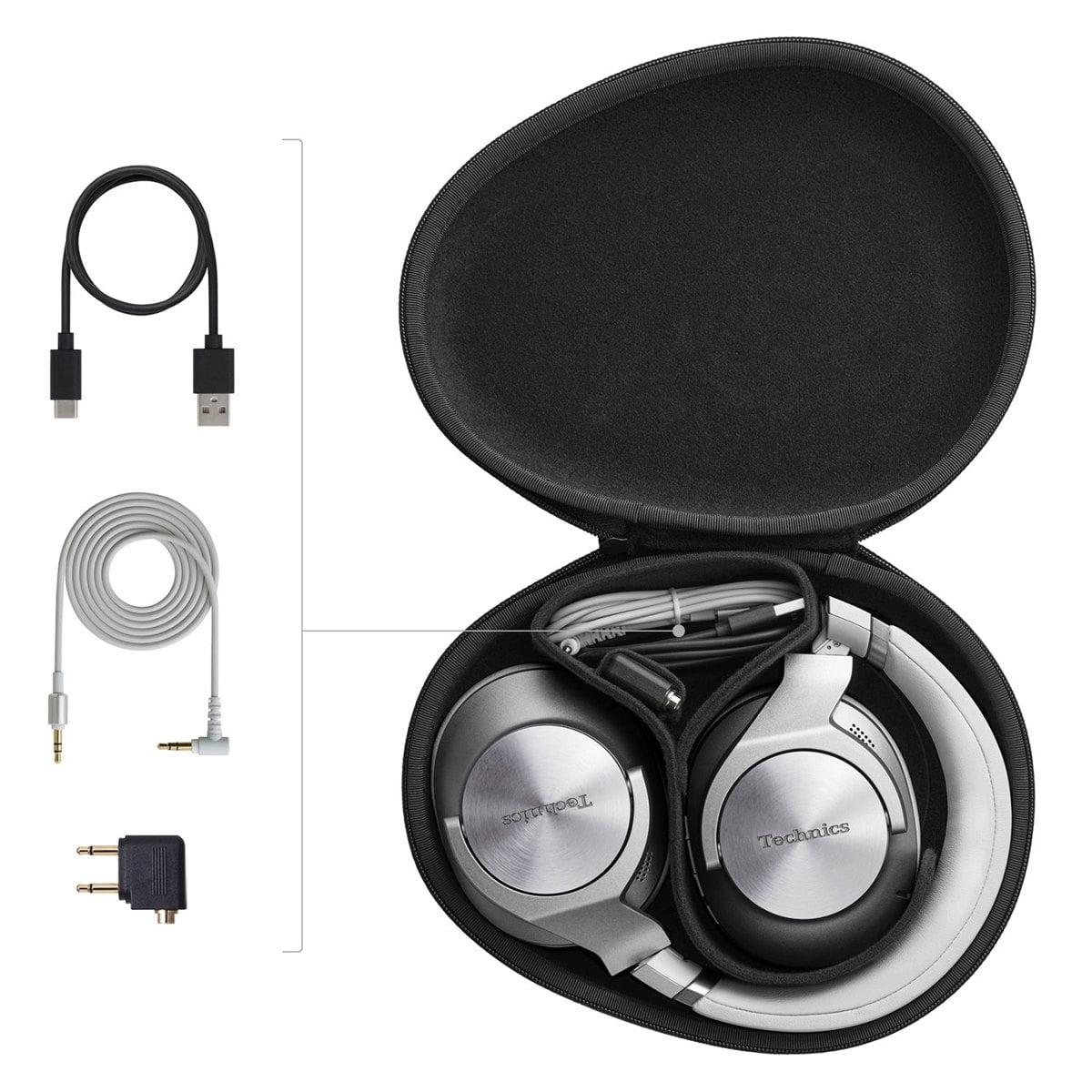
The Technics EAH-A800 offers more typical but still impressive battery life: 50 hours with noise cancelling enabled using AAC codec, or 40 hours when using the higher-quality LDAC codec with noise cancelling. The 15-minute quick charge providing 10 hours of playback is also quite competitive. Both models use USB-C charging, which has become the standard for modern devices.
What's interesting is how these battery specifications reflect each model's priorities. The OneOdio needs exceptional battery life because DJs often work long gigs or multi-day events where charging opportunities are limited. The Technics balances battery life with the power demands of advanced noise cancellation processing.
This is perhaps the most straightforward comparison between these two models. The OneOdio Studio Max 1 offers no active noise cancellation whatsoever – it relies purely on passive isolation from its closed-back design and ear pads. This isn't necessarily a flaw; DJs often need to hear ambient sound to communicate with event organizers, read the crowd, and monitor their environment.
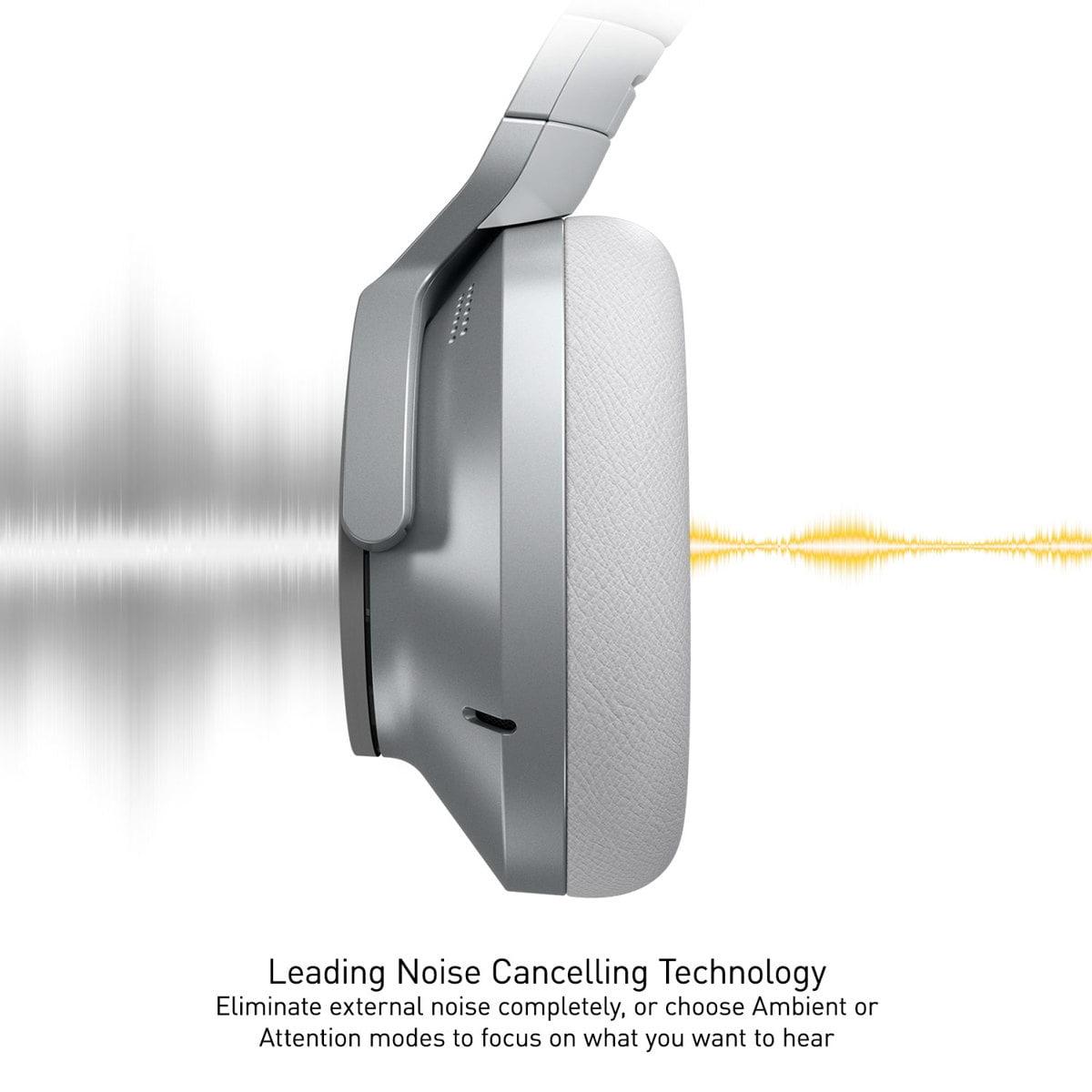
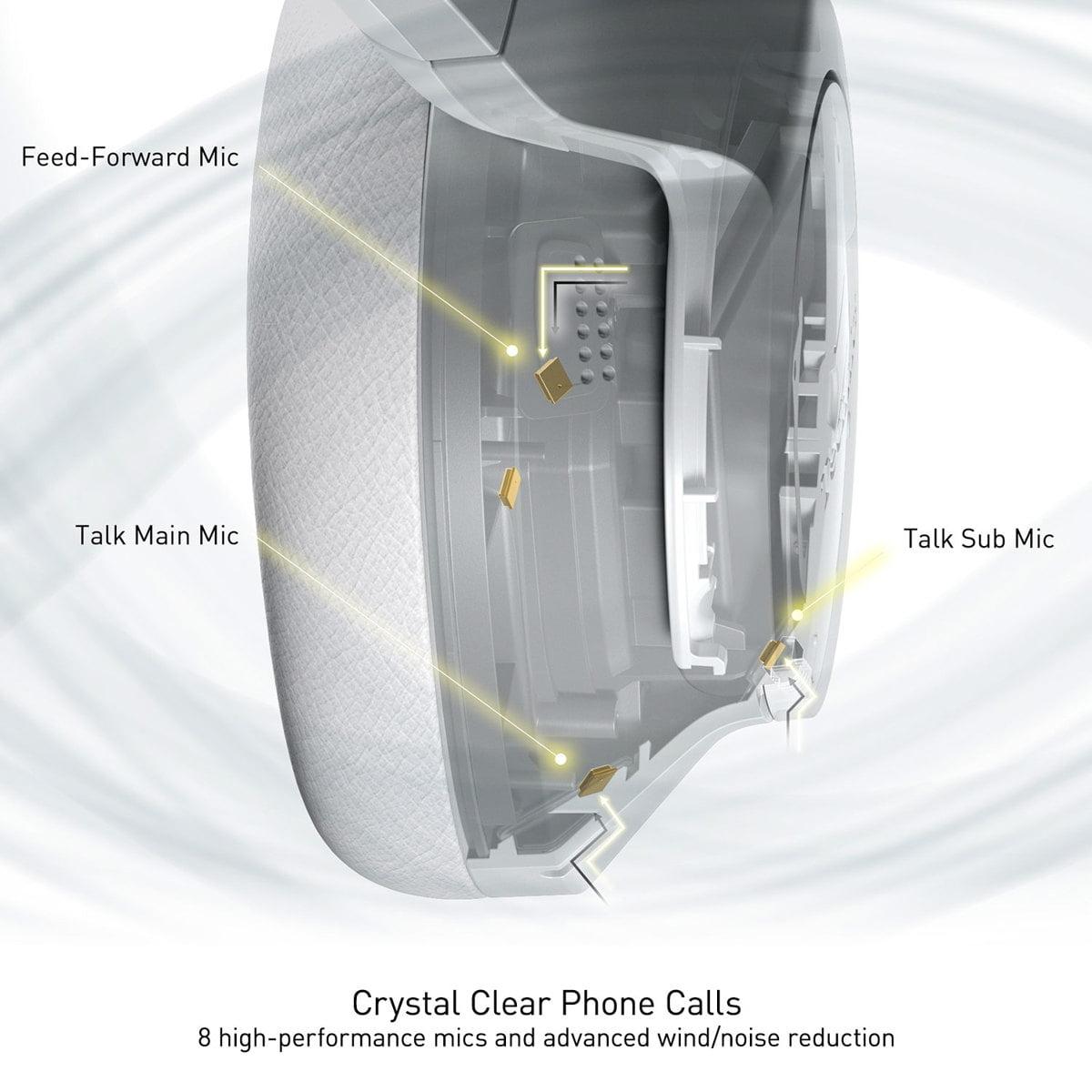
The Technics EAH-A800 features sophisticated Dual Hybrid noise cancellation technology. This system uses eight microphones total – some facing outward to detect ambient noise, others facing inward to monitor what you're actually hearing. The "dual hybrid" approach combines both analog and digital processing to cancel noise across a wider range of frequencies more effectively than simpler systems.
The noise cancellation on the Technics EAH-A800 is particularly effective against low-frequency sounds like airplane engines, air conditioners, and traffic noise. It's less effective against sudden, high-frequency sounds like voices or car horns, but that's typical of most noise cancellation systems. The headphones also offer adjustable ambient modes that let you hear your surroundings when needed, which is perfect for announcements or conversations.
The connectivity options highlight the fundamental differences between these models. The OneOdio Studio Max 1 offers four distinct connection methods, making it incredibly versatile for professional use. Beyond standard Bluetooth 5.3, the proprietary wireless mode via the M1 transmitter can connect to devices that don't have Bluetooth at all – like older DJ mixers, vinyl turntables, or professional audio interfaces. The inclusion of both 3.5mm and 6.35mm (quarter-inch) wired connections means compatibility with virtually any audio equipment.
The M1 transmitter itself is quite clever – it can receive audio via USB, analog input, or even optically (digital), then transmit wirelessly to the headphones with that crucial 20ms latency. This means you can add wireless capability to equipment that was never designed for it.
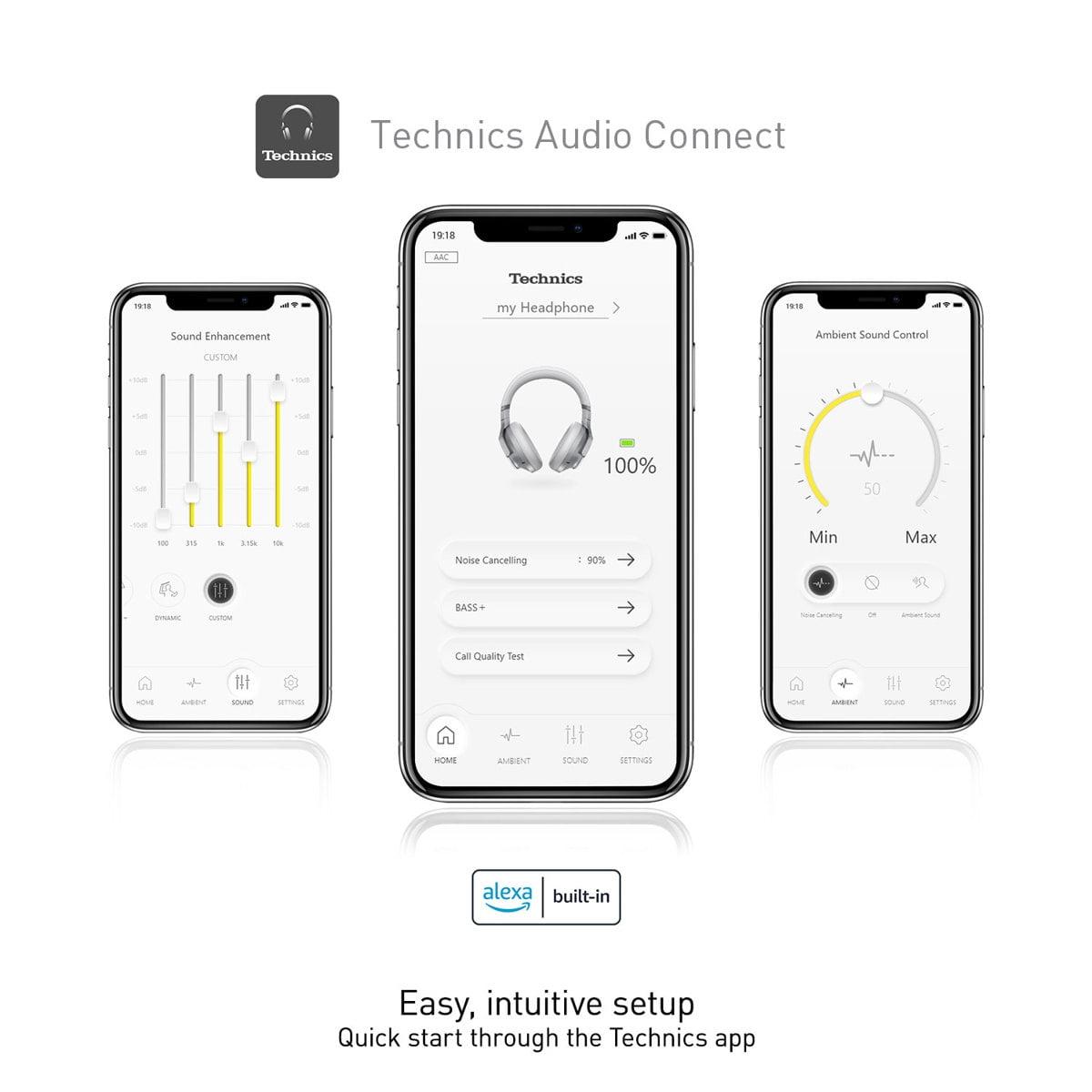
The Technics EAH-A800 focuses on modern consumer convenience with Bluetooth 5.2 and multipoint pairing. Multipoint means you can connect to two devices simultaneously – your phone and laptop, for example – and the headphones will intelligently switch between them as needed. This is incredibly useful for people who regularly take calls while working on a computer. The inclusion of Amazon Alexa voice assistant (where available) adds another layer of convenience for smart home control and information queries.
Comfort becomes crucial when you're wearing headphones for hours at a time, and both models approach this differently. The OneOdio Studio Max 1 weighs 350 grams and features protein leather ear pads designed for the extended wear that DJ sets require. The earcups can swivel and rotate in multiple directions, allowing for single-ear monitoring – a technique DJs use to cue the next track while keeping one ear on the main output.
The Technics EAH-A800 is lighter at 298 grams and focuses on distributing weight evenly across the head. The cushioned, super-soft ear pads are designed to reduce pressure points, and the headband engineering specifically aims to minimize pressure across the top of the head. This attention to comfort engineering reflects Technics' understanding that their customers might wear these headphones all day in office environments or during long flights.
For home theater use, these headphones serve different purposes. The Technics EAH-A800 would be the clear choice for most movie watching, thanks to its balanced sound signature that presents dialogue clearly while maintaining the impact of sound effects and music. The noise cancellation also helps create an immersive experience by blocking out household distractions.
The OneOdio Studio Max 1 could be interesting for home theater enthusiasts who have equipment with high audio latency. Some home theater receivers and streaming devices introduce significant audio delay, and the ultra-low latency wireless connection could actually provide better lip-sync than a traditional wired connection in some setups. However, this would require using the M1 transmitter, adding complexity to the setup.
At the time of writing, both headphones occupy similar price ranges in the premium wireless headphone market, but they offer completely different value propositions. The OneOdio Studio Max 1 provides technology that simply doesn't exist elsewhere – if you need ultra-low latency wireless audio for professional applications, there's no alternative. This makes it an exceptional value for DJs, musicians, and audio professionals, even if its general listening capabilities don't match dedicated audiophile headphones.
The Technics EAH-A800 competes in the crowded premium consumer market against models from Sony, Bose, and Sennheiser. Its value proposition lies in combining Technics' audio heritage with modern convenience features and exceptional battery life. While it may cost more than some competitors, the build quality, sound signature, and feature set justify the premium for users who prioritize audio quality over brand recognition.
Since the Technics EAH-A800 launched in 2023, we've seen the broader headphone market embrace higher-resolution wireless codecs and improved noise cancellation algorithms. Technics was somewhat ahead of the curve with their dual hybrid approach and LDAC support, which have become more common features in premium models.
The OneOdio Studio Max 1, launching in 2025, represents the latest thinking in low-latency wireless audio. The Rapid WILL+ technology couldn't have existed even a few years ago due to processing power limitations and battery constraints. The fact that it achieves 20ms latency while maintaining 120-hour battery life shows how far wireless audio technology has advanced.
The choice between these headphones ultimately comes down to your primary use case. If you're a DJ, musician, or audio professional who needs wireless monitoring capabilities, the OneOdio Studio Max 1 solves a problem that no other headphones address. The ultra-low latency, exceptional battery life, and professional connectivity options make it indispensable for live performance situations.
For everyone else – audiophiles, frequent travelers, remote workers, or anyone who simply wants excellent wireless headphones for daily use – the Technics EAH-A800 provides a more well-rounded experience. The superior noise cancellation, balanced sound signature, and premium comfort make it ideal for the varied demands of everyday listening.
Consider the OneOdio Studio Max 1 if you need wireless audio for real-time applications, value exceptional battery life above all else, or work in professional audio environments. Choose the Technics EAH-A800 if you prioritize overall sound quality, need effective noise cancellation, or want a premium listening experience for music, movies, and calls.
Both represent excellent engineering in their respective niches, and neither is a compromise choice – each excels exactly where it was designed to excel.
| OneOdio Studio Max 1 Wireless DJ Headphones | Technics EAH-A800 Wireless Noise Cancelling Headphones |
|---|---|
| Primary Use Case - Determines which headphones will actually meet your needs | |
| Professional DJ monitoring and live performance | Premium consumer listening and noise cancellation |
| Audio Latency - Critical for real-time applications like DJing or gaming | |
| 20ms ultra-low latency (Rapid WILL+ technology) | Standard Bluetooth latency ~150-300ms |
| Driver Size & Type - Affects sound quality and bass response | |
| 50mm neodymium drivers, DJ-tuned for monitoring | 40mm PEEK/Polyurethane 3-layer drivers, audiophile-tuned |
| Battery Life - How long you can use them without charging | |
| 120 hours (Bluetooth), 50 hours (low-latency mode) | 50 hours (ANC on), 60 hours (ANC off) |
| Active Noise Cancellation - Essential for travel and noisy environments | |
| None (passive isolation only) | Dual Hybrid ANC with 8-microphone array |
| Connectivity Options - Determines compatibility with your devices | |
| 4 modes: Bluetooth 5.3, proprietary wireless, 3.5mm, 6.35mm | Bluetooth 5.2 with multipoint, 3.5mm wired |
| Weight - Affects comfort during extended use | |
| 350g (heavier but acceptable for DJ use) | 298g (lighter for all-day comfort) |
| Special Features - Unique capabilities that set each apart | |
| M1 transmitter for ultra-low latency, DJ monitoring modes | Advanced noise cancellation, voice assistant integration |
| Audio Codec Support - Affects wireless sound quality | |
| LDAC, AAC, SBC, LC3 | LDAC, AAC, SBC |
| Quick Charge Performance - How fast you can get back to listening | |
| 5 minutes = 1 hour playback | 15 minutes = 10 hours playback |
| Target Audience - Who gets the most value from each model | |
| Professional DJs, musicians, real-time audio applications | Audiophiles, travelers, remote workers, general premium use |
The OneOdio Studio Max 1 is specifically designed for professional DJs with its revolutionary 20ms ultra-low latency technology. This makes wireless DJing practical for the first time, while the Technics EAH-A800 uses standard Bluetooth with higher latency that isn't suitable for real-time mixing and beatmatching.
No, only the Technics EAH-A800 features active noise cancellation with its advanced Dual Hybrid system and 8-microphone array. The OneOdio Studio Max 1 relies on passive noise isolation only, as DJs often need to hear their surroundings during performances.
The OneOdio Studio Max 1 offers exceptional 120-hour battery life in Bluetooth mode, significantly longer than the Technics EAH-A800's 50 hours with noise cancellation enabled. This makes the OneOdio Studio Max 1 ideal for multi-day events and extended use.
The Technics EAH-A800 excels at everyday listening with its balanced, audiophile-quality sound signature and effective noise cancellation. The OneOdio Studio Max 1 is tuned specifically for DJ monitoring and may sound bass-heavy for casual music listening.
Both offer good comfort, but the Technics EAH-A800 is lighter at 298g and designed specifically for all-day wear with pressure-distributing ear pads. The OneOdio Studio Max 1 weighs 350g but includes rotating earcups for DJ-style single-ear monitoring.
The Technics EAH-A800 excels at calls with its 8-microphone array and noise suppression technology. While the OneOdio Studio Max 1 can handle calls, it's not optimized for this purpose and lacks advanced call quality features.
The Technics EAH-A800 is better for movies with its balanced sound signature that presents clear dialogue and the noise cancellation blocks household distractions. The OneOdio Studio Max 1's bass-heavy tuning and lack of noise cancellation make it less ideal for cinematic content.
Yes, both the OneOdio Studio Max 1 and Technics EAH-A800 support LDAC for high-resolution wireless audio. However, the OneOdio Studio Max 1 also supports additional codecs like LC3 and maintains low latency even with high-quality codecs.
The Technics EAH-A800 is superior for travel with its active noise cancellation that blocks airplane engines and traffic noise, plus its lighter weight and premium comfort features. The OneOdio Studio Max 1 lacks noise cancellation, making it less suitable for noisy environments.
The OneOdio Studio Max 1 offers extensive professional connectivity with 3.5mm and 6.35mm jacks plus the M1 transmitter that works with non-Bluetooth equipment. The Technics EAH-A800 has basic 3.5mm wired connectivity but is designed primarily for consumer devices.
The Technics EAH-A800 has better quick charging with 15 minutes providing 10 hours of playback. The OneOdio Studio Max 1 offers 5 minutes for 1 hour of playback, but given its much longer overall battery life, you'll need to charge it less frequently.
Both offer excellent value in their respective categories. The OneOdio Studio Max 1 provides unique ultra-low latency technology that's essential for DJs and costs less than professional DJ headphones with similar features. The Technics EAH-A800 delivers premium audiophile sound quality and advanced noise cancellation at a competitive price point for high-end consumer headphones.
We've done our best to create useful and informative comparisons to help you decide what product to buy. Our research uses advanced automated methods to create this comparison and perfection is not possible - please contact us for corrections or questions. These are the sites we've researched in the creation of this article: techradar.com - youtube.com - oneodio.com - androidguys.com - audioxpress.com - versus.com - audioreviews.org - youtube.com - oneodio.com - youtube.com - thomannmusic.com - teqclub.com - youtube.com - homestudiobasics.com - youtube.com - youtube.com - homedjstudio.com - oneodio.com - enostech.com - oneodio.com - yourrightscount.com - blog.son-video.com - expertreviews.co.uk - youtube.com - whathifi.com - youtube.com - bhphotovideo.com - futureaudiophile.com - versus.com - versus.com - soundphilereview.com - help.na.panasonic.com - technics.com - retailspecs.com - headphonecheck.com - us.technics.com - help.na.panasonic.com - bhphotovideo.com - technics.com - technics.com - valueelectronics.com - us.technics.com - us.technics.com - youtube.com - hometheaterhifi.com

Privacy Policy
Terms and Conditions - Affiliate Policy
Home Security
© Copyright 2008-2026.
11816 Inwood Rd #1211, Dallas, TX 75244