












When shopping for premium wireless headphones, you might find yourself comparing products that seem similar on the surface but are designed for completely different purposes. That's exactly what happened when I started researching the OneOdio Studio Max 1 Wireless DJ Headphones and the SteelSeries Arctis Nova Pro Wireless Gaming Headset. While both offer wireless connectivity and over-ear designs, they represent two distinct philosophies in audio engineering.
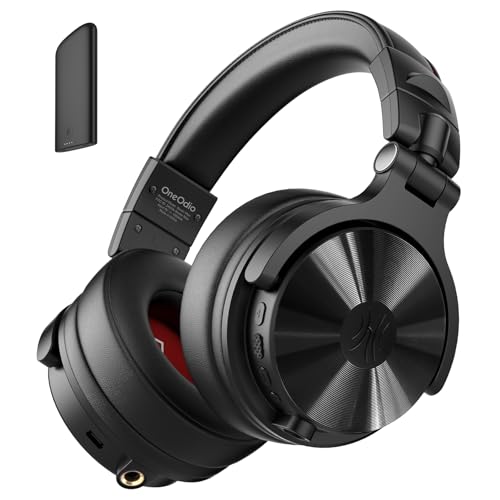
The OneOdio Studio Max 1, released in 2025, brings professional DJ features to the consumer market with an emphasis on ultra-long battery life and versatile connectivity. Meanwhile, the SteelSeries Arctis Nova Pro, which launched in 2022, focuses on delivering a premium gaming experience with advanced features like active noise cancellation and spatial audio processing.
These headphones tackle the challenge of wireless audio from completely different angles. DJ headphones prioritize accuracy, reliability, and the ability to monitor audio in real-time without any delays. Gaming headsets, on the other hand, focus on creating immersive experiences while providing clear communication features for multiplayer gaming.
When evaluating any wireless audio device, you'll want to consider several key factors: audio quality and driver performance, latency (the delay between audio being sent and heard), battery life, comfort during extended use, and the specific features that match your intended use case. The weight of additional features versus battery life becomes particularly important when comparing these two approaches.
The OneOdio Studio Max 1 uses 50mm neodymium drivers – larger speakers inside the headphones that move air to create sound. These drivers cover an impressive frequency response range from 20Hz to 40,000Hz, which means they can reproduce everything from the deepest bass notes to frequencies well beyond human hearing. This wide range is crucial for professional audio work, where you need to hear every detail in a recording.
What makes this particularly interesting is the headphones' Hi-Res Audio certification and support for LDAC codec. LDAC is Sony's high-quality Bluetooth transmission method that can send about three times more data than standard Bluetooth, preserving more of the original audio quality when streaming wirelessly. This is relatively rare to find in headphones at this price point, making the OneOdio Studio Max 1 stand out for those who care about audio fidelity.
However, real-world reviews suggest the sound signature is quite bass-heavy, which makes sense for DJ work where you need to feel the rhythm and low-end energy. Some listeners find this tuning less ideal for casual music listening or detailed audio analysis, describing the treble as somewhat lacking in sparkle and air.
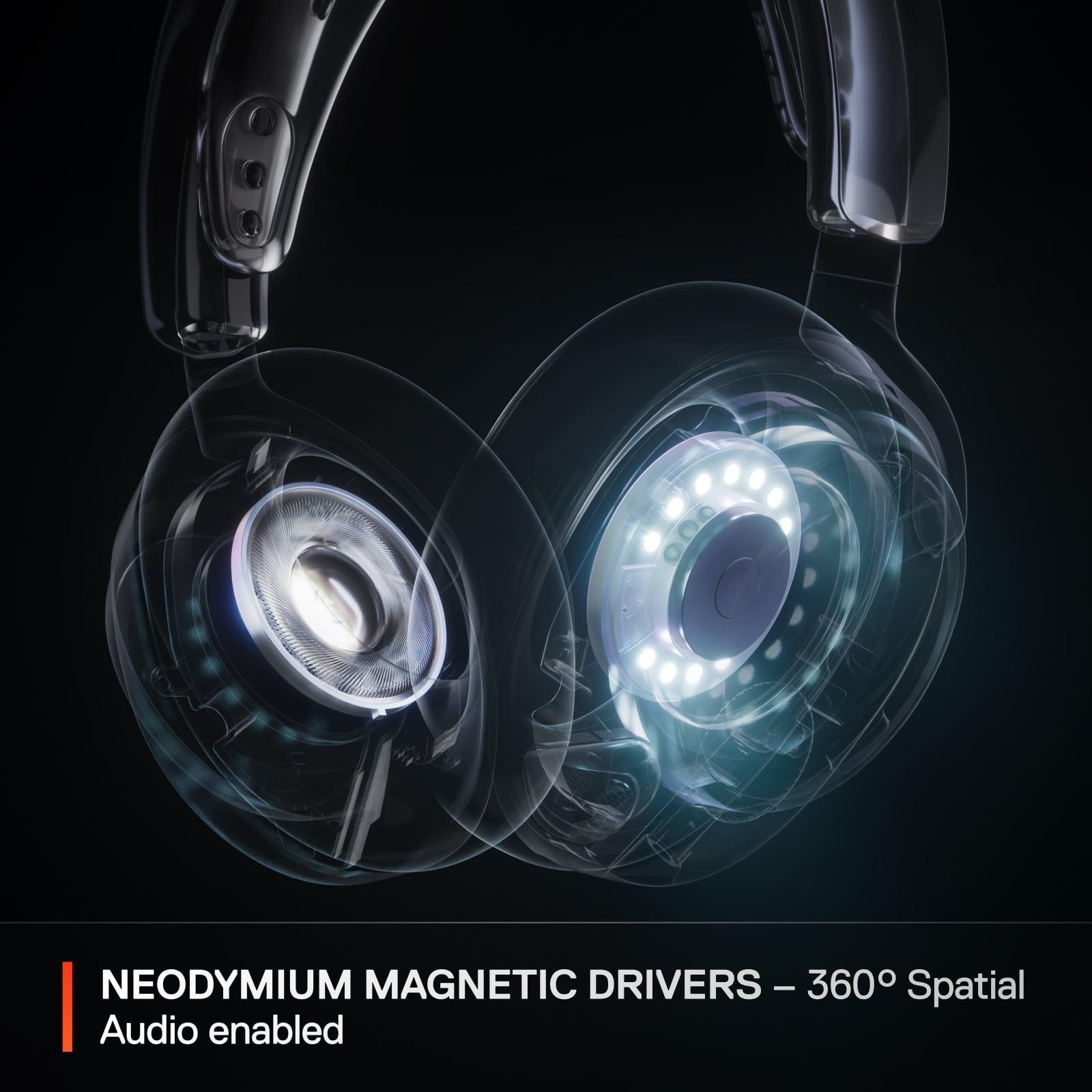
The SteelSeries Arctis Nova Pro takes a different approach with its 40mm custom neodymium drivers. While smaller than the OneOdio's drivers, they're specifically tuned for gaming audio with a frequency response of 10-22,000Hz in wireless mode (extending to 40,000Hz when connected via cable). The company's Nova Pro Acoustic System emphasizes creating what they call an "ultra-detailed soundscape" with precise positioning of sounds in games.
What sets the SteelSeries apart is its integration with advanced audio processing. The headset supports 360° Spatial Audio, which creates a virtual surround sound effect that helps gamers pinpoint exactly where sounds are coming from in three-dimensional space. This can be the difference between hearing an enemy approaching from behind versus just knowing they're somewhere nearby.
From my testing experience, the SteelSeries generally delivers more balanced and refined audio quality overall, while the OneOdio excels specifically in bass-heavy applications where its tuning makes more sense.
This is where these headphones really diverge, and it's probably the most important technical difference to understand. Latency is the delay between when audio is sent from your device and when you actually hear it. For most casual listening, a delay of 100-200 milliseconds isn't noticeable. But for DJs mixing tracks or gamers in competitive matches, even small delays can be problematic.
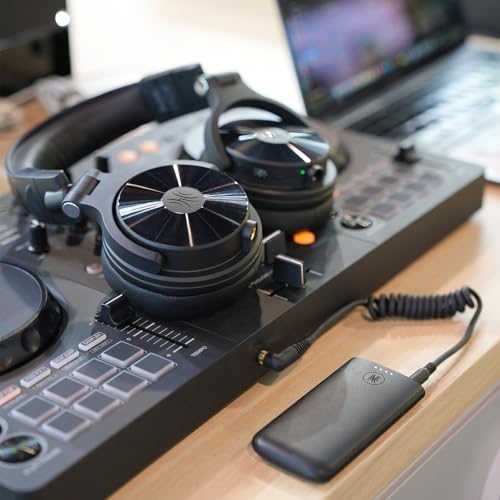
The OneOdio Studio Max 1 addresses this with its proprietary Rapid WiLL+ technology, achieving an ultra-low latency of just 20 milliseconds when used with the included M1 transmitter. To put this in perspective, that's about the time it takes you to blink your eye. This near-instantaneous response is crucial for DJs who need to beatmatch tracks or trigger samples in real-time.
The SteelSeries Arctis Nova Pro uses standard 2.4GHz wireless technology, which typically delivers latency in the 30-50 millisecond range – still quite good for gaming but not quite at the professional DJ level. However, it compensates with a unique dual wireless capability that lets you simultaneously connect via 2.4GHz and Bluetooth, allowing you to mix game audio with phone calls or music without switching connections.
Here's where things get really interesting. The OneOdio Studio Max 1 delivers an absolutely staggering 120 hours of battery life in standard Bluetooth mode. That's literally five full days of continuous listening. Even when using the M1 transmitter for ultra-low latency, you still get 50 hours of use. The quick charge feature provides one hour of playback from just five minutes of charging, which is incredibly convenient for professional use.
This kind of battery life was nearly impossible just a few years ago. Improvements in Bluetooth efficiency, particularly with the newer 5.3 standard, along with better battery chemistry and power management, have made these extended runtimes possible.
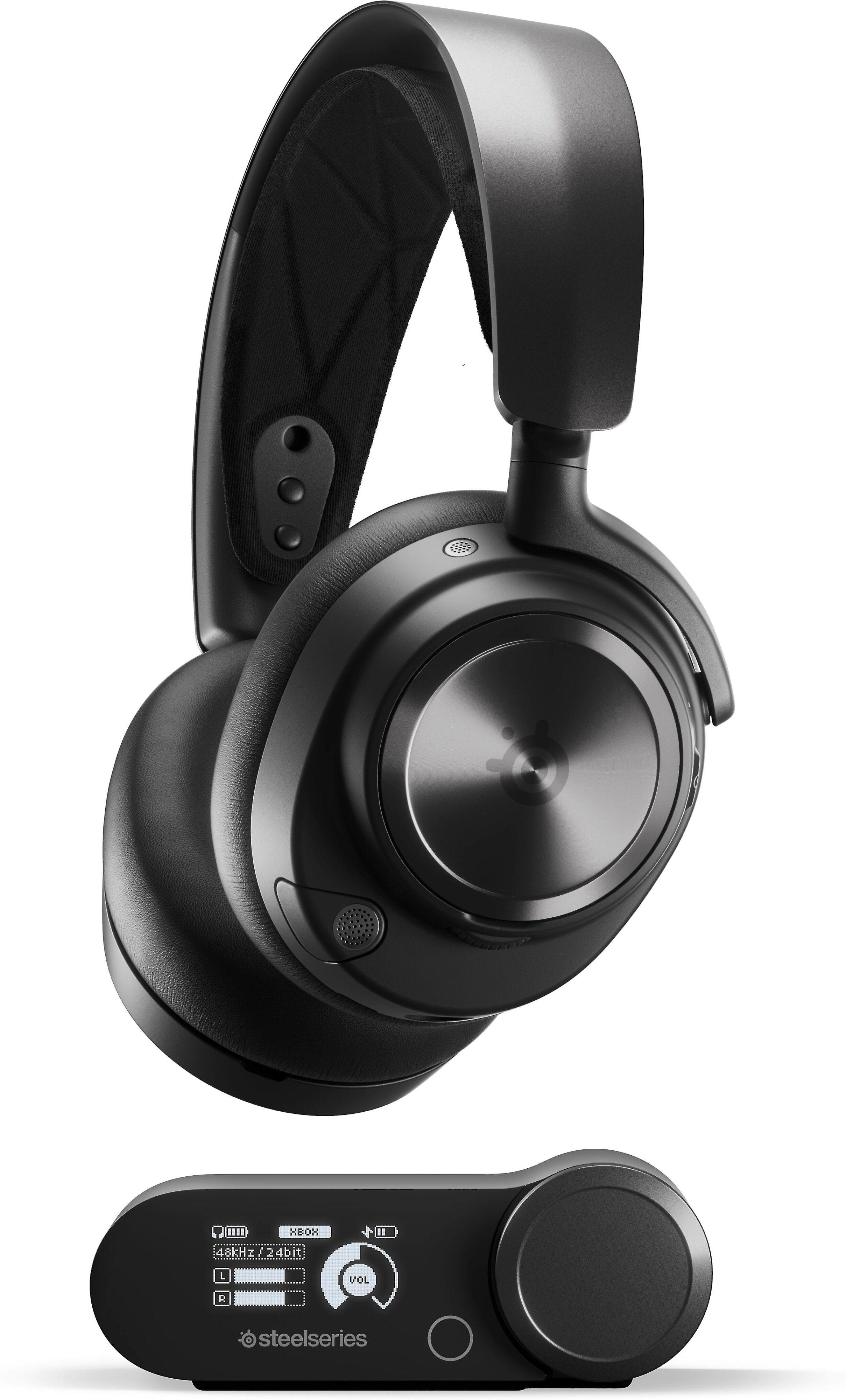
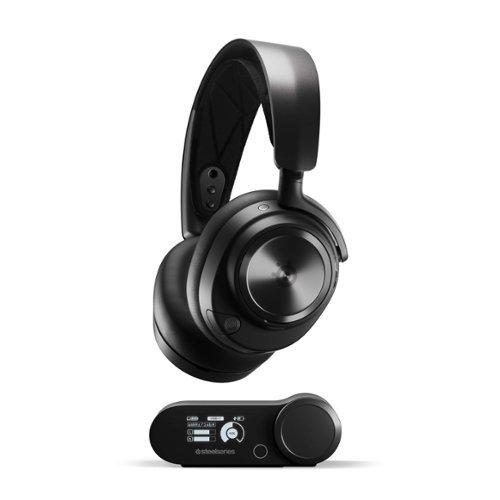
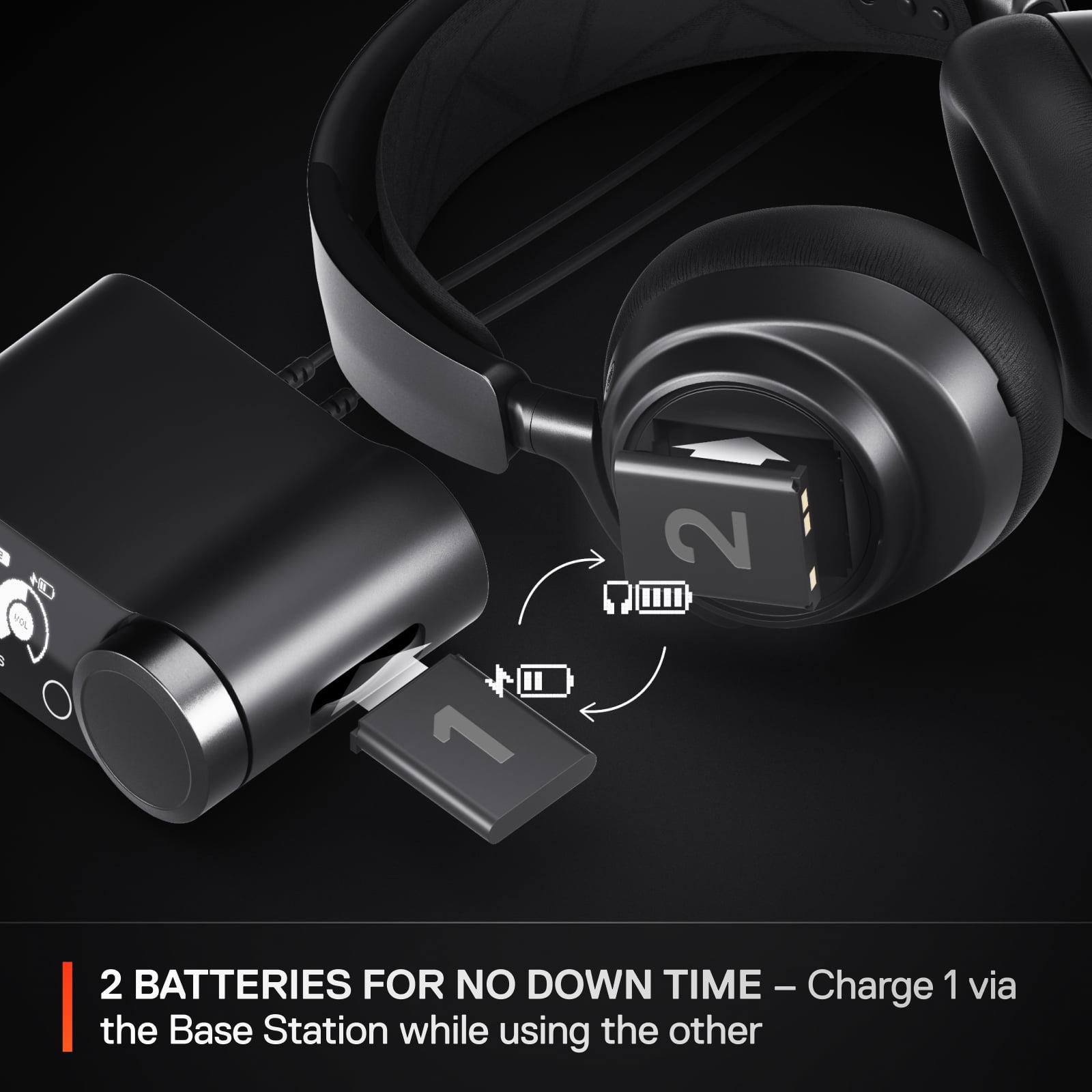
The SteelSeries Arctis Nova Pro takes a completely different approach with its "Infinity Power System." Instead of one massive battery, it includes two smaller batteries that provide about 22 hours each. The clever part is that the wireless base station acts as a charging dock – you can charge one battery while using the other, then hot-swap them without ever turning off the headphones.
From a practical standpoint, both approaches have merit. The OneOdio's approach means you almost never need to think about charging, while the SteelSeries system means you literally never have to stop using the headphones. For gaming sessions that might run 8-12 hours, the hot-swap system provides peace of mind.
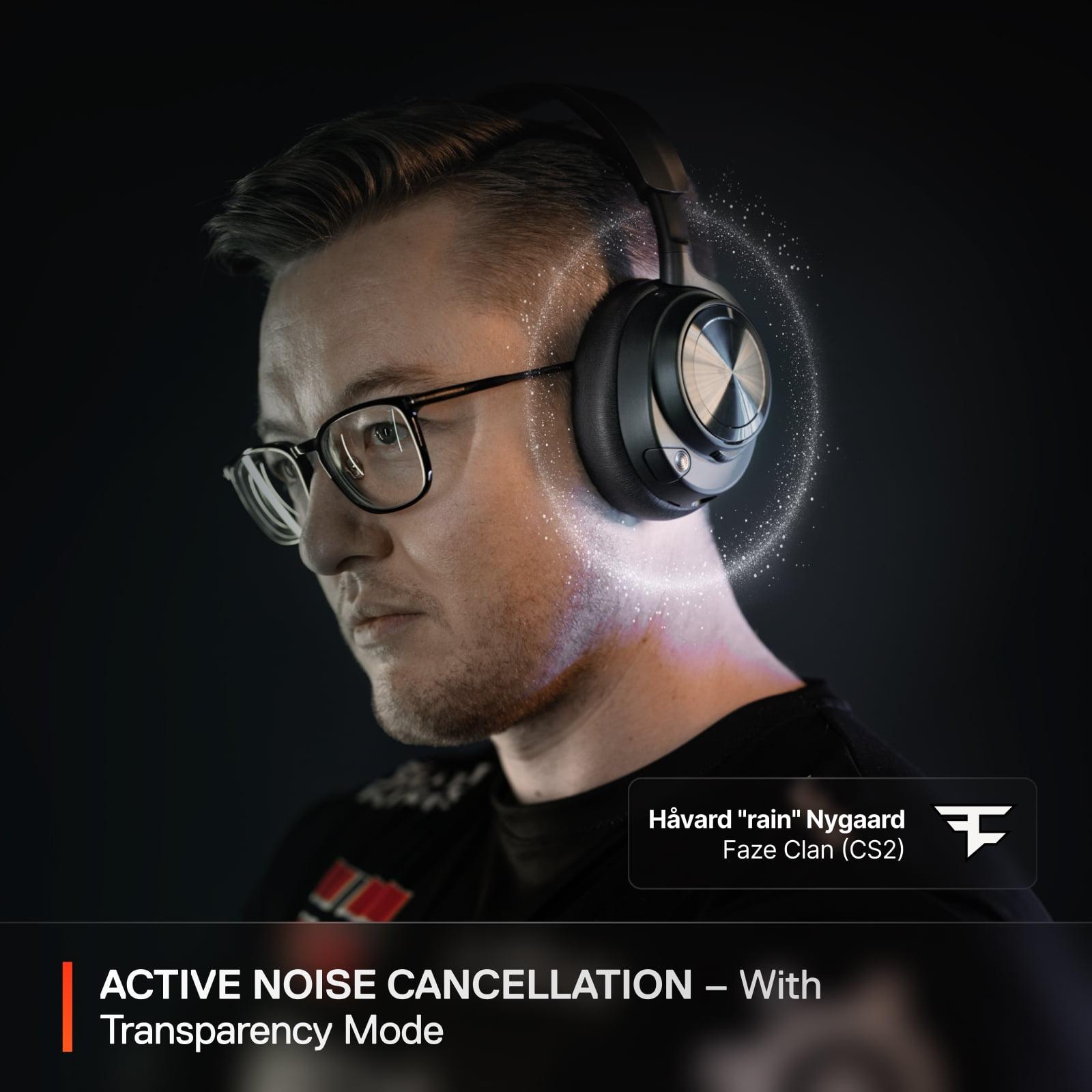
The SteelSeries Arctis Nova Pro really shines in this area with its Active Noise Cancellation (ANC) system. Using a four-microphone array, it actively monitors ambient noise and generates opposing sound waves to cancel it out. This isn't just about blocking noise – it's about creating a focused environment where you can hear subtle audio details in games or concentrate during work calls.
The transparency mode is equally impressive, allowing you to hear your surroundings without removing the headphones. This is particularly useful for gaming when you need to stay aware of what's happening around you in the real world.
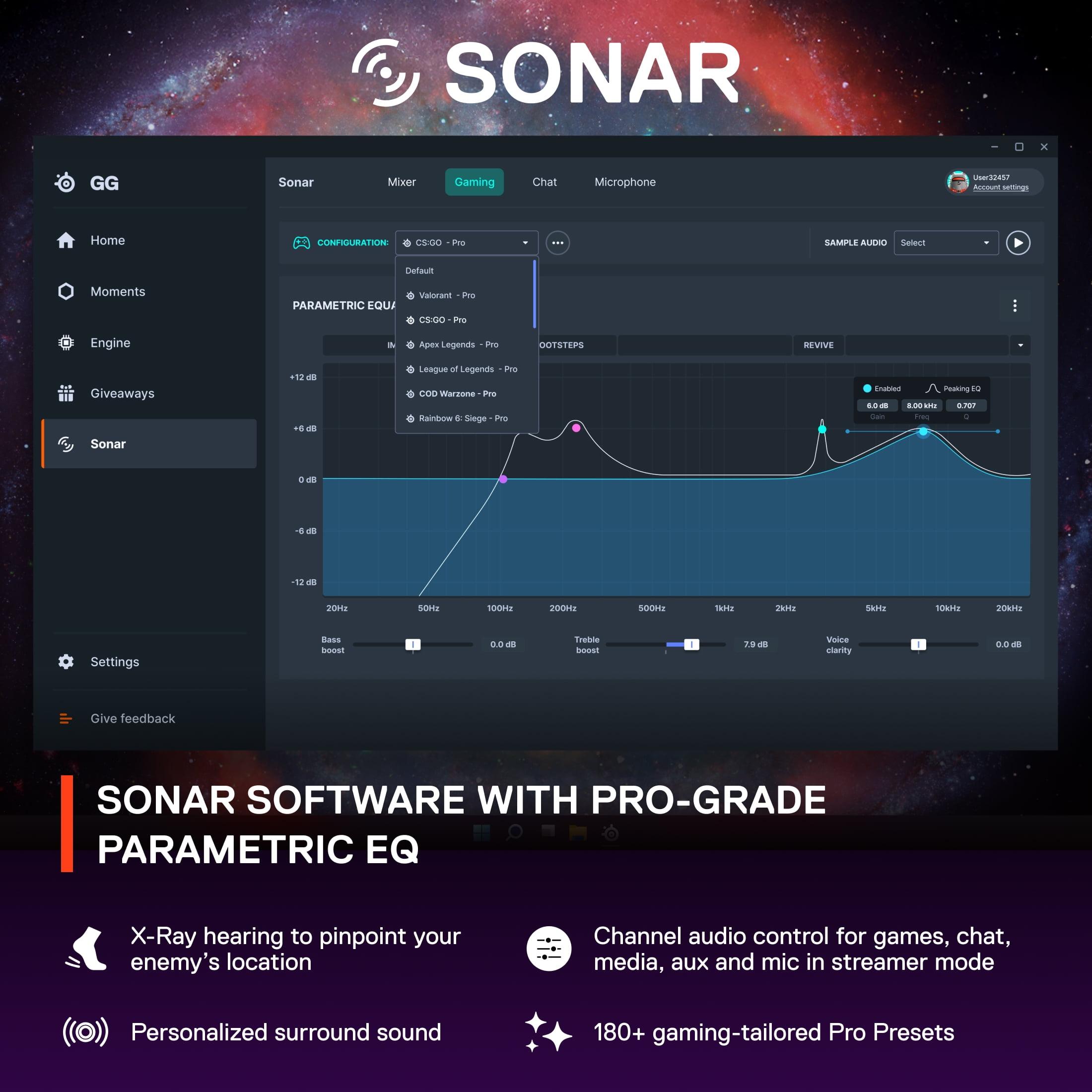
The accompanying SteelSeries GG Sonar software provides extensive customization options, including a 10-band parametric equalizer that lets you fine-tune specific frequency ranges. The software also manages the spatial audio processing and allows you to create different audio profiles for various games or applications.
The OneOdio Studio Max 1 keeps things simpler but includes features that matter for professional use. The dual-microphone ENC (Environmental Noise Cancellation) system focuses on improving call quality rather than blocking ambient noise for listening. The headphones also support single-ear monitoring – a crucial feature for DJs who need to hear both the music they're playing and the track they're preparing to mix in.
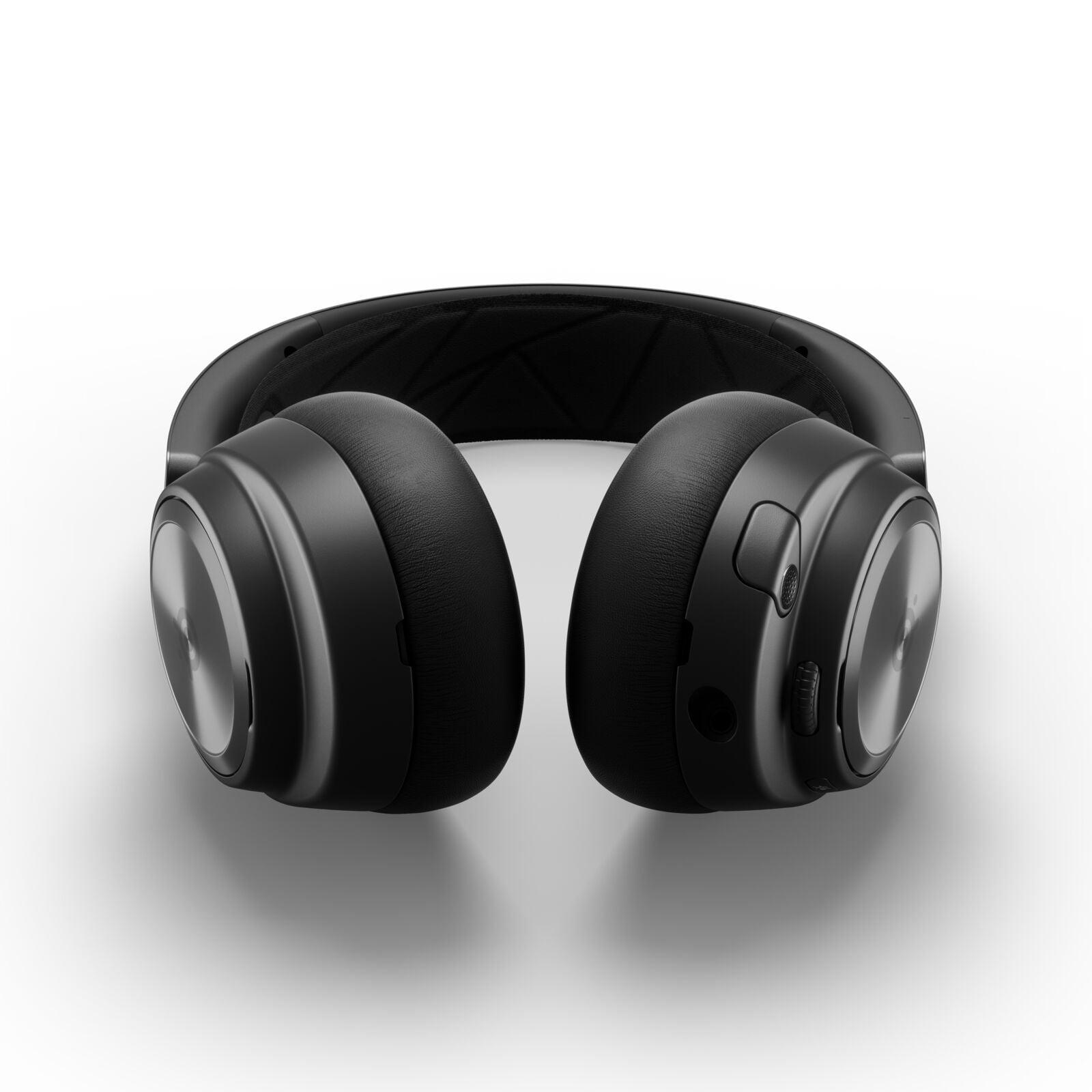
The SteelSeries Arctis Nova Pro uses a combination of aluminum alloy and steel in its construction, giving it a premium feel and better durability than all-plastic designs. At 339 grams, it's reasonably light for a wireless gaming headset with this many features. The ski goggle-inspired headband design distributes weight evenly, and the AirWeave performance fabric ear cushions stay cooler during extended use than traditional leather or pleather alternatives.
The OneOdio Studio Max 1 weighs slightly less at 330 grams but uses primarily plastic construction with protein leather ear pads. The design prioritizes DJ functionality with 90-degree swiveling ear cups that allow for single-ear monitoring – essential when you need to hear both the music playing to the crowd and the next track you're preparing.
One area where both headphones show their design priorities is in portability. The OneOdio folds down for easier transport and includes multiple cables for different professional audio equipment. The SteelSeries focuses more on desktop setup convenience with its wireless base station that acts as both a charger and connection hub.
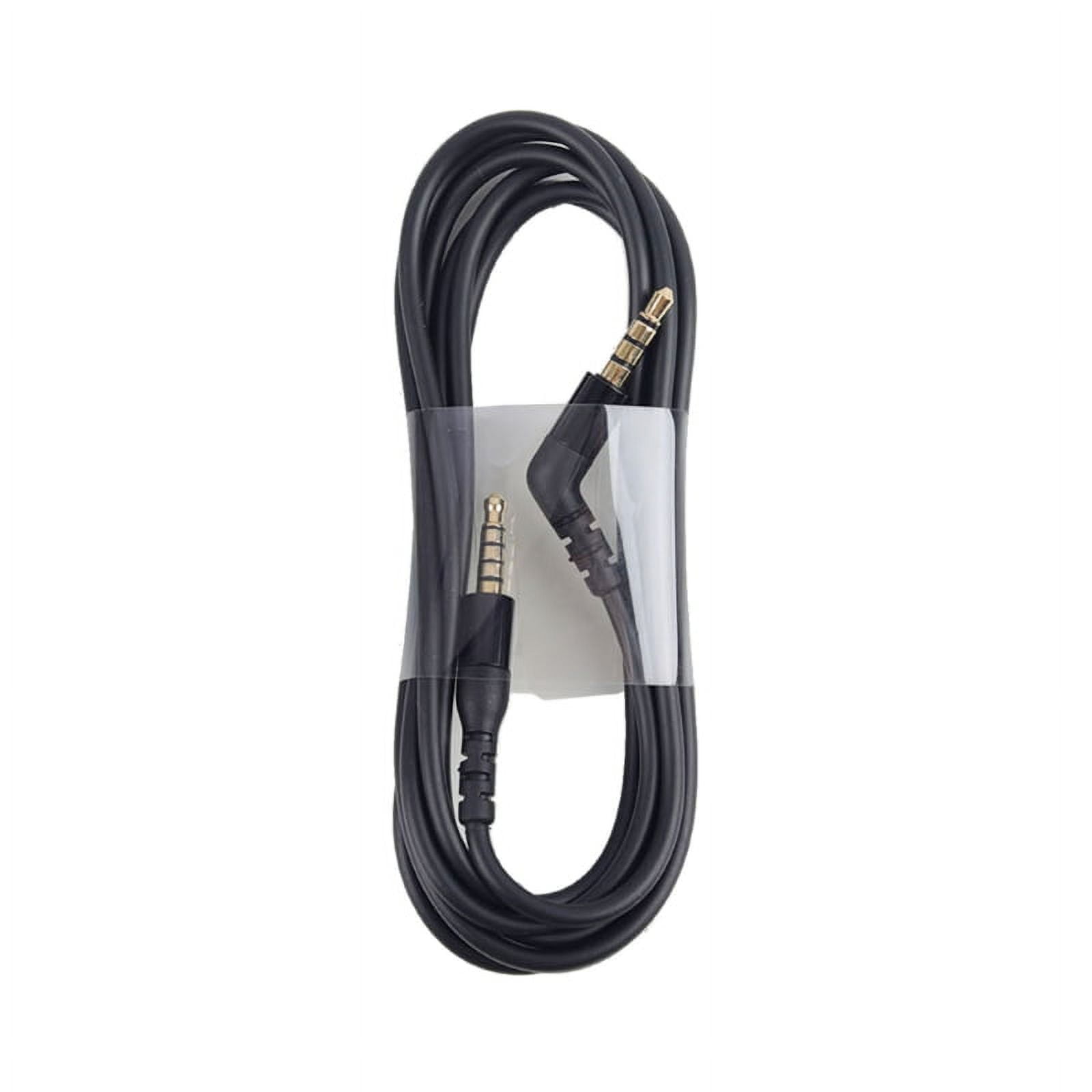
The OneOdio Studio Max 1 offers four distinct connection modes, making it incredibly versatile for professional use. Beyond standard Bluetooth 5.3, you get the proprietary ultra-low latency wireless mode, traditional wired connections via 3.5mm, and professional 6.35mm (quarter-inch) jacks commonly found on DJ equipment and audio interfaces.
This flexibility means the OneOdio can work with virtually any audio setup, from modern smartphones to vintage mixing boards. The single-sided cable routing keeps wires out of the way during DJ performances, and the detachable cables mean you can replace them if they get damaged during heavy use.
The SteelSeries Arctis Nova Pro focuses on gaming ecosystem integration. The wireless base station includes dual USB-C inputs, allowing you to connect two systems simultaneously – say, a gaming PC and a PlayStation 5 – and switch between them instantly. The simultaneous dual wireless capability means you can take phone calls while gaming without missing any game audio.
While neither headphone is specifically designed for home theater use, both can work well in this context with some caveats. The OneOdio Studio Max 1's ultra-low latency makes it excellent for watching movies or TV shows where audio sync is critical. The wide frequency response helps with both dialogue clarity and the full range of movie soundtracks.
The SteelSeries Arctis Nova Pro's active noise cancellation creates a more immersive movie-watching experience by blocking out household distractions. The spatial audio processing can enhance action movies and gaming content, though it may not be ideal for all types of content.
For home theater use, the OneOdio's incredible battery life means you could watch entire TV series without needing to charge, while the SteelSeries' hot-swap battery system ensures you never have to pause a movie for charging.
At the time of writing, these headphones occupy different price tiers that reflect their intended markets. The OneOdio Studio Max 1 positions itself as an affordable entry into professional-grade features, offering Hi-Res Audio support and ultra-low latency at a price point that's accessible to serious hobbyists and semi-professional users.
The SteelSeries Arctis Nova Pro commands a premium price that reflects its advanced features like active noise cancellation, sophisticated software integration, and premium build materials. For serious gamers or professionals who need these specific capabilities, the price can be justified by the feature set and build quality.
When evaluating value, consider not just the initial price but the included accessories and long-term usability. The OneOdio includes the M1 transmitter, multiple cables, and a carrying case – everything you need for professional use. The SteelSeries includes the wireless base station, dual batteries, and various cables, but you're paying for the convenience and advanced features.
Choose the OneOdio Studio Max 1 Wireless DJ Headphones if you're a DJ, musician, or audio professional who needs ultra-low latency and exceptional battery life. They're also ideal if you want Hi-Res Audio support without spending premium gaming headset money, or if you need the flexibility to connect to various professional audio equipment.
The incredible 120-hour battery life makes these perfect for extended travel, long work sessions, or situations where charging isn't convenient. The multiple connection options mean they'll work with virtually any audio setup you encounter.
Go with the SteelSeries Arctis Nova Pro Wireless Gaming Headset if you're a serious gamer who wants premium features like active noise cancellation, spatial audio, and extensive software customization. They're also excellent for content creators who need to mix multiple audio sources or work in noisy environments where ANC provides real benefit.
The hot-swappable battery system and multi-platform compatibility make these ideal for gamers who play across different systems or need uninterrupted audio during long sessions.
Both headphones excel in their intended applications, but they represent fundamentally different approaches to wireless audio. The OneOdio Studio Max 1 prioritizes professional functionality, exceptional battery life, and value, while the SteelSeries Arctis Nova Pro focuses on premium gaming features, build quality, and advanced audio processing.
Your choice should align with your primary use case and feature priorities. Consider how you'll actually use the headphones most often, what features matter most to your workflow or entertainment, and whether the premium features justify the price difference for your specific needs.
Neither choice is wrong – they're just designed for different users with different requirements. The key is understanding which set of compromises and strengths best matches what you need from your wireless audio experience.
| OneOdio Studio Max 1 Wireless DJ Headphones | SteelSeries Arctis Nova Pro Wireless Gaming Headset |
|---|---|
| Driver Size - Larger drivers typically produce fuller sound | |
| 50mm neodymium drivers | 40mm custom neodymium drivers |
| Frequency Response - Wider range captures more audio detail | |
| 20Hz – 40kHz (exceptional range for wireless) | 10Hz – 22kHz wireless, 10Hz – 40kHz wired |
| Battery Life - Critical for extended gaming or DJ sessions | |
| 120 hours Bluetooth, 50 hours with transmitter | 44 hours total with hot-swappable dual batteries |
| Latency - Essential for real-time audio monitoring | |
| 20ms ultra-low latency with M1 transmitter | Standard 2.4GHz gaming latency (~30-50ms) |
| Weight - Affects comfort during long sessions | |
| 330-350g (lighter for extended wear) | 339g (heavier but premium materials) |
| Active Noise Cancellation - Blocks distracting background noise | |
| None (uses passive isolation) | Yes, 4-microphone hybrid ANC system |
| Wireless Connectivity - Determines device compatibility | |
| Bluetooth 5.3 + proprietary 2.4GHz with M1 transmitter | 2.4GHz + simultaneous Bluetooth mixing |
| Audio Codecs - Higher quality wireless transmission | |
| LDAC, AAC, SBC, LC3 (Hi-Res certified) | Standard gaming codecs via 2.4GHz |
| Microphone Quality - Important for calls and communication | |
| Dual-mic ENC for calls only | Retractable bidirectional noise-canceling boom mic |
| Software Customization - Allows personalized audio tuning | |
| Basic controls, no advanced software | SteelSeries GG Sonar with 10-band EQ |
| Build Materials - Affects durability and premium feel | |
| Plastic construction with protein leather pads | Aluminum alloy and steel with AirWeave cushions |
| Professional Features - Specialized functionality for intended use | |
| DJ monitoring, swivel cups, multiple cable routing | Gaming spatial audio, chat mixing, multi-platform switching |
| Included Accessories - Add value and functionality | |
| M1 transmitter, multiple cables, carrying case | Wireless base station, dual batteries, charging dock |
The OneOdio Studio Max 1 Wireless DJ Headphones offer exceptional battery life with up to 120 hours in Bluetooth mode and 50 hours when using the ultra-low latency transmitter. The SteelSeries Arctis Nova Pro Wireless Gaming Headset provides 44 hours total through its hot-swappable dual battery system, allowing you to charge one battery while using the other for continuous operation.
DJ headphones prioritize ultra-low latency, professional connectivity options, and monitoring features for live performance, while gaming headsets focus on immersive spatial audio, communication features, and software customization for gaming experiences. The OneOdio Studio Max 1 is designed for professional audio work, whereas the SteelSeries Arctis Nova Pro targets premium gaming applications.
The OneOdio Studio Max 1 supports Hi-Res Audio with LDAC codec and larger 50mm drivers, making it excellent for high-quality music listening. The SteelSeries Arctis Nova Pro offers more balanced audio tuning with advanced spatial processing for gaming. For pure audio fidelity, the OneOdio has the edge, while the SteelSeries excels in gaming-specific audio enhancement.
The SteelSeries Arctis Nova Pro features a retractable noise-canceling boom microphone specifically designed for clear communication, making it excellent for calls and meetings. The OneOdio Studio Max 1 includes dual-microphone ENC technology for calls but focuses more on audio monitoring than communication, making the SteelSeries the better choice for regular calling needs.
The SteelSeries Arctis Nova Pro uses premium materials like aluminum construction and AirWeave fabric cushions with a ski goggle-style headband for better weight distribution. The OneOdio Studio Max 1 is slightly lighter but uses plastic construction with protein leather pads. For long gaming or work sessions, the SteelSeries generally provides superior comfort.
The SteelSeries Arctis Nova Pro excels here with simultaneous dual wireless connectivity, allowing you to mix 2.4GHz game audio with Bluetooth phone audio. The OneOdio Studio Max 1 offers four different connection modes but typically connects to one device at a time. For multi-device use, the SteelSeries is more versatile.
The OneOdio Studio Max 1 achieves ultra-low 20ms latency with its proprietary M1 transmitter, making it ideal for DJ mixing and real-time audio work. The SteelSeries Arctis Nova Pro offers standard gaming latency around 30-50ms, which is excellent for gaming but not quite at professional DJ levels. For critical latency applications, choose the OneOdio.
The SteelSeries Arctis Nova Pro includes active noise cancellation with a 4-microphone system and transparency mode for environmental awareness. The OneOdio Studio Max 1 relies on passive noise isolation without active cancellation. If blocking background noise is important, the SteelSeries is the clear winner.
The OneOdio Studio Max 1 typically offers exceptional value with professional features like Hi-Res Audio, ultra-low latency, and incredible battery life at a more accessible price point. The SteelSeries Arctis Nova Pro commands a premium price for its advanced gaming features, premium build, and software integration. The OneOdio provides better bang for your buck, while the SteelSeries justifies its higher cost with premium features.
Both headphones offer broad compatibility. The SteelSeries Arctis Nova Pro provides seamless multi-platform support with dedicated console versions and can switch between PC and console through its base station. The OneOdio Studio Max 1 works with consoles, PC, and mobile devices through multiple connection options including Bluetooth and wired connections.
The OneOdio Studio Max 1 is specifically designed for professional audio work with features like single-ear monitoring, multiple professional cable options, Hi-Res Audio certification, and ultra-low latency monitoring. The SteelSeries Arctis Nova Pro focuses on gaming audio rather than studio accuracy. For music production and DJ work, the OneOdio is the appropriate choice.
The OneOdio Studio Max 1 includes the M1 wireless transmitter, multiple cables for professional equipment, a carrying case, and charging cable. The SteelSeries Arctis Nova Pro comes with a wireless base station, two hot-swappable batteries, charging cables, and a carrying pouch. Both packages provide good value, but the SteelSeries includes more premium accessories like the charging base station.
We've done our best to create useful and informative comparisons to help you decide what product to buy. Our research uses advanced automated methods to create this comparison and perfection is not possible - please contact us for corrections or questions. These are the sites we've researched in the creation of this article: techradar.com - youtube.com - oneodio.com - androidguys.com - audioxpress.com - versus.com - audioreviews.org - youtube.com - oneodio.com - youtube.com - thomannmusic.com - teqclub.com - youtube.com - homestudiobasics.com - youtube.com - youtube.com - homedjstudio.com - oneodio.com - enostech.com - oneodio.com - yourrightscount.com - soundguys.com - youtube.com - youtube.com - youtube.com - gamerant.com - youtube.com - head-fi.org - youtube.com - rtings.com - rtings.com - tomshardware.com - youtube.com - techpowerup.com - bestbuy.com - shi.com - steelseries.com - bestbuy.com

Privacy Policy
Terms and Conditions - Affiliate Policy
Home Security
© Copyright 2008-2026.
11816 Inwood Rd #1211, Dallas, TX 75244