

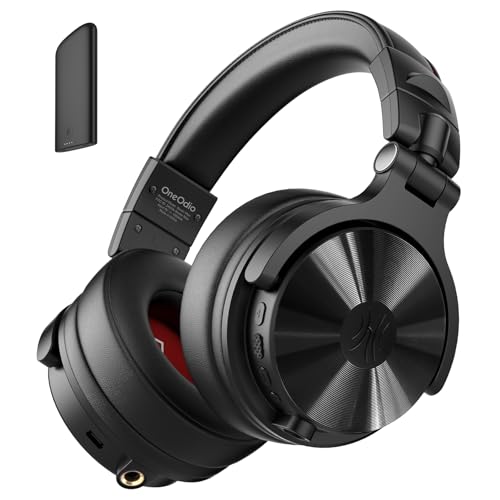
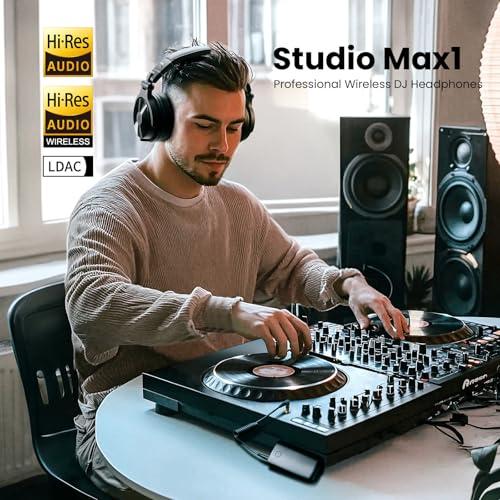








When you're shopping for wireless over-ear headphones, you might stumble across two products that seem similar at first glance but serve very different purposes. The OneOdio Studio Max 1 and Nothing Headphone (1) both offer wireless connectivity and over-ear designs, but they represent completely different philosophies in headphone design. Understanding these differences is crucial to making the right choice for your needs.
The wireless headphone market has evolved dramatically since 2020, branching into specialized niches that cater to specific user needs. The OneOdio Studio Max 1, released in 2025, represents a breakthrough in professional DJ headphones by solving one of the industry's biggest problems: wireless latency. Traditional DJ headphones require wired connections because even the slightest audio delay can ruin a mix. OneOdio's solution uses proprietary technology to achieve wireless performance that rivals wired connections.
On the other side, the Nothing Headphone (1), also from 2025, targets the premium consumer market with features that everyday listeners actually want: active noise cancellation (ANC), water resistance, and extensive customization options. This reflects the broader trend in consumer audio toward feature-rich products that adapt to various listening scenarios.
The key consideration here isn't just "which sounds better" – it's understanding what each product is designed to excel at. Professional audio equipment prioritizes accuracy, reliability, and specific workflow features, while consumer products focus on convenience, versatility, and general enjoyment across different types of content.
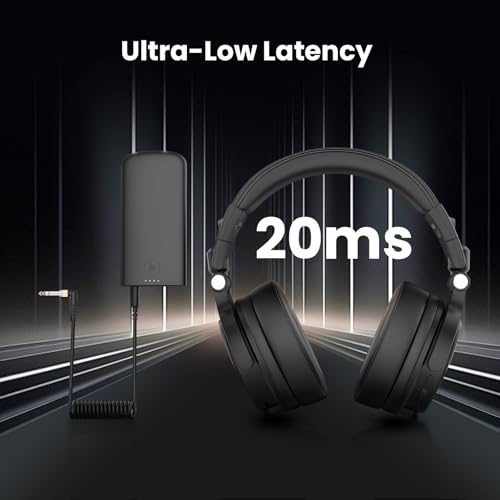
The OneOdio Studio Max 1 tackles a problem that has plagued DJs for decades: the need for wired connections during live performance. Using their proprietary RAPID WILL+ technology, OneOdio achieves an incredible 20-millisecond latency – that's 0.02 seconds – which is fast enough for real-time audio monitoring. To put this in perspective, standard Bluetooth connections typically have latencies between 150-300 milliseconds, making them completely unusable for DJing where timing is everything.
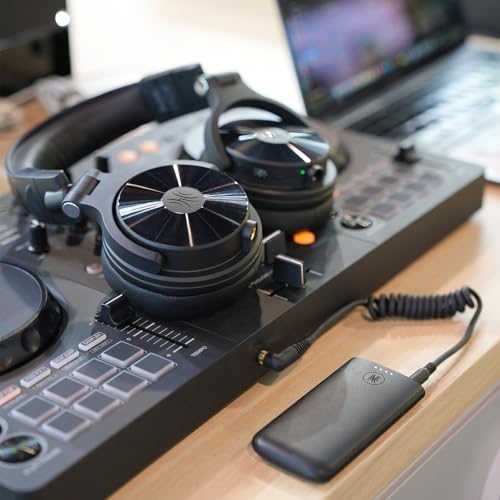
This ultra-low latency is achieved through a dedicated M1 transmitter that uses a different wireless protocol than standard Bluetooth. The transmitter plugs into your DJ mixer or audio interface, creating a direct wireless link to the headphones. It's similar to how gaming headsets use dedicated dongles for reduced input lag, but OneOdio has pushed this concept to professional audio standards.
The Nothing Headphone (1) takes a completely different approach, focusing on the features that matter most to everyday listeners. Active noise cancellation uses microphones and digital processing to create "anti-noise" that cancels out unwanted background sounds – perfect for commuting, working in noisy environments, or just enjoying music without distractions. The IP52 water resistance rating means they can handle sweat during workouts and light rain, something professional studio monitors typically don't need.
At the time of writing, these products sit in different price brackets that reflect their target markets. The OneOdio Studio Max 1 offers professional-grade wireless DJ capability at a mid-range price point, making revolutionary technology accessible to working DJs and music producers who previously couldn't afford high-end wireless solutions.
The Nothing Headphone (1) commands a premium price typical of flagship consumer headphones, competing directly with established brands like Sony, Bose, and Apple. This pricing reflects the comprehensive feature set and the extensive research and development required to create effective noise cancellation and spatial audio processing.
When evaluating headphone sound quality, it's important to understand that "good" means different things for different applications. Professional monitors prioritize accuracy and the ability to hear mix details, while consumer headphones often emphasize enjoyment and immersion.
The OneOdio Studio Max 1 uses 50mm neodymium drivers – larger than typical consumer headphones – tuned specifically for DJ monitoring. The frequency response extends from 20Hz to 40kHz, covering the full range of human hearing and beyond. However, reviews consistently point to a bass-heavy signature that works well for beat matching and bass-heavy electronic music but can sound muddy for general listening. The treble response is described as weak, which means fine details in cymbals, vocals, and high-frequency instruments may sound dull or recessed.
This tuning makes sense for DJing, where you need to clearly hear the kick drum and bassline to match beats between tracks. The enhanced bass response helps these elements cut through the mix, even in noisy club environments. But if you're listening to jazz, classical, or acoustic music at home, this same tuning can make the sound feel unbalanced and fatiguing.
The Nothing Headphone (1) features 40mm drivers tuned in collaboration with KEF, a respected British audio company known for high-end speakers. Out of the box, the sound signature has been criticized as "dark" with underemphasized mids and treble. However, the headphones include one of the most comprehensive EQ systems available in consumer headphones: an 8-band parametric equalizer that lets you adjust not just frequency response but also the "Q factor" – essentially how wide or narrow each frequency adjustment affects neighboring frequencies.
This level of EQ control is typically found only in professional audio software. Once properly tuned through the companion app, users report that the Nothing Headphone (1) can achieve excellent sound quality that rivals much more expensive audiophile headphones. The trade-off is that you need to spend time learning how to use these tools effectively.
Latency – the delay between when audio is produced and when you hear it – is perhaps the most critical technical specification that separates these products. For casual listening, even 200-300 milliseconds of delay isn't noticeable because you're not trying to sync audio with real-time performance. But for DJing, even 50 milliseconds can make beat matching impossible.
The OneOdio Studio Max 1's 20-millisecond achievement is genuinely revolutionary. This puts it in the same performance category as high-end professional audio interfaces used in recording studios. The technology works by using a dedicated wireless protocol that bypasses the audio processing and buffering that creates delay in standard Bluetooth connections.
When using the M1 transmitter, you get four different connection modes: the ultra-low latency wireless mode, standard Bluetooth for casual listening, wired analog connection, and USB digital audio. This versatility means you can use the same headphones for professional work and casual listening, switching modes as needed.
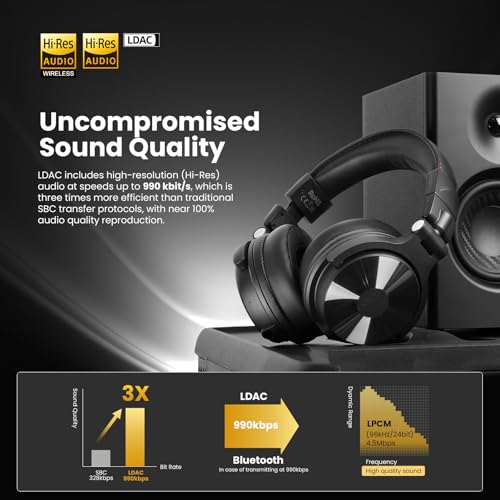
The Nothing Headphone (1) uses standard Bluetooth 5.3 with support for advanced codecs like LDAC, which provides high-quality audio but with typical Bluetooth latency. For watching videos or listening to music, this is perfectly adequate, but it would be completely unusable for live DJ performance.
Both headphones excel in battery life, but for different reasons. The OneOdio Studio Max 1 delivers an astounding 120 hours of playback in Bluetooth mode – among the longest battery life available in any wireless headphones. When using the ultra-low latency mode with the M1 transmitter, this drops to 50 hours, which is still exceptional for professional use.
This extraordinary battery life serves a specific purpose: professional reliability. When you're DJing a wedding, club night, or festival, running out of battery isn't just inconvenient – it can end your performance. The quick charge feature provides one hour of playback from just five minutes of charging, which means even if you forget to charge beforehand, a quick power boost during a break can keep you going.
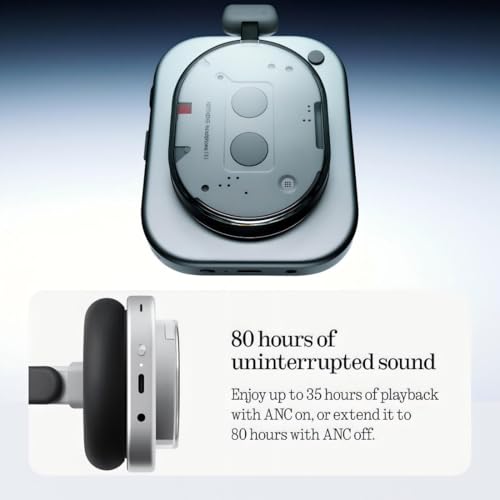
The Nothing Headphone (1) achieves 42 hours and 53 minutes with ANC enabled, extending to 80 hours with noise cancellation turned off. While not as extreme as the OneOdio, this still exceeds most consumer headphones and provides excellent endurance for travel, commuting, and general use.
The difference in battery priorities reflects each product's intended use. DJs need absolute reliability over extended periods, while consumer users benefit more from the balance between battery life and features like ANC, which consumes additional power but provides significant value in noisy environments.
The feature comparison between these headphones illustrates how different user needs drive completely different product designs. The OneOdio Studio Max 1 includes DJ-specific features like single-ear monitoring (flipping one earcup back to hear the live room while monitoring the mix in the other ear), swiveling earcups that rotate 90 degrees for comfortable single-ear listening, and multiple audio ports (3.5mm and 6.35mm) for connecting to various professional audio equipment.
These might seem like minor details, but they're essential workflow features for working DJs. The ability to quickly flip between monitoring modes, the right cable connections for different mixers, and the durability to handle nightly use in club environments are what separate professional tools from consumer products.
The Nothing Headphone (1) focuses on features that enhance daily listening experiences. Active noise cancellation uses a four-microphone array to detect environmental noise and generate inverse sound waves to cancel it out. The effectiveness varies by frequency – it works best on consistent, low-frequency sounds like airplane engines or air conditioning, but struggles more with sudden, high-frequency sounds like voices or sirens.
Spatial audio with head tracking creates a three-dimensional soundscape that follows your head movements, making it feel like sound sources are positioned around you in space rather than just coming from left and right channels. This feature particularly shines when watching movies or playing games, creating a more immersive experience that traditional stereo headphones can't match.
The OneOdio Studio Max 1 truly shines in professional music applications where wireless freedom was previously impossible. For DJs, the ability to move freely around the booth, dance while mixing, or step away from the decks without unplugging represents a genuine workflow improvement. The 120-hour battery life means you could theoretically DJ every weekend for months without charging.
Music producers and audio engineers also benefit from the multiple connection options and low latency monitoring. When recording or mixing, you need to hear audio exactly as it's being processed, without delay that could affect timing decisions. The wired modes provide zero-latency monitoring when needed, while the wireless modes offer freedom during less critical listening phases.
The extensive connectivity options – Bluetooth, proprietary wireless, multiple wired connections – make these headphones incredibly versatile for various professional setups. Whether you're connecting to a high-end DJ mixer, a basic smartphone, or a professional audio interface, the OneOdio Studio Max 1 likely has the right connection method.
The Nothing Headphone (1) excels in scenarios where environmental adaptation and comprehensive features matter more than professional-grade monitoring. Commuting represents one of the strongest use cases – the active noise cancellation significantly reduces the constant drone of trains, buses, and traffic, while the IP52 water resistance protects against unexpected weather.
For home theater use, the spatial audio with head tracking creates a surprisingly immersive experience that rivals much more expensive surround sound systems. When watching movies or playing games, the ability to hear directional audio cues – footsteps approaching from behind, dialogue positioned at specific locations on screen – adds a layer of immersion that traditional stereo headphones simply can't provide.
The advanced EQ system appeals to audio enthusiasts who enjoy tweaking their sound. Unlike simple bass and treble controls, the 8-band parametric EQ lets you precisely adjust specific frequency ranges to compensate for room acoustics, personal hearing preferences, or the characteristics of different music genres. Classical music might benefit from enhanced midrange clarity, while electronic music might need tightened bass response – the Nothing Headphone (1) can accommodate both preferences.
Both headphones use premium materials but prioritize different aspects of construction. The OneOdio Studio Max 1 emphasizes durability and professional reliability, using robust plastic construction with protein leather ear pads designed to withstand nightly use in challenging environments. The slightly heavier weight (330-350g) reflects this durability focus, though it can become noticeable during extended wear.
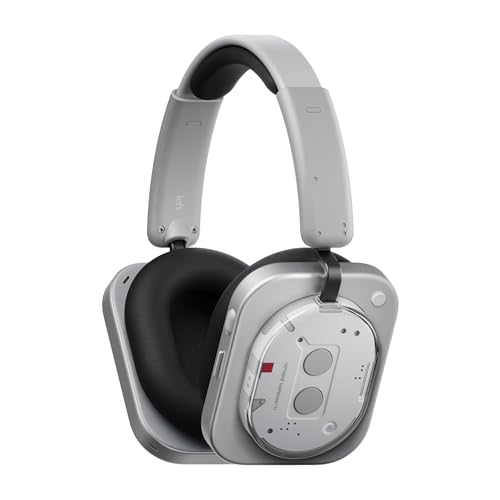
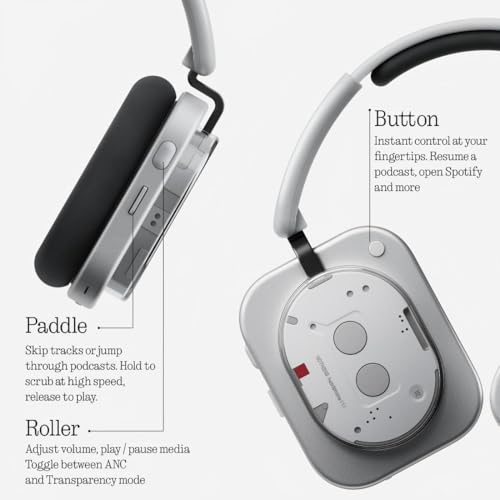
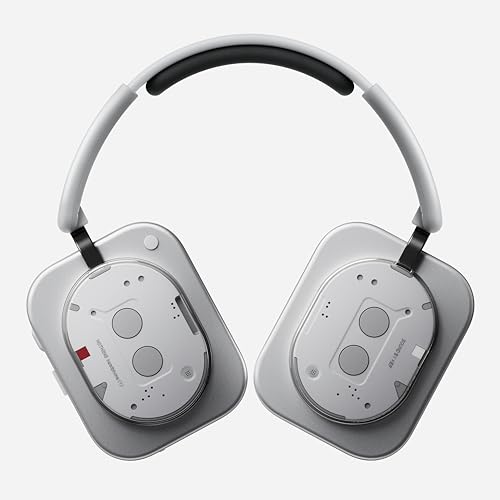
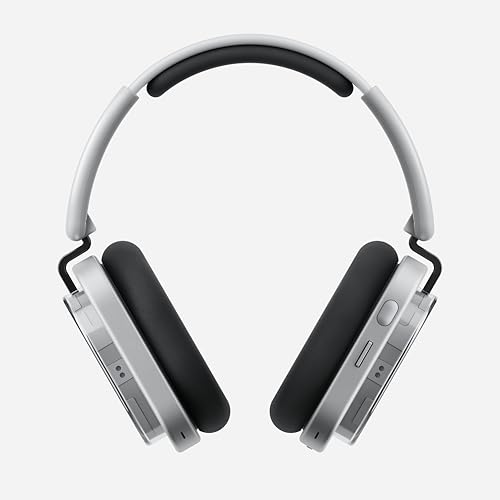
The Nothing Headphone (1) balances durability with aesthetic appeal, featuring a distinctive transparent design that reveals internal components. This isn't just visual flair – the transparent construction requires precise engineering to maintain structural integrity while showcasing the technology inside. The IP52 rating provides protection against dust and water splashes, making these headphones more suitable for active lifestyles and varied environments.
Choosing between these headphones comes down to understanding your primary use case and priorities. The decision isn't necessarily about which is "better" in absolute terms, but which better serves your specific needs.
Are a DJ, music producer, or audio professional who needs wireless freedom without compromising audio timing. The revolutionary 20ms latency capability opens up performance possibilities that were previously impossible with wireless headphones. The exceptional 120-hour battery life and multiple connectivity options provide the reliability and flexibility that professional audio work demands.
You should also consider the OneOdio Studio Max 1 if you prioritize battery life above all else, need professional audio connections (6.35mm jacks), or want wireless DJ capability at an accessible price point. While the sound quality isn't ideal for general listening, the professional features and groundbreaking wireless technology justify the investment for working audio professionals.
Want premium consumer features that enhance everyday listening across various scenarios. The combination of active noise cancellation, water resistance, spatial audio, and comprehensive EQ customization creates a versatile package that adapts to different environments and preferences.
The Nothing Headphone (1) makes sense if you commute regularly, enjoy customizing your audio experience, need headphones for both music and multimedia content, or want features like multipoint Bluetooth connectivity for seamlessly switching between devices. The investment in time to properly EQ these headphones pays off with sound quality that can rival much more expensive options.
Consider these headphones if you value the ability to fine-tune your audio experience, need environmental noise isolation, or want cutting-edge features like head-tracked spatial audio that enhance movie watching and gaming.
The OneOdio Studio Max 1 represents a technological breakthrough that solves a specific professional problem, while the Nothing Headphone (1) offers comprehensive consumer features with extensive customization potential. Your choice should align with whether you need revolutionary professional wireless capability or premium everyday listening features.
Both products push their respective categories forward – OneOdio by making professional wireless DJ performance possible, and Nothing by providing audiophile-level customization in a consumer package. At the time of writing, both offer compelling value within their target markets, making either choice a solid investment for the right user.
| OneOdio Studio Max 1 Wireless DJ Headphones | Nothing Headphone (1) Wireless Over-Ear Headphones |
|---|---|
| Primary Use Case - Determines which features matter most | |
| Professional DJ and music production with wireless freedom | Premium consumer listening with comprehensive features |
| Audio Latency - Critical for real-time audio monitoring and DJing | |
| Ultra-low 20ms with M1 transmitter (revolutionary for wireless DJing) | Standard Bluetooth latency (~150-300ms, fine for casual listening) |
| Driver Size - Affects sound power and bass response | |
| 50mm neodymium drivers (larger for professional monitoring) | 40mm dynamic drivers with nickel-coated diaphragm |
| Sound Tuning - Shapes your listening experience | |
| Bass-heavy DJ tuning, weak treble (great for mixing, poor for general listening) | KEF-tuned but requires extensive EQ adjustment for balanced sound |
| Battery Life (Wireless Mode) - Affects usability for extended sessions | |
| 120 hours Bluetooth / 50 hours ultra-low latency (industry-leading endurance) | 80 hours ANC off / 42+ hours ANC on (excellent for consumer use) |
| Active Noise Cancellation - Essential for commuting and noisy environments | |
| None (professional monitors don't typically include ANC) | Up to 42dB adaptive ANC with transparency mode |
| Connectivity Options - Determines compatibility with your equipment | |
| 4 modes: Bluetooth, ultra-low latency wireless, 3.5mm, 6.35mm professional | Bluetooth 5.3, USB-C DAC, 3.5mm, multipoint pairing |
| Water/Dust Resistance - Important for active use and durability | |
| None (studio/club environment focus) | IP52 rated (protects against sweat and light rain) |
| Professional Features - Specialized tools for audio work | |
| Single-ear monitoring, swiveling cups, multiple audio ports, DJ workflow design | Spatial audio with head tracking, 8-band parametric EQ, wear detection |
| Weight - Affects comfort during long sessions | |
| 330-350g (heavier but built for durability) | 329g (well-distributed for consumer comfort) |
| Customization & App Features - Software enhancement capabilities | |
| Basic controls, focus on hardware connectivity | Advanced 8-band EQ, personal sound profiles, extensive app customization |
| Best Value For - Who gets the most benefit relative to cost | |
| DJs and producers needing wireless freedom without latency compromise | Consumers wanting flagship features with audiophile customization potential |
The OneOdio Studio Max 1 is specifically designed for DJing with revolutionary 20ms ultra-low latency wireless technology. This makes it possible to DJ wirelessly without audio delay, which has never been achievable before. The Nothing Headphone (1) uses standard Bluetooth with much higher latency, making it unsuitable for live DJ performance where timing is critical.
Only the Nothing Headphone (1) features active noise cancellation, providing up to 42dB of noise reduction for commuting and noisy environments. The OneOdio Studio Max 1 does not include ANC, as professional DJ monitors typically prioritize accurate sound reproduction over noise isolation.
The OneOdio Studio Max 1 offers exceptional 120-hour battery life in Bluetooth mode, making it one of the longest-lasting wireless headphones available. The Nothing Headphone (1) provides 80 hours with ANC off and 42+ hours with ANC on, which is still excellent for consumer use but not as extreme as the OneOdio.
The Nothing Headphone (1) is better suited for home theater with spatial audio and head tracking that creates an immersive surround sound experience. The OneOdio Studio Max 1 lacks these features and has a bass-heavy tuning that may not provide the balanced sound ideal for movies and TV shows.
Both require different approaches: The Nothing Headphone (1) has poor default tuning but includes an advanced 8-band EQ that can achieve excellent sound quality when properly adjusted. The OneOdio Studio Max 1 has a bass-heavy DJ tuning that works well for electronic music but may sound muddy for other genres.
The Nothing Headphone (1) supports multipoint Bluetooth connectivity, allowing you to connect to two devices simultaneously and switch seamlessly between them. The OneOdio Studio Max 1 offers four different connection modes including Bluetooth, ultra-low latency wireless, and wired connections, but doesn't support multipoint pairing.
The Nothing Headphone (1) has IP52 water resistance, protecting against sweat and light rain, making it suitable for workouts and outdoor use. The OneOdio Studio Max 1 has no water resistance rating, as it's designed primarily for indoor professional use in studios and clubs.
Both weigh around 330g, but comfort depends on use case. The OneOdio Studio Max 1 is designed for professional use with durable materials but can feel heavy during extended wear. The Nothing Headphone (1) has better weight distribution and consumer-focused comfort features for all-day listening.
Yes, both support wired connections. The OneOdio Studio Max 1 includes both 3.5mm and 6.35mm (professional) cables for connecting to DJ mixers and audio equipment. The Nothing Headphone (1) offers 3.5mm analog and USB-C digital audio connections for various devices.
The Nothing Headphone (1) is better for gaming with spatial audio and head tracking that provides directional audio cues. The OneOdio Studio Max 1 offers ultra-low latency that could benefit competitive gaming, but lacks the immersive features that enhance the gaming experience.
The Nothing Headphone (1) features a four-microphone array with AI-powered clear voice technology for calls and communication. The OneOdio Studio Max 1 includes dual-mic ENC technology, but reviews suggest the Nothing Headphone (1) generally provides better call quality for everyday use.
Value depends on your needs: The OneOdio Studio Max 1 offers revolutionary wireless DJ technology at a more accessible price point, making professional wireless mixing possible. The Nothing Headphone (1) provides comprehensive premium consumer features but requires time investment to achieve optimal sound through EQ adjustment.
We've done our best to create useful and informative comparisons to help you decide what product to buy. Our research uses advanced automated methods to create this comparison and perfection is not possible - please contact us for corrections or questions. These are the sites we've researched in the creation of this article: techradar.com - youtube.com - oneodio.com - androidguys.com - audioxpress.com - versus.com - audioreviews.org - youtube.com - oneodio.com - youtube.com - thomannmusic.com - teqclub.com - youtube.com - homestudiobasics.com - youtube.com - youtube.com - homedjstudio.com - oneodio.com - enostech.com - oneodio.com - yourrightscount.com - recordingnow.com - loudnwireless.com - markellisreviews.com - tomsguide.com - tomsguide.com - youtube.com - cnet.com - soundguys.com - 9to5google.com - youtube.com - notebookcheck.net - techradar.com - us.kef.com - soundguys.com - alexreviewstech.com - walmart.com - us.nothing.tech - youtube.com - youtube.com

Privacy Policy
Terms and Conditions - Affiliate Policy
Home Security
© Copyright 2008-2026.
11816 Inwood Rd #1211, Dallas, TX 75244