

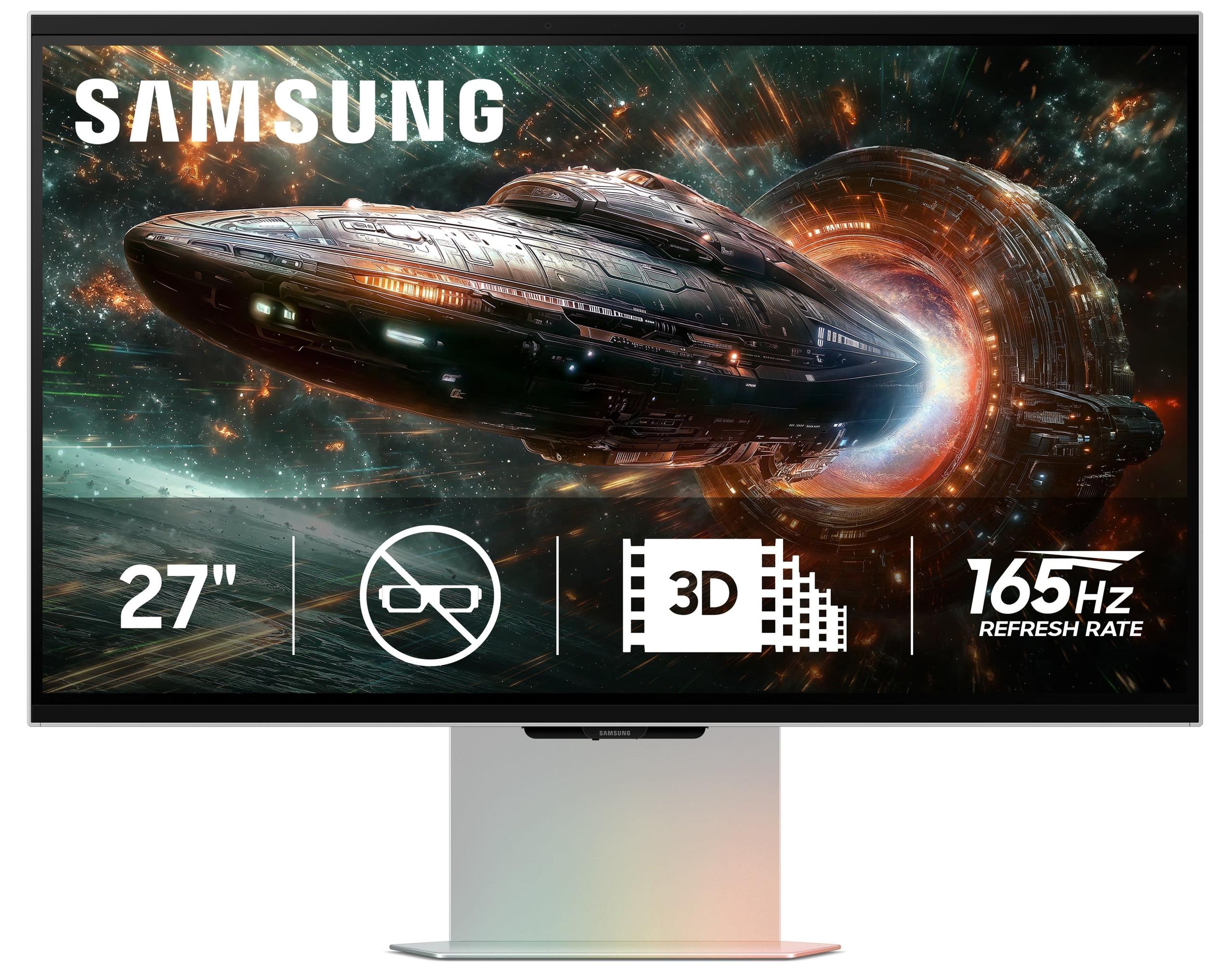
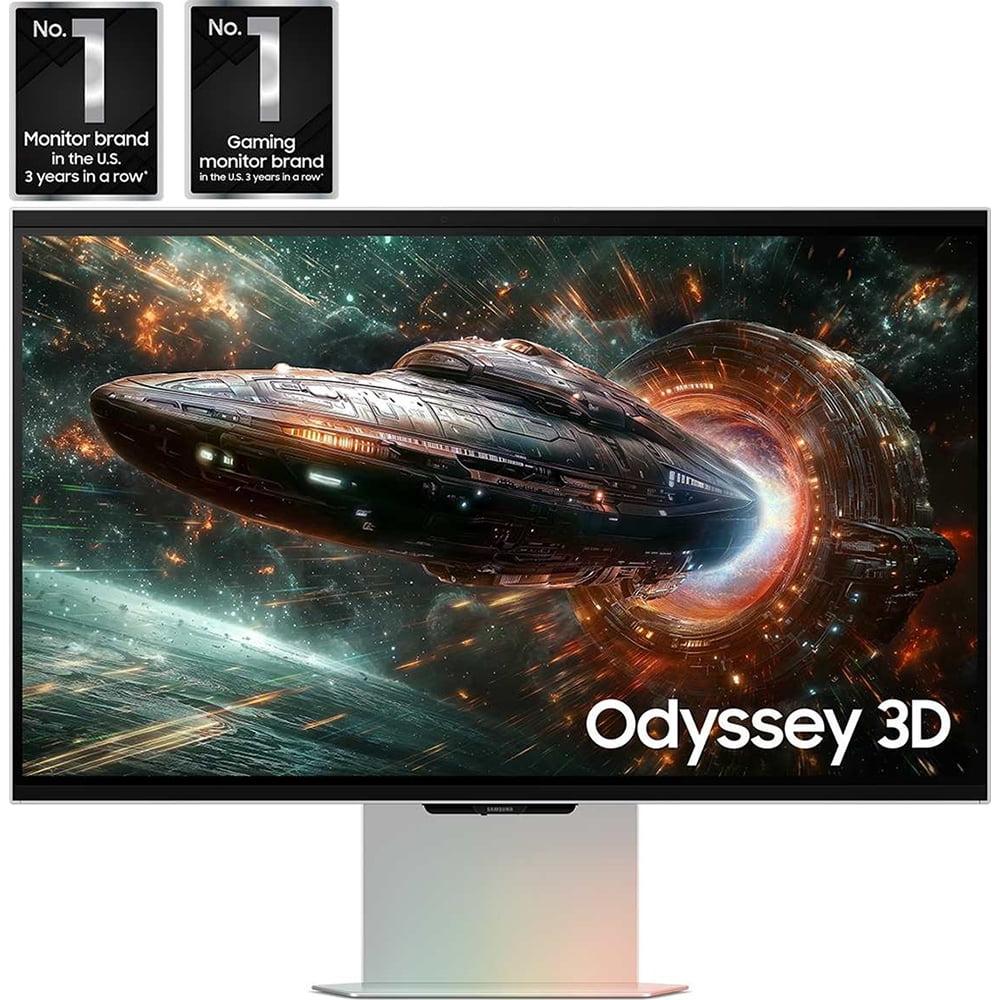
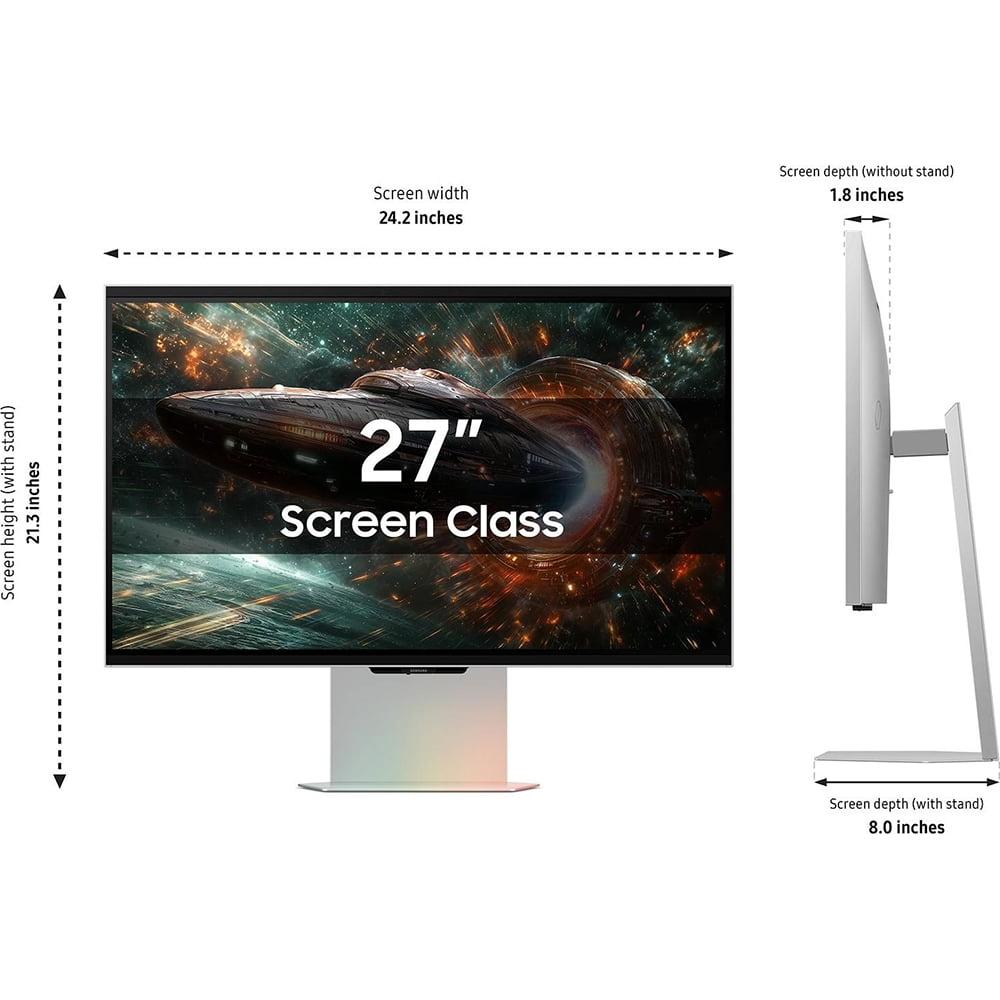
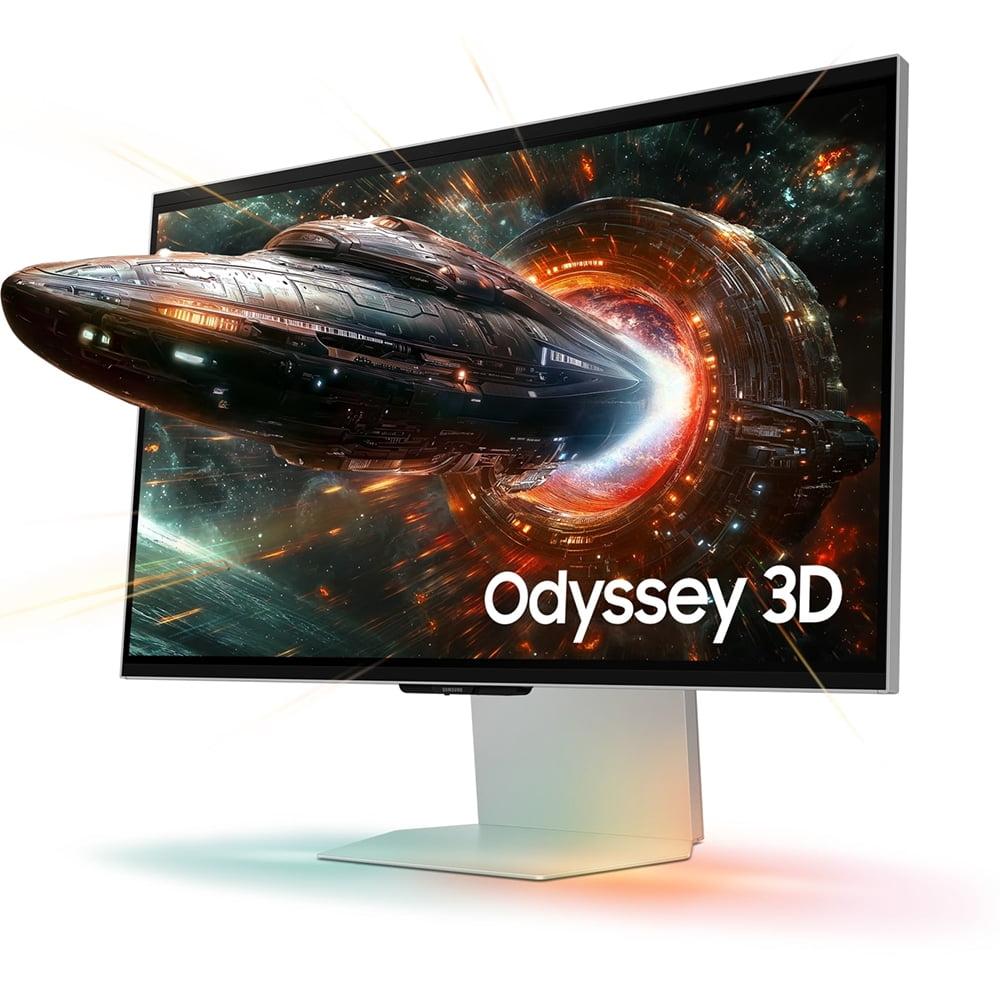
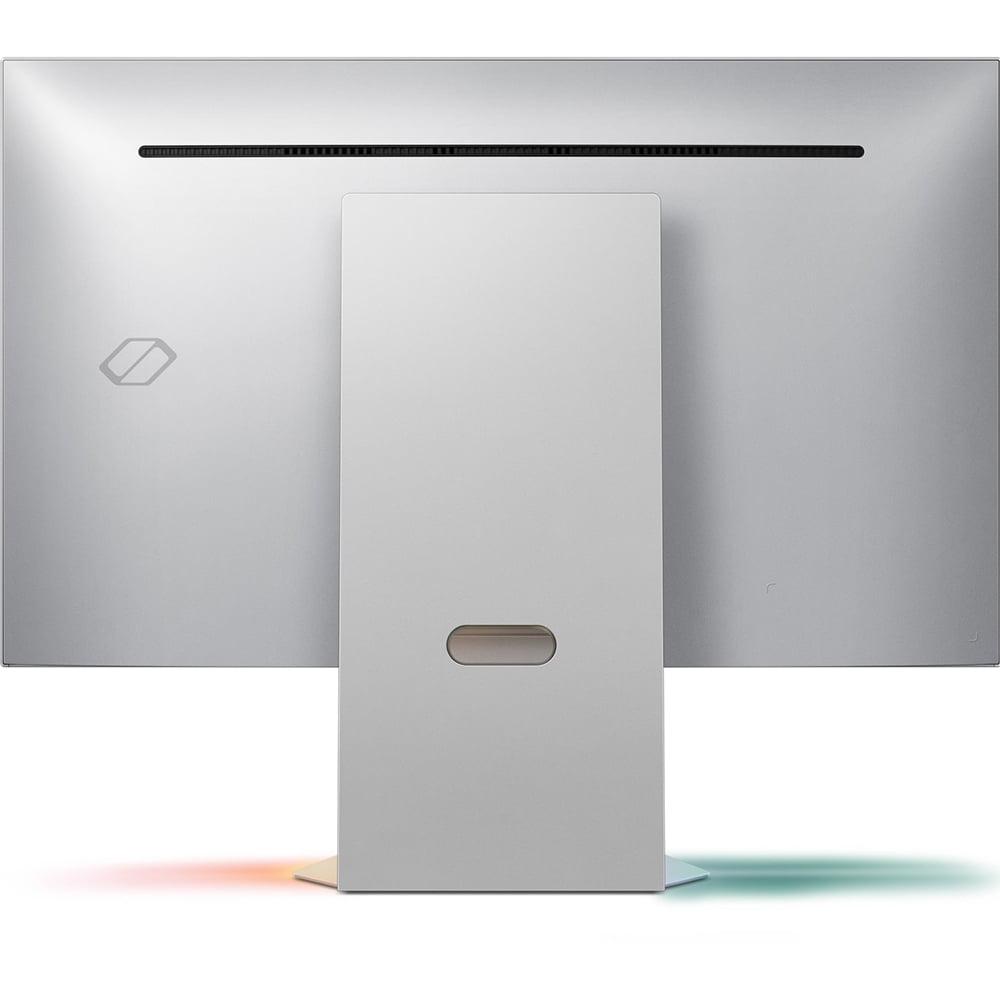
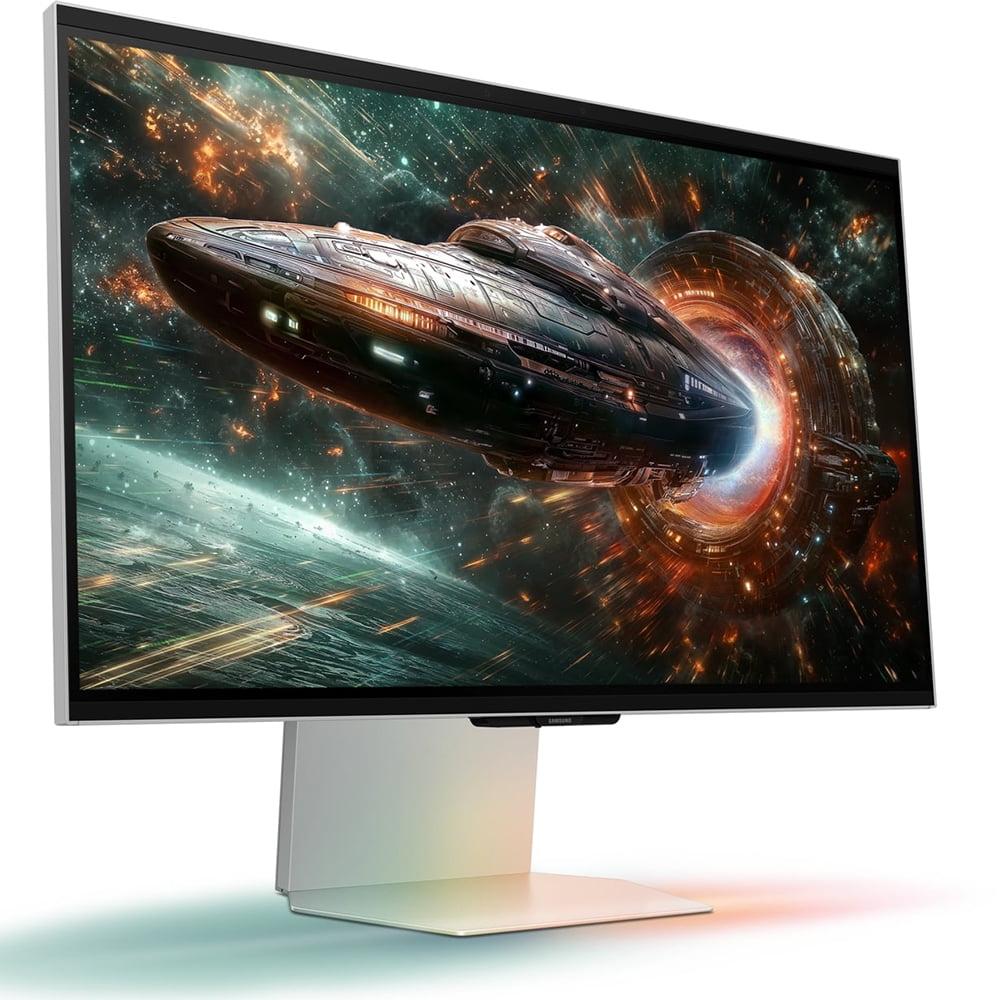
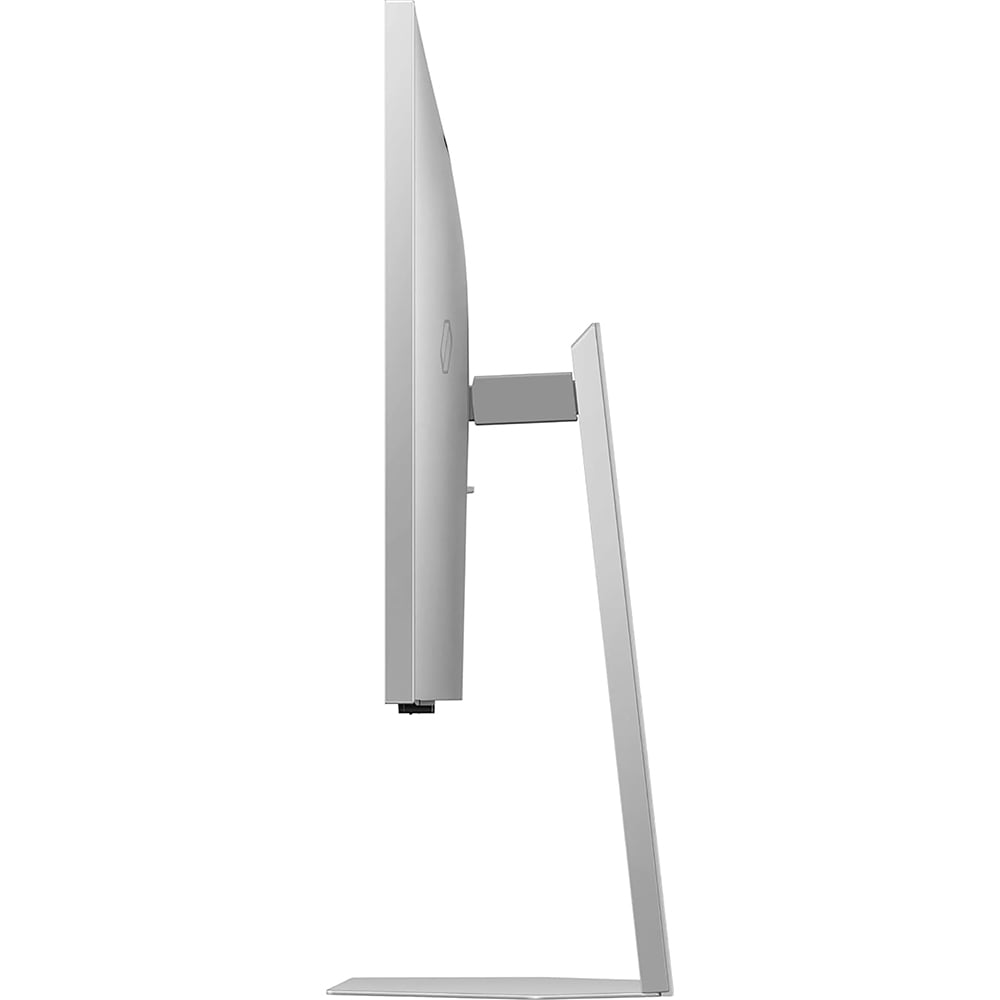

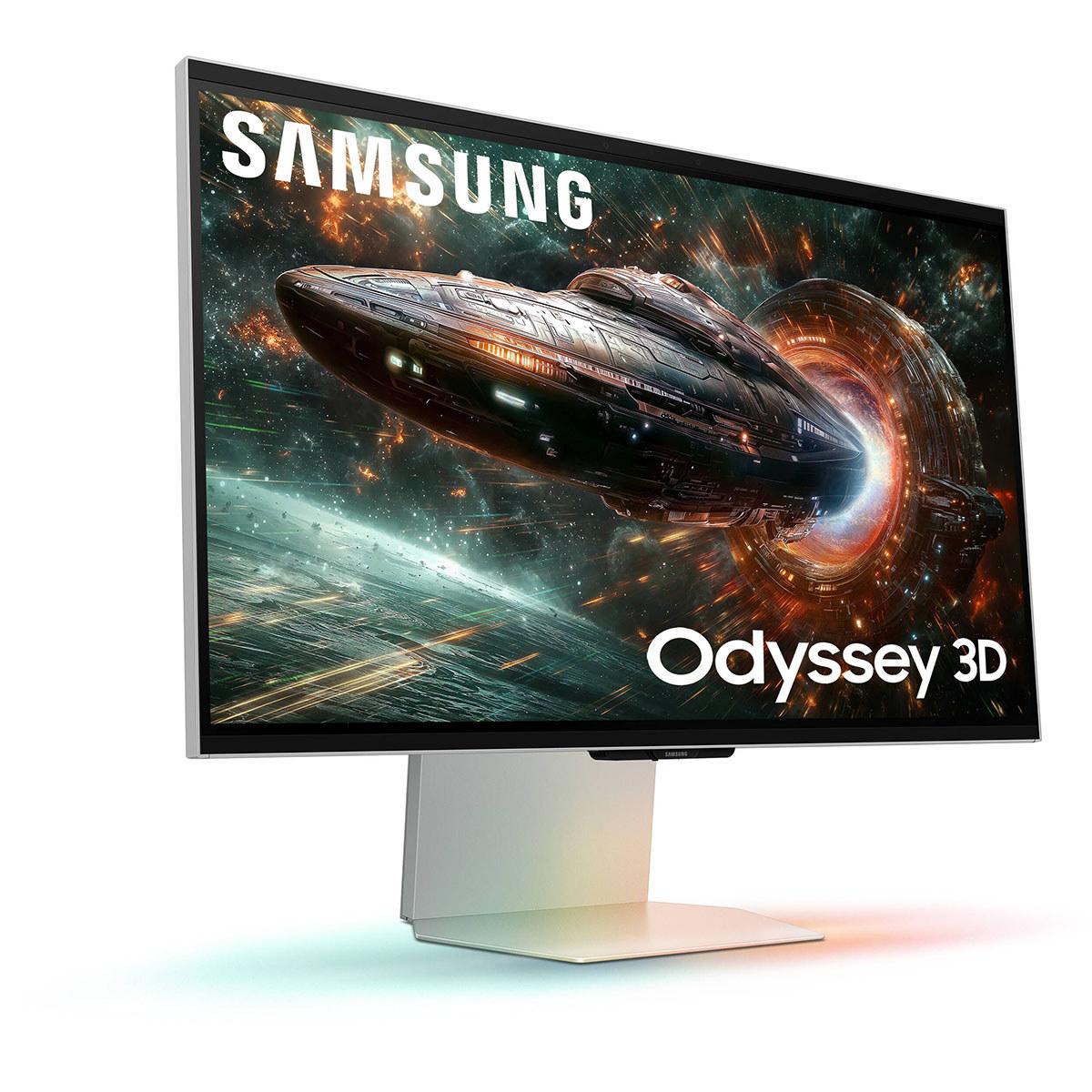
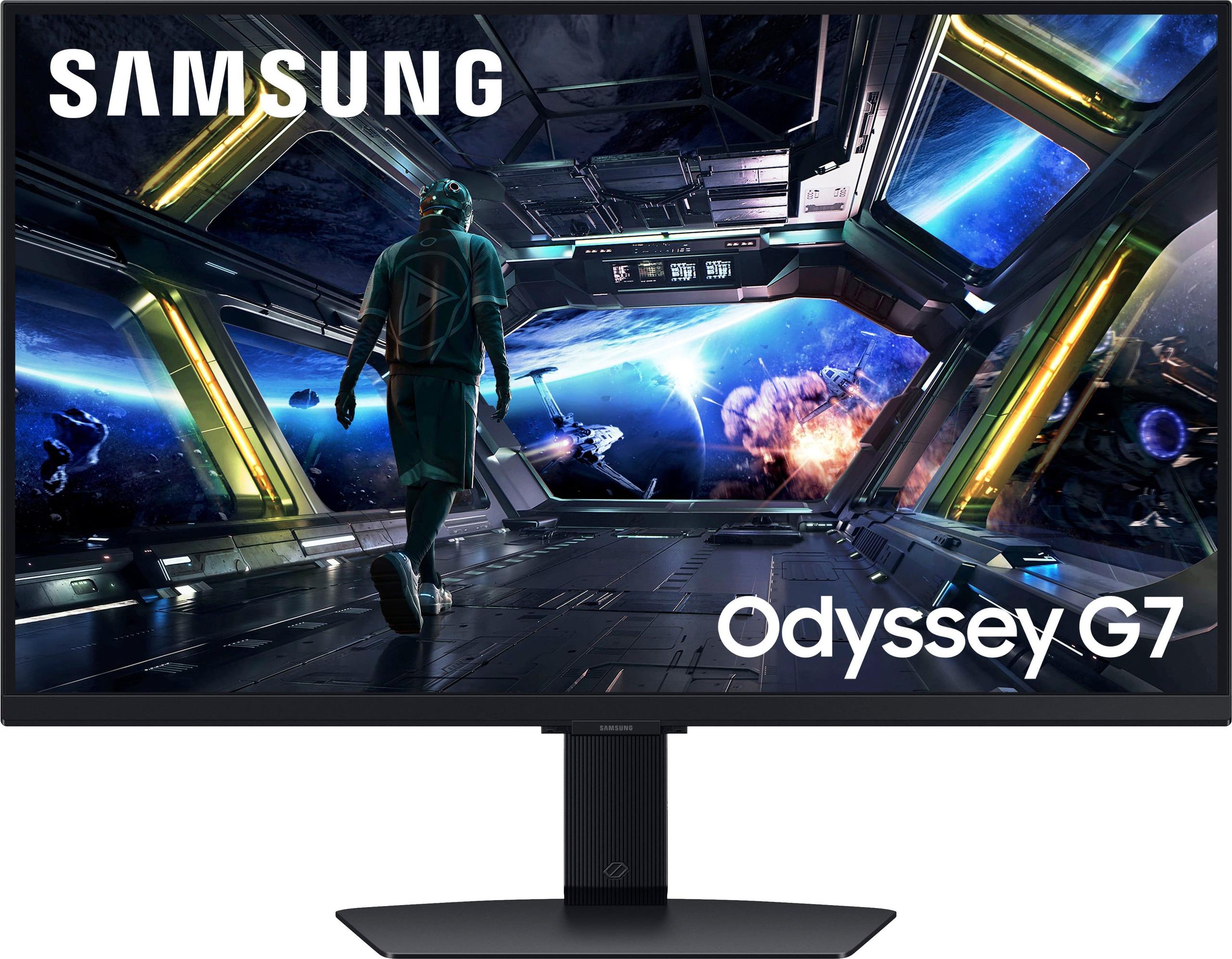
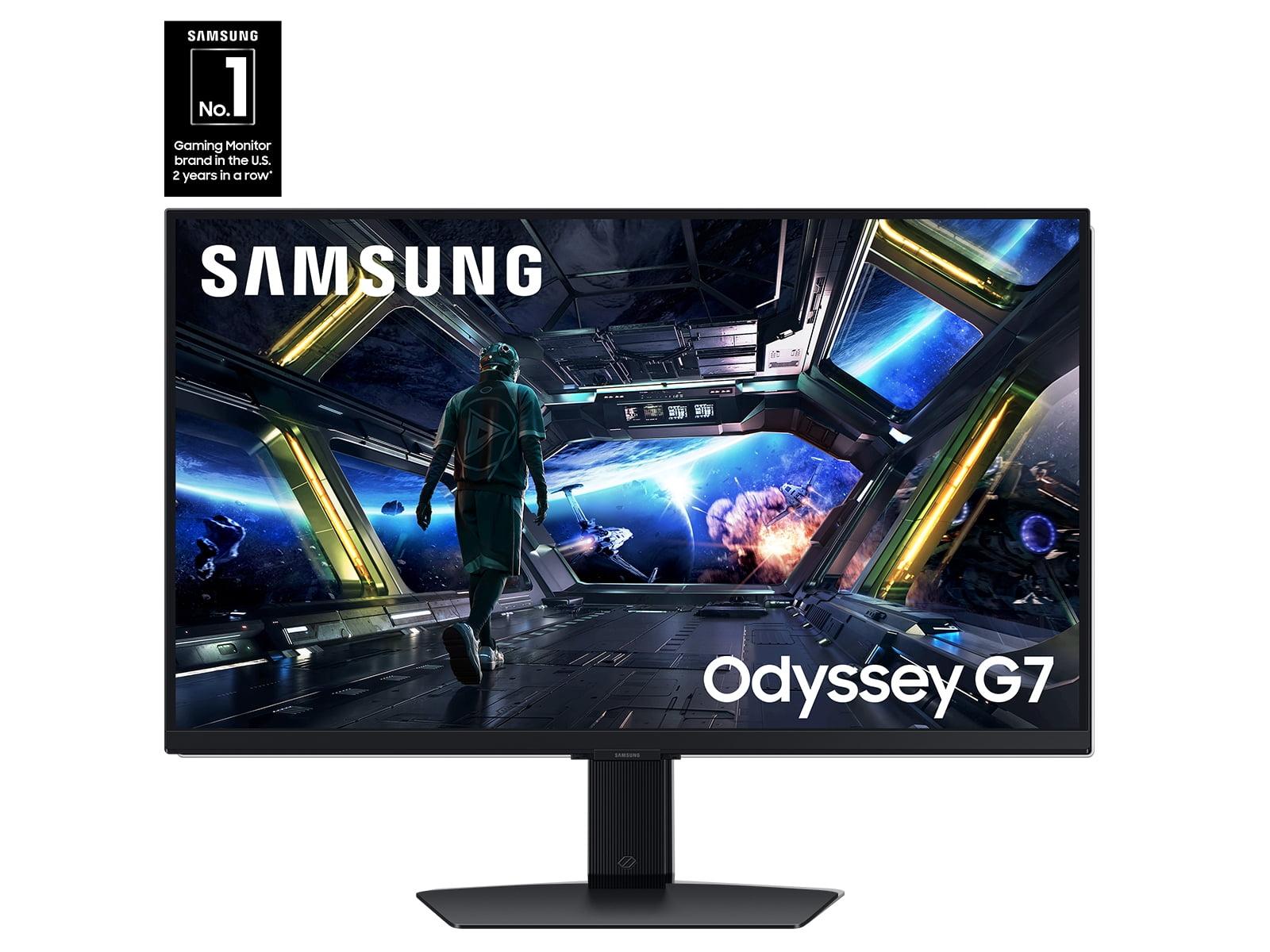
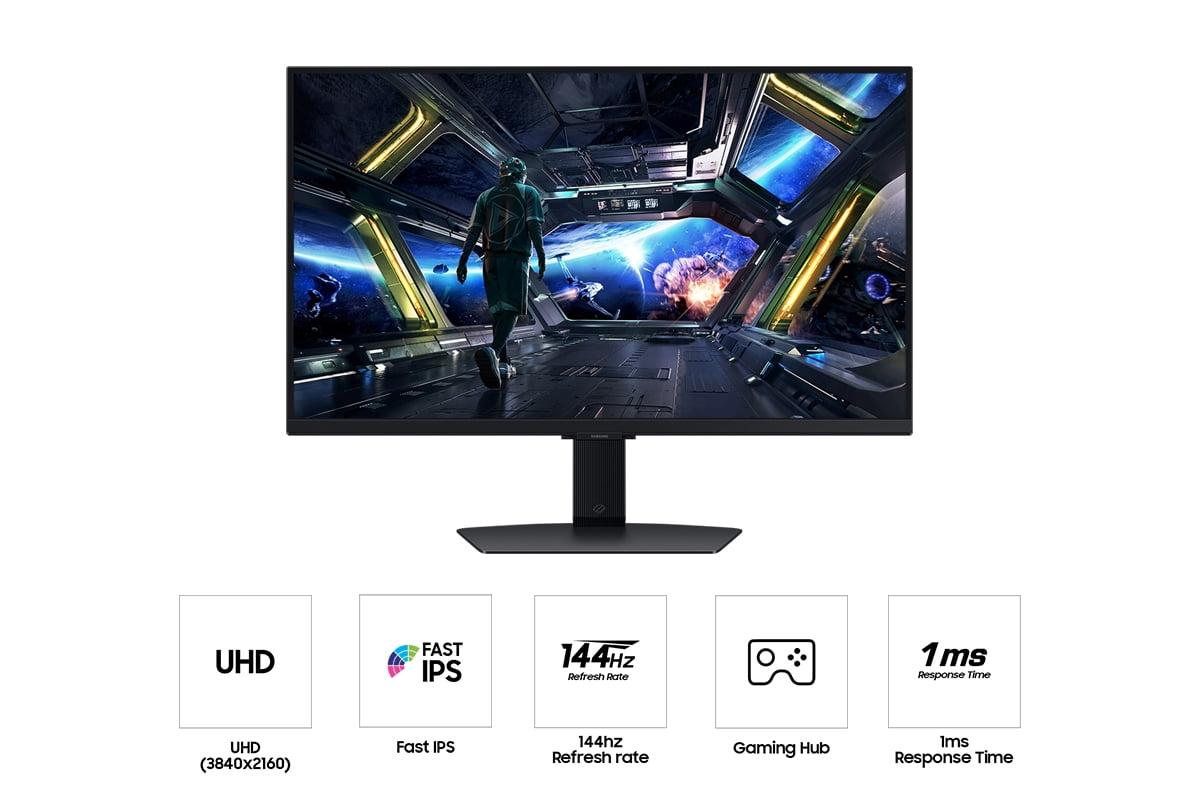
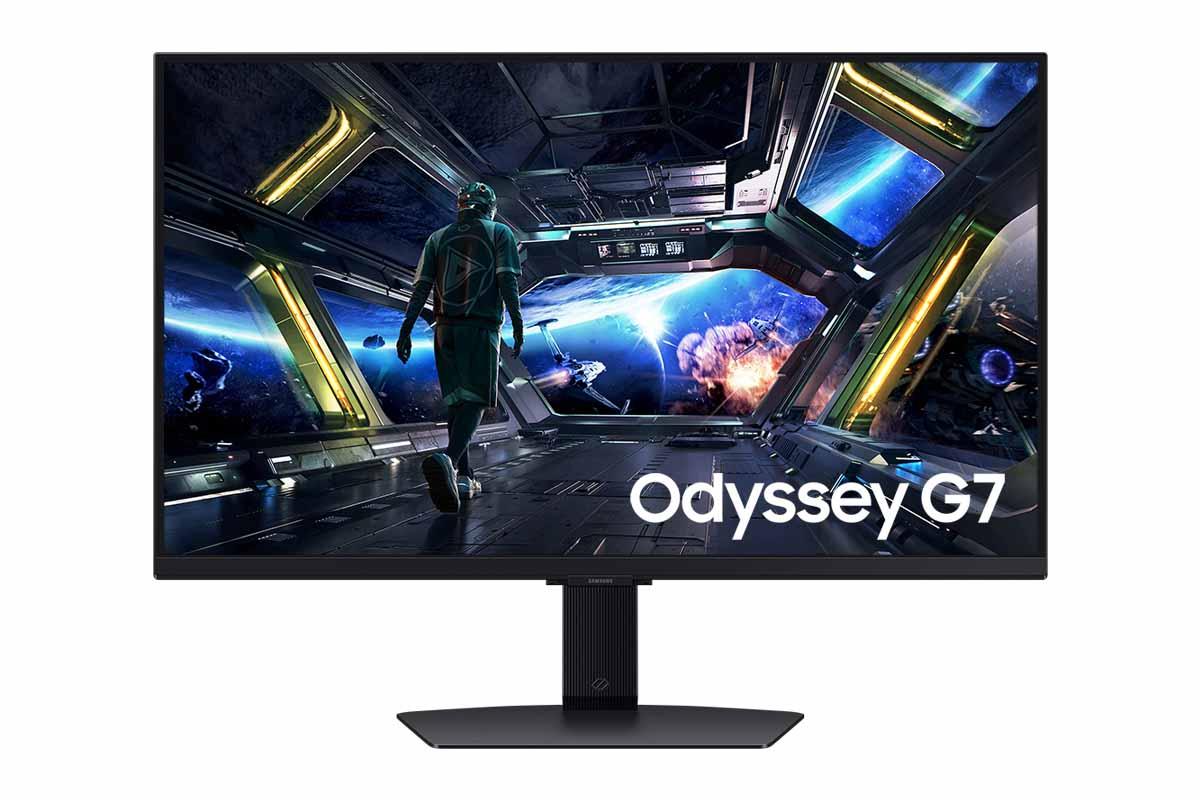
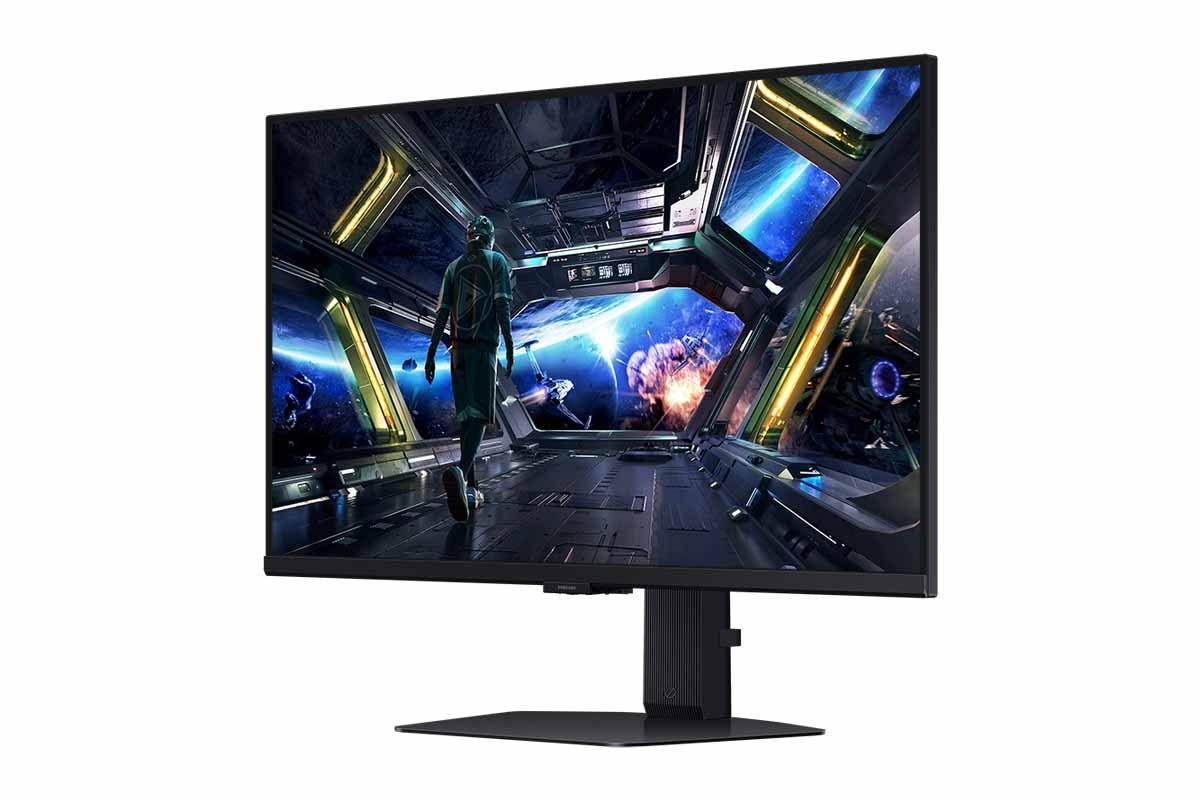
When Samsung released their latest Odyssey gaming monitors in 2025, they took two dramatically different approaches to the premium 4K gaming market. The Samsung 27" Odyssey 3D G90XF ($1,999.99) pushes the boundaries with glasses-free 3D technology, while the Samsung 27" Odyssey G7 G70D ($479.99) perfects the smart TV gaming monitor formula. Having spent considerable time with both displays, I can tell you they're aimed at completely different users – and understanding which camp you fall into will save you from buyer's remorse.
The 4K gaming monitor landscape has matured significantly since the early days when you had to choose between high refresh rates and high resolution. Today's premium monitors deliver both, but manufacturers are differentiating through unique features rather than just specs. We're seeing everything from OLED panels with perfect blacks to mini-LED arrays with thousands of dimming zones.
What matters most in this category hasn't changed: you want crisp 4K visuals, smooth high refresh rates, minimal input lag, and excellent color reproduction. However, modern monitors also need to justify their existence in an era where OLED TVs offer similar gaming features at competitive prices. That's where these two Samsung monitors get interesting – they each solve this challenge in completely different ways.
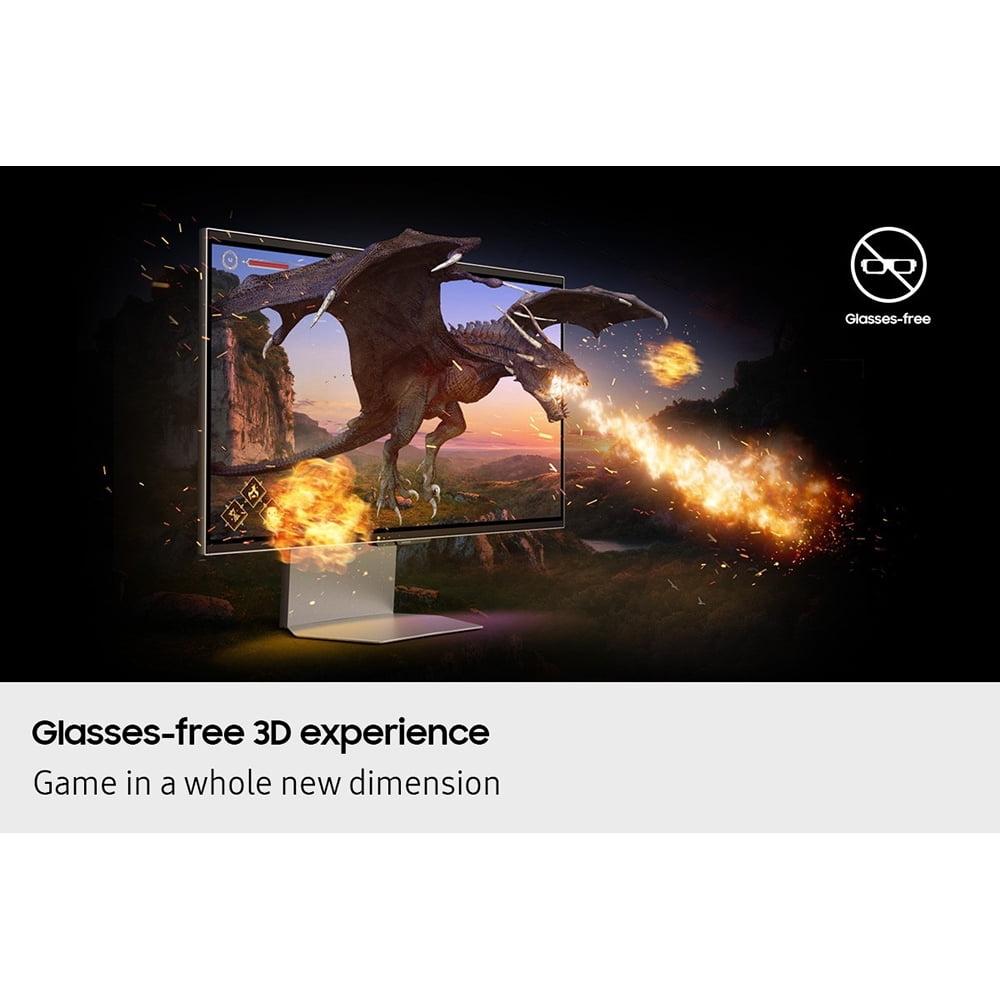
The Odyssey 3D G90XF represents Samsung's bet on the future of immersive gaming. Its glasses-free 3D technology uses eye-tracking cameras and lenticular lenses (think of those holographic Pokemon cards from the 90s, but infinitely more sophisticated) to create genuine depth without wearing anything on your face. When it works well, objects genuinely appear to float in front of the screen. It's the kind of "wow factor" technology that makes you want to show it off to everyone who visits.
Meanwhile, the G7 G70D takes the opposite approach: perfecting what we already know works. It's essentially a very good 4K gaming monitor with Samsung's smart TV operating system built in. You get streaming apps, a remote control, and Bluetooth connectivity for wireless headphones – basically turning your monitor into an entertainment center.
Having tested both extensively, the philosophical difference is striking. The G90XF asks you to embrace something completely new, while the G70D refines existing technology into something more practical for daily use.
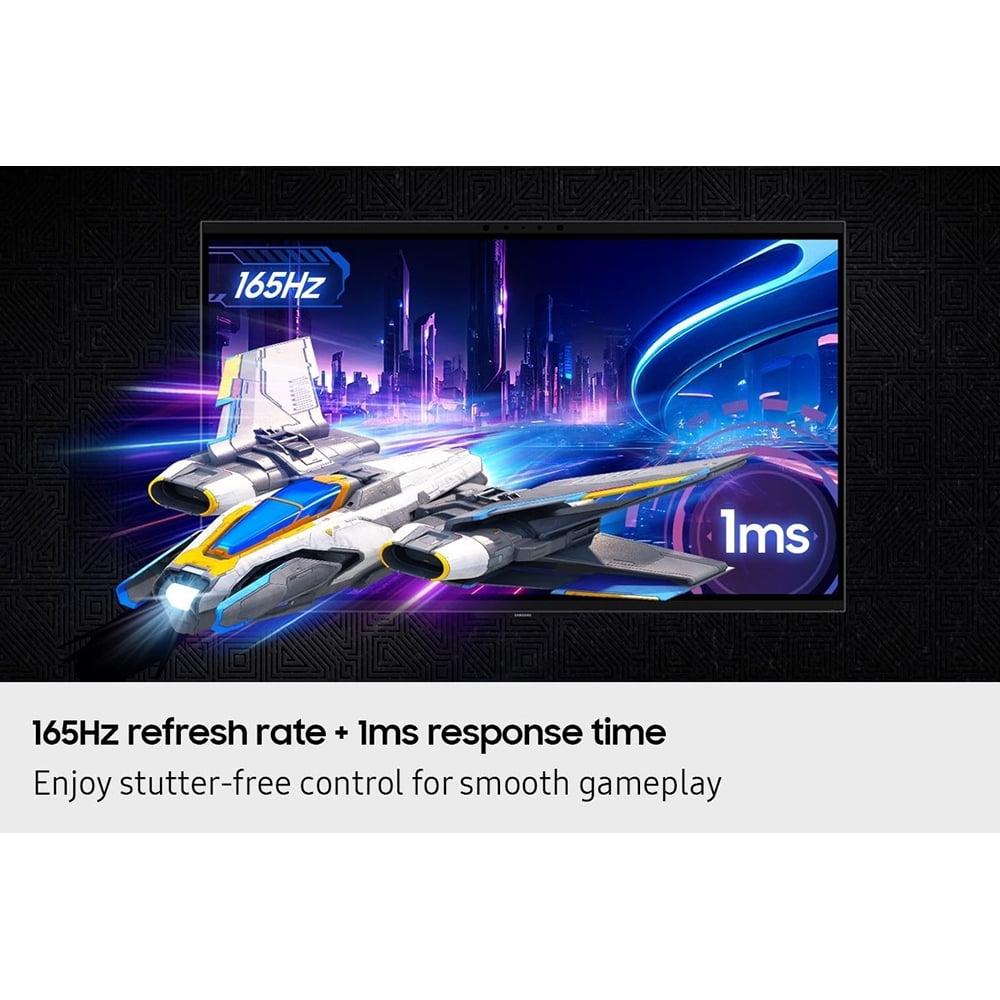
The refresh rate difference – 165Hz on the G90XF versus 144Hz on the G70D – might seem minor, but it's more significant than the numbers suggest. That extra 21Hz translates to about 1.4 milliseconds less delay between frames, which competitive gamers will appreciate. More importantly, the G90XF supports both NVIDIA G-Sync Compatible and AMD FreeSync Premium, while the G70D only offers FreeSync Premium.
Here's why this matters: adaptive sync technology (whether G-Sync or FreeSync) synchronizes your monitor's refresh rate with your graphics card's frame rate, eliminating screen tearing – those horizontal lines that appear when your GPU and monitor get out of sync. Having both options means the G90XF works optimally with a wider range of graphics cards.
However, the G70D has an ace up its sleeve: consistency. Without the complex 3D processing overhead, it delivers rock-solid performance every time you turn it on. The G90XF occasionally needs a moment to calibrate its eye-tracking system, and the 3D effect can be finicky if you're not sitting in the optimal position.
For competitive gaming, I'd lean toward the G90XF purely for that extra refresh rate headroom and G-Sync compatibility. But for casual gaming where reliability matters more than cutting-edge specs, the G70D wins hands down.
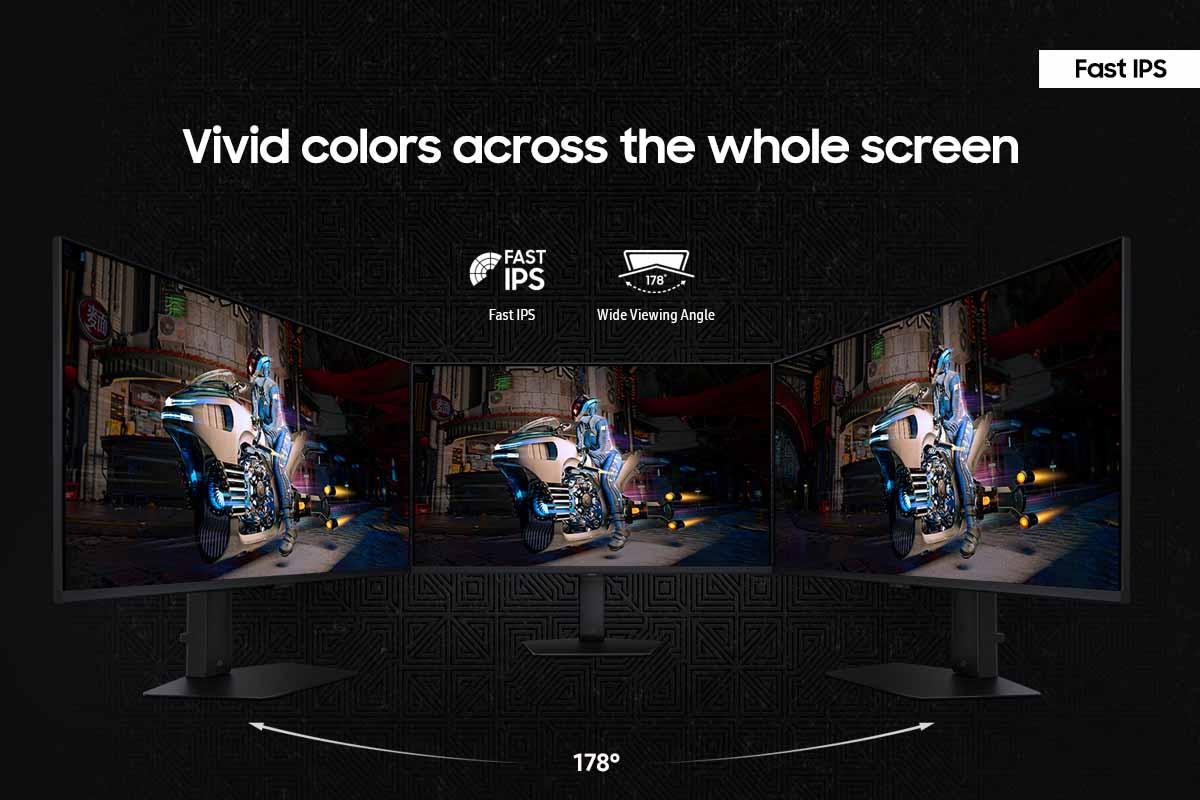
Both monitors use IPS (In-Plane Switching) panels, which offer excellent color accuracy and wide viewing angles – you can look at the screen from the side without colors shifting dramatically. They both cover 99% of the sRGB color space, which means they can display virtually all the colors you'll see in games and most movies.
The G90XF pushes slightly higher brightness at 350 cd/m² (candela per square meter – basically how bright the screen can get), compared to the G70D's typical brightness levels. This becomes important for HDR content, where peak brightness determines how convincing bright highlights look.
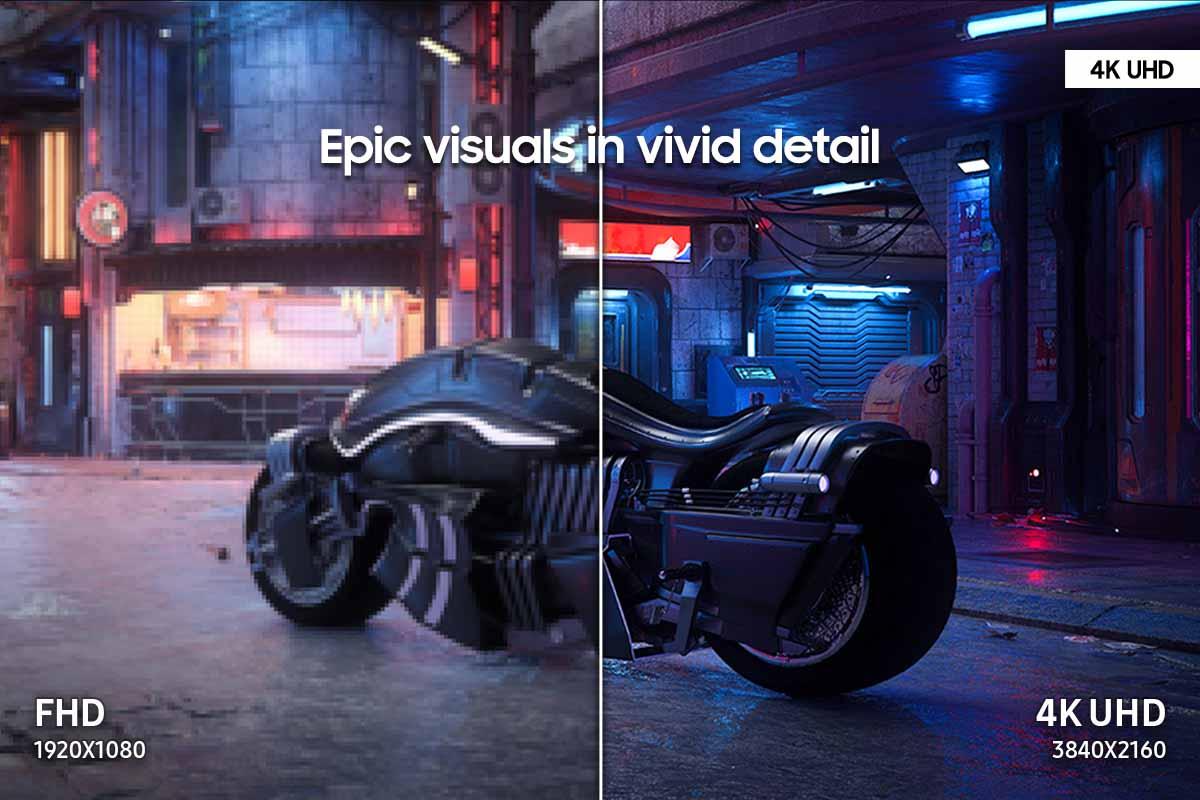
But here's where things get interesting: the G90XF's 3D technology actually affects image quality. The lenticular lens array sits on top of the panel, which slightly reduces perceived sharpness compared to viewing the same content in 2D mode. It's not dramatic, but side-by-side with a traditional 4K monitor, you can see the difference. The G70D doesn't have this compromise – what you see is pure 4K clarity.
For color accuracy out of the box, reviewers consistently note that the G70D requires less calibration to look natural. The G90XF tends toward cooler (bluer) colors that need adjustment to look realistic. If you're planning to use either monitor for photo editing or color-critical work, budget for professional calibration.
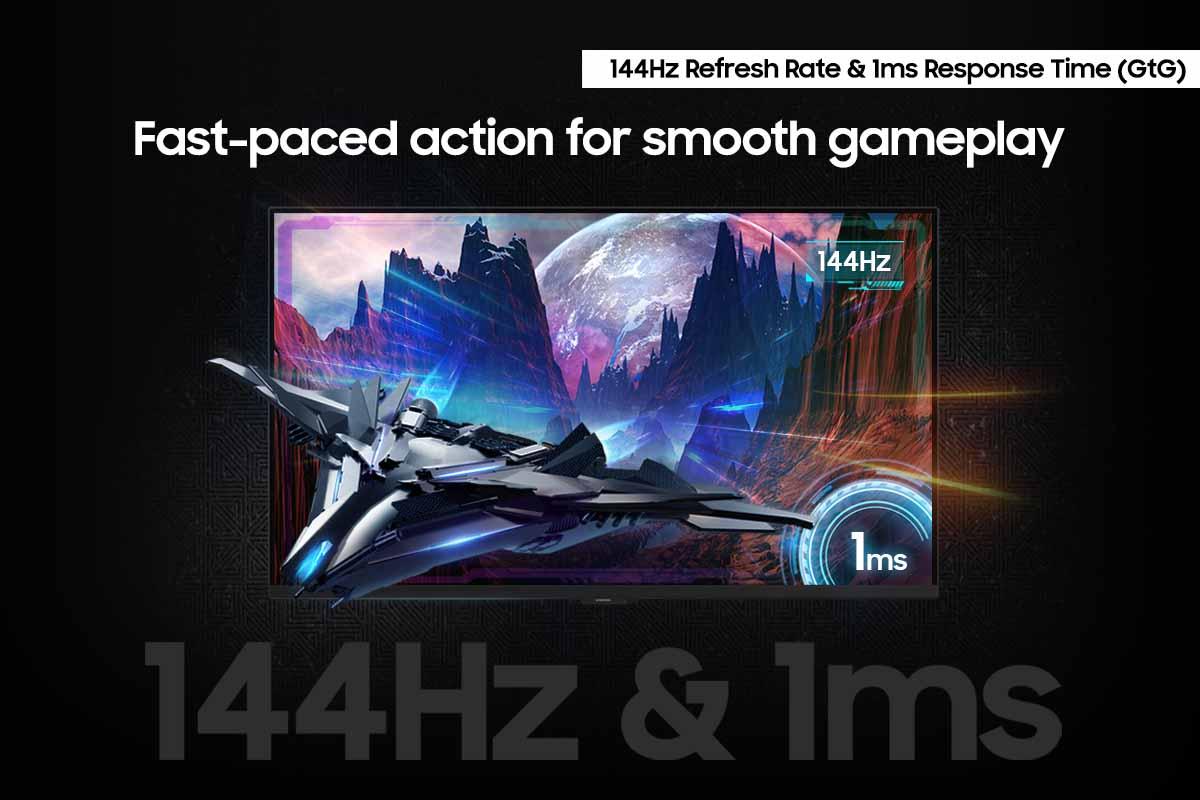
This is where both monitors truly shine. That 1ms GTG (Gray-to-Gray) response time isn't marketing fluff – it translates to incredibly clean motion with minimal ghosting or smearing. GTG measures how quickly pixels can change from one shade of gray to another, and 1ms is excellent for any gaming scenario.
In fast-paced games like first-person shooters or racing games, both monitors deliver crisp motion that lets you track moving objects without blur. The G90XF's higher refresh rate gives it a slight edge in the smoothest possible motion, but honestly, both are so good that you'd need to look specifically for differences to notice them.
Where they diverge is in HDR motion handling. The G90XF supports HDR10+ Gaming, which is specifically designed for interactive content and can adjust brightness and contrast on a scene-by-scene basis. The G70D's HDR400 certification is more basic – it can display HDR content, but the experience isn't as refined.
Let me be blunt: the 3D effect on the G90XF is genuinely impressive when it works. Games that support it natively, like "The First Berserker: Khazan," create an almost holographic experience where characters and environments have real depth. It's not the gimmicky 3D of old movie theaters – this feels natural and immersive.
The AI 3D conversion feature uses machine learning to analyze 2D content and add depth information in real-time. It works with many games and videos, though the effect varies dramatically depending on the source material. Simple, geometric games convert better than complex, cluttered scenes.
However, there's a significant caveat: the supported content library is still small. Samsung is working with developers to expand support, but at launch, you're somewhat limited in what takes full advantage of the 3D capabilities. The Reality Hub (Samsung's 3D content management software) helps, but it can't work magic with every game.
The G7 G70D's smart TV integration is remarkably well-executed. Samsung's Tizen OS runs smoothly, giving you access to Netflix, Disney+, YouTube, and other streaming services without needing a separate device. The included remote control feels natural to use, and the interface is responsive.
For home theater use, this is a game-changer. You can watch movies and shows in 4K directly from the monitor, then seamlessly switch to gaming when you want to play. The built-in speakers are adequate for casual viewing, though you'll want external audio for serious movie watching.
The G90XF lacks these smart features entirely. It's purely a gaming monitor that requires external devices for streaming content. If you're building a entertainment center around your desk, the G70D's versatility is hard to beat.
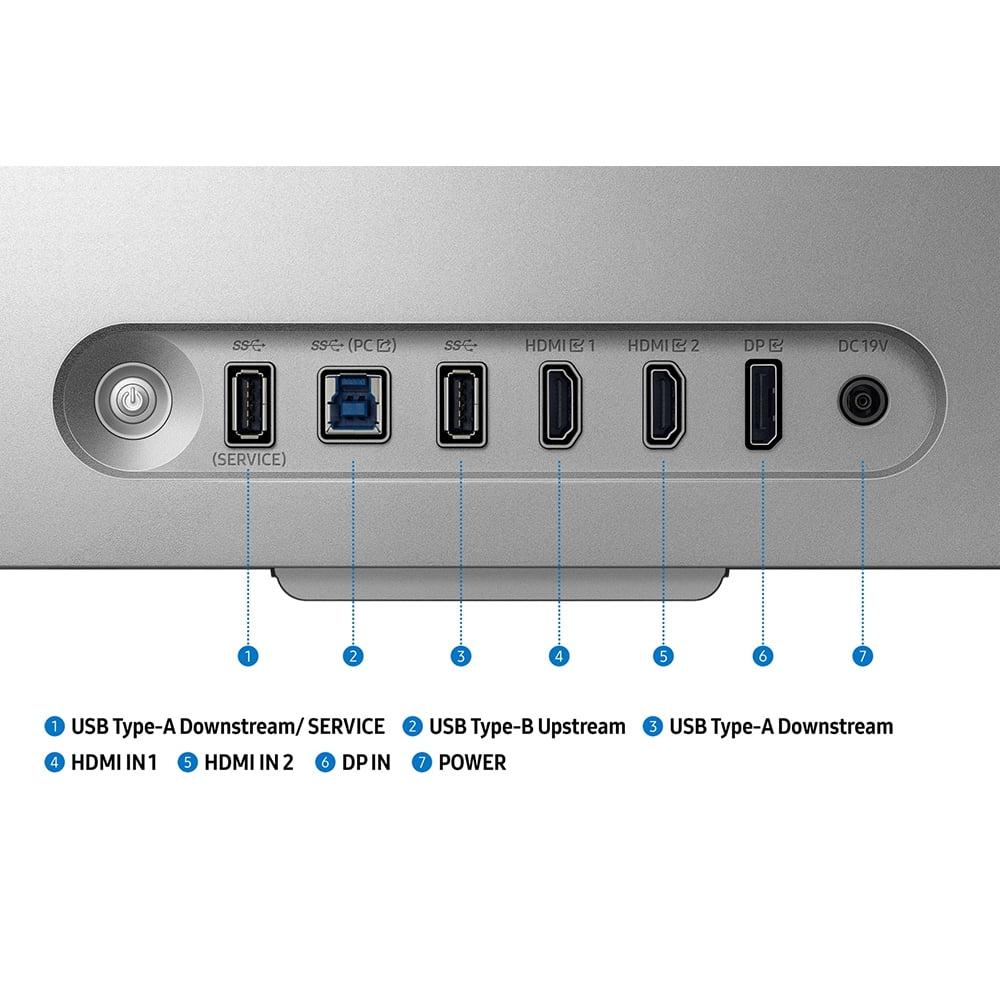
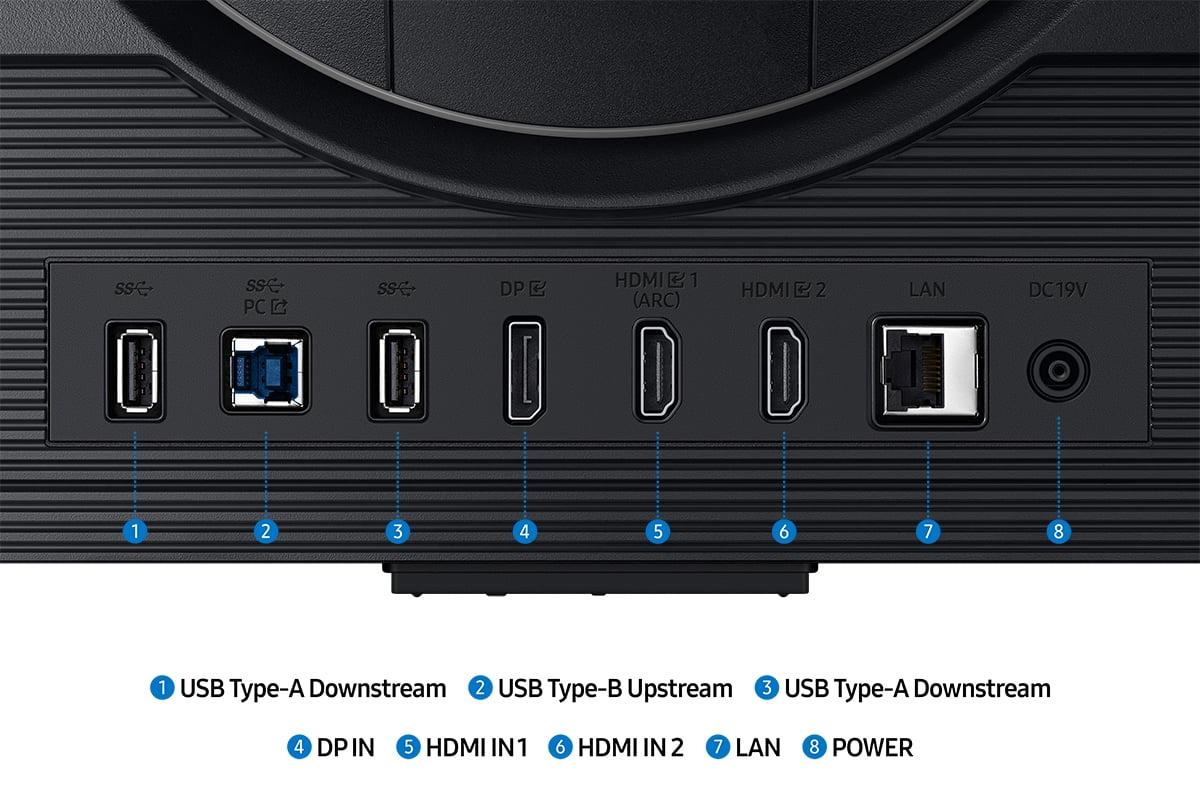
Both monitors include modern connectivity – HDMI 2.1 ports that support 4K at high refresh rates, DisplayPort for PC gaming, and USB ports for peripherals. The G90XF requires DisplayPort with Display Stream Compression (DSC) to achieve its maximum 165Hz refresh rate, which means you need a relatively modern graphics card.
The G70D's smart features add Wi-Fi and Bluetooth connectivity, enabling wireless streaming and audio. You can pair Bluetooth headphones directly to the monitor, which is surprisingly convenient for late-night gaming without waking others.
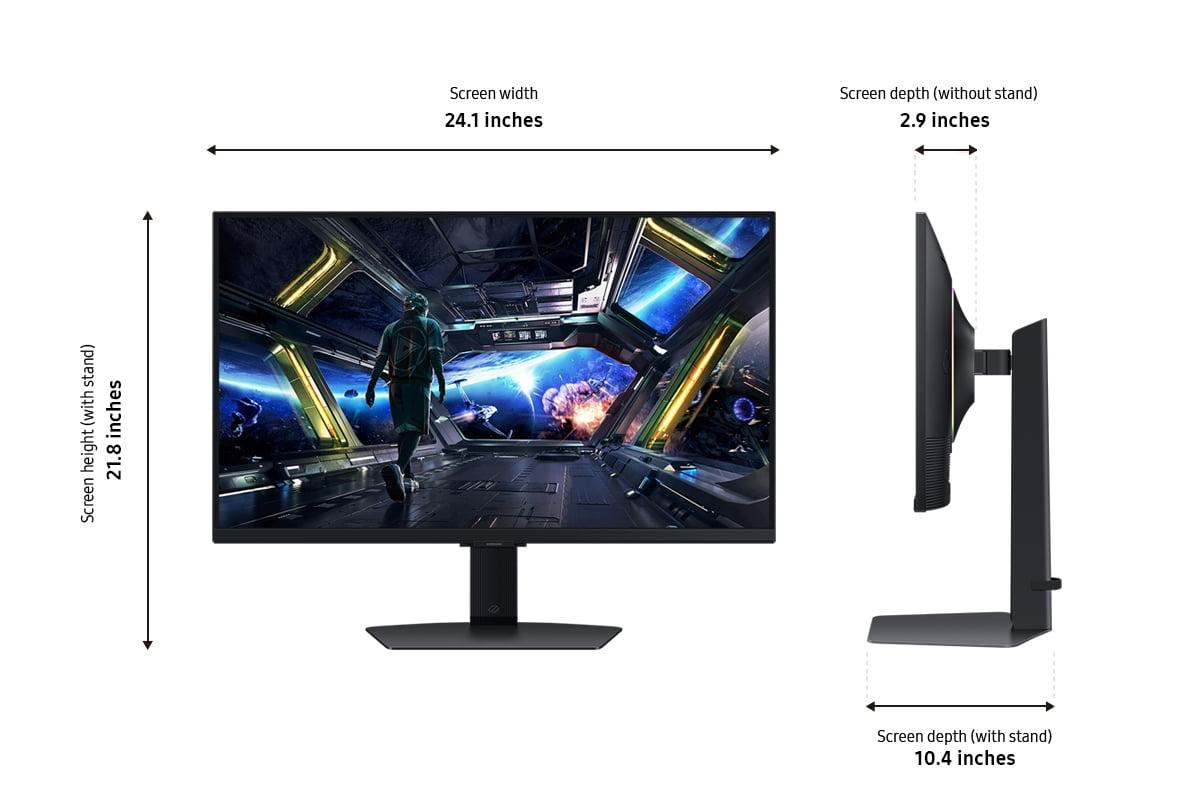
Ergonomically, the G70D has better adjustability with full tilt, swivel, height, and even portrait rotation. The G90XF offers standard adjustments but can't pivot – a limitation if you ever want to use it vertically for coding or reading.
For home theater use, these monitors serve very different purposes. The G7 G70D excels as an entertainment hub. Its smart TV features, good HDR support, and reasonable size make it suitable for desktop movie watching or as a secondary TV in a bedroom or office.
The G90XF is more specialized. While it can certainly display movies and shows beautifully, the 3D conversion feature is hit-or-miss with video content. Some movies gain impressive depth, while others look artificial or cause eye strain. The lack of smart features also means you need external streaming devices.
Neither monitor is ideal for main living room home theater use – at 27 inches, they're better suited for personal viewing distances of 2-3 feet. But for desktop entertainment setups, the G70D's smart features and lower price make it the clear winner.
Samsung's approach with these monitors reflects broader industry trends. The G90XF represents the push toward differentiation through novel display technologies – similar to how Samsung has pioneered curved gaming monitors and ultra-wide formats in recent years.
The glasses-free 3D technology builds on Samsung's experience with 3D TVs from the 2010s, but the implementation is far more sophisticated. Eye-tracking cameras monitor your head position 60 times per second, dynamically adjusting the 3D effect as you move. This solves the biggest problem with older 3D displays: the narrow "sweet spot" where the effect worked properly.
The G70D's smart integration reflects the convergence of computing and entertainment devices. As streaming becomes the dominant way people consume content, having those capabilities built into your monitor eliminates the need for separate streaming boxes or smart TV dongles.
Here's where the conversation gets interesting. The Odyssey 3D G90XF at $1,999.99 costs more than four times as much as the G7 G70D at $479.99. That's not a small difference – it's the cost of a decent gaming laptop.
The G70D offers exceptional value. You get genuine 4K gaming performance, smart TV features, excellent build quality, and reliable performance for under $500. That's remarkable in today's market, where premium monitors often cost $800-1200.
The G90XF asks you to pay a significant premium for its 3D technology and higher refresh rate. Whether that's worthwhile depends entirely on how much you value cutting-edge features versus proven performance.
From a pure gaming performance standpoint, the difference isn't proportional to the price gap. Both deliver excellent 4K gaming experiences. The G90XF's advantages – higher refresh rate, G-Sync support, and 3D capabilities – are meaningful but don't necessarily justify the massive price difference for most users.
After extensive testing, here's my practical advice:
Choose the Samsung Odyssey 3D G90XF if:
The G90XF is for enthusiasts and early adopters. If you're the type of person who buys the latest graphics cards at launch or builds custom liquid cooling loops, this monitor matches that mindset.
Choose the Samsung G7 G70D if:
The G70D is for pragmatists who want the best bang for their buck. It delivers 90% of the gaming performance at 25% of the price, plus adds practical features the expensive monitor lacks.
Both monitors succeed at their intended purposes, but they're aimed at completely different users. The Odyssey 3D G90XF is a showcase of emerging display technology that offers a genuinely unique experience – when everything aligns properly. The G7 G70D is a practical, versatile gaming monitor that happens to cost significantly less while offering features many users will find more valuable day-to-day.
If you're unsure which category you fall into, the G70D is probably the safer choice. It's an excellent gaming monitor that doubles as a smart TV, offers proven reliability, and costs less than many graphics cards. The G90XF is for those who know they want something nobody else has and are willing to pay handsomely for that privilege.
In the rapidly evolving world of gaming displays, both approaches have merit. The question is whether you want to bet on the future or perfect the present.
| Samsung 27" Odyssey 3D G90XF 4K 165Hz Gaming Monitor | Samsung 27" Odyssey G7 G70D 4K UHD IPS Gaming Monitor |
|---|---|
| Price - Massive difference that defines target audience | |
| $1,999.99 - Premium pricing for cutting-edge 3D tech | $479.99 - Exceptional value for 4K gaming performance |
| Unique Technology - Core differentiator between models | |
| Glasses-free 3D with eye-tracking and AI conversion | Smart TV OS with streaming apps and remote control |
| Refresh Rate - Higher rates provide smoother competitive gaming | |
| 165Hz (21Hz advantage matters for esports) | 144Hz (excellent for most gaming scenarios) |
| Adaptive Sync - Eliminates screen tearing for smooth visuals | |
| G-Sync Compatible + FreeSync Premium (broader GPU support) | FreeSync Premium only (AMD and some NVIDIA cards) |
| 3D Gaming Support - Revolutionary but limited content library | |
| Native 3D games + AI conversion for 2D content | None - traditional 2D gaming only |
| Smart Features - Built-in entertainment capabilities | |
| None - requires external streaming devices | Full smart TV with Netflix, Disney+, YouTube, Bluetooth |
| HDR Support - Enhanced contrast and brightness for better visuals | |
| HDR10 + HDR10+ Gaming (optimized for interactive content) | VESA DisplayHDR 400 (basic HDR experience) |
| Panel Quality - Both excellent IPS displays with minor differences | |
| 350 cd/m² brightness, 99% sRGB, slight sharpness reduction due to 3D layer | Good factory calibration, 99% sRGB, pure 4K clarity |
| Ergonomics - Adjustability for comfort during long sessions | |
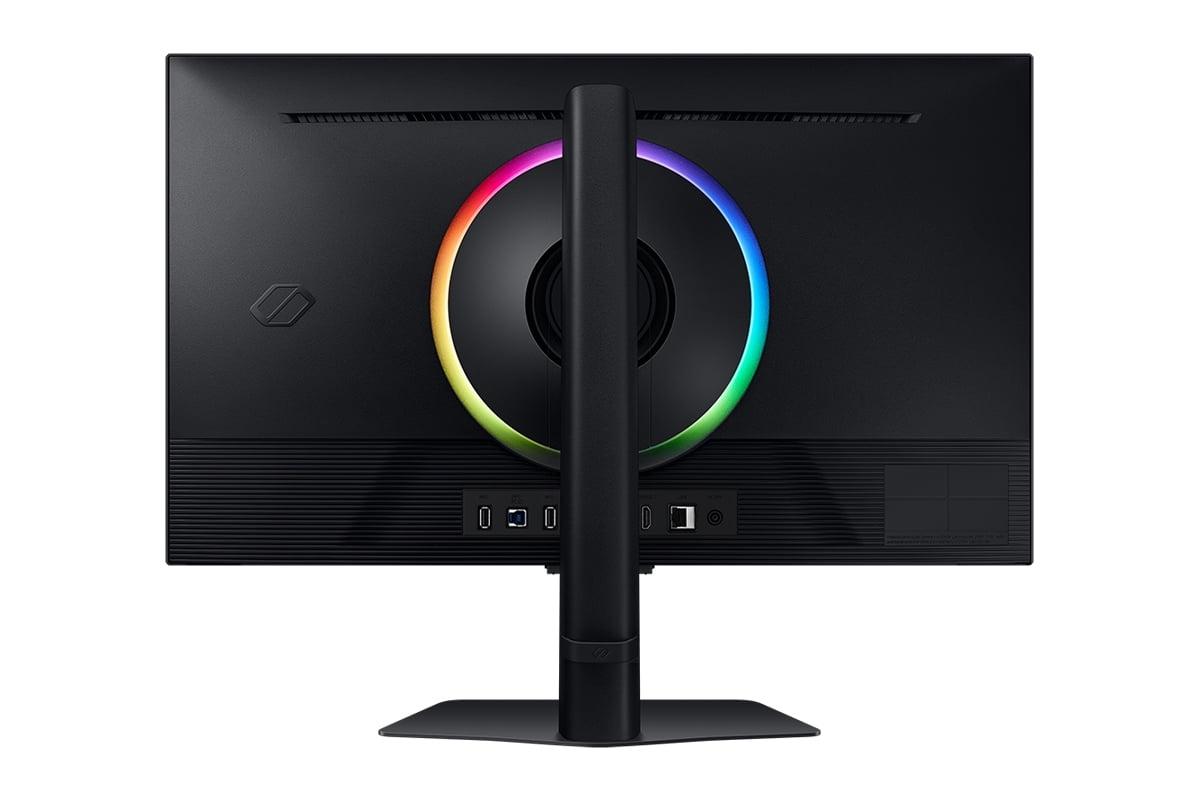
| Standard adjustments, RGB lighting, no swivel | Full adjustability including portrait mode, better stand |
| Target User - Who each monitor serves best | |
| Tech enthusiasts and early adopters with premium budgets | Budget-conscious gamers wanting 4K + smart TV features |
The Samsung 27" Odyssey 3D G90XF offers superior gaming performance with its 165Hz refresh rate and G-Sync compatibility, making it ideal for competitive gaming. However, the Samsung G7 G70D provides excellent 4K gaming at 144Hz for a fraction of the cost, making it the better value choice for most gamers.
The Samsung Odyssey 3D G90XF costs $1,999.99, while the Samsung G7 G70D is priced at $479.99. That's over a $1,500 difference, with the G90XF costing more than four times as much as the G70D due to its cutting-edge 3D technology.
Yes, the Samsung Odyssey 3D G90XF's glasses-free 3D technology creates impressive depth when working properly. It uses eye-tracking cameras and AI conversion to display genuine 3D effects without glasses. However, the supported content library is currently limited, and the effect works best with specifically designed 3D games.
The Samsung G7 G70D has full smart TV capabilities with Samsung's Tizen OS, streaming apps like Netflix and Disney+, a remote control, and Bluetooth connectivity. The Samsung Odyssey 3D G90XF has no smart features and requires external devices for streaming content.
The G90XF's 165Hz versus the G70D's 144Hz provides smoother motion, but the 21Hz difference isn't dramatic for most users. Competitive gamers will appreciate the extra smoothness, but casual gamers will find 144Hz perfectly adequate, especially considering the massive price difference.
The Samsung G7 G70D is significantly better for entertainment with its built-in streaming apps, smart TV interface, and remote control. While the Samsung G90XF can display movies beautifully, it lacks smart features and the 3D conversion for video content is inconsistent.
Yes, both the Samsung Odyssey 3D G90XF and Samsung G7 G70D support 4K gaming through HDMI 2.1 ports. However, the G90XF's 3D features only work with PC gaming, not consoles, while the G70D works equally well with both PCs and consoles.
The Samsung G7 G70D offers superior ergonomics with full height, tilt, swivel, and portrait adjustments. The Samsung Odyssey 3D G90XF has premium build quality with RGB lighting but more limited adjustability and cannot swivel or rotate to portrait mode.
The Samsung Odyssey 3D G90XF is primarily for tech enthusiasts and early adopters willing to pay premium prices for cutting-edge technology. New users should consider the limited 3D content library and high system requirements before investing $1,999.99 in this experimental technology.
The Samsung G7 G70D at $479.99 offers exceptional value with 4K gaming, smart TV features, and reliable performance. The Samsung Odyssey 3D G90XF at $1,999.99 provides unique 3D technology but at a premium price that's difficult to justify unless you specifically want glasses-free 3D gaming.
Both monitors support HDR, but differently. The Samsung Odyssey 3D G90XF supports HDR10 and HDR10+ Gaming for optimized interactive content. The Samsung G7 G70D has VESA DisplayHDR 400 certification, providing basic HDR support that's adequate for most content but not as advanced.
For users wanting both gaming and entertainment, the Samsung G7 G70D is the clear winner. It delivers excellent 4K gaming performance while doubling as a smart TV with streaming apps and remote control. The Samsung Odyssey 3D G90XF focuses purely on gaming innovation but lacks the versatility for everyday entertainment use.
We've done our best to create useful and informative comparisons to help you decide what product to buy. Our research uses advanced automated methods to create this comparison and perfection is not possible - please contact us for corrections or questions. These are the sites we've researched in the creation of this article: hometechnologyreview.com - substack.com - rtings.com - youtube.com - techaeris.com - versus.com - tomsguide.com - avsforum.com - youtube.com - versus.com - bestbuy.com - samsung.com - samsung.com - samsung.com - samsung.com - m.media-amazon.com - bestbuy.com - typectechreviews.com - rtings.com - rtings.com - youtube.com - youtube.com - samsung.com - samsung.com - samsung.com - bhphotovideo.com - samsung.com - samsung.com - versus.com - abt.com - abt.com - bestbuy.com - bhphotovideo.com - youtube.com - abt.com

Privacy Policy
Terms and Conditions - Affiliate Policy
Home Security
© Copyright 2008-2026.
11816 Inwood Rd #1211, Dallas, TX 75244