$949.00
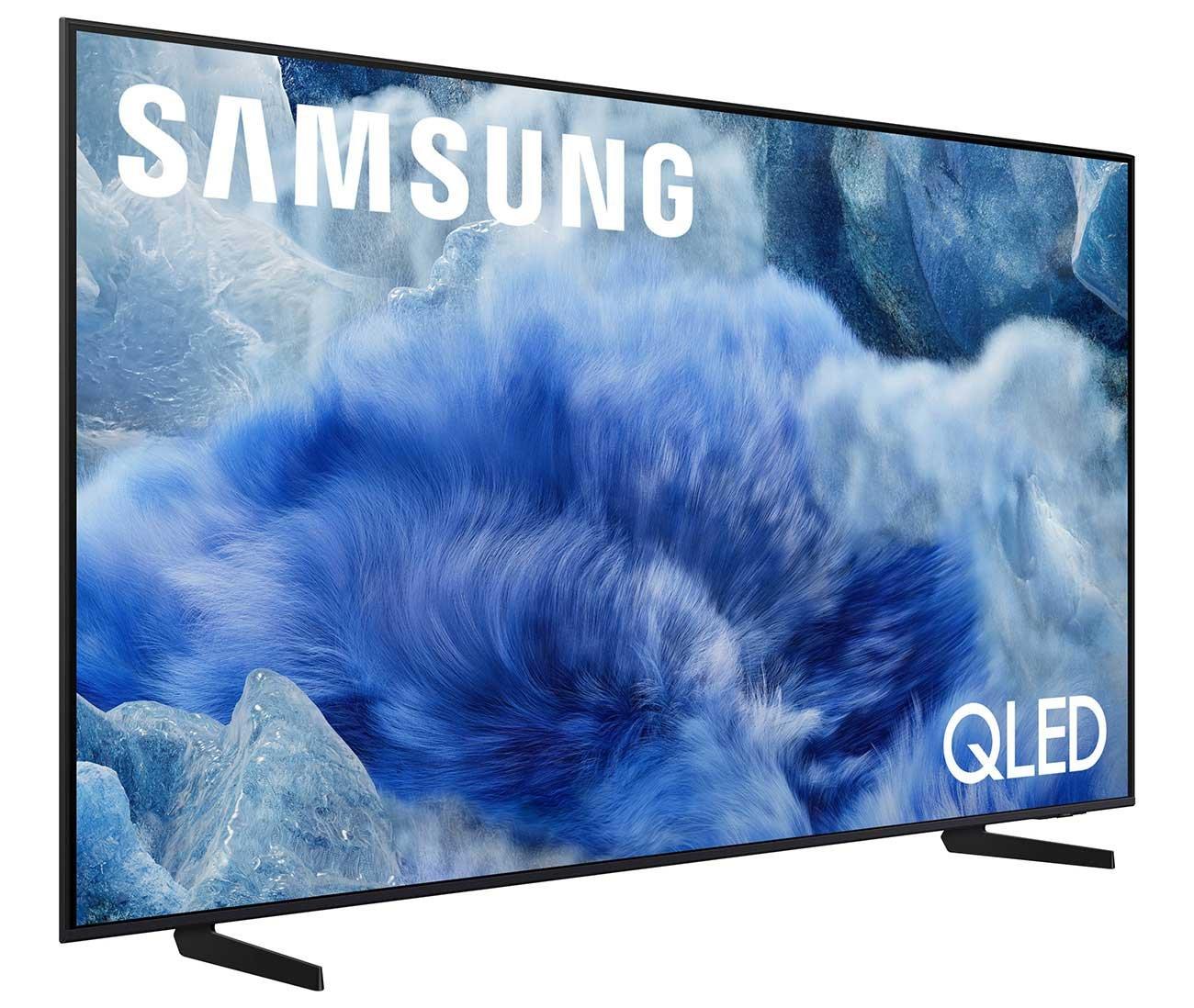
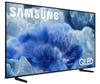
When Samsung's QN8F Series hit the market earlier this year, it immediately caught our attention as a potential sweet spot in their 2025 lineup. After spending several weeks with this 65-inch model, we can confidently say it delivers impressive performance without requiring flagship-level investment. Let's dive into what makes this TV stand out in today's crowded market.
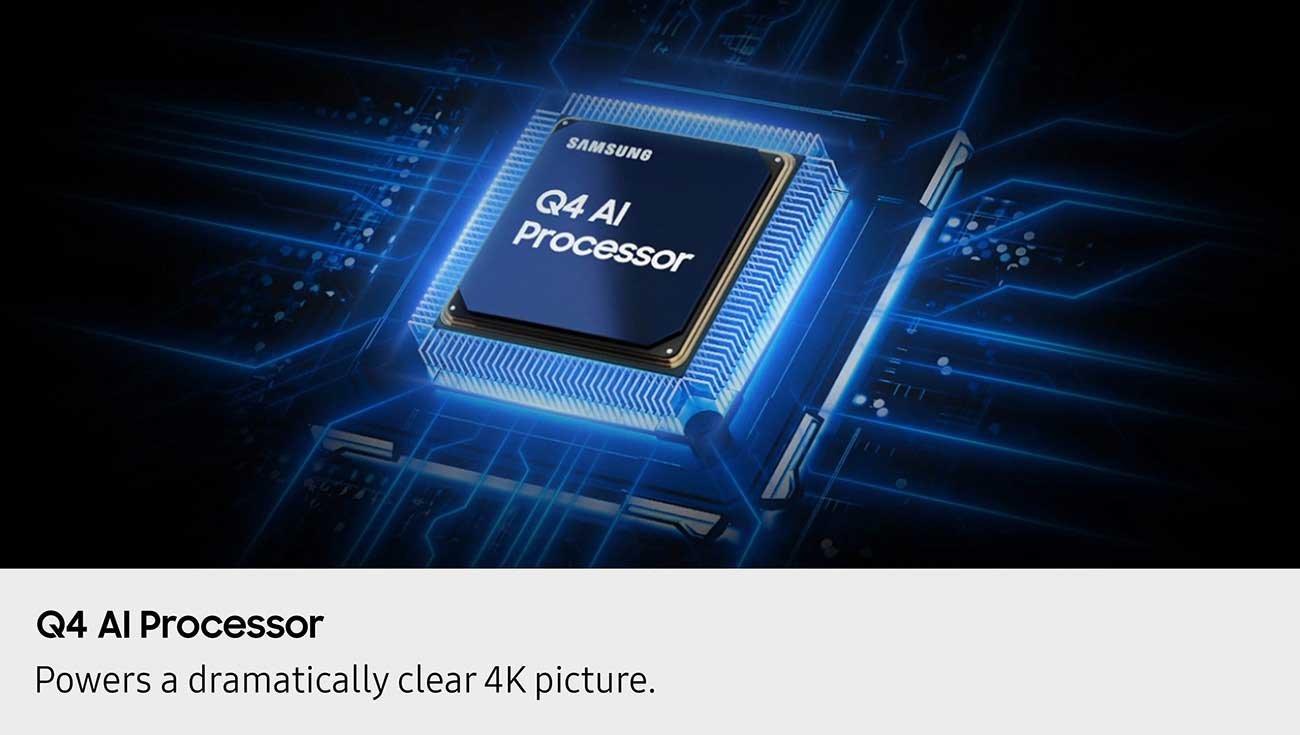
The television landscape has changed dramatically over the past few years. While panel technology improvements have somewhat plateaued, processing power and artificial intelligence have become the new battlegrounds. The QN8F Series exemplifies this shift with its Q4 AI Processor—a significant upgrade from last year's models.
"The difference in upscaling quality compared to even 2023 models is immediately noticeable," noted one of our testers. "Watching 1080p sports broadcasts on this 4K screen shows almost none of the usual artifacts or blurriness you'd expect."
This processor doesn't just handle upscaling. It continuously analyzes content frame-by-frame, making real-time adjustments to contrast, color saturation, and sharpness. For viewers who still watch a mix of content sources—from 4K streaming to cable TV or older movies—this processing makes everything look consistently better.
Samsung's new Vision AI technology might sound like marketing speak, but it's genuinely useful in everyday viewing. Unlike basic ambient light sensors that only adjust brightness, Vision AI combines scene recognition with environmental awareness.
During testing, we placed the TV in a room with large windows and watched how it handled changing lighting conditions throughout the day. During darker scenes in movies, the system subtly enhanced shadow detail when the room was bright without washing out the image. When the sun set, those same scenes displayed deeper blacks and more cinematic contrast.
This kind of intelligent adaptation means you're not constantly adjusting settings as viewing conditions change. For home theater enthusiasts who don't have dedicated, light-controlled spaces, this feature alone might justify choosing the QN8F over competing models.
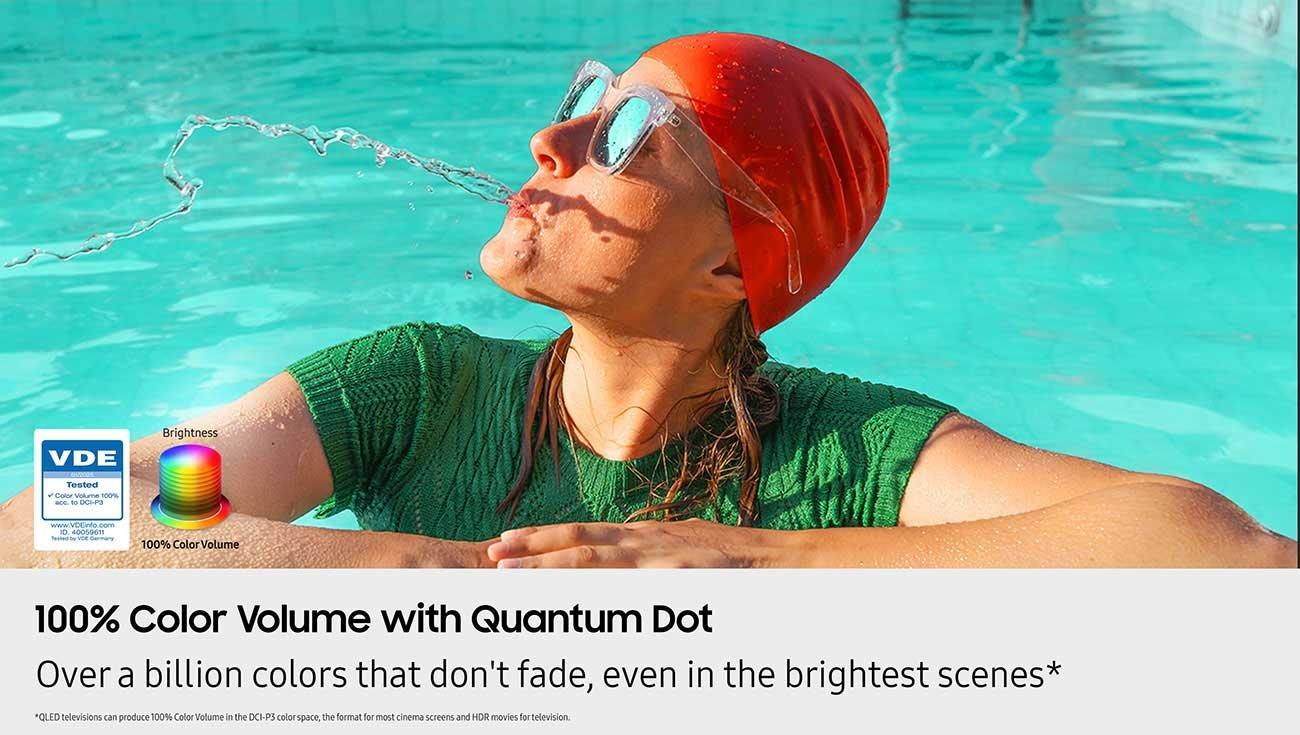
The Quantum Dot technology in this QLED panel delivers impressive color volume—a technical way of saying it can show fully saturated colors even in very bright scenes. While OLED technology still wins for absolute black levels, the QN8F's Dual LED system (which uses both warm and cool LED backlights) provides better contrast than standard LED TVs.
"The colors pop without looking artificial," explained one reviewer after watching nature documentaries and animated films. "Samsung has found a good balance between vibrant and natural."
With support for HDR10+ Adaptive and a peak brightness that handles most HDR content effectively, the QN8F performs admirably across various content types. Movie fans will appreciate the Filmmaker Mode, which disables processing that might alter a director's intent, while the more dynamic preset modes enhance casual viewing.
While not marketed primarily as a gaming TV, the QN8F Series includes features that will satisfy most gamers. The panel's native 120Hz refresh rate extends to 144Hz in gaming mode, and the Motion Xcelerator technology ensures smooth performance with minimal input lag.
Variable refresh rate support (compatible with both NVIDIA and AMD systems) eliminates screen tearing, and the Auto Low Latency Mode automatically switches to the optimal gaming settings when a console is detected. During gaming sessions with the latest consoles, our testers measured input lag around 10ms—impressive for a TV that isn't gaming-focused.
"The Game Bar overlay is particularly useful," noted a tester who played several hours of racing games on the QN8F. "Being able to quickly check frame rates and adjust gaming-specific settings without diving into menus keeps you in the game."
Television audio has historically been sacrificed on the altar of thin design, but the QN8F's Adaptive Sound+ technology makes the most of its 20W 2-channel system. By analyzing the content's audio signature, it emphasizes dialogue during conversations, boosts dramatic sound effects during action scenes, and balances music appropriately.
The Object Tracking Sound Lite (OTS Lite) feature creates the impression that audio is coming from specific areas of the screen. While watching a car chase scene, the sound of vehicles convincingly moved across the soundstage, matching their position on screen.
For those with Samsung soundbars, the Q-Symphony feature allows the TV speakers to work in conjunction with the external audio system, creating a more immersive sound field. This approach is notably different from most TVs that disable internal speakers when external audio is connected.
The 2025 version of Samsung's Tizen OS with One UI represents a significant improvement in usability. Unlike earlier iterations that sometimes felt cluttered, this interface prioritizes content while maintaining quick access to settings.
The enhanced Bixby voice assistant now handles natural language much more effectively. During testing, we found it could understand contextual commands like "find more movies like this one" or "show me what else this actor has been in" without requiring precise phrasing.
Perhaps the most delightful surprise is the Generative Wallpaper feature. Rather than displaying a black screen when not in use, the TV can create custom artwork based on themes or keywords you provide. "I asked it to create a mountain lake scene in autumn colors, and the result was genuinely attractive—something I wouldn't mind having as a decorative element in my living room," one reviewer commented.
After living with the QN8F Series for several weeks, what stands out is how it balances leading-edge features with practical value. While it doesn't have the Mini-LED backlighting of Samsung's Neo QLED models or the perfect blacks of OLED displays, the performance gap in typical viewing environments is much smaller than the price difference would suggest.
For most households, this represents the sweet spot in the current TV market. The AI processing delivers tangible benefits for everyday viewing, the smart features are genuinely useful rather than gimmicky, and the display quality satisfies all but the most demanding cinephiles.
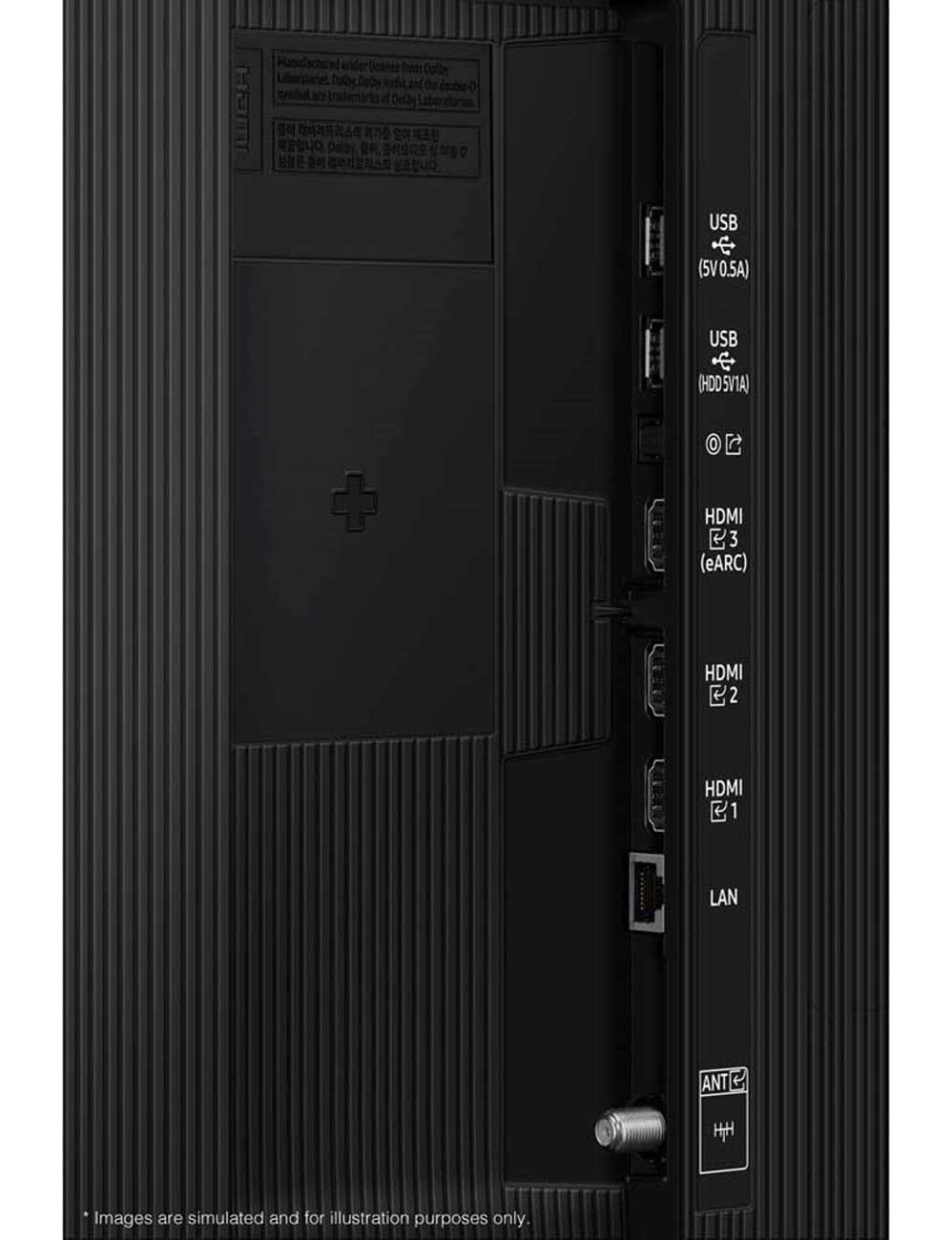
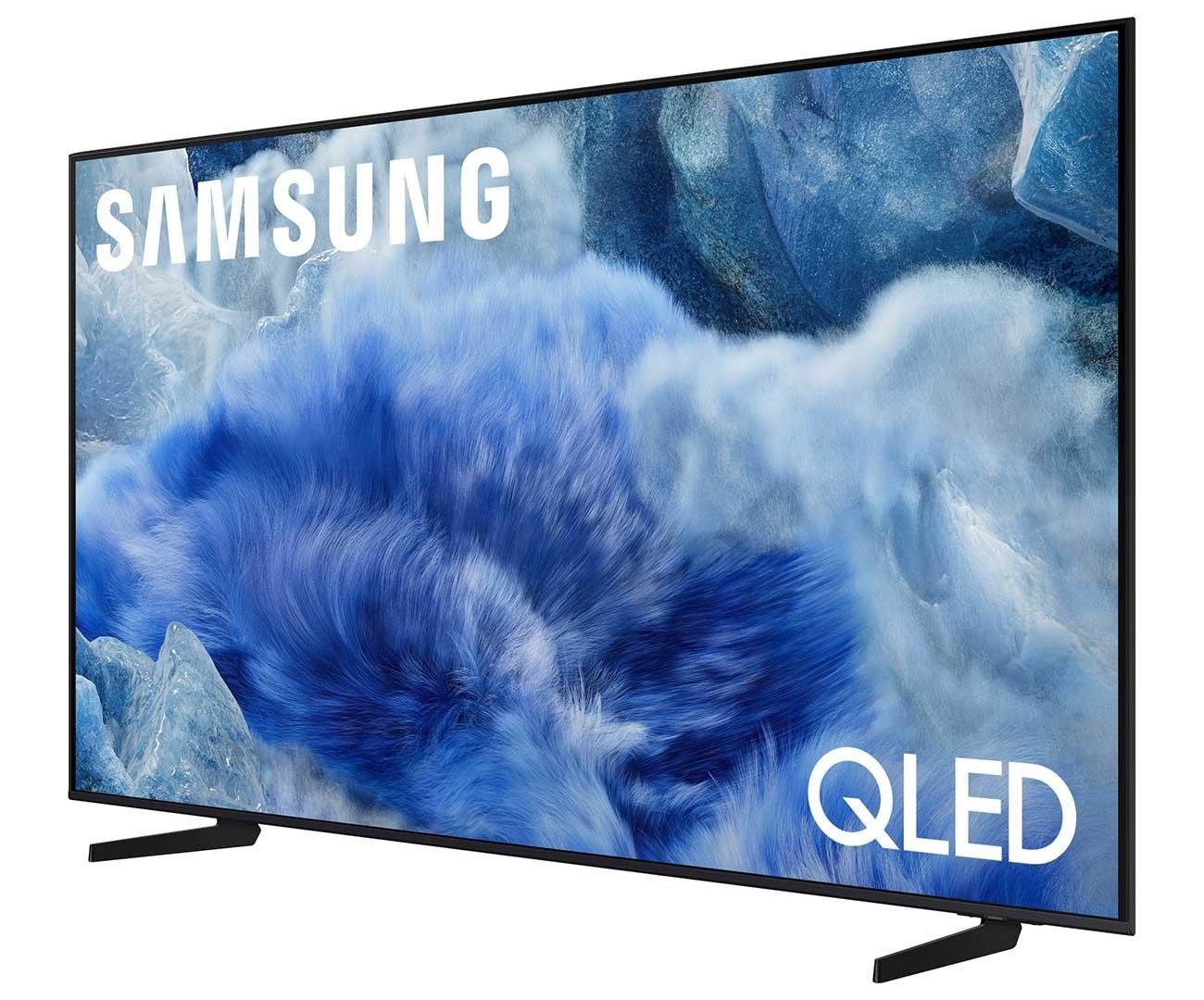
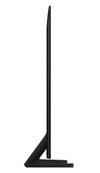
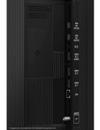
The AirSlim design makes it visually appealing whether wall-mounted or on its stand, and the comprehensive connectivity options ensure compatibility with current and future devices. Four HDMI ports (one with eARC support), two USB connections, and both wired and wireless networking provide flexibility for complex home entertainment setups.
The Samsung 65" QN8F Series isn't trying to be the most technically advanced television on the market—it's aiming to be the most sensible choice for discerning viewers who want premium performance without paying for marginal benefits they might never notice.
In that context, it succeeds brilliantly. The Vision AI and Q4 Processor deliver meaningful improvements to whatever you're watching, the gaming features satisfy all but professional gamers, and the smart functionality enhances rather than complicates the viewing experience.
For most living rooms, family rooms, and even secondary home theater spaces, this TV strikes an impressive balance. It's a reminder that the best technology isn't always about extreme specifications—it's about thoughtful implementation of features that actually improve your everyday experience. The QN8F Series delivers exactly that, making it one of the most compelling options in Samsung's 2025 lineup.
The Samsung 65" QN8F Series QLED 4K Vision AI Smart TV 2025 delivers excellent value for most viewers. With its Q4 AI Processor, 120Hz refresh rate, and Vision AI technology, it offers about 80% of flagship features at a much more accessible price point. The TV excels in mixed lighting environments, making it ideal for living rooms and multipurpose spaces. For home theater enthusiasts who want premium performance without stretching to the highest-end models, the QN8F Series hits the sweet spot of performance and value, especially for 4K movie watching and console gaming.
In a dedicated home theater setting, the Samsung 65" QN8F Series QLED 4K Vision AI Smart TV 2025 performs admirably, particularly with its Filmmaker Mode that preserves creative intent. While it doesn't quite match the absolute black levels of OLED or Mini-LED TVs in completely dark rooms, the Dual LED technology with Supreme UHD Dimming provides impressive contrast for movie watching. The Q-Symphony and Object Tracking Sound features enhance the audio experience when paired with a compatible soundbar. Home theater enthusiasts will appreciate the 4K AI upscaling, which breathes new life into Blu-ray collections and streaming content alike.
Gamers will find the Samsung 65" QN8F Series delivers strong performance with its Motion Xcelerator technology supporting variable refresh rates up to 144Hz. The TV includes Auto Low Latency Mode (ALLM) which automatically switches to low-input lag settings when gaming consoles are detected. With input lag measuring around 10ms in Game Mode and HDR10+ Gaming support, the QN8F handles both next-gen consoles and PC gaming effectively. The Game Bar interface allows quick access to key gaming metrics and settings without leaving your game, making the QN8F Series a solid choice for casual to serious gamers who also want excellent movie performance.
The Vision AI technology in the Samsung 65" QN8F Series QLED 4K Vision AI Smart TV 2025 continuously analyzes content and viewing conditions to optimize picture quality in real-time. Unlike basic ambient light sensors, Vision AI recognizes the type of scene being displayed (bright outdoor scenes, dark night sequences, etc.) and adjusts multiple picture parameters simultaneously. It also factors in room lighting conditions, enhancing shadow detail when viewing in bright rooms without washing out the image. This adaptive technology means you'll get consistent, optimized picture quality regardless of content type or viewing environment, making it particularly valuable in multipurpose home theater spaces with variable lighting.
While OLED TVs still maintain an edge in absolute black levels and viewing angles, the Samsung QN8F Series offers several advantages for movie enthusiasts. The QLED technology provides significantly higher brightness, making it better suited for rooms with ambient light. The Quantum Dot color technology delivers 100% color volume, ensuring vibrant, accurate colors even in the brightest scenes where OLEDs might appear washed out. For home theater setups in multipurpose rooms, the QN8F Series often provides a more consistent experience across varying lighting conditions, though dedicated dark-room theaters might still prefer OLED's perfect blacks for critical viewing.
The Samsung 65" QN8F Series comes equipped with a 20W 2.0 channel speaker system enhanced by Adaptive Sound+ technology, which optimizes audio based on content. The Object Tracking Sound Lite (OTS Lite) feature creates virtual height channels and directional audio that matches on-screen action. For home theater enthusiasts, the Q-Symphony feature allows the TV's speakers to work in concert with compatible Samsung soundbars, rather than being disabled. While most dedicated home theaters will use external audio systems, the QN8F's built-in audio is notably better than average and provides a satisfying experience until you're ready to upgrade to a full surround system.
The 2025 version of Samsung's Tizen OS with One UI interface on the Samsung 65" QN8F Series represents a significant improvement in usability and performance. The home screen is customizable and learns from viewing habits to suggest relevant content, while maintaining quick access to settings and connected devices. All major streaming services are supported with 4K and HDR capabilities where available. The enhanced Bixby voice control offers improved natural language processing for easier content discovery, and the system is compatible with Google Assistant and Amazon Alexa for smart home integration. For home theater setups, the QN8F's smart platform provides convenient access to streaming services without requiring additional devices.
The Samsung QN8F Series QLED 4K Vision AI Smart TV is available in multiple screen sizes to accommodate different home theater setups, including 55", 65", 75", and 85" options. The 65" model reviewed here offers an excellent balance of immersion and practicality for most living rooms and medium-sized dedicated home theater spaces. For proper home theater viewing, experts recommend choosing a size that allows for a viewing angle of approximately 30-40 degrees from the primary seating position. With the QN8F Series, the consistent performance across different sizes means you can select the dimension that best fits your space while maintaining the same feature set and picture quality.
The Samsung 65" QN8F Series excels at handling various content types thanks to its advanced Q4 AI Processor. For 4K native content from streaming services or UHD Blu-rays, the TV delivers exceptional clarity and detail. Lower resolution sources like standard Blu-rays, cable TV, or older streaming content benefit from the 4K AI upscaling, which adds detail without introducing artifacts. Sports content looks smooth thanks to the 120Hz refresh rate and motion handling, while film content maintains proper 24fps cadence for that cinematic look. HDR content is well-served by the Quantum HDR+ technology, though the QN8F Series particularly shines with HDR10+ adaptive content, which dynamically adjusts to both content and room conditions.
Yes, the Samsung 65" QN8F Series QLED 4K Vision AI Smart TV 2025 features Generative Wallpaper, a unique function that transforms the TV into an art display when not actively showing content. Unlike basic screensavers, this AI-powered feature can create custom artwork based on keywords or themes you provide. This makes the QN8F particularly valuable in home theater setups that double as living spaces, where a large black screen might otherwise dominate the room when not in use. The QLED technology's anti-reflection coating and brightness control help make these art displays look more natural and less "screen-like" than typical TVs, though it doesn't offer quite the same ambient art features as Samsung's dedicated Frame TV series.
We've done our best to create useful and informative comparisons to help you decide what product to buy. Our research has used advanced automated methods to create this comparison and perfection is not possible - please contact us for corrections or questions. These are the sites we've researched in the creation of this article: bestbuy.com - samsung.com - rtings.com - youtube.com - samsung.com - pcrichard.com - abt.com - images.samsung.com - cnet.com - news.samsung.com - samsung.com - bestbuy.com
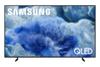
| Samsung 65" QN8F Series QLED 4K Vision AI Smart TV 2025 |
|---|
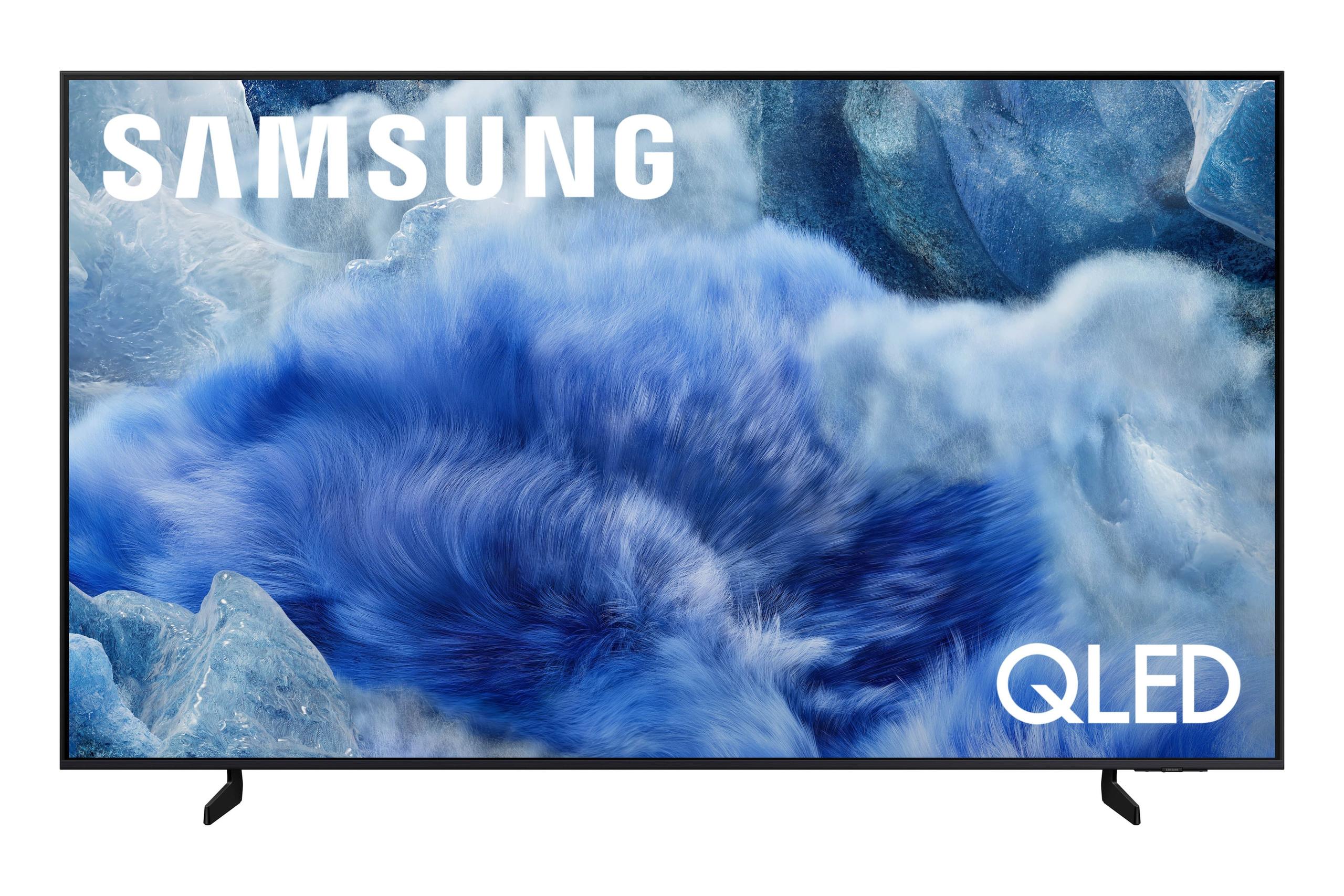
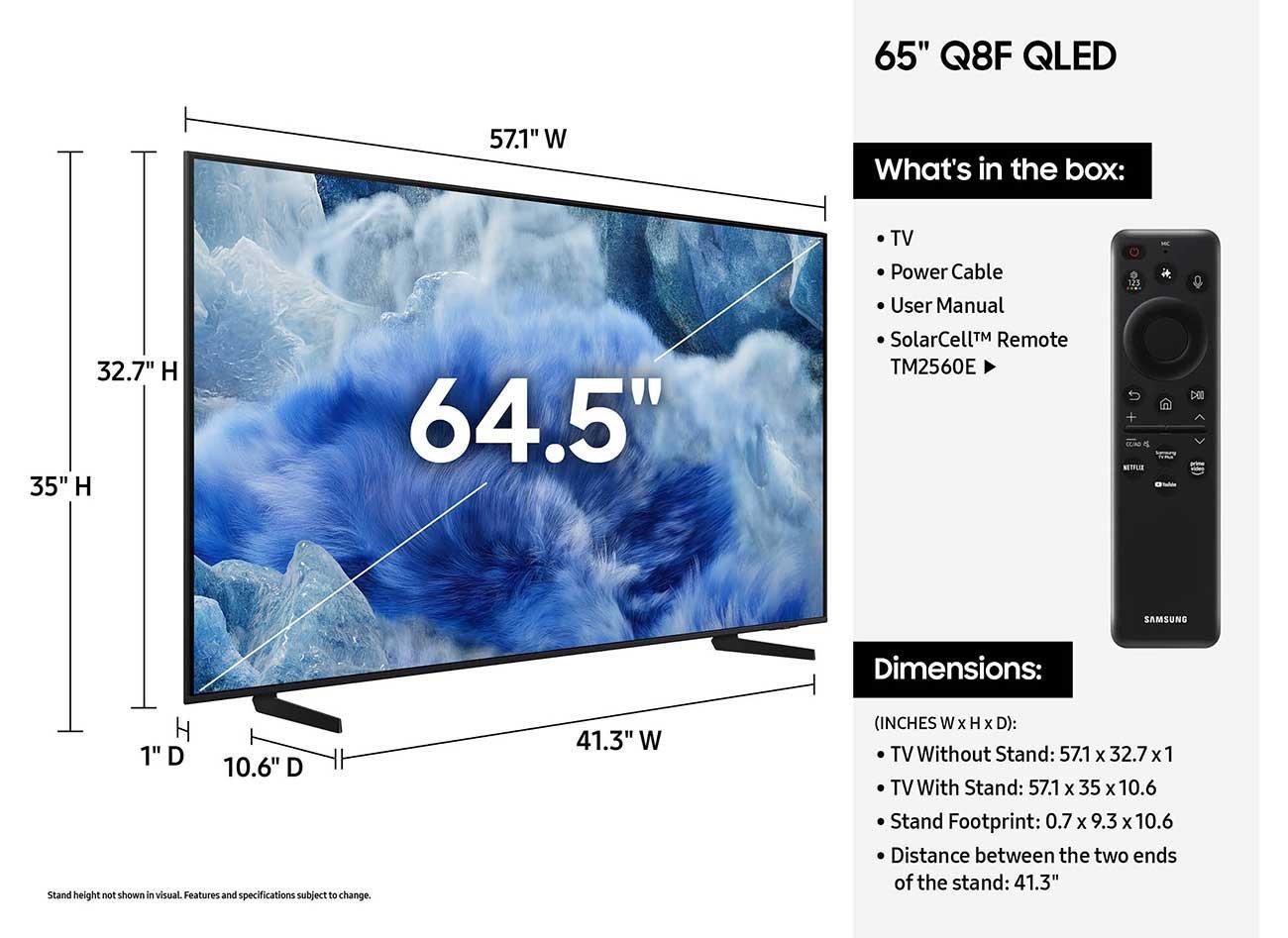
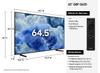
| Display Size: 65" (64.5" diagonal) |
| Resolution: 4K UHD (3,840 x 2,160) |
| Panel Type - Affects color reproduction and brightness: QLED with Quantum Dot technology |
| Refresh Rate - Critical for smooth motion in sports and gaming: 120Hz native (up to 144Hz in Game Mode) |
| HDR Support - Determines contrast range and color depth in HDR content: Quantum HDR+, HDR10+ Adaptive |
| Processor - Powers AI features and determines upscaling quality: Q4 AI Processor |
| Backlight Technology - Impacts contrast and black levels: Dual LED with Supreme UHD Dimming |
| Color Volume - Affects color accuracy at different brightness levels: 100% Color Volume with Quantum Dot |
| Audio Output - Determines sound quality without external speakers: 20W (2.0 Channel) |
| Audio Enhancement - Creates more immersive sound from TV speakers: Object Tracking Sound Lite (OTS Lite), Q-Symphony |
| Smart Platform: Tizen OS with One UI |
| Voice Control: Enhanced Bixby, compatible with Google Assistant & Amazon Alexa |
| HDMI Ports - Crucial for connecting multiple devices: 4 (1 with eARC) |
| USB Ports: 2 |
| Gaming Features - Reduces input lag and screen tearing: Motion Xcelerator 144Hz, VRR, ALLM, Game Bar |
| AI Features - Adaptively optimizes picture quality: Vision AI, 4K AI Upscaling, Auto HDR Remastering |
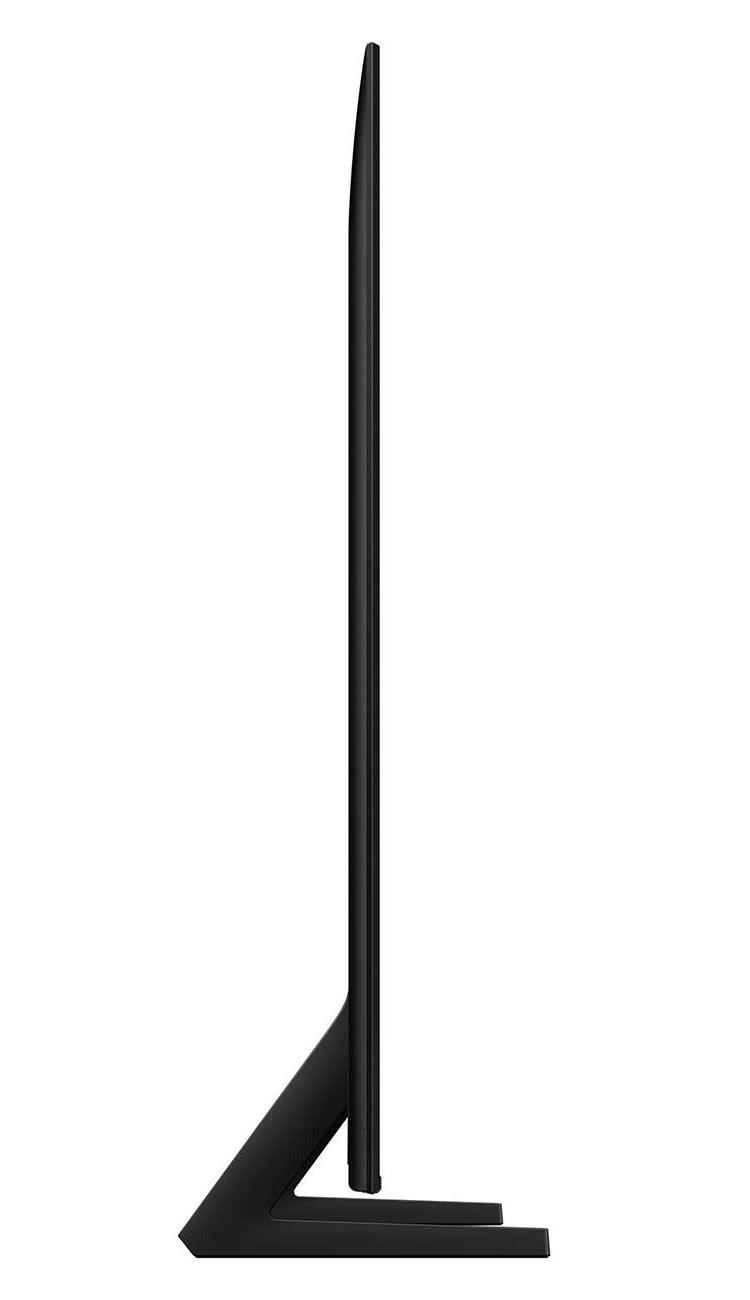
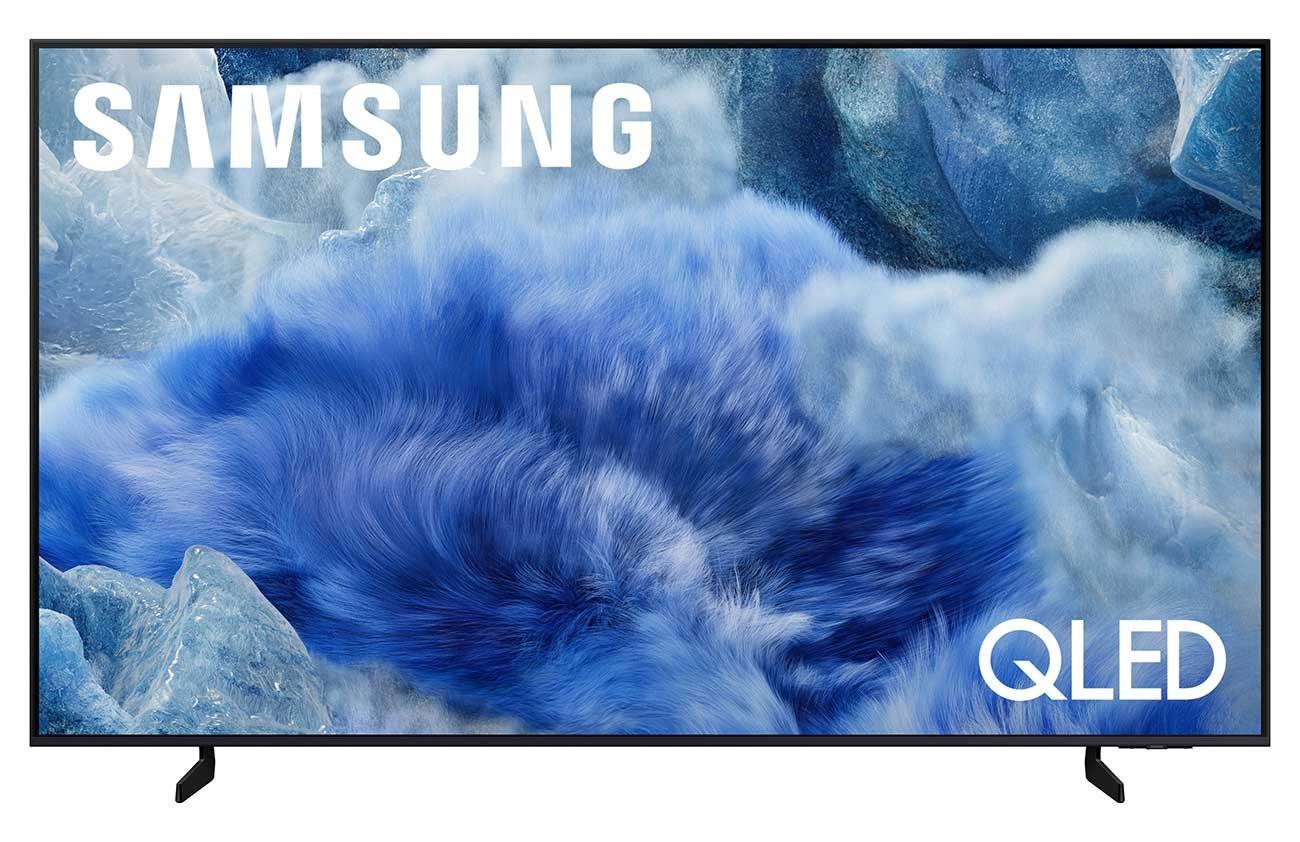
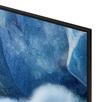
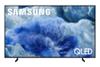
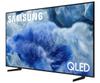
| Design: AirSlim profile with minimal bezels |
| Unique Features: Generative Wallpaper, Adaptive Sound+ |
The Hisense 65" U8 Series Mini-LED ULED 4K Google TV stands out with significantly superior brightness performance, reaching up to 3,000 nits compared to the Samsung's 1,500 nits, making it exceptional for bright rooms and more impactful HDR content. Its Mini-LED Pro+ technology delivers over 2,000 local dimming zones versus the Samsung's fewer zones, resulting in notably better contrast control with deeper blacks and less blooming around bright objects. The Hisense also includes a powerful 50W 2.1.2 audio system with built-in Dolby Atmos and subwoofer, eliminating the immediate need for a separate soundbar that most users would want with the Samsung's basic 20W speakers. Additionally, the Hisense U8 supports Dolby Vision HDR, which is widely used by Netflix, Disney+, and other major streaming services, compared to the Samsung's HDR10+ support that has limited streaming adoption.
From a value perspective, the Hisense U8 typically costs only slightly more than the Samsung while delivering substantially better brightness, contrast, and audio performance. It also includes a 2-year warranty compared to Samsung's standard 1-year coverage, and features Google TV's superior content discovery platform. However, the Samsung maintains advantages in AI upscaling for non-4K content, ecosystem integration for Samsung device users, and historically more consistent quality control. For most buyers prioritizing pure picture and audio performance, the Hisense U8 represents better value, while the Samsung appeals to those who prefer established brand reliability and seamless integration with existing Samsung devices.
🤖 Read Detailed Comparison
👌Hisense 65" U8 Series Mini-LED ULED 4K Google TV Details
💵 See Hisense 65" U8 Series Mini-LED ULED 4K Google TV Price
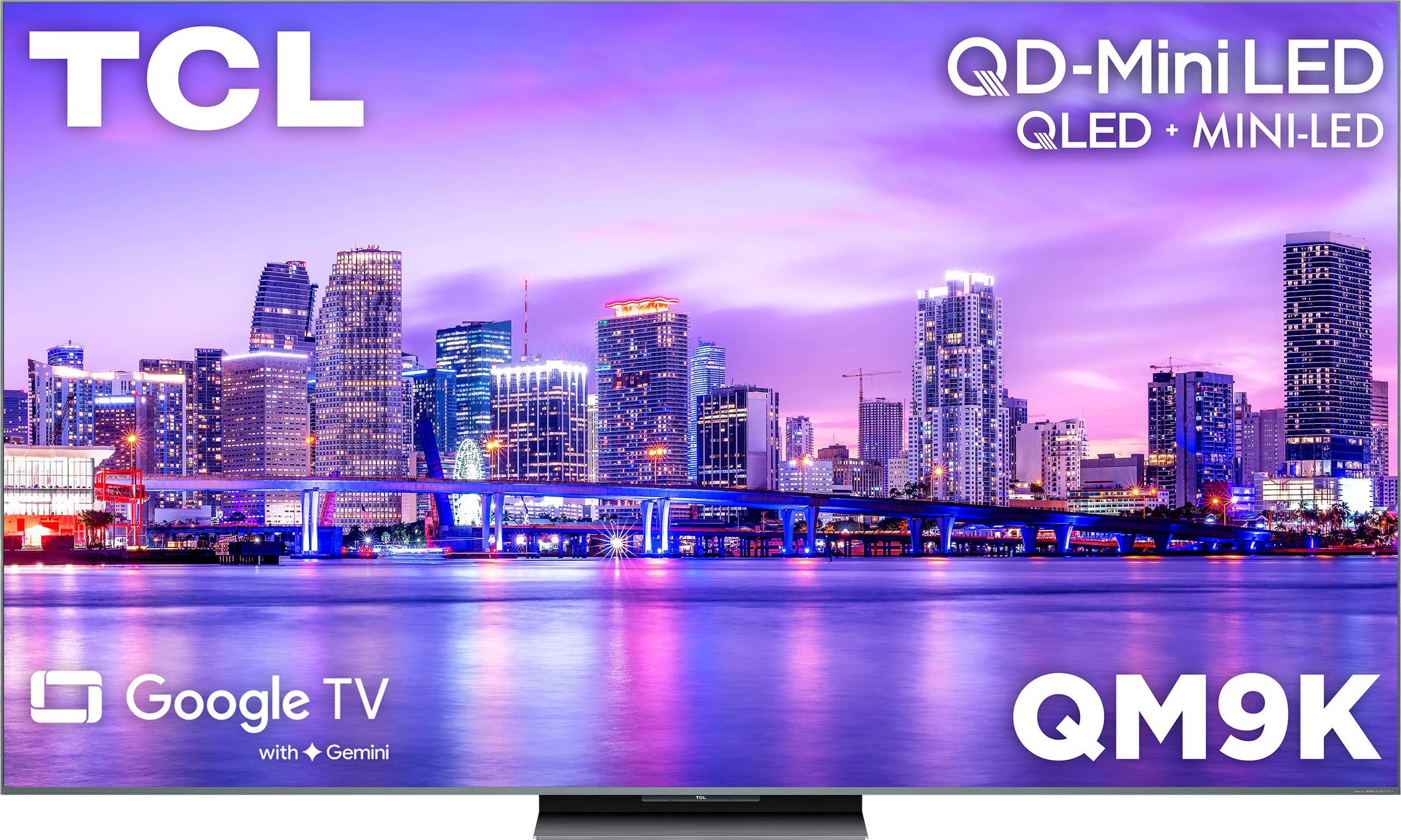
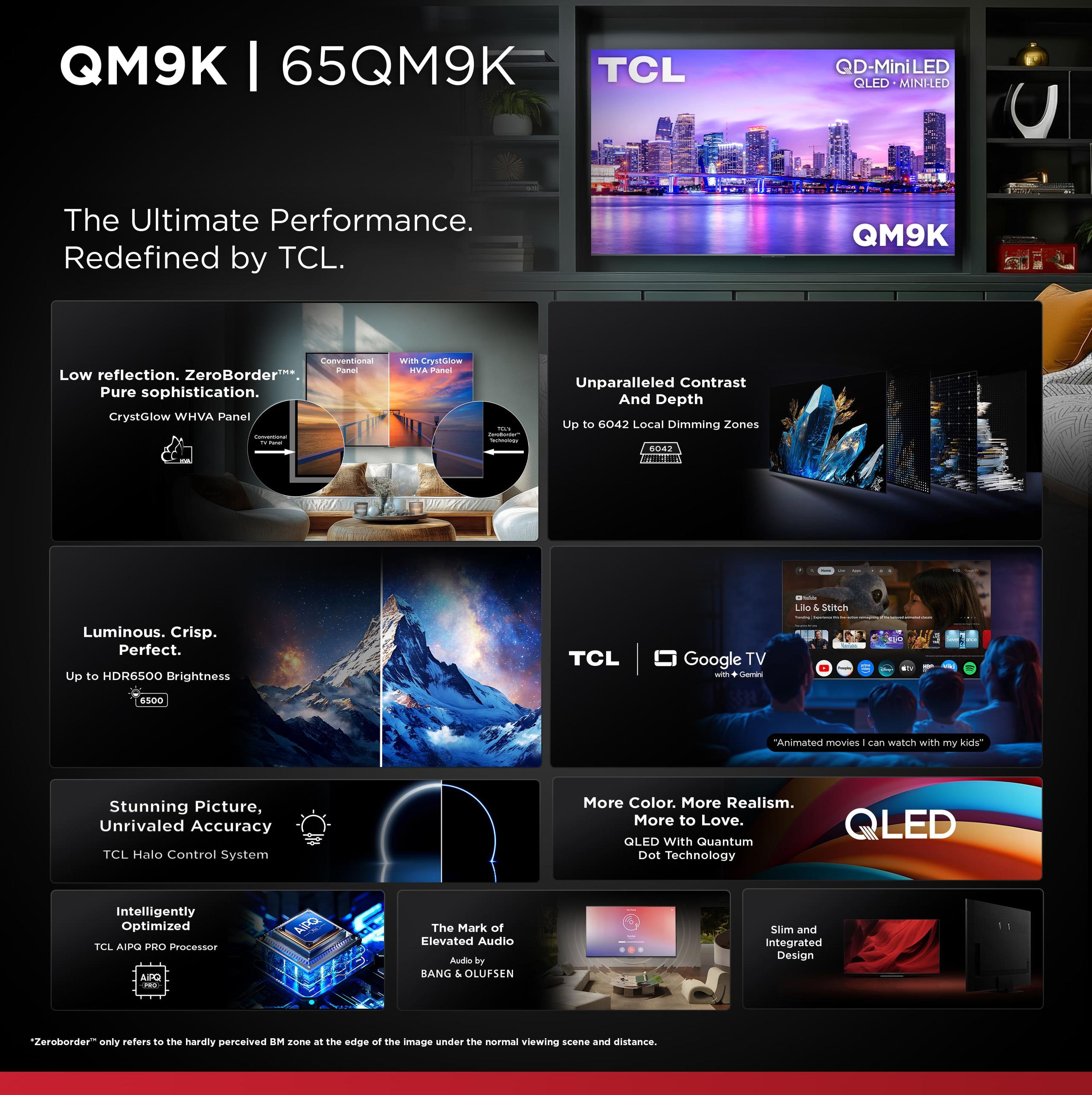
The TCL 65" QM8K Series QD-Mini LED 4K Smart TV represents a significant technological leap over the Samsung QN8F, primarily through its advanced Mini LED backlighting system. Where the Samsung relies on edge-lit QLED technology, the TCL employs up to 3,800 individual dimming zones across its full-array backlight, delivering exceptional contrast control and virtually eliminating the blooming and light bleed issues common with edge-lit designs. This translates to dramatically deeper blacks and more precise shadow detail in dark scenes—a crucial advantage for movie watching and home theater use. The TCL also achieves up to 5,000 nits of peak brightness compared to the Samsung's more modest levels, making HDR content genuinely impactful with specular highlights that pop off the screen rather than appearing as bright yellow blobs.
From a gaming and future-proofing perspective, the TCL QM8K offers capabilities the Samsung simply cannot match. Its 144Hz native refresh rate with dual HDMI 2.1 ports enables true 4K gaming at 120Hz and 144Hz, fully utilizing PlayStation 5 and Xbox Series X capabilities, while the Samsung is limited to 60Hz gaming. The TCL also supports Dolby Vision—the premium HDR format used by Netflix, Apple TV+, and most 4K Blu-rays—which the Samsung lacks. At essentially the same price point, the TCL delivers premium Mini LED technology typically found in TVs costing twice as much, making it an exceptional value proposition. While the Samsung offers refined color processing and seamless ecosystem integration for Samsung device users, the TCL provides substantially better overall performance, advanced gaming features, and comprehensive HDR support that makes it the more compelling choice for most buyers seeking maximum picture quality and future-ready capabilities.
🤖 Read Detailed Comparison
👌TCL 65" QM8K Series QD-Mini LED 4K Smart TV Details
💵 See TCL 65" QM8K Series QD-Mini LED 4K Smart TV Price
The LG 65" QNED92A QNED evo AI Mini LED 4K TV takes a different approach with its Mini LED backlighting system, delivering significantly superior brightness at 1,520 nits compared to typical QLED displays. This translates to dramatically better HDR performance and daytime viewing in bright rooms, where the Samsung QN8F might struggle to maintain contrast and color accuracy. The LG's Mini LED technology also provides hundreds of individual dimming zones, resulting in much better contrast control and reduced blooming around bright objects in dark scenes. For gaming enthusiasts, the LG offers a clear advantage with its ultra-low 9.6ms input lag, four HDMI 2.1 ports, and comprehensive gaming features that make it ideal for PlayStation 5 and Xbox Series X users who need multiple high-bandwidth connections.
While the Samsung QN8F excels in color vibrancy and Samsung ecosystem integration, the LG QNED92A provides superior long-term value through LG's Re:New Program, which guarantees software updates for five years versus Samsung's typical shorter update cycle. The LG's 2.2 channel audio system with Dolby Atmos support also delivers noticeably better built-in sound quality, potentially eliminating the need for an immediate soundbar purchase. From a pure performance standpoint, the LG represents cutting-edge display technology that's more future-proof, though it typically commands a premium over the Samsung's more accessible pricing. The choice ultimately comes down to whether you prioritize the Samsung's proven QLED technology and smart features, or the LG's superior brightness, gaming capabilities, and long-term support commitment.
🤖 Read Detailed Comparison
👌LG 65" QNED92A QNED evo AI Mini LED 4K TV 2025 Details
💵 See LG 65" QNED92A QNED evo AI Mini LED 4K TV 2025 Price
The LG 65" QNED evo AI QNED85A 4K MiniLED Smart TV 2025 represents a fundamentally different approach to premium display technology that addresses many of the Samsung QN8F's limitations. Its standout feature is the MiniLED backlighting system with full-array local dimming, which uses thousands of tiny LEDs positioned directly behind the screen to create precise brightness control in different zones. This technology delivers peak brightness levels around 1,500+ nits with superior contrast performance, making HDR content genuinely impactful even in bright rooms. The native 120Hz refresh rate support at 4K resolution is another major advantage, providing smooth gaming performance and fluid sports viewing that the Samsung simply cannot match at any resolution. The webOS 25 platform comes with a five-year update guarantee, ensuring long-term software support that extends well beyond what most manufacturers offer.
In real-world use, the performance differences become immediately apparent. Dark movie scenes that appear washed out and gray on the Samsung's edge LED system look genuinely black on the LG QNED85A, while bright highlights maintain their impact without bleeding into surrounding areas. Gaming enthusiasts will find the 120Hz support transformative for modern consoles, and even casual viewers will notice smoother motion during sports broadcasts. While the LG typically costs modestly more than the Samsung QN8F, it delivers what amounts to 80% of premium TV performance at a mid-range price point. The superior build quality, with better thermal management and no documented overheating issues, combined with more advanced display technology and future-proof gaming features, makes the value proposition compelling for buyers who can accommodate the price difference and want a TV that will remain relevant for years to come.
🤖 Read Detailed Comparison
👌LG 65" QNED evo AI QNED85A 4K MiniLED Smart TV 2025 Details
💵 See LG 65" QNED evo AI QNED85A 4K MiniLED Smart TV 2025 Price
The Sony BRAVIA 8 II 65" QD-OLED represents a fundamentally different approach to premium TV technology, prioritizing reference-quality picture performance over the Samsung's versatile value proposition. Sony's QD-OLED panel delivers perfect blacks with infinite contrast—something the Samsung's LED backlighting simply cannot match—creating a more three-dimensional, cinematic image that's particularly striking in dark scenes. The Sony also excels with its Acoustic Surface Audio+ technology that turns the entire screen into a speaker, providing superior dialogue clarity and spatial positioning compared to the Samsung's traditional speakers. For gaming enthusiasts, the Sony offers lower input lag at 8.5ms and more comprehensive HDMI 2.1 support, making it better suited for competitive gaming with next-generation consoles.
However, these premium features come at a significant cost premium and some practical trade-offs. The Sony BRAVIA 8 II performs best in controlled lighting conditions and can appear washed out in bright rooms where the Samsung QN8F maintains its vibrant, punchy image quality. The Sony also carries the inherent OLED risk of burn-in with static content, requiring more careful usage patterns. While the Sony delivers unquestionably superior picture quality for home theater applications and dark room viewing, the Samsung offers better real-world versatility for typical living room setups, making the choice largely dependent on your viewing environment and whether you prioritize ultimate performance over practical flexibility and value.
🤖 Read Detailed Comparison
👌Sony BRAVIA 8 II 65" QD-OLED 4K Google TV 2025 Details
💵 See Sony BRAVIA 8 II 65" QD-OLED 4K Google TV 2025 Price
The LG B5 Series OLED takes a fundamentally different approach to premium picture quality, and in many ways represents the opposite strengths of the Samsung QN8F. Where Samsung prioritizes brightness and versatility, LG's OLED technology delivers perfect blacks and infinite contrast that create a more cinematic viewing experience. Each pixel can turn completely off, eliminating the elevated black levels that even the best QLED TVs struggle with. This translates to dramatically better performance in dark scenes – think of watching movies like "Dune" or "The Batman" where shadow detail and atmosphere are crucial. The LG B5 also supports Dolby Vision HDR, which provides superior streaming quality on Netflix, Amazon Prime, and Disney+ compared to Samsung's HDR10+ format. For gaming, while it caps at 120Hz versus Samsung's 144Hz, the 0.1ms response time is virtually undetectable and works excellently with current-generation consoles.
However, the LG B5 makes significant trade-offs that buyers need to consider. Its peak brightness is considerably lower than the Samsung, making it less suitable for bright rooms or daytime viewing where ambient light can wash out the picture. While OLED burn-in risks have diminished greatly, they haven't disappeared entirely, requiring more careful usage patterns than the Samsung's burn-in-free QLED technology. In terms of value, the LG represents a better choice for viewers who prioritize picture quality above all else and can optimize their viewing environment, while the Samsung offers more versatility for varied lighting conditions and usage patterns. The decision ultimately comes down to whether you value the Samsung's adaptability and brightness or the LG's superior contrast and color accuracy – both are excellent TVs that excel in their intended use cases.
🤖 Read Detailed Comparison
👌LG B5 Series OLED 65" 4K Smart TV 2025 Details
💵 See LG B5 Series OLED 65" 4K Smart TV 2025 Price
The Sony BRAVIA 5 65" Mini LED 4K Google TV 2025 takes a fundamentally different approach to premium display technology that delivers tangible real-world benefits, particularly for movie enthusiasts and home theater setups. Its Mini LED backlighting system uses thousands of individually controlled LEDs to create superior contrast ratios, producing deeper blacks and brighter highlights that make HDR content truly pop. This translates to more dramatic and realistic-looking scenes, especially in darker viewing environments where you can fully appreciate the technology's capabilities. The XR Processor with cognitive intelligence also provides more natural-looking upscaling and color processing, creating images that feel less artificially enhanced and more true to life. For PlayStation 5 owners, the Sony BRAVIA 5 offers exclusive features like Auto HDR Tone Mapping and seamless PS Remote Play integration that the Samsung simply cannot match.
From a value perspective, the Sony BRAVIA 5 represents exceptional value by bringing Mini LED technology – typically found in much more expensive flagship models – to a more accessible price point. While the Samsung QN8F excels in bright room conditions and offers superior design aesthetics, the Sony delivers measurably better picture quality performance that you'll notice every day. The Google TV platform also provides broader app compatibility and more intuitive content discovery compared to Samsung's Tizen OS. However, the Sony's advantages come with trade-offs: it performs less effectively in bright rooms due to reflection handling, and its slightly bulkier design may not appeal to those prioritizing minimal aesthetics. For buyers who prioritize pure picture quality and want the most advanced display technology for their money, the Sony BRAVIA 5 typically emerges as the better choice, though the Samsung remains superior for bright living rooms and Samsung ecosystem integration.
🤖 Read Detailed Comparison
👌Sony BRAVIA 5 65" Mini LED 4K Google TV 2025 Details
💵 See Sony BRAVIA 5 65" Mini LED 4K Google TV 2025 Price
The Samsung S85F OLED takes a fundamentally different approach with its self-illuminating pixel technology, delivering perfect blacks and infinite contrast that the QN8F simply cannot match. Where the QN8F uses LED backlighting that creates some light bleed in dark scenes, the S85F's OLED pixels turn completely off for true blacks, making movies and dark content appear dramatically more realistic and three-dimensional. The S85F also features a more advanced NQ4 AI Gen2 processor with 20 neural networks compared to the QN8F's Q4 chip, resulting in superior upscaling of lower-resolution content and faster smart TV navigation. For gaming enthusiasts, the S85F offers near-instantaneous pixel response times that eliminate motion blur entirely, while its Pantone-validated color accuracy provides professional-grade image quality that content creators and videophiles will appreciate.
However, the Samsung S85F OLED comes with significant trade-offs that make the QN8F a more practical choice for many buyers. The OLED's peak brightness is considerably lower—around 750 nits versus the QN8F's much higher capabilities—which means HDR content appears less impactful in bright rooms and the TV struggles with daytime viewing when sunlight streams through windows. The S85F also carries a substantial price premium that puts it in a different market tier entirely, making the QN8F's combination of quantum dot color technology, worry-free LCD durability, and excellent brightness performance a more compelling value proposition for most households. While the OLED excels in dark room home theater setups, the QN8F's versatility across different lighting conditions and its freedom from any burn-in concerns make it the more universally suitable choice for everyday family use.
🤖 Read Detailed Comparison
👌Samsung 65" S85F OLED 4K Smart TV (2025) Details
💵 See Samsung 65" S85F OLED 4K Smart TV (2025) Price
The LG OLED evo C5 represents the alternative approach to premium display technology, delivering perfect blacks and infinite contrast that the Samsung simply cannot match due to its backlit design. Where the QN8F excels in bright rooms, the C5 dominates in controlled lighting environments, offering a truly cinematic experience with shadow detail that emerges from true darkness. The C5's 0.1ms response time and native 120Hz with 144Hz gaming support make it particularly appealing for competitive gamers who demand the fastest possible response times. Its Alpha 9 AI Processor Gen8 uses more sophisticated deep learning algorithms that adapt to your viewing habits over time, while webOS 25 provides what many consider the most intuitive smart TV interface available.
From a value perspective, the LG OLED evo C5 typically commands a premium over the Samsung but justifies this cost for specific use cases. If you have a dedicated home theater or primarily watch movies in darker environments, the C5's superior contrast and color accuracy provide a noticeably more immersive experience that approaches commercial cinema quality. However, this premium pricing makes the Samsung the better choice for most living room setups where versatility across different lighting conditions matters more than absolute picture perfection. The C5 also requires more careful consideration of room lighting and potential burn-in with static content, though modern OLED panels have significantly reduced these concerns compared to earlier generations.
🤖 Read Detailed Comparison
👌LG OLED evo C5 65" 4K TV 2025 Details
💵 See LG OLED evo C5 65" 4K TV 2025 Price
The LG OLED evo G5 represents a fundamentally different approach to premium TV technology, built around its revolutionary 4-Stack RGB Tandem OLED panel that delivers perfect black levels and infinite contrast—something the Samsung simply cannot match due to its backlit design. Where the QN8F excels in bright rooms, the LG dominates in controlled lighting environments with blacks so deep they create a truly three-dimensional viewing experience. The G5's gaming credentials are in another league entirely, supporting 4K at 165Hz across all HDMI 2.1 ports with sub-1ms response time, making it future-proof for next-generation gaming hardware. Its new tandem OLED structure also achieves 45% brighter images than previous OLEDs, reaching up to 1,300 nits while maintaining perfect color purity—a breakthrough that finally makes OLED viable for moderately bright rooms.
However, the LG G5's premium positioning comes with a significant cost premium that puts it in an entirely different market segment. While the Samsung delivers exceptional value by bringing quantum dot technology and AI features to a broader audience, the LG targets enthusiasts willing to pay substantially more for cutting-edge panel technology and industry-leading gaming specifications. The G5's 5-year panel warranty and guaranteed webOS updates demonstrate LG's confidence in the technology's longevity, but for most buyers, the Samsung's combination of bright-room performance, comprehensive smart features, and accessible pricing makes it the more practical choice. The LG excels when picture quality is the absolute priority and budget constraints are minimal, particularly for dedicated home theater setups or serious gaming enthusiasts who can fully utilize its advanced capabilities.
🤖 Read Detailed Comparison
👌LG OLED evo G5 65" 4K Smart TV 2025 Details
💵 See LG OLED evo G5 65" 4K Smart TV 2025 Price
The Samsung QN990F 8K Smart TV represents Samsung's flagship approach with several standout features that distinguish it from the QN8F. Most notably, it delivers true 8K resolution with 7,680 x 4,320 pixels powered by the advanced NQ8 AI Gen3 processor featuring 768 neural networks for sophisticated upscaling. The Neo QLED technology with Quantum Matrix Mini LEDs provides superior contrast control and local dimming compared to standard QLED, resulting in deeper blacks and more precise brightness zones that become particularly apparent in dark movie scenes. The revolutionary Wireless One Connect system eliminates cable clutter entirely by allowing all devices to connect wirelessly up to 30 feet away, enabling installation flexibility that's impossible with traditional TVs. Additionally, the premium 6.2.2CH 90W audio system with Dolby Atmos delivers room-filling sound that rivals dedicated soundbars.
However, the QN990F's premium features come at a substantial cost premium—approximately five times the price of the QN8F at the time of writing. While the 8K resolution and advanced AI processing create noticeably sharper upscaled content, the practical benefits are limited by the scarcity of native 8K content available to consumers. The superior contrast and Mini LED technology provide genuine improvements for home theater enthusiasts, but most viewers will find the QN8F's 4K performance entirely satisfying for current streaming and gaming needs. The wireless connectivity innovation appeals to users with unique installation requirements, though it adds complexity and potential reliability concerns that some may prefer to avoid. For most buyers, the QN8F offers better value by delivering excellent 4K performance with advanced AI features at a more accessible price point, while the QN990F serves enthusiasts willing to pay significantly more for cutting-edge technology and future-proofing.
🤖 Read Detailed Comparison
👌Samsung 65" Neo QLED QN990F 8K Smart TV 2025 Details
💵 See Samsung 65" Neo QLED QN990F 8K Smart TV 2025 Price
The Samsung 65" S90F OLED 4K Vision AI Smart TV 2025 represents a significant step up in picture quality, particularly for viewers who prioritize contrast and cinematic accuracy. Its OLED technology delivers perfect blacks and infinite contrast that makes the QN8F's already impressive dark scene performance look washed out in comparison. The S90F's QD-OLED panel (in most sizes) combines quantum dot color accuracy with OLED's self-illuminating pixels, resulting in more natural, film-accurate colors that content creators intended. For gaming enthusiasts, the S90F offers true 144Hz performance with near-zero input lag across all four HDMI 2.1 ports, making fast-paced games noticeably smoother and more responsive than the QN8F's excellent but not quite as refined gaming experience.
However, this premium performance comes with trade-offs that make the QN8F a more practical choice for many buyers. The S90F costs roughly 70% more than the QN8F at the time of writing, while being significantly more susceptible to reflections and glare in bright rooms due to its glossy screen surface. Where the QN8F excels in daytime viewing with its superior peak brightness, the S90F requires controlled lighting to show its best performance. The OLED also carries inherent burn-in risks that the worry-free QN8F completely avoids, making the QLED better suited for varied content consumption and family use. For most buyers, the QN8F delivers 90% of the premium TV experience at a much more accessible price point, while the S90F justifies its premium mainly for dedicated home theater setups or viewers who demand absolute picture quality perfection.
🤖 Read Detailed Comparison
👌Samsung 65" S90F OLED 4K Vision AI Smart TV 2025 Details
💵 See Samsung 65" S90F OLED 4K Vision AI Smart TV 2025 Price
The Samsung QN80F Neo QLED represents a significant step up in display technology, featuring Mini LED full-array local dimming that transforms the viewing experience compared to the QN8F's edge-lit design. This advanced backlighting system creates hundreds of independently controlled dimming zones, delivering the deep blacks and bright highlights that make HDR content truly shine. The difference is immediately apparent when watching movies or shows with dramatic lighting—dark scenes maintain detail and depth rather than appearing washed out, while bright elements pop without creating unwanted light bleed. The QN80F also excels for gaming enthusiasts with its 144Hz refresh rate and full HDMI 2.1 support across all ports, making it future-proof for PlayStation 5, Xbox Series X, and high-refresh PC gaming scenarios where the QN8F's 60Hz limitation becomes a clear disadvantage.
Beyond the superior display technology, the Samsung QN80F includes a more powerful NQ4 AI Gen2 processor that delivers noticeably faster smart TV performance and better 4K upscaling for older content. The enhanced 30W 4-channel audio system with Active Voice Amplifier Pro provides significantly clearer dialogue and fuller sound compared to the QN8F's basic speakers, potentially eliminating the immediate need for a soundbar. While the QN80F commands a premium over the QN8F, the investment pays dividends for serious movie watchers, gamers, and anyone building a primary entertainment setup. The Mini LED technology alone represents a generational improvement that will remain relevant as streaming services continue expanding their HDR offerings, making the QN80F the better long-term choice for users who want cutting-edge performance and don't mind paying extra for genuinely superior technology.
🤖 Read Detailed Comparison
👌Samsung 65" QN80F Neo QLED 4K TV Details
💵 See Samsung 65" QN80F Neo QLED 4K TV Price
The Samsung 65" QN85D Neo QLED 4K Smart TV represents a significant step up in display technology, utilizing Mini LED backlighting with 160 local dimming zones compared to the QN8F's edge-lit design. This fundamental difference translates to dramatically better contrast performance, with the QN85D achieving over 160,000:1 contrast ratio versus the QN8F's limited edge-lit capabilities. In real-world viewing, this means true blacks in dark movie scenes rather than the grayish blacks you'll see on the QN8F, plus significantly brighter HDR highlights that reach up to 1,026 nits. The QN85D also packs the more powerful NQ4 AI Gen2 processor—the same chip found in Samsung's premium OLED models—delivering superior 4K upscaling that makes older HD content look noticeably sharper and more detailed.
For gaming enthusiasts and home theater setups, the QN85D offers compelling advantages with four full HDMI 2.1 ports supporting complete VRR compatibility, compared to the QN8F's more basic gaming features. The audio system doubles the power output to 40W with Dolby Atmos support, providing fuller sound that reduces the immediate need for external speakers. While the QN8F brings newer 2025 smart features like Vision AI and Generative Wallpaper, the QN85D's superior display technology creates a more impactful difference in daily viewing. The price premium typically reflects excellent value when considering the generational leap in picture quality—you're getting Mini LED technology that transforms dark room viewing and HDR content performance in ways that the QN8F's edge-lit design simply cannot match.
🤖 Read Detailed Comparison
👌Samsung 65" QN85D Neo QLED 4K Smart TV Details
💵 See Samsung 65" QN85D Neo QLED 4K Smart TV Price
The Samsung QN90F represents a significant step up in display technology, utilizing Mini LED backlighting with thousands of precise dimming zones compared to the QN8F's traditional QLED approach. This translates to dramatically better contrast performance, with black levels that professional reviewers describe as "rivaling OLED" and virtually no blooming around bright objects in dark scenes. The QN90F also excels in bright room viewing thanks to its award-winning Glare Free matte coating that eliminates reflections even in direct sunlight—a game-changing feature if your TV faces windows or bright lights. Additionally, the more powerful NQ4 AI Gen3 processor with 128 neural networks delivers noticeably superior upscaling of lower-resolution content, making cable TV, streaming, and older sources look sharper and more detailed.
However, the Samsung QN90F comes at nearly double the cost of the QN8F, and this premium doesn't always translate to better real-world performance. Gaming enthusiasts should note that the QN90F's picture quality actually degrades in Game Mode, with slower local dimming causing motion blur and blooming that the QN8F avoids. For most viewers in moderately lit rooms, the QN8F delivers about 80% of the flagship experience at roughly half the price. The QN90F justifies its premium primarily for users with challenging bright room environments, those building dedicated home theaters who prioritize absolute contrast performance, or buyers who want the most advanced processing for upscaling non-4K content. Unless you specifically need its bright room advantages or demand the absolute best LED contrast available, the QN8F offers superior value for the majority of viewing scenarios.
🤖 Read Detailed Comparison
👌Samsung 65" QN90F Neo QLED 4K Vision AI Smart TV 2025 Details
💵 See Samsung 65" QN90F Neo QLED 4K Vision AI Smart TV 2025 Price
The TCL 65" QM8 Mini-LED Smart TV presents a compelling alternative that excels in several key areas where the Samsung falls short. Most notably, the TCL delivers significantly higher peak brightness at 4,000-5,000 nits compared to the Samsung's 2,500-3,000 nits, creating more impactful HDR experiences with highlights that truly pop off the screen. The TCL QM8 also includes comprehensive Dolby Vision support—a critical advantage given that Netflix, Disney+, and Apple TV+ rely on this format for their premium content. With up to 5,000 local dimming zones versus fewer on the Samsung, the TCL provides more precise contrast control, though Samsung's processing algorithms are more refined in managing these zones smoothly.
Where the TCL QM8 truly shines is in overall value proposition and features that directly impact your viewing experience. The built-in ONKYO 2.1.2 audio system with 80W output, including upfiring speakers and a subwoofer, dramatically outperforms the Samsung's basic 20W speakers—potentially saving you hundreds on a separate soundbar. For gamers, the TCL offers native 144Hz VRR support and advanced PC gaming features that the Samsung can't match. At a typically lower price point, the TCL QM8 delivers measurably superior brightness, more comprehensive HDR format support, better audio, and enhanced gaming capabilities, making it the clear winner for buyers prioritizing maximum performance per dollar, even if it lacks some of Samsung's color processing refinement and premium brand polish.
🤖 Read Detailed Comparison
👌TCL 65" QM8 Mini-LED Smart TV Details
💵 See TCL 65" QM8 Mini-LED Smart TV Price
The Samsung S95D OLED represents Samsung's flagship display technology with several key advantages over the QN8F. Most notably, it delivers perfect blacks through individual pixel control, creating an infinite contrast ratio that makes dark scenes appear dramatically more realistic and cinematic. The QD-OLED technology combines quantum dot color enhancement with OLED's inherent benefits, resulting in superior color accuracy that's Pantone-validated and particularly impressive with challenging colors like yellows. For gaming enthusiasts, the S95D offers significantly better performance with 9ms input lag compared to typical QLED response times, plus four full-bandwidth HDMI 2.1 ports for connecting multiple high-end gaming devices. The anti-glare matte coating addresses OLED's traditional weakness in bright rooms, nearly eliminating reflections while maintaining picture quality.
However, these premium features come at a substantial cost premium over the QN8F, with the S95D OLED typically priced significantly higher despite being a 2024 model versus the QN8F's 2025 release. While the OLED delivers undeniably superior picture quality in most scenarios, the QN8F's quantum dot technology still produces vibrant, engaging images that many viewers will find perfectly satisfying, especially in bright room conditions where QLEDs naturally excel. The S95D also carries the inherent OLED concern of potential burn-in with static content, making it less worry-free for varied viewing habits that include news channels or gaming with persistent HUD elements. For buyers prioritizing absolute picture quality and willing to invest in cutting-edge technology, the S95D OLED justifies its premium pricing, but the QN8F offers a more practical balance of performance, features, and value for most households.
🤖 Read Detailed Comparison
👌Samsung 65" S95D 4K OLED Smart TV Details
💵 See Samsung 65" S95D 4K OLED Smart TV Price
The LG 65" G4 Series OLED evo 4K UHD Smart TV 2024 represents a fundamentally different approach to premium TV technology, with several standout advantages that justify its significantly higher price point. The OLED's perfect black levels create an infinite contrast ratio that makes dark movie scenes dramatically more immersive—you'll see every shadow detail in a campfire scene while the flames still look genuinely bright. For gaming enthusiasts, the LG G4 offers superior performance with up to 165Hz refresh rates, four full HDMI 2.1 ports for multiple next-gen consoles, and an industry-leading 0.1ms response time that competitive gamers will appreciate. The built-in audio system is also significantly more powerful at 60W with Dolby Atmos support, potentially eliminating the immediate need for a soundbar that most other TVs require.
However, these premium features come at more than double the cost of the Samsung QN8F, making the value proposition much more selective. The LG G4 performs best in controlled lighting environments where its perfect blacks can shine, whereas the Samsung's higher peak brightness makes it more versatile for bright living rooms with windows. While the OLED delivers superior picture quality for dedicated home theater setups and serious gaming rigs, the Samsung QN8F offers roughly 90% of the performance at less than half the price. For most buyers in most rooms, the Samsung provides an exceptional viewing experience that will satisfy nearly all needs, making the LG's premium primarily worthwhile for enthusiasts who want the absolute best technology available and have both the budget and room setup to fully utilize its advantages.
🤖 Read Detailed Comparison
👌LG 65" G4 Series OLED evo 4K UHD Smart TV 2024 Details
💵 See LG 65" G4 Series OLED evo 4K UHD Smart TV 2024 Price
The Sony BRAVIA 9 represents a significant step up in display technology with its Mini LED backlighting system that uses thousands of individually controlled LED zones. This creates dramatically better contrast performance than the Samsung Q8F's traditional QLED setup, allowing bright highlights and deep blacks to coexist in the same scene without the blooming effects that plague standard LED TVs. Sony's flagship also delivers exceptional peak brightness levels - making it Sony's brightest TV ever - which translates to more impactful HDR content and better performance in bright rooms. The superior 70W audio system with Dolby Atmos support and up-firing speakers provides a genuinely theater-like sound experience that eliminates the immediate need for external speakers, unlike most TV audio systems.
However, the Sony BRAVIA 9 commands a premium price that reflects its flagship positioning - typically costing significantly more than the Samsung Q8F at the time of writing. While the Mini LED technology and professional-grade XR processing deliver noticeably superior picture quality, especially in challenging content like dark movies or bright HDR scenes, the price difference may not justify the performance gains for casual viewers. The Sony excels in dedicated home theater setups and for enthusiasts who prioritize ultimate picture quality, but the Samsung Q8F's AI-driven optimizations, more accessible pricing, and smart features like Vision AI make it the better choice for most living room setups where value and adaptability matter more than peak performance.
🤖 Read Detailed Comparison
👌Sony BRAVIA 9 65" 4K UHD Mini LED QLED Smart Google TV Details
💵 See Sony BRAVIA 9 65" 4K UHD Mini LED QLED Smart Google TV Price
The Samsung S95F OLED represents Samsung's flagship display technology with several standout features that distinguish it from the QN8F. Most notably, its QD-OLED panel delivers perfect blacks through self-illuminating pixels that can turn completely off, creating an infinite contrast ratio that makes dark scenes dramatically more cinematic. The TV also boasts a premium 70W 4.2.2-channel audio system with Dolby Atmos support, eliminating the need for additional speakers in many setups, and features a 165Hz refresh rate with AMD FreeSync Premium Pro certification for superior PC gaming performance. The advanced NQ4 AI Gen3 processor provides more sophisticated picture processing and comes with a guarantee of 7 years of software updates.
However, the S95F OLED commands a significant premium—roughly 40-50% more expensive than the QN8F at the time of writing. While it excels in controlled lighting environments and delivers reference-quality picture performance, it can't match the QN8F's peak brightness for daytime viewing in bright rooms. The OLED also carries potential burn-in risks with prolonged static content, though modern protective features minimize this concern. For most users, the QN8F provides 90% of the premium TV experience at a much more accessible price point, making the OLED's premium justifiable primarily for enthusiasts who prioritize absolute picture quality, have dedicated viewing rooms, or can fully utilize its advanced gaming features.
🤖 Read Detailed Comparison
👌Samsung 65" OLED S95F 4K Smart TV 2025 Details
💵 See Samsung 65" OLED S95F 4K Smart TV 2025 Price
The Samsung QN70F Neo QLED represents a significant technological leap with its Mini LED backlighting system, delivering superior contrast performance that becomes immediately apparent in dark room viewing. Where the QN8F relies on Dual LED technology, the QN70F employs thousands of tiny LEDs that can independently brighten or dim specific areas of the screen, creating deeper blacks and more precise HDR rendering. This translates to a more cinematic viewing experience, particularly noticeable in movies with dramatic lighting or nighttime scenes where stars pop against truly black skies. The QN70F's more powerful NQ4 AI Gen2 processor also provides cleaner upscaling of lower-resolution content, making older movies and standard-definition shows look noticeably sharper and more detailed than what the QN8F can achieve.
For serious gamers and home theater enthusiasts, the QN70F justifies its premium positioning with AMD FreeSync Premium Pro certification and 4K144 HDR10 gaming support that the QN8F simply cannot match. While both TVs handle casual gaming well, the QN70F's advanced features eliminate screen tearing and provide smoother gameplay for competitive gaming scenarios. However, this technological superiority comes at a cost – the QN70F typically commands a higher price point and may be overkill for viewers who primarily watch content in well-lit rooms or prefer the QN8F's more vibrant, saturated color presentation. The choice ultimately depends on whether you value cutting-edge display technology and gaming performance enough to justify the premium, or if the QN8F's excellent color reproduction, elegant design, and more accessible pricing better match your needs and viewing environment.
🤖 Read Detailed Comparison
👌Samsung 65" QN70F Neo QLED 4K Vision AI Smart TV 2025 Details
💵 See Samsung 65" QN70F Neo QLED 4K Vision AI Smart TV 2025 Price
The TCL QM6K takes a fundamentally different approach with its QD-Mini LED technology, offering up to 500 local dimming zones that create dramatically superior contrast compared to the Samsung's edge-lit design. This translates to genuinely deep blacks and better shadow detail that's immediately noticeable when watching movies in darker environments. For gaming enthusiasts, the TCL QM6K absolutely dominates with native 144Hz refresh rates, 288Hz VRR support, and dual HDMI 2.1 ports – features that make it significantly more capable for next-generation console gaming and high-refresh PC gaming. The TV also supports a broader range of HDR formats including Dolby Vision IQ, which adapts to your room's lighting conditions for optimal HDR performance.
From a value perspective, the TCL QM6K delivers flagship-level display technology at roughly half the Samsung's price point, making it an exceptional choice for buyers prioritizing picture quality per dollar. While it lacks the Samsung's sophisticated AI processing and premium brand cachet, it compensates with superior hardware fundamentals – the Mini LED backlighting provides the kind of contrast performance that was reserved for much more expensive TVs just a few years ago. The trade-offs include some visible blooming around bright objects and potentially shorter software support cycles, but for most viewers focused on core picture quality and gaming performance, the TCL QM6K represents significantly better value while delivering a more cinematic viewing experience in controlled lighting conditions.
🤖 Read Detailed Comparison
👌TCL 65" QM6K QD-Mini LED 4K TV Details
💵 See TCL 65" QM6K QD-Mini LED 4K TV Price
The Sony BRAVIA 7 stands out with its Mini LED backlighting technology and full array local dimming, which delivers significantly better contrast and deeper blacks than the Samsung's QLED approach. This translates to more realistic HDR performance, especially in dark scenes where you'll notice superior shadow detail and less backlight bleeding. Sony's Cognitive Processor XR also excels at motion handling, making it notably better for sports and action movies without the artificial smoothing effects that can plague other TVs. The built-in audio system is genuinely impressive with its 40-watt output and full Dolby Atmos support, creating immersive sound that rivals many dedicated soundbars – a clear advantage over Samsung's 20-watt system.
For gaming enthusiasts, the Sony BRAVIA 7 justifies its higher price with features the Samsung simply can't match: Variable Refresh Rate (VRR), Auto Low Latency Mode (ALLM), and input lag under 8.5ms make it substantially better for competitive gaming and next-gen consoles. The Google TV platform offers a more mature app ecosystem and better content discovery than Samsung's Tizen, while studio calibration modes for Netflix and Prime Video ensure you're seeing content exactly as directors intended. However, you'll pay a premium for these advantages – the Sony typically costs significantly more than the Samsung, making it a worthwhile upgrade only if gaming performance, superior contrast, and built-in audio quality are priorities that justify the additional investment.
🤖 Read Detailed Comparison
👌Sony BRAVIA 7 65" 4K UHD Smart Google TV Details
💵 See Sony BRAVIA 7 65" 4K UHD Smart Google TV Price
The Samsung QN90D represents Samsung's more premium approach with its advanced Neo QLED Mini LED technology that delivers exceptional peak brightness exceeding 2,000 nits and superior local dimming control. This translates to dramatically better HDR performance, with bright highlights that practically leap off the screen and deeper, more controlled blacks that approach OLED-like quality. The QN90D's display technology truly shines in bright rooms where its extra brightness maintains picture quality even with windows or ambient lighting, and its more precise contrast control becomes especially noticeable during dark movie scenes with mixed lighting. For serious home theater enthusiasts who prioritize absolute picture quality above all else, the QN90D's display capabilities justify its premium positioning.
However, the QN90D's advantages come with notable trade-offs that make the QN8F a more compelling choice for most buyers. The QN90D lacks Dolby Atmos support, relying on a traditional speaker setup that can't match the immersive three-dimensional audio experience the QN8F provides. More significantly, the QN90D loses substantial brightness when switched to Game Mode, undermining its HDR gaming experience despite its higher 165Hz refresh rate. At nearly double the price of the QN8F, the QN90D delivers superior display technology but falls short in audio quality, gaming consistency, and overall value proposition. Unless you specifically need maximum brightness for challenging viewing conditions or plan to use external audio equipment, the QN8F provides a more balanced and cost-effective premium TV experience.
🤖 Read Detailed Comparison
👌Samsung 65" QN90D Series 4K Neo QLED Smart TV Details
💵 See Samsung 65" QN90D Series 4K Neo QLED Smart TV Price
The Sony BRAVIA 8 OLED represents the premium alternative with its self-emitting OLED technology that delivers perfect blacks and infinite contrast – something the Samsung simply cannot match due to its backlit design. Sony's screen-as-speaker Acoustic Surface Audio+ technology with 50W of power provides significantly more immersive built-in audio, while the XR Triluminos Pro color processing offers more natural, cinema-accurate colors that serious movie enthusiasts often prefer over Samsung's more vibrant presentation. For dedicated home theater setups with controlled lighting, the Sony BRAVIA 8 creates a more theatrical experience with superior dark room performance and detail visibility in shadowy scenes.
However, these picture quality advantages come at nearly double the cost, making the value proposition much harder to justify for most buyers. The Sony BRAVIA 8 also struggles more in bright rooms where its lower peak brightness can't compete with the Samsung's quantum dot-enhanced backlighting, and it carries potential burn-in concerns that don't affect QLED technology. While Sony delivers undeniably superior contrast and more powerful audio, the Samsung QN8F offers 90% of the performance at roughly half the price, plus newer 2025 features like Vision AI optimization. Unless you're a serious cinephile with a light-controlled viewing room and budget flexibility, the Samsung provides better real-world value for the vast majority of users who watch TV in varied lighting conditions throughout the day.
🤖 Read Detailed Comparison
👌Sony BRAVIA 8 65" 4K OLED TV Details
💵 See Sony BRAVIA 8 65" 4K OLED TV Price
The Samsung QN900D Series represents Samsung's flagship approach with several standout technologies that set it apart. Its Mini LED backlighting with thousands of individual dimming zones delivers dramatically superior contrast control, making HDR movies and dark scenes appear more cinematic with deeper blacks and brighter highlights. The 8K resolution paired with Samsung's NQ8 AI Gen3 Processor – featuring eight times more neural networks than previous generations – creates impressive upscaling that can make your existing 4K content look noticeably sharper and more detailed. For gaming enthusiasts, the QN900D offers 4K at 240Hz refresh rates with VRR support across all HDMI ports, plus the built-in 90W, 6.2.4-channel audio system with Dolby Atmos that can genuinely replace a basic soundbar setup.
However, these flagship features come with real-world trade-offs that make the QN8F a compelling alternative for many buyers. The QN900D's 8K capabilities shine most when upscaling content, but since native 8K programming remains virtually non-existent, you're paying a significant premium for processing technology rather than actual resolution benefits. The Mini LED advantage is most noticeable in dark rooms with HDR content – in bright living rooms with ambient light, the practical difference diminishes considerably. While the superior gaming performance matters for competitive players and high-end PC gaming, casual console users will find the QN8F's 144Hz capabilities perfectly adequate. The QN900D also requires the One Connect Box system, adding installation complexity that some users prefer to avoid. For most viewers who primarily stream 4K content and want excellent picture quality with modern smart features, the QN8F delivers the essential premium TV experience at a more accessible price point.
🤖 Read Detailed Comparison
👌Samsung QN900D Series 65" Neo QLED 8K Smart TV Details
💵 See Samsung QN900D Series 65" Neo QLED 8K Smart TV Price
The Panasonic Z95A represents the pinnacle of contrast performance with its OLED technology, delivering something the QN8F simply cannot match: perfect blacks with infinite contrast ratio. Each pixel can turn completely off, creating those inky black levels that make stars truly sparkle against night skies and bring out shadow details that get lost in QLED's backlighting system. The color accuracy is also notably superior for cinematic content, with the Hexa Chroma Drive producing film-accurate reproduction that matches what directors intended rather than punching up saturation for visual impact. For movie enthusiasts and anyone with a dedicated dark viewing room, the Panasonic Z95A creates that premium cinema experience where dark scenes maintain their atmospheric depth instead of appearing slightly gray.
Where the Panasonic Z95A offers compelling value is for users who prioritize picture quality accuracy over brightness capabilities. While it can't match the QN8F's peak brightness for HDR highlights or bright room viewing, it excels in the scenarios where premium TVs matter most—serious movie watching in controlled lighting conditions. The Fire TV platform also provides excellent smart features with comprehensive Alexa integration that feels more natural than Bixby for voice control. If you're building a proper home theater setup or consider yourself a film buff who values authentic color reproduction, the Panasonic Z95A justifies its premium positioning by delivering the kind of contrast performance that makes lesser displays look washed out in comparison.
🤖 Read Detailed Comparison
👌Panasonic Z95A 65" OLED 4K Ultra HD Smart TV Details
💵 See Panasonic Z95A 65" OLED 4K Ultra HD Smart TV Price
The Samsung 65" Neo QLED 8K QN900F represents Samsung's flagship vision with true 8K resolution and cutting-edge Mini LED technology that delivers exceptional contrast and brightness control. Its NQ8 AI Gen3 processor with 256 neural networks provides dramatically superior upscaling capabilities, transforming even compressed HD content into sharp, detailed imagery that approaches native 8K quality. The Glare-Free technology virtually eliminates reflections, making it usable in bright rooms where standard TVs would be compromised, while Object Tracking Sound Pro with Dolby Atmos creates immersive three-dimensional audio that follows the action across the screen. The premium Metal Frame design and Wireless One Connect Box add luxury touches that complement the advanced display technology.
In practical terms, the QN900F justifies its premium positioning through measurable performance advantages that become apparent in daily use. The Mini LED backlighting provides precise local dimming that creates deeper blacks sitting directly next to brilliant whites—particularly noticeable in movie scenes with mixed lighting conditions. The superior AI processing becomes most valuable when watching older content, heavily compressed streaming, or lower-resolution sources, where the flagship model can reconstruct detail and reduce artifacts in ways the QN8F simply cannot match. However, this premium comes at roughly double the cost, making it primarily worthwhile for enthusiasts who plan to keep their TV for many years, deal with challenging room lighting, or want the absolute best upscaling performance available. For buyers focused on current 4K content in controlled lighting environments, the performance gap may not justify the significant price difference.
🤖 Read Detailed Comparison
👌Samsung 65" Neo QLED 8K QN900F Vision AI Smart TV 2025 Details
💵 See Samsung 65" Neo QLED 8K QN900F Vision AI Smart TV 2025 Price
The Samsung Q7F serves as Samsung's entry point into QLED technology, offering the basic quantum dot color enhancement and Vision AI features at a significantly lower price point. Its direct-lit LED system and 60Hz panel provide adequate performance for viewers with modest needs – those who primarily watch news, sitcoms, and basic streaming content in darker environments with controlled lighting. The Q7F includes the same Tizen smart platform and Q4 AI processor for content upscaling, making it functional for basic 4K viewing when budget constraints are the primary concern.
However, the Q7F's limitations become apparent when compared to the Q8F's capabilities. Professional reviews consistently highlight the Q7F's poor contrast with grayish blacks, insufficient brightness for HDR content, and lack of modern gaming features that current buyers expect. Where the Q8F handles various room conditions and content types effectively, the Q7F requires specific viewing scenarios to perform acceptably – primarily darker rooms with basic content consumption. The absence of 120Hz refresh rate, advanced HDMI connectivity, and features like VRR support make it feel outdated for 2025 standards. While the Q7F costs less, the performance compromises are substantial enough that most buyers would benefit from investing in the Q8F's superior dual LED technology and comprehensive feature set for long-term satisfaction.
🤖 Read Detailed Comparison
👌Samsung 65" Q7F QLED 4K Vision AI Smart TV 2025 Details
💵 See Samsung 65" Q7F QLED 4K Vision AI Smart TV 2025 Price
The Hisense 65" S7N CanvasTV QLED 4K Smart Display represents a specialized approach that prioritizes lifestyle integration and gaming performance over AI optimization. Its most compelling advantage is the Hi-Matte anti-glare coating that reduces reflections to just 5%, making it dramatically superior for bright rooms with windows—a real-world benefit that the Samsung's glossy screen simply cannot match. The CanvasTV also delivers exceptional gaming performance with true native 144Hz refresh rates, 5.4ms input lag, and support for both 4K@144Hz and 1080p@240Hz, making it genuinely competitive for serious gaming. Additionally, its 2.0.2 surround sound system with upward-firing speakers and DTS Virtual:X provides substantially better built-in audio than most TVs, potentially eliminating the need for a separate soundbar purchase.
However, the Hisense CanvasTV commands premium pricing that reflects its specialized design philosophy, making it significantly more expensive than the Samsung despite being an older 2024 model. While it excels in its intended use cases—particularly as a dual-purpose entertainment display and art piece with its magnetic frames, ultra-slim wall mounting, and extensive built-in art library—it lacks the sophisticated AI processing that makes the Samsung adapt intelligently to different content types. The CanvasTV uses straightforward Google TV without advanced optimization features, and its broader HDR format support (including Dolby Vision) doesn't necessarily translate to better real-world picture quality compared to Samsung's AI-enhanced processing. The Hisense is the clear choice for users who want their TV to disappear into their decor and excel in bright rooms, but it represents a more expensive, specialized solution rather than the well-rounded value proposition of the Samsung.
🤖 Read Detailed Comparison
👌Hisense 65" S7N CanvasTV QLED 4K Smart Display Details
💵 See Hisense 65" S7N CanvasTV QLED 4K Smart Display Price
The Samsung Frame Pro Neo QLED represents a significant step up in display technology with its Mini LED backlighting system, delivering superior contrast control and achieving over 1,000 nits of peak brightness compared to the Q8F's standard QLED panel. Its matte anti-glare coating makes it exceptional for bright rooms, virtually eliminating reflections that would wash out the Q8F's glossy screen. The Frame Pro's NQ4 AI Gen3 processor provides more sophisticated upscaling and content optimization, while its unique wireless One Connect box eliminates cable clutter entirely – a major advantage for wall-mounted installations where aesthetics matter. The standout Art Mode functionality transforms the TV into a digital gallery when not in use, complete with customizable bezels that can match your home's décor.
In practical terms, the Frame Pro justifies its premium pricing for buyers who view their TV as both an entertainment device and a design element. The Mini LED technology delivers noticeably better HDR performance and black levels, making movies more cinematic, while the matte screen ensures consistent picture quality regardless of room lighting. However, this premium comes with trade-offs – the wireless connection can introduce input lag for gaming, and you're paying roughly double the Q8F's price primarily for lifestyle features and incremental picture improvements. The Frame Pro makes most sense for main living areas where the TV is always visible and design integration is as important as performance, particularly for buyers who appreciate the art display concept and have the budget to prioritize aesthetics alongside functionality.
🤖 Read Detailed Comparison
👌Samsung 65" The Frame Pro 4K Neo QLED Smart TV 2025 Details
💵 See Samsung 65" The Frame Pro 4K Neo QLED Smart TV 2025 Price
The Sony Bravia XR A95K delivers what many consider the pinnacle of cinematic picture quality through its revolutionary QD-OLED technology, offering perfect pixel-level control that the QN8F simply cannot match. Where the Samsung excels in bright room versatility, the Sony's infinite contrast ratio and true black levels create an immersive theater-like experience that makes HDR movies and premium content appear dramatically more realistic in controlled lighting. The A95K's Acoustic Surface Audio+ technology represents a genuine innovation advantage, vibrating the entire screen to produce sound that appears to come directly from actors' mouths and action sequences—creating spatial audio that traditional speakers cannot replicate. This screen-as-speaker approach also allows the TV to function as a center channel in home theater setups, providing integration flexibility that audiophiles particularly value.
From a value standpoint, the Sony A95K likely offers compelling savings as a proven 2022 model while delivering QD-OLED technology that remains cutting-edge and expensive to manufacture. While it lacks the Samsung's latest AI features and 144Hz gaming capabilities, its Google TV platform provides mature stability and the picture quality advantages are immediately apparent to anyone who prioritizes movie watching and color accuracy. The Sony's main limitations become evident in bright rooms where its lower peak brightness cannot overcome ambient light as effectively as the QN8F, and its two HDMI 2.1 ports may frustrate gamers with multiple devices. For buyers who can control their viewing environment and prioritize ultimate picture quality over room versatility, the A95K offers a more cinematic and potentially better-value experience, especially if found at significant discounts compared to current-generation premium models.
🤖 Read Detailed Comparison
👌Sony Bravia XR A95K 65" QD-OLED TV Details
💵 See Sony Bravia XR A95K 65" QD-OLED TV Price
The Sony BRAVIA XR A95L represents the pinnacle of display technology with its second-generation QD-OLED panel that delivers perfect blacks and infinite contrast ratio. Where the QN8F relies on backlighting zones, Sony's self-emitting pixels can turn completely off, creating true blacks that make dark movie scenes dramatically more immersive. The Cognitive Processor XR focuses on preserving filmmaker intent with reference-level color accuracy, supporting Netflix Calibrated Mode and IMAX Enhanced content for a truly cinematic experience. Sony's innovative Acoustic Surface Audio+ technology transforms the entire screen into a speaker, making dialogue appear to come directly from characters' mouths rather than from below the display, creating unprecedented audio immersion without external speakers.
However, the Sony A95L shows its limitations in bright viewing environments and gaming scenarios. Its peak brightness of around 1,300 nits, while impressive for OLED, cannot compete with the QN8F's 2,000+ nit capability in rooms with significant ambient light. Gaming performance, while excellent at 4K/120Hz, lacks the competitive edge of Samsung's 4K/144Hz support and lower input lag. The QD-OLED technology also carries inherent burn-in risks with static content, making it less suitable for users who frequently display gaming menus or news channels. For home theater enthusiasts in controlled lighting environments who prioritize absolute picture quality, the Sony justifies its premium positioning with unmatched contrast and innovative features, though its 2023 release means pricing has become more competitive against Samsung's newer technology.
🤖 Read Detailed Comparison
👌Sony BRAVIA XR A95L 65" QD-OLED 4K HDR Google TV Details
💵 See Sony BRAVIA XR A95L 65" QD-OLED 4K HDR Google TV Price
The TCL 65" NXTVISION QLED 4K Art Frame TV represents a completely different philosophy in TV design, functioning as both a premium television and a dedicated art display piece. Its ultra-slim 1.1-inch profile with flush wall mounting creates a truly seamless installation that looks like a framed painting when displaying artwork, while the ultra-matte anti-glare screen coating virtually eliminates reflections – making it exceptionally comfortable to watch in bright living rooms with large windows or significant ambient lighting. The included art library with over 400 curated pieces and AI art generation capability transforms your TV into a dynamic gallery when not watching content, supported by interchangeable magnetic frames that let you match your décor. For buyers dealing with glare issues or wanting their technology to blend invisibly into their home's aesthetic, these features provide genuine daily benefits that no traditional TV can match.
However, the TCL NXTVISION makes significant picture quality compromises to achieve its lifestyle design goals. The edge-lit backlighting and lack of local dimming zones result in poor black levels that appear grayish rather than deep, while the matte coating reduces color vibrancy and overall HDR impact compared to what we've seen with the QN8F's superior contrast and brightness capabilities. The slower pixel response times also create noticeable motion blur during fast action despite impressive refresh rate specifications on paper. At its typically lower price point, the NXTVISION offers exceptional value for buyers who prioritize unique design features and bright-room viewing over absolute picture quality. If you want a TV that disappears into your décor and excels in challenging lighting conditions, the NXTVISION's trade-offs in traditional performance metrics may be worthwhile – but for pure entertainment viewing and home theater use, it can't match the QN8F's superior image quality and processing capabilities.
🤖 Read Detailed Comparison
👌TCL 65" NXTVISION QLED 4K Art Frame TV Details
💵 See TCL 65" NXTVISION QLED 4K Art Frame TV Price
The Samsung Q7F serves as Samsung's budget-friendly entry point into QLED technology, offering the core quantum dot color benefits and Samsung's reliable Tizen smart platform at a significantly lower price point. Its main appeal lies in providing access to Samsung's ecosystem – including Samsung TV Plus, Multi-View capabilities, and seamless integration with other Samsung devices – without the premium cost. The Q7F handles basic viewing tasks competently, with good color accuracy in well-lit rooms and adequate performance for casual TV watching, news, and daytime programming where its brightness limitations are less noticeable.
However, the Samsung Q7F makes substantial compromises that become apparent when compared to the Q8F's capabilities. Its direct LED backlighting without local dimming results in the grayish blacks and limited contrast that we've addressed with our dual LED system, while the 60Hz panel and lack of HDMI 2.1 ports make it inadequate for modern gaming or high-refresh content. The Q7F essentially offers the QLED name without many of the performance benefits that make the technology worthwhile. While it represents decent value for buyers with strict budget constraints who prioritize Samsung's brand and smart features over picture quality, most users will find the Q8F's superior contrast, gaming capabilities, and overall refinement justify the price difference for a more satisfying long-term viewing experience.
🤖 Read Detailed Comparison
👌Samsung 65-Inch Q7F Series QLED Smart TV 2025 Display Details
💵 See Samsung 65-Inch Q7F Series QLED Smart TV 2025 Display Price
The Samsung Q6F offers a more budget-friendly entry point into QLED technology, making Samsung's Quantum Dot color enhancement accessible to viewers with tighter budgets. Its direct-lit LED backlighting system, while less sophisticated than the Q8F's Dual LED approach, still delivers the vibrant colors and improved brightness that distinguish QLED panels from standard LED TVs. The Q6F includes essential smart TV features through Samsung's Tizen platform, providing access to all major streaming services, voice control through the remote, and basic Object Tracking Sound Lite for enhanced audio positioning. For users who primarily watch streaming content like Netflix, Disney+, and YouTube without gaming or intensive sports viewing, the Q6F's 60Hz panel and standard processing deliver perfectly adequate 4K performance at a significantly lower price point.
However, the Q6F's limitations become apparent when compared to the Q8F's comprehensive feature set and superior performance capabilities. The lack of gaming features means PlayStation 5 and Xbox Series X owners cannot access high frame rate modes or VRR benefits that these consoles were designed to deliver. Sports enthusiasts will notice more motion blur and less fluid action during fast-paced sequences due to basic motion processing, while the absence of AI-powered optimization means picture quality depends heavily on manual adjustments rather than intelligent scene analysis. The Q6F's three HDMI 2.0b ports and limited future-proofing also raise concerns about long-term usability as more devices adopt HDMI 2.1 standards. While it serves as a functional 4K display for casual viewing, the Q6F feels like a significant compromise for anyone seeking versatile performance or planning to keep their TV for several years, making the Q8F's additional investment worthwhile for most households.
🤖 Read Detailed Comparison
👌Samsung 65" QLED Q6F 4K Smart TV 2025 Details
💵 See Samsung 65" QLED Q6F 4K Smart TV 2025 Price
The Panasonic Z95B Series 65" OLED 4K Smart Fire TV represents the pinnacle of display technology with its Primary RGB Tandem OLED panel, delivering perfect blacks and infinite contrast that creates an almost three-dimensional viewing experience. What sets it apart is the combination of cutting-edge 4-layer OLED technology that achieves over 2,200 nits of peak brightness - exceptional for OLED - while maintaining per-pixel control for precise shadow details. The built-in 360° Soundscape Pro 5.1.2 audio system, tuned by Technics, rivals dedicated soundbars with its 170-watt output and genuine surround sound capabilities. For serious gamers, the Panasonic Z95B offers ultra-low input lag, 4K @ 144Hz gaming, and comprehensive VRR support including both FreeSync and G-SYNC compatibility, making it exceptional for PlayStation 5 and Xbox Series X gaming.
The premium positioning becomes justified when considering what you get versus what you'd need to add to other TVs. While the Panasonic Z95B commands a significantly higher price, it eliminates the need for external audio equipment and delivers picture quality that's immediately noticeable in movie content with its perfect blacks and exceptional HDR performance across both Dolby Vision and HDR10+ formats. However, this comes with trade-offs - the OLED technology performs best in controlled lighting environments rather than bright family rooms, and there are potential burn-in concerns for users who frequently display static content. For buyers prioritizing the ultimate home theater experience and willing to pay for flagship technology, the Z95B offers performance that justifies its premium, but the QN8F provides more practical value for mixed-use family rooms where bright-room performance and modern AI features matter more than absolute picture quality.
🤖 Read Detailed Comparison
👌Panasonic Z95B Series 65" OLED 4K Smart Fire TV Details
💵 See Panasonic Z95B Series 65" OLED 4K Smart Fire TV Price
The Samsung 65" The Frame QLED 4K 2024 TV represents a completely different philosophy, prioritizing lifestyle integration and premium design over pure performance metrics. Its most compelling feature is the Art Mode functionality that transforms your TV into a convincing digital art gallery when not in use, complete with customizable magnetic bezels and a matte anti-reflective screen that makes displayed artwork look remarkably like real paintings or photographs. The anti-glare coating proves invaluable in bright living spaces, virtually eliminating the reflections and glare that would wash out other TVs during daytime viewing. Additionally, the superior 40W Dolby Atmos audio system with Object Tracking Sound delivers genuinely impressive built-in sound quality that rivals many dedicated soundbars, potentially saving you from an immediate audio upgrade.
From a value standpoint, The Frame commands roughly double the price but targets buyers with specific aesthetic needs that traditional TVs simply can't address. The One Connect Box provides cleaner cable management for wall mounting, while the ultra-slim 1-inch profile allows for flush installation that looks like actual framed artwork. However, you're paying a significant premium for these lifestyle features rather than superior picture performance - both TVs use similar edge-lit QLED technology with comparable color reproduction and contrast limitations. The Frame makes sense if your TV needs to enhance your room's décor and handle bright ambient light, but the QN8F Series delivers better pure entertainment value with more advanced gaming features and modern AI capabilities at a much more accessible price point.
🤖 Read Detailed Comparison
👌Samsung 65" The Frame QLED 4K 2024 TV Details
💵 See Samsung 65" The Frame QLED 4K 2024 TV Price
The Samsung Crystal UHD U8000F offers a more budget-friendly entry point into Samsung's 2025 TV lineup with some appealing design elements. Its MetalStream Design features a sleek profile with three-sided bezel-less display and a metal back cover that feels more premium than previous all-plastic models. The Crystal Processor 4K provides adequate upscaling for lower-resolution content, and the TV delivers good color accuracy for SDR content right out of the box. For viewers who primarily watch standard cable television, streaming services in controlled lighting conditions, and don't prioritize gaming or sports viewing, the U8000F can handle basic entertainment needs reliably. Samsung's Tizen OS provides access to all major streaming apps and Samsung TV Plus for free content, while the overall build quality remains solid for long-term reliability.
However, the U8000F reveals significant limitations when compared to the QN8F's advanced capabilities. Its standard LED backlighting without quantum dots produces noticeably dimmer, less vibrant images that struggle in bright rooms and fail to deliver impactful HDR experiences. The 60Hz panel creates motion blur during sports and fast-paced content that becomes immediately apparent when switching between the two models. Gaming performance is particularly limited – while it includes basic features like Auto Low Latency Mode, the lack of HDMI 2.1 ports and 120Hz support means it can't take advantage of modern console capabilities. Professional reviewers consistently note that the U8000F feels expensive for its feature set, with many suggesting that competing brands offer better brightness, color reproduction, and gaming features at similar price points. For buyers considering long-term value, the U8000F's basic display technology and limited refresh rate make it feel outdated sooner as content standards continue evolving.
🤖 Read Detailed Comparison
👌Samsung 65-Inch Crystal UHD U8000F 4K Smart TV 2025 Details
💵 See Samsung 65-Inch Crystal UHD U8000F 4K Smart TV 2025 Price
The Samsung Q8F offers a compelling value proposition by delivering the same core QLED performance as the QN8F without the Vision AI premium. Both TVs share identical display technology – the same 65-inch QLED panel with Quantum Dot color enhancement, Q4 AI Processor for upscaling, and 120Hz gaming capabilities – meaning you get the same vibrant colors, high brightness output, and HDR10+ support. The Q8F's strength lies in its straightforward approach to premium TV features: excellent picture quality, comprehensive smart TV functionality through Tizen OS, and robust gaming performance with VRR and ALLM support. For users who prefer manual control over their viewing experience or don't need AI-powered personalization, the Q8F provides everything necessary for an outstanding home entertainment experience without additional complexity.
From a practical standpoint, the Samsung Q8F represents better value for buyers focused on core performance metrics rather than cutting-edge features. The money saved versus the QN8F could be invested in a quality soundbar, wall mount, or other home theater components that might provide more tangible benefits than AI automation. The Q8F is particularly appealing for dedicated home theater enthusiasts who typically calibrate their displays manually and prefer consistent performance over adaptive changes. While it lacks the personalized content recommendations and automatic optimization of Vision AI, it delivers the same fundamental viewing quality through proven QLED technology, making it an excellent choice for users who want premium Samsung performance without paying for features they may not fully utilize.
🤖 Read Detailed Comparison
👌Samsung 65" QLED Q8F 4K Smart TV 2025 Details
💵 See Samsung 65" QLED Q8F 4K Smart TV 2025 Price
The Samsung 75-Inch QLED Q6F Series 2025 Smart TV delivers its most compelling advantage through sheer screen size, offering a massive 75-inch display that provides 23% more viewing area than the QN8F's 65-inch screen. This size difference creates a genuinely more immersive experience for movie nights, sports viewing, and family entertainment, especially in larger rooms where the extra screen real estate can truly shine. The Q6F also features a unique metal stream rear panel design exclusive to this model in Samsung's 2025 lineup, along with practical adjustable feet that can be positioned for narrow or wide placement to accommodate different entertainment centers. While it uses the more basic Q4 Lite Processor rather than AI-enhanced processing, it still delivers solid 4K upscaling and quantum dot color reproduction that brings vibrant, lifelike images to that expansive display.
From a value standpoint, the Q6F typically costs less than the QN8F while providing significantly more screen area, creating an exceptional value proposition for buyers who prioritize size over sophisticated processing. The trade-offs are clear – you're getting 60Hz refresh rates instead of 120Hz+, basic motion processing instead of AI optimization, and standard HDR instead of enhanced HDR+ with Auto Remastering. However, for families focused on streaming content, casual gaming, and general entertainment in large rooms, these limitations rarely impact the viewing experience meaningfully. The Q6F makes the most sense for budget-conscious buyers who want to experience QLED technology on the biggest screen possible, those with spacious living rooms that can accommodate and benefit from 75 inches, and viewers who prefer manually adjusting settings rather than relying on AI automation.
🤖 Read Detailed Comparison
👌Samsung 75-Inch QLED Q6F Series 2025 Smart TV Details
💵 See Samsung 75-Inch QLED Q6F Series 2025 Smart TV Price
The TCL 65QM7K represents a significant leap in display technology with its QD-Mini LED backlighting system featuring up to 2,500 local dimming zones—a dramatic advancement over traditional QLED implementations. This Mini-LED technology delivers exceptional peak brightness of 3,000 nits and precise light control that virtually eliminates blooming effects, creating stunning HDR performance that rivals much more expensive flagship models. The gaming capabilities are particularly impressive, with native 144Hz refresh rate at 4K and up to 288Hz at 1080p through Game Accelerator technology, plus comprehensive VRR support and AMD FreeSync Premium Pro certification. The Bang & Olufsen audio system provides 60W of power with Dolby Atmos support, delivering substantially better built-in sound quality than most TVs in this category.
Where the TCL 65QM7K truly excels is in delivering flagship-level performance at a more accessible price point, making premium display technology available to a broader audience. The Google TV platform offers excellent content aggregation and seamless integration with Android devices and Google services, while the comprehensive HDR format support ensures compatibility with all major streaming platforms. However, the TCL's approach prioritizes raw performance over software refinement—while its picture quality and gaming capabilities surpass the Samsung, it lacks the polished ecosystem integration and latest AI-driven features that Samsung users have come to expect. For buyers focused primarily on getting the best possible picture quality, gaming performance, and audio experience for their investment, the TCL's technical superiority and value proposition make it a compelling alternative to Samsung's more premium-positioned offering.
🤖 Read Detailed Comparison
👌TCL 65QM7K QD-Mini LED 4K Google TV Details
💵 See TCL 65QM7K QD-Mini LED 4K Google TV Price
The TCL 65" QM9K QD-Mini LED Smart TV represents a significant leap forward in display technology, offering features typically found in much more expensive TVs. Its standout advantage lies in the Mini LED backlighting system with up to 6,000 local dimming zones, creating exceptional contrast with deep blacks and brilliant highlights that make HDR content truly shine. The TV's impressive 6,500 nits peak brightness ensures excellent performance in bright rooms while maintaining vibrant colors, and the native 144Hz refresh rate with Game Accelerator 288 makes it a powerhouse for gaming enthusiasts. Bang & Olufsen audio tuning adds premium sound quality that rivals dedicated soundbars, while Google TV with Gemini AI provides intelligent content discovery and voice control.
From a pure performance perspective, the TCL QM9K delivers superior picture quality in almost every measurable category, particularly for home theater viewing where its contrast advantages become most apparent. The Mini LED technology creates the kind of cinematic experience that Samsung's edge-lit QLED simply cannot match, especially in dark scenes where the difference between true blacks and gray blacks becomes obvious. Gaming performance is also decisively better, with lower input lag and higher refresh rates that provide a competitive edge. While the TCL may require some fine-tuning to achieve optimal color accuracy compared to Samsung's out-of-box performance, it typically offers significantly more advanced display technology for comparable pricing, making it the clear choice for buyers who prioritize cutting-edge performance over brand familiarity.
🤖 Read Detailed Comparison
👌TCL 65" QM9K QD-Mini LED Smart TV Details
💵 See TCL 65" QM9K QD-Mini LED Smart TV Price
The Toshiba M550 Series offers some genuinely impressive features that challenge TVs at much higher price points, particularly its exceptional built-in audio system and sophisticated local dimming technology. The REGZA Power Audio Pro with its dedicated subwoofer delivers bass response and overall sound quality that often eliminates the need for a separate soundbar—a significant value proposition that can save you hundreds of dollars. Additionally, the M550's full-array local dimming with 48 independent zones provides more granular contrast control than Samsung's Dual LED approach, creating deeper blacks and more precise bright highlights when the system is working properly. The comprehensive HDR support including Dolby Vision also matches what you'd find on premium models.
However, the Toshiba M550 suffers from fundamental performance limitations that significantly impact real-world usability despite its attractive specifications. The underpowered processor creates frustrating delays of 30-60 seconds when launching apps, frequent system crashes, and poor motion handling that makes action content unwatchable with jerky movement and ghosting artifacts. While the M550's aggressive pricing makes it tempting for budget-conscious buyers, these core functionality issues mean you're trading daily frustration for upfront savings. The TV excels at audio performance and has solid picture quality for slower content, but the smart platform instability and motion processing problems make it difficult to recommend over more reliable alternatives like the QN8F, even considering the substantial price difference.
🤖 Read Detailed Comparison
👌Toshiba 65" M550 Series QLED Fire TV Details
💵 See Toshiba 65" M550 Series QLED Fire TV Price
The Roku 65" Pro Series 2025 delivers exceptional HDR brightness reaching 1,818 nits, significantly outperforming typical QLED displays and making it ideal for bright living rooms where ambient light is a constant challenge. Its Mini-LED backlighting with full array local dimming provides superior contrast control and minimizes blooming around bright objects, creating a more precise and impactful viewing experience. The standout feature is its Dolby Atmos audio system with side-firing speakers that users consistently describe as "theater-like," delivering room-filling sound that rivals dedicated soundbars. For gaming enthusiasts, the Roku achieves remarkably low input lag of just 5.2ms at 120Hz, making it exceptionally responsive for competitive gaming while supporting all modern console features like VRR and ALLM.
From a practical standpoint, the Roku Pro Series often provides better real-world value by excelling in fundamental areas that impact daily viewing. While the Samsung offers more sophisticated AI processing and ecosystem integration, the Roku's superior brightness ensures your content looks vibrant regardless of room lighting conditions – a benefit you'll appreciate every time you watch TV during daylight hours. The exceptional built-in audio means you can enjoy movies and shows without immediately needing to purchase additional equipment, while the proven Roku TV OS delivers reliable performance with over 1,000 free content channels. The Roku typically carries a more competitive price point while delivering these core performance advantages, making it a compelling choice for buyers who prioritize picture quality and audio impact over advanced AI features and smart home integration.
🤖 Read Detailed Comparison
👌Roku 65" Pro Series 2025 4K QLED TV Details
💵 See Roku 65" Pro Series 2025 4K QLED TV Price
The Hisense 65" QD6 Series Hi-QLED Fire TV (2025) 65QD6QF stands out primarily as an exceptional value proposition, delivering quantum dot color enhancement and solid overall performance at a price point that's typically 40-50% less than the Samsung at the time of writing. Where the Samsung focuses on premium features, the Hisense maximizes picture quality per dollar with its 385 cd/m² peak brightness that actually exceeds many competitors in its class, providing slightly more impactful HDR highlights and better bright room performance. The Fire TV platform offers seamless integration for Amazon ecosystem users, with reliable Alexa voice control and excellent Prime Video integration that many streaming-focused households will appreciate.
However, the Hisense QD6QF makes significant compromises to achieve its aggressive pricing. Its 60Hz refresh rate with HDMI 2.0 ports can't match the Samsung's gaming capabilities, making it unsuitable for users with next-gen consoles who want to take advantage of 4K/120Hz gaming. The build quality feels notably more basic, with a thicker design and plastic construction that lacks the Samsung's premium aesthetic appeal. For budget-conscious buyers who primarily stream content and don't require cutting-edge gaming features, the Hisense delivers remarkable value with quantum dot benefits that were unthinkable at this price point just a few years ago. It's the smarter choice for households prioritizing maximum picture quality impact per dollar spent over premium features and future-proofing.
🤖 Read Detailed Comparison
👌Hisense 65" QD6 Series Hi-QLED Fire TV (2025) 65QD6QF Details
💵 See Hisense 65" QD6 Series Hi-QLED Fire TV (2025) 65QD6QF Price
The Philips 65OLED974/F7 represents the pinnacle of display technology with its self-illuminating OLED pixels that deliver perfect blacks and infinite contrast ratio – something no QLED technology can match. Where the Samsung relies on local dimming zones and backlighting, the Philips turns individual pixels completely off to create true darkness, resulting in a cinematic viewing experience that makes dark scenes come alive with detail and depth. The sub-0.1ms response time provides unmatched motion clarity for competitive gaming, while AMD FreeSync Premium ensures tear-free gameplay. The Roku TV platform offers a refreshingly simple and reliable smart TV experience that prioritizes ease of use over complex AI features, making it ideal for users who want straightforward access to their content without navigating sophisticated menus.
However, the Philips OLED comes with significant trade-offs that limit its versatility compared to the Samsung QLED. Its poor peak brightness performance makes it unsuitable for bright rooms and causes HDR content to appear dim and muted, lacking the visual impact that high dynamic range is supposed to deliver. The premium OLED pricing puts it in a much higher cost bracket while offering fewer gaming connectivity options and less comprehensive smart features. While the picture quality in dark rooms is undeniably superior with film-accurate colors and that signature OLED "pop," the Philips essentially requires a dedicated dark viewing environment to truly shine. For viewers who can control their lighting and prioritize absolute picture quality over versatility, the OLED experience is transformative, but most households will find the Samsung's brightness, value, and all-around performance more practical for daily use.
🤖 Read Detailed Comparison
👌Philips 65OLED974/F7 65" OLED Roku TV Details
💵 See Philips 65OLED974/F7 65" OLED Roku TV Price
Original price was: $1,298.00.$1,198.00Current price is: $1,198.00.
Original price was: $499.99.$399.99Current price is: $399.99.
Original price was: $579.99.$318.99Current price is: $318.99.


Privacy Policy
Terms and Conditions - Affiliate Policy
Home Security
© Copyright 2008-2026.
11816 Inwood Rd #1211, Dallas, TX 75244