





When I first started reviewing headphones years ago, the wireless over-ear market was pretty straightforward—you had expensive flagship models and everything else was a compromise. That's completely changed. Today's wireless over-ear headphones span an incredible range, from budget gems that sound way better than they should, to premium models packed with features that would have been science fiction just a few years ago.
The JBL Tune 720BT and Nothing Headphone (1) represent two fascinating approaches to this evolution. Released in different years and targeting very different budgets, they show just how diverse this category has become. Let me walk you through what makes each special and help you figure out which one makes sense for your needs.
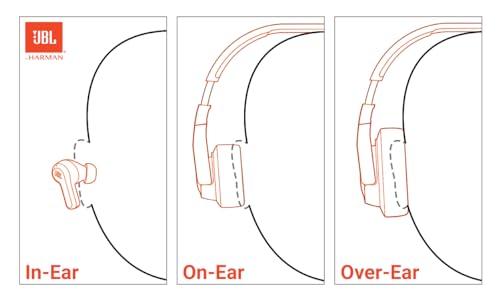
Before diving into the specifics, it's worth understanding what separates good wireless over-ear headphones from great ones. Unlike earbuds that need to fight for space in your ears, over-ear headphones have room to work with larger drivers (the speakers inside) and bigger batteries. This means they can potentially deliver better sound quality and longer battery life than their smaller cousins.
The key things to look for are sound quality that works across different music genres, comfortable fit for long listening sessions, reliable wireless connectivity that doesn't drop out, and enough battery life that you're not constantly hunting for a charger. If you're planning to use them outside your home, active noise cancellation becomes crucial—this technology uses microphones to detect outside noise and plays opposite sound waves to cancel it out.
Build quality matters too, especially if you'll be traveling with them. Nobody wants headphones that feel like they'll break if you look at them wrong. And increasingly, app integration has become important, letting you customize the sound signature (the balance of bass, mids, and treble) to match your preferences.
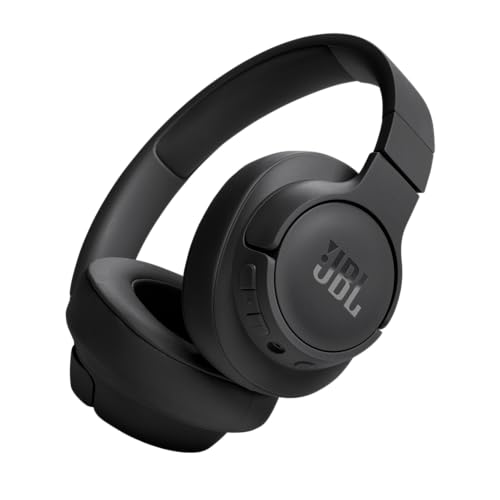
The JBL Tune 720BT launched as JBL's answer to the question: "How good can budget wireless headphones actually be?" The answer, it turns out, is surprisingly good. These headphones represent what I'd call the "sweet spot" approach—focusing intensely on doing the basics extremely well rather than trying to pack in every possible feature.
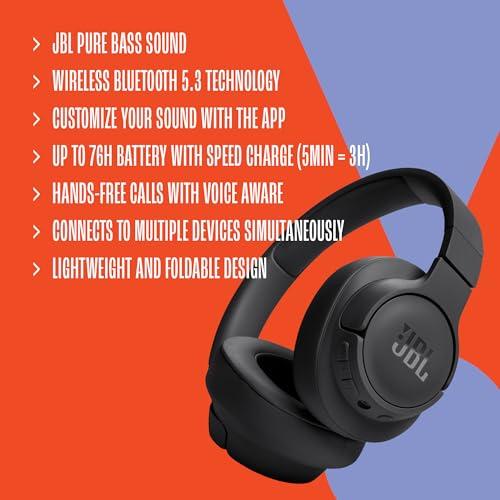
What immediately strikes you about the JBL Tune 720BT is how much better they sound than their price suggests. JBL's Pure Bass Sound technology isn't just marketing speak—it's a carefully tuned approach that delivers deep, punchy bass without turning everything into a muddy mess. The 40mm dynamic drivers (the speaker components inside each ear cup) produce what audio engineers call a "V-shaped" sound signature, meaning the bass and treble are slightly emphasized while the midrange sits back a bit.
In practical terms, this means drums hit hard, bass lines are present and defined, but vocals and guitars still come through clearly. It's a sound signature that works well with everything from hip-hop to rock to electronic music. However, if you're a classical music fan or someone who really wants to hear every detail in a recording, you might find the default tuning a bit too colored for your taste.
The good news is that the JBL Headphones app includes a customizable EQ (equalizer), which lets you adjust different frequency ranges to taste. I've found that pulling back the bass slightly and boosting the mids a touch creates a more neutral sound that works better for acoustic music and podcasts.
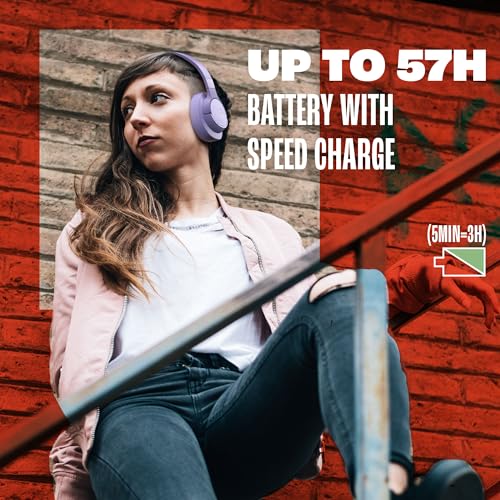
Here's where the JBL Tune 720BT absolutely dominates: battery life. We're talking about 76 hours of continuous playback. To put that in perspective, you could listen for three hours every single day for almost a month before needing to charge. Even if you're a heavy user who listens eight hours daily, you're looking at over a week between charges.
This isn't just impressive on paper—it's genuinely life-changing in daily use. I've had these headphones for months and honestly forget they need charging at all. The Speed Charge feature is equally impressive: five minutes plugged in gives you three hours of listening time, which means even if you do run out of battery, you're never stuck for long.
Of course, at this price point, there are trade-offs. The most obvious is the complete lack of active noise cancellation. If you're planning to use these on planes, trains, or in noisy offices, you'll only get the passive noise isolation from the ear cups sitting over your ears. That's actually not terrible—over-ear headphones naturally block some outside noise—but it's not comparable to active noise cancellation.
The build quality also reflects the budget positioning. The plastic construction feels functional rather than premium, and the ear pads can get warm during long sessions. The headphones are reasonably comfortable for shorter listening sessions, but if you have a larger head or ears, you might find the fit a bit cramped after an hour or two.
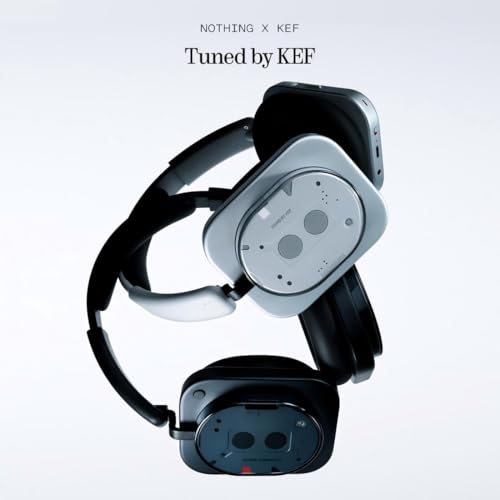
Released in 2025, the Nothing Headphone (1) represents Nothing's first venture into over-ear headphones, and they've approached it with their characteristic blend of distinctive design and premium features. This is a completely different philosophy from the JBL—instead of focusing on doing basics well, Nothing has tried to create a comprehensive premium experience.
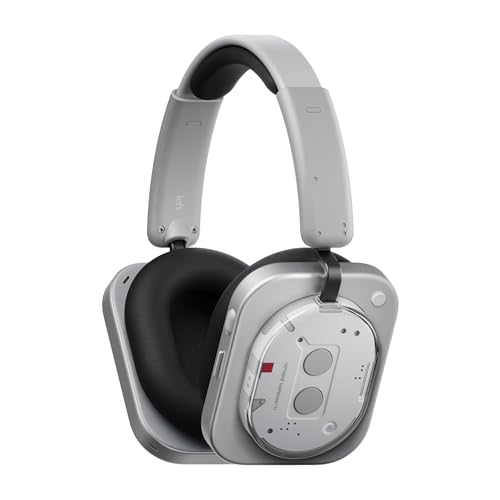
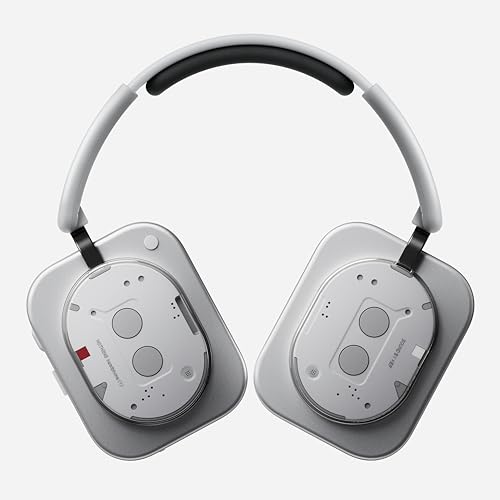
You can't discuss the Nothing Headphone (1) without talking about the transparent design. Those clear "squircle" (square-circle hybrid) ear cups aren't just for show—they represent Nothing's commitment to transparency in design, literally showing you the internal components. Whether you love or hate the aesthetic is entirely personal, but there's no denying these headphones get attention.
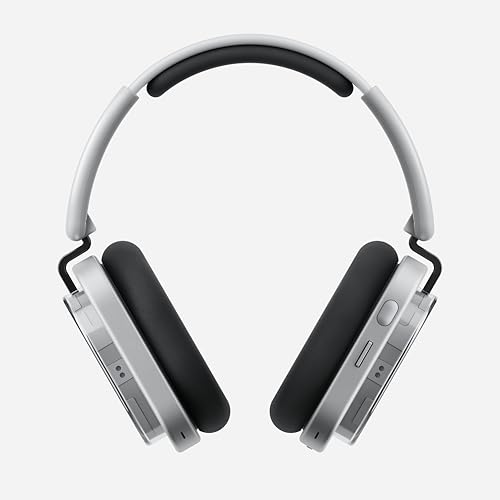
More importantly, the build quality backs up the visual impact. The aluminum frame and memory foam cushions feel genuinely premium, and at 329 grams, they have the satisfying heft that suggests quality construction. The trade-off is that they're noticeably heavier than the JBL Tune 720BT, and some users find they slide around during more active movements.
Nothing partnered with KEF, a British audio company with over 60 years of experience in speaker design, to tune the Nothing Headphone (1). This collaboration shows in the sound quality—these headphones deliver what I'd call a more sophisticated audio signature than the JBL.
The 40mm drivers with nickel-coated polyurethane diaphragms produce a wider frequency response (20Hz to 40kHz, compared to most headphones that stop at 20kHz). In practical terms, this means better reproduction of both deep bass and the subtle harmonics that make instruments sound realistic.
Out of the box, the sound is more neutral than the JBL Tune 720BT, with less emphasis on bass and more focus on midrange clarity. Vocals sound natural and present, acoustic instruments have realistic timbre (the quality that makes a guitar sound like a guitar rather than a piano), and the overall presentation is more balanced.
The Nothing Headphone (1) includes adaptive active noise cancellation that can reduce ambient noise by up to 42 decibels. This four-microphone system continuously monitors your environment and adjusts the cancellation accordingly. While it doesn't quite reach the elite level of Sony or Bose flagship models, it's genuinely effective for most situations.
I've found it works particularly well for consistent background noise—airplane engines, air conditioning, traffic rumble. It struggles a bit with sudden sounds like people talking or wind noise, but the transparency mode (which lets outside sound in when you need to hear your surroundings) is excellent and sounds natural.
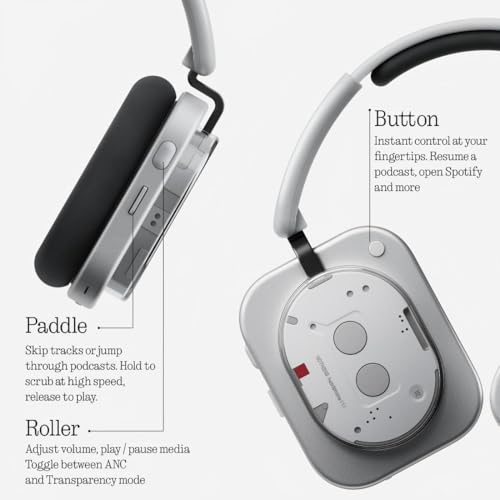
One area where the Nothing Headphone (1) really shines is the control system. Instead of touch-sensitive surfaces that often misinterpret your intentions, Nothing has gone with physical controls: a volume roller, paddle buttons, and a customizable push button. These controls feel satisfying to use and provide clear tactile feedback, so you always know when you've activated something.
The customizable button is particularly clever—you can program it to activate voice assistants, toggle noise cancellation modes, or access other features. If you have a Nothing phone, it integrates even more deeply with system features.
Both headphones deliver impressive sound quality, but they approach it differently. The JBL Tune 720BT prioritizes fun, engaging sound with emphasized bass and treble that makes music feel energetic and exciting. It's the kind of tuning that makes you want to turn up the volume and get lost in your favorite tracks.
The Nothing Headphone (1) takes a more analytical approach, presenting music with greater accuracy and detail. You'll hear more subtle elements in recordings—the breath between a singer's phrases, the room acoustics on a live album, the texture of different instruments. It's less immediately exciting but potentially more rewarding for serious listening.
Both benefit significantly from EQ adjustment. The JBL's app is simpler but adequate for basic adjustments. The Nothing's 8-band parametric EQ is much more sophisticated, letting you fine-tune specific frequencies with the precision an audio engineer would use. If you enjoy tweaking your sound, the Nothing Headphone (1) provides far more flexibility.
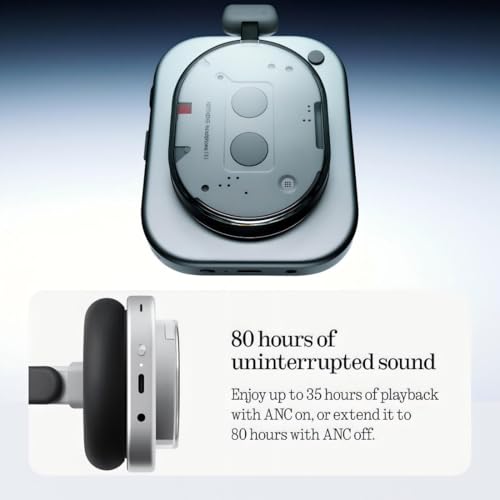
This is where the JBL Tune 720BT absolutely dominates. Even the Nothing Headphone (1)'s impressive 35-hour battery life (with ANC active) feels modest compared to the JBL's 76-hour marathon performance. For most users, both provide more than enough battery life, but if you travel frequently or simply hate dealing with charging, the JBL is in a league of its own.
The Nothing does offer one advantage: when you turn off ANC, battery life jumps to 80 hours, actually exceeding the JBL. But since ANC is one of the main reasons to choose the Nothing Headphone (1), you'll probably want to keep it enabled most of the time.
Comfort is subjective and depends heavily on your head shape and size, but there are some general patterns. The JBL Tune 720BT is lighter and puts less pressure on your head, but the ear pads can feel warm after extended use, and the fit might be cramped for larger heads.
The Nothing Headphone (1) has better padding and generally more comfortable materials, but the extra weight becomes noticeable during very long sessions. The memory foam ear cushions feel premium and stay cooler than the JBL's, but the headphones can slide around if you're moving much.
If you're considering these headphones for home theater use—watching movies or TV shows with immersive audio—there are some important factors to consider.
The Nothing Headphone (1) has a clear advantage here with its spatial audio capabilities and dynamic head tracking. These features create a more immersive experience by simulating how sound would move around you in a real space. When watching action movies or playing games, this can genuinely enhance the experience by making explosions feel like they're happening around you rather than just in your ears.
The low-latency gaming mode also helps prevent the annoying audio delay that can make dialogue feel disconnected from lip movements on screen. While the JBL Tune 720BT can certainly handle home theater audio, it lacks these immersive features.
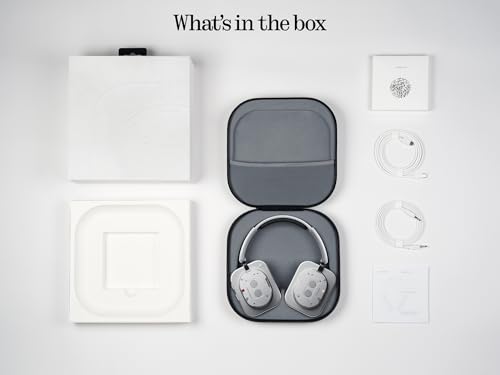
Both headphones support wired connections, which can be preferable for home theater use to avoid any potential wireless latency. The Nothing Headphone (1) supports USB-C audio for lossless digital connections, while the JBL Tune 720BT includes a standard 3.5mm cable.
At the time of writing, these headphones sit in very different price brackets, which dramatically affects how we should evaluate them. The JBL Tune 720BT competes in the budget segment where it faces competition from other entry-level wireless headphones, while the Nothing Headphone (1) plays in the premium mid-tier space against established names like Sony, Bose, and Sennheiser.
The JBL represents exceptional value—you're getting sound quality and battery life that would have cost significantly more just a few years ago. For someone who wants good wireless headphones without breaking the bank, it's hard to argue with the combination of performance and price.
The Nothing is competing in a much more crowded and competitive space. At its price point, you have access to noise-canceling headphones from companies with decades of experience in this technology. The Nothing holds its own through distinctive design, excellent app integration, and that KEF-tuned sound signature, but it's not a slam-dunk value proposition the way the JBL is.
The choice between these headphones ultimately comes down to your priorities and budget tolerance.
Choose the JBL Tune 720BT if you want wireless headphones that focus on the essentials and do them extremely well. The combination of good sound quality, incredible battery life, and budget-friendly pricing makes these ideal for students, commuters who don't need noise cancellation, or anyone who wants to try wireless over-ear headphones without a major investment. They're also perfect if you primarily listen at home or in quiet environments where active noise cancellation isn't crucial.
Go with the Nothing Headphone (1) if you're willing to pay significantly more for a premium experience. The active noise cancellation, sophisticated app features, distinctive design, and more refined sound quality justify the higher price if these features matter to you. They're particularly suited for office workers who need to block out distracting environments, frequent travelers, or audio enthusiasts who enjoy customizing their sound signature.
The gap between these products is significant enough that they're really serving different markets. The JBL Tune 720BT proves that you don't need to spend a lot to get genuinely good wireless headphones, while the Nothing Headphone (1) shows what's possible when you're willing to invest in premium features and design.
Both represent their respective categories well, and both will likely serve their intended users excellently. The key is being honest about what you actually need versus what sounds cool in marketing materials—and that honest self-assessment will point you toward the right choice.
| JBL Tune 720BT | Nothing Headphone (1) |
|---|---|
| Battery Life - Critical for daily use and travel | |
| 76 hours (exceptional endurance, rarely needs charging) | 35 hours with ANC / 80 hours without ANC (still excellent, but ANC reduces life significantly) |
| Active Noise Cancellation - Essential for commuting and office work | |
| None (passive isolation only from ear cup design) | Up to 42dB reduction with adaptive ANC (effective for most environments, not elite level) |
| Sound Signature - Affects music enjoyment across genres | |
| JBL Pure Bass with V-shaped tuning (fun, energetic sound with emphasized bass) | KEF-tuned neutral signature (more accurate, detailed reproduction) |
| EQ Customization - Important for personalizing your sound | |
| Basic EQ through JBL app (sufficient for simple adjustments) | Advanced 8-band parametric EQ (professional-level control over frequency response) |
| Weight and Portability - Matters for travel and extended wear | |
| 220g lightweight with foldable design (very portable, less fatigue) | 329g with premium materials (heavier feel, may slide during movement) |
| Build Quality - Affects durability and perceived value | |
| Lightweight plastic construction (functional but feels budget) | Aluminum frame with transparent design (premium materials, distinctive aesthetics) |
| Controls - Daily usability factor | |
| Simple button controls on earcup (reliable, basic functionality) | Physical roller, paddle, and customizable button (innovative, tactile feedback) |
| Connectivity Features - Modern wireless convenience | |
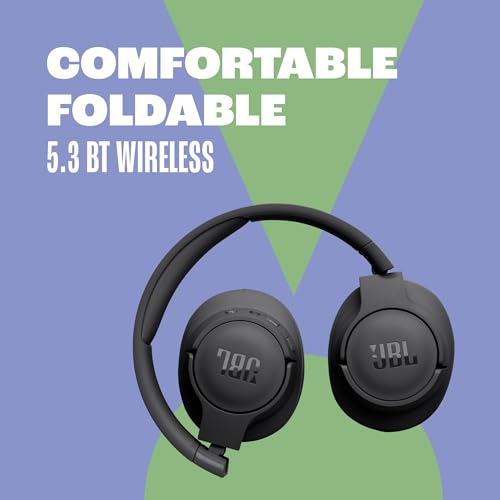
| Bluetooth 5.3 with multipoint connection (solid basics covered) | Bluetooth 5.3 plus spatial audio, head tracking, low-latency gaming mode |
| Charging Speed - Convenience when battery runs low | |
| 5-minute charge = 3 hours playback (excellent quick charge) | 5-minute charge = 2.5+ hours playback (good, but less than JBL) |
| Call Quality - Important for work and communication | |
| Voice Aware technology with basic microphone (adequate for calls) | AI-powered Clear Voice Technology with 4-mic array (superior call quality) |
| Wired Connection Options - Backup when wireless fails | |
| Detachable 3.5mm cable included (standard analog connection) | USB-C audio + 3.5mm cable (lossless digital plus analog options) |
| Value Proposition - Cost vs features delivered | |
| Exceptional budget choice (flagship-level battery + good sound at entry price) | Premium mid-tier option (distinctive design + advanced features at higher cost) |
Both headphones offer excellent sound quality for their respective price ranges. The JBL Tune 720BT delivers a fun, bass-forward sound signature that's great for pop, rock, and electronic music. The Nothing Headphone (1) provides more neutral, detailed sound tuned by KEF audio experts, making it better for critical listening across all genres. The Nothing also offers advanced 8-band EQ customization, while the JBL Tune 720BT has basic EQ options.
No, only the Nothing Headphone (1) features active noise cancellation with up to 42dB of noise reduction and adaptive technology. The JBL Tune 720BT relies entirely on passive noise isolation from its over-ear design. If you need ANC for commuting, office work, or travel, the Nothing Headphone (1) is the clear choice.
The JBL Tune 720BT has exceptional battery life with up to 76 hours of continuous playback, making it one of the longest-lasting wireless headphones available. The Nothing Headphone (1) offers 35 hours with ANC enabled or 80 hours with ANC disabled. For maximum battery endurance, the JBL Tune 720BT wins decisively.
Both headphones offer decent comfort, but with trade-offs. The JBL Tune 720BT is lighter at 220g but may feel cramped for larger heads and ears. The Nothing Headphone (1) has better padding and premium materials but weighs 329g, which can cause fatigue during extended wear. Comfort depends on your head size and personal preferences.
The Nothing Headphone (1) excels in call quality with its AI-powered Clear Voice Technology and four-microphone array that effectively suppresses background noise. The JBL Tune 720BT offers basic call functionality with Voice Aware technology but doesn't match the call clarity of the Nothing Headphone (1).
Yes, both headphones support wired listening. The JBL Tune 720BT includes a detachable 3.5mm audio cable for standard analog connections. The Nothing Headphone (1) offers both USB-C audio for lossless digital sound and a 3.5mm cable, providing more connection flexibility.
The Nothing Headphone (1) features superior build quality with an aluminum frame, transparent design elements, and memory foam cushions that feel genuinely premium. The JBL Tune 720BT uses lightweight plastic construction that feels functional but budget-oriented. The Nothing also includes IP52 water resistance for added durability.
The Nothing Headphone (1) is better suited for home theater use with spatial audio, dynamic head tracking, and low-latency gaming mode that creates an immersive viewing experience. The JBL Tune 720BT can handle movie audio well but lacks these advanced features. Both support wired connections to avoid wireless latency issues.
The Nothing Headphone (1) offers innovative physical controls including a volume roller, paddle buttons, and a customizable push button that provide excellent tactile feedback. The JBL Tune 720BT uses simple button controls on the earcup that are reliable but more basic. Both avoid problematic touch-sensitive surfaces.
The JBL Tune 720BT has slightly faster quick charging, providing 3 hours of playback from a 5-minute charge. The Nothing Headphone (1) offers approximately 2.5 hours from a 5-minute charge. Both use USB-C charging and reach full charge in about 2 hours, making either suitable for busy lifestyles.
Yes, but to different degrees. The JBL Tune 720BT offers basic EQ customization through the JBL Headphones app, which is adequate for simple adjustments. The Nothing Headphone (1) provides professional-level customization with an 8-band parametric EQ, personal sound profiles, and extensive app integration for audiophiles who want precise control.
This depends on your budget and needs. The JBL Tune 720BT offers exceptional value in the budget category with flagship-level battery life and surprisingly good sound quality. The Nothing Headphone (1) provides premium features like ANC, distinctive design, and advanced customization at a higher price point that competes well with established premium brands.
We've done our best to create useful and informative comparisons to help you decide what product to buy. Our research uses advanced automated methods to create this comparison and perfection is not possible - please contact us for corrections or questions. These are the sites we've researched in the creation of this article: audio46.com - e-catalog.com - headphonedungeon.com - e-catalog.com - recordingnow.com - versus.com - youtube.com - versus.com - consumerreports.org - youtube.com - ca.jbl.com - jblstore.co.id - jbl.com.tw - th.jbl.com - jblonlinestore.com - onward.ph - youtube.com - jbl.com - ro.harmanaudio.com - device.report - en.jblthailand.com - recordingnow.com - loudnwireless.com - markellisreviews.com - tomsguide.com - tomsguide.com - youtube.com - cnet.com - soundguys.com - 9to5google.com - youtube.com - notebookcheck.net - techradar.com - us.kef.com - soundguys.com - alexreviewstech.com - walmart.com - us.nothing.tech - youtube.com - youtube.com

Privacy Policy
Terms and Conditions - Affiliate Policy
Home Security
© Copyright 2008-2026.
11816 Inwood Rd #1211, Dallas, TX 75244