







Choosing the right over-ear wireless headphones can feel overwhelming when you're staring at dozens of options that all seem to promise the same things. I've spent countless hours testing headphones across different price ranges, and what I've learned is that the devil is really in the details. Today, we're diving deep into two headphones that represent very different approaches to the same goal: delivering great wireless audio with active noise cancellation.
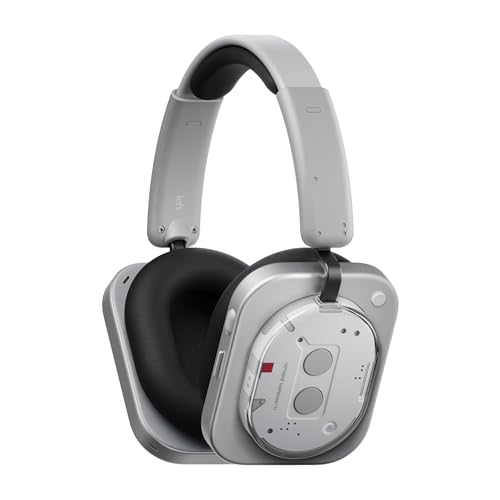
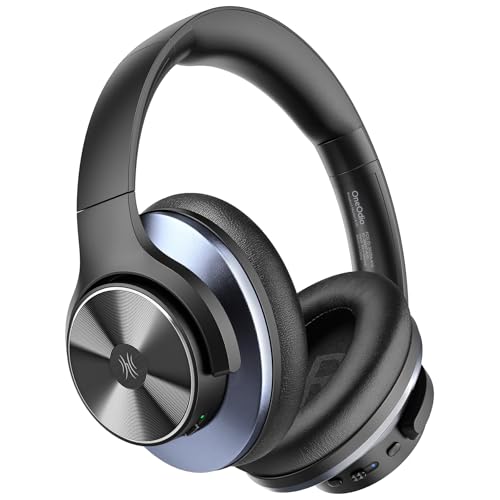
The Nothing Headphone (1), released in 2024, comes from the company known for their transparent design philosophy and premium features. On the other side, we have the OneOdio A10, which launched in 2023 as a budget-friendly option that still manages to pack in active noise cancellation—something that was pretty rare at this price point just a few years ago.
Before we get into the nitty-gritty comparison, let's talk about what makes over-ear headphones special and what you should be looking for. Unlike earbuds that sit in your ear canal, over-ear headphones completely surround your ears with cushioned ear cups. This design naturally blocks out more external noise (called passive isolation) and typically allows for larger drivers—the tiny speakers inside that create the sound you hear.
The key things that separate great over-ear headphones from mediocre ones are audio quality, active noise cancellation effectiveness, comfort for long listening sessions, battery life, and build quality. At the time of writing, you can find decent options starting around $70, while premium models can cost $300 or more. The question isn't always whether the expensive ones are "better"—it's whether the extra features justify the price difference for your specific needs.
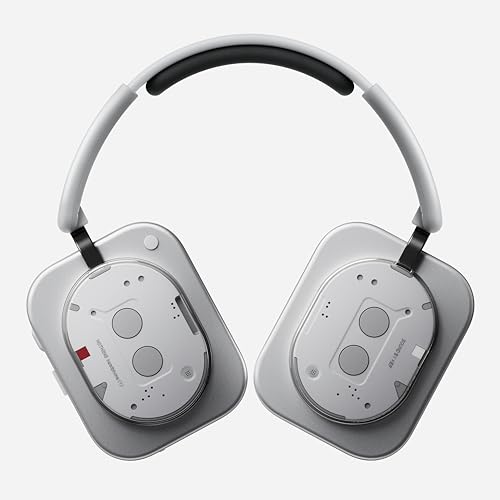
The Nothing Headphone (1) positions itself in the premium segment, targeting users who want cutting-edge features and don't mind paying for them. Nothing has built their brand around distinctive transparent designs that show off the internal components, and these headphones continue that aesthetic philosophy while packing in some genuinely impressive technology.
Meanwhile, the OneOdio A10 takes a completely different approach. OneOdio focused on delivering the essential features that most people actually need—active noise cancellation, good battery life, and comfortable design—while keeping the price accessible. It's the kind of product that makes you wonder why other companies charge so much more for similar functionality.
When I first put on the Nothing Headphone (1), what struck me immediately was how balanced everything sounded. These headphones use custom 40mm dynamic drivers (the speakers inside) with a nickel-coated polyurethane diaphragm—that's the part that vibrates to create sound waves. Nothing partnered with KEF, a respected British audio company, to tune these drivers, and it shows.
The frequency response extends from 20Hz all the way up to 40,000Hz. To put that in perspective, human hearing typically tops out around 20,000Hz, so that extended range is mainly about reproducing the subtle harmonics that make music sound more natural and detailed. In practice, this means cymbals have more shimmer, guitar strings have more texture, and vocals sound more present.
But here's where the Nothing Headphone (1) really shines: the companion app includes one of the most sophisticated EQ systems I've used. It's not just a simple bass/treble slider—you get an 8-band equalizer where you can adjust both the frequency and the Q factor (how wide or narrow each adjustment affects surrounding frequencies). For someone who likes to tweak their sound, this is incredibly powerful.
The OneOdio A10, on the other hand, takes a more straightforward approach. These headphones have what we call a V-shaped sound signature, meaning the bass and treble are emphasized while the midrange is slightly recessed. This creates an exciting, energetic sound that works well for pop, electronic, and rock music, but it can make vocals sound a bit distant and sometimes causes the bass to overwhelm more subtle details.
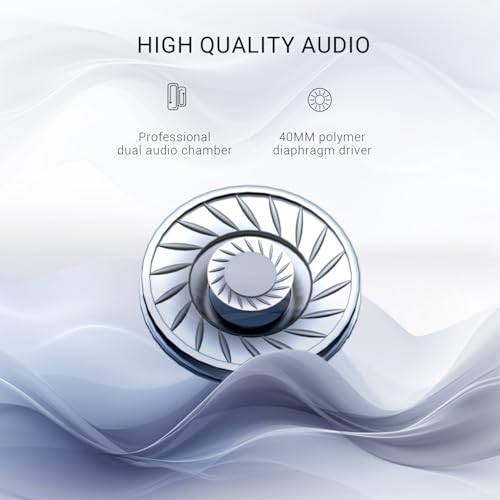
The A10's drivers are also 40mm, but without the advanced materials and tuning of the Nothing headphones. The frequency response tops out at 20,000Hz, which is perfectly adequate for most listeners. What the OneOdio A10 lacks in refinement, it makes up for in enthusiasm—these headphones want to have fun with your music, even if they're not the most accurate.
For home theater use, the Nothing Headphone (1) has a significant advantage with its spatial audio feature that includes head tracking. This technology uses sensors to detect when you move your head and adjusts the audio accordingly, creating a more immersive experience when watching movies or playing games. It's like having a surround sound system that follows you around.
Active noise cancellation, or ANC, is one of those technologies that seems like magic until you understand how it works. Tiny microphones on the outside of the headphones pick up ambient noise, and the headphones generate sound waves that are exactly opposite (180 degrees out of phase) to cancel out that noise. It's most effective on consistent, low-frequency sounds like airplane engines or air conditioning hum.
The Nothing Headphone (1) uses what they call adaptive ANC with a four-microphone array. Two microphones face outward to detect incoming noise, while two face inward to monitor what's actually reaching your ears. This setup allows the headphones to provide up to 42 decibels of noise reduction and adjust in real-time based on your environment. You can choose from different ANC levels—low, medium, high, or adaptive—depending on your situation.
In my testing, the Nothing headphones excel at handling the droning noises of commuting—subway rumble, bus engines, and office air conditioning virtually disappear. They're less effective with sudden, sharp sounds like people talking or dogs barking, but that's normal for ANC technology.
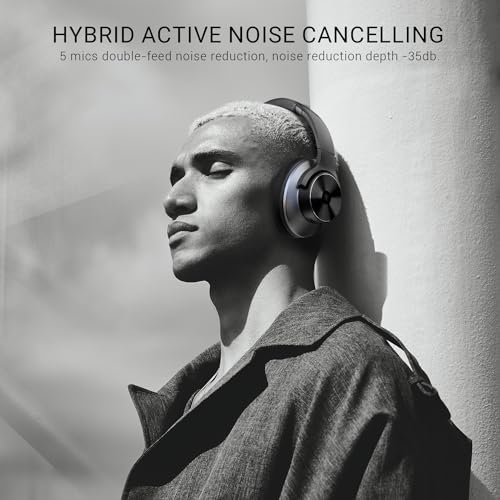
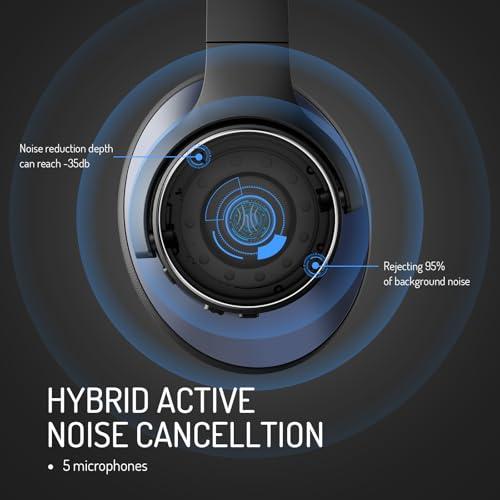
The OneOdio A10 uses hybrid ANC, which combines feedforward microphones (facing out) with feedback microphones (facing in) for more comprehensive noise cancellation. On paper, it reduces noise by up to 35 decibels and blocks about 95% of low and mid-frequency ambient sounds. In practice, the ANC is quite good for the price point, though it's not quite as sophisticated as what you'll find in premium models.
One limitation I noticed with the OneOdio A10 is that the passive isolation—how much noise the physical design blocks without any electronics—isn't as good as it could be. This means the ANC has to work harder to achieve the same results, and you might still hear some mid-frequency sounds bleeding through.
Both headphones offer transparency mode, which uses the same microphones to let outside sound in when you need to hear announcements or have a conversation. The Nothing Headphone (1) does this more naturally, while the OneOdio A10 tends to make everything sound a bit artificial, like you're listening to the world through a radio.
This is where both headphones really impress, though for different reasons. The Nothing Headphone (1) absolutely dominates in battery life, delivering up to 80 hours of playback with ANC turned off, or about 35 hours with ANC active. That's genuinely impressive—we're talking about nearly two weeks of daily commuting on a single charge.
The fast charging is equally remarkable: just five minutes of charging gives you about five hours of playback. This has saved me more times than I can count when I've forgotten to charge overnight and need to head out in the morning.
The OneOdio A10 is no slouch either, offering up to 50 hours with just Bluetooth active, or around 40-45 hours with both Bluetooth and ANC running. While not quite as impressive as the Nothing headphones, this is still excellent battery life that puts many more expensive competitors to shame.
What's interesting is how both companies achieved these numbers. The Nothing Headphone (1) uses a massive 1,040 mAh battery—that's smartphone-sized—while optimizing the power consumption of their electronics. The OneOdio A10 uses a smaller 800 mAh battery but focuses on efficient power management to stretch every milliamp-hour.
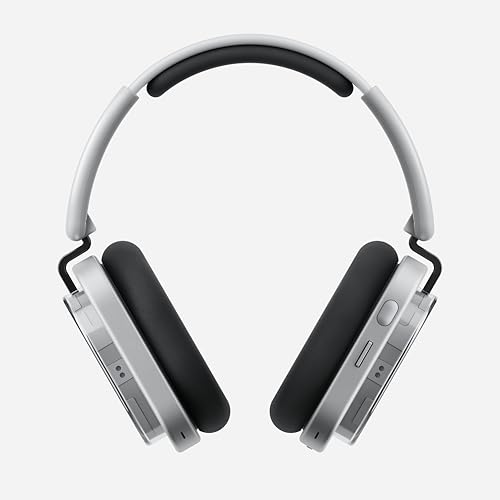
Comfort becomes crucial when you're wearing headphones for hours at a time, whether you're working from home or on a long flight. The Nothing Headphone (1) weighs 329 grams and distributes that weight fairly well across the headband and ear cups. The distinctive transparent design isn't just for show—it actually helps keep the weight down compared to all-metal construction.
The ear pads use memory foam that adapts to your ear shape, and I found I could wear them for several hours without significant discomfort. However, they're not the lightest headphones out there, and some people with smaller heads might find them a bit loose.
Build quality is where the price difference really shows. The Nothing Headphone (1) includes IP52 water resistance, meaning they can handle light rain or gym sweat without issues. The materials feel premium, with a mix of metal and high-quality plastics that should age well.
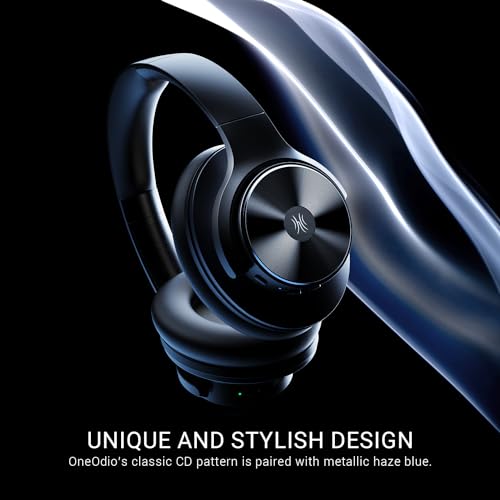
The OneOdio A10 surprises with its build quality considering the price point. At 295 grams, they're actually lighter than the Nothing headphones, and the protein memory foam ear pads are genuinely comfortable for extended wear. The latest version includes more metal components in the construction, giving them a more premium feel than you'd expect.
However, the OneOdio A10 lacks water resistance, so you'll need to be more careful around moisture. The overall build is solid but not quite as refined as premium alternatives.
Both headphones support Bluetooth multipoint connection, which lets you pair them with two devices simultaneously. This is incredibly handy—you can have them connected to your laptop for work calls and your phone for music, and they'll automatically switch between them as needed.
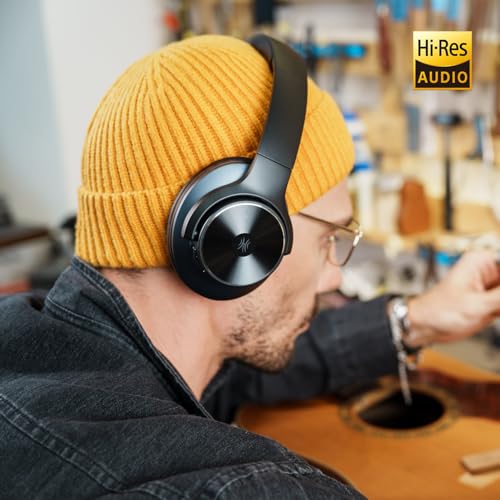
The Nothing Headphone (1) uses Bluetooth 5.3, the latest standard at the time of writing, which provides better range and more stable connections. More importantly, it supports LDAC, a high-resolution Bluetooth codec that can transmit much more audio data than standard codecs. If you have a compatible Android device or music streaming service that supports high-resolution audio, this makes a noticeable difference in sound quality.
The Nothing headphones also include Google Fast Pair and Microsoft Swift Pair, which make connecting to new devices almost effortless. The companion app is comprehensive, offering not just EQ adjustment but also firmware updates, control customization, and even a "Find My Headphones" feature.
The OneOdio A10 sticks with Bluetooth 5.0, which is perfectly adequate for most users, and supports the standard SBC and AAC codecs that work with all devices. However, there's no companion app, which means no EQ customization, no firmware updates, and no advanced features. For some users, this simplicity is actually a benefit—there's nothing to set up or configure.
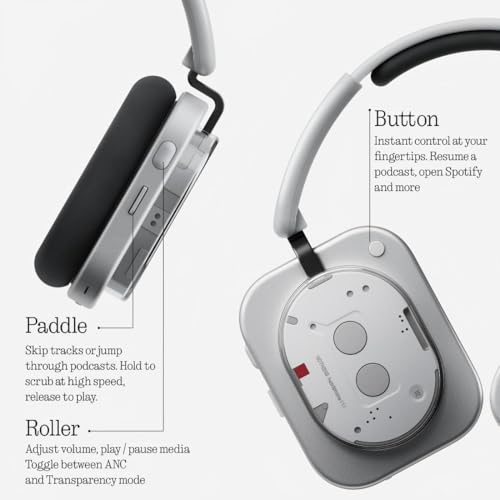
I have to admit, I'm a fan of physical controls on headphones. Touch controls can be finicky, especially if your hands are wet or you're wearing gloves. The Nothing Headphone (1) goes all-in on physical controls with a unique system that includes a roller for volume, a paddle for track skipping, and a customizable push button. It takes a day or two to get used to, but once you do, these controls are incredibly intuitive and reliable.
The OneOdio A10 uses more traditional physical buttons, which are simple and effective. You won't get the same level of customization, but everything works exactly as you'd expect without any learning curve.
At the time of writing, the Nothing Headphone (1) sits in the premium price range, competing with flagship models from Sony, Bose, and other established brands. What you're paying for is the unique design, exceptional battery life, advanced app features, and high-quality audio processing. The spatial audio feature alone is relatively rare in the Android ecosystem.
The OneOdio A10 represents outstanding value in the budget ANC category. Just a few years ago, you'd need to spend significantly more to get active noise cancellation, and these headphones deliver it alongside impressive battery life and solid build quality.
For home theater use, the Nothing Headphone (1) is the clear winner. The spatial audio with head tracking creates a much more immersive experience when watching movies, and the advanced EQ lets you fine-tune the sound for your content. The exceptional battery life means you won't have to worry about them dying in the middle of a movie marathon.
The OneOdio A10 can certainly handle movie watching, but without spatial audio or EQ customization, the experience is more basic. The V-shaped sound signature can make dialogue harder to understand in some films, though it does add excitement to action sequences.
Choose the Nothing Headphone (1) if you want cutting-edge features and don't mind paying premium prices. These headphones excel when you need maximum battery life, want extensive customization options, use multiple devices regularly, or care about having the latest technology like spatial audio and high-resolution codec support.
The OneOdio A10 makes sense if you're working with a limited budget but still want active noise cancellation and good battery life. They're perfect for students, casual listeners, or anyone who needs a reliable pair of ANC headphones without premium features.
Both headphones deliver strong value within their price segments. The Nothing headphones justify their higher cost with genuinely useful premium features, while the OneOdio proves that you don't need to spend a fortune to get solid ANC performance. Your choice ultimately depends on your budget and which features matter most to your listening habits.
The headphone market has come a long way in recent years, with both premium innovation and budget accessibility improving rapidly. Whether you choose the feature-packed Nothing Headphone (1) or the value-focused OneOdio A10, you'll be getting a much better product than what was available at similar price points just a few years ago.
| Nothing Headphone (1) | OneOdio A10 |
|---|---|
| Release Year & Market Position - Shows tech generation and target audience | |
| 2024 premium flagship with latest features | 2023 budget-friendly ANC entry point |
| Battery Life (ANC On) - Critical for daily use and travel | |
| 35 hours (exceptional for premium tier) | 40-45 hours (outstanding for budget tier) |
| Battery Life (ANC Off) - Maximum endurance for long trips | |
| 80 hours (industry-leading performance) | 50 hours (excellent value proposition) |
| Active Noise Cancellation - Key feature for commuting and focus | |
| Up to 42dB reduction with adaptive AI processing | Up to 35dB reduction with hybrid dual-mic system |
| Bluetooth & Codec Support - Affects audio quality and device compatibility | |
| Bluetooth 5.3 with LDAC, AAC, SBC (future-proof) | Bluetooth 5.0 with AAC, SBC (standard support) |
| Sound Customization - Important for personalizing audio experience | |
| Advanced 8-band EQ with Q factor control via app | No app or EQ customization (fixed sound signature) |
| Build Quality & Durability - Affects longevity and versatility | |
| IP52 water resistance with premium materials | Solid build but no water resistance rating |
| Weight - Impacts comfort during extended wear | |
| 329g (heavier but well-distributed) | 295g (lighter and more portable) |
| Special Features - Unique capabilities that justify price differences | |
| Spatial audio with head-tracking, transparent design | Multipoint connection, vinyl record-inspired aesthetic |
| Fast Charging - Convenience for busy lifestyles | |
| 5 minutes = 5 hours playback (excellent) | 5 minutes = 2 hours playback (good) |
| Frequency Response - Shows potential audio detail and range | |
| 20Hz - 40kHz (extended range for detail) | 20Hz - 20kHz (standard human hearing range) |
| Best Use Cases - Who should consider each option | |
| Premium users wanting cutting-edge features and maximum battery | Budget-conscious buyers needing solid ANC basics |
The Nothing Headphone (1) offers exceptional battery life with up to 80 hours of playback with ANC off and 35 hours with ANC on. The OneOdio A10 provides 50 hours with Bluetooth only and 40-45 hours with ANC enabled. Both offer outstanding endurance, with the Nothing Headphone (1) taking the lead for maximum usage time.
Yes, both the Nothing Headphone (1) and OneOdio A10 feature active noise cancellation. The Nothing Headphone (1) uses adaptive ANC with up to 42dB noise reduction and a four-microphone array, while the OneOdio A10 employs hybrid ANC technology reducing noise up to 35dB and blocking approximately 95% of low and mid-frequency sounds.
The Nothing Headphone (1) offers superior sound quality with KEF-tuned 40mm drivers, extended frequency response up to 40kHz, and an advanced 8-band EQ system for customization. The OneOdio A10 has a V-shaped sound signature with emphasized bass and treble, which works well for energetic music but may sound less refined than the Nothing Headphone (1).
Both headphones prioritize comfort for extended wear. The Nothing Headphone (1) weighs 329g with memory foam ear pads and balanced weight distribution. The OneOdio A10 is lighter at 295g and features ultra-soft protein memory foam ear pads. Both are suitable for long sessions, though the OneOdio A10 has a slight weight advantage.
The Nothing Headphone (1) excels in call quality with its four-microphone array and AI-powered Clear Voice Technology that suppresses background noise and wind. The OneOdio A10 has dual microphones that provide adequate call quality but may not perform as well in noisy environments as the Nothing Headphone (1).
Both the Nothing Headphone (1) and OneOdio A10 are compatible with iPhones and Android devices via Bluetooth. The Nothing Headphone (1) offers additional benefits for Android users with LDAC codec support for high-resolution audio, while both headphones support AAC for optimal iPhone compatibility.
The Nothing Headphone (1) is superior for home theater use, featuring spatial audio with head-tracking that creates an immersive surround sound experience. The advanced EQ allows fine-tuning for dialogue clarity and movie soundtracks. The OneOdio A10 can handle movie watching but lacks spatial audio features, making the Nothing Headphone (1) the better choice for cinematic experiences.
The Nothing Headphone (1) offers excellent fast charging with 5 minutes providing 5 hours of playback time. The OneOdio A10 provides 2 hours of playback from a 5-minute charge. Both headphones charge fully in about 2 hours, with the Nothing Headphone (1) offering more convenient quick-charge capabilities for busy lifestyles.
Yes, both the Nothing Headphone (1) and OneOdio A10 support multipoint connectivity, allowing simultaneous connection to two devices. This means you can have them connected to your laptop and phone at the same time, automatically switching between devices as needed for calls or music.
The Nothing Headphone (1) offers superior durability with IP52 water resistance, protecting against dust and light water exposure. The build uses premium materials including metal components. The OneOdio A10 has solid build quality with recent versions featuring more metal construction, but lacks water resistance, making the Nothing Headphone (1) more versatile for various environments.
The Nothing Headphone (1) includes a comprehensive companion app with advanced 8-band EQ, spatial audio controls, firmware updates, and customizable settings. The OneOdio A10 does not have a companion app, which means no EQ customization or advanced features, but also means simpler setup and operation.
The OneOdio A10 offers exceptional value in the budget ANC category, providing essential features like active noise cancellation and long battery life at an accessible price point. The Nothing Headphone (1) justifies its premium positioning with advanced features like spatial audio, water resistance, superior sound quality, and comprehensive app support, making both products strong values within their respective price segments.
We've done our best to create useful and informative comparisons to help you decide what product to buy. Our research uses advanced automated methods to create this comparison and perfection is not possible - please contact us for corrections or questions. These are the sites we've researched in the creation of this article: recordingnow.com - loudnwireless.com - markellisreviews.com - tomsguide.com - tomsguide.com - youtube.com - cnet.com - soundguys.com - 9to5google.com - youtube.com - notebookcheck.net - techradar.com - us.kef.com - soundguys.com - alexreviewstech.com - walmart.com - us.nothing.tech - youtube.com - youtube.com - techbuzzireland.com - creativebloq.com - head-fi.org - homestudiobasics.com - versus.com - androidguys.com - thegadgetflow.com - oneodio.com - mbreviews.com - the-gadgeteer.com - newegg.com - howtogeek.com - youtube.com - newegg.com - manuals.plus - majorhifi.com - soundphilereview.com - youtube.com - howtogeek.com - oneodio.com - youtube.com - youtube.com - youtube.com - walmart.com

Privacy Policy
Terms and Conditions - Affiliate Policy
Home Security
© Copyright 2008-2026.
11816 Inwood Rd #1211, Dallas, TX 75244