

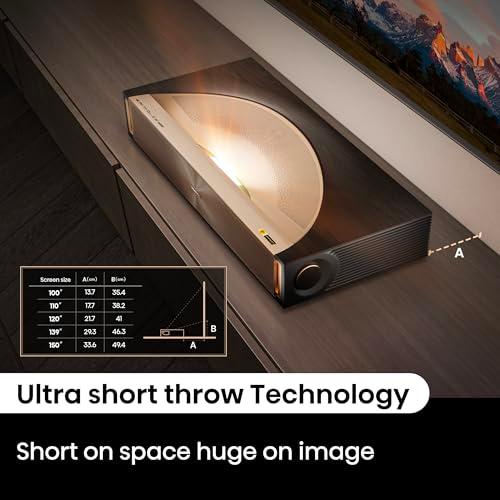
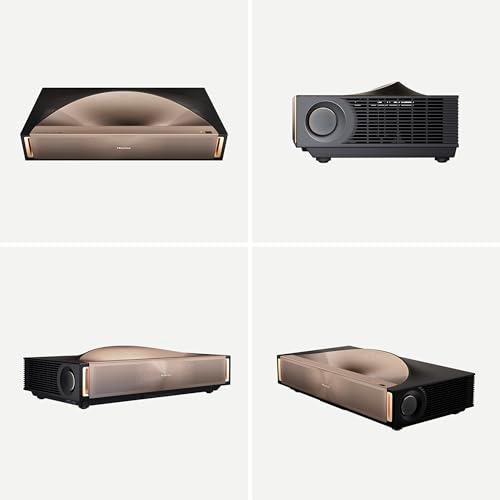
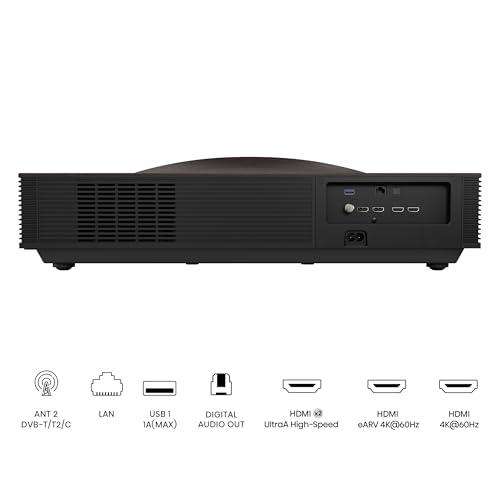
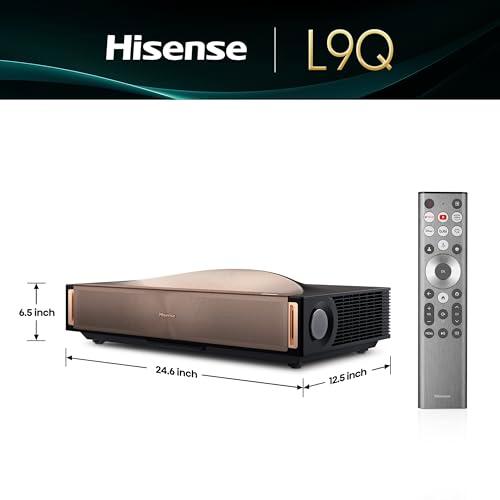
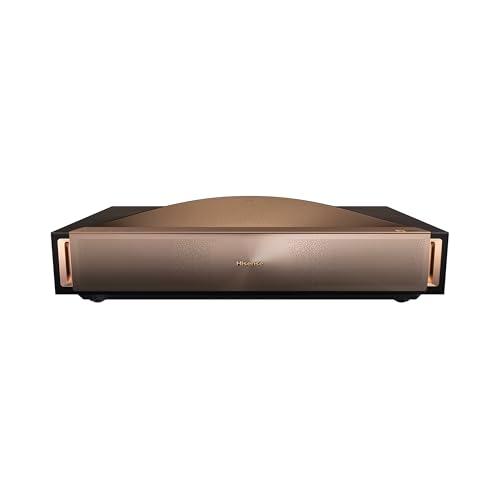
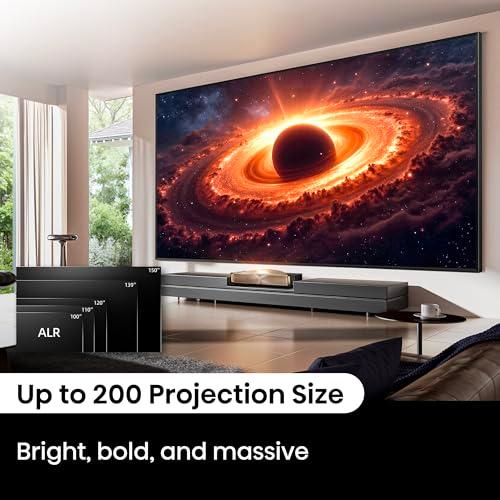
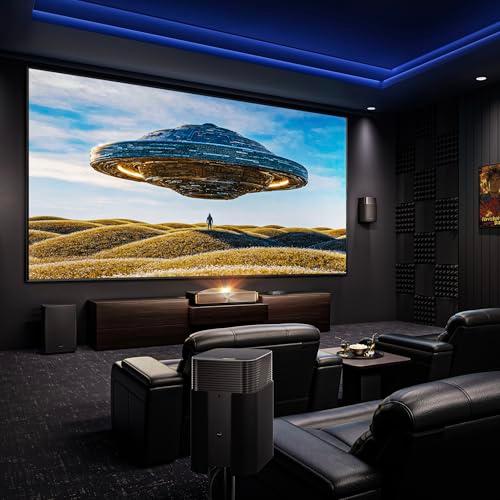

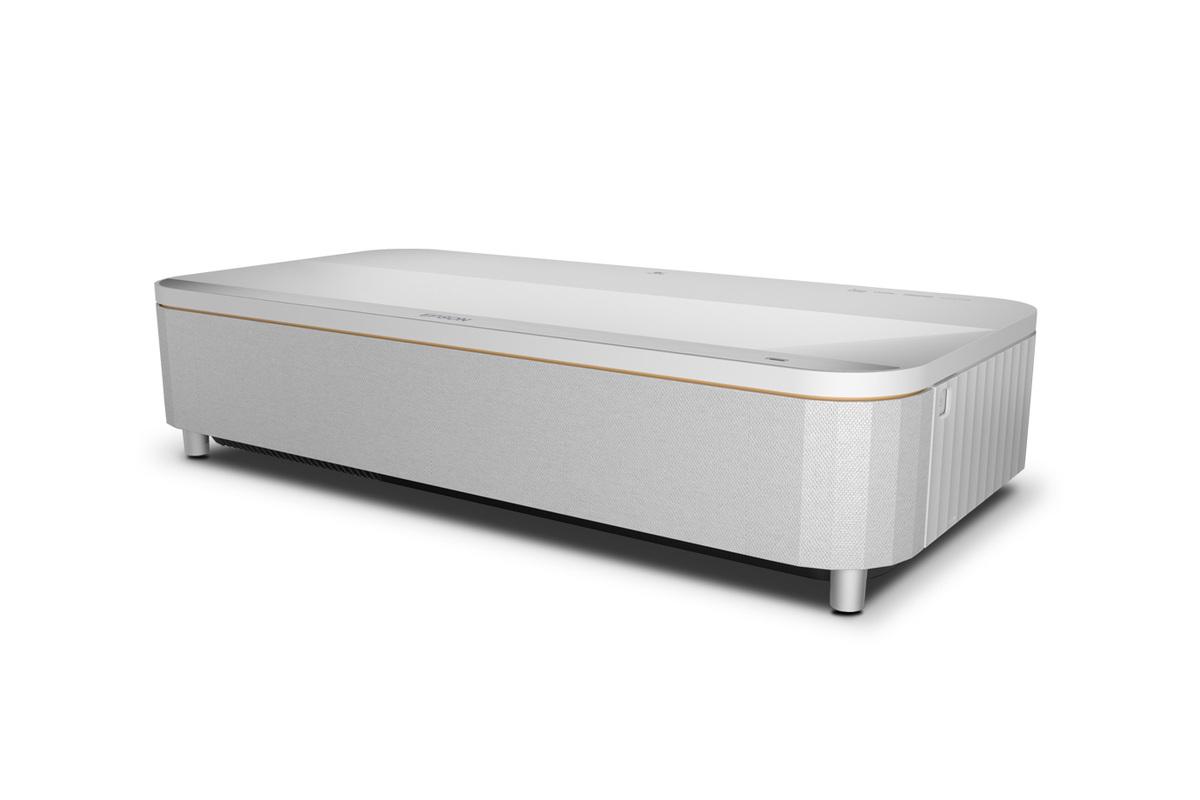
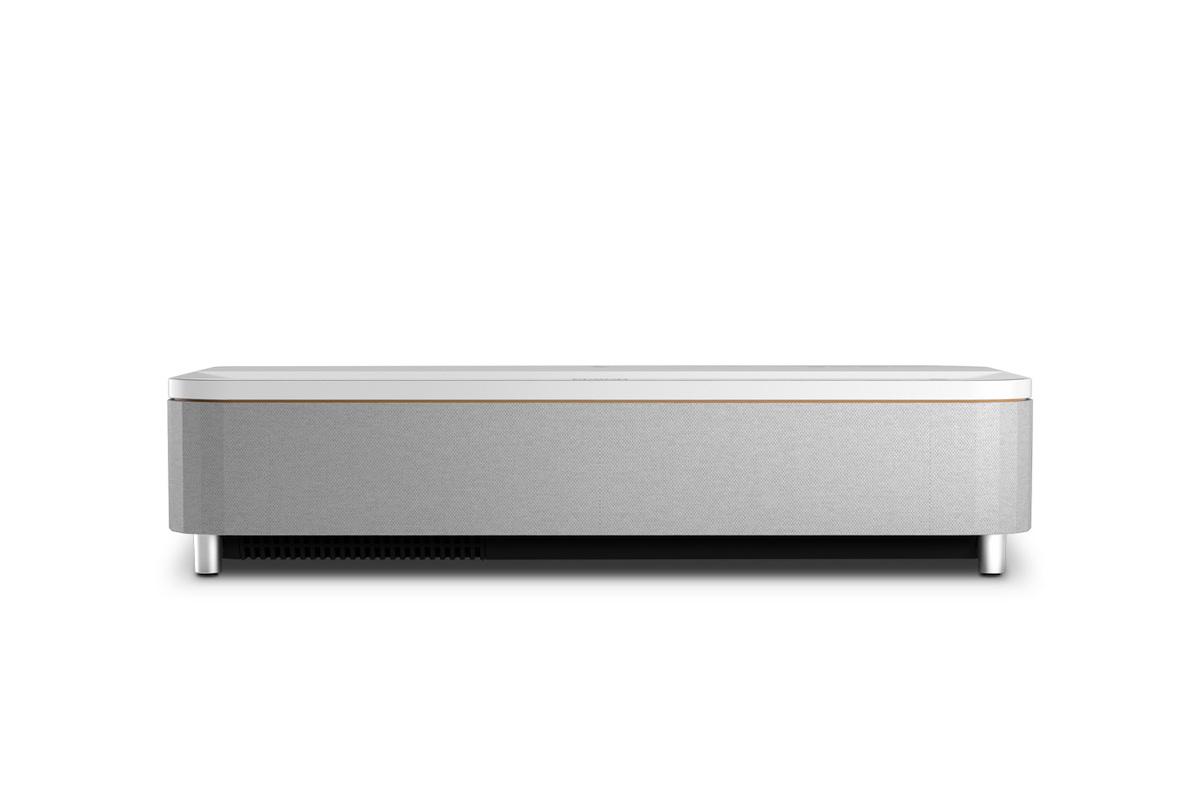
Ultra short throw projectors have revolutionized home entertainment by bringing massive screen experiences into living rooms without the hassle of ceiling mounts or complicated installations. Instead of hanging from your ceiling like traditional projectors, these clever devices sit just inches from your wall, creating screens up to 200 inches while eliminating shadows and glare entirely.
Two standout models released in 2024 represent different philosophies in this exciting category: the Hisense L9Q and the Epson QS100. The Hisense takes an all-in-one approach with integrated premium audio and smart TV features, while the Epson focuses purely on projection excellence with professional-grade calibration tools. At the time of writing, these projectors sit at different price points that reflect their distinct approaches, making your choice dependent on your specific needs and existing setup.
Before diving into comparisons, it's worth understanding what makes these projectors special. The "throw ratio" – the distance needed to create a specific screen size – is what sets UST projectors apart. Traditional projectors might need 8-12 feet to create a 100-inch image, while ultra short throw models accomplish this from just 4-6 inches away from your wall.
This seemingly simple change transforms everything about home projection. You can place the projector on a TV stand, eliminating ceiling installation. Nobody walks in front of the light beam casting shadows. The projector stays easily accessible for maintenance. Most importantly, you get a cinema-sized screen in rooms where traditional projectors simply won't work.
Both the Hisense L9Q and Epson QS100 excel in this regard, but they achieve their impressive performance through fundamentally different technologies that create distinct viewing experiences.
The most significant difference between these projectors lies in their imaging technology, which affects everything from color accuracy to potential artifacts.
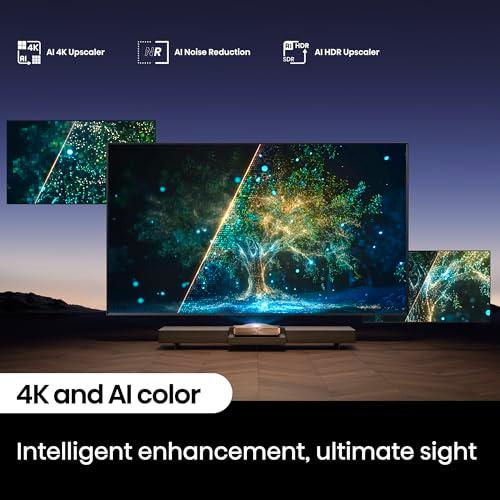
The Hisense L9Q uses DLP (Digital Light Processing) technology with a single 0.47-inch DMD (Digital Micromirror Device) chip from Texas Instruments. This chip contains over 2 million tiny mirrors that tilt thousands of times per second to create images. To achieve 4K resolution from this 1080p chip, Hisense employs XPR (eXpanded Pixel Resolution) pixel-shifting, which rapidly moves the image diagonally to double the apparent resolution. The result is true 4K sharpness that's virtually indistinguishable from native 4K at normal viewing distances.
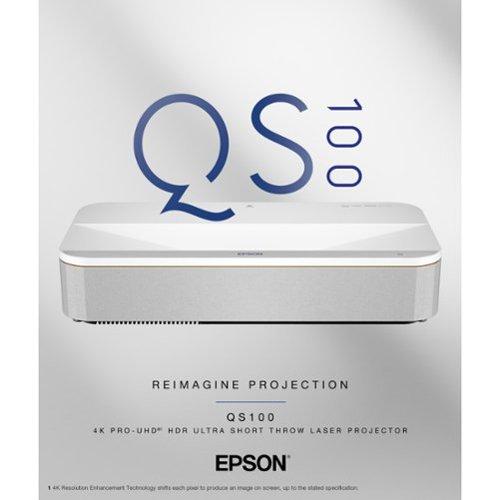
The Epson QS100 takes a completely different approach with 3LCD technology, using three separate LCD panels – one each for red, green, and blue light. Each panel has native 1080p resolution, and Epson's 2-way pixel-shifting creates what they call "4K PRO-UHD" resolution. While this doesn't quite match the sharpness of the Hisense's XPR system, it delivers excellent detail that satisfies most viewers.
The technology choice creates a fundamental trade-off. DLP systems like the Hisense L9Q can produce slightly sharper images but may occasionally show "rainbow artifacts" – brief flashes of color that some viewers notice during fast motion or when quickly moving their eyes. The Epson QS100's 3LCD design completely eliminates rainbow effects but doesn't achieve quite the same level of fine detail resolution.
In practice, most people find both systems deliver excellent image quality, with personal sensitivity to rainbow effects being the deciding factor for some viewers.
Brightness might be the most crucial specification for ultra short throw projectors because they're designed for living room use where ambient light is inevitable. Both projectors deliver exceptional brightness, but their approaches and performance levels differ meaningfully.
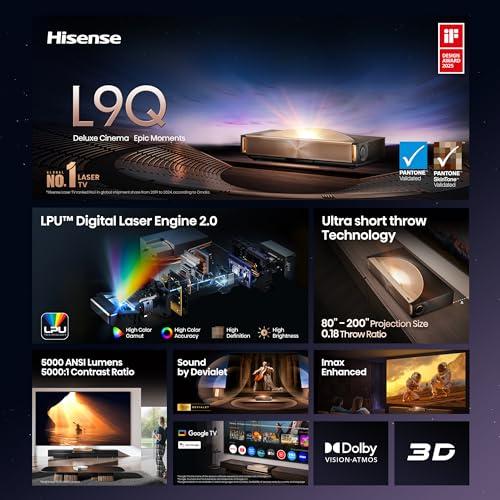
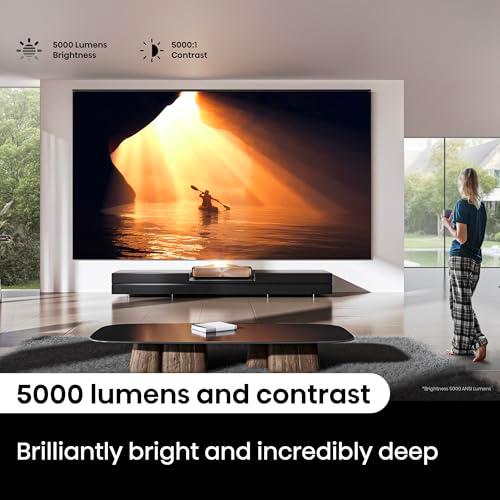
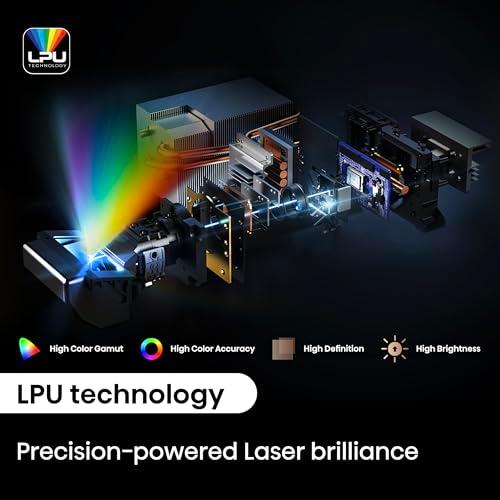
The Hisense L9Q leads with 5,000 ANSI lumens, making it one of the brightest projectors in any category. This incredible output comes from its triple RGB laser system, where separate red, green, and blue lasers combine to create pure, intense light. Unlike traditional lamp-based projectors that dim over time, laser systems maintain consistent brightness for tens of thousands of hours.
The Epson QS100 delivers 4,500 lumens using a blue laser phosphor system. While 500 lumens lower than the Hisense, this brightness level still exceeds most premium televisions and provides excellent performance in well-lit rooms. Epson's 3LCD technology ensures this brightness applies equally to color and white content – a significant advantage since some projection technologies sacrifice color brightness for higher white measurements.
In real-world terms, both projectors handle ambient light admirably, but the Hisense L9Q's extra brightness becomes noticeable with larger screen sizes or in particularly bright rooms. If you're planning a 150+ inch screen or have large windows without blackout curtains, the Hisense's brightness advantage becomes more meaningful.
The brightness difference also impacts screen size flexibility. While the Epson QS100 works beautifully up to 160 inches, the Hisense L9Q maintains excellent image quality up to 200 inches – a massive screen size that transforms any room into a true cinema experience.
Color reproduction represents another area where these projectors' different technologies create distinct advantages.
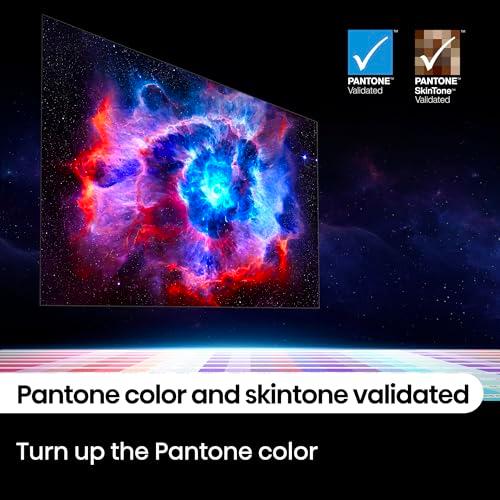
The Hisense L9Q's triple laser system produces an exceptionally wide color gamut, covering 110% of the BT.2020 color space with Pantone validation. This means colors appear more vivid and lifelike than most displays can achieve. The pure laser light creates particularly stunning reds and greens that pop off the screen with an intensity that's genuinely impressive. For HDR content, this wide color gamut translates to more realistic sunsets, more vibrant flowers, and more accurate skin tones.
The Epson QS100 takes a different approach, prioritizing color accuracy over maximum vibrancy. Epson's 3LCD technology has a long history of producing colors that match professional standards, and the QS100 continues this tradition with excellent out-of-box accuracy. While it may not achieve the same eye-popping vibrancy as the Hisense, colors appear natural and well-balanced without the oversaturation that sometimes accompanies wide-gamut displays.
For most viewers, both approaches work well, but your preference might depend on your content and viewing habits. If you watch lots of nature documentaries, HDR movies, or gaming content where vibrant colors enhance the experience, the Hisense L9Q's approach feels more engaging. If you prefer colors that match the filmmaker's original intent without enhancement, the Epson QS100's more restrained approach might appeal more.
Contrast ratio – the difference between the brightest whites and darkest blacks – significantly impacts image quality, especially for HDR content that depends on this dynamic range to create realistic lighting effects.
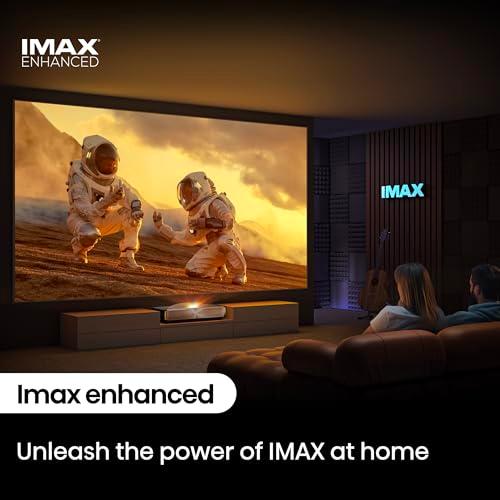
The Hisense L9Q achieves a 5,000:1 native contrast ratio, which is excellent for such a bright projector. This high contrast helps maintain deep blacks even when displaying bright HDR highlights, creating images with real depth and dimension. The projector supports Dolby Vision, HDR10+, HLG, and IMAX Enhanced, covering virtually every HDR format you'll encounter.
The Epson QS100 delivers 1,800:1 native contrast, which while lower than the Hisense, still provides good black levels for most content. However, Epson compensates with advanced processing through its QZX Picture Processor, which includes Dynamic HDR Tone Mapping. This technology analyzes each scene individually and adjusts brightness and contrast frame-by-frame, potentially creating better HDR performance than the raw contrast numbers suggest. The QS100 supports HDR10+ and HLG but lacks Dolby Vision support.
In practice, both projectors handle HDR content well, but they excel in different scenarios. The Hisense L9Q's higher native contrast and Dolby Vision support make it particularly strong for dark room viewing and premium streaming content. The Epson QS100's dynamic processing helps it perform better than expected in mixed lighting conditions, making highlight details more visible without losing shadow information.
Gaming on a massive 100+ inch screen creates an incredibly immersive experience, but projectors need low input lag to maintain competitive performance and responsive controls.
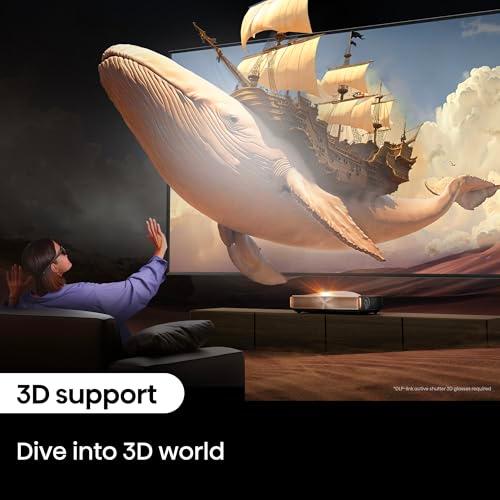
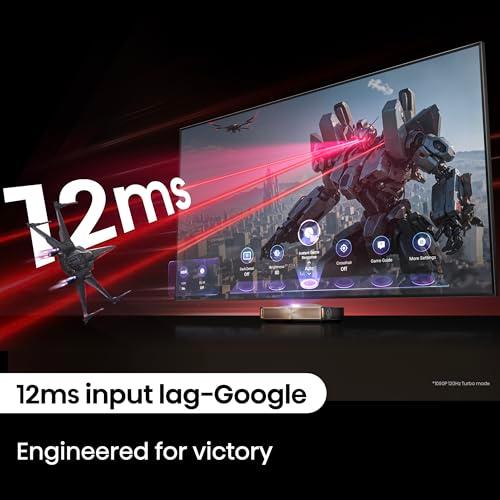
The Hisense L9Q excels here with just 4.6ms input lag at 1080p@240Hz and 12ms at 4K resolution. These numbers rival the best gaming monitors and make the projector suitable for competitive gaming. The projector also supports 3D gaming and movies, adding another dimension to compatible content.
The Epson QS100 delivers 26ms input lag, which while higher than the Hisense, remains acceptable for most gaming scenarios. Casual gamers and single-player enthusiasts won't notice any difference, though competitive players might prefer the Hisense's ultra-low latency. The Epson supports 2K resolution at 120Hz with Auto Low Latency Mode (ALLM), which automatically switches to gaming mode when it detects compatible consoles.
Both projectors handle gaming well, but the Hisense L9Q's superior input lag performance makes it the clear choice for serious gamers who want the ultimate combination of screen size and responsiveness.
This represents perhaps the most significant practical difference between these projectors and substantially affects your total system cost and complexity.
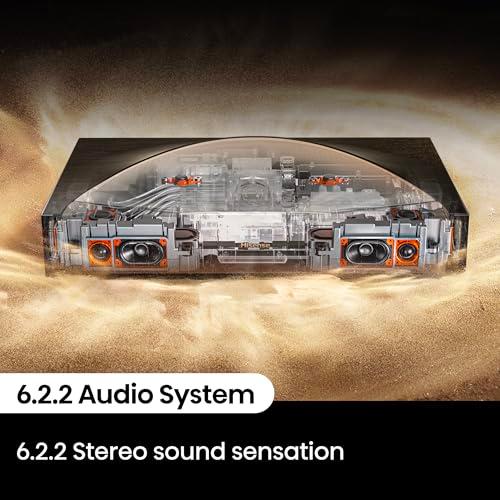
The Hisense L9Q includes a remarkable 116W 6.2.2-channel Devialet audio system with Dolby Atmos and DTS:X support. Devialet, a premium French audio company, engineered this system specifically for the projector, creating what Hisense describes as "Opéra de Paris-grade surround-sound acoustics." The system provides genuine surround sound with overhead effects, eliminating the need for a separate soundbar or speaker system for most users. This integration represents significant value since comparable audio systems cost $1,000-3,000 separately.
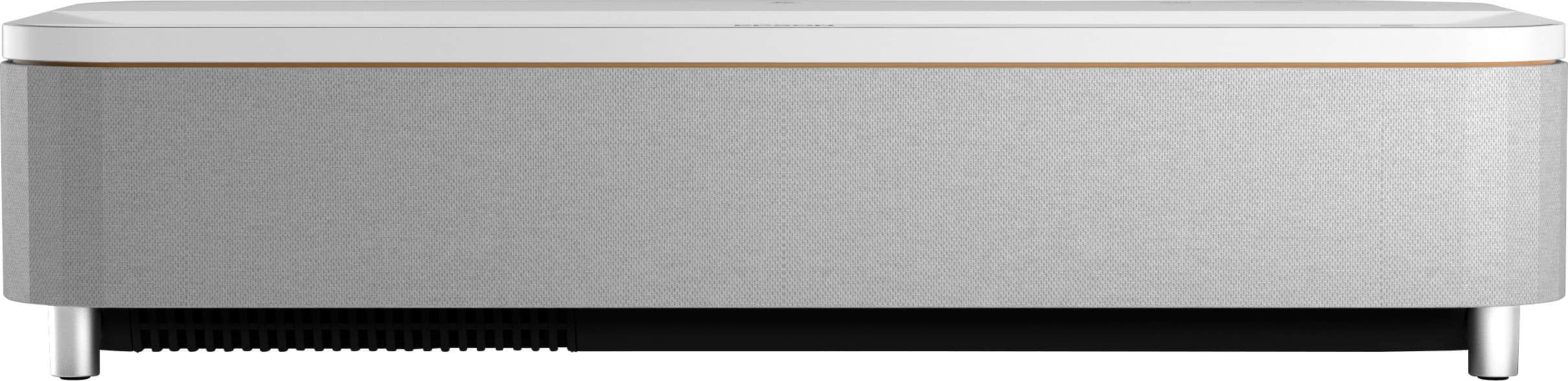
The Epson QS100 includes no audio system whatsoever, requiring external speakers, soundbars, or a full surround sound setup. While this adds cost and complexity, it also provides unlimited flexibility for audio upgrades and customization.
Your choice here depends largely on your audio priorities and existing equipment. If you want excellent sound without additional purchases or complexity, the Hisense L9Q's integrated solution is remarkably convenient and performs far better than typical projector audio. If you're an audio enthusiast with existing equipment or specific preferences, the Epson QS100's requirement for external audio might actually be preferable.
Modern projectors increasingly function as smart TVs, but these models take different approaches to streaming and connectivity.
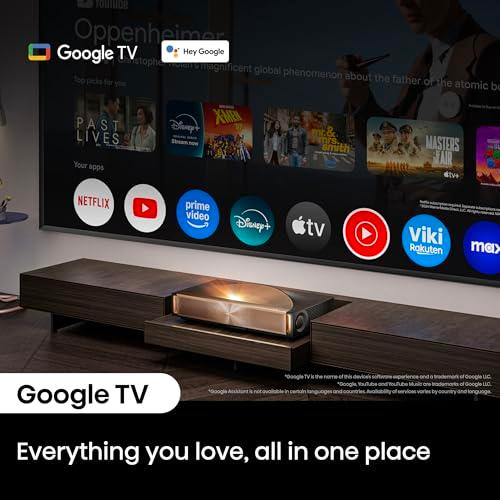
The Hisense L9Q runs Google TV with access to the Google Play Store, Netflix, Disney+, Prime Video, and other major streaming services. Wi-Fi 6E and Bluetooth 5.3 provide fast, reliable connectivity, while Google Assistant enables voice control. The system feels responsive and complete, eliminating the need for external streaming devices in most cases.
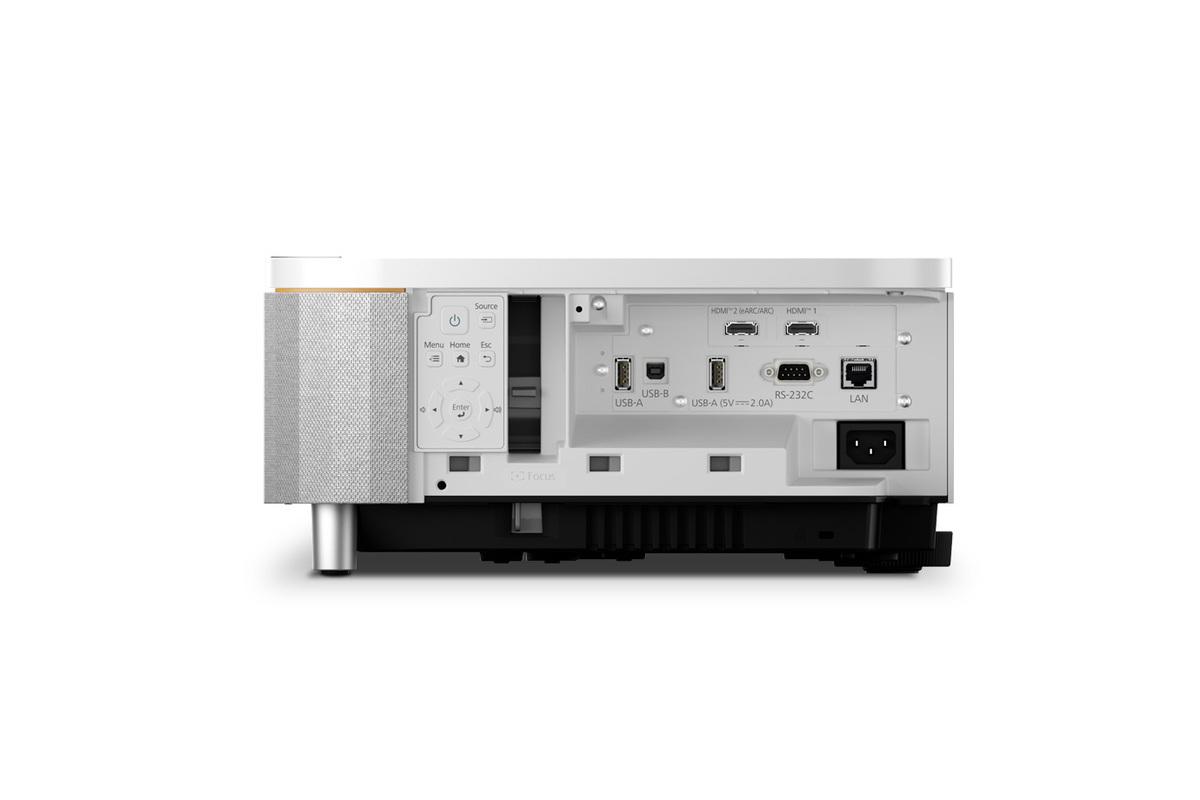
The Epson QS100 includes no smart platform, requiring an Apple TV, Roku, or similar device for streaming. However, it excels in professional integration scenarios with comprehensive IP control support for Crestron, Control4, and other automation systems. This makes it ideal for custom installations where the projector needs to integrate with whole-home control systems.
The Google TV platform on the Hisense L9Q provides genuine convenience for most users, while the Epson QS100's professional integration capabilities serve custom installation scenarios better.
Both projectors offer excellent installation flexibility, but with different strengths and considerations.
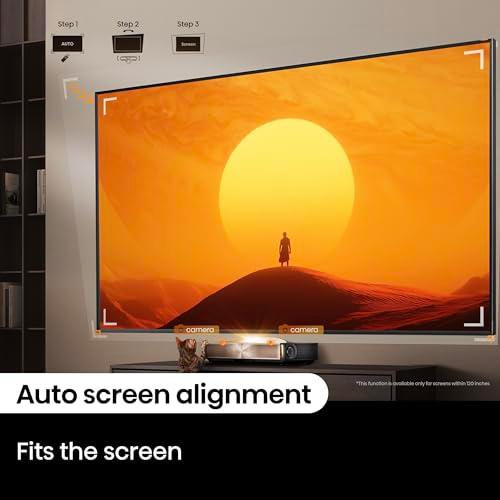
The Hisense L9Q features auto keystone correction and AI-powered picture enhancement that optimizes image quality automatically. Setup is straightforward, making it accessible for users who want minimal configuration complexity. The projector works with screen sizes from 80-200 inches with its 0.18:1 throw ratio.
The Epson QS100 provides more granular control with advanced geometry correction, web-based calibration interfaces, and ISF certification for professional calibration. The 0.16-0.22:1 throw ratio allows placement slightly closer to the wall than the Hisense, though maximum screen size is limited to 160 inches. The projector includes comprehensive adjustment options that videophiles appreciate.
For most users, both projectors install easily and provide excellent results with minimal adjustment. However, the Hisense L9Q's automated optimization appeals to users who want great results without technical involvement, while the Epson QS100's extensive controls satisfy enthusiasts who enjoy fine-tuning their setup.
Both manufacturers have solid reputations, but their support approaches differ meaningfully.
Laser light sources in both projectors last 20,000-25,000 hours, essentially eliminating maintenance concerns during normal ownership. The Hisense L9Q's triple laser system and the Epson QS100's blue laser phosphor design both provide consistent performance over time without the color shifting or dimming common with traditional lamp-based projectors.
Epson provides a particularly generous 5-year warranty, reflecting confidence in their product reliability and providing excellent peace of mind for such a significant investment.
Choosing between the Hisense L9Q and Epson QS100 depends on your priorities, existing equipment, and intended use.
The Hisense L9Q makes sense if you want maximum convenience and performance in a single package. Its superior brightness handles any room lighting, the integrated Devialet audio system eliminates additional equipment needs, Google TV provides complete streaming functionality, and ultra-low input lag satisfies competitive gamers. If you're setting up a new entertainment system and want everything included, the Hisense delivers exceptional value despite its higher upfront cost.
The Epson QS100 appeals to users who prioritize color accuracy, have existing audio equipment, or need professional integration capabilities. Its 3LCD technology eliminates rainbow artifacts, extensive calibration controls satisfy videophiles, and professional automation support works perfectly in custom installations. The lower entry price makes it attractive for users building systems gradually or those with specific technical requirements.
For most buyers creating a family entertainment system, the Hisense L9Q's comprehensive approach provides better overall value when considering the integrated premium audio system. For enthusiasts with specific preferences or existing equipment, the Epson QS100's focused approach to projection excellence combined with integration flexibility makes more sense.
Both projectors represent excellent choices that will transform your viewing experience with truly massive, high-quality images that rival or exceed the best large-screen TVs while offering size flexibility no television can match.
| Hisense L9Q Triple Laser Ultra Short Throw Projector | Epson QS100 4K PRO-UHD Ultra Short Throw Projector |
|---|---|
| Brightness - Most critical spec for daytime viewing and large screens | |
| 5,000 ANSI lumens (class-leading, excellent for any lighting) | 4,500 ANSI lumens (excellent for bright rooms, 500 lumens less noticeable in practice) |
| Display Technology - Affects image sharpness and potential artifacts | |
| DLP with XPR pixel-shifting (true 4K sharpness, possible rainbow artifacts) | 3LCD with 2-way pixel-shifting (4K PRO-UHD, completely artifact-free) |
| Maximum Screen Size - How big you can go | |
| 200 inches (massive cinema experience in large rooms) | 160 inches (still huge, suitable for most home spaces) |
| Native Contrast Ratio - Affects black levels and image depth | |
| 5,000:1 (excellent blacks for such a bright projector) | 1,800:1 (good blacks, enhanced by dynamic processing) |
| Color Gamut - How vivid and lifelike colors appear | |
| 110% BT.2020 with Pantone validation (exceptionally wide, vibrant colors) | BT.2020 coverage (excellent accuracy, more natural color reproduction) |
| HDR Format Support - Compatibility with premium streaming content | |
| Dolby Vision, HDR10+, HLG, IMAX Enhanced (comprehensive support) | HDR10+, HLG (good support, lacks Dolby Vision) |
| Gaming Input Lag - Critical for responsive gaming | |
| 4.6ms at 1080p@240Hz, 12ms at 4K (excellent for competitive gaming) | 26ms (acceptable for casual gaming, higher for competitive play) |
| Built-in Audio - Affects total system cost and convenience | |
| 116W 6.2.2-channel Devialet system with Atmos (eliminates need for soundbar) | No built-in speakers (requires external audio system) |
| Smart Platform - Streaming capabilities without external devices | |
| Google TV with full app support (complete streaming solution) | None (requires Apple TV, Roku, or similar streaming device) |
| 3D Content Support - For 3D movies and gaming | |
| Full 3D support (great for 3D Blu-rays on huge screen) | No 3D support (limitation for 3D content enthusiasts) |
| Professional Integration - Custom installation capabilities | |
| Basic smart home compatibility (suitable for most home setups) | Comprehensive IP control for Crestron, Control4, AMX (ideal for custom installations) |
| Throw Ratio - How close to wall for 100" image | |
| 0.18:1 (100" from 5.4" away, flexible placement) | 0.16-0.22:1 (100" from ~4.5" away, slightly more flexible positioning) |
| Laser Life - Maintenance-free operation duration | |
| 25,000+ hours (virtually maintenance-free for entire ownership) | 20,000 hours (excellent longevity, 5-year warranty included) |
| Calibration Controls - Fine-tuning image quality | |
| Auto optimization with AI enhancement (excellent results with minimal effort) | Extensive manual controls, ISF certification, web interface (videophile-friendly) |
The Hisense L9Q delivers 5,000 ANSI lumens compared to the Epson QS100's 4,500 lumens, making the Hisense brighter for rooms with ambient light. Both projectors handle daytime viewing excellently, but the Hisense L9Q's extra brightness becomes more noticeable on larger screens above 150 inches or in very bright rooms with lots of windows.
The Hisense L9Q includes a premium 116W 6.2.2-channel Devialet sound system with Dolby Atmos, eliminating the need for a separate soundbar. The Epson QS100 has no built-in speakers and requires external audio equipment. This makes the Hisense L9Q a complete entertainment solution while the Epson QS100 offers flexibility for custom audio setups.
The Hisense L9Q offers superior gaming performance with 4.6ms input lag at high refresh rates and 12ms at 4K resolution, making it excellent for competitive gaming. The Epson QS100 has 26ms input lag, which is acceptable for casual gaming but not ideal for competitive play. The Hisense L9Q also supports 3D gaming while the Epson does not.
The Hisense L9Q supports screen sizes up to 200 inches, creating a massive cinema experience. The Epson QS100 maxes out at 160 inches, which is still very large but more suitable for typical home spaces. Both projectors work well from 80 inches up to their maximum sizes with excellent image quality.
The Hisense L9Q uses DLP technology with XPR pixel-shifting to achieve true 4K resolution with exceptional sharpness. The Epson QS100 uses 3LCD technology with 4K PRO-UHD pixel-shifting, which doesn't quite match native 4K sharpness but eliminates rainbow artifacts completely. Both deliver excellent 4K images, with the choice depending on your sensitivity to potential DLP rainbow effects.
The Hisense L9Q supports Dolby Vision, HDR10+, HLG, and IMAX Enhanced for comprehensive HDR compatibility with all streaming services. The Epson QS100 supports HDR10+ and HLG but lacks Dolby Vision support. For premium Netflix and streaming content, the Hisense L9Q's broader HDR format support provides better compatibility.
For dedicated home theater rooms, the Epson QS100 excels with superior color accuracy, extensive calibration controls, and artifact-free 3LCD technology. For multipurpose living rooms, the Hisense L9Q performs better with higher brightness, integrated premium audio, and smart TV functionality. The Epson QS100 suits videophiles while the Hisense L9Q works better for family entertainment.
Both projectors use ultra short throw technology. The Hisense L9Q has a 0.18:1 throw ratio, creating a 100-inch image from about 5.4 inches away. The Epson QS100 has a 0.16-0.22:1 throw ratio, allowing placement from roughly 4.5-6 inches away for a 100-inch screen. Both eliminate shadows and can sit on TV stands.
The Hisense L9Q runs Google TV with access to Netflix, Disney+, Prime Video, and other streaming apps, plus Google Assistant voice control. The Epson QS100 has no smart platform and requires an external streaming device like Apple TV or Roku. The Hisense L9Q provides a complete entertainment solution while the Epson QS100 focuses purely on projection.
The Hisense L9Q delivers 5,000:1 native contrast ratio for deep blacks and bright whites. The Epson QS100 offers 1,800:1 native contrast but compensates with Dynamic HDR Tone Mapping that optimizes each scene. In practice, both provide good contrast performance, with the Hisense L9Q having an advantage in dark room viewing.
The Hisense L9Q costs more upfront but includes premium Devialet audio and Google TV, making it excellent value as a complete system. The Epson QS100 has a lower entry cost but requires additional purchases for audio and streaming. When factoring in the integrated premium audio system, the Hisense L9Q often provides better total value for most buyers.
The Hisense L9Q laser system lasts 25,000+ hours while the Epson QS100 provides 20,000 hours of operation. Both essentially eliminate maintenance concerns during normal ownership, with the laser lasting 10-20 years of typical use. The Epson QS100 includes a generous 5-year warranty, while both projectors offer consistent brightness throughout their lifespan unlike traditional lamp projectors.
We've done our best to create useful and informative comparisons to help you decide what product to buy. Our research uses advanced automated methods to create this comparison and perfection is not possible - please contact us for corrections or questions. These are the sites we've researched in the creation of this article: chrismajestic.com - shop.hisense-usa.com - tomsguide.com - valueelectronics.com - techradar.com - whathifi.com - youtube.com - projectorscreen.com - projectorscreen.com - hisense-usa.com - youtube.com - projectorcentral.com - youtube.com - hisense-usa.com - manuals.plus - shop.avispl.com - hisense-usa.com - projectorscreen.com - youtube.com - projectorcentral.com - projectorreviews.com - techradar.com - audioadvice.com - projectorreviews.com - avsforum.com - projectorcentral.com - mediaserver.goepson.com - projectorcentral.com - news.epson.com - epson.eu - epson.com - epson.eu - epson.com - projectorcentral.com - bestbuy.com

Privacy Policy
Terms and Conditions - Affiliate Policy
Home Security
© Copyright 2008-2026.
11816 Inwood Rd #1211, Dallas, TX 75244