

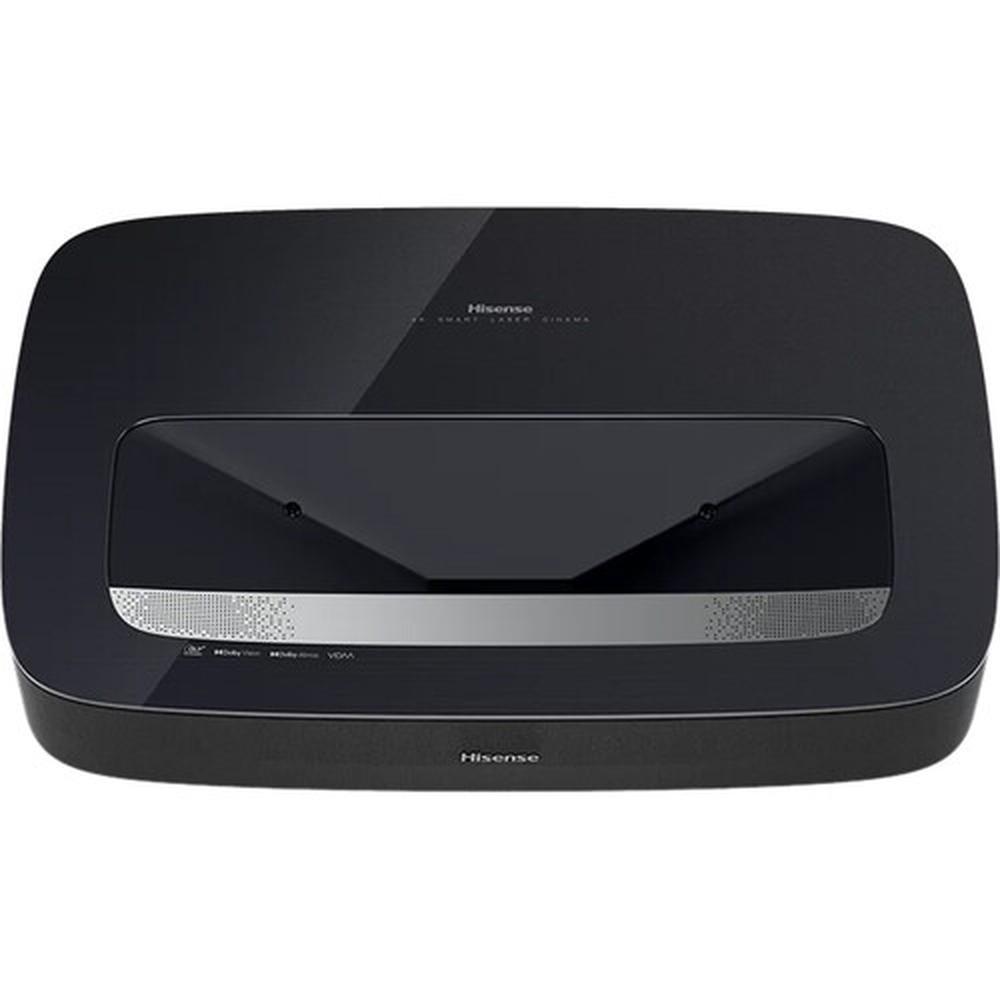
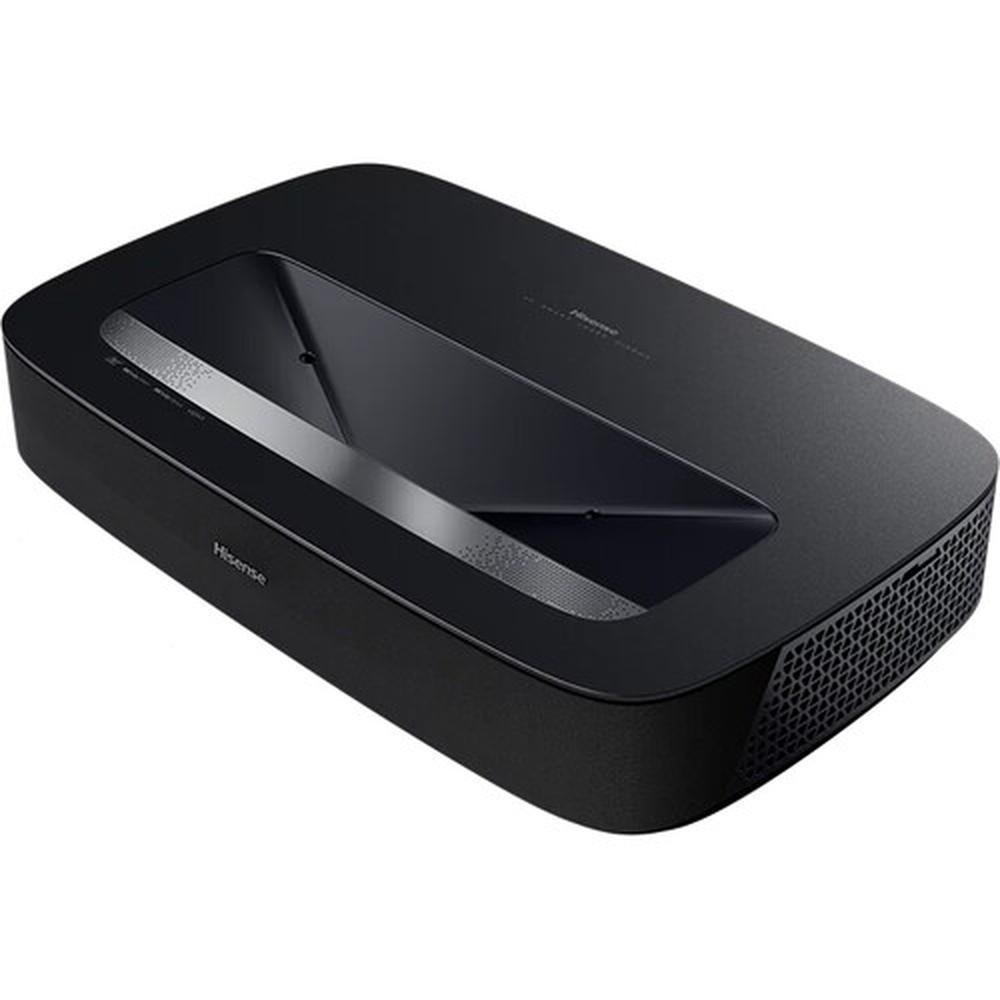
When shopping for a large-screen home theater solution, ultra short throw projectors have become the go-to choice for many homeowners. These clever devices can throw a massive 100+ inch image while sitting just inches from your wall—no more ceiling mounts or long cable runs across your living room. But with options ranging from budget-friendly to premium pricing, choosing the right one requires understanding what actually matters for your specific setup.
Today we're comparing two popular models that represent very different approaches to ultra short throw projection: the premium Epson QS100 and the value-oriented Hisense PL2. Based on our research into user experiences and professional reviews, these projectors target different audiences with distinct strengths and trade-offs.
Before diving into the comparison, it helps to understand what makes ultra short throw projectors special. Traditional projectors need to be positioned far from the screen—often 10-15 feet for a 100-inch image. Ultra short throw projectors achieve the same image size from just 8-12 inches away using specialized wide-angle lenses and advanced optical engineering.
This proximity brings several benefits. You can't accidentally walk into the light beam and cast shadows on the screen. There's no glare bouncing back into your eyes. Setup is simpler since you don't need ceiling mounts or long HDMI cables. The projector can sit on a TV stand or low cabinet, making it perfect for living rooms where a traditional projector would be impractical.
The downside? These specialized optics and compact designs typically cost more than equivalent traditional projectors. You're also limited to relatively flat walls or dedicated ultra short throw screens for optimal image quality.
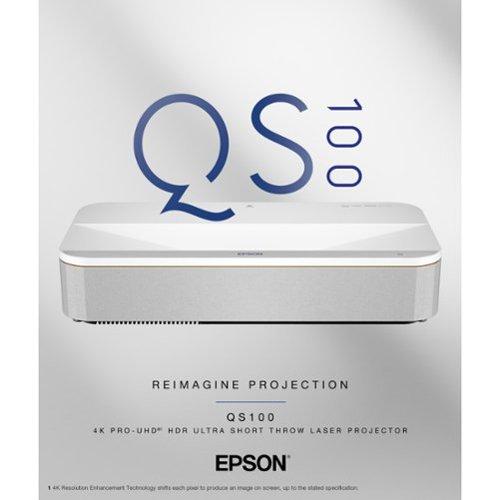
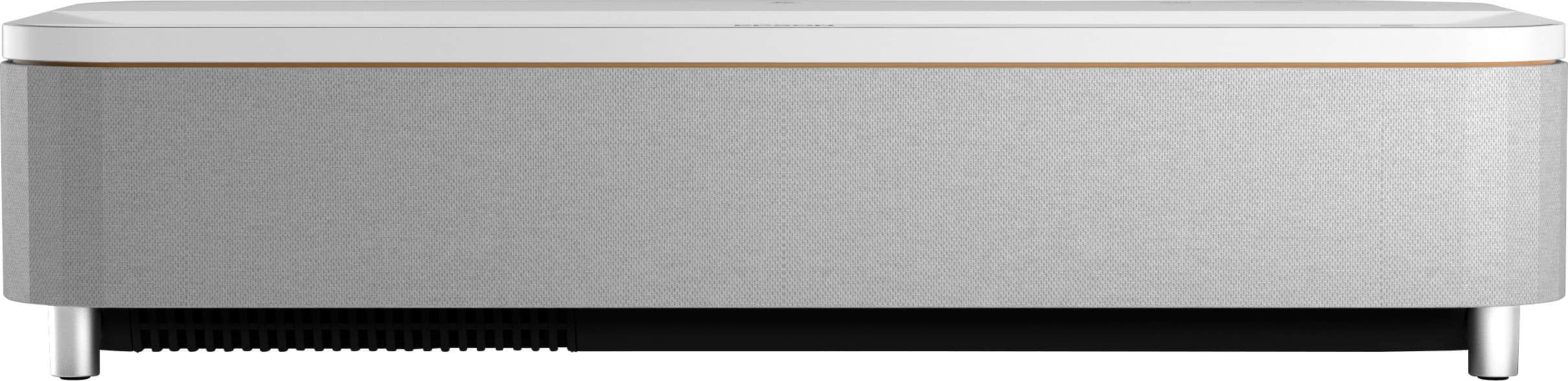
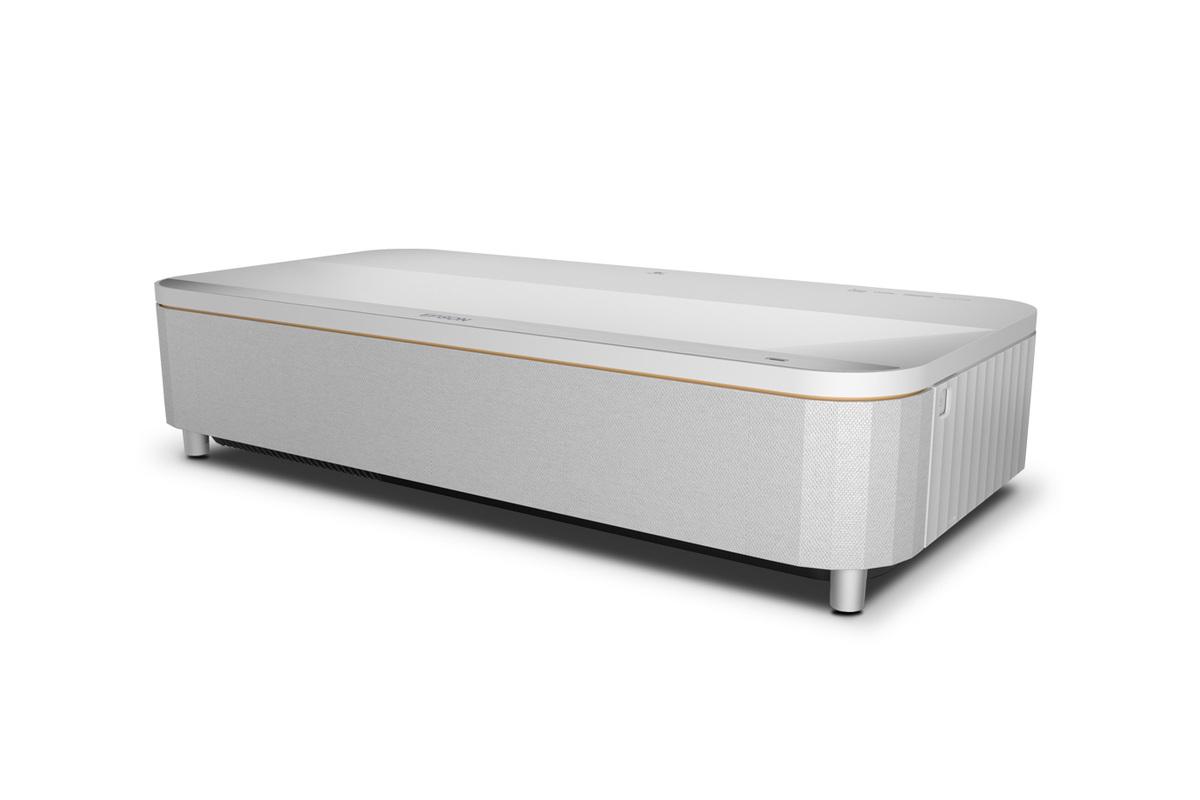
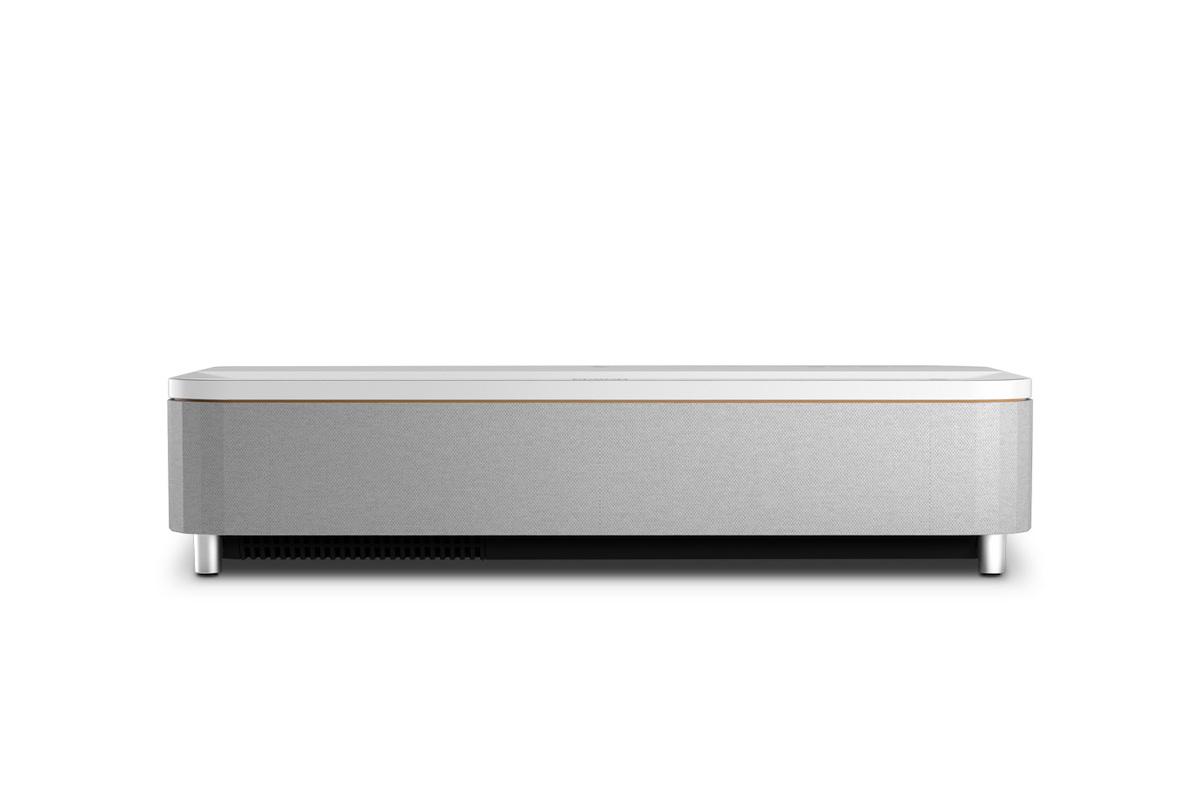
The Epson QS100, released in 2025, represents Epson's flagship ultra short throw technology. At the time of writing, it commands a premium price—roughly double that of many competitors—but delivers professional-grade brightness and integration features that justify the cost for demanding applications.
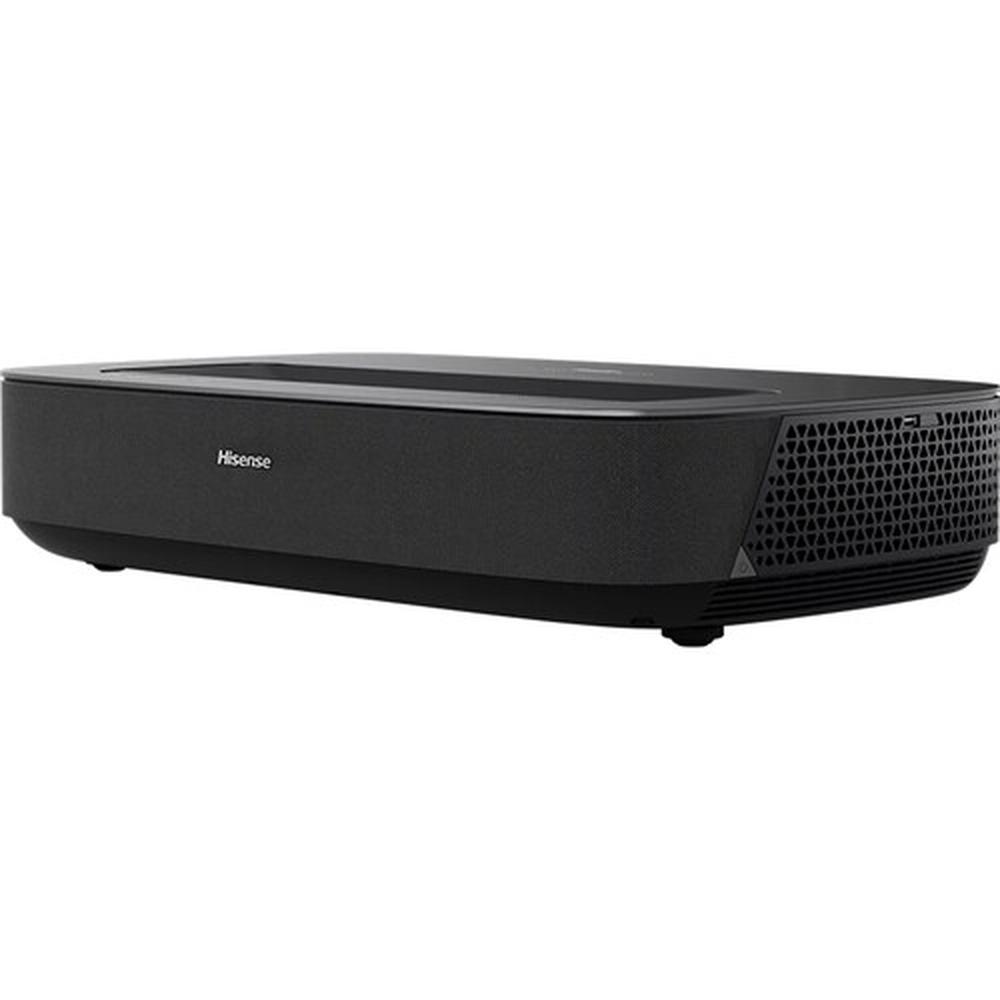
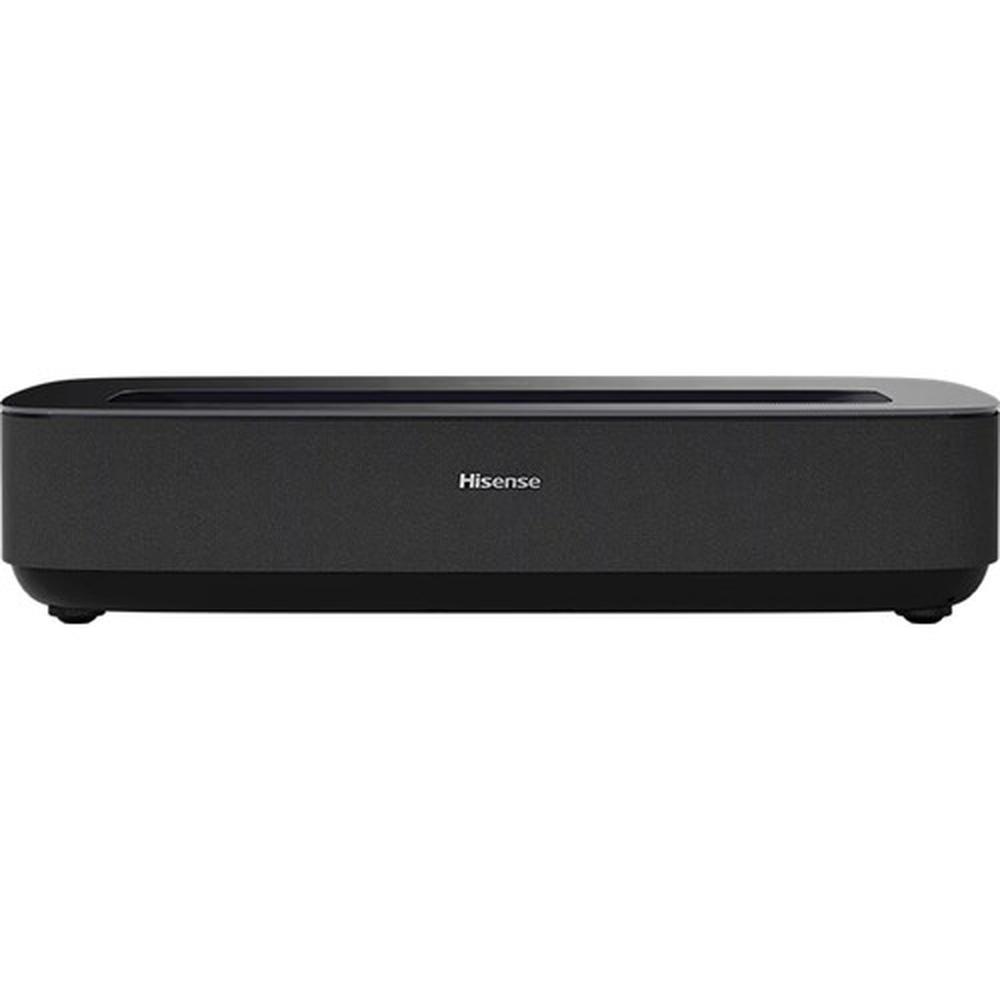
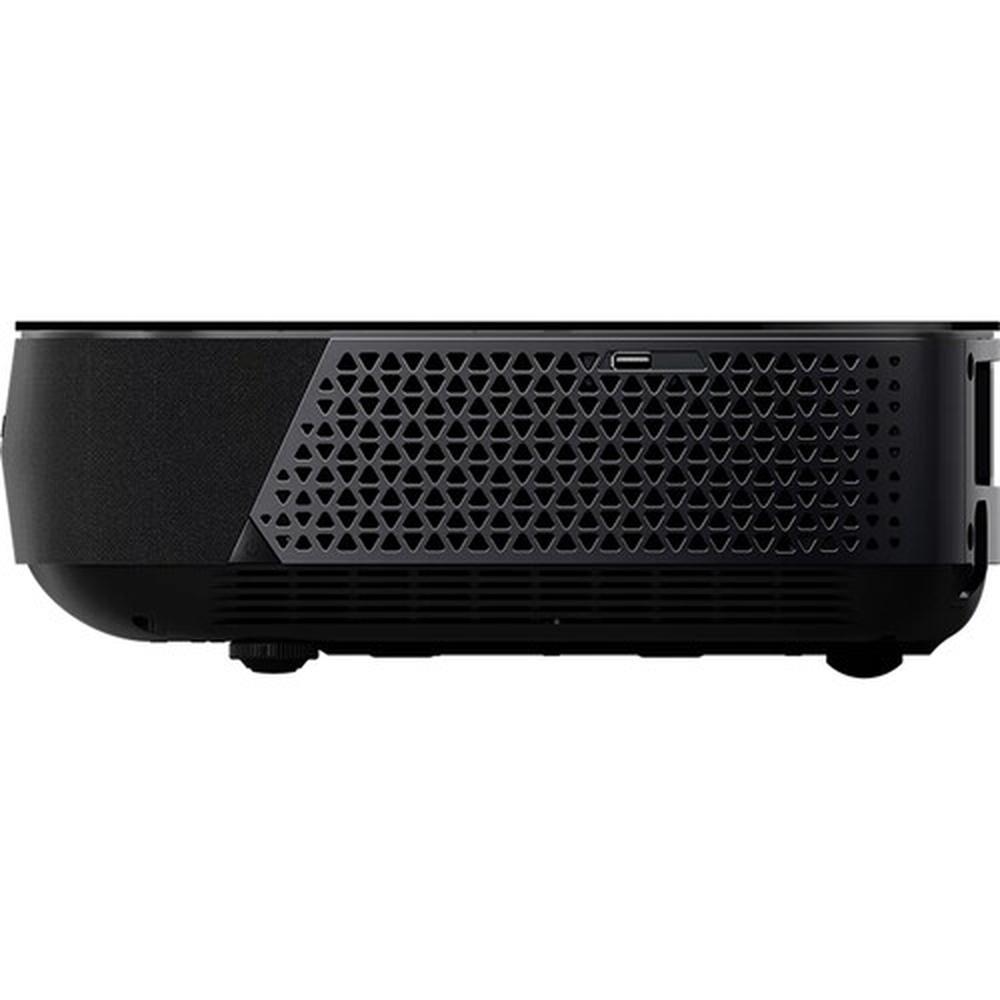
The Hisense PL2, available for significantly less money, takes a different approach. Rather than maximizing raw performance, it focuses on delivering good image quality with comprehensive smart features and built-in audio, creating an all-in-one entertainment solution.
These different philosophies create distinct use cases that we'll explore throughout this comparison.
When evaluating any projector, brightness often determines whether you'll actually enjoy using it. This becomes even more critical with ultra short throw models since they're typically used in living rooms rather than dedicated dark theaters.
Brightness is measured in lumens—essentially how much light the projector can output. For context, a typical living room with some ambient light requires at least 2,000-2,500 lumens for a decent viewing experience, while bright rooms with windows might need 3,000+ lumens.
The Epson QS100 delivers an exceptional 4,500 lumens of brightness, making it one of the brightest ultra short throw projectors available. This comes from Epson's redesigned 5-in-1 laser light source module, which represents a significant advancement over their previous models. This brightness level means you can comfortably watch movies or sports with living room lights on, windows open during daytime, or even in bright basement recreation rooms.
The Hisense PL2 produces 2,700 lumens, which exceeds many budget models but falls well short of the Epson's output. This brightness works well in dedicated theater rooms with controlled lighting, but struggles in brighter environments. Based on user feedback, the Hisense performs admirably in evening viewing with minimal ambient light, but daytime viewing requires closing curtains and dimming lights.
This brightness difference fundamentally affects how versatile each projector is in your home. The Epson QS100 adapts to your lifestyle, while the Hisense PL2 requires you to adapt to its limitations.
The projectors use fundamentally different imaging technologies that create distinct viewing characteristics. Understanding these differences helps predict which will suit your preferences.
The Epson QS100 uses 3LCD technology, employing three separate LCD panels for red, green, and blue light. This approach ensures consistent color brightness across all hues and eliminates the "rainbow effect"—brief flashes of red, green, and blue that some viewers notice with competing technologies. Epson's implementation includes their QZX Picture Processor, a 32-bit engine that enhances contrast, brightness, and color accuracy in real-time.
The Hisense PL2 uses DLP (Digital Light Processing) technology with a single imaging chip and color wheel. DLP typically produces deeper blacks and potentially sharper images, but can create the rainbow effect for viewers sensitive to it. The PL2 uses eShift pixel-shifting technology combined with Hisense's X-Fusion laser engine to achieve its image quality.
Both projectors achieve 4K-like resolution through pixel-shifting rather than native 4K panels—a common approach in this price range that delivers excellent results at normal viewing distances. The difference in native resolution versus pixel-shifted 4K is essentially invisible from typical seating distances of 8-12 feet.
Color accuracy and dynamic range significantly impact viewing enjoyment, especially for movies and premium content.
The Epson QS100 covers the BT.2020 color space extensively and provides a 5,000,000:1 dynamic contrast ratio. Its new Dynamic Tone Mapping feature analyzes HDR content frame-by-frame, optimizing brightness and contrast for each scene. However, it doesn't support Dolby Vision—a limitation given its high brightness capability that could theoretically handle Dolby Vision's demanding requirements.
The Hisense PL2 covers 85% of the DCI-P3 color space and achieves a solid 3,000:1 native contrast ratio. Importantly, it supports Dolby Vision alongside HDR10 and HLG formats, providing superior HDR compatibility despite lower overall brightness. For viewers with extensive Dolby Vision content libraries, this represents a significant advantage.
Based on professional reviews and user feedback, the Epson QS100 produces more accurate colors overall with superior highlight detail, while the Hisense PL2 excels in shadow detail and offers better HDR format support.
Gaming capabilities have become increasingly important as projectors find their way into multi-purpose entertainment rooms.
The Epson QS100 excels here with 16.7ms input lag and comprehensive gaming features including Auto Low Latency Mode (ALLM) and support for 2K content at 120fps. Input lag measures the delay between controller input and on-screen response—anything under 20ms is considered excellent for competitive gaming. The ALLM feature automatically detects gaming content and switches to low-latency mode without manual intervention.
The Hisense PL2 achieves respectable 20ms input lag, which remains excellent for casual gaming though competitive players might notice the slight difference. It lacks advanced gaming features like high refresh rate support, but includes basic gaming modes that optimize settings for different game types.
For serious gamers, the Epson QS100 provides a clear advantage. For occasional gaming, the Hisense PL2 performs adequately without compromising other priorities.
These projectors take opposite approaches to smart features and connectivity, reflecting their different target audiences.
The Hisense PL2 includes Google TV with access to all major streaming services—Netflix, Disney+, HBO Max, Prime Video, and more. Google Assistant provides voice control, while Chromecast and AirPlay 2 enable seamless device casting. This comprehensive smart platform eliminates the need for external streaming devices and creates a truly all-in-one entertainment solution.
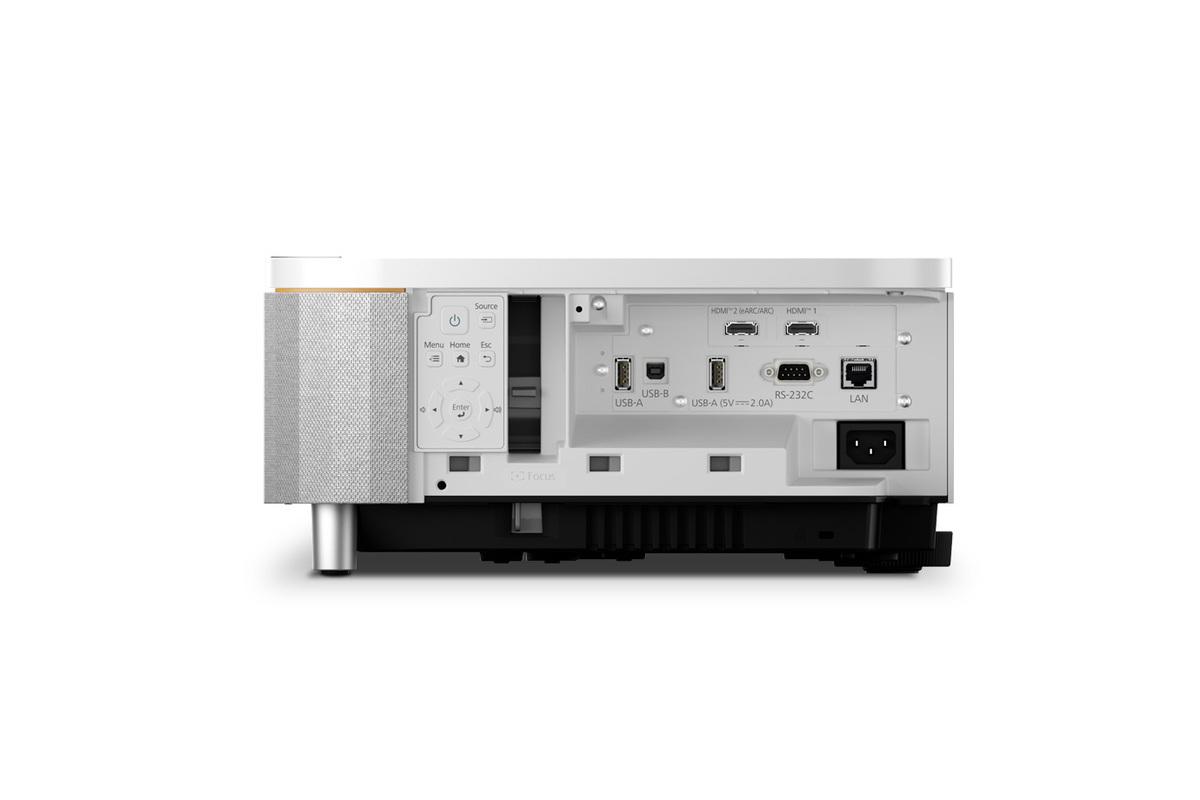
The Epson QS100 deliberately omits built-in streaming features, instead focusing on professional integration capabilities. It supports IP control protocols for systems like Crestron and Control4, enabling seamless integration with high-end home automation systems. Web-based control and ISF certification for professional calibration further emphasize its custom installation focus.
This represents a fundamental philosophical difference. The Hisense PL2 prioritizes user convenience and simplified setup, while the Epson QS100 targets users who prefer dedicated streaming devices and professional-grade control systems.
Audio handling further illustrates these different approaches.
The Hisense PL2 includes substantial 30W per channel speakers with Dolby Atmos and Dolby Digital support. These built-in speakers eliminate the need for separate audio equipment and provide surprisingly good sound quality for a projector. User reviews consistently praise the audio quality as above-average for integrated speakers.
The Epson QS100 includes no speakers by design, featuring HDMI eARC support instead for connecting to external audio systems. This approach assumes users will invest in dedicated soundbars, receivers, or speaker systems—a reasonable assumption given the projector's premium positioning.
For users wanting simplicity, the Hisense PL2 provides immediate satisfaction. For audiophiles or those planning comprehensive home theater systems, the Epson QS100's external audio approach offers unlimited upgrade potential.
Both projectors qualify as ultra short throw, but with different specifications that affect placement and setup.
The Epson QS100 requires approximately 10 inches from the wall for a 100-inch image with its 0.16:1 throw ratio, and can project up to 160 inches maximum. It includes professional-grade geometry correction features and the Epson Setting Assistant app for precise alignment.
The Hisense PL2 needs about 12 inches from the wall for equivalent image size with its 0.22:1 throw ratio, maxing out at 150 inches. It features smartphone-based auto-calibration that simplifies initial setup significantly.
The Epson QS100 offers more installation flexibility and larger image capabilities, while the Hisense PL2 provides easier setup for typical users.
Both projectors use laser light sources rated for 20,000+ hours—essentially eliminating lamp replacement costs and providing 10+ years of typical use. Energy efficiency is excellent for both models.
At the time of writing, the Epson QS100 costs roughly double the Hisense PL2's price. However, total ownership costs require broader consideration. The Hisense PL2 includes streaming and audio capabilities that would require additional purchases with the Epson QS100. When factoring in a quality streaming device and sound system, the total cost gap narrows considerably.
The value equation ultimately depends on your priorities and room requirements. The Hisense PL2 provides exceptional value for controlled lighting environments, while the Epson QS100 justifies its premium through superior room versatility and professional capabilities.
After researching extensive user feedback and professional reviews, clear recommendations emerge based on specific use cases.
Choose the Epson QS100 if your room has significant ambient light, windows that can't be controlled, or if you need maximum versatility across different viewing conditions. It's also the clear choice for serious gamers, custom installation scenarios, or situations where image quality consistency is paramount regardless of lighting conditions.
The Hisense PL2 excels in dedicated theater rooms with controllable lighting, for users prioritizing built-in convenience features, or where budget considerations are primary. Its comprehensive smart features and integrated audio create an excellent plug-and-play large-screen solution.
For most buyers, room lighting ultimately determines the right choice. If you can create a reasonably dark viewing environment, the Hisense PL2 delivers outstanding value with minimal compromises. If your room lighting varies significantly throughout the day, the Epson QS100's superior brightness provides much better versatility.
Both projectors represent solid choices within their respective categories, but understanding your specific room conditions and priorities will guide you toward the right investment for years of large-screen entertainment.
| Epson QS100 4K PRO-UHD Ultra Short Throw Projector | Hisense PL2 4K Ultra Short Throw Projector |
|---|---|
| Brightness - Most critical spec for room versatility and daytime viewing | |
| 4,500 ANSI lumens (excellent performance in bright rooms) | 2,700 ANSI lumens (good for controlled lighting environments) |
| Display Technology - Affects color consistency and potential visual artifacts | |
| 3LCD with no rainbow effect, consistent color brightness | DLP with deeper blacks but potential rainbow artifacts |
| Maximum Screen Size - Determines largest possible viewing experience | |
| Up to 160 inches | Up to 150 inches |
| Throw Distance - How close to wall for 100-inch image | |
| ~10 inches from wall (0.16:1 throw ratio) | ~12 inches from wall (0.22:1 throw ratio) |
| HDR Support - Critical for premium streaming and 4K Blu-ray content | |
| HDR10, HLG with Dynamic Tone Mapping (no Dolby Vision) | HDR10, HLG, Dolby Vision (better format compatibility) |
| Gaming Performance - Input lag affects responsiveness for competitive gaming | |
| 16.7ms input lag with ALLM and 2K/120fps support | 20ms input lag with basic gaming modes |
| Smart Features - Built-in streaming vs external device requirements | |
| No built-in smart platform (requires external streaming device) | Google TV with comprehensive app support built-in |
| Audio System - Convenience vs audiophile potential | |
| No built-in speakers (designed for external audio systems) | 30W per channel with Dolby Atmos support |
| Professional Integration - Custom installation and control capabilities | |
| Full IP control, ISF certified, designed for custom installations | Basic smart home integration through Google platform |
| Laser Life - Long-term reliability and maintenance costs | |
| 20,000 hours (virtually maintenance-free) | 25,000+ hours (slightly longer lifespan) |
| Target Market - Who each projector is designed for | |
| Premium users needing maximum brightness and professional features | Value-conscious buyers wanting all-in-one convenience |
The Epson QS100 is significantly brighter at 4,500 lumens compared to the Hisense PL2 at 2,700 lumens. This makes the Epson QS100 much better for rooms with ambient light, windows, or daytime viewing, while the Hisense PL2 works best in darker, controlled lighting environments.
No, only the Hisense PL2 includes built-in Google TV with streaming apps like Netflix, Disney+, and Prime Video. The Epson QS100 has no built-in smart features and requires an external streaming device like Apple TV or Roku to access content.
The Epson QS100 offers superior gaming performance with 16.7ms input lag, Auto Low Latency Mode, and support for 2K at 120fps. The Hisense PL2 has slightly higher 20ms input lag but still provides good gaming performance for casual players.
The Epson QS100 needs about 10 inches from the wall for a 100-inch image, while the Hisense PL2 requires about 12 inches. Both are true ultra short throw projectors that eliminate shadows and work well in living room setups.
The Hisense PL2 includes built-in 30W speakers with Dolby Atmos support, providing good sound without additional equipment. The Epson QS100 has no built-in speakers and requires external audio systems, but offers more flexibility for high-end sound setups.
The Epson QS100 can project up to 160 inches, while the Hisense PL2 maxes out at 150 inches. Both provide massive screen sizes suitable for home theater experiences, with the Epson QS100 offering slightly more flexibility.
The Hisense PL2 supports more HDR formats including Dolby Vision, HDR10, and HLG. The Epson QS100 supports HDR10 and HLG with advanced Dynamic Tone Mapping but lacks Dolby Vision support, which may matter for premium streaming content.
Both projectors use long-lasting laser light sources. The Hisense PL2 is rated for 25,000+ hours while the Epson QS100 lasts up to 20,000 hours. Both essentially eliminate lamp replacement costs and provide 10+ years of typical use.
The Hisense PL2 is easier to set up with smartphone-based auto-calibration and plug-and-play smart features. The Epson QS100 offers more advanced setup options but may require professional installation for optimal results, especially in custom home theater environments.
The Epson QS100 uses 3LCD technology for consistent colors without rainbow effects and superior brightness. The Hisense PL2 uses DLP technology that can produce deeper blacks but may show rainbow artifacts for sensitive viewers. Both achieve excellent 4K-like resolution through pixel-shifting.
The Hisense PL2 offers exceptional value with built-in smart features, audio, and good image quality at a lower price point. The Epson QS100 costs significantly more but provides superior brightness, gaming features, and professional integration capabilities that justify the premium for demanding users.
Choose the Epson QS100 if you have a bright room, need maximum image quality, or want professional integration features. Choose the Hisense PL2 if you have a dedicated theater room with controlled lighting, want built-in convenience features, or prioritize value over maximum performance.
We've done our best to create useful and informative comparisons to help you decide what product to buy. Our research uses advanced automated methods to create this comparison and perfection is not possible - please contact us for corrections or questions. These are the sites we've researched in the creation of this article: projectorscreen.com - youtube.com - projectorcentral.com - projectorreviews.com - techradar.com - audioadvice.com - projectorreviews.com - avsforum.com - projectorcentral.com - mediaserver.goepson.com - projectorcentral.com - news.epson.com - epson.eu - epson.com - epson.eu - epson.com - projectorcentral.com - bestbuy.com - avnirvana.com - crutchfield.com - projectorscreen.com - digitaltrends.com - newatlas.com - valueelectronics.com - youtube.com - shop.hisense-usa.com - ecoustics.com

Privacy Policy
Terms and Conditions - Affiliate Policy
Home Security
© Copyright 2008-2026.
11816 Inwood Rd #1211, Dallas, TX 75244