

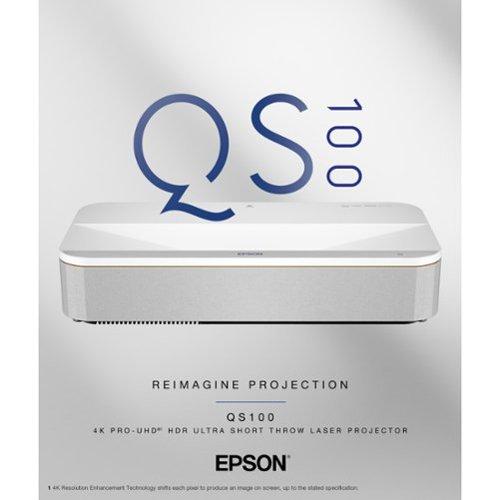
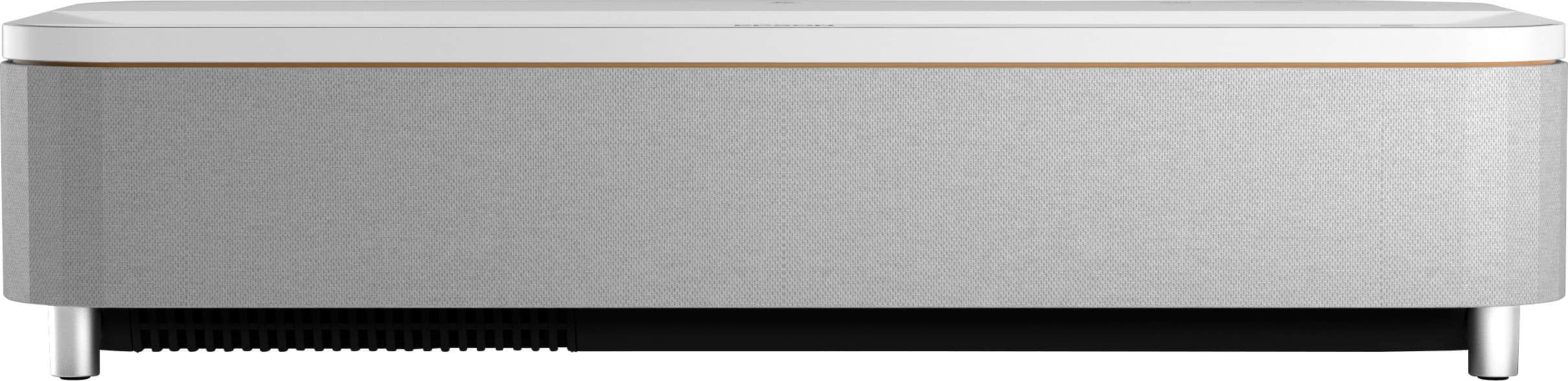
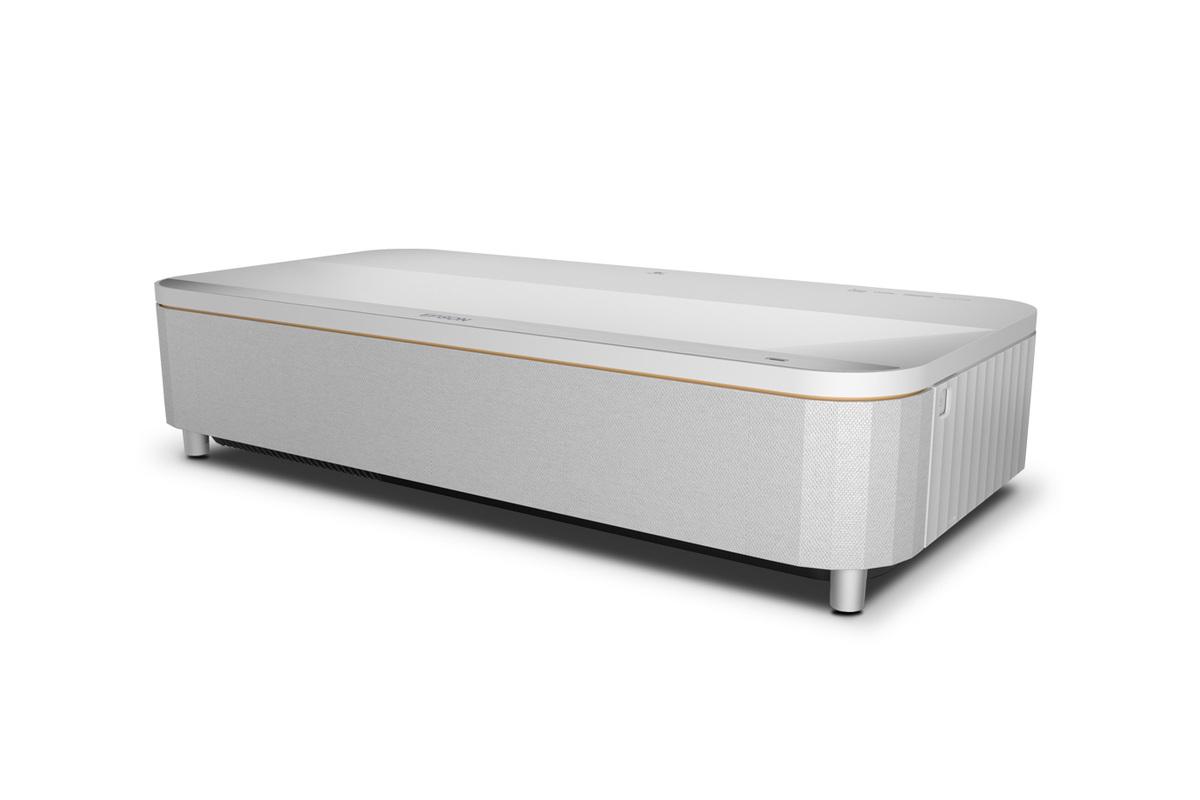
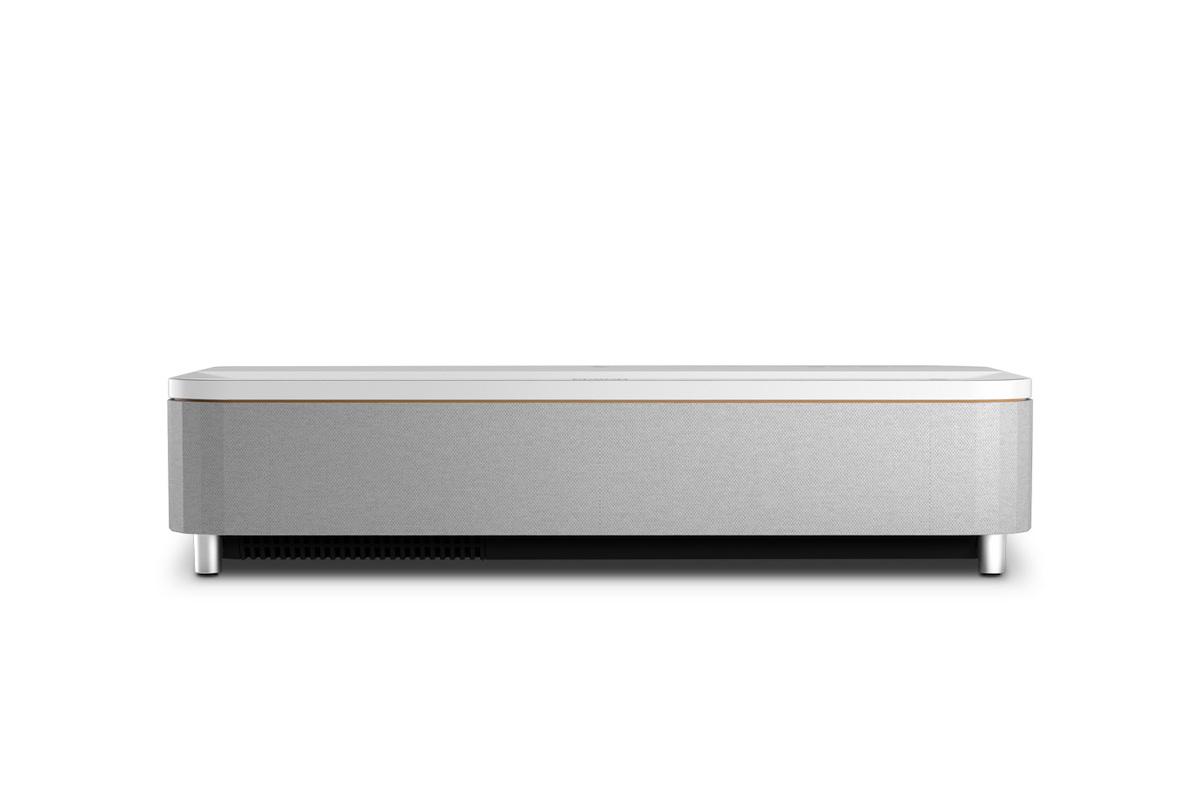
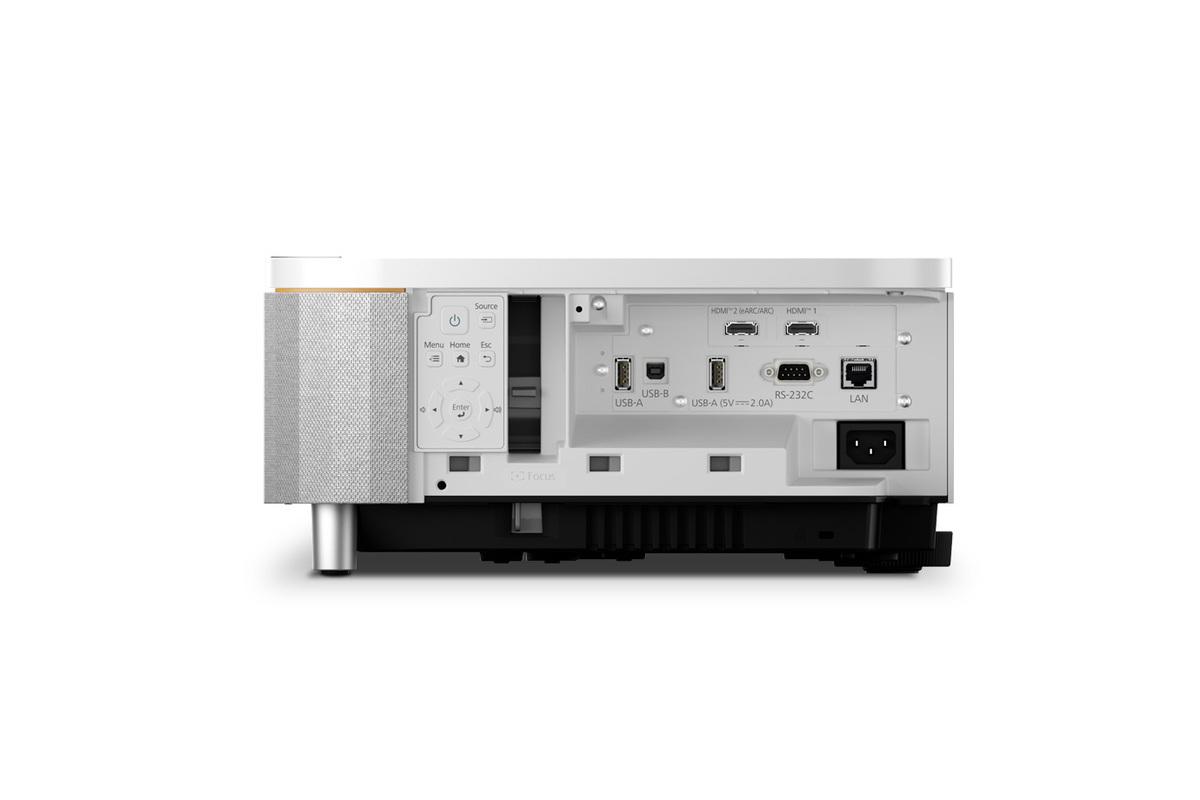
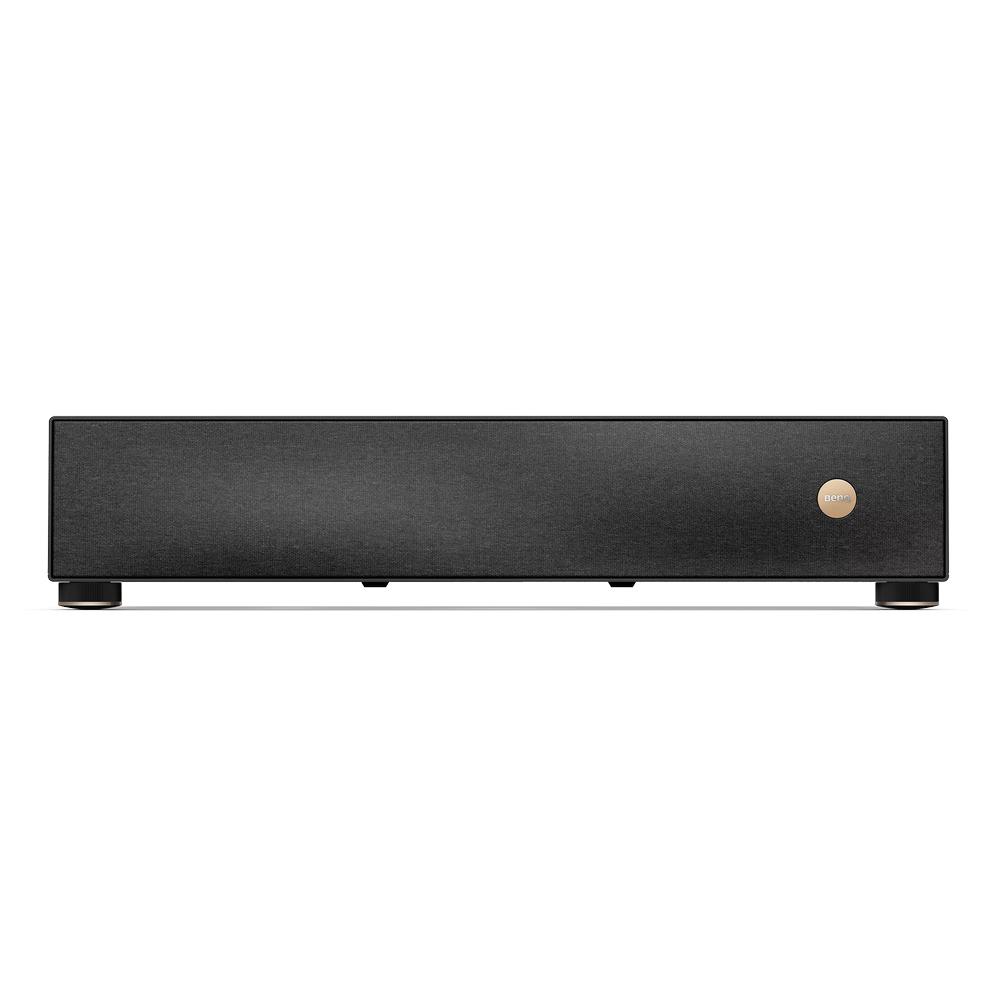
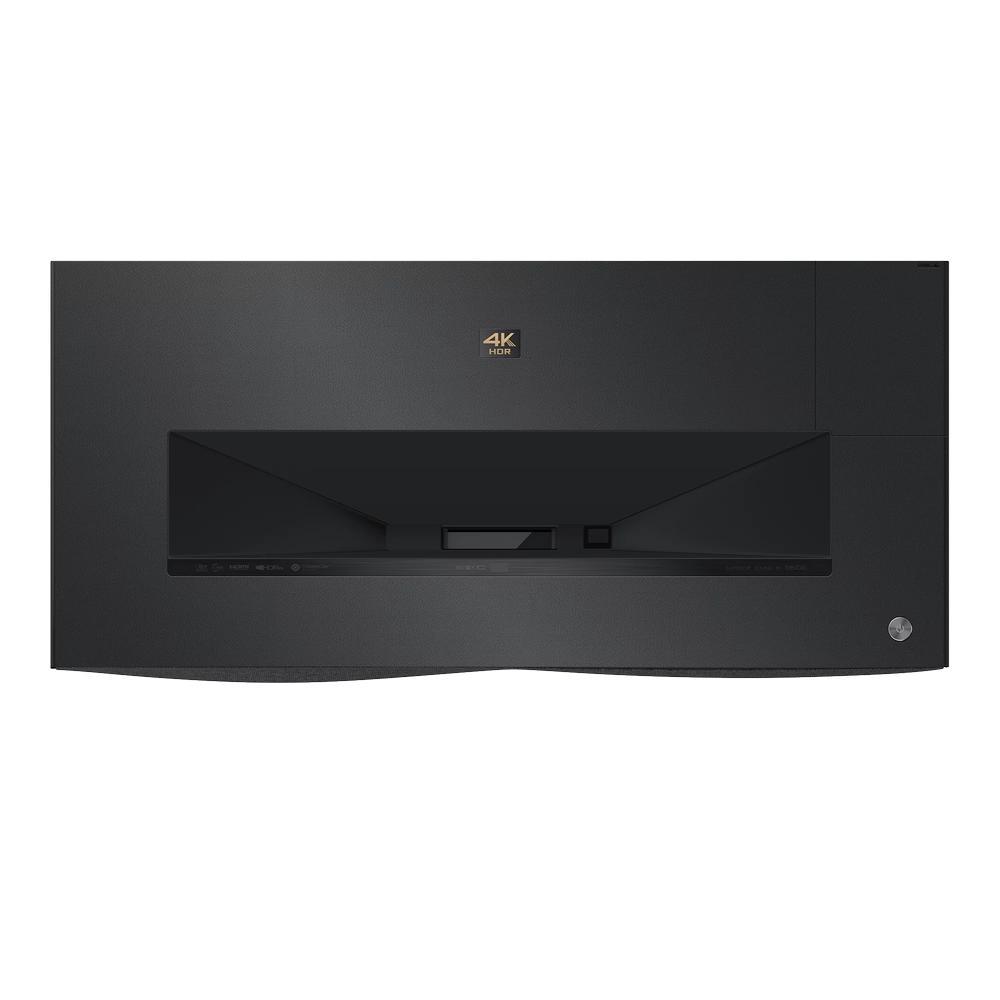
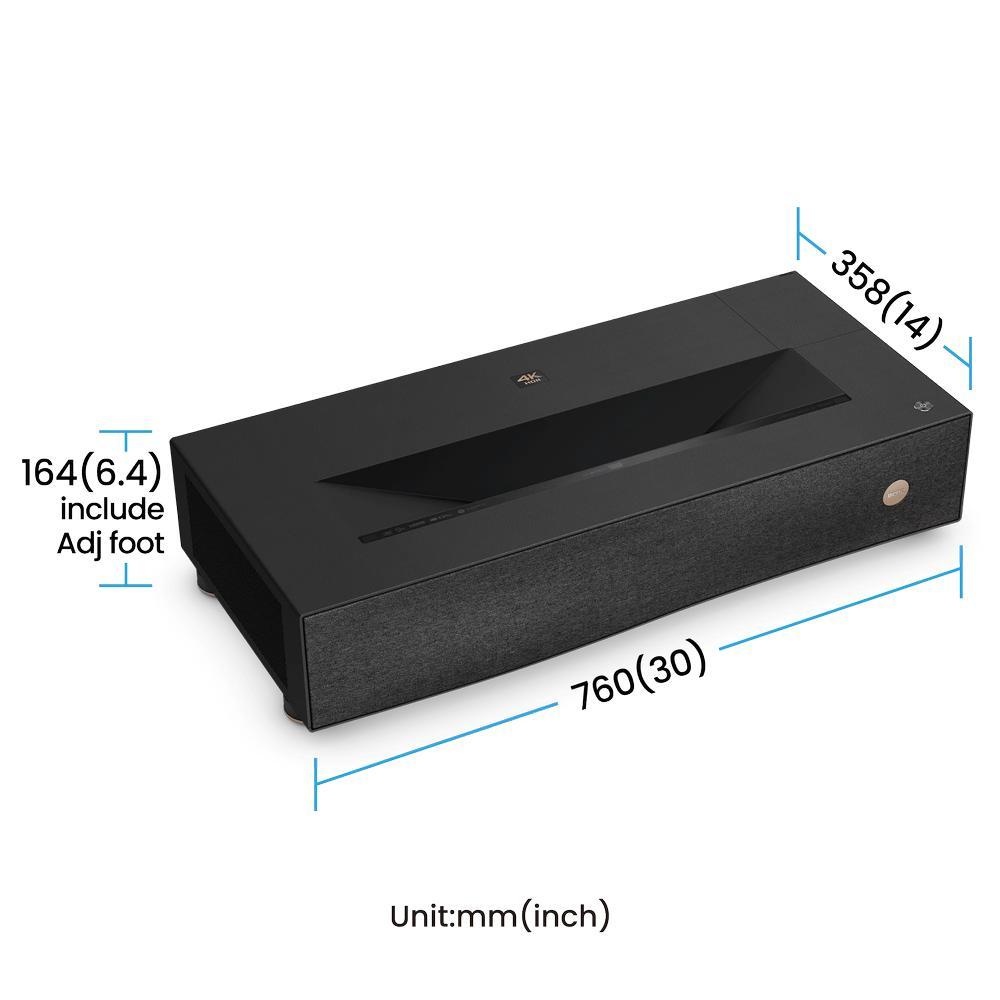
If you're considering ditching your TV for a massive 100+ inch viewing experience, ultra short throw projectors have become an incredibly compelling option. Unlike traditional projectors that need to be mounted on your ceiling across the room, these clever devices sit right on your TV stand or a low cabinet, just inches from your wall, and project enormous images that would cost tens of thousands of dollars to achieve with a traditional TV.
The technology has matured dramatically over the past few years, and two standout models represent different approaches to this exciting category: the premium Epson QS100 released in 2025, and the value-focused BenQ V5010i that hit the market a bit earlier. At the time of writing, there's roughly a $2,000 price gap between them, which makes for an interesting comparison of what that extra money buys you.
Before diving into the specifics, it's worth understanding what makes ultra short throw projectors special. Traditional projectors work like flashlights – they shoot light straight across a room. Ultra short throw projectors use complex mirrors and lenses to "fold" the light path, allowing them to create huge images from very short distances. This solves the biggest problems with traditional projectors: no more shadows when you walk in front of them, no ceiling mounting required, and much easier cable management.
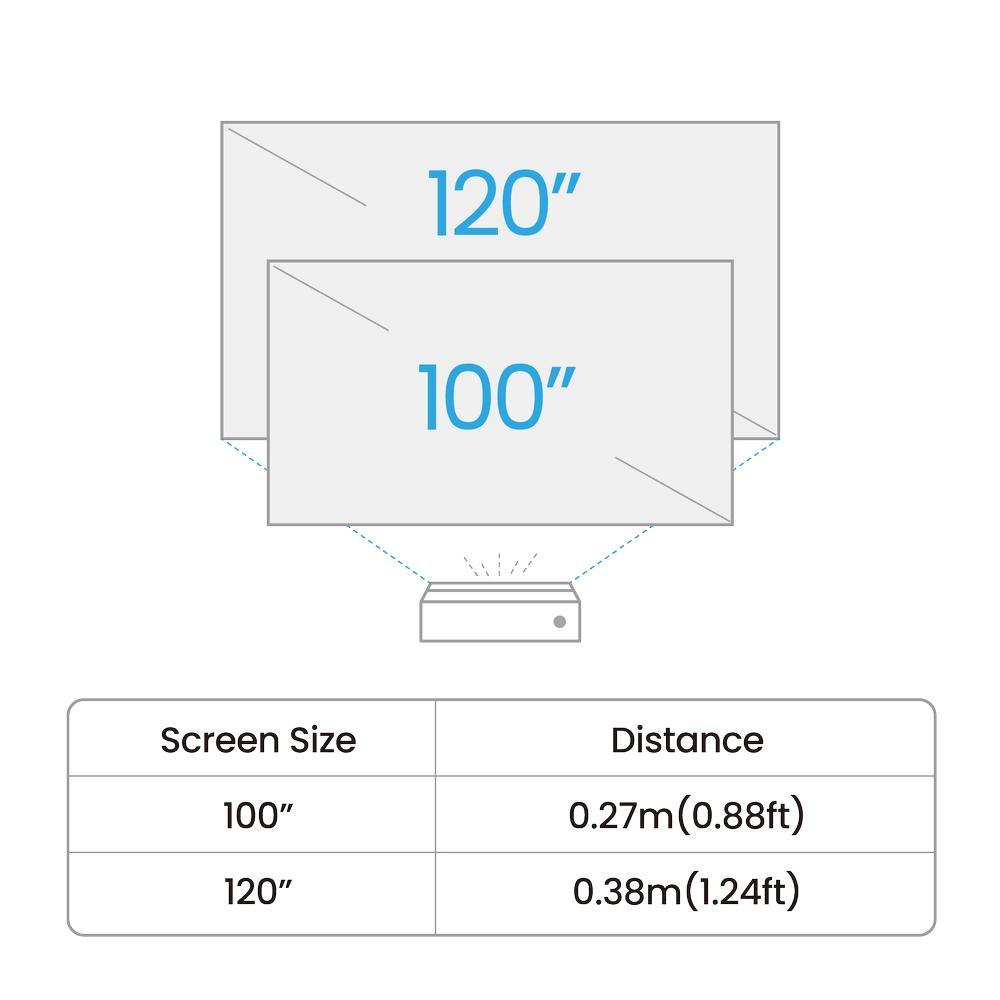
The throw ratio – which measures how far the projector needs to be from the screen to create a certain image size – is the key spec here. The Epson QS100 has a throw ratio as low as 0.16:1, meaning it can create a 100-inch image from just 16 inches away. The BenQ V5010i has a 0.25:1 throw ratio, still excellent but requiring a bit more distance.
The most significant difference between these projectors is brightness, and this single factor affects almost everything else about how they perform in your home.
The Epson QS100 delivers a whopping 4,500 lumens – that's the measurement of how much light the projector puts out. To put this in perspective, most traditional home theater projectors produce 1,000-2,500 lumens. The BenQ V5010i produces 2,500 lumens, which is still quite good but represents 80% less light output than the Epson.
This brightness difference fundamentally changes how each projector works in your living space. The Epson QS100 can handle significant ambient light – you can watch movies during the day with curtains open, or keep lamps on during evening viewing without the image washing out. This makes it genuinely competitive with large TVs in bright rooms.
The BenQ V5010i, while still much brighter than traditional projectors, requires more thoughtful lighting control. You'll want to dim lights and close curtains for the best experience, especially during daytime viewing. However, this isn't necessarily a disadvantage – many home theater enthusiasts prefer controlled lighting conditions anyway.
Where does all this extra brightness come from in the Epson? It uses what's called a 5-in-1 laser light source module, an upgraded design from their previous models that can pump out significantly more light while maintaining color accuracy. The BenQ uses RGB laser technology, which provides excellent color but at lower overall output levels.
These projectors represent two different philosophies in display technology, and understanding the difference helps explain their respective strengths.
The Epson QS100 uses 3LCD technology, which employs three separate LCD panels – one each for red, green, and blue light. These panels work together to create the final image. The big advantage is that you get equal brightness for both colors and white light, meaning colors stay vivid even in bright conditions. You'll never see the "rainbow effect" – those fleeting color flashes some people notice with other projection technologies.
However, Epson's implementation isn't true 4K – it uses what they call "4K PRO-UHD" with pixel-shifting technology. This means three native 1080p LCD panels work with a special mechanism that shifts pixels to create additional detail that approaches 4K quality. While it's not technically native 4K, the difference is difficult to spot at normal viewing distances.
The BenQ V5010i uses DLP (Digital Light Processing) technology with true 4K resolution – meaning it actually has 8.3 million individual pixels creating the image. DLP typically delivers better contrast ratios and deeper blacks than LCD technology, which is why many movie enthusiasts prefer it for dark room viewing.
This is where things get interesting from a performance standpoint. While the Epson QS100 claims an impressive 5,000,000:1 dynamic contrast ratio, the reality is more complex.
Dynamic contrast works by analyzing each scene and adjusting the light source brightness accordingly – dimming for dark scenes and brightening for light scenes. It's a clever trick, but it doesn't address the fundamental challenge that very bright projectors face: when your light source is pumping out 4,500 lumens, even when it's "dimmed" for dark scenes, those blacks tend to look more gray than truly black.
The BenQ V5010i, with its lower overall brightness and DLP technology, delivers noticeably deeper blacks and better shadow detail in dark scenes. For movie watching in a controlled environment, many users find this creates a more cinematic experience despite the lower brightness.
Think of it this way: the Epson QS100 excels when there's light you can't control, while the BenQ V5010i excels when you can control the light in your room.
Color performance represents another clear differentiation between these projectors. The BenQ V5010i comes factory-calibrated and covers 98% of the DCI-P3 color space – that's the color standard used in professional movie theaters. This means colors are more accurate out of the box and closer to what filmmakers intended.
The Epson QS100 covers a respectable color gamut as well, but its 3LCD technology brings a different advantage: color brightness consistency. Many projectors lose color saturation as they get brighter, but Epson's equal color and white brightness specification means colors stay vibrant even in bright conditions.
For users who care about color accuracy, the BenQ V5010i has the edge straight out of the box. However, the Epson QS100 is ISF certified, meaning it can be professionally calibrated to achieve excellent color accuracy if you're willing to invest in that service.
High Dynamic Range (HDR) content has become the standard for premium streaming services and 4K Blu-rays, so HDR performance matters significantly for both projectors.
The BenQ V5010i supports a broader range of HDR formats, including HDR10+, HDR10, and HLG (Hybrid Log Gamma). HDR10+ uses dynamic metadata, which means it can adjust brightness and contrast settings scene by scene rather than applying the same settings to an entire movie.
The Epson QS100 supports HDR10 and HLG but lacks HDR10+ and Dolby Vision support. However, it compensates with something called Dynamic HDR Tone Mapping, powered by its QZX Picture Processor – a 32-bit processing engine that analyzes each frame in real-time and adjusts brightness and contrast accordingly. Based on user reports, this processing does a good job of optimizing HDR content even without support for the most advanced HDR formats.
The Epson QS100's high brightness actually helps with HDR performance in one crucial way: HDR content benefits from bright highlights, and the extra 2,000 lumens of output help HDR scenes pop more dramatically than they would on dimmer projectors.
For gaming enthusiasts, there's a clear winner here. The Epson QS100 includes Auto Low Latency Mode (ALLM), which automatically detects gaming consoles and switches to optimized settings that reduce input lag – the delay between when you press a controller button and when the action appears on screen.
The Epson QS100 supports 4K at 60Hz and 2K at 120Hz refresh rates, making it suitable for modern gaming consoles and PCs. Input lag measurements show excellent performance for gaming applications.
The BenQ V5010i has higher input lag, making it less suitable for competitive gaming, though it's still perfectly fine for casual gaming sessions.
Here's where these projectors take completely different approaches, and your preference will depend on how you like to set up your entertainment system.
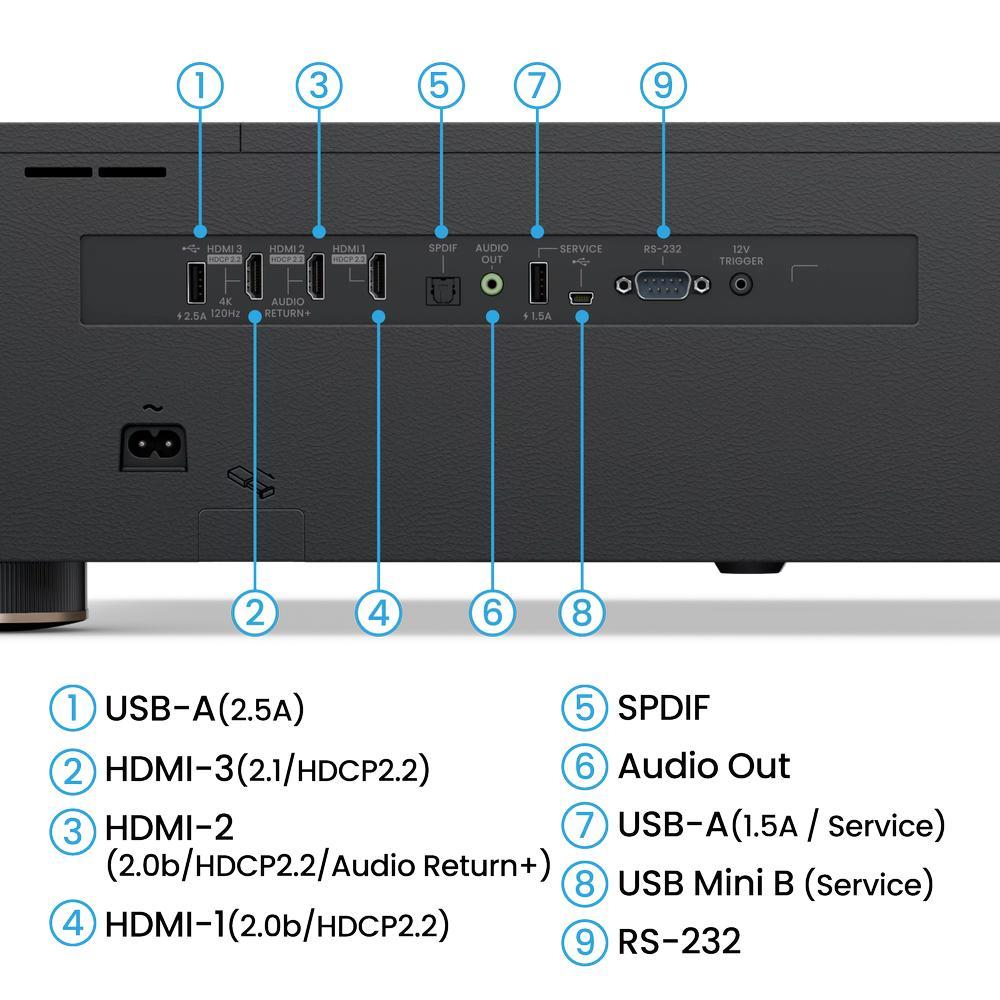
The BenQ V5010i includes built-in Android TV (though notably without Netflix certification, which means you'll need to use other streaming options or external devices for Netflix). It also includes a 40-watt audio system with dedicated tweeters and woofers, making it essentially a self-contained entertainment system.
The Epson QS100 takes the opposite approach – no built-in speakers, no smart TV features. Instead, it's designed for integration with high-end external audio systems and smart home automation platforms like Crestron and Control4. The idea is that serious home theater enthusiasts will have separate streaming devices and dedicated audio systems, so why duplicate those features?
This philosophical difference affects value calculations significantly. If you don't have external audio or prefer simple setup, the BenQ V5010i includes features that would cost hundreds of dollars to add separately. If you already have or plan to install dedicated home theater equipment, the Epson QS100's focused approach avoids paying for features you won't use.
Both projectors excel at installation flexibility, but they serve different room types optimally.
The Epson QS100 can project images up to 160 inches, significantly larger than the BenQ V5010i's practical limit of around 120 inches. Combined with its high brightness, this makes it ideal for great rooms, open floor plans, and spaces where the viewing area isn't a dedicated theater room.
The BenQ V5010i works best in more traditional home theater setups – dedicated rooms where you can control ambient light and where screen sizes of 100-120 inches provide an immersive experience without overwhelming the space.
Both include advanced geometry correction features that help align the image perfectly even if your room isn't perfectly rectangular or if the projector can't be positioned ideally.
At the time of writing, the price gap between these projectors is substantial – roughly $2,000 separates them. The question becomes whether the Epson QS100's advantages justify that premium.
The extra money buys you:
The BenQ V5010i delivers:
Your choice between these projectors should be driven primarily by your room conditions and usage priorities.
Choose the Epson QS100 if your viewing room has windows you can't easily cover, if you plan to use the projector during daytime hours, if gaming is important to you, or if you're setting up a great room where the projector needs to compete with ambient light. The extra brightness fundamentally changes what's possible in terms of room flexibility.
Choose the BenQ V5010i if you can control your room's lighting conditions, if movie watching in darker environments is your primary use case, if the price difference is significant to your budget, or if you prefer integrated smart features over external components.
Both represent excellent values within their respective market positions. The Epson QS100 is expensive but delivers performance that justifies the cost for users who need its specific advantages. The BenQ V5010i provides impressive capability at a more accessible price point.
The reality is that either projector will deliver a viewing experience that surpasses what most people can achieve with even very large TVs, and both represent the current state of the art in ultra short throw projection technology. Your specific room, budget, and usage preferences should drive the decision more than any absolute performance hierarchy.
Consider your room's lighting carefully, think about your primary use cases, and factor in whether you prefer integrated convenience or component flexibility. Both projectors have earned their place in the market by excelling in different scenarios – the key is matching the right projector to your specific situation.
| Epson QS100 4K PRO-UHD Ultra Short Throw Projector | BenQ V5010i 4K Ultra Short Throw Projector |
|---|---|
| Brightness - Most critical spec for daytime viewing and room flexibility | |
| 4,500 ANSI lumens (excellent for bright rooms and daytime use) | 2,500 ANSI lumens (requires controlled lighting conditions) |
| Display Technology - Affects color consistency and image quality | |
| 3LCD with 4K PRO-UHD pixel-shifting (no rainbow effect, equal color/white brightness) | True 4K DLP (8.3M pixels, better contrast and blacks) |
| Maximum Image Size - Determines how big you can go | |
| Up to 160 inches (ideal for great rooms and open spaces) | Up to 120 inches practical limit (better for dedicated theaters) |
| Contrast Performance - Critical for movie watching in dark rooms | |
| 5,000,000:1 dynamic (good highlights but elevated blacks due to high brightness) | Superior native contrast with deeper blacks (better for cinema experience) |
| HDR Support - Important for modern streaming and 4K content | |
| HDR10, HLG with Dynamic Tone Mapping (lacks HDR10+ and Dolby Vision) | HDR10, HDR10+, HLG (broader format support, better out-of-box optimization) |
| Gaming Performance - Matters for console and PC gaming | |
| Auto Low Latency Mode, 4K/60Hz, 2K/120Hz support (excellent for gaming) | Higher input lag (suitable for casual gaming only) |
| Smart Features - Affects setup complexity and ongoing convenience | |
| No built-in smart features or audio (designed for external systems) | Android TV built-in with 40W audio system (self-contained solution) |
| Color Accuracy - Important for accurate movie reproduction | |
| ISF certified for professional calibration (requires setup investment) | Factory calibrated, 98% DCI-P3 coverage (excellent out-of-box colors) |
| Throw Ratio - Determines placement flexibility | |
| 0.16:1 to 0.22:1 (projects closer to wall, more flexible placement) | 0.25:1 (requires slightly more distance from screen) |
| Target Use Case - Who each projector serves best | |
| Bright rooms, great rooms, gaming, custom integration setups | Dedicated theaters, movie enthusiasts, budget-conscious buyers seeking 4K UST |
The Epson QS100 is significantly brighter at 4,500 lumens compared to the BenQ V5010i at 2,500 lumens. This 80% brightness advantage makes the Epson QS100 much better for rooms with ambient light or daytime viewing without curtains.
The Epson QS100 uses 3LCD technology which eliminates rainbow effects and provides equal color and white brightness. The BenQ V5010i uses DLP technology with true 4K resolution and typically delivers better contrast and deeper blacks for movie watching.
The Epson QS100 is superior for gaming with Auto Low Latency Mode, support for 4K/60Hz and 2K/120Hz, and lower input lag. The BenQ V5010i has higher input lag making it less suitable for competitive gaming.
The BenQ V5010i includes built-in Android TV functionality and a 40W audio system, making it a self-contained entertainment solution. The Epson QS100 has no built-in smart features or speakers, requiring external streaming devices and audio systems.
The BenQ V5010i delivers superior contrast with deeper blacks, making it better for movie watching in dark rooms. While the Epson QS100 claims high contrast ratios, its extreme brightness can result in elevated black levels that appear more gray.
The Epson QS100 can project images up to 160 inches, while the BenQ V5010i has a practical limit of around 120 inches. The larger capability makes the Epson QS100 better for great rooms and open spaces.
The BenQ V5010i comes factory-calibrated with 98% DCI-P3 color coverage for excellent out-of-box accuracy. The Epson QS100 is ISF certified for professional calibration but requires additional setup investment for optimal color performance.
The BenQ V5010i supports more HDR formats including HDR10+ with dynamic metadata. The Epson QS100 supports HDR10 and HLG with Dynamic Tone Mapping but lacks HDR10+ and Dolby Vision support.
The Epson QS100 excels in bright living rooms due to its 4,500-lumen output that can compete with ambient light. The BenQ V5010i requires more controlled lighting conditions for optimal performance.
The BenQ V5010i offers true 4K with 8.3 million pixels. The Epson QS100 uses 4K PRO-UHD with pixel-shifting technology from three 1080p panels, which approaches 4K quality but isn't technically native 4K.
For dedicated home theaters with controlled lighting, the BenQ V5010i offers better value with superior contrast, factory calibration, and integrated features. For flexible room use and bright environments, the Epson QS100 justifies its premium with unmatched brightness performance.
Both are ultra short throw projectors that sit close to the screen. The Epson QS100 has a slightly better throw ratio of 0.16:1 compared to the BenQ V5010i at 0.25:1, meaning it can be placed even closer to the wall for the same image size.
We've done our best to create useful and informative comparisons to help you decide what product to buy. Our research uses advanced automated methods to create this comparison and perfection is not possible - please contact us for corrections or questions. These are the sites we've researched in the creation of this article: projectorscreen.com - youtube.com - projectorcentral.com - projectorreviews.com - techradar.com - audioadvice.com - projectorreviews.com - avsforum.com - projectorcentral.com - mediaserver.goepson.com - projectorcentral.com - news.epson.com - epson.eu - epson.com - epson.eu - epson.com - projectorcentral.com - bestbuy.com - projectorscreenstore.com - projectorreviews.com - thesmarthomehookup.com - lbtechreviews.com - youtube.com - benq.com - projectorscreen.com - projectorcentral.com - visunext.co.uk - fonearena.com - projektoren-datenbank.com - benq.com

Privacy Policy
Terms and Conditions - Affiliate Policy
Home Security
© Copyright 2008-2026.
11816 Inwood Rd #1211, Dallas, TX 75244