

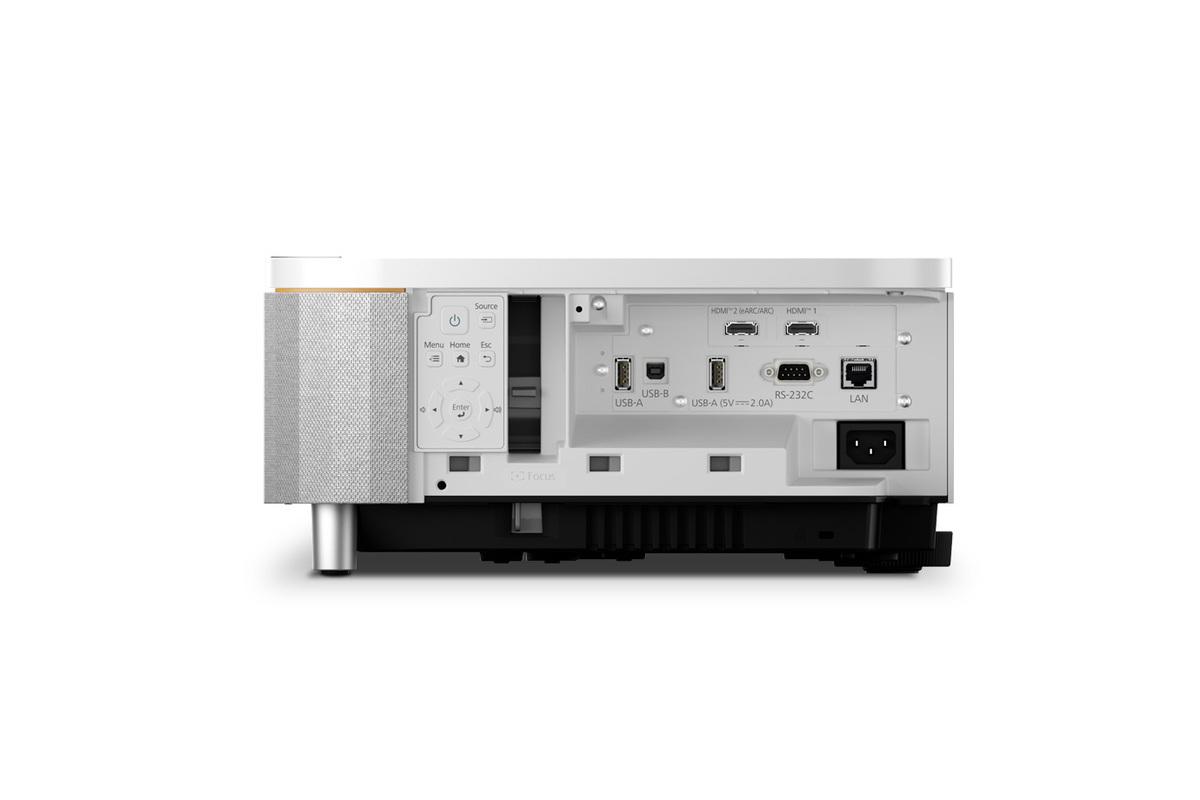
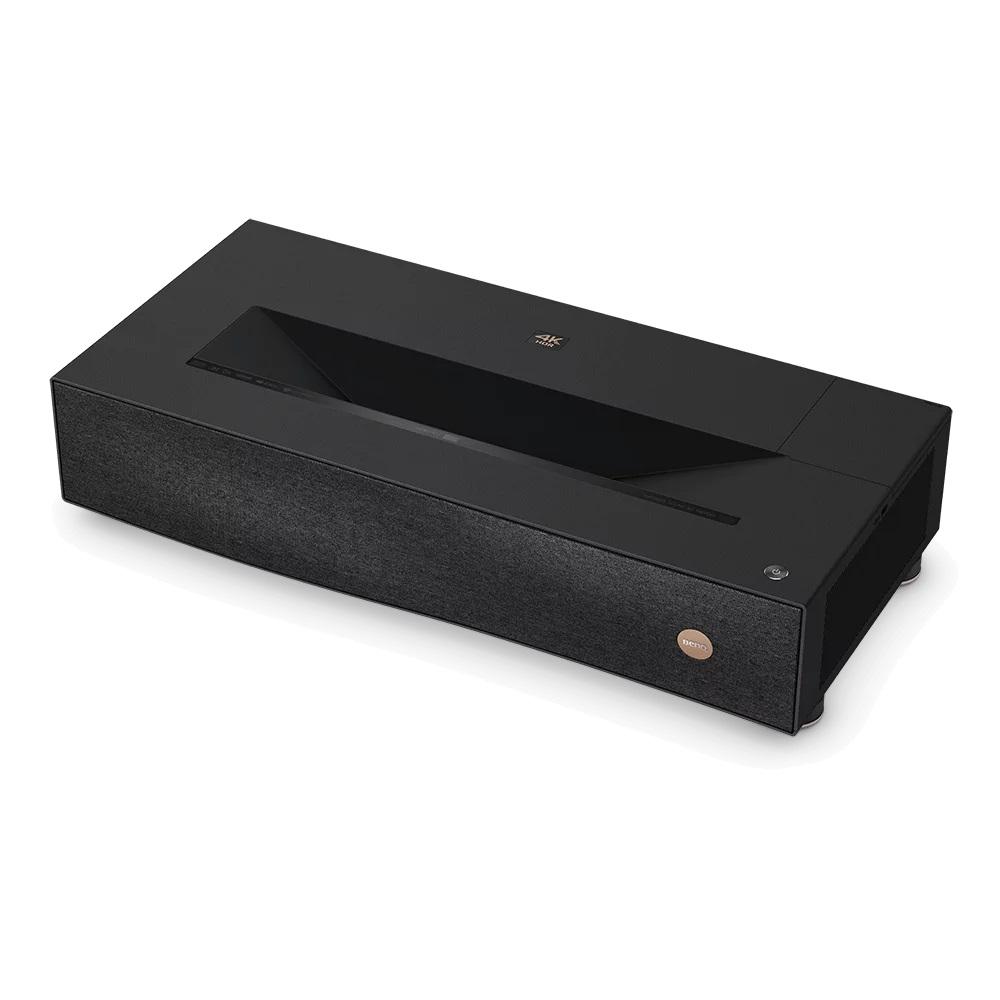
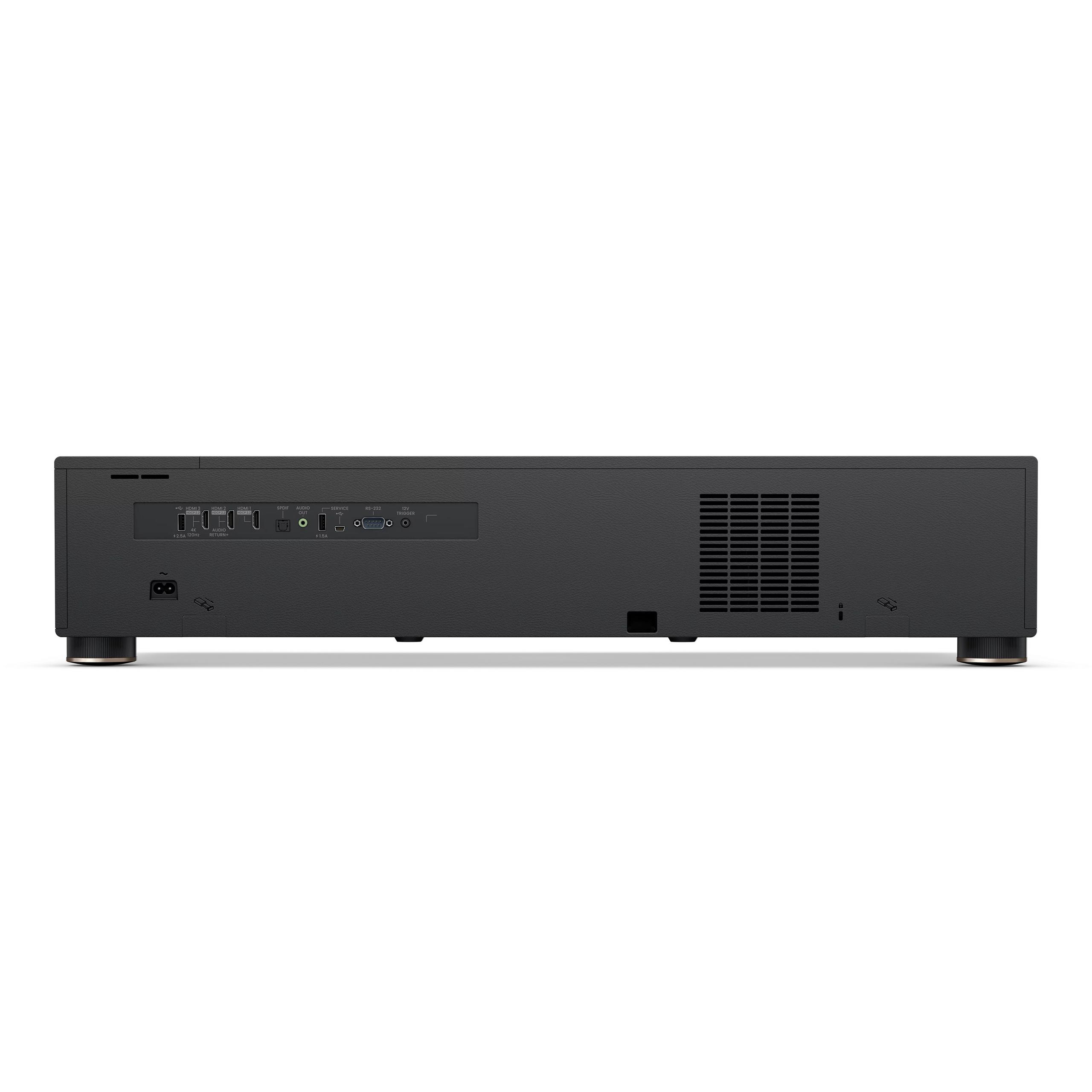
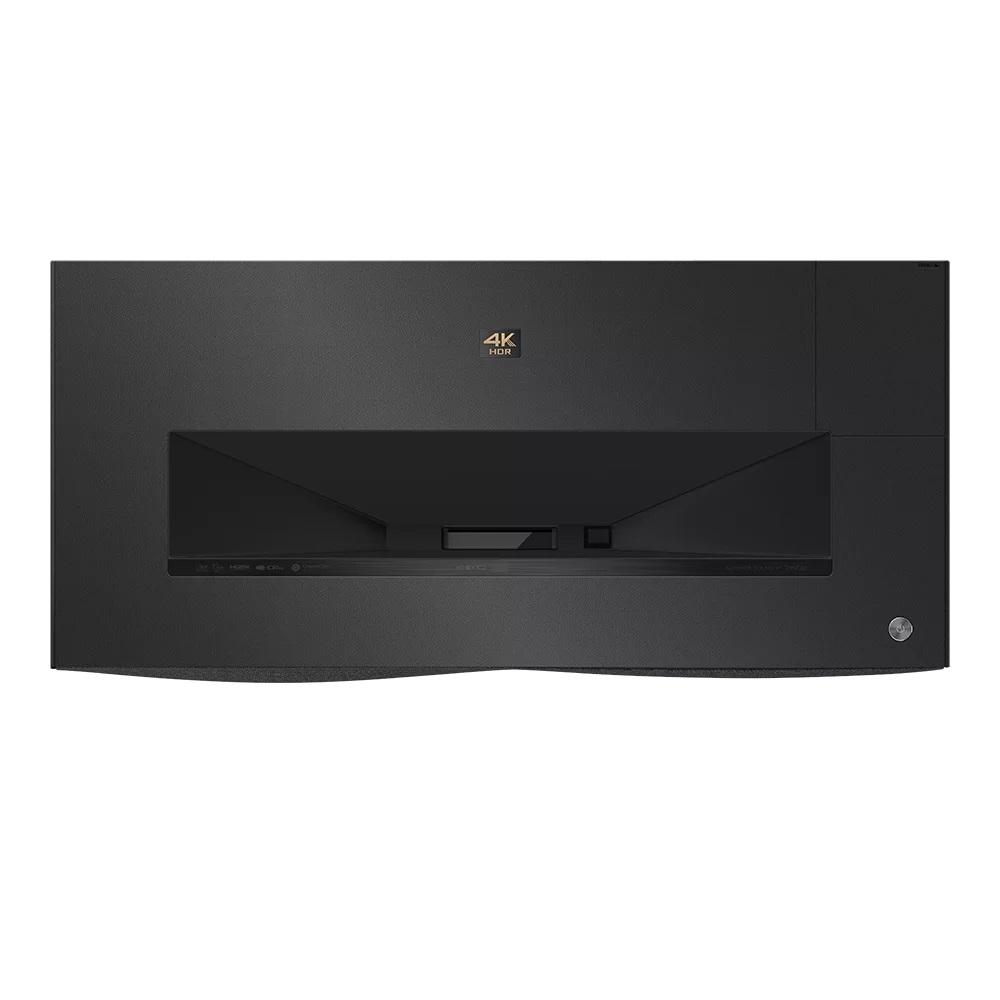
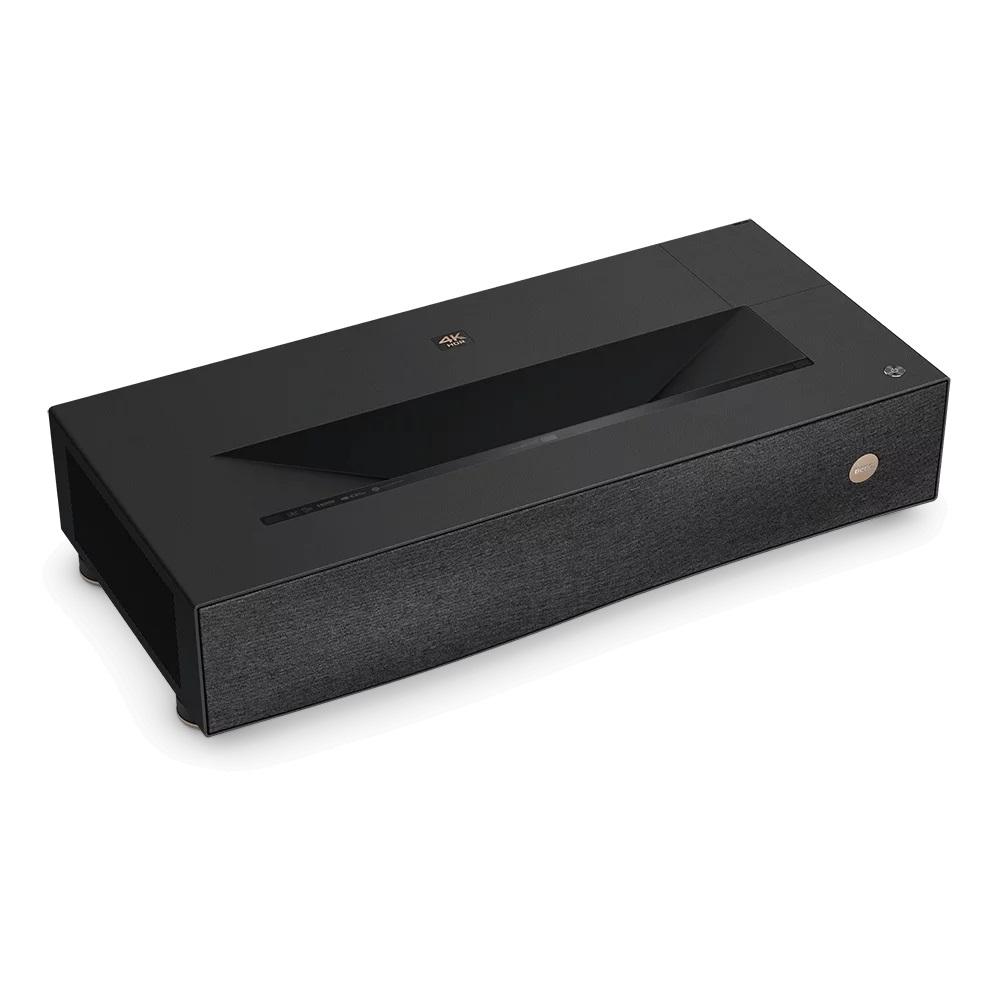
Ultra short throw projectors have completely changed how we think about home entertainment. Instead of mounting a projector to your ceiling and running cables across the room, these innovative devices sit just inches from your wall and create massive 80 to 160-inch images that rival the biggest TVs money can buy. The technology has matured significantly over the past few years, bringing us two compelling options that take very different approaches to the same goal.
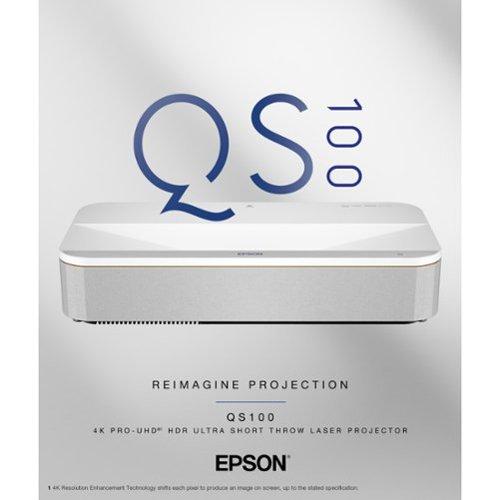
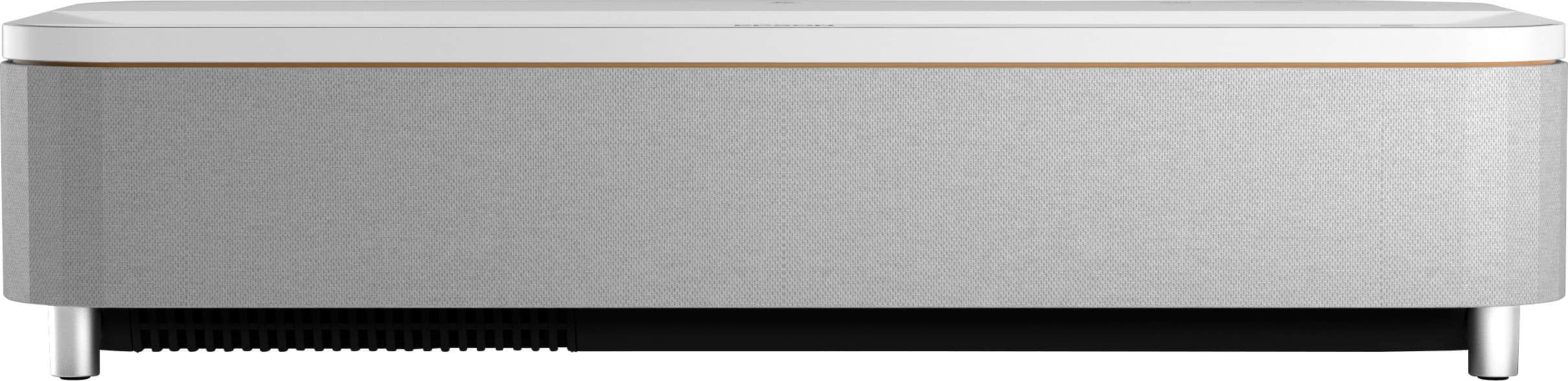
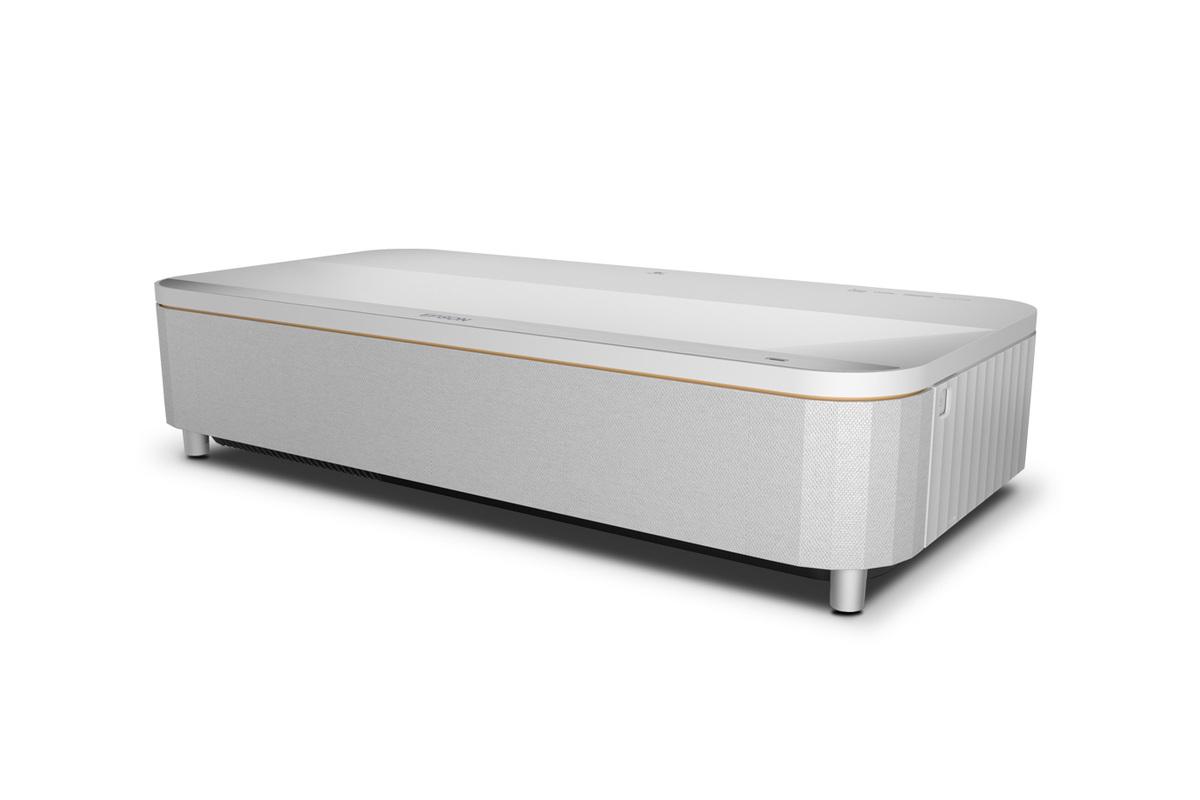
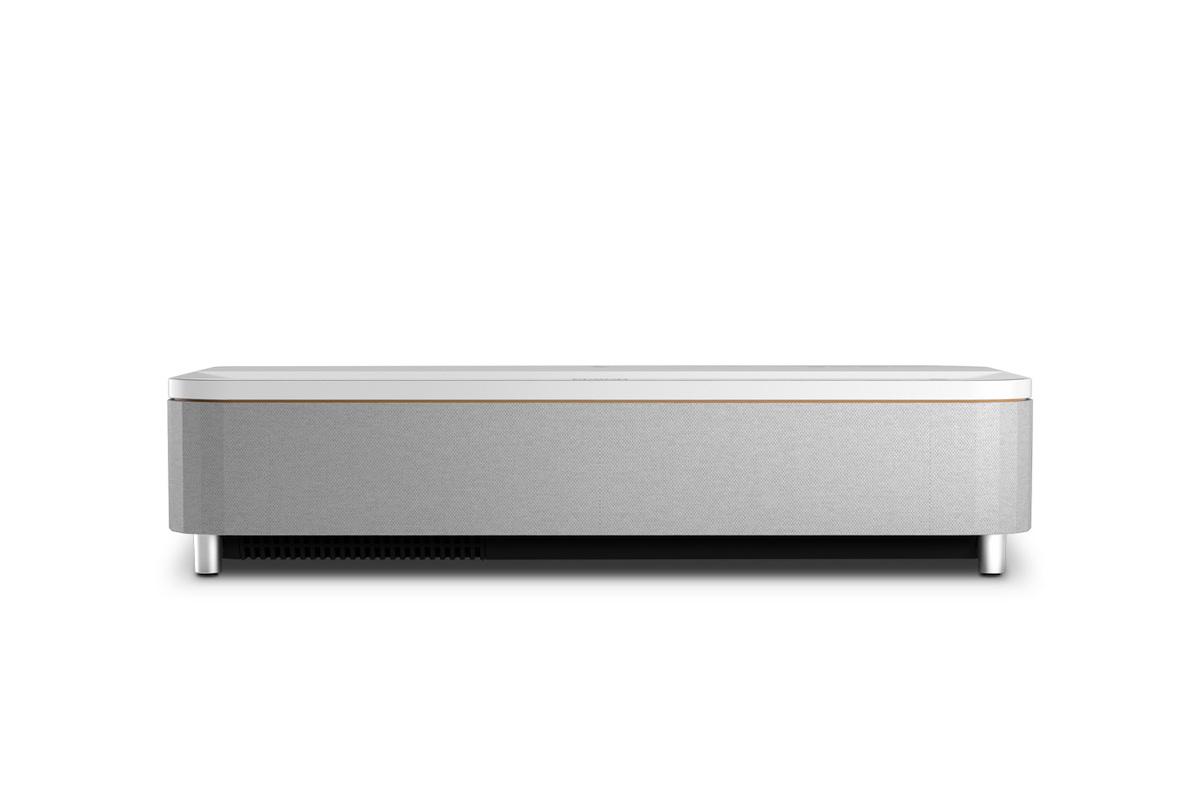
The Epson QS100, released in 2025, represents Epson's latest push into premium home theater territory with professional-grade brightness and integration features. Meanwhile, the BenQ V5000i, which hit the market in 2023, focuses on delivering an all-in-one entertainment experience with superior color accuracy and built-in smart features. At the time of writing, there's about a $1,500 price difference between them, with the Epson commanding a significant premium.
Before diving into the comparison, it's worth understanding what makes ultra short throw projectors special and challenging to design. Traditional projectors use relatively simple optics—they sit far from the screen and project straight ahead. UST projectors perform optical magic, using complex lens systems to project upward at extreme angles while correcting for the geometric distortion this creates.
This positioning creates unique challenges. Since the projector sits close to the screen, it must fight against ambient light more aggressively than a traditional projector. The light source needs to be extremely bright and well-controlled to prevent washout from room lighting. Additionally, the color accuracy becomes more critical because viewers sit much closer to these large screens than they would to a TV.
Both projectors address these challenges but use fundamentally different technologies and philosophies.
The core difference between the Epson QS100 and BenQ V5000i lies in their display technologies and light sources, which create distinct viewing experiences.
The Epson QS100 uses Epson's proprietary 3LCD technology paired with a blue laser phosphor light source. In simple terms, 3LCD means the projector uses three separate LCD panels—one each for red, green, and blue light—that work together to create the final image. The blue laser hits a phosphor wheel that creates the other colors needed. This approach delivers equal brightness for both colors and white areas of the image, which prevents the "rainbow effect" (brief color flashes) that some people notice with other projector types.
The BenQ V5000i takes a completely different approach with DLP (Digital Light Processing) technology powered by an RGB triple laser system. DLP uses millions of tiny mirrors that flip incredibly fast to create images, while the RGB triple laser produces pure red, green, and blue light directly without conversion. This direct color generation allows the BenQ to display a much wider range of colors—specifically 95% of the BT.2020 color space and 98% of DCI-P3, which are the standards used for HDR content and digital cinema.
The practical difference? The Epson QS100 excels in bright rooms because its blue laser phosphor system can produce much higher light output. The BenQ V5000i creates more accurate, vibrant colors that look particularly stunning with modern HDR content, animated movies, and games.
When it comes to UST projectors, brightness often determines whether your expensive investment becomes a daytime paperweight or a versatile entertainment centerpiece. This is where the Epson QS100 shows its muscle.
At 4,500 lumens of both color and white brightness, the Epson QS100 stands among the brightest UST projectors available. This isn't just a numbers game—that extra brightness translates to real-world usability. You can watch movies during the day with curtains open, display sports games during afternoon gatherings, and push screen sizes to 130, 150, or even 160 inches while maintaining a watchable image.
The BenQ V5000i, at 2,500 ANSI lumens, requires more consideration about room lighting and screen size. In a properly darkened room, it delivers excellent picture quality, but daytime viewing becomes challenging, and screen sizes beyond 100 inches start to look dim. The difference is dramatic—nearly 80% more light output from the Epson.
From our research into user experiences, this brightness difference significantly impacts satisfaction. Epson QS100 owners frequently mention being surprised by how well it performs in bright conditions, while BenQ V5000i users consistently recommend light control for the best experience.
While the Epson QS100 wins on brightness, the BenQ V5000i delivers superior color reproduction thanks to its RGB triple laser technology. This matters more than you might think.
Modern content, especially HDR (High Dynamic Range) movies and shows, uses wider color gamuts to display more vivid, lifelike colors than older standards allowed. The BenQ V5000i's ability to reproduce 95% of BT.2020 and 98% of DCI-P3 means it can show these colors as intended. Skin tones look more natural, animated movies pop with vibrant colors, and nature documentaries display colors you simply can't see on standard displays.
The BenQ V5000i also includes HDR10+ support, which uses dynamic metadata—essentially, instructions that change throughout a movie to optimize each scene's brightness and color. Think of it as having a professional colorist constantly adjusting the picture for maximum impact.
The Epson QS100, while supporting HDR10 and HLG formats, doesn't publish specific color gamut figures, suggesting more limited color reproduction. However, it compensates with dynamic tone mapping through its QZX picture processor, which analyzes each frame and adjusts contrast and brightness in real-time.
For cinephiles who prioritize color accuracy and have the room control to support it, the BenQ V5000i provides a more authentic viewing experience. For those who prioritize versatility and room-filling brightness, the Epson QS100 makes more sense.
Gaming on UST projectors has become increasingly popular, especially with massive screens that provide an incredibly immersive experience. Both projectors cater to gamers but with different strengths.
The BenQ V5000i clearly targets serious gamers with impressive specifications. It supports 4K gaming at 120Hz (120 frames per second), which matches the capabilities of PlayStation 5 and Xbox Series X consoles. More importantly, it offers variable input lag depending on the resolution and refresh rate: just 8.7 milliseconds at 1080p/240Hz for competitive gaming, or 17.9ms at 4K/60Hz for more casual gaming.
Input lag measures the delay between when you press a button and when the action appears on screen. For reference, anything under 20ms is considered excellent for gaming, while over 40ms becomes noticeable and frustrating. The BenQ V5000i's performance puts it in console-quality territory.
The Epson QS100 includes Auto Low Latency Mode (ALLM) and supports 4K at 60Hz and 2K at 120Hz, which covers most gaming scenarios well. However, it doesn't match the BenQ's ultra-low latency modes or support for 240Hz refresh rates that competitive gamers appreciate.
Additionally, the BenQ V5000i includes MEMC (Motion Estimation and Motion Compensation) technology, which reduces motion blur during fast-paced games and sports content. This creates smoother motion that's particularly beneficial for racing games, sports titles, and action games.
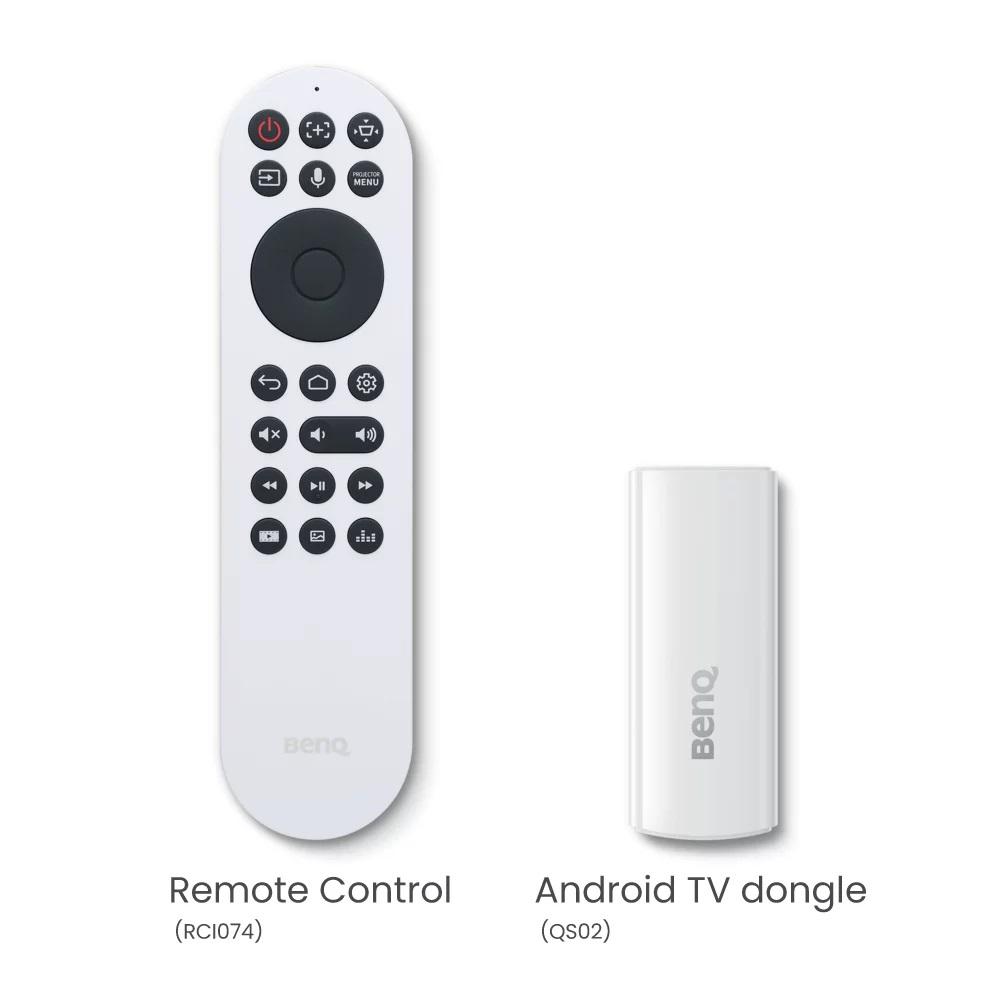
This represents perhaps the most significant philosophical difference between these projectors. The BenQ V5000i includes Android TV 11 built-in, providing direct access to Netflix, Disney+, Amazon Prime Video, and other streaming services without any additional devices. It also includes a 40W Trevolo sound system with Dolby and DTS support, creating a complete entertainment solution out of the box.
The Epson QS100 takes the opposite approach, including no smart features or built-in audio whatsoever. This might seem like a disadvantage, but it reflects different target markets and installation approaches.
For most users, especially those setting up in living rooms or casual entertainment spaces, the BenQ V5000i's all-in-one approach makes tremendous sense. You connect power, plug in your game console or cable box via HDMI, and you're ready to go. The built-in speakers, while not audiophile-quality, provide acceptable sound for casual viewing and eliminate the need for additional equipment.
The Epson QS100's approach caters to custom installation scenarios where the projector integrates into sophisticated home automation systems. It supports professional control systems like Crestron, Control4, and PJLink, allowing integration with lighting, audio, and climate control systems. The lack of built-in features means no obsolescence concerns—your streaming devices and audio equipment can evolve independently.
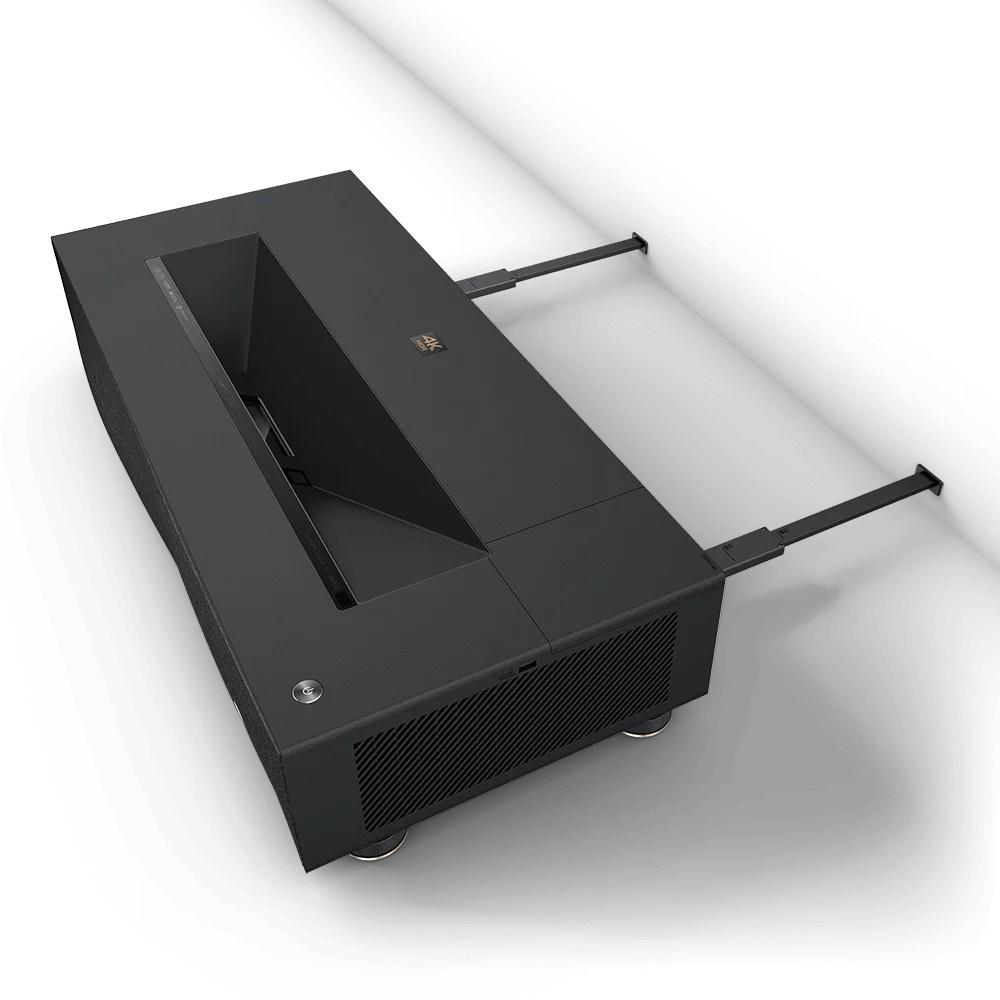
Both projectors qualify as ultra short throw, but their specific capabilities differ meaningfully. The Epson QS100 offers a throw ratio as low as 0.16:1, meaning it can sit closer to the screen than the BenQ V5000i's 0.25:1 ratio. In practical terms, this allows the Epson to create larger images in tighter spaces and supports screen sizes up to 160 inches.
The Epson QS100 also includes more sophisticated geometry correction features, including Quick Corner, Arc, and Point correction with memory settings. These features help achieve perfect rectangular images even when the projector can't be positioned ideally relative to the screen.
Both projectors benefit from the general advantages of UST design: no shadows when people walk in front of the screen, no ceiling mounting required, and minimal cable runs. However, the Epson QS100's closer positioning capability makes it more flexible for challenging room layouts.
At the time of writing, the price difference between these projectors represents just the beginning of the value equation. The BenQ V5000i costs significantly less upfront and includes everything needed for basic operation: smart streaming, built-in audio, and comprehensive gaming features.
The Epson QS100, while more expensive initially, requires additional investments to reach its full potential. You'll need a streaming device (Apple TV, Nvidia Shield, or similar), an audio system ranging from a simple soundbar to a full home theater setup, and potentially professional calibration to optimize its brightness advantage.
However, for users who need the Epson QS100's brightness capabilities—particularly those with large screens in bright rooms—these additional costs become justified by the projector's superior performance in challenging conditions.
The calculation becomes more complex when considering long-term value. Both projectors use laser light sources rated for approximately 20,000 hours of operation, essentially eliminating lamp replacement costs that plagued earlier projector generations. The Epson QS100's professional integration features and ISF certification suggest longer-term viability in high-end installations.
Based on our research and analysis of user experiences, clear usage scenarios emerge for each projector.
Choose the Epson QS100 if you're dealing with bright rooms, want screens larger than 110 inches, or you're planning a custom home theater installation. Its brightness advantage becomes essential when ambient light can't be controlled or when screen size demands require every available lumen. The professional integration features make it ideal for custom installations where the projector needs to work seamlessly with sophisticated control systems.
The BenQ V5000i makes more sense for users who want excellent performance with minimal complexity and investment. Its superior color accuracy, comprehensive gaming features, and all-in-one design create tremendous value for most home entertainment scenarios. If you can control room lighting reasonably well and plan on screen sizes around 80-100 inches, the BenQ delivers better performance per dollar.
For dedicated home theaters with light control, the BenQ V5000i's superior color accuracy often provides a more engaging viewing experience than the Epson QS100's brightness advantage. However, in multi-purpose living rooms where the projector must perform in various lighting conditions, the Epson QS100's brightness becomes indispensable.
Gaming enthusiasts should strongly consider the BenQ V5000i unless room brightness demands override gaming performance considerations. The variable refresh rate support, ultra-low input lag, and motion smoothing create a gaming experience that rivals the best gaming monitors and TVs.
Both projectors represent significant advances over earlier UST models. When the first consumer UST projectors launched around 2018-2019, they struggled with brightness, color accuracy, and integration features. The BenQ V5000i, released in 2023, benefited from maturing RGB laser technology that finally made wide color gamut reproduction practical in consumer projectors.
The Epson QS100, arriving in 2025, represents Epson's response to increased competition and user demands for brighter performance. Its 4,500-lumen output would have been unthinkable in a consumer UST projector just a few years ago, while its dynamic HDR processing shows how software advances continue improving picture quality.
These improvements have made UST projectors legitimate alternatives to premium large-screen TVs, with the added benefit of screen size flexibility that no TV can match.
Ultimately, your choice between the Epson QS100 and BenQ V5000i should align with your specific use case and room conditions. The Epson QS100 excels when brightness and screen size flexibility trump all other considerations, while the BenQ V5000i provides superior value when color accuracy, gaming performance, and integrated features matter most.
Consider your room's lighting conditions carefully—this single factor often determines which projector will provide better satisfaction. If you frequently watch content during the day or can't control ambient light effectively, the Epson QS100's brightness advantage becomes essential. If you can darken your room reasonably well, the BenQ V5000i's superior color reproduction and comprehensive feature set likely provide better overall value.
Both projectors represent excellent choices within their intended use cases, reflecting the maturation of UST projector technology into a compelling alternative to traditional home entertainment approaches.
| Epson QS100 4K PRO-UHD Ultra Short Throw Projector | BenQ V5000i Ultra Short Throw 4K Laser Projector |
|---|---|
| Brightness - Most critical spec for daytime viewing and large screens | |
| 4,500 lumens (exceptional for bright rooms and 120+ inch screens) | 2,500 ANSI lumens (requires controlled lighting, best for 80-100 inch screens) |
| Display Technology - Affects color accuracy and viewing experience | |
| 3LCD with blue laser phosphor (no rainbow effect, very bright) | DLP with RGB triple laser (superior color accuracy and wide gamut) |
| Color Gamut - Important for HDR content and vibrant colors | |
| Not specified (likely narrower gamut) | 95% BT.2020, 98% DCI-P3 (excellent for HDR and animated content) |
| Resolution Approach - How 4K is achieved | |
| 4K PRO-UHD with pixel-shifting (near-4K quality from 1080p panels) | Native 4K UHD (true 3840 x 2160 resolution) |
| Gaming Performance - Critical for console gaming | |
| 4K@60Hz, 2K@120Hz with ALLM (good for most gaming) | 4K@120Hz, variable input lag as low as 8.7ms (excellent for competitive gaming) |
| Smart Features - Determines if you need external streaming devices | |
| None (requires Apple TV, Roku, etc.) | Android TV 11 built-in (Netflix, Disney+, apps included) |
| Built-in Audio - Whether you need external speakers | |
| No speakers (requires soundbar or home theater system) | 40W Trevolo system with Dolby/DTS (decent quality, saves money) |
| Maximum Screen Size - How big you can go | |
| Up to 160 inches (brightness supports large screens well) | Practical limit ~100 inches (brightness becomes limiting factor) |
| HDR Support - Important for modern content quality | |
| HDR10, HLG with dynamic tone mapping | HDR10+, HDR10, HLG with local contrast enhancement |
| Professional Integration - Matters for custom installations | |
| ISF certified, IP control, Crestron/Control4 compatible | Basic control features only |
| 3D Support - For enthusiasts who still watch 3D content | |
| No 3D support | Full 1080p 3D with optional glasses |
| Throw Ratio - How close to the wall it can sit | |
| 0.16:1 to 0.22:1 (sits very close, great for tight spaces) | 0.25:1 (needs slightly more distance from wall) |
| Total System Cost - What you'll actually spend | |
| Higher upfront cost plus streaming device and audio system needed | Lower cost with everything included for basic setup |
The Epson QS100 is significantly brighter at 4,500 lumens compared to the BenQ V5000i at 2,500 ANSI lumens. This makes the Epson QS100 much better for rooms with ambient light or daytime viewing, while the BenQ V5000i performs best in darker, controlled lighting conditions.
The BenQ V5000i includes Android TV 11 with built-in Netflix, Disney+, and other streaming apps, making it a complete entertainment system. The Epson QS100 has no smart features and requires an external streaming device like Apple TV or Roku to access content.
The BenQ V5000i is superior for gaming with 4K@120Hz support and input lag as low as 8.7ms at high refresh rates. It also includes Auto Low Latency Mode and motion smoothing for competitive gaming. The Epson QS100 supports gaming but with more limited refresh rates and higher input lag.
The BenQ V5000i includes a built-in 40W Trevolo sound system with Dolby and DTS support, providing decent audio quality out of the box. The Epson QS100 has no built-in speakers, so you'll need to purchase a soundbar or home theater audio system separately.
The BenQ V5000i delivers superior color accuracy with its RGB triple laser technology, covering 95% of BT.2020 and 98% of DCI-P3 color spaces. This makes colors more vibrant and accurate, especially for HDR content. The Epson QS100 uses blue laser phosphor technology with more limited color reproduction.
The Epson QS100 can create images up to 160 inches while maintaining good brightness levels due to its 4,500-lumen output. The BenQ V5000i is practically limited to around 100 inches because its lower brightness becomes insufficient for larger screens in most room conditions.
The Epson QS100 is much better for bright living rooms thanks to its exceptional 4,500-lumen brightness that can overcome ambient light. The BenQ V5000i requires controlled lighting and works best when you can darken the room during viewing.
Both projectors display 4K content but use different approaches. The BenQ V5000i has native 4K UHD resolution (3840 x 2160), while the Epson QS100 uses 4K PRO-UHD with pixel-shifting technology to achieve near-4K quality from 1080p panels. Both deliver sharp, detailed images.
The BenQ V5000i typically offers better overall value as it costs less upfront and includes smart features and audio, reducing the need for additional purchases. The Epson QS100 requires additional investment in streaming devices and audio systems, though it justifies the cost with superior brightness for challenging room conditions.
Both work well for home theaters, but serve different needs. The Epson QS100 is ideal for custom installations with professional control systems and ISF calibration for optimal picture quality. The BenQ V5000i works great for simpler home theater setups where color accuracy and built-in features are priorities over maximum brightness.
The Epson QS100 can sit closer to the wall with a throw ratio of 0.16:1 to 0.22:1, making it better for tight spaces. The BenQ V5000i has a 0.25:1 throw ratio, requiring slightly more distance from the wall but still qualifying as ultra short throw for most installations.
The BenQ V5000i has more advanced HDR support with HDR10+ dynamic metadata and local contrast enhancement across 1,000 zones, plus superior color reproduction for HDR content. The Epson QS100 supports HDR10 and HLG with dynamic tone mapping, and its higher brightness helps with HDR highlights, though with more limited color gamut coverage.
We've done our best to create useful and informative comparisons to help you decide what product to buy. Our research uses advanced automated methods to create this comparison and perfection is not possible - please contact us for corrections or questions. These are the sites we've researched in the creation of this article: projectorscreen.com - youtube.com - projectorcentral.com - projectorreviews.com - techradar.com - audioadvice.com - projectorreviews.com - avsforum.com - projectorcentral.com - mediaserver.goepson.com - projectorcentral.com - news.epson.com - epson.eu - epson.com - epson.eu - epson.com - projectorcentral.com - bestbuy.com - projectorscreen.com - projectorscreen.com - avsforum.com - techradar.com - projectorreviews.com - projectorcentral.com - digitaltrends.com - digitaltrends.com - ooberpad.com

Privacy Policy
Terms and Conditions - Affiliate Policy
Home Security
© Copyright 2008-2026.
11816 Inwood Rd #1211, Dallas, TX 75244