

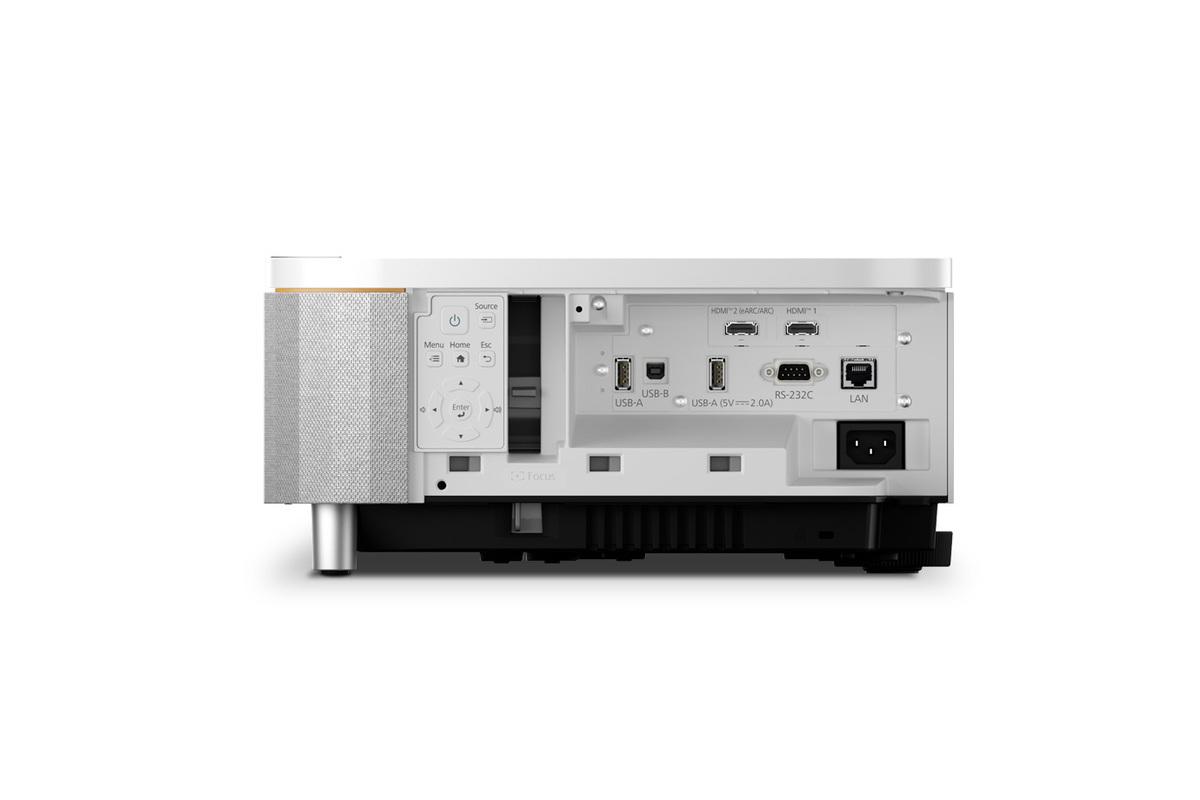
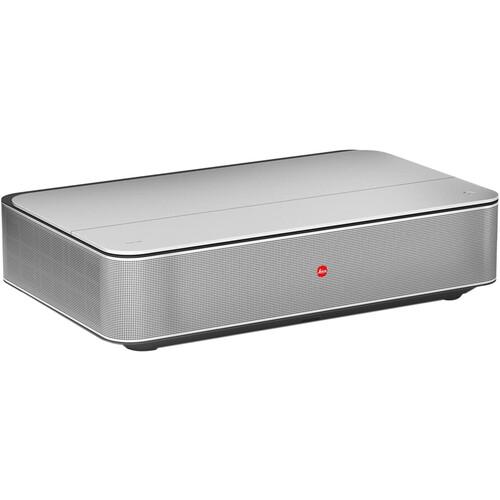
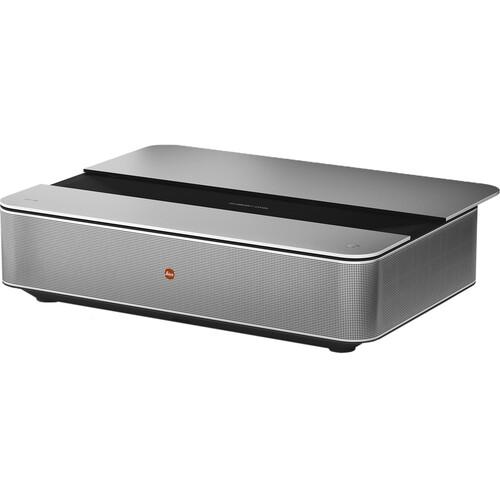
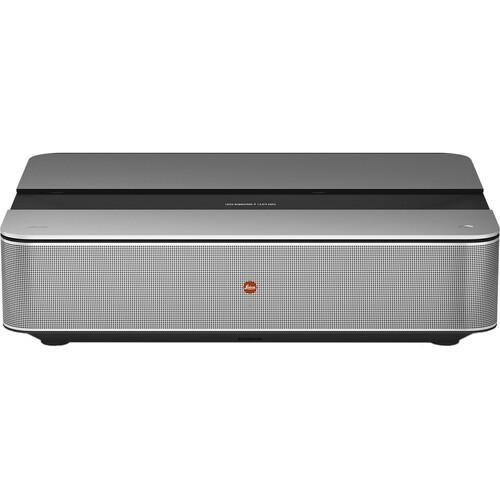
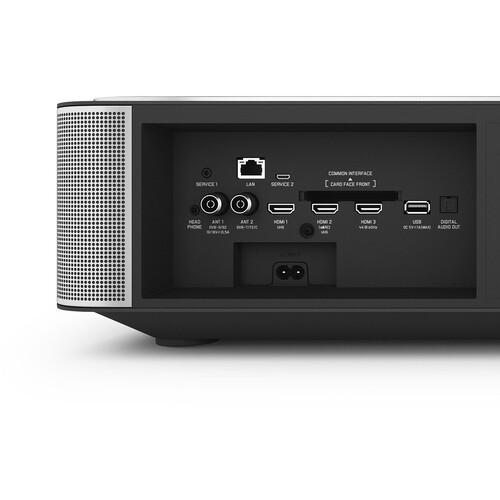
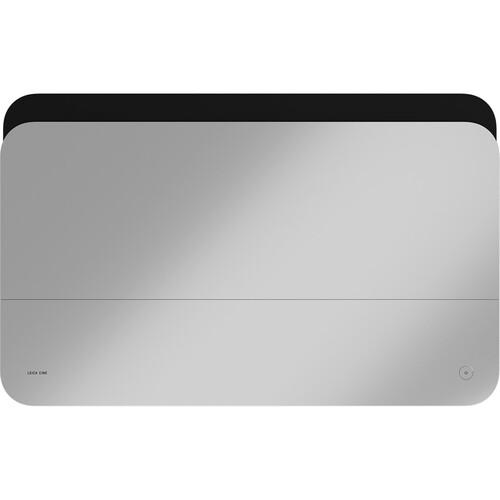
If you've been dreaming of turning your living room into a cinema without mounting a projector on the ceiling or dealing with shadows when someone walks in front, ultra short throw (UST) projectors might be exactly what you need. These remarkable devices can create massive 100-160 inch images while sitting just inches from your wall, like an oversized soundbar that happens to project movie-theater-sized pictures.
The category has exploded in recent years, with manufacturers pushing brightness levels and color accuracy to new heights. Today we're comparing two fascinating approaches to premium UST projection: the Epson QS100, which prioritizes raw brightness and installation flexibility, versus the Leica Cine 1, which focuses on color perfection and luxury integration.
Before diving into specifics, let's clarify what makes ultra short throw technology so compelling. Traditional projectors use a throw ratio (the relationship between distance and image size) of around 1.5:1 to 2:1, meaning you need 12-16 feet of space for a 100-inch image. UST projectors flip this completely, using complex mirror systems and specialized lenses to achieve throw ratios under 0.3:1.
This isn't just about convenience—it fundamentally changes how projectors integrate into homes. No ceiling mounting, no shadows when people move around, and crucially, much better performance in rooms with ambient light since the projector sits close to the screen surface.
The key specifications that separate good UST projectors from great ones include brightness measured in lumens (how much light the projector outputs), color gamut coverage (how many colors it can display), contrast ratio (the difference between darkest blacks and brightest whites), and throw distance flexibility.
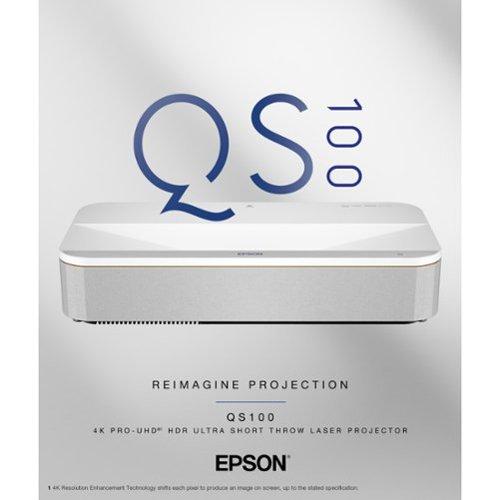
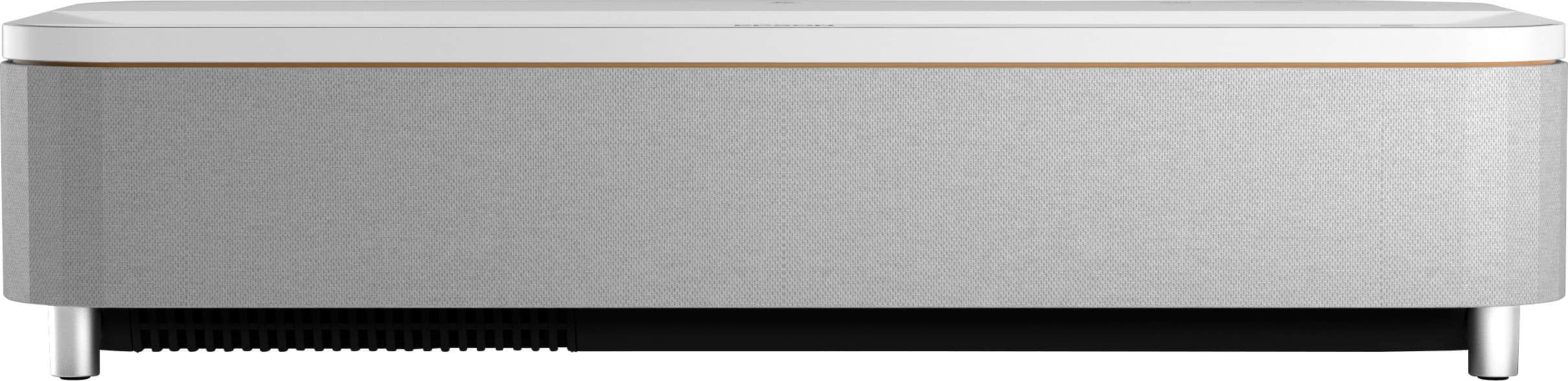
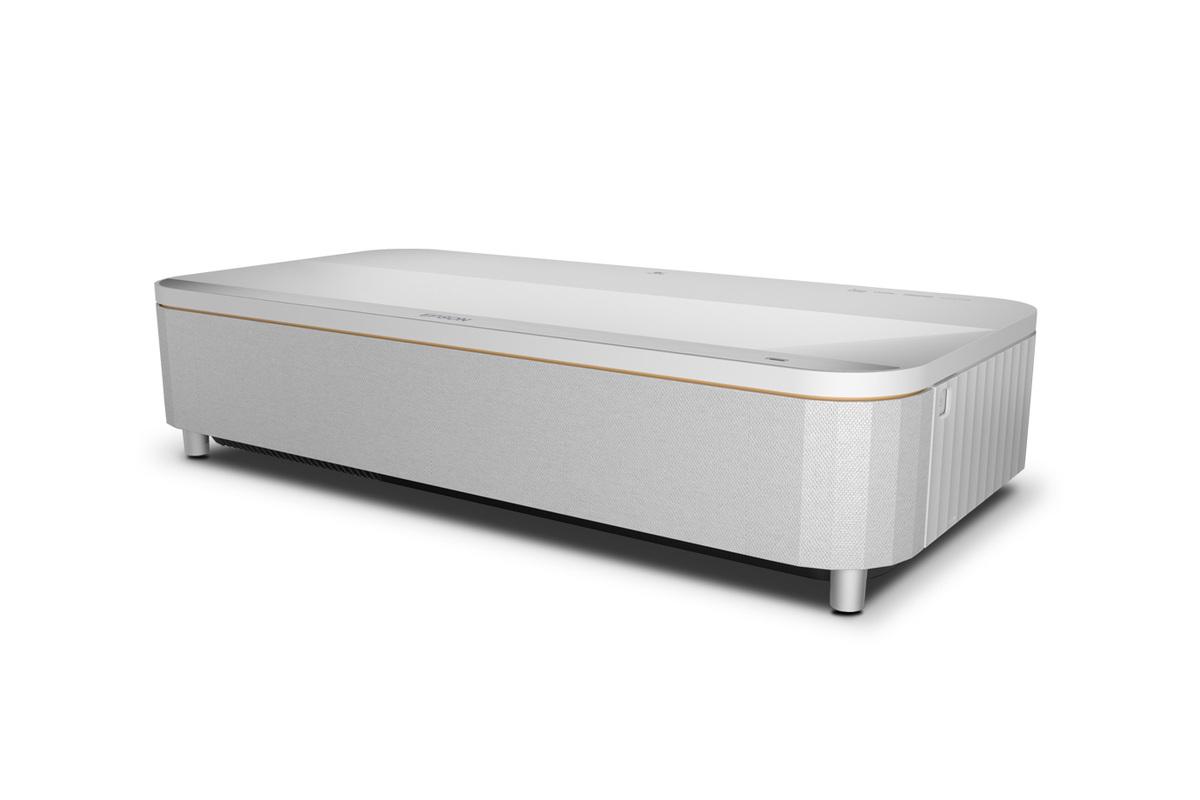
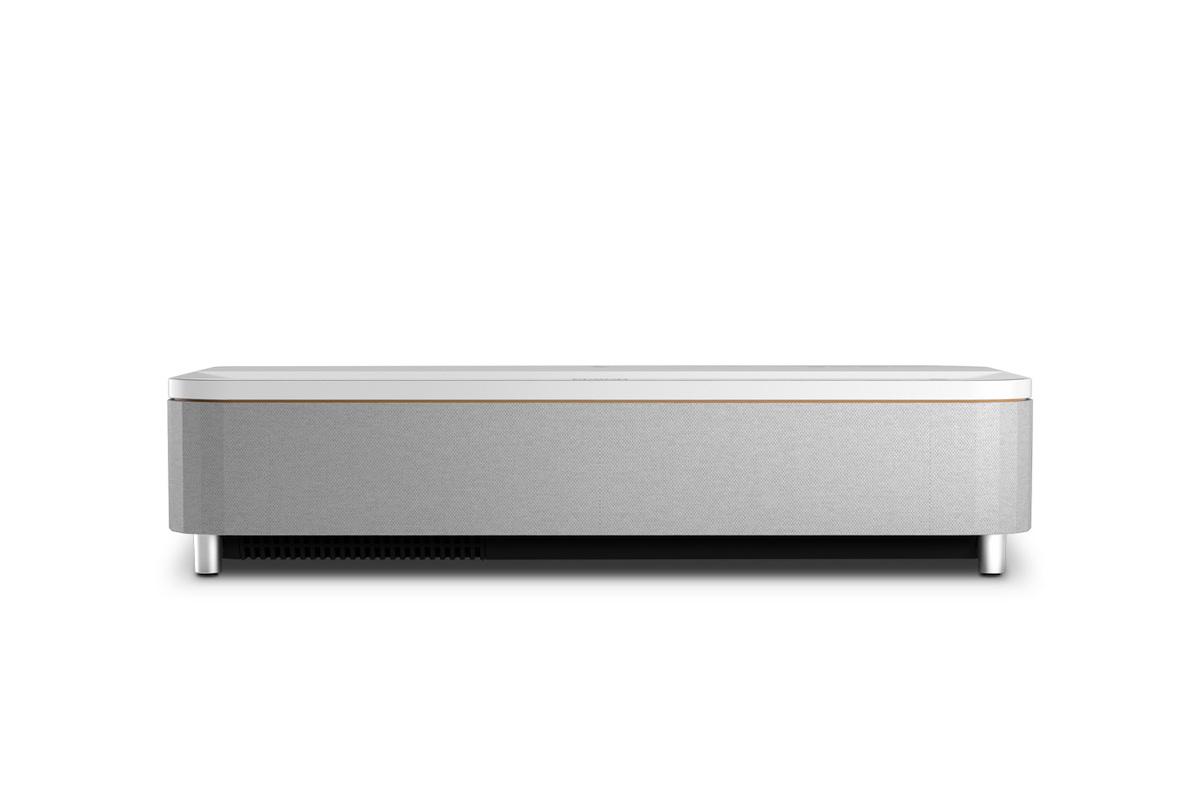
Released in 2025, the Epson QS100 represents Epson's most ambitious UST projector to date. The headline feature is absolutely crushing: 4,500 lumens of brightness output. To put this in perspective, most premium UST projectors hover around 2,500-3,500 lumens, making the QS100 roughly 30% brighter than typical high-end competition.
This brightness comes from Epson's refined 3LCD laser technology, which uses three separate LCD panels (one each for red, green, and blue light) combined with a blue laser light source and phosphor system. The advantage here is significant—unlike single-chip DLP projectors that can suffer from rainbow effects (brief color flashes visible to sensitive viewers), 3LCD systems display all colors simultaneously.
What makes the Epson QS100 particularly impressive is its throw ratio of just 0.16:1. This means you can place it approximately 7 inches from your wall and get a 120-inch image, or push it back to around 11 inches for the maximum 160-inch size. This is currently the shortest throw distance available in the premium UST category.
The projector uses pixel-shifting technology rather than native 4K panels. This means it starts with 1920x1080 resolution panels and rapidly shifts pixels to create additional detail, achieving what Epson calls "4K PRO-UHD." While purists might prefer native 4K, the reality is that pixel-shifting has become incredibly sophisticated. At normal viewing distances, the difference between pixel-shifted 4K and native 4K is essentially invisible.
One crucial design choice Epson made was eliminating built-in speakers and smart TV features entirely. This might seem like a drawback, but it reflects the QS100's focus on custom integration scenarios where users prefer their own audio systems and streaming devices.
The Leica Cine 1, while building on 2022-era Hisense technology, brings something fundamentally different to the table: triple RGB laser technology. Instead of using a blue laser with phosphors to create other colors, it employs separate red, green, and blue lasers. This approach allows it to cover 100% of the BT.2020 color space—the gold standard for digital cinema.
To understand why this matters, think of color gamut as the palette of colors a projector can display. Standard projectors might cover 70-80% of the colors in movie content, while the Leica Cine 1 can display virtually every color that filmmakers intended. This is particularly noticeable in scenes with vibrant reds, deep ocean blues, or lush forest greens.
The projector incorporates Leica's legendary optical expertise through a custom Summicron lens featuring four aspherical elements. These precisely curved lens elements reduce chromatic aberration (color fringing around objects) and maintain sharp focus from edge to edge. While this might sound like marketing speak, the difference is genuinely visible when comparing edge sharpness between the Leica Cine 1 and other UST projectors.
At 3,000 lumens, the Leica is significantly dimmer than the Epson, but this isn't necessarily a weakness in controlled environments. The triple laser design maintains color accuracy even at lower brightness levels, and the 25,000-hour laser lifespan exceeds most competitors.
Unlike the Epson, the Leica Cine 1 takes an all-in-one approach with integrated 50W Dolby Atmos speakers and Google TV smart platform. The motorized dust cover and premium aluminum construction clearly target users who value luxury aesthetics and convenience.
This is where the differences become dramatic. In our research across expert reviews and user feedback, the Epson QS100 consistently outperforms in bright rooms. That extra 1,500 lumens translates to noticeably better image visibility during daytime viewing or in rooms with significant window light.
The Leica Cine 1, while respectable at 3,000 lumens, requires more controlled lighting conditions. This isn't necessarily problematic—many dedicated home theater enthusiasts prefer darker environments anyway—but it limits flexibility for multi-purpose living spaces.
What's particularly interesting is how each projector handles HDR (High Dynamic Range) content. The Epson uses dynamic tone mapping through its QZX Picture Processor, which analyzes each scene and adjusts brightness and contrast in real-time. This helps maximize the impact of bright highlights while preserving shadow detail.
The Leica takes a different approach, using its superior color gamut to make HDR content more impactful through color volume rather than peak brightness. Both approaches work well, but serve different priorities.
Here's where the Leica Cine 1 truly shines. That 100% BT.2020 coverage isn't just a specification—it's immediately visible in content with rich, saturated colors. Animated films, nature documentaries, and modern HDR movies display with a vibrancy and accuracy that's genuinely stunning.
The Epson QS100 delivers excellent color reproduction through its 3LCD system, but operates within a more conventional color gamut. For most content, this difference is subtle, but when watching carefully mastered 4K HDR films, the Leica reveals colors and gradations that other projectors simply can't display.
Professional reviewers consistently note the Leica's superior color accuracy out of the box, requiring minimal calibration to achieve reference-quality results. The Epson, while very good, benefits more from professional calibration to reach its potential.
Both projectors handle gaming well, but with different strengths. The Epson QS100 supports Auto Low Latency Mode (ALLM), which automatically switches to game mode when it detects a gaming console, reducing input lag—the delay between pressing a controller button and seeing the action on screen.
The QS100 also supports both 4K at 60Hz and 2K at 120Hz, providing options for different gaming priorities. The 120Hz support is particularly valuable for competitive gaming where every millisecond matters.
The Leica Cine 1 offers good gaming performance but focuses more on visual quality than minimal latency. Its integrated Google TV platform provides access to cloud gaming services, which adds convenience for casual gaming.
The Epson QS100's 0.16:1 throw ratio creates significant practical advantages. In tight spaces where every inch matters, being able to place the projector 7 inches closer to the wall can be the difference between a successful installation and having to mount it on furniture that blocks the image.
This ultra-short throw capability also means less chance of obstruction. Even tall people walking close to the wall won't create shadows on the image, which can be an issue with projectors requiring more distance.
The Leica Cine 1 requires about 14 inches of distance for its maximum 120-inch image, which is still excellent but less flexible. However, its fixed-focus design is optimized specifically for this distance, contributing to its superior edge-to-edge sharpness.
Both projectors include advanced geometry correction features, but the Epson offers more comprehensive adjustment options. This becomes important in rooms where perfect perpendicular placement isn't possible.
This represents perhaps the most fundamental difference between these projectors. The Leica Cine 1 embraces the all-in-one approach with Google TV providing access to Netflix, Amazon Prime, Disney+, and other streaming services directly. The integrated Dolby Atmos speakers, while not matching dedicated surround systems, are surprisingly capable for casual viewing.
The Epson QS100 deliberately omits these features, assuming users will add their own streaming devices and audio systems. This approach offers more flexibility but requires additional purchases and setup complexity.
For custom integrators, the Epson provides extensive control options including compatibility with Crestron, Control4, and other automation systems. The Leica offers basic smart home integration but isn't designed for complex automated installations.
At the time of writing, the Epson QS100 costs roughly half of the Leica Cine 1, making value comparison straightforward in some ways but complex in others. The Epson delivers significantly higher brightness, shorter throw distance, and larger maximum image size at the lower price point.
However, the Leica includes features that would cost additional money with the Epson: high-quality integrated audio, smart TV platform, and premium build quality with motorized dust cover.
When evaluating pure projection performance per dollar, the Epson clearly wins. When considering total system cost including necessary additions like streaming devices and audio systems, the gap narrows considerably.
The Epson QS100 makes sense for users who prioritize flexibility and performance in challenging environments. If your living room has significant windows, if you need maximum image size options, or if you're working with tight space constraints, the Epson's combination of high brightness and ultra-short throw distance provides tangible benefits.
It's also the clear choice for custom integration scenarios where the projector needs to work seamlessly with existing automation systems, separate audio equipment, and specific streaming setups.
The Leica Cine 1 appeals to users who want the best possible color reproduction and appreciate luxury design elements. If you have a dedicated theater room with controlled lighting, if color accuracy matters more than peak brightness, and if you value the convenience of integrated smart features and audio, the Leica delivers a more refined overall experience.
The Leica also makes sense for users who want a premium, simplified installation without researching and purchasing multiple components. Everything needed for an excellent viewing experience comes in the box.
Both projectors represent excellent approaches to premium UST projection, but they serve different priorities and use cases. The Epson QS100 maximizes practical performance and flexibility at a more accessible price point, while the Leica Cine 1 prioritizes color perfection and luxury integration at a significant premium.
For most users, particularly those with bright living spaces or space constraints, the Epson QS100 provides better value and more versatile performance. The brightness advantage is immediately noticeable in typical home environments, and the ultra-short throw capability solves real installation challenges.
The Leica Cine 1 makes sense for enthusiasts with controlled viewing environments who prioritize absolute color accuracy over brightness flexibility. It's also the better choice for users who want a complete, luxury solution without additional components.
Ultimately, both projectors deliver exceptional 4K images that will transform any room into an impressive entertainment space. The choice comes down to whether you prioritize maximum brightness and flexibility (Epson QS100) or color perfection and integrated luxury (Leica Cine 1).
| Epson QS100 4K PRO-UHD Ultra Short Throw Projector | Leica Cine 1 120" 4K Ultra Short Throw Laser Projector |
|---|---|
| Brightness - Most critical spec for daytime viewing and bright rooms | |
| 4,500 ANSI lumens (excellent for any lighting condition) | 3,000 ANSI lumens (requires some lighting control) |
| Laser Technology - Affects color accuracy and lifespan | |
| 3LCD blue laser + phosphor (consistent brightness, no rainbow effect) | Triple RGB laser (superior color gamut, cinema-grade accuracy) |
| Color Gamut Coverage - Determines how vibrant and accurate colors appear | |
| Standard 3LCD coverage (good for most content) | 100% BT.2020 (professional cinema color standard) |
| Throw Distance - How close you can place it to your wall | |
| 6.8 inches for 120" image (0.16:1 ratio, industry-leading) | 14.3 inches for 120" image (0.25:1 ratio, still excellent) |
| Maximum Image Size - Largest screen you can create | |
| 160 inches (ideal for large rooms) | 120 inches (optimized for this size) |
| Resolution Technology - How 4K image is created | |
| 1920x1080 native with 2-way pixel shifting (4K PRO-UHD) | 0.47" DLP with pixel shifting (true 4K processing) |
| Audio System - Built-in sound quality | |
| None (requires external sound system) | 50W Dolby Atmos integrated speakers |
| Smart Features - Built-in streaming and apps | |
| None (requires external streaming device) | Google TV platform with all major apps |
| Laser Lifespan - Long-term maintenance costs | |
| 20,000 hours (virtually maintenance-free) | 25,000 hours (longer lifespan) |
| Build Quality and Design - Premium features and aesthetics | |
| Functional design focused on performance | Premium aluminum chassis with motorized dust cover |
| Gaming Features - Input lag and refresh rate support | |
| ALLM, 4K/60Hz, 2K/120Hz support | Good gaming performance, 4K/60Hz support |
| Installation Flexibility - Custom integration options | |
| Extensive geometry correction, professional control system compatibility | Fixed optimization, basic smart home integration |
| Weight and Size - Physical footprint considerations | |
| Moderate weight, standard UST dimensions | 33.3 lbs, substantial premium construction |
The Epson QS100 is significantly brighter at 4,500 lumens compared to the Leica Cine 1's 3,000 lumens. This makes the Epson QS100 much better for bright rooms and daytime viewing, while the Leica Cine 1 performs best in controlled lighting conditions.
No, both the Epson QS100 and Leica Cine 1 are ultra short throw projectors that sit on furniture like a TV stand or media console. The Epson QS100 can be placed just 6.8 inches from the wall for a 120-inch image, while the Leica Cine 1 needs 14.3 inches of distance.
The Leica Cine 1 offers superior color accuracy with its triple RGB laser system covering 100% of the BT.2020 color space, matching professional cinema standards. The Epson QS100 provides good color reproduction through 3LCD technology, but doesn't match the Leica's color gamut coverage.
The Epson QS100 has no built-in audio and requires external speakers or a soundbar. The Leica Cine 1 includes integrated 50W Dolby Atmos speakers that provide surprisingly good sound quality for casual viewing, though dedicated audio systems will still perform better.
The Epson QS100 offers better gaming features with Auto Low Latency Mode (ALLM) and support for both 4K/60Hz and 2K/120Hz refresh rates. The Leica Cine 1 provides good gaming performance but focuses more on visual quality than minimal input lag.
The Leica Cine 1 includes Google TV with built-in access to Netflix, Amazon Prime, Disney+, and other streaming services. The Epson QS100 has no smart features and requires a separate streaming device like Apple TV, Roku, or Fire TV Stick.
Both projectors use maintenance-free laser light sources. The Epson QS100 laser is rated for 20,000 hours while the Leica Cine 1 offers 25,000 hours. Both provide years of typical use without needing replacement.
The Epson QS100 can project images up to 160 inches, making it ideal for very large rooms. The Leica Cine 1 is optimized for 120-inch images and cannot go larger, but this size is still excellent for most home theater setups.
Both use pixel-shifting technology rather than native 4K panels. The Epson QS100 uses 1920x1080 panels with 2-way pixel shifting for "4K PRO-UHD" resolution. The Leica Cine 1 uses 0.47" DLP technology with pixel shifting. At normal viewing distances, both deliver excellent 4K image quality.
The Epson QS100 is better for tight spaces due to its industry-leading 0.16:1 throw ratio, allowing placement just 6.8 inches from the wall. The Leica Cine 1 requires more space at 14.3 inches distance, though this is still considered excellent for ultra short throw projectors.
The Epson QS100 excels in bright living rooms thanks to its 4,500-lumen output, maintaining good image quality even with significant ambient light. The Leica Cine 1 at 3,000 lumens performs better in rooms where you can control some lighting, though it's still usable in moderately bright spaces.
The Epson QS100 typically offers better value with higher brightness, shorter throw distance, and larger maximum image size at a lower price point. The Leica Cine 1 costs significantly more but includes premium features like integrated Dolby Atmos audio, Google TV platform, and superior color accuracy for those prioritizing these features.
We've done our best to create useful and informative comparisons to help you decide what product to buy. Our research uses advanced automated methods to create this comparison and perfection is not possible - please contact us for corrections or questions. These are the sites we've researched in the creation of this article: projectorscreen.com - youtube.com - projectorcentral.com - projectorreviews.com - techradar.com - audioadvice.com - projectorreviews.com - avsforum.com - projectorcentral.com - mediaserver.goepson.com - projectorcentral.com - news.epson.com - epson.eu - epson.com - epson.eu - epson.com - projectorcentral.com - bestbuy.com - projectorcentral.com - projectorreviews.com - leicacamerausa.com - projectorreviews.com - whathifi.com - leicacamerausa.com - bhphotovideo.com - projectorcentral.com - projectorscreen.com - crutchfield.com - leicarumors.com - projectorscreen.com

Privacy Policy
Terms and Conditions - Affiliate Policy
Home Security
© Copyright 2008-2026.
11816 Inwood Rd #1211, Dallas, TX 75244