

Ultra short throw projectors have revolutionized home entertainment by solving the age-old problem of needing massive rooms for big-screen experiences. These innovative devices can create cinema-sized images while sitting just inches from your wall, eliminating shadows and making installation surprisingly simple. But as the technology matures, choosing between different approaches becomes more complex.
Today we're comparing two distinctly different takes on UST projection: the Hisense L9Q (released in 2025) and the BenQ V5000i (released in 2023). While both use advanced triple-laser technology, they target completely different priorities—and understanding these differences is crucial for making the right choice.
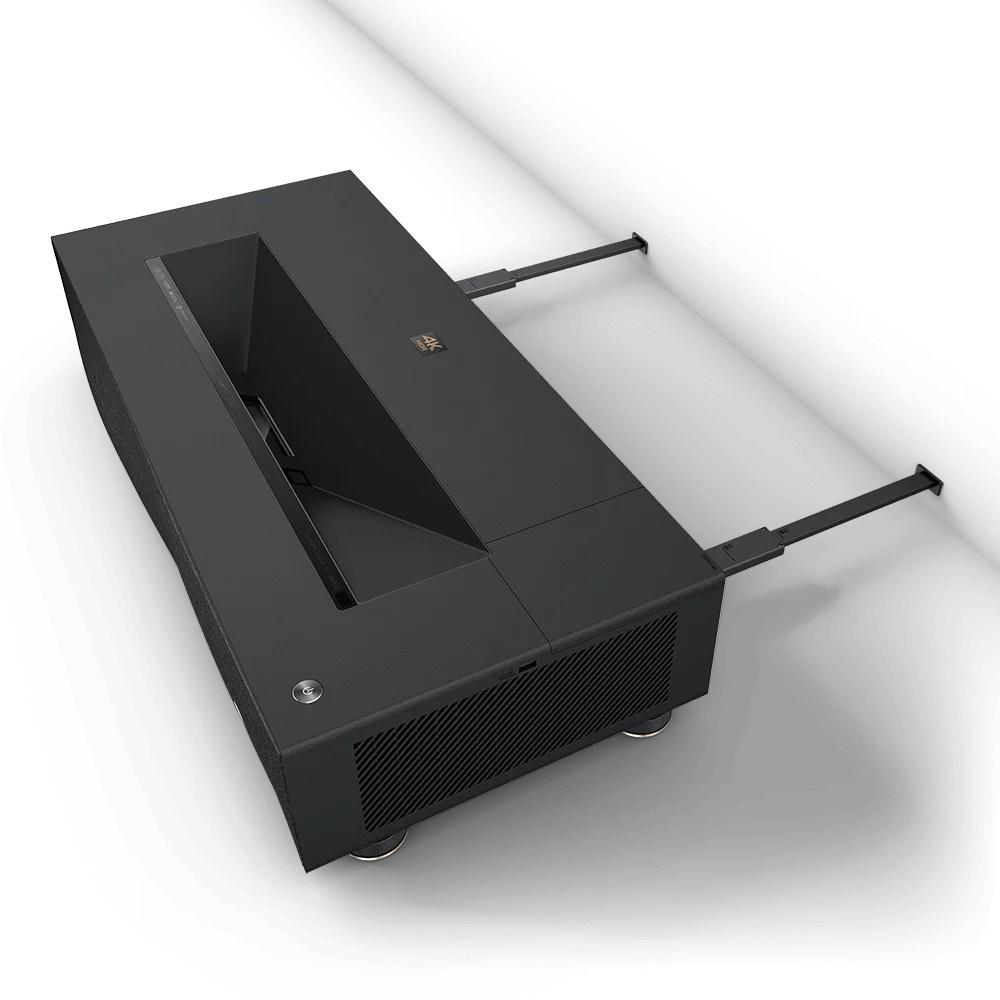
Before diving into specifics, it's worth understanding why UST projectors matter. Traditional projectors require significant throw distance—typically 8-12 feet for a 100-inch image. This means ceiling mounting, dealing with shadows when people walk in front, and complex room layouts. UST projectors flip this entirely, sitting on a TV stand or shelf just inches from the screen.
The technology relies on specialized ultra-wide angle lenses and precise optical engineering. Instead of projecting straight ahead, these projectors shoot light upward at extreme angles, bouncing off the screen to create massive images from minimal distances. It's genuinely impressive engineering that makes large-screen entertainment accessible in normal living spaces.
Modern UST projectors also benefit from laser light sources, which last 20,000+ hours (compare that to traditional lamp projectors needing replacement every 2,000-4,000 hours). Laser engines also reach full brightness instantly, maintain consistent color over time, and enable much higher brightness levels than older technologies.
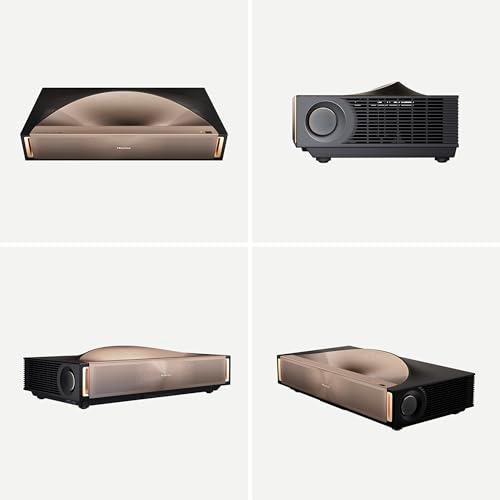
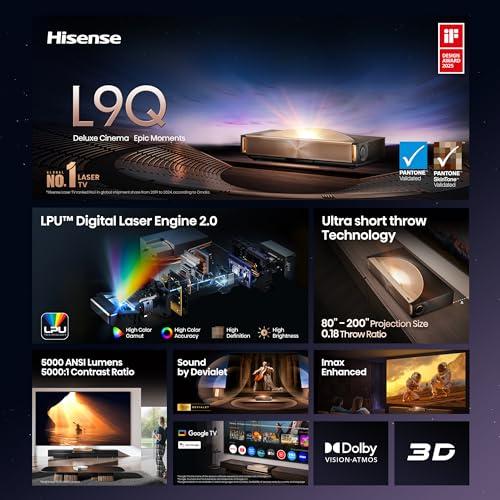
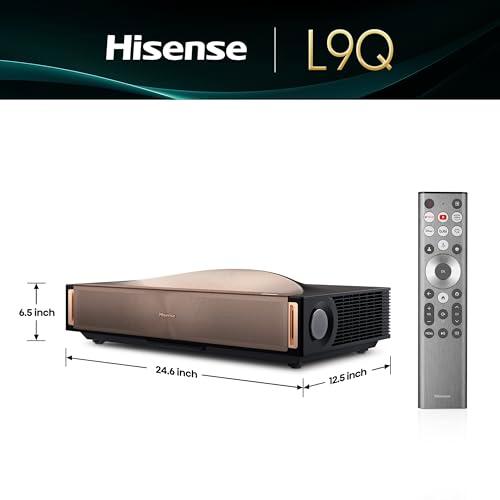
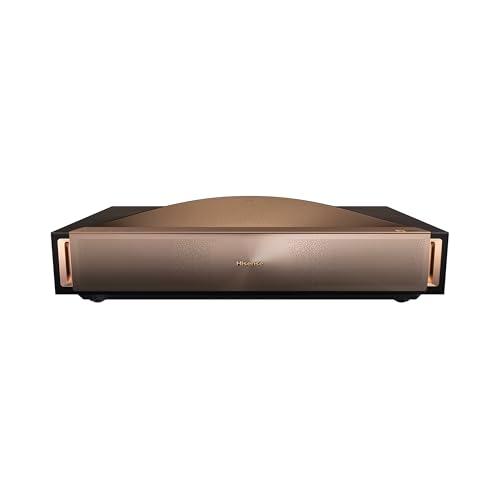
The Hisense L9Q represents Hisense's 2025 flagship approach—maximum brightness, premium audio integration, and screen size flexibility. At the time of writing, it commands a significant price premium, positioning itself as a complete home theater solution that aims to replace both your TV and sound system.
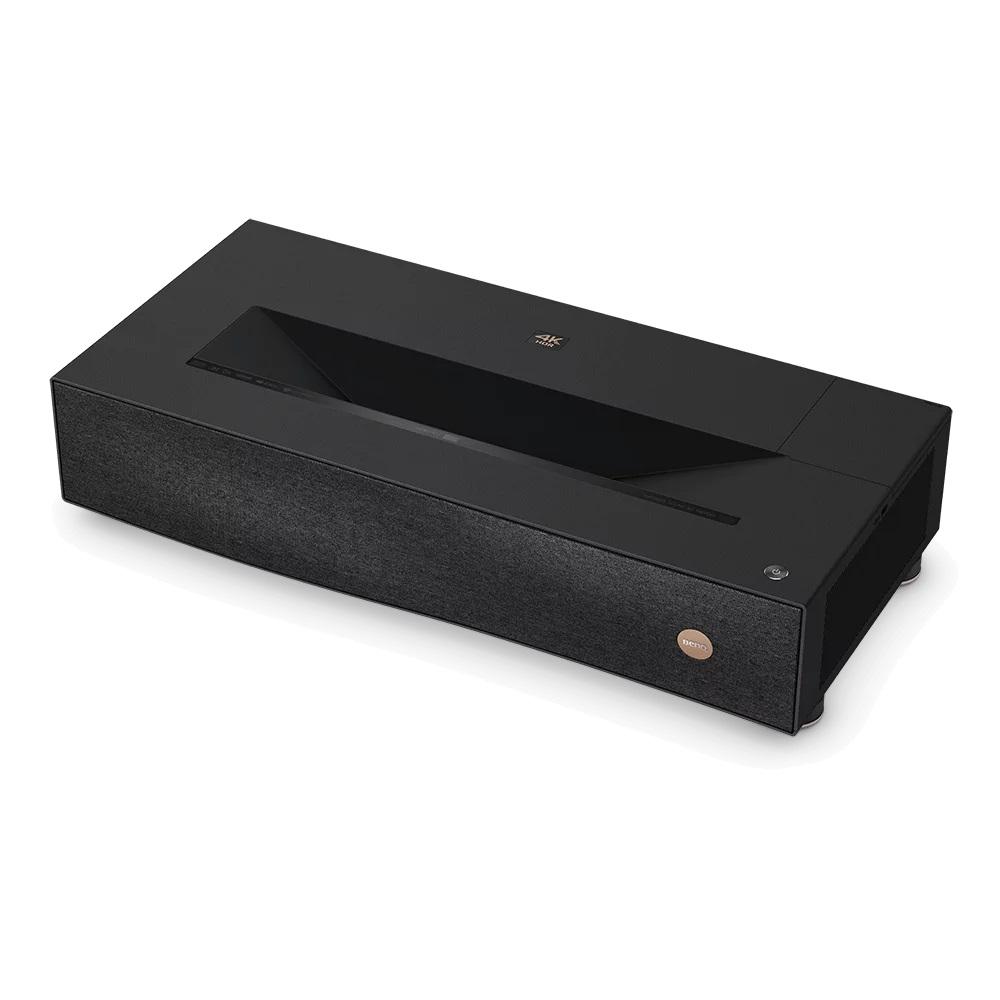
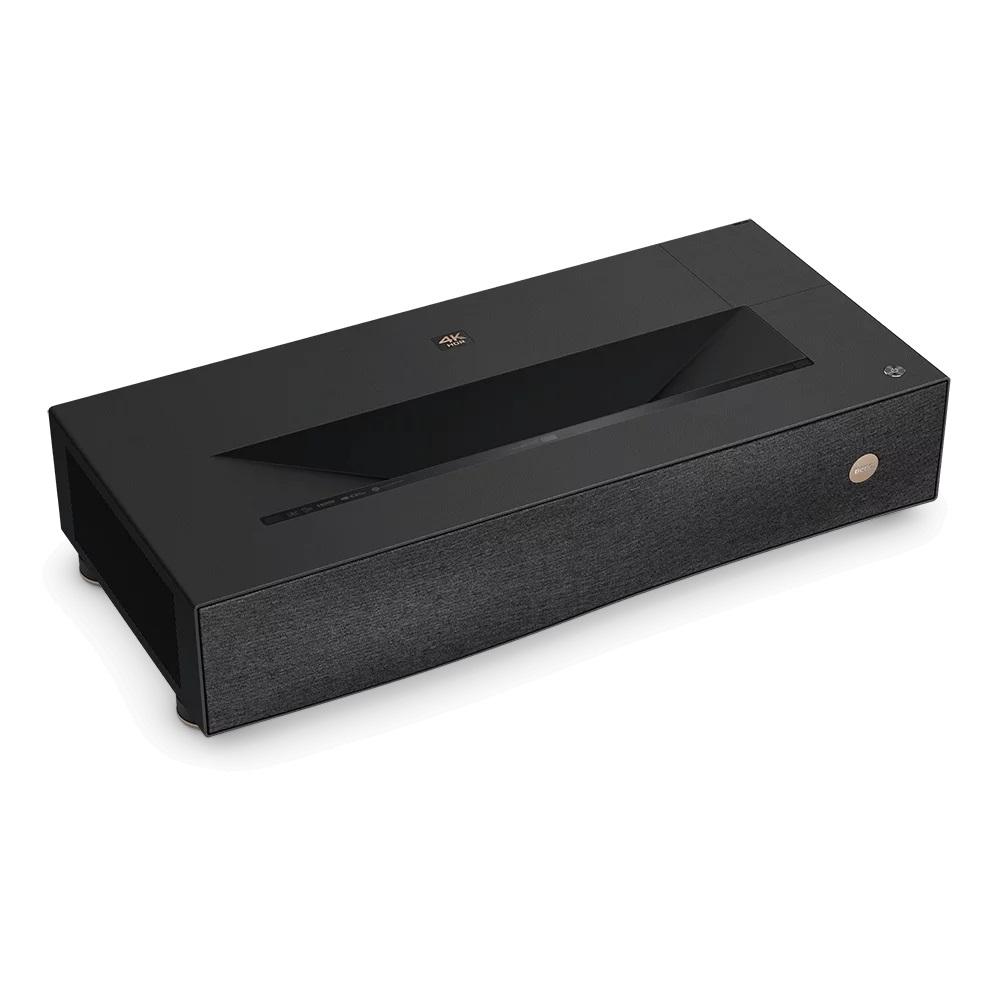
The BenQ V5000i, released in 2023, takes a more focused approach. BenQ prioritized gaming performance and overall value, creating what many consider the best UST projector for gaming enthusiasts. It costs substantially less than the Hisense L9Q while delivering impressive performance in key areas.
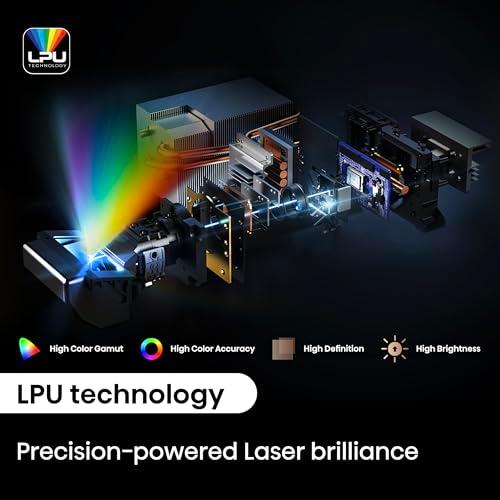
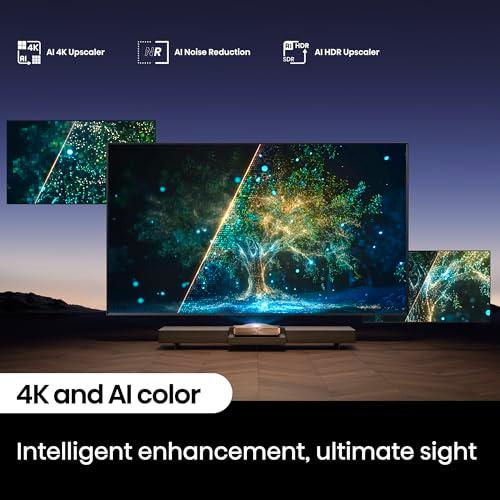
Both use RGB triple-laser technology—a major advancement over earlier single-laser or LED/laser hybrid systems. RGB lasers use separate red, green, and blue laser diodes instead of a single blue laser with color wheels or phosphor conversion. This approach delivers much wider color gamuts and eliminates artifacts like rainbow effects that some viewers notice with color wheel systems.
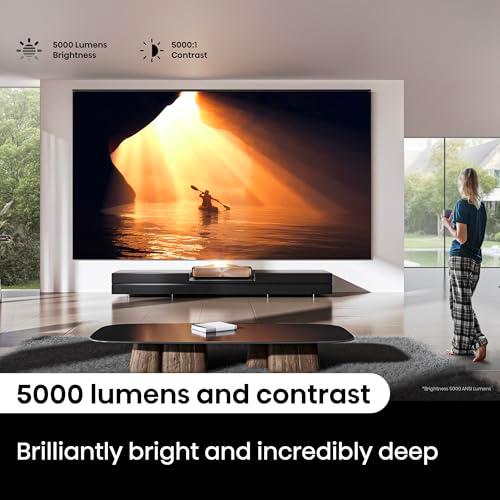
Brightness might be the most critical specification for UST projectors, and here the differences are dramatic. The Hisense L9Q delivers 5,000 ANSI lumens—nearly double the BenQ V5000i's 2,500 lumens.
ANSI lumens measure actual light output in standardized conditions, and this difference is massive in real-world use. The Hisense L9Q maintains vivid, saturated colors even with significant ambient light, making daytime viewing genuinely practical. You can keep curtains open, have normal room lighting, and still enjoy excellent image quality.
The BenQ V5000i, while certainly bright enough for evening viewing and controlled lighting situations, requires more attention to room conditions. This isn't necessarily a dealbreaker—many home theater enthusiasts prefer controlled lighting anyway—but it does limit flexibility.
From our research of expert reviews and user experiences, the brightness advantage becomes most apparent on larger screens. Both projectors handle 100-inch images well, but the Hisense L9Q maintains punch and vibrancy when scaled to 150+ inches in ways that the BenQ V5000i simply cannot match.
Brightness also affects HDR performance significantly. HDR (High Dynamic Range) content relies on brightness peaks to create that "wow" factor—think sun glinting off water or explosions in action movies. The Hisense L9Q's extra brightness headroom translates directly to more impactful HDR reproduction, especially in challenging ambient lighting conditions.
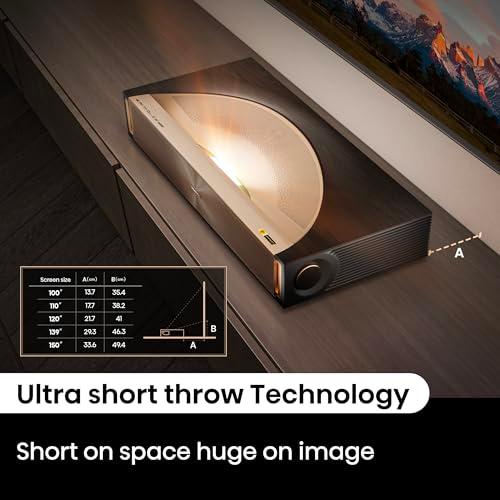
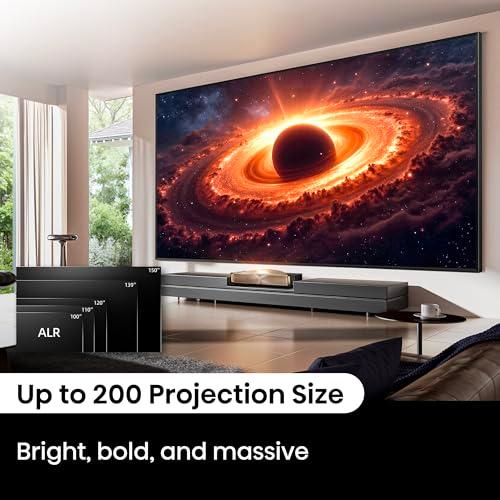
This might be the most significant practical difference between these projectors. The Hisense L9Q supports screen sizes from 80 to 200 inches, offering remarkable flexibility for different rooms and preferences. Its 0.18:1 throw ratio means it can sit extremely close to the wall while still creating massive images.
The BenQ V5000i is locked at exactly 100 inches with a 0.25:1 throw ratio. This might seem like a minor limitation, but it's actually quite restrictive. If you move homes, rearrange your room, or simply want a different viewing experience, you're stuck with that single configuration.
Based on user feedback we've analyzed, the Hisense L9Q's flexibility proves valuable in unexpected ways. Some users start with 120-inch screens and later expand to 150+ inches as they get comfortable with the large image. Others downsize for dedicated gaming setups or when optimizing for specific viewing distances.
The 200-inch capability of the Hisense L9Q ventures into truly cinematic territory. While most living rooms can't accommodate screens this large, basement home theaters and dedicated media rooms benefit enormously. At these sizes, the brightness advantage becomes even more critical—you're spreading the same light over a much larger area.
Gaming represents the BenQ V5000i's strongest advantage. Its 8.7ms input lag at high refresh rates makes it one of the most responsive UST projectors available. Input lag measures the delay between controller input and on-screen response—crucial for competitive gaming where milliseconds matter.
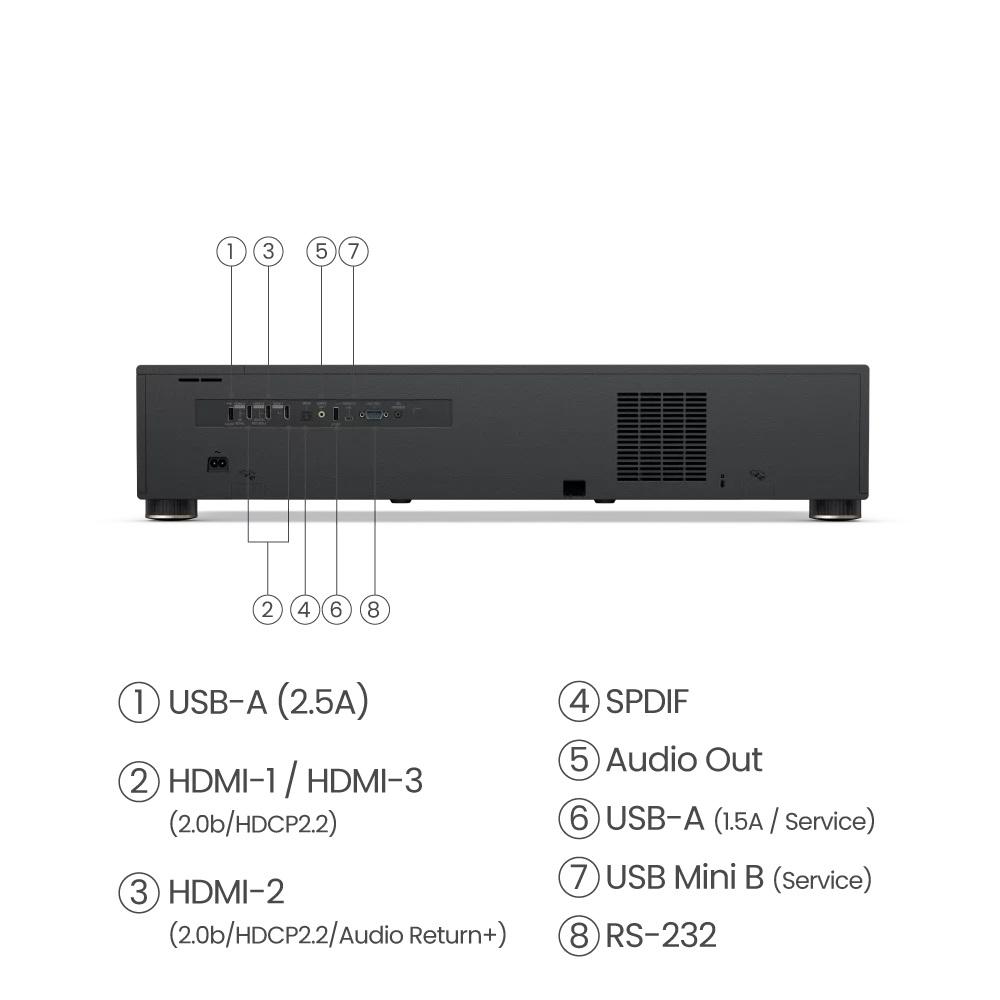
The BenQ V5000i also supports 4K at 120Hz through HDMI 2.1, perfect for PlayStation 5 and Xbox Series X gaming. HDMI 2.1 provides the bandwidth necessary for high refresh rate 4K gaming, and the projector's auto-low latency mode automatically optimizes settings when it detects gaming consoles.
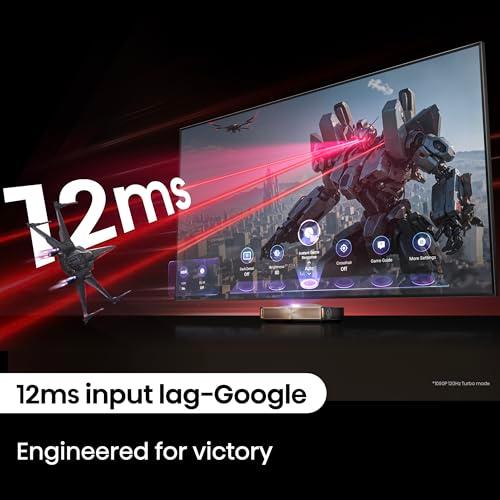
The Hisense L9Q offers respectable 12ms input lag in Game Mode, which is certainly playable for most gaming scenarios. However, competitive gamers will notice the difference, especially in fast-paced shooters or racing games. The Hisense L9Q also lacks HDMI 2.1, limiting it to HDMI 2.0 capabilities.
From gaming-focused reviews we've studied, the BenQ V5000i consistently receives praise from serious gamers who appreciate its responsiveness. The Hisense L9Q works fine for casual gaming and single-player experiences, but the BenQ V5000i is genuinely superior for competitive play.
It's worth noting that both projectors benefit from laser technology for gaming—no warm-up time means instant-on capability, and the consistent brightness avoids the dimming issues that plague lamp-based projectors over time.
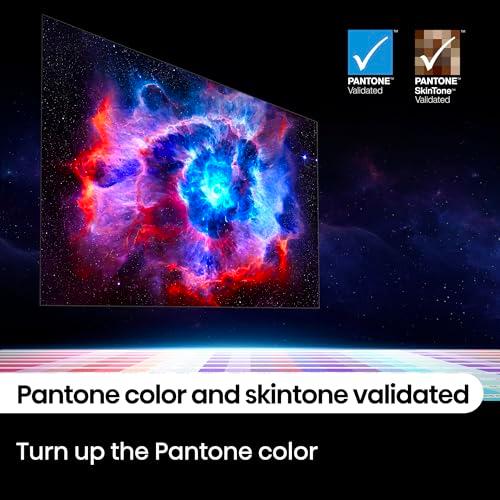
Both projectors use RGB triple-laser engines, but they achieve different results. The Hisense L9Q covers 110% of the BT.2020 color space with Pantone validation—professional-level color accuracy that ensures content appears exactly as creators intended.
BT.2020 represents the color standard for 4K and HDR content, encompassing the full range of colors that modern content can contain. Covering 110% means the projector can reproduce colors even beyond this already wide standard. Pantone validation adds another layer of precision—Pantone is the global standard for color matching used by professionals across industries.
The BenQ V5000i achieves 98% DCI-P3 coverage, which is quite good but represents a narrower color gamut than expected from RGB triple-laser technology. DCI-P3 is the digital cinema standard, covering about 25% more colors than standard HD content but less than BT.2020.
Based on calibration reviews and user experiences, the Hisense L9Q's color accuracy becomes most apparent with premium content—4K movies with Dolby Vision HDR show deeper, more natural colors. The BenQ V5000i still produces excellent images, but side-by-side comparisons reveal the Hisense L9Q's superior color reproduction.
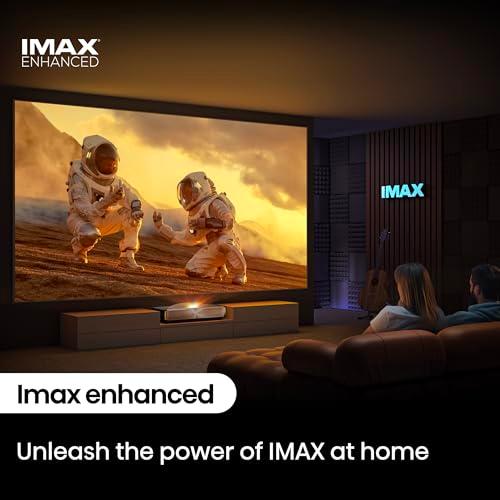
Both projectors support multiple HDR formats, but the Hisense L9Q includes Dolby Vision and IMAX Enhanced support—premium formats that optimize the viewing experience for specific content. The BenQ V5000i handles HDR10 and HDR10+ well but lacks Dolby Vision, which is increasingly common on streaming platforms.
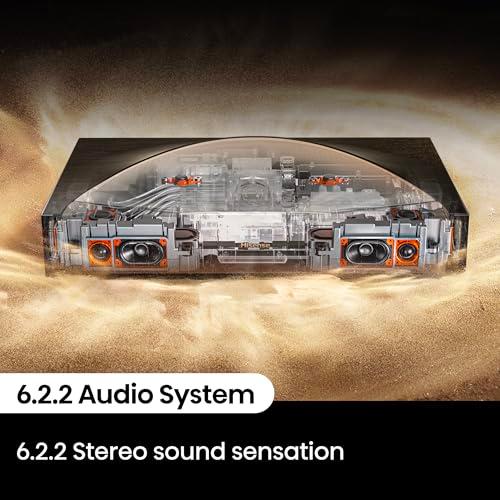
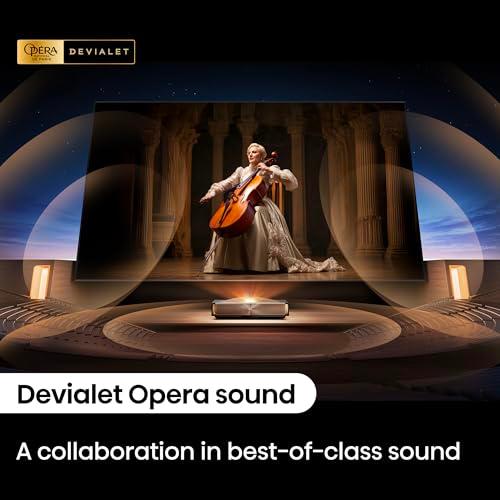
Here we see fundamentally different philosophies. The Hisense L9Q integrates a Devialet-engineered 116W 6.2.2 surround sound system, aiming to provide complete home theater audio without external speakers. Devialet is a premium French audio company known for high-end speakers, so this partnership represents serious audio ambition.
The 6.2.2 configuration means six main channels, two subwoofer channels, and two height channels for Dolby Atmos effects—a sophisticated setup that would typically require multiple external speakers. Based on early reviews, the integrated system produces surprisingly room-filling sound that eliminates the need for additional audio equipment in many installations.
The BenQ V5000i features a TreVolo 40W system with BonGiovi digital signal processing. While much less powerful than the Hisense L9Q's audio system, reviews consistently praise its quality relative to size. It delivers clear dialogue and decent bass response, though it won't match dedicated home theater speakers.
The choice here often depends on your existing audio setup and space constraints. If you already own high-quality speakers or plan to add them, the BenQ V5000i's more modest audio system might be perfectly adequate. But for users wanting an all-in-one solution that eliminates additional components, the Hisense L9Q's integrated Devialet system offers genuine appeal.
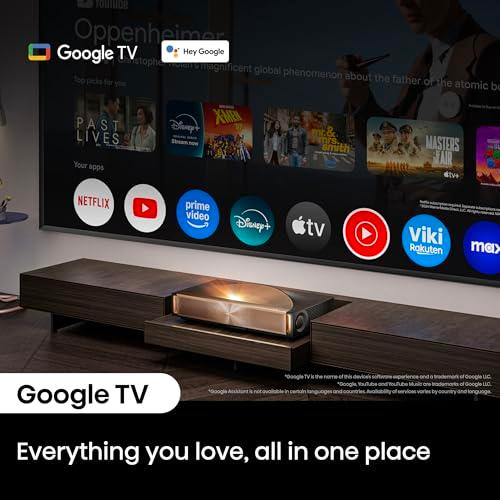
Both projectors run Google TV, providing access to all major streaming services including Netflix, Disney+, and Amazon Prime Video. Google TV represents a significant improvement over older Android TV implementations, with better performance and more intuitive interfaces.
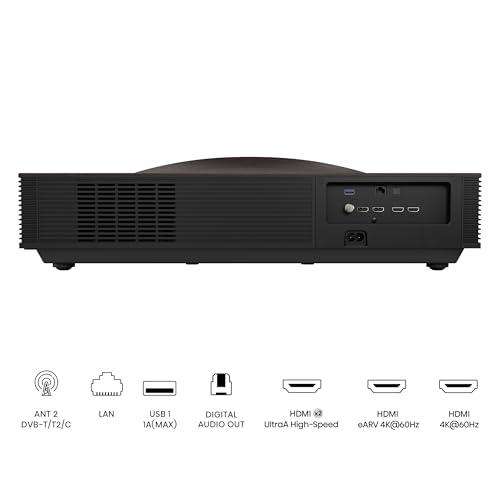
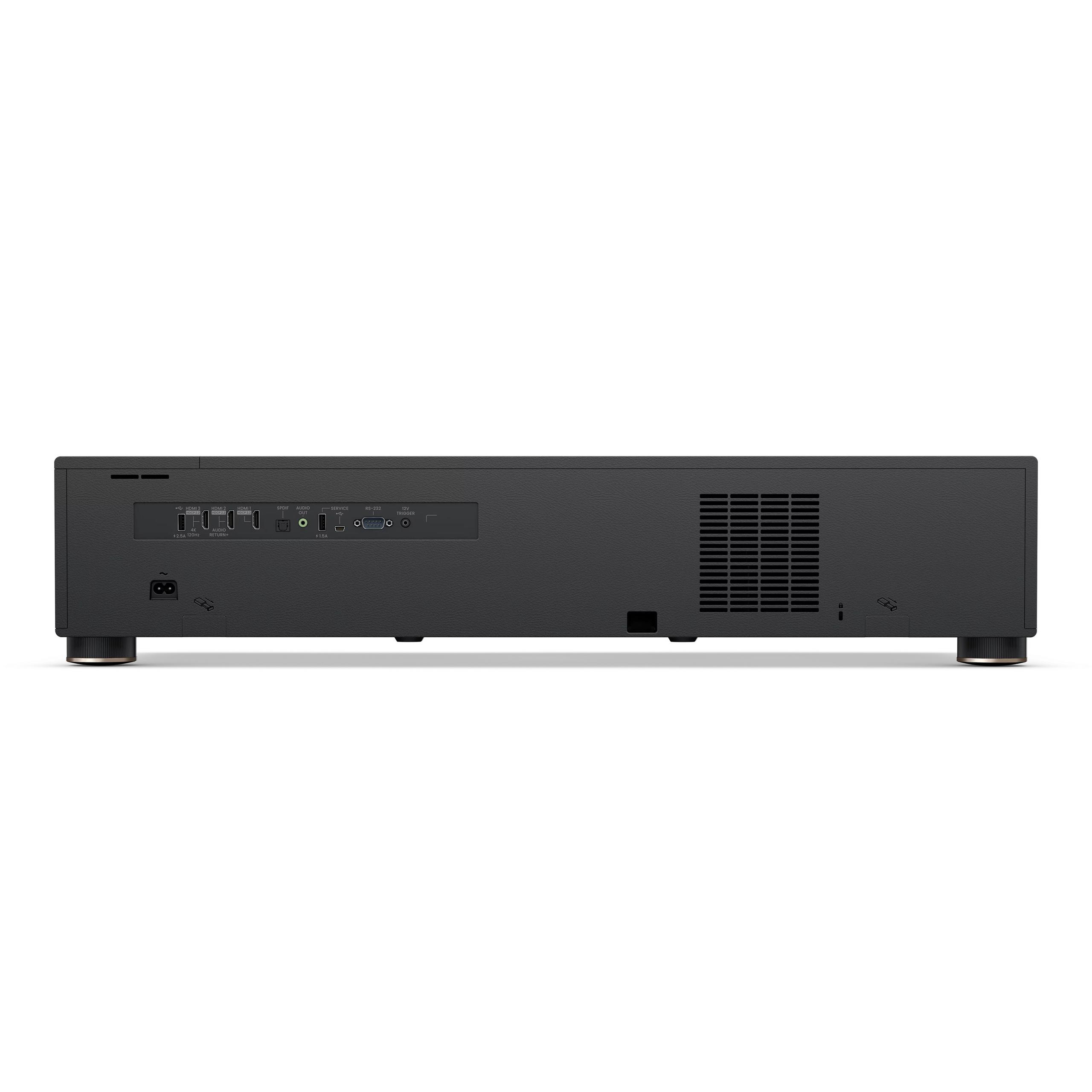
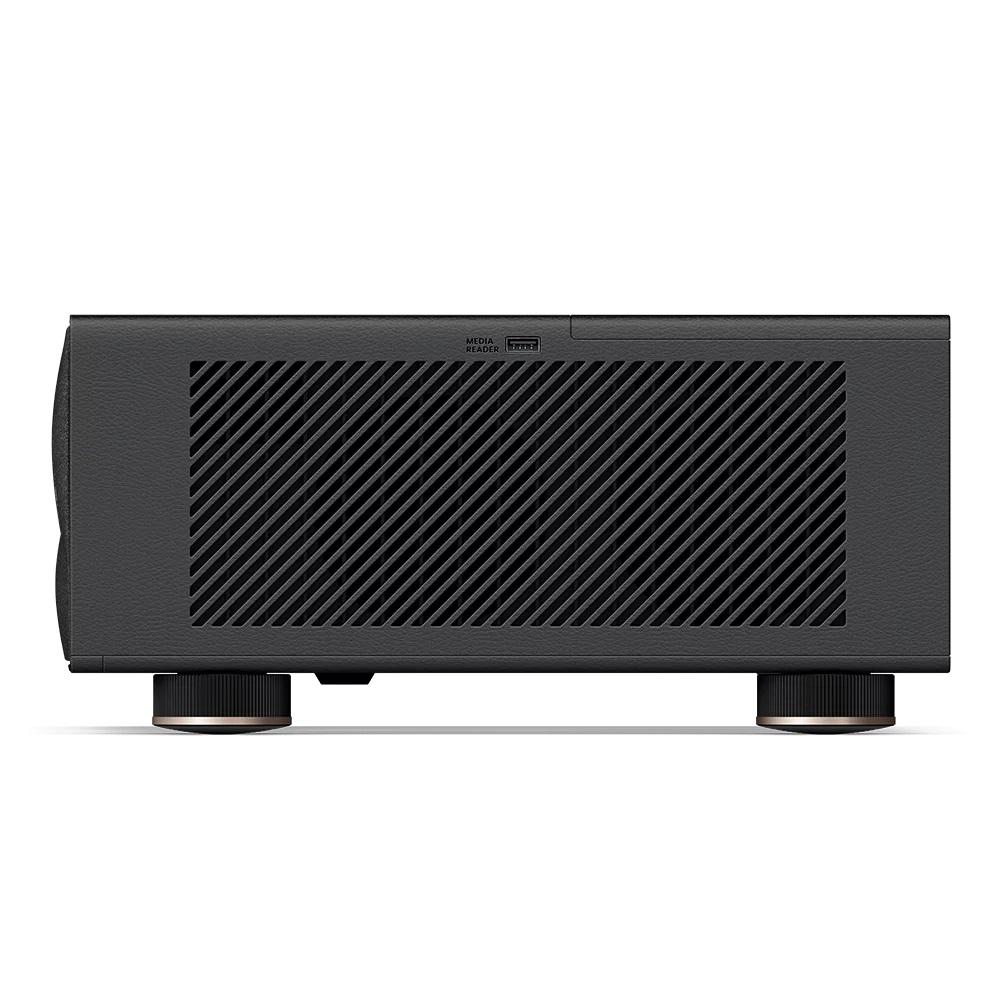
Connectivity differs meaningfully between the models. The BenQ V5000i offers three HDMI ports including HDMI 2.1, while the Hisense L9Q provides two HDMI 2.0 ports. For users with multiple gaming consoles, streaming devices, and other HDMI sources, the BenQ V5000i's extra port proves valuable.
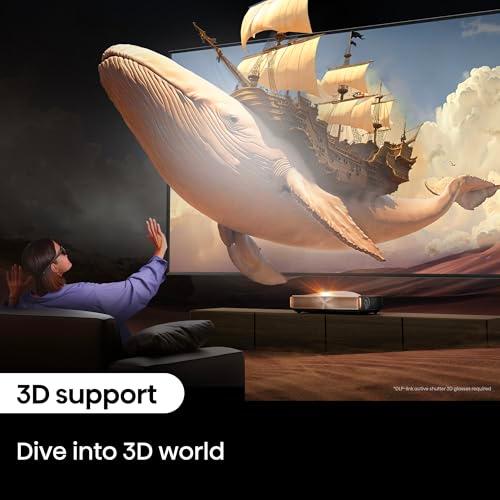
The BenQ V5000i also supports 3D content with optional glasses—a feature that's become rare but appreciated by enthusiasts with 3D movie collections. The Hisense L9Q lacks 3D support, focusing instead on current content standards.
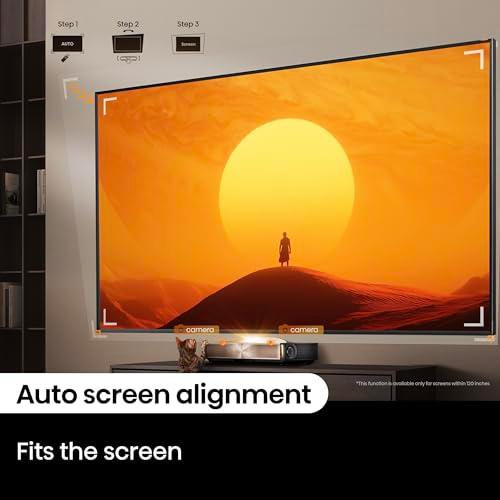
Both include features like auto-keystone correction for simplified setup, though the Hisense L9Q's wider screen size range makes precise placement less critical in most installations.
At the time of writing, the Hisense L9Q commands a significant price premium over the BenQ V5000i—roughly 70% more expensive. This positions them in different market segments despite similar underlying technology.
The BenQ V5000i offers excellent value for its price point, delivering premium features like RGB triple-laser technology, 4K resolution, and exceptional gaming performance at a relatively accessible cost. For users prioritizing gaming or seeking their first UST projector experience, it represents strong performance per dollar.
The Hisense L9Q targets users wanting flagship-level performance across all categories. The brightness advantage alone justifies much of the premium for users in bright rooms or wanting massive screen sizes. Add the integrated premium audio system, and the price difference becomes more understandable as a complete system cost.
Market timing also matters. The BenQ V5000i, released in 2023, represented cutting-edge technology at launch but now faces newer competition. The Hisense L9Q, launching in 2025, incorporates more recent advancements in laser technology and processing power.
Both projectors benefit from laser technology's longevity—expect 20,000+ hours of use before any maintenance requirements. At typical usage patterns (3-4 hours daily), this translates to 15+ years of reliable operation.
The Hisense L9Q's flexible screen sizing makes it more adaptable to room changes or moves. Its 0.18:1 throw ratio also allows placement closer to walls, potentially simplifying installation in tight spaces.
Power consumption differs significantly—the Hisense L9Q draws about double the electricity of the BenQ V5000i due to its higher brightness output. While not dramatically expensive, this difference adds up over years of operation.
Both projectors work best with ambient light rejecting (ALR) screens, which are specially designed to reject ceiling light while preserving projected images. Standard white walls or screens don't perform nearly as well with UST projectors, so factor screen costs into your total investment.
After analyzing extensive reviews, specifications, and user feedback, the choice becomes clear based on your priorities and usage patterns.
Choose the BenQ V5000i if you're a serious gamer who values ultra-responsive input lag and 4K 120Hz support. It's also the better choice if you want excellent UST performance without the flagship price premium, are satisfied with 100-inch screen size, or already have quality audio equipment. The BenQ V5000i represents outstanding value and delivers where it matters most for its target users.
Choose the Hisense L9Q if you want maximum brightness for daytime viewing or bright rooms, need screen size flexibility from 80-200 inches, prefer an all-in-one solution with integrated premium audio, or simply want the best possible image quality regardless of cost. The Hisense L9Q is the clear choice for flagship-level home theater experiences.
For most users, the decision ultimately comes down to room lighting and viewing habits. If you primarily watch in controlled lighting conditions and value gaming performance, the BenQ V5000i excels. If you want the flexibility to watch anytime with impressive brightness and premium features, the Hisense L9Q justifies its premium positioning.
Both represent excellent examples of how UST projector technology has matured, offering compelling alternatives to traditional flat-panel displays for users wanting truly large-screen experiences. The choice isn't about good versus bad—it's about matching the right tool to your specific needs and preferences.
| Hisense L9Q Triple Laser Ultra Short Throw Projector | BenQ V5000i Ultra Short Throw 4K Laser Projector |
|---|---|
| Brightness - Critical for daytime viewing and ambient light performance | |
| 5,000 ANSI lumens (excellent for bright rooms, daytime viewing) | 2,500 ANSI lumens (good for controlled lighting, evening viewing) |
| Screen Size Range - Determines installation flexibility and room adaptability | |
| 80-200 inches (highly flexible for different spaces) | Fixed at 100 inches only (limited but simplified setup) |
| Gaming Input Lag - Essential for responsive gaming performance | |
| 12ms in Game Mode (good for casual gaming) | 8.7ms (excellent for competitive gaming) |
| Color Gamut Coverage - Affects color accuracy and vibrancy | |
| 110% BT.2020 with Pantone validation (professional-grade accuracy) | 98% DCI-P3 (good color reproduction, narrower than expected for triple-laser) |
| Audio System - Determines need for external speakers | |
| Devialet 116W 6.2.2 surround system (premium integrated solution) | TreVolo 40W system (decent quality, likely needs external audio upgrade) |
| HDR Format Support - Affects premium streaming content compatibility | |
| Dolby Vision, HDR10+, IMAX Enhanced (comprehensive premium format support) | HDR10, HDR10+ (good support but lacks Dolby Vision) |
| HDMI Connectivity - Important for multiple devices and gaming consoles | |
| 2x HDMI 2.0 ports (adequate but no HDMI 2.1 for high refresh gaming) | 3x HDMI ports including HDMI 2.1 (better for gaming and multiple sources) |
| Throw Ratio - Determines how close projector sits to wall | |
| 0.18:1 (sits very close to wall, space-efficient) | 0.25:1 (slightly further from wall but still compact) |
| 3D Support - Matters for users with 3D content collections | |
| No 3D support | Full 3D support with optional glasses |
| Laser Lifespan - Long-term maintenance and replacement costs | |
| 25,000+ hours (excellent longevity) | 20,000 hours (very good, industry standard) |
| Power Consumption - Ongoing electricity costs | |
| 320W (higher due to extreme brightness) | 150W (more energy efficient) |
| Release Year - Indicates technology generation and feature currency | |
| 2025 (latest tech, newest features) | 2023 (proven technology, established performance) |
The Hisense L9Q is significantly better for bright rooms with its 5,000 ANSI lumens compared to the BenQ V5000i's 2,500 lumens. This nearly double brightness allows the Hisense L9Q to maintain vivid colors and contrast even with windows open or lights on during daytime viewing.
The BenQ V5000i is superior for gaming with its 8.7ms input lag and HDMI 2.1 support for 4K 120Hz gaming. The Hisense L9Q offers 12ms input lag which is decent for casual gaming, but competitive gamers will prefer the BenQ V5000i's more responsive performance.
The key difference is focus: the Hisense L9Q prioritizes maximum brightness (5,000 lumens) and screen size flexibility (80-200 inches), while the BenQ V5000i focuses on gaming performance and value at a fixed 100-inch screen size.
The Hisense L9Q supports screens from 80-200 inches, offering exceptional flexibility for different rooms and preferences. The BenQ V5000i is fixed at exactly 100 inches, which limits installation options but simplifies setup.
The Hisense L9Q features a premium Devialet 116W 6.2.2 surround sound system that can replace external speakers for many users. The BenQ V5000i has a decent TreVolo 40W system but you'll likely want to add external audio for the best experience.
The BenQ V5000i offers better value, delivering excellent performance including RGB triple-laser technology and gaming features at a more accessible price point. The Hisense L9Q costs significantly more but provides flagship-level brightness and premium audio integration.
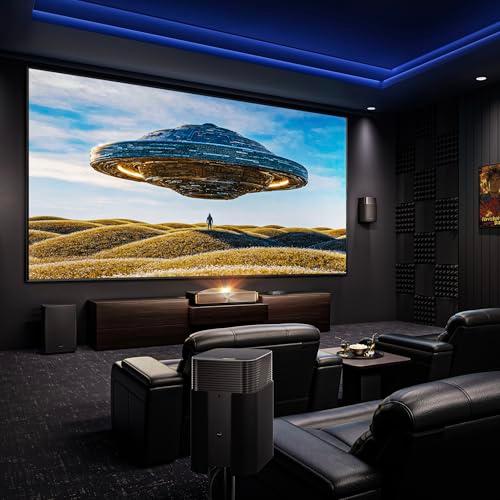
Both work well for home theaters, but differently. The Hisense L9Q excels in multi-purpose living rooms with its extreme brightness and integrated premium audio. The BenQ V5000i is ideal for dedicated dark home theater rooms where its lower brightness isn't a limitation.
The Hisense L9Q delivers superior color accuracy with 110% BT.2020 coverage and Pantone validation, ensuring professional-grade color reproduction. The BenQ V5000i offers good 98% DCI-P3 coverage but falls short of the Hisense L9Q's color precision.
Both support HDR, but the Hisense L9Q has more comprehensive format support including Dolby Vision and IMAX Enhanced. The BenQ V5000i handles HDR10 and HDR10+ well but lacks Dolby Vision support found on many streaming platforms.
The Hisense L9Q is more flexible to install due to its variable screen sizes (80-200 inches) and closer wall placement (0.18:1 throw ratio). The BenQ V5000i is simpler since it's fixed at 100 inches, but this also limits your options.
Both use laser light sources for excellent longevity. The Hisense L9Q is rated for 25,000+ hours while the BenQ V5000i offers 20,000 hours. Both should provide 15+ years of reliable use with typical viewing patterns.
Choose the BenQ V5000i if you prioritize gaming performance, want good value, and are happy with 100-inch screens. Choose the Hisense L9Q if you need maximum brightness for bright rooms, want screen size flexibility up to 200 inches, or prefer an all-in-one solution with premium integrated audio.
We've done our best to create useful and informative comparisons to help you decide what product to buy. Our research uses advanced automated methods to create this comparison and perfection is not possible - please contact us for corrections or questions. These are the sites we've researched in the creation of this article: chrismajestic.com - shop.hisense-usa.com - tomsguide.com - valueelectronics.com - techradar.com - whathifi.com - youtube.com - projectorscreen.com - projectorscreen.com - hisense-usa.com - youtube.com - projectorcentral.com - youtube.com - hisense-usa.com - manuals.plus - shop.avispl.com - hisense-usa.com - projectorscreen.com - projectorscreen.com - avsforum.com - techradar.com - projectorreviews.com - projectorcentral.com - digitaltrends.com - digitaltrends.com - ooberpad.com

Privacy Policy
Terms and Conditions - Affiliate Policy
Home Security
© Copyright 2008-2026.
11816 Inwood Rd #1211, Dallas, TX 75244