

Ultra short throw projectors have completely changed how we think about home entertainment. Instead of mounting a projector on your ceiling and dealing with shadows when someone walks in front of it, these clever devices sit just inches from your wall and beam massive 100+ inch images upward. It's like having a giant TV that disappears when you're not using it, and the technology has matured enough that you can use them in normally lit rooms—no more closing curtains for movie night.
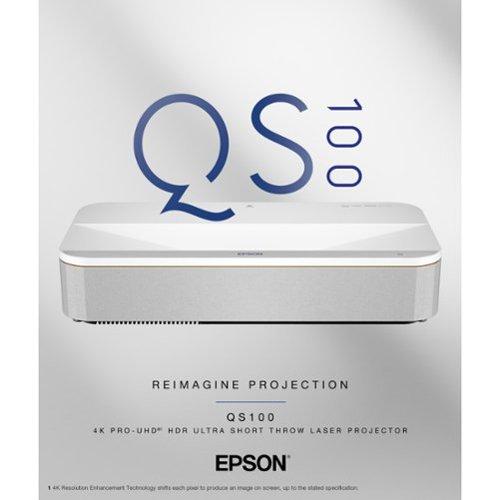
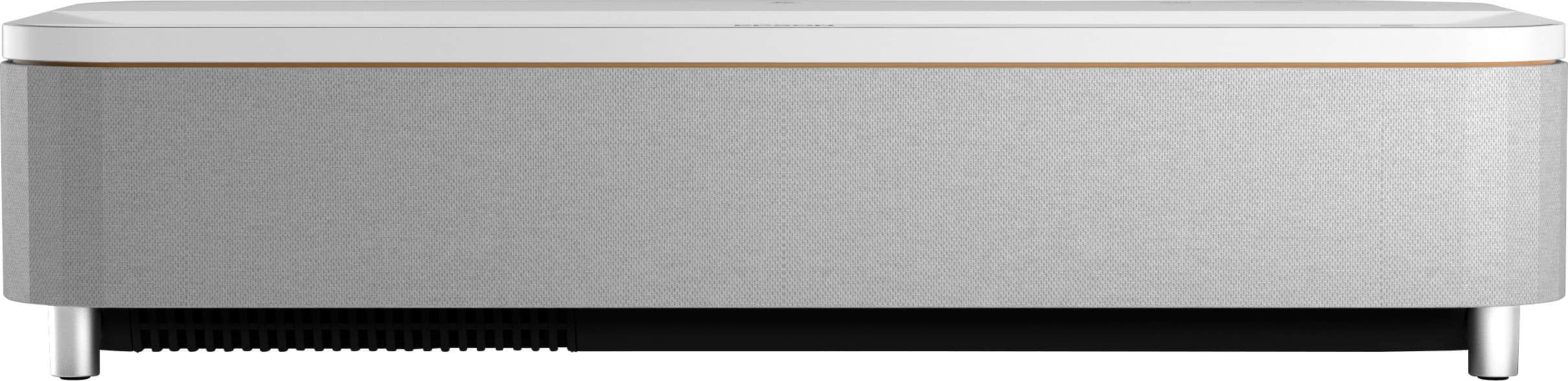
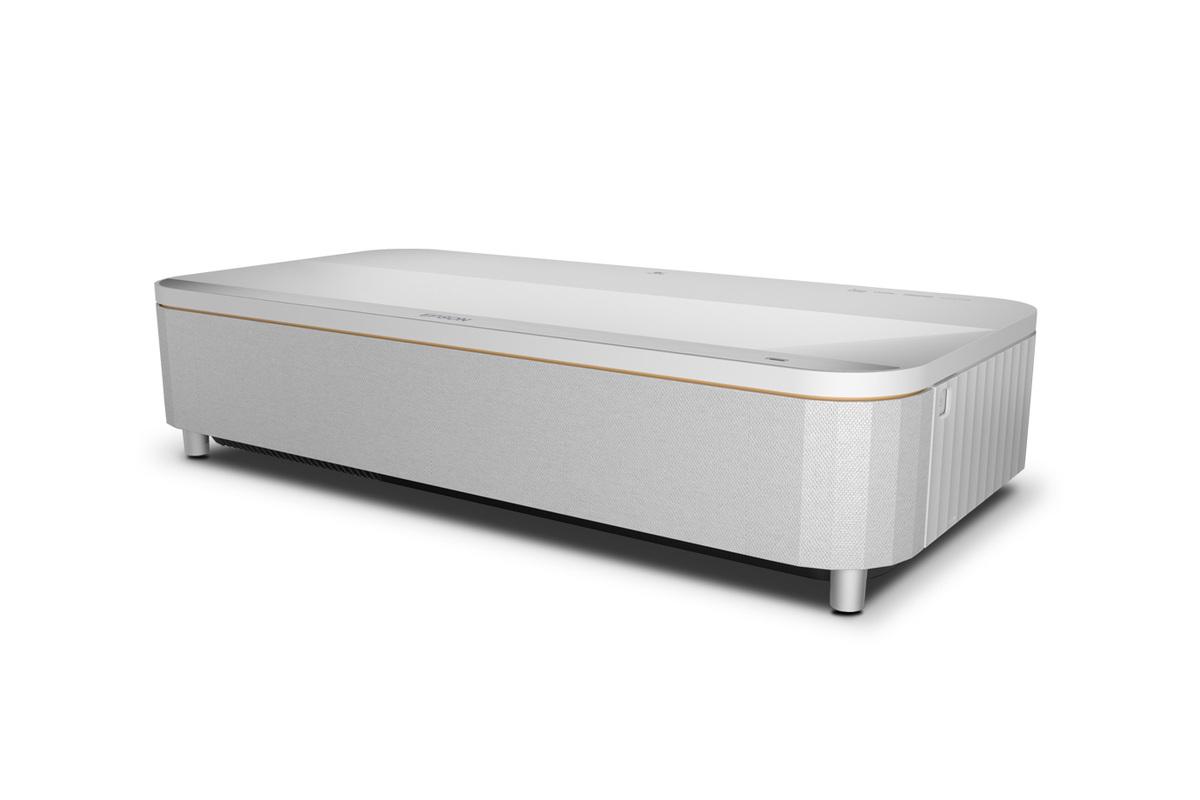
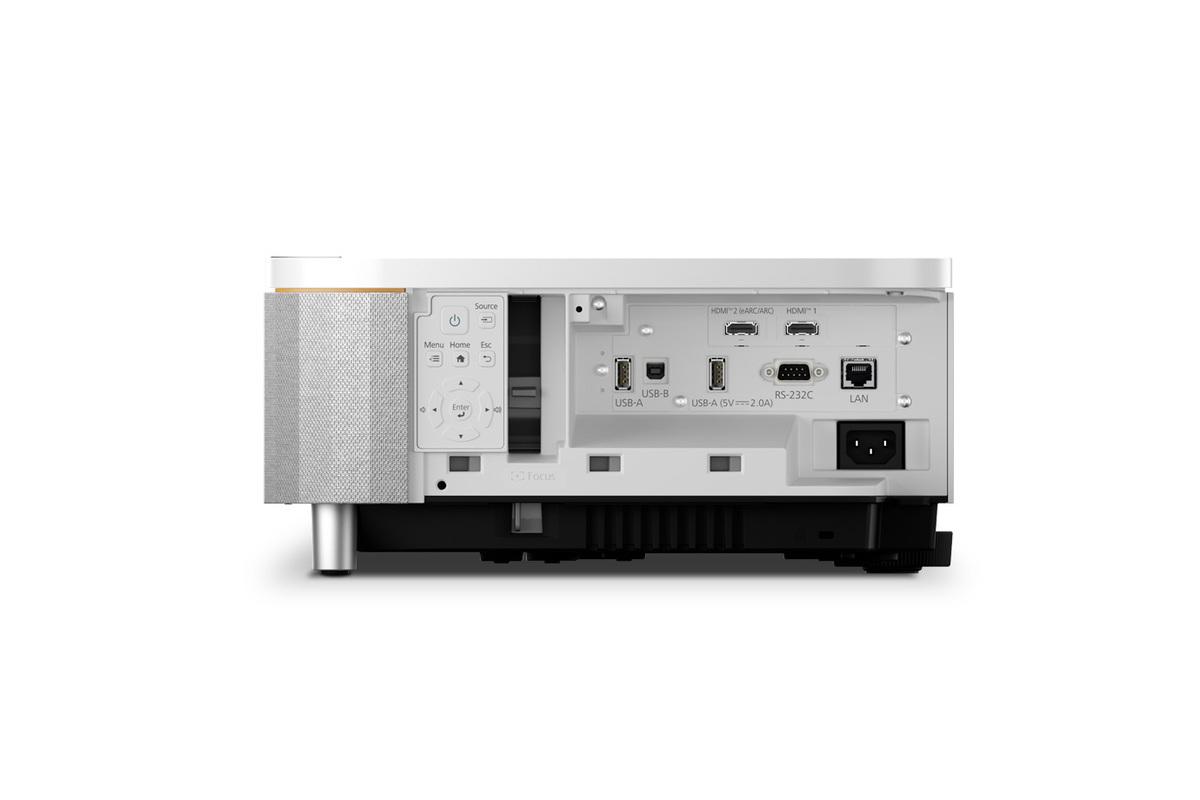
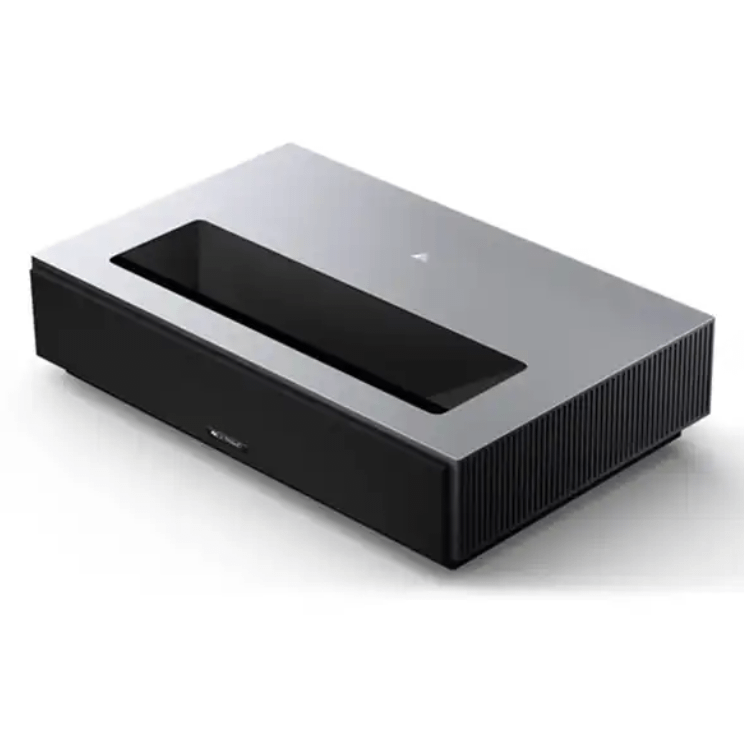
But with this new category comes new decisions. The Epson QS100 and Formovie 4K Max represent two very different approaches to ultra short throw projection, and understanding these differences will help you pick the right one for your space and budget.
Traditional projectors require you to place them 8-15 feet from your screen, which works great in dedicated theater rooms but creates problems in living spaces. Ultra short throw (UST) projectors solve this by using special lenses that can create huge images from just inches away. Think of it like those old overhead projectors from school, but engineered with precision optics to eliminate distortion.
The "throw ratio" tells you how far the projector needs to be from the screen. A 0.2:1 throw ratio means the projector sits 2 feet away to create a 10-foot-wide image. Both the Epson QS100 and Formovie 4K Max have impressively short throw ratios, making them perfect for living rooms where you can't dedicate an entire wall to projection distance.
At the time of writing, the Epson QS100 commands a significant premium over the Formovie 4K Max, reflecting their different target markets. The Epson positions itself as a premium, professional-grade solution, while the Formovie aims to deliver flagship performance at a more accessible price point.
Here's where things get interesting. These two projectors use fundamentally different display technologies, and this choice affects everything from image quality to price.
The Epson QS100 uses 3LCD technology, which splits white laser light into red, green, and blue beams using special mirrors (called dichroic mirrors). Each color gets its own LCD panel, so the projector essentially creates three separate images simultaneously and combines them. This means when Epson claims 4,500 lumens of brightness, you get 4,500 lumens of red, green, and blue light—full brightness for both colorful scenes and white text.
The Formovie 4K Max takes the DLP approach, using a single chip with millions of tiny mirrors that tilt thousands of times per second. A spinning color wheel adds the colors, cycling through red, green, blue, and sometimes white segments. This creates the full-color image your eye perceives, but it happens so fast that you shouldn't notice the switching.
The practical difference? DLP projectors can sometimes create "rainbow effects"—brief flashes of separated colors that some people notice when they quickly move their eyes or when bright objects move across the screen. Most people never see this, but if you're sensitive to it, the Epson QS100's 3LCD technology eliminates the possibility entirely.
However, DLP has its advantages too. The Formovie 4K Max achieves true 4K resolution with its single 0.47-inch Texas Instruments chip, meaning each pixel corresponds to an actual physical mirror. The Epson QS100 uses "4K PRO-UHD" technology, which takes three 1080p LCD panels and uses pixel-shifting to create additional detail. It's not technically native 4K, but the difference is virtually impossible to notice at normal viewing distances.
Both projectors claim 4,500 ANSI lumens of brightness, putting them among the brightest ultra short throw projectors available in 2025. This matters enormously because brightness determines whether you can use the projector with room lights on.
ANSI lumens measure actual light output under standardized conditions. For context, most home theater projectors produce 2,000-3,000 lumens, while budget models might only manage 1,000-1,500. At 4,500 lumens, both the Epson QS100 and Formovie 4K Max can handle significant ambient light—think normal living room lighting in the evening, though you'll still want to avoid direct sunlight on the screen.
However, the 3LCD advantage appears again here. Because the Epson QS100 produces equal color and white brightness, colorful content looks just as bright as white text. DLP projectors sometimes struggle to maintain full brightness with highly saturated colors, though the Formovie 4K Max performs well in this regard.
Contrast ratio measures the difference between the brightest whites and darkest blacks a projector can produce. Higher contrast makes images look more three-dimensional and realistic, with better shadow detail and more impactful bright scenes.
The Epson QS100 claims a 5,000,000:1 dynamic contrast ratio, while the Formovie 4K Max offers 3,000:1 native contrast. These numbers tell different stories—dynamic contrast uses clever dimming to achieve those massive ratios, while native contrast shows what the projector produces without any tricks.
In practice, the Epson QS100's advanced laser system and 3LCD technology create notably deeper blacks and more vibrant colors. This becomes especially important for HDR content, where the projector needs to display both extremely dark and bright elements in the same scene. The Epson's QZX Picture Processor analyzes each frame and adjusts brightness and contrast dynamically, creating HDR performance that actually makes a difference rather than just checking a box.
The Formovie 4K Max supports HDR10, HDR10+, and HLG formats, but without the sophisticated processing power to make the most of them. In dark room viewing, the Epson's superior contrast becomes immediately apparent.
Color reproduction reveals another significant gap between these projectors. The Epson QS100 covers the BT.2020 color space with 10-bit processing, capable of displaying over 1 billion colors. It's also ISF Certified, meaning professional calibrators can adjust it for accurate color reproduction in your specific room conditions.
The Formovie 4K Max covers 100% of the Rec.709 color space, which sounds impressive but represents the standard for HD content rather than the wider gamuts needed for modern 4K HDR material. For most casual viewing, this difference won't jump out at you, but side-by-side comparisons reveal the Epson's more natural skin tones and more accurate color reproduction.
Here's where the Formovie 4K Max fights back. While the Epson QS100 maxes out at 160-inch images, the Formovie can project up to 200 inches. That's genuinely massive—we're talking about images larger than most people's entire walls.
The Formovie 4K Max also covers a wider range of screen sizes, from 80 inches up to that 200-inch maximum. The Epson QS100 has a more restricted range, though its shorter throw ratio means you can place it closer to the wall for the same screen size.
If you're dreaming of a truly cinema-sized image and have the wall space to support it, the Formovie becomes the only option between these two. However, consider that 200-inch screens require significant room size and complete light control to look their best.
This represents perhaps the most fundamental philosophical difference between these projectors. The Formovie 4K Max includes built-in smart functionality, integrated speakers, and streamlined setup for typical home use. You can unbox it, plug it in, and start streaming Netflix within minutes.
The Epson QS100 deliberately omits smart features and speakers, instead focusing on integration with external components. This means you'll need to add a streaming device like an Apple TV, Nvidia Shield, or game console, plus connect it to your sound system. The Epson includes advanced control protocols for integration with home automation systems like Crestron and Control4—professional installation systems that can cost more than the projector itself.
For most people, the Formovie's approach makes more sense. The integrated speakers won't match a dedicated sound system, but they're convenient for casual viewing. The built-in smart platform provides access to streaming services without additional hardware.
However, if you're planning a serious home theater setup, the Epson's approach has merit. External streaming devices typically offer better performance and longer update support than built-in systems. Separating the audio allows you to choose speakers that match your space and budget, from soundbars to full surround systems.
Both projectors handle gaming reasonably well, but the Epson QS100 includes specific features for gamers. Its Auto Low Latency Mode (ALLM) automatically switches to a low-lag mode when it detects game console signals, and it supports 4K at 60Hz plus 2K at 120Hz for smoother gameplay.
The Formovie 4K Max includes MEMC (Motion Estimation, Motion Compensation) processing to smooth out motion in movies and sports, but this can actually increase input lag for gaming. The lack of dedicated gaming modes means competitive gamers might notice the delay between controller input and screen response.
For casual gaming, either projector works fine. For serious gaming, especially competitive online games, the Epson QS100's dedicated features provide a noticeable advantage.
Ultra short throw projectors promise easy setup, but reality varies. The Epson QS100 includes sophisticated geometry correction tools, letting you adjust for screen alignment, room angles, and projection surfaces. Its Setting Assistant App guides you through the process step by step.
The Formovie 4K Max offers 8-point keystone correction, which handles basic alignment issues but with less precision than the Epson's system.
Both projectors work best with dedicated ultra short throw screens, which use special materials to reflect light back to viewers while rejecting ambient light from above. These screens cost several hundred to several thousand dollars but make a dramatic difference in image quality, especially in bright rooms.
The Epson QS100, released in 2025, represents the latest evolution of Epson's ultra short throw technology. It includes modern HDMI 2.0 ports with eARC support for high-quality audio return to soundbars or receivers. The laser light source should last 20,000 hours without replacement—that's over a decade of typical use.
The Formovie 4K Max also launched recently with competitive specifications, though its integration approach means fewer upgrade options. When streaming standards change or new services launch, the Epson's external device approach lets you simply swap streaming boxes rather than replacing the entire projector.
The Epson QS100 makes sense for several specific scenarios. If you're building a dedicated home theater or media room where image quality matters most, its superior contrast and color accuracy justify the premium price. It's also the clear choice for custom installations where the projector needs to integrate with whole-home control systems.
The Formovie 4K Max appeals to different priorities. If you want the largest possible image—that 200-inch capability is genuinely unique—or prefer the convenience of built-in features without additional components, it offers excellent value. It's also better suited for living rooms where the integrated speakers provide adequate audio without additional equipment.
At the time of writing, the price gap between these projectors reflects their different approaches rather than one being overpriced. The Epson QS100 costs more but delivers measurably better image quality and professional installation features. The Formovie 4K Max offers strong performance with convenience features at a lower total system cost.
Consider your viewing environment first. In light-controlled rooms where image quality matters most, the Epson's superior contrast and color accuracy create a noticeably better experience. In living rooms with ambient light where convenience matters, the Formovie's all-in-one approach and maximum screen size capability make more sense.
Your audio strategy also influences the decision. If you already own or plan to buy a sound system, the Epson's audio-less design forces you to use external speakers—which will sound better than any built-in solution. If you prefer simplicity or don't want additional components, the Formovie's integrated speakers handle the job adequately.
Both projectors represent the current state of ultra short throw technology, delivering cinema-sized images in living spaces that couldn't accommodate traditional projectors. The choice comes down to whether you prioritize ultimate image quality and integration flexibility (Epson QS100) or maximum screen size with convenient all-in-one operation (Formovie 4K Max).
Either way, you're getting technology that would have seemed impossible just a few years ago—and both projectors should deliver years of impressive performance in your home theater setup.
| Epson QS100 4K PRO-UHD Ultra Short Throw Projector | Formovie 4K Max Ultra Short Throw Laser Projector |
|---|---|
| Display Technology - Affects color accuracy and rainbow artifacts | |
| 3LCD with three 1080p panels (no rainbow effects, equal color/white brightness) | Single-chip DLP with color wheel (potential rainbow effects for sensitive viewers) |
| Resolution - Detail level and sharpness | |
| 4K PRO-UHD with pixel-shifting (enhanced 1080p, visually similar to native 4K) | True native 4K (3840×2160, technically superior but minimal real-world difference) |
| Brightness - Determines usability in lit rooms | |
| 4,500 ANSI lumens (color and white equally bright) | 4,500 ANSI lumens (excellent for ambient light viewing) |
| Contrast Ratio - Depth of blacks and overall image pop | |
| 5,000,000:1 dynamic contrast (significantly better blacks and HDR performance) | 3,000:1 native contrast (good but noticeably less dramatic) |
| Maximum Screen Size - How big you can go | |
| Up to 160 inches (large enough for most homes) | Up to 200 inches (largest available, requires very large rooms) |
| Throw Ratio - Distance needed from wall | |
| 0.16:1 to 0.22:1 (can sit closer to wall) | 0.25:1 (needs slightly more distance) |
| HDR Support - Enhanced contrast and color range | |
| HDR10, HLG with Dynamic Tone Mapping (superior processing) | HDR10, HDR10+, HLG (standard support without advanced processing) |
| Color Gamut - Color accuracy and vibrancy | |
| BT.2020 with 10-bit processing (cinema-grade color accuracy) | 100% Rec.709 (good for HD content, limited for premium 4K material) |
| Smart Features - Built-in streaming and apps | |
| None (requires external streaming devices like Apple TV) | Integrated smart platform with built-in streaming |
| Audio System - Built-in sound capabilities | |
| No speakers (designed for external audio systems) | Dual 20W speakers (convenient but basic quality) |
| Gaming Features - Low latency and high refresh support | |
| ALLM, 4K/60Hz, 2K/120Hz support (optimized for gaming) | MEMC motion processing (can increase input lag for gaming) |
| Professional Integration - Smart home and custom install support | |
| Full IP control, Crestron/Control4 compatible, ISF Certified | Standard connectivity only |
| Laser Light Source Life - Maintenance requirements | |
| 20,000 hours (virtually maintenance-free for over a decade) | Laser technology (long-lasting, specific lifespan not specified) |
| Setup and Calibration - Installation flexibility | |
| Advanced geometry correction, Setting Assistant App, professional tools | 8-point keystone correction (basic alignment features) |
Both the Epson QS100 and Formovie 4K Max deliver 4,500 ANSI lumens, making them excellent choices for rooms with ambient lighting. However, the Epson QS100 has a slight advantage because its 3LCD technology provides equal brightness for both colors and whites, while DLP projectors like the Formovie 4K Max can sometimes appear dimmer with highly colorful content.
The Epson QS100 uses 3LCD technology with three separate panels for red, green, and blue light, eliminating rainbow effects and providing consistent brightness. The Formovie 4K Max uses single-chip DLP with a spinning color wheel, which can occasionally produce rainbow artifacts for sensitive viewers but achieves true native 4K resolution.
The Formovie 4K Max wins for maximum screen size, supporting up to 200 inches compared to the Epson QS100's 160-inch maximum. However, 200-inch screens require very large rooms and complete light control to look their best, making the Epson QS100's 160-inch capability sufficient for most homes.
The Formovie 4K Max includes integrated smart features with streaming capabilities and dual 20W speakers for an all-in-one solution. The Epson QS100 deliberately omits these features, requiring external streaming devices and audio systems but offering more flexibility for custom installations.
The Epson QS100 is superior for gaming with Auto Low Latency Mode (ALLM), 4K/60Hz support, and 2K/120Hz capability for smoother gameplay. The Formovie 4K Max includes motion processing that can increase input lag, making the Epson QS100 the better choice for serious gamers.
The Epson QS100 has a shorter throw ratio of 0.16:1 to 0.22:1, allowing closer placement to the wall. The Formovie 4K Max requires slightly more distance with its 0.25:1 throw ratio. Both can create large images from just inches away, but the Epson QS100 offers more flexible positioning.
The Epson QS100 significantly outperforms with a 5,000,000:1 dynamic contrast ratio compared to the Formovie 4K Max's 3,000:1 native contrast. This translates to deeper blacks, better shadow detail, and more impactful HDR performance, making the Epson QS100 superior for dark room viewing and movie watching.
Both projectors work well for home theaters, but the Epson QS100 is better suited for dedicated theater rooms due to its superior contrast, color accuracy, and professional calibration options. The Formovie 4K Max works better for living room theaters where convenience and built-in features matter more than ultimate image quality.
The Epson QS100 provides superior color accuracy with BT.2020 color gamut coverage, 10-bit processing, and ISF certification for professional calibration. The Formovie 4K Max covers 100% of Rec.709, which is good for standard content but more limited than the Epson QS100's cinema-grade color reproduction.
Both projectors support HDR formats, but the Epson QS100 offers HDR10 and HLG with advanced Dynamic Tone Mapping for superior HDR performance. The Formovie 4K Max supports HDR10, HDR10+, and HLG but lacks the sophisticated processing to fully utilize these formats.
The Formovie 4K Max is easier for basic setup with its all-in-one design and built-in features. However, the Epson QS100 offers more sophisticated installation tools including advanced geometry correction, the Setting Assistant App, and professional integration capabilities for complex setups.
The Epson QS100 offers a rated laser life of 20,000 hours, providing over a decade of typical use without maintenance. The Formovie 4K Max also uses laser technology for long life, though specific lifespan ratings weren't widely available. Both projectors essentially eliminate the need for bulb replacements that plague traditional projectors.
We've done our best to create useful and informative comparisons to help you decide what product to buy. Our research uses advanced automated methods to create this comparison and perfection is not possible - please contact us for corrections or questions. These are the sites we've researched in the creation of this article: projectorscreen.com - youtube.com - projectorcentral.com - projectorreviews.com - techradar.com - audioadvice.com - projectorreviews.com - avsforum.com - projectorcentral.com - mediaserver.goepson.com - projectorcentral.com - news.epson.com - epson.eu - epson.com - epson.eu - epson.com - projectorcentral.com - bestbuy.com - rtings.com - eu.formovie.com - notebookcheck.net - formovie.com - techradar.com - projectorcentral.com - projectorscreen.com - projectorcentral.com - projectorreviews.com - projectorcentral.com - formovie.com

Privacy Policy
Terms and Conditions - Affiliate Policy
Home Security
© Copyright 2008-2026.
11816 Inwood Rd #1211, Dallas, TX 75244