

The living room projector game has changed dramatically in recent years. Gone are the days when you needed a massive room and ceiling mount to enjoy cinema-sized entertainment. Ultra short throw (UST) projectors now deliver 100+ inch screens from just inches away from your wall, transforming any living space into a home theater without the installation headaches.
But here's where it gets interesting: the market has split into distinct tiers, with premium models pushing boundaries while value options bring advanced technology within reach. The Hisense L9Q and NOMVDIC P2000 perfectly represent this divide, offering two very different approaches to large-screen entertainment.
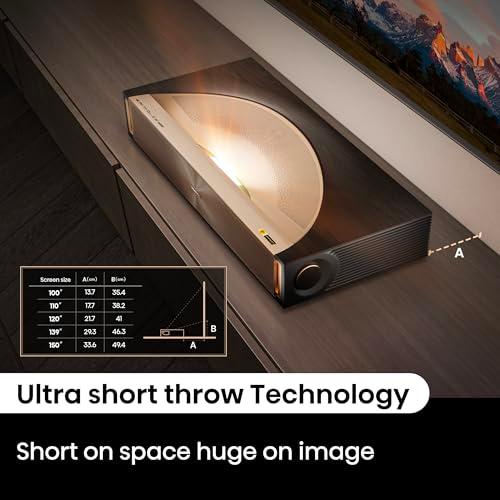
Ultra short throw projectors work by using specialized optics that create massive images from minimal distances. Instead of mounting a projector across the room, these units sit just inches from your wall or screen, using precise mirror systems to "bend" the light into huge, focused images. The throw ratio—a number like 0.18:1—tells you how far back the projector needs to sit. Lower numbers mean you can get bigger pictures from shorter distances.
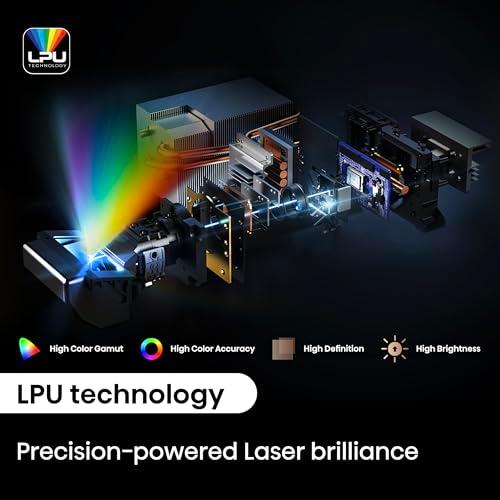
The technology has matured rapidly since 2020, with triple-laser systems becoming the gold standard. These use separate red, green, and blue lasers instead of traditional lamps or single-laser setups with color wheels. The result? More accurate colors, longer life, and no waiting for warm-up time—they're instant-on like your TV.
What matters most in a UST projector? Brightness dominates everything else. Unlike traditional home theater projectors used in dark rooms, UST models need to fight ambient light since they're typically placed in living rooms. Color accuracy follows closely behind, especially as streaming services push HDR content that demands wide color gamuts. Audio quality has become crucial too, since these projectors often replace TVs entirely and need integrated sound systems that actually work.
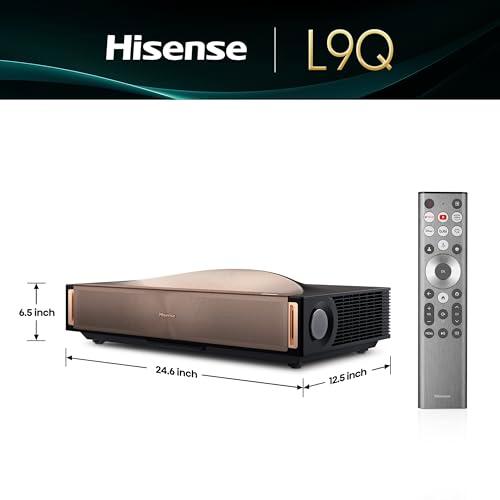
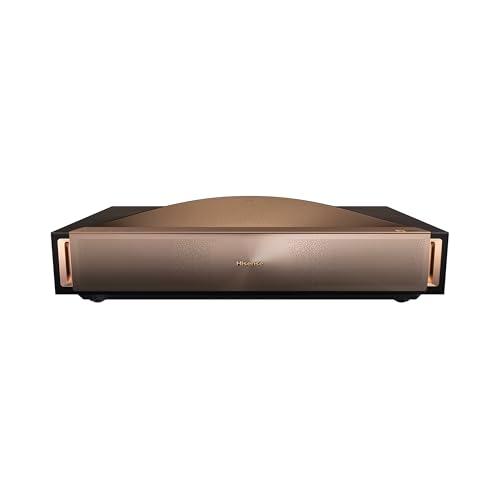
The Hisense L9Q, released in 2025, represents Hisense's flagship approach—maximum performance regardless of cost. It's their answer to premium TV replacement, loaded with every feature and specification they could engineer.
The NOMVDIC P2000, launched in 2023, takes a different path. It targets enthusiasts who want triple-laser technology without flagship pricing, accepting some compromises for substantial savings.
At the time of writing, these projectors sit in completely different price brackets—the L9Q commands premium TV pricing, while the P2000 costs roughly half as much. That gap shapes everything about how they perform and who should consider them.
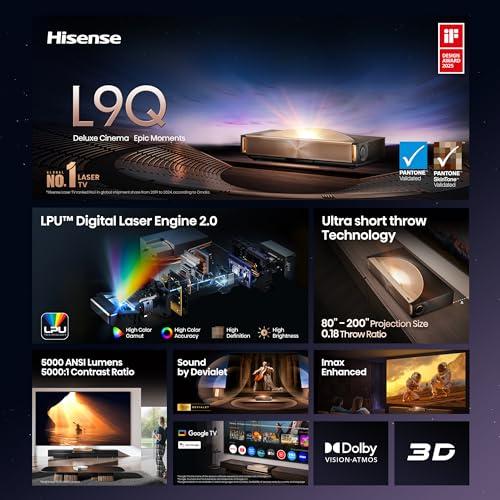
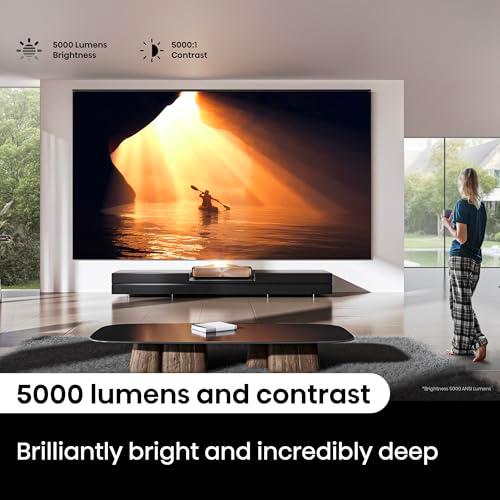
Here's something most projector reviews don't emphasize enough: brightness isn't just about getting a good picture—it's about usability. The Hisense L9Q produces 5,000 ANSI lumens, making it one of the brightest consumer projectors ever made. The NOMVDIC P2000 delivers 2,500 ANSI lumens, which sounds respectable until you realize that's exactly half the output.
ANSI lumens measure actual light output in standardized conditions, and the difference here is massive for daily use. With the L9Q, you can watch movies with curtains open on sunny afternoons. The image stays vibrant and colors remain saturated even with overhead lights on. It's genuinely TV-like in bright conditions.
The P2000, while bright enough for many situations, requires more lighting control. Evening viewing with some ambient light? Excellent. Saturday afternoon with sunlight streaming through windows? You'll notice washed-out colors and reduced contrast. This isn't a fatal flaw, but it limits when and how you can use the projector.
Based on our research into user experiences, the brightness difference becomes most apparent with HDR content. HDR (High Dynamic Range) relies on peak brightness to create that "wow factor" with bright highlights. The L9Q has enough headroom to make HDR content truly impressive, while the P2000 delivers good HDR in darker conditions but can't match the impact.
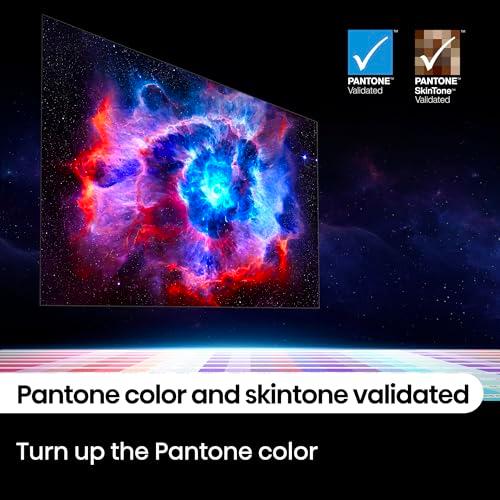
Both projectors use triple-laser RGB systems, but with different implementations that affect real-world performance. The Hisense L9Q employs their LPU Digital Laser Engine 2.0, covering 110% of the BT.2020 color standard with Pantone validation. That Pantone certification isn't marketing fluff—it means colors are professionally verified for accuracy across the spectrum.
The NOMVDIC P2000 uses ALPD 4.0 technology from Appotronics, achieving 100% BT.2020 coverage. On paper, that's excellent, but expert reviews consistently highlight a critical difference: out-of-box accuracy.
The L9Q delivers accurate colors immediately, while the P2000 requires calibration for optimal results. More importantly, HDR modes on the P2000 have been criticized for poor color accuracy with limited adjustment options. Many picture controls become locked in HDR modes, making it difficult to fix issues.
For most users, this matters enormously. The L9Q works beautifully right out of the box, while the P2000 rewards users willing to spend time tweaking settings. If you enjoy calibrating displays and have some technical knowledge, the P2000 can deliver impressive results. If you want plug-and-play performance, the L9Q is clearly superior.
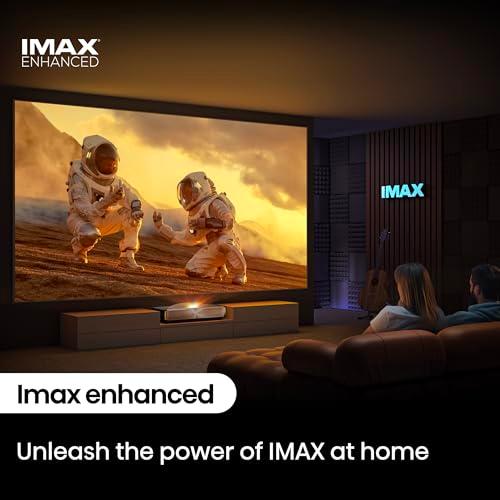
Here's where the product positioning becomes crystal clear. The Hisense L9Q supports Dolby Vision, HDR10+, HLG, and IMAX Enhanced—essentially every HDR format you'll encounter. The NOMVDIC P2000 supports HDR10 and HLG only, missing Dolby Vision entirely.
Dolby Vision matters because it's the premium HDR format used by Netflix, Disney+, Apple TV+, and many 4K Blu-rays. It provides scene-by-scene optimization that makes content look exactly as directors intended. Missing Dolby Vision in 2024 and beyond increasingly feels like a significant omission.
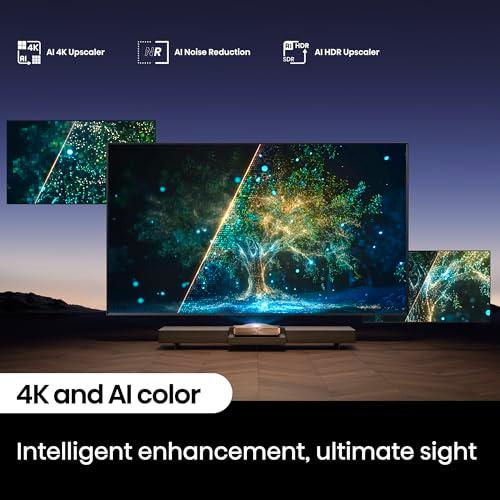
The L9Q also includes AI-powered HDR processing that analyzes content in real-time, adjusting brightness, contrast, and color for optimal results. This kind of intelligent processing has become table stakes for premium displays, and its absence on the P2000 shows where costs were cut.
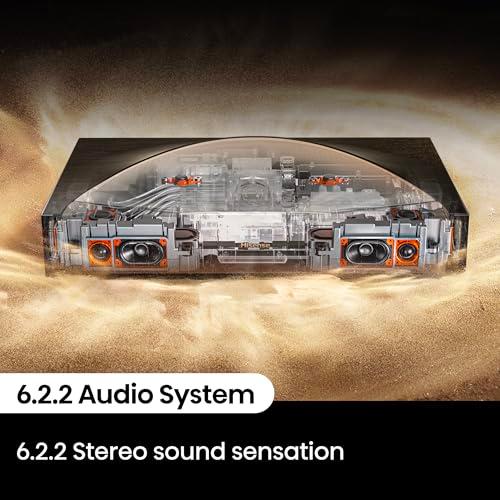
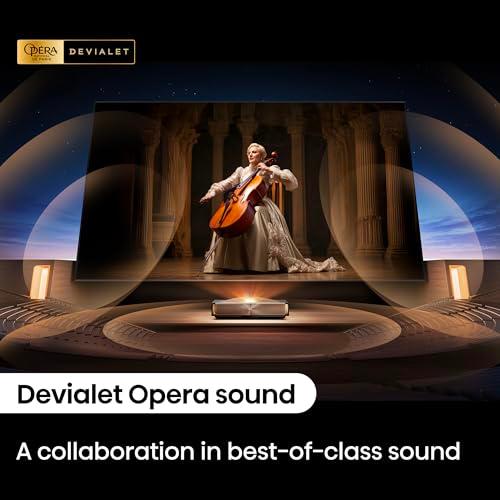
Audio quality often gets overlooked in projector reviews, but it's crucial for TV replacement scenarios. The Hisense L9Q includes a Devialet-engineered 116-watt 6.2.2 surround system with Dolby Atmos support. Devialet is a high-end French audio company, and their involvement isn't just branding—the system delivers genuinely impressive room-filling sound that can eliminate the need for additional speakers.
The NOMVDIC P2000 features a Harman Kardon 50-watt stereo system that's perfectly adequate but not premium-tier. It's good enough for casual viewing but lacks the depth and immersion of the L9Q's surround setup.
In practical terms, this difference is significant. The L9Q can truly replace a TV setup without compromising audio, while the P2000 might leave you wanting external speakers for the full experience. Factor in the cost of a quality soundbar, and the value equation shifts somewhat.
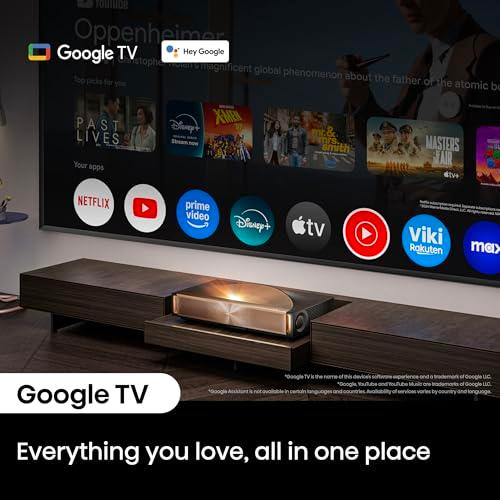
The Hisense L9Q runs Google TV with full app ecosystem access, voice control, and seamless streaming integration. It's like having a premium Android TV built in, with regular updates and broad app compatibility.
The NOMVDIC P2000 has no built-in smart platform, though it typically includes an Amazon Fire TV Stick 4K Max to compensate. While this works fine, it means an extra device, additional remote, and potential compatibility issues down the road.
For daily use, the integrated approach of the L9Q feels more polished and TV-like. The P2000 setup works but adds complexity that some users will find annoying.
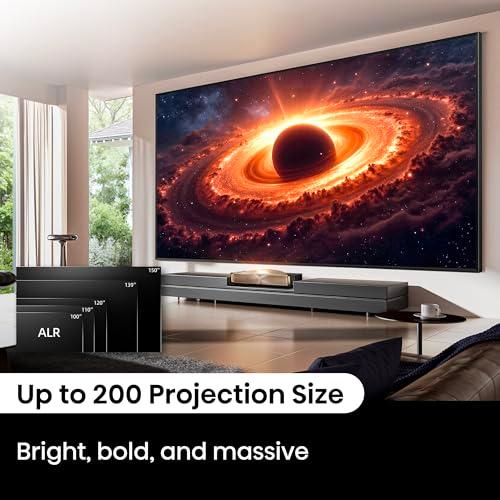
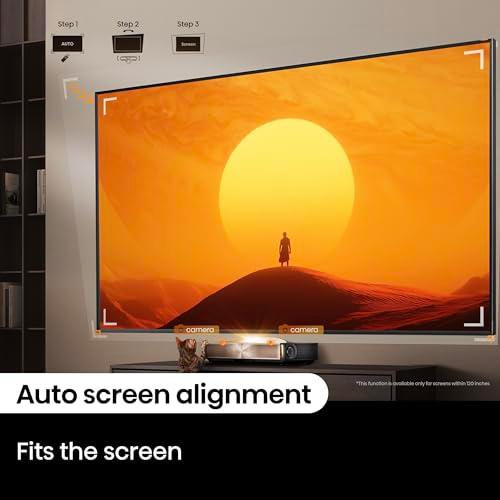
Both projectors excel at easy installation, but with different strengths. The Hisense L9Q has a 0.18:1 throw ratio, meaning it can create a 100-inch image from just over 5 inches away. It supports screen sizes from 80 to 200 inches and includes automatic screen alignment features.
The NOMVDIC P2000 offers a 0.22:1 throw ratio (100 inches from about 7 inches away) and supports 65 to 150-inch screens. While still excellent, it's slightly less flexible for both small and very large installations.
The L9Q's auto-alignment features matter more than they might seem. Getting UST projectors perfectly aligned can be fussy work, and automation makes the difference between a 10-minute setup and an hour of tweaking.
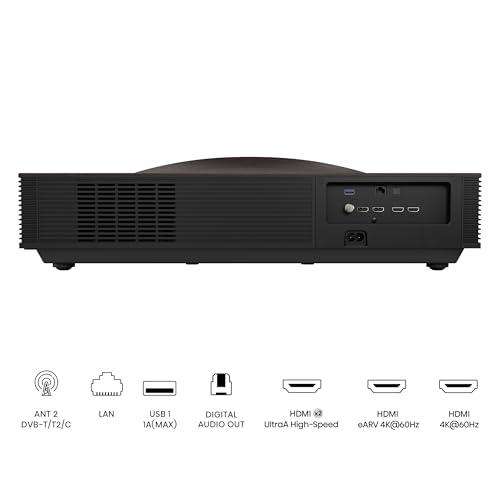
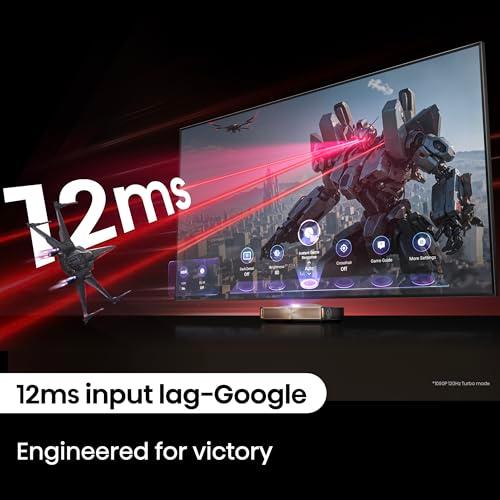
Both projectors cater to gamers, but with different approaches. The Hisense L9Q delivers 12ms input lag in Game Mode with HDMI 2.1 support and ALLM (Auto Low Latency Mode). This automatically switches to gaming mode when it detects a console, reducing lag without menu diving.
The NOMVDIC P2000 offers a "3X Fast Input" mode that works well but only at 60Hz refresh rates. Input lag is low and gaming performance is good, but it lacks some of the automatic features that make the L9Q more seamless.
For competitive gaming or next-gen console use, the L9Q has a slight edge in both features and convenience.
Laser projectors typically last 20,000-30,000 hours, equivalent to decades of normal use. Both projectors should provide excellent longevity, but the L9Q's superior build quality and more advanced processing suggest it may age better as content standards evolve.
The comprehensive HDR support and processing power in the L9Q position it better for future content formats, while the P2000's more limited HDR capabilities could feel dated sooner.
The Hisense L9Q makes sense if you want the best possible UST experience and budget isn't the primary concern. It's ideal for bright living rooms, users who want maximum screen sizes, and anyone prioritizing plug-and-play convenience with premium performance. The integrated audio system alone adds significant value for users replacing a traditional TV setup.
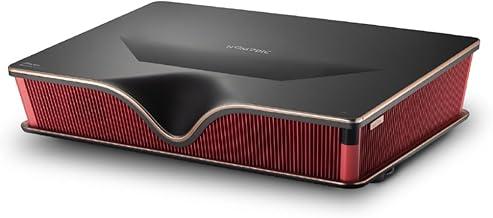
The NOMVDIC P2000 appeals to budget-conscious buyers who still want triple-laser technology. It's perfect for dedicated theater rooms with controlled lighting, users comfortable with calibration, and anyone wanting to experience large-screen projection without flagship pricing. The distinctive design is a bonus for style-conscious buyers.
These projectors succeed in their respective missions. The Hisense L9Q delivers uncompromising performance that justifies its premium positioning—the brightness alone makes it worth considering for anyone serious about bright-room viewing. The integrated Devialet audio system and comprehensive HDR support cement its position as a true TV replacement.
The NOMVDIC P2000 offers remarkable value, bringing triple-laser technology within reach at a much lower cost. Yes, it requires more setup work and lighting control, but the core projection quality is excellent when properly configured.
At the time of writing, the price gap between these models is substantial enough that they're really targeting different buyers. The L9Q competes with premium TVs and flagship projectors, while the P2000 opens triple-laser technology to mainstream budgets.
If you can afford the L9Q and want the best possible experience, it's clearly superior across most metrics. If budget is a major factor and you're willing to work with the P2000's limitations, it delivers impressive performance for the money. Either way, you're getting a taste of the future of home entertainment—it's just a question of how much you want to pay for that glimpse ahead.
| Hisense L9Q Triple Laser Ultra Short Throw Projector | NOMVDIC P2000 UST-RGB 4K Triple Laser Projector |
|---|---|
| Brightness - Most critical spec for daytime viewing and ambient light performance | |
| 5,000 ANSI lumens (exceptional for bright rooms, TV-like daytime viewing) | 2,500 ANSI lumens (good for controlled lighting, evening viewing) |
| Color Gamut - Determines color vibrancy and accuracy | |
| 110% BT.2020 with Pantone validation (professional-grade accuracy out of box) | 100% BT.2020 (excellent when calibrated, requires setup work) |
| HDR Support - Essential for premium streaming content | |
| Dolby Vision, HDR10+, HLG, IMAX Enhanced (comprehensive format support) | HDR10, HLG only (missing Dolby Vision from Netflix, Disney+) |
| Screen Size Range - Flexibility for different room sizes | |
| 80"-200" (industry-leading maximum size capability) | 65"-150" (good range, limited for very large installations) |
| Throw Ratio - Distance needed from wall | |
| 0.18:1 (100" from 5.4" away, more placement flexibility) | 0.22:1 (100" from 6.7" away, still excellent but slightly less flexible) |
| Audio System - Important for TV replacement scenarios | |
| Devialet 116W 6.2.2 surround with Dolby Atmos (premium cinema-quality audio) | Harman Kardon 50W stereo (adequate, may need external speakers) |
| Smart Platform - Streaming and daily usability | |
| Google TV built-in (full app ecosystem, voice control, seamless experience) | No built-in platform (includes Fire TV Stick, requires external device) |
| Gaming Performance - Input lag and console compatibility | |
| 12ms input lag, HDMI 2.1, ALLM (optimized for next-gen consoles) | Low lag "3X Fast Input" mode at 60Hz (good gaming, fewer premium features) |
| Installation Features - Setup convenience | |
| Auto Screen Alignment, digital focus (automated setup process) | Manual keystone and warping correction (requires manual adjustment) |
| Release Year - Technology generation and future-proofing | |
| 2025 (latest generation with cutting-edge features) | 2023 (mature technology, proven performance) |
| Value Positioning - Performance per dollar consideration | |
| Premium flagship pricing (maximum performance, no compromises) | Mid-range value pricing (excellent performance with some trade-offs) |
The Hisense L9Q is significantly better for bright rooms with its 5,000 ANSI lumens of brightness, allowing excellent daytime viewing even with windows open. The NOMVDIC P2000 produces 2,500 ANSI lumens, which requires more controlled lighting for optimal performance.
The primary difference is brightness and premium features. The Hisense L9Q offers double the brightness, comprehensive HDR support including Dolby Vision, and premium Devialet audio, while the NOMVDIC P2000 provides solid triple-laser performance at a more affordable price point with some feature limitations.
Both offer excellent color quality with triple-laser technology, but the Hisense L9Q has Pantone-validated colors and covers 110% BT.2020 with superior out-of-box accuracy. The NOMVDIC P2000 covers 100% BT.2020 but requires calibration for best results, especially in HDR modes.
The Hisense L9Q includes a premium Devialet 116W 6.2.2 surround sound system that eliminates the need for external speakers in most cases. The NOMVDIC P2000 has decent Harman Kardon 50W stereo speakers, but you may want to add a soundbar for the full home theater experience.
Both are excellent for gaming, but the Hisense L9Q has a slight edge with 12ms input lag, HDMI 2.1 ports, and automatic low latency mode switching. The NOMVDIC P2000 offers good gaming performance with its "3X Fast Input" mode, though it's limited to 60Hz refresh rates.
The Hisense L9Q can project a 100-inch image from just 5.4 inches away with its 0.18:1 throw ratio. The NOMVDIC P2000 needs about 6.7 inches for the same size image with its 0.22:1 throw ratio. Both are excellent for small spaces.
The Hisense L9Q has Google TV built-in with access to all major streaming apps and voice control. The NOMVDIC P2000 doesn't have a built-in smart platform but typically includes an Amazon Fire TV Stick 4K Max for streaming access.
The Hisense L9Q supports screen sizes from 80 to 200 inches, making it ideal for very large installations. The NOMVDIC P2000 handles 65 to 150 inches, which covers most home theater needs but limits the largest screen options.
The NOMVDIC P2000 offers exceptional value, delivering triple-laser technology at roughly half the cost of premium alternatives. The Hisense L9Q justifies its higher price with superior brightness, audio, and features, making it better value if you need maximum performance.
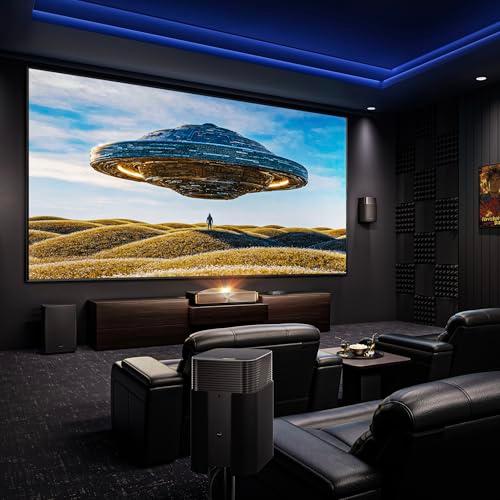
Both work excellently for home theaters, but in different scenarios. The Hisense L9Q excels in multi-purpose living rooms with ambient light, while the NOMVDIC P2000 is perfect for dedicated theater rooms with controlled lighting. The L9Q offers a more complete TV replacement experience.
The Hisense L9Q has comprehensive HDR support including Dolby Vision, HDR10+, HLG, and IMAX Enhanced formats. The NOMVDIC P2000 only supports HDR10 and HLG, missing Dolby Vision which is used by Netflix, Disney+, and premium streaming services.
Both projectors use laser light sources rated for 20,000-25,000+ hours of operation, equivalent to decades of normal use. The Hisense L9Q and NOMVDIC P2000 offer excellent longevity compared to traditional lamp-based projectors, with no bulb replacements needed during their lifetime.
We've done our best to create useful and informative comparisons to help you decide what product to buy. Our research uses advanced automated methods to create this comparison and perfection is not possible - please contact us for corrections or questions. These are the sites we've researched in the creation of this article: chrismajestic.com - shop.hisense-usa.com - tomsguide.com - valueelectronics.com - techradar.com - whathifi.com - youtube.com - projectorscreen.com - projectorscreen.com - hisense-usa.com - youtube.com - projectorcentral.com - youtube.com - hisense-usa.com - manuals.plus - shop.avispl.com - hisense-usa.com - projectorcentral.com - projectorreviews.com - techradar.com - youtube.com - youtube.com - youtube.com - projectorcentral.com - youtube.com - ustprojector.com - device.report - theappliancesreviews.com - nomvdic.io - nomvdic.io - projectorcentral.com

Privacy Policy
Terms and Conditions - Affiliate Policy
Home Security
© Copyright 2008-2026.
11816 Inwood Rd #1211, Dallas, TX 75244