

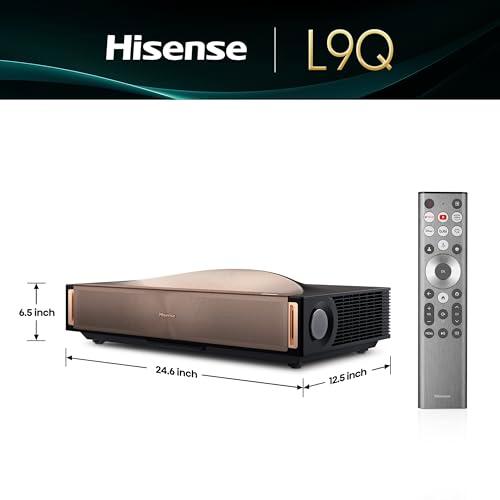
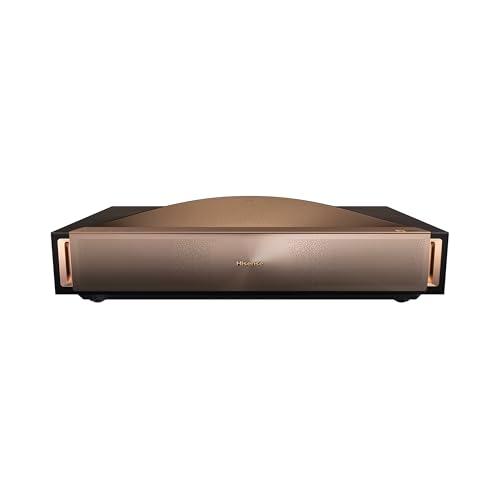
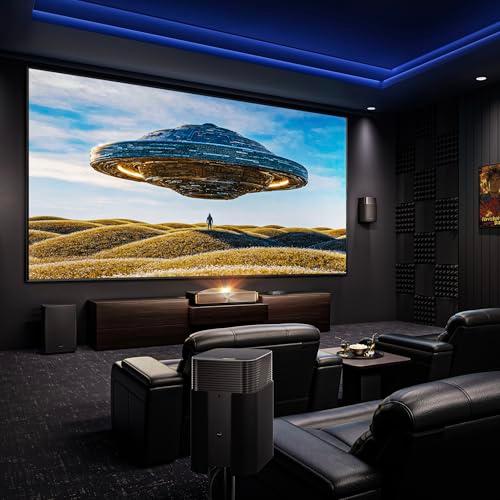


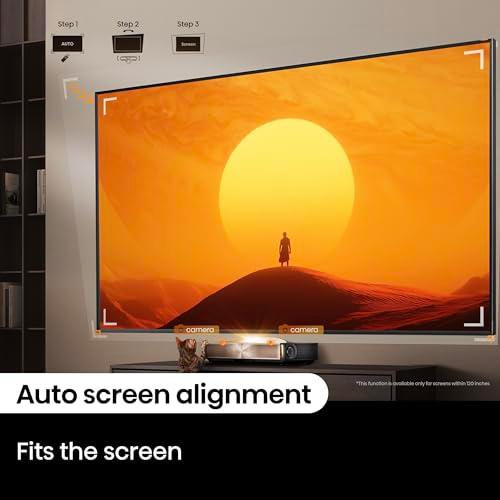
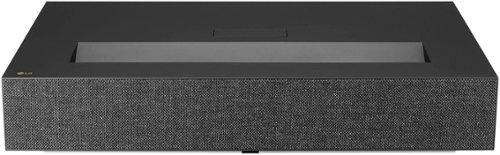
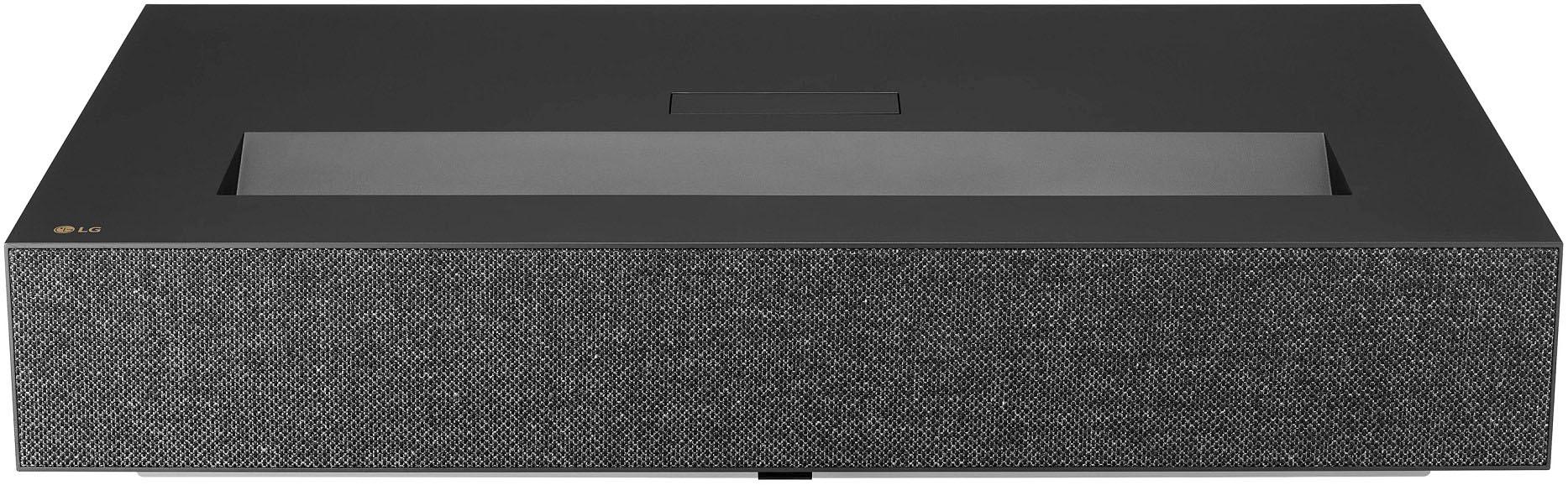
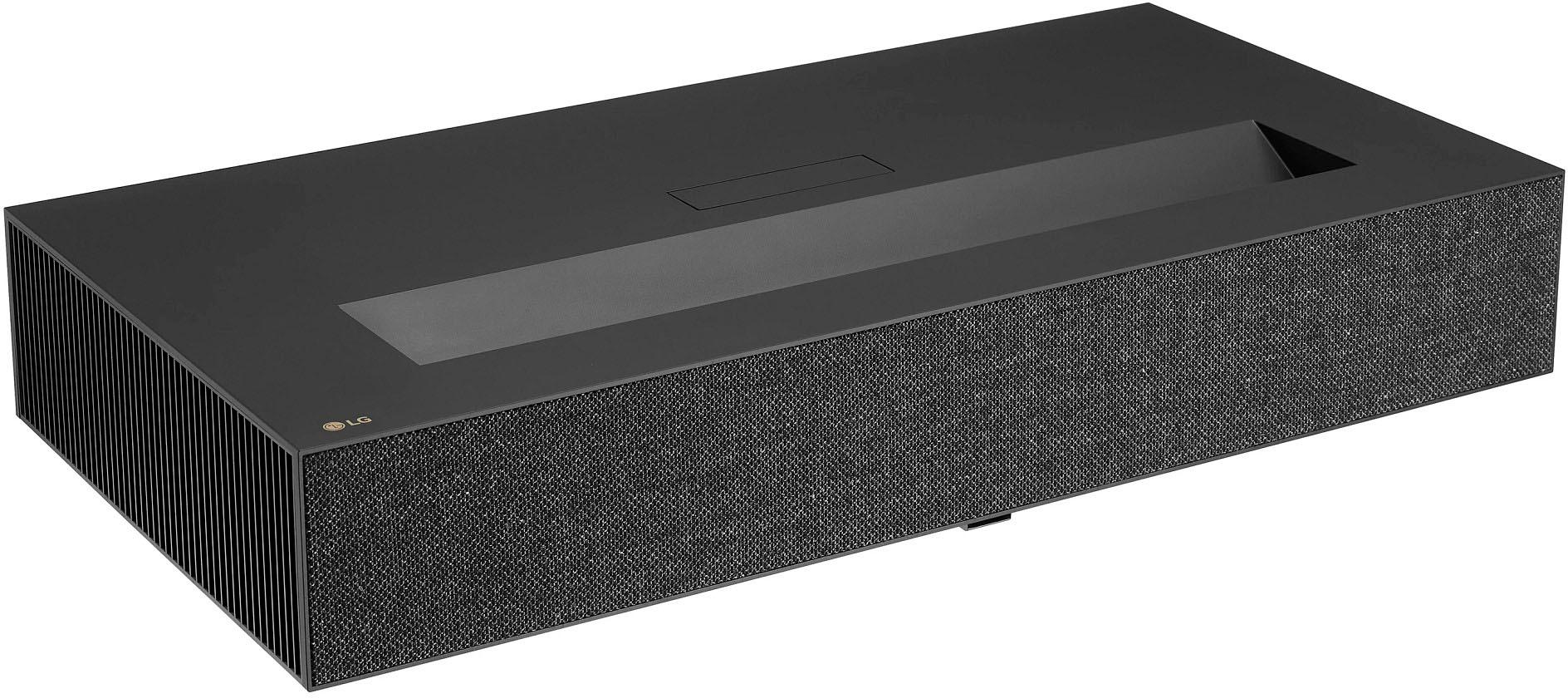
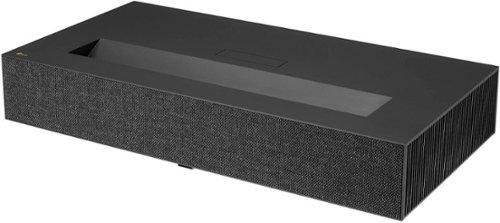
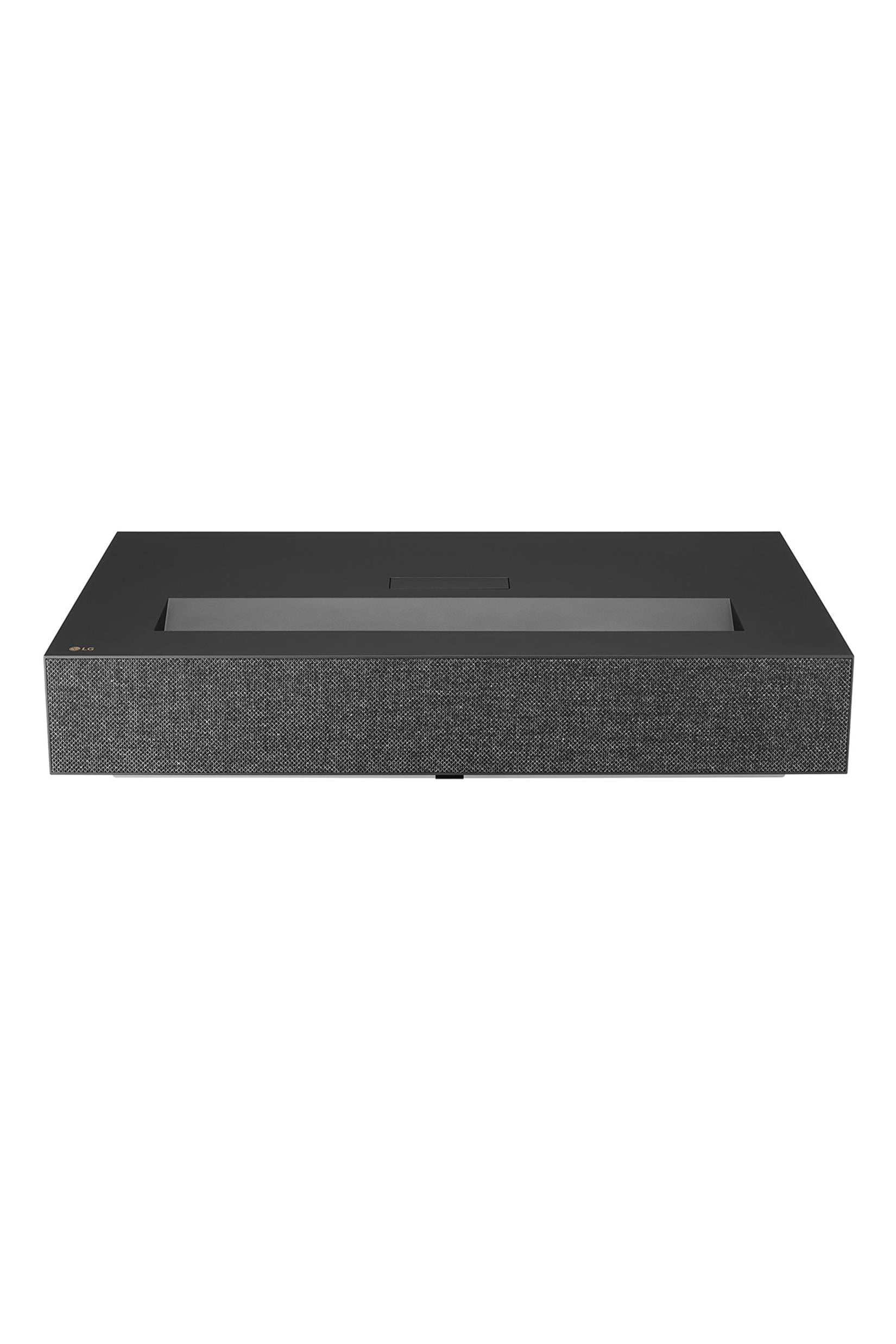
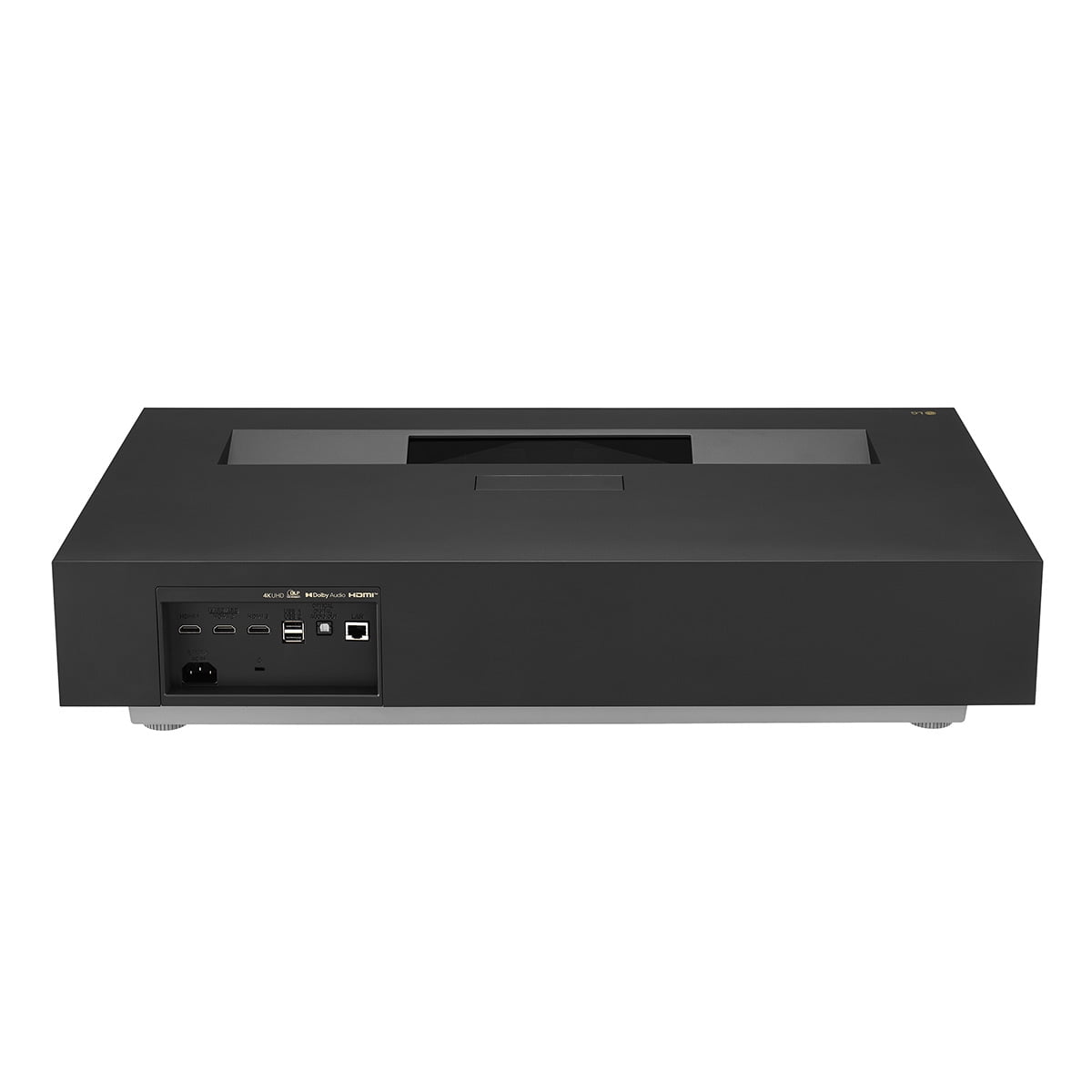
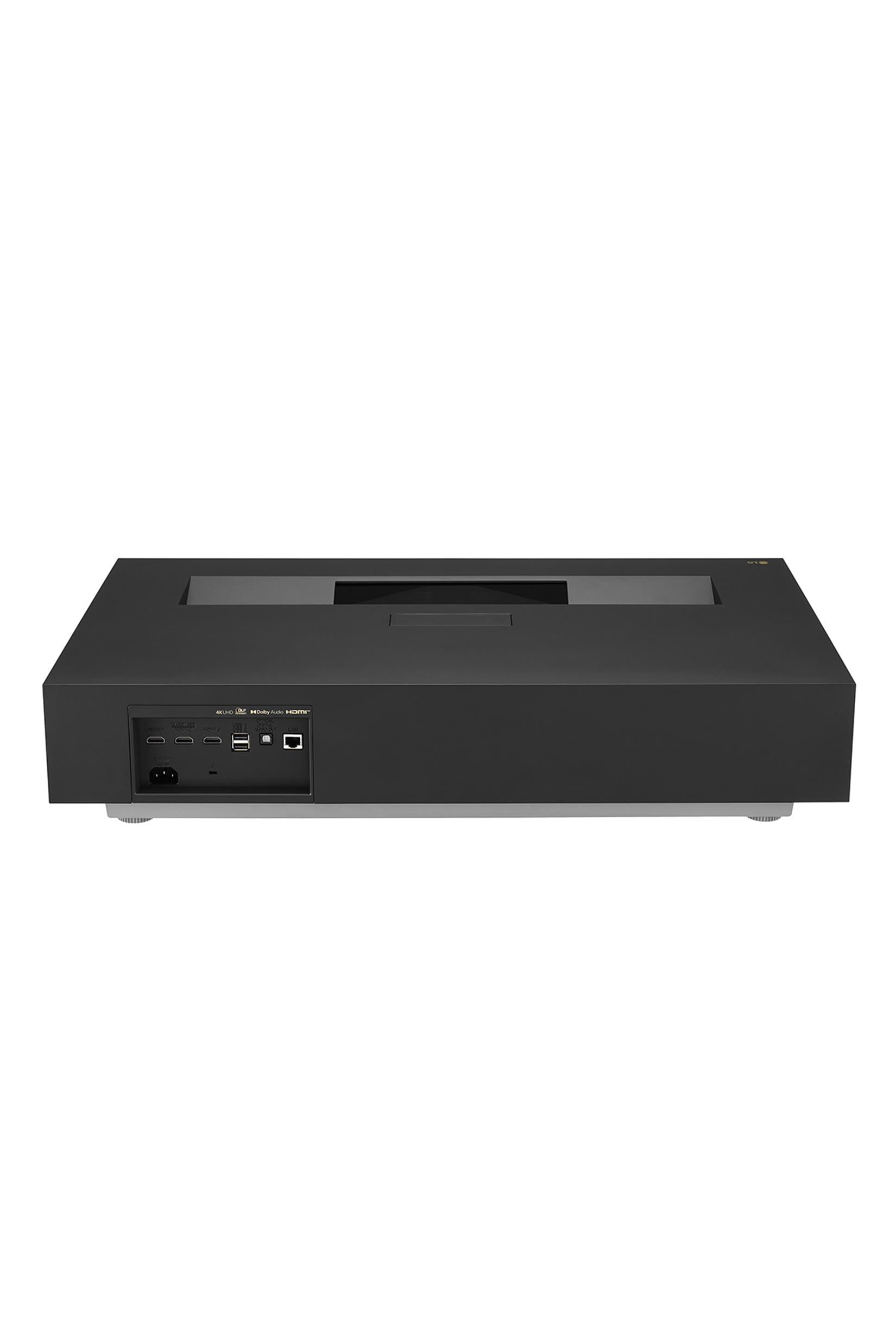
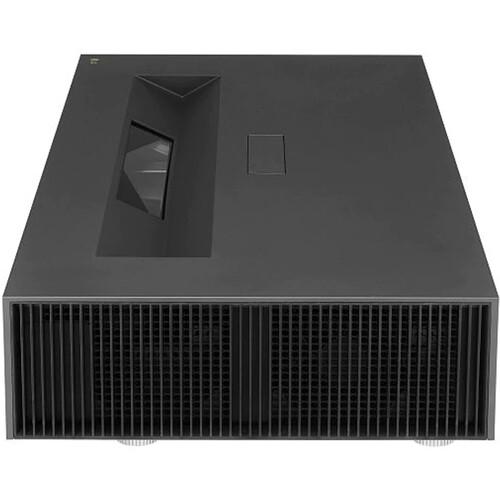
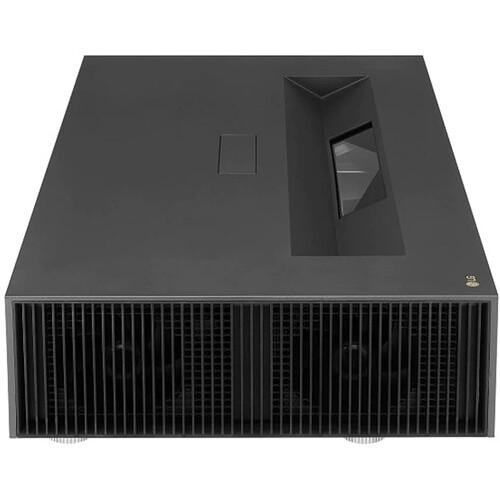
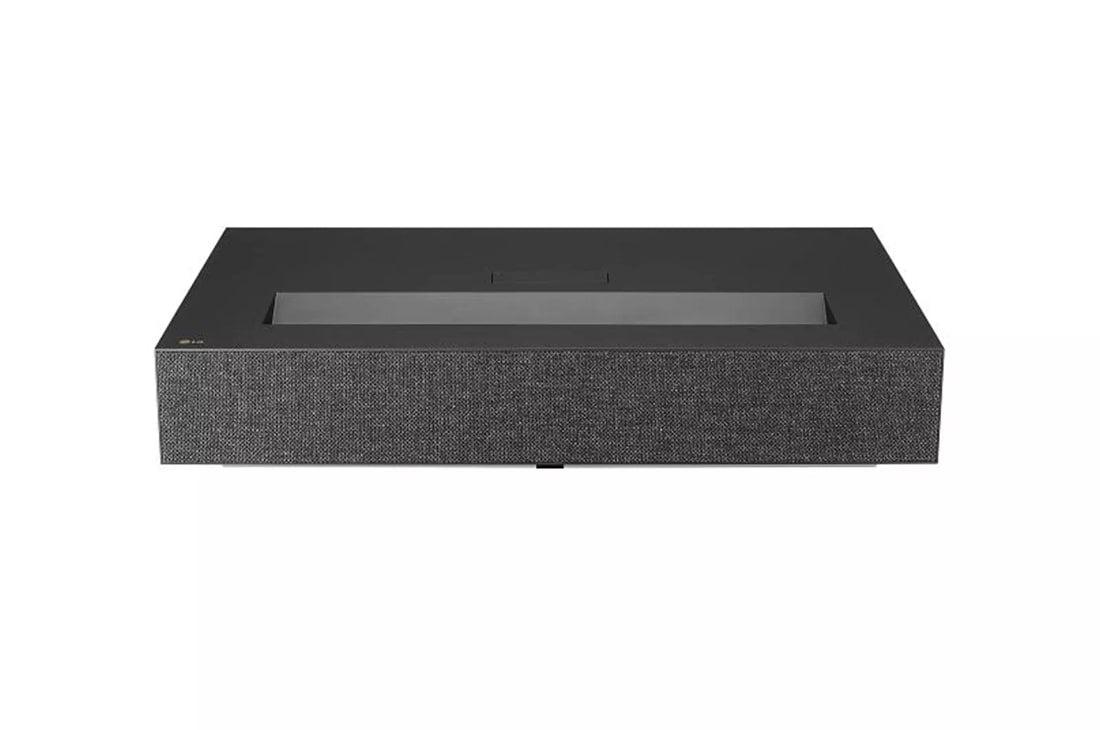
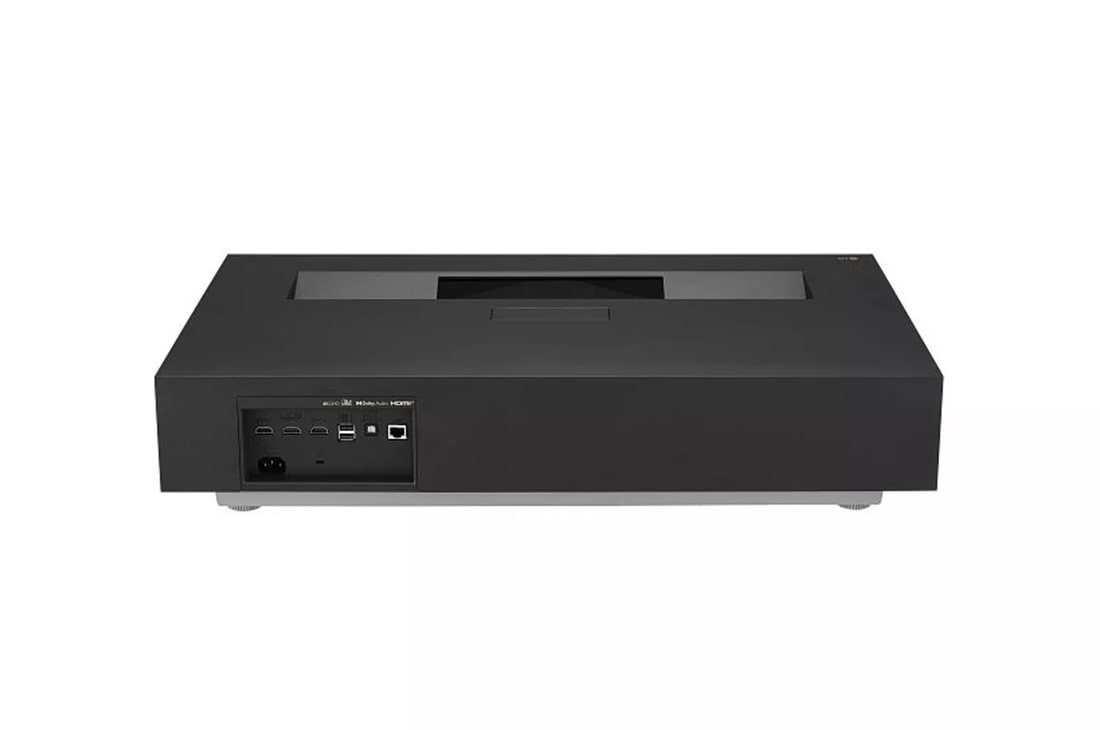
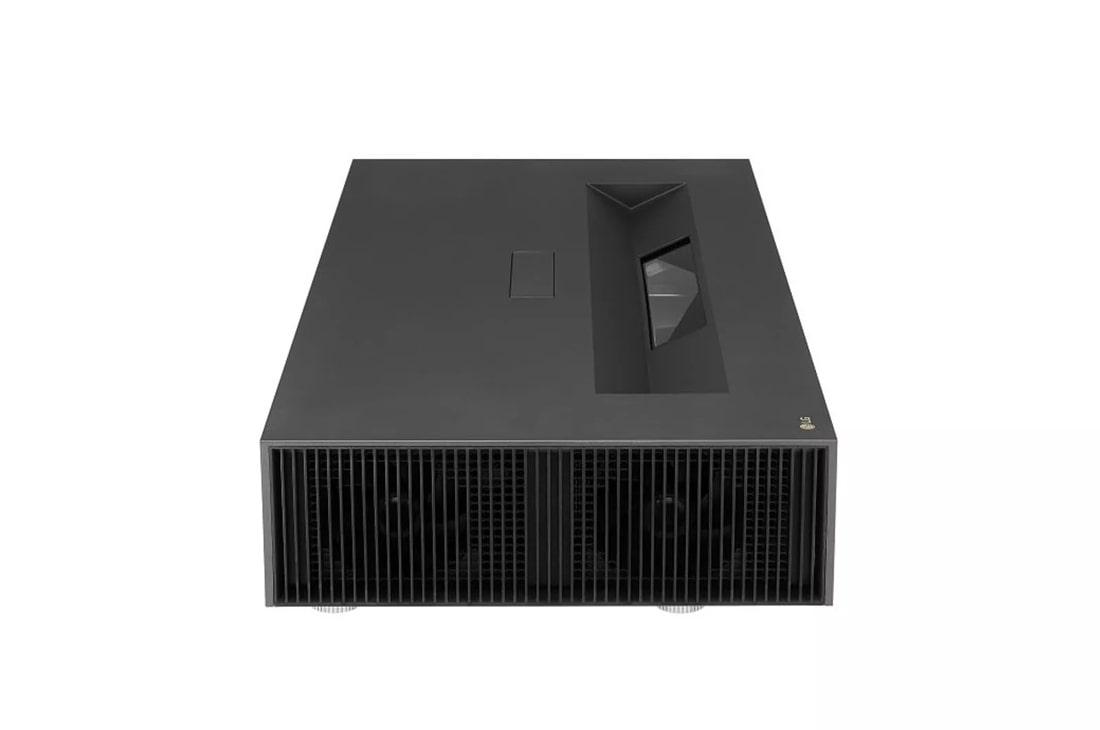
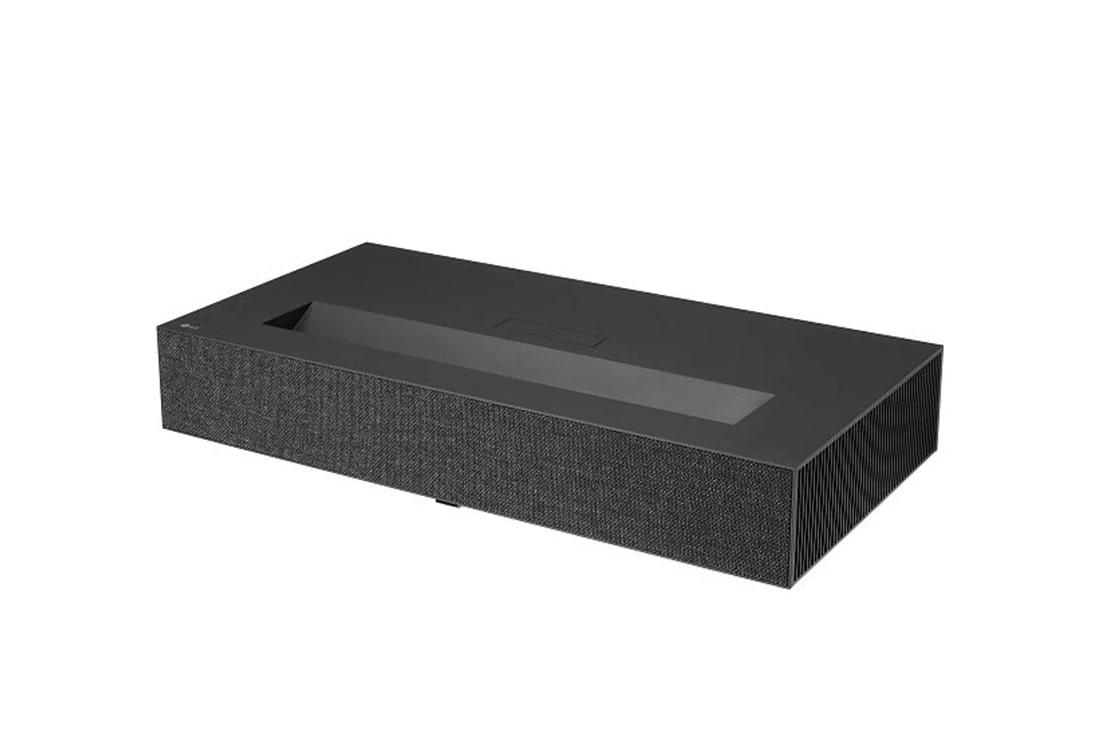
If you've ever dreamed of having a massive 100+ inch screen in your living room without the hassle of ceiling mounting a traditional projector, ultra short throw (UST) laser projectors might be exactly what you're looking for. These remarkable devices sit just inches from your wall yet can create cinema-sized images that make even the largest TVs look modest. Today we're comparing two standout models: the cutting-edge Hisense L9Q released in 2025 and the established LG CineBeam HU915QB from 2022.
Before diving into our comparison, let's clarify what makes UST projectors special. Unlike traditional projectors that need to be mounted across the room from your screen, these units use specialized optics that allow them to project huge images from extremely close distances. Think of it like having a flashlight that can somehow create a massive, perfectly focused beam of light on the wall when held just inches away—except instead of a simple light, you're getting a crystal-clear 4K image.
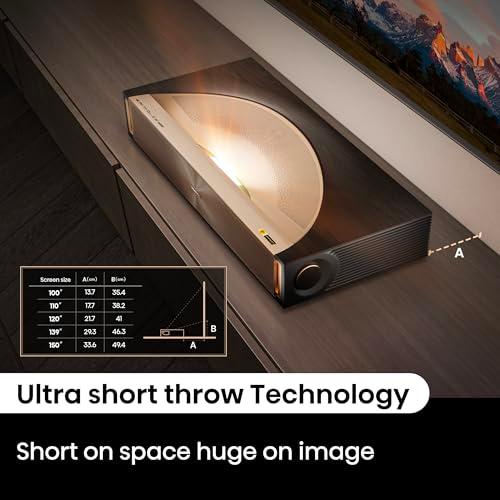
The "throw ratio" is the key measurement here. A traditional projector might have a throw ratio of 1.5:1, meaning you need 15 feet of distance to get a 10-foot-wide image. UST projectors typically have ratios around 0.2:1 or lower, so that same 10-foot image only needs about 2 feet of distance. Both the Hisense L9Q and LG HU915QB achieve this through complex mirror systems and precise optics that would have been impossible to manufacture affordably just a decade ago.
What makes these projectors particularly appealing is their laser light sources. Unlike older lamp-based projectors that dim over time and need expensive bulb replacements every few thousand hours, laser projectors maintain consistent brightness for 20,000+ hours—that's over a decade of regular use. They also turn on instantly, produce more accurate colors, and run much quieter than their lamp-based predecessors.
When evaluating any projector, brightness measured in ANSI lumens is arguably the most critical specification. This is especially true for UST projectors, which are typically used in living rooms rather than dedicated dark home theaters. The brightness difference between our two contenders is substantial and represents one of the most significant factors in choosing between them.
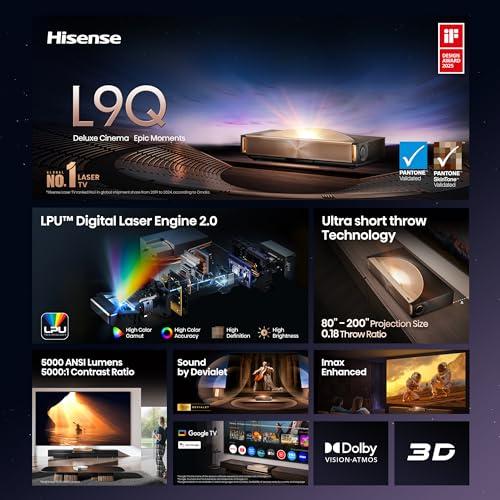
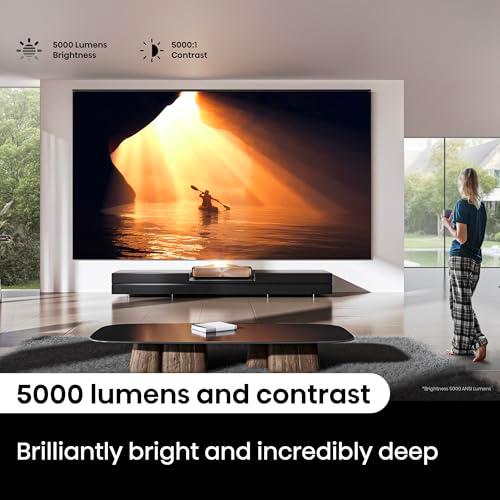
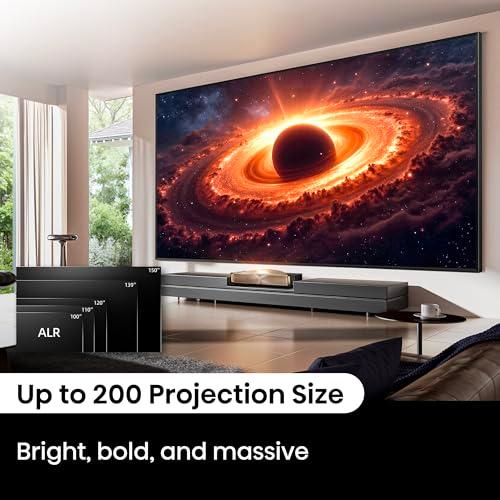
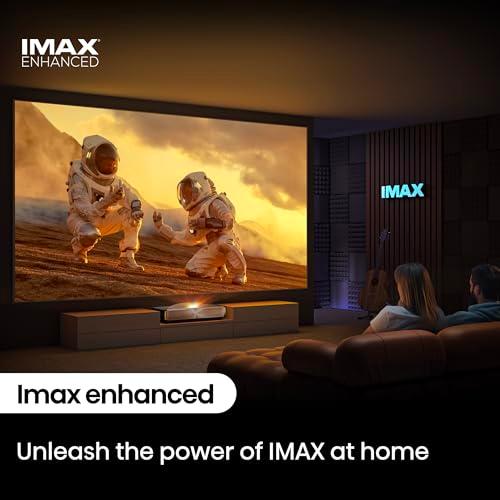
The Hisense L9Q delivers an impressive 5,000 ANSI lumens, making it one of the brightest consumer UST projectors available at the time of writing. In practical terms, this level of brightness means you can watch content comfortably even with ambient light in the room—think having the curtains open during a afternoon movie or keeping some lamps on for evening viewing. The high brightness also enables the L9Q to support screen sizes up to 200 inches while maintaining vibrant, punchy images.
The LG HU915QB, while still bright at 3,000 ANSI lumens, represents the previous generation's capabilities. This is still excellent brightness for a projector—certainly bright enough for most home theater setups—but the 67% advantage of the L9Q becomes noticeable in direct comparison, especially on larger screens or in brighter rooms.
From our research into user experiences, the brightness difference translates to real-world advantages. L9Q owners frequently mention being able to watch content during daytime hours without closing blinds, while HU915QB users typically prefer dimmer lighting conditions for the best experience. If your intended viewing space has large windows or you prefer the flexibility of not having to control ambient light, the L9Q's brightness advantage becomes a compelling factor.
This is where the comparison becomes particularly interesting from a technical standpoint. The LG HU915QB uses a larger 0.66-inch DMD (Digital Micromirror Device) chip that can produce true native 4K resolution—meaning each of the 8.3 million pixels in a 4K image has its own dedicated micromirror. This creates inherently sharp images without any processing tricks.
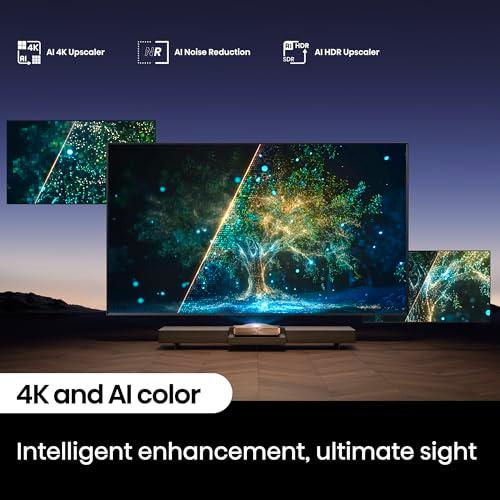
The Hisense L9Q, on the other hand, uses a smaller 0.47-inch DMD chip but employs pixel-shifting technology to achieve 4K resolution. This technique rapidly shifts the image slightly between frames, effectively creating the detail of 4K from a lower-resolution chip. While this sounds like a compromise, modern pixel-shifting has become remarkably sophisticated, and in practice, most viewers can't distinguish between native 4K and well-implemented pixel-shifting at typical viewing distances.
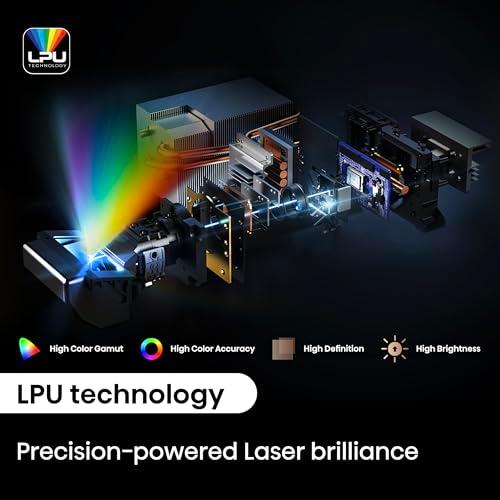
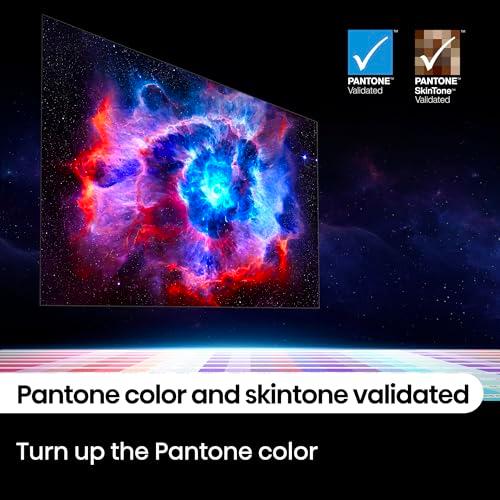
However, the L9Q compensates for the smaller chip with superior color performance. Its true RGB triple-laser system (using separate red, green, and blue lasers) achieves 110% of the BT.2020 color space—an extremely wide color gamut that's Pantone validated for professional accuracy. The HU915QB's 3-channel laser system covers 100% of DCI-P3, which is still excellent but represents a smaller color range.
Based on expert reviews, both projectors deliver exceptional image quality, but they excel in different areas. The HU915QB provides slightly sharper fine detail due to its native 4K processing, while the L9Q offers more vibrant, lifelike colors that really make HDR content pop. For most viewers, especially at screen sizes over 100 inches, the color advantage often outweighs the sharpness difference.
Contrast ratio—the difference between the darkest blacks and brightest whites a display can produce—is crucial for image depth and realism. Our two projectors take notably different approaches to achieving good contrast.
The LG HU915QB achieves an impressive 2,000,000:1 dynamic contrast ratio through sophisticated laser dimming. The projector continuously analyzes each scene and adjusts the laser output accordingly—dimming for dark scenes to achieve deeper blacks, then brightening for scenes with more white content. This adaptive approach works particularly well with varied content like movies that transition between dark and bright scenes.
The Hisense L9Q takes a more straightforward approach with a 5,000:1 native contrast ratio. While this number seems much lower, native contrast ratios are measured differently than dynamic ratios and often provide more consistent performance across different types of content. The L9Q's triple-laser system also contributes to better contrast by eliminating the color wheel found in some projectors, which can cause slight brightness variations.
In real-world usage, both projectors deliver excellent contrast for their category. The HU915QB's dynamic system excels with cinematic content that has distinct dark and light scenes, while the L9Q provides more consistent performance across all content types. Neither can match OLED TV technology for true blacks, but both are impressive for projection technology.
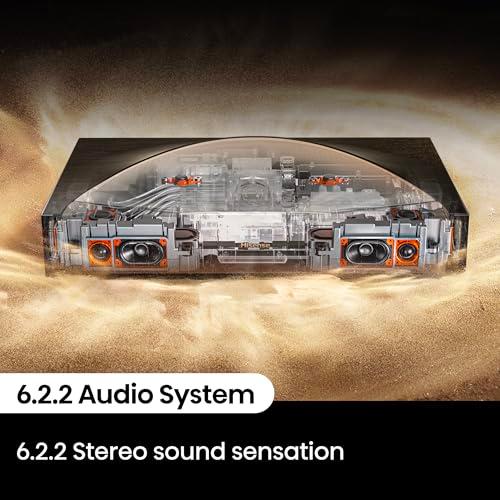
This is perhaps the most significant differentiator between these two projectors. The Hisense L9Q features a remarkable 116-watt, 6.2.2-channel audio system developed in partnership with Devialet, a prestigious French audio company. This isn't just marketing collaboration—the system includes dedicated subwoofers and has been professionally tuned by acoustics experts from the Opéra de Paris.
Having researched extensive user feedback, the L9Q's audio system consistently surprises owners who expect typical "projector sound." Instead, they get genuine home theater audio that eliminates the need for external speakers in many setups. The system supports Dolby Atmos and DTS:X for immersive surround sound, and the dual subwoofers provide bass response that most soundbars struggle to match.
The LG HU915QB includes a respectable 40-watt, 2.2-channel system that sounds good for a projector but clearly positions itself as supplementary audio rather than a primary sound solution. While it includes eARC support for connecting external audio systems, most users will want to add a soundbar or surround sound system for the best experience.
For home theater applications, this audio difference is substantial. The L9Q essentially includes a premium sound system in the purchase price, while the HU915QB requires additional investment in external audio to achieve similar results.
Both projectors include comprehensive smart TV platforms, but they take different approaches to the user experience. The LG HU915QB runs webOS, LG's mature and well-regarded smart TV platform. WebOS offers an intuitive interface, excellent remote control, and notably includes native Netflix support—something many projectors still lack. The platform feels polished and responsive, benefiting from years of refinement across LG's TV lineup.
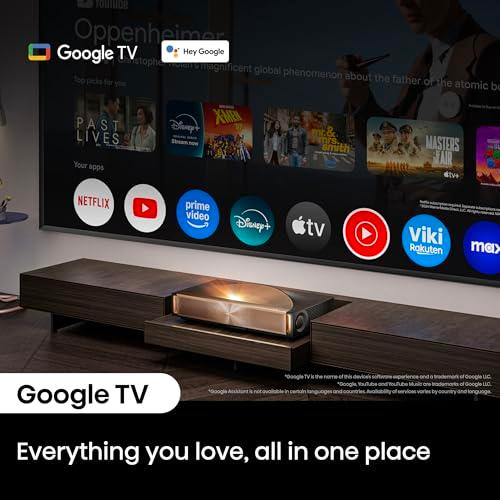
The Hisense L9Q uses Google TV, which provides access to the full Google Play Store and integrates well with other Google services. The platform includes voice control through Google Assistant and supports features like Chromecast built-in. Additionally, the L9Q includes ATSC 3.0 and 1.0 tuners, meaning you can connect an antenna and watch over-the-air broadcasts—a feature absent from most projectors.
Both platforms support major streaming services and offer good app selection. The choice often comes down to personal preference and existing ecosystem integration, though LG's Netflix support gives it an edge for many users.
Installation flexibility varies significantly between these models. The Hisense L9Q supports screen sizes from 80 to 200 inches with its 0.18:1 throw ratio, meaning you can project a 100-inch image from just over 5 inches away. This extreme versatility allows everything from smaller bedroom setups to massive living room installations.
The LG HU915QB supports screen sizes from 90 to 120 inches with its 0.19:1 throw ratio. While still impressively flexible, the 120-inch maximum limit positions it more as a large TV replacement rather than a true cinema-scale solution.
Both projectors include geometric correction features to compensate for imperfect wall surfaces or slightly off-center placement. The L9Q adds camera-based calibration assistance that can automatically detect and adjust for your specific setup, while the HU915QB offers more manual control options that some installers prefer.
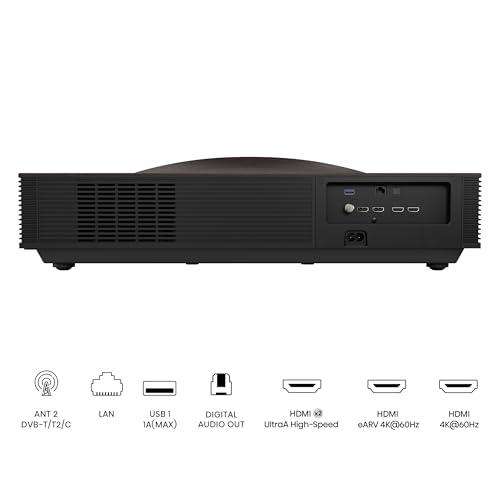
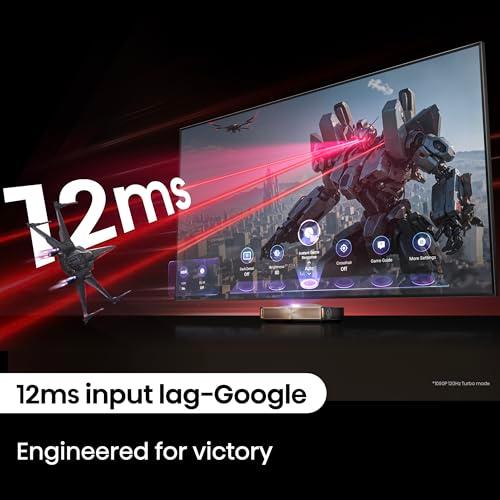
For gaming enthusiasts, both projectors offer solid performance with some notable differences. The Hisense L9Q achieves 12ms input lag in its dedicated Game Mode, which is excellent for projection technology and suitable for most gaming styles. It includes two HDMI 2.1 ports supporting the latest gaming console features like ALLM (Auto Low Latency Mode).
The LG HU915QB also supports ALLM and includes comprehensive HDMI 2.1 features, though specific input lag measurements vary in our research. Importantly, it supports HGiG (HDR Gaming Interest Group) standards for optimized HDR gaming performance, which helps games display properly across different display capabilities.
Both projectors handle 4K gaming at 60fps from modern consoles without issues, and the large screen sizes make gaming genuinely immersive in ways that even large TVs can't match.
At the time of writing, both projectors position themselves in the premium UST market, though pricing strategies differ. The Hisense L9Q represents the latest technology with premium features throughout, while the LG HU915QB, being a 2022 release, often appears at discounted prices that can provide excellent value.
Long-term ownership factors favor both models. The L9Q's 25,000-hour laser lifespan edges out the HU915QB's 20,000-hour rating, though both represent over a decade of regular use. Both manufacturers provide solid warranty coverage and service networks.
The L9Q's integrated premium audio system represents significant value for users who would otherwise need to purchase separate sound systems. Quality Dolby Atmos soundbars often cost $500-1000 alone, making the L9Q's integrated approach financially attractive even beyond the convenience factor.
After extensive research into user experiences and expert reviews, clear patterns emerge for who should choose each projector.
Choose the Hisense L9Q if you want the brightest, most flexible UST projector available. It's ideal for users with rooms that have significant ambient light, those wanting maximum screen sizes (150+ inches), or anyone who values integrated premium audio. The L9Q excels as a complete entertainment solution that minimizes the need for additional equipment.
Choose the LG HU915QB if you prioritize the sharpest possible image quality and have good control over room lighting. It's perfect for dedicated home theater spaces, users who plan to add external audio systems anyway, and those who value proven, mature technology over cutting-edge features.
Both projectors deliver exceptional large-screen experiences that fundamentally change how you consume media at home. The choice often comes down to your specific room conditions, desired screen size, and whether you prefer all-in-one convenience or customizable component approaches.
The UST projector market has evolved rapidly, with 2025 models like the L9Q pushing brightness and integration to new levels while established models like the HU915QB continue demonstrating that excellent performance doesn't require the latest technology. Either choice will provide years of enjoyment and a viewing experience that makes traditional TVs feel surprisingly small.
| Hisense L9Q Triple Laser Ultra Short Throw Projector | LG CineBeam HU915QB 4K UHD Laser Projector |
|---|---|
| Brightness - Most critical spec for ambient light performance and large screen capability | |
| 5,000 ANSI lumens (excellent for bright rooms, supports massive screens) | 3,000 ANSI lumens (very good but requires some light control) |
| 4K Resolution Technology - Affects image sharpness and detail | |
| 0.47" DMD chip with pixel-shifting (excellent quality, slight processing) | 0.66" native 4K DMD chip (true pixel-per-pixel sharpness) |
| Maximum Screen Size - Determines how big you can go | |
| 80-200 inches (true cinema scale possible) | 90-120 inches (large TV replacement scale) |
| Throw Ratio - How close to the wall the projector sits | |
| 0.18:1 (100" image from 5.4" away) | 0.19:1 (similar ultra-short placement) |
| Color Gamut - Affects color vibrancy and accuracy | |
| 110% BT.2020 with Pantone validation (exceptional color range) | 100% DCI-P3 (excellent cinema-standard colors) |
| Contrast Ratio - Determines black depth and image pop | |
| 5,000:1 native (consistent across content types) | 2,000,000:1 dynamic (adaptive laser dimming) |
| Laser Technology - Affects color accuracy and longevity | |
| True RGB triple-laser (separate red, green, blue lasers) | 3-channel with phosphor conversion (red, blue, blue-to-green) |
| Integrated Audio System - Can eliminate need for external speakers | |
| 116W 6.2.2-channel Devialet system with dual subs (theater-grade) | 40W 2.2-channel system (good but likely needs external audio) |
| Smart TV Platform - Affects app selection and user experience | |
| Google TV with full Play Store access and Netflix support | webOS with excellent interface and native Netflix support |
| HDR Support - Important for modern streaming and gaming content | |
| Dolby Vision, HDR10+, HDR10, HLG, IMAX Enhanced | HDR10, HLG, HGiG for gaming optimization |
| Gaming Performance - Input lag and modern console features | |
| 12ms input lag, 2x HDMI 2.1 ports with ALLM | ALLM support, HDMI 2.1 with eARC, HGiG compatibility |
| Laser Lifespan - Long-term maintenance costs | |
| 25,000+ hours (over 10 years of regular use) | 20,000 hours (still excellent longevity) |
| Release Year - Technology generation and feature set | |
| 2025 (latest technology, cutting-edge features) | 2022 (proven technology, often discounted pricing) |
| 3D Support - For enthusiasts with 3D content | |
| Full 3D support included | No 3D capability |
| Special Features - Unique capabilities that add value | |
| Built-in ATSC 3.0/1.0 TV tuners, camera-based auto-calibration | Advanced CalMAN calibration support, mature webOS ecosystem |
The Hisense L9Q is significantly brighter at 5,000 ANSI lumens compared to the LG CineBeam HU915QB at 3,000 ANSI lumens. This 67% brightness advantage makes the L9Q much better for rooms with ambient light or daytime viewing, while the HU915QB performs best in controlled lighting conditions.
The Hisense L9Q supports much larger screens, ranging from 80-200 inches, making it ideal for true cinema-scale experiences. The LG CineBeam HU915QB is limited to 90-120 inches, positioning it more as a large TV replacement rather than a massive home theater solution.
Both deliver excellent 4K image quality but in different ways. The LG CineBeam HU915QB uses a larger native 4K chip for inherently sharper images, while the Hisense L9Q uses pixel-shifting technology but offers superior color accuracy with 110% BT.2020 coverage and Pantone validation.
The Hisense L9Q has exceptional built-in audio with a 116W 6.2.2-channel Devialet system that can eliminate the need for external speakers in most setups. The LG CineBeam HU915QB has decent 40W speakers but most users will want to add a soundbar or surround system for the best home theater experience.
Both are excellent for gaming, but the Hisense L9Q has a slight edge with 12ms input lag and dual HDMI 2.1 ports. The LG CineBeam HU915QB offers HGiG compatibility for optimized HDR gaming and comprehensive HDMI 2.1 support, making both suitable for modern gaming consoles.
Both have similar ultra-short throw capabilities. The Hisense L9Q has a 0.18:1 throw ratio, creating a 100-inch image from just 5.4 inches away. The LG CineBeam HU915QB has a 0.19:1 ratio with nearly identical placement requirements, making both excellent for tight spaces.
The LG CineBeam HU915QB runs webOS with an excellent interface and native Netflix support, while the Hisense L9Q uses Google TV with full Play Store access. Both support major streaming services, but the L9Q includes built-in TV tuners for over-the-air broadcasts.
The LG CineBeam HU915QB achieves a 2,000,000:1 dynamic contrast ratio through adaptive laser dimming that adjusts based on scene content. The Hisense L9Q offers a 5,000:1 native contrast ratio that provides more consistent performance across all content types.
The Hisense L9Q is the newer model, released in 2025 with cutting-edge features like true RGB triple-laser technology and advanced AI processing. The LG CineBeam HU915QB was released in 2022 but represents proven, mature technology that often comes at discounted prices.
Only the Hisense L9Q includes full 3D support for users with 3D content collections. The LG CineBeam HU915QB does not offer 3D capability, which may be a consideration for 3D enthusiasts.
For dedicated home theaters with controlled lighting, the LG CineBeam HU915QB excels with its native 4K sharpness and sophisticated contrast system. However, the Hisense L9Q is better for multipurpose rooms due to its superior brightness and integrated premium audio system.
The Hisense L9Q offers a longer 25,000+ hour laser lifespan compared to the LG CineBeam HU915QB at 20,000 hours. Both represent over a decade of regular use without needing replacement, making either choice excellent for long-term ownership.
We've done our best to create useful and informative comparisons to help you decide what product to buy. Our research uses advanced automated methods to create this comparison and perfection is not possible - please contact us for corrections or questions. These are the sites we've researched in the creation of this article: chrismajestic.com - shop.hisense-usa.com - tomsguide.com - valueelectronics.com - techradar.com - whathifi.com - youtube.com - projectorscreen.com - projectorscreen.com - hisense-usa.com - youtube.com - projectorcentral.com - youtube.com - hisense-usa.com - manuals.plus - shop.avispl.com - hisense-usa.com - projectorreviews.com - bestbuy.com - techradar.com - hometheaterforum.com - projectorcentral.com - projectorcentral.com - vividstorm.eu - lg.com - billsmith.com - queencityonline.com - projectorscreen.com

Privacy Policy
Terms and Conditions - Affiliate Policy
Home Security
© Copyright 2008-2026.
11816 Inwood Rd #1211, Dallas, TX 75244