

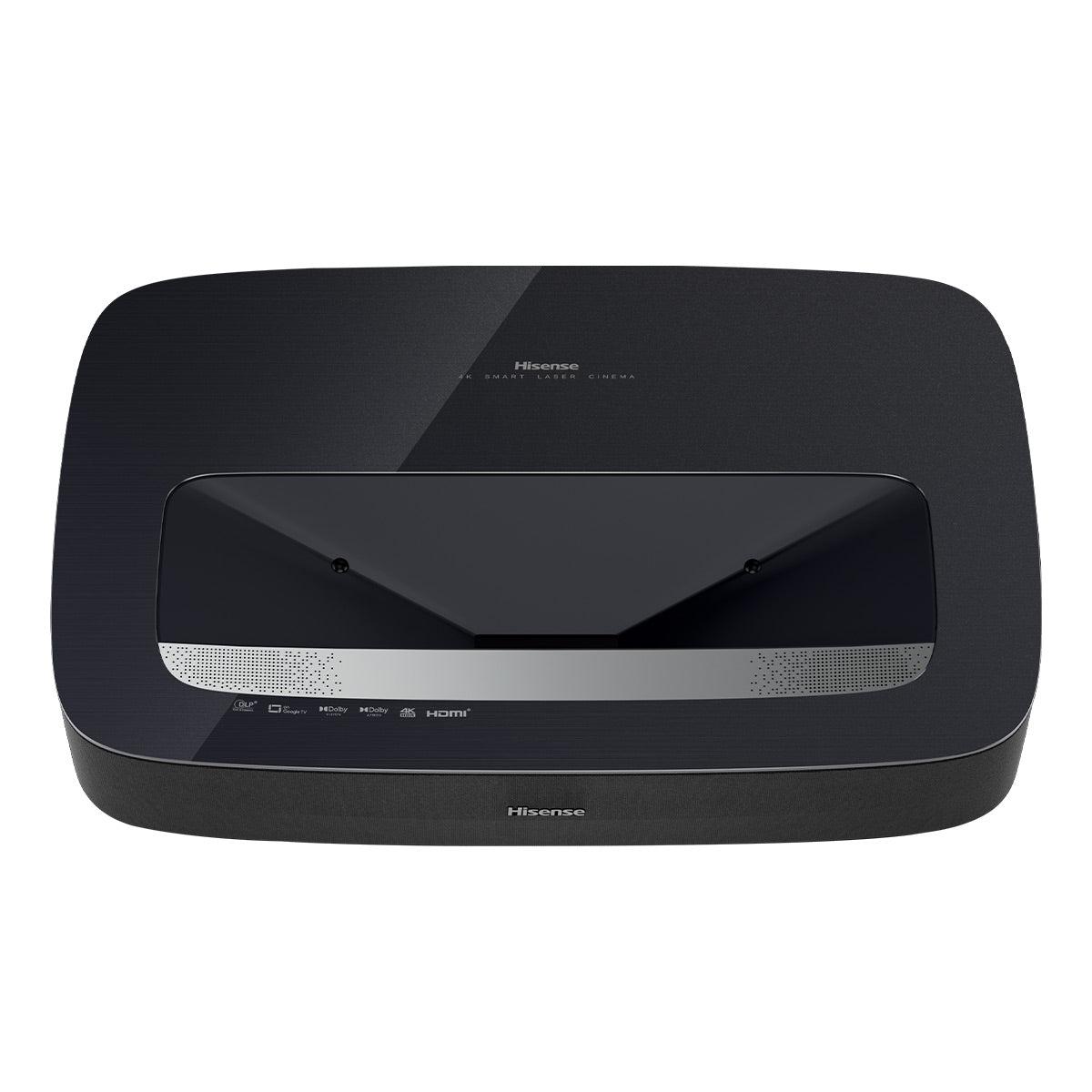
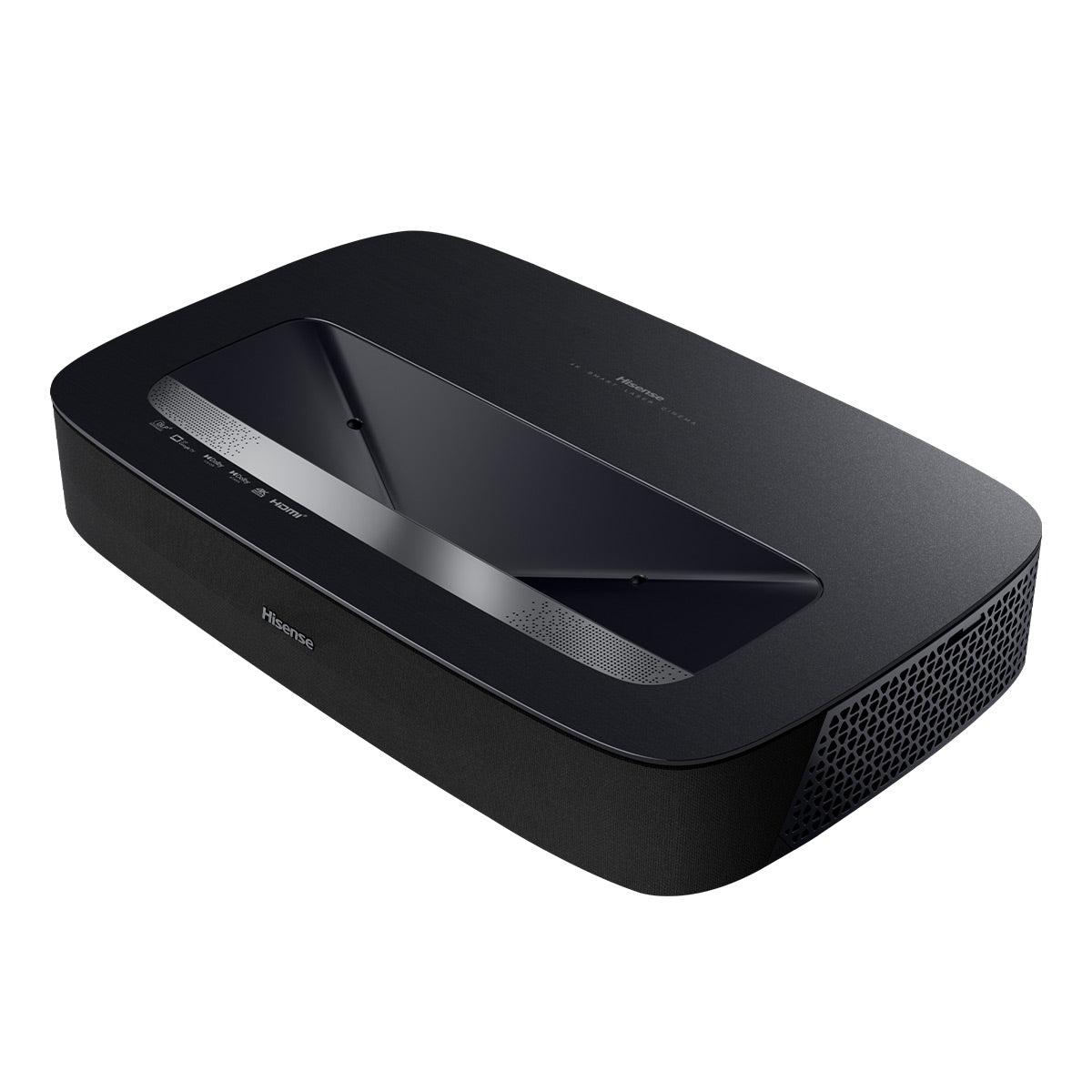
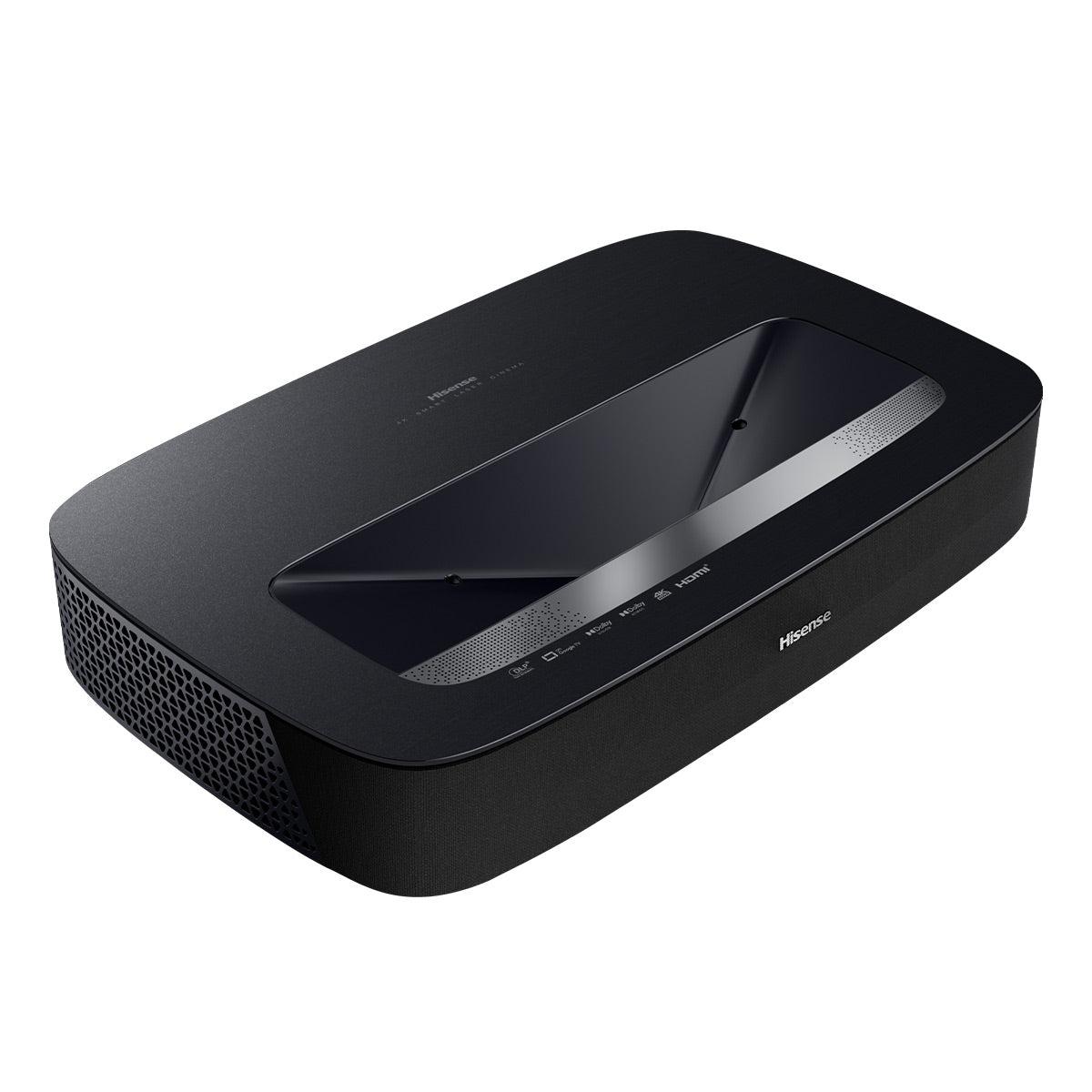
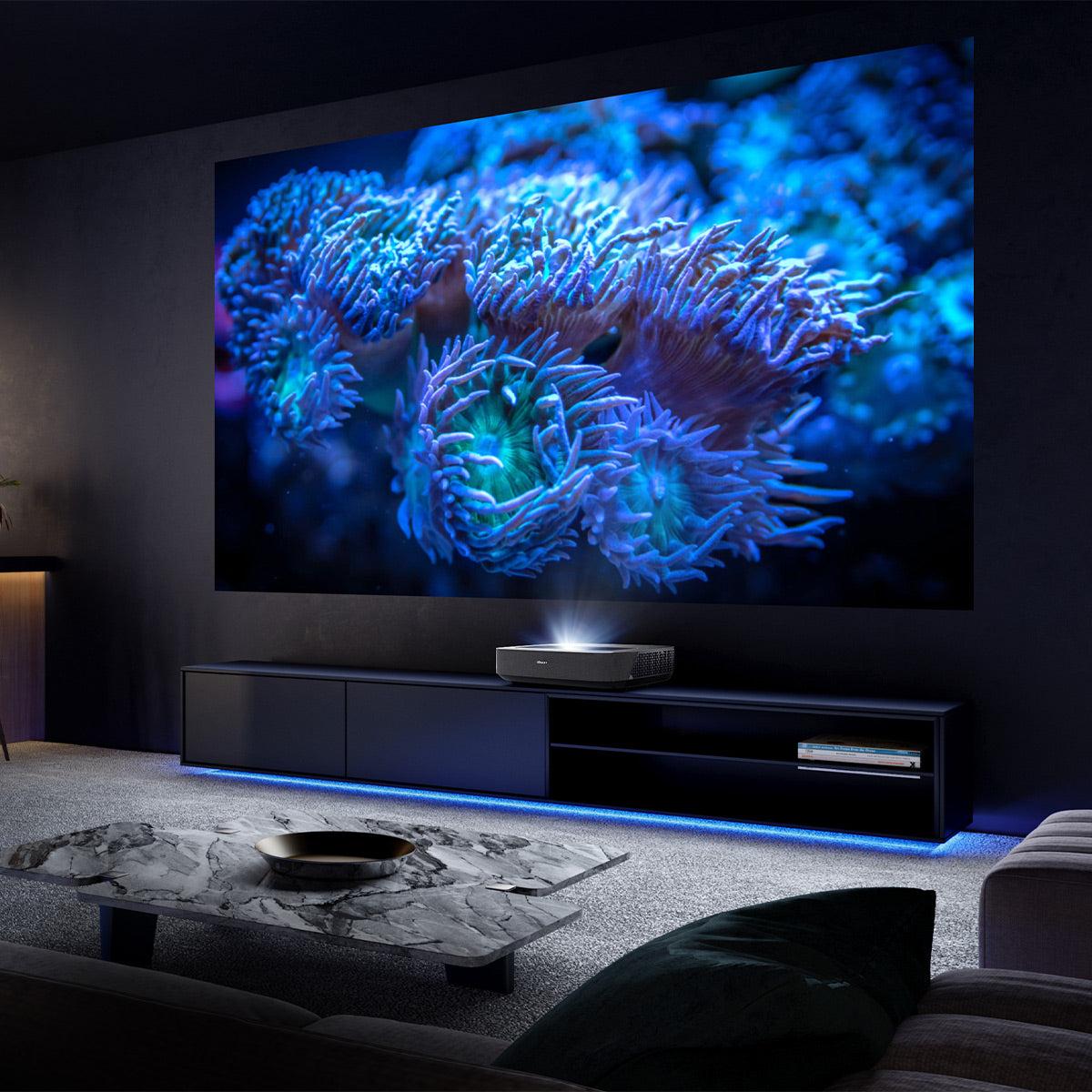
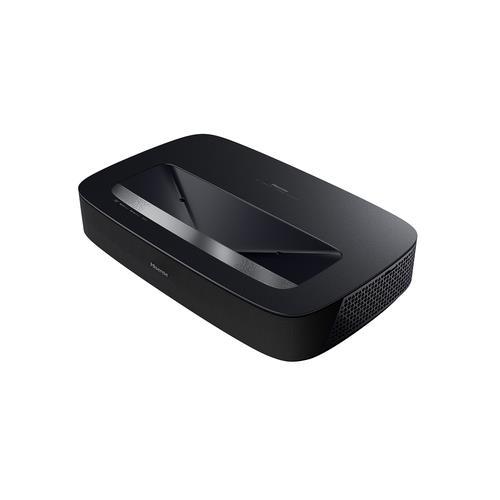
Ultra short throw projectors have fundamentally changed how we think about big-screen entertainment at home. Instead of mounting a traditional projector on your ceiling and running cables across the room, these clever devices sit just inches from your wall or screen, projecting massive 100+ inch images without anyone casting shadows or walking through the beam. It's like having a movie theater that magically appears from a small box on your TV stand.
The technology works through specialized ultra-wide-angle lenses and sophisticated image correction that bends and shapes light to create a perfectly rectangular image even from such an extreme angle. Think of it like those security mirrors in stores, but engineered with precision optics to deliver crystal-clear visuals instead of distorted reflections.
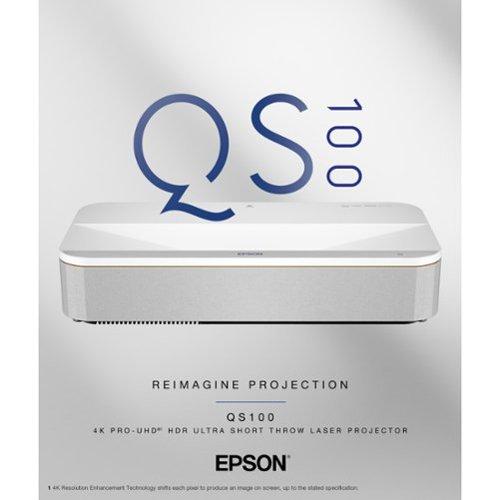
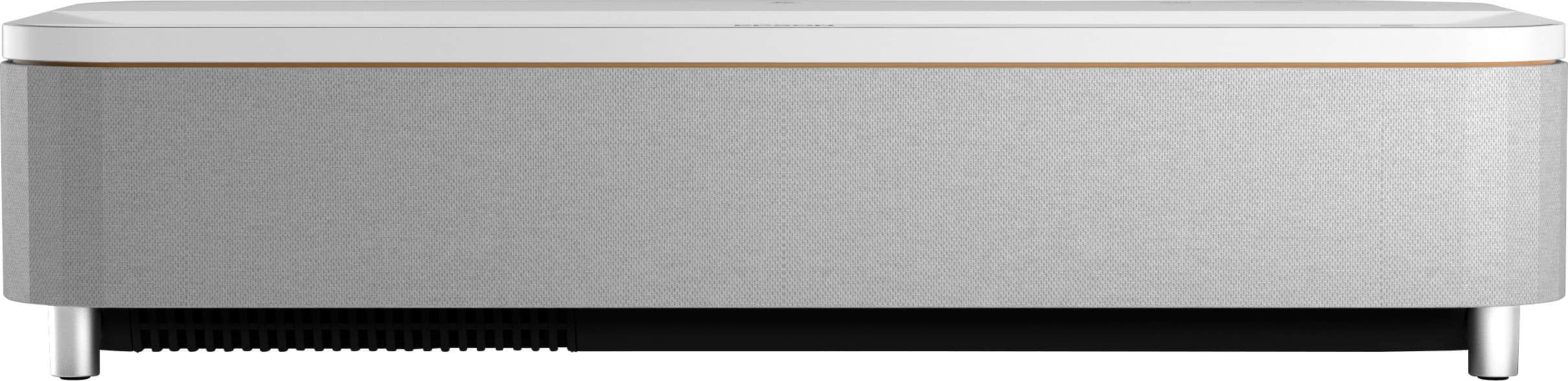
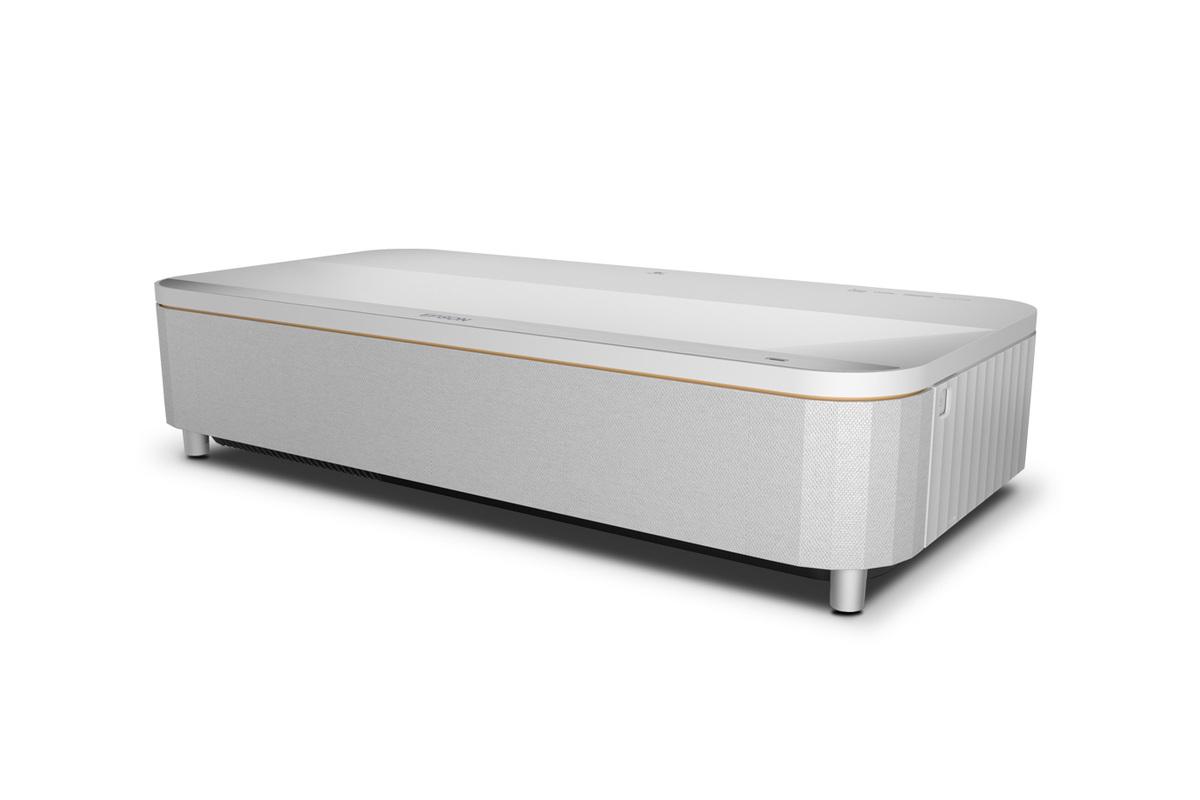
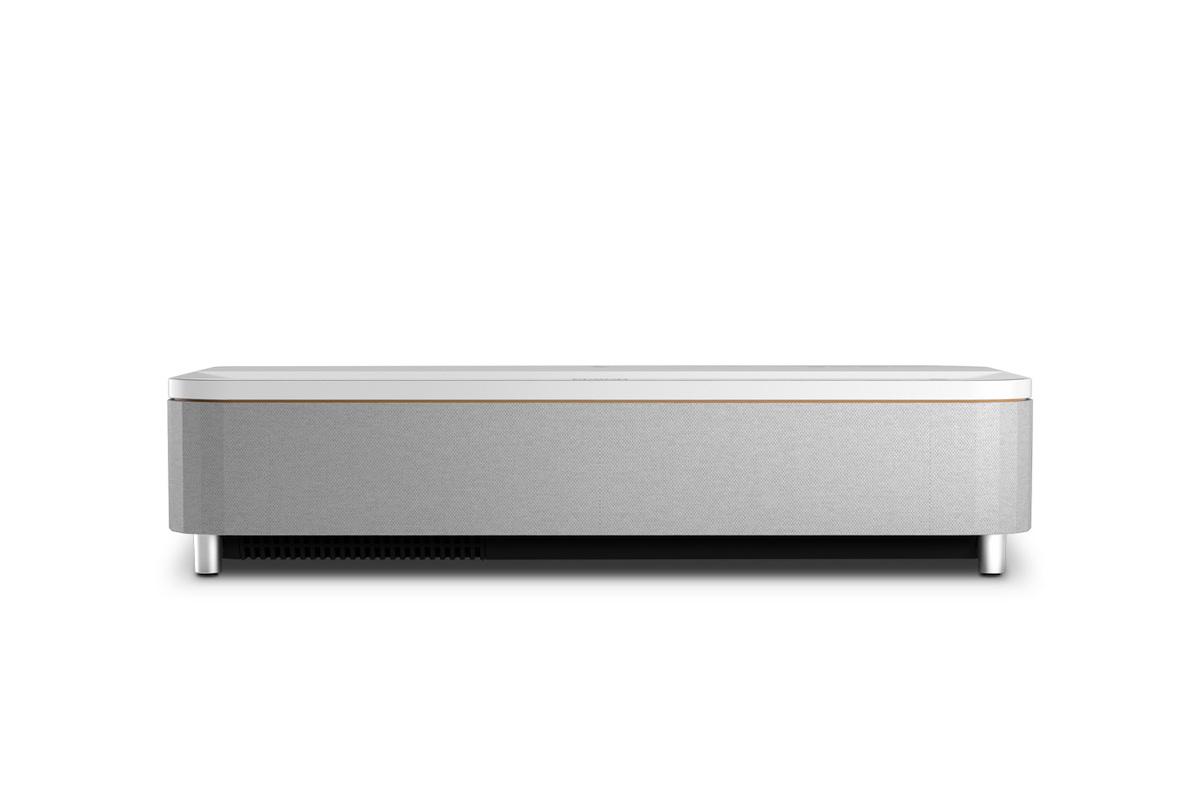
Two projectors that perfectly illustrate different approaches to this technology are the Epson QS100 and the Hisense PL1. At the time of writing, these represent vastly different value propositions—the Epson costs roughly 2.5 times more than the Hisense, which immediately tells you they're targeting different audiences and priorities.
When evaluating these projectors, several key factors determine whether you'll love or regret your purchase. Brightness tops the list because unlike traditional TVs that generate their own light, projectors reflect light off screens or walls. This means ambient light becomes your enemy—too much room lighting and your expensive projector turns into an expensive paperweight.
Image quality encompasses resolution, color accuracy, and contrast ratio (the difference between the darkest blacks and brightest whites). Modern projectors use various tricks to achieve "4K" resolution, even when their underlying display chips aren't truly 4K—a technique called pixel shifting that rapidly moves the image to create additional detail.
Installation flexibility matters tremendously since you're essentially committing to a semi-permanent setup. The throw ratio (how far the projector needs to be from the screen to create a given image size) and maximum image size determine where you can place the device and how big your screen can be.
Smart features and connectivity have become increasingly important as streaming services dominate our viewing habits. Some projectors include everything built-in, while others expect you to connect external devices.
The most significant divide between the Epson QS100 and Hisense PL1 lies in their brightness output, and this difference dramatically affects how and where you can use each projector.
The Epson QS100, released in 2025, delivers an impressive 4,500 lumens of brightness—both for colors and white light. This dual specification matters because some projector technologies can produce bright white images but struggle with vibrant colors. Epson's 3LCD technology ensures that colorful scenes remain vivid even in well-lit rooms. To put this in perspective, most budget projectors struggle to exceed 3,000 lumens, making the Epson exceptionally bright for its category.
This brightness advantage means you can comfortably watch the Epson QS100 during daytime with windows open and lights on—something that transforms projector ownership from a "lights-off" experience to genuine TV replacement territory. Based on user reports and professional reviews, the Epson maintains excellent color saturation and contrast even in moderately bright rooms, though you'll still want to avoid direct sunlight hitting the screen.
The Hisense PL1, launched in 2023, produces 2,200 ANSI lumens—respectable for a budget projector but significantly dimmer than the Epson. This brightness level works well in controlled lighting environments but struggles in bright rooms. User experiences consistently report that the Hisense performs beautifully for evening viewing and in dedicated home theaters, but daytime performance requires closing curtains and dimming lights.
Here's where personal preference and room setup become crucial: if you plan to use your projector primarily for evening entertainment in a controllable environment, the Hisense's lower brightness actually works to its advantage, potentially delivering better contrast ratios and deeper blacks than overly bright projectors.
Both projectors achieve their "4K" claims through pixel shifting rather than native 4K panels, but they use fundamentally different display technologies that affect the viewing experience.
The Epson QS100 employs 3LCD technology, using three separate liquid crystal display panels—one each for red, green, and blue light. This approach eliminates the "rainbow effect" (brief flashes of separated colors) that some people notice with single-chip DLP projectors. The 3LCD system also ensures that colored images receive the same brightness as white images, contributing to more natural-looking content.
Epson's latest QZX Picture Processor, introduced with this 2025 model, provides real-time image enhancement including Dynamic Tone Mapping for HDR content. This means the projector analyzes each scene and adjusts brightness and contrast on the fly, rather than applying static settings to all content. In practice, this results in better detail in both dark shadows and bright highlights within the same scene.
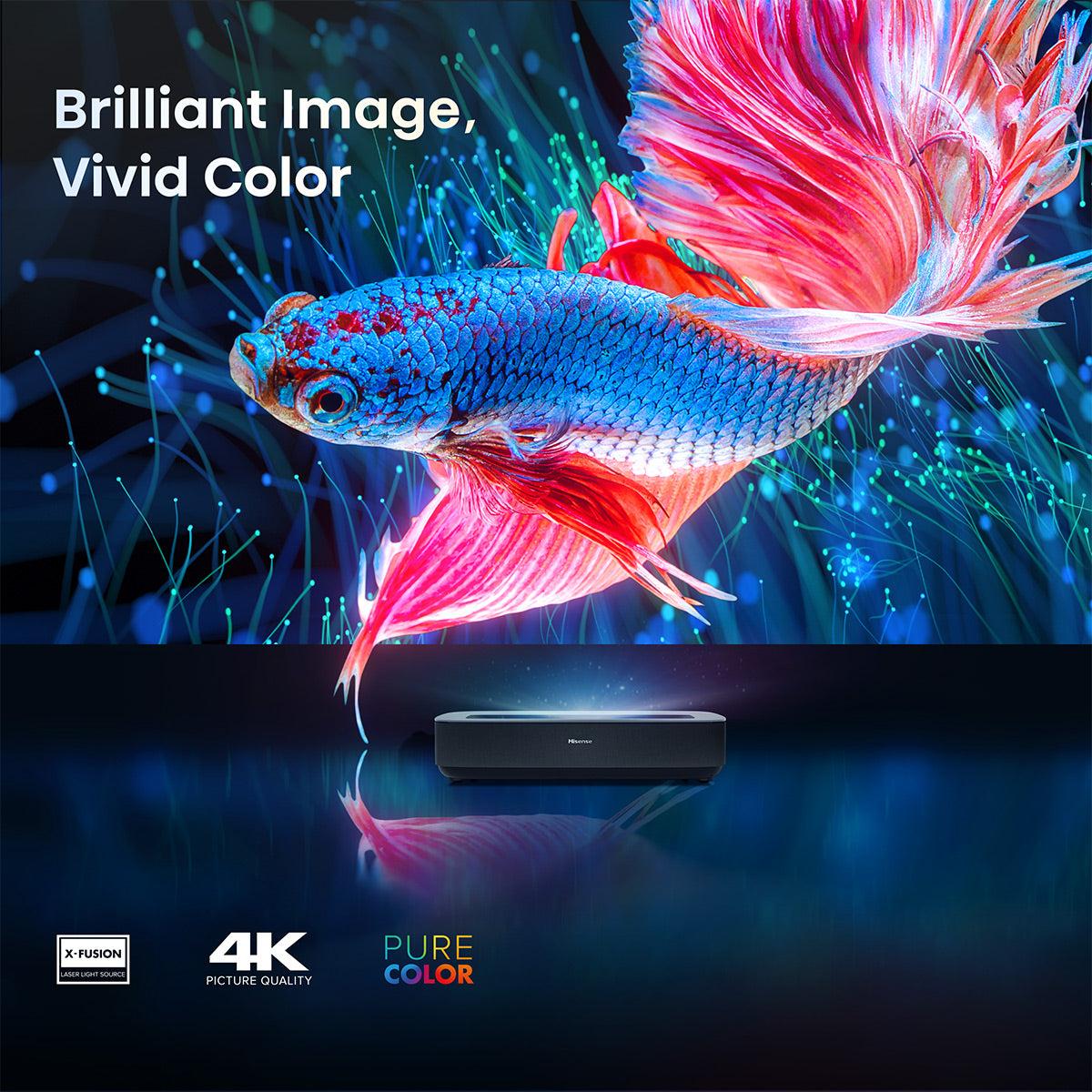
The Hisense PL1 uses single-chip DLP technology with what Hisense calls "X-Fusion" laser processing. DLP typically produces sharper images than LCD technology due to the precise nature of its micro-mirror array, and the single-chip design eliminates potential alignment issues between multiple panels. However, some viewers may notice rainbow artifacts, particularly during high-contrast scenes or when moving their eyes quickly across the image.
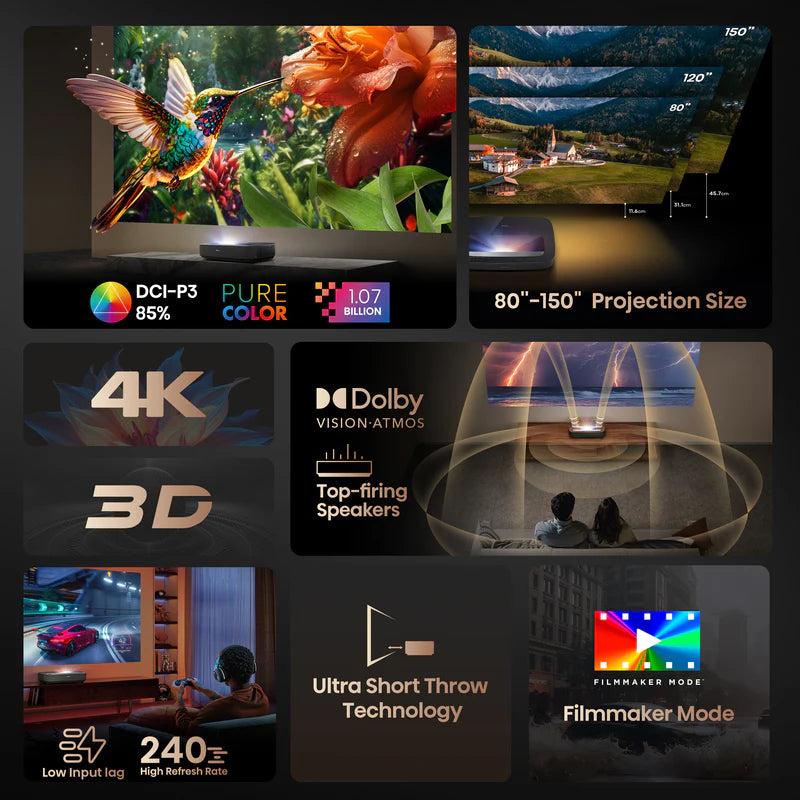
Where the Hisense PL1 excels is color gamut—it covers 85% of the DCI-P3 color space used in movie theaters, compared to the Epson QS100's focus on the more limited Rec.709 standard. This means the Hisense can display more vivid, cinema-accurate colors, particularly reds and greens that fall outside the traditional TV color space.
High Dynamic Range (HDR) support represents one area where the less expensive Hisense PL1 actually outperforms the premium Epson QS100. HDR allows displays to show brighter highlights and darker shadows simultaneously, creating more realistic and immersive images.
The Hisense PL1 supports HDR10, HLG, and crucially, Dolby Vision—the premium HDR format used by Netflix, Disney+, and other major streaming services. Dolby Vision includes dynamic metadata that tells the display exactly how to render each scene, optimizing the image quality frame by frame.
The Epson QS100 supports HDR10 and HLG but lacks Dolby Vision support. While Epson's Dynamic Tone Mapping provides similar scene-by-scene optimization, it's doing this through processing rather than following the content creator's specific instructions embedded in Dolby Vision files.
For movie enthusiasts who prioritize streaming quality, this represents a significant advantage for the Hisense, especially considering its substantially lower price point.
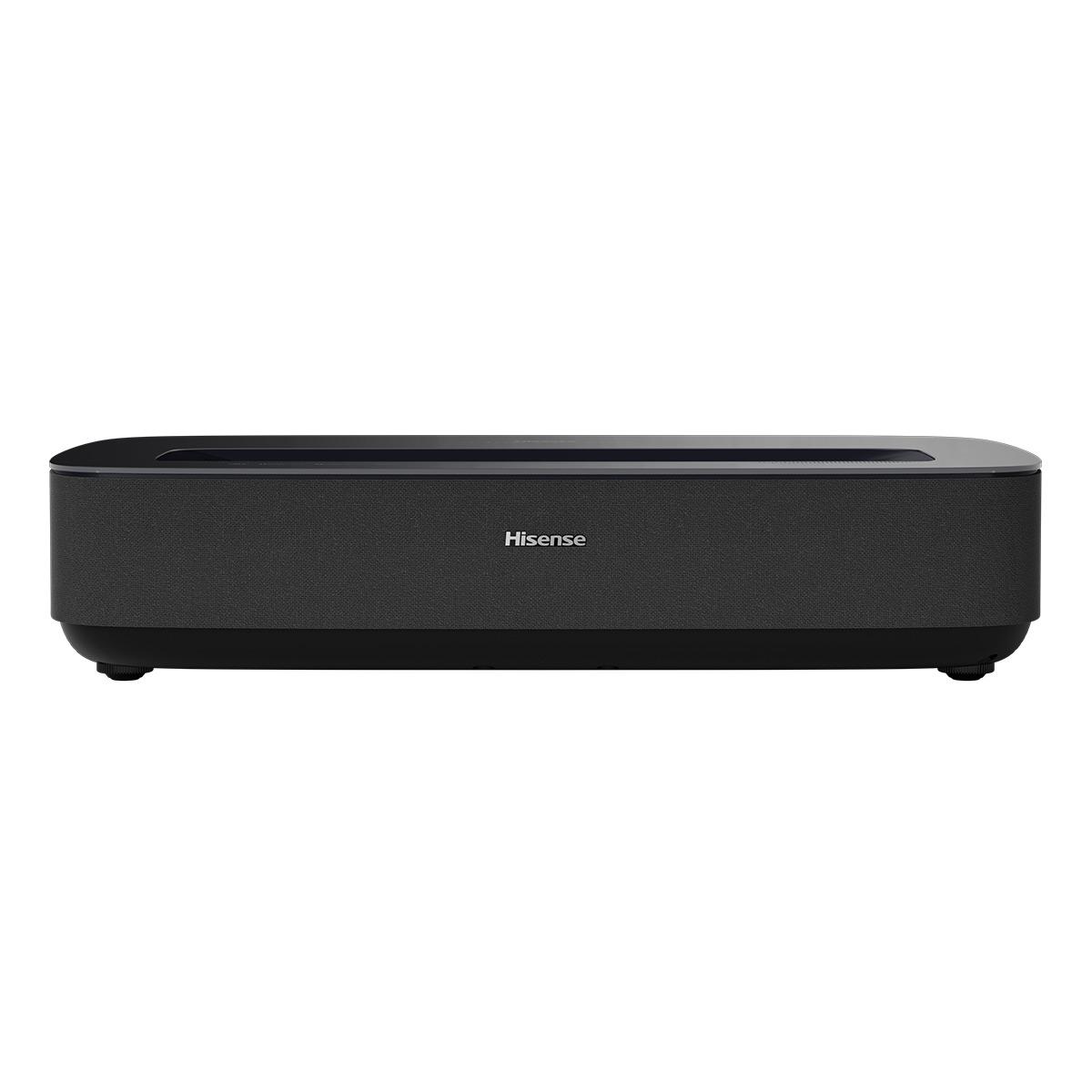
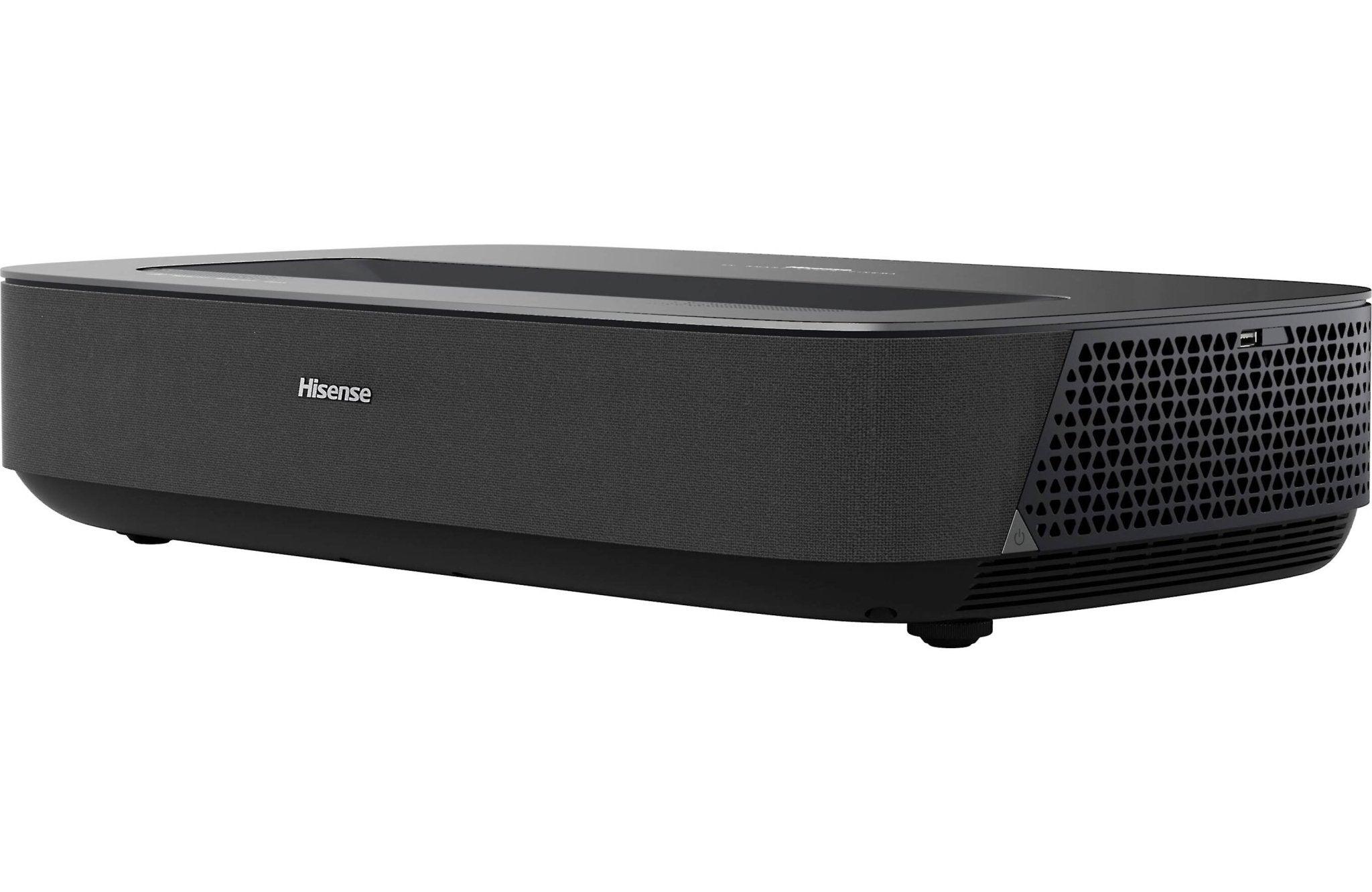
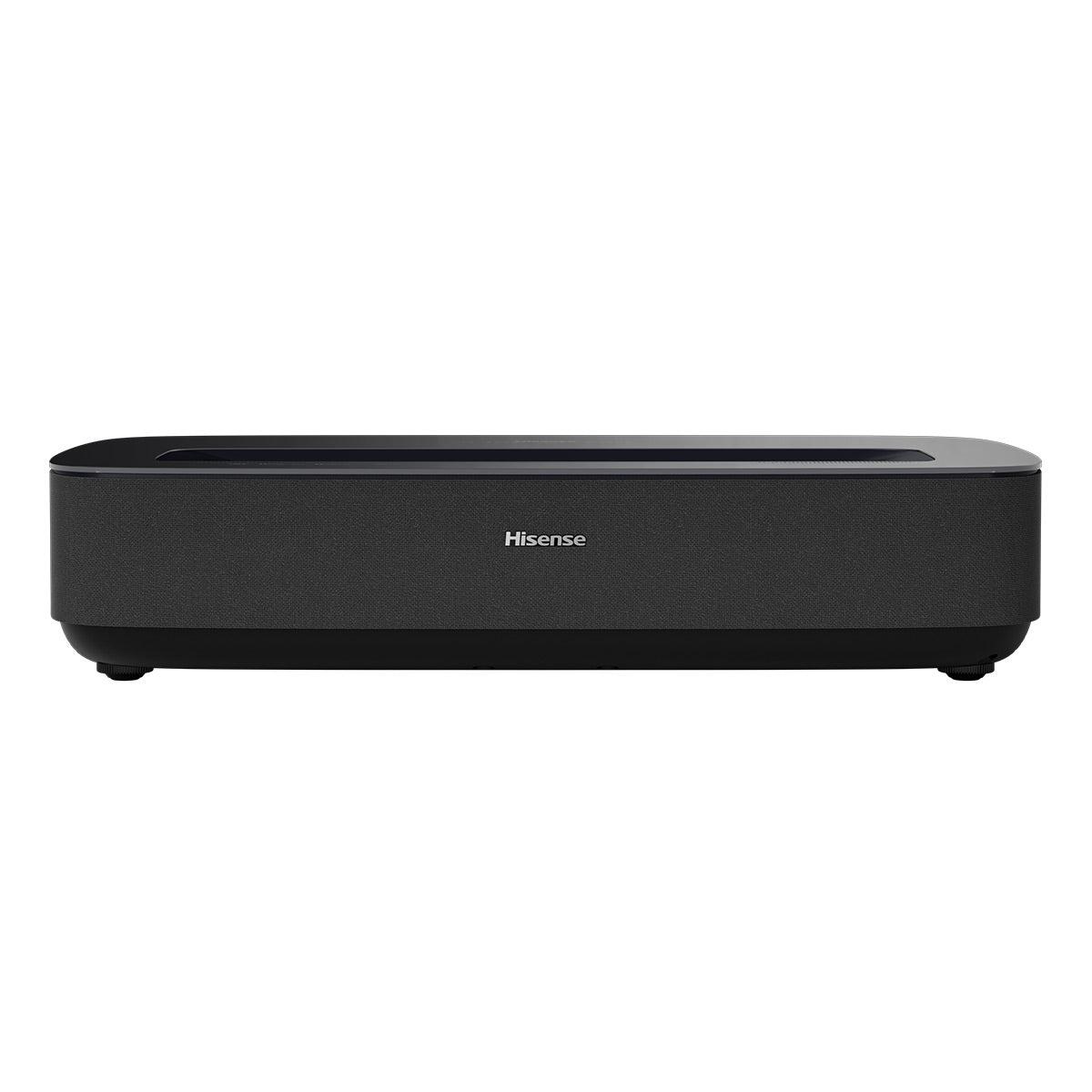
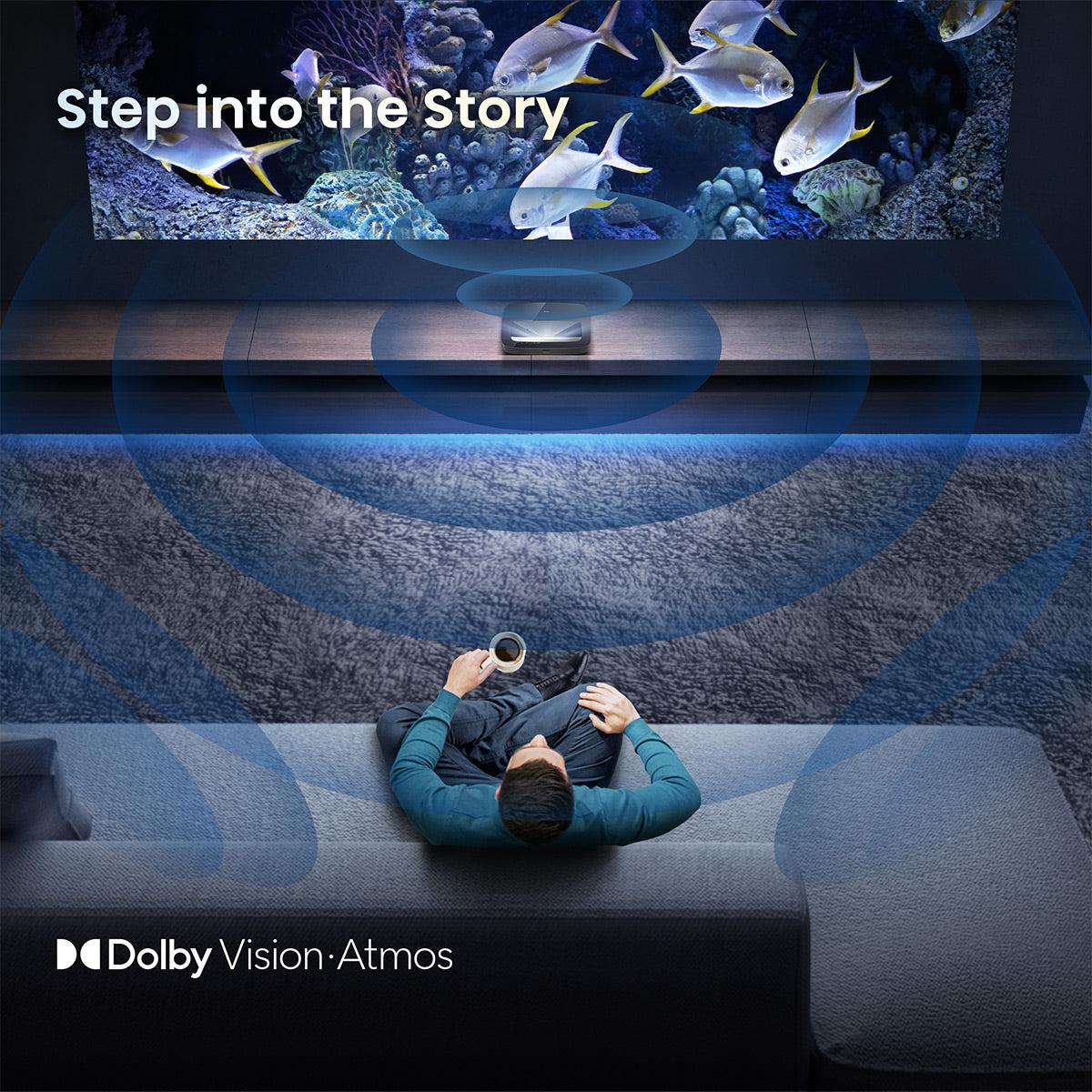
This comparison reveals perhaps the starkest philosophical difference between these projectors. The Hisense PL1 includes Google TV with all major streaming apps, 30-watt Dolby Atmos speakers, and consumer-friendly setup wizards. It's essentially a complete entertainment system that works out of the box—plug it in, connect to Wi-Fi, and start watching Netflix.
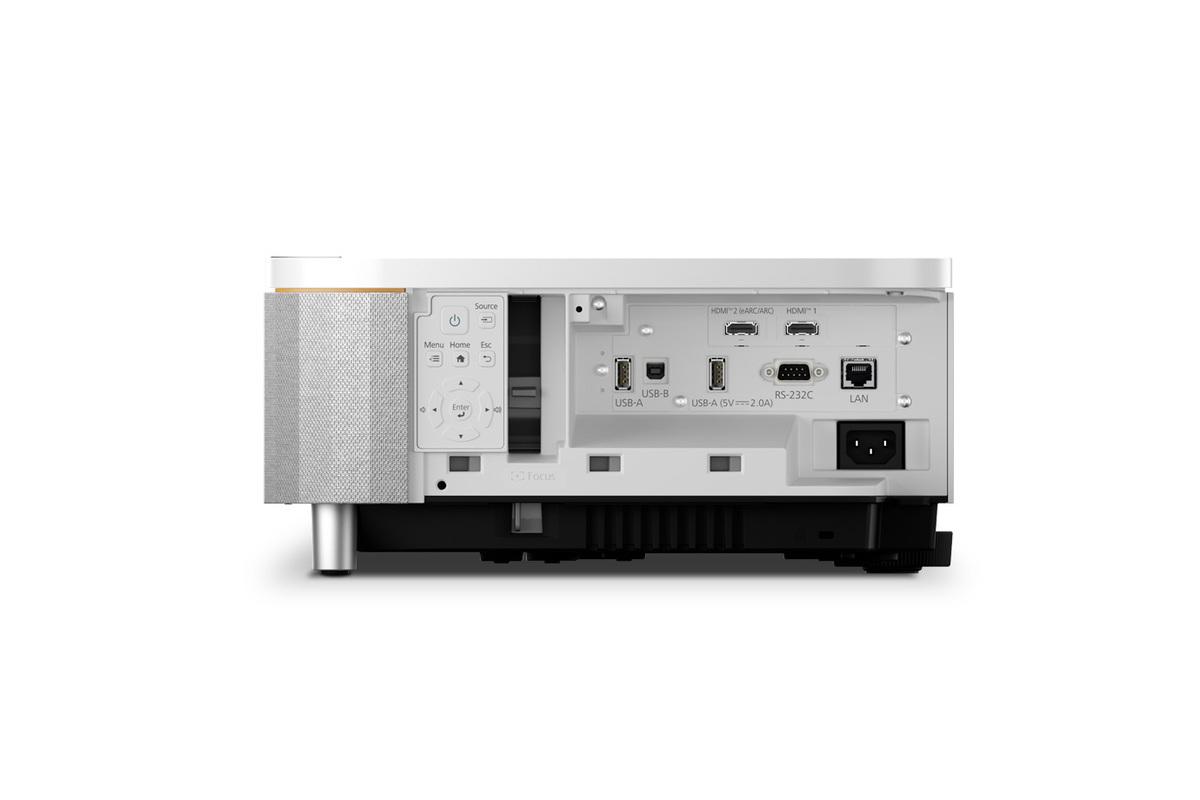
The Epson QS100 intentionally omits built-in speakers and smart TV features, instead focusing on professional integration capabilities. It supports IP control protocols like Crestron, Control4, and PJLink, allowing seamless integration with whole-home automation systems. This approach appeals to custom installers and enthusiasts who prefer dedicated external components for audio and streaming.
From a practical standpoint, the Hisense approach saves money and complexity—you're not buying separate streaming devices or speaker systems. The Epson approach offers potentially superior performance if you're willing to invest in high-quality external components, but the total system cost can quickly escalate.
Both projectors accommodate gaming reasonably well for their categories, though neither matches the ultra-low latency of dedicated gaming displays. The Epson QS100 and Hisense PL1 both feature Auto Low Latency Mode (ALLM), which automatically reduces input lag when connected to gaming consoles.
Based on technical specifications and user reports, both achieve input lag around 20-25 milliseconds, which works fine for casual gaming and single-player experiences but may feel sluggish for competitive online gaming. The Epson QS100 supports 4K at 60Hz and 2K at 120Hz, while the Hisense PL1 focuses on 4K/60Hz support.
Neither projector will satisfy serious competitive gamers who need sub-10ms response times, but both handle console gaming, movie watching, and casual PC gaming quite well.
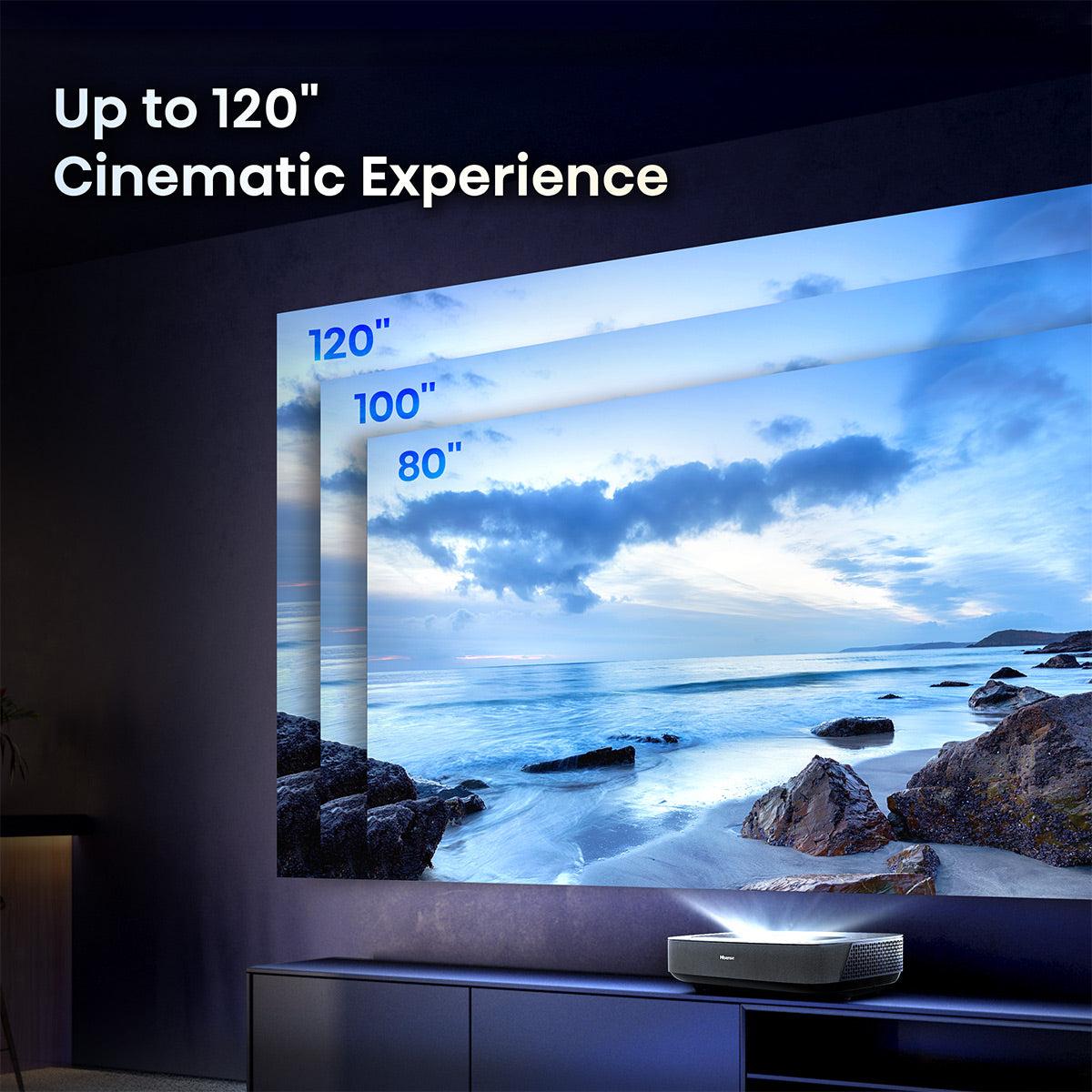
The Epson QS100 projects images up to 160 inches, while the Hisense PL1 maxes out at 120 inches. This difference becomes significant if you're planning a large dedicated theater room or want the biggest possible image.
Both projectors sit close to the screen—typically 6-12 inches away depending on desired image size—but their throw ratios differ slightly. The Epson offers more flexibility in placement, while the Hisense provides a more fixed but simpler setup process.
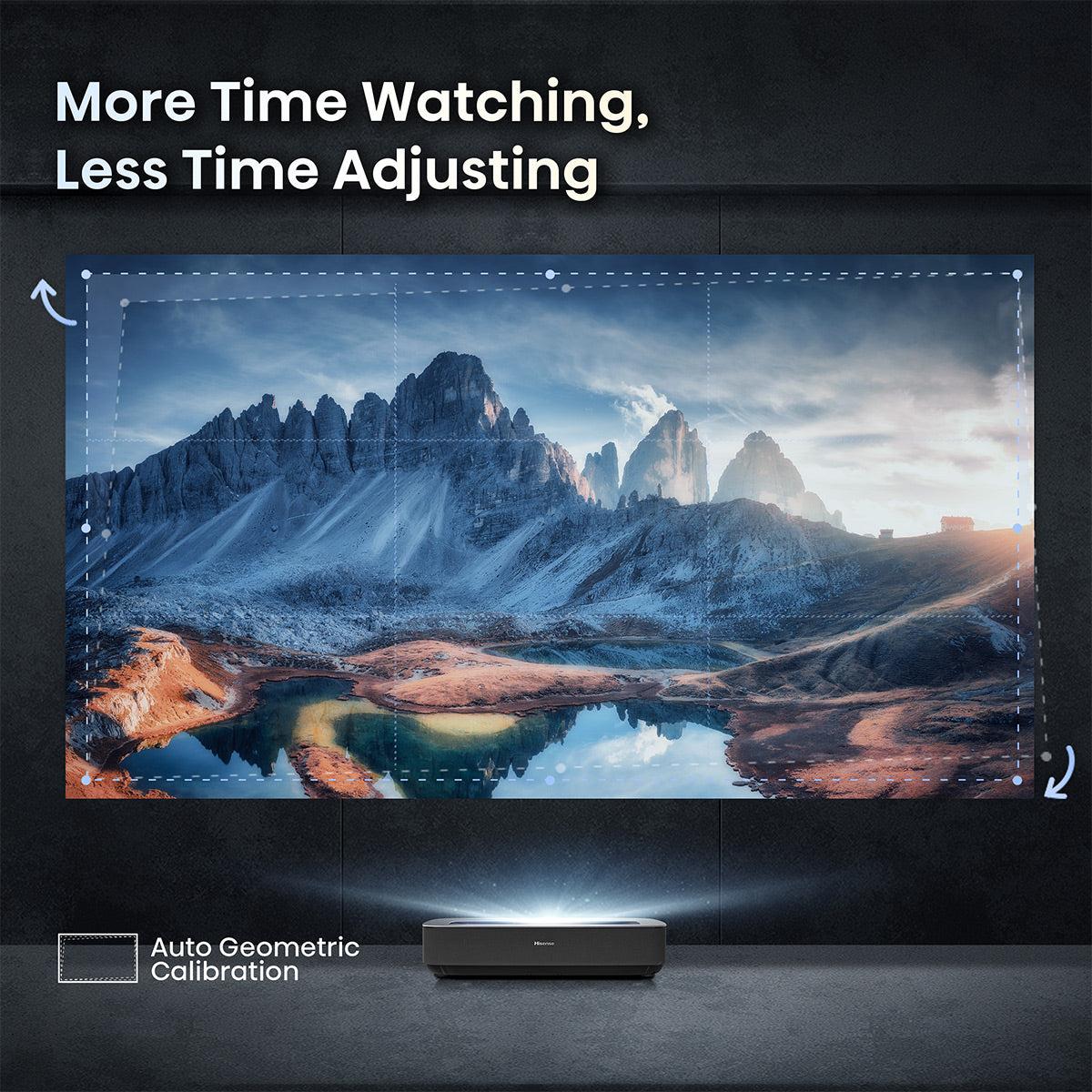
Setup complexity varies significantly: the Hisense PL1 includes automatic geometry correction through a mobile app, making DIY installation more manageable. The Epson QS100 offers more manual control options but may benefit from professional calibration, especially given its ISF certification for custom tuning.
At the time of writing, the price difference between these projectors is substantial—the Epson QS100 costs roughly 2.5 times more than the Hisense PL1. However, calculating true value requires considering total system costs.
The Hisense PL1 includes everything needed for immediate use: streaming platform, speakers, and simple setup. Add a decent ALR (ambient light rejecting) screen for around $300-800, and you have a complete large-screen entertainment system.
The Epson QS100 requires additional investments: external speakers ($300-2000+), streaming devices ($50-200), and potentially professional installation and calibration ($500-1500). The total system cost can easily double the projector's purchase price.
But here's where the math gets interesting: if you already own quality speakers and prefer external streaming devices anyway, the Epson's premium features may justify its higher cost, especially if you need its superior brightness or larger image capability.
For dedicated home theater use where lighting can be controlled, the Hisense PL1 offers compelling advantages. Its Dolby Vision support, cinema-wide color gamut, and integrated Dolby Atmos audio create an immersive movie experience at an accessible price point. The lower brightness actually benefits dark-room viewing by delivering better contrast ratios.
The Epson QS100 makes more sense for multipurpose family rooms where the projector must compete with ambient light. Its exceptional brightness and color accuracy in bright conditions make it more versatile, though at a significant premium.
Choose the Epson QS100 if you need maximum brightness for daytime viewing, plan to integrate with premium external components, want the largest possible image sizes, or are working with custom installers. It's the clear choice for bright living rooms and commercial applications.
Choose the Hisense PL1 if you want a complete entertainment solution at an accessible price, can control room lighting for optimal viewing, prioritize streaming convenience and built-in audio, or simply want excellent value without compromising core performance.
The decision ultimately depends on your room environment, existing equipment, and how much you value convenience versus ultimate performance. Both projectors deliver impressive large-screen experiences—they just take different paths to get there.
| Epson QS100 4K PRO-UHD Ultra Short Throw Projector | Hisense PL1 Laser Cinema Projector |
|---|---|
| Brightness - Most critical spec for daytime viewing and ambient light handling | |
| 4,500 lumens (exceptional for bright rooms, maintains colors in daylight) | 2,200 ANSI lumens (requires controlled lighting, best for evening viewing) |
| Display Technology - Affects color accuracy and rainbow artifacts | |
| 3LCD laser (no rainbow effect, equal color/white brightness) | Single-chip DLP with X-Fusion laser (sharper image, potential rainbow artifacts) |
| Maximum Image Size - Determines your big screen potential | |
| Up to 160 inches (ideal for large dedicated theaters) | 80-120 inches (perfect for most living rooms) |
| HDR Support - Critical for streaming quality and movie experience | |
| HDR10, HLG with Dynamic Tone Mapping (missing Dolby Vision) | HDR10, HLG, Dolby Vision (complete premium streaming support) |
| Smart Features - Affects convenience and total system cost | |
| No built-in streaming or speakers (requires external devices) | Google TV platform with all major streaming apps included |
| Audio System - Determines if you need external speakers | |
| No built-in audio (designed for premium external sound systems) | 30W Dolby Atmos speakers built-in (complete entertainment package) |
| Color Gamut - Impacts color vibrancy and cinema accuracy | |
| Rec.709 standard (TV-accurate colors, consistent performance) | 85% DCI-P3 coverage (cinema-wide colors, more vivid content) |
| Release Date - Shows technology generation and feature currency | |
| 2025 (latest laser and processing technology) | 2023 (proven technology with smart platform updates) |
| Professional Integration - Important for custom installations | |
| ISF certified, Crestron/Control4 compatible (designed for integrators) | Consumer-focused with mobile app setup (DIY-friendly) |
| Laser Life - Affects long-term maintenance and replacement costs | |
| 20,000 hours rated life (virtually maintenance-free operation) | 25,000 hours rated life (longer lifespan, lower heat generation) |
| Gaming Features - Matters for console and PC gaming performance | |
| ALLM, 4K/60Hz, 2K/120Hz support (~21ms input lag) | Auto Game Mode with ALLM, 4K/60Hz support (similar gaming performance) |
| Target Market - Helps determine which fits your needs and budget | |
| Premium installations, bright rooms, professional integration | Complete home entertainment, controlled lighting, value-focused buyers |
The Epson QS100 is significantly brighter at 4,500 lumens compared to the Hisense PL1 at 2,200 ANSI lumens. This makes the Epson QS100 much better for rooms with windows and ambient light, while the Hisense PL1 works best with controlled lighting or evening viewing.
The Hisense PL1 includes a 30-watt Dolby Atmos sound system built-in, making it a complete entertainment package. The Epson QS100 has no built-in speakers and requires external audio equipment, which allows for higher-quality sound but increases total system cost.
The Hisense PL1 includes Google TV with all major streaming apps like Netflix, Disney+, and Amazon Prime built-in. The Epson QS100 has no smart TV features and requires a separate streaming device like Apple TV, Roku, or Fire TV Stick.
The Epson QS100 can project images up to 160 inches, while the Hisense PL1 maxes out at 120 inches. For most home theaters and living rooms, both sizes are more than adequate, but the Epson QS100 offers more flexibility for very large installations.
Both the Epson QS100 and Hisense PL1 offer similar gaming performance with Auto Low Latency Mode and input lag around 20-25ms. The Epson QS100 supports 2K at 120Hz while the Hisense PL1 focuses on 4K/60Hz, but neither is ideal for competitive gaming requiring ultra-low latency.
The Hisense PL1 supports Dolby Vision, HDR10, and HLG for premium streaming quality. The Epson QS100 supports HDR10 and HLG but lacks Dolby Vision, though it compensates with Dynamic Tone Mapping technology for enhanced HDR performance.
The Hisense PL1 is more user-friendly with automatic geometry correction via mobile app and built-in smart features. The Epson QS100 offers more manual controls and professional calibration options, making it better suited for custom installations but potentially more complex for DIY setup.
Both are ultra short throw projectors that sit just 6-12 inches from the screen or wall. The exact distance depends on your desired image size, but both eliminate the need for ceiling mounting or long cable runs that traditional projectors require.
The Hisense PL1 provides better value for most buyers, including streaming, audio, and core projection in one package. The Epson QS100 costs significantly more and requires additional spending on speakers and streaming devices, but offers superior brightness and professional integration features.
Both work well for home theaters but serve different needs. The Hisense PL1 excels in dedicated dark rooms with its Dolby Vision support and cinema-wide color gamut. The Epson QS100 is better for multipurpose rooms where you can't always control lighting perfectly.
The Hisense PL1 offers a 25,000-hour laser life, while the Epson QS100 is rated for 20,000 hours. Both provide virtually maintenance-free operation for many years of typical use, with the Hisense PL1 having a slight longevity advantage.
Choose the Epson QS100 if you have a bright living room with lots of windows and need daytime viewing capability. Pick the Hisense PL1 if you can control room lighting, want built-in smart features and audio, and prefer a complete entertainment solution at a lower total cost.
We've done our best to create useful and informative comparisons to help you decide what product to buy. Our research uses advanced automated methods to create this comparison and perfection is not possible - please contact us for corrections or questions. These are the sites we've researched in the creation of this article: projectorscreen.com - youtube.com - projectorcentral.com - projectorreviews.com - techradar.com - audioadvice.com - projectorreviews.com - avsforum.com - projectorcentral.com - mediaserver.goepson.com - projectorcentral.com - news.epson.com - epson.eu - epson.com - epson.eu - epson.com - projectorcentral.com - bestbuy.com - projectorscreen.com - dreamediaav.com - projectorcentral.com - trustedreviews.com - crutchfield.com - hometheaterhifi.com - projectorcentral.com - projectorreviews.com - vividstormscreen.com - bhphotovideo.com - shi.com - crutchfield.com

Privacy Policy
Terms and Conditions - Affiliate Policy
Home Security
© Copyright 2008-2026.
11816 Inwood Rd #1211, Dallas, TX 75244