

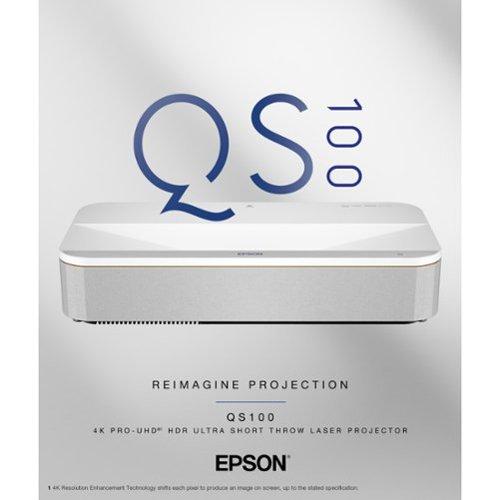
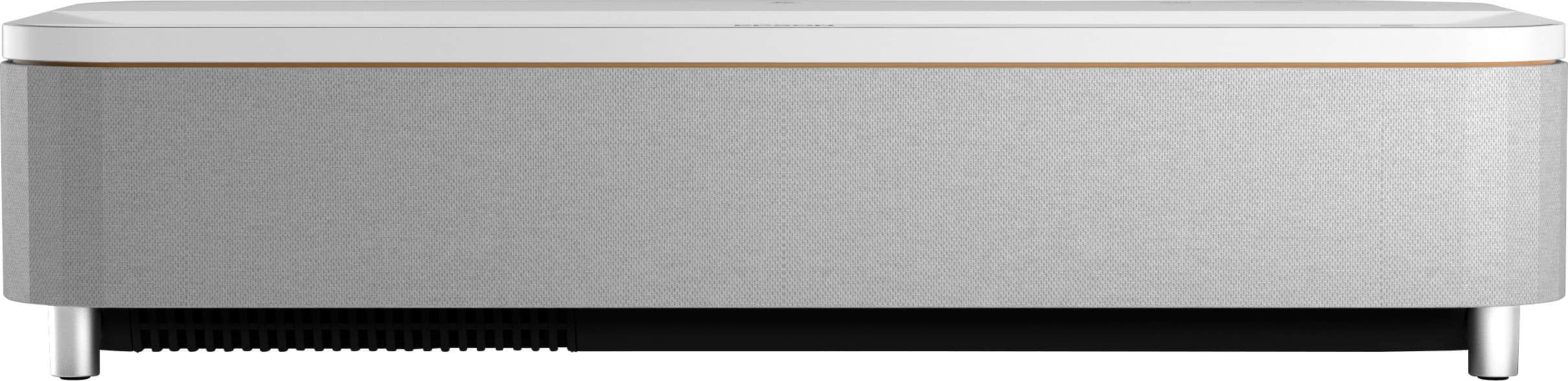
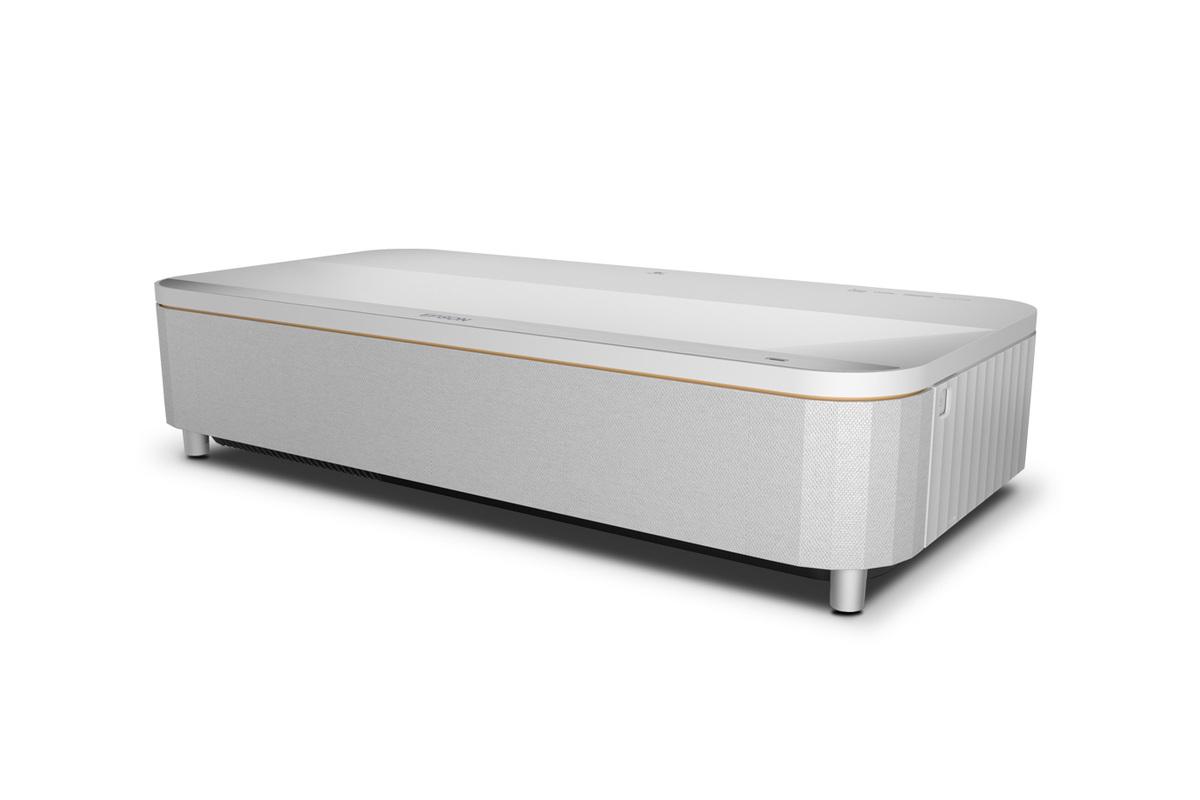
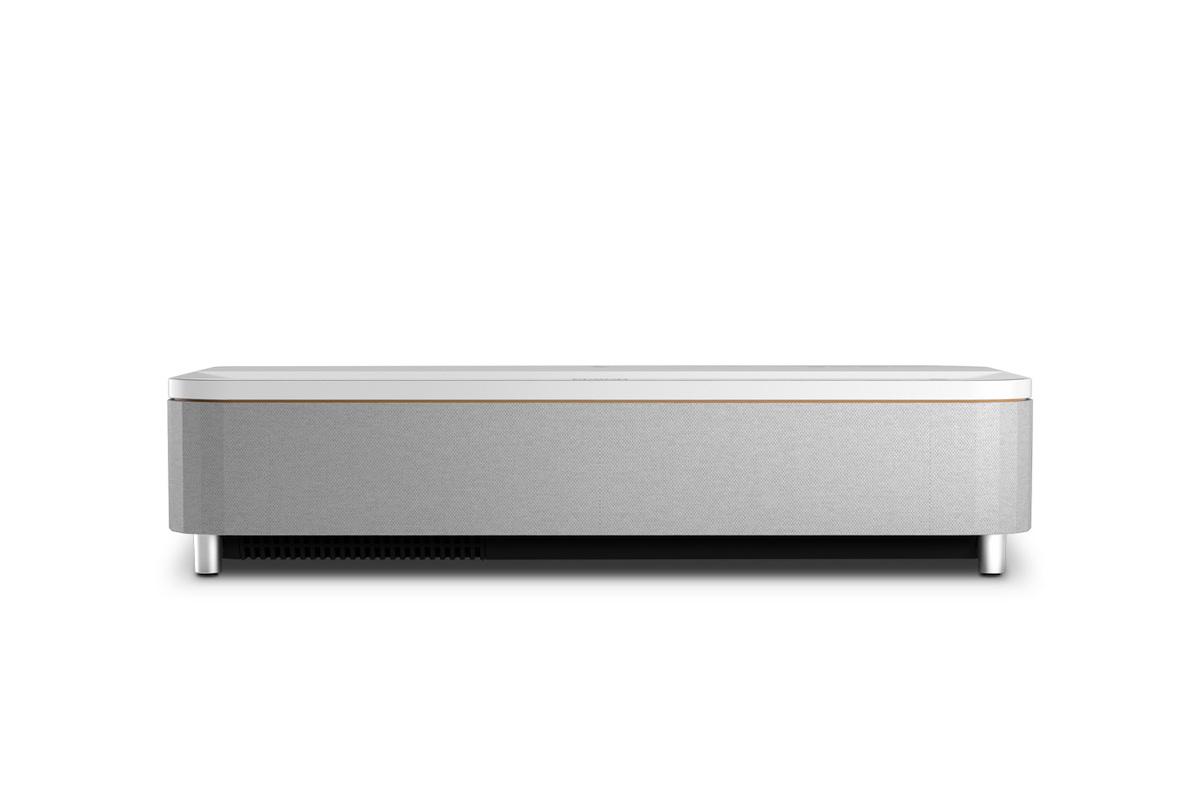
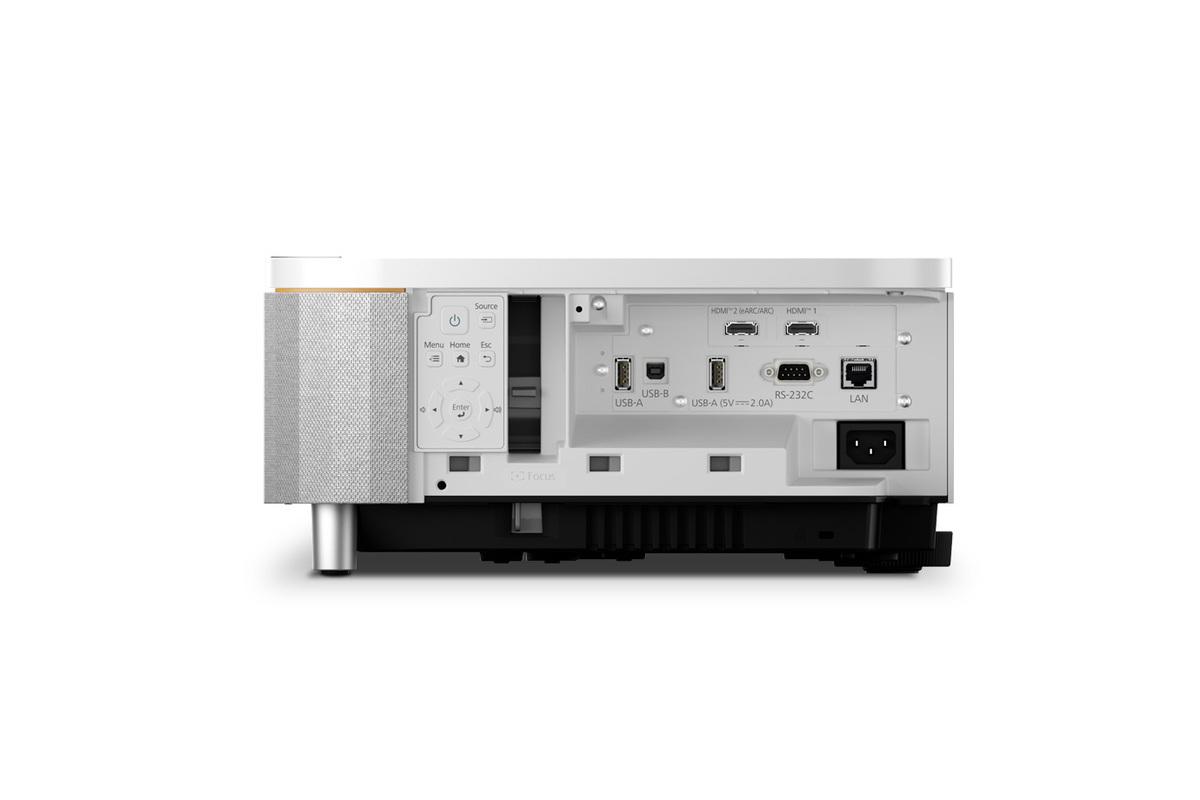
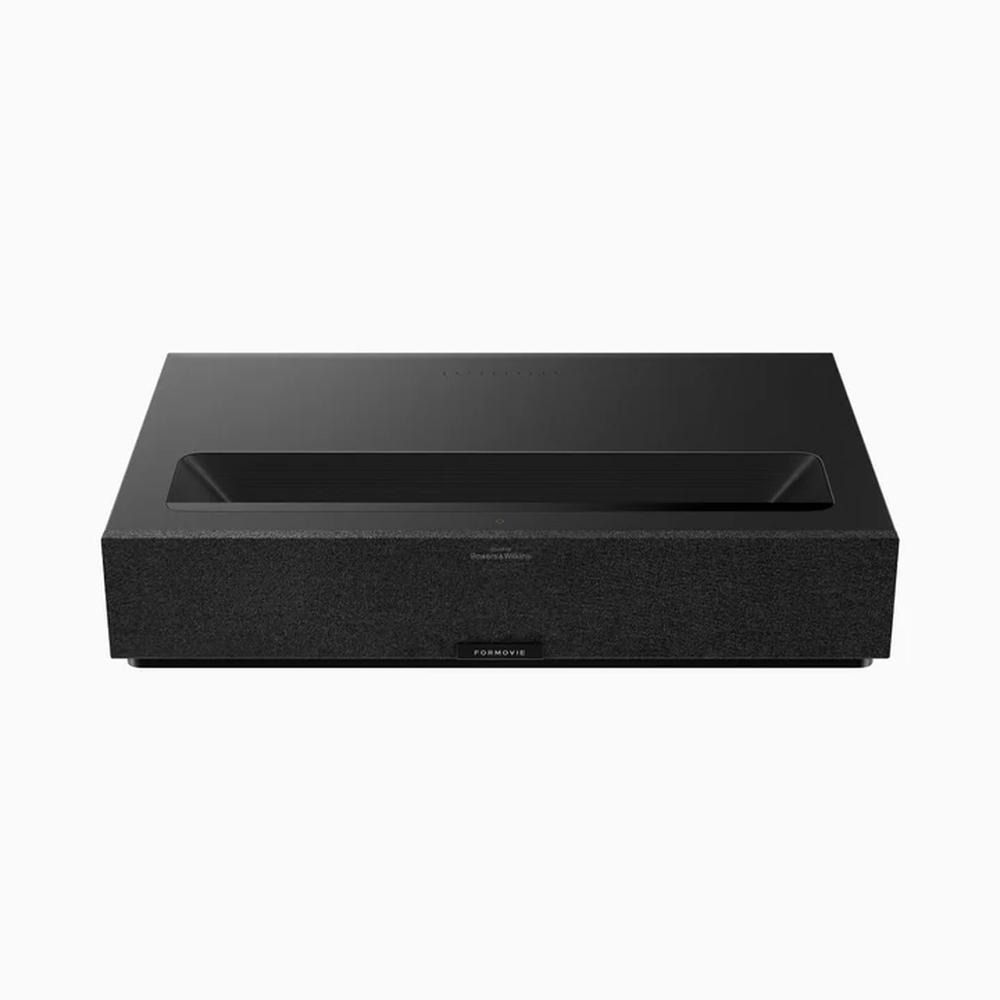

Picture this: you're sitting in your living room, natural light streaming through the windows, watching the latest blockbuster on a crisp 120-inch screen. The projector creating this magic is tucked away just inches from your wall—no ceiling mounting, no shadows when someone walks by, no complicated installation. This is the promise of ultra short throw (UST) projectors, and they've become one of the most exciting developments in home entertainment technology.
Today we're comparing two standout models that represent different philosophies in the UST space: the brightness-focused Epson QS100 and the value-packed Formovie Theater Premium. Both arrived relatively recently—the Epson QS100 in 2025 and the Formovie Theater Premium in 2024—but they take notably different approaches to solving the same problem: delivering cinema-quality images in your living space.
Before diving into the comparison, it's worth understanding what makes UST projectors special. Traditional projectors need to be mounted far from the screen—often on your ceiling—to create large images. UST projectors flip this concept entirely, using specialized ultra-wide-angle lenses and advanced optics to project massive images from just inches away from your wall.
The "throw ratio" is the key measurement here—it tells you how far the projector needs to be from the screen to create a certain image size. A throw ratio of 0.2:1 means the projector sits 0.2 feet away to create a 1-foot-wide image. Both projectors we're examining have throw ratios around 0.2:1, meaning they can create a 100-inch diagonal image while sitting just 8-10 inches from your wall.
This positioning eliminates the shadow problems you get with traditional projectors when someone walks between the projector and screen. It also makes installation dramatically simpler—no ceiling mounting, no running cables through walls, and much easier integration into existing living spaces.
The single most important factor separating these projectors is brightness, measured in lumens. The Epson QS100 delivers a commanding 4,500 lumens of both color and white brightness, while the Formovie Theater Premium produces 2,200 ISO lumens. This isn't just a numbers game—it fundamentally changes how and when you can use these projectors.
Here's why brightness matters so much: unlike TVs that have their own backlighting, projectors rely on reflecting light off your wall or screen. In a bright room, ambient light washes out the projected image, making colors look washed out and details harder to see. The Epson QS100's higher brightness means it can overcome more ambient light, delivering watchable images even during daytime or in rooms with windows.
Based on user reports and expert reviews, the brightness difference is immediately noticeable. The Epson QS100 maintains color saturation and contrast even with room lights on, while the Formovie Theater Premium really shines (pun intended) in darker, more controlled environments. If you're planning to use your projector primarily in the evening or in a dedicated dark room, the Formovie's brightness is perfectly adequate. But if you want the flexibility to watch content any time of day, the Epson's extra brightness becomes invaluable.
The Epson QS100 achieves this brightness through its 3LCD laser technology—a system that uses three separate LCD panels (one each for red, green, and blue) combined with a laser light source. This approach ensures that color brightness matches white brightness, eliminating the rainbow effect (brief flashes of color) that can occur with single-chip DLP projectors, which the Formovie Theater Premium uses.
This is where things get technically interesting. The Formovie Theater Premium delivers true native 4K resolution at 3840x2160 pixels, while the Epson QS100 uses what Epson calls "4K PRO-UHD"—a pixel-shifting technology that starts with 1080p panels and shifts pixels rapidly to simulate 4K detail.
Think of pixel shifting like this: imagine you have a 1080p image, but the projector rapidly moves each pixel to four different positions, filling in the gaps to create what appears to be 4K resolution. It's not quite the same as having 4K from the start, but it's remarkably close. In practical terms, most viewers sitting at normal distances can't distinguish between the Epson QS100's pixel-shifted 4K and the Formovie Theater Premium's native 4K when watching movies or TV shows.
Where you might notice the difference is with fine text, computer graphics, or if you sit very close to the screen. The Formovie Theater Premium will render these with pixel-perfect accuracy, while the Epson QS100 might show slight softness in extremely fine details.
For most home theater applications, though, this difference is academic. Both projectors deliver impressively sharp images that far exceed what you'd get from a 1080p projector.
High Dynamic Range (HDR) makes images look more lifelike by expanding the range between the darkest blacks and brightest whites, plus displaying a wider range of colors. Both projectors support HDR, but they take different approaches.
The Formovie Theater Premium supports Dolby Vision, which is considered the premium HDR format. Dolby Vision analyzes each scene individually and optimizes the HDR settings frame by frame, potentially delivering more accurate and impactful HDR performance. It covers 107% of the BT.2020 color space—a technical way of saying it can display more colors than standard projectors, making images look more vibrant and lifelike.
The Epson QS100 supports HDR10 with dynamic tone mapping—a feature that adjusts brightness and contrast in real-time based on the content. While it doesn't support Dolby Vision, its significantly higher brightness means it can actually display brighter HDR highlights than the Formovie. This creates an interesting trade-off: the Formovie has more sophisticated HDR processing, but the Epson can show brighter, more impactful HDR scenes.
In darker viewing environments, the Formovie Theater Premium's Dolby Vision advantage becomes more apparent, with more nuanced shadow details and color gradations. In brighter rooms, the Epson QS100's brightness advantage tends to dominate, making HDR content more visible and impactful despite the less sophisticated processing.
Both projectors cater to gamers, but with different strengths. The Epson QS100 supports 4K gaming at 120Hz with Auto Low Latency Mode (ALLM)—a feature that automatically switches the projector to its lowest-lag mode when it detects a gaming console. Input lag, the delay between pressing a button and seeing the action on screen, is critical for competitive gaming.
The Formovie Theater Premium offers impressive specs too, with input lag as low as 18ms and support for 240Hz at 1080p resolution. For context, anything under 40ms is considered good for gaming, and under 20ms is excellent.
However, the Epson QS100's brightness advantage becomes crucial for gaming during the day or in well-lit rooms. Many gamers prefer playing with some ambient light to reduce eye strain, and the Epson's extra brightness makes this much more comfortable.
Here's where these projectors diverge dramatically in philosophy. The Formovie Theater Premium includes a sophisticated built-in audio system developed with Bowers & Wilkins, featuring dual 15-watt speakers with separate tweeters (for high frequencies) and woofers (for low frequencies). This creates a reasonably full-range audio experience that eliminates the need for external speakers for many users.
The Epson QS100 takes the opposite approach—it includes no speakers at all. This might seem like a disadvantage, but it reflects the projector's positioning as a premium display device meant to be paired with high-quality external audio systems. If you're spending significant money on a projector, you'll likely want equally impressive audio, and external speakers or soundbars typically outperform built-in projector speakers significantly.
Based on user feedback, the Formovie Theater Premium's audio is surprisingly good for built-in speakers—certainly adequate for casual viewing and much better than typical projector audio. But it can't match a dedicated sound system, especially for action movies or music content where bass response matters.
The Formovie Theater Premium comes with Android TV built-in, providing access to streaming apps like Netflix, Disney+, and YouTube without needing external devices. It includes Google Assistant for voice control and can handle most of your streaming needs directly.
The Epson QS100 focuses purely on being a display device—it has no smart features, no built-in streaming apps, and no voice control. You'll need to connect external devices like Apple TV, Roku, or gaming consoles to access streaming content.
This difference reflects their target markets. The Formovie Theater Premium aims to be a complete entertainment solution, while the Epson QS100 positions itself as a premium component in a larger system.
Both projectors sit on furniture near your wall, but they differ in flexibility. The Epson QS100 offers a variable throw ratio (0.16:1 to 0.22:1), meaning you can adjust how far it sits from the wall while maintaining the same image size. This provides more flexibility in room placement and furniture arrangement.
The Formovie Theater Premium has a fixed 0.21:1 throw ratio, which simplifies setup but reduces placement flexibility. However, both include sophisticated geometry correction systems that can adjust for slight misalignment or non-flat walls.
The Epson QS100 operates much more quietly—as low as 20 decibels in quiet mode compared to the Formovie Theater Premium's 28 decibels. This difference is noticeable in quiet scenes or when sitting close to the projector.
At the time of writing, these projectors occupy different price tiers, with the Epson QS100 positioned as a premium option and the Formovie Theater Premium offering more features for less money.
The Formovie Theater Premium represents exceptional value when you consider what's included: true 4K resolution, Dolby Vision support, quality built-in audio, and smart TV functionality. If you were to buy these features separately—a 4K projector, soundbar, and streaming device—you'd likely spend significantly more.
The Epson QS100 commands premium pricing but delivers where it counts most: brightness and image quality in challenging lighting conditions. It's built for users who prioritize performance over features and plan to integrate it into high-end home theater systems.
Choose the Epson QS100 if you value flexibility above all else. Its superior brightness means you can watch content any time of day, in any lighting condition. It's the better choice for living rooms with windows, open floor plans, or anywhere you can't control ambient light perfectly. If you already have a good sound system or plan to buy one, the lack of built-in audio isn't a drawback—it's a feature that keeps you from paying for speakers you won't use.
The Epson QS100 also makes sense for serious gamers who want 4K/120Hz gaming with minimal lag, or for users planning professional installation and calibration. Its exceptional quiet operation and professional-grade features justify the premium for discerning users.
Choose the Formovie Theater Premium if you want the most complete package for your money. True 4K resolution, sophisticated HDR processing, quality built-in audio, and smart functionality create a compelling all-in-one solution. It's perfect for dedicated media rooms, evening viewing, or anywhere you can control lighting reasonably well.
The Formovie Theater Premium particularly makes sense for streaming-focused households, apartment dwellers who can't install complex audio systems, or anyone wanting a premium projector experience without premium pricing.
Both projectors represent the current state-of-the-art in UST technology, just with different priorities. The Epson QS100 prioritizes uncompromising brightness and integration flexibility, while the Formovie Theater Premium maximizes features and value. Your choice should depend on your room's lighting, your budget, and whether you prefer a specialized component or an all-in-one entertainment solution.
The UST projector market has evolved rapidly, and both of these models push the boundaries of what's possible when you want cinema-scale entertainment without the complexity of traditional projection systems. Whichever you choose, you're getting technology that would have seemed impossible just a few years ago—and that's pretty exciting.
| Epson QS100 4K PRO-UHD Ultra Short Throw Projector | Formovie Theater Premium 4K Ultra Short Throw Projector |
|---|---|
| Brightness - Most critical factor for daytime and well-lit room viewing | |
| 4,500 lumens (exceptional for any lighting condition) | 2,200 ISO lumens (good for evening/controlled lighting) |
| Resolution Technology - Affects sharpness and detail quality | |
| 4K PRO-UHD with pixel shifting (very close to native 4K) | True native 4K 3840x2160 (pixel-perfect accuracy) |
| Display Technology - Impacts color accuracy and rainbow effects | |
| 3LCD laser (no rainbow effect, equal color/white brightness) | Single-chip DLP with RGB laser (potential rainbow effect) |
| HDR Support - Enhanced contrast and color range | |
| HDR10 with dynamic tone mapping | Dolby Vision, HDR10, HDR10+ (more advanced processing) |
| Color Gamut - Range of colors the projector can display | |
| BT.2020 coverage (wide color range) | 107% BT.2020 coverage (exceptional color accuracy) |
| Throw Ratio - Distance needed from wall for large images | |
| 0.16:1 to 0.22:1 (flexible placement options) | 0.21:1 fixed (simpler but less flexible setup) |
| Maximum Image Size - Largest screen possible | |
| 160 inches (massive home theater experience) | 150 inches (still cinema-scale viewing) |
| Gaming Performance - Input lag and refresh rates | |
| 4K/120Hz, ALLM, ultra-low lag | 18ms input lag, up to 240Hz at 1080p |
| Built-in Audio - Eliminates need for external speakers | |
| None (requires external audio system) | Dual 15W Bowers & Wilkins speakers with tweeters/woofers |
| Smart Features - Built-in streaming and apps | |
| None (needs external streaming device) | Android TV with Google Assistant, Netflix, streaming apps |
| Noise Level - Important for quiet viewing environments | |
| 20-34 dB (exceptionally quiet operation) | 28 dB (moderate noise level) |
| Laser Life - Longevity before brightness degradation | |
| 20,000 hours (virtually maintenance-free) | 30,000 hours (longer rated lifespan) |
| 3D Support - For 3D movie enthusiasts | |
| No 3D capability | Full HD 3D support |
| Professional Features - Calibration and integration options | |
| ISF certified, extensive calibration, IP control | Standard calibration options |
| Best For - Ideal user scenarios | |
| Bright rooms, premium installations, existing audio systems | Dark rooms, all-in-one solutions, budget-conscious buyers |
The Epson QS100 is significantly brighter at 4,500 lumens compared to the Formovie Theater Premium's 2,200 lumens. This makes the Epson QS100 much better for watching content during the day or in rooms with ambient lighting, while the Formovie Theater Premium works best in darker, more controlled environments.
The Formovie Theater Premium has true native 4K resolution (3840x2160), while the Epson QS100 uses 4K PRO-UHD pixel-shifting technology that simulates 4K from 1080p panels. Both deliver excellent image quality, but the Formovie Theater Premium provides pixel-perfect 4K accuracy, especially noticeable with text and fine details.
The Formovie Theater Premium includes dual 15W Bowers & Wilkins speakers with dedicated tweeters and woofers, providing a complete audio solution. The Epson QS100 has no built-in speakers and requires an external sound system, which offers more flexibility for high-end audio setups.
The Formovie Theater Premium comes with Android TV built-in, including streaming apps like Netflix, Google Assistant, and voice control. The Epson QS100 has no smart features and requires external devices like Apple TV, Roku, or gaming consoles for streaming content.
Both projectors offer excellent gaming performance, but the Epson QS100 supports 4K gaming at 120Hz with Auto Low Latency Mode and performs better in bright room gaming scenarios. The Formovie Theater Premium offers impressive 18ms input lag and supports up to 240Hz at 1080p resolution.
Both projectors have ultra-short throw capabilities with similar throw ratios. The Epson QS100 offers more flexibility with a 0.16:1 to 0.22:1 throw ratio, while the Formovie Theater Premium has a fixed 0.21:1 ratio. Both can create 100+ inch images from just inches away from your wall.
The Formovie Theater Premium supports advanced Dolby Vision plus HDR10 and HDR10+ formats, offering more sophisticated HDR processing. The Epson QS100 supports HDR10 with dynamic tone mapping but lacks Dolby Vision support, though its higher brightness can display brighter HDR highlights.
The Epson QS100 is exceptionally quiet, operating at just 20-34 dB depending on the mode. The Formovie Theater Premium operates at 28 dB, which is still relatively quiet but more noticeable in silent scenes or when sitting close to the projector.
The Formovie Theater Premium typically offers better value with true 4K resolution, Dolby Vision, built-in premium audio, and smart TV features at a lower price point. The Epson QS100 commands a premium but delivers superior brightness and professional-grade features for demanding installations.
The Epson QS100 excels in bright living rooms thanks to its 4,500 lumens output, maintaining good image quality even with windows and ambient lighting. The Formovie Theater Premium is better suited for controlled lighting environments and evening viewing due to its lower brightness output.
The Formovie Theater Premium supports Full HD 3D content, while the Epson QS100 does not offer 3D capability. If 3D movie viewing is important to you, the Formovie Theater Premium is the only option between these two projectors.
For a dedicated dark home theater room, the Formovie Theater Premium offers excellent value with true 4K resolution, Dolby Vision support, and integrated audio. However, the Epson QS100 provides superior image quality and professional calibration options for high-end theater installations where external audio systems are preferred.
We've done our best to create useful and informative comparisons to help you decide what product to buy. Our research uses advanced automated methods to create this comparison and perfection is not possible - please contact us for corrections or questions. These are the sites we've researched in the creation of this article: projectorscreen.com - youtube.com - projectorcentral.com - projectorreviews.com - techradar.com - audioadvice.com - projectorreviews.com - avsforum.com - projectorcentral.com - mediaserver.goepson.com - projectorcentral.com - news.epson.com - epson.eu - epson.com - epson.eu - epson.com - projectorcentral.com - bestbuy.com - techradar.com - projectorscreen.com - avsforum.com - rtings.com - nothingprojector.com - formovie.com - bmcav.com.au - projectorcentral.com - digitalcinema.com.au - projectorreviews.com - techpowerup.com - nothingprojector.com

Privacy Policy
Terms and Conditions - Affiliate Policy
Home Security
© Copyright 2008-2026.
11816 Inwood Rd #1211, Dallas, TX 75244