

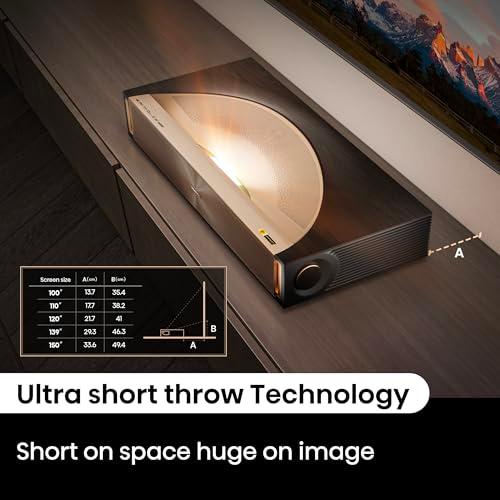
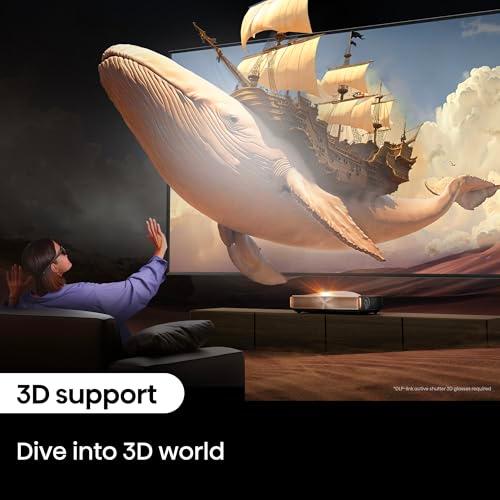
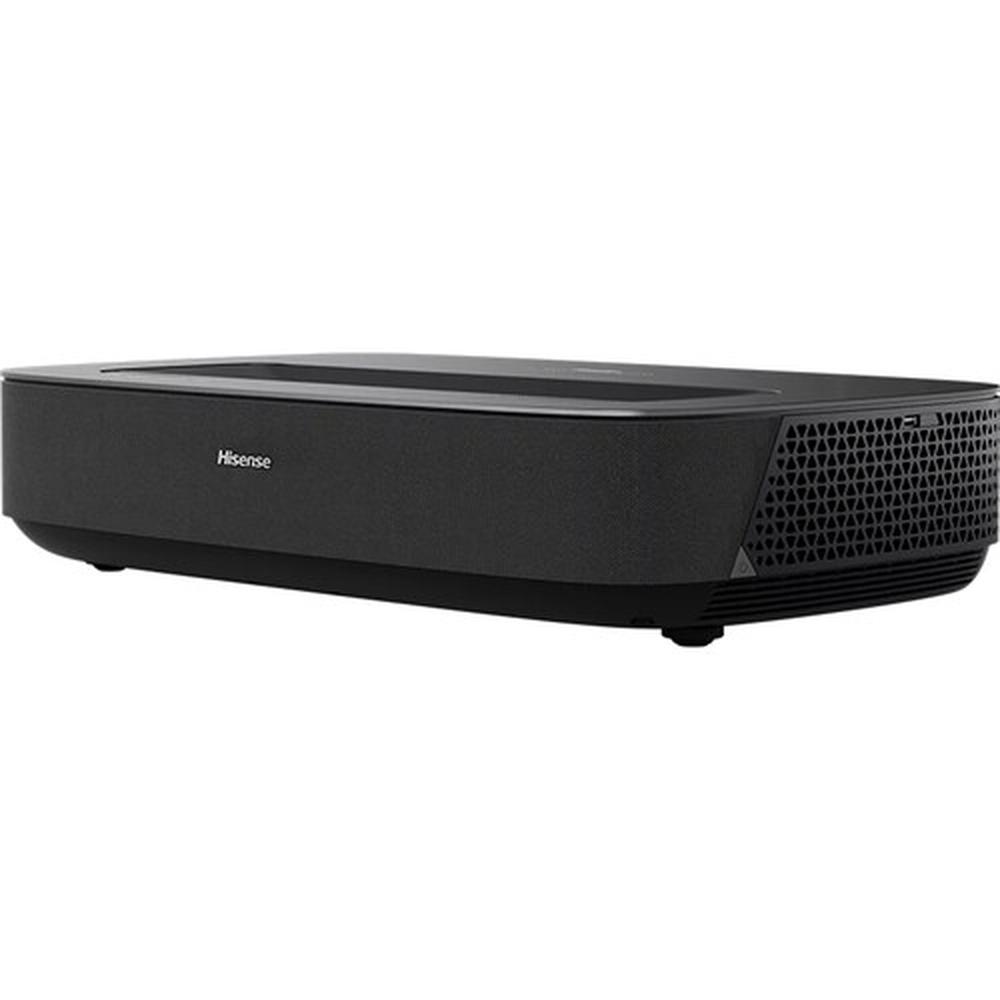
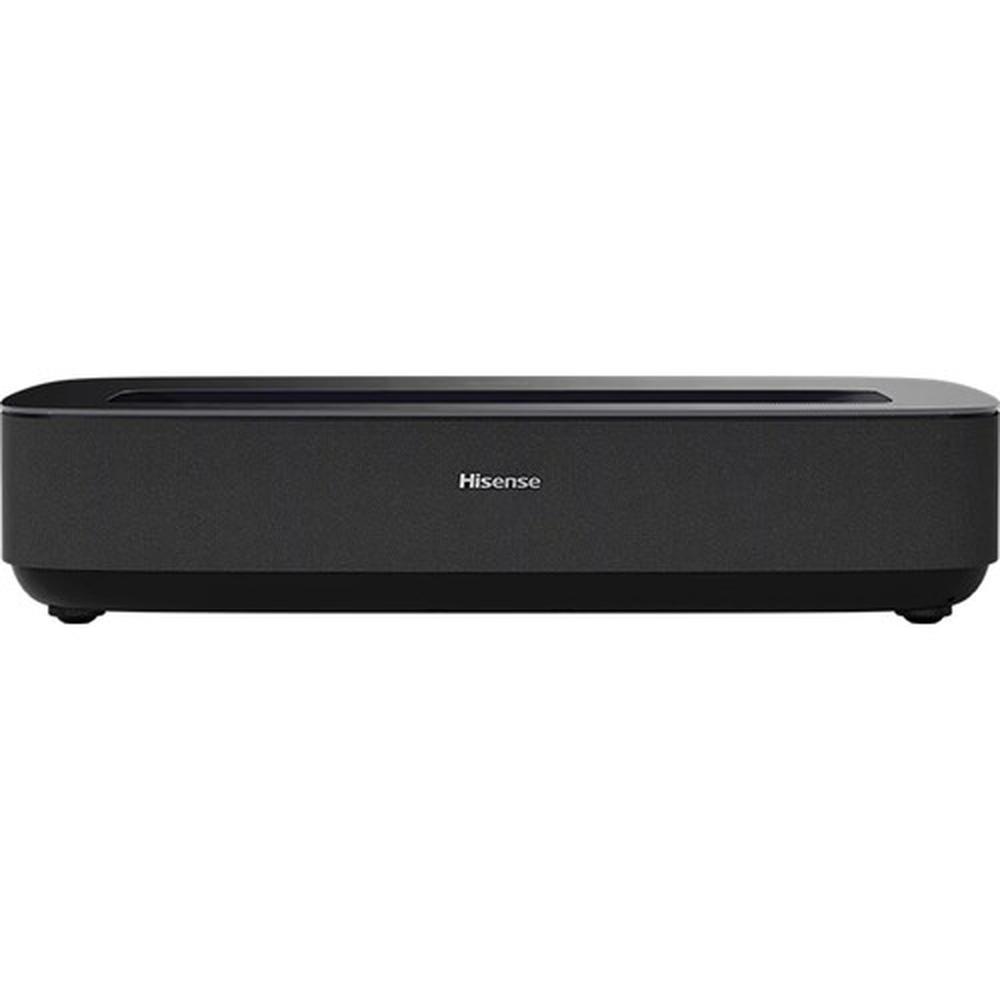
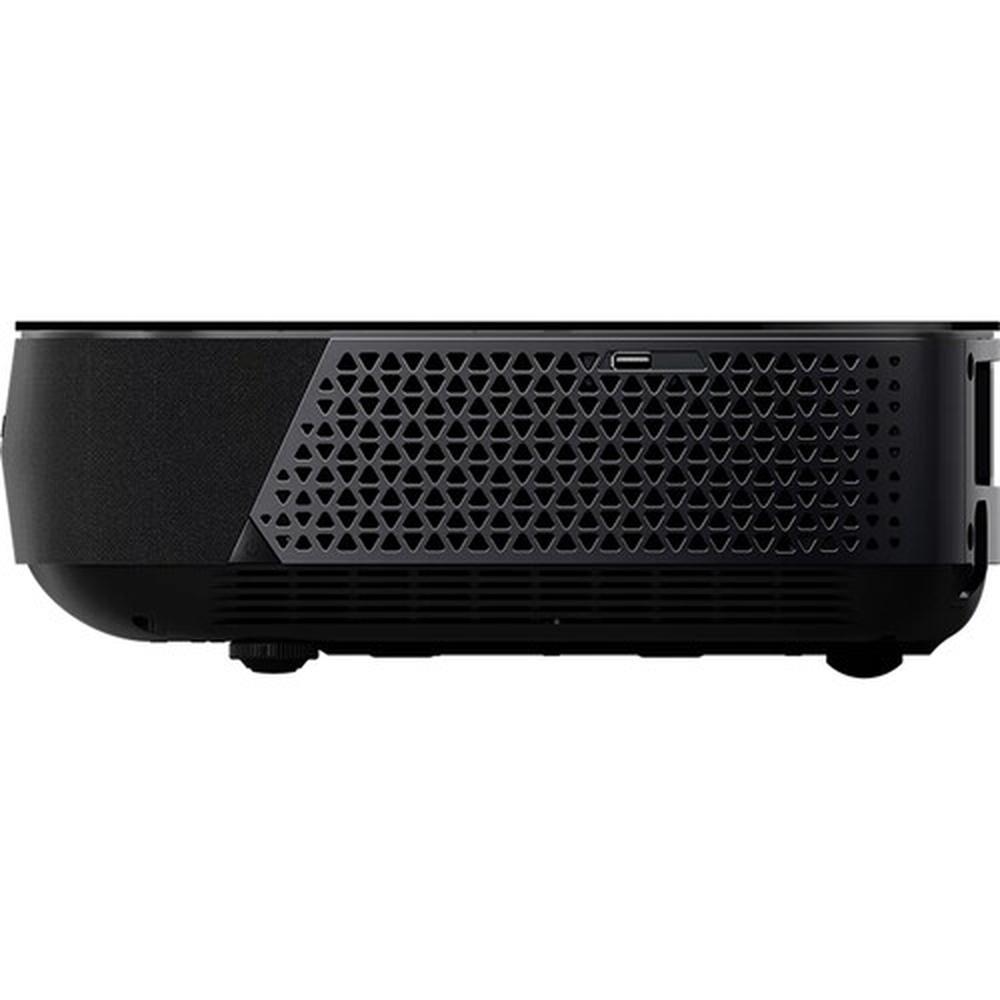
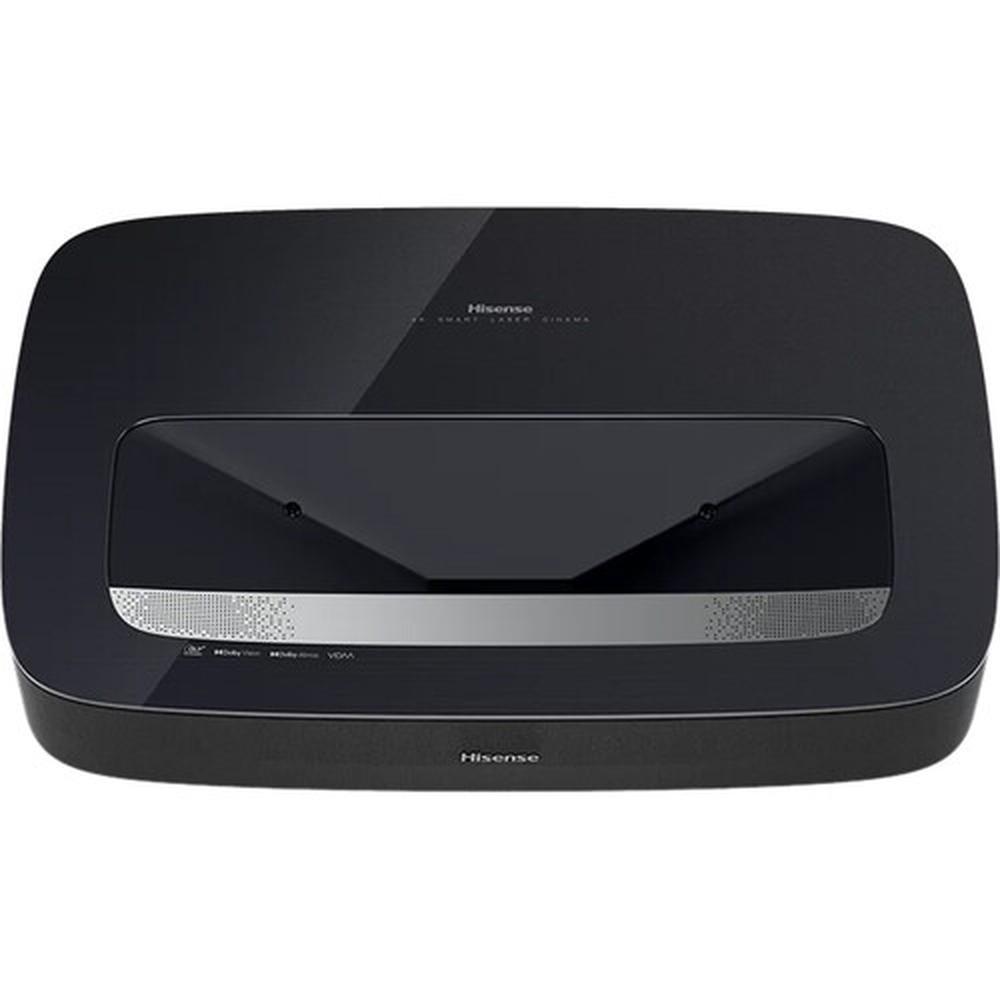
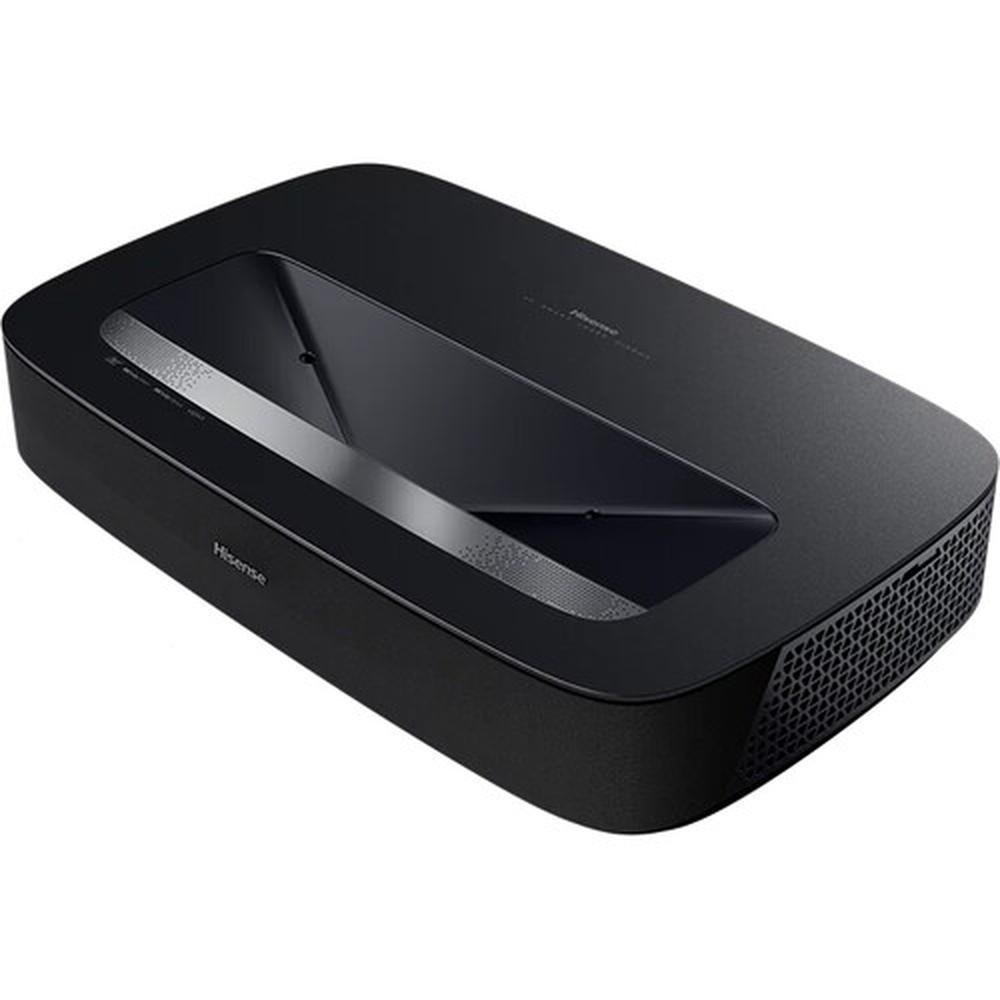
Ultra short throw projectors have revolutionized home entertainment by solving one of the biggest challenges with traditional projectors: space. Instead of mounting a projector on your ceiling or placing it across the room, these clever devices sit just inches from your wall and project upward at an extreme angle to create massive 80-200+ inch images. Think of it like a periscope in reverse—the light bounces off mirrors inside the projector to create a huge picture from an impossibly short distance.
This technology eliminates the frustration of shadows when someone walks in front of the screen, reduces the blinding light that hits your eyes with traditional projectors, and makes it possible to get cinema-sized images in apartments, condos, or rooms where running cables across the ceiling simply isn't practical.
Hisense has become a major player in this space, offering everything from budget-friendly options to flagship models. Their latest lineup includes the premium L9Q (released in 2025) and the value-focused PL2 (released in 2024). While both are ultra short throw projectors that can transform your living room into a home theater, they represent very different approaches to achieving that goal.
The fundamental difference between the L9Q and PL2 lies in how they create light and color. This isn't just a minor technical detail—it's the foundation that determines picture quality, brightness, and long-term performance.
The PL2 uses what's called a single-laser plus phosphor system through Hisense's X-Fusion technology. Here's how it works: a blue laser hits a spinning phosphor wheel that contains yellow and other compounds. When the blue light hits different sections of this wheel, it creates red and green light. The projector then combines this with the original blue laser to create a full spectrum of colors. It's an efficient, cost-effective approach that's been refined over many years and works well for most content.
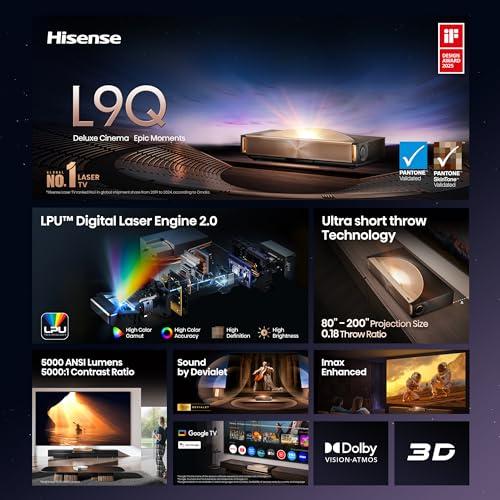
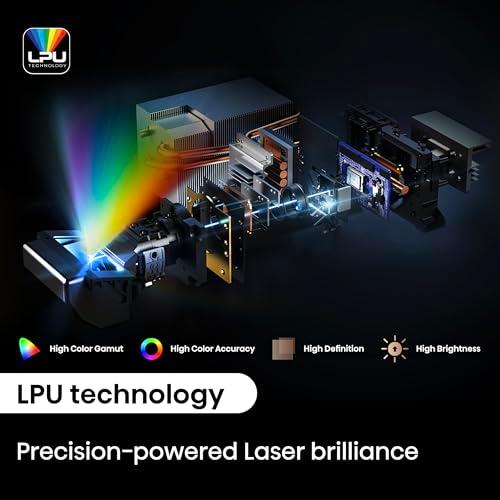
The L9Q, however, uses something much more sophisticated: true triple-laser technology with their LPU Digital Laser Engine 2.0. Instead of using one laser and converting its light, this system uses three separate lasers—one pure red, one pure green, and one pure blue. These lasers work together without any color wheels or phosphor conversion, creating what's essentially the purest possible light for projection.
Why does this matter? Pure laser light in each color produces much more accurate, vibrant colors. When you're watching a sunset scene, the L9Q can display reds and oranges that are closer to what the filmmaker intended, while the PL2 has to approximate these colors through its conversion process. The difference becomes especially noticeable with highly saturated content like animated movies, nature documentaries, or modern HDR films.
Brightness is arguably the most critical specification for any projector, and it's measured in ANSI lumens—a standardized way to measure how much light the projector actually puts out. The more lumens, the better the projector performs in rooms with ambient light.
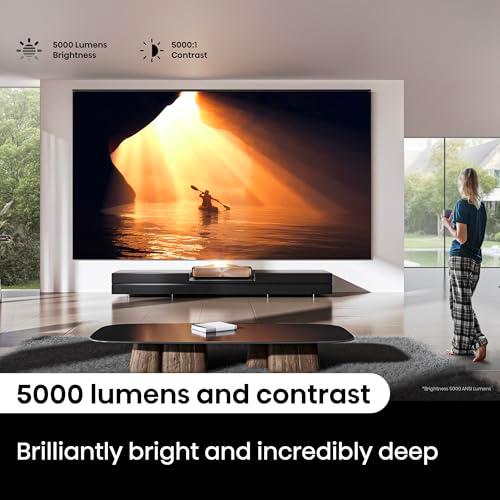
The L9Q produces an impressive 5,000 ANSI lumens, making it one of the brightest ultra short throw projectors available. The PL2 delivers 2,700 ANSI lumens, which is still quite good for its price category but represents a significant difference in real-world performance.
What does this mean practically? With the PL2, you'll want to dim the lights for the best experience, especially if you're using a large screen size. It performs well in moderately lit rooms, but bright living rooms with large windows can wash out the image. The L9Q, on the other hand, maintains excellent image quality even with considerable ambient light. You can watch movies in the afternoon with curtains open and still get a vibrant, contrasty image.
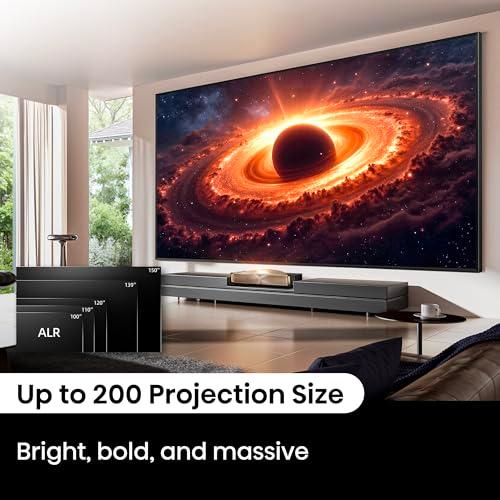
This brightness advantage becomes even more important as screen sizes increase. A 100-inch image needs four times the light per square inch compared to a 50-inch TV. The L9Q can comfortably fill screens up to 200 inches while maintaining brightness, whereas the PL2 maxes out at 150 inches and performs best at smaller sizes where its light is more concentrated.
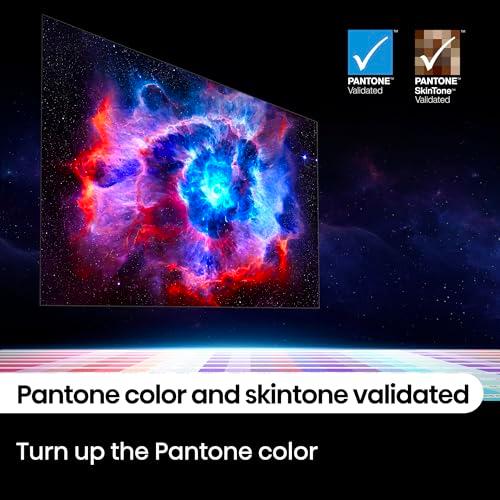
Color reproduction is where the technological differences between these projectors become most apparent. The L9Q covers 110% of the BT.2020 color space and is Pantone validated—technical terms that essentially mean it can display a wider range of colors with professional-grade accuracy.
BT.2020 is the color standard used for 4K HDR content, representing the full range of colors that human eyes can see in most situations. When a projector covers 110% of this standard, it means it can display even the most saturated colors that content creators intended. The PL2 covers 85% of the smaller DCI-P3 color space, which is still good for most content but can't match the vibrancy and accuracy of its more expensive sibling.
The Pantone validation on the L9Q is particularly noteworthy—it's the same color standard used by professional photographers and designers. This means skin tones look natural, reds don't appear orange, and greens don't shift toward yellow. For content like nature documentaries, animated films, or any HDR material, the difference is immediately noticeable.
Contrast ratio measures the difference between the brightest whites and the deepest blacks a projector can produce. Higher contrast creates more three-dimensional, engaging images where details pop from dark backgrounds.
The L9Q achieves a 5,000:1 contrast ratio, while the PL2 delivers 3,000:1. Both are impressive for ultra short throw projectors, which typically struggle with black levels due to their extreme projection angles and bright light sources. However, the L9Q's superior contrast becomes particularly noticeable in dark scenes—think of the difference between watching a space movie where you can see subtle details in shadows versus one where dark areas appear uniformly gray.
This contrast advantage works hand-in-hand with the brightness difference. The L9Q can produce deeper blacks while simultaneously maintaining bright highlights, creating that "pop" that makes images feel more realistic and engaging.
One often-overlooked advantage of ultra short throw projectors is their potential for integrated audio. Since these projectors sit close to your seating area rather than across the room, they can incorporate substantial speaker systems that actually enhance your viewing experience.
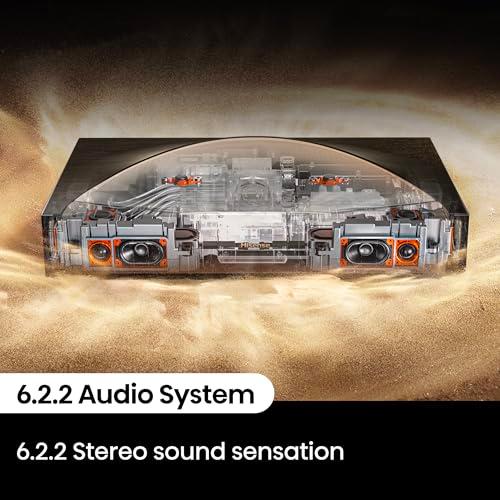
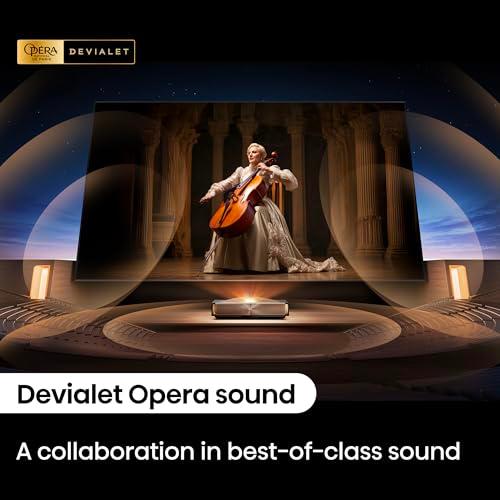
The L9Q includes a remarkable 116W 6.2.2-channel audio system developed in partnership with Devialet, a French company known for premium audio equipment. This isn't just marketing—it's a legitimate surround sound system with dedicated subwoofers and up-firing speakers for Dolby Atmos height effects. The audio quality rivals mid-range soundbars and eliminates the need for additional speakers in many installations.
The system even includes tuning inspired by the Opéra de Paris, which might sound like marketing fluff but actually represents careful acoustic engineering to optimize the speakers' performance in typical living room environments.
The PL2 takes a more basic approach with 30W stereo speakers that include some Dolby Atmos processing through up-firing drivers. While adequate for casual viewing, most users will want to add a soundbar or external speakers for movie nights. However, it is WiSA-ready, meaning you can add wireless speakers later without running cables.
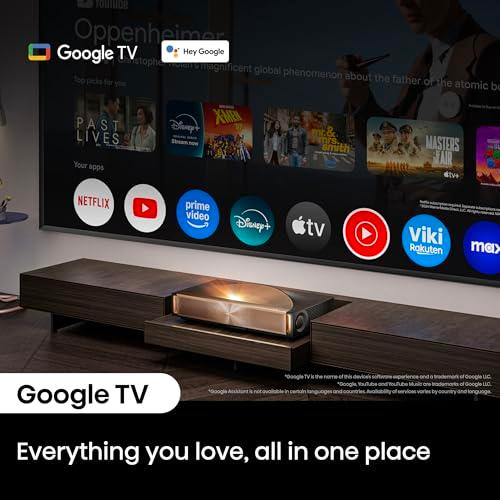
Both projectors run Google TV with access to all major streaming services, voice control, and screen mirroring from phones and tablets. The interface is responsive and familiar if you've used any Android-based smart TV.
The L9Q adds a few premium touches, including an ATSC 3.0 tuner for NextGen TV broadcasts (important if you watch over-the-air television) and Wi-Fi 6E for faster streaming of high-bandwidth 4K content. The remote is backlit and uses Bluetooth for reliable connectivity even when the projector is mounted where line-of-sight might be blocked.
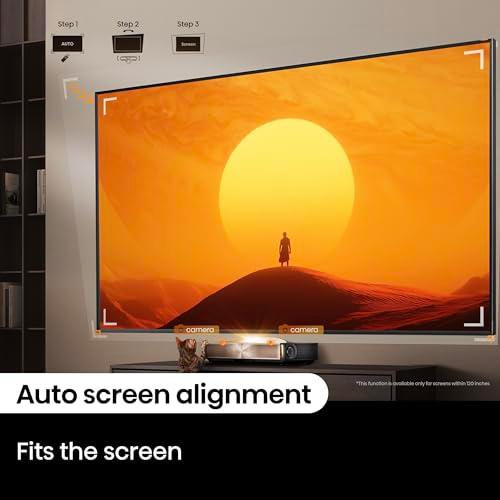
Both projectors include automatic keystone correction, which uses the projector's built-in cameras to detect and correct image geometry if the projector isn't perfectly level. This feature works surprisingly well and makes installation much more forgiving than traditional projectors.
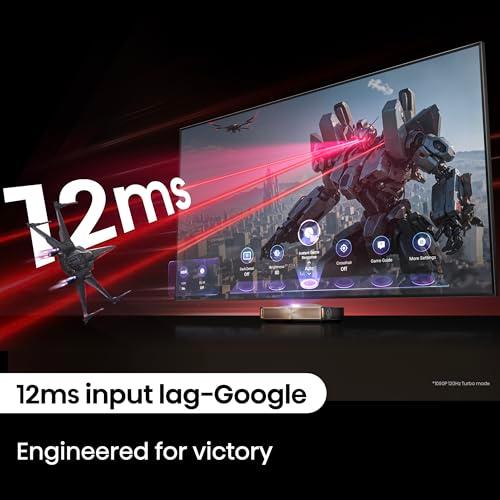
Gaming capabilities have become increasingly important as more people use projectors for console gaming. Input lag—the delay between pressing a button and seeing the result on screen—is the critical measurement here.
The L9Q achieves an impressive 12ms input lag in Game Mode, which is competitive with gaming monitors and makes it suitable for competitive gaming. The PL2 manages 30ms, which is acceptable for casual gaming but might feel sluggish for fast-paced competitive titles.
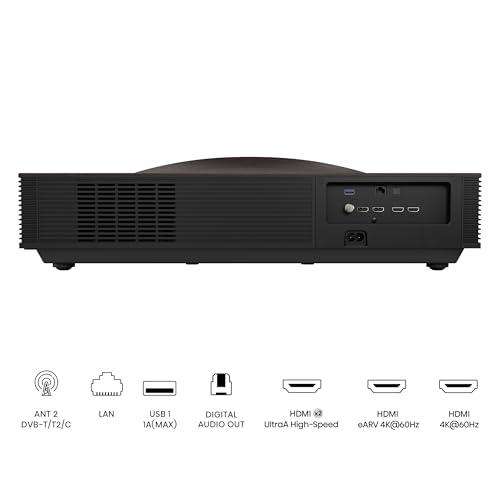
Both projectors include HDMI 2.1 features like Auto Low Latency Mode (ALLM), which automatically switches to game mode when it detects a gaming console. However, the L9Q includes full-bandwidth HDMI 2.1 ports that can handle 4K at 120Hz for next-generation consoles, while the PL2's HDMI 2.0 ports limit you to 4K at 60Hz.
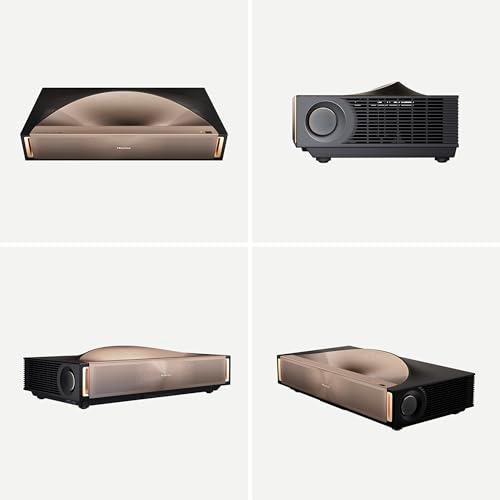
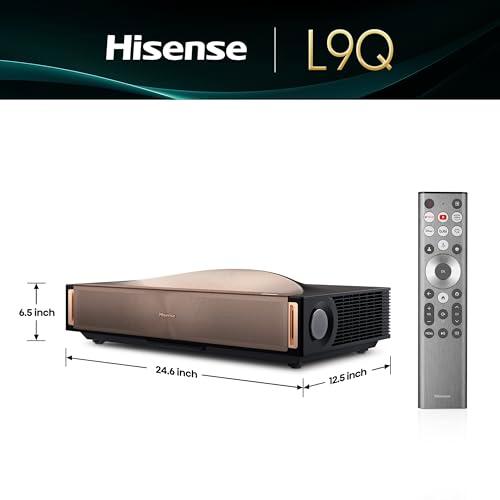
The L9Q is substantially larger and heavier than the PL2, weighing in at nearly 38 pounds compared to the PL2's more manageable 19 pounds. This weight difference affects installation—the L9Q really needs a sturdy cabinet or professional mounting, while the PL2 can sit on most TV stands or entertainment centers.
Both projectors require specialized ALR (Ambient Light Rejecting) screens for optimal performance. These screens, which can cost anywhere from a few hundred to several thousand dollars, are designed to reflect the projector's light back to viewers while rejecting ambient light from windows and room lighting. The screen choice significantly affects your total investment and final image quality.
The throw ratio—how far the projector needs to be from the wall for a given screen size—is slightly better on the L9Q at 0.18:1 compared to the PL2's 0.22:1. In practical terms, this means the L9Q can sit even closer to the wall, making it more flexible for tight spaces.
At the time of writing, the PL2 represents exceptional value in the ultra short throw market, typically priced at less than half of the L9Q's premium positioning. For many users, the PL2 delivers 80% of the high-end experience at 40% of the cost.
The PL2 makes sense for first-time ultra short throw buyers, secondary installations like bedrooms or basements, or anyone prioritizing value over ultimate performance. It's particularly appealing if you already have a good sound system and don't need the L9Q's premium audio integration.
The L9Q, despite its higher price, actually offers strong value for dedicated home theater enthusiasts. When you consider that it eliminates the need for a separate high-end soundbar (saving $1,000+), includes professional-grade color accuracy, and provides future-proof brightness levels, the price premium becomes more justifiable.
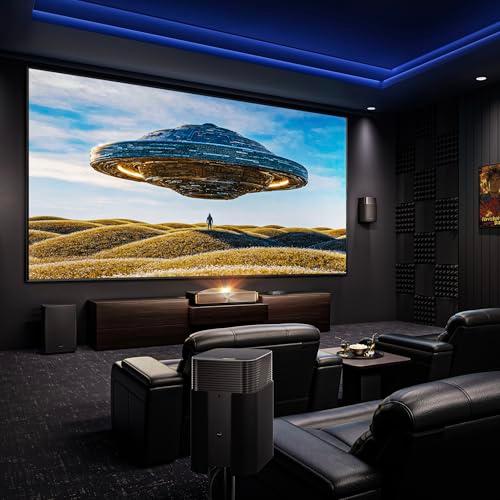
Choose the L9Q if you're building a dedicated home theater where performance is the priority. Its superior brightness makes it the clear choice for bright living rooms, and the integrated Devialet audio system creates an all-in-one solution that simplifies installation while delivering premium results. The triple-laser technology provides a clear upgrade path that should maintain relevance for many years.
The PL2 is the smarter choice for most buyers entering the ultra short throw market. It provides an excellent introduction to large-screen projection with proven reliability, solid performance in controlled lighting, and room to add external audio components as your system grows.
Consider your room's lighting conditions carefully—this single factor often determines which projector will work best. If you can control ambient light reasonably well, the PL2 will deliver a satisfying large-screen experience. If your room is bright or you want the flexibility to watch at any time of day, the L9Q's extra brightness is worth the investment.
Both projectors represent Hisense's continued refinement of ultra short throw technology, offering compelling alternatives to traditional large-screen TVs. The PL2 democratizes high-quality projection, while the L9Q pushes the technology toward its current limits. Your choice ultimately depends on how much you value ultimate performance versus getting excellent results at a more accessible price point.
| Hisense L9Q Triple Laser Ultra Short Throw Projector | Hisense PL2 4K Ultra Short Throw Projector |
|---|---|
| Laser Technology - Determines color accuracy and long-term performance | |
| Triple RGB laser system with pure red, green, blue lasers | Single blue laser with phosphor wheel conversion |
| Brightness - Most critical spec for daytime viewing and large screens | |
| 5,000 ANSI lumens (excellent performance in bright rooms) | 2,700 ANSI lumens (requires controlled lighting for best results) |
| Color Gamut Coverage - How vibrant and accurate colors appear | |
| 110% BT.2020 with Pantone validation (professional-grade accuracy) | 85% DCI-P3 (good for most content but less vibrant) |
| Maximum Screen Size - Determines scale of your home theater experience | |
| Up to 200 inches (truly cinematic scale) | Up to 150 inches (still very large for most rooms) |
| Contrast Ratio - Creates depth and makes dark scenes more detailed | |
| 5,000:1 (deeper blacks, more dynamic image) | 3,000:1 (good contrast for the price point) |
| Audio System - Built-in sound quality affects total system cost | |
| 116W 6.2.2-channel Devialet system with subwoofers (rivals premium soundbars) | 30W stereo with basic Dolby Atmos (adequate but most will want external speakers) |
| Gaming Input Lag - Critical for responsive gaming performance | |
| 12ms (excellent for competitive gaming) | 30ms (fine for casual gaming, noticeable in fast-paced titles) |
| HDR Format Support - Compatibility with premium streaming content | |
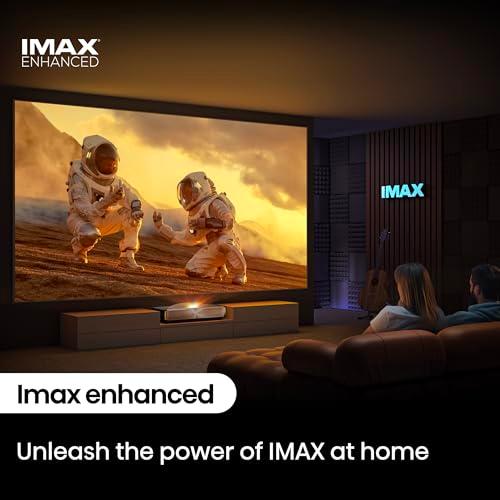
| Dolby Vision, HDR10+, HLG, IMAX Enhanced | Dolby Vision, HDR10, HLG |
| Throw Ratio - How close the projector sits to the wall | |
| 0.18:1 (100" image from 5.4" away - more flexible placement) | 0.22:1 (100" image from 8.5" away - still very short) |
| Weight - Affects installation requirements and flexibility | |
| 37.5 lbs (needs sturdy mounting or cabinet) | 18.7 lbs (manageable for most TV stands) |
| Release Year - Indicates latest technology and features | |
| 2025 (newest triple-laser tech and features) | 2024 (proven technology with good track record) |
| Target Market - Who this projector is designed for | |
| Premium home theater enthusiasts seeking ultimate performance | Value-conscious buyers wanting excellent UST experience |
The biggest difference is the laser technology. The Hisense L9Q uses advanced triple-laser RGB technology with separate red, green, and blue lasers, while the Hisense PL2 uses a single blue laser with phosphor conversion. This gives the L9Q much better color accuracy, covering 110% of BT.2020 color space compared to the PL2's 85% DCI-P3 coverage.
The Hisense L9Q is significantly brighter at 5,000 ANSI lumens compared to the PL2's 2,700 ANSI lumens. This makes the L9Q much better for bright living rooms and daytime viewing, while the PL2 performs best in controlled lighting conditions.
No, the Hisense L9Q can create larger images, supporting screen sizes up to 200 inches, while the PL2 maxes out at 150 inches. Both start at 80 inches minimum, but the L9Q gives you more flexibility for truly massive home theater screens.
The Hisense L9Q has significantly superior audio with a 116W 6.2.2-channel Devialet sound system that includes subwoofers and Dolby Atmos height speakers. The PL2 has basic 30W stereo speakers with limited Dolby Atmos processing, so most users will want to add external speakers.
The Hisense L9Q is much better for gaming with 12ms input lag, making it suitable for competitive gaming. The PL2 has 30ms input lag, which is acceptable for casual gaming but may feel sluggish for fast-paced games. Both include gaming features like Auto Low Latency Mode.
Both are ultra short throw projectors that sit very close to the wall. The Hisense L9Q has a slightly better 0.18:1 throw ratio (100" image from 5.4" away) compared to the PL2's 0.22:1 ratio (100" image from 8.5" away). Both eliminate the need for ceiling mounting.
The Hisense PL2 offers exceptional value for most buyers, delivering solid ultra short throw performance at a much lower price point. The L9Q provides premium performance but costs significantly more, making it better suited for dedicated home theater enthusiasts who prioritize ultimate quality.
Yes, both the Hisense L9Q and PL2 support 4K resolution through pixel-shifting technology and multiple HDR formats. However, the L9Q supports additional premium formats like HDR10+ and IMAX Enhanced that the PL2 doesn't offer.
The Hisense L9Q is definitively better for bright rooms due to its 5,000 ANSI lumen output, which is nearly double the PL2's brightness. The L9Q maintains excellent image quality even with windows open during the day, while the PL2 requires dimmed lighting for optimal viewing.
Both projectors run Google TV with access to major streaming apps, voice control, and screen mirroring. The Hisense L9Q adds some premium features like an ATSC 3.0 tuner for NextGen TV broadcasts and Wi-Fi 6E for faster streaming, but the core smart TV experience is very similar between both models.
The Hisense PL2 is easier to install due to its lighter weight (18.7 lbs vs 37.5 lbs) and can sit on most TV stands. The L9Q requires a more robust mounting solution due to its size and weight. Both include automatic keystone correction to help with alignment during setup.
For most first-time buyers, the Hisense PL2 is the better choice because it offers an excellent introduction to ultra short throw projection at a much more accessible price. Choose the L9Q only if you have a bright room, want the largest possible screens, or are building a dedicated home theater where ultimate performance justifies the premium cost.
We've done our best to create useful and informative comparisons to help you decide what product to buy. Our research uses advanced automated methods to create this comparison and perfection is not possible - please contact us for corrections or questions. These are the sites we've researched in the creation of this article: chrismajestic.com - shop.hisense-usa.com - tomsguide.com - valueelectronics.com - techradar.com - whathifi.com - youtube.com - projectorscreen.com - projectorscreen.com - hisense-usa.com - youtube.com - projectorcentral.com - youtube.com - hisense-usa.com - manuals.plus - shop.avispl.com - hisense-usa.com - avnirvana.com - crutchfield.com - projectorscreen.com - digitaltrends.com - newatlas.com - valueelectronics.com - youtube.com - shop.hisense-usa.com - ecoustics.com

Privacy Policy
Terms and Conditions - Affiliate Policy
Home Security
© Copyright 2008-2026.
11816 Inwood Rd #1211, Dallas, TX 75244