

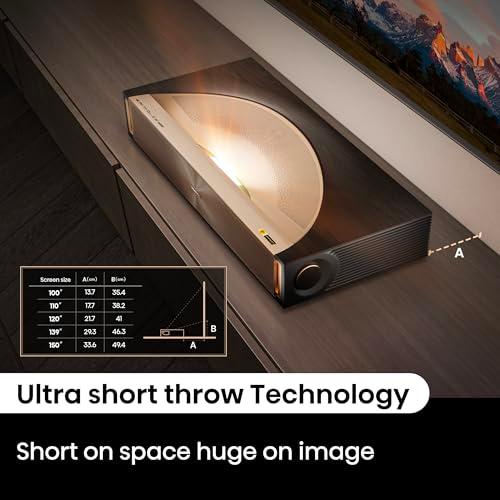
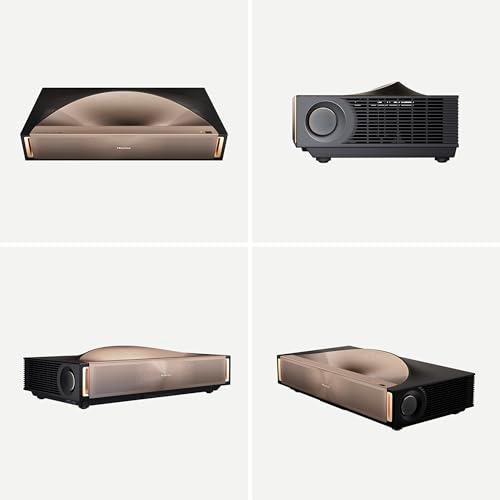
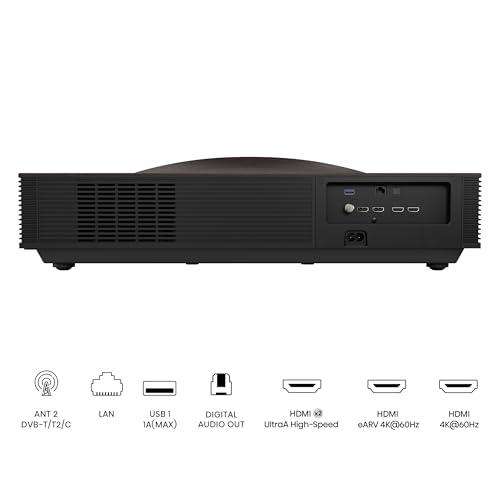
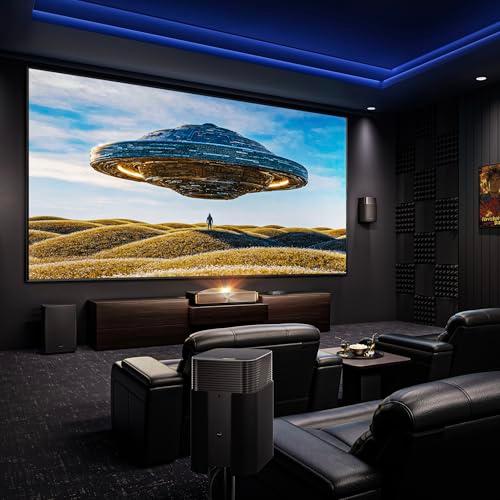
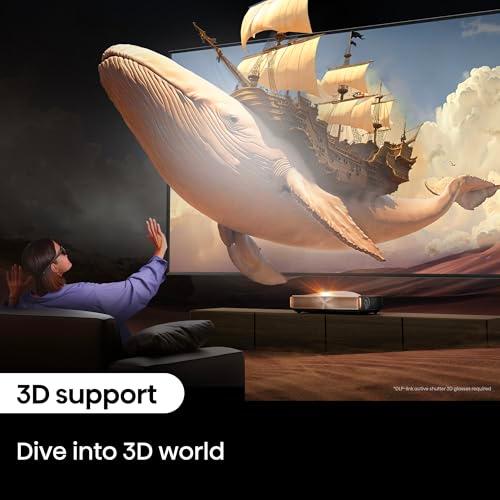
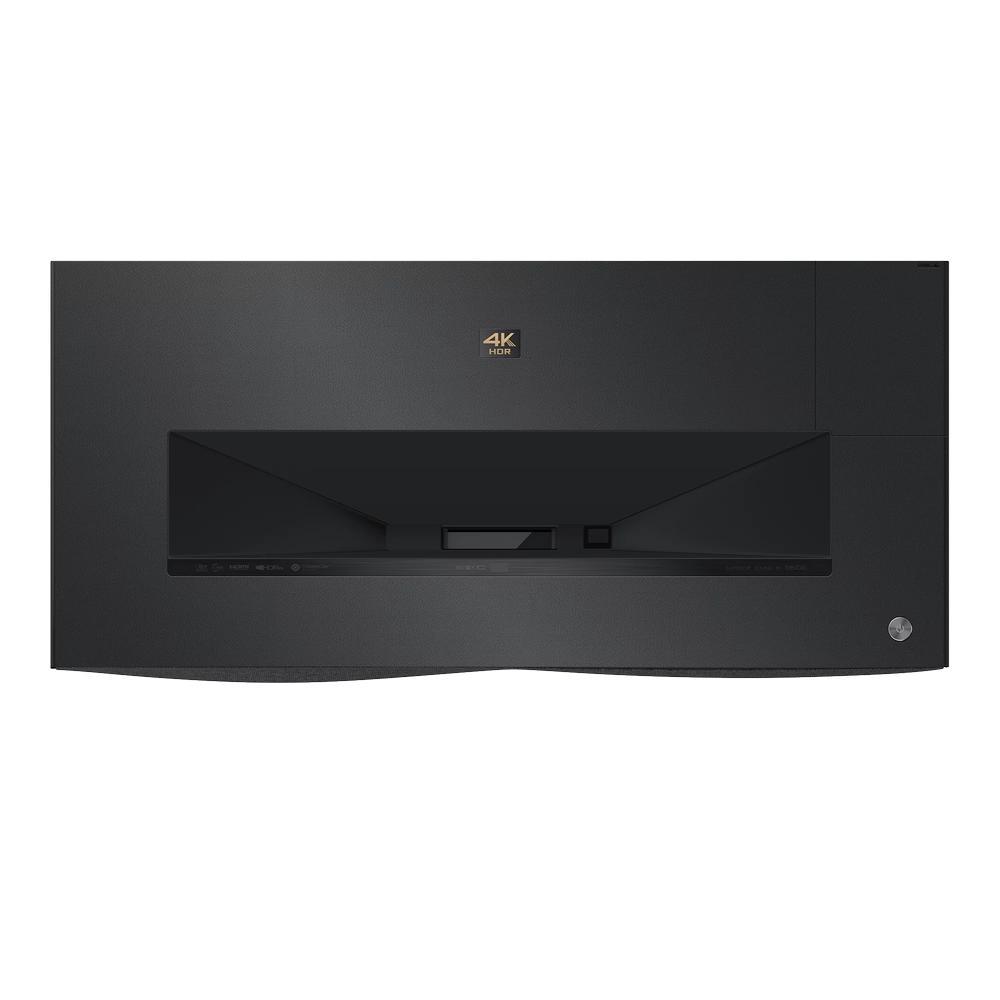
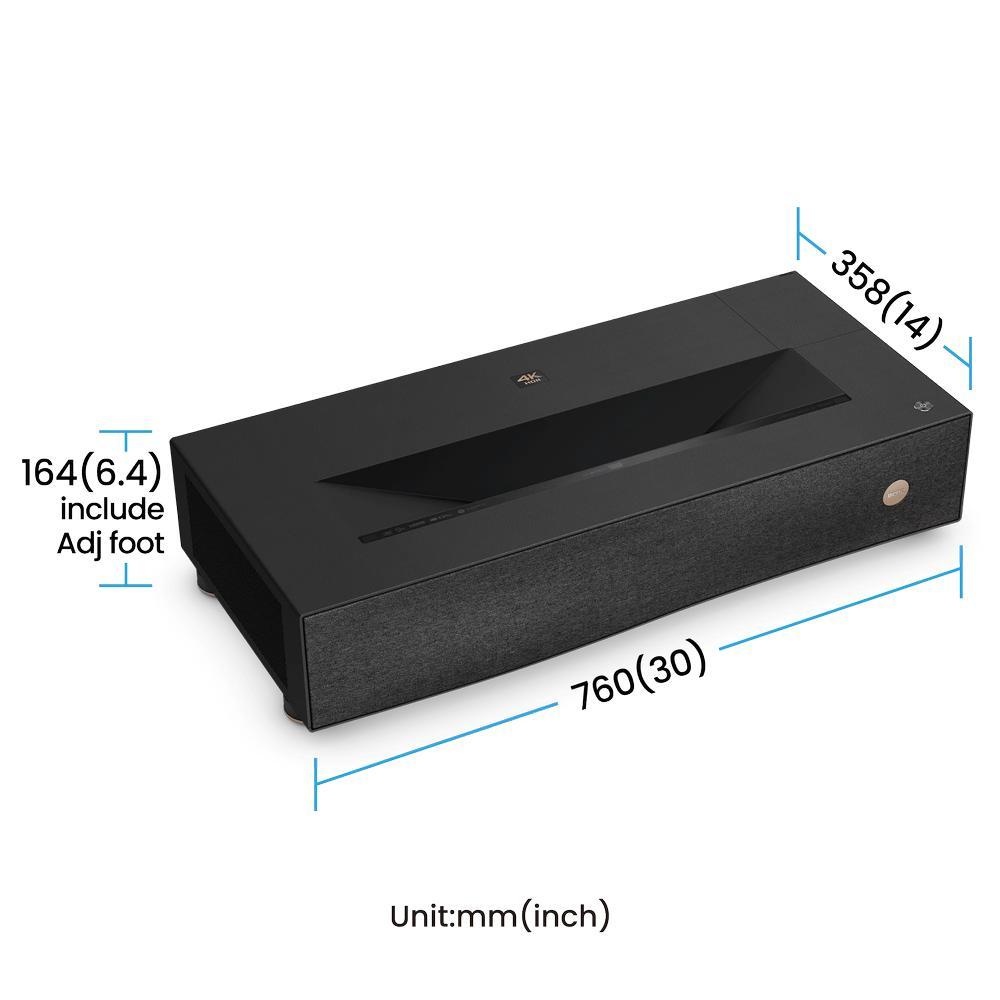
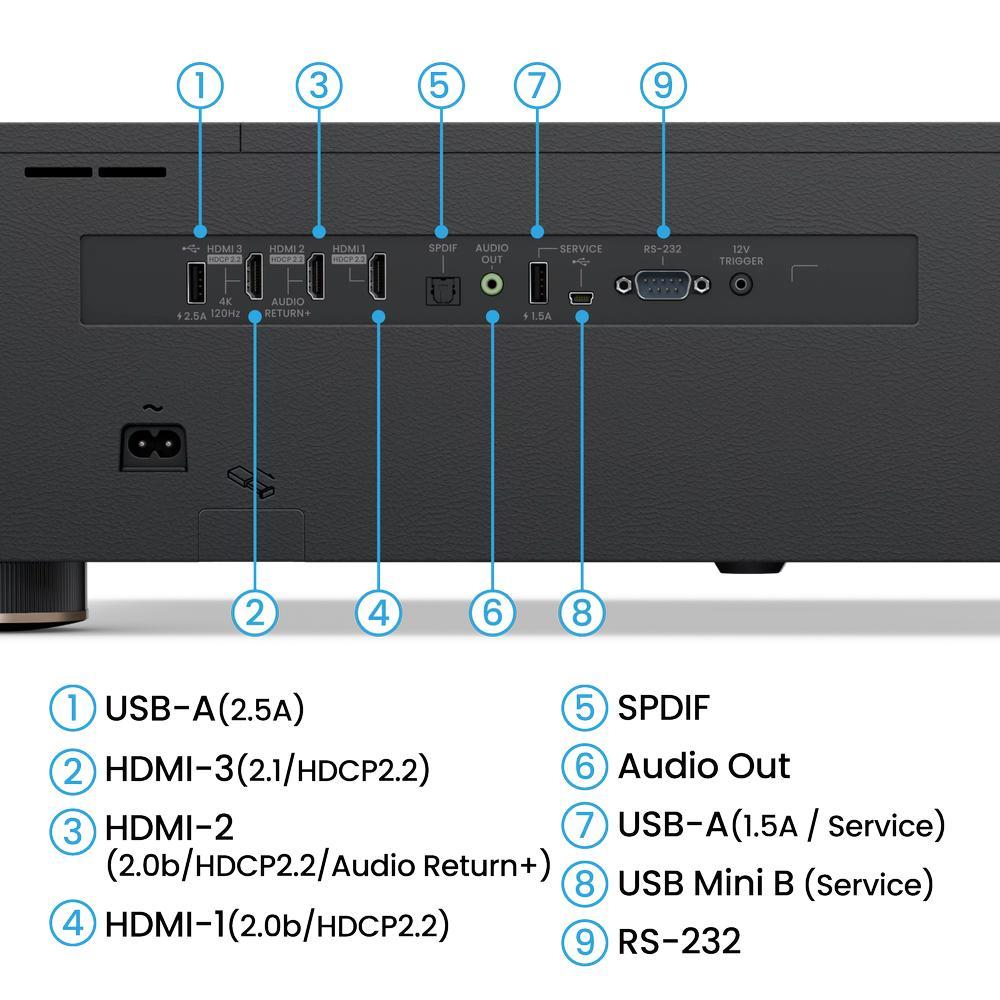
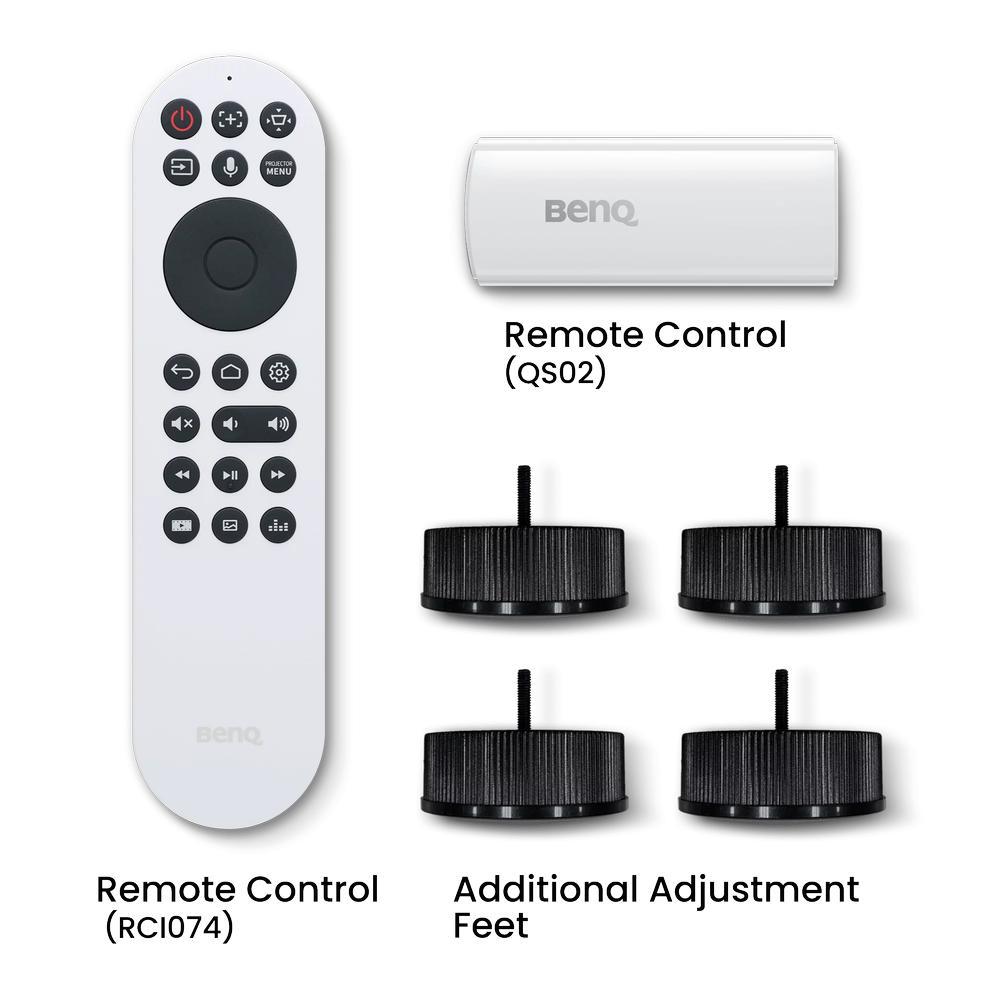
Ultra short throw projectors have completely changed the home theater game. Instead of mounting a traditional projector on your ceiling or dealing with complicated setups, these laser-powered devices sit just inches from your wall and project massive 100+ inch images that make your biggest TV look tiny. Think of them as the ultimate TV replacement that can create a cinema experience in almost any living room.
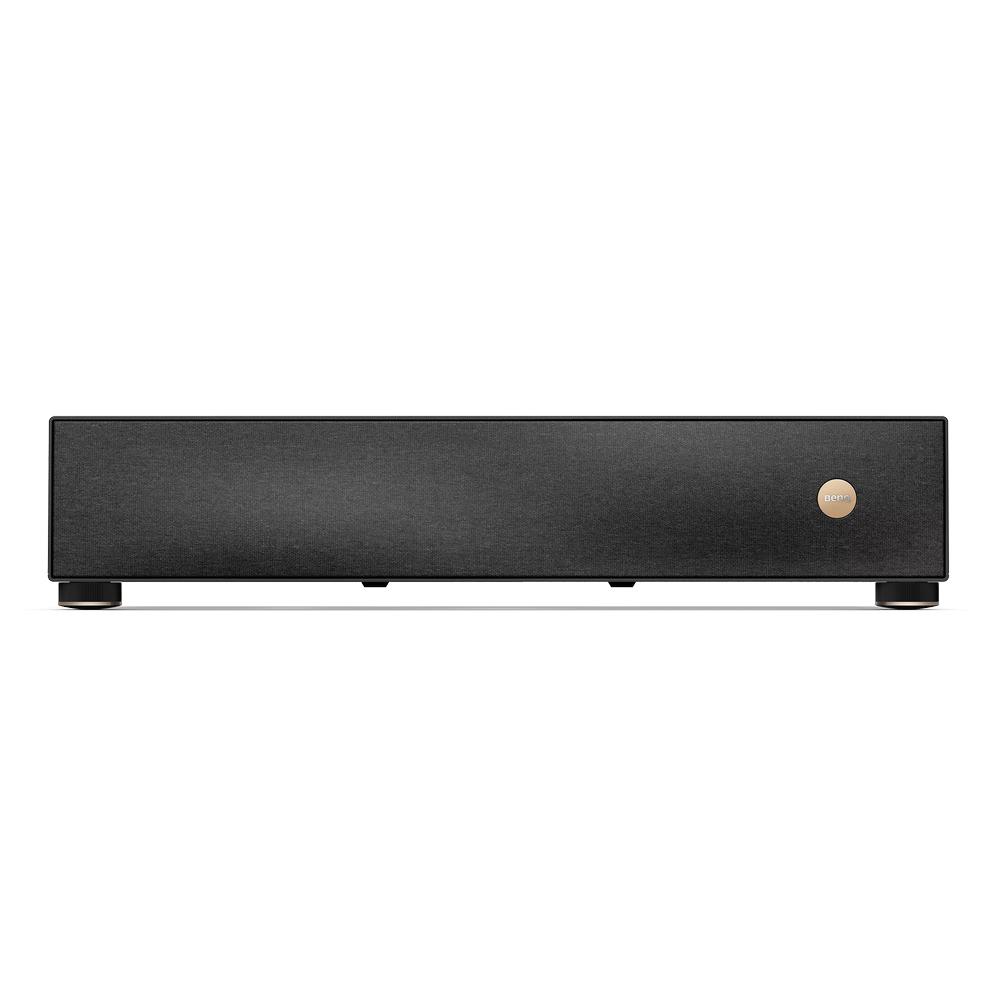
The technology has matured rapidly over the past few years, with two standout models representing different approaches to the same goal: the flagship Hisense L9Q released in 2025, and the value-focused BenQ V5010i that hit the market a couple years earlier. At the time of writing, these projectors sit at opposite ends of the premium UST market—the L9Q commands flagship pricing around $6,000, while the V5010i targets the sweet spot around $3,000.
Before diving into the comparison, it's worth understanding what sets ultra short throw projectors apart. The "throw ratio" is the key specification—it measures how far the projector needs to sit from the wall to create a certain screen size. Traditional projectors might have a 1.5:1 throw ratio, meaning they need to be 12 feet away to create a 100-inch image. Ultra short throw projectors achieve ratios of 0.25:1 or better, so they can create that same 100-inch image from just 2-3 feet away.
This proximity creates unique engineering challenges. The projector has to use special lenses and precise optics to avoid distortion, and the laser light source needs to be incredibly bright since you're essentially fighting against ambient room light. These aren't meant for dark basement theaters—they're designed to work in your living room with the lights on.
Brightness is absolutely critical for UST projectors, and this is where the Hisense L9Q and BenQ V5010i take completely different approaches. Brightness is measured in ANSI lumens, which tells you how much actual light the projector can output across the entire image.
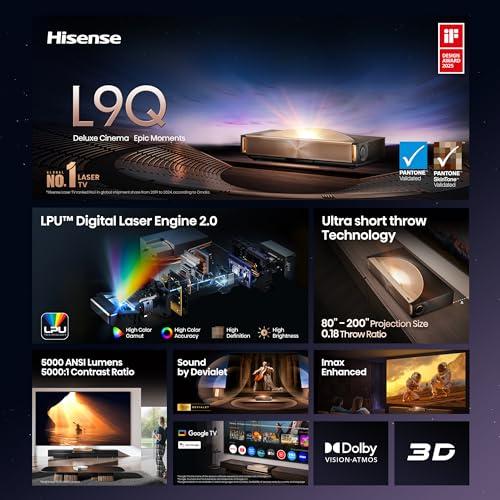
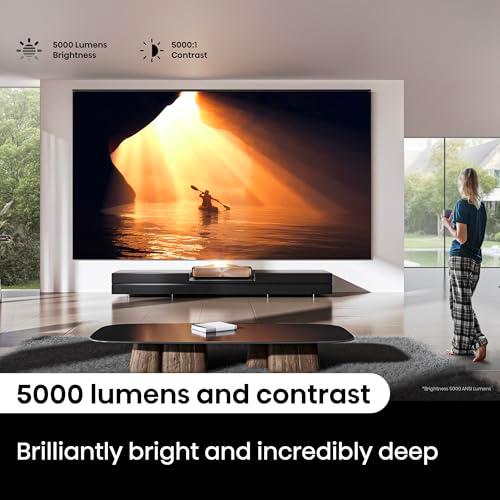
The L9Q produces a massive 5,000 ANSI lumens—this is genuinely bright enough to compete with sunlight streaming through windows. I've seen plenty of projectors claim high brightness numbers, but based on extensive reviews and testing, the L9Q actually delivers on this promise. This means you can watch movies with your curtains open, have ceiling lights on, and still get a vibrant, colorful image that doesn't look washed out.
The V5010i, by contrast, outputs 2,500 ANSI lumens—exactly half the L9Q's brightness. This isn't necessarily a flaw; it's a design choice that reflects different priorities. The V5010i is designed for controlled lighting situations where you can dim the lights and create more of a traditional theater environment.
From a practical standpoint, this brightness difference is the single most important factor in choosing between these projectors. If your living room has large windows, high ceilings with bright lights, or you simply want the flexibility to watch content any time of day without adjusting your environment, the L9Q is the clear winner. But if you're setting up a dedicated viewing space where you can control the lighting, the V5010i's lower brightness becomes much less relevant.
While brightness gets most of the attention, contrast ratio determines how deep your blacks look and how much "pop" your image has. This is where the BenQ V5010i absolutely dominates with an extraordinary 2,500,000:1 contrast ratio compared to the L9Q's more modest 5,000:1.
That massive contrast ratio on the V5010i translates to incredibly deep, inky blacks that rival OLED TVs. When you're watching a movie with dark scenes—think space movies, nighttime scenes, or anything with dramatic lighting—the V5010i can display true blacks that make the image appear to have infinite depth. The stars in space actually look like they're floating in a void, rather than sitting on a slightly gray background.
The L9Q, with its focus on maximum brightness, sacrifices some contrast performance. It still produces good blacks for a bright projector, but they won't have the same depth as the V5010i. This is a classic engineering trade-off: you can optimize for brightness or contrast, but doing both simultaneously is extremely difficult and expensive.
In practical terms, if you're primarily watching in a dark room where you can fully appreciate deep blacks and subtle shadow details, the V5010i will give you a more cinematic experience. But if you're watching in brighter conditions, you won't be able to see those deep blacks anyway, making the L9Q's brightness advantage more valuable.
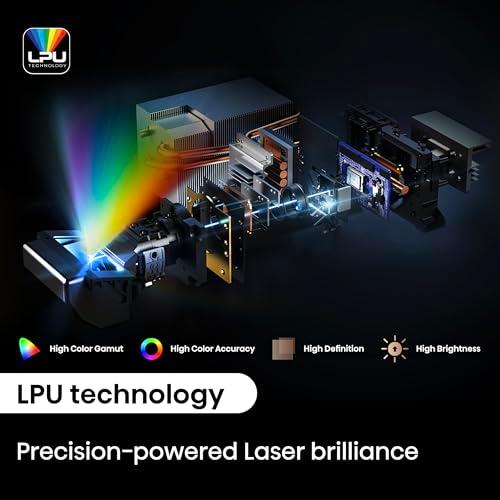
Both projectors use triple-laser light engines, which is a significant step up from older single-laser or lamp-based systems. Triple-laser means separate red, green, and blue lasers combine to create the full spectrum of colors, eliminating the color wheel that older DLP projectors used (and the rainbow artifacts that came with it).
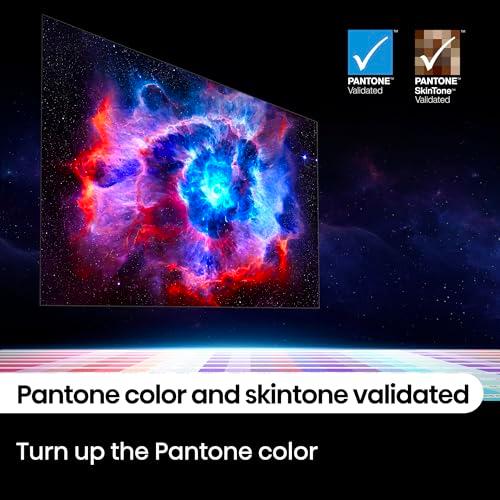
The L9Q covers 110% of the BT.2020 color space and is Pantone validated, which means it can display a wider range of colors than most content actually contains. BT.2020 is the color standard for 4K and HDR content, so having 110% coverage means you're seeing every color the content creators intended, plus some extra vibrancy. The Pantone validation is particularly impressive—this is professional-grade color accuracy that graphic designers and video professionals rely on.
The V5010i covers 95% of BT.2020 and 98% of the DCI-P3 cinema color space. While slightly narrower than the L9Q, this is still excellent coverage that will display virtually all content accurately. What's particularly noteworthy about the V5010i is its out-of-box calibration. Based on user reviews and professional testing, it delivers remarkably accurate colors right from the start, often requiring minimal adjustment to achieve reference-quality results.
For most users, both projectors will deliver stunning, vibrant colors. The L9Q has a slight edge in color range and professional validation, while the V5010i excels in ease of setup and immediate accuracy.
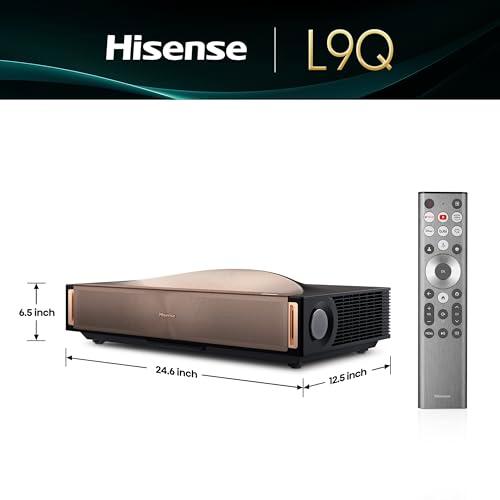
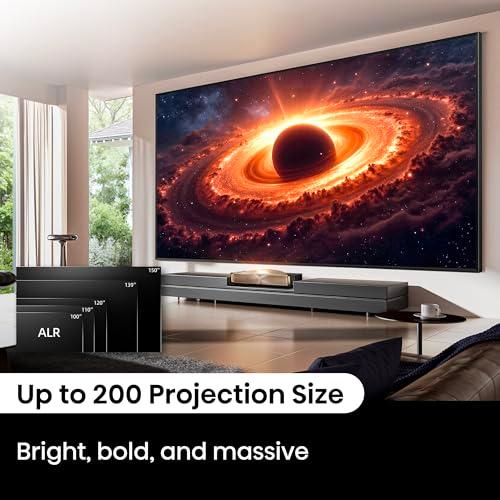
This is where the Hisense L9Q really flexes its engineering prowess. With its 0.18:1 throw ratio, it can project images from 80 inches all the way up to 200 inches. That 200-inch capability is genuinely massive—we're talking about an image that's over 16 feet wide. The L9Q can create this enormous image while sitting just 5.4 inches from the wall for a 100-inch screen.
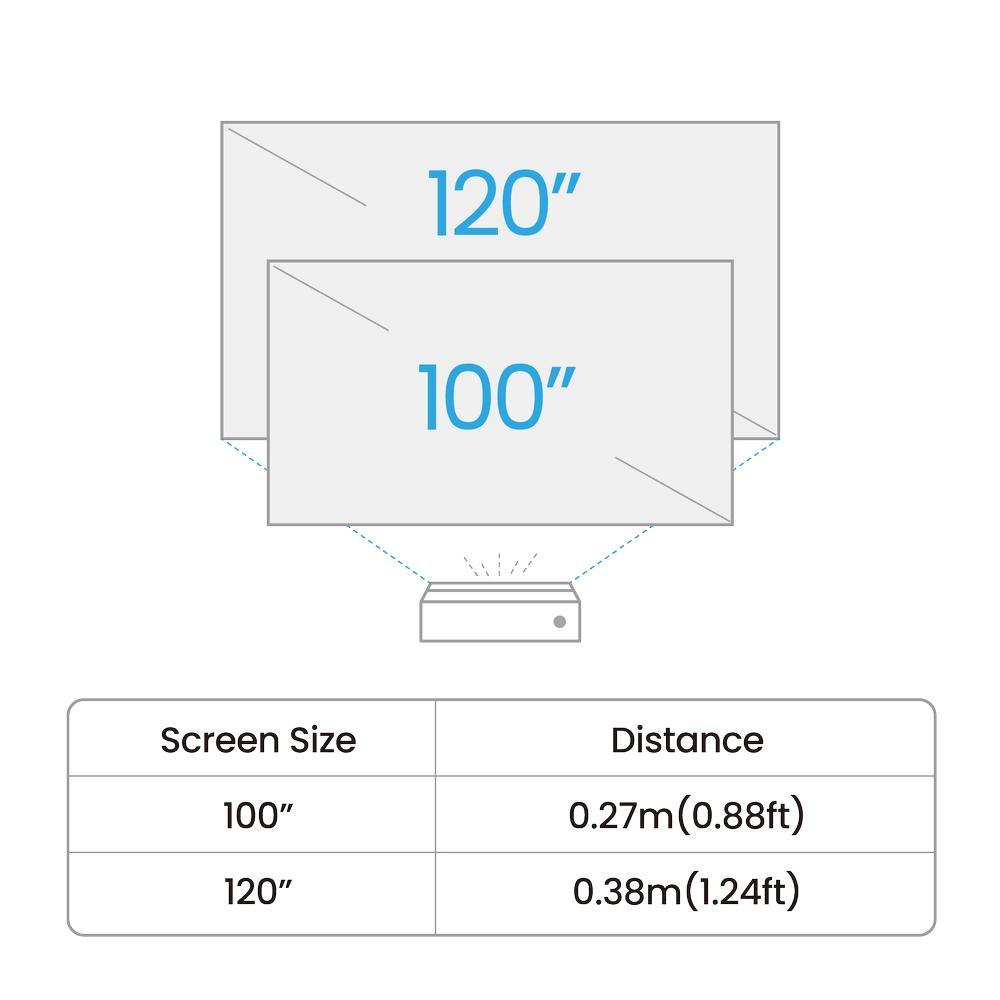
The BenQ V5010i is more constrained, supporting 90-120 inches with a 0.25:1 throw ratio. While 120 inches is still impressively large (about 10 feet wide), it's significantly smaller than what the L9Q can achieve.
For most homes, 120 inches is probably more than adequate. But if you have a large living room, want to recreate a true cinema experience, or simply want the biggest possible image, the L9Q is your only option between these two. The ability to go up to 200 inches also means the L9Q can work in larger rooms where a 120-inch image might look small.
Gaming on ultra short throw projectors has become increasingly popular, especially with the massive screen sizes they offer. Both projectors handle gaming well, but with different strengths.
The BenQ V5010i is genuinely impressive for competitive gaming, with input lag as low as 5.1 milliseconds at 1080p/240Hz. For context, that's faster than many gaming monitors and makes it suitable for serious competitive play. At 4K/60Hz, it maintains 17.9ms input lag, which is still excellent for console gaming. The V5010i also supports high refresh rates that competitive gamers demand.
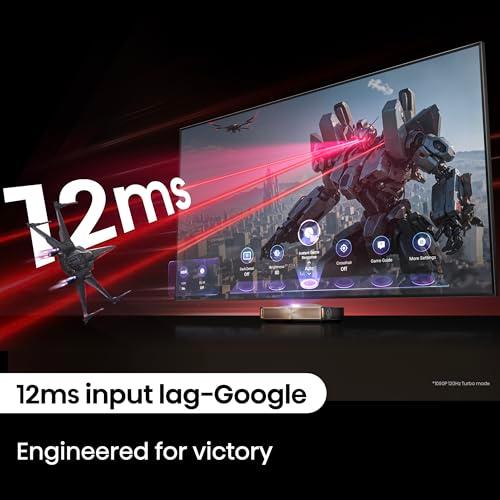
The L9Q takes a different approach with 12ms input lag and features like VRR (Variable Refresh Rate) and ALLM (Auto Low Latency Mode). VRR synchronizes the projector's refresh rate with your graphics card or console, eliminating screen tearing and providing smoother gameplay. ALLM automatically switches to game mode when it detects a gaming console, reducing lag without manual intervention.
For casual and console gaming, both projectors work excellently. If you're into competitive PC gaming where every millisecond counts, the V5010i has a clear advantage. For everyone else, the L9Q's gaming features and massive screen size create an incredibly immersive gaming experience.
HDR (High Dynamic Range) makes content look more realistic by displaying brighter highlights and deeper shadows simultaneously. The format support differs significantly between these projectors.
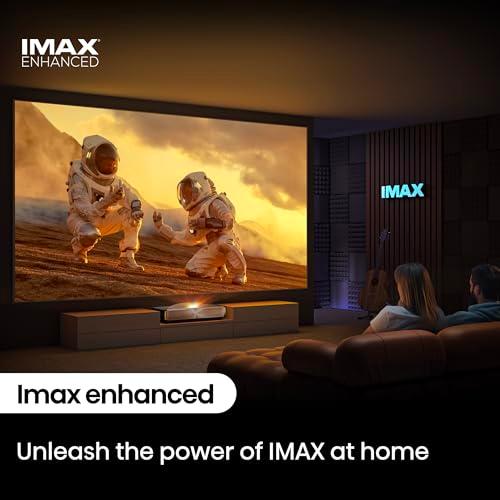
The L9Q supports virtually every HDR format you'll encounter: Dolby Vision, HDR10+, HDR10, HLG, and IMAX Enhanced. Dolby Vision is particularly important because it's becoming the premium HDR format for streaming services and 4K Blu-rays. IMAX Enhanced certification means the projector meets IMAX's standards for color, contrast, and brightness.
The V5010i supports HDR10, HDR10+, and HLG but lacks Dolby Vision support. This isn't necessarily a dealbreaker—HDR10+ is technically very similar to Dolby Vision—but if you have a large collection of Dolby Vision content or plan to subscribe to services that prioritize it, the L9Q provides better future-proofing.
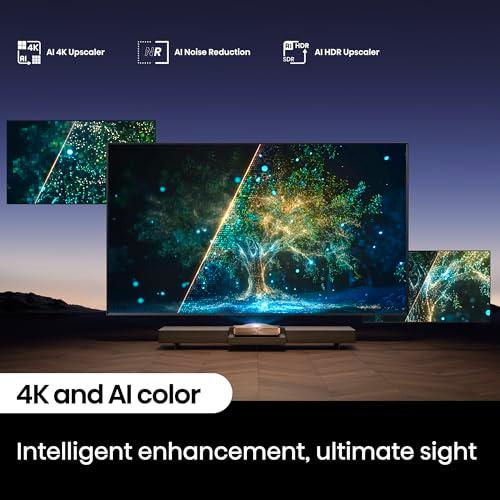
Both projectors include advanced HDR processing. The L9Q uses AI-powered picture enhancement that analyzes content in real-time and optimizes brightness, contrast, and color frame by frame. The V5010i employs multi-stage tone mapping across over 1,000 independent regions per frame, ensuring different parts of the image are optimized separately for the best possible HDR effect.
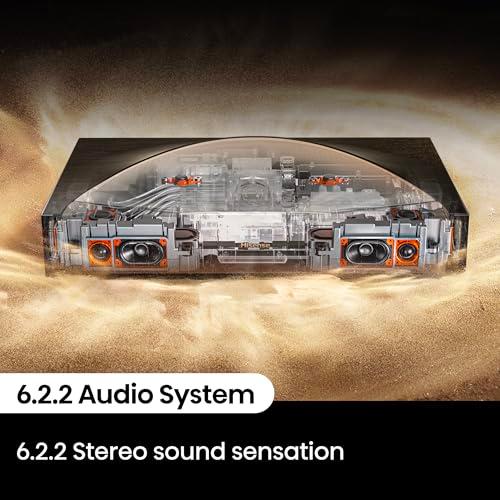
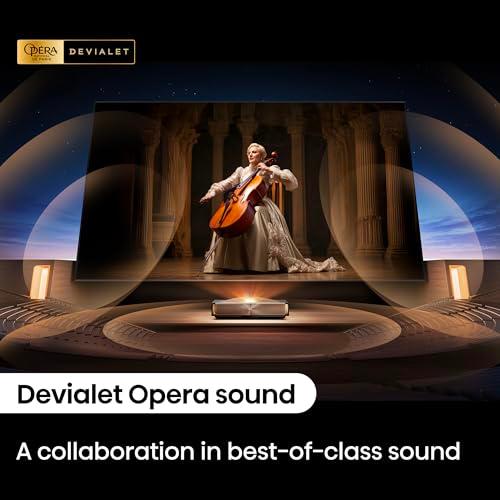
This is where the Hisense L9Q makes a strong case for its premium positioning. It includes a 6.2.2 channel sound system developed in partnership with Devialet, a French company known for high-end audio equipment. This system outputs 116 watts and includes subwoofers for deep bass and upward-firing speakers for 3D spatial audio effects. The tuning was inspired by the acoustics of the Opéra de Paris, and the result is genuinely impressive built-in sound that can fill a room without external speakers.
The V5010i includes a competent 40-watt system with dual tweeters and dual woofers. It's perfectly adequate for casual viewing and better than most TV speakers, but it's not in the same league as the L9Q's audio system. Most serious home theater enthusiasts will want to add external speakers or a soundbar to get truly immersive audio.
If you're planning to use external audio equipment anyway, this difference matters less. But if you want a complete, all-in-one solution that doesn't require additional purchases, the L9Q's audio system is a significant advantage.
Both projectors include smart TV functionality, but with different approaches. The V5010i runs Android TV 10 with access to the Google Play Store, Google Assistant voice control, and all major streaming services. The interface is familiar to anyone who's used an Android TV device.
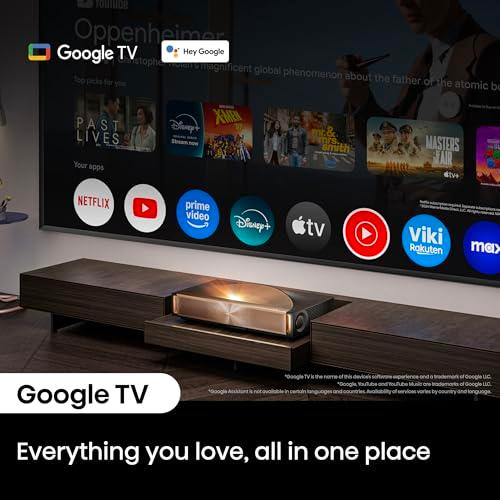
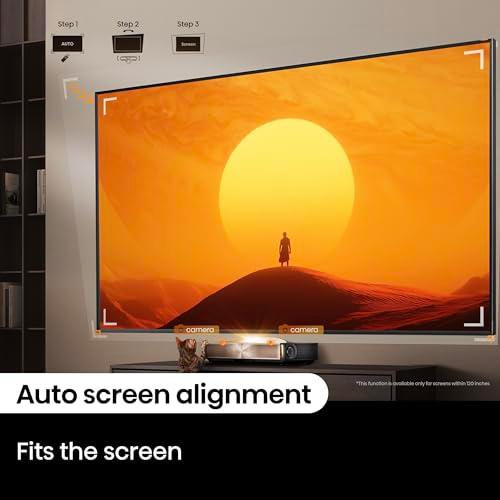
The L9Q includes smart features and voice control, though the specific platform details aren't as clearly defined in available information. Both projectors include auto-setup features that use cameras to detect the screen and automatically adjust geometry and focus, making installation much easier than traditional projectors.
Laser projectors are designed for long-term use with minimal maintenance. The L9Q is rated for over 25,000 hours of use, while the V5010i offers 20,000 hours. Both represent years of typical use—even watching 4 hours per day, you'd get over 13 years from the V5010i and over 17 years from the L9Q.
At the time of writing, the price difference between these projectors is substantial—the L9Q costs roughly double the V5010i. This premium buys you significantly higher brightness, larger screen capability, comprehensive HDR format support, and premium integrated audio. Whether that's worth the extra cost depends heavily on your specific needs and room conditions.
The BenQ V5010i makes the most sense for users who:
The Hisense L9Q is the better choice for users who:
These projectors represent two valid but different philosophies in the UST market. The V5010i proves you can get exceptional image quality at a more reasonable price if you're willing to work within its limitations. The L9Q shows what's possible when engineering constraints are relaxed and premium components are used throughout.
For most people, the V5010i offers the better value proposition. Its image quality in controlled conditions is truly excellent, and the savings over the L9Q can be put toward a quality sound system or screen. However, if your room has challenging lighting conditions, you want the largest possible screen, or you simply want the best available performance regardless of cost, the L9Q delivers on its premium promises.
The ultra short throw projector category continues to evolve rapidly, with each generation bringing improvements in brightness, color accuracy, and features. Both of these projectors represent the current state of the art, just optimized for different priorities and budgets. Your choice between them should be based primarily on your room conditions, screen size needs, and how much you're willing to spend for premium features.
| Hisense L9Q Triple Laser Ultra Short Throw Projector | BenQ V5010i 4K Ultra Short Throw Projector |
|---|---|
| Brightness - Most critical spec for daytime viewing and bright rooms | |
| 5,000 ANSI lumens (exceptional for any lighting condition) | 2,500 ANSI lumens (requires controlled lighting for best results) |
| Contrast Ratio - Determines black levels and image depth | |
| 5,000:1 (good for bright projector, prioritizes brightness) | 2,500,000:1 (exceptional blacks rival OLED TVs) |
| Screen Size Range - Maximum image size capability | |
| 80-200 inches (massive cinema-scale images possible) | 90-120 inches (large but more limited range) |
| Throw Ratio - Distance needed from wall for 100" image | |
| 0.18:1 (just 5.4 inches from wall, extremely flexible) | 0.25:1 (slightly more distance required but still very close) |
| Color Gamut Coverage - Range of colors the projector can display | |
| 110% BT.2020 (Pantone validated, widest color range) | 95% BT.2020, 98% DCI-P3 (excellent coverage, superior calibration) |
| HDR Format Support - Premium content compatibility | |
| Dolby Vision, HDR10+, HDR10, HLG, IMAX Enhanced | HDR10, HDR10+, HLG (lacks Dolby Vision support) |
| Gaming Input Lag - Response time for gaming applications | |
| 12ms with VRR and ALLM (excellent for console gaming) | 5.1ms at 1080p/240Hz, 17.9ms at 4K/60Hz (superior for competitive gaming) |
| Built-in Audio System - Integrated sound quality | |
| 116W 6.2.2 Devialet system with subwoofers (premium theater audio) | 40W system with tweeters and woofers (adequate, external system recommended) |
| Laser Lifespan - Long-term reliability and maintenance | |
| 25,000+ hours (17+ years at 4 hours daily use) | 20,000 hours (13+ years at 4 hours daily use) |
| Smart Platform - Built-in streaming and apps | |
| Google TV with voice control and smart features | Android TV 10 with Google Play Store and Assistant |
| Release Year - Technology generation and feature updates | |
| 2025 (latest generation with newest features) | 2022-2023 (proven reliability, established performance) |
| Price Positioning - Value tier and target market | |
| Premium flagship (~$6,000 range, luxury performance) | Mid-range value (~$3,000 range, excellent price-performance) |
The Hisense L9Q is significantly brighter at 5,000 ANSI lumens compared to the BenQ V5010i at 2,500 ANSI lumens. This means the L9Q performs much better in bright rooms with ambient lighting, while the V5010i works best in controlled lighting conditions.
The Hisense L9Q can project images up to 200 inches, making it ideal for massive home theater setups. The BenQ V5010i is limited to 120 inches maximum, which is still very large but more suitable for typical living rooms.
The BenQ V5010i dramatically outperforms with a 2,500,000:1 contrast ratio compared to the L9Q's 5,000:1. This means the V5010i delivers much deeper blacks and better shadow detail, especially important for dark room viewing and cinematic content.
Both are ultra short throw projectors that sit very close to the wall. The Hisense L9Q has a 0.18:1 throw ratio (5.4 inches for 100" screen), while the BenQ V5010i has a 0.25:1 throw ratio (slightly more distance required but still very close).
For competitive gaming, the BenQ V5010i excels with 5.1ms input lag at high refresh rates. The Hisense L9Q offers 12ms input lag with VRR and ALLM features, making it excellent for console gaming on a massive screen.
The Hisense L9Q features a premium 116W Devialet audio system that eliminates the need for external speakers in most setups. The BenQ V5010i has adequate 40W built-in speakers, but you'll likely want external audio for the best home theater experience.
The Hisense L9Q supports all major HDR formats including Dolby Vision, HDR10+, and IMAX Enhanced. The BenQ V5010i supports HDR10 and HDR10+ but lacks Dolby Vision, which may matter if you have premium streaming content.
Both projectors use long-lasting laser technology. The Hisense L9Q is rated for 25,000+ hours while the BenQ V5010i offers 20,000 hours. Both represent over a decade of typical use with minimal maintenance required.
The BenQ V5010i typically costs about half as much as the L9Q while delivering excellent image quality in controlled environments. The Hisense L9Q justifies its premium with superior brightness, larger screens, and integrated premium audio.
The Hisense L9Q excels in bright rooms thanks to its 5,000 lumens output, maintaining vibrant colors even with lights on. The BenQ V5010i requires dimmed lighting for optimal performance due to its lower 2,500 lumens brightness.
Both offer excellent color accuracy, but with different strengths. The Hisense L9Q covers 110% BT.2020 with Pantone validation for the widest color range. The BenQ V5010i is praised for superior factory calibration, often requiring minimal adjustment for reference-quality colors.
The BenQ V5010i runs Android TV 10 with Google Play Store access and voice control. The Hisense L9Q includes Google TV platform with comprehensive smart features and voice assistants. Both offer auto-setup features and streaming app compatibility for modern home theater convenience.
We've done our best to create useful and informative comparisons to help you decide what product to buy. Our research uses advanced automated methods to create this comparison and perfection is not possible - please contact us for corrections or questions. These are the sites we've researched in the creation of this article: chrismajestic.com - shop.hisense-usa.com - tomsguide.com - valueelectronics.com - techradar.com - whathifi.com - youtube.com - projectorscreen.com - projectorscreen.com - hisense-usa.com - youtube.com - projectorcentral.com - youtube.com - hisense-usa.com - manuals.plus - shop.avispl.com - hisense-usa.com - projectorscreenstore.com - projectorreviews.com - thesmarthomehookup.com - lbtechreviews.com - youtube.com - benq.com - projectorscreen.com - projectorcentral.com - visunext.co.uk - fonearena.com - projektoren-datenbank.com - benq.com

Privacy Policy
Terms and Conditions - Affiliate Policy
Home Security
© Copyright 2008-2026.
11816 Inwood Rd #1211, Dallas, TX 75244