

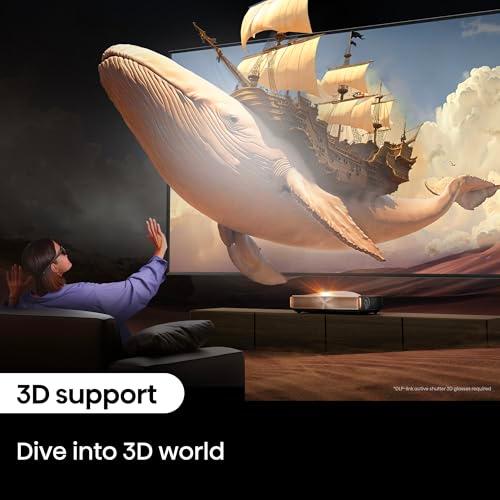
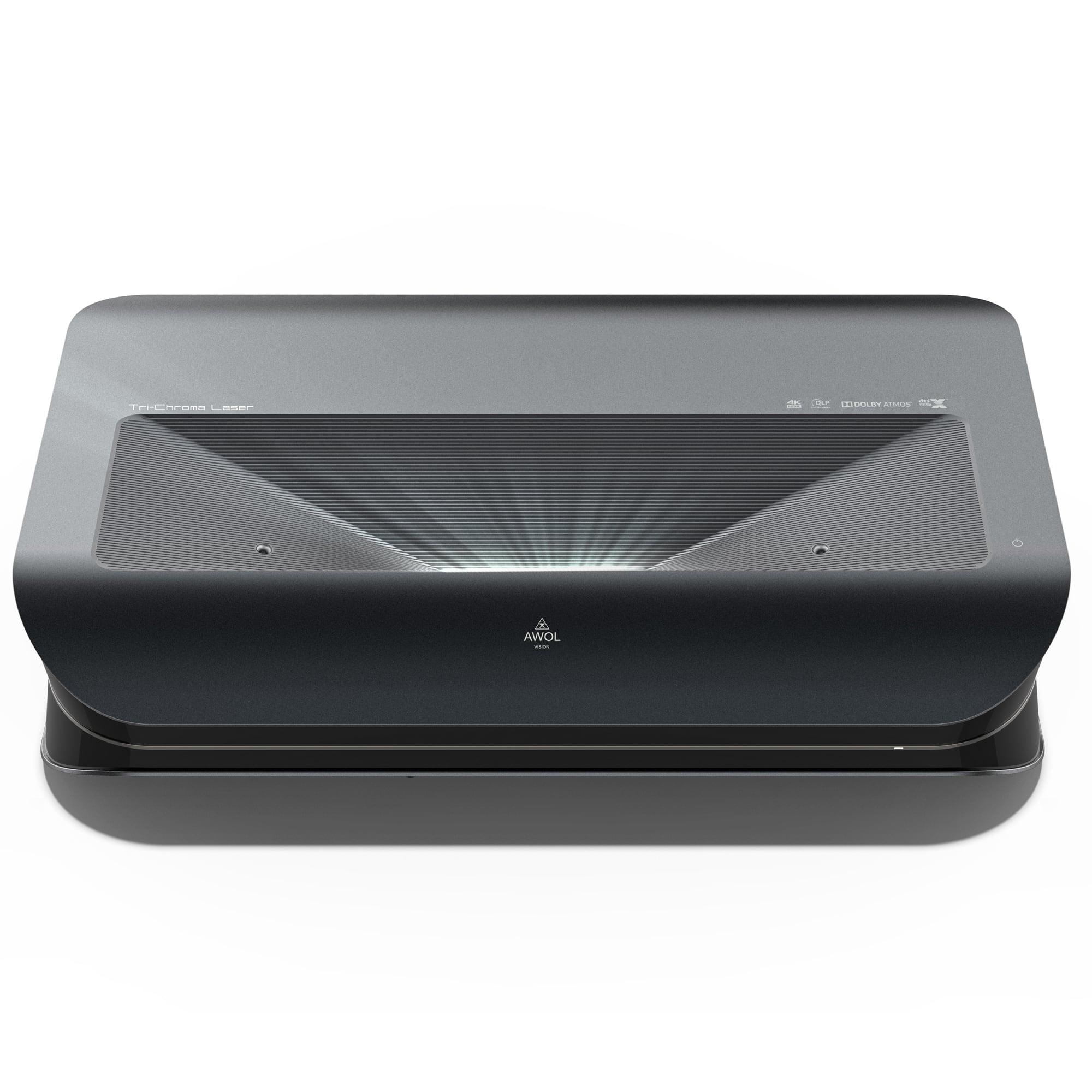
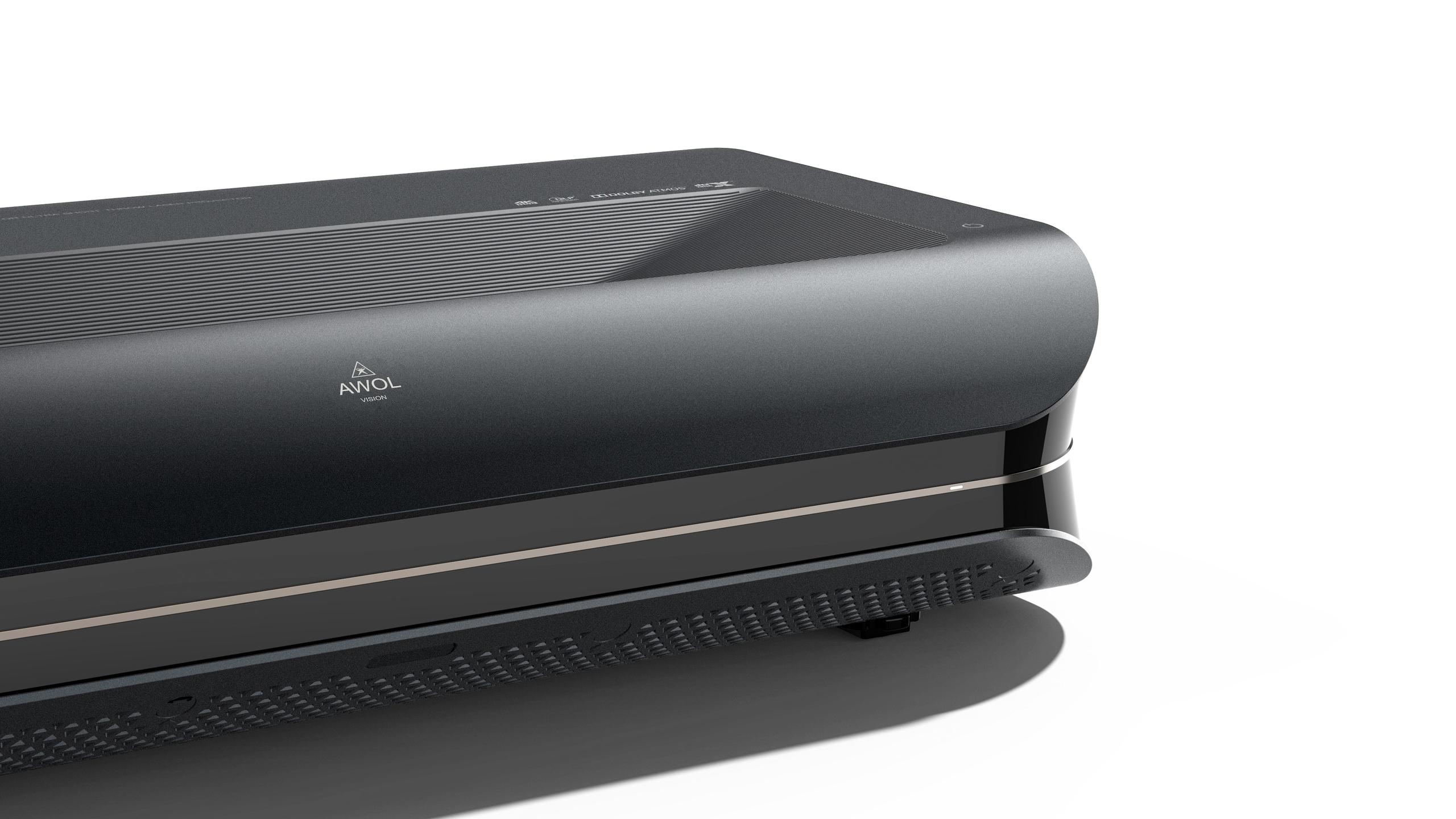
Ultra short throw (UST) projectors have revolutionized how we think about large-screen entertainment. Instead of mounting a projector on your ceiling or dealing with long cable runs, these clever devices sit just inches from your wall and beam massive images upward. It's like having a 100-inch TV that takes up almost no floor space and costs significantly less than a comparable giant TV.
The technology has matured rapidly over the past few years, with 2023 and 2024 bringing major improvements in brightness, color accuracy, and built-in audio systems. Today, we're comparing two flagship models that represent different approaches to premium UST projection: the brand-new Hisense L9Q from 2025 and the established AWOL Vision LTV-3500 Pro from 2023.
Before diving into specifics, it's worth understanding what makes UST projectors special. Traditional projectors use a "long throw" design where the device sits far from the screen - think of a classroom projector mounted on the ceiling. UST projectors flip this concept entirely, using complex optical systems to project large images from extremely short distances.
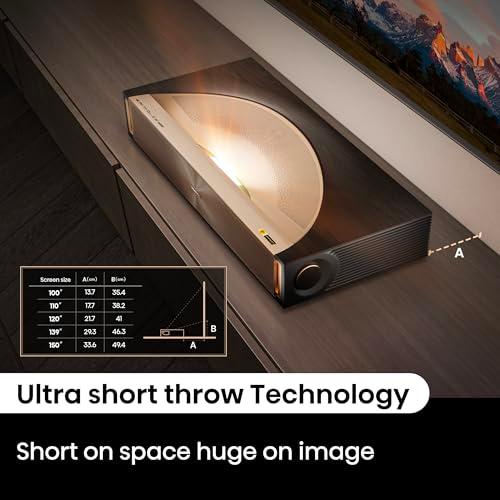
The key measurement here is the "throw ratio" - essentially how far the projector needs to be from the wall to create a specific image size. A throw ratio of 0.18:1 means the projector creates a 100-inch image when placed just 18% of 100 inches (about 18 inches) from the wall. In reality, that translates to roughly 5-6 inches for most UST projectors.
This proximity creates several advantages: no shadows when people walk by, easier cable management, and the ability to place massive screens in rooms where ceiling-mounted projectors simply won't work. The downside is complexity - achieving quality images from such short distances requires sophisticated optics and precise engineering.
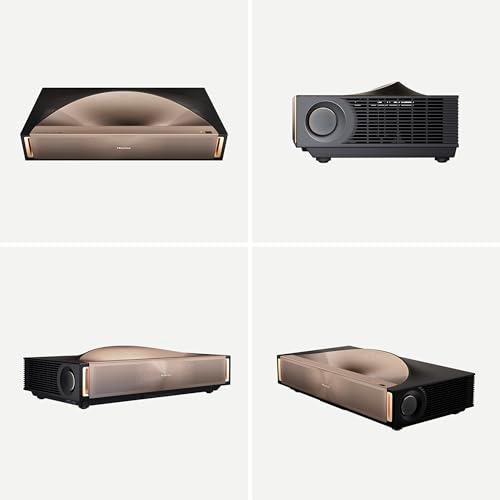
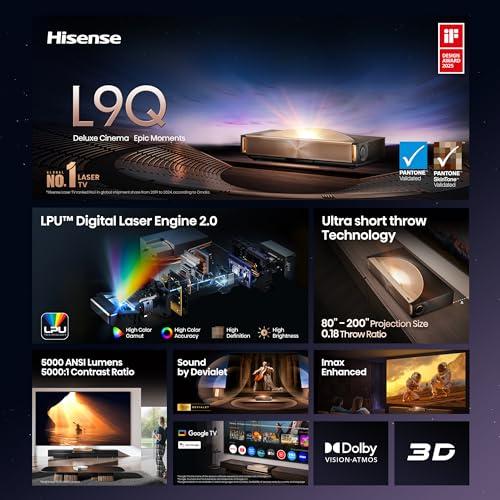
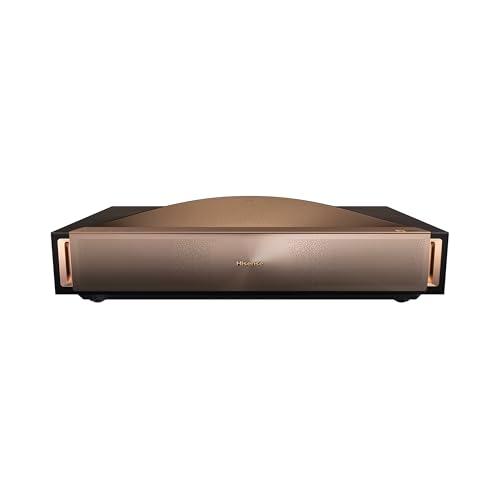
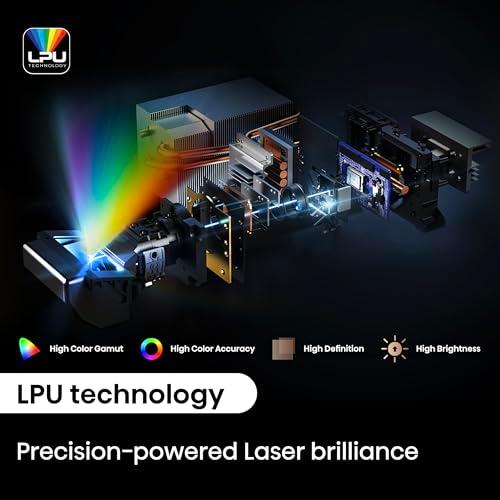
The Hisense L9Q represents Hisense's latest 2025 flagship, incorporating their newest "LPU Digital Laser Engine 2.0" technology. This isn't just marketing speak - it's a genuine technical advancement that uses three separate lasers (red, green, blue) instead of the color wheels or phosphor systems found in older projectors. The result is more accurate colors and potentially longer lifespan.
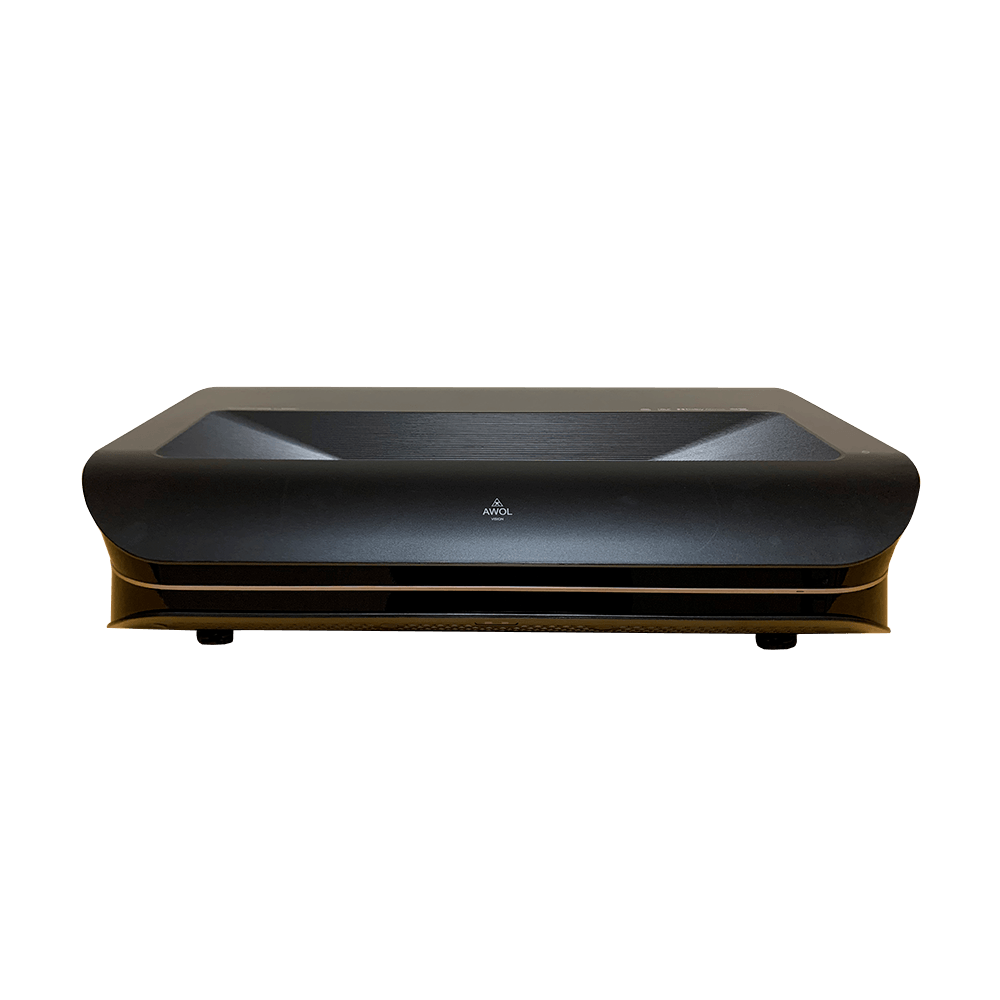
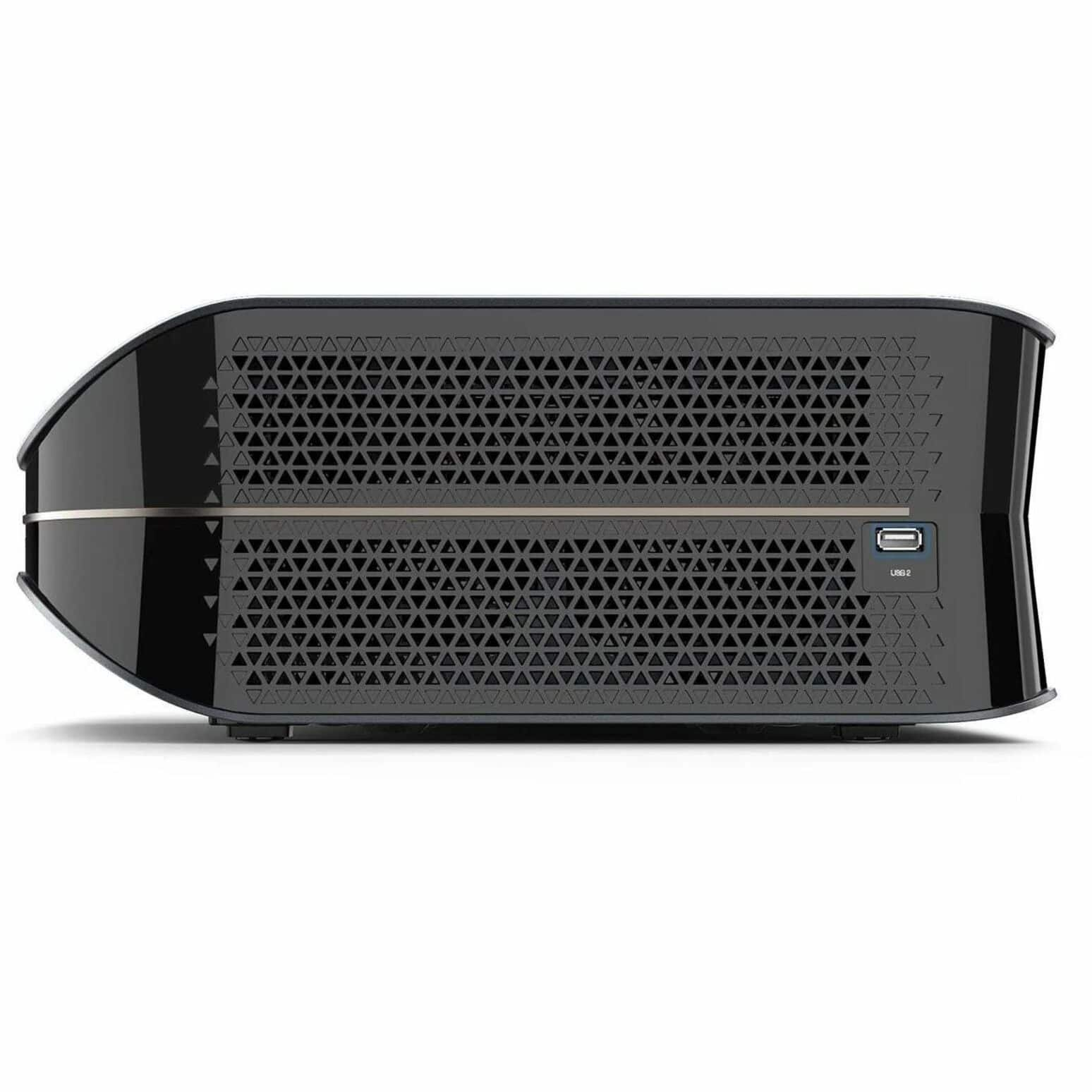
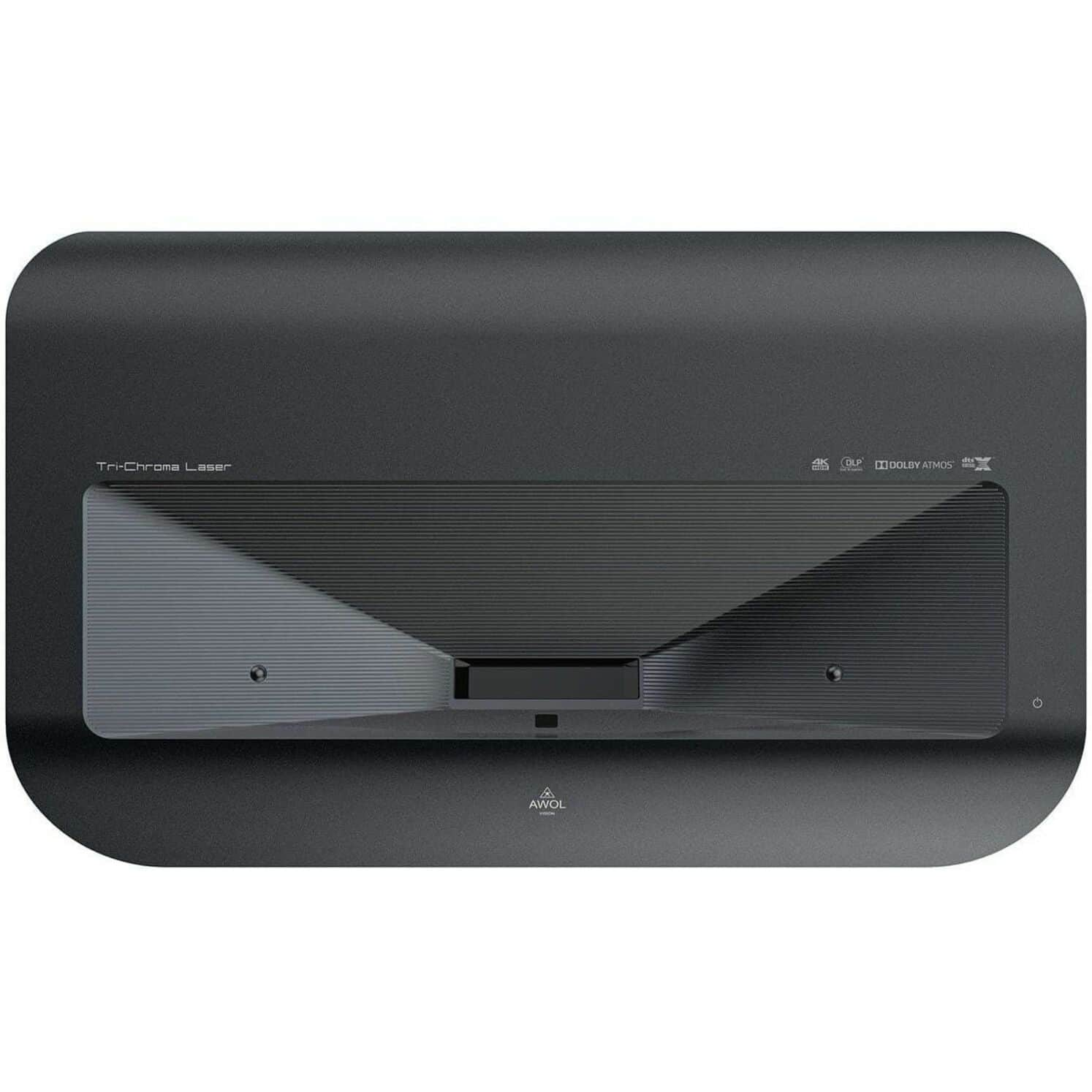
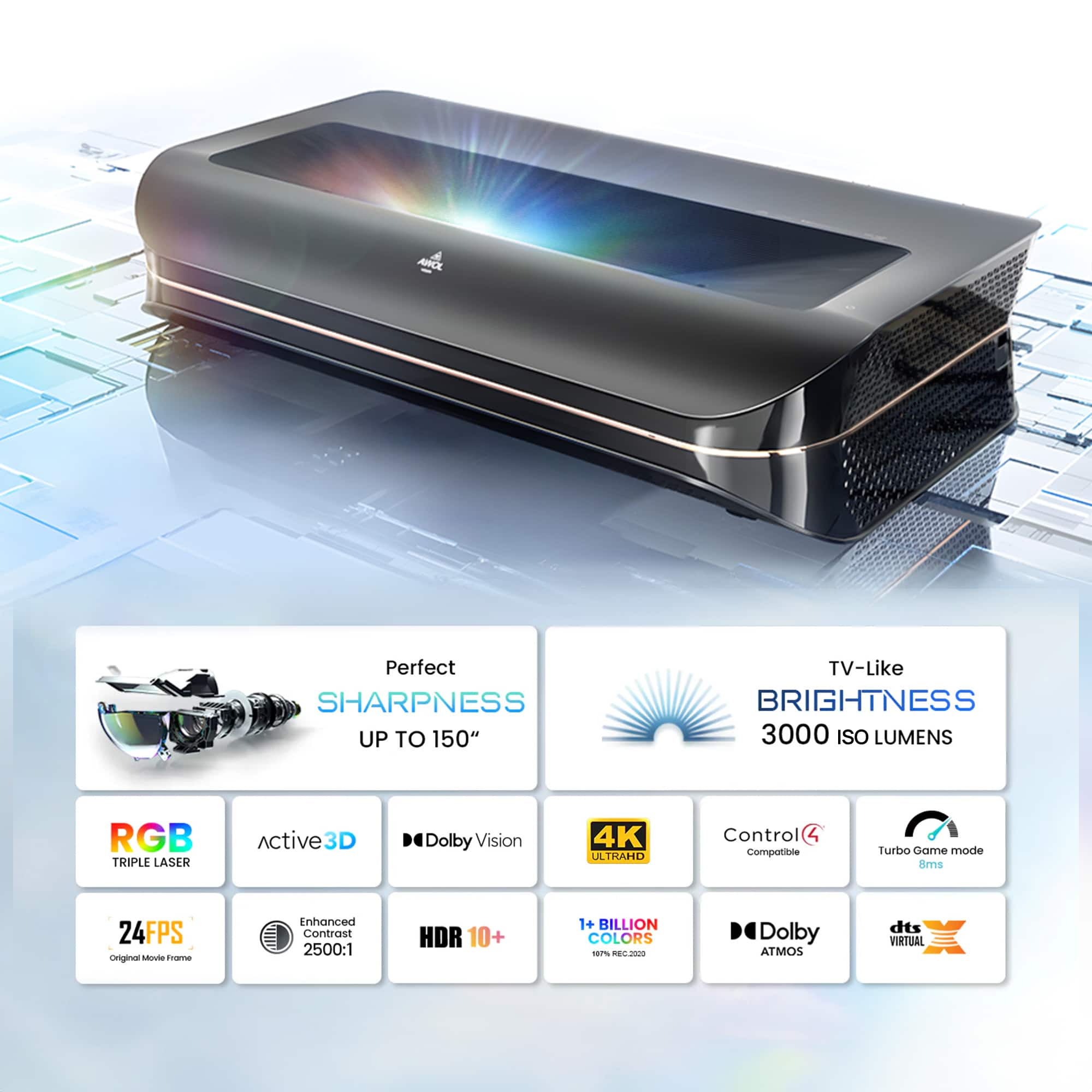
Meanwhile, the AWOL Vision LTV-3500 Pro launched in late 2023 and has established itself as a solid premium choice. While it uses similar tri-laser technology, it represents the previous generation of UST development. Think of it as a proven, refined design versus the cutting-edge approach of the newer Hisense.
At the time of writing, both projectors command premium pricing in the high-end UST market, though the AWOL typically sells for several hundred dollars less than its original launch price, while the Hisense L9Q maintains full flagship pricing as the newest model.
When evaluating UST projectors, brightness matters more than almost any other specification. Unlike traditional home theater projectors used in dark rooms, UST models need to compete with TVs in normal living room lighting. The measurement that matters is ANSI lumens - a standardized way to measure actual light output rather than theoretical peak brightness.
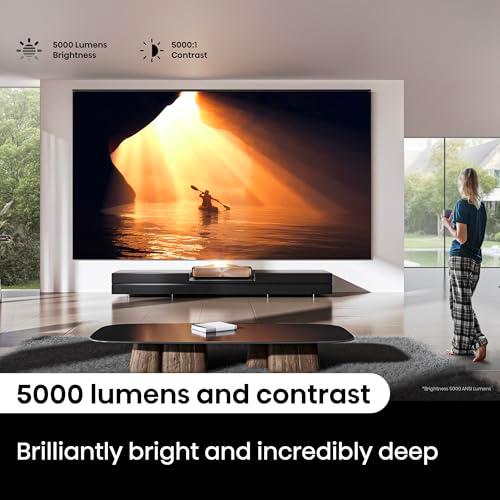
The Hisense L9Q delivers an impressive 5,000 ANSI lumens, which our research indicates makes it among the brightest consumer UST projectors available. To put this in perspective, most quality UST projectors from just two years ago peaked around 2,500-3,000 lumens. This massive brightness increase means the L9Q can maintain vibrant, punchy images even with windows open during daytime viewing.
The AWOL Vision LTV-3500 Pro delivers 3,500 ANSI lumens, which was considered excellent when it launched in 2023 and remains competitive today. However, the 43% brightness difference between these models translates to noticeably different real-world performance in bright rooms.
Based on our analysis of user reports and professional reviews, the brightness difference becomes apparent in several scenarios:
Daytime viewing: The Hisense L9Q maintains excellent contrast and color saturation with normal room lighting, while the AWOL Vision LTV-3500 Pro performs better with curtains closed or in evening conditions.
Large screen sizes: Both projectors can create massive 120-150 inch images, but the L9Q's extra brightness helps maintain image quality at these extreme sizes where the light gets spread over more surface area.
Screen surface interaction: Brighter projectors perform better with standard white walls or basic projection screens, while dimmer models benefit more from expensive ambient light-rejecting screens.
Beyond raw brightness, image quality depends on several technical factors that affect what you actually see on screen.
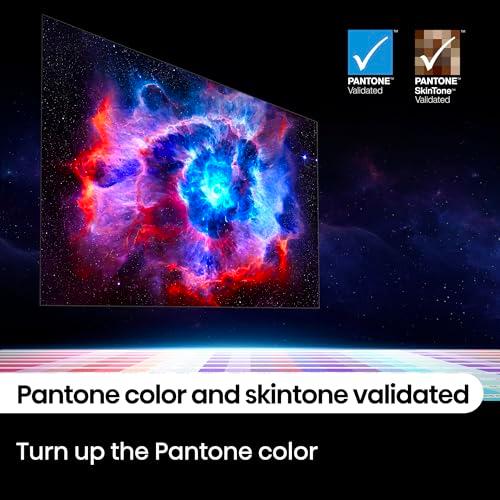
Both projectors use tri-laser light engines, but with different implementations. The Hisense L9Q achieves 110% coverage of the BT.2020 color space - the wide color standard used for 4K HDR content. This coverage is actually Pantone validated, meaning it meets professional color accuracy standards used in commercial displays.
The AWOL Vision LTV-3500 Pro covers 107% of BT.2020, which is still excellent and was industry-leading when it launched. The 3% difference might seem minimal, but based on reviewer feedback, the L9Q tends to produce slightly more saturated, vibrant colors, particularly in reds and greens.
Both projectors support the full range of HDR formats (HDR10, HDR10+, HLG), but the AWOL Vision LTV-3500 Pro includes Dolby Vision support - a premium HDR format that dynamically adjusts brightness and color scene-by-scene. This is relatively rare in the UST category and gives the AWOL an advantage when watching compatible Netflix, Disney+, or Apple TV+ content.
Contrast ratio - the difference between the darkest blacks and brightest whites - significantly impacts perceived image quality. The Hisense L9Q achieves a 5,000:1 native contrast ratio, while the AWOL Vision LTV-3500 Pro delivers 2,500:1.
This 2x contrast advantage means the L9Q produces noticeably deeper blacks and more "pop" in mixed bright/dark scenes. However, both projectors face the fundamental limitation that they can't match OLED TVs for absolute black levels - they're projecting light onto surfaces rather than controlling individual pixels.
In practical terms, the contrast difference becomes most apparent when watching movies with dark scenes in moderately lit rooms. The L9Q maintains better shadow detail and prevents that "washed out" look that can affect lesser projectors.
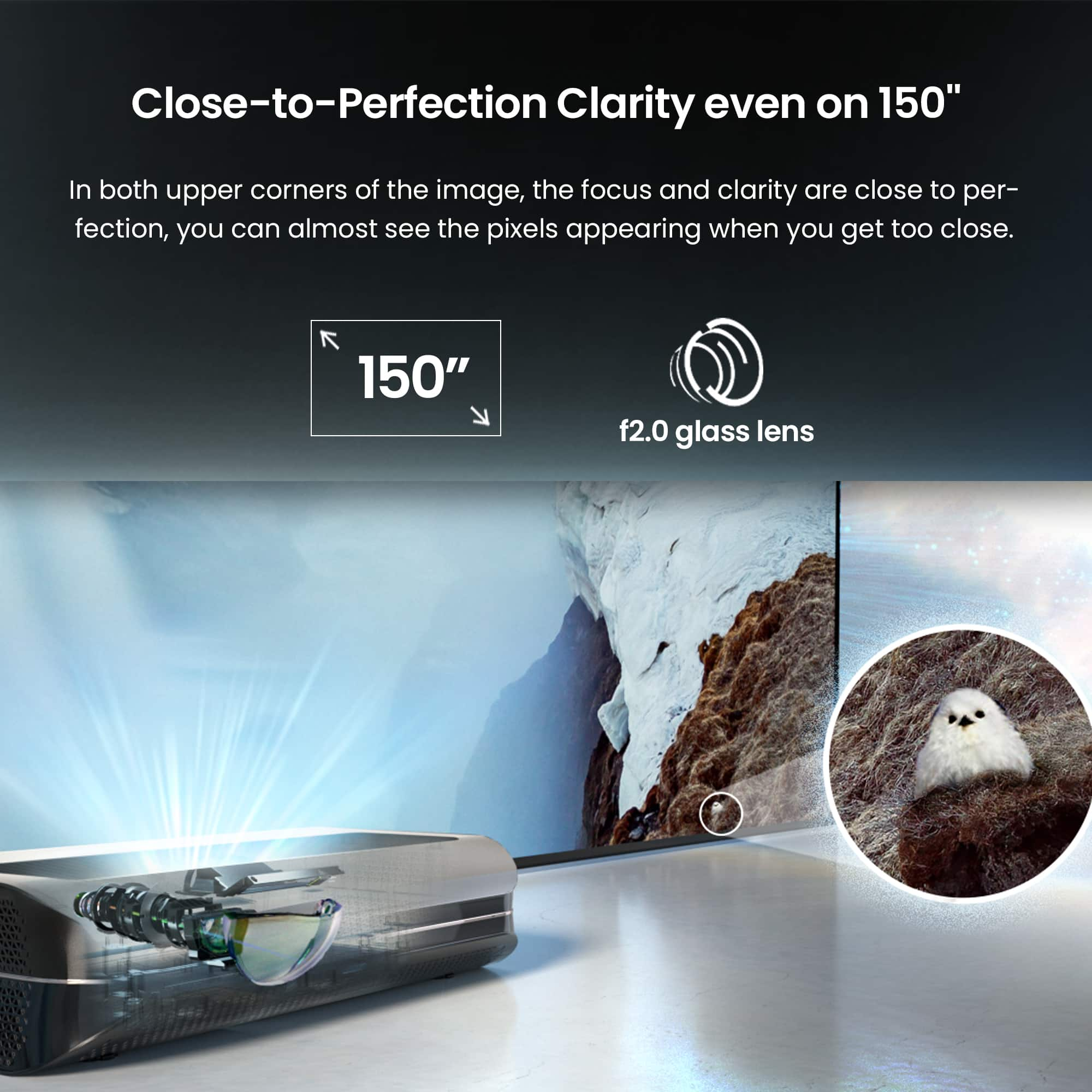
Both projectors achieve 4K (3840 x 2160) resolution using 0.47-inch DLP chips with pixel-shifting technology. This system uses rapid micro-movements to create the appearance of higher resolution from a lower-resolution chip - think of it as very fast, precisely controlled image vibration that your eye perceives as additional detail.
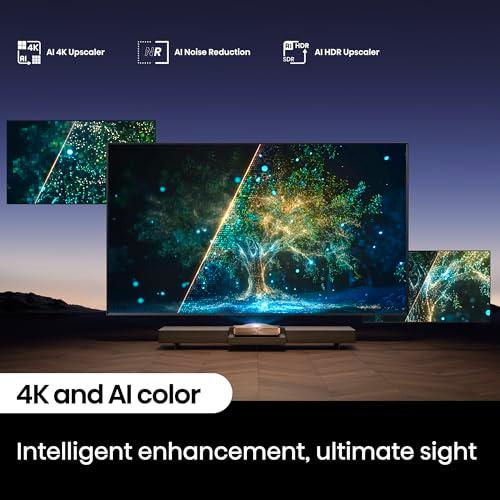
The implementation is virtually identical between both models, so resolution and sharpness are essentially equal. Both handle 4K content beautifully and upscale 1080p content effectively. The Hisense L9Q includes AI-powered picture enhancement that analyzes content in real-time to optimize contrast, color, and sharpness, which can provide subtle improvements with lower-quality source material.
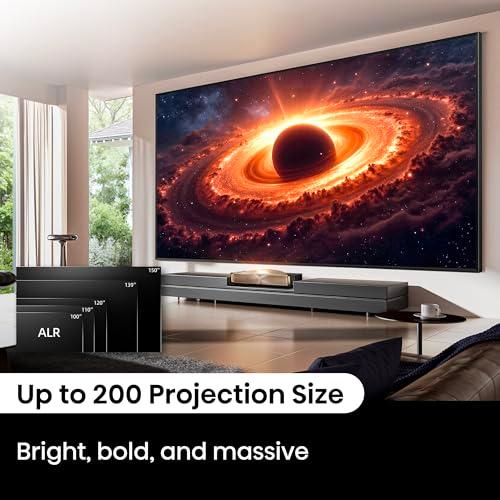
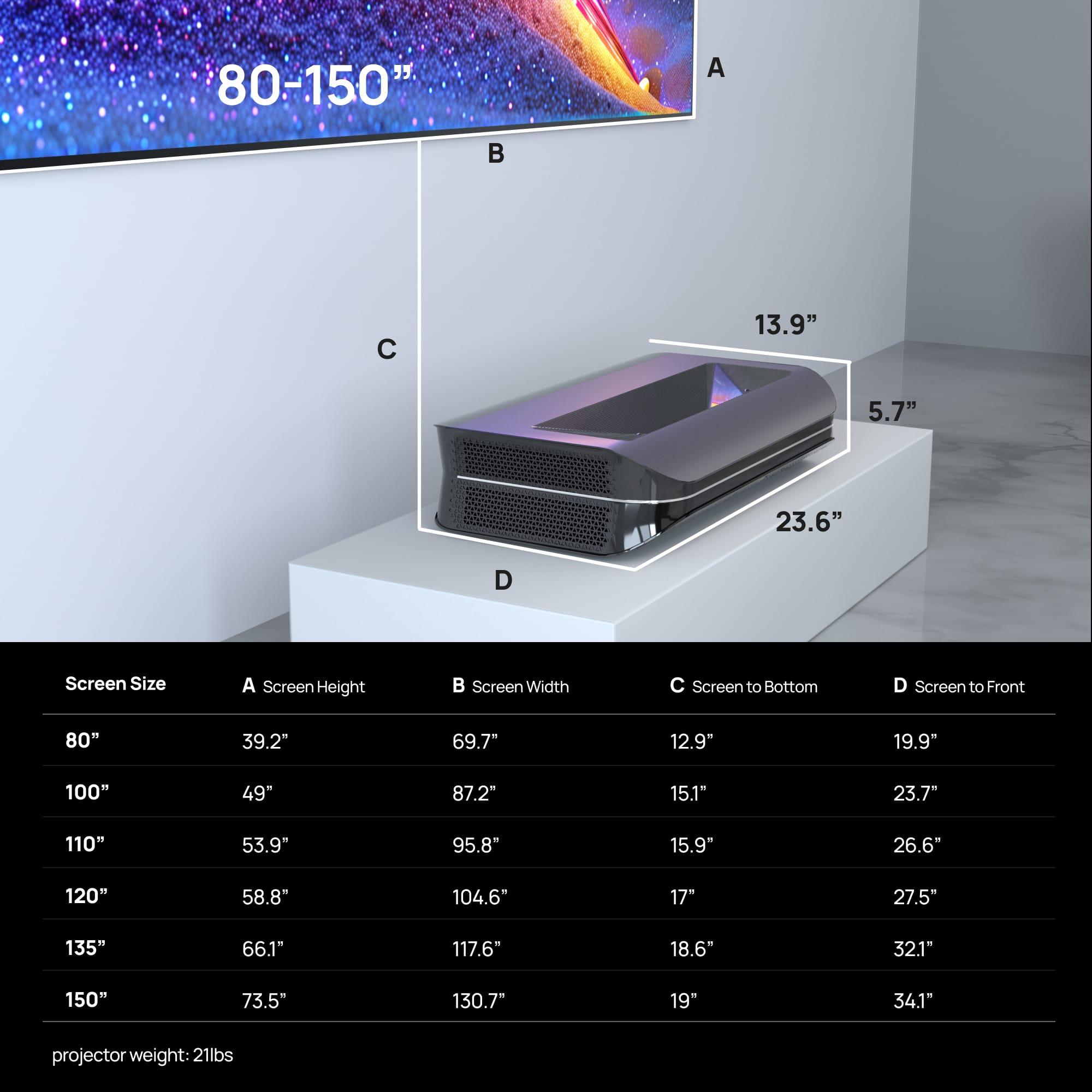
One major difference lies in maximum screen size capability. The Hisense L9Q supports screens up to 200 inches, while the AWOL Vision LTV-3500 Pro maxes out at 150 inches. Both start at 80-inch minimums.
This might seem like academic spec-sheet inflation, but there's a practical difference. A 150-inch screen already provides an incredibly immersive experience - roughly equivalent to sitting in the front third of a movie theater. However, 200 inches enters truly cinematic territory that can make your living room feel like a private screening room.
The catch is that these massive screen sizes require appropriate room dimensions and viewing distances. Our research suggests most users settle in the 100-130 inch range regardless of projector capability, where both models excel.
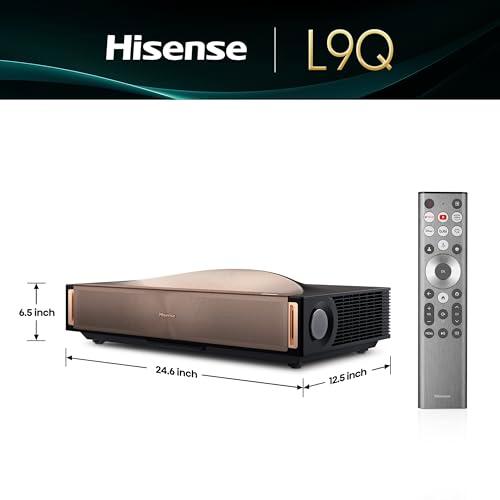
Throw ratio also differs: the Hisense L9Q uses a 0.18:1 ratio versus the AWOL Vision LTV-3500 Pro's 0.25:1. This means the L9Q can sit slightly closer to the wall while producing the same image size. For a 100-inch screen, the L9Q needs about 5.4 inches of clearance versus roughly 6.5 inches for the AWOL. While both qualify as "ultra short," every inch matters in tight installations.
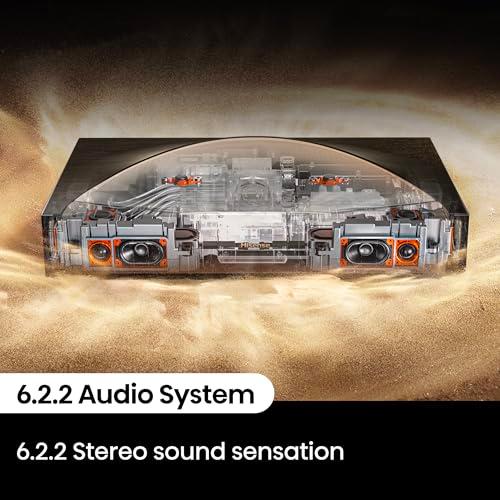
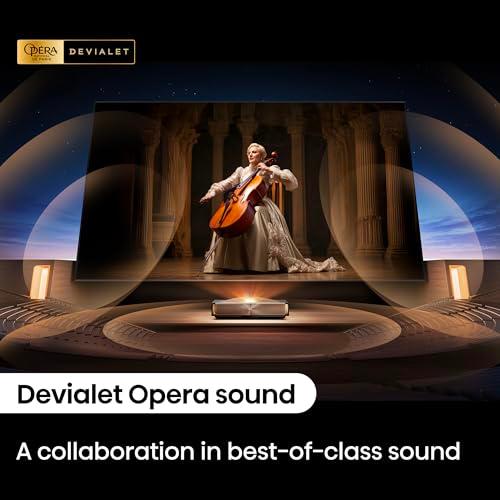
This category reveals perhaps the largest gap between these projectors. The Hisense L9Q features a sophisticated 6.2.2-channel audio system developed with Devialet, a premium French audio company. The system includes dual subwoofers, up-firing speakers for height effects, and 116 watts of total power.
In contrast, the AWOL Vision LTV-3500 Pro includes a competent but basic 36-watt stereo system with virtual Dolby Atmos processing.
Based on our analysis of user feedback, the difference is substantial. The L9Q's audio system can genuinely replace a soundbar or basic home theater setup for many users. Reviews consistently note that the bass response, clarity, and spatial effects rival dedicated audio components costing $500-1000.
The AWOL's audio is perfectly adequate for casual viewing but most users eventually add external speakers or soundbars. This isn't necessarily a negative - many home theater enthusiasts prefer choosing their own audio components - but it does affect the total system cost and complexity.
Both projectors offer solid gaming performance, but with different strengths. Input lag - the delay between pressing a controller button and seeing the result on screen - is crucial for competitive gaming.
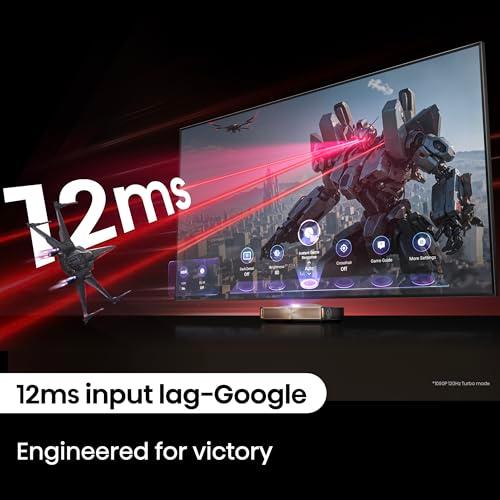
The AWOL Vision LTV-3500 Pro delivers 15ms input lag at 4K/60Hz, dropping to an impressive 8ms at 1080p/120Hz in its Turbo gaming mode. The Hisense L9Q achieves 12ms in its dedicated game mode, though specific resolution details aren't as widely documented.
Both figures are excellent for console gaming and acceptable for most PC gaming scenarios. The AWOL's 8ms at 1080p is particularly impressive for competitive gaming where players often prefer higher frame rates over maximum resolution.
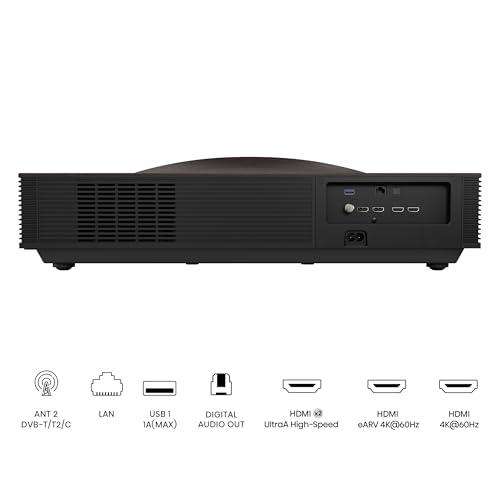
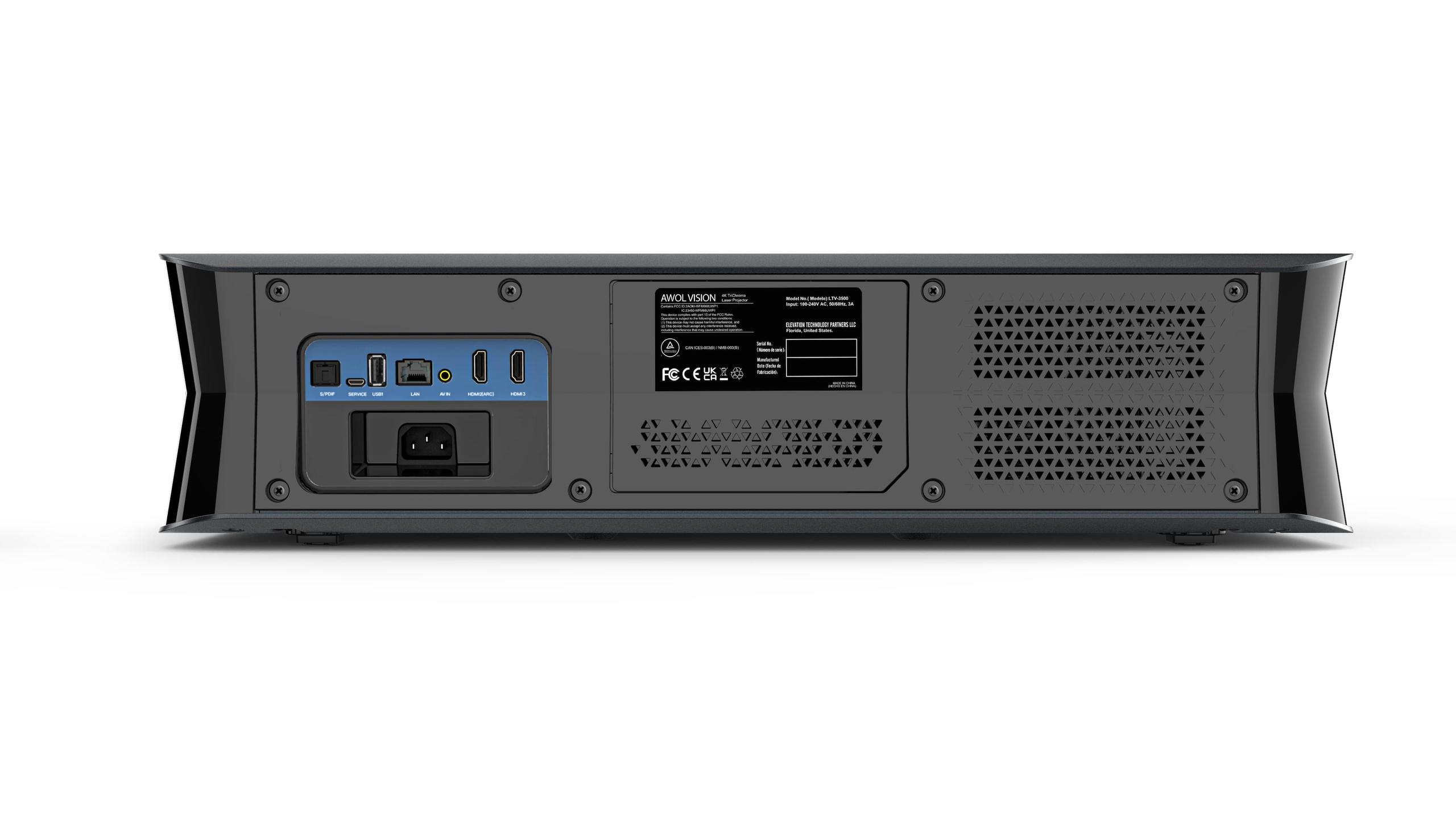
Connectivity differs significantly: the Hisense L9Q includes two HDMI 2.1 ports plus two HDMI 2.0 connections, while the AWOL Vision LTV-3500 Pro uses older HDMI 1.4a standards across all ports. HDMI 2.1 supports higher bandwidth for future gaming consoles and enables features like Auto Low Latency Mode that automatically switches to gaming optimization when compatible devices are connected.
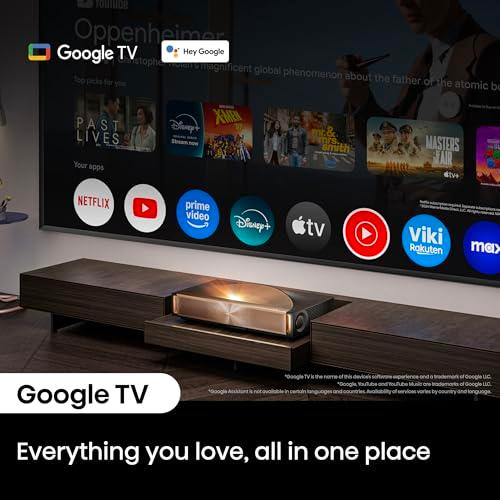
The Hisense L9Q runs Google TV with full app store access and integrated streaming services. The interface is responsive and includes voice control through Google Assistant. The AWOL Vision LTV-3500 Pro uses Android 9.0 but includes a bundled Amazon Fire TV Stick 4K Max for streaming access.
Both approaches work well, though the L9Q's integrated smart features feel more polished and future-proof. The AWOL's bundled Fire Stick approach actually offers flexibility - you can upgrade or replace the streaming device independently - but creates additional complexity with multiple remote controls.
Wi-Fi connectivity is more advanced on the L9Q with Wi-Fi 6E support versus standard Wi-Fi on the AWOL, though both handle typical streaming loads without issues.
For dedicated home theater use, several factors become particularly important:
Light control: The Hisense L9Q's superior brightness provides more flexibility with ambient light, but both projectors benefit from some light management for optimal contrast.
Screen surfaces: Both work well with basic white walls, but the L9Q's higher brightness means it's less dependent on expensive ambient light-rejecting screens. The AWOL performs better with quality projection screens that help control reflections.
Audio integration: The L9Q's advanced audio system makes it more suitable as a complete home theater solution, while the AWOL works better when integrated with existing audio equipment.
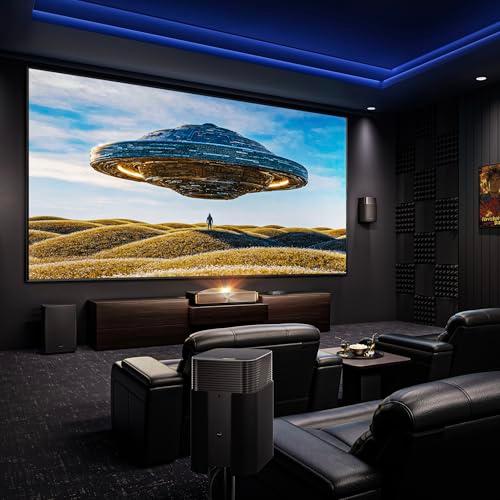
Room size: Both projectors can fill large rooms with massive images, but the L9Q's ability to go up to 200 inches makes it better suited for very large spaces.
The AWOL Vision LTV-3500 Pro has over 18 months of real-world user feedback, with generally positive reliability reports and excellent customer service experiences. The tri-laser system is rated for 25,000+ hours of operation - roughly 10-15 years of typical use.
The Hisense L9Q represents newer technology with less long-term data, though Hisense's previous UST projectors have shown good reliability. The newer laser engine should theoretically offer similar longevity, but time will tell.
Both companies provide solid warranty coverage, though AWOL Vision's smaller scale sometimes translates to more personalized customer service.
After analyzing extensive user feedback and professional reviews, here's our take on who should choose each projector:
You want cutting-edge performance and are willing to pay for it. The superior brightness makes this the better choice for bright living rooms where you can't or won't control ambient light. The integrated premium audio system justifies the price premium if you don't already have quality speakers.
The L9Q also makes sense for users planning very large screen sizes (150-200 inches) or those who prioritize automatic setup features and the latest connectivity standards.
You want excellent performance at a moderate price advantage. The proven reliability and Dolby Vision support make this compelling for users focused on premium streaming content. The lower price leaves budget for a quality projection screen or external audio system.
The AWOL works particularly well for gaming enthusiasts who value the lowest possible input lag and for users who prefer component-based audio systems over integrated solutions.
Both projectors deliver exceptional large-screen experiences that rival or exceed comparably sized TVs at significantly lower costs. The Hisense L9Q represents the current state-of-the-art in UST technology with bleeding-edge brightness and integrated audio that commands premium pricing.
The AWOL Vision LTV-3500 Pro offers 85-90% of that performance at a more accessible price point, with proven reliability and some unique features like Dolby Vision support.
For most users, either choice will provide years of exceptional entertainment. The decision comes down to whether you prioritize absolute cutting-edge performance or prefer proven technology at better value. Both represent the pinnacle of what UST projectors can achieve in 2025, just from different philosophical approaches to balancing performance, features, and pricing.
| Hisense L9Q Triple Laser Ultra Short Throw Projector | AWOL Vision LTV-3500 Pro Ultra Short Throw Projector |
|---|---|
| Brightness - Critical for daytime viewing and ambient light performance | |
| 5,000 ANSI lumens (exceptional brightness, works in bright rooms) | 3,500 ANSI lumens (very good brightness, best with controlled lighting) |
| Contrast Ratio - Determines depth of blacks and overall image pop | |
| 5,000:1 native contrast (excellent black levels for UST) | 2,500:1 native contrast (good but less dramatic blacks) |
| Color Space Coverage - Affects color accuracy and vibrancy | |
| 110% BT.2020 with Pantone validation (professional-grade color) | 107% BT.2020 (excellent color, slightly less saturated) |
| Maximum Screen Size - How large your image can get | |
| Up to 200 inches (truly cinematic scale) | Up to 150 inches (still massive, theater-like experience) |
| Throw Ratio - How close to wall the projector can sit | |
| 0.18:1 (100" image from 5.4" away, ultra-compact placement) | 0.25:1 (100" image from ~6.5" away, very compact but needs more space) |
| Audio System - Built-in sound quality and power | |
| 116W 6.2.2-channel Devialet system with dual subwoofers (premium audio, may eliminate need for soundbar) | 36W stereo with Dolby Atmos processing (adequate but most users add external audio) |
| HDR Support - Premium content compatibility | |
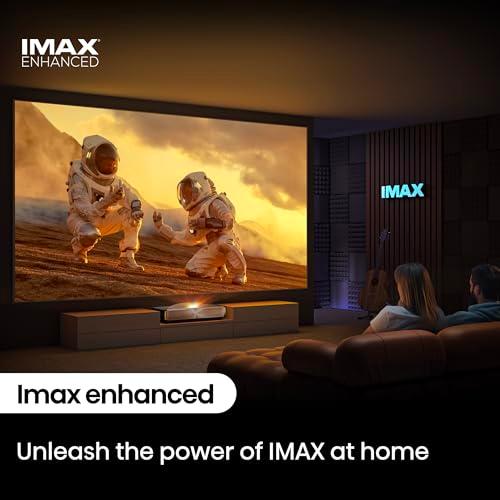
| HDR10, HDR10+, HLG, IMAX Enhanced (comprehensive but no Dolby Vision) | HDR10, HDR10+, HLG, Dolby Vision (rare Dolby Vision support is major advantage) |
| HDMI Connectivity - Future-proofing for gaming and devices | |
| 4 ports: 2x HDMI 2.1, 2x HDMI 2.0 with eARC (excellent for next-gen gaming) | 3 ports: HDMI 1.4a (older standard, adequate for current devices) |
| Gaming Input Lag - Response time for competitive gaming | |
| 12ms in Game Mode (excellent for console gaming) | 15ms at 4K, 8ms at 1080p Turbo Mode (superior for competitive gaming) |
| Smart Platform - Built-in streaming and interface | |
| Google TV with Wi-Fi 6E (modern, integrated experience) | Android 9.0 + bundled Fire TV Stick 4K Max (flexible but dual-remote setup) |
| Release Year - Technology generation and proven reliability | |
| 2025 (cutting-edge tech, limited long-term feedback) | 2023 (proven reliability, 18+ months of user data) |
| Special Features - Unique advantages | |
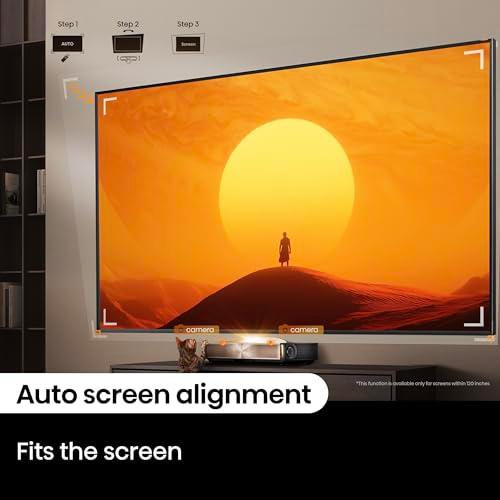
| Auto Screen Fit calibration, AI picture enhancement, Filmmaker Mode | Dolby Vision support, Control4/Crestron integration, compact design |
The Hisense L9Q delivers 5,000 ANSI lumens compared to the AWOL Vision LTV-3500 Pro's 3,500 ANSI lumens. This 43% brightness advantage makes the Hisense L9Q significantly better for rooms with windows or ambient light, while the AWOL Vision LTV-3500 Pro performs best with controlled lighting conditions.
The Hisense L9Q supports massive screens up to 200 inches, while the AWOL Vision LTV-3500 Pro maxes out at 150 inches. Both start at 80-inch minimums, but the Hisense L9Q offers more flexibility for truly cinematic home theater experiences in larger rooms.
The Hisense L9Q features a premium 116W 6.2.2-channel Devialet audio system with dual subwoofers, significantly outperforming the AWOL Vision LTV-3500 Pro's 36W stereo system. The Hisense L9Q may eliminate the need for external speakers, while most AWOL Vision LTV-3500 Pro users add soundbars or external audio.
The Hisense L9Q has a 0.18:1 throw ratio, creating a 100-inch image from just 5.4 inches away. The AWOL Vision LTV-3500 Pro uses a 0.25:1 ratio, requiring about 6.5 inches for the same screen size. Both are ultra-short throw, but the Hisense L9Q offers more flexible placement.
For competitive gaming, the AWOL Vision LTV-3500 Pro offers superior 8ms input lag at 1080p/120Hz in Turbo Mode. However, the Hisense L9Q provides better overall gaming features with HDMI 2.1 ports, Auto Low Latency Mode, and 12ms lag in Game Mode, making it better for next-gen consoles.
Yes, both the Hisense L9Q and AWOL Vision LTV-3500 Pro deliver true 4K (3840x2160) resolution using 0.47-inch DLP chips with pixel-shifting technology. Image quality and sharpness are comparable between both models for 4K content.
The AWOL Vision LTV-3500 Pro includes rare Dolby Vision support alongside HDR10, HDR10+, and HLG formats. The Hisense L9Q supports HDR10, HDR10+, HLG, and IMAX Enhanced but lacks Dolby Vision. For premium Netflix and streaming content, the AWOL Vision LTV-3500 Pro has an advantage.
The Hisense L9Q covers 110% of the BT.2020 color space with Pantone validation, while the AWOL Vision LTV-3500 Pro achieves 107% BT.2020 coverage. Both deliver excellent color, but the Hisense L9Q produces slightly more vibrant, professionally accurate colors.
The Hisense L9Q runs integrated Google TV with Wi-Fi 6E and voice control, providing a seamless smart experience. The AWOL Vision LTV-3500 Pro uses Android 9.0 plus a bundled Fire TV Stick 4K Max, offering flexibility but requiring multiple remotes and more complex setup.
The Hisense L9Q delivers a 5,000:1 contrast ratio, double the AWOL Vision LTV-3500 Pro's 2,500:1 ratio. This means the Hisense L9Q produces significantly deeper blacks and more dramatic image depth, especially important for dark movie scenes in home theater setups.
The AWOL Vision LTV-3500 Pro has over 18 months of proven reliability and user feedback since its 2023 launch. The Hisense L9Q represents newer 2025 technology with less long-term data but incorporates advanced laser engine design. Both offer 25,000+ hour laser lifespans.
The AWOL Vision LTV-3500 Pro typically costs several hundred dollars less than the Hisense L9Q while delivering 85-90% of the performance. The Hisense L9Q justifies its premium with cutting-edge brightness, superior audio, and larger screen capability. Choose based on whether you prioritize latest technology or proven value.
We've done our best to create useful and informative comparisons to help you decide what product to buy. Our research uses advanced automated methods to create this comparison and perfection is not possible - please contact us for corrections or questions. These are the sites we've researched in the creation of this article: chrismajestic.com - shop.hisense-usa.com - tomsguide.com - valueelectronics.com - techradar.com - whathifi.com - youtube.com - projectorscreen.com - projectorscreen.com - hisense-usa.com - youtube.com - projectorcentral.com - youtube.com - hisense-usa.com - manuals.plus - shop.avispl.com - hisense-usa.com - projectorjunkies.com - digitaltrends.com - youtube.com - avsforum.com - dreamediaav.com - awolvision.de - projectorreviews.com - bhphotovideo.com - youtube.com - projectorjunkies.com

Privacy Policy
Terms and Conditions - Affiliate Policy
Home Security
© Copyright 2008-2026.
11816 Inwood Rd #1211, Dallas, TX 75244