



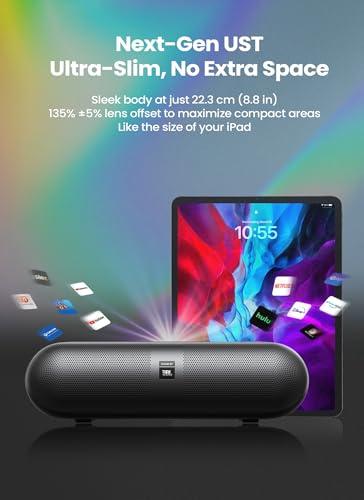

When I first encountered an ultra short throw (UST) projector in action, I was amazed by the seemingly impossible physics—a device sitting just inches from the wall somehow creating a 100-inch image that looked like magic. Fast forward to 2025, and triple laser UST projectors like the Hisense L9Q and Yaber K300s have transformed this technology from novelty to genuine home theater solution.
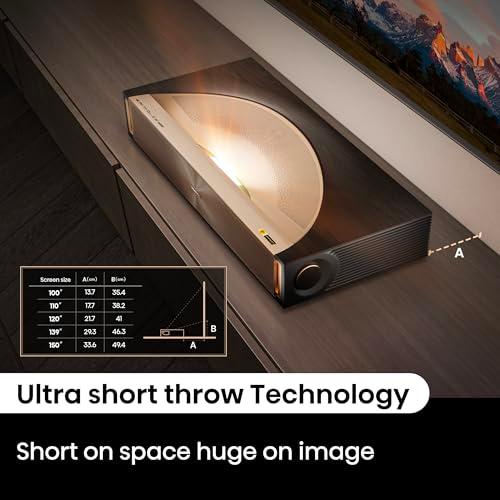
Ultra short throw projectors solve the biggest problem with traditional projectors: they need enormous rooms to create large images. A regular projector might need 10-12 feet to create a 100-inch picture, but UST models accomplish this from less than 10 inches away. This breakthrough uses specialized wide-angle lenses and mirrors that bend light at extreme angles—think of it like a periscope working in reverse.
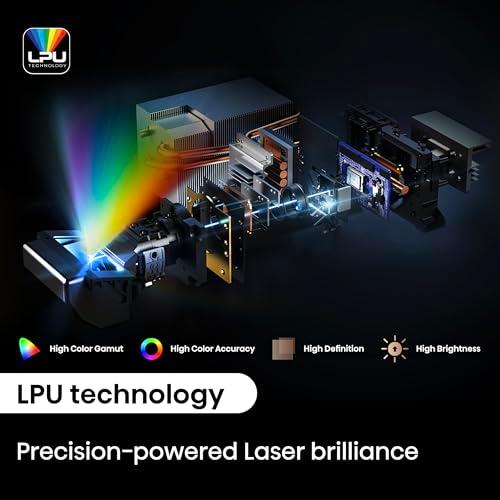
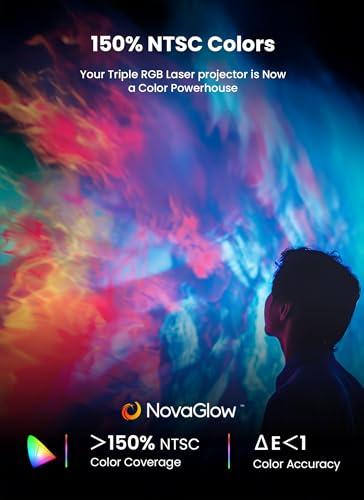
The "triple laser" aspect refers to using three separate laser diodes—red, green, and blue—instead of a single white light source filtered through a spinning color wheel. This approach delivers purer colors because each laser produces its specific wavelength of light without the compromises of filtering. It's like having three perfectly tuned instruments playing together instead of one instrument trying to hit every note.
When evaluating UST projectors, brightness measured in ANSI lumens becomes crucial because you're fighting ambient room light. Color accuracy, measured by how much of specific color spaces like BT.2020 or NTSC the projector can reproduce, determines how lifelike your content appears. The throw ratio—how far the projector sits from the wall relative to image size—affects installation flexibility.
Both the Hisense L9Q and Yaber K300s launched in 2025, representing the latest generation of triple laser UST technology. However, they target completely different market segments, which becomes obvious when you examine their specifications and pricing.
The L9Q represents Hisense's flagship effort, building on years of UST projector development including previous models like the PX3-Pro and L9G. At the time of writing, it commands premium pricing in the $6,000 range, positioning it against high-end televisions and competing with brands like Samsung's Premiere series.
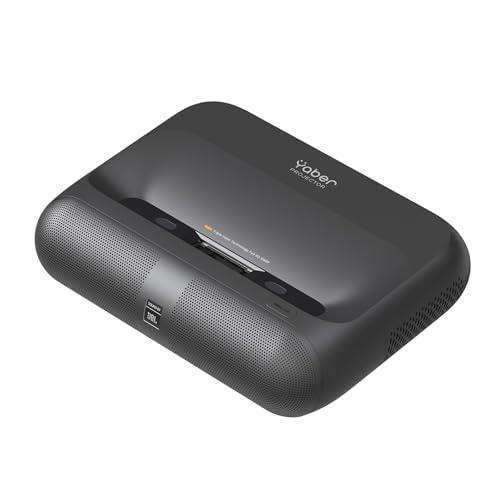
The K300s, meanwhile, arrives as Yaber's attempt to democratize triple laser technology. Priced around $1,000 at launch, it costs roughly one-sixth of the L9Q while still delivering the core benefits of laser projection. This pricing makes it competitive with quality single-laser projectors and premium LED models.
The technology improvements since earlier UST models are significant. Previous generations often struggled with color accuracy, brightness uniformity, and integration challenges. Modern triple laser systems like those in both projectors deliver dramatically better color reproduction and eliminate the rainbow effect (brief color flashes) that plagued earlier DLP projectors using color wheels.
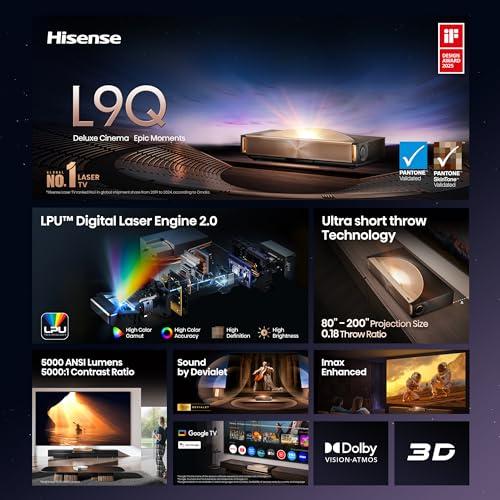
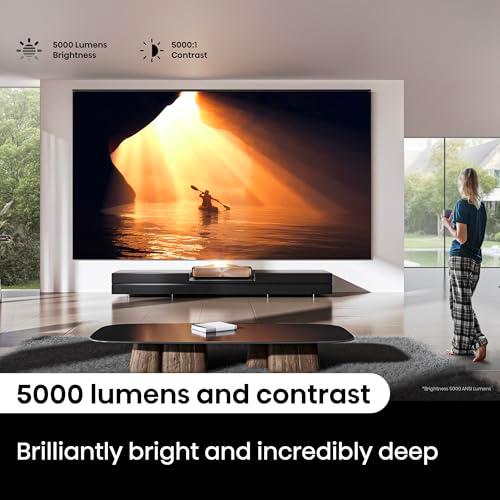
Brightness represents the most dramatic difference between these projectors and arguably the most important specification for most users. The Hisense L9Q produces an exceptional 5,000 ANSI lumens, while the Yaber K300s outputs 1,000 ANSI lumens—a five-fold difference that fundamentally changes how and when you can use each projector.
ANSI lumens measure brightness using a standardized nine-point grid across the projected image, providing a more accurate real-world brightness rating than peak lumens measurements. In practical terms, 5,000 ANSI lumens means the L9Q can maintain excellent image quality even with room lights on, windows uncovered during daytime, or when projecting truly massive 150-200 inch images.
The K300s requires more controlled viewing conditions. At 1,000 ANSI lumens, it performs best with dimmed lights or evening viewing, similar to a traditional home theater setup. While this isn't necessarily a limitation for many users—plenty of people prefer darkened rooms for movie watching—it does reduce flexibility.
Based on extensive review analysis, the brightness difference becomes most apparent with screen sizes above 120 inches or in rooms with significant ambient light. The L9Q maintains vivid colors and contrast even at massive sizes, while the K300s starts showing brightness limitations as screen size increases or room lighting becomes less controlled.
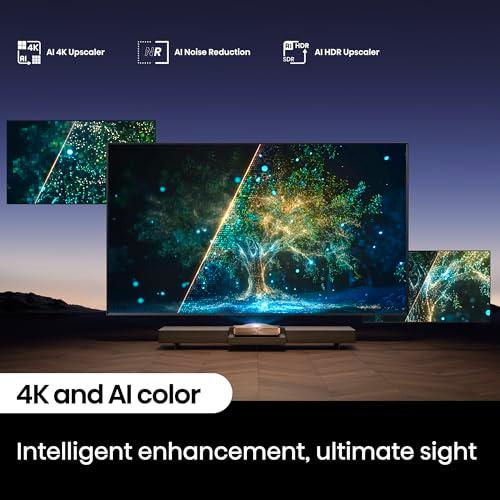
The resolution difference tells an interesting story about market positioning. The Hisense L9Q delivers true 4K resolution (3840×2160 pixels) using a 0.47-inch DMD (Digital Micromirror Device) chip with pixel-shifting technology. This approach uses millions of tiny mirrors that tilt to reflect light, with the chip moving slightly between frames to create additional detail—essentially doubling the perceived resolution.
The Yaber K300s uses native 1080p resolution (1920×1080) but includes 4K decoding, meaning it can accept 4K signals and downscale them intelligently. While not as sharp as true 4K, the difference becomes less noticeable at typical viewing distances, especially on screens under 100 inches.
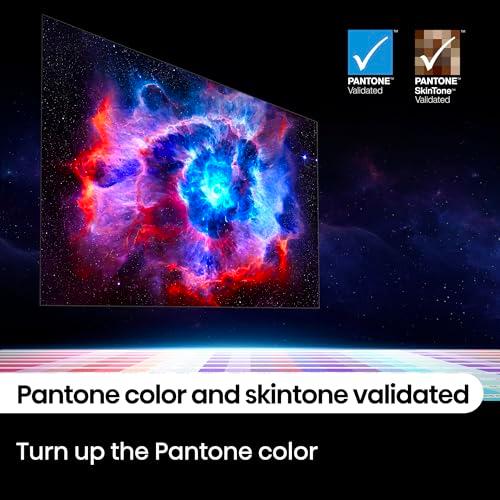
Color reproduction reveals more nuanced differences. The L9Q covers 110% of the BT.2020 color space—the standard for 4K HDR content—and includes Pantone color validation. This means colors appear exactly as content creators intended, with particular accuracy for skin tones that matters significantly for movies and TV shows.
The K300s achieves 150% of the NTSC color space, which sounds more impressive but uses a different measurement standard. NTSC represents an older, smaller color space than BT.2020, so while the K300s delivers vibrant colors, they may not match the L9Q's accuracy for modern content.
Contrast ratios—the difference between the brightest whites and darkest blacks—strongly favor the L9Q at 5,000:1 versus the K300s's 1,500:1. Higher contrast creates more dramatic, three-dimensional images with better shadow detail and brighter highlights.
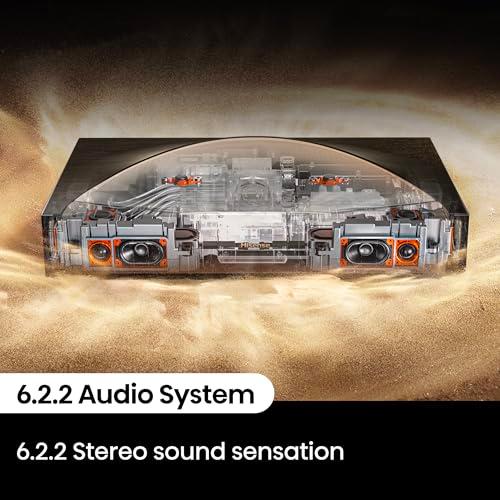
Audio capabilities represent perhaps the most overlooked differentiator between these projectors. The Hisense L9Q includes a 6.2.2-channel surround sound system engineered by Devialet, a French audio company known for high-end speakers. This 116-watt system supports Dolby Atmos and DTS:X, creating true surround sound with height channels for overhead effects.
In practice, this means the L9Q can replace both your display and sound system. Quality soundbars with similar capabilities typically cost $800-1,500 separately, adding significant value to the projector's overall package.
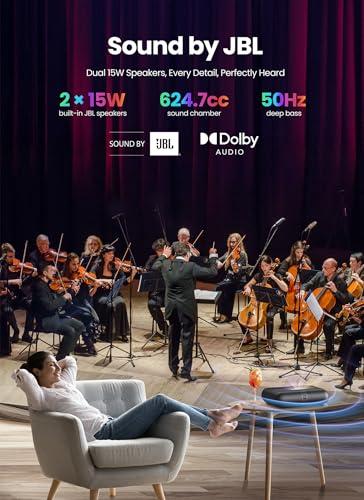
The K300s features dual 15-watt JBL-tuned speakers (30 watts total) with Dolby Audio support. While reviewers consistently praise the sound quality as impressive for the projector's size and price point, it lacks the room-filling presence and surround capabilities of the L9Q. Most users will find it adequate for casual viewing but may want external speakers for serious movie watching.
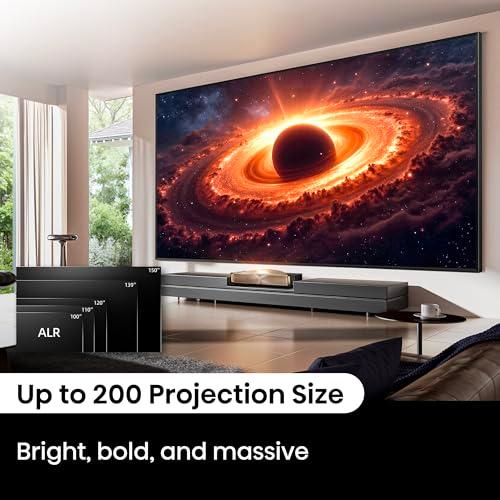
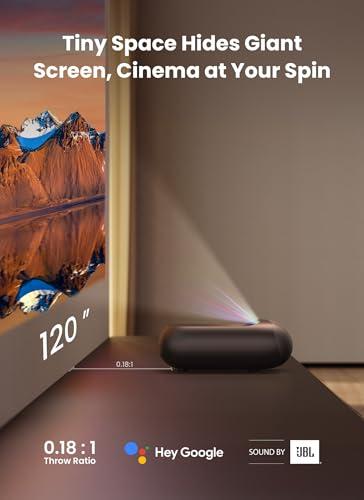
Both projectors use similar 0.18:1 throw ratios, meaning they sit roughly the same distance from the wall for equivalent image sizes. However, the L9Q supports much larger maximum screen sizes—up to 200 inches compared to the K300s's 100-inch limit.
This difference stems from brightness capabilities. While both projectors can technically project larger images, the K300s becomes too dim above 100 inches for comfortable viewing. The L9Q maintains excellent brightness and contrast even at massive sizes, opening possibilities for truly cinematic experiences.
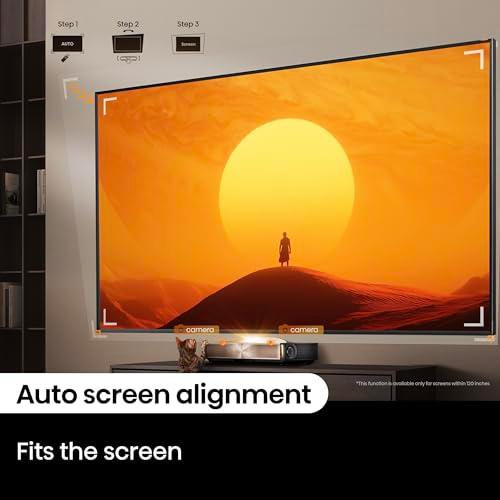
Installation proves equally straightforward for both, requiring careful positioning and screen alignment but no ceiling mounting or complex room modifications. Auto-keystone correction on both models helps compensate for slight positioning errors.
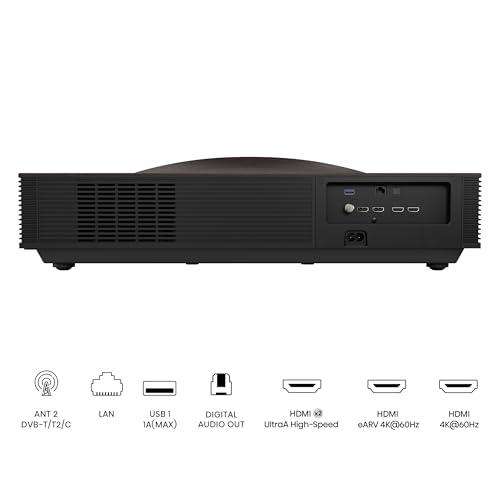
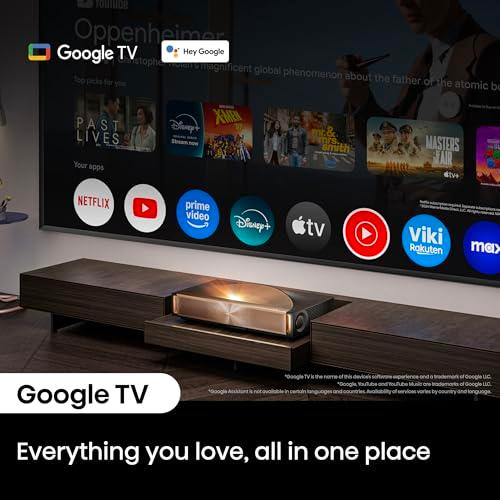
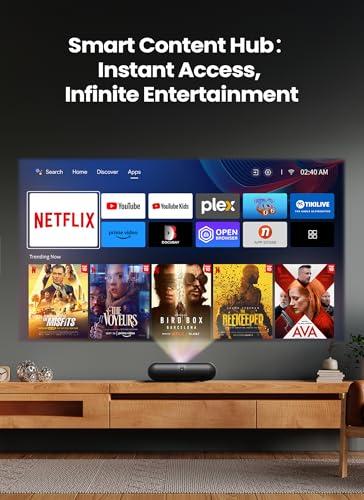
Both projectors run Google TV platforms, providing access to streaming services without external devices. However, the L9Q offers more comprehensive connectivity with four HDMI ports (including two HDMI 2.1 ports supporting the latest gaming consoles) versus the K300s's more basic connectivity options.
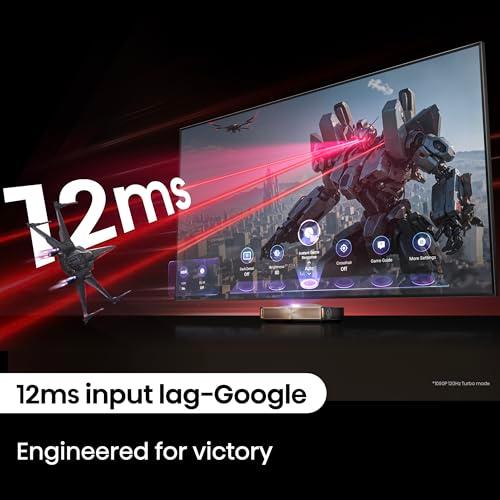
For gaming enthusiasts, the L9Q achieves 12ms input lag in game mode, making it suitable for competitive gaming, while the K300s reaches 40ms—acceptable for casual gaming but potentially noticeable for fast-paced games.
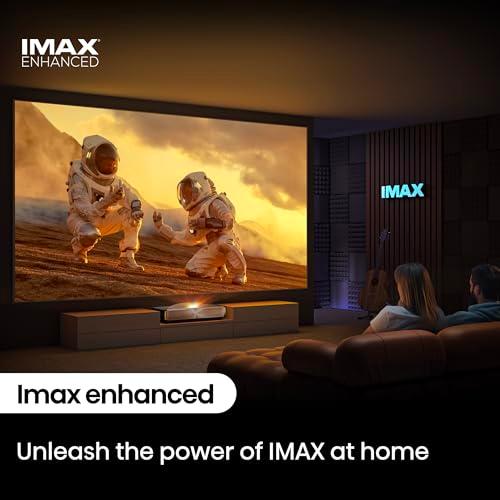
Both support HDR (High Dynamic Range) content, but the L9Q handles premium formats like Dolby Vision and IMAX Enhanced that deliver superior contrast and color range with compatible content.
At the time of writing, the pricing difference between these projectors is substantial—roughly six times more for the L9Q. However, value calculations become more complex when considering the complete system.
The L9Q includes premium audio that eliminates the need for a separate sound system, potentially saving $1,000-2,000 depending on your audio requirements. It also supports much larger screen sizes, potentially replacing premium large-screen TVs that cost $4,000-8,000 in equivalent sizes.
The K300s represents exceptional value for users with more modest requirements. It delivers 80% of the UST experience—large screens, convenience, good image quality—at roughly 17% of the flagship cost. For many users, especially those with smaller rooms or controlled lighting, this represents a compelling value proposition.
Laser lifespan adds another value consideration. Both projectors offer 20,000+ hour laser lives, meaning 10+ years of typical use without bulb replacements—a significant advantage over traditional projectors requiring expensive bulb changes every 2-3 years.
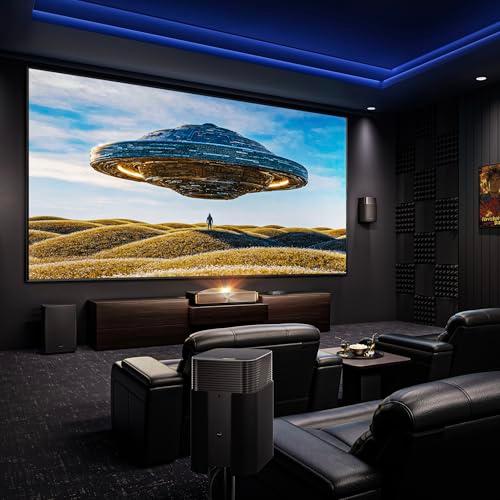
For dedicated home theater use, the choice depends heavily on your room characteristics and expectations. The L9Q excels in multipurpose rooms where you can't control lighting completely, making it suitable for family rooms or great rooms where daytime sports viewing matters as much as evening movie watching.
The K300s works beautifully in dedicated theater spaces or bedrooms where you can control lighting and don't need massive screen sizes. Its compact footprint and lower heat output make it particularly suitable for smaller spaces.
Both projectors eliminate the ceiling mounting and cable running required for traditional projectors, making them much more spouse-friendly and renter-friendly solutions.
Choose the Hisense L9Q if you have the budget and want the ultimate UST experience. It makes sense for users who value daytime viewing capability, want screens larger than 120 inches, or need integrated premium audio. It's also the better choice for bright rooms or if you're replacing a premium large-screen TV.
The Yaber K300s suits users wanting to experience large-screen projection without the premium investment. It's ideal for apartments, bedrooms, or dedicated dark rooms where its brightness limitations won't matter. It also makes sense as an entry point into UST technology or for users who plan to add external audio anyway.
Based on review analysis and market positioning, the K300s offers better value for casual users, while the L9Q provides better performance for enthusiasts willing to pay for flagship capabilities.
The Hisense L9Q represents the pinnacle of UST projector technology, delivering performance that genuinely competes with premium televisions while offering much larger screen sizes. However, its premium pricing limits its appeal to users who can justify the investment.
The Yaber K300s democratizes triple laser UST technology, making it accessible to mainstream users. While it requires compromises in brightness, resolution, and audio, it delivers the core UST experience at a fraction of the cost.
Your choice should depend primarily on budget, room lighting conditions, desired screen size, and audio requirements. Both represent solid options within their respective market segments, offering the convenience and wow factor that makes UST projectors increasingly attractive alternatives to traditional displays.
| Hisense L9Q Triple Laser Ultra Short Throw Projector | Yaber K300s Triple Laser Ultra Short Throw Projector |
|---|---|
| Brightness - Most critical spec for daytime viewing and large screens | |
| 5,000 ANSI lumens (exceptional for bright rooms and massive screens) | 1,000 ANSI lumens (requires controlled lighting, best for evening viewing) |
| Resolution - Determines image sharpness and detail | |
| True 4K (3840×2160) with 0.47" DMD chip and pixel shifting | Native 1080p with 4K decoding (good clarity up to 100" screens) |
| Color Accuracy - How lifelike and accurate colors appear | |
| 110% BT.2020 color gamut with Pantone validation (professional-grade accuracy) | 150% NTSC color gamut (vibrant colors but different standard than modern content) |
| Contrast Ratio - Difference between brightest whites and darkest blacks | |
| 5,000:1 (dramatic depth and shadow detail) | 1,500:1 (adequate contrast for the price point) |
| Maximum Screen Size - How large your image can be | |
| 80-200 inches (truly cinematic experience possible) | 60-100 inches (perfect for smaller rooms and apartments) |
| Throw Distance - How close to wall the projector sits | |
| 100" image from 5.4" away (ultra-compact installation) | 100" image from 9.7" away (still very space-efficient) |
| Audio System - Built-in sound quality and power | |
| 116W 6.2.2-channel Devialet system with Dolby Atmos (replaces need for soundbar) | Dual 15W JBL speakers with Dolby Audio (good for casual viewing) |
| HDR Support - Enhanced contrast and color range | |
| Dolby Vision, HDR10+, IMAX Enhanced (premium formats) | Basic HDR support (standard formats only) |
| Gaming Performance - Input lag for responsive gaming | |
| 12ms input lag in Game Mode (excellent for competitive gaming) | 40ms input lag (acceptable for casual gaming) |
| Connectivity - Ports and wireless options | |
| 4 HDMI ports (2× HDMI 2.1), Wi-Fi 6E, Bluetooth 5.3 | HDMI ARC, USB 2.0, Wi-Fi 6, Bluetooth 5.1 |
| Smart Platform - Built-in streaming and apps | |
| Google TV with full certification and 7,000+ apps | Smart TV platform with Netflix, YouTube, Disney+ built-in |
| Laser Lifespan - How long before maintenance needed | |
| 25,000+ hours (10+ years of typical use) | 20,000 hours (excellent longevity for the price) |
| Build Quality and Design - Premium materials and aesthetics | |
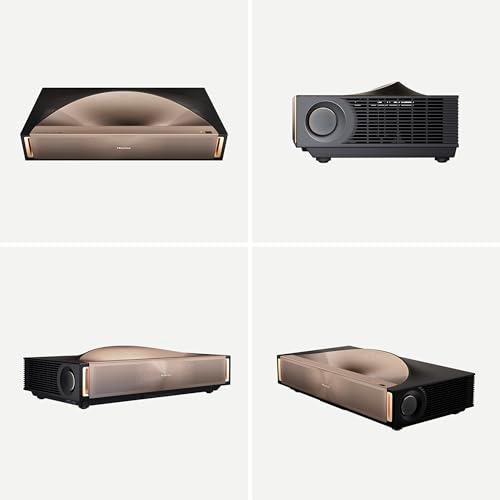
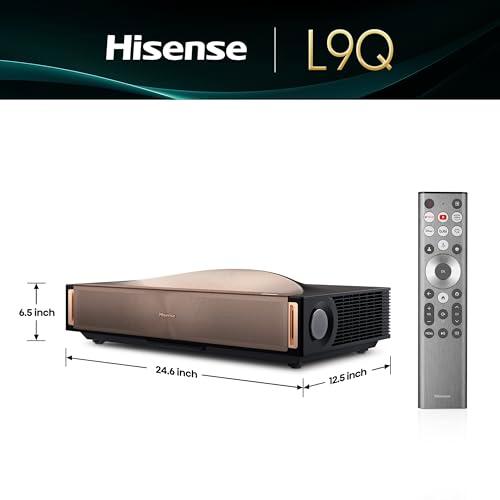
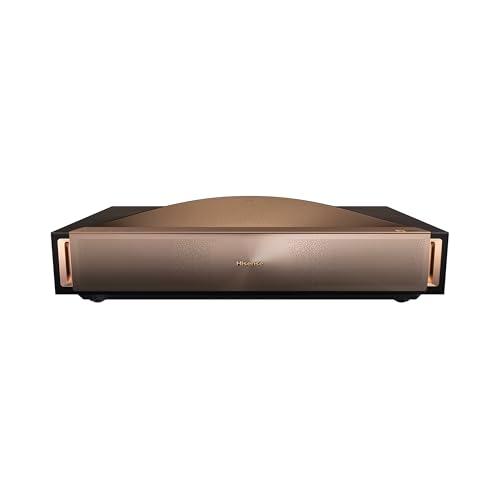
| Imperial Copper Gilt finish with diamond-cut craftsmanship | Compact black design optimized for space-saving |
| Target Market - Who this projector is best for | |
| Premium home theater enthusiasts with bright rooms or large screen needs | Budget-conscious users wanting large screens in controlled lighting |
The Hisense L9Q is significantly brighter at 5,000 ANSI lumens compared to the Yaber K300s at 1,000 ANSI lumens. This makes the L9Q much better for rooms with windows or lights on, while the K300s works best in darker environments.
The Hisense L9Q delivers true 4K resolution with professional-grade color accuracy covering 110% of BT.2020 color space. The Yaber K300s offers 1080p native resolution with 4K decoding and vibrant colors at 150% NTSC. The L9Q provides sharper, more accurate images.
The Hisense L9Q can project massive 80-200 inch screens while maintaining excellent brightness. The Yaber K300s is limited to 60-100 inch screens due to its lower brightness output. Both sit very close to the wall thanks to ultra-short throw technology.
The Hisense L9Q features a premium 116W 6.2.2-channel Devialet sound system with Dolby Atmos that can replace a separate soundbar. The Yaber K300s has dual 15W JBL speakers that sound good for casual viewing but may need external audio for larger rooms.
The Hisense L9Q excels for gaming with 12ms input lag, HDMI 2.1 ports, and support for next-gen consoles. The Yaber K300s offers 40ms input lag which is acceptable for casual gaming but may not satisfy competitive gamers.
The Yaber K300s provides excellent entry-level value, delivering most ultra-short throw benefits at a fraction of the cost. The Hisense L9Q offers premium performance with professional-grade features but at a significantly higher price point.
The Hisense L9Q handles bright rooms exceptionally well thanks to its 5,000 ANSI lumen brightness, making it suitable for family rooms with windows. The Yaber K300s requires controlled lighting and works best with curtains drawn or during evening viewing.
The Hisense L9Q laser is rated for 25,000+ hours of use, while the Yaber K300s offers 20,000 hours. Both provide 10+ years of typical viewing without bulb replacements, a major advantage over traditional projectors.
For dedicated home theaters with controlled lighting, both work well, but the Yaber K300s offers great value for smaller screens. The Hisense L9Q is superior for multipurpose rooms, larger screens, or when premium audio integration matters for your setup.
The Hisense L9Q provides comprehensive connectivity with four HDMI ports (including two HDMI 2.1), Wi-Fi 6E, and Bluetooth 5.3. The Yaber K300s offers essential connections including HDMI ARC, USB, Wi-Fi 6, and Bluetooth 5.1 - sufficient for most users' needs.
We've done our best to create useful and informative comparisons to help you decide what product to buy. Our research uses advanced automated methods to create this comparison and perfection is not possible - please contact us for corrections or questions. These are the sites we've researched in the creation of this article: chrismajestic.com - shop.hisense-usa.com - tomsguide.com - valueelectronics.com - techradar.com - whathifi.com - youtube.com - projectorscreen.com - projectorscreen.com - hisense-usa.com - youtube.com - projectorcentral.com - youtube.com - hisense-usa.com - manuals.plus - shop.avispl.com - hisense-usa.com - yaber.com - projectorcentral.com - trendygadget.com - staples.com - youtube.com - projection.center - notebookcheck.net - yaber.ph - wallpaper.com - youtube.com - androidauthority.com - youtube.com - yaber.com - projektoren-datenbank.com - bestbuy.com - tractorsupply.com - digitaltrends.com

Privacy Policy
Terms and Conditions - Affiliate Policy
Home Security
© Copyright 2008-2026.
11816 Inwood Rd #1211, Dallas, TX 75244