

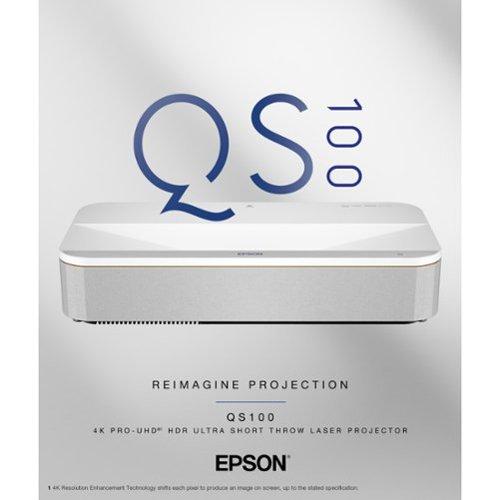
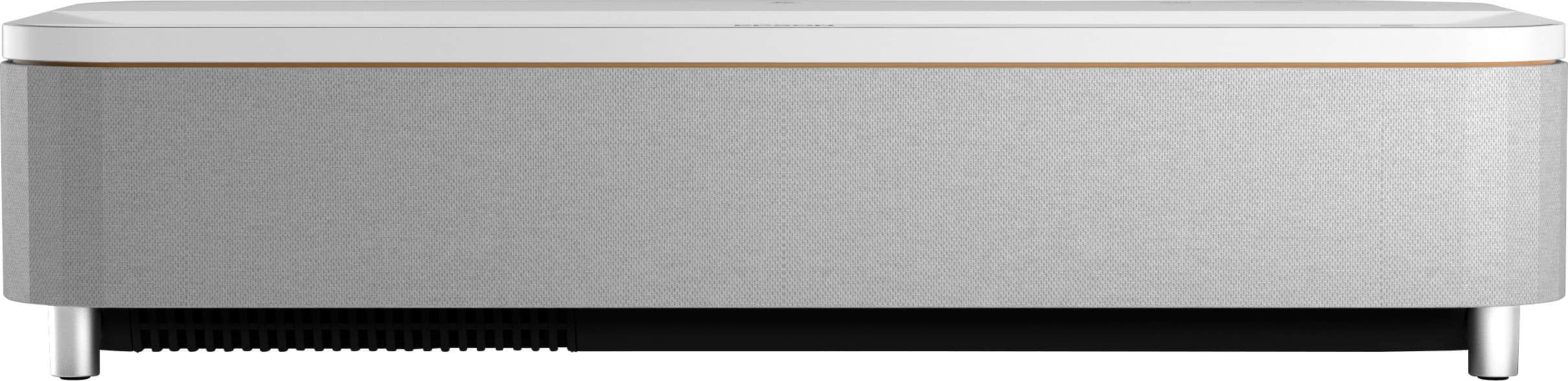
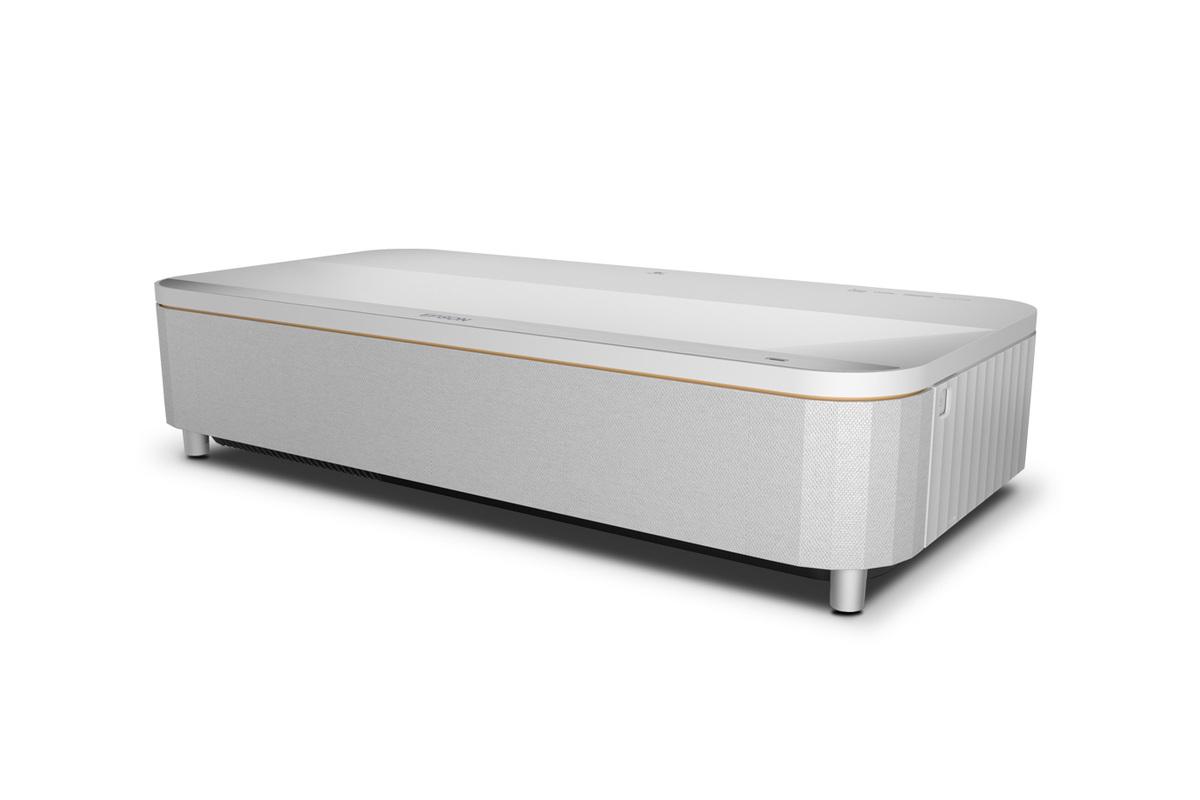
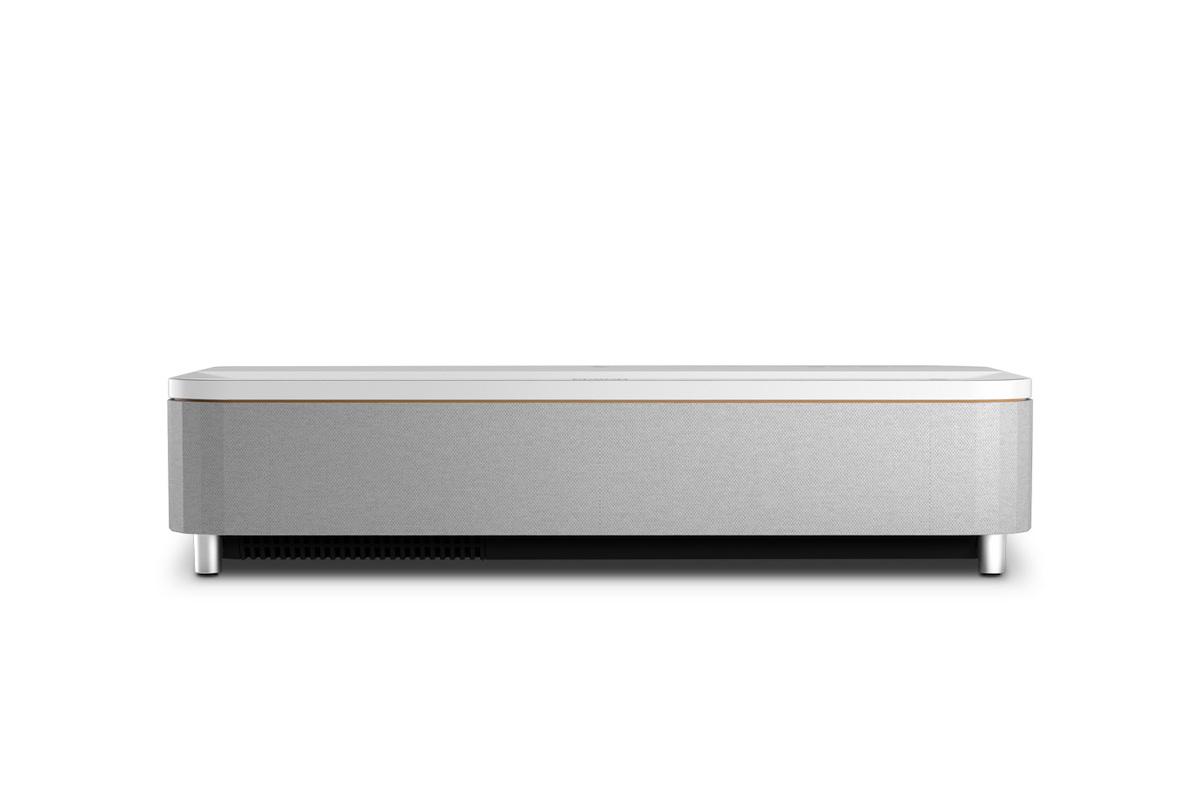
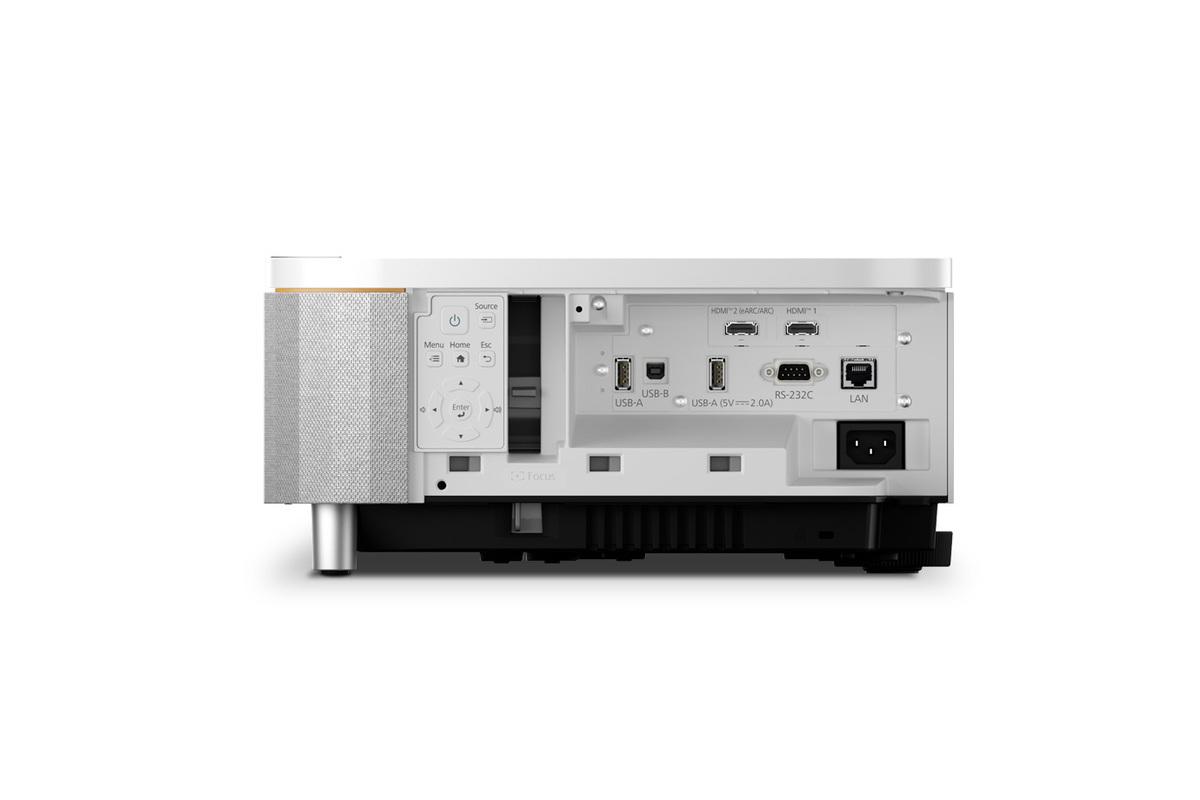
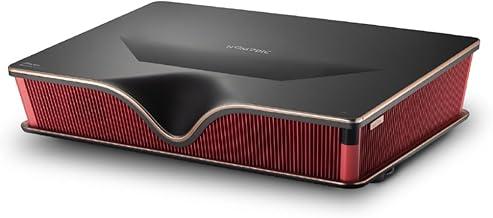
When I started researching ultra short throw projectors, I was amazed by how much this technology has evolved. These aren't your grandfather's projectors that needed to be ceiling-mounted across the room. Today's ultra short throw (UST) projectors sit just inches from your wall and can create a massive 100+ inch image that rivals or surpasses the largest TVs you can buy.
The two projectors we're comparing today represent very different approaches to this technology. The Epson QS100, released in 2025, is Epson's flagship model that prioritizes raw performance and professional features. The NOMVDIC P2000, which hit the market in 2023, takes a more consumer-friendly approach with built-in conveniences at a significantly lower price point.
Before diving into the comparison, it's worth understanding what makes UST projectors special. The "throw ratio" - the distance needed to project a certain image size - is incredibly small, typically around 0.2:1. This means to get a 100-inch image, you only need about 20 inches of space between the projector and your wall. Compare this to traditional projectors that might need 8-10 feet for the same image size.
This compact setup eliminates most of the hassles of projector ownership. No more walking in front of the beam and casting shadows, no complex ceiling installations, and no long cable runs. You simply place the projector on a TV stand or low cabinet, and you're ready to go.
The catch? UST projectors work best with special screens called ALR (Ambient Light Rejecting) screens. These screens are designed to reflect the projector's light toward you while absorbing ambient light from windows and ceiling fixtures. Without one, you might find the image washed out in bright rooms - though as we'll see, brightness capability varies dramatically between these two models.
The most significant difference between the Epson QS100 and NOMVDIC P2000 is brightness, and this isn't just a numbers game - it fundamentally changes how you can use these projectors.
The Epson QS100 delivers an impressive 4,500 lumens of brightness. To put this in perspective, most traditional home theater projectors produce 1,500-2,500 lumens and require darkened rooms. The Epson's brightness puts it in the same league as high-end business projectors, meaning you can watch movies with the lights on, during the day, or in rooms with large windows.
This brightness advantage comes from Epson's redesigned laser module technology. Since 2023, when the NOMVDIC P2000 was released, Epson has refined their laser phosphor system to extract significantly more light output while maintaining color accuracy. The result is what they call their "5-in-1 laser light source module" - essentially a more efficient way to convert laser energy into visible light.
The NOMVDIC P2000, at 2,500 ANSI lumens, isn't dim by any means. Based on our research into user experiences, it handles moderately lit rooms quite well and can even work during the day with proper screen selection. However, the 80% brightness difference between these projectors creates distinctly different use cases.
If you're planning to use your projector primarily for evening entertainment in a living room with controlled lighting, the NOMVDIC's brightness is perfectly adequate. But if you want the flexibility to watch the big game during a sunny afternoon barbecue or keep some ambient lighting on for family movie nights, the Epson's extra brightness becomes essential.
These projectors take fundamentally different approaches to creating their images, and understanding these technologies helps explain their different strengths and weaknesses.
The Epson QS100 uses 3LCD technology, which employs three separate LCD panels - one each for red, green, and blue light. These panels work together with a laser light source to create the final image. To achieve 4K resolution, Epson uses what they call "4K PRO-UHD" - essentially taking three 1080p panels and using pixel-shifting technology to double the effective resolution.
This might sound like marketing speak, but pixel-shifting is actually quite sophisticated. The system physically moves the image by half a pixel's width multiple times per frame, allowing a 1080p chip to display the detail level of 4K content. Based on professional reviews we've analyzed, the difference between this and native 4K is virtually imperceptible at normal viewing distances.
The key advantage of 3LCD technology is color consistency and the elimination of the "rainbow effect" - those fleeting color flashes some people see with DLP projectors. If you're sensitive to this rainbow effect (about 10-15% of people are), the Epson QS100 completely eliminates this concern.
The NOMVDIC P2000 uses DLP (Digital Light Processing) technology with a single 0.47-inch chip. This chip contains over 8 million tiny mirrors that tilt thousands of times per second to create the image. Like the Epson, it uses pixel-shifting (called XPR technology) to achieve 4K resolution from a 1080p chip.
Where the NOMVDIC really shines is in its laser system. It uses ALPD 4.0 (Advanced Laser Phosphor Display) technology with separate red, green, and blue lasers. This RGB triple laser setup can reproduce 100% of the BT.2020 color space - essentially the full range of colors that your eyes can distinguish. Most projectors and even premium TVs can only manage 70-80% of this color space.
This wider color gamut means more vibrant, saturated colors, particularly in reds and greens. Based on our research into professional calibration reports, the NOMVDIC P2000 can display colors that simply aren't possible on most other displays, making everything from nature documentaries to animated films pop with unprecedented vibrancy.
Here's where these projectors take completely opposite approaches, and your preference might determine your choice.
The Epson QS100 includes no speakers at all. This might seem like a drawback, but it's actually a deliberate design choice targeting serious home theater enthusiasts. Epson assumes you'll pair this projector with a dedicated sound system - whether that's a soundbar, surround sound setup, or high-end stereo speakers.
This approach makes sense given the projector's price point and target market. If you're investing in a premium UST projector, you're likely also investing in quality audio. The projector includes eARC (enhanced Audio Return Channel) support, allowing it to pass high-quality audio formats to your sound system through a single HDMI cable.
The NOMVDIC P2000 takes the opposite approach with a built-in Harman Kardon sound system delivering 50 watts of power through four speakers. Based on user reviews we've analyzed, this audio system is surprisingly capable - significantly better than most TV speakers and adequate for many users' needs.
The convenience factor here is huge. You can set up the NOMVDIC P2000 and immediately enjoy great audio without purchasing additional components. The sound system supports both Dolby Audio and DTS formats, handling most modern content without issue.
However, there are limitations. While the built-in audio is good, it can't match a dedicated sound system in terms of clarity, bass response, or surround sound immersion. If audio quality is crucial to your viewing experience, you'll still want to invest in external speakers regardless of which projector you choose.
Gaming on projectors has evolved dramatically since 2020, with manufacturers now including features specifically designed for console gaming. Both projectors handle gaming well, but with different strengths.
The Epson QS100 includes Auto Low Latency Mode (ALLM), which automatically switches to the lowest input lag when it detects gaming content. This feature works seamlessly with modern PlayStation and Xbox consoles, eliminating the need to manually switch picture modes when gaming.
The projector also supports both 4K at 60Hz and 2K at 120Hz refresh rates. The higher refresh rate capability is particularly valuable for competitive gaming, where the smoother motion can provide a real advantage. Based on professional gaming reviews, the difference between 60Hz and 120Hz gaming is quite noticeable once you experience it.
The NOMVDIC P2000 offers solid gaming performance with measured input lag of around 16ms at 4K/60Hz - fast enough for all but the most competitive gaming scenarios. It includes a "3X Fast Input" mode, though this feature only works at 60Hz refresh rates.
For most casual and even serious gamers, both projectors will perform excellently. The Epson QS100 has an edge for users with high-end gaming setups who want to maximize their console's capabilities, while the NOMVDIC P2000 delivers great performance for traditional gaming needs.
These projectors reflect very different philosophies about smart features and connectivity.
The Epson QS100 deliberately omits smart TV features, focusing instead on professional integration capabilities. It supports major home automation systems like Crestron and Control4, allowing it to integrate seamlessly with high-end smart home setups. The projector is also ISF (Imaging Science Foundation) certified, meaning it can be professionally calibrated for optimal performance in your specific room.
This professional focus extends to the warranty and support structure. Epson offers a comprehensive three-year warranty and has an established service network, important considerations for a significant investment.
The NOMVDIC P2000 takes a more consumer-friendly approach. While it doesn't have built-in smart TV functionality, it typically comes bundled with an Amazon Fire TV Stick 4K Max, giving you immediate access to all major streaming services. It also supports screen mirroring from smartphones and tablets, useful for sharing photos or casual content.
The connectivity options differ as well. The NOMVDIC P2000 provides three HDMI ports compared to the Epson's two, plus additional USB ports and both WiFi and Bluetooth connectivity. For users with multiple gaming consoles, streaming devices, and other HDMI sources, these extra ports eliminate the need for an HDMI switch.
Setting up a UST projector is generally straightforward, but these models cater to different installation approaches.
The NOMVDIC P2000 is designed for consumer installation. It includes digital focus adjustment, four-corner keystone correction, and geometry warping features that help you achieve a perfectly rectangular image even if your setup isn't perfectly aligned. The projector's distinctive modern design, with its red accent grille and sculptured chassis, makes it an attractive addition to most living spaces.
The Epson QS100, while still manageable for DIY installation, really benefits from professional setup. Its ISF certification means it can be precisely calibrated for your room's lighting conditions, wall color, and viewing preferences. Professional installers can also integrate it properly with home automation systems and ensure optimal screen selection and placement.
Both projectors support the advanced geometry correction features necessary for UST installation, but the Epson's professional focus shows in its more comprehensive calibration options and integration capabilities.
After analyzing extensive professional reviews and user feedback, clear patterns emerge about who should choose which projector.
Choose the Epson QS100 if you prioritize ultimate performance and have the budget to support it. At the time of writing, it commands a significant premium over the NOMVDIC, but that premium buys you class-leading brightness, superior contrast, professional integration features, and the peace of mind that comes with established brand support.
This projector makes the most sense for dedicated home theater spaces, rooms with challenging lighting conditions, or installations where professional integration matters. If you're planning to invest in a high-quality ALR screen and external audio system anyway, the Epson's focus on pure image performance becomes compelling.
The NOMVDIC P2000 represents exceptional value for users who want premium RGB laser technology without the premium price. At the time of writing, it costs significantly less than the Epson while delivering about 80% of the performance. The built-in audio system and included streaming device add considerable value, making it a complete entertainment solution out of the box.
This projector is ideal for living room installations where you want the convenience of built-in audio, the spectacular colors of RGB laser technology, and the flexibility to upgrade individual components over time. It's particularly appealing if you have reasonable control over your room's lighting and don't need the absolute brightness of the Epson.
Both the Epson QS100 and NOMVDIC P2000 represent excellent examples of modern UST projector technology, but they serve different markets and use cases.
The Epson is the choice for users who demand the absolute best performance and are willing to pay for it. Its exceptional brightness opens up usage scenarios that simply aren't possible with dimmer projectors, and its professional features ensure it can be optimally integrated into any home theater setup.
The NOMVDIC offers the best entry point into premium UST projection technology. It doesn't match the Epson's raw performance, but it delivers spectacular image quality, convenience features, and remarkable value that makes large-screen entertainment accessible to a broader audience.
Your choice ultimately depends on your priorities: maximum performance and professional features, or excellent performance with built-in convenience and value. Either way, you'll be getting a projector that can transform your entertainment experience with truly massive, high-quality images that make traditional TVs seem small by comparison.
| Epson QS100 4K PRO-UHD Ultra Short Throw Projector | NOMVDIC P2000 UST-RGB 4K Triple Laser Projector |
|---|---|
| Brightness - Most critical spec for daytime viewing and bright rooms | |
| 4,500 lumens (exceptional for any lighting condition) | 2,500 ANSI lumens (good for controlled lighting) |
| Display Technology - Affects color accuracy and rainbow effect | |
| 3LCD with laser phosphor (no rainbow effect) | DLP with RGB triple laser (wider color gamut) |
| 4K Resolution Method - How each achieves 4K detail | |
| 4K PRO-UHD pixel-shifting from 1080p panels | XPR pixel-shifting from 0.47" DLP chip |
| Color Gamut - Range of colors the projector can display | |
| Standard laser phosphor gamut | 100% BT.2020 (widest possible color range) |
| Contrast Ratio - Affects black levels and image depth | |
| 5,000,000:1 dynamic (superior black levels) | 3,000,000:1 dynamic (good black performance) |
| Maximum Image Size - How big your screen can be | |
| 160 inches diagonal | 150 inches diagonal |
| Built-in Audio - Whether external speakers are needed | |
| None (requires external audio system) | 50W Harman Kardon speakers (room-filling sound) |
| Gaming Features - Performance for console gaming | |
| ALLM, 4K/60Hz, 2K/120Hz support | 16ms input lag, 3X Fast Input mode |
| Smart Features - Built-in streaming and connectivity | |
| No smart platform (professional integration focus) | Android OS with Fire TV Stick included |
| HDR Support - Enhanced contrast and color range | |
| HDR10, HLG with dynamic tone mapping | HDR10, HLG (limited HDR calibration options) |
| Installation Focus - DIY-friendly vs professional setup | |
| Professional integration with ISF calibration | Consumer-friendly with extensive correction features |
| Connectivity Options - Number of ports and wireless features | |
| 2 HDMI ports with eARC, IP control | 3 HDMI ports with eARC, WiFi, Bluetooth |
| Warranty Coverage - Support and service reliability | |
| 3-year comprehensive warranty | 1-year standard warranty |
| Target Market - Who this projector is designed for | |
| Home theater enthusiasts and custom installers | Value-conscious consumers wanting premium features |
The Epson QS100 is significantly brighter at 4,500 lumens compared to the NOMVDIC P2000 at 2,500 lumens. This makes the Epson much better for rooms with windows or ambient lighting, while the NOMVDIC works best in controlled lighting conditions.
The NOMVDIC P2000 includes a 50W Harman Kardon speaker system that provides room-filling sound. The Epson QS100 has no built-in speakers and requires an external sound system like a soundbar or home theater speakers.
The NOMVDIC P2000 offers better value by providing RGB triple laser technology, built-in premium audio, and streaming capabilities at a lower price point. The Epson QS100 costs significantly more but delivers superior brightness and professional features.
Both projectors are ultra short throw models that can create a 100-inch image from just inches away from the wall. The Epson QS100 has a slightly better throw ratio (0.16:1 to 0.22:1) compared to the NOMVDIC P2000 (0.22:1).
The Epson QS100 is better for gaming with Auto Low Latency Mode (ALLM) and support for 4K/60Hz and 2K/120Hz refresh rates. The NOMVDIC P2000 offers good gaming performance with 16ms input lag but lacks advanced gaming features.
Both projectors display 4K content using pixel-shifting technology. The Epson QS100 uses 4K PRO-UHD with three 1080p LCD panels, while the NOMVDIC P2000 uses XPR technology with a DLP chip to achieve 4K resolution.
The NOMVDIC P2000 offers wider color gamut coverage at 100% BT.2020 thanks to its RGB triple laser system, producing more vibrant colors. The Epson QS100 provides excellent color accuracy with its 3LCD technology and eliminates the rainbow effect seen in some DLP projectors.
The Epson QS100 excels in bright rooms due to its exceptional 4,500-lumen brightness and can work well even without specialized screens. The NOMVDIC P2000 performs better in moderately lit rooms and benefits from an ambient light rejecting screen for bright room viewing.
The NOMVDIC P2000 is more DIY-friendly with consumer-focused features like digital focus and extensive geometry correction. The Epson QS100 is designed more for professional installation but can still be set up by consumers, offering ISF certification for optimal calibration.
The NOMVDIC P2000 includes streaming functionality through a bundled Fire TV Stick and supports screen mirroring. The Epson QS100 has no built-in smart features, focusing instead on professional integration with home automation systems.
The Epson QS100 can project up to 160 inches diagonal, while the NOMVDIC P2000 maxes out at 150 inches. Both projectors can create cinema-sized images that dwarf even the largest TVs available.
For dedicated home theaters, the Epson QS100 is the better choice with its superior brightness, contrast ratio, professional calibration options, and focus on image quality. The NOMVDIC P2000 works well for multipurpose living spaces where convenience and value are priorities.
We've done our best to create useful and informative comparisons to help you decide what product to buy. Our research uses advanced automated methods to create this comparison and perfection is not possible - please contact us for corrections or questions. These are the sites we've researched in the creation of this article: projectorscreen.com - youtube.com - projectorcentral.com - projectorreviews.com - techradar.com - audioadvice.com - projectorreviews.com - avsforum.com - projectorcentral.com - mediaserver.goepson.com - projectorcentral.com - news.epson.com - epson.eu - epson.com - epson.eu - epson.com - projectorcentral.com - bestbuy.com - projectorcentral.com - projectorreviews.com - techradar.com - youtube.com - youtube.com - youtube.com - projectorcentral.com - youtube.com - ustprojector.com - device.report - theappliancesreviews.com - nomvdic.io - nomvdic.io - projectorcentral.com

Privacy Policy
Terms and Conditions - Affiliate Policy
Home Security
© Copyright 2008-2026.
11816 Inwood Rd #1211, Dallas, TX 75244