

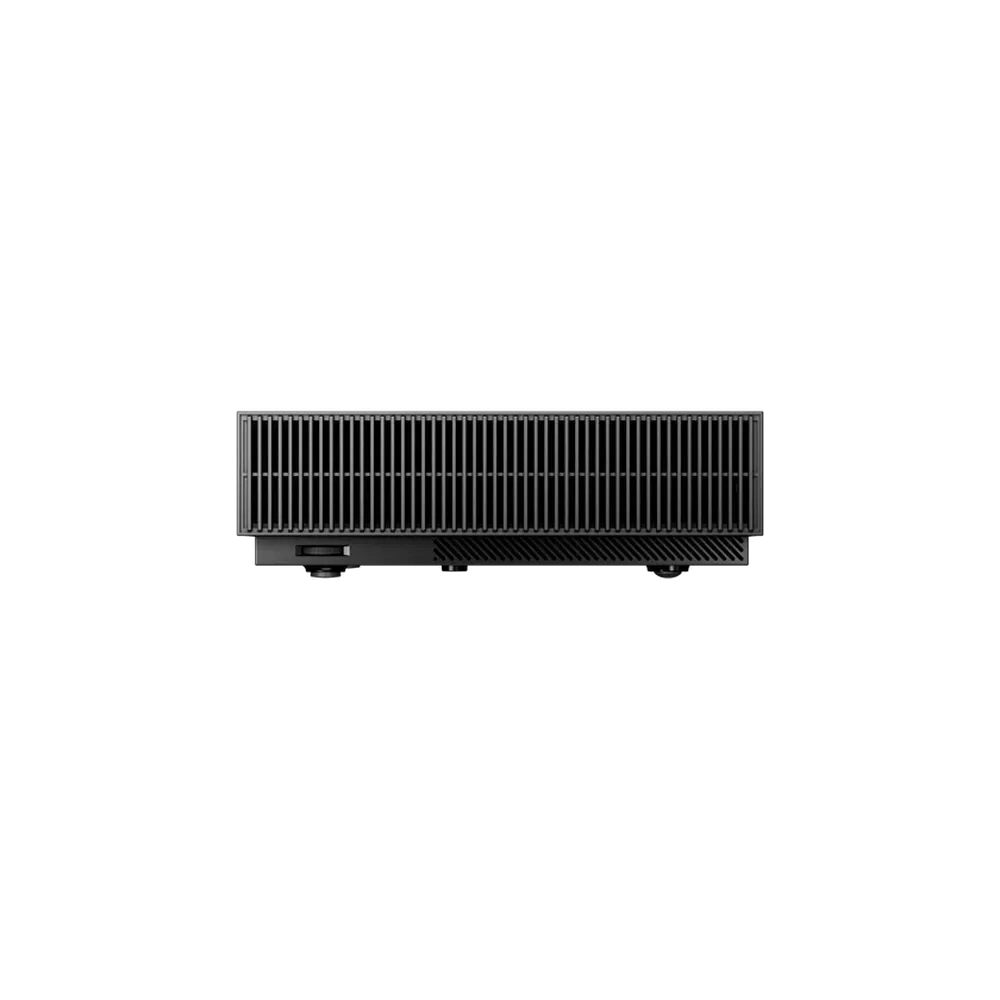
Ultra short throw projectors have transformed home entertainment by solving the biggest problems with traditional projectors. Instead of mounting a bulky device on your ceiling and dealing with shadows when someone walks in front of it, these clever machines sit just inches from your wall and project massive 100+ inch images. It's like having a giant TV that doesn't actually exist until you turn it on.
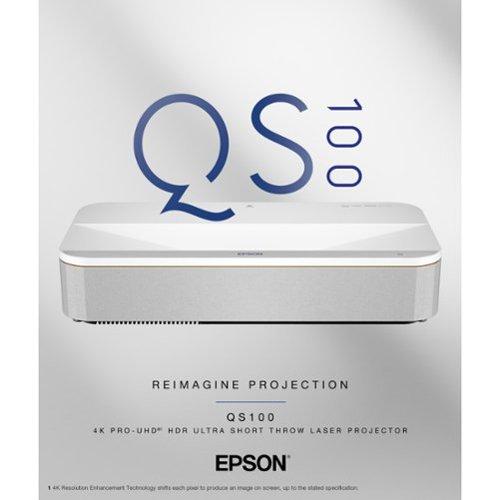
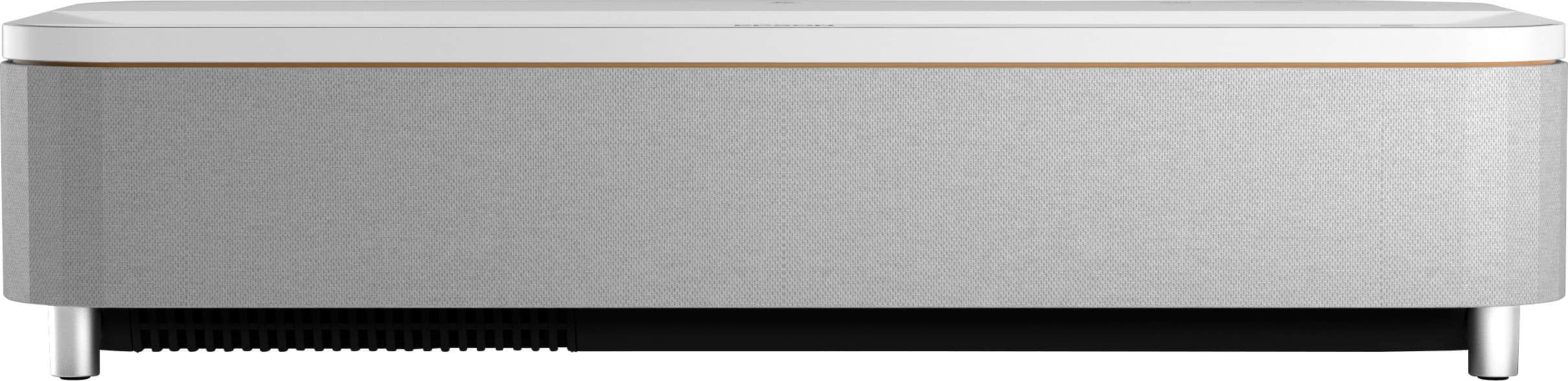
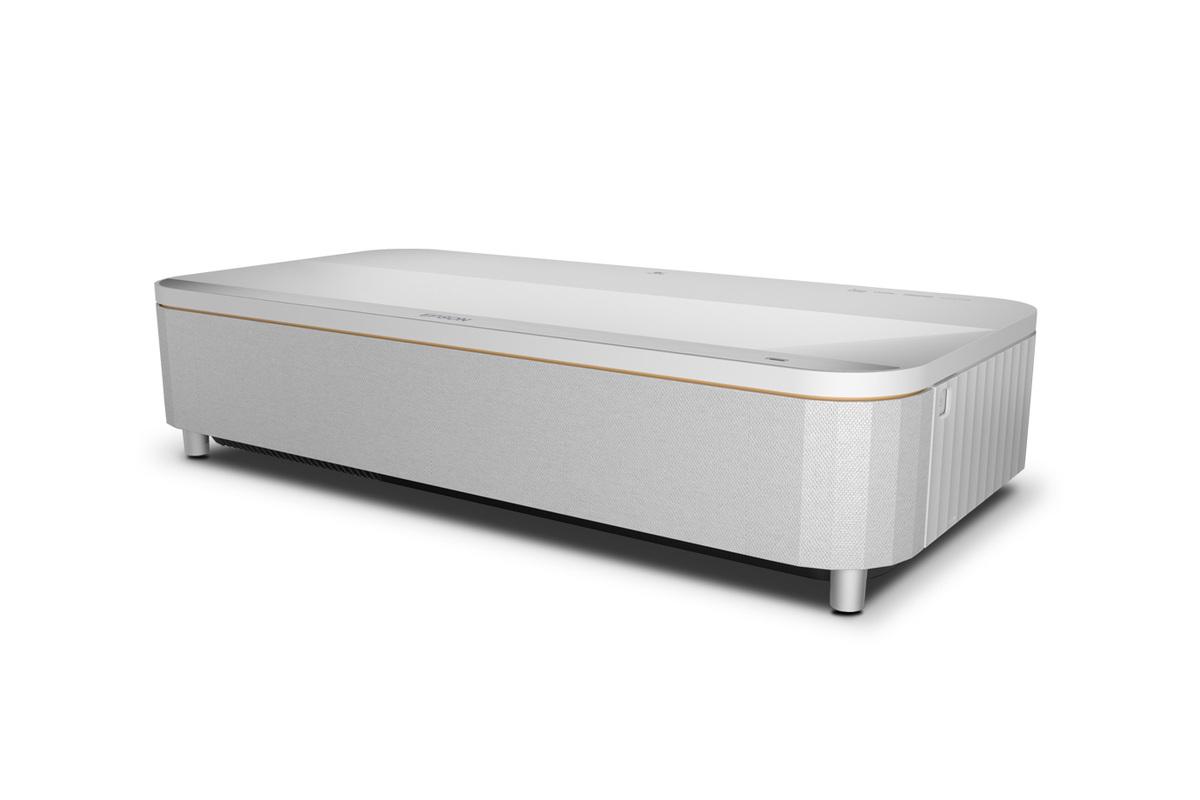
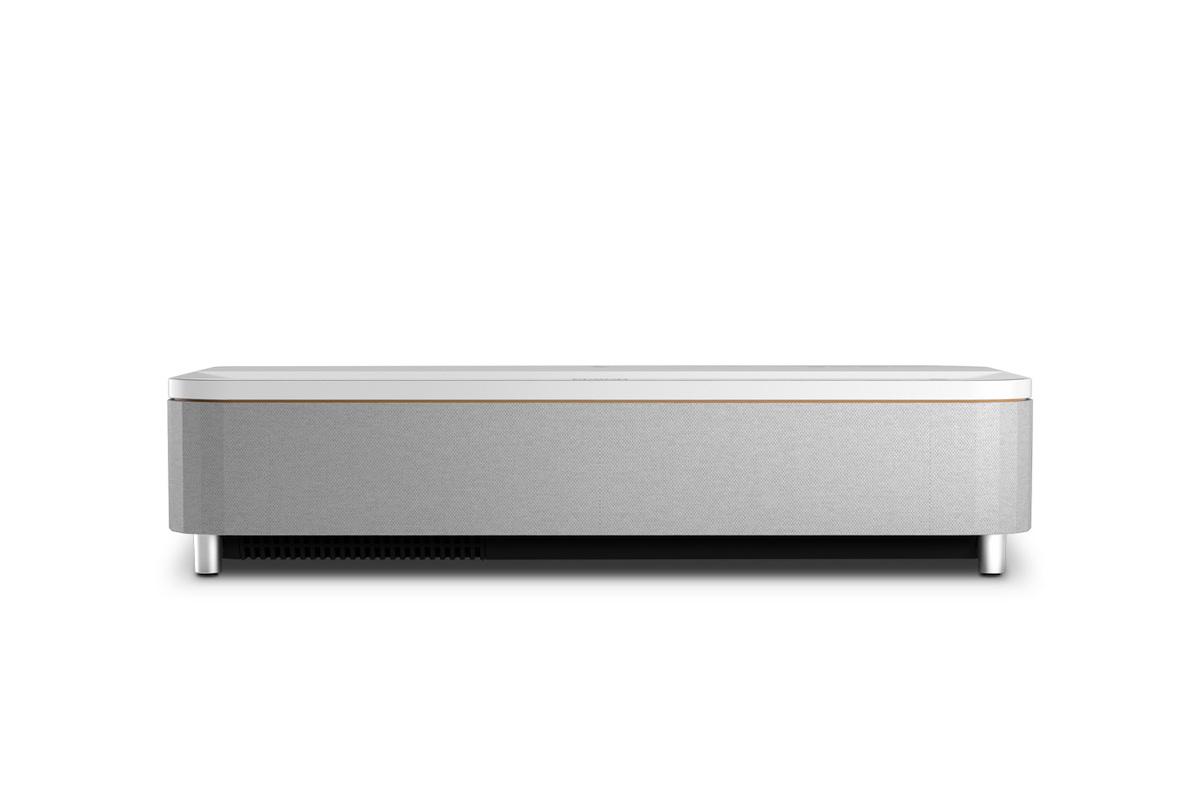
The category has exploded with options recently, but two models represent dramatically different philosophies. The Epson QS100, released in 2025, prioritizes maximum brightness and premium features for users who won't compromise on performance. The Formovie C3, launched in 2022, revolutionized the market by offering true native 4K resolution at a price point that was previously impossible.
At the time of writing, these projectors sit at opposite ends of the value spectrum, with the Epson QS100 commanding a significant premium while the Formovie C3 remains one of the most compelling values in 4K projection. Understanding which approach suits your needs requires diving into what makes each unique.
Before comparing these specific models, it's worth understanding why ultra short throw (UST) projectors matter. Traditional projectors require 8-12 feet of throw distance to create a 100-inch image, meaning they need ceiling mounting and careful room planning. UST projectors flip this concept entirely—they use specialized lens systems to project the same sized image from just 6-12 inches away from the screen.
This proximity eliminates the most annoying aspects of projection: no more shadows when people walk around, no glare hitting your eyes, and no need for permanent ceiling installation. The projector sits on a TV stand like any other entertainment device, but creates screen sizes that would cost tens of thousands of dollars in traditional displays.
The key considerations when choosing a UST projector center around brightness (measured in lumens), resolution quality, and how well the device integrates into your existing setup. Brightness determines whether you can watch during the day or need to darken the room. Resolution affects image sharpness, though the relationship isn't always straightforward. Integration factors include built-in smart features, audio capabilities, and connectivity options.
The most critical difference between the Epson QS100 and Formovie C3 is brightness output, and this single factor will likely determine which projector works in your space. The Epson delivers an impressive 4,500 lumens of brightness using its proprietary 3LCD laser technology, while the Formovie produces 2,250 ANSI lumens through its DLP laser system.
Those numbers might seem abstract, but they translate to dramatically different real-world performance. The Epson QS100 can maintain vivid, colorful images even in bright living rooms with large windows. You can watch movies on Sunday afternoon with natural light streaming in, and the image remains punchy and engaging. This brightness advantage stems from Epson's unique 3LCD design, which uses three separate LCD panels (one each for red, green, and blue light) combined with a blue laser light source.
The Formovie C3, while still bright enough for most scenarios, requires more thoughtful lighting management. In a room with controlled lighting—think drawn curtains or evening viewing—it produces excellent image quality. However, bright ambient light washes out the image, making daytime viewing challenging without darkening the room.
This brightness difference becomes crucial when considering where you'll place the projector. If you're installing it in a dedicated home theater room where you control all the lighting, the Formovie's brightness suffices beautifully. But if you want the projector in a family room that doubles as a daytime TV replacement, the Epson's superior brightness becomes essential.
The technology behind these brightness differences also affects image quality. The Epson QS100's 3LCD system eliminates the "rainbow effect"—brief flashes of red, green, and blue colors that some people notice with single-chip DLP projectors. The Formovie C3 uses single-chip DLP technology, which can produce these rainbow artifacts for sensitive viewers, though most people never notice them.
Here's where things get interesting and somewhat controversial. The Formovie C3 delivers true native 4K resolution (3840 x 2160 pixels) through its 0.47-inch DLP chip. Every pixel of 4K content maps directly to a physical pixel on the projector's imaging chip. This creates the sharpest possible 4K image with no compromises.
The Epson QS100 takes a different approach called "4K PRO-UHD," which uses pixel shifting technology. The projector has three native 1080p LCD panels, but rapidly shifts each pixel diagonally to create additional detail. This two-way pixel shifting process happens so quickly that your eye perceives it as 4K resolution. Epson's implementation is sophisticated—their QZX Picture Processor analyzes incoming content and optimizes the pixel shifting for maximum perceived sharpness.
In practical terms, the difference is less dramatic than you might expect. At normal viewing distances (8-12 feet from a 100+ inch screen), the Epson QS100's pixel-shifted image appears remarkably close to native 4K. You'd need to sit quite close or examine fine details like text to notice the difference. The Epson's superior brightness often makes its image appear more impressive than the Formovie's technically sharper but dimmer picture.
However, pixel-peepers and those who prioritize technical accuracy will appreciate the Formovie C3's true native 4K resolution. There's something satisfying about knowing every pixel is rendered precisely, especially when displaying ultra-high-definition content like nature documentaries or high-quality movies.
Gaming performance reveals another significant difference between these projectors. The Epson QS100 targets serious gamers with its Auto Low Latency Mode (ALLM), which automatically switches to game mode when it detects gaming content. Input lag measures just 21 milliseconds, which feels responsive for all but the most competitive gaming scenarios.
More importantly, the Epson supports 4K gaming at 60Hz and 2K gaming at 120Hz. This high refresh rate capability means smoother motion in fast-paced games, assuming your gaming console or PC supports these higher frame rates. The combination of low input lag and high refresh rates makes the Epson QS100 genuinely suitable for serious gaming sessions.
The Formovie C3 takes a more casual approach to gaming. Its 40-millisecond input lag is acceptable for most gaming but might feel sluggish for competitive first-person shooters or racing games. The projector includes a game mode, but it's not as extensively optimized as the Epson's gaming features.
For most families, the Formovie's gaming performance suffices perfectly for casual console gaming and party games. But if gaming represents a primary use case, especially for teenagers or gaming enthusiasts, the Epson QS100's superior gaming optimization justifies its premium positioning.
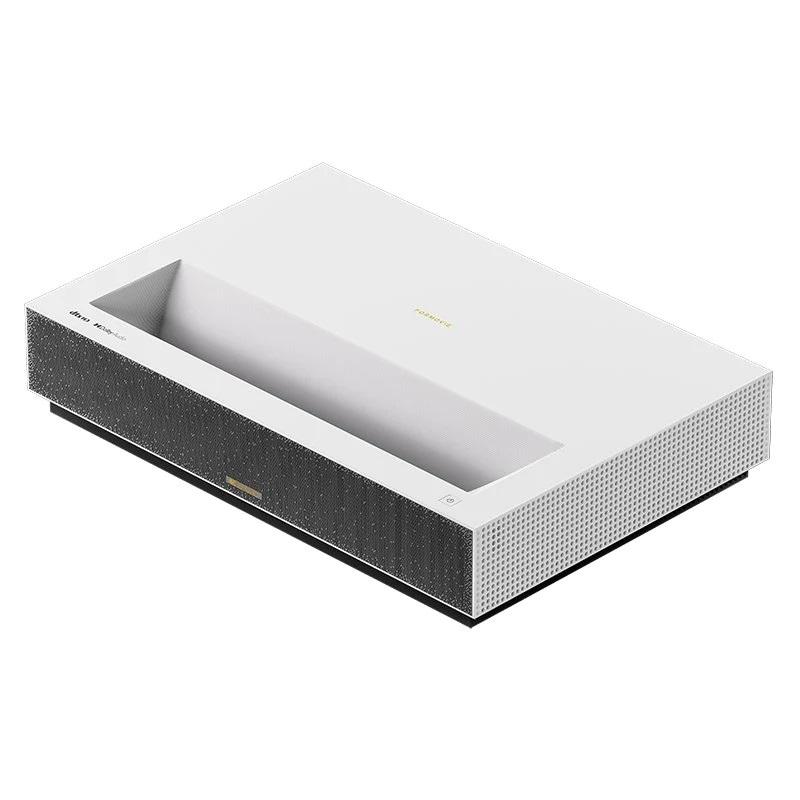
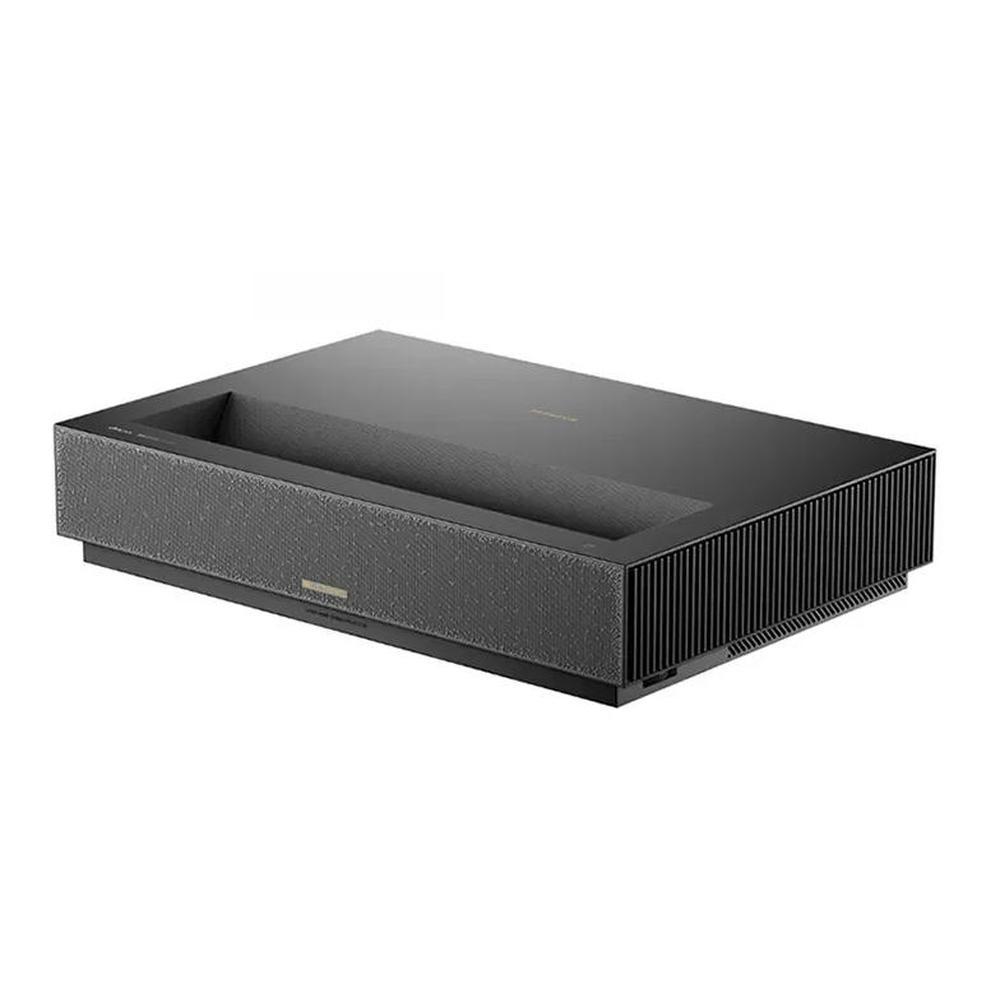
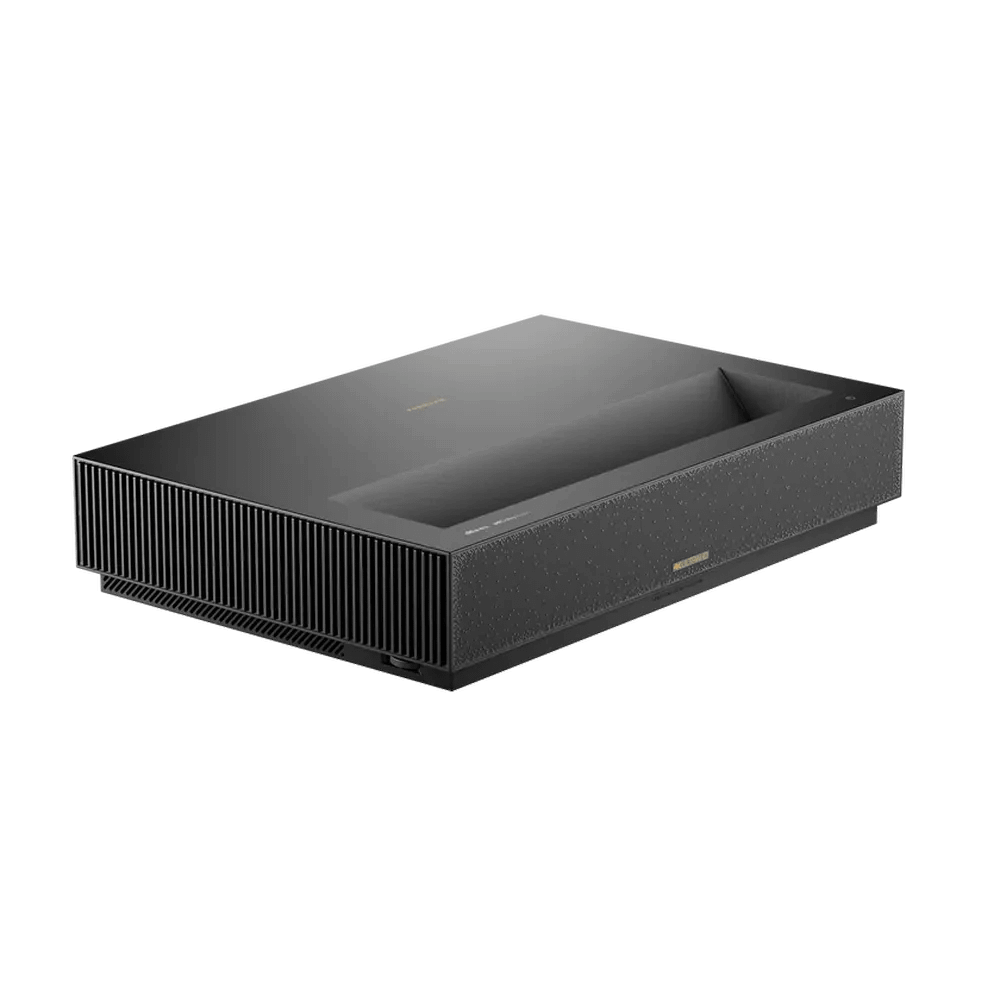
The audio capabilities of these projectors reflect their different target audiences. The Formovie C3 includes built-in speakers—dual 15W drivers plus dedicated tweeters for higher frequencies. These speakers support Dolby Audio and DTS-HD decoding, providing surprisingly good sound quality for a projector. The audio system handles dialogue clearly and produces enough bass for casual viewing, eliminating the need for external speakers in many setups.
This integrated approach appeals to users who want simplicity. You can set up the Formovie C3, connect a single HDMI cable from your streaming device, and enjoy both excellent video and adequate audio without additional equipment or wiring.
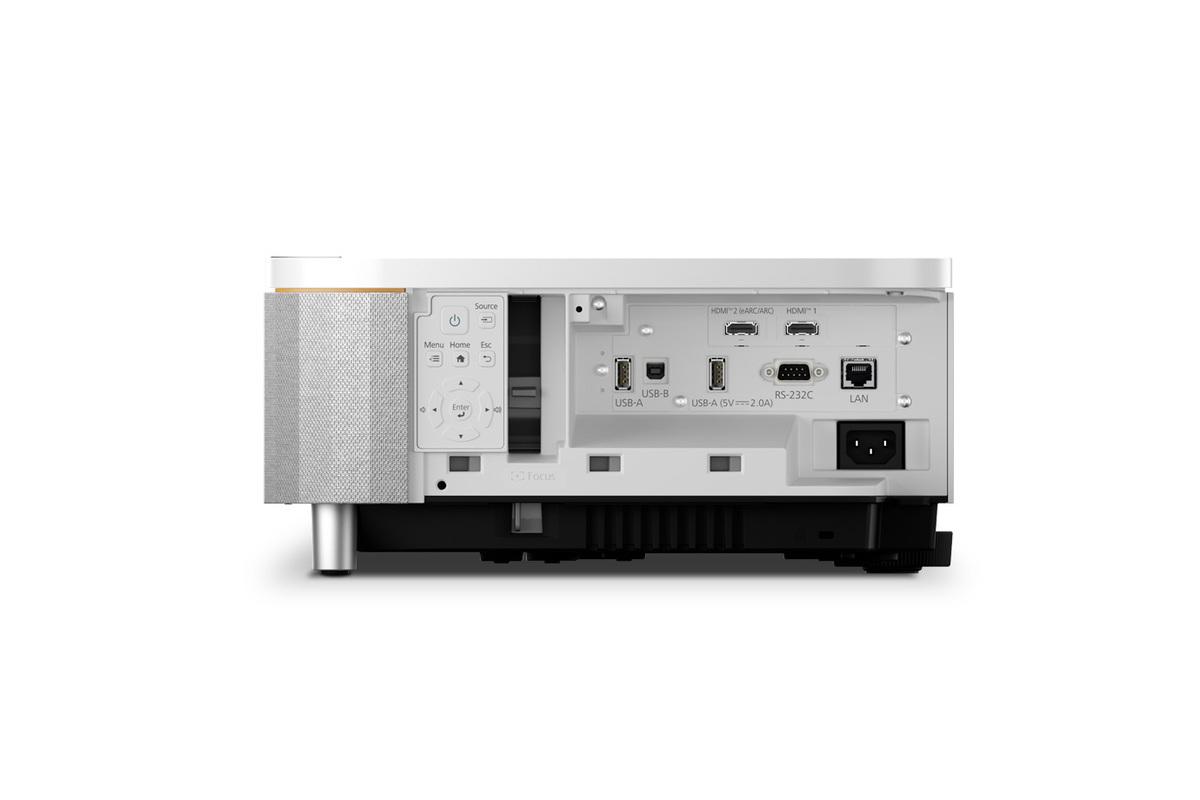
The Epson QS100 deliberately omits built-in speakers, focusing entirely on video performance. This "audio-less" design assumes users will connect external audio systems—either soundbars, AV receivers, or dedicated home theater speakers. The projector includes HDMI eARC (enhanced Audio Return Channel) support, which can send high-quality audio signals back to compatible audio equipment.
For home theater enthusiasts, the Epson's approach makes sense. Built-in projector speakers, no matter how good, can't match dedicated audio systems. The money saved by omitting speakers goes toward better video processing and brighter light sources. However, casual users might find the requirement for external audio inconvenient and expensive.
Modern projectors increasingly include smart TV features, but these two models take opposite approaches. The Formovie C3 runs FengOS 3.0, a custom operating system based on Android. This system includes various streaming apps and smart features, though the selection primarily targets Chinese markets. Users in North America often find limited app selection, making external streaming devices like Roku, Apple TV, or Nvidia Shield practically necessary.
The Epson QS100 includes no smart features whatsoever, assuming users will connect external streaming devices or gaming consoles. This approach keeps the projector focused on image quality while avoiding the complexity and eventual obsolescence of built-in smart systems.
In practice, most serious home theater enthusiasts prefer external streaming devices anyway. Dedicated streamers typically offer better app selection, more frequent updates, and superior performance compared to built-in smart systems. However, the Formovie C3's integrated approach offers convenience for users who just want everything to work without additional devices.
Setup complexity differs significantly between these projectors. The Formovie C3 emphasizes user-friendly installation with electric focus adjustment and automatic screen alignment features. The "Photo to Fit" system helps align the projected image automatically, reducing manual adjustment time. These features make the Formovie appealing for users who want to set up the projector themselves without professional installation.
The Epson QS100 targets custom installation scenarios, offering extensive calibration controls and integration features. It supports professional control systems like Crestron and Control4, appealing to users building comprehensive smart home systems. The projector includes ISF (Imaging Science Foundation) certification, enabling professional calibrators to optimize the image for specific rooms and screens.
Both projectors use laser light sources rated for 20,000+ hours of operation, eliminating traditional lamp replacement concerns. The laser systems provide instant on/off capability and maintain consistent brightness and color accuracy throughout their operational life.
For dedicated home theater installations, both projectors offer compelling advantages. The Epson QS100 excels in mixed-use spaces where the theater doubles as a family room or gaming area. Its superior brightness ensures excellent performance even when ambient light isn't perfectly controlled.
The Formovie C3 shines in dedicated theater environments with controlled lighting. Its native 4K resolution produces incredibly sharp images on large screens, and the built-in audio system reduces equipment complexity in smaller installations.
Screen pairing considerations also differ. The Epson's higher brightness works well with both ALR (Ambient Light Rejecting) screens and traditional white screens. The Formovie benefits more from ALR screens, which help maintain contrast in environments with any ambient light.
The choice between these projectors ultimately depends on your priorities, room conditions, and budget considerations. At the time of writing, the Epson QS100 commands a significant premium over the Formovie C3, making value proposition a crucial factor.
Choose the Epson QS100 if you prioritize maximum brightness and versatility. This projector suits users who want daytime viewing capability, serious gaming performance, or installation in bright rooms. The premium also makes sense for custom installation scenarios where professional calibration and smart home integration matter.
The Formovie C3 offers exceptional value for users who can work within its limitations. If you're comfortable with some light control requirements and want true native 4K resolution at a more accessible price point, the Formovie represents one of the best values in 4K projection.
For most families replacing a living room TV, the room's ambient light levels will determine the best choice. Rooms with large windows or bright lighting favor the Epson's superior brightness. Rooms where you can control lighting make the Formovie's better resolution-to-price ratio more appealing.
Both projectors deliver genuinely impressive large-screen experiences that transform home entertainment. The question isn't whether UST projection works—it absolutely does—but rather which approach better matches your specific needs and priorities.
| Epson QS100 4K PRO-UHD Ultra Short Throw Projector | Formovie C3 Ultra Short Throw Laser Projector |
|---|---|
| Brightness - Most critical factor for ambient light performance and daytime viewing | |
| 4,500 lumens (exceptional brightness allows daytime use) | 2,250 ANSI lumens (requires some light control for best results) |
| Resolution Technology - Affects image sharpness and detail quality | |
| 4K PRO-UHD pixel-shifting from 1080p panels (very close to native 4K) | True native 4K (3840 x 2160) with 0.47" DLP chip |
| Display Technology - Impacts color accuracy and rainbow artifacts | |
| 3LCD (eliminates rainbow effects, equal color/white brightness) | Single-chip DLP (possible rainbow effects for sensitive viewers) |
| Gaming Performance - Important for console and PC gaming | |
| 21ms input lag, 4K/60Hz + 2K/120Hz, Auto Low Latency Mode | 40ms input lag, game mode available but not optimized |
| Audio System - Determines if external speakers are needed | |
| No built-in speakers (requires external audio system) | Dual 15W speakers + tweeters with Dolby Audio support |
| Smart Features - Affects streaming convenience and setup complexity | |
| No smart OS (requires external streaming devices) | FengOS 3.0 with limited US app support |
| Maximum Screen Size - How large an image you can project | |
| 160 inches (excellent for most home theaters) | 200 inches (largest screens possible with UST technology) |
| Throw Ratio - How close projector sits to wall for 100" image | |
| 0.16:1 to 0.22:1 (sits closer to wall than most competitors) | 0.23:1 (standard ultra short throw distance) |
| Laser Life - Longevity and maintenance requirements | |
| 20,000 hours (virtually maintenance-free operation) | 25,000 hours (longest-lasting laser in this comparison) |
| Contrast Ratio - Affects black levels and overall image depth | |
| 5,000,000:1 dynamic (excellent shadow detail and depth) | 3,000:1 native (good contrast but not exceptional) |
| HDR Support - Important for modern 4K content compatibility | |
| HDR10, HLG with dynamic tone mapping (optimized frame-by-frame) | HDR10, HDR10+, HLG (solid HDR support without dynamic mapping) |
| Installation Features - Ease of setup and professional integration | |
| ISF certified, smart home integration, professional calibration | Electric focus, auto screen alignment, simplified consumer setup |
| Target Market - Who each projector is designed for | |
| Premium installations, bright rooms, serious gaming, custom integration | Value-conscious buyers, controlled lighting, all-in-one simplicity |
The Epson QS100 is significantly brighter at 4,500 lumens compared to the Formovie C3 at 2,250 ANSI lumens. This makes the Epson QS100 much better for bright rooms and daytime viewing, while the Formovie C3 performs best in controlled lighting conditions.
The Formovie C3 offers true native 4K resolution (3840 x 2160) through its DLP chip. The Epson QS100 uses 4K PRO-UHD pixel-shifting technology that combines three 1080p panels to approximate 4K quality, though the difference is minimal at normal viewing distances.
The Formovie C3 includes dual 15W speakers plus tweeters with Dolby Audio support, providing decent sound for most users. The Epson QS100 has no built-in speakers and requires external audio equipment like soundbars or home theater systems.
The Epson QS100 is superior for gaming with 21ms input lag, Auto Low Latency Mode, and support for 4K/60Hz plus 2K/120Hz gaming. The Formovie C3 has 40ms input lag and basic game mode, making it suitable for casual gaming but not competitive play.
Both are ultra short throw projectors that sit very close to the screen. The Epson QS100 has a slightly better throw ratio of 0.16:1 to 0.22:1, while the Formovie C3 uses 0.23:1. Both can project 100+ inch images from just inches away from the wall.
The Formovie C3 includes FengOS 3.0 smart features, though app selection is limited for US users. The Epson QS100 has no smart features and requires external streaming devices like Roku, Apple TV, or gaming consoles for content.
Both use laser light sources for maintenance-free operation. The Formovie C3 has a 25,000-hour laser life rating, while the Epson QS100 offers 20,000 hours. Both eliminate traditional lamp replacement needs and provide instant on/off capability.
The Formovie C3 provides exceptional value with true native 4K resolution, built-in audio, and smart features at a much lower price point. The Epson QS100 costs significantly more but offers premium brightness and gaming performance for users who need those features.
The Epson QS100 excels in bright living rooms thanks to its 4,500-lumen output, maintaining vivid colors even with ambient light. The Formovie C3 works better in rooms where you can control lighting, as bright ambient light will wash out the image.
The Formovie C3 offers simpler setup with electric focus, automatic screen alignment, and built-in audio. The Epson QS100 targets professional installations with extensive calibration options and smart home integration, making it more complex but offering greater customization.
Both projectors support HDR formats. The Epson QS100 offers HDR10 and HLG with dynamic tone mapping that optimizes each frame. The Formovie C3 supports HDR10, HDR10+, and HLG with good HDR performance but without dynamic optimization.
For dedicated home theaters with controlled lighting, the Formovie C3 delivers excellent native 4K image quality with built-in audio at great value. For multipurpose rooms or serious home theater enthusiasts who want maximum brightness and professional features, the Epson QS100 is the better choice despite its higher cost.
We've done our best to create useful and informative comparisons to help you decide what product to buy. Our research uses advanced automated methods to create this comparison and perfection is not possible - please contact us for corrections or questions. These are the sites we've researched in the creation of this article: projectorscreen.com - youtube.com - projectorcentral.com - projectorreviews.com - techradar.com - audioadvice.com - projectorreviews.com - avsforum.com - projectorcentral.com - mediaserver.goepson.com - projectorcentral.com - news.epson.com - epson.eu - epson.com - epson.eu - epson.com - projectorcentral.com - bestbuy.com - youtube.com - projectorcentral.com - projectorcentral.com - rtings.com - formovie.com - projectorsg.com - projector.com.bd - formovie.in - avsforum.com - projector.my - aytexcel.com - nothingprojector.com

Privacy Policy
Terms and Conditions - Affiliate Policy
Home Security
© Copyright 2008-2026.
11816 Inwood Rd #1211, Dallas, TX 75244