

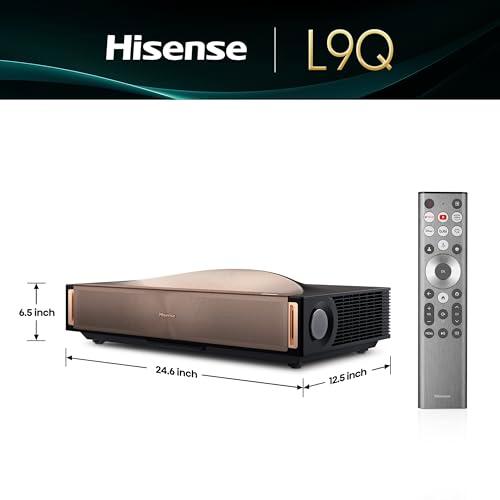
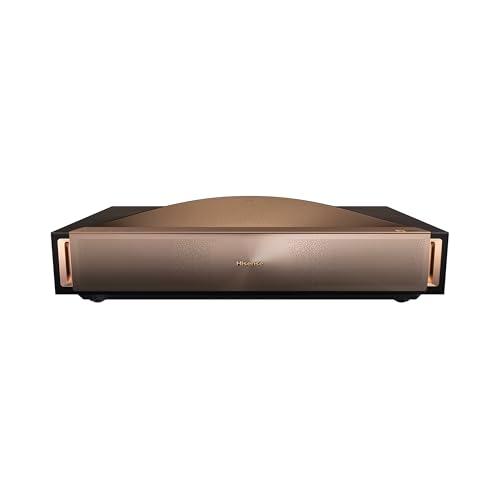


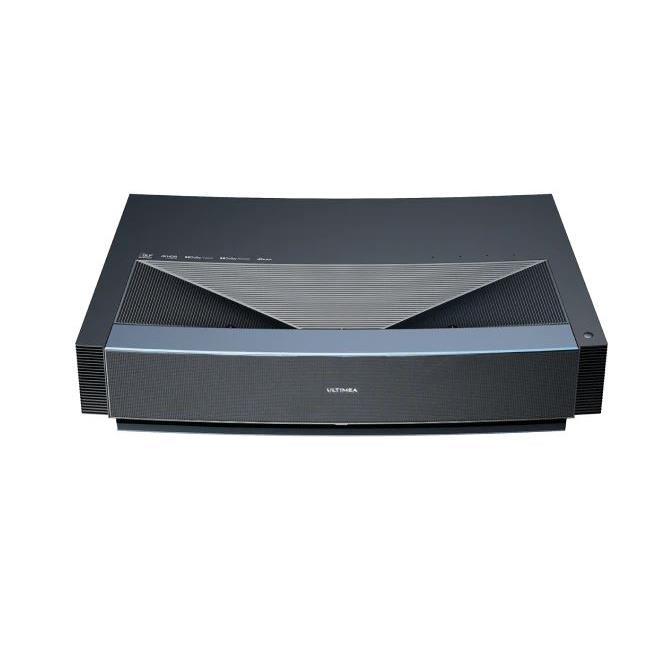
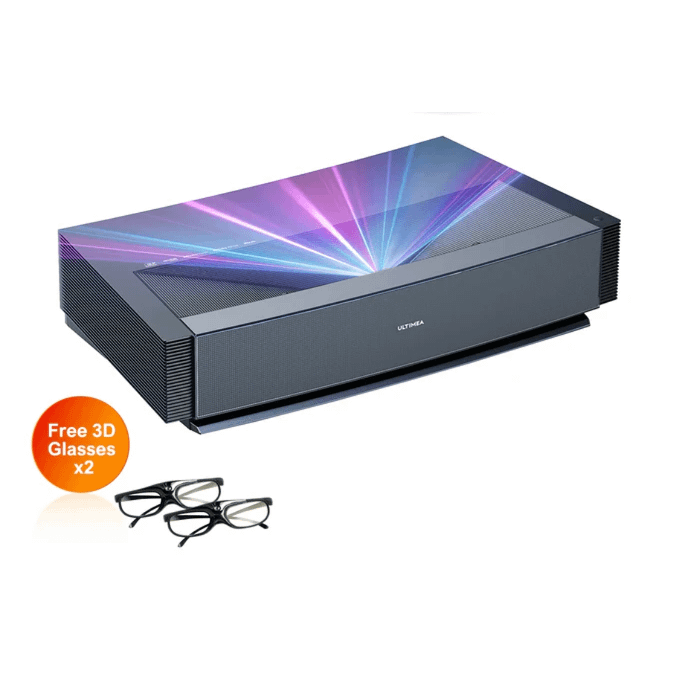
Ultra short throw (UST) laser projectors have completely changed how we think about big-screen entertainment at home. Instead of mounting a projector on your ceiling and dealing with shadows when you walk in front of it, these clever devices sit just inches from your wall and beam massive 100+ inch images upward. It's like having a movie theater that fits on your coffee table.
The technology has exploded in popularity since around 2020, and for good reason. These projectors solve the biggest problems that kept traditional projectors out of most living rooms: complicated installation, poor performance in bright rooms, and the need for perfect lighting conditions. Now you can get cinema-sized images without turning your living room into a cave.
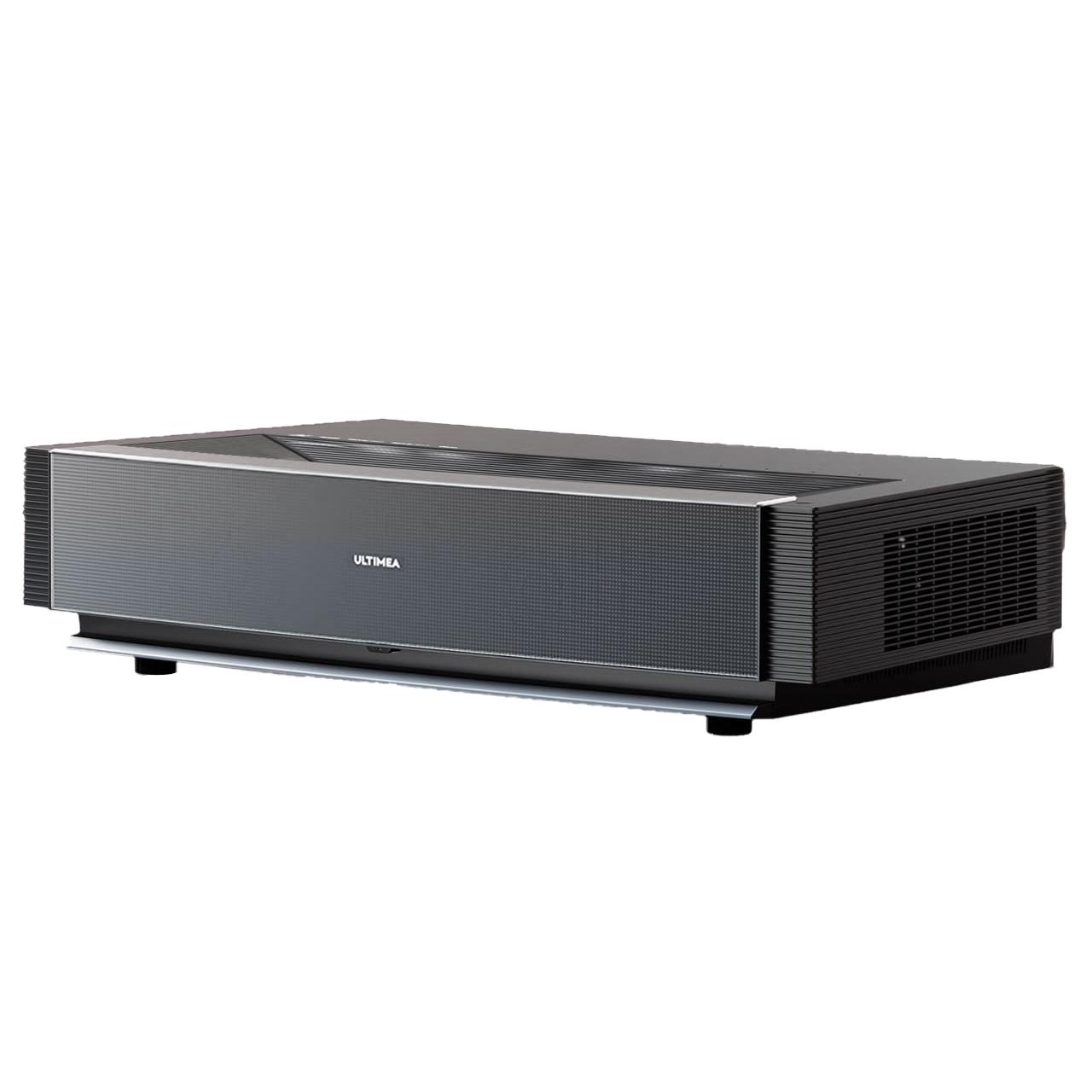
Today we're comparing two standout models that represent different approaches to premium UST projection: the Hisense L9Q, released in 2025 as Hisense's new flagship, and the Ultimea Thor T60, which launched in late 2023 as a value-focused premium option. Both use triple-laser technology (separate red, green, and blue lasers for pure colors), but they target different audiences and budgets.
Before diving into these specific models, it's worth understanding what makes UST projectors special and what you should care about when shopping for one.
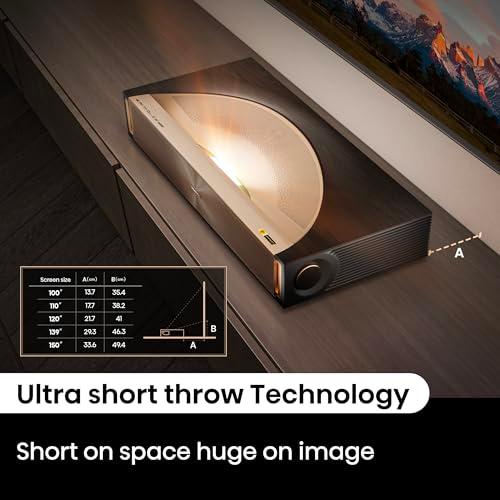
The "ultra short throw" part refers to the throw ratio - essentially how far the projector needs to be from the screen to create a given image size. Traditional projectors might need 8-12 feet to create a 100-inch image, while UST projectors can do it from less than 12 inches away. The Hisense L9Q has a 0.18:1 throw ratio, meaning it can project that 100-inch image from just 5.4 inches from the wall. The Thor T60 has a 0.21:1 ratio, requiring about 7-8 inches for the same size.
This proximity creates some unique challenges. The projector has to use complex optics and mirrors to bend the light at such extreme angles, which is why these devices cost significantly more than traditional projectors with similar brightness. However, the convenience factor is enormous - you can literally place one on a TV stand and have a massive screen instantly.
The laser light source is equally important. Unlike traditional lamp projectors that dim over time and need bulb replacements every few years, laser projectors maintain consistent brightness for 20,000+ hours (that's over 10 years of normal use). They also turn on instantly, run much cooler, and enable the wide color gamuts that make modern content look spectacular.
When researching UST projectors, brightness measured in ANSI lumens becomes absolutely critical. Unlike a TV that generates its own light, projectors reflect light off your wall or screen. In a bright room, weak projectors look washed out and pale - like trying to use a flashlight during the day.
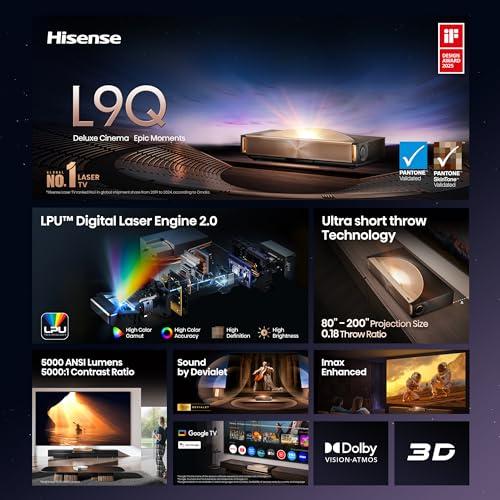
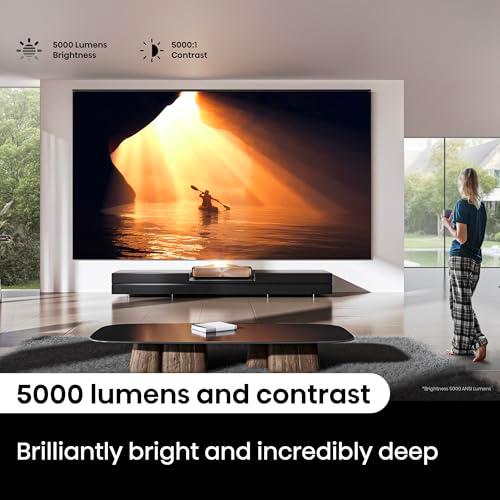
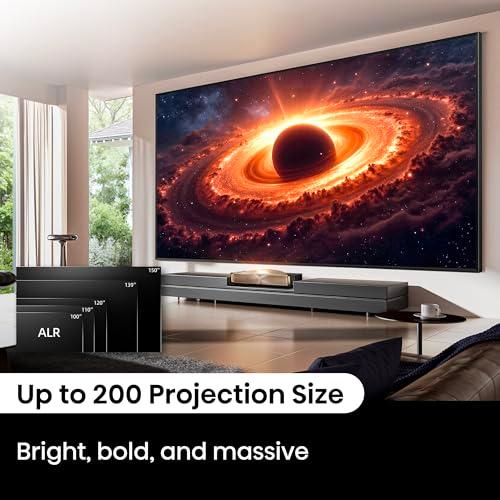
The Hisense L9Q outputs an impressive 5,000 ANSI lumens, while the Thor T60 delivers 4,000 ANSI lumens. That 25% difference might not sound huge, but in real-world use, it's substantial. Based on professional reviews we've analyzed, the L9Q maintains vibrant, TV-like colors even with living room lights on and some natural light coming through windows. The Thor T60 performs very well in moderate lighting but really shines (pun intended) when you can control ambient light somewhat.
For context, most budget UST projectors max out around 2,500-3,000 lumens, so both of these models are in the high-brightness category that enables true daytime viewing. However, if you're planning to use screens larger than 120 inches or have a particularly bright room, that extra 1,000 lumens from the L9Q becomes increasingly valuable.
The practical impact is significant. With the L9Q, you can comfortably watch movies during weekend afternoons without closing all the blinds. The Thor T60 can handle this too, but you'll get better results with some light control, especially for darker scenes in movies.
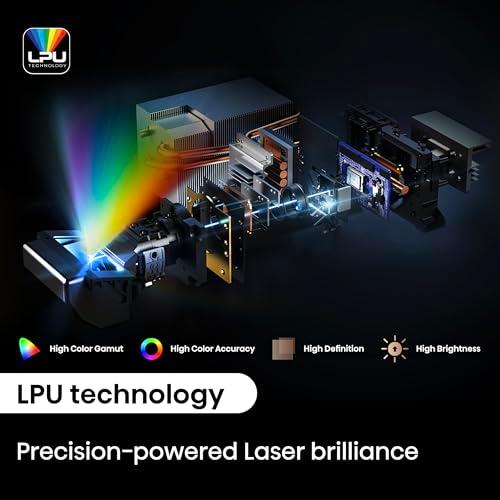
Both projectors use RGB triple-laser technology, which represents a major advancement over older single-laser or lamp-based systems. Instead of using a single white light source filtered through a spinning color wheel (which can create rainbow artifacts), these projectors generate pure red, green, and blue laser light directly.
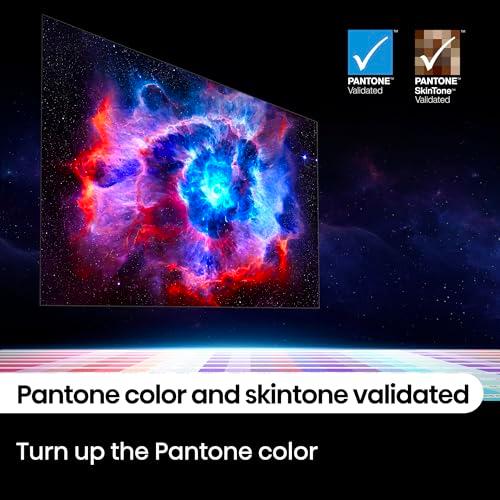
The Hisense L9Q covers 110% of the BT.2020 color space and carries Pantone validation - essentially a professional certificate that its colors are accurate. BT.2020 is the color standard for 4K HDR content, so covering more than 100% means this projector can display colors more vivid than what most content actually contains. The Pantone validation is significant because it means skin tones, landscapes, and other critical colors will look natural rather than oversaturated.
The Thor T60 claims an even higher 120% BT.2020 coverage, though this hasn't been independently verified like the L9Q's certification. In practice, both projectors deliver exceptionally vibrant, saturated colors that make regular TVs look dull by comparison. However, the L9Q's professional validation provides more confidence that colors will look "right" rather than just impressive.
Contrast ratio tells you how deep the blacks can get compared to the brightest whites. The L9Q achieves 5,000:1 native contrast, while the Thor T60 manages 4,000:1. These are both excellent figures for ultra-bright projectors - typically, making a projector brighter hurts contrast because controlling light spill becomes harder. Good contrast is crucial for watching movies in darker scenes, where you want true blacks rather than gray backgrounds.
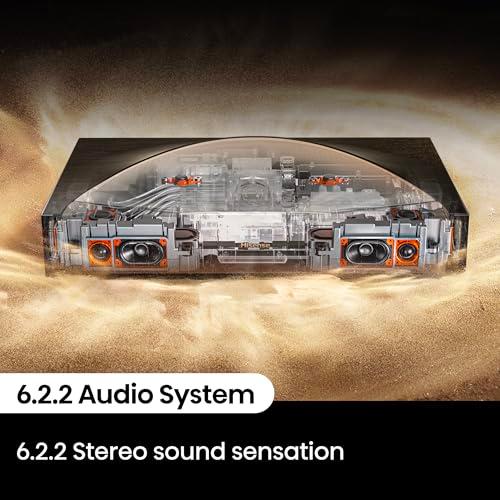
This might be the biggest performance gap between these projectors, and it's often overlooked in comparisons. The Hisense L9Q includes a 116-watt, 6.2.2-channel surround sound system developed with Devialet, a French audio company known for premium speakers. This isn't just stereo speakers - it's a full surround system with dual subwoofers and up-firing speakers that bounce sound off your ceiling to create overhead effects.
The audio system is "tuned by Opéra de Paris," which sounds like marketing fluff but actually means the frequency response has been professionally calibrated for room acoustics. Reviews consistently praise this audio setup as delivering true surround sound that rivals dedicated sound bars costing $1,000 or more.
The Thor T60 includes 30 watts of stereo speakers (15W per channel). They're adequate for casual viewing and support Dolby Atmos processing, but they're fundamentally limited by their power and stereo configuration. Most users will want to add external speakers or a sound bar for a truly cinematic experience.
This difference matters more than you might think. Good audio is crucial for movie immersion, and many people underestimate how much better dialogue clarity and bass response improve the viewing experience. If you're planning to add external audio anyway, the Thor T60's simpler speakers aren't a problem. But if you want an all-in-one solution, the L9Q's integrated surround system is genuinely impressive.
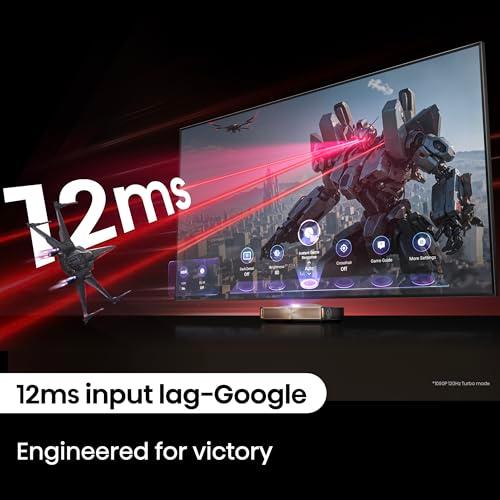
Both projectors excel for gaming, but with some differences worth noting. Input lag - the delay between when you press a button and see the result on screen - is crucial for gaming. The Hisense L9Q achieves 12ms in Game Mode, while the Thor T60 delivers under 25ms. Both are excellent (anything under 40ms is considered good for gaming), but competitive gamers will appreciate the L9Q's lower latency.
Both projectors include HDMI 2.1 ports with Auto Low Latency Mode (ALLM), which automatically switches to the fastest settings when it detects a gaming console. They also support Variable Refresh Rate (VRR) features that help eliminate screen tearing and stuttering during fast gaming sequences.
For gaming on massive screens - imagine playing your favorite games on 150+ inches - both projectors deliver an incredibly immersive experience. The high brightness levels mean games look vibrant and detailed even during daytime gaming sessions.
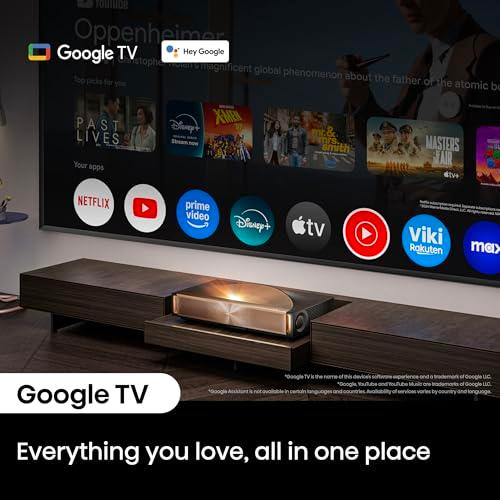
The Hisense L9Q runs Google TV, the latest version of Google's streaming platform with an improved interface and better app selection. The Thor T60 uses Android TV 11, which is functional but represents an older platform generation.
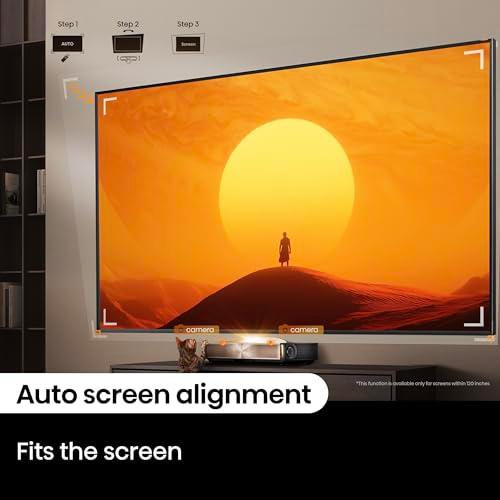
More importantly, the L9Q includes Auto Screen Alignment technology using built-in cameras. You literally just place the projector roughly where you want it, and it automatically detects your screen or wall and adjusts the image geometry perfectly. This eliminates the tedious manual keystone correction that typically comes with projector setup.
The Thor T60 requires more traditional manual adjustment, including horizontal and vertical keystone correction to ensure the image appears rectangular rather than distorted. It's not difficult, but it does require more time and patience during initial setup.
At the time of writing, there's a significant price gap between these projectors, with the Thor T60 typically available for considerably less than the L9Q's premium positioning. However, the value equation becomes more complex when you consider the total system cost.
Most UST projector buyers need to purchase an Ambient Light Rejecting (ALR) screen, which can cost $800-2,000 depending on size and quality. These screens use special materials to reflect the projector's light back to viewers while absorbing ambient light from other directions, dramatically improving image quality in bright rooms.
If you're considering the Thor T60, you'll likely also want to budget for external speakers or a sound bar to match the impressive video quality. A decent 3.1 sound bar costs $400-800, while a proper 5.1 system ranges from $800-1,500. When you add this to the Thor T60's cost, the total system price approaches the L9Q plus screen, but with the complexity of multiple components.
The L9Q's premium pricing reflects its position as a flagship model with cutting-edge features, while the Thor T60 delivers most of the performance benefits at a more accessible price point for enthusiasts willing to handle more setup complexity.
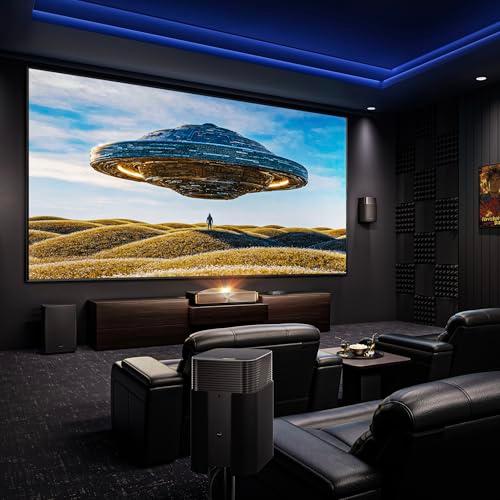
Your viewing environment heavily influences which projector makes more sense. In a dedicated home theater room where you can control lighting completely, both projectors will look spectacular. The Thor T60 particularly excels in these conditions, delivering cinematic image quality that rivals much more expensive traditional projectors.
For living room integration - what most people actually want - the L9Q's higher brightness and automated setup features provide meaningful advantages. If your projector will be in a room with windows, used during daytime, or viewed by family members who won't want to fiddle with settings, the L9Q delivers a more foolproof experience.
Screen size preferences also matter. Both projectors can handle 80-150 inch screens excellently, but for larger installations (150+ inches), the L9Q's extra brightness becomes increasingly important to maintain image quality across the larger surface area.
The laser projector category has evolved rapidly since 2020. Early models suffered from speckle (a grainy texture), limited color gamuts, and high prices. The current generation, represented by both of these projectors, has largely solved these issues while adding smart TV platforms and gaming features.
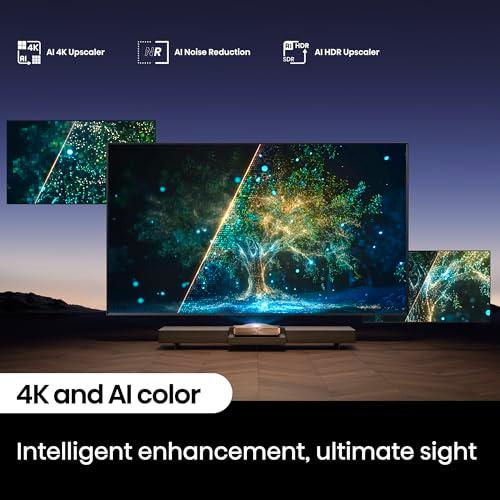
The L9Q's 2025 release brings the latest processing technology, including AI-powered image enhancement that adjusts contrast, color, and brightness frame-by-frame. This kind of real-time optimization wasn't available in earlier UST projectors and represents genuine advancement in image processing.
Both projectors support the latest HDR formats (HDR10, Dolby Vision) and will handle current and future 4K content excellently. The laser light sources should maintain consistent performance for over a decade, making either a long-term investment.
The Ultimea Thor T60 makes the most sense for enthusiasts who want premium UST performance without flagship pricing. It's ideal if you have a dedicated viewing room with some light control, plan to add external audio, and don't mind spending time on manual calibration. The performance is genuinely excellent - this isn't a "budget" projector in terms of image quality, just pricing philosophy.
The Hisense L9Q justifies its premium positioning for users who want the complete package: maximum brightness for bright rooms, professional audio that eliminates the need for external speakers, and automated setup that makes it truly plug-and-play. If you're integrating this into a living space rather than a dedicated theater, or if you want screens larger than 120 inches, the L9Q's advantages become worth the price premium.
For most buyers, the decision comes down to room conditions and priorities. Both projectors will deliver an amazing big-screen experience that makes regular TVs feel small. The Thor T60 gets you 85% of the way there at a lower cost, while the L9Q provides that final 15% of performance and convenience that matters most in challenging viewing environments.
The ultra short throw laser projector category has matured to the point where even the "value" option like the Thor T60 delivers genuinely premium performance. Your choice between them should be based on your specific room, usage patterns, and whether you value the L9Q's integrated premium features enough to justify its higher cost.
| Hisense L9Q Triple Laser Ultra Short Throw Projector | Ultimea Thor T60 4K Ultra Short Throw Laser Projector |
|---|---|
| Brightness - Most critical for daytime viewing and large screens | |
| 5,000 ANSI lumens (excellent for bright rooms, supports up to 200" screens) | 4,000 ANSI lumens (very good brightness, optimal for 80-150" screens) |
| Native Resolution - Determines image sharpness and detail | |
| 4K (3840x2160) via 0.47" DLP chip with pixel-shifting | 4K (3840x2160) via 0.47" DLP chip with pixel-shifting |
| Contrast Ratio - Controls black levels and image depth | |
| 5,000:1 (exceptional for ultra-bright projector, deep blacks) | 4,000:1 (very good contrast, some gray in dark scenes) |
| Color Gamut - Affects color vibrancy and accuracy | |
| 110% BT.2020 with Pantone validation (professionally accurate colors) | 120% BT.2020 claimed (vivid but unverified accuracy) |
| Throw Ratio - How close to wall for given screen size | |
| 0.18:1 (100" screen from 5.4" away, more placement flexibility) | 0.21:1 (100" screen from ~8" away, standard UST distance) |
| Audio System - Built-in sound quality and power | |
| 116W Devialet 6.2.2 surround with subwoofers (eliminates need for external speakers) | 30W stereo speakers (adequate but will likely need sound bar upgrade) |
| HDR Support - Enhanced dynamic range for modern content | |
| Dolby Vision, HDR10+, HDR10, HLG, IMAX Enhanced | Dolby Vision, HDR10 |
| Gaming Performance - Input lag for responsive gaming | |
| 12ms in Game Mode (excellent for competitive gaming) | <25ms (very good for console gaming) |
| Smart Platform - Built-in streaming and interface | |
| Google TV (latest platform with superior app selection) | Android TV 11 (functional but older platform) |
| Setup Features - Installation convenience | |
| Auto Screen Alignment with cameras (automated setup and calibration) | Manual keystone correction and focus (traditional setup process) |
| HDMI Connectivity - Console and device connections | |
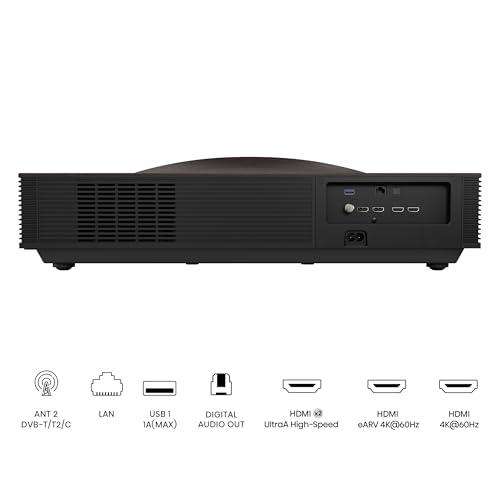
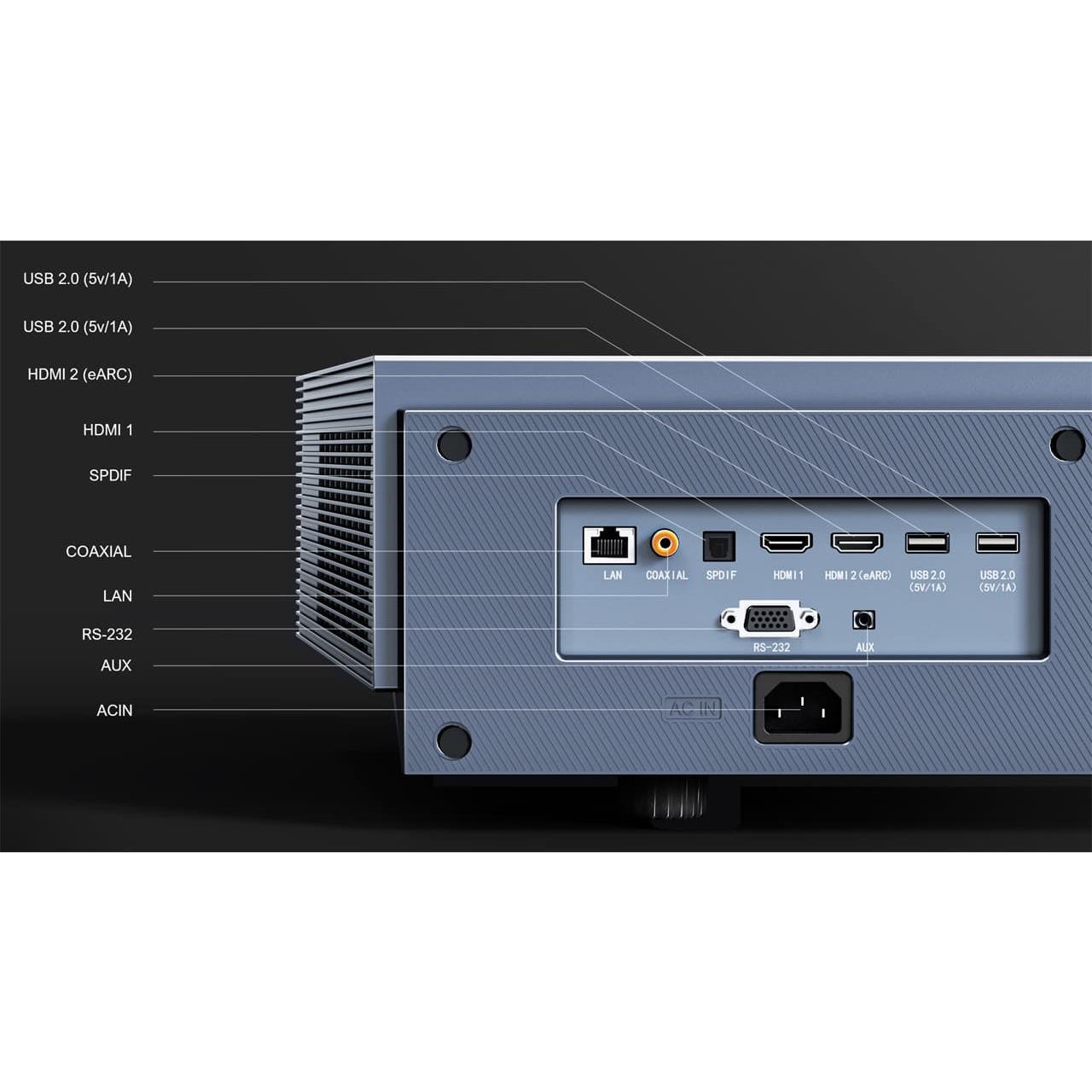
| 4 HDMI ports (2x HDMI 2.1, 2x HDMI 2.0b with eARC support) | 2 HDMI 2.1 ports |
| Laser Lifespan - Maintenance-free operation | |
| 25,000+ hours (over 10 years of normal use) | 20,000+ hours (excellent longevity) |
| Operating Noise - Distraction during quiet scenes | |
| Not specified (typical laser projectors run very quietly) | <25dB (whisper-quiet operation) |
| Maximum Screen Size - Large screen capability | |
| Up to 200 inches (exceptional for massive home theaters) | Up to 150 inches (excellent for most home applications) |
The Hisense L9Q delivers 5,000 ANSI lumens compared to the Ultimea Thor T60's 4,000 ANSI lumens. This 25% brightness advantage makes the L9Q significantly better for daytime viewing in bright rooms, while the Thor T60 performs very well in moderate lighting conditions but benefits from some light control for optimal results.
Both projectors offer excellent 4K image quality with triple laser technology. The Hisense L9Q has Pantone-validated colors and 5,000:1 contrast ratio for professional accuracy, while the Ultimea Thor T60 claims wider color coverage at 120% BT.2020 with 4,000:1 contrast. The L9Q includes AI picture enhancement for real-time optimization, giving it an edge in overall image processing.
The Hisense L9Q features a premium 116W Devialet 6.2.2 surround sound system with subwoofers that eliminates the need for external speakers. The Ultimea Thor T60 includes basic 30W stereo speakers that are adequate for casual viewing but will likely require a sound bar or external speakers for a true home theater experience.
The Hisense L9Q has a 0.18:1 throw ratio, projecting a 100-inch screen from just 5.4 inches away. The Ultimea Thor T60 has a 0.21:1 throw ratio, requiring about 8 inches for the same screen size. Both are ultra-short throw projectors that sit much closer to the wall than traditional projectors.
The Hisense L9Q offers superior gaming performance with 12ms input lag in Game Mode, while the Ultimea Thor T60 delivers under 25ms latency. Both support HDMI 2.1 and gaming features like Auto Low Latency Mode, but the L9Q's lower latency gives competitive gamers a slight advantage.
The Hisense L9Q runs Google TV, the latest streaming platform with comprehensive app support and Google Assistant integration. The Ultimea Thor T60 uses Android TV 11, which is functional but represents an older platform generation. Both support popular streaming services and voice control features.
The Hisense L9Q features Auto Screen Alignment technology that uses built-in cameras to automatically calibrate the image, making setup nearly effortless. The Ultimea Thor T60 requires manual keystone correction and focus adjustment, which takes more time but isn't particularly difficult for most users.
The Hisense L9Q supports screen sizes up to 200 inches thanks to its higher brightness output, making it ideal for massive home theater installations. The Ultimea Thor T60 optimally handles screens up to 150 inches, which is still excellent for most home applications and room sizes.
The Ultimea Thor T60 typically offers better value for budget-conscious buyers, delivering about 80% of the L9Q's performance at a significantly lower cost. However, when factoring in the need for external audio with the Thor T60, the total system cost gap narrows considerably.
Both projectors handle ambient light well, but the Hisense L9Q's 5,000 lumens make it exceptional for bright living rooms with windows and daytime viewing. The Ultimea Thor T60 performs very well in moderate lighting but shows its best results with some light control, especially for darker movie scenes.
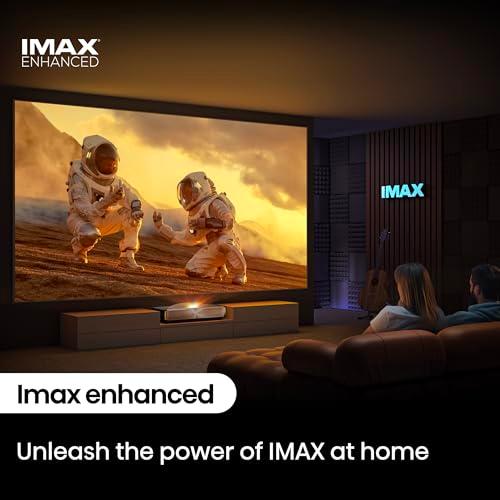
The Hisense L9Q supports Dolby Vision, HDR10+, HDR10, HLG, and IMAX Enhanced formats for comprehensive compatibility with premium content. The Ultimea Thor T60 supports Dolby Vision and HDR10, covering most HDR content but with fewer format options than the L9Q.
In a dedicated home theater with controlled lighting, both projectors excel. The Ultimea Thor T60 offers outstanding performance at a lower cost in these conditions, while the Hisense L9Q provides premium features like superior audio and automated setup that justify its higher cost for users wanting the complete flagship experience.
We've done our best to create useful and informative comparisons to help you decide what product to buy. Our research uses advanced automated methods to create this comparison and perfection is not possible - please contact us for corrections or questions. These are the sites we've researched in the creation of this article: chrismajestic.com - shop.hisense-usa.com - tomsguide.com - valueelectronics.com - techradar.com - whathifi.com - youtube.com - projectorscreen.com - projectorscreen.com - hisense-usa.com - youtube.com - projectorcentral.com - youtube.com - hisense-usa.com - manuals.plus - shop.avispl.com - hisense-usa.com - avsforum.com - projectorcentral.com - projectorcentral.com - toidsdiyaudio.com - avsforum.com - projectorcentral.com - thesmarthomehookup.com - techradar.com - ultimea.com - ustprojector.com - en.prnasia.com - avsforum.com

Privacy Policy
Terms and Conditions - Affiliate Policy
Home Security
© Copyright 2008-2026.
11816 Inwood Rd #1211, Dallas, TX 75244