

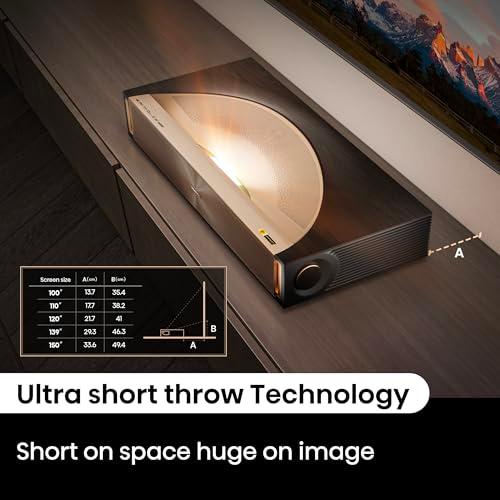
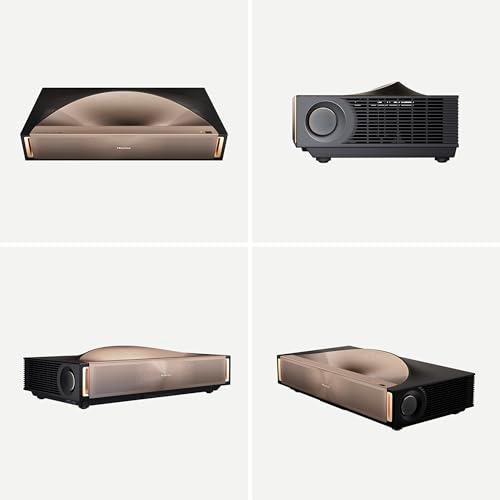
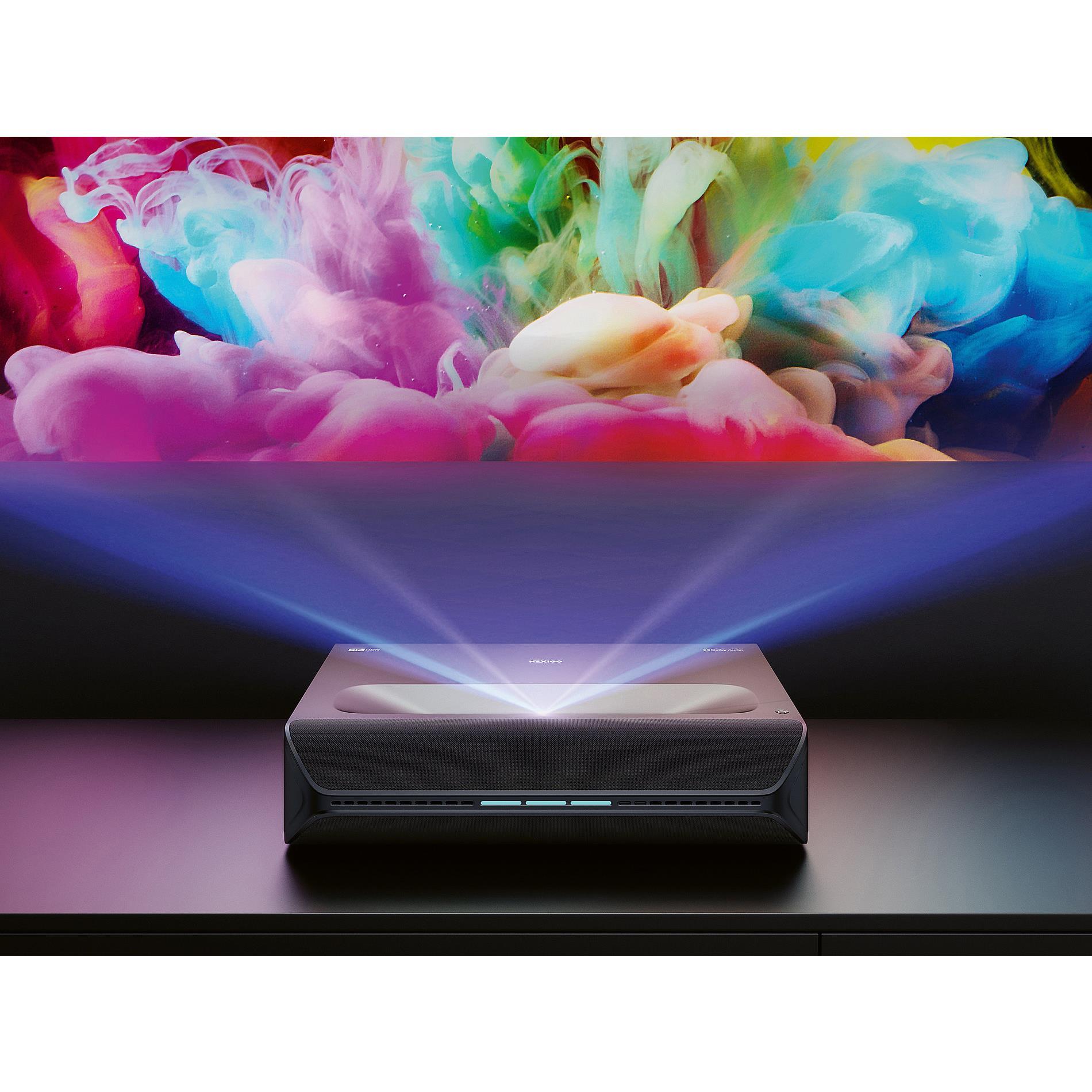
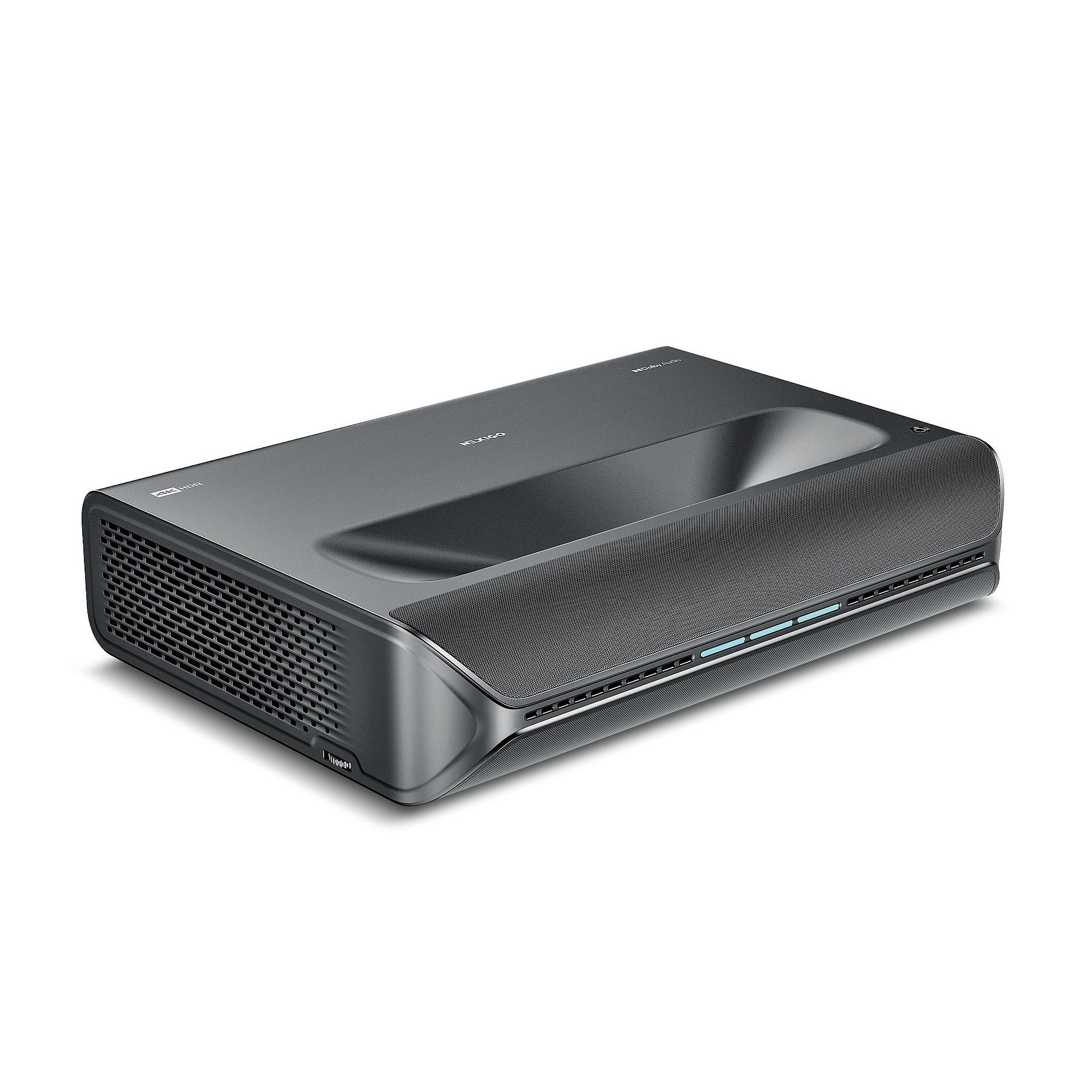
Ultra Short Throw (UST) projectors have revolutionized home entertainment by bringing massive 100+ inch screens to living rooms without the complexity of traditional ceiling-mounted projectors. Instead of requiring 10-15 feet of throw distance, these ingenious devices sit just inches from your wall or screen, using specialized optics to create enormous images from impossibly close distances.
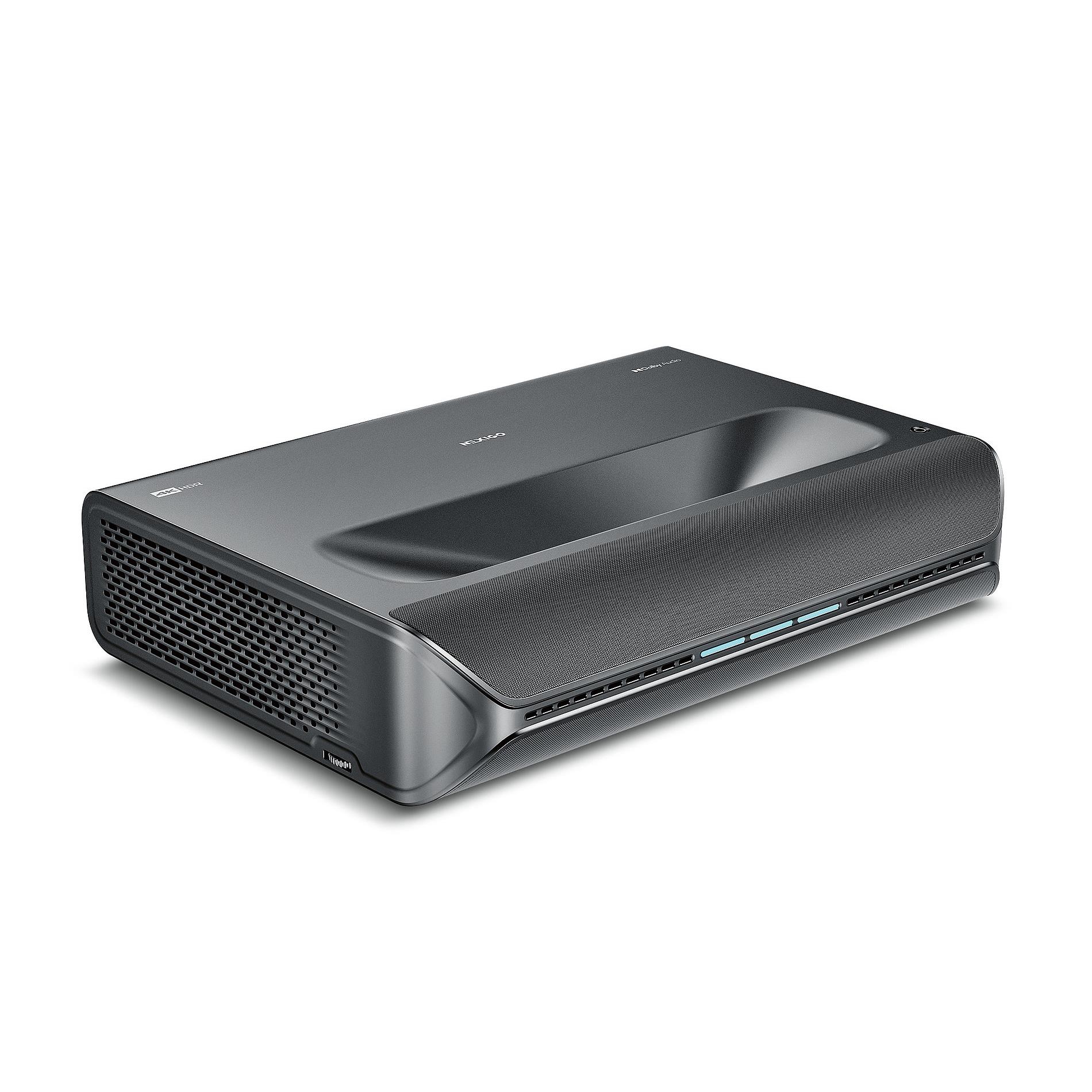
The category has exploded in recent years, with manufacturers racing to deliver brighter images, better colors, and more features. Today we're comparing two standout models that represent very different approaches: the flagship Hisense L9Q and the value-focused NexiGo Aurora Pro. Both use cutting-edge triple laser technology, but they target different users and budgets.
Before diving into specifics, it's worth understanding what makes UST projectors special. Traditional projectors need significant distance to create large images—typically one foot of distance for every inch of screen width. UST projectors flip this equation, using ultra-wide angle lenses and complex mirror systems to project massive images from mere inches away.
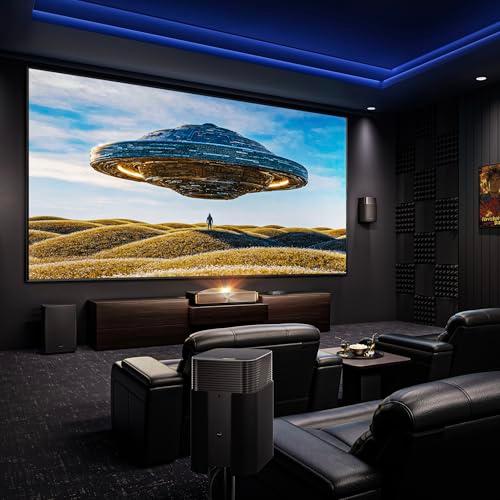
This proximity brings huge advantages: no ceiling mounting, no long cable runs, and no shadows when someone walks in front. The projector sits on a TV console like a soundbar, making installation dramatically simpler. However, this convenience comes with trade-offs in terms of screen requirements and optimal viewing angles.
The key technical breakthrough enabling UST projectors is their throw ratio—the mathematical relationship between projection distance and image width. While traditional projectors might have throw ratios of 1.5:1 or higher, UST projectors operate at ratios below 0.25:1. This means incredibly complex optics that are expensive to manufacture but enable the "magic" of huge images from tiny distances.
Brightness, measured in ANSI lumens, is arguably the most critical specification for any UST projector. Unlike traditional projectors used in dedicated dark theaters, UST projectors live in family rooms with windows, lamps, and ambient light. The brighter your projector, the more usable it becomes during daytime or with room lighting.
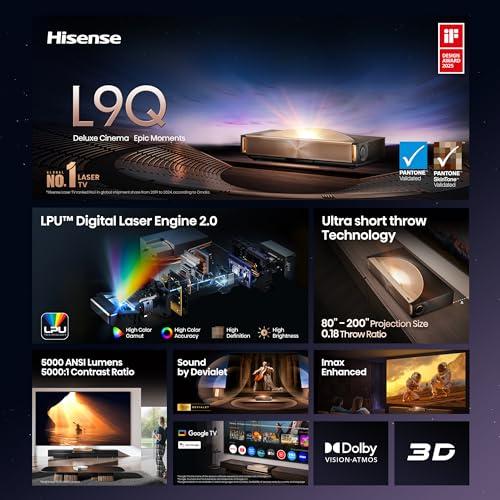
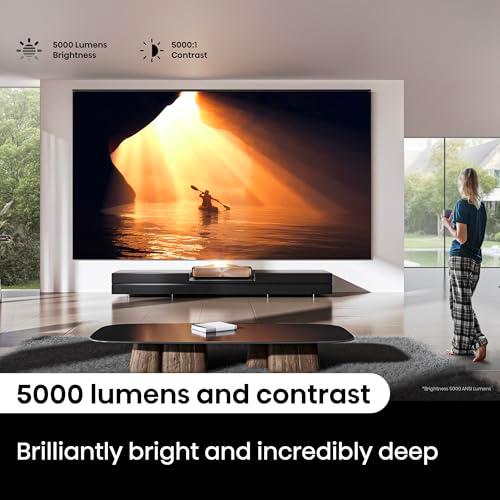
The Hisense L9Q absolutely dominates this category with 5,000 ANSI lumens—a staggering figure that represents the brightest consumer UST projector available at the time of writing. This isn't marketing fluff; independent measurements consistently confirm this exceptional brightness. To put this in perspective, many traditional home theater projectors operate at 1,500-3,000 lumens, and most UST projectors fall into the 2,000-3,500 lumen range.
The NexiGo Aurora Pro, released in 2023, delivers 2,400 ANSI lumens. While this might seem modest compared to the L9Q's output, it's actually quite respectable for the category and sufficient for most viewing scenarios with some light control.
This brightness difference fundamentally changes how these projectors perform in real homes. The L9Q can maintain vibrant, punchy colors even with significant ambient light—think afternoon TV watching with curtains open or evening viewing with room lights on. The Aurora Pro requires more consideration of lighting conditions, performing best in dimmed rooms or evening viewing scenarios.
From our research into user experiences, the L9Q's brightness advantage becomes most apparent on larger screen sizes. While both projectors can create excellent 100-110 inch images, the L9Q maintains its visual impact as screen sizes approach 150-200 inches, where the Aurora Pro begins to look washed out in anything but controlled lighting.
While brightness grabs attention, contrast ratio—the difference between the brightest whites and deepest blacks—determines image depth and realism. This is where the comparison becomes more nuanced and interesting.
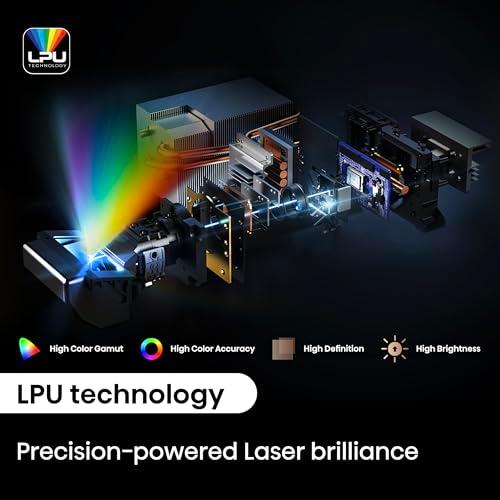
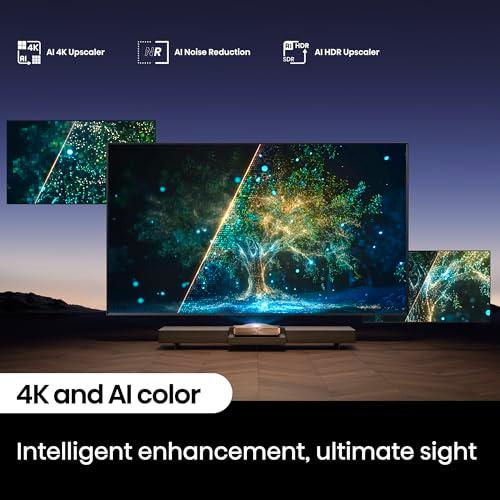
The Hisense L9Q achieves a 5,000:1 native contrast ratio, which is excellent for such a bright projector. Higher brightness typically comes at the cost of black levels, so maintaining strong contrast at 5,000 lumens represents impressive engineering. The L9Q uses pure RGB triple laser technology, eliminating the color wheel found in many DLP projectors, which helps achieve cleaner, more stable colors and reduces artifacts.
The NexiGo Aurora Pro takes a different approach with its ALPD 4.0 technology (Advanced Laser Phosphor Display). This sophisticated system combines laser light sources with phosphor conversion to achieve particularly impressive black levels. The Aurora Pro delivers 3,000:1 native contrast, boosted to 6,000:1 through Dynamic Laser Dimming—a technology that dynamically adjusts laser output based on scene content to enhance dark area performance.
Based on detailed user comparisons and expert reviews, the Aurora Pro's ALPD 4.0 technology produces notably deeper blacks than many competing UST projectors. This becomes especially important for movie viewing, where dark scenes in films like space epics or horror movies benefit dramatically from true black levels rather than grayish "video black."
The practical difference? The L9Q excels in bright rooms where its superior brightness overcomes ambient light, while the Aurora Pro shines in controlled lighting where its superior black levels create more cinematic contrast. Neither achieves the pixel-level contrast of OLED displays, but both represent the current state-of-the-art in projection contrast performance.
Modern UST projectors have largely solved the color reproduction challenges that plagued earlier models. Both projectors use triple laser technology, but with important differences in implementation and validation.
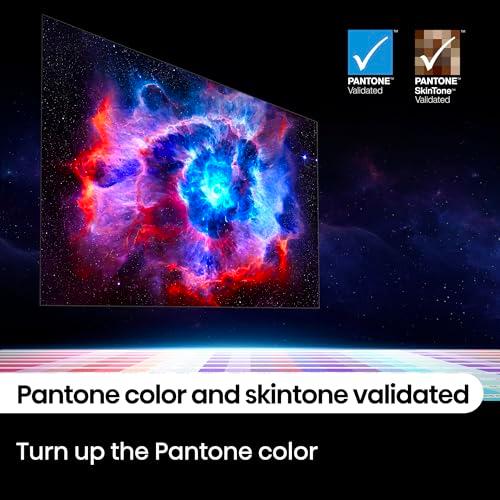
The Hisense L9Q covers 110% of the BT.2020 color space—the latest and most demanding color standard used for 4K HDR content. More importantly, it's Pantone and Pantone SkinTone validated, meaning its color accuracy has been professionally certified by the company that defines color standards for industries worldwide. This validation ensures that colors appear exactly as content creators intended, from the subtle skin tones in portrait photography to the vibrant landscapes in nature documentaries.
The NexiGo Aurora Pro achieves 107% BT.2020 coverage, which is virtually indistinguishable from the L9Q in practical viewing. The 3% difference falls well below the threshold of human perception. What the Aurora Pro lacks is professional color validation—it achieves excellent color reproduction through engineering rather than formal certification.
From our analysis of user feedback and expert reviews, both projectors deliver stunning color performance that exceeds most LCD and OLED televisions in terms of color gamut coverage. The L9Q's Pantone validation provides confidence for color-critical applications like photo editing or professional content creation, while the Aurora Pro's excellent color reproduction satisfies virtually all entertainment viewing scenarios.
The triple laser approach used by both projectors represents a significant advancement over earlier laser-phosphor hybrid systems. Pure RGB lasers can produce colors that are simply impossible with traditional lamp-based projectors or even many LED displays, particularly in the deep reds and vibrant greens that make nature documentaries and animated content pop off the screen.
Gaming on large screens has become increasingly popular, and UST projectors offer an attractive alternative to massive gaming monitors. However, not all projectors are created equal when it comes to gaming performance.
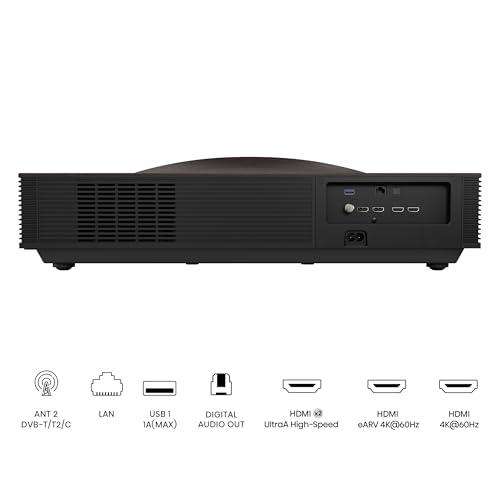
The NexiGo Aurora Pro clearly wins the gaming battle with remarkable specifications. Its input lag drops to just 9 milliseconds at 1080p/240Hz in gaming mode—a figure that rivals dedicated gaming monitors. The projector supports HDMI 2.1 with 4K@120Hz input capability, making it fully compatible with the latest gaming consoles like PlayStation 5 and Xbox Series X.
MEMC (Motion Estimation, Motion Compensation) technology smooths fast-moving content by creating intermediate frames, reducing motion blur in fast-paced games. This feature can be particularly beneficial for racing games or first-person shooters where tracking moving objects is critical.
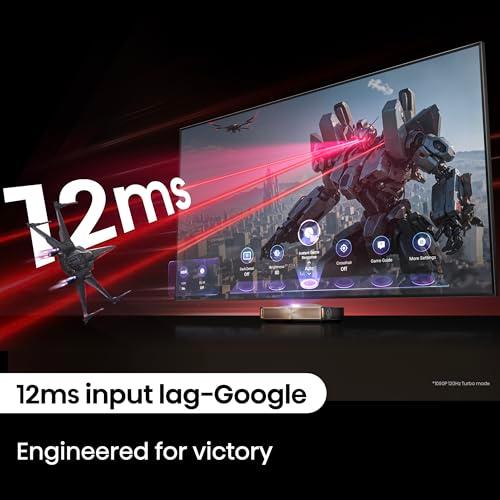
The Hisense L9Q offers respectable gaming performance with 12ms input lag in gaming mode, but lacks the Aurora Pro's specialized gaming optimizations. While 12ms is perfectly acceptable for most gaming scenarios—many TVs have higher input lag—competitive gamers will notice the difference.
For context, input lag above 30ms becomes noticeable to most users, while competitive gamers prefer sub-20ms performance. Both projectors easily clear this threshold, but the Aurora Pro's sub-10ms performance puts it in the same league as high-end gaming monitors.
The practical difference? Casual gamers will be happy with either projector, but serious competitive gamers should strongly consider the Aurora Pro, especially given its more accessible pricing.
One of the biggest advantages of UST projectors over traditional projectors is integrated audio that doesn't require separate speakers. Both projectors include substantial built-in sound systems, but with very different approaches.
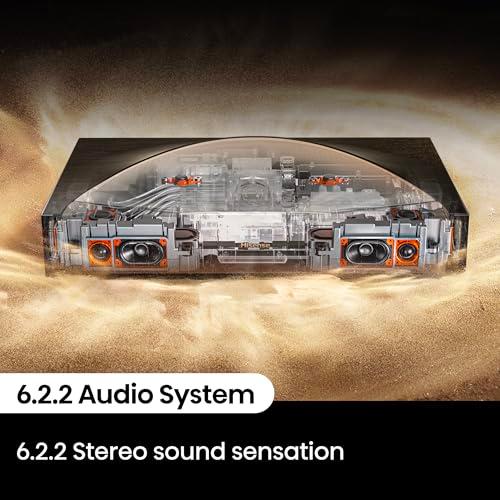
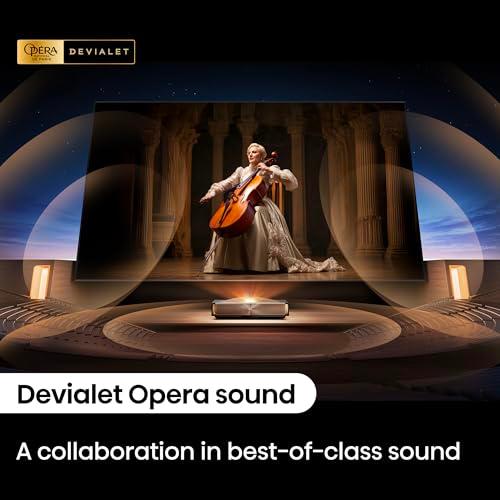
The Hisense L9Q features a premium 116-watt 6.2.2-channel system developed in partnership with Devialet, a French company renowned for high-end audio engineering. This isn't typical "projector audio"—it's a legitimate surround sound system with dedicated subwoofers and up-firing speakers for three-dimensional audio effects.
The Devialet partnership brings professional audio tuning inspired by the Opéra de Paris, with support for Dolby Atmos and DTS:X spatial audio formats. In practical terms, this means the L9Q can deliver room-filling sound with genuine bass response and directional audio effects that complement the large visual experience.
The NexiGo Aurora Pro includes a respectable 60-watt system with Dolby Atmos support. While not matching the L9Q's sophisticated multi-channel setup, it provides solid performance that surpasses most television built-in audio and eliminates the need for additional speakers in many scenarios.
Based on user feedback and expert reviews, the L9Q's audio system approaches the quality of dedicated soundbars in the $500-800 range, while the Aurora Pro's audio performs similarly to good television speakers or entry-level soundbars.
Modern projectors need sophisticated software platforms to access streaming content, and this is where the products diverge significantly.
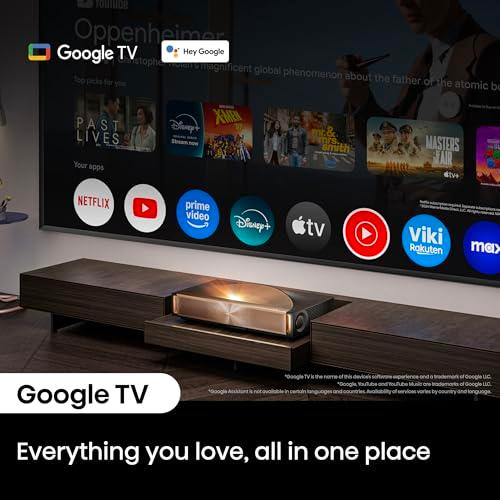
The Hisense L9Q runs the latest Google TV platform, providing full access to the Google Play Store and all major streaming applications. This includes built-in Netflix, Disney+, Amazon Prime Video, HBO Max, and hundreds of other apps. The interface is intuitive and regularly updated, with Google Assistant voice control and Chromecast built-in.
Additionally, the L9Q includes ATSC 3.0 and ATSC 1.0 tuners for over-the-air broadcast reception—essentially making it a complete TV replacement with antenna connectivity for local channels.
The NexiGo Aurora Pro uses an older Android 9 platform that requires sideloading applications for most streaming services. While this is technically possible, it requires more technical knowledge and patience compared to the L9Q's plug-and-play experience.
This difference significantly impacts user experience. The L9Q works like a smart TV from day one, while the Aurora Pro requires some technical setup for streaming applications. For less technical users, this could be a deal-breaker, while tech-savvy users may not mind the extra configuration.
Both projectors use ultra-short throw ratios, but with meaningful differences in capability and flexibility.
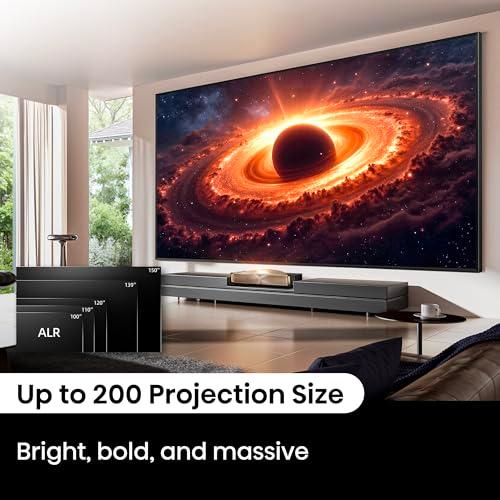
The Hisense L9Q achieves a 0.18:1 throw ratio, meaning it can create a 100-inch image from just 5.4 inches away from the screen. More impressively, it supports screen sizes up to 200 inches—entering true home theater territory that rivals commercial cinema screens.
The NexiGo Aurora Pro uses a 0.23:1 throw ratio, requiring slightly more distance but still achieving excellent proximity performance. Its maximum supported screen size is 150 inches, which is still enormous but limits the ultimate cinematic experience compared to the L9Q.
These differences matter most for users planning large installations or those with space constraints. The L9Q's superior throw ratio and size flexibility make it more adaptable to different rooms and viewing preferences.
Pricing represents the most significant difference between these projectors, with the Hisense L9Q positioned as a premium flagship product while the NexiGo Aurora Pro targets value-conscious buyers seeking high-end features at more accessible pricing.
At the time of writing, the L9Q commands a significant premium—roughly double the Aurora Pro's price. This positions it against high-end televisions in the 75-85 inch range, where the L9Q's ability to create much larger images becomes its primary value proposition.
The Aurora Pro, released in 2023, offers remarkable performance-per-dollar value. Its combination of excellent contrast, gaming features, and solid overall performance at a more accessible price point makes it one of the best values in the UST category.
The value equation ultimately depends on your priorities. If brightness for daytime viewing, premium audio, and maximum screen size flexibility matter most, the L9Q's premium pricing may be justified. If you want excellent performance with superior gaming features at a more reasonable price, the Aurora Pro delivers exceptional value.
After extensive research into user experiences, expert reviews, and technical specifications, clear usage scenarios emerge for each projector.
Choose the Hisense L9Q if you:
Choose the NexiGo Aurora Pro if you:
Both projectors represent excellent engineering and deliver outstanding large-screen experiences, but they target different users and priorities.
The Hisense L9Q is the ultimate UST projector for users who want the best possible brightness, audio, and features regardless of cost. Its 5,000-lumen brightness, professional color validation, and Devialet audio system create a truly premium experience that justifies its flagship pricing for the right user.
The NexiGo Aurora Pro offers exceptional value by focusing on core performance areas like contrast, gaming, and essential features while maintaining more accessible pricing. It's the smart choice for users who want high-end UST performance without premium pricing.
Neither projector is perfect—no UST projector matches OLED television contrast or the brightness uniformity of traditional projectors—but both represent the current state-of-the-art in ultra-short throw projection technology.
Your choice ultimately depends on room lighting, budget, and priorities. For bright rooms and premium experiences, the L9Q justifies its cost. For excellent performance at better value, especially for gaming, the Aurora Pro is hard to beat. Both will deliver the magic of massive screens that make returning to traditional television sizes feel surprisingly small.
| Hisense L9Q Triple Laser Ultra Short Throw Projector | NexiGo Aurora Pro 4K Ultra Short Throw Projector |
|---|---|
| Brightness - Most critical spec for daytime viewing and ambient light performance | |
| 5,000 ANSI lumens (exceptional for bright rooms, highest in category) | 2,400 ANSI lumens (good for controlled lighting, requires dimming for optimal viewing) |
| Contrast Ratio - Determines black levels and image depth | |
| 5,000:1 native (excellent for such high brightness) | 3,000:1 native, 6,000:1 dynamic with laser dimming (superior black levels) |
| Color Gamut - Wide color reproduction capability | |
| 110% BT.2020 with Pantone validation (professionally certified accuracy) | 107% BT.2020 (excellent coverage, virtually identical to human perception) |
| Maximum Screen Size - How large your image can get | |
| Up to 200 inches (true cinema-sized screens) | Up to 150 inches (still massive for most rooms) |
| Throw Ratio - Distance needed from wall for 100" image | |
| 0.18:1 (5.4 inches away, most flexible placement) | 0.23:1 (slightly more distance required but still ultra-short) |
| Gaming Performance - Input lag for responsive gaming | |
| 12ms input lag (good for casual gaming) | 9ms at 1080p/240Hz (excellent for competitive gaming) |
| HDMI Connectivity - Next-gen console and PC compatibility | |
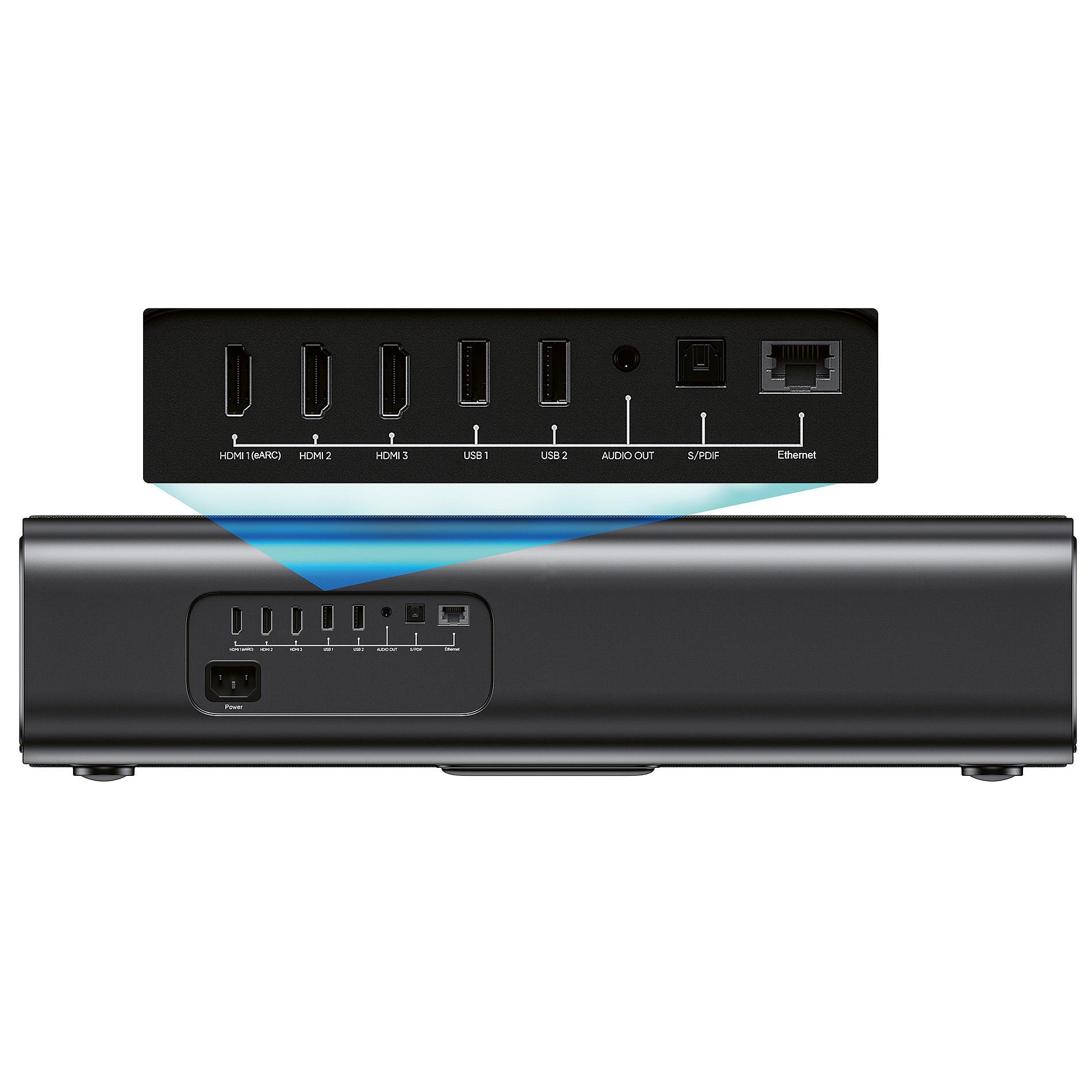
| HDMI 2.1 with ALLM, eARC support | HDMI 2.1 with 4K@120Hz input support (better for gaming) |
| Built-in Audio - Eliminates need for separate speakers | |
| 116W 6.2.2-channel Devialet system (premium surround sound) | 60W Dolby Atmos system (solid performance, typical for category) |
| Smart Platform - Streaming app access and ease of use | |
| Google TV with full Google Play Store (plug-and-play experience) | Limited Android 9 requiring app sideloading (more technical setup) |
| HDR Format Support - Premium content compatibility | |
| HDR10, HDR10+, Dolby Vision, HLG, IMAX Enhanced | HDR10, HDR10+, Dolby Vision, HLG (comprehensive support) |
| Laser Technology - Light source and color approach | |
| RGB triple laser with LPU Digital Engine 2.0 | ALPD 4.0 RGB triple laser (optimized for black levels) |
| Release Year - How current the technology is | |
| 2025 (latest flagship technology) | 2023 (proven technology, established performance) |
| Value Positioning - Performance per dollar consideration | |
| Premium flagship pricing (double Aurora Pro cost) | Excellent value for performance (best price-to-performance ratio) |
The Hisense L9Q is significantly brighter at 5,000 ANSI lumens compared to the NexiGo Aurora Pro at 2,400 ANSI lumens. This makes the L9Q much better for rooms with windows or ambient lighting, while the Aurora Pro works best in controlled lighting conditions.
The NexiGo Aurora Pro achieves deeper black levels with its ALPD 4.0 technology and 6,000:1 dynamic contrast ratio, while the Hisense L9Q offers 5,000:1 native contrast. For dark movie scenes, the Aurora Pro provides more cinematic contrast, though the L9Q maintains excellent contrast despite its higher brightness.
The NexiGo Aurora Pro is superior for gaming with 9ms input lag at 1080p/240Hz and full HDMI 2.1 support for 4K@120Hz gaming. The Hisense L9Q offers 12ms input lag, which is still good but not as optimized for competitive gaming as the Aurora Pro.
The Hisense L9Q supports up to 200-inch screens, making it ideal for true home theater installations. The NexiGo Aurora Pro maxes out at 150 inches, which is still massive for most living rooms but limits the ultimate cinematic experience compared to the L9Q.
The Hisense L9Q features a premium 116W 6.2.2-channel Devialet audio system that rivals dedicated soundbars. The NexiGo Aurora Pro has a solid 60W Dolby Atmos system that's good for integrated speakers but doesn't match the L9Q's surround sound capabilities.
The Hisense L9Q runs full Google TV with complete Google Play Store access, making it plug-and-play for streaming. The NexiGo Aurora Pro uses limited Android 9 that requires sideloading apps, which needs more technical setup compared to the L9Q's user-friendly interface.
The Hisense L9Q has a 0.18:1 throw ratio, projecting 100 inches from just 5.4 inches away. The NexiGo Aurora Pro uses a 0.23:1 ratio, requiring slightly more distance but still ultra-short placement. Both eliminate the need for ceiling mounting unlike traditional projectors.
The Hisense L9Q covers 110% BT.2020 color space with professional Pantone validation, ensuring cinema-grade color accuracy. The NexiGo Aurora Pro achieves 107% BT.2020 coverage, which is virtually identical to human perception but lacks professional certification like the L9Q.
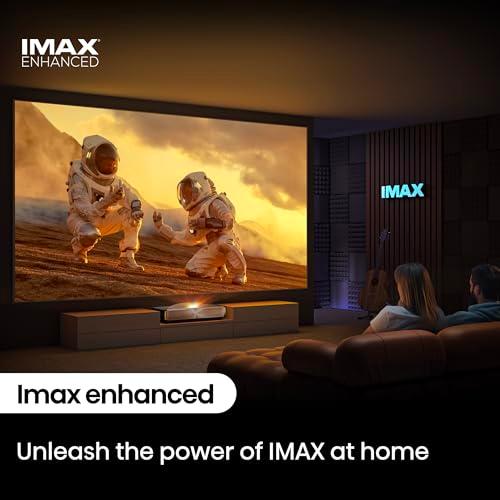
Both the Hisense L9Q and NexiGo Aurora Pro support HDR10, HDR10+, Dolby Vision, and HLG formats. The L9Q additionally includes IMAX Enhanced certification, while both projectors handle premium HDR content from streaming services and 4K Blu-rays.
The NexiGo Aurora Pro offers exceptional value with high-end features at a more accessible price point. The Hisense L9Q costs significantly more but provides flagship brightness, premium audio, and maximum screen size capability. The Aurora Pro delivers better performance-per-dollar for most users.
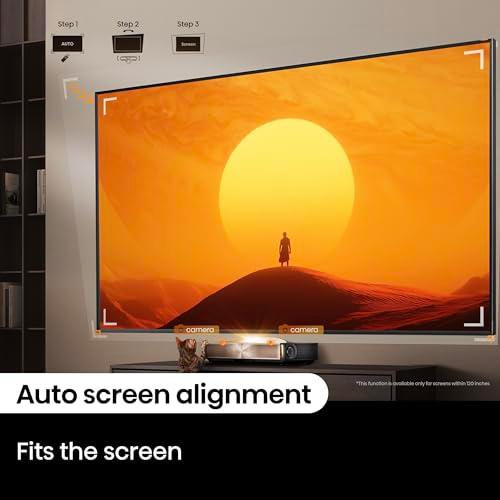
Both projectors sit on TV consoles like soundbars, but the Hisense L9Q offers more flexible placement with its shorter throw distance. The L9Q also includes auto-calibration features, while the NexiGo Aurora Pro may require more manual adjustment for optimal setup.
For dedicated dark home theaters, the NexiGo Aurora Pro excels with superior black levels and contrast. For multi-purpose living rooms with ambient light, the Hisense L9Q is better with its exceptional brightness and premium audio. The L9Q also supports larger 200-inch screens ideal for true cinema experiences.
We've done our best to create useful and informative comparisons to help you decide what product to buy. Our research uses advanced automated methods to create this comparison and perfection is not possible - please contact us for corrections or questions. These are the sites we've researched in the creation of this article: chrismajestic.com - shop.hisense-usa.com - tomsguide.com - valueelectronics.com - techradar.com - whathifi.com - youtube.com - projectorscreen.com - projectorscreen.com - hisense-usa.com - youtube.com - projectorcentral.com - youtube.com - hisense-usa.com - manuals.plus - shop.avispl.com - hisense-usa.com - projectorreviews.com - thesmarthomehookup.com - nexigo.com - projectorscreen.com - avsforum.com - rtings.com - projectorcentral.com - youtube.com - rtings.com - avsforum.com - avsforum.com

Privacy Policy
Terms and Conditions - Affiliate Policy
Home Security
© Copyright 2008-2026.
11816 Inwood Rd #1211, Dallas, TX 75244