

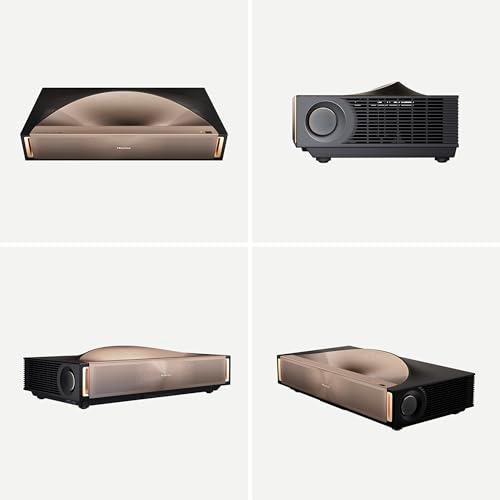
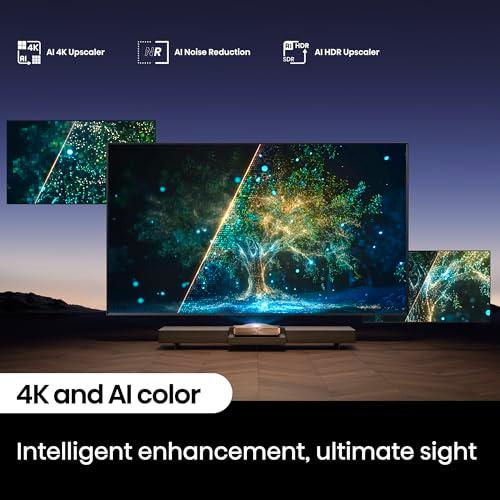


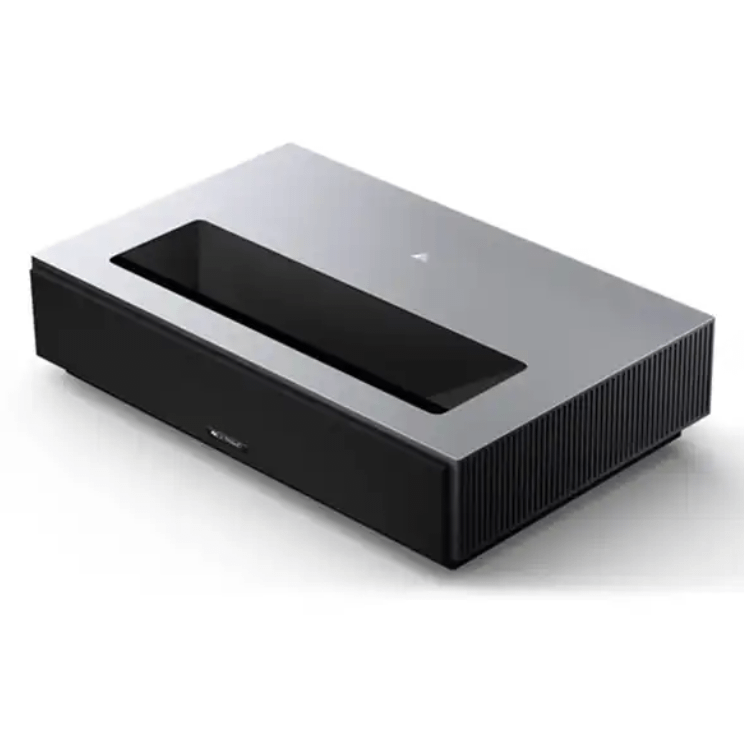
If you've ever dreamed of having a massive 150-inch screen in your living room without mounting a projector on your ceiling or dealing with cables running across the room, ultra short throw (UST) projectors might just be the answer. These ingenious devices can create cinema-sized images while sitting just inches from your wall, essentially replacing the need for enormous TVs that cost a fortune and barely fit through your front door.
Two standout models have caught our attention in this rapidly evolving category: the Hisense L9Q and the Formovie 4K Max. Both launched in recent years as manufacturers have refined this technology, but they take notably different approaches to achieving that big-screen dream.
Before diving into the specifics, it's worth understanding what makes UST projectors special. Traditional projectors need to be positioned far from the screen—typically 10-15 feet for a 100-inch image. UST projectors flip this concept entirely, using specially designed lenses and mirrors to project massive images from mere inches away.
Think of it like this: instead of shining a flashlight straight at the wall, you're bouncing the light off an angled mirror very close to the surface. This creates some unique advantages—no one can walk in front of the projector and block the image, there are no shadows to worry about, and installation is dramatically simplified.
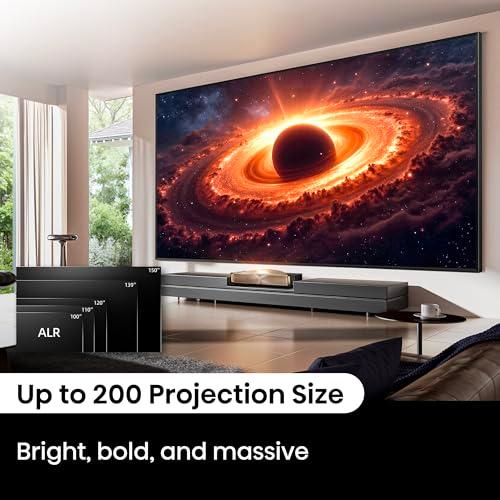
The trade-offs? UST projectors are typically more expensive than traditional models, and they work best with special ambient light rejecting (ALR) screens that help maintain contrast in bright rooms. These screens have tiny ridged surfaces that reflect projected light toward viewers while absorbing overhead lighting.
When it comes to projectors, brightness isn't just about making things look pretty—it's about whether you can actually see the image properly in your living room. This is measured in ANSI lumens, and the difference between the Hisense L9Q and Formovie 4K Max here is significant.
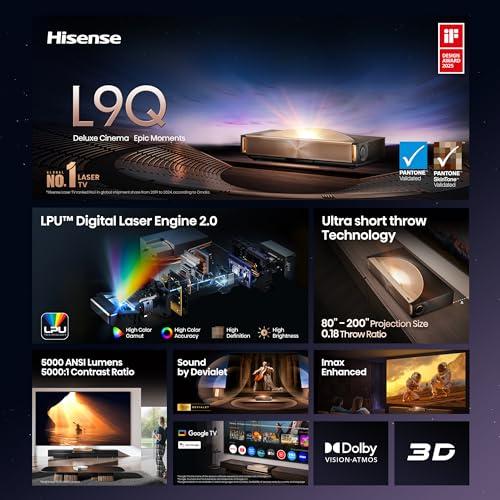
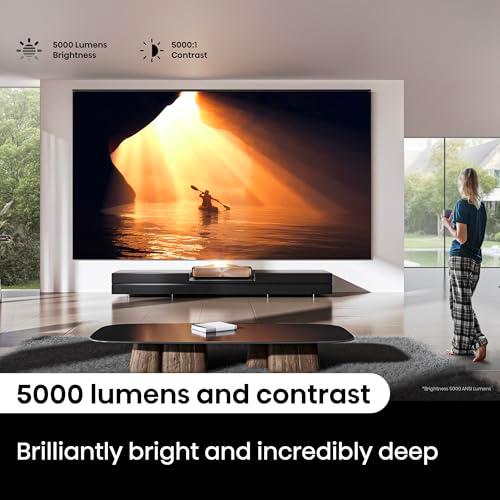
The L9Q delivers an impressive 5,000 ANSI lumens, while the Formovie 4K Max puts out 4,500 ANSI lumens. That 500-lumen difference might not sound huge, but in the projector world, it translates to noticeably better performance in bright rooms and the ability to go bigger with screen sizes.
From our research into user experiences and professional reviews, the L9Q consistently handles ambient light better. Users report being able to watch content comfortably during the day without closing all the blinds—something that's been a persistent challenge with projectors. The Formovie 4K Max is still quite bright by projector standards, but it benefits more from some light control for optimal viewing.
This brightness advantage becomes even more important when you consider screen size scaling. A 100-inch screen requires four times the light output of a 50-inch screen to maintain the same brightness per square inch. When you're pushing toward those impressive 150-200 inch screen sizes that UST projectors can achieve, every lumen counts.
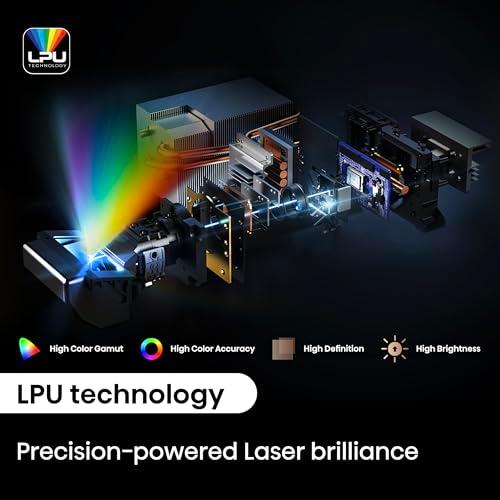
Here's where things get really interesting from a technical standpoint. The Hisense L9Q uses what they call a triple-laser system—separate red, green, and blue lasers that create incredibly pure colors. This is different from many projectors that use a single laser with a spinning color wheel to create different hues.
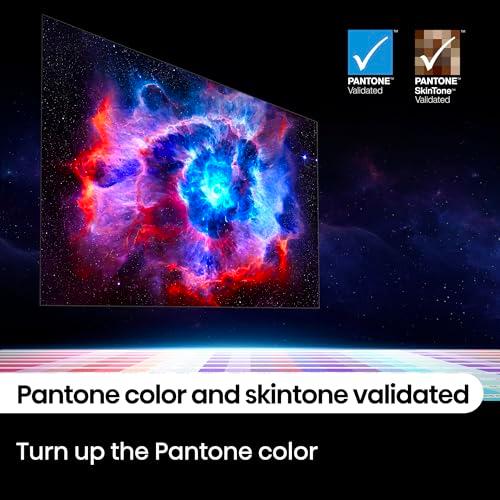
The result? The L9Q covers 110% of the BT.2020 color space, which is the standard for HDR content. To put this in perspective, most TVs struggle to hit even 90% of this standard. The Formovie 4K Max achieves 107% Rec.2020 coverage, which is still excellent but not quite at the same level.
What does this mean in practical terms? Colors look more vibrant and accurate, especially in HDR content. Red roses look genuinely red, not orange-ish. Skin tones appear natural rather than sickly. The L9Q even has Pantone validation, meaning it meets professional color accuracy standards used in graphic design and photography.
From user feedback we've analyzed, people consistently notice the difference when watching nature documentaries, animated films, or any content with rich, saturated colors. The Formovie 4K Max still delivers impressive color performance, but side-by-side comparisons tend to favor the Hisense model.
Contrast ratio—the difference between the brightest whites and deepest blacks—is crucial for image quality, especially in dark movie scenes. The Hisense L9Q achieves a 5,000:1 contrast ratio compared to the Formovie 4K Max's 3,000:1 ratio.
This technical advantage translates to more dramatic, cinematic images. Dark scenes in movies like "Dune" or "The Batman" maintain detail in shadows while keeping bright highlights punchy. The higher contrast ratio means you can make out subtle details in dark clothing or facial expressions that might get lost with lower contrast projectors.
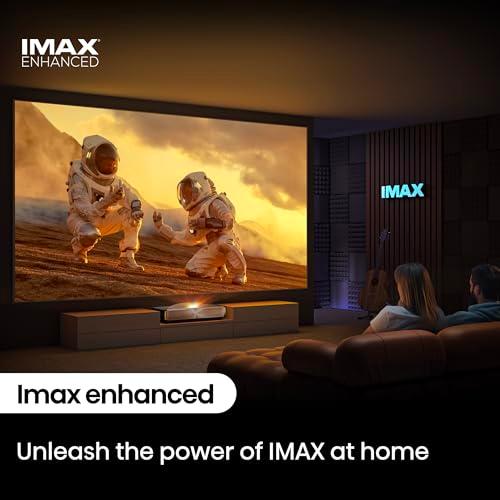
Both projectors support HDR (High Dynamic Range) content, but the L9Q supports more formats including Dolby Vision, HDR10+, and even IMAX Enhanced. These formats tell the projector exactly how bright or dark specific parts of the image should be, creating more realistic lighting that matches what filmmakers intended.
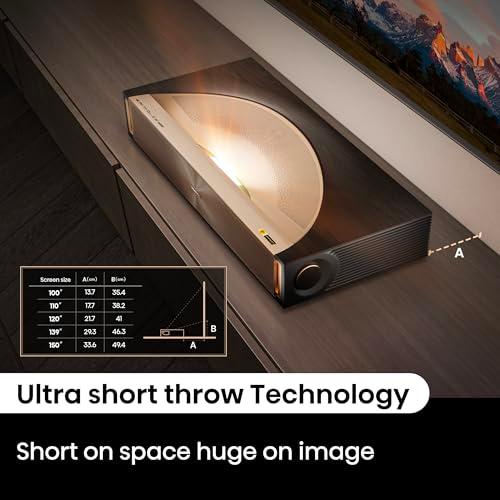
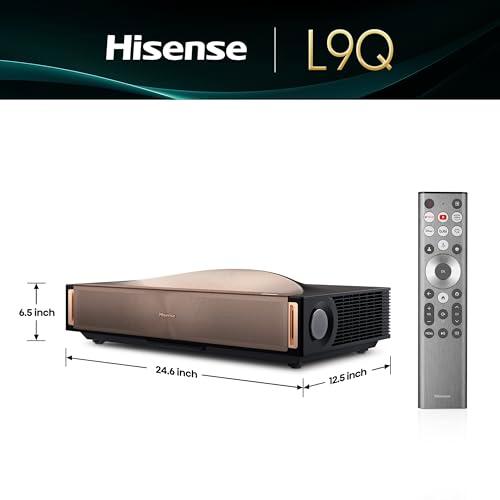
One of the biggest selling points of UST projectors is installation simplicity, but there are still meaningful differences. The Hisense L9Q has a 0.18:1 throw ratio, meaning it can create a 100-inch image from just 5.4 inches away from the wall. The Formovie 4K Max requires about 8 inches for the same size image with its 0.25:1 throw ratio.
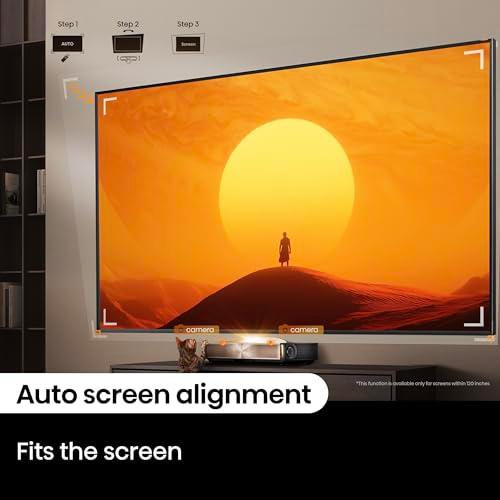
This might seem like a small difference, but those few extra inches can be the difference between fitting the projector on your TV stand or needing a custom cabinet. The L9Q also includes automatic screen fitting technology that uses built-in cameras to calibrate the image perfectly, while the Formovie relies on manual keystone correction.
Both projectors can theoretically create images up to 200 inches, though at the time of writing, most users seem to settle in the 100-150 inch range for optimal brightness and detail. The shorter throw ratio of the L9Q gives you more flexibility in room layouts and furniture placement.
Traditionally, projector audio has been an afterthought—tinny speakers that force you to invest in a separate sound system. Both of these models take audio seriously, but in very different ways.
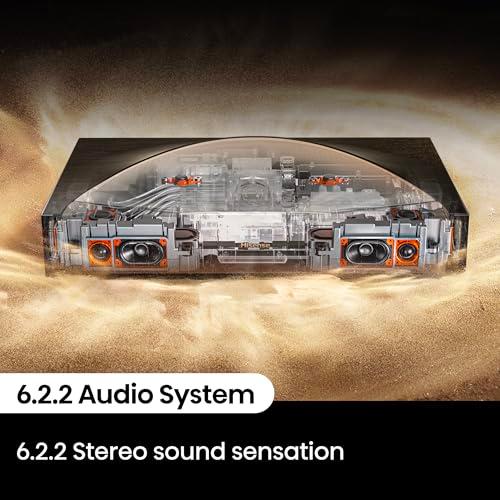
The Hisense L9Q includes a 116-watt, 6.2.2-channel sound system developed with Devialet, a premium French audio company. This isn't just stereo sound—it's a full surround system with upward-firing speakers for height effects and dedicated subwoofers for bass. The system supports Dolby Atmos, creating that overhead sound effect you get in movie theaters.
The Formovie 4K Max takes a more modest approach with dual 20-watt speakers tuned by Bowers & Wilkins, another respected audio brand. While the total power output is much lower at 40 watts versus 116 watts, the sound quality is still notably better than typical projector audio.
From user reports we've examined, the L9Q's audio system is genuinely good enough that many people skip adding a soundbar or separate speakers entirely. The Formovie produces quality sound but might leave you wanting more for action movies or music content.
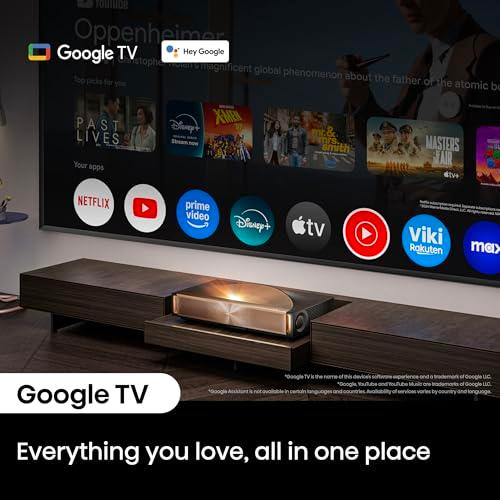
Both projectors run Android-based smart TV platforms, giving you access to Netflix, Disney+, and other streaming services without needing an external device. The L9Q runs Google TV, while the Formovie 4K Max uses Android TV 11.0.
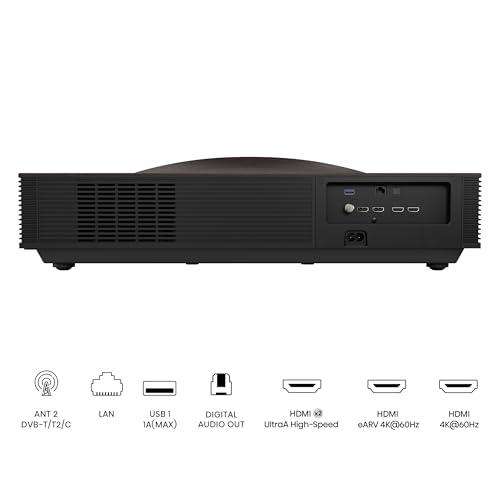
The connectivity story is where the Hisense pulls ahead with more modern standards. It includes Wi-Fi 6E (the latest wireless standard), Bluetooth 5.3, and four HDMI ports—two of which are HDMI 2.1 for next-generation gaming consoles. The Formovie offers solid but less cutting-edge connectivity with standard Wi-Fi, Bluetooth 4.1, and three HDMI ports.
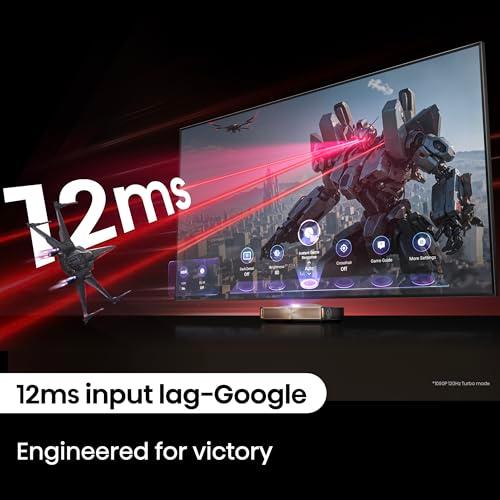
For gamers, this matters significantly. The L9Q supports 4K gaming at 120Hz from Xbox Series X or PlayStation 5, with input lag as low as 12ms in game mode. The Formovie handles gaming well but doesn't quite match these specifications.
Based on our analysis of user reviews and professional testing, some clear patterns emerge. The Hisense L9Q consistently receives praise for its brightness and color accuracy, with users frequently mentioning they can watch during the day without closing curtains. The automatic calibration features work well in practice, making setup genuinely simple.
The Formovie 4K Max earns positive reviews for delivering solid 4K performance at what's typically a more accessible price point. Users appreciate the build quality and Bowers & Wilkins audio tuning, though some mention needing to adjust settings for optimal color accuracy.
Both projectors benefit significantly from pairing with an appropriate ALR screen, which can cost several hundred to over a thousand dollars depending on size and quality. Without these screens, both lose some of their contrast and color advantages in bright rooms.
At the time of writing, the Hisense L9Q commands a premium price reflecting its flagship positioning in the UST market. The Formovie 4K Max typically costs less, though exact pricing varies by region and retailer.
The value equation comes down to what you prioritize. The L9Q delivers measurably superior performance across nearly every metric—brightness, color accuracy, contrast, audio quality, and connectivity. For enthusiasts who want the best possible UST projector experience and don't mind paying for it, the performance advantages justify the premium.
The Formovie 4K Max represents a different value proposition: very good performance that covers all the essential bases without the flagship price tag. For many users, its capabilities will be more than sufficient, especially if they're planning to add external speakers anyway or primarily watch content in controlled lighting.
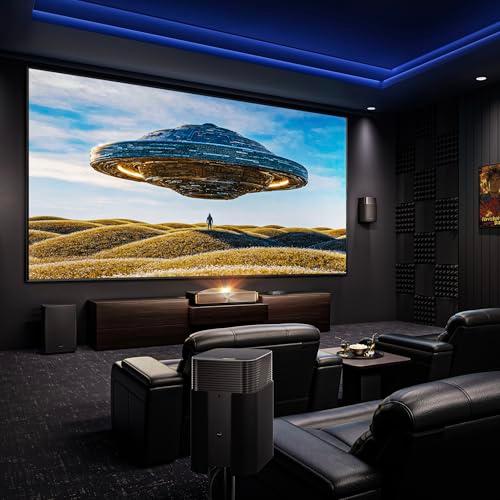
For dedicated home theater use, both projectors excel, but the Hisense L9Q has some advantages. The superior contrast ratio and HDR support create more cinematic images, especially in darker scenes. The integrated Dolby Atmos audio system can genuinely replace a separate sound system for many users, simplifying the setup considerably.
The Formovie 4K Max still creates an impressive theater experience, particularly when paired with a good ALR screen and external audio system. The slightly lower brightness and contrast aren't deal-breakers for most movie content, especially in dedicated theater rooms with controlled lighting.
Both projectors handle the technical requirements of modern streaming content well, supporting 4K HDR from all major services. The laser light sources are rated for 20,000+ hours of use, meaning you won't need to replace bulbs like traditional projectors.
The Hisense L9Q makes the most sense if you want the absolute best UST projector performance available, have a bright living room, prioritize built-in audio quality, or simply want the latest and greatest technology. It's the clear choice for enthusiasts and anyone who sees their projector as a long-term centerpiece of their entertainment system.
Choose the Formovie 4K Max if you want excellent UST performance at a more moderate price point, plan to use external speakers anyway, or have good control over room lighting. It's also a smart choice if you're newer to projectors and want to experience the UST advantage without the flagship investment.
Both projectors represent the current state of UST technology—vastly improved from the early models that appeared just a few years ago. The brightness levels, color accuracy, and smart features available today make them genuinely competitive with large premium TVs for the first time.
Ultimately, either projector will deliver an impressive big-screen experience that transforms how you watch movies, sports, and gaming content. The decision comes down to whether you want flagship performance or excellent value, and both approaches have their merits depending on your specific situation and budget.
| Hisense L9Q Triple Laser Ultra Short Throw Projector | Formovie 4K Max Ultra Short Throw Laser Projector |
|---|---|
| Brightness - Critical for ambient light performance and large screen sizes | |
| 5,000 ANSI lumens (industry-leading for bright rooms) | 4,500 ANSI lumens (very bright, some light control preferred) |
| Contrast Ratio - Determines how deep blacks look and overall image depth | |
| 5,000:1 (excellent dark scene detail) | 3,000:1 (good contrast performance) |
| Color Accuracy - How true-to-life colors appear, especially important for HDR content | |
| 110% BT.2020 with Pantone validation (professional-grade accuracy) | 107% Rec.2020 coverage (very good color reproduction) |
| Throw Ratio - How close the projector can sit to create large images | |
| 0.18:1 (100" image from 5.4" away - most flexible placement) | 0.25:1 (100" image from ~8" away - good but less flexible) |
| Audio System - Built-in sound quality and power | |
| 116W 6.2.2-channel Devialet system with Dolby Atmos | Dual 20W speakers (40W total) tuned by Bowers & Wilkins |
| HDR Format Support - Compatibility with premium streaming content | |
| Dolby Vision, HDR10+, HDR10, HLG, IMAX Enhanced | HDR10+, HLG support |
| Smart Platform - Built-in streaming and interface quality | |
| Google TV (certified) with full app ecosystem | Android TV 11.0 with standard app support |
| Gaming Features - Performance for console gaming | |
| 12ms input lag, HDMI 2.1, 4K/120Hz support | ALLM and MEMC support, good gaming performance |
| Connectivity - Ports and wireless standards | |
| 4x HDMI (2x HDMI 2.1), Wi-Fi 6E, Bluetooth 5.3 | 3x HDMI ports, standard Wi-Fi, Bluetooth 4.1 |
| Screen Size Range - Supported projection sizes | |
| 80-200 inches (optimized for very large screens) | 80-200 inches (best at moderate to large sizes) |
| Laser Technology - Light source type and color reproduction method | |
| Triple RGB pure laser system (no color wheel) | ALPD 4.0 RGB+ technology |
| Auto Calibration - Setup ease and image optimization | |
| Auto Screen Fit with camera-based calibration | Standard keystone correction |
The Hisense L9Q is brighter with 5,000 ANSI lumens compared to the Formovie 4K Max's 4,500 ANSI lumens. This 500-lumen difference makes the L9Q better for bright living rooms and larger screen sizes without needing to close curtains.
The Hisense L9Q covers 110% of the BT.2020 color space with Pantone validation, while the Formovie 4K Max achieves 107% Rec.2020 coverage. Both deliver excellent colors, but the L9Q offers slightly more accurate and vibrant reproduction, especially for HDR content.
The Hisense L9Q has a 0.18:1 throw ratio, creating a 100-inch image from just 5.4 inches away. The Formovie 4K Max needs about 8 inches for the same size with its 0.25:1 throw ratio. The L9Q offers more flexible placement options.
The Hisense L9Q features a 116W 6.2.2-channel Devialet system with Dolby Atmos, while the Formovie 4K Max has dual 20W speakers tuned by Bowers & Wilkins. The L9Q provides significantly more powerful surround sound that can replace external speakers for many users.
Yes, both the Hisense L9Q and Formovie 4K Max deliver true 4K (3840x2160) resolution using DLP technology with pixel shifting. Both create sharp, detailed images suitable for large screen viewing.
The Hisense L9Q offers superior gaming performance with 12ms input lag, HDMI 2.1 ports, and 4K/120Hz support for next-gen consoles. The Formovie 4K Max supports gaming well with ALLM and MEMC features, but lacks the advanced connectivity of the L9Q.
The Hisense L9Q runs Google TV with full access to streaming apps, while the Formovie 4K Max uses Android TV 11.0. Both provide access to Netflix, Disney+, and other major services without needing external devices.
The Hisense L9Q delivers superior contrast with a 5,000:1 ratio compared to the Formovie 4K Max's 3,000:1 ratio. This means the L9Q shows deeper blacks and more detail in dark scenes, making it better for home theater use.
Both the Hisense L9Q and Formovie 4K Max support screen sizes from 80 to 200 inches. However, the L9Q's higher brightness makes it more suitable for the largest screen sizes while maintaining good image quality.
The Hisense L9Q supports Dolby Vision, HDR10+, HDR10, HLG, and IMAX Enhanced formats. The Formovie 4K Max supports HDR10+ and HLG. The L9Q offers broader compatibility with premium streaming content.
The Hisense L9Q provides more modern connectivity with four HDMI ports (two HDMI 2.1), Wi-Fi 6E, and Bluetooth 5.3. The Formovie 4K Max offers three HDMI ports with standard Wi-Fi and Bluetooth 4.1 connectivity.
The Formovie 4K Max typically offers better value for budget-conscious buyers who want solid 4K UST performance. The Hisense L9Q provides premium features and superior performance across all categories, making it worthwhile for enthusiasts who want the best possible experience.
We've done our best to create useful and informative comparisons to help you decide what product to buy. Our research uses advanced automated methods to create this comparison and perfection is not possible - please contact us for corrections or questions. These are the sites we've researched in the creation of this article: chrismajestic.com - shop.hisense-usa.com - tomsguide.com - valueelectronics.com - techradar.com - whathifi.com - youtube.com - projectorscreen.com - projectorscreen.com - hisense-usa.com - youtube.com - projectorcentral.com - youtube.com - hisense-usa.com - manuals.plus - shop.avispl.com - hisense-usa.com - rtings.com - eu.formovie.com - notebookcheck.net - formovie.com - techradar.com - projectorcentral.com - projectorscreen.com - projectorcentral.com - projectorreviews.com - projectorcentral.com - formovie.com

Privacy Policy
Terms and Conditions - Affiliate Policy
Home Security
© Copyright 2008-2026.
11816 Inwood Rd #1211, Dallas, TX 75244