

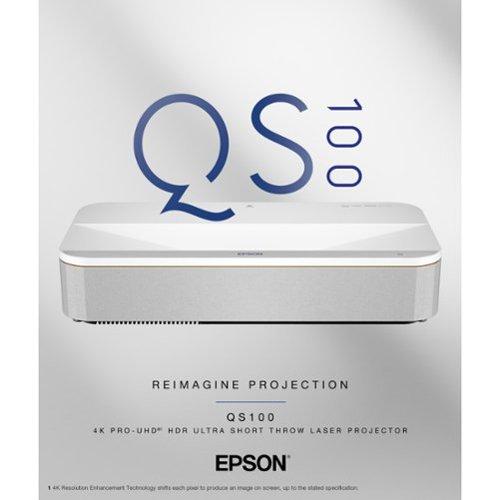
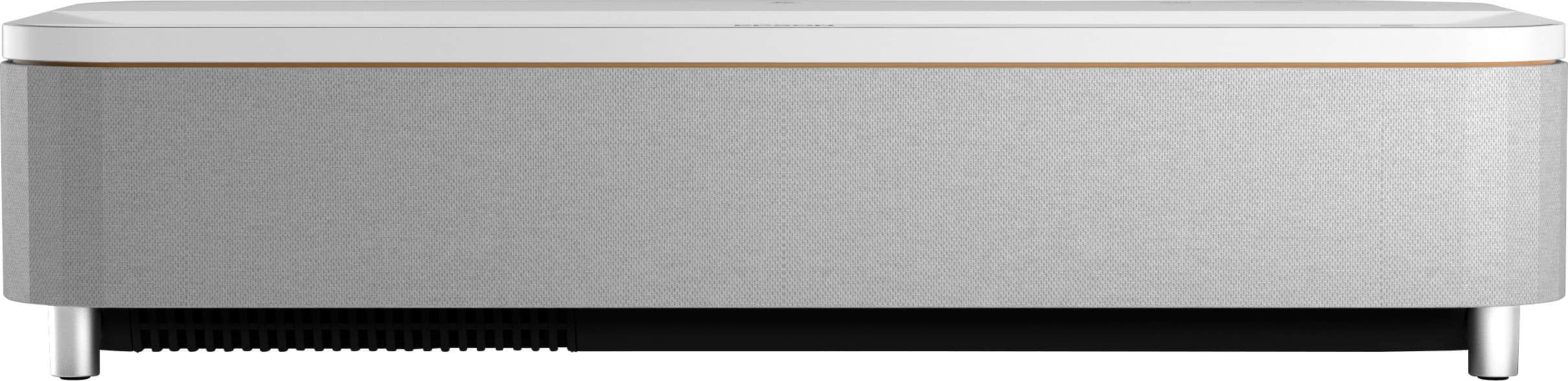
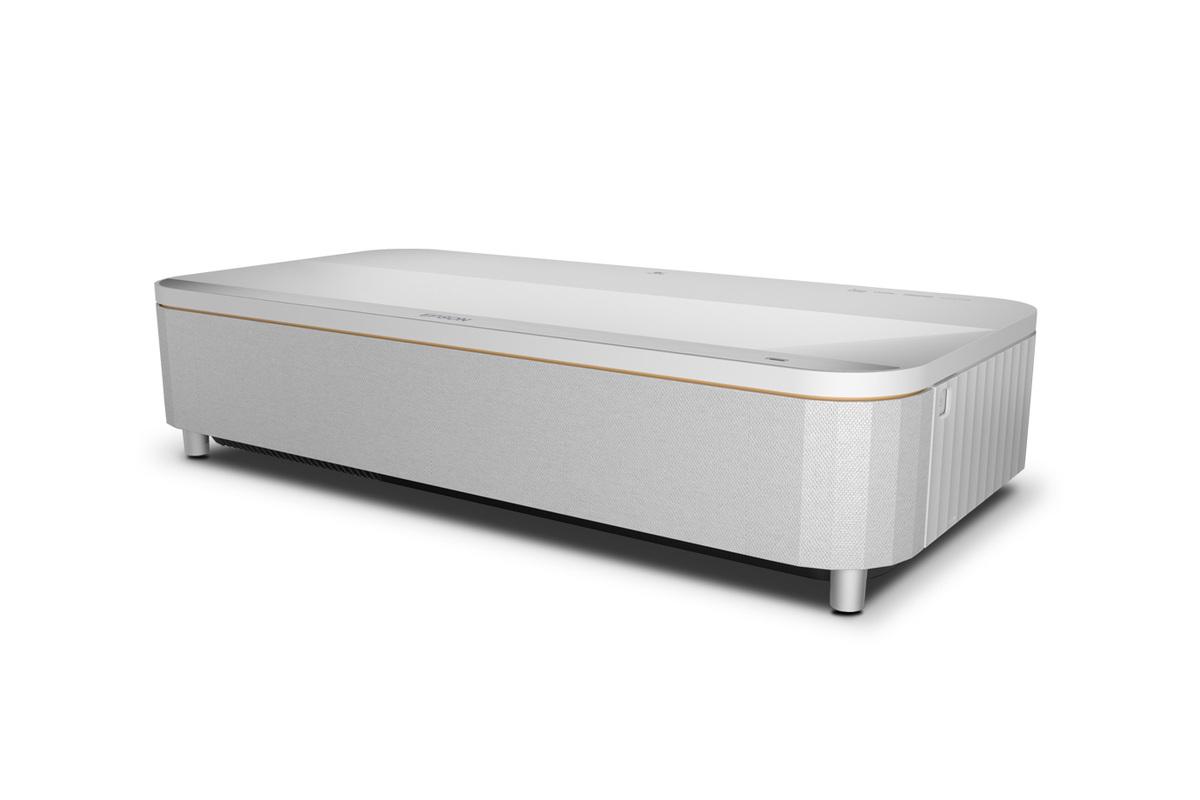
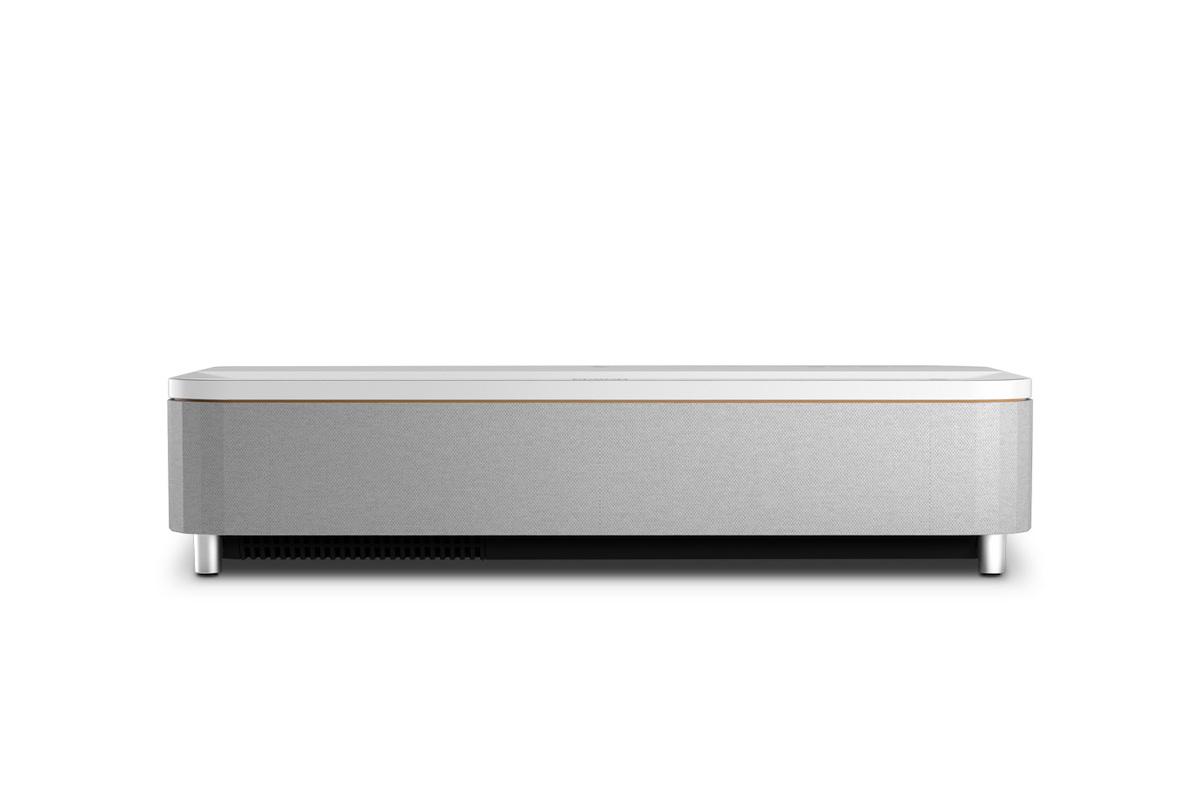
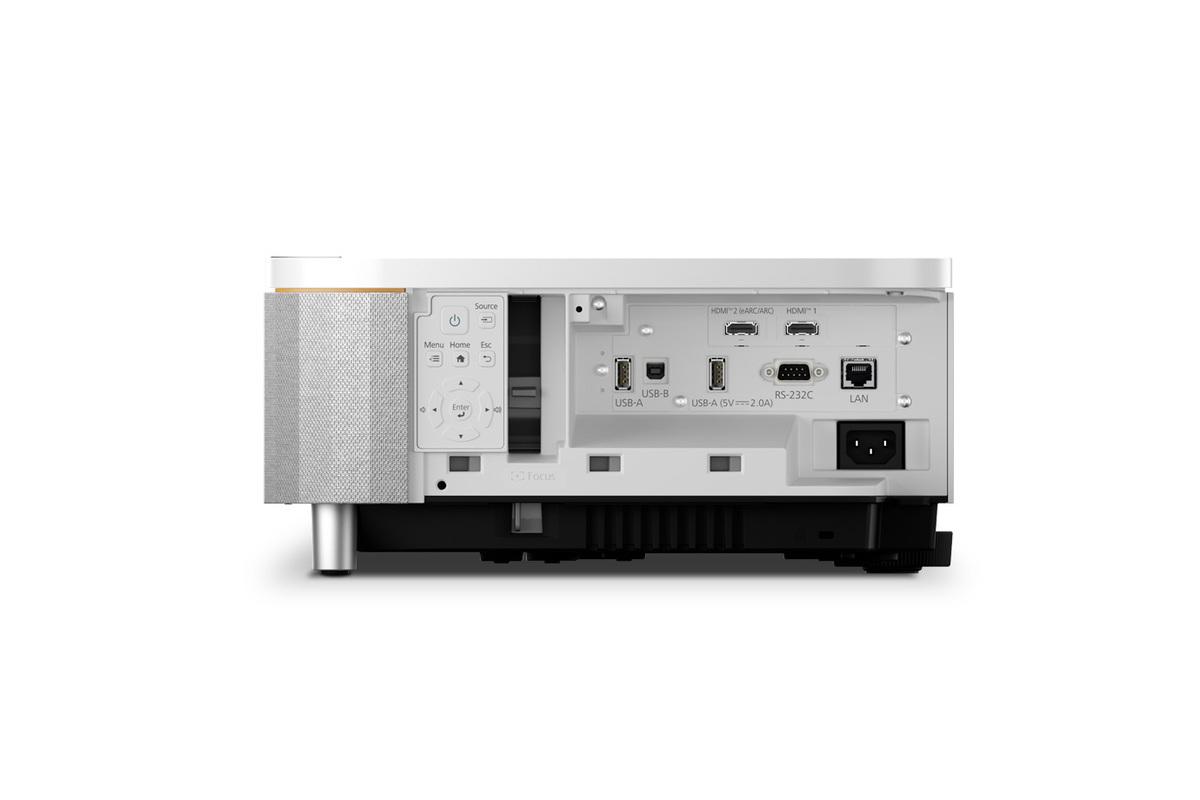
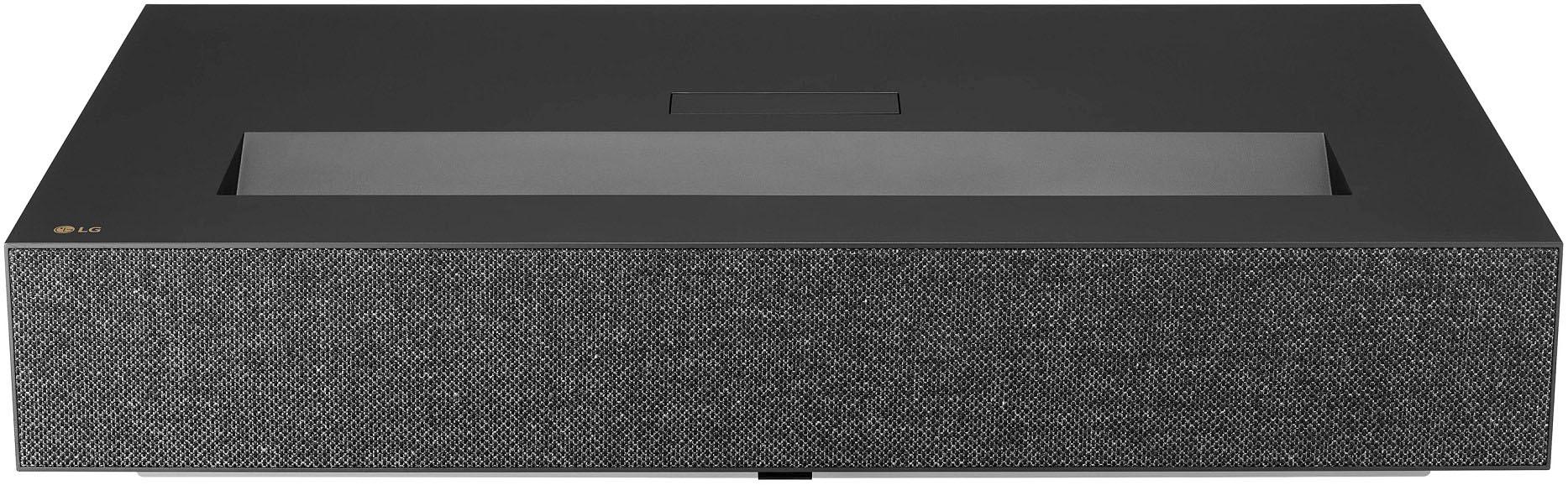
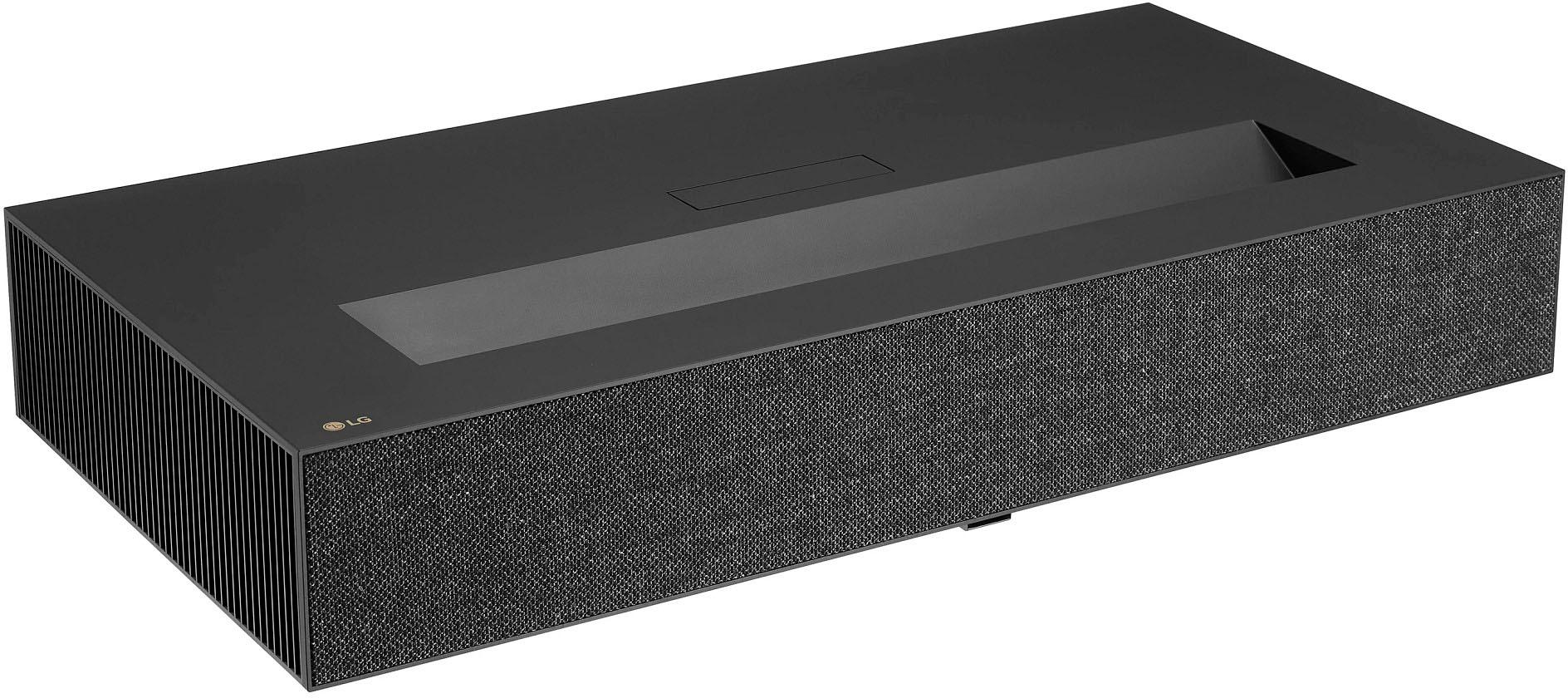
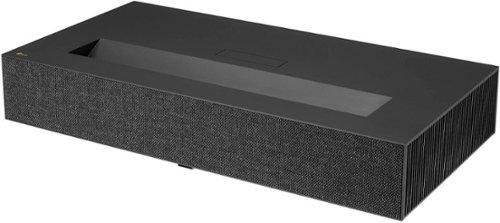
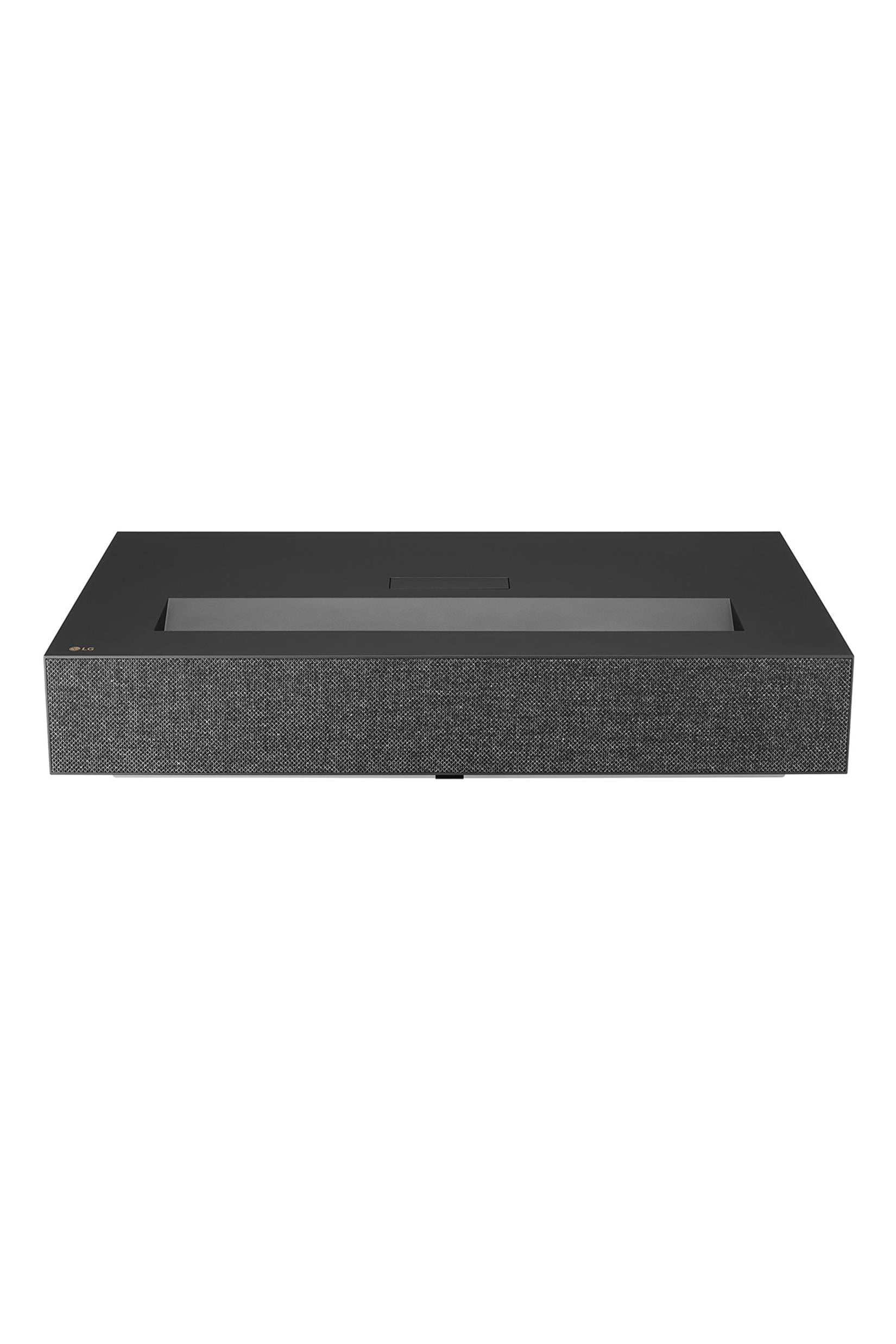
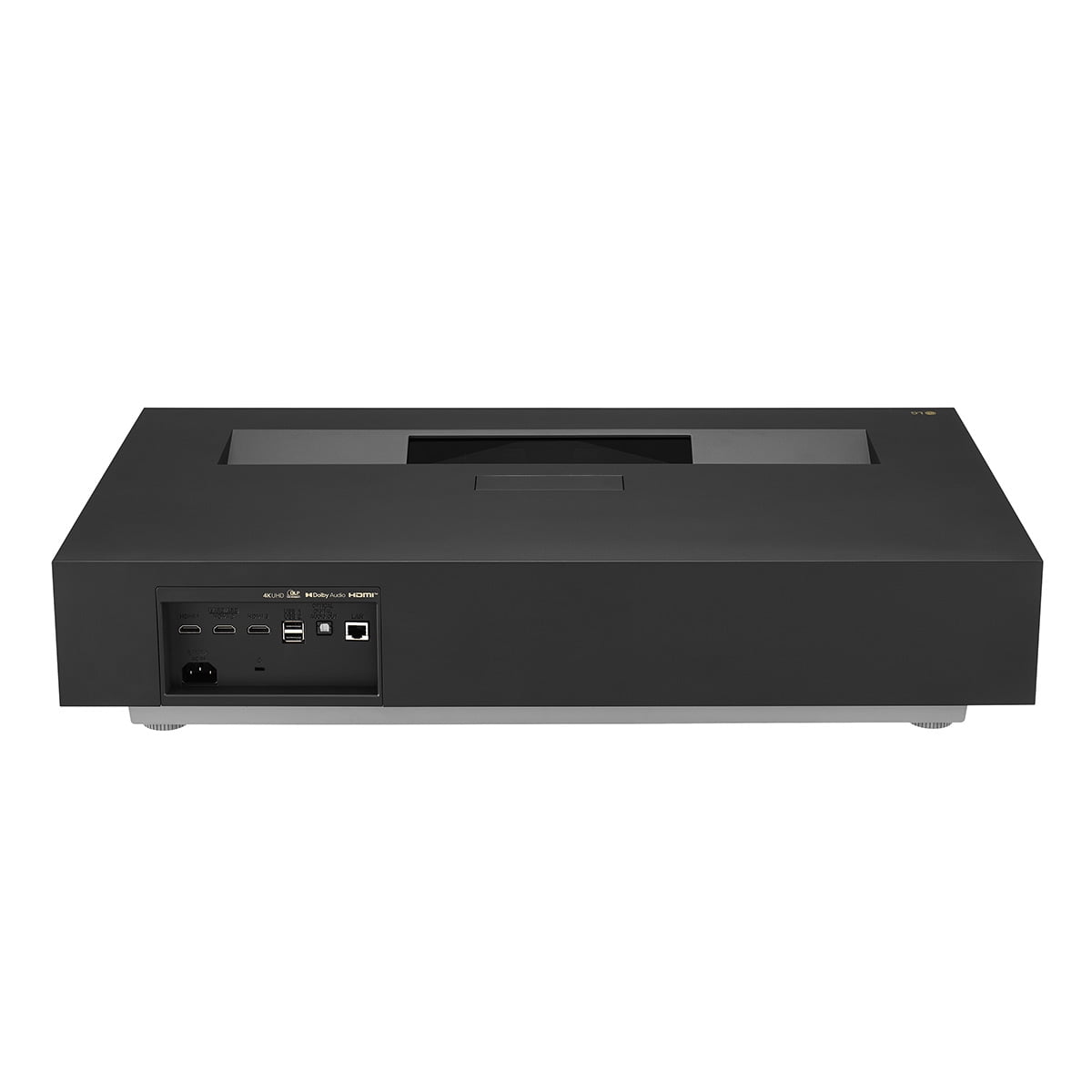
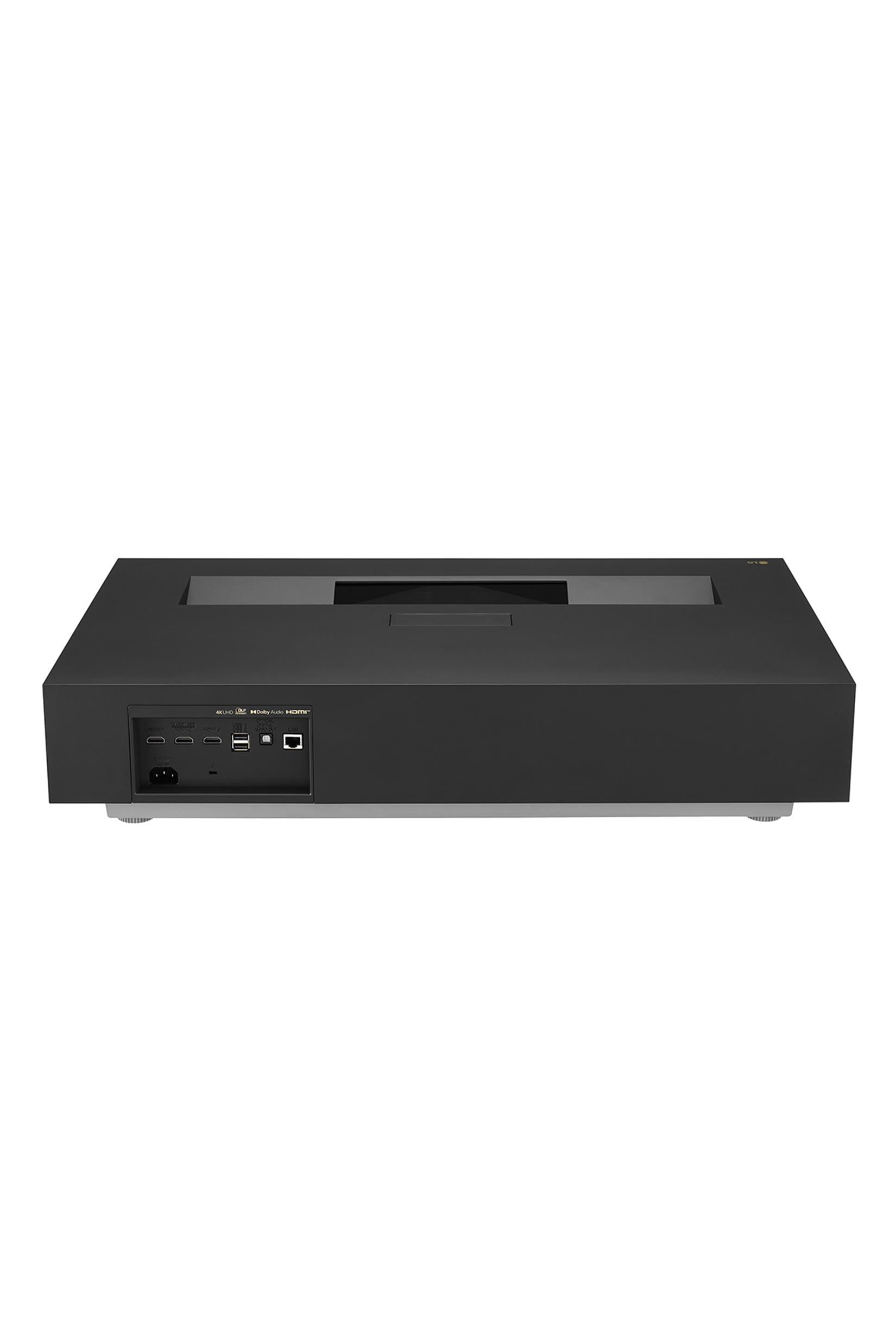
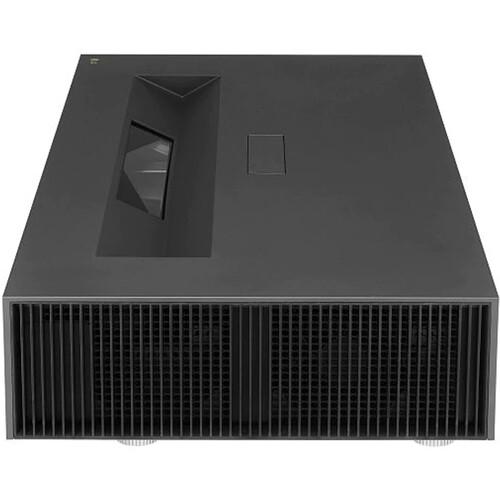
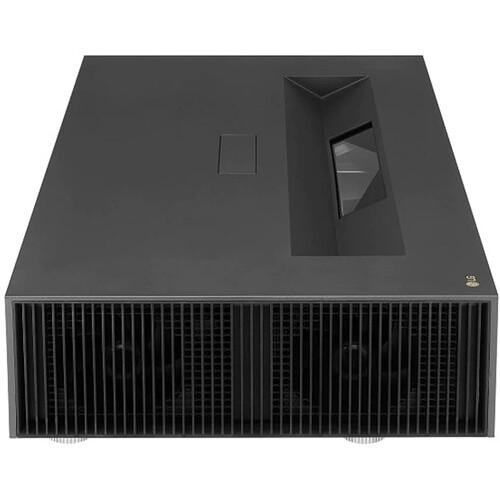
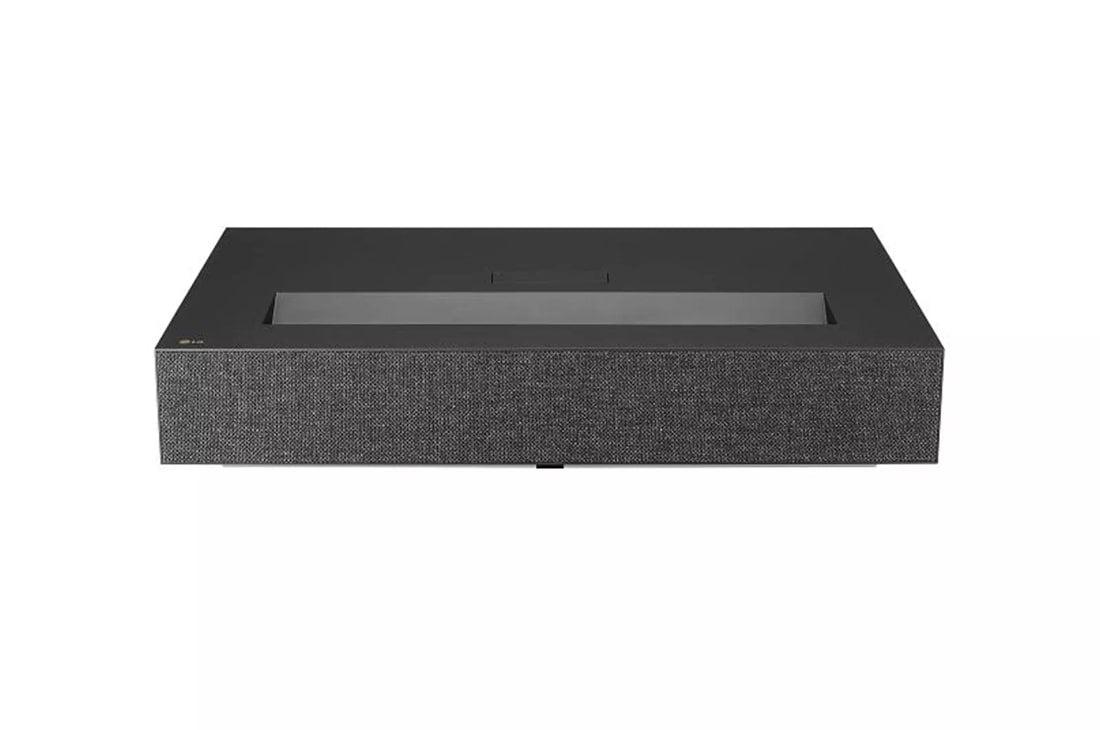
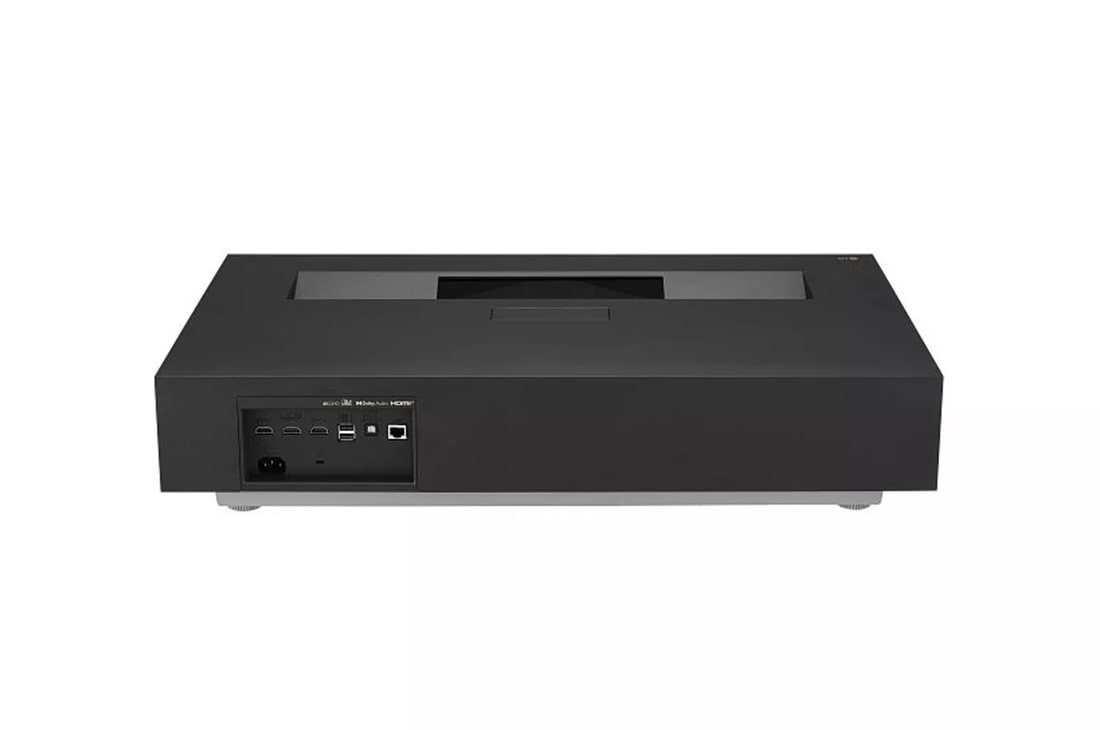
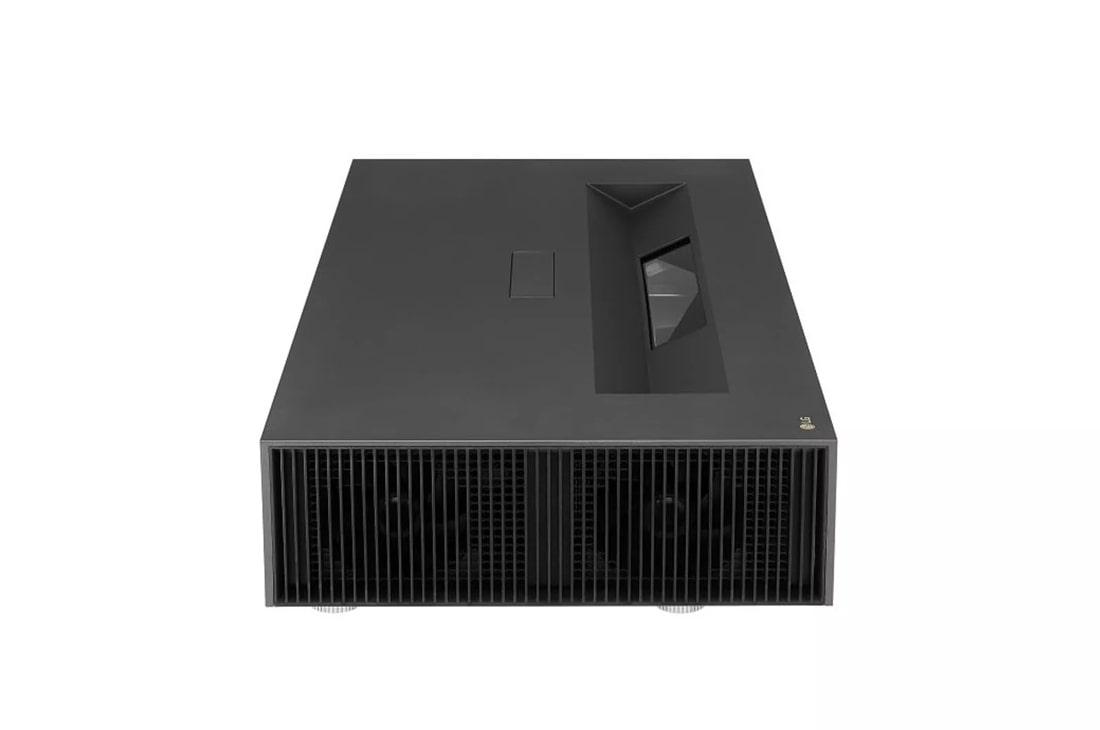
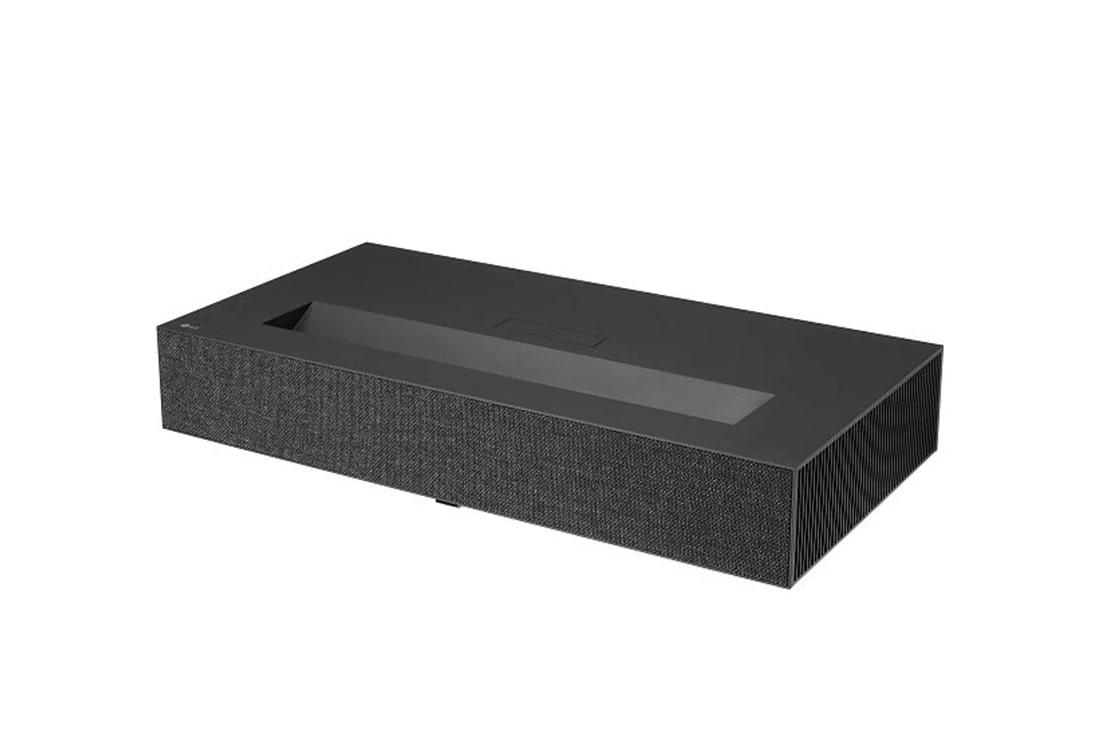
If you've ever dreamed of having a massive 150-inch screen in your living room without mounting a giant TV on the wall, ultra short throw projectors might be exactly what you're looking for. These fascinating devices sit just inches from your wall and beam enormous, crisp images that can transform any room into a home theater. Today we're comparing two standout models: the Epson QS100 and the LG CineBeam HU915QB.
Before diving into these specific projectors, let's understand what makes ultra short throw (UST) technology special. Traditional projectors need to be mounted on your ceiling or placed far across the room, creating shadows when people walk by and requiring complex installations. UST projectors flip this concept entirely—they sit on a TV stand or low cabinet, just inches from the screen, and use specialized lenses to project upward and create massive images.
The magic happens through precision optics that can take light from a small projector and spread it across a huge surface from an extremely short distance. Think of it like a flashlight with a special lens that creates a perfect rectangle of light on the wall instead of a circular beam. The "throw ratio" measures this capability—a 0.19:1 ratio means the projector creates a 100-inch image when placed just 19 inches from the wall.
The Epson QS100, released in 2025, represents Epson's latest thinking about bright-room projection. At the time of writing, it costs significantly less than its main competitor while delivering exceptional brightness—the key metric for projectors that need to compete with TVs in well-lit living rooms.
The LG CineBeam HU915QB, available since 2022, takes a different approach. LG focused on creating the most accurate, cinema-like image possible, even if it means sacrificing some brightness. Professional reviewers have consistently praised its image quality, with some calling it the best UST projector they've tested for pure picture performance.
These different philosophies create an interesting choice: do you want maximum brightness to watch during the day, or do you prioritize the most accurate colors and contrast for evening viewing?
One of the biggest technical differences between these projectors lies in how they create sharp images. The LG HU915QB uses true native 4K resolution, meaning it has 3,840 x 2,160 individual pixels—over 8 million tiny points of light that each display a unique color.
The Epson QS100 takes a different approach called "4K PRO-UHD with pixel shifting." Instead of having 8 million physical pixels, it uses three high-quality 1080p panels (each with about 2 million pixels) and rapidly shifts them to create the appearance of higher resolution. This technique, sometimes called "wobulation," moves the image slightly between frames to fill in additional detail.
While purists prefer true native 4K, the practical difference is smaller than you might expect. At normal viewing distances—say, 10-12 feet from a 120-inch screen—most people struggle to see the difference between good pixel shifting and native 4K. The Epson's 3LCD technology also eliminates a common issue with single-chip DLP projectors: rainbow artifacts, those brief flashes of color that some viewers notice during fast-moving scenes.
For most users, the Epson's resolution will look impressively sharp, but pixel-peepers and those sitting very close to large screens will appreciate the LG's genuine 4K clarity.
Here's where the Epson QS100 truly shines—literally. With 4,500 lumens of brightness, it's one of the brightest UST projectors available. To put this in perspective, most premium TVs produce between 100-400 nits of brightness, while a bright projector image can maintain clarity even with room lights on and windows uncovered.
The LG HU915QB produces 3,000 ANSI lumens, which is still quite bright by projector standards but represents a significant 33% difference. In a dark room, both projectors look spectacular. But turn on some lights or open the curtains during an afternoon movie, and the Epson maintains its punch while the LG starts to look washed out.
This brightness difference fundamentally changes how you can use these projectors. The Epson can truly replace your TV for all-day viewing, handling everything from morning news to afternoon sports without requiring you to dim the lights. The LG performs best in the evening or in rooms where you can control ambient light.
However, there's a trade-off here that's important to understand. Higher brightness often comes at the cost of contrast—the difference between the brightest whites and deepest blacks. The Epson achieves its impressive brightness through a single blue laser with phosphor technology, which can't quite match the deep blacks possible with the LG's more sophisticated triple laser system.
The LG CineBeam HU915QB uses what's called a "triple laser" system—separate red, green, and blue lasers that combine to create every color in the image. This approach offers several advantages: incredibly pure colors, the ability to display 100% of the DCI-P3 color space (the standard used in movie theaters), and precise control over each color's intensity.
The Epson QS100 uses Epson's refined 3LCD technology with a blue laser and phosphor wheel system. While this creates vibrant, accurate colors that avoid the rainbow artifacts some people see with DLP projectors, it can't quite match the color purity of separate laser sources.
In practical terms, the LG displays more natural skin tones, richer reds, and more subtle color gradations. If you're watching a nature documentary with lush green forests or a Marvel movie with rich costume details, the LG will render these colors more accurately. The Epson still produces beautiful, vibrant images, but they lean slightly toward the "vivid TV display" look rather than the "accurate cinema" presentation.
High Dynamic Range (HDR) content contains much more information about brightness and color than standard video, allowing for incredibly realistic images with bright highlights and detailed shadows. Both projectors support HDR10 and HLG formats, but they handle this challenging content differently.
The LG HU915QB includes advanced HDR processing with frame-by-frame tone mapping, meaning it analyzes each scene individually and adjusts the brightness and contrast accordingly. This sophisticated approach helps maintain detail in both bright and dark areas simultaneously—crucial for HDR content that might show a sunset through a window while keeping indoor details visible.
The Epson QS100 also features dynamic tone mapping through its QZX Picture Processor, a specialized chip designed to optimize image quality in real-time. While not quite as sophisticated as the LG's implementation, it still delivers impressive HDR performance, particularly benefiting from the projector's high brightness ceiling.
Neither projector supports Dolby Vision, the premium HDR format, which is somewhat disappointing given their price points at the time of writing. However, the vast majority of HDR content uses HDR10, so this limitation rarely affects real-world viewing.
Modern gaming demands low input lag—the delay between pressing a button and seeing the result on screen. Both projectors include Auto Low Latency Mode (ALLM), which automatically switches to optimized gaming settings when they detect a gaming console.
The LG HU915QB offers slightly more advanced gaming features, including HDMI 2.1 connectivity and optimized gaming picture modes. Its input lag in gaming mode measures around 20-25 milliseconds, which is excellent for casual gaming and acceptable even for competitive play.
The Epson QS100 supports 4K gaming at 60Hz and 2K gaming at 120Hz, covering the capabilities of current gaming consoles. While specific input lag measurements weren't available in our research, similar Epson models typically perform well in gaming scenarios.
For most gamers, either projector will provide an impressive large-screen gaming experience that feels responsive and immersive.
This represents one of the clearest philosophical differences between these projectors. The LG CineBeam HU915QB includes LG's webOS smart TV platform, complete with Netflix, Disney+, Amazon Prime Video, and other streaming apps built-in. It comes with LG's Magic Remote, supports voice commands, and functions as a complete entertainment center out of the box.
The Epson QS100 deliberately omits smart TV features, instead focusing on professional integration capabilities. It's designed to work with external streaming devices like Apple TV, Roku, or gaming consoles, and includes advanced control options for custom installation companies.
For most users, the LG's approach offers immediate convenience—you can set it up and start watching Netflix within minutes. The Epson's approach requires additional equipment but offers more flexibility and typically better long-term reliability, since you can upgrade your streaming device independently of your projector.
The LG HU915QB includes a built-in 40-watt stereo speaker system that's surprisingly capable for a projector. While it won't match a dedicated sound bar or surround system, it provides adequate audio for casual viewing and eliminates the need for additional equipment.
The Epson QS100 notably lacks built-in speakers entirely. This might seem like a disadvantage, but it reflects the projector's focus on custom installations where external audio systems are expected. Both projectors support eARC (enhanced Audio Return Channel), allowing them to send high-quality audio, including Dolby Atmos, to compatible sound bars or AV receivers.
Both projectors excel at easy installation compared to traditional ceiling-mounted models. The Epson QS100 offers a slightly more flexible throw ratio range (0.16:1 to 0.22:1), meaning you can adjust the image size more precisely by moving the projector closer or farther from the wall.
The LG HU915QB has a fixed 0.19:1 throw ratio, requiring more precise placement but still offering excellent flexibility for most room layouts.
For optimal performance in bright rooms, both projectors benefit from specialized ALR (Ambient Light Rejecting) screens, which can cost several hundred to thousands of dollars but dramatically improve image quality by reflecting room light away while preserving the projected image.
Both projectors use laser light sources rated for approximately 20,000 hours of use—roughly 10-15 years of typical viewing. Unlike traditional lamp-based projectors, they turn on instantly, require no warm-up time, and maintain consistent brightness throughout their lives.
The Epson QS100 benefits from Epson's extensive service network and focus on professional installation support. The LG HU915QB relies on LG's consumer electronics support structure, which varies by region but generally provides adequate coverage.
The Epson QS100 makes the most sense for users who want to replace their TV entirely and watch content throughout the day. If you have a bright living room, large windows, or simply prefer not to dim lights for viewing, its superior brightness makes it the clear choice. It's also ideal for custom installations where professional control integration matters more than built-in smart features.
The LG CineBeam HU915QB appeals to users who prioritize image quality above all else and typically watch in controlled lighting conditions. If you're building a dedicated home theater, care deeply about color accuracy, or want the convenience of built-in smart TV features, the LG's premium approach justifies its higher cost at the time of writing.
These projectors represent two excellent but different approaches to large-screen entertainment. The Epson QS100 prioritizes versatility and brightness, making it better suited for living room TV replacement. The LG CineBeam HU915QB focuses on premium image quality and convenience, appealing to home theater enthusiasts who want the most accurate picture possible.
Neither choice is wrong—it depends entirely on your room, viewing habits, and priorities. If you watch a lot during the day or in bright rooms, the Epson will provide a more satisfying experience. If you typically watch in the evening and want the most cinema-like image quality, the LG delivers results that rival much more expensive projection systems.
The ultra short throw projector market has matured significantly, and both of these models represent excellent examples of how this technology can provide massive screen experiences without the complexity of traditional projection systems.
| Epson QS100 4K PRO-UHD Ultra Short Throw Projector | LG CineBeam HU915QB 4K UHD Laser Projector |
|---|---|
| Brightness - Most critical spec for daytime viewing and TV replacement | |
| 4,500 lumens (exceptional for bright rooms, no ALR screen required) | 3,000 ANSI lumens (good brightness but benefits from ALR screens in bright rooms) |
| Resolution Technology - Affects image sharpness and detail | |
| 4K PRO-UHD with pixel-shifting (enhanced 1080p that closely approximates 4K) | True native 4K (3840×2160 physical pixels for maximum detail clarity) |
| Display Technology - Impacts color accuracy and rainbow artifacts | |
| 3LCD with blue laser phosphor (no rainbow artifacts, vibrant colors) | Single DLP with triple laser system (superior color accuracy, potential minor rainbows) |
| HDR Support - Important for streaming content and gaming | |
| HDR10, HLG with dynamic tone mapping (good HDR processing) | HDR10, HLG, HGiG with advanced frame-by-frame tone mapping (excellent HDR) |
| Throw Ratio - Determines placement flexibility | |
| 0.16:1 to 0.22:1 (more flexible positioning, digital zoom adjustment) | 0.19:1 fixed (requires precise placement but still very close to wall) |
| Maximum Image Size - How big your screen can be | |
| 160 inches (largest available screen size) | 120 inches typical (smaller maximum but still cinema-sized) |
| Smart TV Features - Affects convenience and additional equipment needs | |
| None (requires external streaming devices like Apple TV or Roku) | webOS built-in (Netflix, Disney+, streaming apps included with Magic Remote) |
| Audio System - Determines if you need external speakers | |
| No built-in speakers (designed for external audio systems) | 40W stereo speakers built-in (adequate for casual viewing) |
| Gaming Features - Important for console gamers | |
| ALLM, 4K/60Hz, 2K/120Hz support (good gaming performance) | ALLM, HDMI 2.1, optimized gaming modes (slightly better gaming features) |
| Color Gamut - Affects color accuracy for movies and content | |
| BT.2020 support with 3LCD technology (very good color reproduction) | 100% DCI-P3 with triple laser (cinema-grade color accuracy) |
| Contrast Ratio - Important for dark scenes and overall image depth | |
| 5,000,000:1 dynamic (good blacks but limited by single laser design) | 2,000,000:1 dynamic with adaptive control (superior natural contrast) |
| Professional Integration - Matters for custom installations | |
| Crestron, Control4, PJLink support with IP control (designed for integrators) | Standard consumer connectivity (basic integration capabilities) |
| Light Source Lifespan - Long-term ownership costs | |
| 20,000 hours laser life (10-15 years typical use) | 20,000 hours laser life (10-15 years typical use) |
The Epson QS100 is significantly brighter at 4,500 lumens compared to the LG CineBeam HU915QB at 3,000 lumens. This 1,500-lumen difference makes the Epson QS100 much better for watching TV during the day or in rooms with lots of windows. If you want to replace your regular TV and watch content with lights on, the Epson is the clear winner.
The LG CineBeam HU915QB has true native 4K resolution with 3,840 x 2,160 physical pixels. The Epson QS100 uses 4K PRO-UHD technology with pixel-shifting to enhance 1080p panels. While both look very sharp, the LG provides slightly better detail for those who sit close to large screens or want absolute maximum sharpness.
For a dedicated home theater with controlled lighting, the LG CineBeam HU915QB is typically the better choice. It offers superior color accuracy, deeper contrast, and more natural image quality that's closer to a cinema experience. The Epson QS100 excels in bright rooms but the LG provides more cinematic image quality in dark environments.
Both are ultra short throw projectors that sit very close to the wall. The Epson QS100 has a flexible throw ratio of 0.16:1 to 0.22:1, while the LG CineBeam HU915QB has a fixed 0.19:1 ratio. This means both can create a 100-inch image from roughly 16-22 inches away from the screen.
While both projectors can project on a white wall, they perform much better with an ALR (Ambient Light Rejecting) screen. This is especially important for the LG CineBeam HU915QB in bright rooms. The Epson QS100 can work well on a plain wall due to its higher brightness, but an ALR screen still improves the image quality significantly.
The LG CineBeam HU915QB includes webOS smart TV platform with Netflix, Disney+, Amazon Prime Video, and other streaming apps built-in. The Epson QS100 has no smart TV features and requires external devices like Apple TV, Roku, or gaming consoles for streaming content.
The LG CineBeam HU915QB includes 40-watt stereo speakers that provide decent sound for casual viewing. The Epson QS100 has no built-in speakers and requires external audio equipment. Both support eARC for connecting to sound bars or AV receivers.
Both projectors offer good gaming performance with Auto Low Latency Mode (ALLM). The LG CineBeam HU915QB has a slight edge with HDMI 2.1 and more gaming-specific features. The Epson QS100 supports 4K/60Hz and 2K/120Hz gaming. Either will provide an excellent large-screen gaming experience.
Both the Epson QS100 and LG CineBeam HU915QB use laser light sources rated for approximately 20,000 hours. This translates to 10-15 years of typical use without needing replacement. Unlike traditional projector bulbs, these lasers maintain consistent brightness throughout their lifespan.
The LG CineBeam HU915QB has superior color accuracy thanks to its triple laser system (separate red, green, blue lasers) that covers 100% of the DCI-P3 color space used in cinemas. The Epson QS100 produces vibrant, pleasing colors with its 3LCD technology but can't quite match the color purity of the LG's laser system.
The Epson QS100 is better suited for TV replacement due to its exceptional brightness and ability to perform well in bright rooms throughout the day. The LG CineBeam HU915QB can replace a TV but works best when you can control room lighting or primarily watch in the evening.
The Epson QS100 typically offers better value for most users, providing exceptional brightness and performance for TV replacement at a lower cost. The LG CineBeam HU915QB costs more but delivers premium image quality and built-in smart features that justify the higher price for home theater enthusiasts who prioritize picture quality above all else.
We've done our best to create useful and informative comparisons to help you decide what product to buy. Our research uses advanced automated methods to create this comparison and perfection is not possible - please contact us for corrections or questions. These are the sites we've researched in the creation of this article: projectorscreen.com - youtube.com - projectorcentral.com - projectorreviews.com - techradar.com - audioadvice.com - projectorreviews.com - avsforum.com - projectorcentral.com - mediaserver.goepson.com - projectorcentral.com - news.epson.com - epson.eu - epson.com - epson.eu - epson.com - projectorcentral.com - bestbuy.com - projectorreviews.com - bestbuy.com - techradar.com - hometheaterforum.com - projectorcentral.com - projectorcentral.com - vividstorm.eu - lg.com - billsmith.com - queencityonline.com - projectorscreen.com

Privacy Policy
Terms and Conditions - Affiliate Policy
Home Security
© Copyright 2008-2026.
11816 Inwood Rd #1211, Dallas, TX 75244