



Ultra short throw projectors have revolutionized how we think about home entertainment. Instead of mounting a projector on your ceiling or placing it across the room, these clever devices sit just inches from your wall or screen, creating massive 100+ inch displays that would make any TV jealous. But with premium models like the Hisense L9Q and Formovie Theater Premium commanding serious investment, choosing the right one requires understanding what separates good from exceptional.
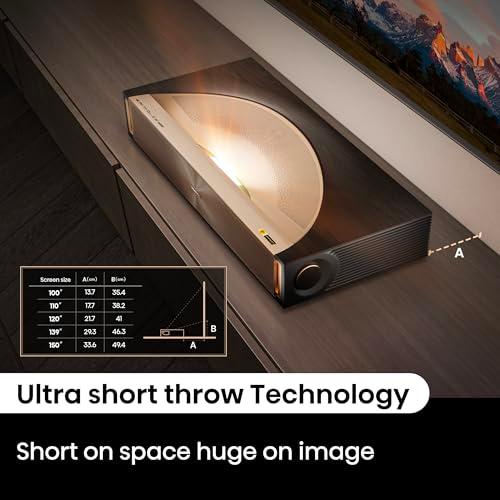
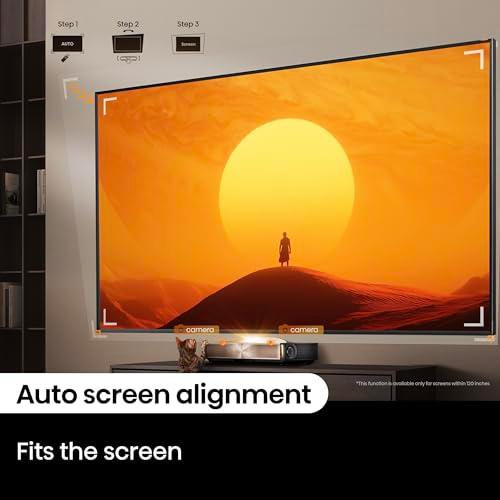
Before diving into specifics, it's worth understanding why ultra short throw (UST) projectors represent such a leap forward. Traditional projectors require significant throw distance—the space between the projector and screen—often needing 8-12 feet for a 100-inch image. UST projectors flip this equation, using specialized wide-angle lenses and mirrors to create the same massive image from just 5-6 inches away from the wall.
This proximity brings multiple advantages: no shadows when someone walks in front of the screen, no ceiling mounting complications, and dramatically reduced light pollution hitting the lens directly. The trade-off is complexity—UST projectors require precise engineering to maintain image quality across such extreme angles, which explains why premium models command higher prices.
The most critical factors when evaluating any UST projector include brightness (measured in lumens), contrast ratio (the difference between the darkest and brightest parts of an image), color accuracy, and throw ratio (how close the projector can sit to create a given screen size). These specifications directly impact real-world performance more than marketing features.
The Hisense L9Q, released in 2024, represents Hisense's flagship entry into the premium UST market. It's positioned as a no-compromise solution targeting users who want the absolute best performance regardless of cost. Meanwhile, the Formovie Theater Premium, also launching in 2024, takes a more balanced approach, delivering high-end features with particular attention to gaming performance and overall value.
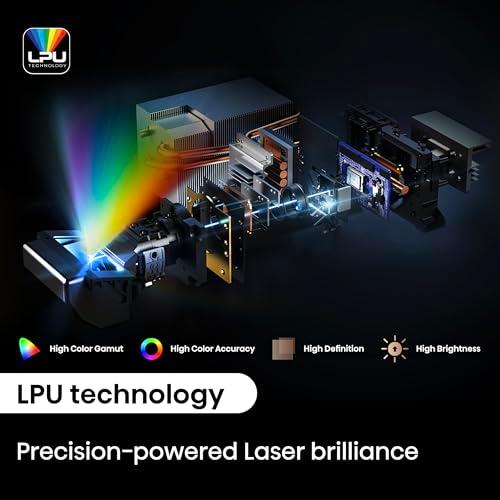
Both projectors use triple-laser technology—separate red, green, and blue lasers instead of traditional lamp-based systems. This approach eliminates the spinning color wheel found in many projectors, reducing rainbow effects (brief color flashes some people notice) while enabling wider color reproduction and longer lifespan. However, their implementation of this technology differs significantly.
Perhaps no specification matters more for UST projectors than brightness, measured in lumens. Unlike traditional projectors used in dark dedicated theaters, UST models often live in family rooms with windows, ambient lighting, and daily use. Here, the Hisense L9Q establishes clear dominance.
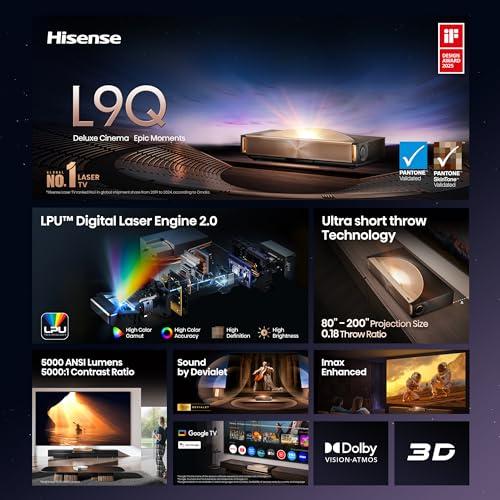
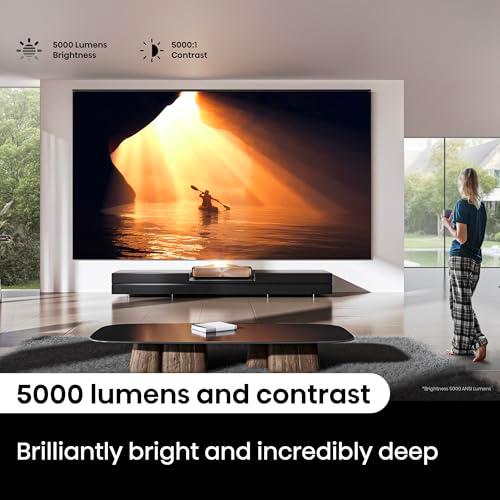
The L9Q's 5,000 ANSI lumens output represents the highest brightness available in consumer UST projectors as of 2024. ANSI lumens provide a more accurate brightness measurement than standard lumens because they account for color accuracy—many projectors can appear brighter by skewing toward yellow-green, where human eyes are most sensitive, but this distorts color reproduction.
To put this in perspective, most premium TVs peak around 1,000-4,000 nits (a different but related brightness measurement), while typical UST projectors range from 2,000-3,500 lumens. The L9Q's brightness advantage becomes apparent in challenging conditions: bright living rooms, daytime viewing, or when using screens larger than 120 inches.
The Formovie Theater Premium, at 2,200 ISO lumens, offers solid performance that exceeds its predecessor by 400 lumens—a meaningful 22% increase. ISO lumens use a slightly different measurement standard but correlate closely with ANSI lumens for comparison purposes. This brightness level handles most home environments well, particularly with ambient light rejecting (ALR) screens that reflect ceiling light away while preserving the projected image.
However, the brightness gap matters most for specific use cases. If you're planning a 150+ inch screen, have large windows, or frequently watch during daylight hours, the L9Q's advantage becomes decisive. For controlled lighting environments with screens under 120 inches, the Theater Premium's brightness proves more than adequate while preserving other benefits.
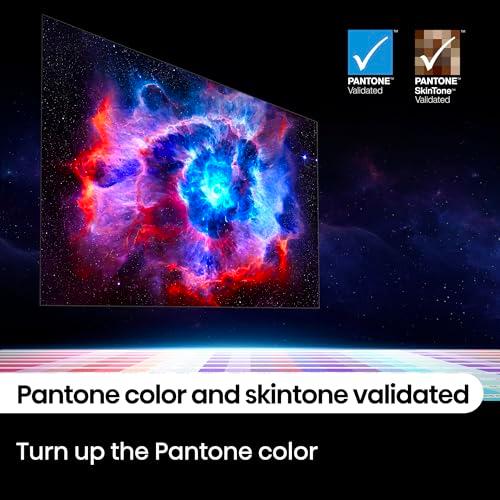
Color reproduction separates premium projectors from budget alternatives, and both models excel here, though with different strengths. The Hisense L9Q covers 110% of the BT.2020 color space—the standard for 4K HDR content—and carries Pantone validation, meaning professional colorists can trust its accuracy for reference work.
BT.2020 represents the widest color standard currently used for consumer content, encompassing colors human eyes can see but previous display technologies couldn't reproduce. Covering 110% of this space means the L9Q can display colors even more saturated than content creators intended, providing headroom for accurate reproduction across varying content types.
The Pantone validation particularly matters for anyone serious about color accuracy. Pantone, the company behind standardized color matching used in printing and design, certifies displays that can accurately reproduce their color palette. This validation indicates factory calibration quality that typically costs extra on other displays.
The Formovie Theater Premium achieves 107% BT.2020 coverage using its ALPD 4.0 RGB+ technology—still excellent by industry standards and noticeably superior to most TVs, which typically manage 90-95% coverage. The "RGB+" designation indicates enhancements to Formovie's parent company Appotronics' core laser technology, improving purity and reducing speckle (tiny shimmering dots some people notice on laser projectors).
Both projectors benefit from triple-laser design eliminating color wheels, but their calibration approaches differ. The L9Q emphasizes out-of-box accuracy, while the Theater Premium offers good baseline performance that benefits from professional calibration for optimal results.
Contrast ratio—the difference between pure black and pure white—determines how cinematic images appear. Higher contrast creates more three-dimensional-looking images, better shadow detail, and more impactful HDR content. Native contrast (measured with all processing disabled) provides the most meaningful comparison.
The Hisense L9Q achieves a native 5,000:1 contrast ratio, exceptional for such a bright projector. Typically, brightness and contrast trade off against each other—making images brighter often reduces black depth. The L9Q's ability to maintain deep blacks while producing 5,000 lumens represents sophisticated laser control and optical engineering.
The Formovie Theater Premium delivers 3,000:1 native contrast, which remains impressive for its brightness class. This ratio produces satisfying black levels in darkened rooms and good shadow detail, though not quite reaching the L9Q's cinematic depth.
Real-world contrast performance depends heavily on ambient light conditions. In bright rooms, both projectors' contrast appears similar because ambient light raises black levels regardless of native specifications. The L9Q's advantage becomes most apparent in darkened home theaters, where its superior blacks create more film-like image depth.
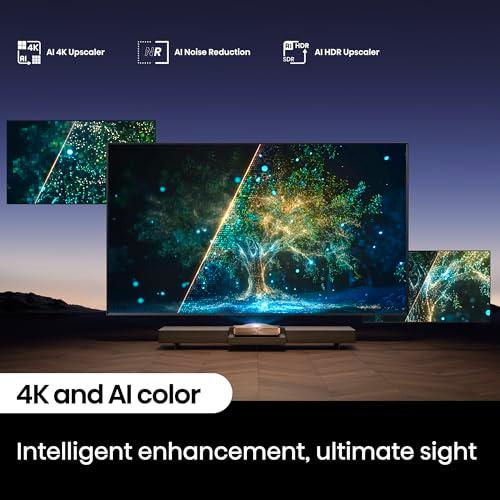
HDR (High Dynamic Range) content particularly benefits from higher contrast ratios. HDR encodes much wider brightness ranges than standard content, requiring displays capable of showing both bright highlights and dark shadows simultaneously. The L9Q's higher contrast ratio translates this HDR information more effectively, creating more impactful scenes with better detail preservation in both highlights and shadows.
Gaming performance has become increasingly important for projectors as consoles like PlayStation 5 and Xbox Series X push 4K gaming into mainstream adoption. Input lag—the delay between controller input and screen response—matters most for gaming, particularly in competitive scenarios.
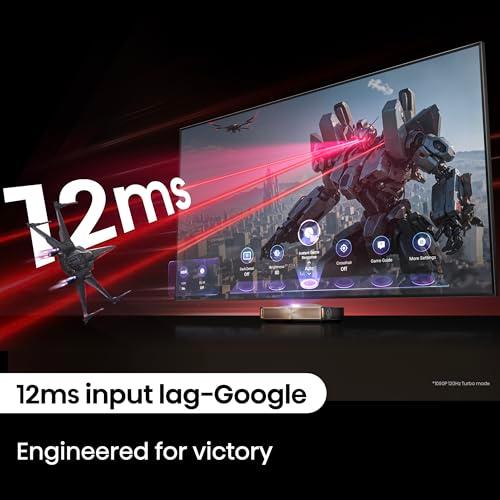
Here, the Formovie Theater Premium demonstrates its gaming focus with sub-18ms input lag across various resolutions. This performance rivals dedicated gaming monitors and represents meaningful improvement over the original Theater model. The projector also supports ALLM (Auto Low Latency Mode), automatically switching to game mode when compatible consoles are detected.
The Hisense L9Q achieves 12ms input lag in its dedicated gaming mode—technically superior but within the margin where most players won't notice practical differences. Both projectors support HDMI 2.1 features essential for modern gaming: 4K/60fps, VRR (Variable Refresh Rate) for smoother gameplay, and ALLM for automatic optimization.
For serious gamers, the Theater Premium's specific gaming optimizations and track record of performance consistency might edge out the L9Q's slightly lower measured lag. However, both deliver gaming experiences superior to most TVs, which often struggle with 30-50ms lag in picture-perfect modes.
Built-in audio represents one of UST projectors' most underappreciated advantages. Traditional projector setups require separate audio systems, adding complexity and cost. Both models include integrated sound systems, but with dramatically different approaches.
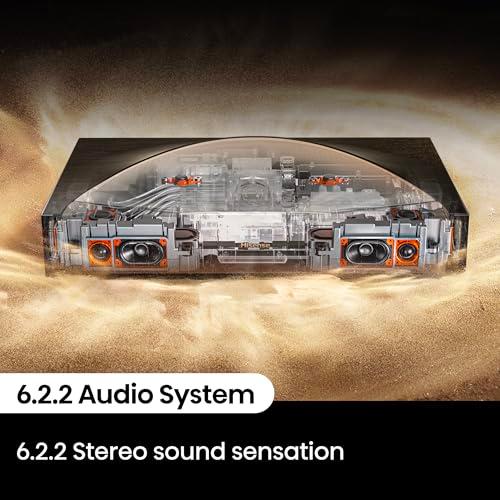
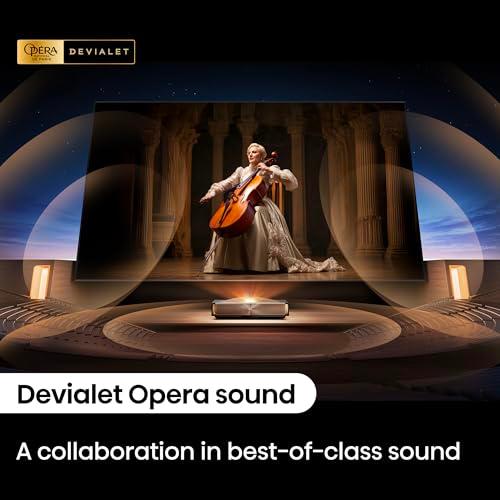
The Hisense L9Q incorporates a 116W 6.2.2-channel system developed with Devialet, a premium French audio company. This isn't typical projector audio—it's a legitimate surround sound system supporting Dolby Atmos and DTS:X, professionally tuned by acoustics experts at Paris's Opera House.
The "6.2.2" designation indicates six main channels, two subwoofer channels, and two height channels for three-dimensional audio. This configuration creates genuinely immersive soundscapes that many users find adequate for primary audio needs, eliminating external speaker requirements entirely.
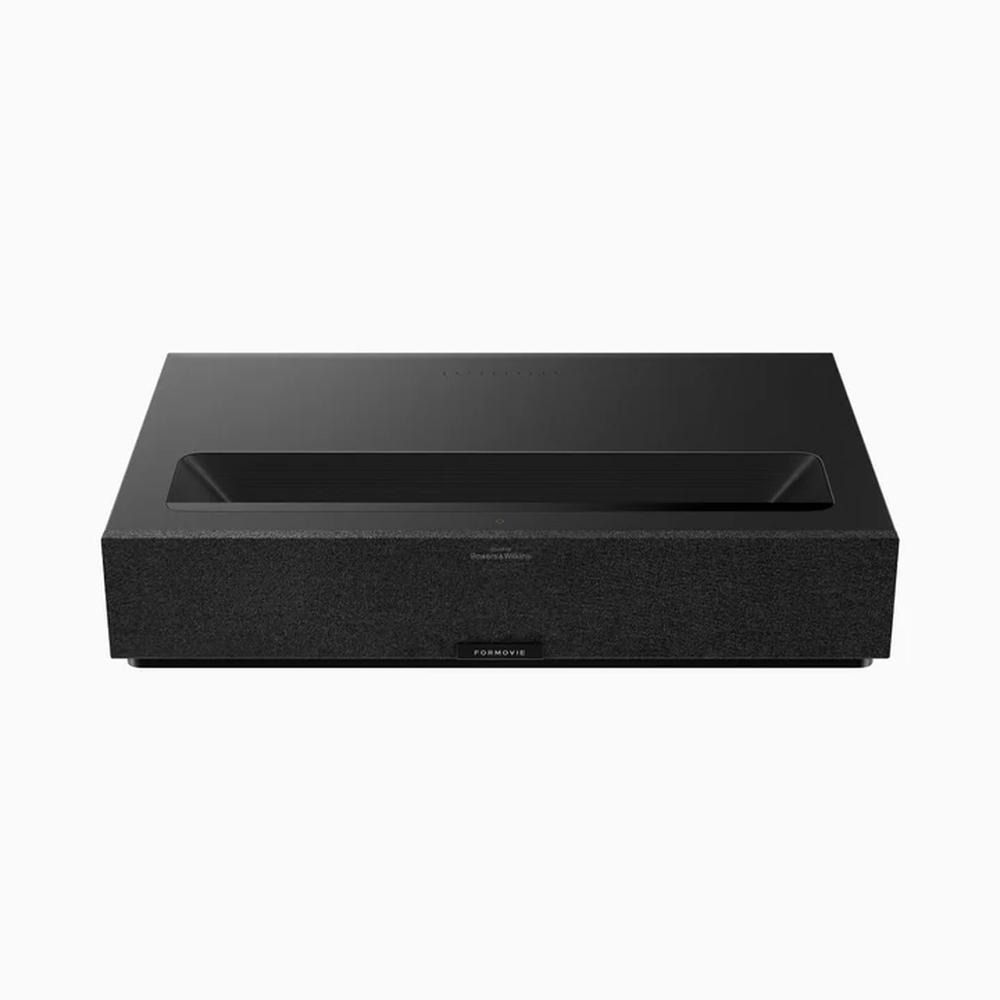
The Formovie Theater Premium features a 30W system (15W x2) developed with Bowers & Wilkins, another respected audio company. This represents meaningful improvement over typical projector audio and handles dialog clarity and basic music reproduction well. However, it functions more like high-quality TV speakers than a dedicated audio system.
For most users, the L9Q's audio integration represents significant additional value, potentially eliminating $500-2000+ in separate audio equipment costs. The Theater Premium's audio works well for casual viewing but likely requires external speakers for serious home theater applications.
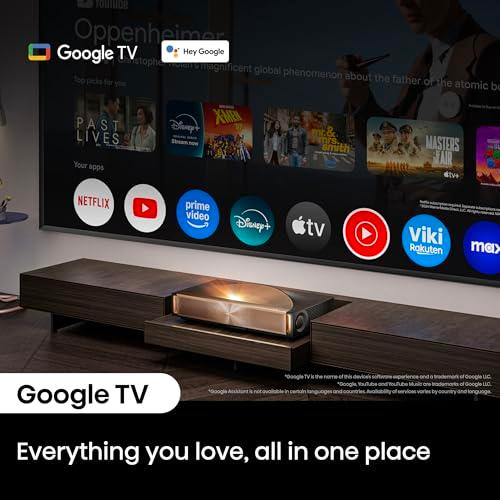
Both projectors run Google TV, providing access to Netflix, Disney+, Amazon Prime Video, and other streaming services without external devices. This represents a major convenience advantage over traditional projectors requiring separate streaming devices or complex connectivity.
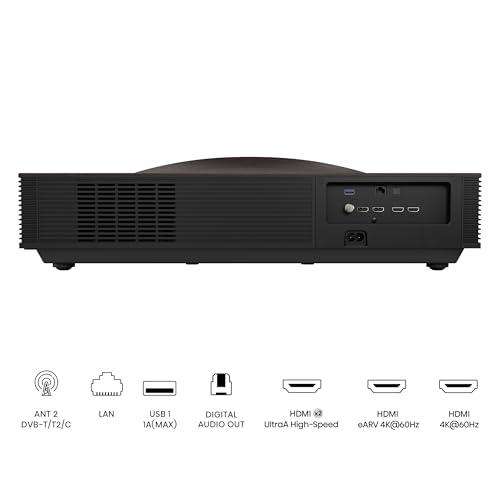
The Hisense L9Q includes comprehensive connectivity with multiple HDMI 2.1 ports, USB inputs, Ethernet, Wi-Fi 6E, and Bluetooth 5.3. The multiple HDMI 2.1 ports particularly matter for users with gaming consoles, 4K Blu-ray players, and streaming devices all requiring high-bandwidth connections.
The Formovie Theater Premium offers similar smart features with Google TV integration, though specific connectivity details vary. Both projectors include voice control through Google Assistant and support for casting from mobile devices.
The smart TV experience eliminates much of the complexity traditionally associated with projector setup. Users can unbox either device, connect power and internet, and begin streaming content immediately—a dramatic improvement over previous projector generations requiring multiple external devices.
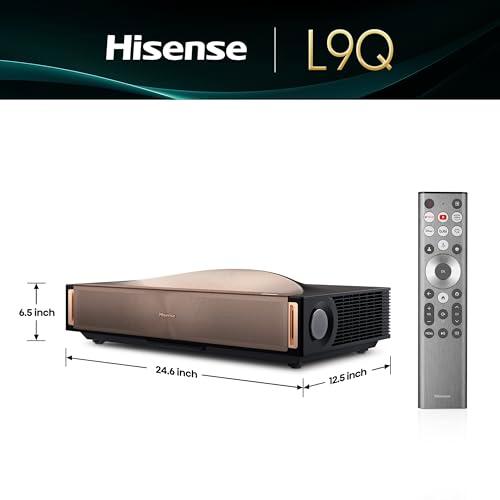
Installation requirements often determine projector practicality. The Hisense L9Q offers a 0.18:1 throw ratio, creating a 100-inch image from just 5.4 inches away from the screen. This extremely short throw distance provides maximum flexibility for furniture placement and room layouts.
The Formovie Theater Premium uses a 0.21:1 throw ratio, requiring slightly more distance but still qualifying as ultra-short throw. For a 100-inch screen, it needs approximately 7-8 inches from the wall—a small difference in most practical installations.
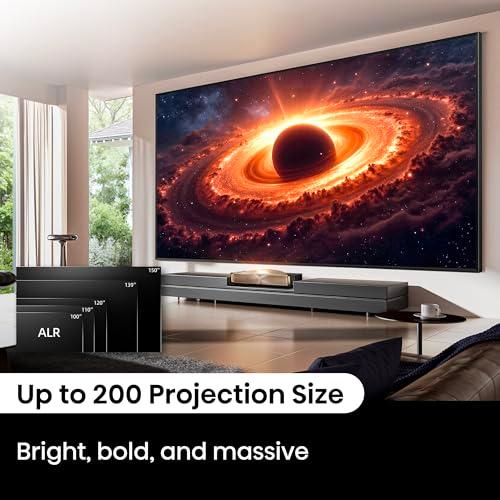
Both projectors support screen sizes from 80-150+ inches, though the L9Q extends to 200 inches effectively due to its higher brightness. Larger screens require proportionally more brightness to maintain image quality, giving the L9Q advantages for users wanting truly massive displays.
Screen choice significantly impacts both projectors' performance. Ambient light rejecting (ALR) screens, while adding cost, dramatically improve contrast and brightness in normal room lighting. Fixed-frame screens provide the best image quality, while retractable options offer flexibility for multi-purpose rooms.
As of late 2024, the Hisense L9Q positions itself in the premium UST segment, commanding pricing that reflects its flagship specifications. The Formovie Theater Premium offers high-end performance at a more accessible price point, typically priced significantly lower than the L9Q while delivering most users' performance requirements.
Value calculations must consider total system cost. The L9Q's integrated premium audio might eliminate $500-1500+ in separate audio equipment, partially offsetting its higher initial cost. Its extreme brightness also reduces dependency on expensive ALR screens for acceptable daytime performance.
The Theater Premium's gaming optimizations and proven reliability (its predecessor won multiple awards) provide value for users prioritizing balanced performance over ultimate specifications. Its lower power consumption and heat generation might also reduce long-term operating costs.
Both projectors offer substantially better value than equivalent-sized premium TVs when considering screen size. A 100-inch premium TV costs significantly more than either projector plus screen combination, assuming such large TVs are available at all.
Choose the Hisense L9Q if you want the absolute best UST projector performance available. Its combination of extreme brightness, superior color accuracy, high contrast, and integrated premium audio creates a no-compromise entertainment system. It's ideal for users with bright rooms, plans for very large screens (150+ inches), or those who value having the latest technology regardless of cost.
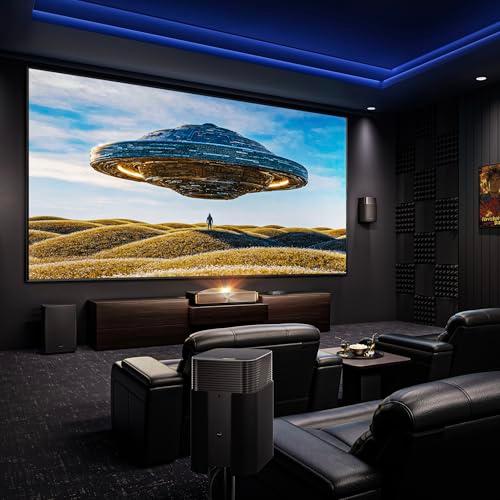
The L9Q particularly suits dedicated home theaters, open-concept living spaces with challenging lighting, or installations where the projector serves as the primary entertainment system. Its professional color validation also appeals to users who care deeply about image accuracy.
Select the Formovie Theater Premium for excellent performance with better value consideration. Its gaming optimizations, solid image quality, and competitive pricing make it ideal for mixed-use entertainment systems. It's perfect for users who want high-end projector performance without paying for ultimate specifications they might not fully utilize.
The Theater Premium works best in controllable lighting environments, for screens under 130 inches, or when gaming performance matters more than maximum brightness. Its proven reliability and manufacturer support also provide confidence for long-term ownership.
Both projectors represent significant investments that should provide years of entertainment value. The key is matching their capabilities to your specific room conditions, usage patterns, and performance priorities. Either choice delivers dramatically superior experiences to traditional displays, just with different strengths that appeal to different user priorities.
The ultra short throw projector market continues evolving rapidly, with both manufacturers likely introducing improvements and new models regularly. However, both the L9Q and Theater Premium represent current state-of-the-art technology that should remain competitive for several years, making either a solid foundation for premium home entertainment systems.
| Hisense L9Q Triple Laser Ultra Short Throw Projector | Formovie Theater Premium 4K Ultra Short Throw Projector |
|---|---|
| Brightness - Most critical spec for daytime viewing and large screens | |
| 5,000 ANSI lumens (exceptional for any lighting condition) | 2,200 ISO lumens (good for controlled lighting) |
| Contrast Ratio - Determines black depth and cinematic image quality | |
| 5,000:1 native (excellent blacks even with high brightness) | 3,000:1 native (solid performance for the brightness class) |
| Color Gamut Coverage - Affects color vibrancy and accuracy | |
| 110% BT.2020 with Pantone validation (professional color accuracy) | 107% BT.2020 (excellent wide color reproduction) |
| Maximum Screen Size - How large your display can effectively be | |
| 80-200 inches (brightness supports massive screens) | 80-150 inches (optimal performance range) |
| Throw Ratio - How close to the wall the projector can sit | |
| 0.18:1 (100" screen from 5.4" away) | 0.21:1 (100" screen from ~7" away) |
| Gaming Input Lag - Critical for responsive gaming experience | |
| 12ms (excellent for gaming) | Under 18ms (optimized specifically for gaming) |
| Integrated Audio System - Eliminates need for external speakers | |
| 116W 6.2.2-channel Devialet with Dolby Atmos (premium surround sound) | 30W Bowers & Wilkins stereo (quality TV-level audio) |
| HDR Format Support - Compatibility with premium content | |
| HDR10, HDR10+, Dolby Vision, HLG, IMAX Enhanced | HDR10, HDR10+, Dolby Vision |
| Smart TV Platform - Built-in streaming without external devices | |
| Google TV with voice control and comprehensive app support | Google TV with voice control and comprehensive app support |
| Laser Lifespan - Long-term reliability and maintenance costs | |
| 25,000+ hours (decade+ of typical use) | 30,000 hours (longest lifespan in category) |
| HDMI Connectivity - Essential for modern devices and gaming | |
| 4 ports total (2x HDMI 2.1, 2x HDMI 2.0) with eARC | Standard HDMI with ALLM gaming features |
| Value Proposition - Who should consider this model | |
| Premium flagship for maximum performance and large screens | Balanced high-end performance with gaming focus at competitive pricing |
The Hisense L9Q is significantly brighter at 5,000 ANSI lumens compared to the Formovie Theater Premium's 2,200 ISO lumens. This makes the L9Q much better for rooms with windows or ambient light, while the Theater Premium works well in controlled lighting conditions.
The Hisense L9Q supports screens up to 200 inches effectively due to its high brightness, while the Formovie Theater Premium is optimized for 80-150 inch screens. Both start at 80 inches minimum for optimal image quality.
The Formovie Theater Premium has a slight edge for gaming with input lag under 18ms and specific gaming optimizations. The Hisense L9Q offers 12ms input lag, which is also excellent. Both support HDMI 2.1 features needed for modern consoles.
The Hisense L9Q can sit closer with a 0.18:1 throw ratio (100" screen from 5.4" away), while the Formovie Theater Premium has a 0.21:1 throw ratio (100" screen from about 7" away). Both qualify as ultra short throw projectors.
The Hisense L9Q has superior color accuracy with 110% BT.2020 coverage and Pantone validation, meaning professional-grade color reproduction. The Formovie Theater Premium covers 107% BT.2020, which is still excellent but not professionally validated.
The Hisense L9Q features a premium 116W 6.2.2-channel Devialet system with Dolby Atmos, essentially eliminating the need for external speakers. The Formovie Theater Premium has quality 30W Bowers & Wilkins stereo speakers that work well for casual viewing.
The Hisense L9Q delivers superior contrast at 5,000:1 compared to the Formovie Theater Premium's 3,000:1 ratio. This means deeper blacks and more cinematic image quality in darkened home theater environments.
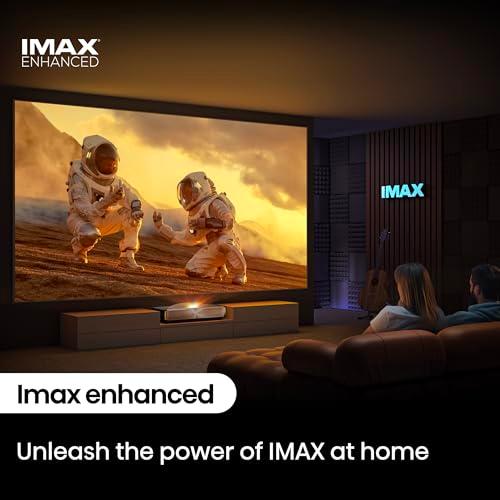
Yes, both the Hisense L9Q and Formovie Theater Premium support native 4K resolution and multiple HDR formats including Dolby Vision, HDR10, and HDR10+. The L9Q also supports IMAX Enhanced for additional premium content compatibility.
The Formovie Theater Premium typically offers better value with high-end performance at a lower cost, while the Hisense L9Q commands premium pricing for flagship specifications. Consider the L9Q if you need maximum brightness and integrated premium audio.
Both the Hisense L9Q and Formovie Theater Premium run Google TV with built-in streaming apps like Netflix, Disney+, and Prime Video. They include voice control, Wi-Fi connectivity, and casting support from mobile devices.
The Formovie Theater Premium offers 30,000 hours of laser life, while the Hisense L9Q provides 25,000+ hours. Both represent over a decade of typical use without needing lamp replacements, a major advantage over traditional projectors.
Choose the Hisense L9Q for maximum performance, especially if you have challenging lighting, want screens over 150 inches, or prefer integrated premium audio. Select the Formovie Theater Premium for excellent balanced performance with gaming optimization at a more accessible price point.
We've done our best to create useful and informative comparisons to help you decide what product to buy. Our research uses advanced automated methods to create this comparison and perfection is not possible - please contact us for corrections or questions. These are the sites we've researched in the creation of this article: chrismajestic.com - shop.hisense-usa.com - tomsguide.com - valueelectronics.com - techradar.com - whathifi.com - youtube.com - projectorscreen.com - projectorscreen.com - hisense-usa.com - youtube.com - projectorcentral.com - youtube.com - hisense-usa.com - manuals.plus - shop.avispl.com - hisense-usa.com - techradar.com - projectorscreen.com - avsforum.com - rtings.com - nothingprojector.com - formovie.com - bmcav.com.au - projectorcentral.com - digitalcinema.com.au - projectorreviews.com - techpowerup.com - nothingprojector.com

Privacy Policy
Terms and Conditions - Affiliate Policy
Home Security
© Copyright 2008-2026.
11816 Inwood Rd #1211, Dallas, TX 75244