

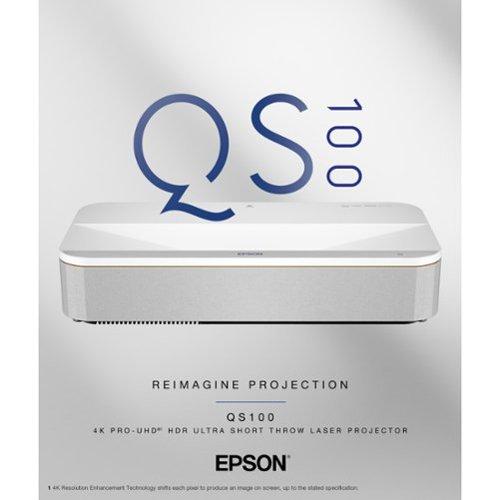
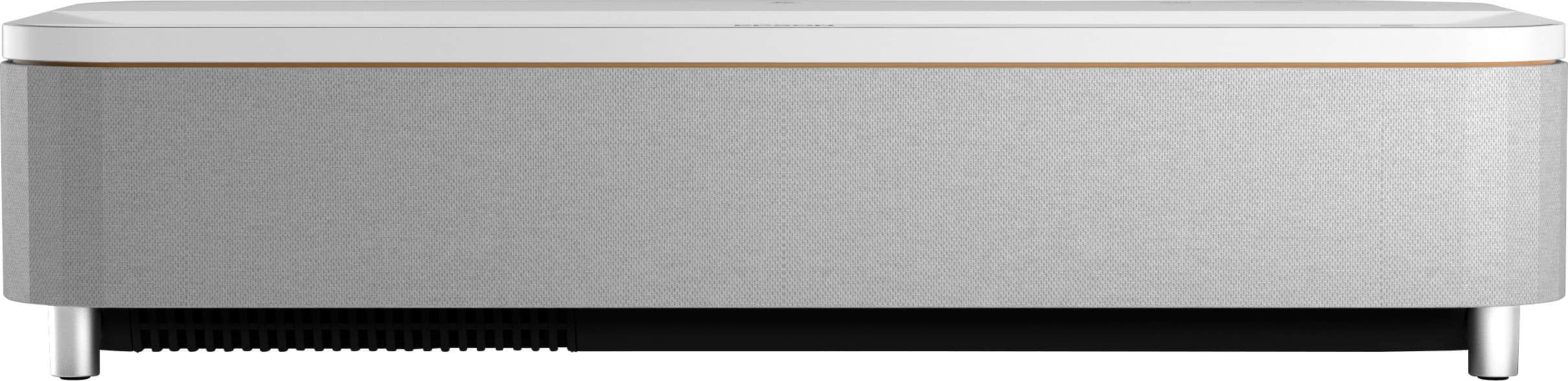
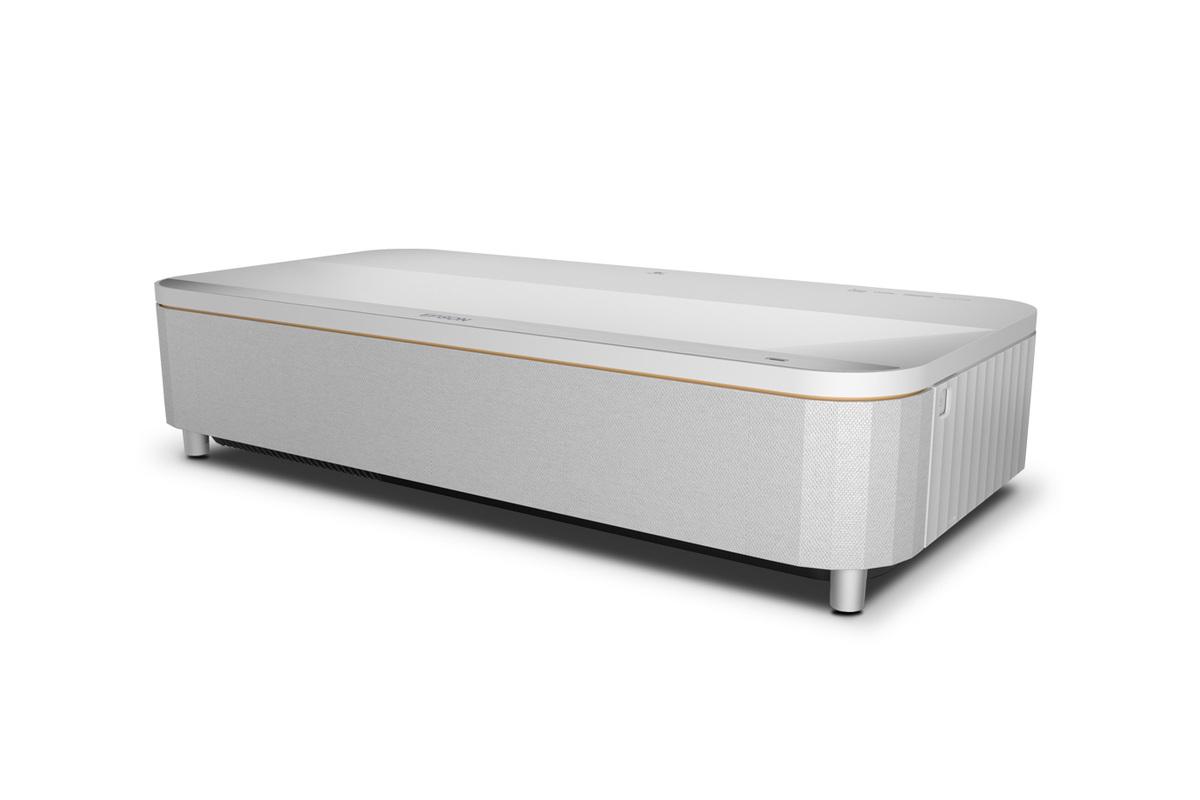
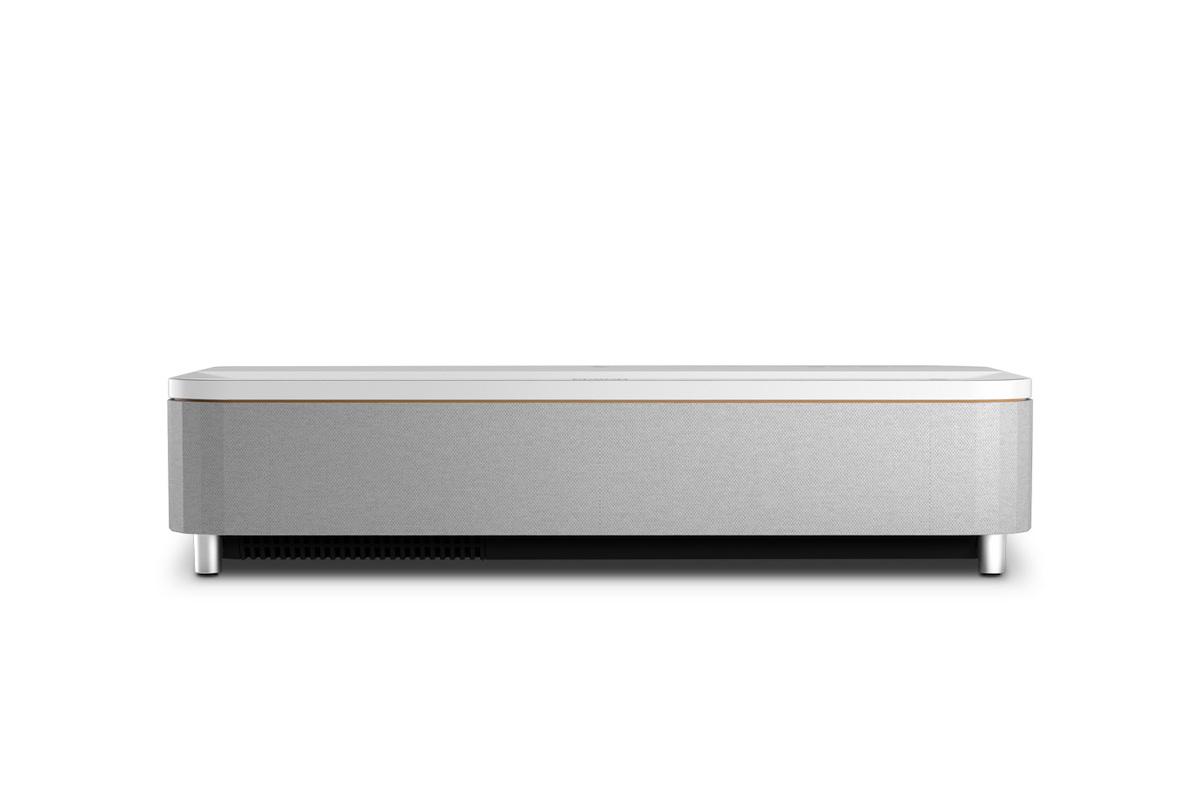
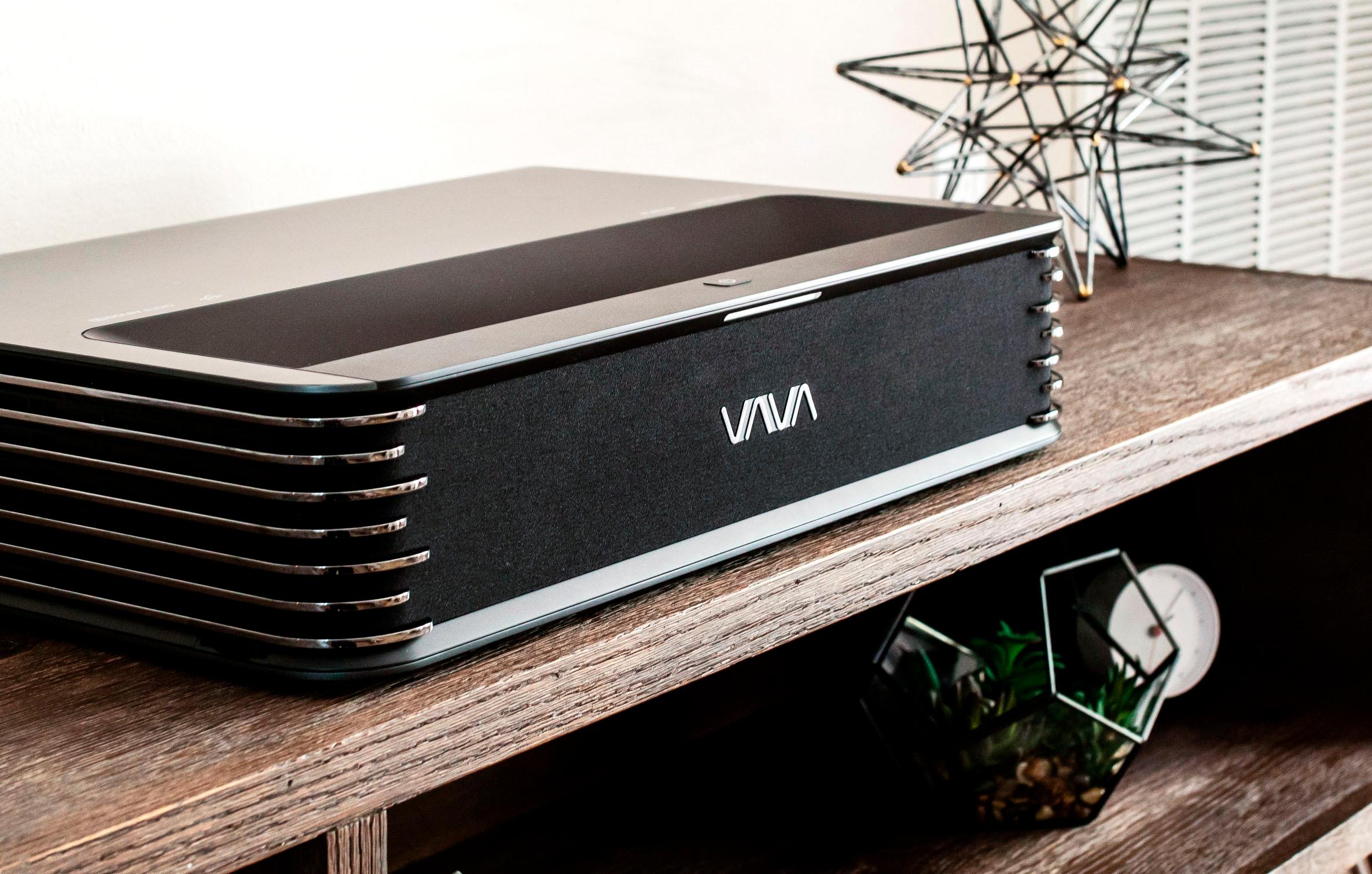
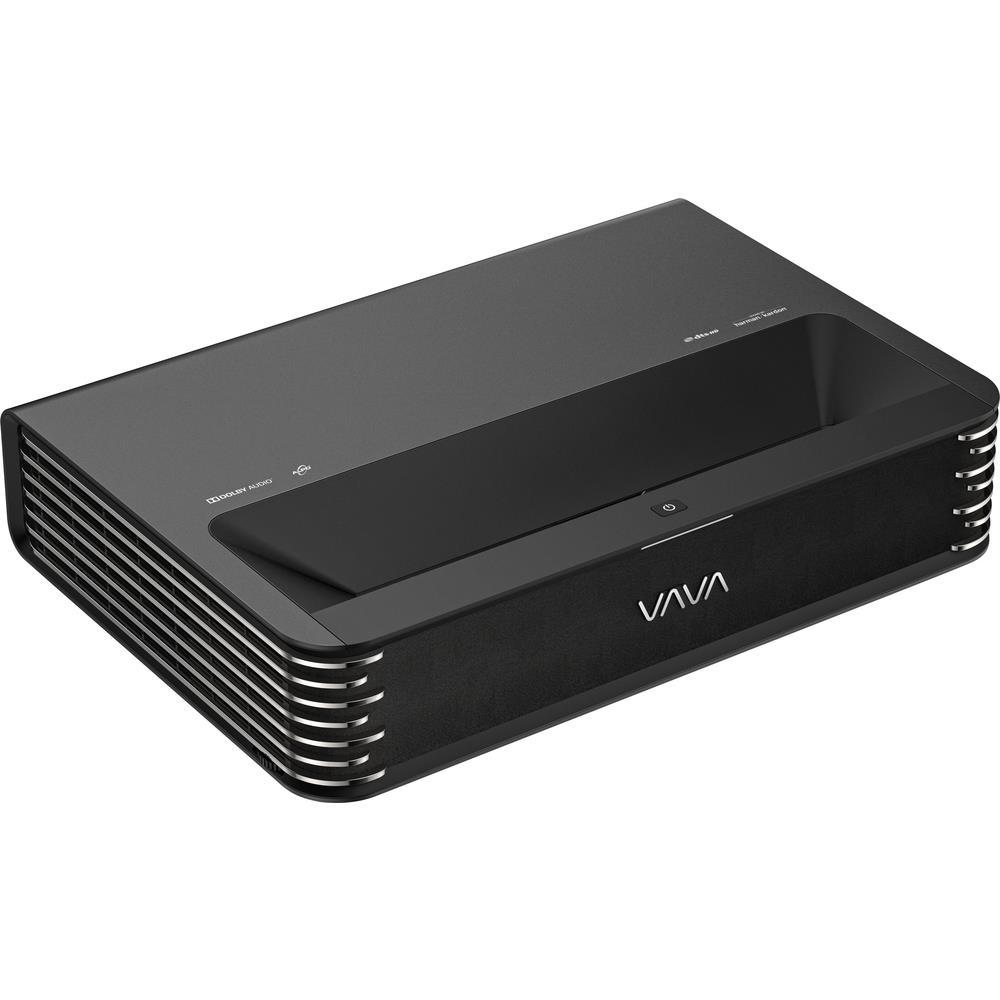
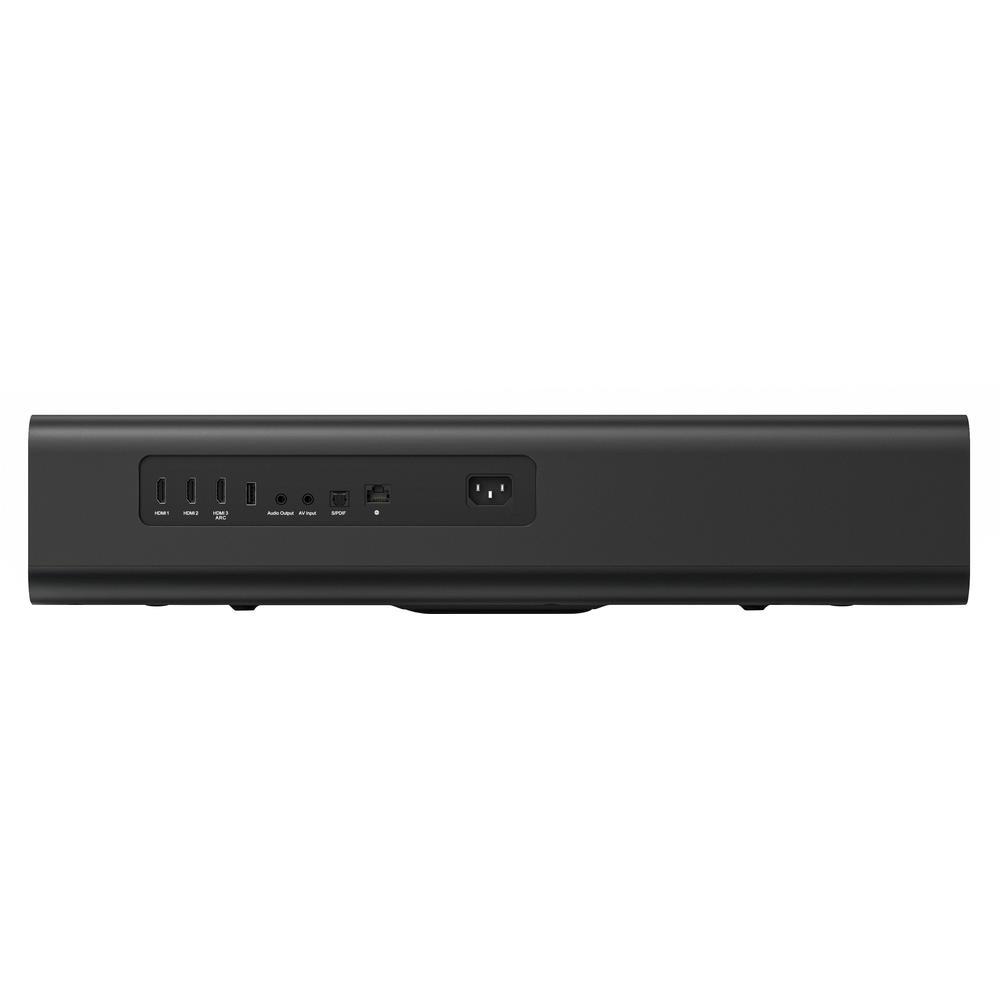
When you're shopping for a projector that can create a massive screen from just inches away from your wall, you're looking at ultra short throw (UST) projectors—and that's where things get interesting. These aren't your typical projectors that need to be mounted on the ceiling across the room. Instead, they sit right next to your wall like a fancy coffee table, yet somehow project images up to 160 inches diagonally.
The technology behind UST projectors involves specialized optics and mirrors that bend light at extreme angles, allowing projection from incredibly short distances. Think of it like having a periscope that shoots light instead of letting you peek around corners. This design eliminates the shadows you'd cast walking in front of a traditional projector and makes installation much simpler.
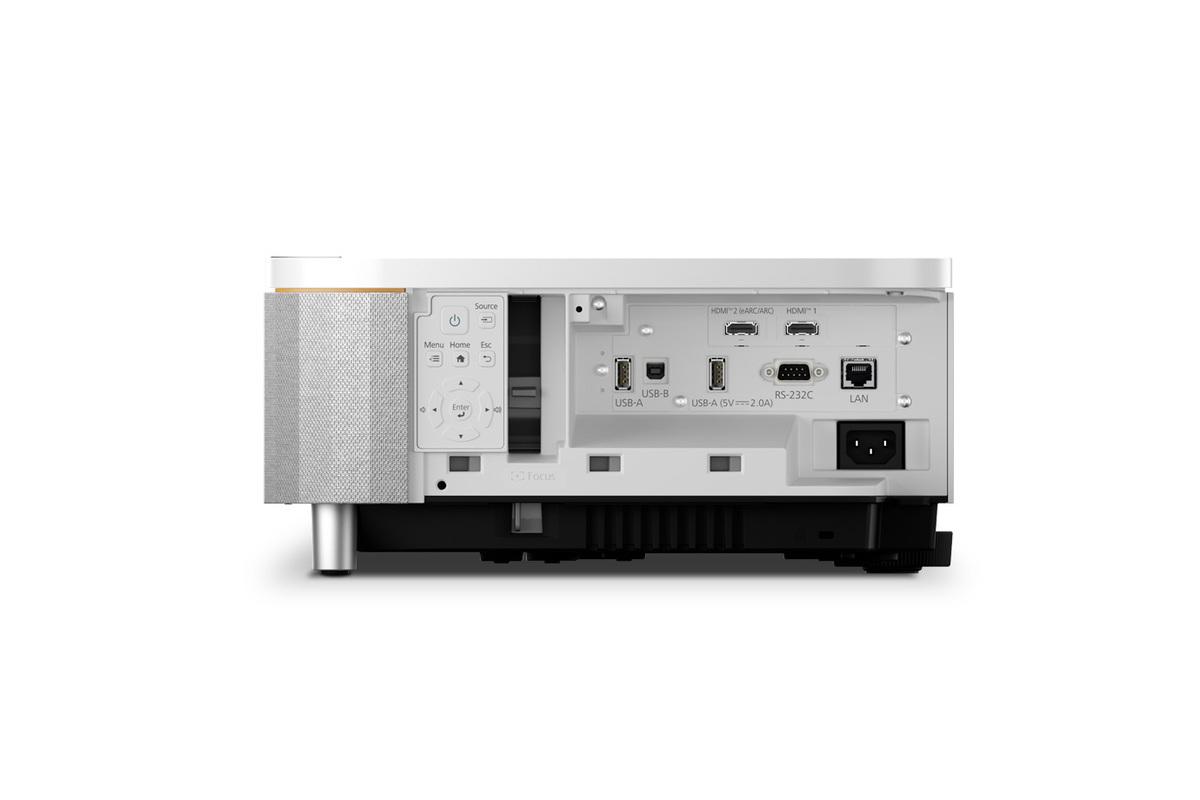
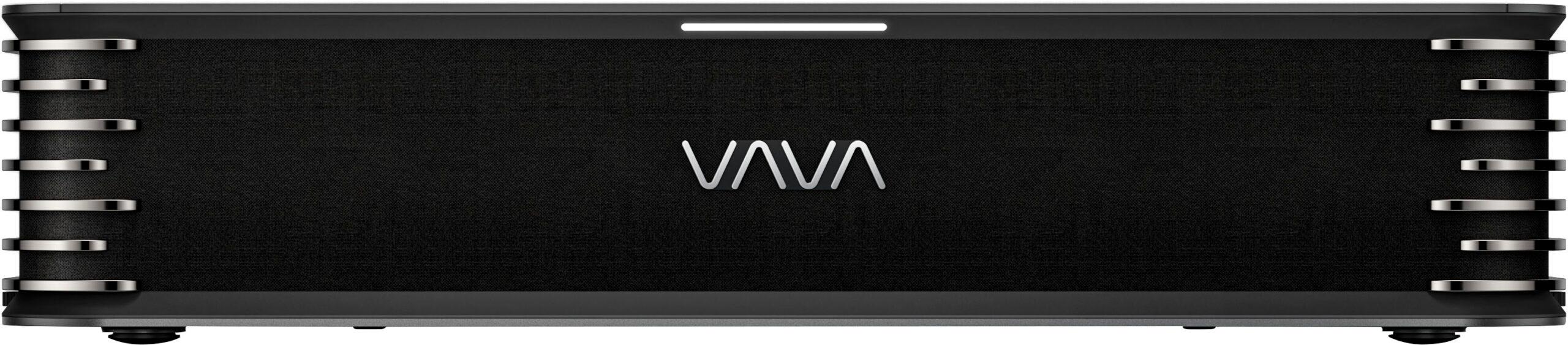
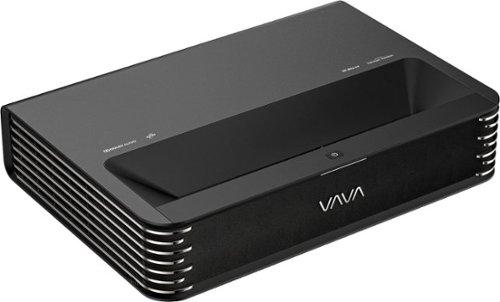
At the time of writing, two projectors dominate the conversation in this space: the Epson QS100 and the VAVA Chroma. Released in 2025 and 2021 respectively, they represent different philosophies about what makes the perfect home theater projector. The Epson QS100 costs significantly more but positions itself as a professional-grade brightness champion, while the VAVA Chroma offers a more affordable all-in-one entertainment package with true 4K resolution.
The fundamental difference between these projectors starts with how they create images. The Epson QS100 uses 3LCD technology, which means it has three separate LCD panels—one each for red, green, and blue light—that work together to create the final image. This is like having three specialized painters working simultaneously on the same canvas, each handling their own color.
The VAVA Chroma, on the other hand, uses DLP (Digital Light Processing) technology with a single chip that rapidly switches between colors using microscopic mirrors. Picture millions of tiny mirrors flipping back and forth thousands of times per second to create colors and brightness levels. It's incredibly precise, but it means all the color information has to be processed sequentially rather than simultaneously.
This difference matters more than you might think. The 3LCD approach in the Epson QS100 means you'll never see rainbow artifacts—those brief flashes of red, green, and blue that some people notice with single-chip DLP projectors when they move their eyes quickly. However, DLP technology like in the VAVA Chroma typically offers better contrast ratios and deeper black levels.
Both projectors use laser light sources instead of traditional lamps, which is crucial for several reasons. Laser projectors turn on instantly (no waiting for a bulb to warm up), maintain consistent brightness over their entire lifespan, and typically last 20,000+ hours before needing replacement. Traditional lamp projectors dim noticeably over time and require expensive bulb replacements every few years.
The VAVA Chroma uses what's called ALPD 4.0 (Advanced Laser Phosphor Display) with RGB lasers. This means it has separate red, green, and blue lasers working together, which allows for an incredibly wide color gamut—essentially the range of colors it can display. The result is colors that look more vivid and accurate than what most displays can achieve.
The Epson QS100 uses a more advanced laser system with what they call a "5-in-1 laser light source module." While the exact technical details are proprietary, this system is designed to push brightness levels far beyond what most competitors can achieve while maintaining color accuracy.
Here's where things get interesting and slightly controversial. The VAVA Chroma offers true native 4K resolution, meaning it has 3,840 × 2,160 physical pixels—the full 4K standard. Every pixel you see corresponds to an actual physical pixel on the projector's display chip.
The Epson QS100 uses what's called "4K PRO-UHD," which is Epson's marketing term for pixel-shifting technology. It starts with three 1920×1080 (Full HD) LCD panels and uses a mechanism that shifts the pixels slightly to create additional detail. Think of it like taking two photos of the same scene from slightly different angles and combining them to create a more detailed final image.
In practice, this pixel-shifting approach gets you very close to true 4K quality, especially at normal viewing distances. Unless you're sitting quite close to a large screen, most people can't distinguish between good pixel-shifting 4K and native 4K. However, if you do a lot of PC gaming, text reading, or sit very close to your screen, you might notice the difference in fine detail sharpness.
This is perhaps the most significant difference between these projectors and the area where the Epson QS100 absolutely dominates. With 4,500 lumens of brightness, it produces about 80% more light than the VAVA Chroma's 2,500 ANSI lumens.
Lumens measure the total amount of light output, and in the projector world, more is almost always better. Here's why: even in a dedicated home theater room, you'll often have some ambient light from hallways, under-cabinet lighting, or natural light filtering in during daytime viewing. Traditional projectors struggle in these conditions, but ultra-bright projectors like the Epson QS100 can maintain vibrant colors and good contrast even with room lights on.
The difference is dramatic. With the VAVA Chroma, you'll want to dim the lights for optimal viewing, and daytime viewing requires either very good light control or an expensive ALR (Ambient Light Rejecting) screen. The Epson QS100 can produce a watchable image even with moderate room lighting and no special screen.
However, there's a trade-off. The Epson QS100 runs its cooling fans more aggressively to handle the heat from its powerful laser system, though it's still remarkably quiet at 20 dB in eco mode. The VAVA Chroma operates at 30 dB, which is noticeably louder but still reasonable for most living rooms.
Both projectors support HDR (High Dynamic Range), which allows for brighter highlights and deeper shadows than standard video content. However, they handle HDR differently.
The Epson QS100 features dynamic HDR tone mapping, which is a sophisticated feature that analyzes each frame of content and adjusts the brightness and contrast in real-time. This is particularly useful because HDR content is mastered for displays much brighter than any projector can achieve, so intelligent processing is crucial for optimal results.
The projector's QZX Picture Processor—Epson's proprietary 32-bit processing engine—handles this tone mapping along with other image enhancements. It's designed to optimize the image for projection viewing, taking into account factors like ambient light and screen characteristics.
The VAVA Chroma supports HDR10 and includes MEMC (Motion Estimation, Motion Compensation) processing, which can smooth out motion in sports and action content. Some viewers love this feature, while others prefer the natural motion of original content. The choice is yours, as it can be turned on or off.
This is where the philosophies of these projectors diverge most dramatically. The VAVA Chroma is designed as an all-in-one entertainment center. It runs Android TV, giving you access to Netflix, YouTube, Disney+, and thousands of other apps directly from the projector. It also includes Alexa voice control, so you can adjust volume, change inputs, or search for content just by speaking.
The convenience factor here is significant. You can set up the VAVA Chroma and immediately start watching content without any additional devices. It connects to your Wi-Fi, downloads apps, and functions like a smart TV that happens to project giant images.
The Epson QS100 takes the opposite approach. It has no built-in smart features, no speakers, and no apps. This might seem like a disadvantage, but it's actually intentional. Professional installers and home theater enthusiasts often prefer this approach because it means the projector focuses entirely on image quality without the complications of smart TV platforms that can become outdated or buggy.
Instead, the Epson QS100 offers extensive integration capabilities with professional control systems like Crestron and Control4. If you're building a serious home theater or working with a custom installer, these features allow the projector to integrate seamlessly with automated lighting, screen controls, and whole-home audio systems.
The VAVA Chroma includes dual 30-watt Harman Kardon speakers that actually sound quite impressive for projector speakers. They produce genuinely usable bass and clear dialogue, which means you might not need a separate sound system for casual viewing. This adds significant value to the overall package.
The Epson QS100 has no built-in speakers at all. This forces you to invest in a separate sound system, whether that's a soundbar, surround sound system, or high-end audio setup. While this increases the total system cost, it also means you're not paying for mediocre built-in speakers you might not use anyway.
For serious home theater applications, external audio is almost always preferable. But for many users, especially those setting up in living rooms or casual viewing spaces, the VAVA Chroma's built-in audio is genuinely convenient and surprisingly capable.
Both projectors offer the ultra-short-throw advantage of placing very close to your wall or screen. The Epson QS100 can project up to 160 inches from just inches away, while the VAVA Chroma maxes out at 150 inches. Both offer extensive keystone correction to help align the image perfectly even if the projector isn't positioned ideally.
The Epson QS100 is designed with professional installation in mind. It's ISF (Imaging Science Foundation) certified, meaning trained technicians can calibrate it precisely for your specific room conditions. This level of professional setup can make a dramatic difference in image quality, but it also adds to the total cost.
The VAVA Chroma is more DIY-friendly with automatic focus adjustment and user-friendly setup menus. Most people can get excellent results without professional calibration, though the projector will benefit from some basic adjustments to picture settings.
Both projectors are suitable for gaming, though neither is specifically optimized for competitive gaming. The Epson QS100 includes Auto Low Latency Mode (ALLM), which automatically reduces input lag when it detects a gaming signal. It can handle 4K content at 60Hz and 2K content at 120Hz, though most console games won't push these limits.
The VAVA Chroma also offers low input lag and smooth gaming performance. Its MEMC processing can actually help with motion smoothing in some games, though purists might prefer to disable this feature for the most authentic gaming experience.
For casual gaming—think FIFA with friends or single-player adventures—both projectors deliver excellent experiences. For competitive gaming where every millisecond matters, a dedicated gaming monitor would be more appropriate.
When evaluating these projectors, it's important to think beyond the initial purchase price. The Epson QS100 costs significantly more upfront (at the time of writing, expect to pay a substantial premium), but it includes some long-term advantages. Its laser light source is rated for 20,000 hours, it's designed for professional-grade reliability, and Epson's track record with projector support is excellent.
The VAVA Chroma offers better immediate value, especially when you factor in the built-in speakers and smart features. However, smart TV platforms can become outdated, and software support for Android TV projectors can be inconsistent over time.
The choice between these projectors ultimately depends on your priorities, room conditions, and budget.
Choose the Epson QS100 if brightness is your top priority. If you have a room with significant ambient light, need daytime viewing capabilities, or want the ultimate image quality regardless of conditions, the extra brightness is worth the premium price. It's also the better choice if you're planning a professional installation, already have a good audio system, or need integration with smart home control systems.
The VAVA Chroma makes more sense if you want an all-in-one solution at a more reasonable price point. Its true 4K resolution, built-in premium speakers, and smart features create a complete entertainment system that's hard to beat for value. It's perfect for users who can control room lighting reasonably well and want the convenience of streaming apps and voice control built right in.
Both projectors will create genuinely impressive home theater experiences that rival or exceed what you'd get from even the largest flat-screen TVs. The Epson QS100 pushes the boundaries of brightness and professional-grade performance, while the VAVA Chroma delivers exceptional value and convenience in a more accessible package. Your choice should depend on whether you prioritize maximum performance or maximum value and features for your specific situation.
| Epson QS100 4K PRO-UHD Ultra Short Throw Projector | VAVA Chroma Triple Laser Projector |
|---|---|
| Brightness - Most critical spec for daytime viewing and bright rooms | |
| 4,500 lumens (exceptional bright room performance) | 2,500 ANSI lumens (requires dimmed lighting for best results) |
| Resolution Technology - Affects image sharpness and detail | |
| 4K PRO-UHD with pixel-shifting (very close to native 4K quality) | True native 4K (3840x2160 physical pixels) |
| Display Technology - Impacts color accuracy and rainbow artifacts | |
| 3LCD (no rainbow effects, consistent colors) | Single-chip DLP (excellent contrast, possible rainbow artifacts) |
| Maximum Image Size - How big your screen can be | |
| 160 inches (largest available projection) | 150 inches (still massive for most rooms) |
| Smart Features - Built-in streaming and convenience | |
| None (requires external streaming device) | Android TV with apps, Alexa voice control |
| Audio System - Sound quality and convenience | |
| No speakers (requires external audio system) | Dual 30W Harman Kardon speakers built-in |
| Noise Level - Important for quiet viewing environments | |
| 20 dB in quiet mode (nearly silent operation) | 30 dB (noticeably louder but still acceptable) |
| HDR Support - Enhanced contrast and color range | |
| HDR10+ with dynamic tone mapping | HDR10 with MEMC motion processing |
| Professional Features - Setup and calibration options | |
| ISF certified, IP control integration, web setup | Consumer-friendly auto-focus, 8-point keystone |
| 3D Support - For immersive content | |
| No 3D capability | Full HD 3D support |
| Laser Life - Long-term reliability and maintenance | |
| 20,000 hours (virtually maintenance-free) | 25,000 hours (slightly longer rated life) |
| Target User - Who each projector is designed for | |
| Professional installers, bright room priority | All-in-one convenience, value-focused buyers |
The Epson QS100 is significantly brighter with 4,500 lumens compared to the VAVA Chroma's 2,500 ANSI lumens. This makes the Epson QS100 much better for rooms with ambient light or daytime viewing, while the VAVA Chroma performs best in darker, controlled lighting conditions.
The VAVA Chroma has true native 4K resolution (3840x2160), while the Epson QS100 uses 4K PRO-UHD with pixel-shifting technology. Both deliver excellent image quality, but the VAVA Chroma provides slightly sharper detail for text and close-up viewing.
Only the VAVA Chroma includes built-in speakers - dual 30W Harman Kardon speakers that provide surprisingly good sound quality. The Epson QS100 has no built-in audio and requires an external sound system, which adds to the total setup cost but allows for better audio quality.
Yes, the VAVA Chroma runs Android TV with access to Netflix, YouTube, Disney+, and other streaming apps built-in. The Epson QS100 has no smart features and requires a separate streaming device like an Apple TV, Roku, or Fire TV Stick.
The Epson QS100 operates much more quietly at just 20 dB in eco mode, making it nearly silent. The VAVA Chroma runs at 30 dB, which is noticeably louder but still acceptable for most home theater environments.
Both are ultra short throw projectors that can be placed very close to the wall. The Epson QS100 has a throw ratio of 0.16:1 to 0.22:1, while the VAVA Chroma has a 0.23:1 throw ratio. Both can project 100+ inch images from just inches away from your screen or wall.
The VAVA Chroma includes built-in Alexa voice control for adjusting volume, changing inputs, and searching content. The Epson QS100 doesn't have voice control but can integrate with professional smart home systems like Crestron and Control4.
Both projectors offer good gaming performance with low input lag. The Epson QS100 includes Auto Low Latency Mode (ALLM) and supports 4K/60Hz and 2K/120Hz. The VAVA Chroma also has low lag and includes MEMC motion processing that can smooth gameplay.
Only the VAVA Chroma supports 3D content with Full HD 3D capability. The Epson QS100 does not support any 3D formats, focusing instead on 2D image quality and brightness performance.
Both use long-lasting laser technology. The VAVA Chroma is rated for 25,000 hours of use, while the Epson QS100 lasts up to 20,000 hours. Both are virtually maintenance-free compared to traditional lamp projectors that need bulb replacements.
The VAVA Chroma typically offers better overall value with its combination of true 4K, built-in speakers, and smart features at a lower cost. The Epson QS100 costs more but provides superior brightness and professional-grade image quality, making it better for bright rooms or high-end installations.
Neither projector requires a special screen, though both benefit from quality projection screens. The Epson QS100's high brightness works well with standard screens even in bright rooms. The VAVA Chroma may benefit from an ALR (Ambient Light Rejecting) screen if you plan to use it in rooms with significant ambient light.
We've done our best to create useful and informative comparisons to help you decide what product to buy. Our research uses advanced automated methods to create this comparison and perfection is not possible - please contact us for corrections or questions. These are the sites we've researched in the creation of this article: projectorscreen.com - youtube.com - projectorcentral.com - projectorreviews.com - techradar.com - audioadvice.com - projectorreviews.com - avsforum.com - projectorcentral.com - mediaserver.goepson.com - projectorcentral.com - news.epson.com - epson.eu - epson.com - epson.eu - epson.com - projectorcentral.com - bestbuy.com - androidcentral.com - avsforum.com - projectorcentral.com - projectorreviews.com - vava.com - projectorscreenstore.com - youtube.com - projector.com.my - ust-projector.com

Privacy Policy
Terms and Conditions - Affiliate Policy
Home Security
© Copyright 2008-2026.
11816 Inwood Rd #1211, Dallas, TX 75244