

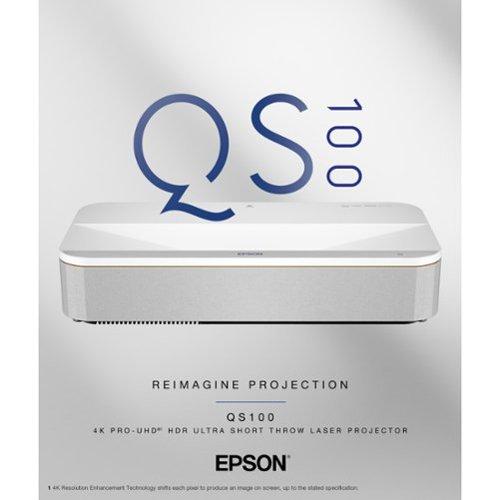
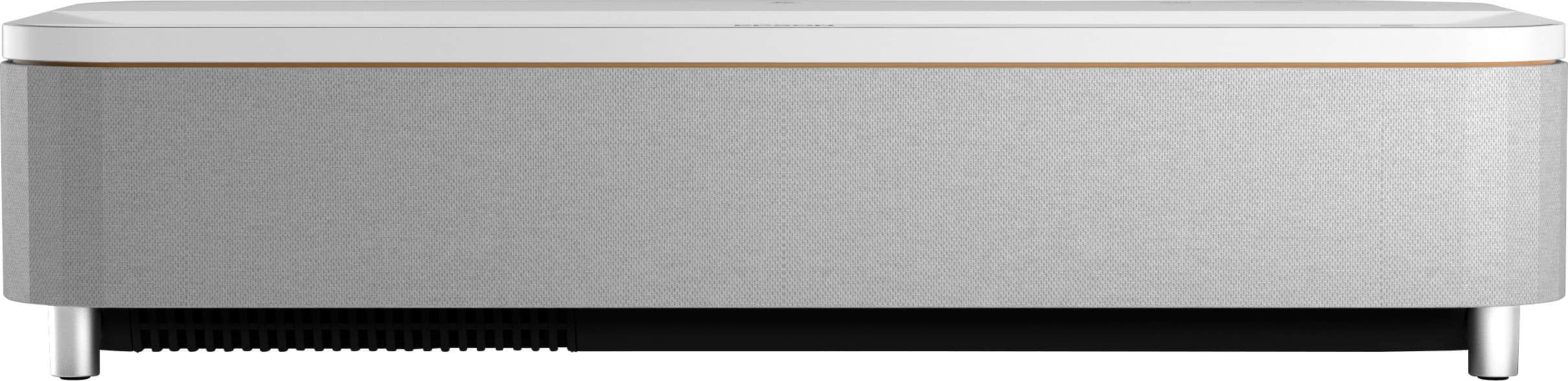
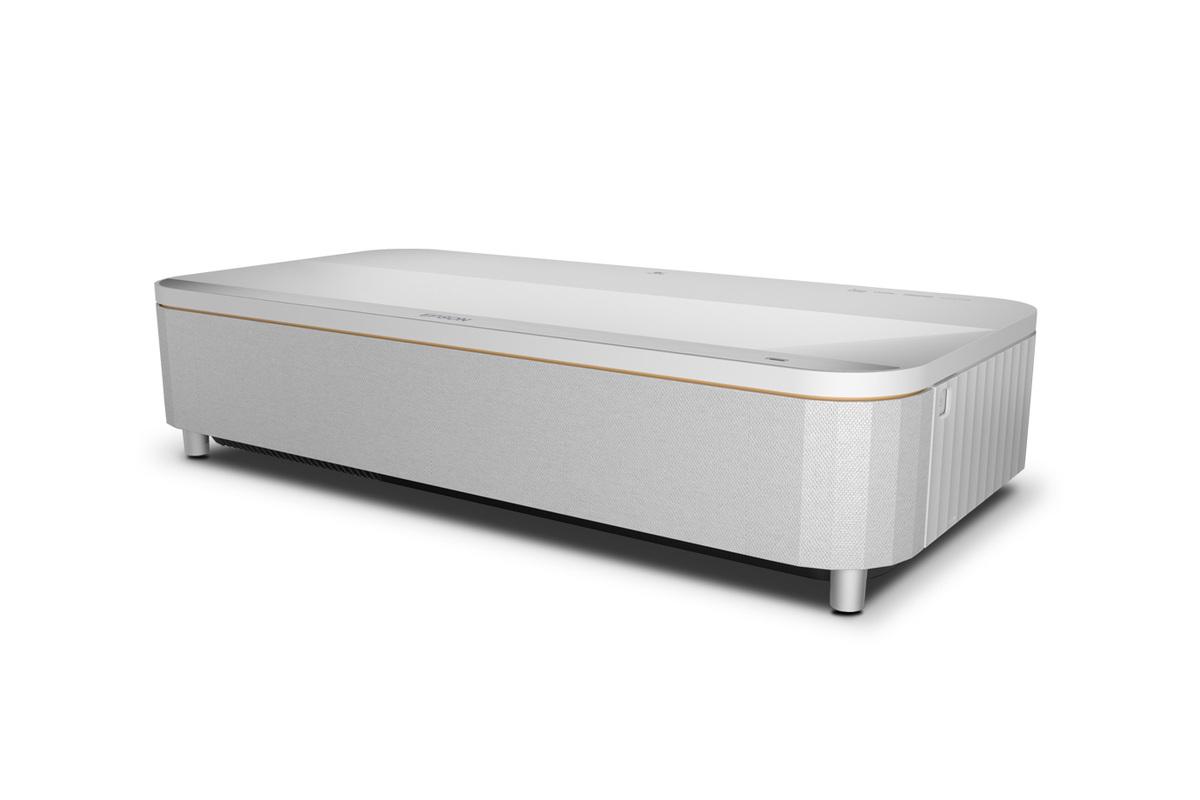
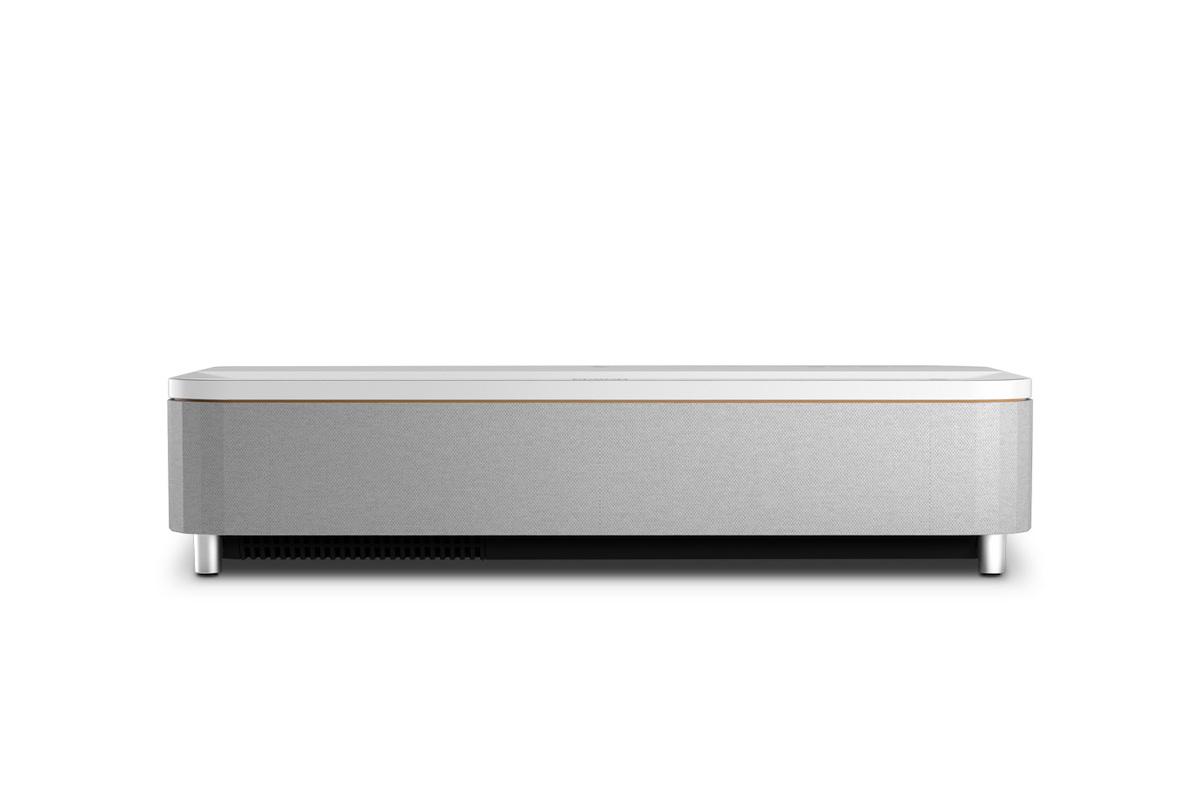
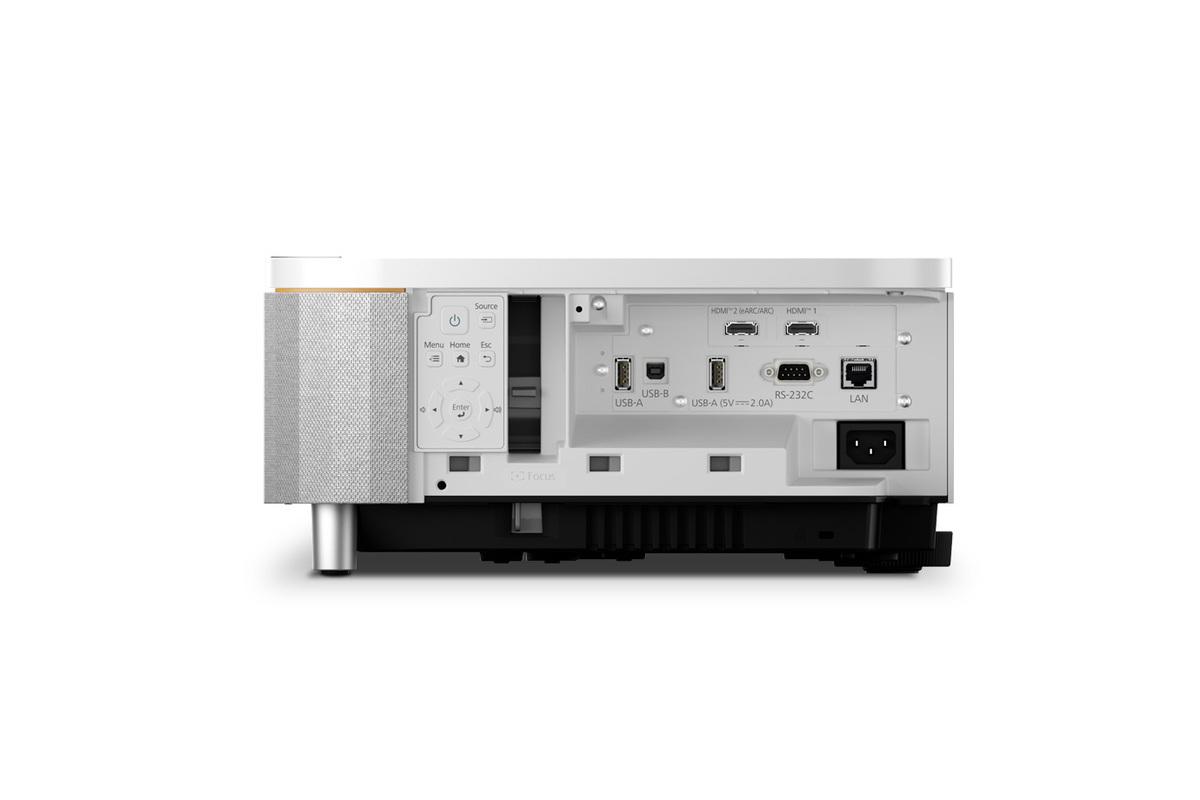
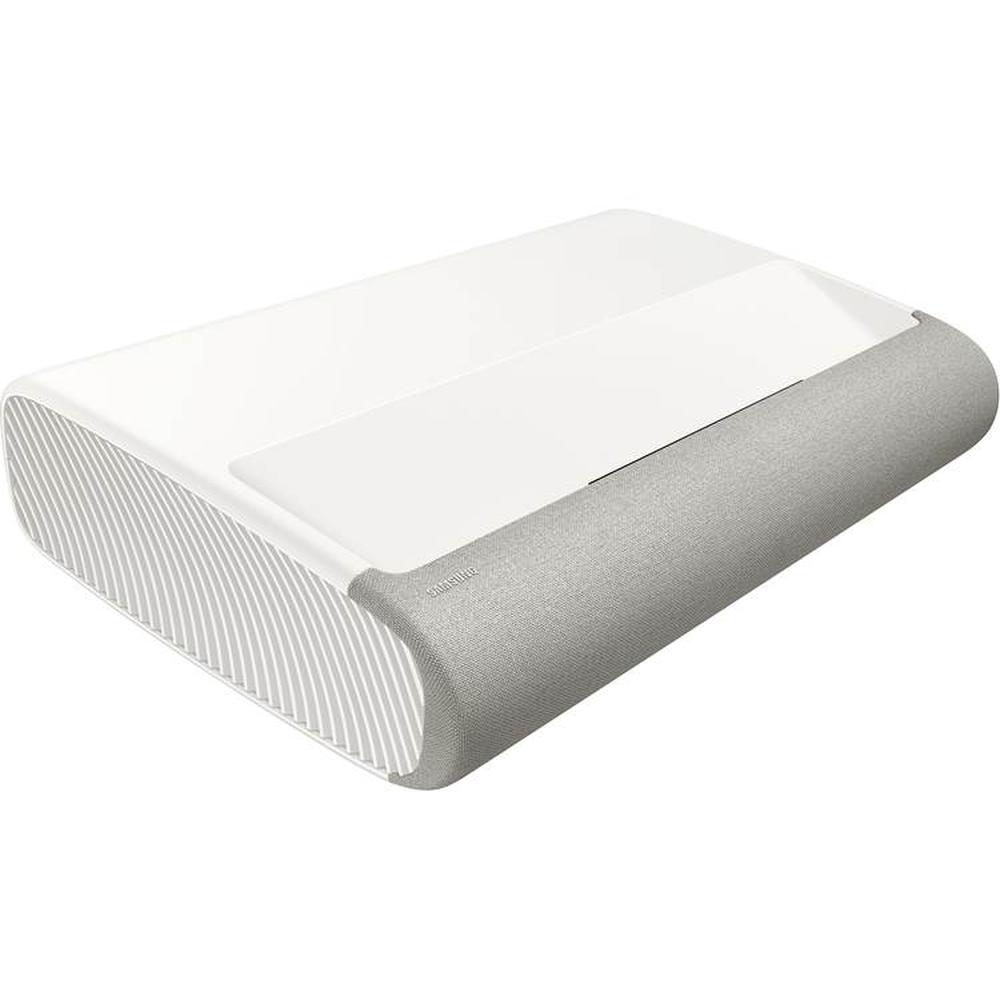
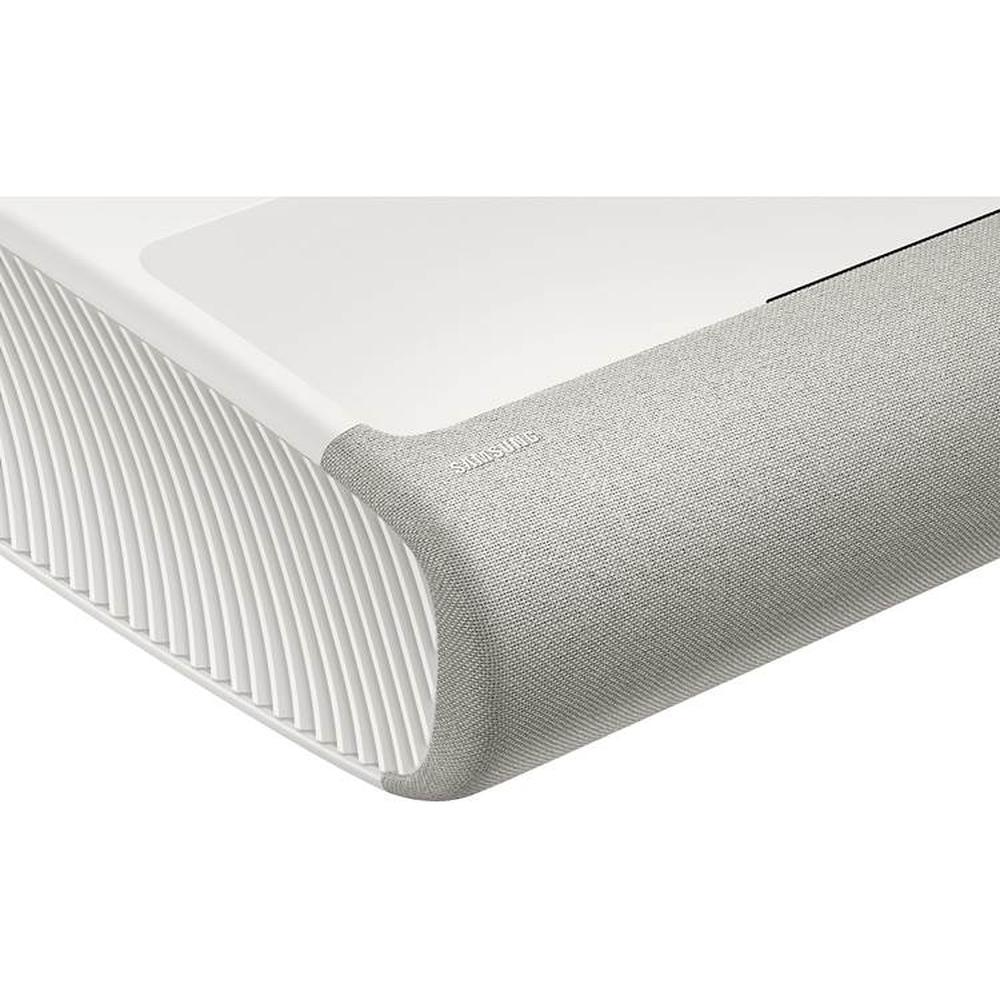
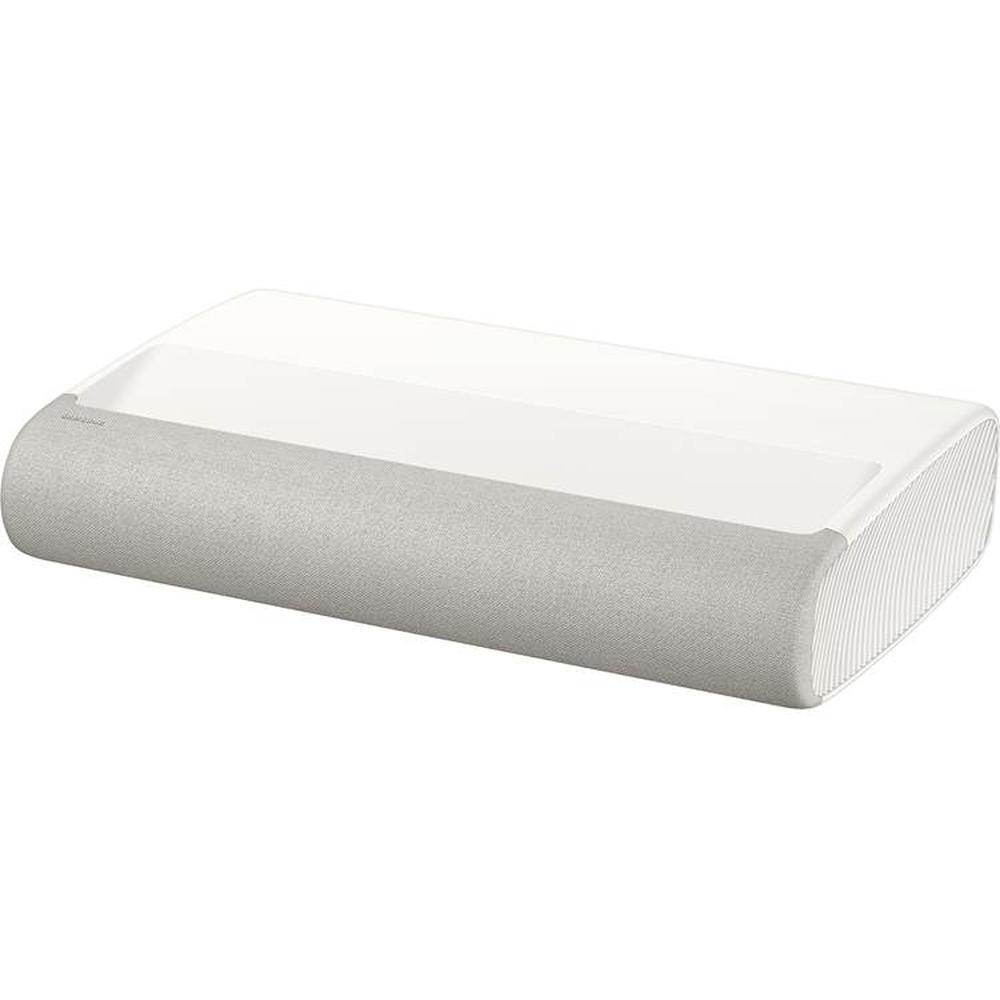
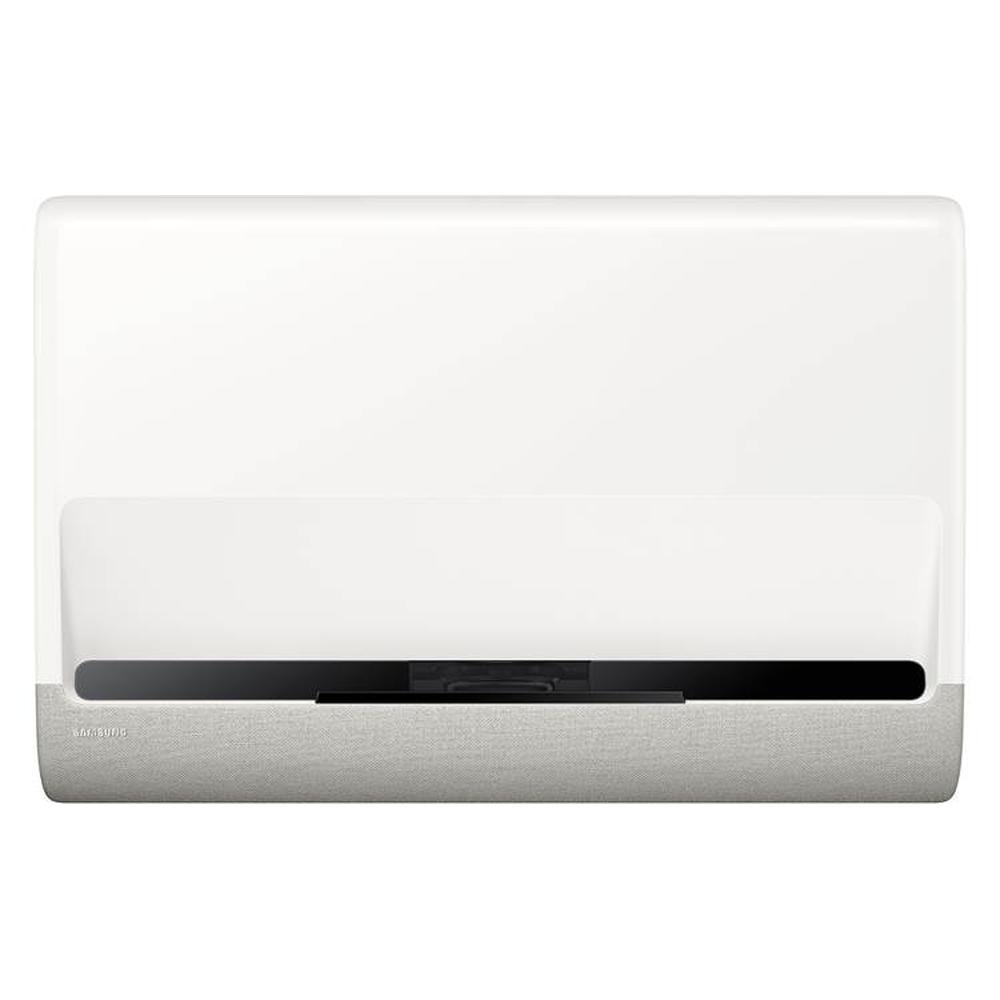
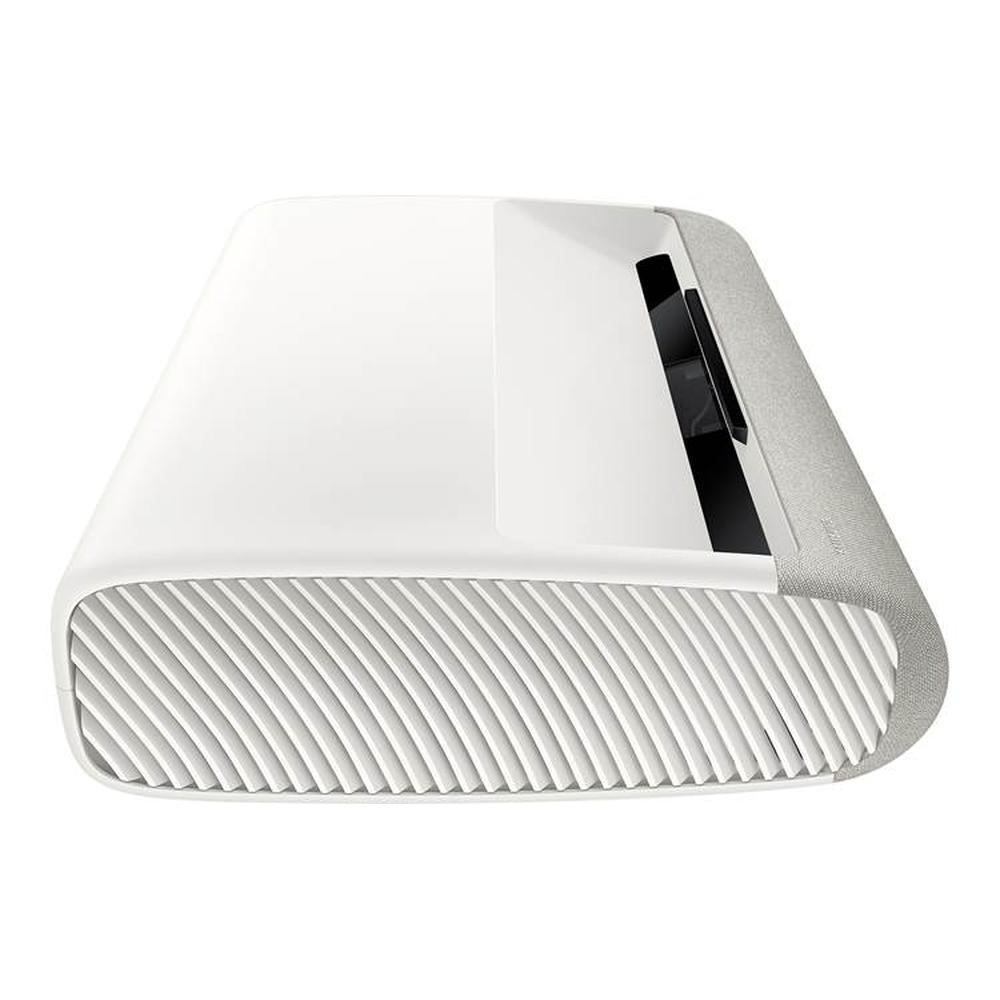
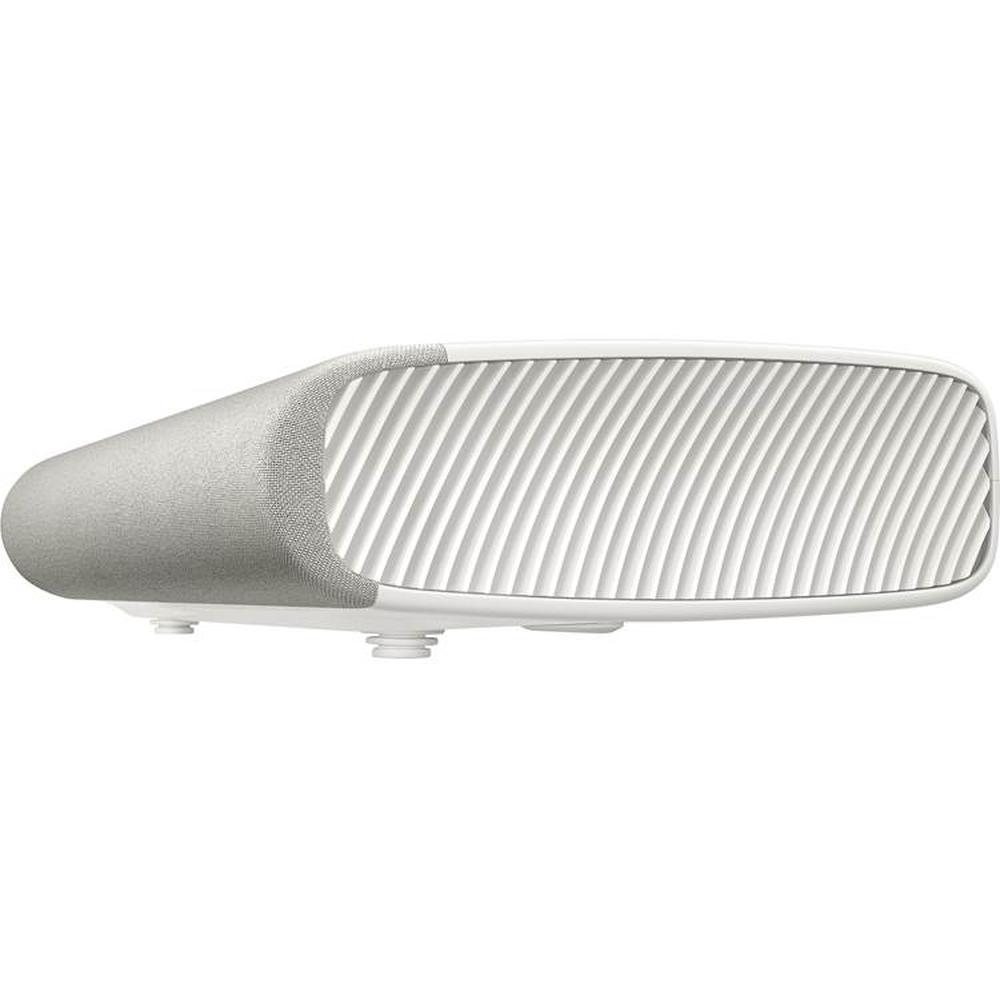
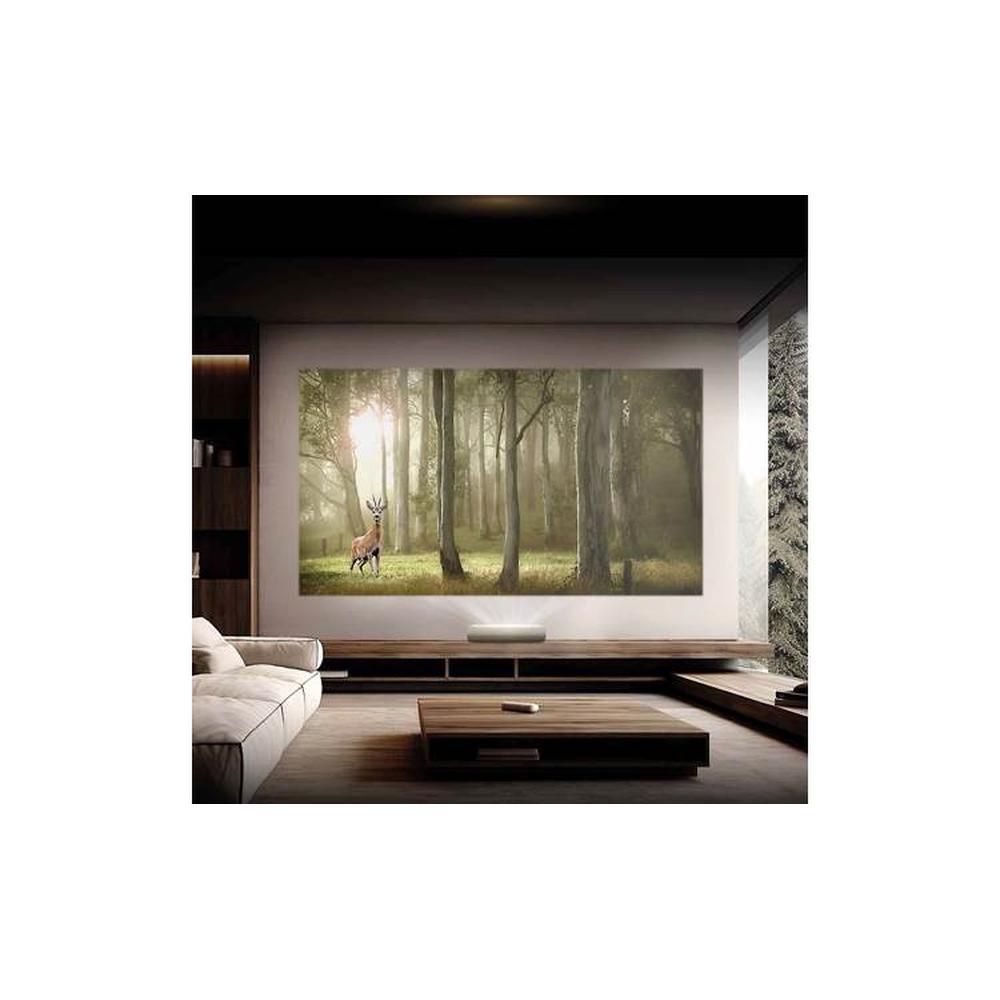
If you've ever dreamed of having a massive 100+ inch screen in your living room but balked at the price of giant TVs, ultra short throw (UST) projectors might be exactly what you're looking for. These remarkable devices can create cinema-sized images while sitting just inches from your wall—no ceiling mounting, no walking through light beams, and no complicated installation required.
Today we're comparing two of the most compelling options in this exciting category: the Epson QS100 and the Samsung Premiere 9. These represent fundamentally different approaches to achieving the same goal, and understanding their differences will help you make the right choice for your setup.
Before diving into the comparison, let's establish what makes UST projectors special. Traditional projectors need to be mounted far from the screen—typically 8-12 feet for a 100-inch image. Ultra short throw projectors flip this concept entirely, using specialized wide-angle lenses and mirrors to project massive images from just a few inches away.
The "throw ratio" is the key specification here. A throw ratio of 0.2:1 means the projector needs to be 0.2 feet away from the wall for every foot of screen width. So for a 100-inch wide screen, you'd place the projector just 20 inches from the wall. This design eliminates the shadows and glare that plague traditional setups and makes these projectors perfect for living rooms where ceiling mounting isn't practical.
The most critical considerations in this category are brightness (measured in lumens), color accuracy, resolution quality, and how well the projector handles ambient light. Unlike basement home theaters, these projectors often compete with daylight streaming through windows, making brightness absolutely crucial for image quality.
The Epson QS100 and Samsung Premiere 9 represent completely different technological approaches, and this difference impacts everything from image quality to setup requirements.
The Epson QS100, released in 2025, uses 3LCD technology combined with a blue laser phosphor light source. Here's how it works: three separate LCD panels handle red, green, and blue light simultaneously, while a blue laser excites phosphor materials to create the full color spectrum. This system processes all colors at once, eliminating the "rainbow effect" that some people see with competing technologies—those brief flashes of red, green, and blue that can appear in motion.
The Samsung Premiere 9, launched in 2023, takes an entirely different approach with single-chip DLP (Digital Light Processing) technology powered by an RGB triple laser system. Instead of LCD panels, it uses millions of tiny mirrors on a chip that tilt thousands of times per second to create images. The triple laser system uses separate red, green, and blue lasers rather than phosphor conversion, allowing for incredibly precise color control.
Each approach has distinct advantages. The Epson's three-panel system inherently produces more light output and eliminates color artifacts, while Samsung's RGB laser system achieves superior color accuracy and wider color gamuts.
In our research across professional reviews and user feedback, brightness consistently emerges as the most critical factor for UST projector success. Unlike dedicated theater rooms, these projectors typically operate in living spaces with ambient light, making every lumen count.
The Epson QS100 dominates this category with an impressive 4,500 lumens of both color and white brightness. This represents a significant 30% advantage over the Samsung Premiere 9's 3,450 lumens. In practical terms, this difference is immediately noticeable when watching content during the day or in well-lit rooms.
The Epson's brightness advantage stems from its 3LCD design, which inherently produces more light than single-chip systems. Each of the three LCD panels contributes to the final image simultaneously, rather than sharing time like DLP systems. The blue laser phosphor system in the Epson QS100 has also been refined significantly since earlier models, with Epson claiming their latest 5-in-1 laser module produces 500 more lumens than their previous generation.
However, raw brightness numbers don't tell the complete story. The Samsung Premiere 9's RGB triple laser system produces what many reviewers describe as more "vibrant" and "punchy" images, even at lower overall brightness levels. The dedicated red, green, and blue lasers can achieve color intensities that phosphor systems struggle to match, particularly in highly saturated scenes.
For home theater applications, the brightness difference becomes crucial during daytime viewing or when you can't fully control room lighting. Based on our evaluation of user experiences, the Epson QS100 maintains image quality and color saturation much better in challenging lighting conditions.
Color reproduction represents perhaps the most complex differentiator between these projectors. The Samsung Premiere 9 achieves exceptional color accuracy through its RGB laser system, covering 100% of the DCI-P3 color space used in modern HDR content and an impressive 92% of the even wider BT.2020 standard that represents the ultimate target for future content.
The triple laser approach gives Samsung precise control over each primary color, allowing for incredibly accurate color reproduction that closely matches the filmmaker's intent. Professional calibrators consistently praise the Samsung Premiere 9 for achieving reference-level color accuracy out of the box, with minimal adjustment needed.
The Epson QS100 takes a different approach with its blue laser phosphor system. While it covers the BT.2020 color gamut, it doesn't achieve the same level of precision as dedicated RGB lasers. However, this system produces what many users describe as more "natural" looking colors that are less likely to appear oversaturated or artificial.
The phosphor approach in the Epson QS100 also provides more stable color performance over time. RGB laser systems can experience color shifts as individual laser diodes age at different rates, while phosphor systems maintain more consistent color balance throughout their lifespan.
For HDR content, both projectors support HDR10 and HLG formats, but the Samsung Premiere 9 adds HDR10+ support for dynamic metadata adjustment. However, neither supports Dolby Vision, which represents a missed opportunity given their premium positioning.
Both projectors achieve 4K resolution through pixel-shifting technology rather than native 4K panels, but they implement this differently. The Samsung Premiere 9 uses a 0.66-inch DMD chip with Samsung's Quantum 4K processor to shift pixels and create the 4K effect. The Epson QS100 combines three native 1080p LCD panels with two-way pixel shifting driven by their QZX Picture Processor.
In practice, both approaches deliver sharp, detailed images that satisfy most viewers' 4K expectations. The Samsung's single-chip approach tends to produce slightly sharper text and fine geometric details, while the Epson's three-panel system offers better motion handling and eliminates the possibility of rainbow artifacts.
The Epson QS100's QZX Picture Processor, introduced in 2025, represents a significant advancement in real-time image processing. This 32-bit processor enables dynamic HDR tone mapping that analyzes each frame individually, adjusting brightness and contrast in real-time rather than using static settings. This creates more detailed shadows and better highlight management, particularly noticeable in dark scenes or high-contrast content.
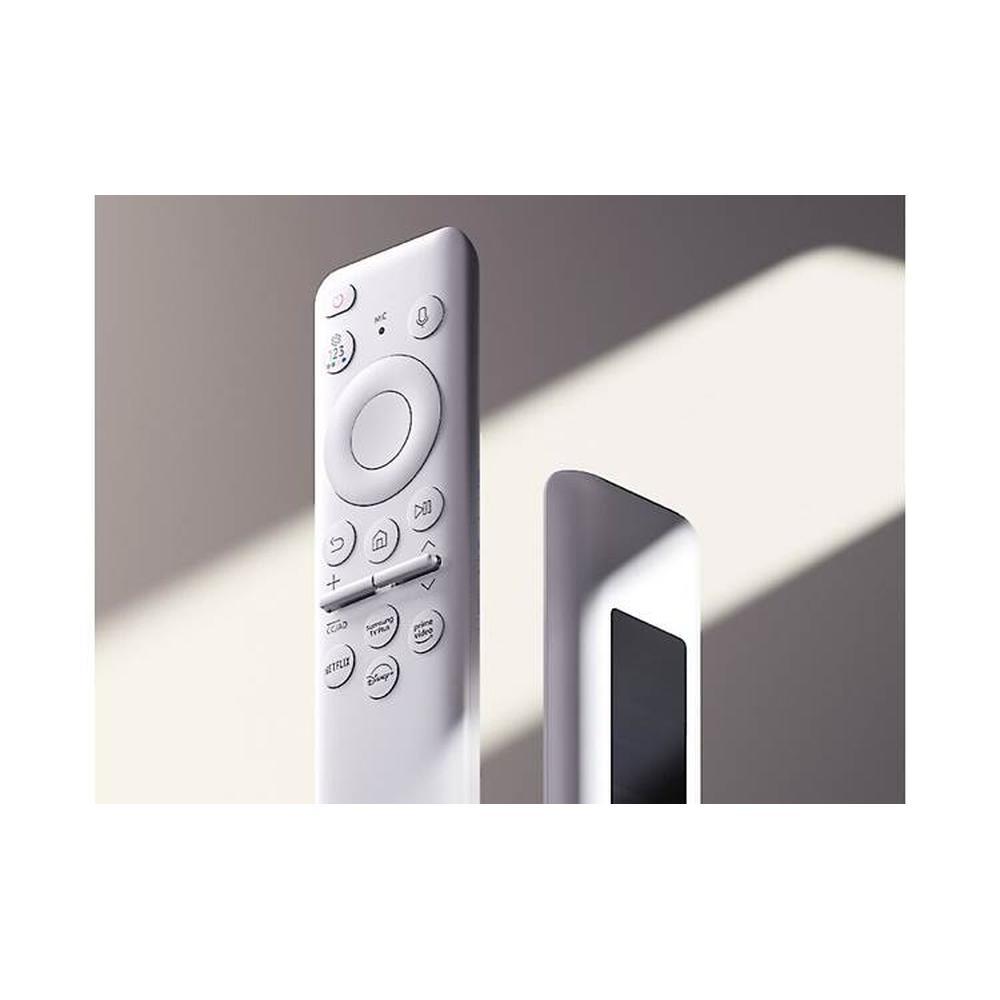
Here lies perhaps the biggest philosophical difference between these projectors. The Samsung Premiere 9 includes Samsung's full Tizen operating system, the same smart TV platform found in their televisions. This means built-in streaming apps like Netflix, Disney+, and Amazon Prime Video, voice control through Bixby or Alexa, and Samsung's Gaming Hub for cloud gaming services.
The smart integration extends to Samsung's SmartThings ecosystem, allowing control of connected home devices directly from the projector interface. The Tizen platform receives regular updates and maintains compatibility with new streaming services as they launch.
The Epson QS100 takes the opposite approach, including zero smart functionality. This design philosophy focuses entirely on projection performance, leaving entertainment sources to external devices like Apple TV, Roku, or gaming consoles. While this requires additional purchases and setup complexity, it also provides more flexibility and typically better long-term software support than built-in systems.
For home theater enthusiasts who already own preferred streaming devices or who prioritize projection quality above convenience, the Epson's focused approach makes sense. However, for users wanting an all-in-one solution that works immediately out of the box, Samsung's integrated approach offers clear advantages.
The audio situation mirrors the smart features divide. The Samsung Premiere 9 includes a substantial 40W 2.2.2 channel Dolby Atmos audio system with up-firing speakers for height effects. This system provides surprisingly effective surround sound for a projector, with clear dialogue, reasonable bass response, and convincing overhead audio effects.
The Epson QS100 includes no speakers whatsoever, requiring external audio solutions. While this necessitates additional investment in soundbars, AV receivers, or speaker systems, it also allows complete freedom in audio quality and configuration. Serious home theater enthusiasts typically prefer this approach, as even high-quality built-in speakers can't match dedicated audio components.
Gaming represents an interesting battleground between these projectors. The Epson QS100 supports 4K gaming at 120Hz with Auto Low Latency Mode (ALLM), which automatically switches to optimized settings when gaming consoles are detected. This high refresh rate capability makes it excellent for PlayStation 5 and Xbox Series X gaming, particularly for fast-paced competitive titles.
The Samsung Premiere 9 limits gaming to 4K at 60Hz with approximately 53ms of input lag—adequate for casual gaming but not ideal for competitive play. However, it compensates with Samsung's Gaming Hub, which provides access to cloud gaming services like Xbox Game Pass and GeForce Now without requiring a gaming console.
For serious gamers, the Epson QS100's 120Hz support and lower input lag provide clear advantages. For casual gamers who appreciate the convenience of built-in game streaming, the Samsung offers a more accessible approach.
Both projectors offer excellent installation flexibility, but with different emphases. The Samsung Premiere 9 provides a fixed throw ratio of 0.19:1, meaning it projects a 100-inch image from approximately 4.5 inches away from the wall. This predictable placement makes furniture arrangement straightforward.
The Epson QS100 offers variable throw ratio from 0.16:1 to 0.22:1, providing more flexibility in placement while supporting larger maximum screen sizes up to 160 inches compared to Samsung's 130-inch limit. The Epson also includes more advanced geometry correction features and ISF certification for professional calibration.
For custom installation scenarios or dedicated theater rooms where precise calibration matters, the Epson QS100 provides superior flexibility. For living room installations where simplicity and predictability are preferred, the Samsung offers a more straightforward approach.
At the time of writing, both projectors command premium pricing that reflects their advanced technology and large-screen capabilities. The Samsung Premiere 9 typically costs about 20% more than the Epson QS100, but this price difference narrows significantly when factoring in the additional components the Epson requires.
The Samsung's higher upfront cost includes smart functionality and quality audio that would cost several hundred dollars to replicate with external devices. The Epson's lower base price becomes less attractive when adding streaming devices ($150-300) and audio systems ($500-2000+) for equivalent functionality.
However, for users who already own preferred streaming devices and audio systems, or who prioritize maximum brightness and gaming performance, the Epson QS100's focused approach can provide better value.
The Samsung Premiere 9 makes the most sense for users wanting a complete, convenient entertainment solution. If you value exceptional color accuracy, prefer all-in-one simplicity, and your viewing environment has reasonable lighting control, Samsung's integrated approach offers compelling advantages. It's particularly well-suited for living room installations where the built-in Dolby Atmos system and smart features eliminate component clutter.
The Epson QS100 is the better choice when brightness is your primary concern. If you have significant ambient light, prefer daytime viewing, or want the flexibility to build a custom audio/video system, the Epson's focused performance approach and superior brightness make it worth the additional complexity. It's also the clear winner for serious gaming thanks to 120Hz support.
For dedicated home theater rooms with controlled lighting, both projectors can excel, but the Samsung Premiere 9's superior color accuracy might give it an edge for movie watching, while the Epson QS100's brightness advantage becomes less critical in dark environments.
These projectors represent two valid but different philosophies for achieving large-screen entertainment. The Samsung Premiere 9 prioritizes convenience and color accuracy in a complete package, while the Epson QS100 focuses on maximum brightness and performance flexibility.
Neither approach is inherently superior—the better choice depends entirely on your specific needs, room conditions, and preferences for system complexity. Both projectors can deliver transformative large-screen experiences that make 85-inch TVs seem small by comparison, opening up new possibilities for home entertainment that were previously available only in commercial theaters.
The key is honestly assessing your ambient light conditions, determining whether you want all-in-one convenience or prefer building a custom system, and deciding how much the performance differences matter for your specific viewing habits. With either choice, you're getting access to an impressive technology that brings the cinematic experience home in ways that traditional TVs simply cannot match.
| Epson QS100 4K PRO-UHD Ultra Short Throw Projector | Samsung Premiere 9 4K Ultra Short Throw Laser Projector |
|---|---|
| Brightness - Most critical spec for daytime viewing and bright rooms | |
| 4,500 lumens (excellent for any lighting conditions) | 3,450 lumens (good for most rooms, may struggle in very bright spaces) |
| Light Source Technology - Affects color accuracy and maintenance | |
| 3LCD with blue laser phosphor (eliminates rainbow effects, natural colors) | Single-chip DLP with RGB triple laser (superior color precision, wider gamut) |
| Maximum Screen Size - How big you can go | |
| 160 inches (ideal for dedicated theater rooms) | 130 inches (perfect for most living rooms) |
| Throw Ratio - Distance needed from wall | |
| 0.16:1 to 0.22:1 variable (more placement flexibility) | 0.19:1 fixed (predictable 4.5" from wall for 100" image) |
| Smart TV Features - Built-in streaming and apps | |
| None (requires external streaming devices like Apple TV/Roku) | Full Tizen OS with Netflix, Disney+, Gaming Hub (complete solution) |
| Audio System - Built-in sound quality | |
| No speakers (requires external audio system) | 40W 2.2.2 Dolby Atmos (surprisingly effective built-in surround) |
| Gaming Performance - Console compatibility and responsiveness | |
| 4K/120Hz with ALLM (excellent for PS5/Xbox Series X) | 4K/60Hz, 53ms lag (adequate for casual gaming, includes cloud gaming) |
| HDR Support - Enhanced contrast and color range | |
| HDR10, HLG with dynamic tone mapping (good processing) | HDR10, HDR10+, HLG (wider format support, excellent color) |
| Color Gamut Coverage - How vivid and accurate colors appear | |
| BT.2020 support (natural, less oversaturated colors) | 100% DCI-P3, 92% BT.2020 (reference-level accuracy, vibrant) |
| Professional Calibration - Setup flexibility for enthusiasts | |
| ISF certified with advanced geometry correction (custom installer friendly) | Consumer-focused auto-setup (easier DIY installation) |
| Release Year - Technology generation and future support | |
| 2025 (latest processing and laser technology) | 2023 (proven platform with regular software updates) |
The Epson QS100 is significantly brighter at 4,500 lumens compared to the Samsung Premiere 9 at 3,450 lumens. This 30% brightness advantage makes the Epson QS100 much better for rooms with ambient light or daytime viewing, while the Samsung Premiere 9 performs best in controlled lighting conditions.
The Samsung Premiere 9 includes Samsung's full Tizen smart TV platform with Netflix, Disney+, Amazon Prime Video, and other streaming apps built-in. The Epson QS100 has no smart features and requires external streaming devices like Apple TV, Roku, or Fire TV to access content.
The Epson QS100 is superior for gaming with 4K/120Hz support and Auto Low Latency Mode, making it excellent for PlayStation 5 and Xbox Series X. The Samsung Premiere 9 is limited to 4K/60Hz with higher input lag but includes Samsung's Gaming Hub for cloud gaming without a console.
Both are ultra short throw projectors that sit very close to the wall. The Samsung Premiere 9 needs about 4.5 inches from the wall for a 100-inch image with its fixed 0.19:1 throw ratio. The Epson QS100 offers more flexibility with a variable 0.16:1 to 0.22:1 throw ratio.
The Samsung Premiere 9 includes a 40W 2.2.2 channel Dolby Atmos sound system that provides surprisingly good audio quality. The Epson QS100 has no built-in speakers and requires external audio equipment like soundbars or AV receivers.
The Epson QS100 can project up to 160 inches, making it ideal for dedicated home theater rooms. The Samsung Premiere 9 maxes out at 130 inches, which is still massive and perfect for most living room setups.
The Samsung Premiere 9 has superior color accuracy with its RGB triple laser system, covering 100% of DCI-P3 and 92% of BT.2020 color spaces. The Epson QS100 produces more natural-looking colors but doesn't achieve the same level of color precision as the Samsung's dedicated laser system.
Both the Epson QS100 and Samsung Premiere 9 use pixel-shifting technology to achieve 4K resolution rather than native 4K panels. The Samsung uses a single DLP chip with pixel shifting, while the Epson combines three 1080p LCD panels with two-way pixel shifting to create the 4K effect.
For dedicated home theaters with controlled lighting, the Samsung Premiere 9 may have an edge due to superior color accuracy and built-in Dolby Atmos audio. However, the Epson QS100 offers larger screen sizes up to 160 inches and professional calibration options that serious enthusiasts prefer.
Both projectors use laser light sources rated for approximately 20,000 hours of use, which equals about 10-15 years of typical viewing. The Epson QS100 uses blue laser phosphor technology, while the Samsung Premiere 9 uses RGB triple laser, both providing virtually maintenance-free operation.
The Epson QS100 typically costs less upfront but requires additional purchases for streaming devices and audio systems. The Samsung Premiere 9 costs more initially but includes smart features and quality audio, making the total cost of ownership more comparable between the two projectors.
The Epson QS100 handles bright rooms much better due to its higher 4,500-lumen output, maintaining good image quality even with ambient light. The Samsung Premiere 9 can work in moderately bright rooms but may require some lighting control for optimal viewing, especially during daytime use.
We've done our best to create useful and informative comparisons to help you decide what product to buy. Our research uses advanced automated methods to create this comparison and perfection is not possible - please contact us for corrections or questions. These are the sites we've researched in the creation of this article: projectorscreen.com - youtube.com - projectorcentral.com - projectorreviews.com - techradar.com - audioadvice.com - projectorreviews.com - avsforum.com - projectorcentral.com - mediaserver.goepson.com - projectorcentral.com - news.epson.com - epson.eu - epson.com - epson.eu - epson.com - projectorcentral.com - bestbuy.com - avsforum.com - valueelectronics.com - youtube.com - techradar.com - youtube.com - news.samsung.com - samsung.com - soundandvision.com - samsung.com - sound-advice.online - trustedreviews.com

Privacy Policy
Terms and Conditions - Affiliate Policy
Home Security
© Copyright 2008-2026.
11816 Inwood Rd #1211, Dallas, TX 75244