

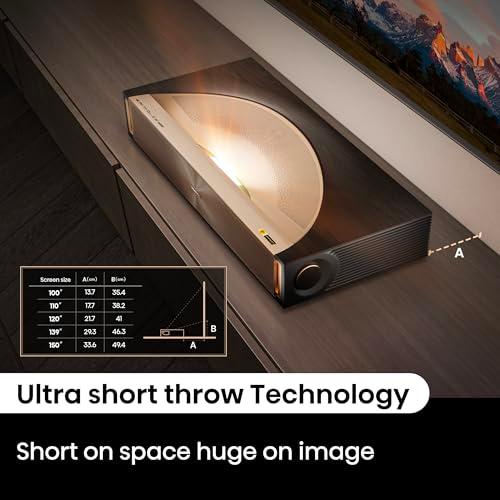
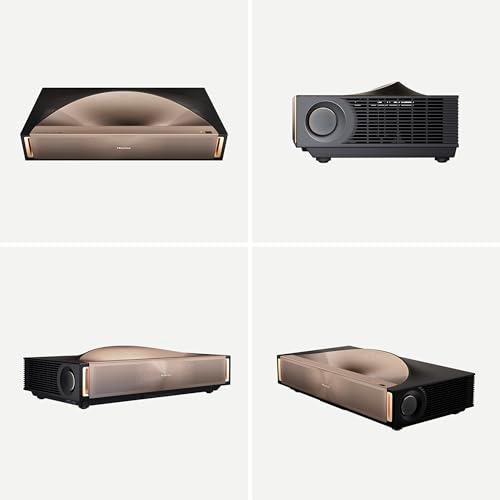
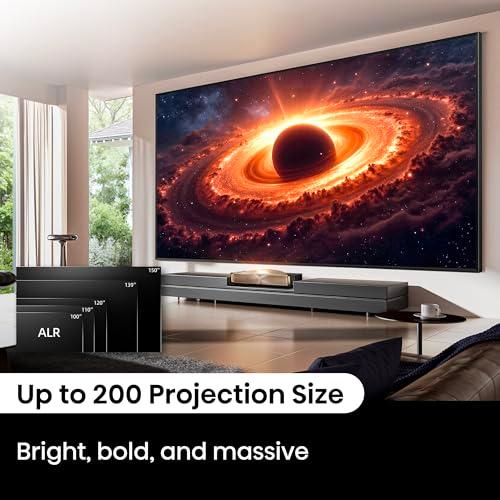
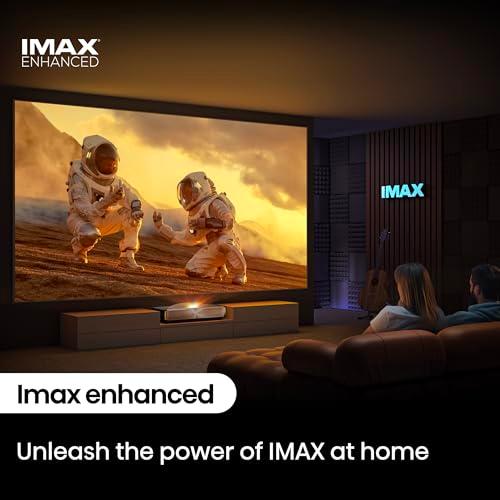

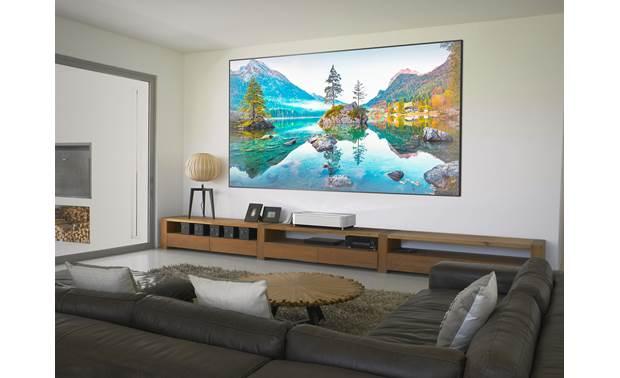
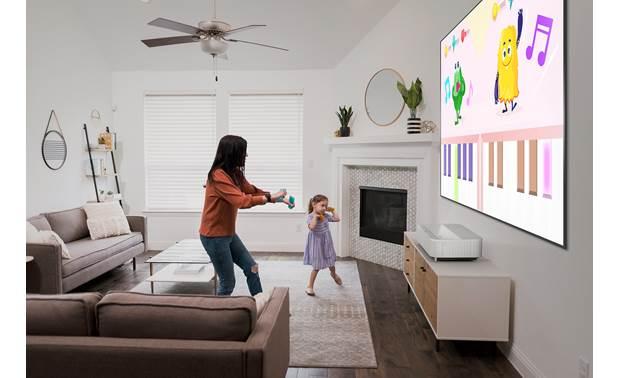
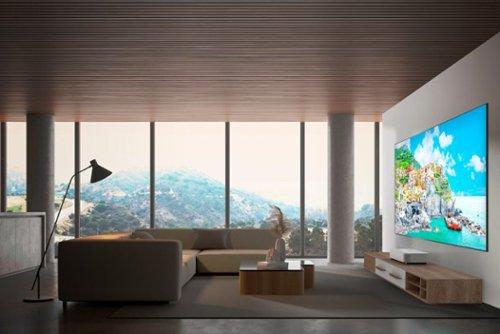
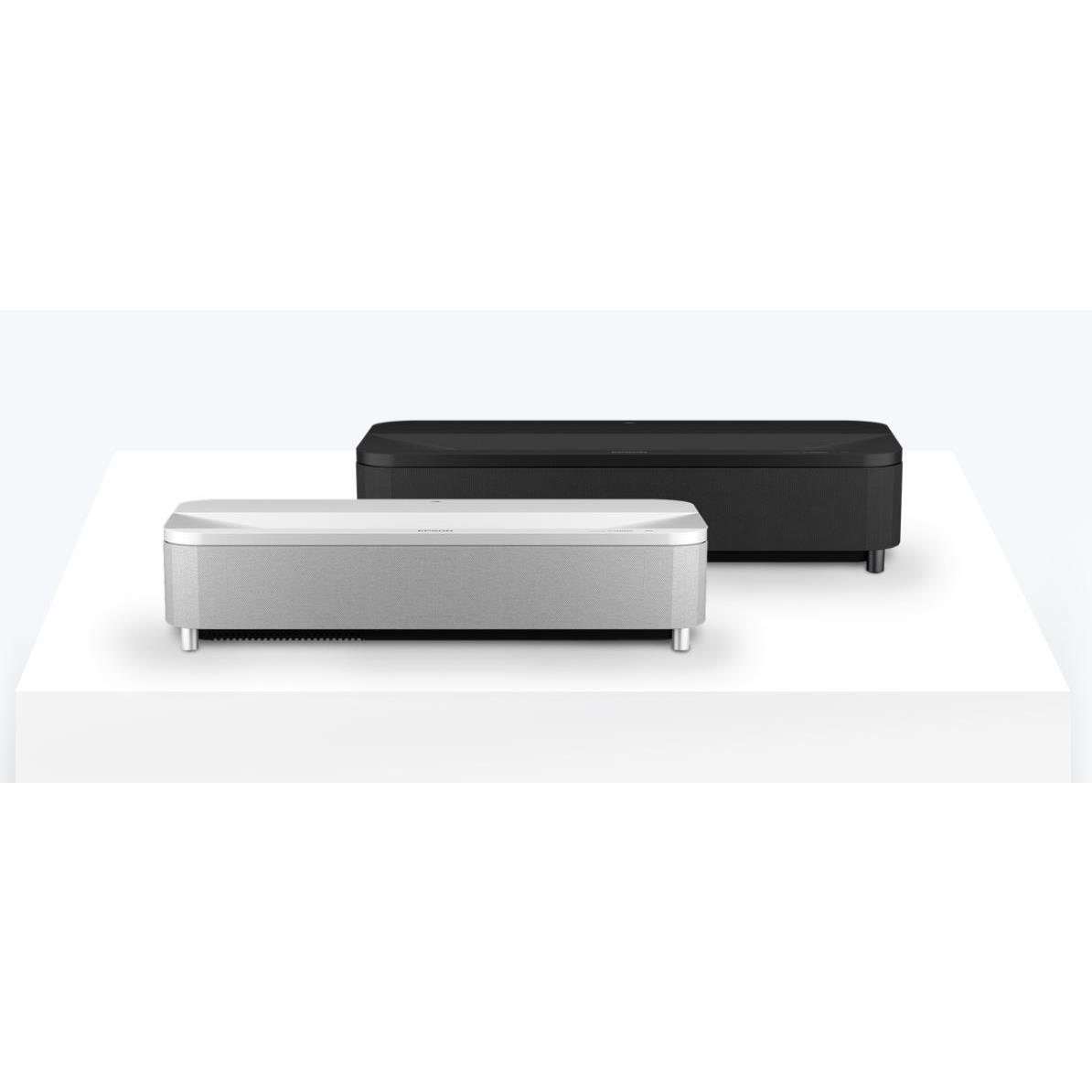
Ultra short throw projectors have revolutionized home entertainment by cramming massive screen experiences into regular living rooms. Instead of mounting a projector on your ceiling or placing it across the room, these clever devices sit just inches from your wall and beam out cinema-sized images up to 200 inches diagonally. It's like having an IMAX screen in your family room.
The technology has matured dramatically over the past few years, with 2022-2025 bringing significant advances in brightness, color accuracy, and integrated audio. Two standout models represent different philosophies in this space: the premium Hisense L9Q launched in 2025, and the value-focused Epson EpiqVision Ultra LS800 from 2022.
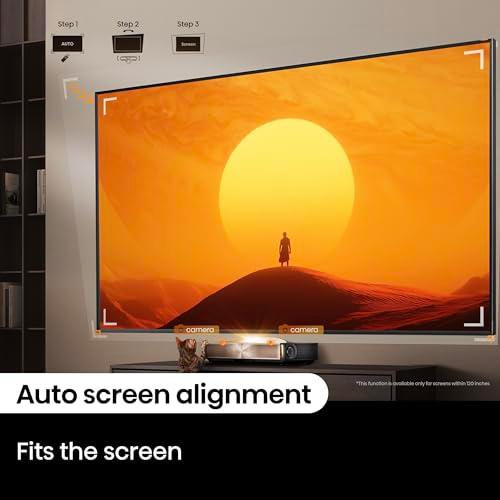
Before diving into specifics, it's worth understanding what makes these projectors special. Traditional projectors need significant "throw distance"—the space between the projector and screen. A conventional projector might need 8-12 feet to create a 100-inch image. Ultra short throw models flip this concept, using sophisticated optics and mirrors to create that same 100-inch image from just 5-8 inches away from the wall.
This proximity brings huge advantages: no shadows when you walk in front of the screen, no ceiling mounting hassles, and the ability to fit massive screens in compact spaces. The trade-off is complexity—these projectors pack incredibly sophisticated laser light engines and precision optics into compact boxes.
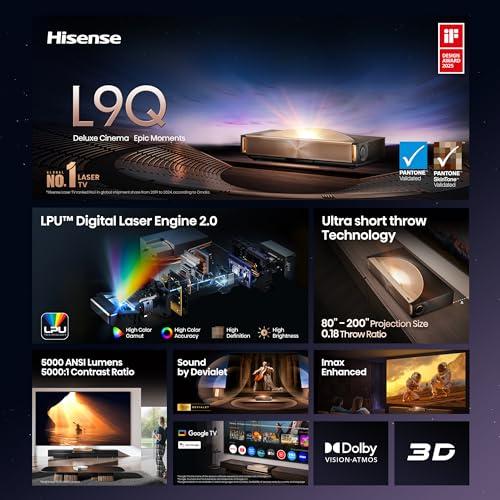
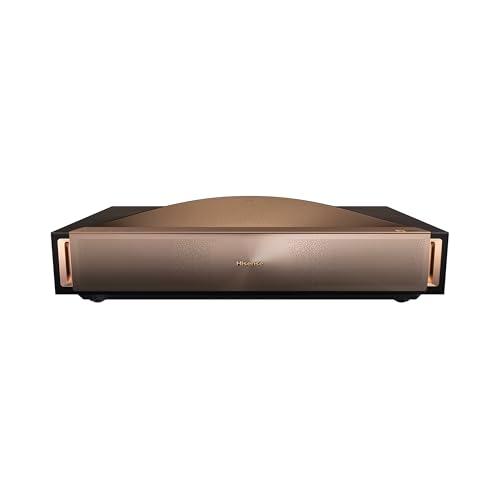
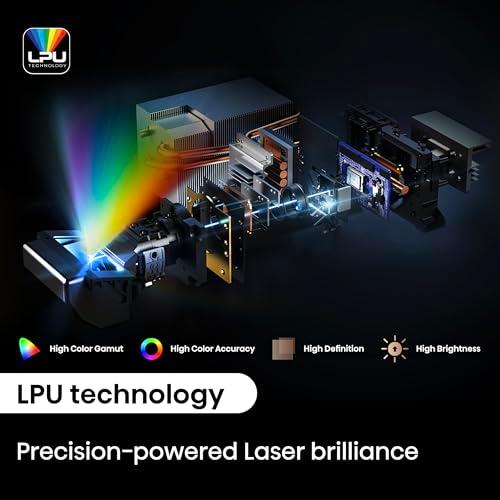
The Hisense L9Q represents the current pinnacle of UST technology. Released in 2025, it features TriChroma triple laser technology—essentially three separate red, green, and blue lasers that create pure, saturated colors impossible with older designs. At the time of writing, it commands premium pricing that positions it against high-end 100-inch TVs.
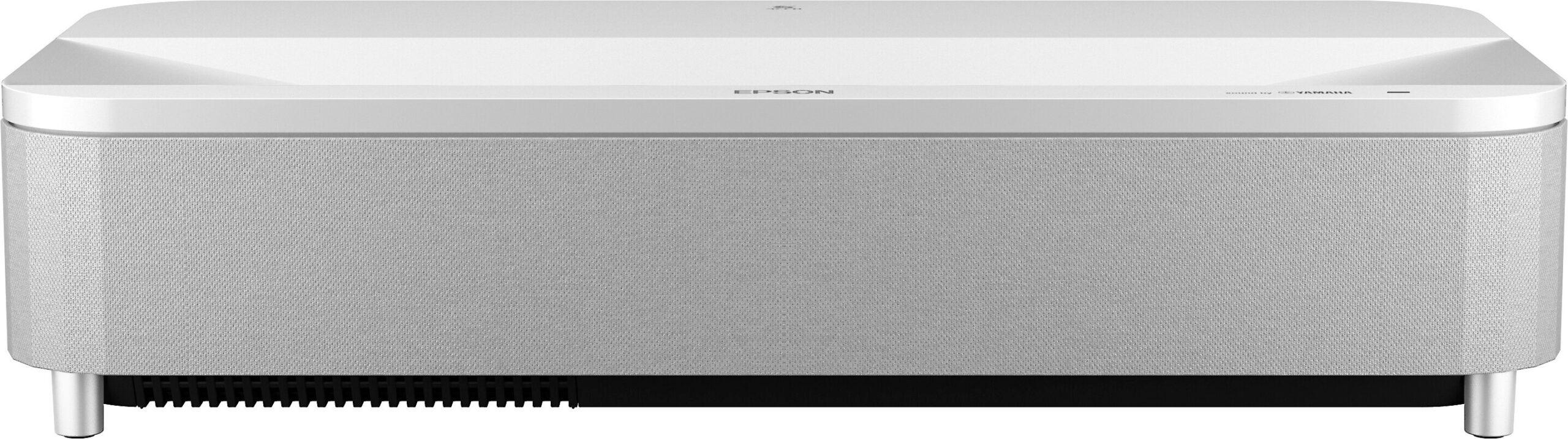
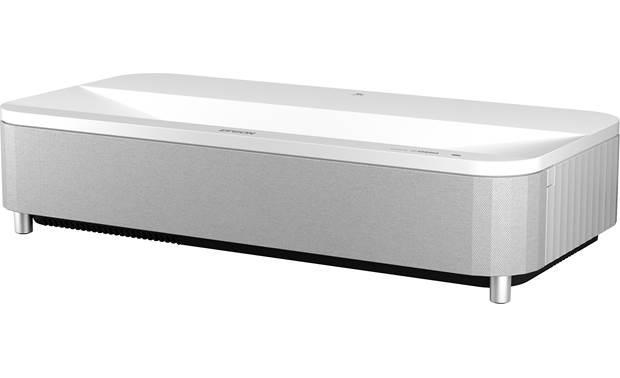
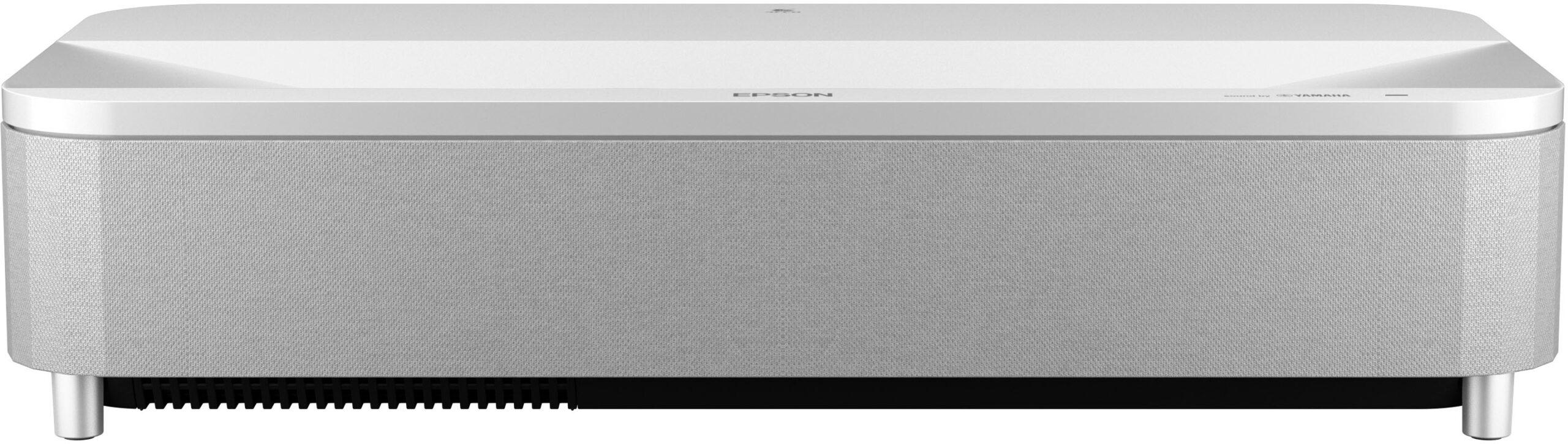
The Epson LS800, launched in 2022, takes a more practical approach. It uses Epson's proven 3LCD technology paired with a single blue laser and phosphor system. This combination delivers excellent performance at roughly 40% less cost than the L9Q, making it a compelling alternative to 85-100 inch premium televisions.
Brightness might be the most critical specification for any projector, but it's especially crucial for UST models since they're typically used in living rooms with ambient light. Both projectors excel here, but with important differences.
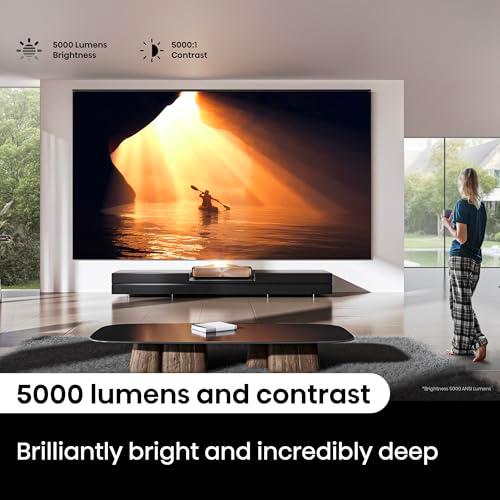
The L9Q delivers 5,000 ANSI lumens—a measurement that accounts for how bright the image actually appears to your eyes across the entire screen. This represents a 25% advantage over the LS800's 4,000 lumens. In practical terms, this extra brightness translates to better image quality in bright rooms and the ability to drive larger screens without the image appearing washed out.
ANSI lumens (measured by the American National Standards Institute) provide a more realistic brightness measurement than simple "lumens" specifications, since they account for real-world variations across the screen. Both projectors exceed most premium TVs in peak brightness, which is why they can compete effectively in well-lit environments where even high-end televisions might struggle.
Based on expert reviews and user feedback, the L9Q's brightness advantage becomes most apparent in challenging lighting conditions—think large windows without blackout curtains, or rooms with significant artificial lighting. For more controlled environments, the LS800's 4,000 lumens prove more than adequate.
Color reproduction reveals the fundamental difference between these projectors. The L9Q uses TriChroma triple laser technology—three separate pure-color lasers (red, green, blue) that combine to create the final image. This approach achieves 110% coverage of the BT.2020 color space, which represents the widest color standard currently used in premium content.
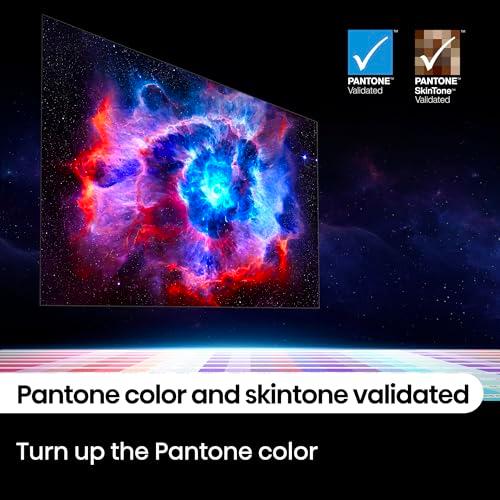
To put this in perspective: traditional TVs typically cover 70-80% of BT.2020, while premium OLED displays might reach 90-95%. The L9Q's 110% coverage, validated by Pantone (the color authority used by professional designers), means it can display colors more vivid and accurate than almost any television.
The LS800 takes a different approach with 3LCD technology—three separate LCD panels (red, green, blue) illuminated by a blue laser and phosphor system. This covers approximately 77% of the DCI-P3 color space (a cinema standard), which is respectable but narrower than the L9Q.
The practical difference appears most in highly saturated content—think vibrant nature documentaries, animated films, or video games. The L9Q can reproduce those deep ocean blues and sunset oranges with an intensity that looks almost hyperreal. The LS800 delivers more natural, TV-like colors that many users actually prefer for everyday viewing.
There's also the "rainbow effect" consideration. DLP projectors like the L9Q can produce brief rainbow flashes for sensitive viewers, particularly during quick eye movements. The LS800's 3LCD technology completely eliminates this phenomenon, making it better for those who've experienced rainbow effects with other projectors.
Contrast ratio—the difference between the darkest blacks and brightest whites—determines how much detail you can see in dark scenes and how "punchy" the overall image appears.
The specifications tell an interesting story. The LS800 claims an impressive 2,500,000:1 dynamic contrast ratio, while the L9Q specifies 5,000:1. However, these numbers use different measurement methods. Dynamic contrast (like the LS800's spec) measures the difference between the brightest possible white and darkest possible black the projector can produce in different scenes. Static contrast measures this difference within the same frame.
Based on professional reviews, both projectors deliver excellent real-world contrast around 3,000-5,000:1, which creates deep blacks and detailed shadow information. The L9Q holds a slight measured advantage, particularly in HDR content where its laser technology maintains better contrast at high brightness levels.
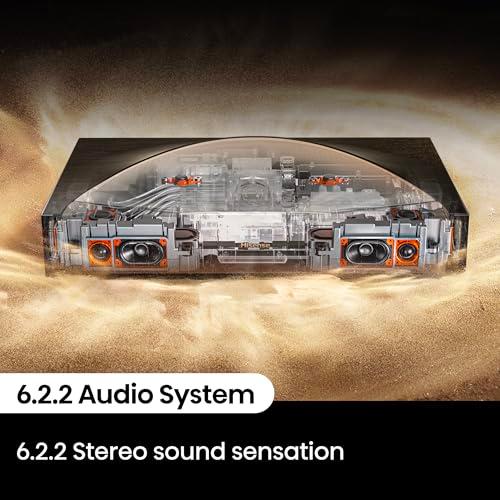
This is where the L9Q pulls significantly ahead. Its integrated 116W 6.2.2-channel Devialet sound system represents a genuine premium audio solution. Devialet, a French company known for high-end audio equipment, engineered this system specifically for the L9Q, creating what they describe as "Opéra de Paris-grade" acoustics.
The system includes up-firing speakers for Dolby Atmos height effects, dual subwoofers, and advanced digital signal processing. User reports consistently praise this audio system as eliminating the need for separate soundbars or speakers—a significant advantage since good surround sound systems can cost $1,000-3,000 additional.
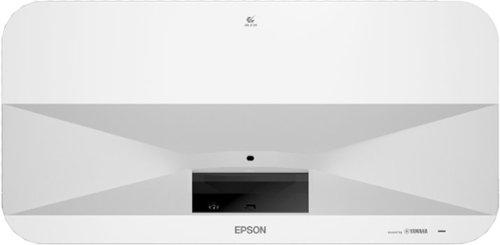
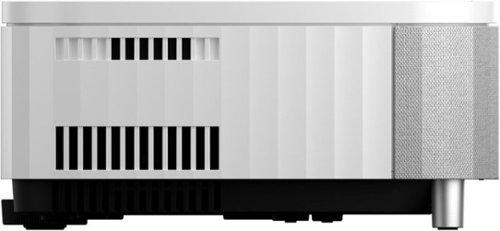
The LS800 includes a Yamaha-designed 2.1 system with dedicated subwoofer that provides decent sound for smaller rooms, but it's clearly designed as a basic audio solution rather than a premium feature.
The L9Q supports screen sizes from 80 inches up to an impressive 200 inches, while the LS800 maxes out at 150 inches. For most users, 120-150 inches provides an optimal balance of immersion and comfortable viewing, but the L9Q's ability to go larger opens up possibilities for dedicated theater rooms or commercial applications.
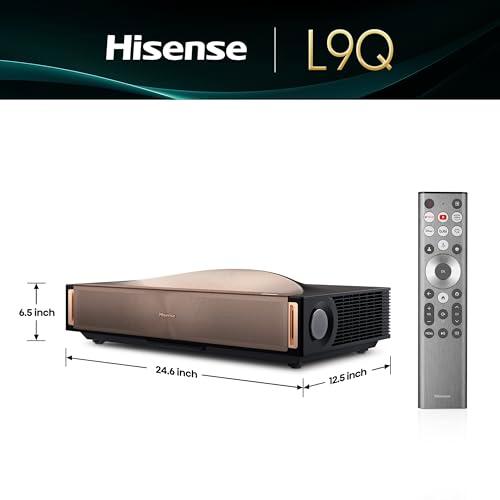
Both projectors feature ultra-short throw ratios, but the L9Q can sit slightly closer to the wall (0.18:1 throw ratio versus approximately 0.22:1 for the LS800). This translates to just a few inches difference in practice, but it can matter in tight installations.
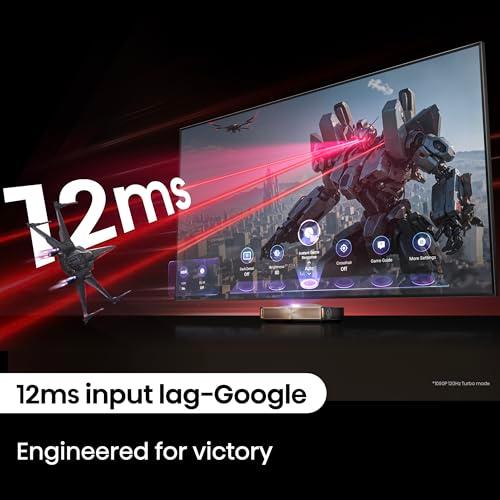
Both projectors handle gaming well, but with different strengths. The L9Q offers 12ms input lag in dedicated Game Mode—fast enough for competitive gaming on its massive screen. Its HDMI 2.1 ports support Auto Low Latency Mode (ALLM), which automatically switches to game mode when it detects gaming consoles.
The LS800 provides 16.7ms input lag and includes a dedicated gaming HDMI port that supports 1080p at 120Hz refresh rates for ultra-smooth gaming. While slightly higher latency, this difference is imperceptible for most gaming scenarios.
The L9Q's superior HDR support (Dolby Vision, HDR10+, IMAX Enhanced) provides better gaming visuals with supported titles, while both handle 4K/60Hz gaming from PlayStation 5 and Xbox Series X consoles excellently.
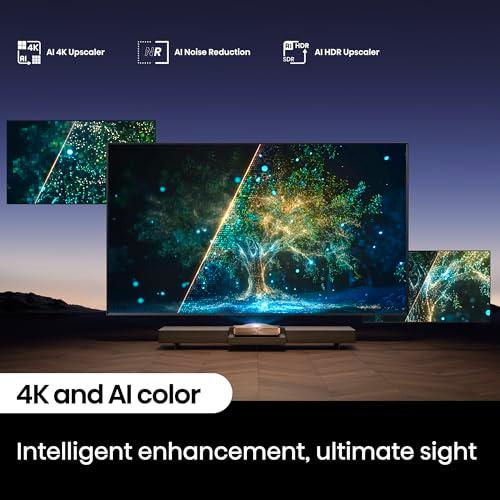
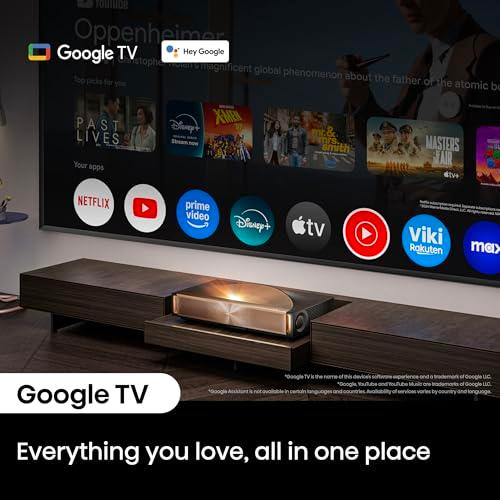
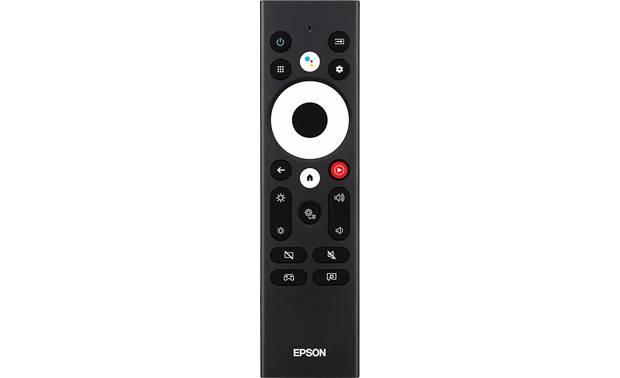
Both projectors include comprehensive smart TV platforms. The L9Q runs Google TV with access to all major streaming services, voice control, and automatic picture optimization using AI processing. The LS800 uses Android TV 11 with similar streaming capabilities and Google Assistant integration.
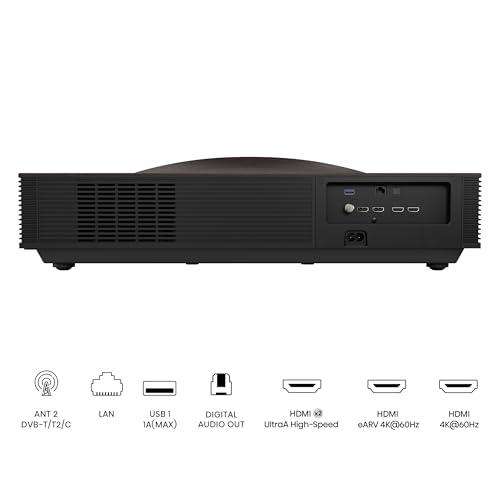
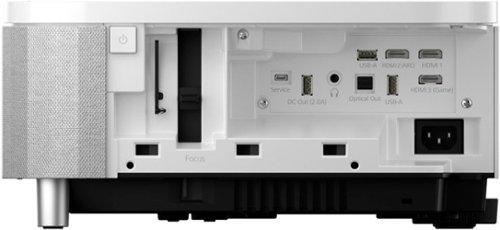
Connectivity favors the LS800 slightly with three HDMI ports versus the L9Q's configuration, though both provide enough inputs for most users' needs. Both include wireless capabilities, with the L9Q featuring newer Wi-Fi 6E and Bluetooth 5.3 standards.
At the time of writing, the pricing differential between these projectors is substantial—the L9Q commands premium pricing that's roughly 60-70% higher than the LS800. This positions them against different alternatives: the L9Q competes with high-end 100-110 inch displays and premium home theater setups, while the LS800 offers an alternative to 85-100 inch TVs.
The L9Q's premium pricing reflects its advanced triple laser technology, integrated high-end audio, larger screen capability, and cutting-edge features. For enthusiasts seeking maximum performance and willing to pay for the latest technology, it delivers meaningful advantages.
The LS800 represents exceptional value, delivering 80-85% of the L9Q's performance at significantly lower cost. For most users, its 4,000 lumens of brightness, excellent color accuracy, and reliable 3LCD technology provide a premium large-screen experience without the premium price tag.
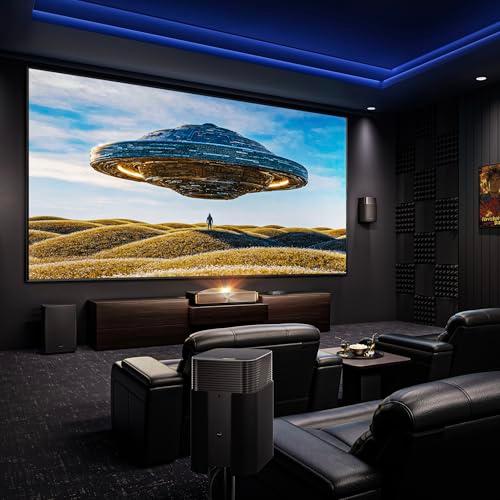
For dedicated home theater applications, both projectors excel but serve different priorities. The L9Q better suits enthusiasts who want cutting-edge performance and don't mind paying for it. Its wider color gamut, superior HDR support, and integrated premium audio create a more immersive, cinema-like experience.
The LS800 appeals to practical home theater builders who want excellent performance while maintaining budget flexibility for other components like dedicated audio systems, specialized screens, or room treatments.
Both projectors benefit significantly from ambient light rejecting (ALR) screens, which can cost $1,000-3,000 additional but dramatically improve contrast and color saturation in rooms with ambient light.
Choose the Hisense L9Q if you want the absolute best UST projector technology available, need screens larger than 150 inches, value integrated premium audio, or have challenging lighting conditions that require maximum brightness. It's the projector for enthusiasts who prioritize cutting-edge performance and are willing to pay for meaningful technological advantages.
Choose the Epson LS800 if you want excellent UST performance at a more accessible price point, are sensitive to rainbow effects from DLP technology, or prefer to allocate budget toward separate audio systems or premium screens. It delivers flagship-level performance without flagship pricing.
The LS800 also makes more sense if you're comparing directly against large TVs—its pricing keeps it competitive with premium 85-100 inch displays while offering much larger screen possibilities.
Both projectors represent excellent choices in the UST category, but they target different buyers with different priorities. The L9Q pushes technological boundaries for performance enthusiasts, while the LS800 delivers premium experiences at practical pricing for mainstream buyers seeking cinema-sized entertainment in their living rooms.
The ultra short throw projector market has matured significantly, and both of these models prove that massive screen experiences no longer require dedicated theater rooms or complex installations. Whether you choose cutting-edge performance or exceptional value, you'll get a viewing experience that transforms how you think about home entertainment.
| Hisense L9Q Triple Laser Ultra Short Throw Projector | Epson EpiqVision Ultra LS800 3LCD Laser Projector |
|---|---|
| Brightness - Most critical spec for daytime viewing and large screens | |
| 5,000 ANSI lumens (25% brighter, handles any lighting condition) | 4,000 ANSI lumens (excellent for most rooms, great value) |
| Display Technology - Affects color quality and rainbow effects | |
| Triple laser DLP with pixel-shifting 4K (pure RGB lasers, possible rainbow effect) | 3LCD with blue laser + phosphor (no rainbow effect, TV-like colors) |
| Color Gamut - Determines how vivid and accurate colors appear | |
| 110% BT.2020 (Pantone validated, cinema-grade color accuracy) | ~77% DCI-P3 (good color coverage, more natural reproduction) |
| Maximum Screen Size - How big you can go | |
| 80-200 inches (supports massive home theater installations) | 80-150 inches (perfect for most living rooms) |
| Audio System - Critical for all-in-one experience | |
| 116W 6.2.2-channel Devialet system with Dolby Atmos (eliminates need for soundbar) | Yamaha 2.1 system with subwoofer (adequate for smaller rooms) |
| Input Lag - Important for gaming performance | |
| 12ms in Game Mode (excellent for competitive gaming) | 16.7ms (very good for casual gaming) |
| HDR Support - Affects premium content quality | |
| Dolby Vision, HDR10+, IMAX Enhanced, HLG (supports all formats) | HDR10, HLG only (missing Dolby Vision and HDR10+) |
| Throw Ratio - How close to wall you can place it | |
| 0.18:1 (100" screen from 5.4" away, very close placement) | ~0.22:1 (100" screen from ~6.4" away, still very close) |
| Laser Lifespan - Long-term reliability and maintenance | |
| 25,000+ hours (virtually maintenance-free for decades) | 20,000 hours (excellent longevity, slightly less than L9Q) |
| Smart Platform - Streaming and connectivity features | |
| Google TV with AI processing and voice control | Android TV 11 with Google Assistant |
| HDMI Connectivity - Device connection options | |
| 4 ports (2x HDMI 2.1, 2x HDMI 2.0b with eARC, ALLM) | 3 HDMI 2.0 ports (one dedicated gaming port, one with ARC) |
| Release Year - Technology generation and future-proofing | |
| 2025 (latest triple laser technology, cutting-edge features) | 2022 (proven, mature technology with strong track record) |
| Value Positioning - Who should consider each model | |
| Premium flagship for enthusiasts wanting best performance | Exceptional value for users wanting great UST experience at lower cost |
The Hisense L9Q is significantly brighter at 5,000 ANSI lumens compared to the Epson LS800's 4,000 ANSI lumens. This 25% brightness advantage makes the L9Q better for rooms with lots of windows or ambient light, while the LS800 still provides excellent brightness for most living room environments.
The Hisense L9Q supports much larger screens, projecting from 80 inches up to 200 inches diagonally. The Epson LS800 is limited to 80-150 inches maximum. For most home theaters, 120-150 inches is ideal, but the L9Q offers more flexibility for larger rooms.
The Hisense L9Q delivers superior color performance with its triple laser technology, covering 110% of the BT.2020 color space with Pantone validation. The Epson LS800 covers about 77% of DCI-P3, which is still good but less vibrant. However, the LS800 produces more natural, TV-like colors that some users prefer.
The Epson LS800 completely eliminates rainbow effects thanks to its 3LCD technology. The Hisense L9Q uses DLP technology, which can produce brief rainbow flashes for sensitive viewers during quick eye movements. Most people don't notice this effect, but it's worth considering.
Both are excellent for gaming, but the Hisense L9Q has a slight edge with 12ms input lag versus the LS800's 16.7ms. The L9Q also supports more advanced HDR formats for better gaming visuals. The LS800 includes a dedicated gaming HDMI port with 1080p/120Hz support.
The Hisense L9Q features a premium 116W 6.2.2-channel Devialet sound system with Dolby Atmos, essentially eliminating the need for a separate soundbar. The Epson LS800 includes a basic Yamaha 2.1 system that's adequate for smaller rooms but may require additional speakers for larger spaces.
The Epson LS800 provides exceptional value, delivering about 80% of the L9Q's performance at roughly 40% less cost. The Hisense L9Q justifies its premium pricing with cutting-edge technology, superior audio, and larger screen capabilities for enthusiasts wanting the absolute best.
Both are ultra-short throw projectors that sit very close to the wall. The Hisense L9Q can be placed slightly closer with its 0.18:1 throw ratio (100" screen from 5.4" away) versus the LS800's approximately 0.22:1 ratio (100" screen from about 6.4" away). Both eliminate shadows and ceiling mounting hassles.
The Hisense L9Q supports all major HDR formats including Dolby Vision, HDR10+, IMAX Enhanced, and HLG. The Epson LS800 only supports HDR10 and HLG, missing Dolby Vision and HDR10+ found in premium streaming content and 4K Blu-rays.
The Hisense L9Q laser is rated for 25,000+ hours of operation, while the Epson LS800 provides 20,000 hours. Both offer essentially maintenance-free operation for many years of daily use, with the L9Q providing slightly longer lifespan.
For dedicated home theaters, the Hisense L9Q excels with its wider color gamut, comprehensive HDR support, premium integrated audio, and ability to drive screens up to 200 inches. The Epson LS800 works well in home theaters too, especially when paired with separate premium audio systems.
Choose the Hisense L9Q if you want cutting-edge performance, need screens larger than 150 inches, value integrated premium audio, or have challenging lighting conditions. Choose the Epson LS800 if you want excellent performance at a lower price point, are sensitive to rainbow effects, or prefer investing savings in separate audio equipment.
We've done our best to create useful and informative comparisons to help you decide what product to buy. Our research uses advanced automated methods to create this comparison and perfection is not possible - please contact us for corrections or questions. These are the sites we've researched in the creation of this article: chrismajestic.com - shop.hisense-usa.com - tomsguide.com - valueelectronics.com - techradar.com - whathifi.com - youtube.com - projectorscreen.com - projectorscreen.com - hisense-usa.com - youtube.com - projectorcentral.com - youtube.com - hisense-usa.com - manuals.plus - shop.avispl.com - hisense-usa.com - techradar.com - danamic.org - projectorscreen.com - projectorcentral.com - epson.com - dreamediaav.com - dell.com - rtings.com - avsforum.com - audiogeneral.com - news.epson.com - projectorcentral.com

Privacy Policy
Terms and Conditions - Affiliate Policy
Home Security
© Copyright 2008-2026.
11816 Inwood Rd #1211, Dallas, TX 75244