

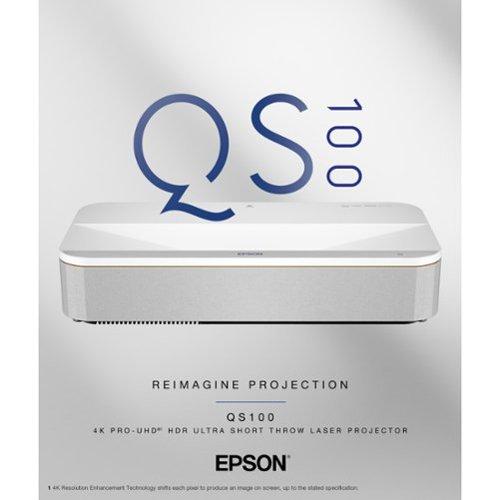
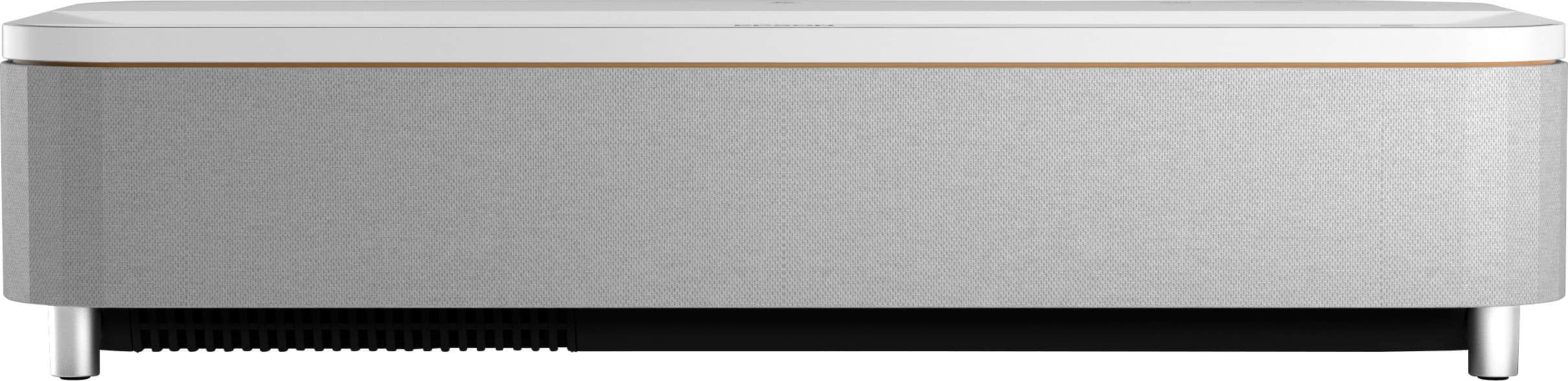
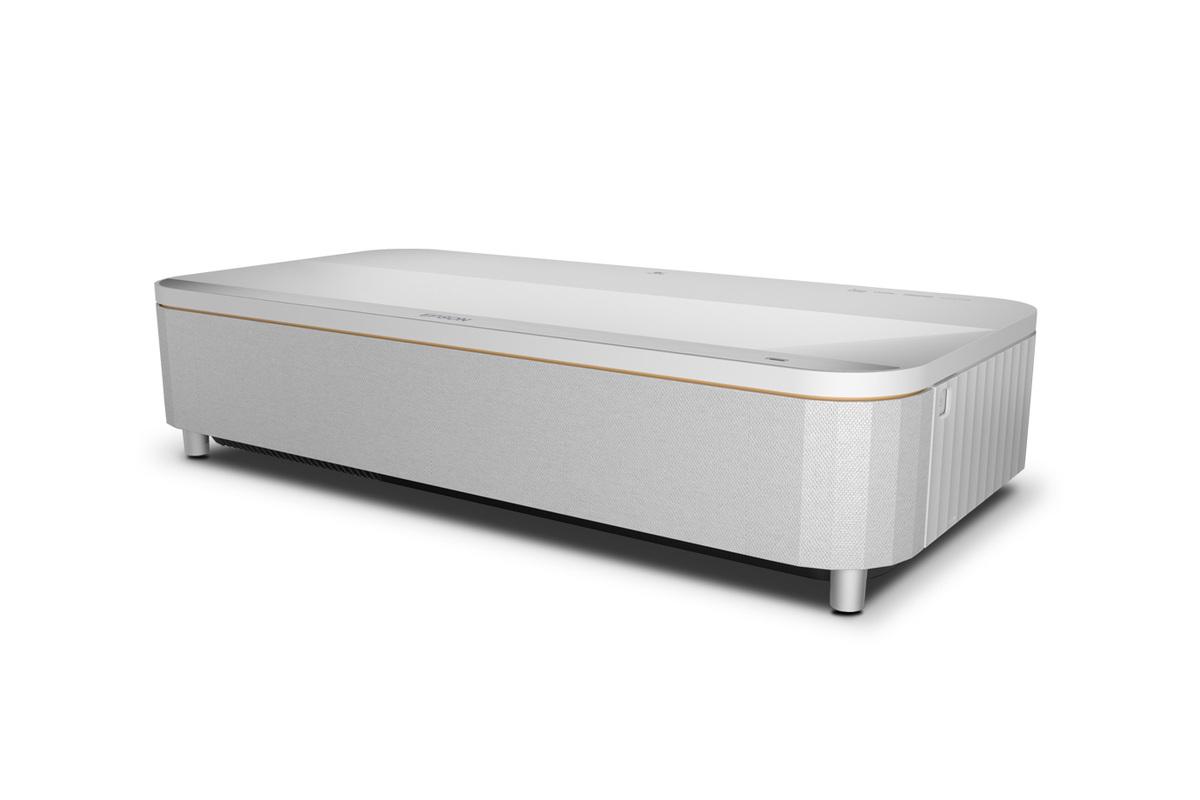
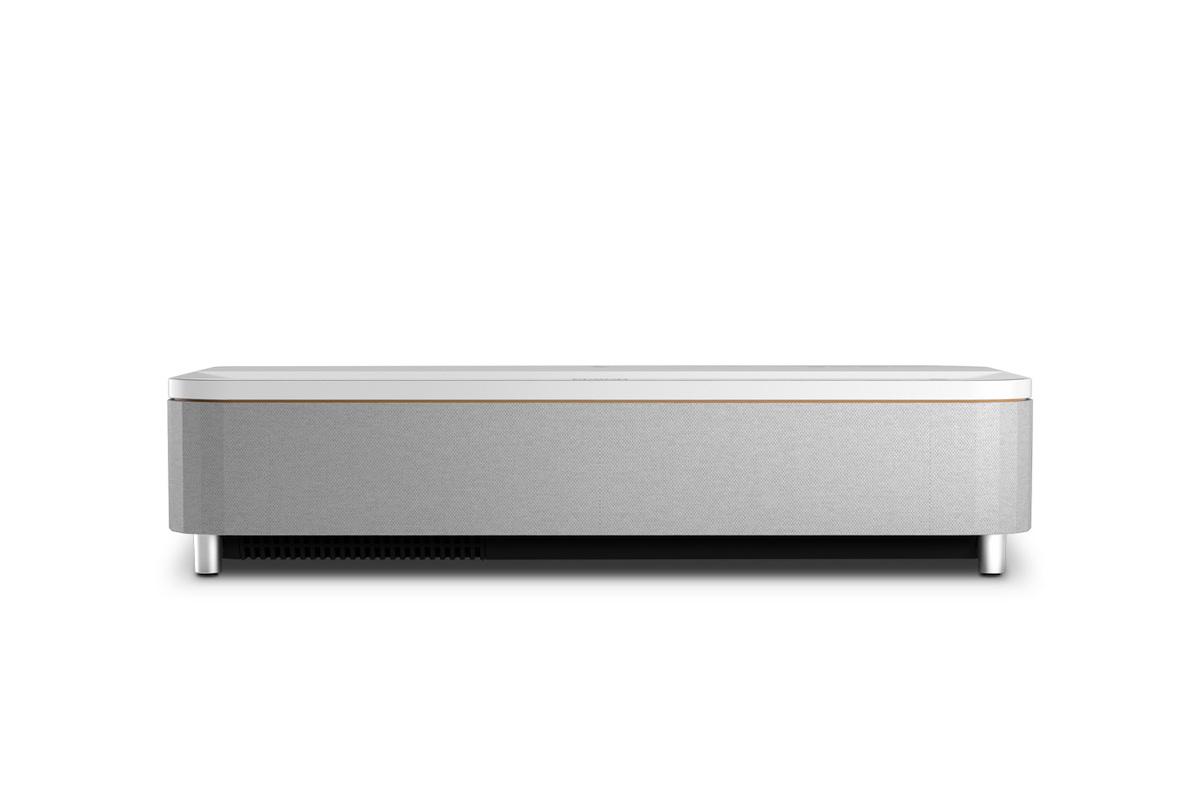
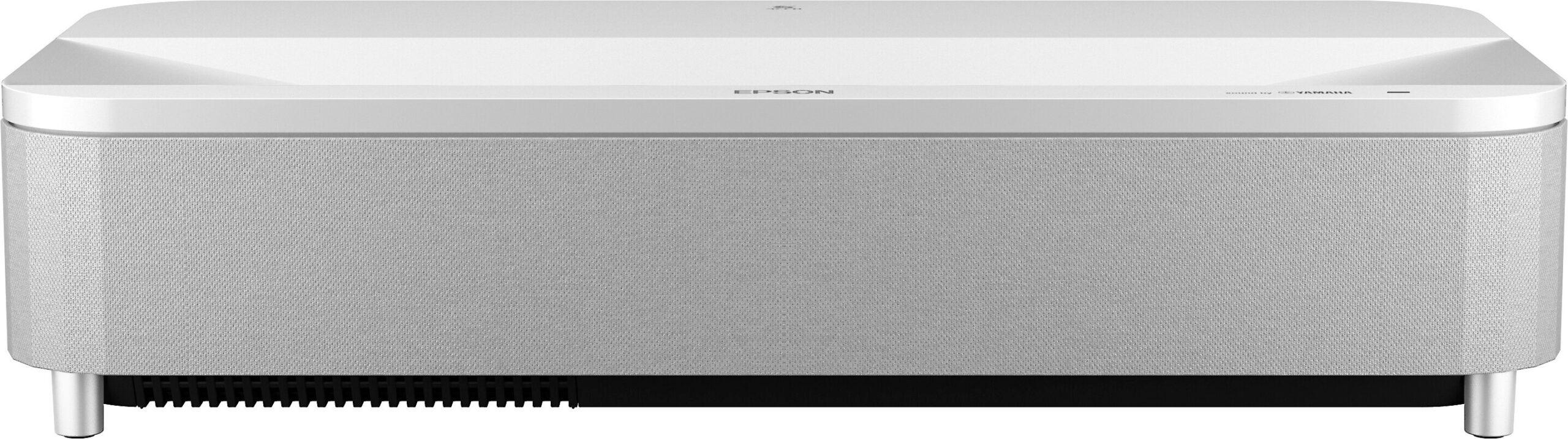
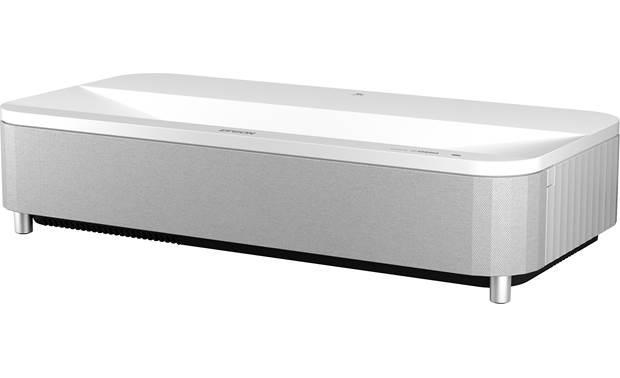
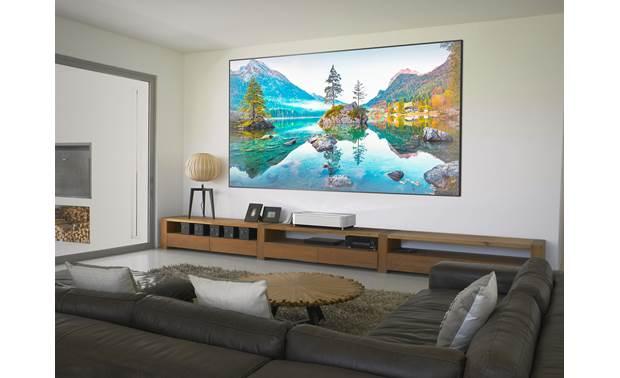
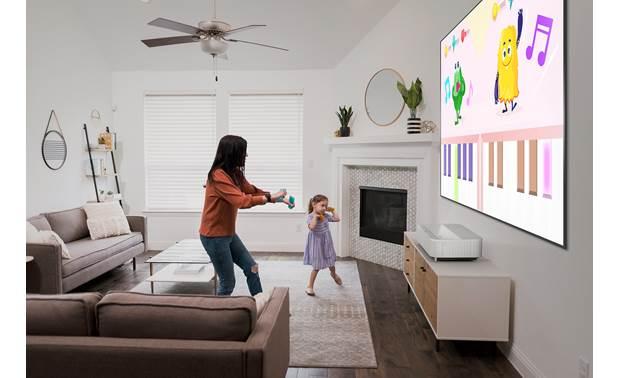
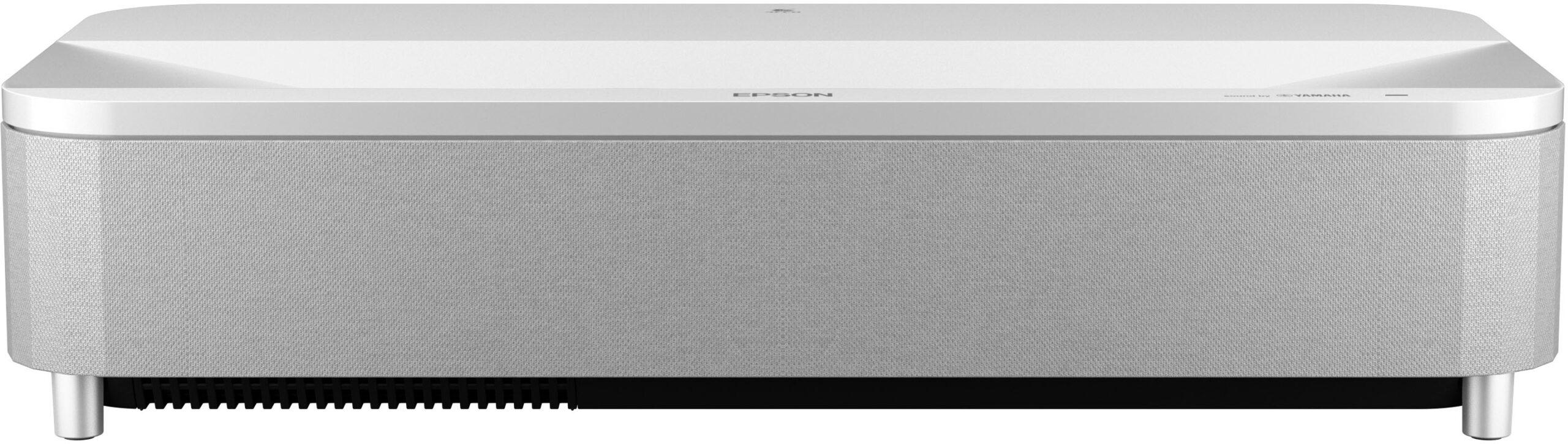
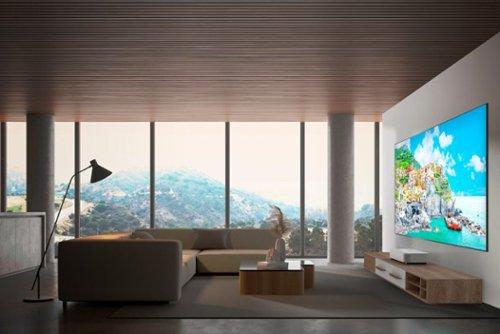
Ultra short throw projectors have revolutionized home entertainment by solving one of the biggest problems with traditional projectors: where to put them. Instead of mounting a projector on your ceiling and running cables everywhere, these clever devices sit right on your TV stand and beam massive images onto the wall from just inches away. It's like having a 100+ inch TV that doesn't weigh 200 pounds or cost $10,000.
But here's where it gets interesting – Epson has created two very different approaches to this technology with the QS100 and LS800. Released in 2025 and 2022 respectively, these projectors share the same basic laser projection technology but target completely different users. Understanding which one fits your needs requires diving into what makes each special and, frankly, what each one deliberately leaves out.
When Epson designed the LS800 back in 2022, they were thinking about someone who wanted to replace their TV with something much bigger without the hassle. Pack everything into one box – streaming apps, decent speakers, and solid picture quality. Make it work right out of the box.
The QS100, arriving three years later in 2025, took a completely different approach. Epson looked at the custom installation market – the folks building dedicated home theaters with separate audio systems and media servers – and asked: what if we stripped out everything except the absolute best projection technology we could build?
This philosophical difference shapes everything about these projectors, from their feature lists to their price points (the QS100 costs significantly more at the time of writing). One isn't necessarily better than the other; they're built for different people with different priorities.
Let's start with the most important spec for any projector used in a living room: brightness, measured in lumens. This determines whether you can actually watch your projector during the day or with lights on, which is crucial since most people don't live in dedicated dark theaters.
The LS800 pumps out 4,000 lumens of both color and white brightness – already impressive for this category. But the QS100 cranks this up to 4,500 lumens through a redesigned laser module. That 500-lumen difference might not sound huge, but it represents a meaningful 12.5% improvement in real-world performance.
Here's why this matters: brightness directly affects how large an image you can project while maintaining good contrast and color saturation. Both projectors can handle typical living room lighting with screens up to 120 inches without breaking a sweat. But push beyond that – say to a 150-inch image in a bright room – and the QS100's extra brightness becomes genuinely useful.
The technology behind this improvement is worth understanding. Both use laser phosphor systems (where blue lasers excite phosphor to create other colors), but the QS100 employs a new 5-in-1 laser module compared to the LS800's 4-in-1 configuration. More laser diodes mean more consistent brightness and better heat management over the projector's 20,000-hour lifespan.
While brightness grabs attention, contrast ratio determines how engaging your image actually looks. This measures the difference between the darkest blacks and brightest whites a projector can produce simultaneously. Higher contrast means more detail in shadows, more realistic dark scenes, and generally more cinematic images.
The QS100 absolutely dominates here with a 5,000,000:1 dynamic contrast ratio – literally double the LS800's already-respectable 2,500,000:1. This isn't just a numbers game; based on expert reviews and user feedback, the difference is clearly visible during dark movie scenes and HDR content.
Both projectors use Epson's 3LCD technology, which displays red, green, and blue simultaneously rather than sequentially like DLP projectors. This eliminates the "rainbow effect" some people see with DLP and provides more accurate colors. But the QS100 takes this further with improved light path management that reduces internal reflections and stray light – technical improvements that translate to deeper blacks and better shadow detail.
High Dynamic Range (HDR) content – think Netflix shows, 4K Blu-rays, and modern games – contains much more brightness and color information than standard video. But translating that information to your screen requires sophisticated processing, and this is where the QS100 shows its premium positioning.
The LS800 handles HDR10 and HLG formats competently with static tone mapping. This means it applies the same brightness and contrast adjustments to every scene. It works well enough for most content.
The QS100 introduces dynamic tone mapping through its QZX Picture Processor – a 32-bit processor that analyzes each frame individually and adjusts brightness, contrast, and color on the fly. During action sequences that jump between bright explosions and dark shadows, this frame-by-frame optimization keeps detail visible in both extremes.
Neither projector supports Dolby Vision HDR, which is honestly disappointing given their brightness capabilities. Dolby Vision would provide even better HDR performance, especially with the QS100's high brightness output.
Modern gaming demands fast response times and smooth motion. Both projectors deliver here, but with different strengths.
The LS800 achieved measured input lag times around 16-22 milliseconds in testing – excellent for projectors and perfectly adequate for casual gaming. It includes a dedicated gaming HDMI port and supports 1080p at 120Hz refresh rates for smoother motion.
The QS100 adds Auto Low Latency Mode (ALLM), which automatically switches to game mode when it detects a console, and supports both 4K at 60Hz and 2K at 120Hz. These are more modern gaming standards that work better with PlayStation 5 and Xbox Series X consoles.
For serious gamers, either projector works well. The LS800 might have a slight edge in pure lag measurements, while the QS100 offers more modern gaming features.
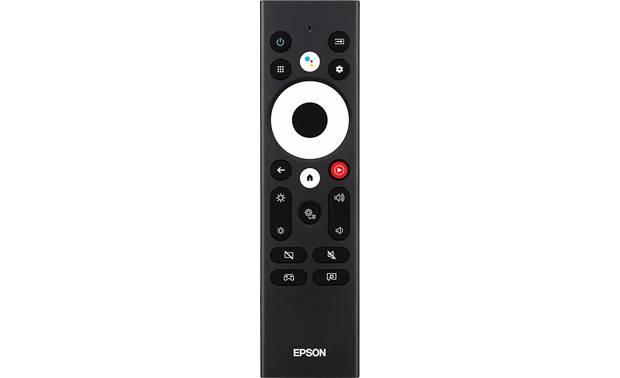
Here's where the philosophical differences become crystal clear. The LS800 includes Android TV 11 with Google Assistant, built-in Wi-Fi, and access to Netflix, Disney+, and every other streaming service you'd expect. It's designed to replace your TV completely – just plug in power and you're watching shows.
The QS100 includes exactly zero smart features. No streaming apps, no voice control, no built-in Wi-Fi for content. This isn't an oversight; it's intentional. Custom installers and serious home theater enthusiasts typically prefer dedicated streaming devices like Apple TV 4K or NVIDIA Shield, which often provide better performance and more frequent updates than built-in smart platforms.
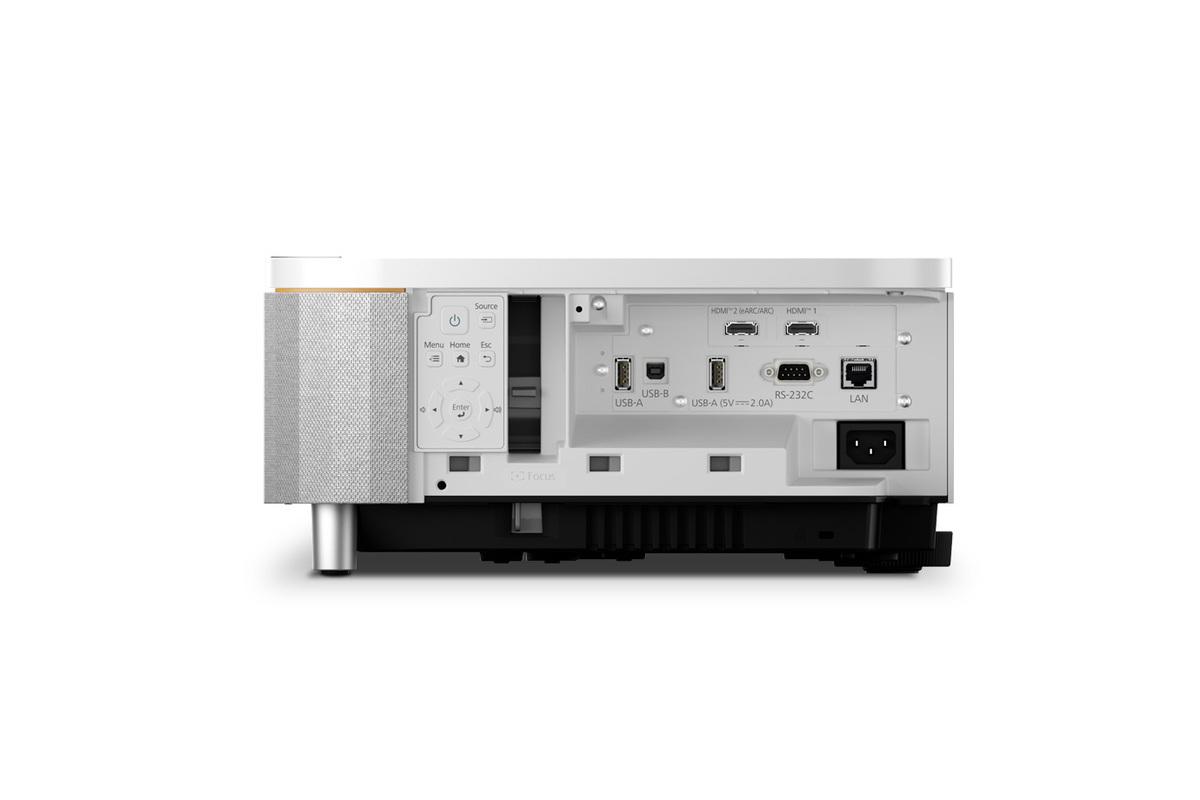
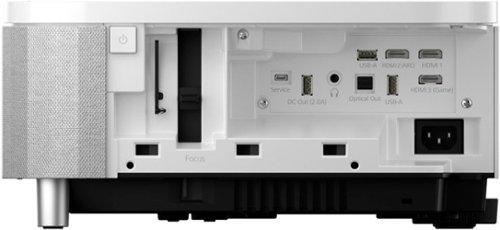
This choice affects connectivity too. The LS800 provides three HDMI ports to accommodate multiple devices, while the QS100 offers just two (though both are HDMI 2.0 with one supporting eARC for advanced audio formats).
The LS800 includes a Yamaha-designed 2.1 channel sound system with two 5-watt speakers and a 10-watt subwoofer. It's genuinely decent audio that eliminates the need for separate speakers in many setups. You can literally unbox this projector and have a complete entertainment system.
The QS100 includes no speakers whatsoever. This forces you to add external audio but also means you're not paying for speakers you might not want. If you're building a serious home theater, you'll probably want a proper surround sound system anyway.
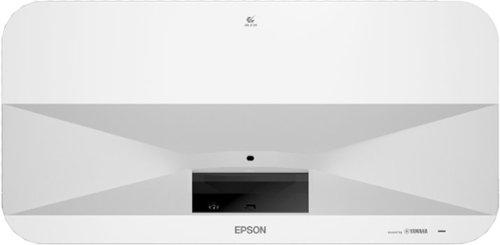
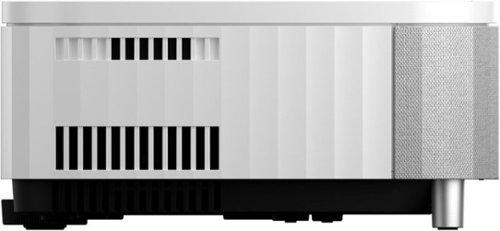
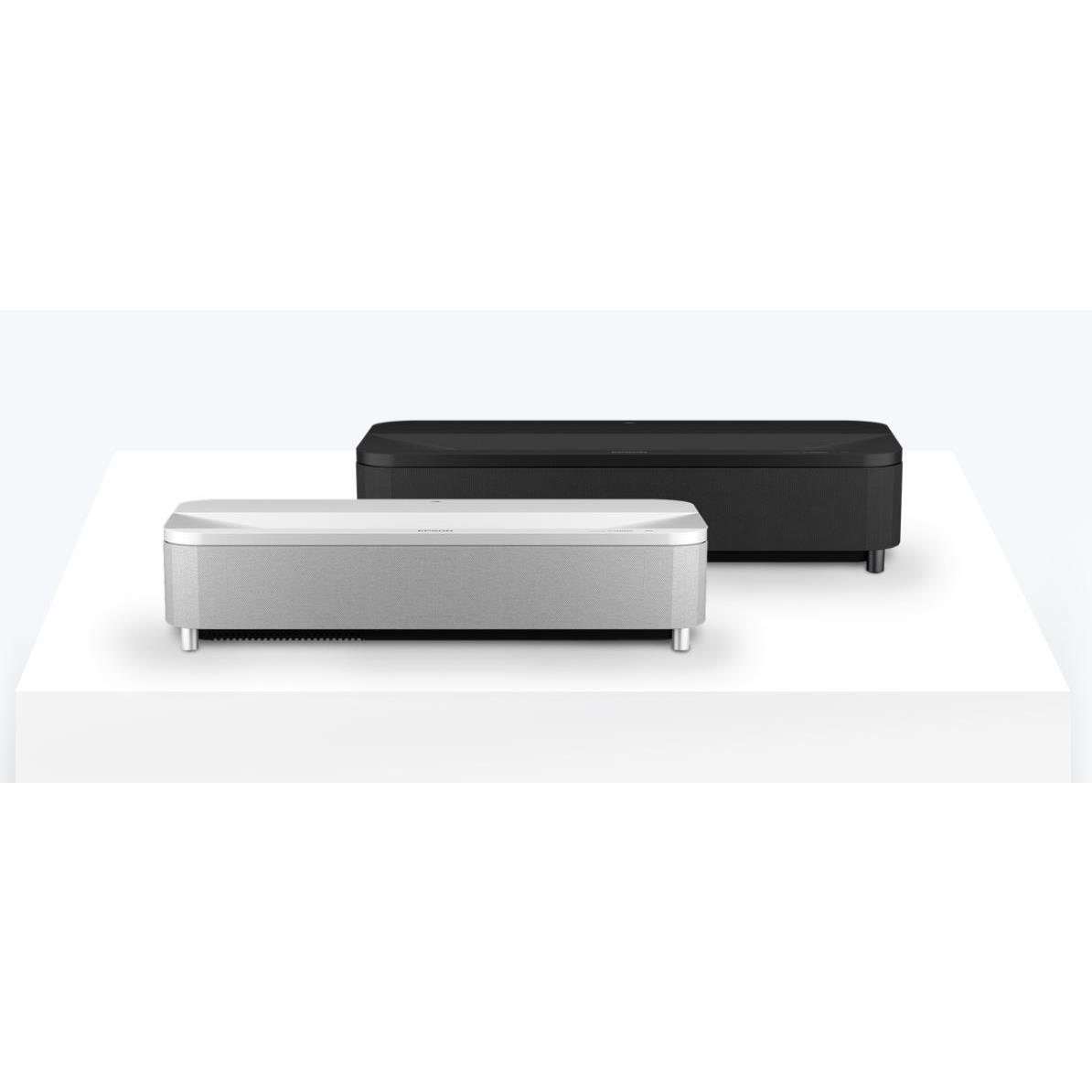
Both projectors share identical physical dimensions and throw ratios, so they'll fit in the same spaces and project the same image sizes from the same distances. But their setup philosophies differ dramatically.
The LS800 emphasizes simplicity with automated setup routines and smartphone apps that guide you through basic adjustments. It's designed for DIY installation.
The QS100 is ISF-certified, meaning it meets professional calibration standards with extensive adjustment menus for color temperature, gamma curves, and individual color channel fine-tuning. This level of control matters if you're having a professional calibrate your system or if you're the type who enjoys tweaking settings for optimal performance.
At the time of writing, the QS100 commands a significant premium over the LS800 – roughly $1,200 more. But comparing sticker prices misses the bigger picture.
The LS800 represents a complete entertainment system. Add a screen (which both projectors benefit from), and you're done spending. Total additional investment: $300-800 for a quality UST screen.
The QS100 requires additional components: a streaming device ($50-200), external audio system ($300-1,500+), and potentially more sophisticated installation. Your total system cost could easily exceed the LS800 by $2,000 or more.
But here's the thing – if you were planning to add a high-quality sound system and preferred streaming device anyway, the QS100's premium buys you genuinely superior image performance. Its 500 additional lumens, doubled contrast ratio, and advanced processing create a noticeably better picture that justifies the cost for image quality enthusiasts.
Both projectors work with screens from about 80 inches up to their maximums, but they have different optimal ranges based on their brightness and features.
The LS800 hits its sweet spot between 100-130 inches. At these sizes, its 4,000 lumens provide excellent brightness even with ambient light, and the built-in audio system can adequately fill most rooms. Push much larger, and you'll want more brightness and better audio than it provides.
The QS100 really shines from 120-160 inches. Its extra brightness and contrast maintain image quality at these larger sizes, though you'll need substantial external audio to match the scale. The maximum 160-inch capability versus the LS800's 150-inch limit might not sound significant, but it represents a meaningful difference in screen area.
Ultra short throw projectors work best in controlled lighting environments, but both handle ambient light well for their category. The QS100's brightness advantage becomes most apparent in challenging lighting situations – think large windows or bright overhead lights.
Both projectors benefit enormously from ambient light rejecting (ALR) screens, which use special optical properties to reject overhead lighting while preserving the projected image. With a quality ALR screen, either projector can produce surprisingly good images even in bright rooms.
Placement flexibility is identical between models. Both sit about 6-24 inches from the wall depending on desired screen size, and both include digital zoom and geometry correction to fine-tune the image.
After researching extensive professional reviews and user feedback, clear patterns emerge about who should choose which projector.
Choose the LS800 if you want the simplest path to big-screen entertainment. It delivers excellent performance in a complete package that works immediately. The built-in smart features and audio system eliminate complexity while providing genuinely good results. For most people replacing a living room TV with something much larger, this projector offers outstanding value and convenience.
The QS100 makes sense for different scenarios. If you're building a dedicated home theater, working with a custom installer, or prioritizing ultimate image quality over convenience, its superior brightness and contrast create meaningfully better images. The lack of built-in features becomes an advantage when you prefer external components anyway.
Consider the QS100 specifically if you plan to use screens larger than 130 inches, frequently watch in bright rooms, or want professional-level calibration capabilities. Its premium positioning shows in real performance advantages that matter for demanding applications.
For most buyers, the LS800 provides 90% of the performance at roughly 75% of the total system cost (including necessary accessories). That's exceptional value. But if you're in the 10% who prioritize ultimate performance and don't mind the complexity and cost of external components, the QS100 justifies its premium through genuinely superior image quality.
Both projectors represent excellent examples of ultra short throw technology, just aimed at different users with different priorities. Understanding which category you fall into – convenience-focused or performance-maximizing – makes the choice straightforward.
| Epson QS100 4K PRO-UHD Ultra Short Throw Projector | Epson EpiqVision Ultra LS800 3LCD Laser Projector |
|---|---|
| Brightness - Critical for daytime viewing and large screens | |
| 4,500 lumens (both color and white) | 4,000 lumens (both color and white) |
| Contrast Ratio - Determines black levels and image depth | |
| 5,000,000:1 dynamic contrast (significantly deeper blacks) | 2,500,000:1 dynamic contrast (good but less dramatic) |
| Maximum Screen Size - How big you can go | |
| 160 inches (better for very large installations) | 150 inches (adequate for most home setups) |
| HDR Processing - Quality of high dynamic range content | |
| Dynamic tone mapping with QZX processor (frame-by-frame optimization) | Static tone mapping (consistent but basic HDR handling) |
| Smart Features - Built-in streaming and apps | |
| None (requires external streaming device) | Android TV 11 with Google Assistant (complete smart platform) |
| Audio System - Built-in sound capabilities | |
| No speakers (requires external audio system) | Yamaha 2.1 channel system (two 5W speakers + 10W subwoofer) |
| HDMI Connectivity - Number of device inputs | |
| 2 HDMI 2.0 ports (one with eARC) | 3 HDMI 2.0 ports (one with ARC, one gaming-optimized) |
| Gaming Performance - Input lag and refresh rates | |
| ALLM support, 4K/60Hz, 2K/120Hz | 16.7ms input lag, dedicated gaming port, 1080p/120Hz |
| Calibration Options - Professional image adjustment | |
| ISF certified with full professional controls | Basic calibration options for general use |
| Target User - Who this projector is designed for | |
| Custom installers, videophiles, dedicated theaters | Mainstream consumers, TV replacement, living rooms |
| Warranty Coverage - Protection and support | |
| 3-year limited warranty | 2-year limited warranty |
| Release Year - Technology generation | |
| 2025 (latest laser and processing technology) | 2022 (proven, mature platform) |
| Value Proposition - What you get for the price difference | |
| Premium performance with external component flexibility | Complete entertainment system with good performance |
The Epson QS100 produces 4,500 lumens of both color and white brightness, while the Epson LS800 outputs 4,000 lumens. This 500-lumen difference makes the QS100 about 12.5% brighter, which becomes noticeable when projecting very large images (130+ inches) or viewing in bright rooms with lots of ambient light.
No, only the Epson LS800 includes smart features with Android TV 11, Google Assistant, and built-in streaming apps like Netflix and Disney+. The Epson QS100 deliberately omits all smart features, requiring you to connect external streaming devices like Apple TV, Roku, or gaming consoles for content.
The Epson LS800 includes a Yamaha 2.1 channel audio system with two 5-watt speakers and a 10-watt subwoofer that provides decent sound for casual viewing. The Epson QS100 has no built-in speakers at all, requiring you to connect external audio equipment for any sound.
The Epson QS100 can project images up to 160 inches, while the Epson LS800 maxes out at 150 inches. Both can project smaller images down to about 80 inches, but the QS100 gives you more flexibility for very large home theater installations.
Both are excellent for gaming. The Epson LS800 has slightly lower measured input lag (around 16-17ms) and includes a dedicated gaming HDMI port. The Epson QS100 offers Auto Low Latency Mode (ALLM) and supports more modern gaming formats like 4K at 60Hz and 2K at 120Hz, making it better for newer consoles.
The Epson LS800 provides three HDMI 2.0 ports, with one supporting ARC for audio return. The Epson QS100 has two HDMI 2.0 ports, with one supporting the newer eARC standard. The LS800 offers more connectivity options for multiple devices.
The Epson QS100 delivers superior image quality with higher brightness (4,500 vs 4,000 lumens), double the contrast ratio (5,000,000:1 vs 2,500,000:1), and advanced dynamic HDR processing. The LS800 still provides excellent image quality but with less dramatic contrast and brightness capabilities.
The Epson LS800 is designed for easy DIY setup with smartphone apps and simplified menus. The Epson QS100 includes professional-grade calibration options and is ISF-certified, making it better suited for custom installation by home theater professionals, though DIY setup is still possible.
The Epson QS100 performs better in bright environments due to its higher 4,500-lumen output and superior contrast ratio. However, both projectors handle ambient light well for ultra short throw models, and the LS800 is still excellent for most bright room situations at typical screen sizes.
Both the Epson QS100 and Epson LS800 use laser light sources rated for up to 20,000 hours of operation. This translates to about 10-15 years of typical home use with minimal maintenance required and no bulb replacements needed.
The Epson LS800 provides better overall value for most buyers because it includes smart TV features, built-in audio, and strong performance in a complete package. The QS100 offers better value only if you prioritize maximum image quality and already plan to use external audio and streaming devices.
Yes, both the Epson LS800 and Epson QS100 have identical physical dimensions and throw ratios, so the QS100 can directly replace an LS800 in the same location. However, you'll lose the built-in smart features and audio system when upgrading, requiring external components for full functionality.
We've done our best to create useful and informative comparisons to help you decide what product to buy. Our research uses advanced automated methods to create this comparison and perfection is not possible - please contact us for corrections or questions. These are the sites we've researched in the creation of this article: projectorscreen.com - youtube.com - projectorcentral.com - projectorreviews.com - techradar.com - audioadvice.com - projectorreviews.com - avsforum.com - projectorcentral.com - mediaserver.goepson.com - projectorcentral.com - news.epson.com - epson.eu - epson.com - epson.eu - epson.com - projectorcentral.com - bestbuy.com - techradar.com - danamic.org - projectorscreen.com - projectorcentral.com - epson.com - dreamediaav.com - dell.com - rtings.com - avsforum.com - audiogeneral.com - news.epson.com - projectorcentral.com

Privacy Policy
Terms and Conditions - Affiliate Policy
Home Security
© Copyright 2008-2026.
11816 Inwood Rd #1211, Dallas, TX 75244