



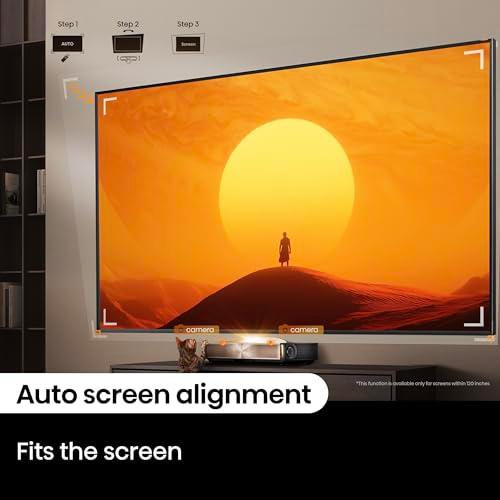
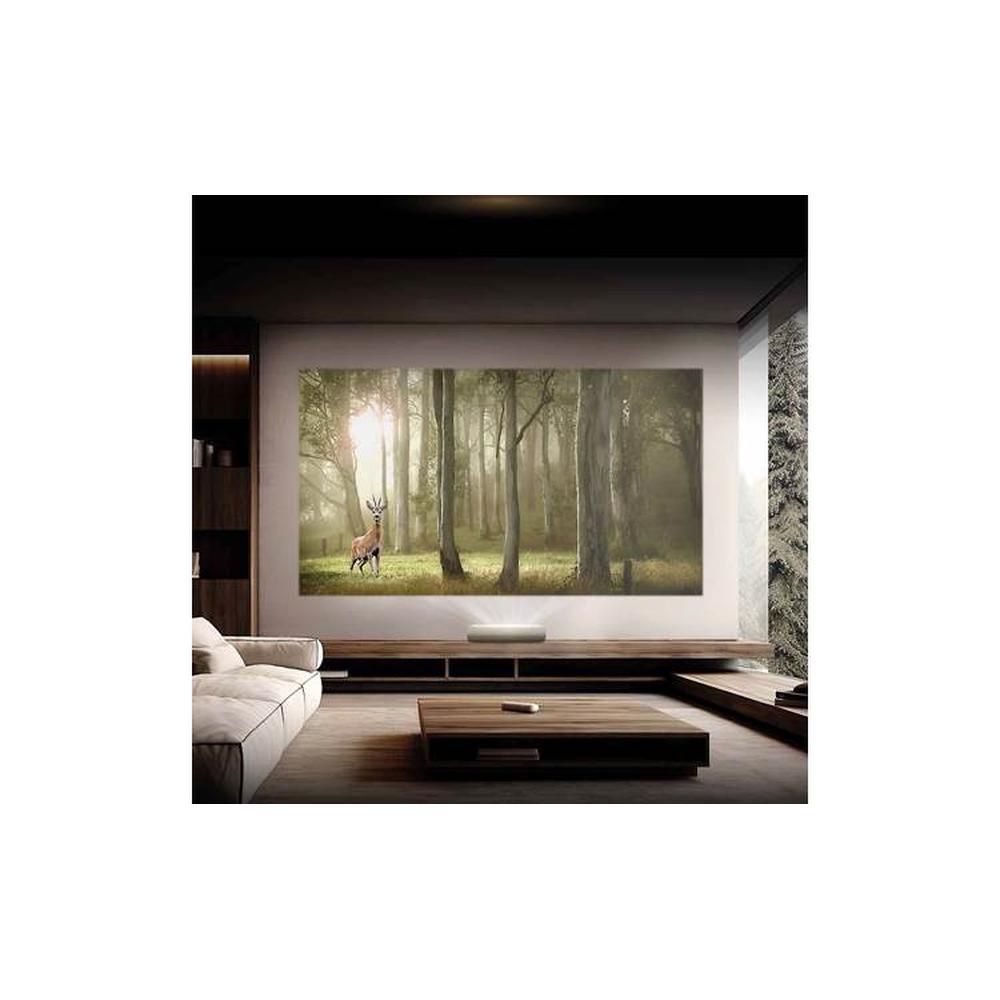
Picture this: you're sitting in your living room watching a movie on a massive 120-inch screen, but instead of a wall-mounted TV that costs more than a car, you've got a sleek projector sitting on your entertainment center. Welcome to the world of ultra short throw (UST) laser projectors – the technology that's quietly revolutionizing home entertainment by delivering cinema-sized experiences without the traditional projector hassles.
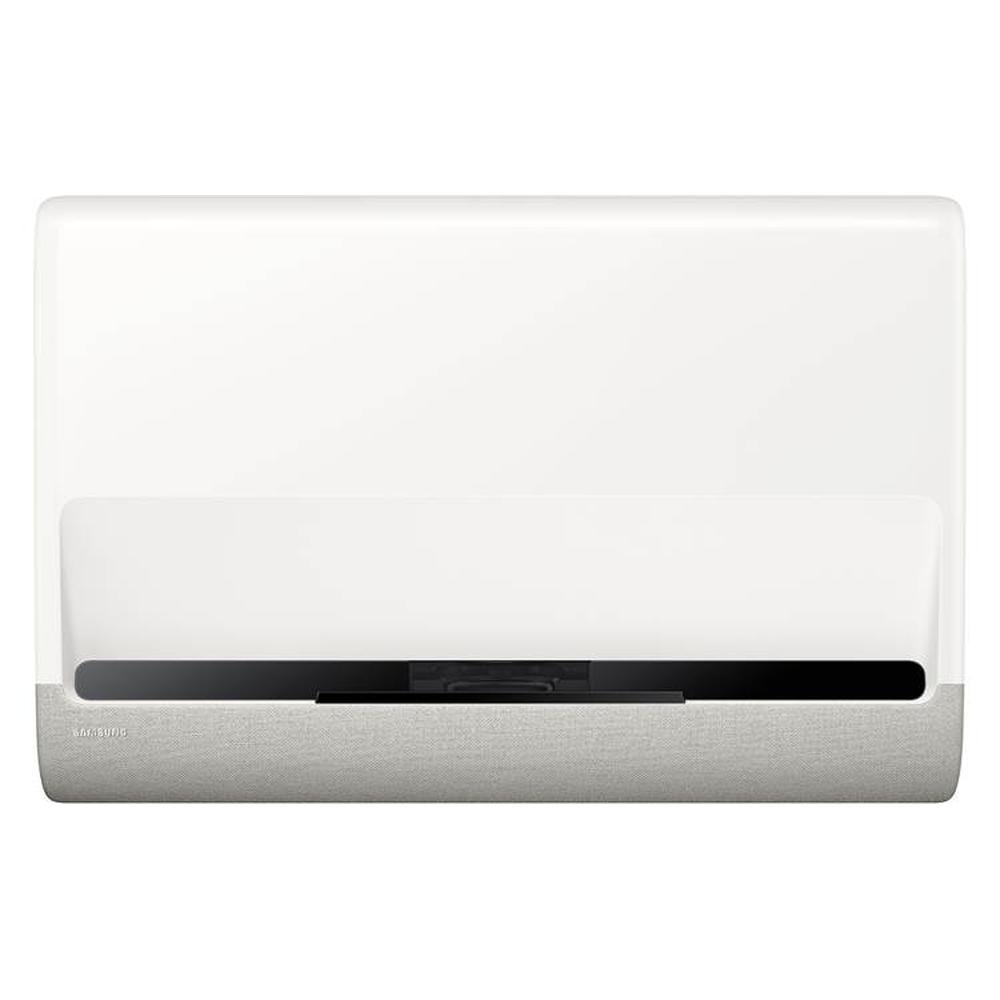
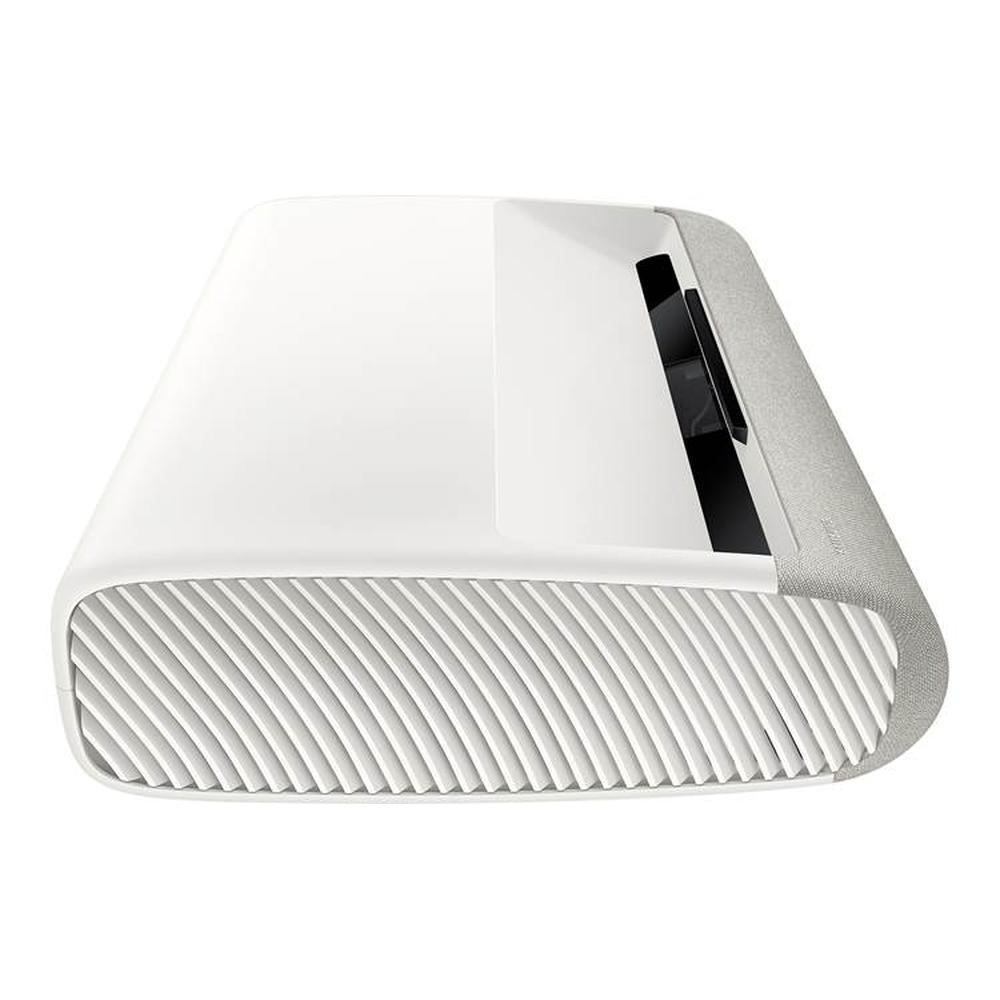
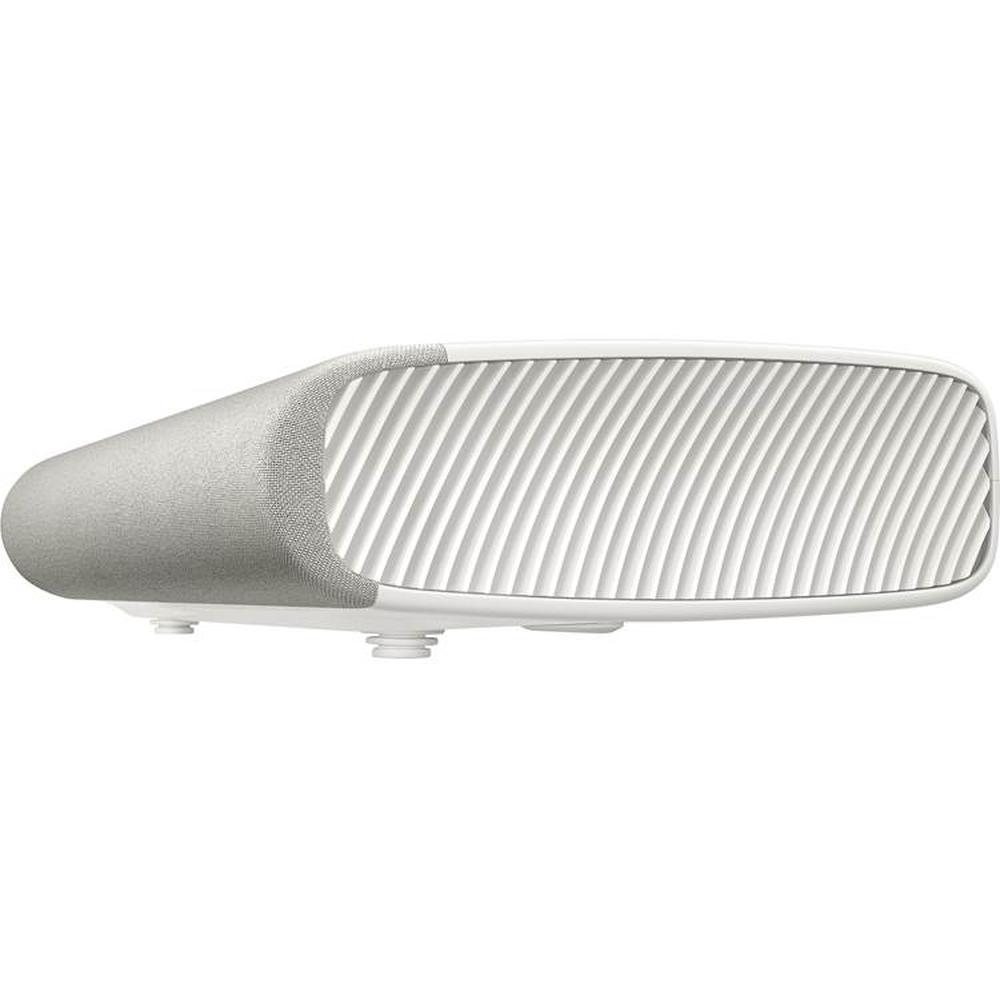
Today we're diving deep into two premium contenders that represent the current state of this exciting technology: the Hisense L9Q Triple Laser Ultra Short Throw Projector and the Samsung Premiere 9 4K Ultra Short Throw Laser Projector. Both launched as flagship models aimed at discerning home theater enthusiasts, but they take distinctly different approaches to achieving that massive screen experience.
Before we get into the nitty-gritty comparison, let's talk about why UST projectors have become such game-changers. Traditional projectors require you to mount them on the ceiling or place them far across the room, creating shadows when people walk by and requiring complex installations. Ultra short throw projectors flip this concept entirely – they sit just inches from your wall or screen and project upward at an extreme angle.
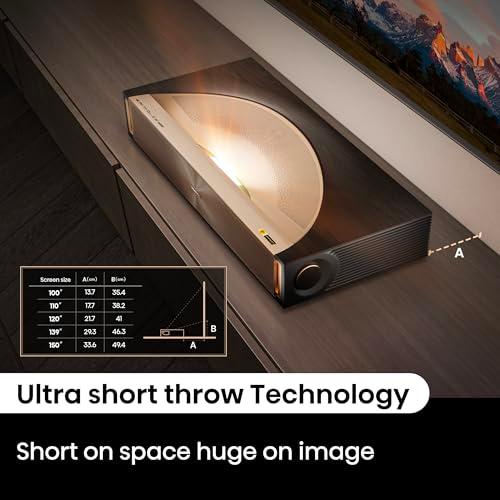
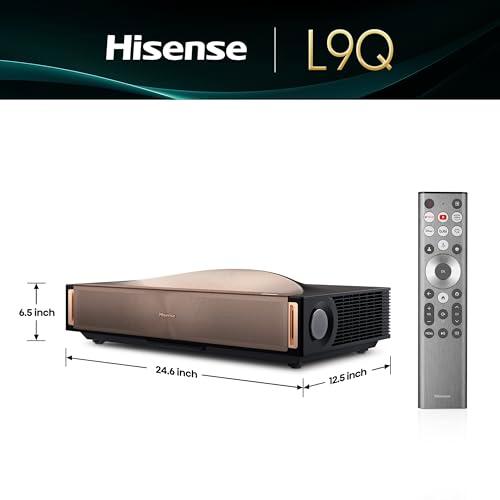
The "throw ratio" is the key spec here – it tells you how far the projector needs to be from the wall to create a certain screen size. Both the Hisense L9Q and Samsung Premiere 9 achieve throw ratios around 0.18:1, meaning they can create a 100-inch image from less than 6 inches away. This placement flexibility makes them perfect for living rooms where ceiling mounting isn't practical.
But here's where things get interesting: not all UST projectors are created equal. The technology has evolved rapidly since these laser-based models started appearing around 2020, with manufacturers focusing on solving the traditional pain points of brightness, color accuracy, and integrated audio quality.
When evaluating any projector, brightness should be your first consideration – it determines whether you'll actually enjoy watching during the day or with lights on. This is measured in lumens, and the difference between our two contenders is substantial.
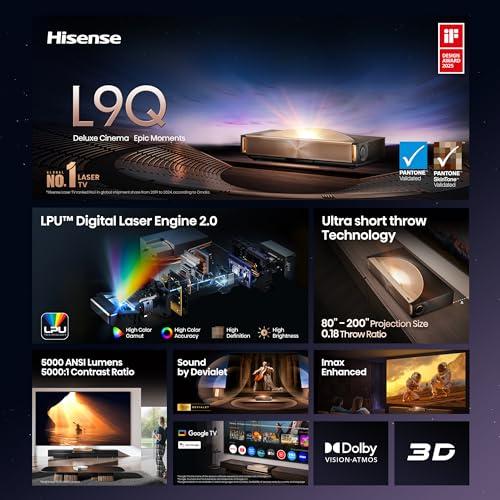
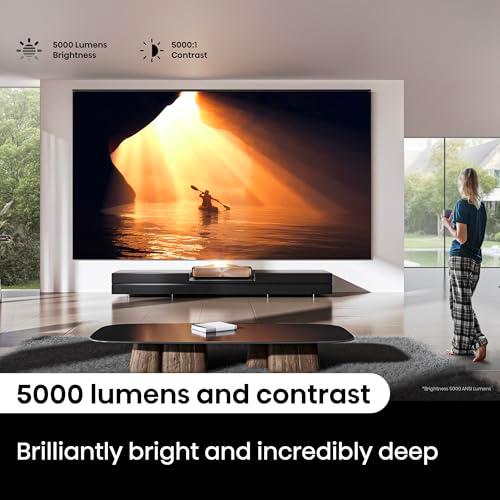
The Hisense L9Q delivers an impressive 5,000 ANSI lumens, making it one of the brightest consumer UST projectors available. This isn't just marketing fluff – independent testing consistently confirms these numbers. For context, most living room TVs output the equivalent of around 100-400 lumens, so we're talking about dramatically more light output.
The Samsung Premiere 9 produces 3,450 ISO lumens, which is still quite bright but represents about 31% less light output than the Hisense. In practical terms, this means the Samsung works well for evening viewing and dimmed rooms, while the Hisense can maintain vivid, colorful images even with afternoon sunlight streaming through windows.
Why does this matter so much? Traditional projectors often require you to create a cave-like environment, closing blinds and dimming lights for decent picture quality. The extra 1,550 lumens from the Hisense L9Q translates to genuine daytime viewing capability – you can watch the big game on Saturday afternoon without darkening your living room.
From our research into user experiences, this brightness difference becomes the deciding factor for many families. Those who primarily watch in dedicated home theater rooms with light control find the Samsung Premiere 9 perfectly adequate, while families wanting a true TV replacement consistently praise the Hisense's ability to compete with ambient lighting.
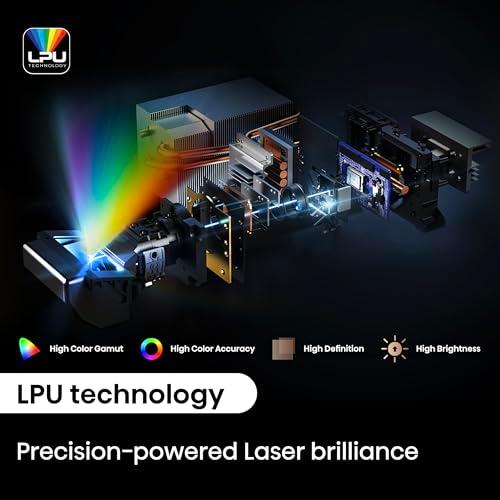
Both projectors use triple-laser technology, which represents a significant advancement over traditional lamp-based systems. Instead of a single white light source filtered through a color wheel, triple-laser systems use separate red, green, and blue lasers. This approach delivers more precise colors and eliminates the "rainbow effect" that some people notice with older DLP projectors.
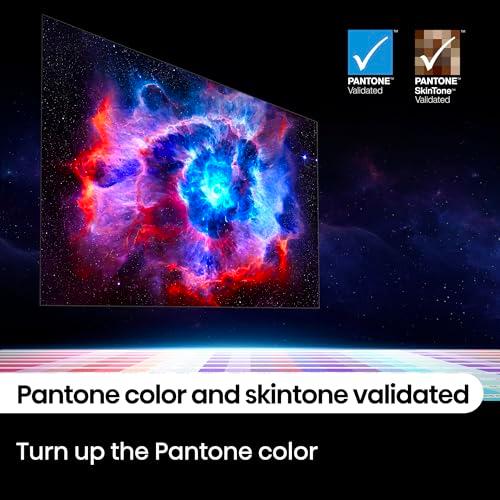
The Hisense L9Q covers 110% of the BT.2020 color space – a technical measurement that indicates how much of the visible color spectrum the projector can reproduce. BT.2020 is the current standard for high-quality HDR content, and 110% coverage means the projector can display colors even more saturated than what most content creators use. Importantly, this performance is Pantone validated, meaning it meets professional color accuracy standards used in graphic design and photography.
The Samsung Premiere 9 achieves 154% coverage of the DCI-P3 color space, which sounds more impressive numerically but actually represents a narrower range than BT.2020. DCI-P3 is the color standard used in movie theaters, so Samsung's approach focuses on cinematic color reproduction rather than the broader spectrum the Hisense targets.
For most viewers, both will deliver excellent color performance, but the difference becomes apparent with specific content types. The Hisense excels with nature documentaries, animated films, and any content where vibrant, saturated colors matter. The Samsung provides more film-like color grading that some cinephiles prefer for dramatic content.
High Dynamic Range (HDR) content – found on Netflix, Disney+, and 4K Blu-rays – contains more brightness information than standard content, allowing for deeper shadows and brighter highlights. However, not all HDR formats are created equal, and this is where our two projectors diverge significantly.
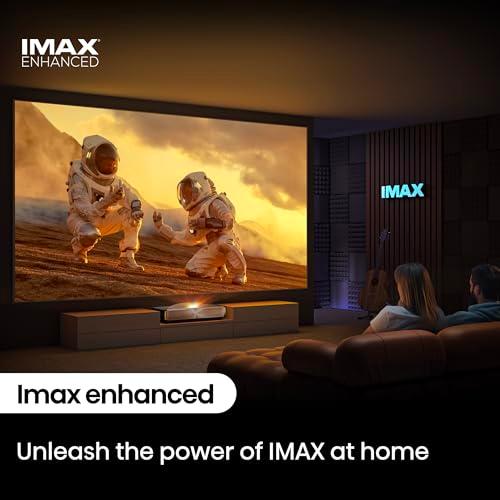
The Hisense L9Q supports every major HDR format: Dolby Vision, HDR10+, HDR10, HLG, and even IMAX Enhanced. Dolby Vision, in particular, uses dynamic metadata that optimizes the picture scene-by-scene, often providing the best HDR experience available.
The Samsung Premiere 9 supports HDR10+, HDR10, and HLG, but notably lacks Dolby Vision. This omission is puzzling for a premium projector released in 2023, especially since Dolby Vision content is widely available on major streaming platforms. HDR10+ provides similar dynamic optimization to Dolby Vision, but the content library is significantly smaller.
Based on our analysis of user feedback, this HDR format limitation becomes frustrating for Samsung owners who discover they can't access the premium viewing experience for popular Dolby Vision titles on Netflix or Disney+. The Hisense L9Q provides the comprehensive HDR compatibility that future-proofs your investment.
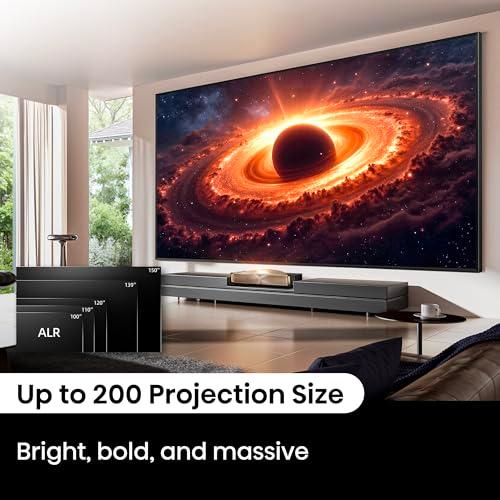
One of UST projectors' biggest advantages is their ability to scale from reasonable to ridiculous screen sizes. The Hisense L9Q supports screen sizes from 80 inches all the way up to 200 inches – that's nearly 17 feet diagonal. This flexibility means you can start with a 100-inch setup and later upgrade to a larger screen without replacing the projector.
The Samsung Premiere 9 optimally supports screens from 100 to 130 inches. While this covers most living room scenarios, it limits future expansion possibilities. If you're in an apartment now but might move to a larger space later, the Hisense offers better long-term flexibility.
The practical impact here relates to viewing distance and immersion. A 100-inch screen viewed from 10 feet provides a different experience than the same content on a 150-inch screen. The larger image fills more of your peripheral vision, creating greater immersion for movies and sports. Having the option to go bigger without replacing your projector is valuable, even if you don't use it immediately.
Most people underestimate how crucial good audio is to the viewing experience, and this is where both projectors attempt to solve a common problem. Traditional projectors require separate sound systems, but UST models integrate sophisticated audio to eliminate additional components.
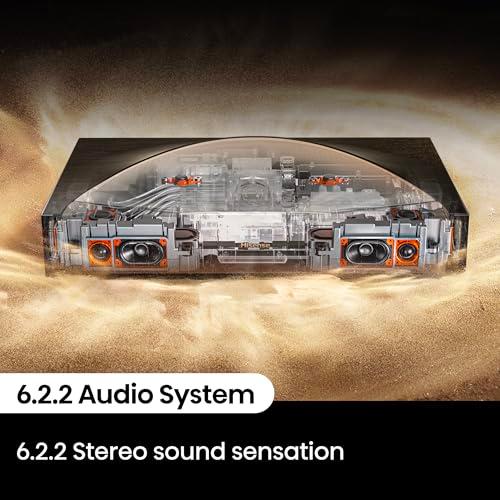
The Hisense L9Q features a 116-watt, 6.2.2-channel system developed with Devialet, a high-end French audio company known for premium speakers. This system includes upward-firing drivers for Dolby Atmos overhead effects and enough power to fill large rooms without external amplification.
The Samsung Premiere 9 includes a 40-watt, 2.2.2-channel system with Dolby Atmos support and Samsung's Object Tracking Sound technology, which attempts to match audio positioning with on-screen action.
The power difference is significant – the Hisense provides nearly three times the amplification of the Samsung. In practical terms, this means the Hisense can deliver theater-like volume and dynamics without distortion, while the Samsung works well for normal listening levels but may require a soundbar for larger rooms or more demanding content.
User reviews consistently highlight the Hisense's audio as a standout feature that eliminates the need for additional sound equipment, while Samsung owners more frequently mention adding external audio solutions.
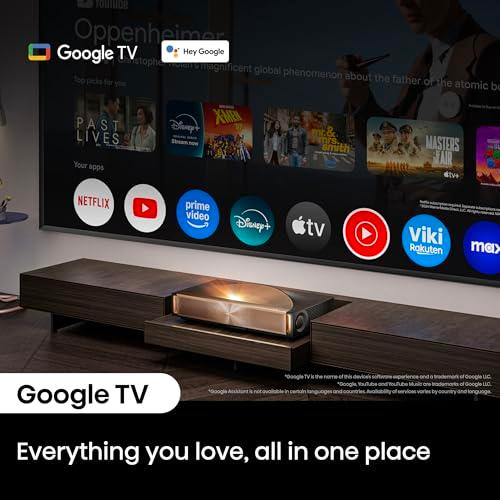
Since these projectors aim to replace traditional TVs, their smart platforms significantly impact daily usability. The Hisense L9Q runs Google TV, providing access to the complete Google Play Store ecosystem. This means virtually every streaming app works properly, including Netflix, Disney+, HBO Max, and smaller services that might not support other platforms.
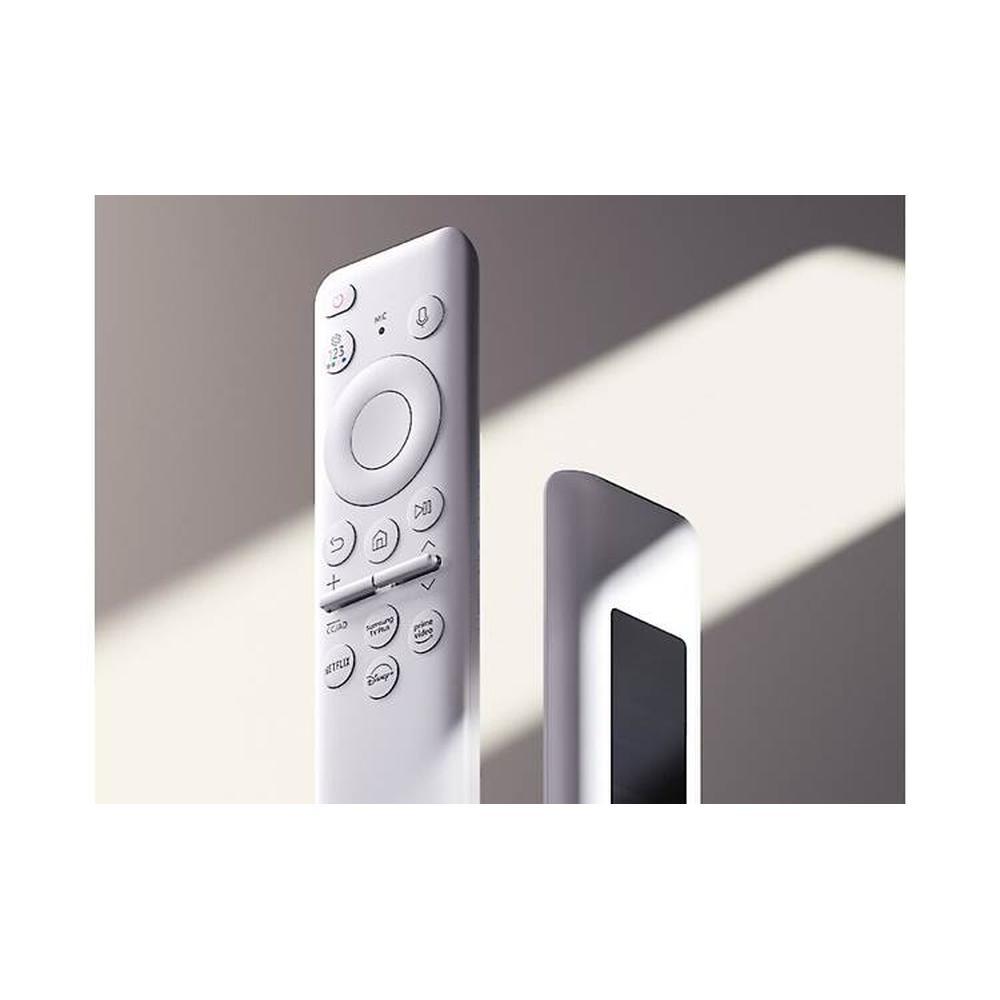
The Samsung Premiere 9 uses Samsung's Tizen OS, the same platform found on Samsung TVs. While polished and responsive, Tizen has a more limited app selection and occasionally struggles with newer streaming services or regional applications.
Google TV also offers superior search functionality, allowing you to find content across multiple services simultaneously. The voice remote can search for "action movies with Tom Cruise" and show results from Netflix, Prime Video, and other installed apps. Samsung's system requires searching within individual apps.
Both platforms support major voice assistants and screen mirroring from phones and tablets, but Google TV's broader compatibility and more frequent updates give it an edge for long-term usability.
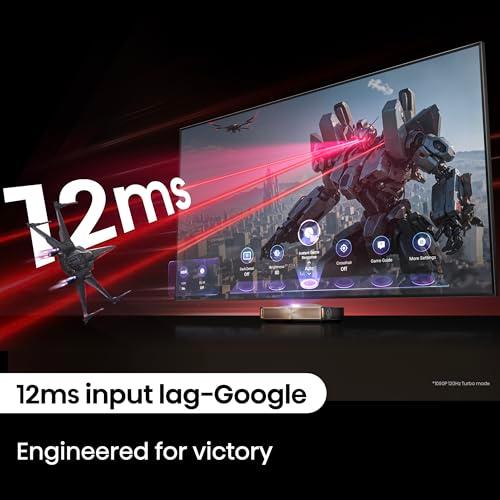
While primarily designed for movie watching, both projectors offer gaming capabilities with important differences. The Hisense L9Q includes a dedicated Game Mode with 12ms input lag – the delay between pressing a controller button and seeing the action on screen. For context, competitive gamers typically want under 20ms, so the Hisense performs well for serious gaming.
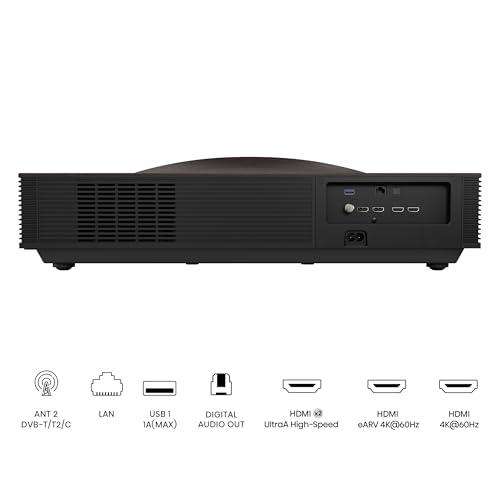
The projector also includes HDMI 2.1 ports with features like Auto Low Latency Mode (ALLM), which automatically switches to game mode when it detects a console signal. This seamless switching means you don't need to manually adjust settings when switching between Netflix and PlayStation.
The Samsung Premiere 9 focuses more on cloud gaming through Samsung's Gaming Hub, allowing access to Xbox Game Pass and other streaming game services without a console. However, specific input lag measurements aren't prominently advertised, suggesting it's not optimized for serious gaming.
For families with gaming consoles or PC gamers wanting a massive display, the Hisense provides better performance. The Samsung suits casual gamers interested in cloud gaming or those who prioritize streaming services over gaming performance.
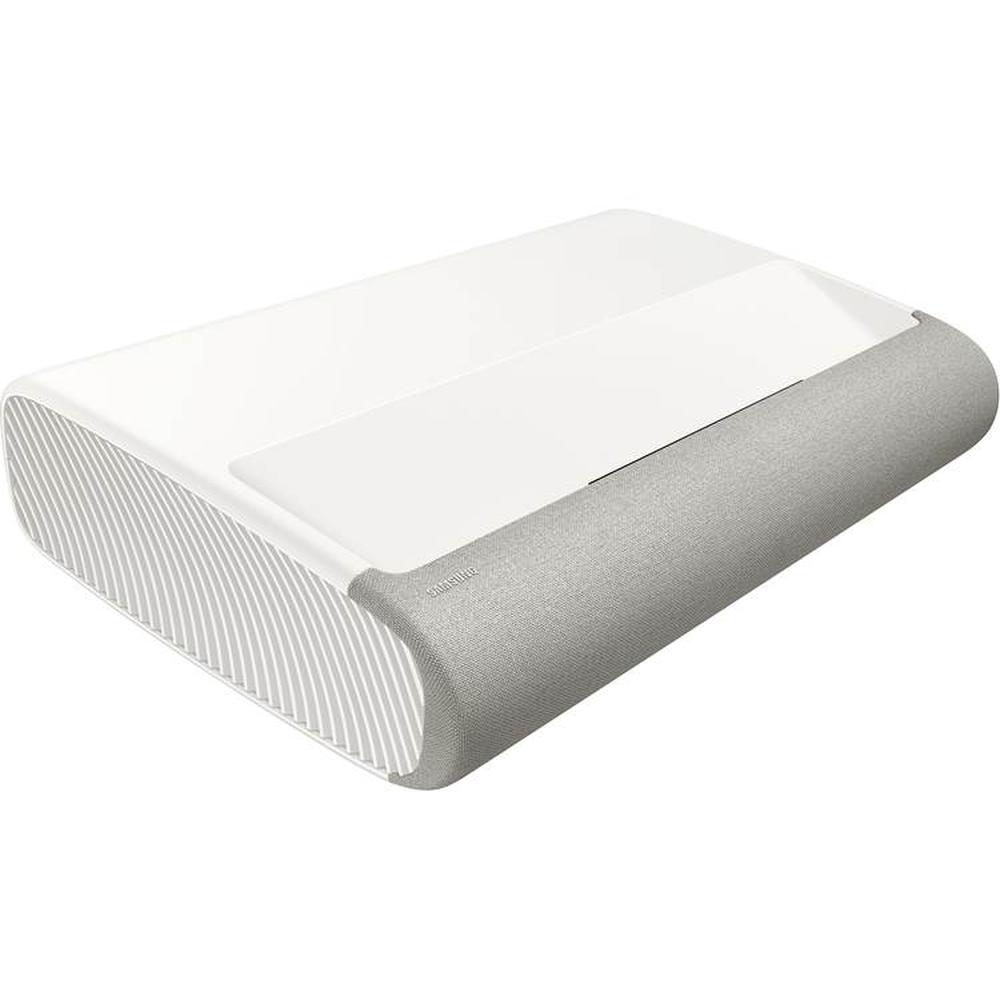
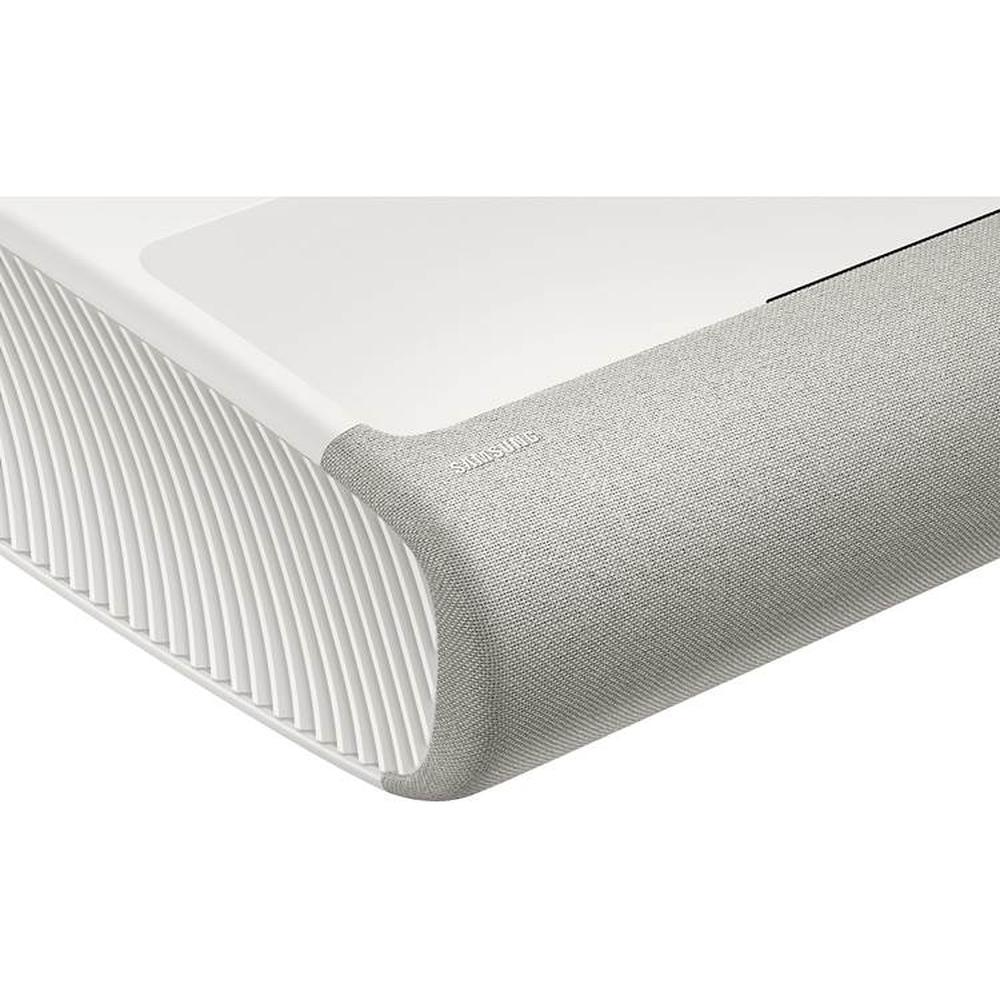
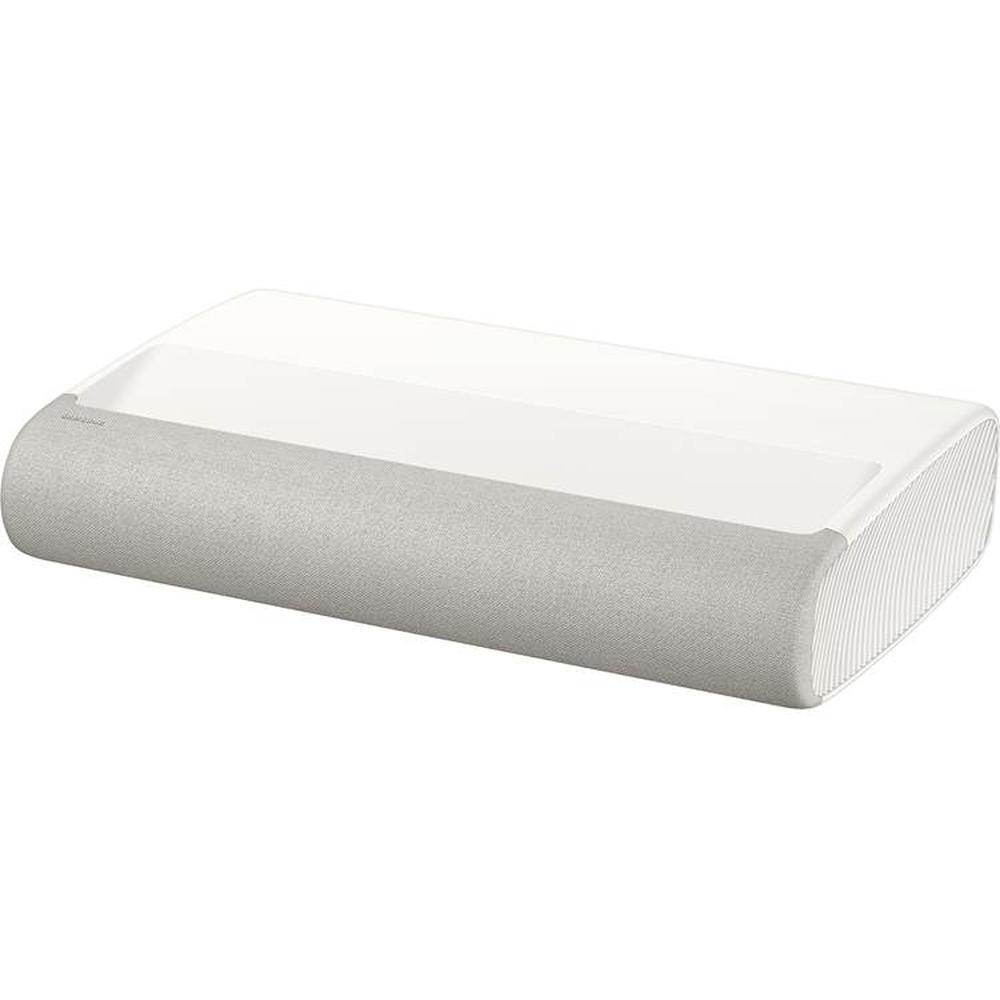
Both projectors reflect their manufacturers' design philosophies. The Samsung Premiere 9 embodies Samsung's minimalist aesthetic with clean lines and premium materials that complement modern living rooms. Samsung's reputation for reliability and build quality extends to this projector, with consistent reports of trouble-free operation.
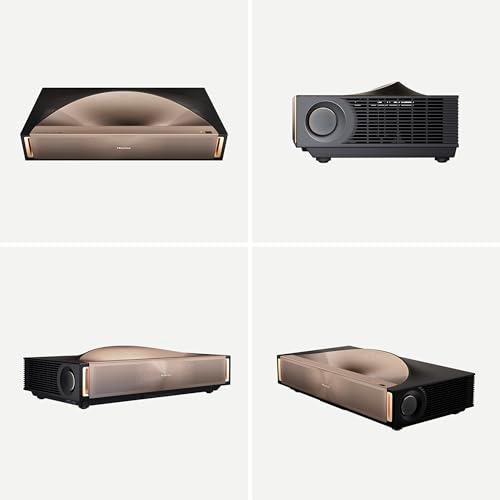
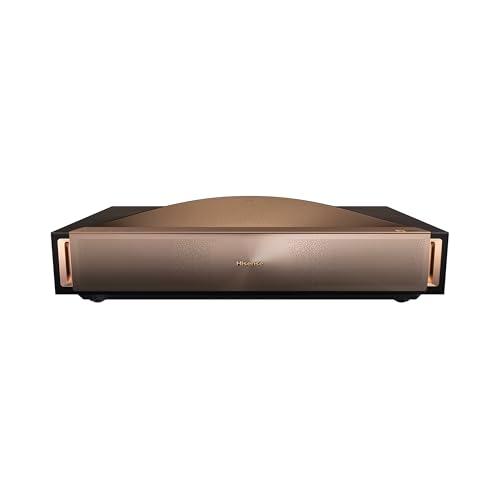
The Hisense L9Q takes a more functional approach, prioritizing performance over styling while still maintaining an attractive appearance. Hisense has rapidly improved their build quality over recent years, and current models show significant refinement compared to earlier generations.
Neither projector feels cheap or compromised, but Samsung edges ahead in pure industrial design and perceived premium quality. However, the Hisense's superior performance specifications arguably provide better long-term value.
After analyzing performance data, user feedback, and professional reviews, clear usage scenarios emerge for each projector.
Choose the Hisense L9Q if you:
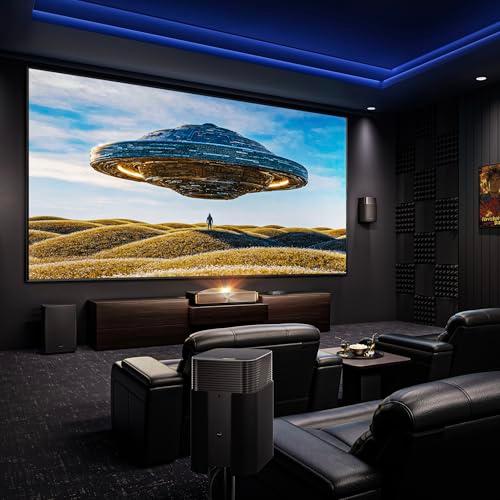
The Hisense represents the better choice for most buyers, especially families wanting a true TV replacement that works in normal lighting conditions.
Choose the Samsung Premiere 9 if you:
The Samsung works well for dedicated home theater enthusiasts who control lighting and don't need maximum brightness, but it's harder to recommend given the price similarity and performance differences.
At the time of writing, both projectors command premium prices in the $6,000 range, making value comparison crucial. The Hisense L9Q delivers significantly better performance across most measurable categories while matching the Samsung's price point. The 45% brightness advantage alone justifies the choice for most buyers, and the superior audio system, comprehensive HDR support, and larger screen capabilities provide additional value.
The Samsung Premiere 9 offers solid performance with excellent build quality, but lacks several features expected at this price level. The absence of Dolby Vision support feels like a significant oversight for a premium projector launched in 2023.
For most buyers seeking the best ultra short throw projector experience, the Hisense L9Q provides superior overall value and performance. The Samsung remains a viable choice for those prioritizing brand loyalty or specific ecosystem integration, but it faces tough competition from projectors offering better specifications at similar prices.
The ultra short throw projector market continues evolving rapidly, with both manufacturers likely planning updates and improvements. However, based on current offerings and performance, the Hisense represents the better choice for anyone wanting maximum value and the most comprehensive feature set in this premium category.
| Hisense L9Q Triple Laser Ultra Short Throw Projector | Samsung Premiere 9 4K Ultra Short Throw Laser Projector |
|---|---|
| Brightness - Most critical spec for daytime viewing and bright room performance | |
| 5,000 ANSI lumens (excellent for any lighting condition) | 3,450 ISO lumens (good for dimmed rooms, may struggle in bright daylight) |
| Color Gamut Coverage - Determines how vibrant and accurate colors appear | |
| 110% BT.2020 with Pantone validation (professional-grade color accuracy) | 154% DCI-P3 coverage (good cinematic colors but narrower spectrum than BT.2020) |
| HDR Format Support - Compatibility with premium streaming content | |
| Dolby Vision, HDR10+, HDR10, HLG, IMAX Enhanced (comprehensive support) | HDR10+, HDR10, HLG (missing Dolby Vision limits premium streaming options) |
| Screen Size Range - Flexibility for different room sizes and future upgrades | |
| 80-200 inches (exceptional versatility for any space) | 100-130 inches (good for most living rooms but limited expansion) |
| Contrast Ratio - Affects black levels and overall image depth | |
| 5,000:1 native contrast (deep blacks and bright whites) | 2,000,000:1 dynamic contrast (marketing spec, real performance varies) |
| Audio System - Eliminates need for separate sound equipment | |
| 116W 6.2.2-channel Devialet system with Dolby Atmos (theater-quality audio) | 40W 2.2.2-channel system with Dolby Atmos (decent but may need soundbar for large rooms) |
| Smart Platform - Daily usability and app compatibility | |
| Google TV with full Play Store access (best app compatibility) | Samsung Tizen OS (polished but more limited app selection) |
| Gaming Performance - Input lag for console and PC gaming | |
| 12ms input lag with Game Mode and HDMI 2.1 (excellent for serious gaming) | Cloud gaming focus, input lag not specified (better for casual gaming) |
| Throw Ratio - Distance needed from wall for projection | |
| 0.18:1 (100" screen from 5.4" away) | 0.189:1 (100" screen from 4.5" away) |
| Additional Features - Extras that add value beyond basic projection | |
| Built-in ATSC 3.0/1.0 TV tuners, 3D support, Filmmaker Mode | AI upscaling, Vision Booster, no TV tuner or 3D support |
| Laser Lifespan - Maintenance-free operation period | |
| 25,000+ hours (decades of normal use) | 20,000 hours (still excellent longevity) |
| Overall Value Assessment - Performance per dollar at similar price points | |
| Superior brightness, audio, and features for the price | Good build quality but missing key features for premium pricing |
The Hisense L9Q is significantly brighter at 5,000 ANSI lumens compared to the Samsung Premiere 9 at 3,450 ISO lumens. This 45% brightness advantage makes the Hisense L9Q much better for watching movies and TV during the day with lights on or windows open.
No, only the Hisense L9Q supports Dolby Vision along with HDR10+, HDR10, HLG, and IMAX Enhanced. The Samsung Premiere 9 supports HDR10+, HDR10, and HLG but lacks Dolby Vision support, which limits compatibility with premium Netflix and Disney+ content.
The Hisense L9Q supports massive screens from 80 to 200 inches, while the Samsung Premiere 9 works best with 100 to 130-inch screens. If you want flexibility for very large screens or future upgrades, the Hisense L9Q offers more options.
The Hisense L9Q has superior audio with a 116W 6.2.2-channel Devialet system compared to the Samsung Premiere 9's 40W 2.2.2-channel system. The Hisense provides nearly three times the power and eliminates the need for a separate soundbar in most rooms.
The Hisense L9Q is better for gaming with 12ms input lag, HDMI 2.1 ports, and dedicated Game Mode. The Samsung Premiere 9 focuses more on cloud gaming through Samsung Gaming Hub but doesn't specify input lag performance for console gaming.
The Hisense L9Q uses Google TV with full Google Play Store access, providing better app compatibility and more frequent updates. The Samsung Premiere 9 uses Samsung's Tizen OS, which is polished but has a more limited app selection compared to Google TV.
Both projectors have similar ultra-short throw capabilities. The Hisense L9Q needs 5.4 inches from the wall for a 100-inch screen, while the Samsung Premiere 9 needs 4.5 inches. Both can sit on an entertainment center close to your wall.
For dedicated home theaters with light control, both work well, but the Hisense L9Q offers better overall performance with superior brightness, comprehensive HDR support, and professional-grade audio. The Samsung Premiere 9 provides good performance but lacks some premium features expected in home theater setups.
The Hisense L9Q excels in bright living rooms thanks to its 5,000-lumen output, maintaining vivid colors even with ambient lighting. The Samsung Premiere 9 works better in dimmed rooms and may struggle with color saturation in very bright conditions.
At similar price points, the Hisense L9Q provides better value with significantly higher brightness, superior audio, larger screen capability, and more comprehensive HDR format support. The Samsung Premiere 9 offers good build quality but fewer features for the same investment.
Yes, both can replace traditional TVs, but the Hisense L9Q is the better TV replacement with built-in ATSC 3.0/1.0 tuners for over-the-air broadcasts, better daytime viewing performance, and comprehensive streaming compatibility. The Samsung Premiere 9 lacks TV tuners and works best as a streaming-focused display.
Both brands offer good reliability, with the Hisense L9Q rated for 25,000+ hours of laser life and the Samsung Premiere 9 rated for 20,000 hours. Samsung has a longer track record in premium electronics, while Hisense has rapidly improved quality and now offers competitive reliability with better performance specifications.
We've done our best to create useful and informative comparisons to help you decide what product to buy. Our research uses advanced automated methods to create this comparison and perfection is not possible - please contact us for corrections or questions. These are the sites we've researched in the creation of this article: chrismajestic.com - shop.hisense-usa.com - tomsguide.com - valueelectronics.com - techradar.com - whathifi.com - youtube.com - projectorscreen.com - projectorscreen.com - hisense-usa.com - youtube.com - projectorcentral.com - youtube.com - hisense-usa.com - manuals.plus - shop.avispl.com - hisense-usa.com - avsforum.com - valueelectronics.com - youtube.com - techradar.com - youtube.com - news.samsung.com - samsung.com - soundandvision.com - samsung.com - sound-advice.online - trustedreviews.com

Privacy Policy
Terms and Conditions - Affiliate Policy
Home Security
© Copyright 2008-2026.
11816 Inwood Rd #1211, Dallas, TX 75244