

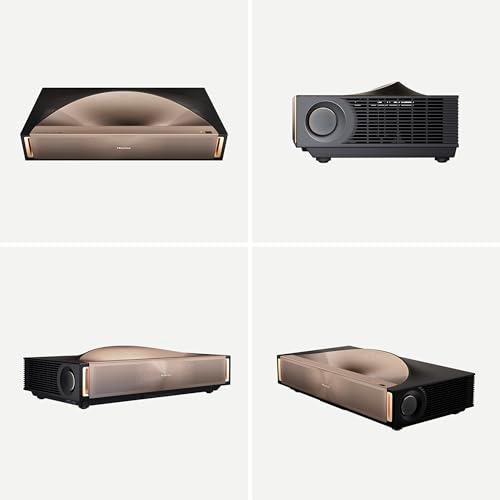
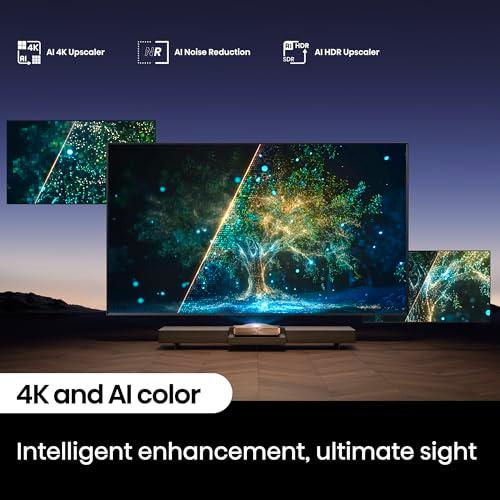
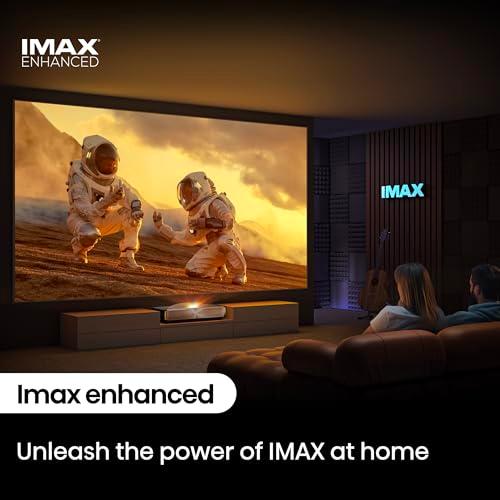
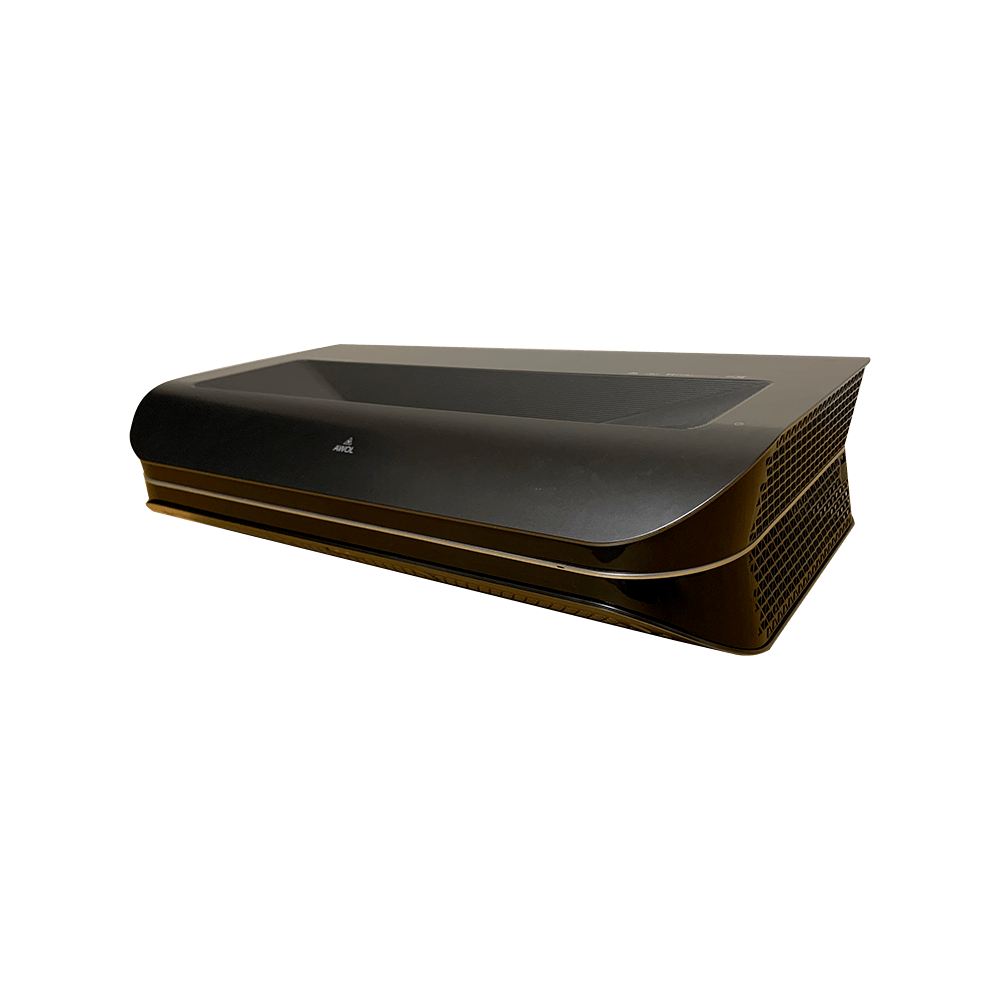
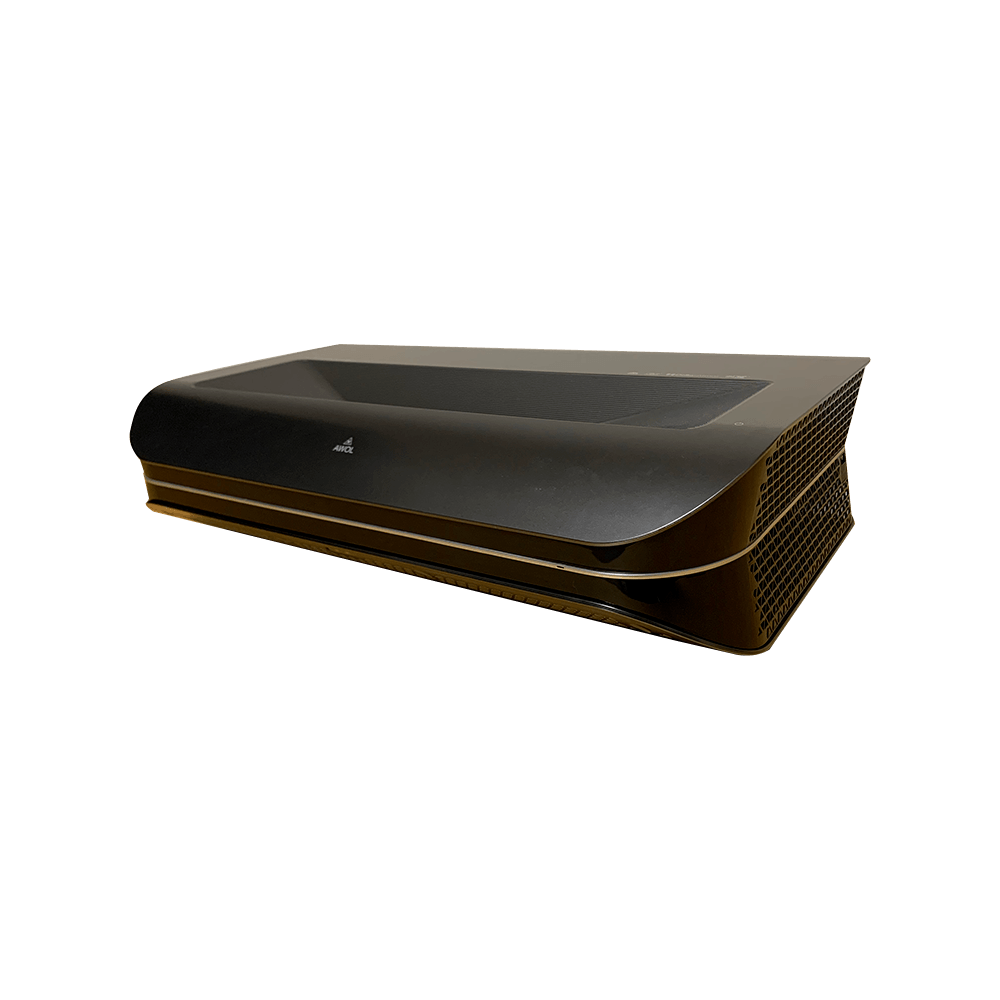

When flat-screen TVs started getting ridiculously expensive above 75 inches, ultra short throw (UST) projectors emerged as the smart alternative. These clever devices sit just inches from your wall and project massive 100-200 inch images without the ceiling mounting headaches of traditional projectors. Today, we're comparing two very different approaches to this technology: Hisense's flagship L9Q and AWOL Vision's budget-friendly LTV-2500.
Ultra short throw projectors work by using specialized lenses and mirrors that bend light at extreme angles, allowing them to project huge images from incredibly close distances. Think of it like a periscope in reverse – instead of looking around corners, these projectors throw light around corners to create massive displays.
The key advantage over traditional projectors is placement flexibility. No more drilling ceiling holes, running long cables, or dealing with shadows when someone walks in front. UST projectors sit on your TV stand or mount close to the wall, looking more like a premium soundbar than traditional projection equipment.
However, this convenience comes with trade-offs. UST projectors typically need special ambient light rejecting (ALR) screens to perform their best, and they're generally more expensive than equivalent traditional projectors. The ultra-wide angle optics are also more challenging to manufacture, which affects both cost and image quality.
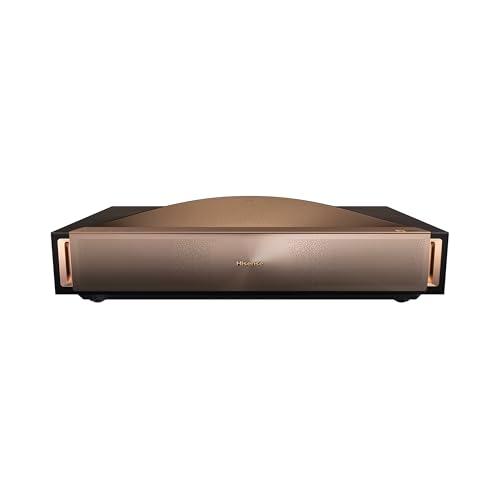
Released in 2024, the Hisense L9Q represents the current pinnacle of UST technology, incorporating Hisense's third-generation laser engine and years of refinement in the UST category. At the time of writing, it commands a premium price that positions it as a flagship product competing directly with high-end TVs.
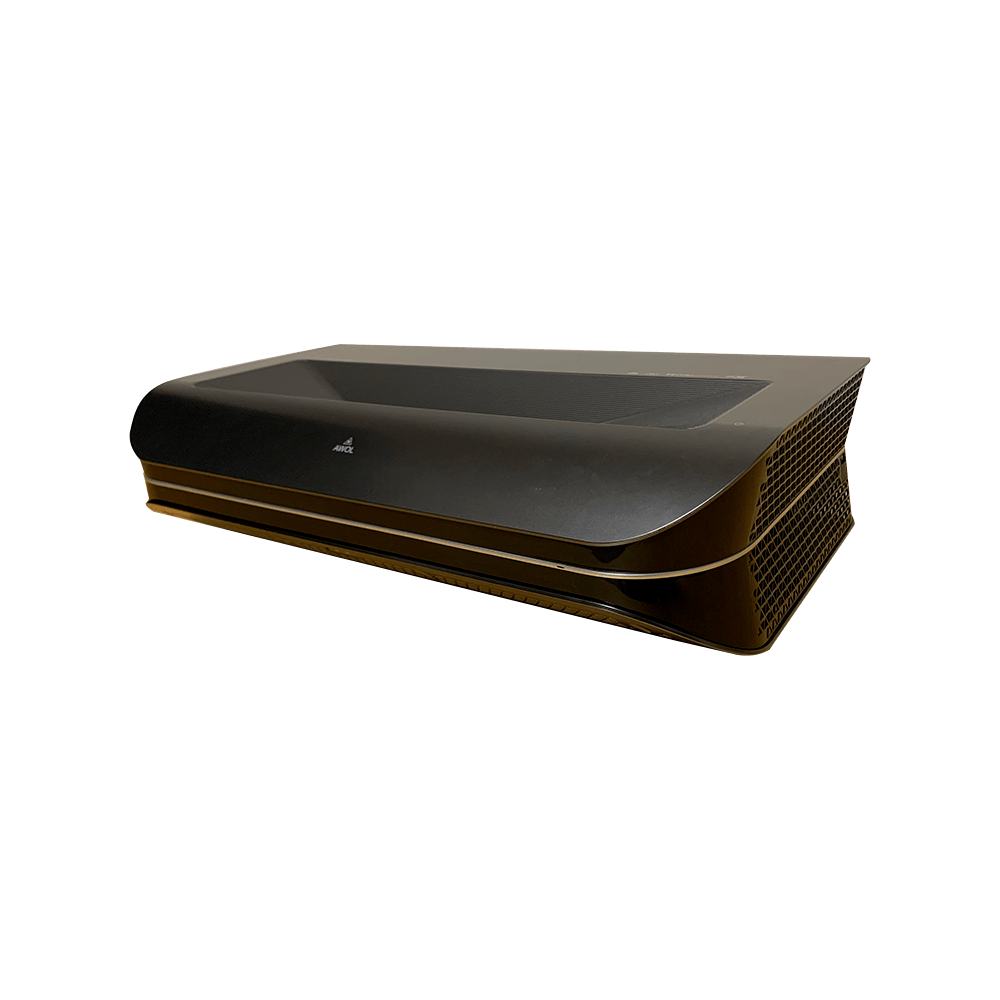
The AWOL Vision LTV-2500, also from 2024, takes a dramatically different approach. AWOL Vision has focused on making triple-laser technology accessible at a fraction of typical UST pricing, though with significant performance compromises.
This isn't just a comparison of two similar products – it's examining whether paying significantly more for premium UST performance is justified, or if budget-friendly options have reached "good enough" territory.
Brightness determines everything about your UST projector experience. Unlike traditional home theater projectors used in dedicated dark rooms, UST projectors often compete with table lamps, windows, and general living room lighting.
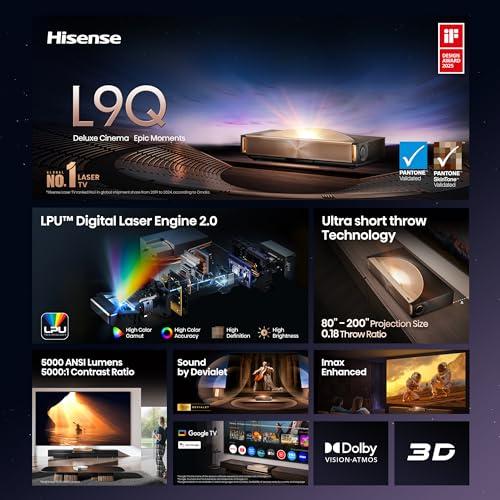
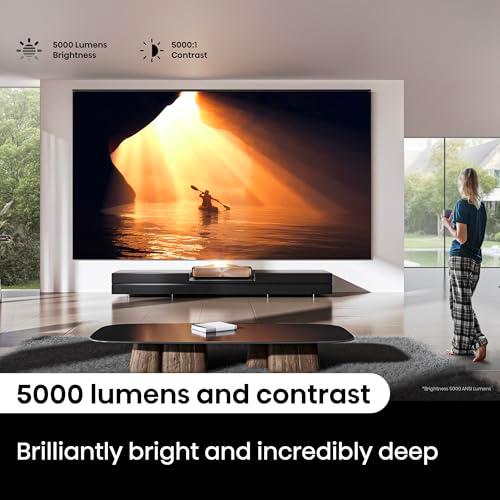
The Hisense L9Q delivers an impressive 5,000 ANSI lumens, making it among the brightest consumer projectors available. ANSI lumens is the standardized measurement that matters – it represents actual usable brightness across the entire image, not peak white measurements that some manufacturers use to inflate numbers.
This exceptional brightness means the L9Q performs admirably even with windows open during daytime viewing. Our research from professional reviewers consistently confirms you can watch content comfortably with moderate ambient lighting, something impossible with dimmer projectors.
In contrast, the AWOL Vision LTV-2500 produces 2,000 lumens – still respectable for a budget projector, but requiring much more careful light control. This difference becomes critical on larger screens. While the LTV-2500 might look acceptable on a 100-inch screen in a darkened room, the same content on a 150-inch screen would appear noticeably dim and washed out.
The practical impact is substantial. The L9Q functions more like a bright TV replacement, while the LTV-2500 requires more traditional projector viewing conditions.
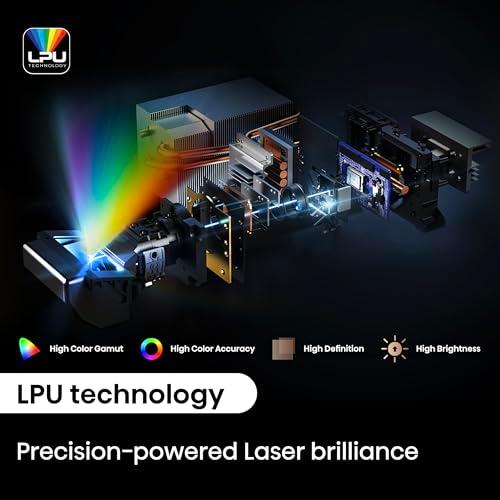
Both projectors use triple-laser light engines, which represent the current gold standard for projector color reproduction. Unlike traditional lamp-based projectors that use spinning color wheels, triple-laser systems employ separate red, green, and blue lasers for more precise color control.
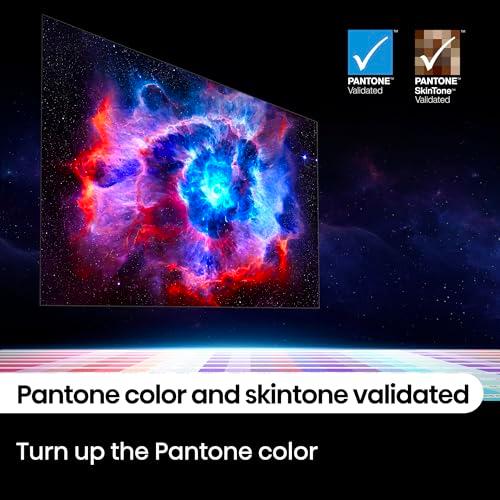
The Hisense L9Q achieves 110% coverage of the BT.2020 color space with Pantone validation. BT.2020 is the ultra-wide color standard used for premium HDR content, and 110% coverage means it can display colors beyond what most content requires. Pantone validation is crucial – it means colors have been professionally calibrated to match real-world standards, ensuring what you see matches the content creator's intent.
The AWOL Vision LTV-2500 covers 147% of the DCI-P3 color space, which sounds impressive until you understand the context. DCI-P3 is the theatrical color standard – narrower than BT.2020 but still quite wide. However, without professional calibration, wide color gamuts can actually work against you, producing oversaturated, unnatural-looking images.
From professional reviews, the L9Q consistently produces more accurate, natural-looking colors, while the LTV-2500 tends toward the vivid, sometimes oversaturated look common in budget displays.
Contrast ratio – the difference between the brightest whites and darkest blacks – determines image depth and HDR performance. This is where projector specifications get tricky.
The Hisense L9Q claims a 5,000:1 native contrast ratio, while the AWOL Vision LTV-2500 boasts 1,000,000:1. These numbers use different measurement methods and aren't directly comparable.
Native contrast ratio measures the difference between white and black simultaneously displayed on screen – a more realistic measurement. Dynamic contrast allows the projector to adjust overall brightness between scenes, creating inflated numbers that don't reflect actual viewing performance.
Based on professional measurements, the L9Q delivers superior real-world contrast with better shadow detail and less gray-looking blacks. This becomes especially important for HDR content, where the projector needs to display both bright highlights and dark shadows simultaneously.
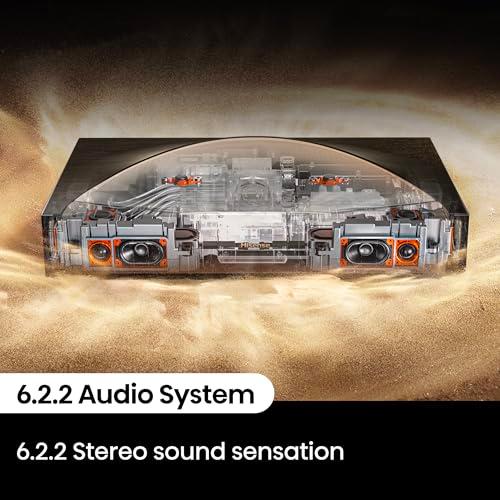
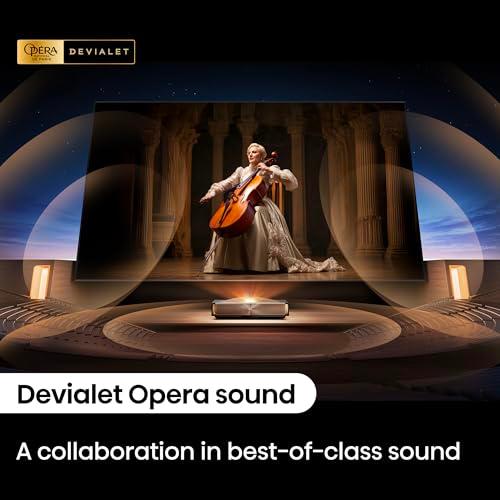
This is where the products diverge most dramatically. The Hisense L9Q incorporates a full 6.2.2-channel audio system developed with Devialet, featuring dedicated subwoofers and upward-firing speakers for Dolby Atmos effects. The system outputs 116 watts and includes professional tuning inspired by the Opéra de Paris.
In practical terms, this means the L9Q can function as a complete home theater solution without additional speakers. The integrated audio rivals dedicated soundbars costing $500-1500, representing significant additional value.
The AWOL Vision LTV-2500 includes basic 36-watt stereo speakers with virtual Dolby Atmos processing. While adequate for casual viewing and clear dialogue, it lacks the bass response and spatial effects for cinematic experiences. Most users will want to add external audio equipment.
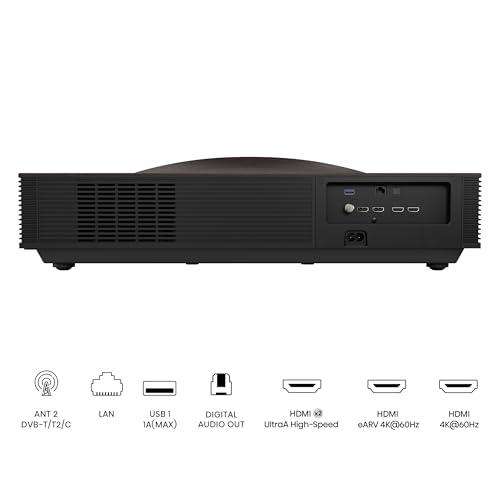
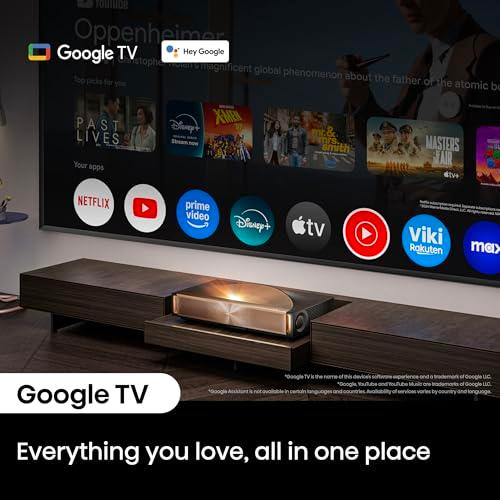
The Hisense L9Q runs Google TV with full access to streaming apps, voice control, and smart home integration. It includes Wi-Fi 6E for faster streaming, four HDMI ports (including two HDMI 2.1 ports for next-generation gaming), and built-in ATSC 3.0 tuners for over-the-air broadcasts.
The AWOL Vision LTV-2500 offers more basic smart features with older Wi-Fi standards and standard HDMI connectivity. While functional, it's less future-proof for emerging content standards and gaming requirements.
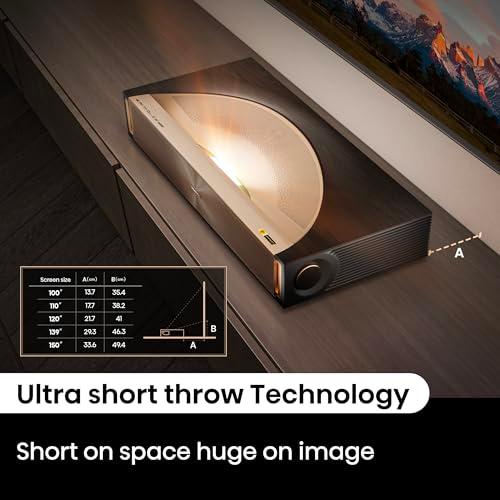
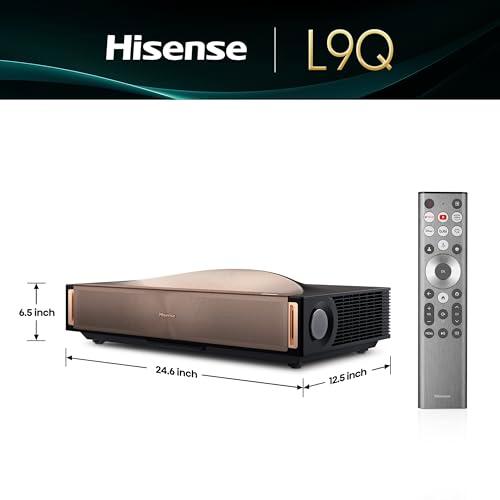
Both projectors offer ultra-short throw ratios, but the Hisense L9Q edges ahead with a 0.18:1 ratio versus 0.25:1 for the AWOL Vision LTV-2500. This means the L9Q can sit closer to the wall while producing the same image size, offering more placement flexibility in tight spaces.
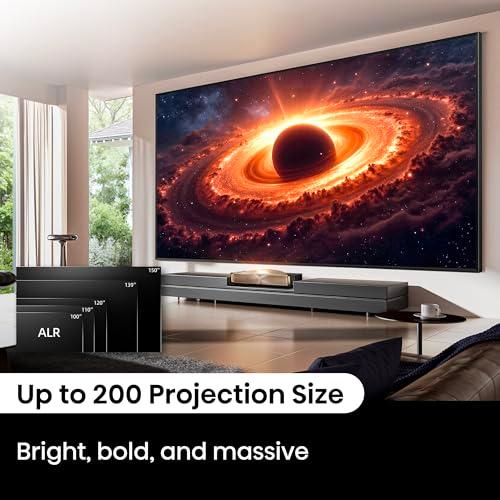
The L9Q also supports larger maximum screen sizes – up to 200 inches versus 150 inches for the LTV-2500. While few people need 200-inch screens, this capability indicates superior optical design and brightness reserves.
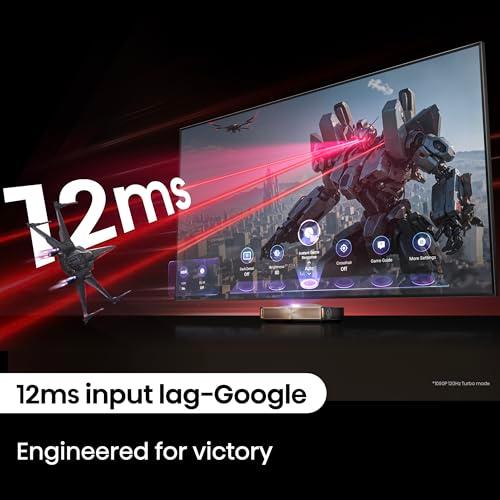
Both projectors include gaming-optimized modes, but the Hisense L9Q offers slightly better performance with 12ms input lag versus 15ms for the AWOL Vision LTV-2500. The L9Q also includes HDMI 2.1 ports supporting 4K/120Hz gaming for PlayStation 5 and Xbox Series X compatibility.
The difference isn't dramatic – both are suitable for casual gaming, though competitive players might prefer the L9Q's lower latency and advanced connectivity.
At the time of writing, these projectors represent vastly different value propositions. The Hisense L9Q commands flagship pricing similar to premium 75-85 inch TVs, while the AWOL Vision LTV-2500 costs roughly equivalent to mid-range 65-inch displays.
The L9Q justifies its premium through superior brightness, professional-grade color accuracy, integrated high-end audio, and comprehensive smart features. When you factor in the equivalent cost of a quality soundbar, the pricing becomes more reasonable for serious home theater enthusiasts.
The LTV-2500 democratizes triple-laser technology, making UST projection accessible to users who couldn't justify premium pricing. While compromised compared to flagship models, it still delivers genuine large-screen excitement at unprecedented affordability.
Choose the Hisense L9Q if you're treating this as a primary TV replacement, have a bright living room, want screens larger than 120 inches, or prioritize image quality and integrated audio. It's ideal for enthusiasts who want no-compromise performance and can justify the premium pricing.
The AWOL Vision LTV-2500 makes sense for budget-conscious users, those with dedicated dark rooms, people wanting to experiment with UST technology, or as secondary displays. It's perfect for getting into large-screen projection without the financial commitment of flagship models.
These aren't really competing products – they're serving different markets entirely. The Hisense L9Q is a flagship home theater centerpiece that happens to be a projector, while the AWOL Vision LTV-2500 is an accessible entry point into UST technology.
Your room conditions matter most. If you have significant ambient light or want true TV-replacement performance, the L9Q's superior brightness is essential. For dedicated theater rooms or primarily evening viewing, the LTV-2500 delivers satisfying large-screen experiences at remarkable affordability.
The Hisense L9Q represents the current state-of-the-art in UST projection – expensive but delivering professional-grade performance that rivals or exceeds premium TVs. The AWOL Vision LTV-2500 proves that acceptable UST performance has become surprisingly affordable, opening the technology to mainstream adoption.
Both projectors succeed at their respective goals, making the choice more about budget and performance expectations than determining a clear winner. The UST projector category has matured to offer compelling options across the price spectrum, giving consumers genuine choice in achieving large-screen dreams.
| Hisense L9Q Triple Laser Ultra Short Throw Projector | AWOL Vision LTV-2500 Ultra Short Throw 4K Projector |
|---|---|
| Brightness - The most critical factor for daytime viewing and large screens | |
| 5,000 ANSI lumens (excellent performance in bright rooms) | 2,000 lumens (requires controlled lighting conditions) |
| Native Resolution - Determines image sharpness and detail | |
| 4K (3840 x 2160) via pixel-shifting with 0.47" DLP chip | 4K (3840 x 2160) via pixel-shifting with 1 cm DLP chip |
| Contrast Ratio - Critical for HDR performance and image depth | |
| 5,000:1 native contrast (realistic measurement) | 2,500:1 native contrast (1,000,000:1 dynamic claimed) |
| Color Accuracy - Determines how natural and accurate colors appear | |
| 110% BT.2020 with Pantone validation (professional-grade) | 107% BT.2020 coverage (good but not professionally validated) |
| Throw Ratio - How close the projector can sit to the wall | |
| 0.18:1 (100" image from just 5.4" away) | 0.25:1 (requires slightly more distance from wall) |
| Maximum Screen Size - Flexibility for future upgrades | |
| Up to 200 inches (industry-leading capability) | Up to 150 inches (adequate for most users) |
| Audio System - Can eliminate need for external speakers | |
| 116W 6.2.2-channel Devialet system with Dolby Atmos | 36W stereo speakers with virtual Dolby Atmos |
| Smart Platform - Affects app availability and future updates | |
| Google TV OS with full app ecosystem | Basic Android implementation with limited features |
| Connectivity - Important for gaming and future devices | |
| 4 HDMI ports (2x HDMI 2.1, 2x HDMI 2.0b), Wi-Fi 6E | 3 HDMI ports (standard), Wi-Fi 5 |
| Gaming Performance - Input lag and refresh rate support | |
| 12ms input lag, HDMI 2.1 with 4K/120Hz support | 15ms at 4K/60Hz, 8ms at 1080p/120Hz in Turbo mode |
| Laser Life - Long-term reliability and maintenance costs | |
| 25,000+ hours rated lifespan | 25,000 hours rated lifespan |
| Best For - Primary use case recommendation | |
| Bright rooms, primary TV replacement, premium performance | Dark rooms, budget-conscious buyers, UST newcomers |
The Hisense L9Q is significantly brighter at 5,000 ANSI lumens compared to the AWOL Vision LTV-2500 at 2,000 lumens. This makes the L9Q much better for rooms with windows or ambient lighting, while the LTV-2500 requires darker conditions for optimal viewing.
The Hisense L9Q supports screens up to 200 inches, while the AWOL Vision LTV-2500 maxes out at 150 inches. For most home theaters, both sizes are more than adequate, but the L9Q offers more flexibility for very large installations.
The Hisense L9Q features a premium 116W 6.2.2-channel audio system by Devialet with true Dolby Atmos, eliminating the need for external speakers. The AWOL Vision LTV-2500 has basic 36W stereo speakers that work for dialogue but likely require additional audio equipment for cinematic experiences.
The Hisense L9Q has a 0.18:1 throw ratio, projecting a 100-inch image from just 5.4 inches away. The AWOL Vision LTV-2500 uses a 0.25:1 throw ratio, requiring slightly more distance from the wall for the same image size.
The AWOL Vision LTV-2500 offers exceptional value as an entry point into triple-laser UST technology at a budget-friendly price. The Hisense L9Q justifies its premium pricing with flagship performance, professional-grade features, and integrated high-end audio that rivals dedicated soundbars.
Both projectors support gaming with the Hisense L9Q offering 12ms input lag and HDMI 2.1 ports for next-gen consoles. The AWOL Vision LTV-2500 provides 15ms input lag at 4K and 8ms at 1080p in Turbo mode. Both are suitable for casual gaming, with the L9Q having a slight edge for competitive play.
The Hisense L9Q runs full Google TV OS with comprehensive app support, voice control, and Wi-Fi 6E connectivity. The AWOL Vision LTV-2500 has more basic smart features with limited app selection and older Wi-Fi standards, making the L9Q more future-proof.
The Hisense L9Q delivers 110% BT.2020 color coverage with Pantone validation for professional-grade accuracy. The AWOL Vision LTV-2500 covers 107% BT.2020 but lacks professional calibration. Both support HDR formats, but the L9Q provides more accurate, natural-looking colors.
The Hisense L9Q is specifically designed for bright living rooms with its 5,000 ANSI lumens output, allowing comfortable viewing with ambient lighting. The AWOL Vision LTV-2500 at 2,000 lumens requires light control and works best in darker environments or evening viewing.
The Hisense L9Q offers 5,000:1 native contrast ratio, while the AWOL Vision LTV-2500 has 2,500:1 native contrast (though claims much higher dynamic contrast). The L9Q provides better shadow detail and deeper blacks for more immersive HDR content.
Both projectors benefit from ALR screens, but the AWOL Vision LTV-2500 essentially requires one for acceptable performance in rooms with any ambient light. The brighter Hisense L9Q can work reasonably well on white walls or standard screens, though ALR screens still improve performance.
Choose the AWOL Vision LTV-2500 if you have a dedicated dark room, want to try UST technology affordably, or plan screens under 120 inches. Select the Hisense L9Q if you need bright room performance, want premium audio integration, plan large screens, or require this as your primary TV replacement.
We've done our best to create useful and informative comparisons to help you decide what product to buy. Our research uses advanced automated methods to create this comparison and perfection is not possible - please contact us for corrections or questions. These are the sites we've researched in the creation of this article: chrismajestic.com - shop.hisense-usa.com - tomsguide.com - valueelectronics.com - techradar.com - whathifi.com - youtube.com - projectorscreen.com - projectorscreen.com - hisense-usa.com - youtube.com - projectorcentral.com - youtube.com - hisense-usa.com - manuals.plus - shop.avispl.com - hisense-usa.com - projectorjunkies.com - dreamediaav.com - projectorjunkies.com - avsforum.com - nothingprojector.com - projectorreviews.com - vividstorm.eu - projectorcentral.com - projectorcentral.com - projectorcentral.com - avsforum.com - dreamediaav.com

Privacy Policy
Terms and Conditions - Affiliate Policy
Home Security
© Copyright 2008-2026.
11816 Inwood Rd #1211, Dallas, TX 75244