

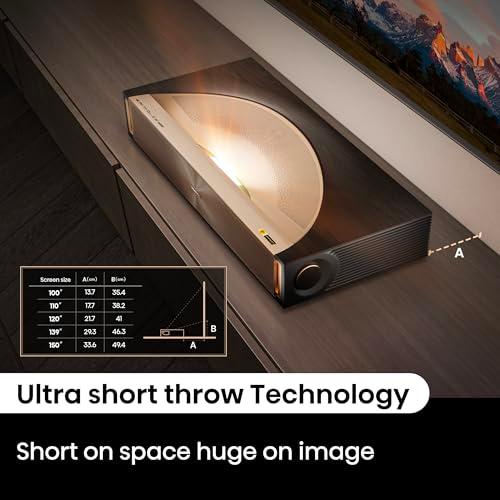
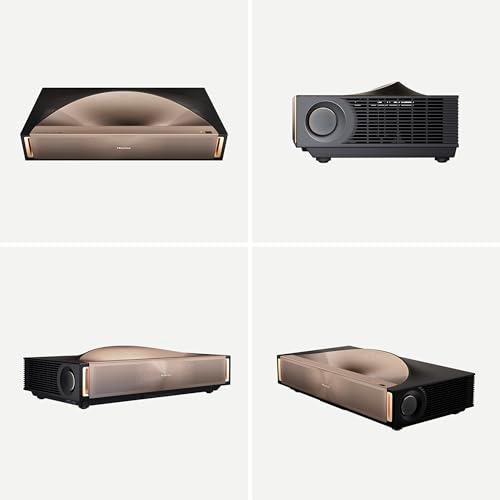
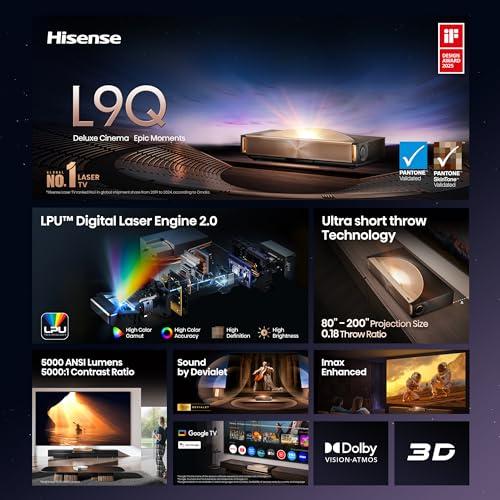
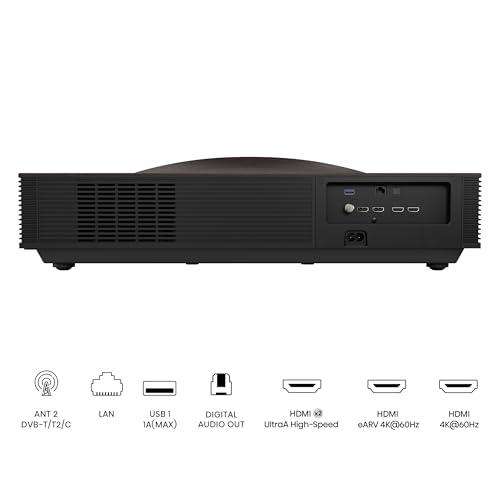

Ultra short throw projectors have completely changed how we think about home entertainment. Instead of mounting a projector on your ceiling and running cables across the room, these devices sit right up against your wall—like a soundbar—and beam massive 100+ inch images from just inches away. It's honestly impressive technology that makes giant screens accessible to anyone with a living room.
The two standout options in 2025 are the Hisense L9Q and the XGIMI Aura 2. Both launched in 2025, but they take very different approaches to ultra short throw projection. The L9Q represents Hisense's push into flagship territory with premium pricing and no-compromise performance, while the Aura 2 focuses on delivering solid performance at a more accessible price point.
Before diving into the comparison, it's worth understanding what makes these projectors special. Traditional projectors use a "long throw" design where the device sits far from the screen—think of those old classroom projectors mounted on the ceiling. Ultra short throw projectors flip this concept entirely.
The key specification here is the "throw ratio"—basically how far the projector needs to be from the wall to create a specific image size. Both the L9Q and Aura 2 have throw ratios around 0.18:1, meaning they can project a 100-inch image from roughly 5-6 inches away from the wall. This is genuinely revolutionary for home use because you can get a massive screen without redesigning your entire room.
The trade-off is complexity. These projectors need incredibly sophisticated optics and digital processing to create a sharp, uniform image from such close proximity. They also tend to be more expensive than traditional projectors because of this advanced engineering.
This is where the Hisense L9Q and XGIMI Aura 2 take fundamentally different approaches, and it's the most important technical difference between them.
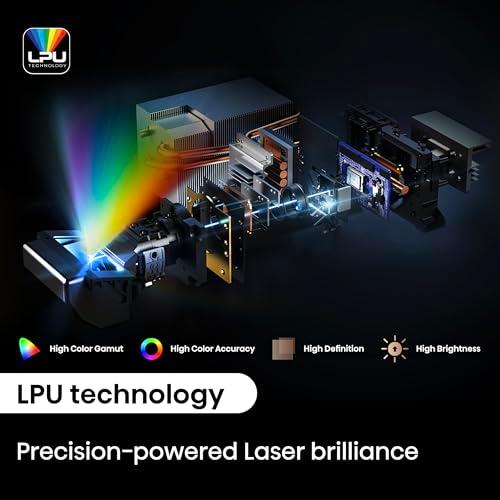
The L9Q uses what Hisense calls "TriChroma triple laser technology." This means it has three separate lasers—one red, one green, one blue—that combine to create every color you see on screen. Think of it like having three ultra-precise colored flashlights working together. This is the same basic approach used in high-end cinema projectors and represents the cutting edge of consumer projection technology.
The Aura 2, meanwhile, uses XGIMI's "Dual Light 2.0" system, which combines laser and LED light sources. It's a hybrid approach that tries to get the benefits of both technologies—lasers for brightness and LEDs for natural color reproduction. This addresses some common issues with pure laser projectors, like "speckle" (tiny shimmering dots you sometimes see) and rainbow effects.
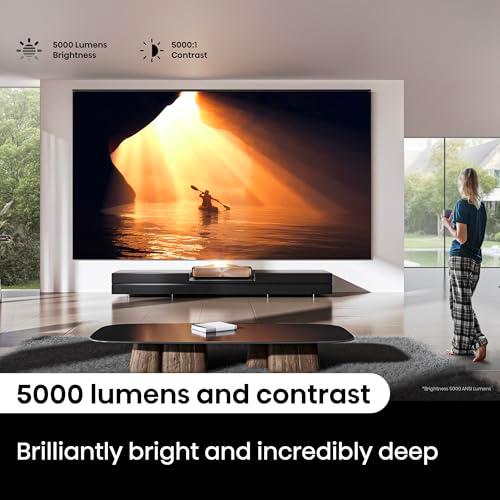
The practical difference? The L9Q produces 5,000 ANSI lumens of brightness—that's exceptionally bright, even by projector standards. The Aura 2 hits 2,300 ISO lumens, which is still very good but less than half as bright.
Why does brightness matter so much? Because unlike a TV that generates its own light, projectors rely on reflecting light off your wall or screen. More brightness means you can watch during the day with curtains open, use larger screen sizes, and get vibrant colors even with ambient lighting. The brightness difference between these two projectors is substantial enough that it changes how and when you can use them.
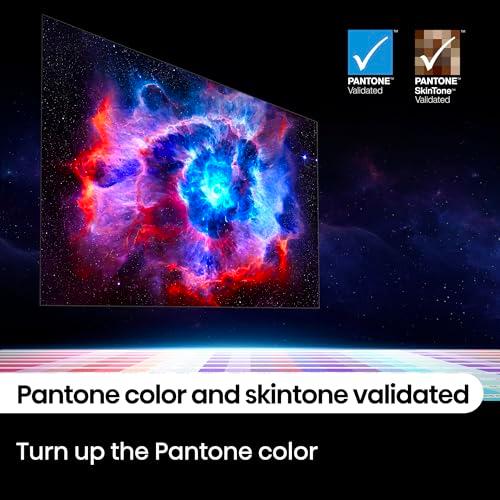
Color reproduction is where the L9Q really shows its premium positioning. It covers 110% of the BT.2020 color space and is both Pantone and Pantone SkinTone validated. Let me break this down.
BT.2020 is the color standard for 4K HDR content—it defines the full range of colors that modern content creators can use. Most consumer displays can't even come close to full BT.2020 coverage, so 110% coverage means the L9Q can display colors more vivid than most content even contains. The Pantone validation is particularly interesting because it means the colors are certified accurate enough for professional graphic design work.
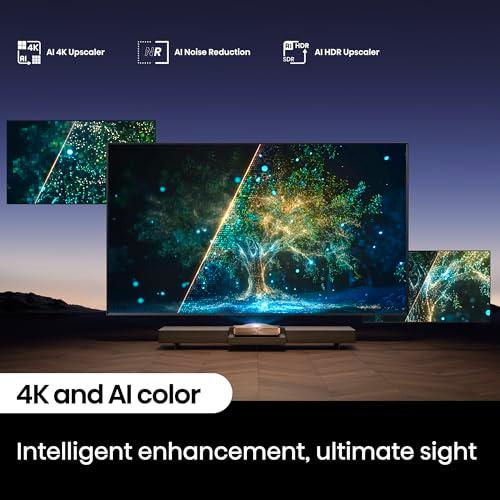
The Aura 2 covers 99% of DCI-P3, which is the color space used for digital cinema. This is still excellent—most premium TVs target this same spec. But DCI-P3 is narrower than BT.2020, so the Aura 2 can't display the most saturated colors that the L9Q can handle.
In practical terms, the L9Q will display more vivid, lifelike colors, especially in HDR content. Reds will be deeper, greens more natural, and skin tones more accurate. The Aura 2 still delivers excellent color, but it's more in line with what you'd get from a premium TV rather than professional display equipment.
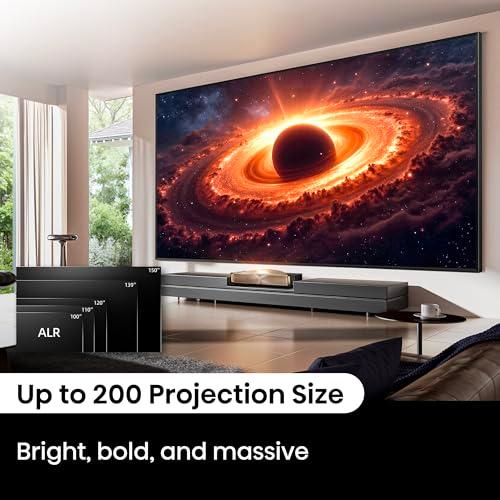
This is a significant differentiator. The L9Q can project images from 80 inches all the way up to 200 inches, while the Aura 2 maxes out at 150 inches.
Now, 150 inches is still massive—we're talking about a screen roughly 12 feet wide. But 200 inches is genuinely cinema-sized, approaching what you'd find in a small movie theater. The L9Q's extra brightness is crucial here because as screen size increases, the image gets dimmer (the same amount of light spread over a larger area).
For most living rooms, 150 inches is probably the practical maximum anyway. But if you have a large basement, media room, or want to use the projector outdoors, the L9Q's ability to go larger while maintaining brightness gives it a real advantage.
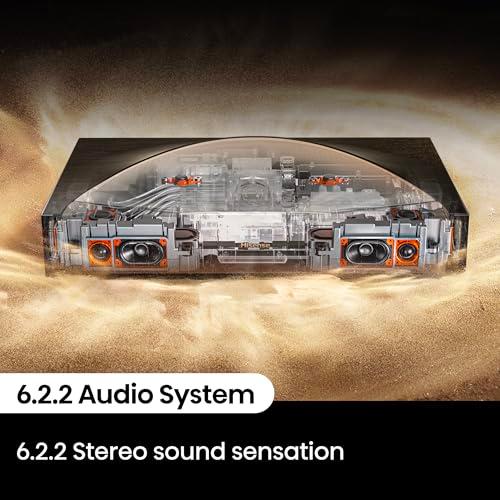
This is where the L9Q takes a completely different philosophy. Instead of treating audio as an afterthought, Hisense partnered with Devialet—a premium French audio company—to create a 116-watt, 6.2.2-channel sound system built right into the projector.
Let's decode that specification: 6.2.2 means six main speakers, two subwoofers, and two upward-firing speakers for height effects. This creates true surround sound with physical speakers positioned to bounce sound off your ceiling for overhead effects. It's the same approach used in high-end soundbars, but built into the projector itself.
The Aura 2 has a 60-watt integrated speaker system that supports Dolby Atmos, and reviews suggest it sounds quite good for a projector. But it's still a more conventional approach—decent sound that most people will want to supplement with external speakers for the best experience.
The L9Q's approach is particularly smart for ultra short throw projectors because the device sits right where you'd typically place a soundbar anyway. Having premium audio built in means one less device to buy, connect, and position.
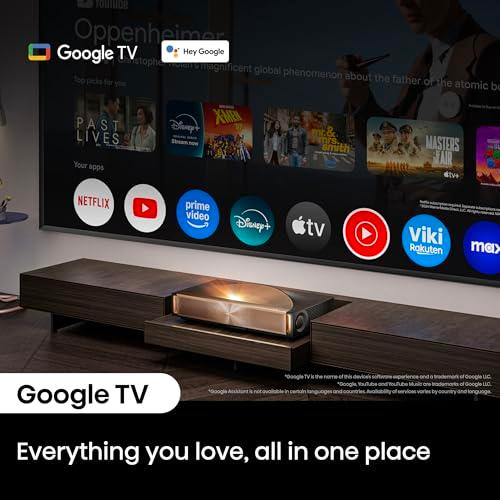
Both projectors run Android-based operating systems, but with different implementations that affect daily use. The L9Q uses Google TV, which is Google's current smart TV platform with a clean interface and access to all major streaming services.
The Aura 2 runs Android TV, but this is where our research reveals some frustrations. Multiple reviews mentioned the operating system as a weak point, with limited customization options and occasional performance hiccups. Some users report needing to connect external streaming devices like Apple TV or Roku for the best experience.
This difference matters more than you might expect. These projectors are designed to replace your TV, so you'll be navigating their interfaces daily. A sluggish or limited smart platform can be genuinely annoying over time.
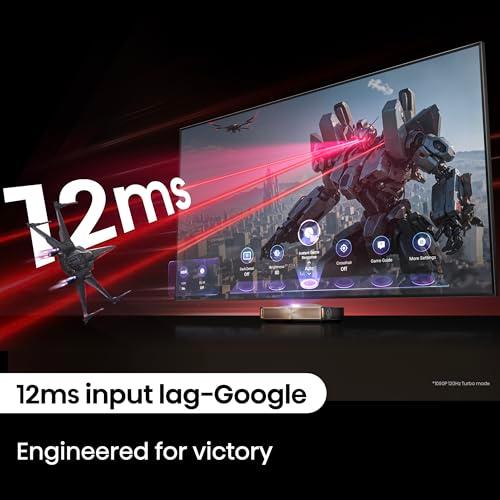
For gaming, input lag—the delay between pressing a button and seeing the response on screen—is crucial. The L9Q delivers 12ms input lag in Game Mode, which is excellent even by gaming monitor standards. It also includes HDMI 2.1 ports that support the full bandwidth needed for 4K gaming at 120fps from modern consoles.
The Aura 2 supports gaming but doesn't specify low-latency performance in its marketing, suggesting it's more oriented toward casual gaming rather than competitive play.
This difference matters if you're a serious gamer or planning to connect a PlayStation 5 or Xbox Series X. The L9Q will provide a more responsive, console-quality gaming experience.
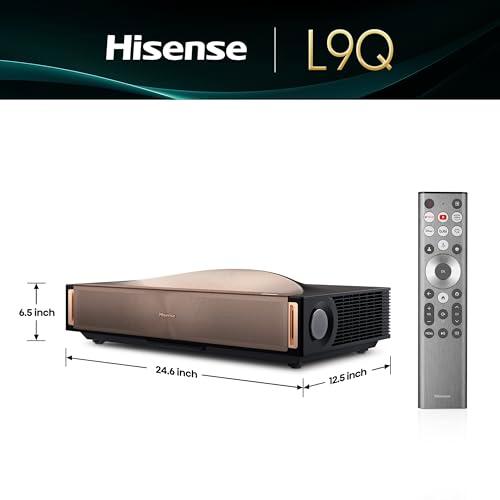
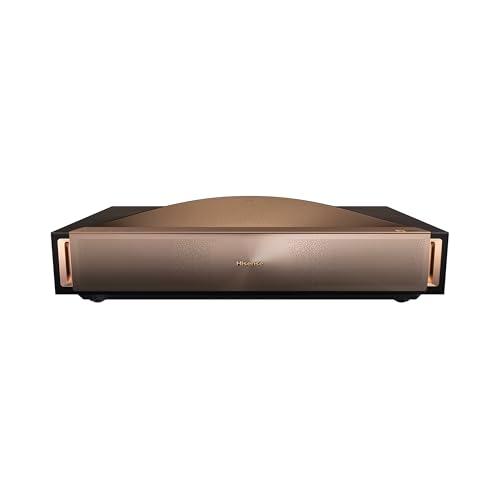
The two projectors take different approaches to industrial design. The L9Q focuses on premium materials and performance-oriented aesthetics. It's a substantial unit that makes no apologies for being a high-end piece of electronics.
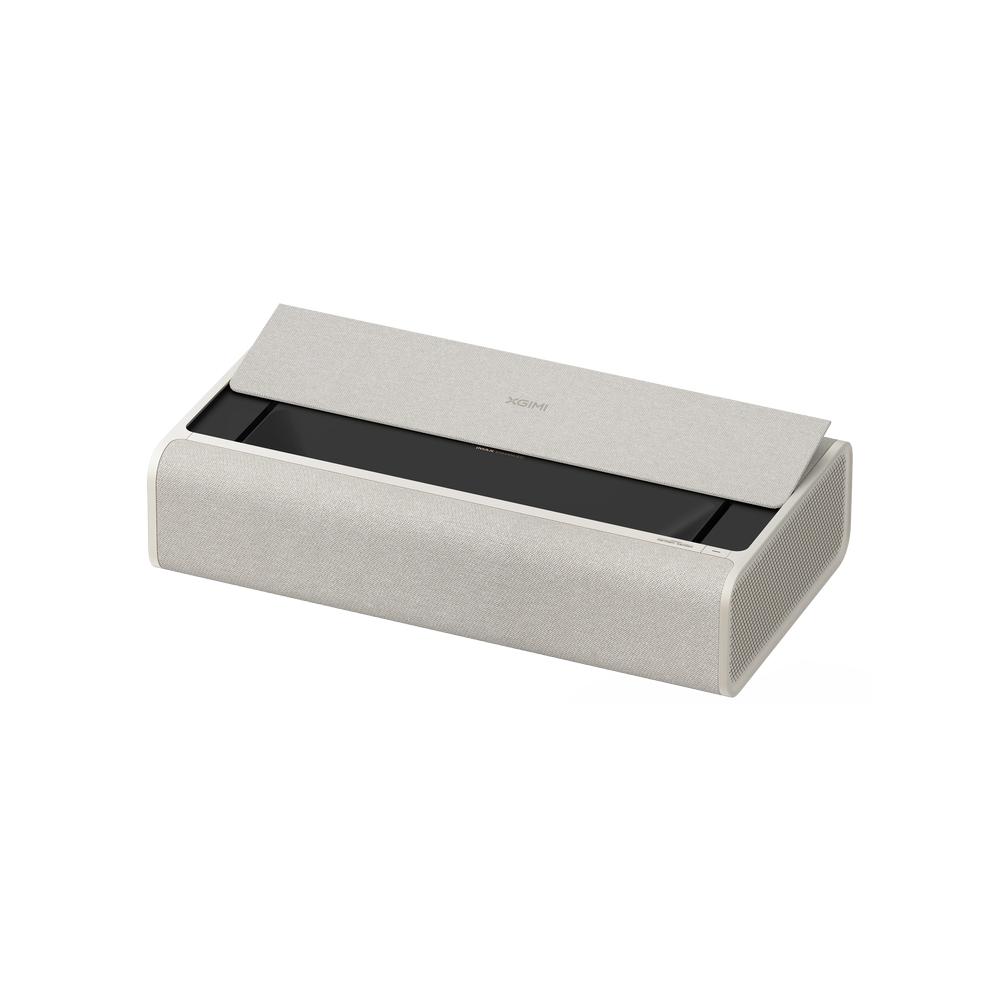
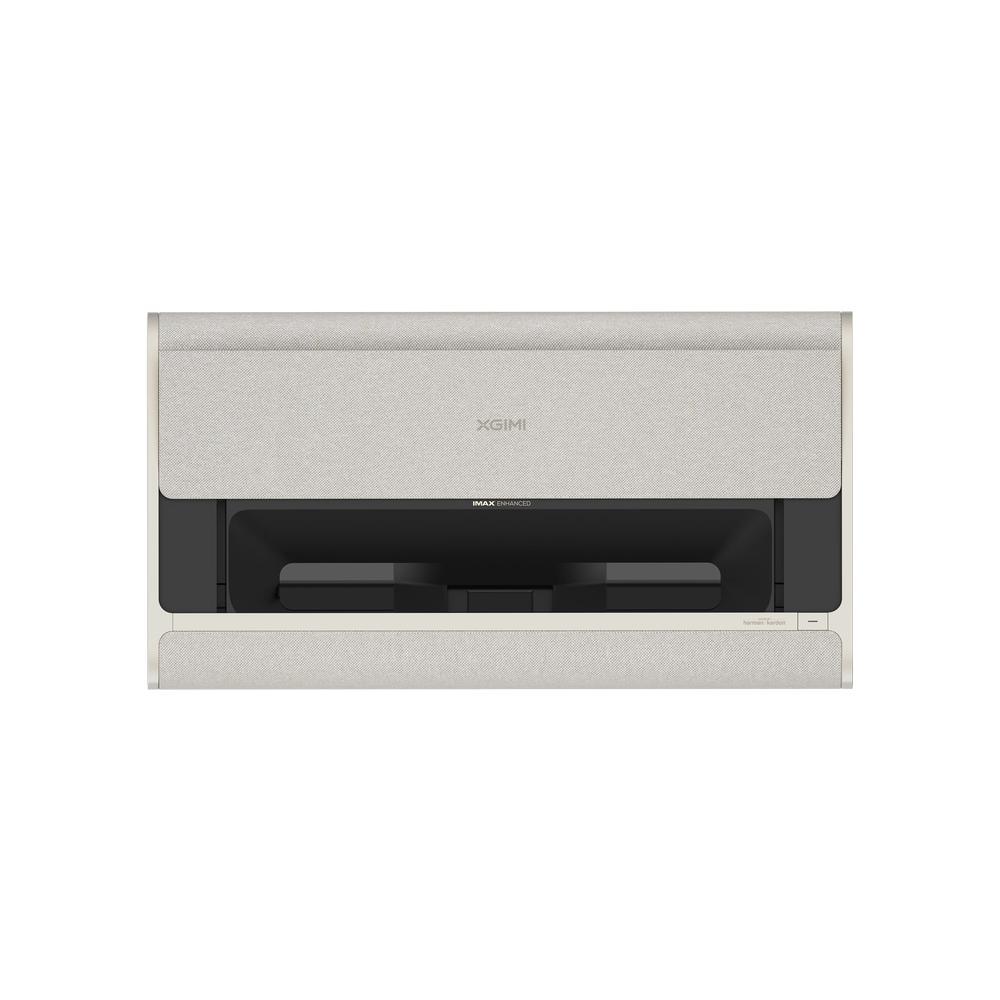
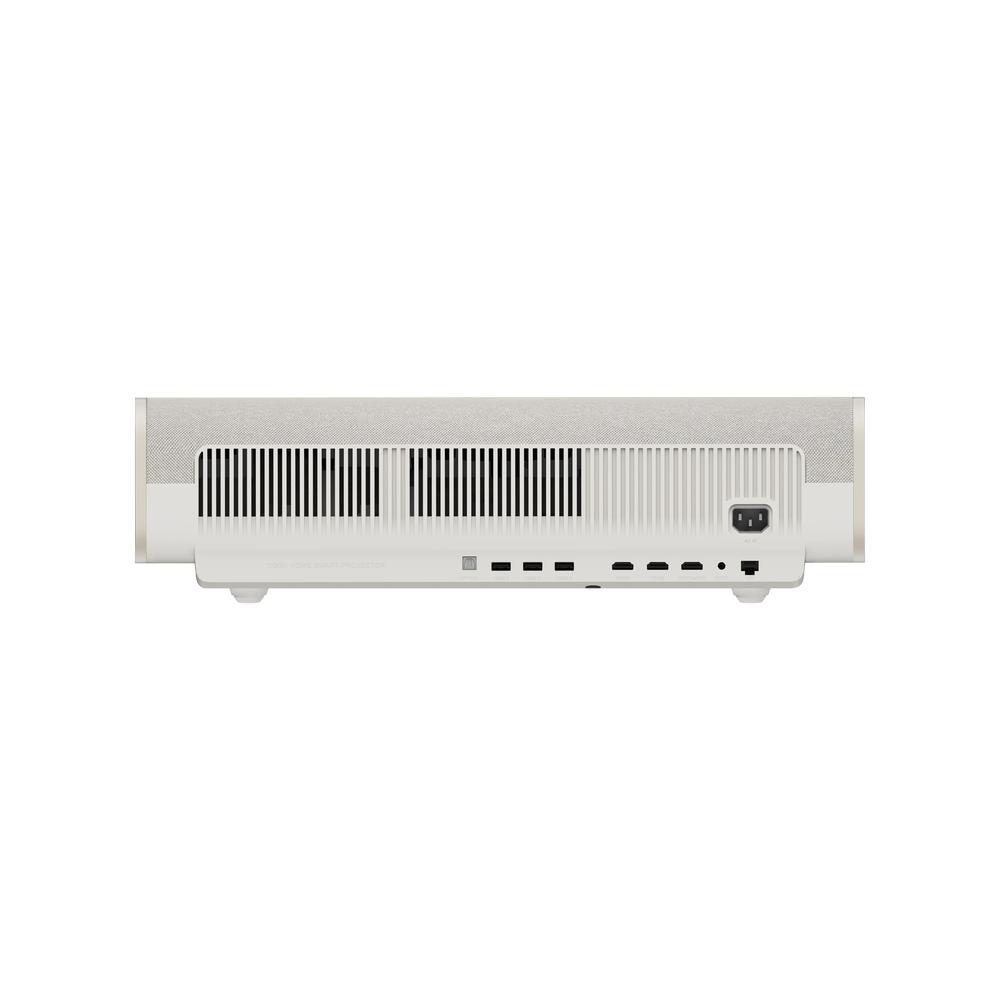
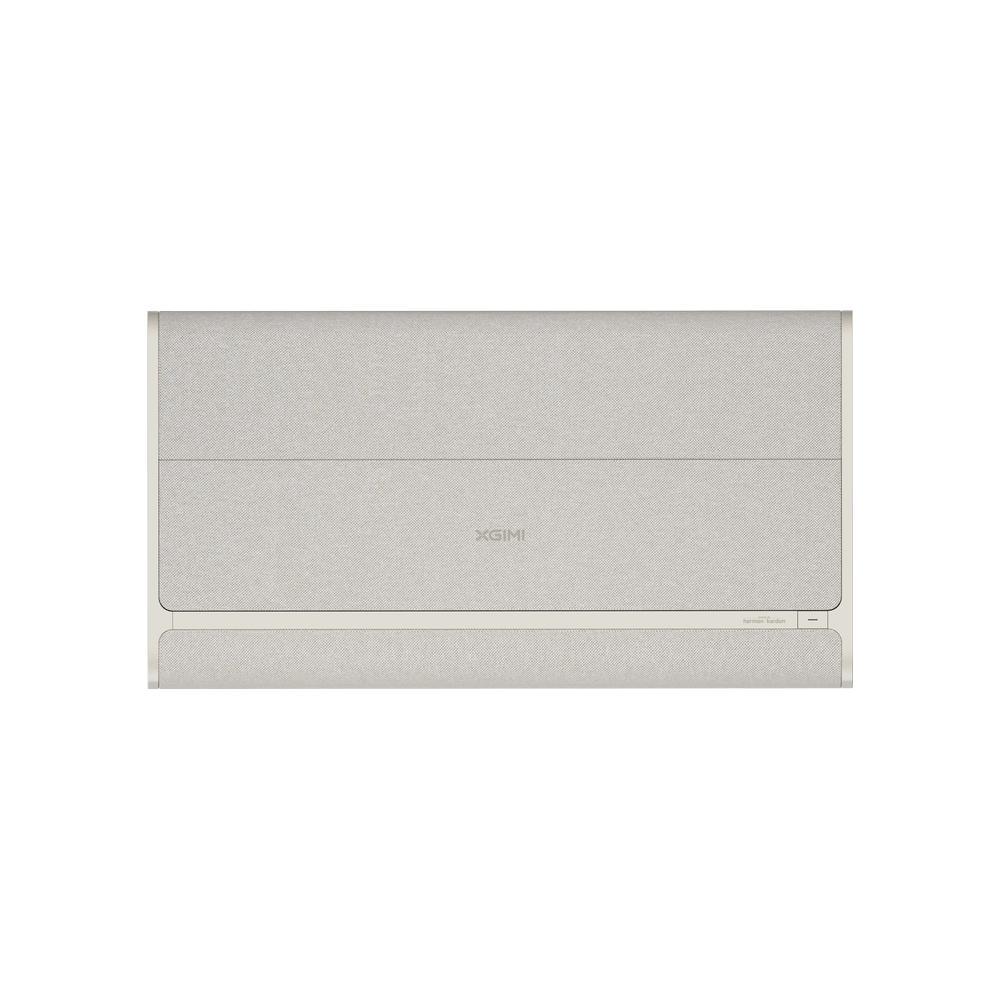
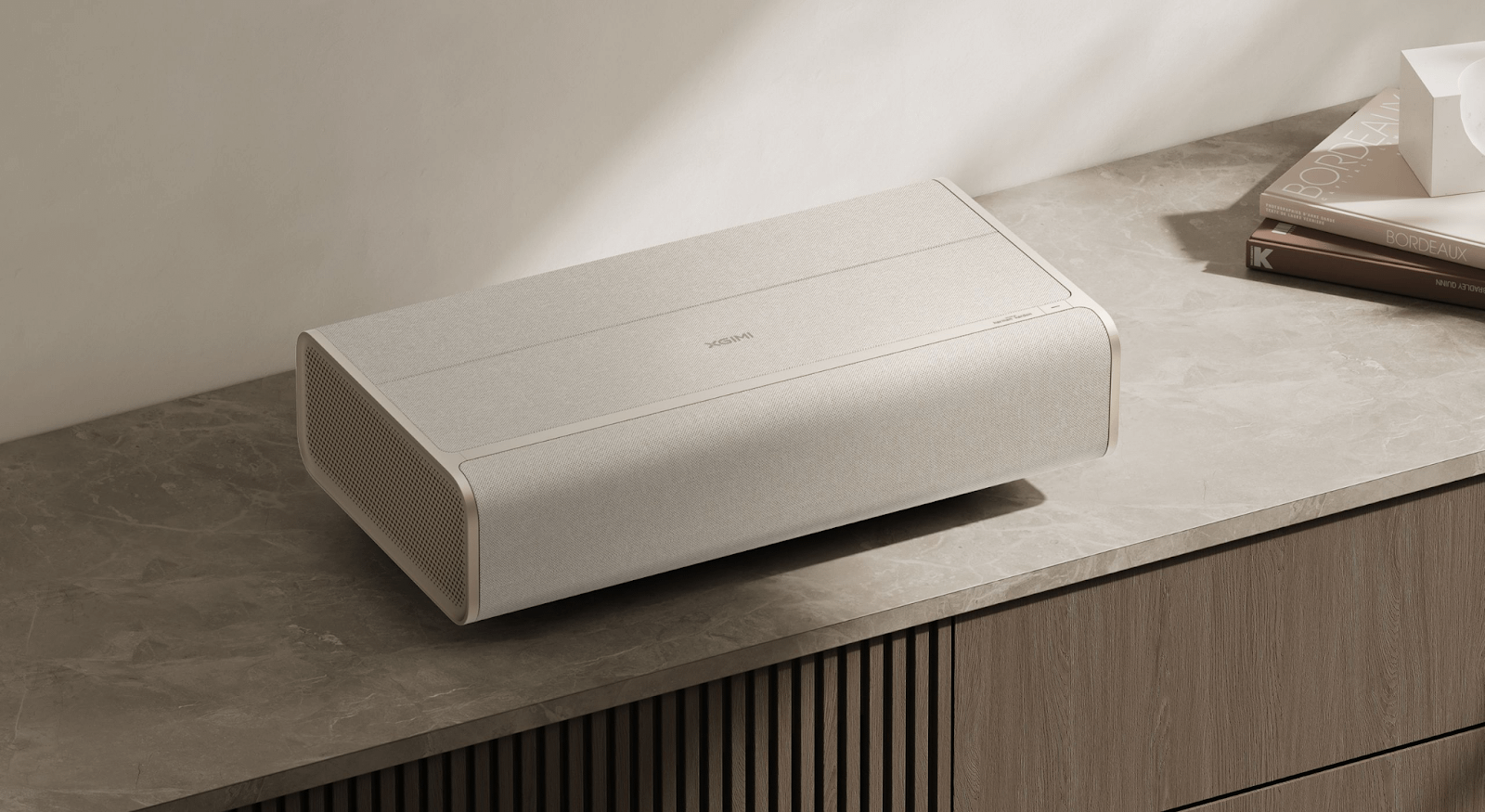
The Aura 2 emphasizes lifestyle integration with fabric coverings and a water/dust/oil-resistant finish. It includes a clever motorized cover that slides open when you power on the projector, protecting the lens when not in use. This attention to living room integration shows XGIMI understands these projectors need to look good sitting in your entertainment center.
Laser light sources are rated differently than traditional projector lamps. The L9Q claims 25,000+ hours of operation, while the Aura 2 is rated for 20,000+ hours. To put this in perspective, if you watched 4 hours of content daily, the L9Q would last about 17 years before needing service.
The L9Q's triple laser system is also inherently more robust—if one laser degrades, the others can partially compensate. The Aura 2's hybrid LED/laser system is more complex, which could potentially mean more components that might need eventual service.
At the time of writing, there's a substantial price gap between these projectors, with the L9Q positioned as a flagship product at roughly 2.5x the cost of the Aura 2.
The Aura 2 represents exceptional value for mainstream users. It delivers genuinely excellent performance—bright enough for daytime viewing, large screen sizes, and solid color reproduction—at a price point that competes favorably with premium 75-85 inch TVs while offering much larger screen sizes.
The L9Q is for users who want the absolute best performance regardless of price. Every specification is flagship-level: the brightest consumer ultra short throw projector available, professional-grade color accuracy, the largest screen sizes, premium integrated audio, and low-latency gaming performance.
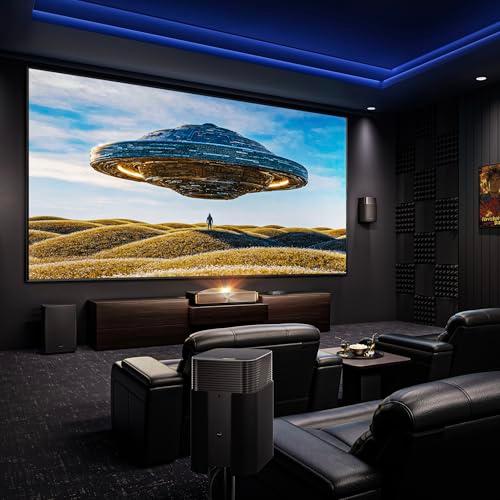
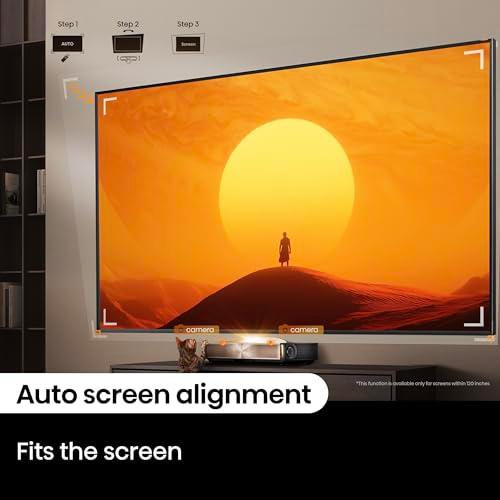
Ultra short throw projectors work best with dedicated projection screens rather than plain walls, though both can produce acceptable images on smooth white walls. The L9Q's higher brightness gives it more flexibility with screen materials and ambient lighting conditions.
For room placement, both projectors need to sit on stable surfaces directly in front of the projection area. The ultra-short throw design means small position adjustments create large changes in the projected image, so precise placement is important.
Ceiling height matters more than you might expect. While these projectors don't need ceiling mounting, taller ceilings help with the upward beam path and reduce the chance of people walking through the light beam.
The XGIMI Aura 2 makes sense for most people wanting to upgrade from a traditional TV to large-screen projection. It offers excellent performance, good build quality, and attractive design at a price point that's reasonable compared to premium large-screen TVs. If you have a typical living room, watch a mix of streaming content and gaming, and want impressive but not absolute flagship performance, the Aura 2 delivers outstanding value.
The Hisense L9Q is for enthusiasts who want the best possible ultra short throw experience. If you have a dedicated media room, need maximum brightness for daytime viewing or very large screens, value professional-grade color accuracy, want premium integrated audio without external speakers, or do serious gaming, the L9Q justifies its premium pricing with superior performance across every category.
There's also a practical consideration: the L9Q's exceptional brightness means it will maintain good image quality as the laser ages over many years, while lower-brightness projectors may become dim enough to be problematic as they age.
Both projectors represent excellent execution of ultra short throw technology, but for different audiences. The Aura 2 democratizes large-screen projection with solid performance at accessible pricing. The L9Q pushes the boundaries of what's possible in consumer projection technology.
Your choice comes down to budget and performance priorities. The Aura 2 delivers 80% of the experience at roughly 40% of the cost, making it the smart choice for most buyers. The L9Q delivers flagship performance that justifies its premium pricing for users who want the absolute best ultra short throw experience available today.
Either way, you're getting technology that would have seemed like science fiction just a few years ago—massive, cinema-quality images projected from a device that sits on your TV stand like any other piece of electronics.
| Hisense L9Q Triple Laser Ultra Short Throw Projector | XGIMI Aura 2 Ultra Short Throw Laser Projector |
|---|---|
| Brightness - Most critical spec for daytime viewing and large screens | |
| 5,000 ANSI lumens (exceptional for bright rooms and massive screens) | 2,300 ISO lumens (good for controlled lighting, less than half the L9Q's output) |
| Light Source Technology - Determines color accuracy and longevity | |
| TriChroma triple laser (RGB) with 25,000+ hour life | Dual Light 2.0 (laser + LED hybrid) with 20,000+ hour life |
| Maximum Screen Size - How big you can go | |
| 80-200 inches (cinema-sized capability) | 90-150 inches (large but more limited than L9Q) |
| Color Performance - Vibrancy and accuracy of displayed colors | |
| 110% BT.2020 with Pantone validation (professional-grade accuracy) | 99% DCI-P3 (excellent consumer-grade colors, narrower gamut than L9Q) |
| Audio System - Built-in sound quality | |
| 116W 6.2.2-channel Devialet surround system (premium integrated audio) | 60W integrated speakers with Dolby Atmos (good but likely needs external speakers) |
| Smart Platform - Daily user experience | |
| Google TV (clean interface, good performance) | Android TV (reviews note poor OS experience, may need external streamer) |
| Gaming Performance - Input lag for responsive gaming | |
| 12ms input lag with HDMI 2.1 (excellent for competitive gaming) | Gaming supported but no specific low-latency specs (casual gaming oriented) |
| Contrast Ratio - Depth of blacks and overall image quality | |
| 5,000:1 native contrast (excellent for bright projector) | Good contrast but not specified (adequate for the category) |
| HDR Support - High dynamic range format compatibility | |
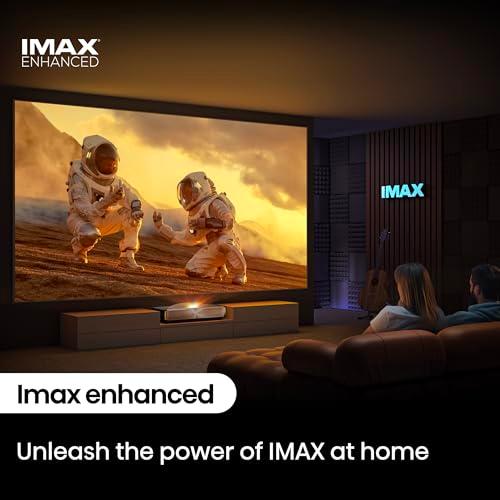
| Dolby Vision, HDR10+, HLG, IMAX Enhanced, Filmmaker Mode | Dolby Vision, HDR10, HLG, IMAX Enhanced |
| Build Quality & Design - Premium feel and living room integration | |
| Premium materials, award-winning design, performance-focused | Lifestyle design with fabric covering, motorized dust cover, compact form |
| Connectivity - Future-proofing and device compatibility | |
| WiFi 6E, Bluetooth 5.3, Control4 integration, 4 HDMI ports (2x HDMI 2.1) | Standard WiFi and Bluetooth, good connectivity options |
| Value Positioning - Performance per dollar spent | |
| Flagship pricing for maximum performance (premium investment) | Excellent mainstream value (strong performance at accessible price) |
The Hisense L9Q is significantly brighter at 5,000 ANSI lumens compared to the XGIMI Aura 2's 2,300 ISO lumens. This makes the L9Q much better for watching with windows open or lights on, while the Aura 2 works best in darker rooms or with controlled lighting.
The Hisense L9Q can project screens from 80 to 200 inches, making it capable of true cinema-sized displays. The XGIMI Aura 2 is limited to 90-150 inches maximum. For most home theaters, 150 inches is still massive, but the L9Q offers more flexibility for very large rooms.
The Hisense L9Q features a premium 116W 6.2.2-channel surround sound system developed with Devialet, including dual subwoofers and upward-firing speakers. The XGIMI Aura 2 has 60W integrated speakers that sound good but aren't as sophisticated as the L9Q's theater-grade audio system.
The Hisense L9Q runs Google TV with a clean interface and good performance. The XGIMI Aura 2 uses Android TV, but reviews consistently mention the operating system as a weak point with limited customization and occasional sluggishness. Many Aura 2 users end up connecting external streaming devices.
The Hisense L9Q is superior for gaming with 12ms input lag in Game Mode and HDMI 2.1 support for 4K gaming at high refresh rates. The XGIMI Aura 2 supports gaming but doesn't specify low-latency performance, making it better suited for casual rather than competitive gaming.
The Hisense L9Q covers 110% of BT.2020 color space with professional Pantone validation, delivering extremely accurate and vivid colors. The XGIMI Aura 2 covers 99% of DCI-P3, which is still excellent but narrower than the L9Q's color gamut and lacks professional color certification.
Both the Hisense L9Q and XGIMI Aura 2 have similar ultra-short throw ratios around 0.18:1, meaning they can project a 100-inch image from just 5-6 inches away from the wall. This makes both equally convenient for living room placement without ceiling mounting.
The XGIMI Aura 2 offers excellent value for mainstream users, delivering strong performance at a much lower price point than the L9Q. The Hisense L9Q justifies its premium pricing with flagship performance across all categories, making it better value for enthusiasts who want the absolute best.
The Hisense L9Q uses triple laser technology rated for 25,000+ hours of operation. The XGIMI Aura 2 combines laser and LED sources for 20,000+ hours. Both offer years of maintenance-free operation, with the L9Q having a slight longevity advantage.
The Hisense L9Q excels in bright rooms thanks to its exceptional 5,000 lumens brightness, making it suitable for daytime viewing with ambient lighting. The XGIMI Aura 2 can handle some ambient light but performs best with controlled lighting conditions due to its lower brightness output.
For dedicated home theaters, the Hisense L9Q is superior with its professional-grade color accuracy, maximum brightness for large screens, premium Devialet audio system, and low gaming lag. The XGIMI Aura 2 works well for casual home theater use but lacks the flagship performance features of the L9Q.
The Hisense L9Q focuses on premium materials and performance-oriented design with a substantial build quality. The XGIMI Aura 2 emphasizes lifestyle integration with fabric coverings, water/dust resistance, and a clever motorized cover that protects the lens when not in use, making it blend better into living room decor.
We've done our best to create useful and informative comparisons to help you decide what product to buy. Our research uses advanced automated methods to create this comparison and perfection is not possible - please contact us for corrections or questions. These are the sites we've researched in the creation of this article: chrismajestic.com - shop.hisense-usa.com - tomsguide.com - valueelectronics.com - techradar.com - whathifi.com - youtube.com - projectorscreen.com - projectorscreen.com - hisense-usa.com - youtube.com - projectorcentral.com - youtube.com - hisense-usa.com - manuals.plus - shop.avispl.com - hisense-usa.com - us.xgimi.com - us.xgimi.com - projectorscreen.com - projectorreviews.com - techradar.com - projectorcentral.com - avsforum.com - us.xgimi.com - us.xgimi.com - hometechnologyreview.com

Privacy Policy
Terms and Conditions - Affiliate Policy
Home Security
© Copyright 2008-2026.
11816 Inwood Rd #1211, Dallas, TX 75244