

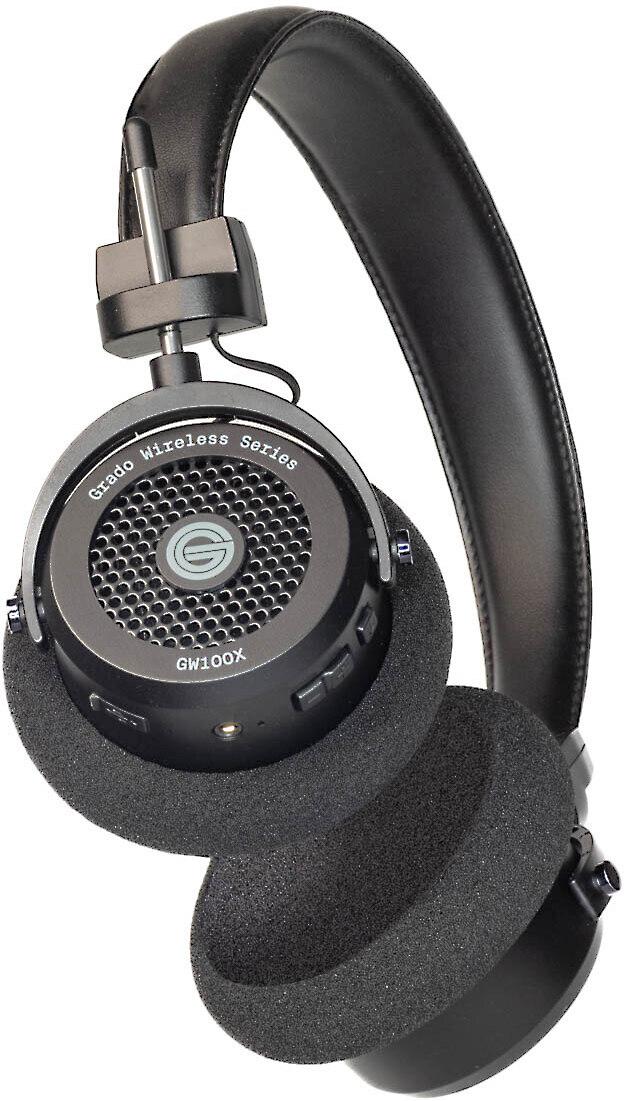


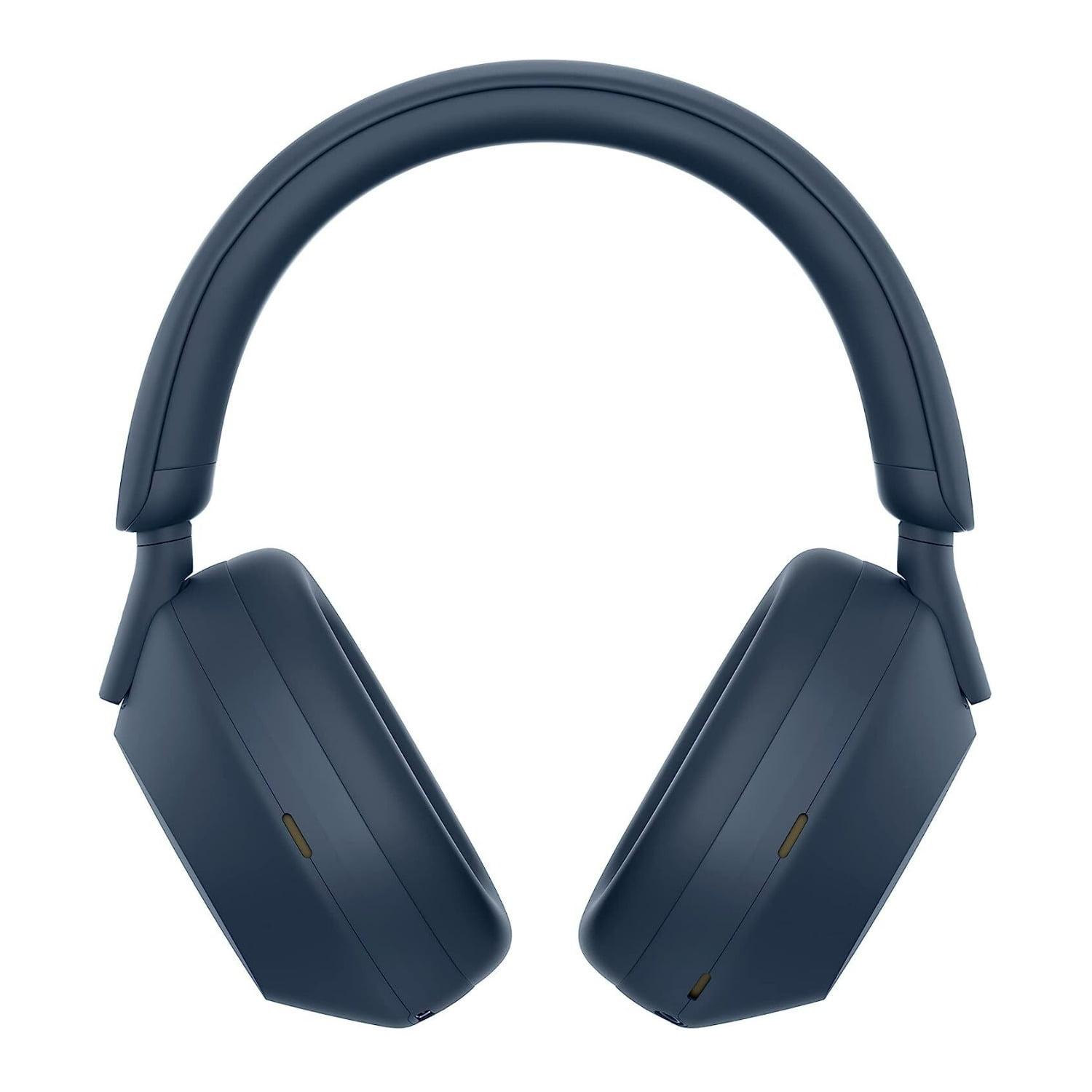
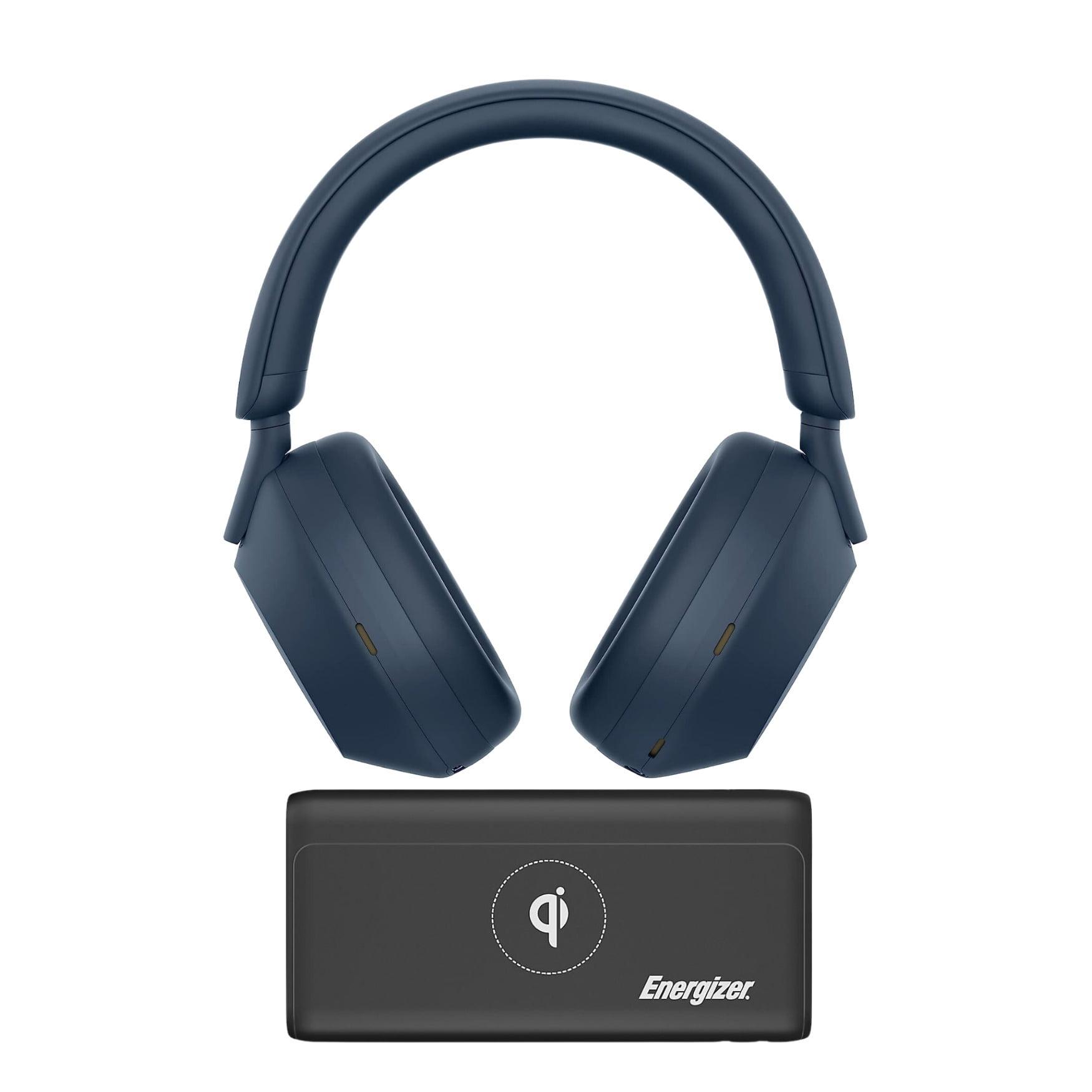
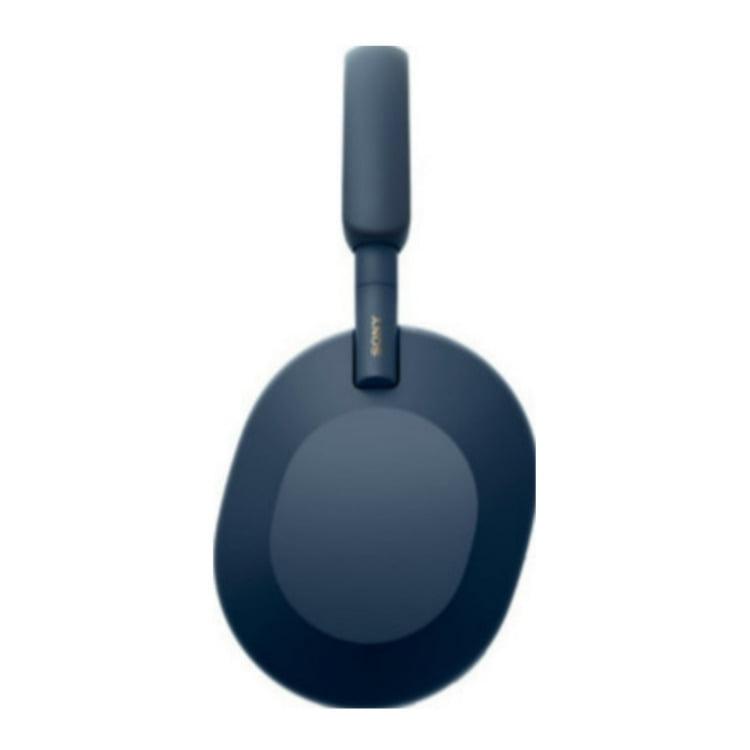






When you walk into a headphone store or browse online, wireless headphones might all look similar at first glance. But dig deeper, and you'll discover that some products represent fundamentally different philosophies about how we should experience audio. The Grado GW100x and Sony WH-1000XM5 perfectly illustrate this divide – one prioritizes pure sound quality above all else, while the other offers a comprehensive audio solution packed with modern conveniences.
Understanding these different approaches is crucial because it determines not just what you'll hear, but where and how you can use your headphones. Let's explore what makes each approach special and help you figure out which philosophy aligns with your listening habits.
At the heart of this comparison lies a fundamental design choice that affects everything else: open-back versus closed-back construction. This isn't just a technical detail – it's the defining characteristic that shapes each headphone's entire personality.
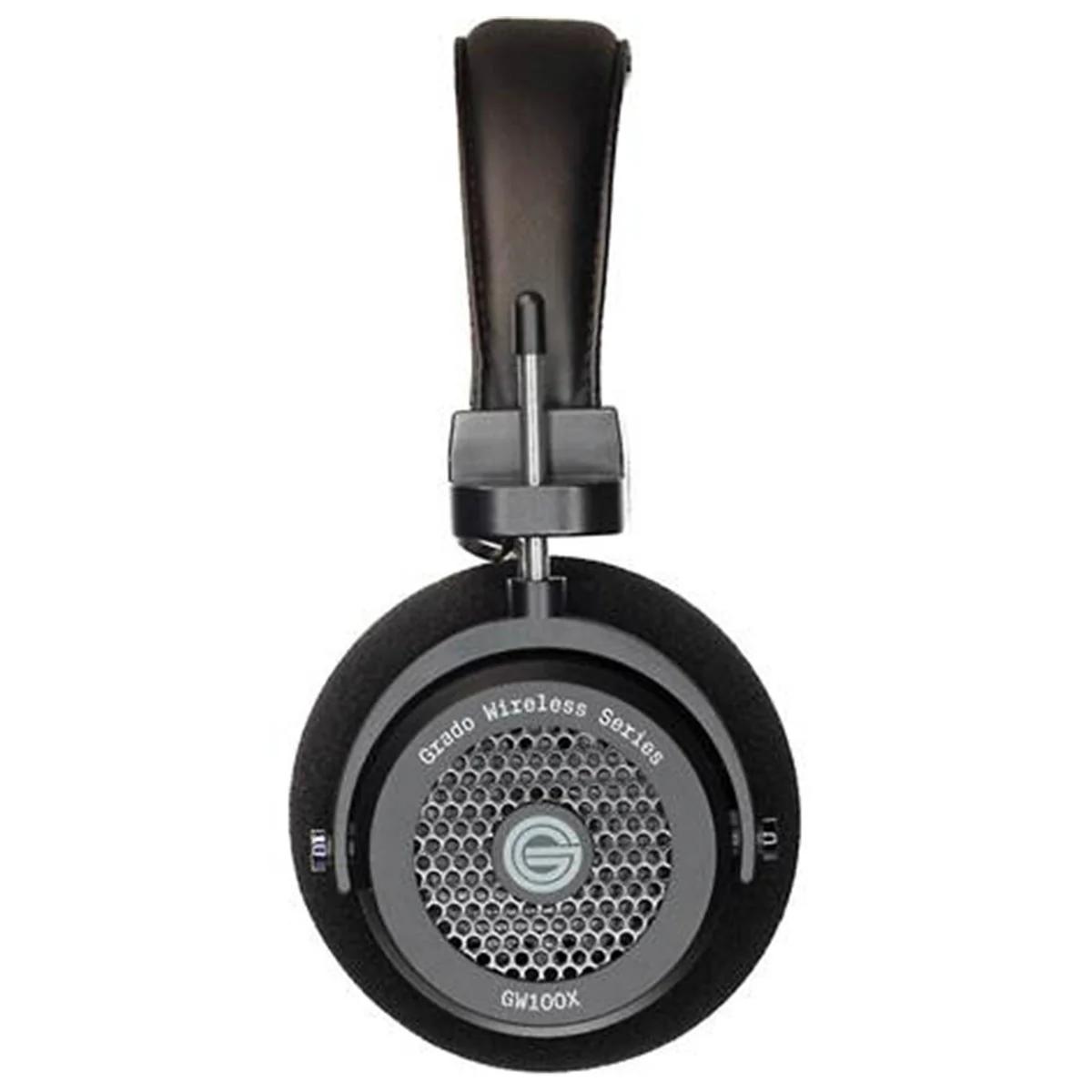
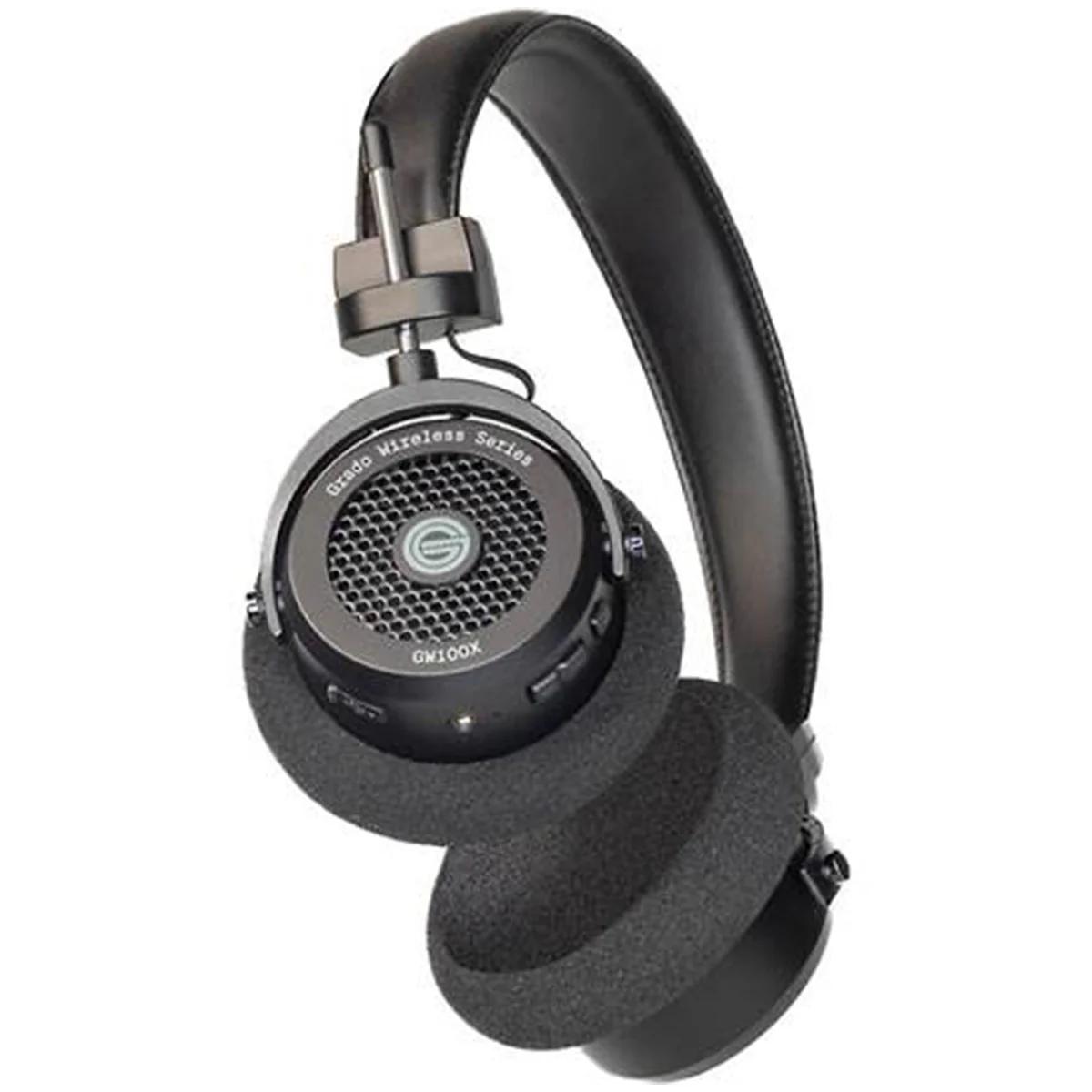
The Grado GW100x uses an open-back design, which means the back of each ear cup has openings that allow air and sound to flow freely. Think of it like having windows open in your listening room – you get a more natural, spacious sound, but you also hear what's happening outside, and people nearby can hear what you're playing.
In contrast, the Sony WH-1000XM5 uses a closed-back design that seals your ears off from the outside world. It's like closing those windows and drawing the curtains – you get isolation and privacy, but you sacrifice some of that natural, airy sound quality that comes with open designs.
This fundamental difference ripples through every aspect of how these headphones perform and when you can use them.
The Grado GW100x, released in 2023 as an update to the original 2018 GW100, represents something almost unheard of in the wireless world: true audiophile sound quality without compromise. Grado has been making headphones since 1953, and they've built their reputation on one thing – making music sound exactly as the artist intended, nothing more, nothing less.
What makes the GW100x special is its use of Grado's fourth-generation X-series drivers. These 44mm drivers (that's the diameter of the speaker inside each ear cup) have been specifically engineered for wireless use. The company redesigned the magnetic circuit that moves the driver, reduced the mass of the voice coil (the part that actually vibrates to create sound), and reconfigured the diaphragm (the cone that pushes air to create sound waves).
The result is a frequency response from 20Hz to 20kHz that sounds remarkably natural and uncolored. When I first tried open-back wireless headphones, the difference was immediately apparent – instruments seem to float in three-dimensional space rather than coming from inside your head. You can pinpoint exactly where each musician is sitting in the recording studio or concert hall.
This open design creates what audiophiles call "soundstage" – the sense that you're listening to music in a real space rather than through tiny speakers pressed against your ears. It's the closest thing to having high-end bookshelf speakers in your room, but in headphone form.
The Sony WH-1000XM5, launched in 2022, takes a completely different approach. Rather than trying to stay out of the music's way, Sony actively processes and enhances what you hear using sophisticated digital signal processing.
Sony's engineers packed the WH-1000XM5 with their latest audio technologies. DSEE Extreme uses artificial intelligence to analyze compressed music files (like MP3s or Spotify streams) and restore high-frequency details that were lost during compression. It's like having a smart assistant that fills in the blanks in your music.
The headphones also support LDAC, Sony's proprietary Bluetooth codec that can transmit about three times more data than standard Bluetooth audio. Think of codecs as different languages for sending audio wirelessly – some are more detailed and accurate than others. LDAC is one of the most detailed wireless languages available.
But here's where it gets interesting for customization lovers: the Sony WH-1000XM5 comes with a companion app that includes a full equalizer. You can boost bass for hip-hop, enhance mids for vocals, or create completely custom sound profiles. Many users report that the headphones sound significantly better after some EQ tweaking, transforming from good to excellent with the right adjustments.
When evaluating sound quality, several technical measurements help tell the story:
Frequency Response: The GW100x maintains a relatively flat response across all frequencies, meaning it doesn't artificially boost or reduce any particular range. The WH-1000XM5 has a more consumer-friendly curve with enhanced bass and treble, though this can be adjusted through the app.
Driver Matching: Both headphones achieve excellent left-right channel matching (within 0.1dB for the Grado), ensuring that stereo imaging sounds centered and natural.
Distortion: Both maintain low distortion even at high volumes, but the Grado's simpler signal path means less potential for digital artifacts.
This might be the most dramatic difference between these two approaches. The Sony WH-1000XM5 features what many consider the best active noise cancellation (ANC) system available at the time of writing. It uses eight microphones and two processors working together to analyze ambient noise and generate opposite sound waves that cancel it out.
The system is remarkably sophisticated. It can automatically detect whether you're on an airplane, in a coffee shop, or walking down a busy street, then adjust its cancellation profile accordingly. There's even atmospheric pressure optimization that adjusts performance when you're flying at altitude.
Meanwhile, the Grado GW100x has no noise cancellation whatsoever – and that's completely intentional. The open-back design means you'll hear conversations, traffic, air conditioning, and everything else around you. Grado has reduced sound leakage by about 60% compared to their previous wireless model, but you'll still need to keep the volume reasonable to avoid disturbing others.
This fundamental difference determines where you can realistically use each headphone. The Sony excels in noisy environments where you want to block out the world, while the Grado shines in quiet spaces where ambient awareness is either desired or not problematic.
Here's where the Grado GW100x delivers a genuine surprise. Despite its focus on audio purity, it achieves an impressive 46 hours of playback on a single charge. That's significantly longer than the Sony's 30 hours with ANC enabled, though Sony does extend to 40 hours with noise cancellation turned off.
The difference comes down to efficiency and simplicity. The Grado doesn't power multiple processors, noise cancellation systems, or constant app communication. It just plays music, and it does so very efficiently using Bluetooth 5.2 with support for aptX Adaptive, AAC, and SBC codecs.
Charging happens via USB-C on both models, but their approaches to controls differ dramatically. The Grado keeps things simple with three physical buttons on the left ear cup that handle volume, playbook, calls, and voice assistant activation. No touch panels, no gesture controls, no complexity.
The Sony WH-1000XM5 offers a comprehensive control experience through touch-sensitive surfaces on the right ear cup. You can swipe to change tracks, tap to pause, or place your palm over the ear cup to quickly lower volume and let ambient sound through – a feature called Quick Attention that's genuinely useful in daily life.
Both headphones prioritize comfort but achieve it differently. The Grado GW100x weighs just 6.6 ounces, making it one of the lighter options available. Its on-ear design with minimal padding works well because the reduced weight means less clamping force is needed to stay secure.
The Sony WH-1000XM5 uses an over-ear design with plush synthetic leather padding that completely encompasses your ears. At about 8.8 ounces, it's heavier but distributes that weight well. The over-ear design also contributes to its noise isolation capabilities.
One concern that's emerged with the Sony involves the durability of its hinges. While the headphones feel premium, some users have reported cracking or breaking at the hinge points after extended use. The Grado, with its simpler construction and no folding mechanism, seems less prone to such mechanical failures.
For home theater use, these headphones serve different purposes. The Grado GW100x excels for solo movie watching where you want to hear subtle details like footsteps, ambient sounds, and spatial audio cues. Its open design creates a more natural sense of space that can make movies feel more immersive.
However, the Sony WH-1000XM5 might be more practical for home theater in mixed-use scenarios. If family members are sleeping or you're in an apartment with thin walls, the closed design prevents sound leakage. The headphones also support multipoint Bluetooth connectivity, meaning you can stay connected to your phone for calls while watching content on your TV or tablet.
Both headphones include 3.5mm wired connections as backup options, ensuring compatibility with older devices or situations where wireless isn't ideal.
Understanding impedance helps explain why these headphones perform differently. The Grado has a 38-ohm impedance, while the Sony varies between 16 ohms (off) and 48 ohms (on). Lower impedance generally means easier to drive and potentially better battery life, but the relationship isn't straightforward with active headphones that include their own amplification.
Sensitivity ratings tell us how loud each headphone can get with the same amount of power. The Grado achieves 99.8 dB/mW, while the Sony reaches 100-102 dB/mW depending on mode. Both provide plenty of volume for any reasonable listening scenario.
The Sony's dual-processor system (Integrated Processor V1 and HD Noise Cancelling Processor QN1) represents significant computational power dedicated to audio processing. Even when connected via cable, these processors remain active when ANC is enabled, meaning you're always hearing Sony's digital interpretation of the audio signal rather than a pure analog path like the Grado provides in wired mode.
At the time of writing, these headphones occupy different value territories. The Grado GW100x positions itself as an affordable entry point into high-quality wireless audio, offering performance that rivals much more expensive audiophile headphones but in a wireless package.
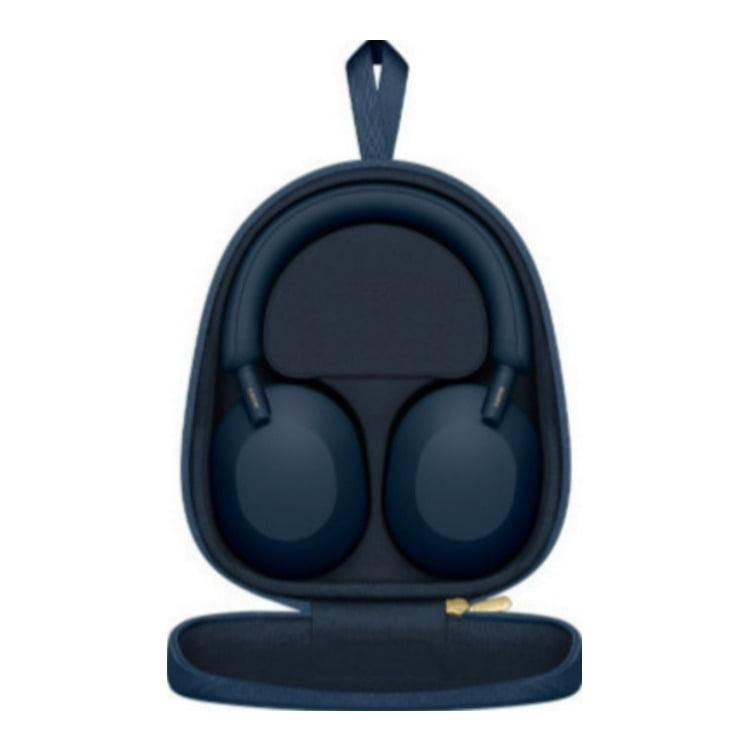
The Sony WH-1000XM5 commands a significant premium but justifies it through comprehensive features, industry-leading ANC, premium accessories (including a high-quality hard case), and the versatility to excel in virtually any environment.
For pure sound quality per dollar, the Grado is difficult to beat. For overall utility and convenience per dollar, the Sony offers compelling value despite its higher price point.
Your choice between these headphones should align with how and where you primarily listen to music.
Choose the Grado GW100x if:
Choose the Sony WH-1000XM5 if:
The key insight is that neither approach is inherently better – they're optimized for different priorities and use cases. The Grado represents the audiophile philosophy of "get out of the music's way," while the Sony embodies the modern approach of "enhance and adapt the experience to your environment."
Both philosophies have merit, and your personal listening habits, environment, and priorities will determine which resonates more strongly with your needs. Consider where you spend most of your listening time, what features matter most to you, and whether you value audio purity or comprehensive functionality more highly. The answer to those questions will point you toward the right choice for your specific situation.
| Grado GW100x | Sony WH-1000XM5 |
|---|---|
| Design Philosophy - Determines where and how you can use them | |
| Open-back wireless (rare combination, allows ambient sound in/out) | Closed-back with active noise cancellation (blocks outside world) |
| Sound Quality Approach - Pure vs processed audio | |
| Unprocessed, natural sound with exceptional soundstage | AI-enhanced with customizable EQ and upscaling technology |
| Active Noise Cancellation - Essential for travel and noisy environments | |
| None (intentionally allows ambient awareness) | Industry-leading dual-processor ANC with 8 microphones |
| Battery Life - How long between charges | |
| 46 hours (exceptional for wireless headphones) | 30 hours with ANC on, 40 hours with ANC off |
| Driver Technology - What creates the sound | |
| 44mm Grado X-series drivers optimized for wireless | 30mm drivers with TPU edge and carbon fiber composite |
| Weight and Comfort - Important for extended listening | |
| 6.6 oz, lightweight on-ear design | 8.8 oz, cushioned over-ear design with premium padding |
| Controls and Features - Convenience vs simplicity | |
| 3 physical buttons, no app, basic multipoint pairing | Touch controls, comprehensive app with EQ, voice assistants, spatial audio |
| Sound Leakage - Privacy and courtesy factor | |
| Significant leakage (60% less than previous Grado models but still substantial) | Minimal leakage due to closed design |
| Best Use Cases - Where each excels | |
| Home, garden, quiet private spaces where soundstage matters | Travel, commuting, offices, anywhere noise isolation is needed |
| Included Accessories - What you get in the box | |
| USB-C cable, 3.5mm audio cable (no case) | Premium hard case, USB-C cable, 3.5mm cable |
| Build Durability - Long-term reliability concerns | |
| Simple, robust construction with no folding parts | Premium materials but reported hinge durability issues |
| Codec Support - Wireless audio quality | |
| Bluetooth 5.2 with aptX Adaptive, AAC, SBC | Bluetooth 5.2 with LDAC, AAC, SBC (LDAC transmits 3x more data) |
| Target Audience - Who benefits most | |
| Audiophiles wanting wireless convenience without sound compromise | Travelers and commuters needing versatile, feature-rich headphones |
The Grado GW100x delivers superior pure sound quality with its open-back design, offering exceptional soundstage and natural audio reproduction that rivals high-end wired headphones. The Sony WH-1000XM5 provides excellent sound with AI enhancement and customizable EQ, but requires app tuning to reach its full potential. For audiophile-focused listening, the Grado GW100x wins, while the Sony WH-1000XM5 offers more versatility through digital processing.
The Sony WH-1000XM5 is specifically designed for travel with industry-leading active noise cancellation, a folding design, and included premium carrying case. The Grado GW100x is poorly suited for travel due to its open-back design that leaks sound and offers no noise isolation. For any travel scenario, the Sony WH-1000XM5 is the clear choice.
The Grado GW100x offers exceptional 46-hour battery life, significantly outperforming the Sony WH-1000XM5's 30 hours with ANC enabled. Both use USB-C charging, but the Grado GW100x provides about 53% longer runtime, making it ideal for extended listening sessions without frequent charging.
Both headphones support phone calls, but with different strengths. The Sony WH-1000XM5 features advanced beamforming microphones and noise suppression for clearer calls in noisy environments. The Grado GW100x has a basic microphone suitable for calls in quiet spaces. For professional calls or noisy environments, the Sony WH-1000XM5 performs better.
This depends on your home environment. The Grado GW100x excels in quiet home offices where you want ambient awareness and exceptional sound quality for music and video calls. The Sony WH-1000XM5 works better in noisy households where you need to block distractions. Both Grado GW100x and Sony WH-1000XM5 offer all-day comfort for work use.
Both prioritize comfort but differently. The Grado GW100x weighs just 6.6 ounces with an on-ear design that reduces pressure points. The Sony WH-1000XM5 uses plush over-ear cushions that fully encompass your ears. Personal preference matters here - some prefer the lighter Grado GW100x, while others favor the cushioned Sony WH-1000XM5 approach.
For home theater use, the Grado GW100x provides superior spatial audio and soundstage, making it excellent for single-player gaming and movie watching where you want to hear environmental details. The Sony WH-1000XM5 works better for multiplayer gaming with its superior microphone and when you need to avoid disturbing others. Both Grado GW100x and Sony WH-1000XM5 include wired connections for gaming consoles.
The Sony WH-1000XM5 features industry-leading active noise cancellation with dual processors and eight microphones, effectively blocking ambient noise. The Grado GW100x has no noise cancellation whatsoever - its open-back design intentionally allows ambient sound. For noise isolation, only the Sony WH-1000XM5 is suitable.
The Sony WH-1000XM5 offers extensive customization through its companion app, including full EQ controls, sound profiles, and adaptive settings. The Grado GW100x provides no app or EQ options, delivering a fixed sound signature designed for accuracy. Users wanting sound customization should choose the Sony WH-1000XM5.
Neither headphone is ideal for exercise. The Grado GW100x lacks sweat resistance and may fall off during vigorous activity due to its on-ear design. The Sony WH-1000XM5 is bulky and not sweat-resistant either. Both Grado GW100x and Sony WH-1000XM5 are better suited for stationary listening rather than active use.
Both headphones offer excellent device compatibility. The Grado GW100x uses Bluetooth 5.2 with aptX Adaptive, AAC, and SBC codecs, plus includes a 3.5mm cable for wired use. The Sony WH-1000XM5 supports similar Bluetooth codecs plus Sony's LDAC for high-resolution audio, and also includes wired connectivity. Both Grado GW100x and Sony WH-1000XM5 work with smartphones, computers, and most audio devices.
Value depends on your priorities. The Grado GW100x offers exceptional sound quality per dollar, making it ideal for audiophiles on a budget. The Sony WH-1000XM5 costs significantly more but includes premium features, accessories, and versatility that justify the price for users needing noise cancellation and smart features. The Grado GW100x wins on pure audio value, while the Sony WH-1000XM5 provides better overall utility value.
We've done our best to create useful and informative comparisons to help you decide what product to buy. Our research uses advanced automated methods to create this comparison and perfection is not possible - please contact us for corrections or questions. These are the sites we've researched in the creation of this article: techradar.com - crutchfield.com - whathifi.com - moon-audio.com - majorhifi.com - rockonav.com - forums.stevehoffman.tv - newegg.com - audiosciencereview.com - gradolabs.com - decibelaudio.com - addictedtoaudio.com.au - s3.eu-west-1.amazonaws.com - audioadvice.com - analogmatters.com - nyczaj.audio - parts-express.com - rtings.com - audiosciencereview.com - techradar.com - audio46.com - recordingnow.com - electronics.sony.com - theabsolutesound.com - soundguys.com - soundguys.com - headphonesaddict.com - sony.com - sony.com - sony-mea.com - fullspecs.net - bhphotovideo.com - sony.com - helpguide.sony.net - headphones.com - androidpolice.com - sony.co.id - moon-audio.com - sony.com - bestbuy.com - sonylatvija.com

Privacy Policy
Terms and Conditions - Affiliate Policy
Home Security
© Copyright 2008-2026.
11816 Inwood Rd #1211, Dallas, TX 75244