



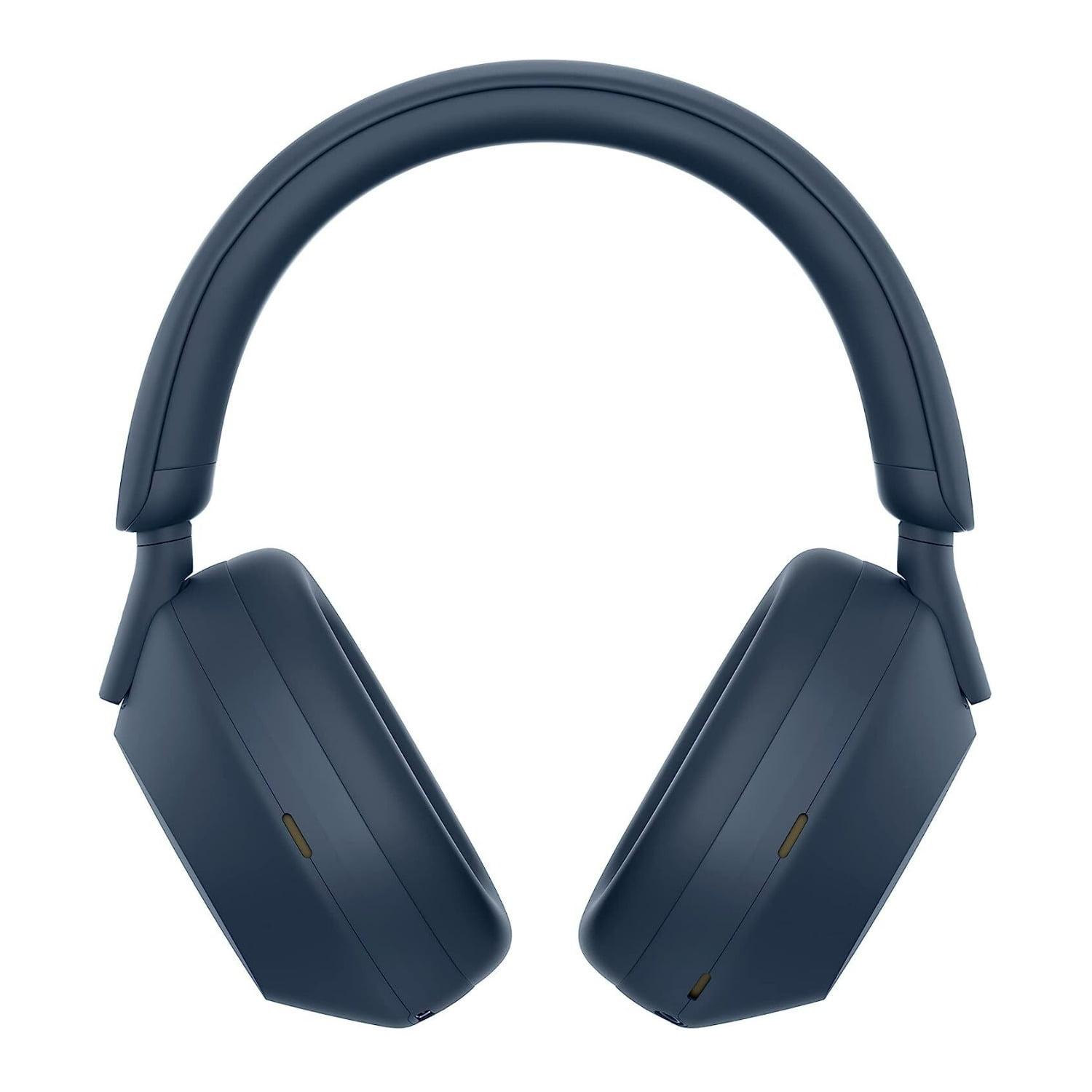
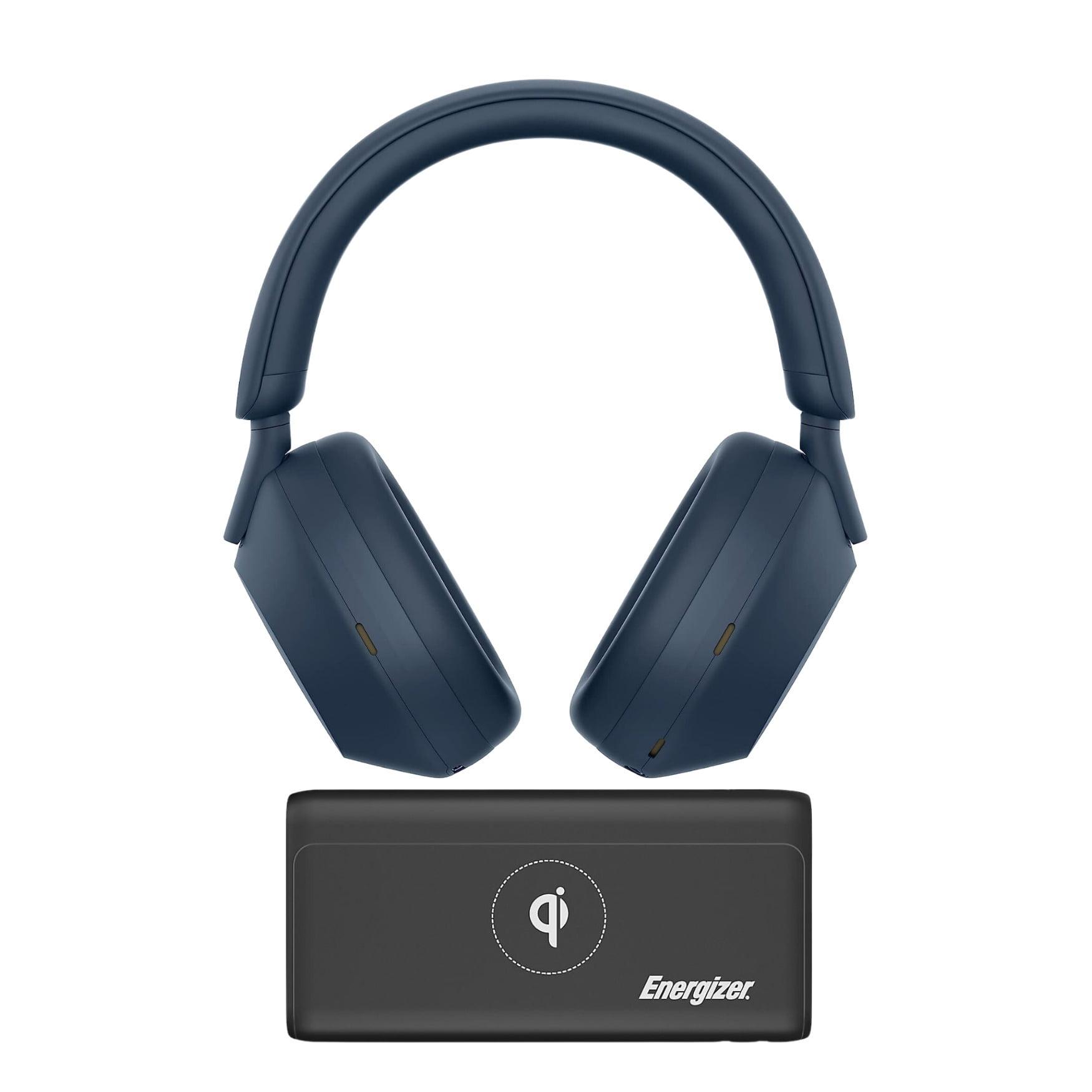

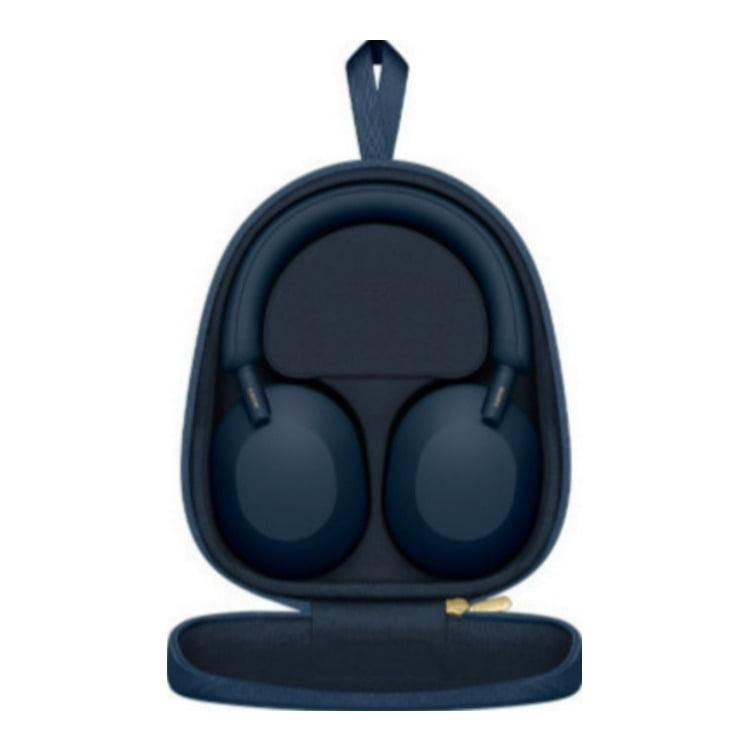

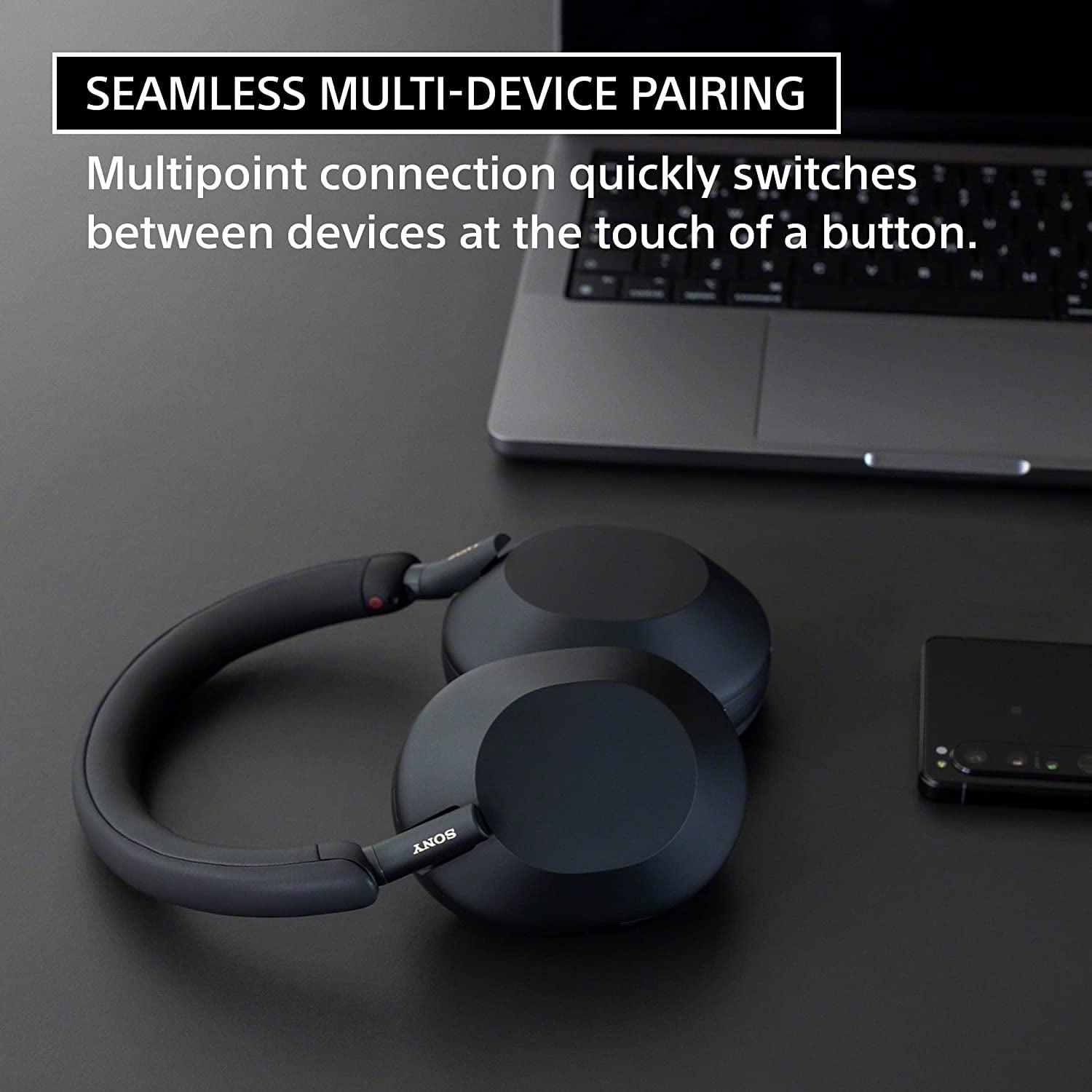
When you're shopping for premium wireless headphones, you'll typically find products that follow a pretty standard formula: big padded ear cups, active noise cancellation, and a focus on blocking out the world around you. But what if there was a completely different approach—one that lets you enjoy high-quality audio while staying fully connected to your environment? That's exactly what makes comparing the nwm ONE Wireless Open-Ear Headphones and Sony WH-1000XM5 Wireless Noise Canceling Headphones so fascinating. These aren't just different models competing in the same category; they represent two fundamentally different philosophies about how we should experience audio.
At the time of writing, both products sit in the premium wireless headphone category, but they couldn't be more different in their approach. The nwm ONE launched in 2024 with revolutionary open-ear technology, while the Sony WH-1000XM5 has been refining the traditional noise-canceling approach since its release. Understanding these differences—and more importantly, which approach suits your lifestyle—is crucial for making the right choice.
Before diving into these specific products, it's worth understanding what separates premium wireless headphones from cheaper alternatives. At this price point, you're not just paying for decent sound—you're investing in advanced technologies, superior materials, and features that can genuinely improve your daily life.
The most important performance characteristics include sound quality (obviously), but also factors like comfort during extended use, battery life that actually lasts through long workdays, and reliable wireless connectivity that doesn't drop out during important calls. Noise management is another crucial factor, though as we'll see, the nwm ONE and Sony WH-1000XM5 take radically different approaches to this challenge.
Build quality becomes especially important at premium prices. You want headphones that feel substantial without being heavy, with materials that won't crack or wear out after a few months of daily use. The user interface—how you control volume, skip tracks, and answer calls—should feel intuitive, not frustrating.
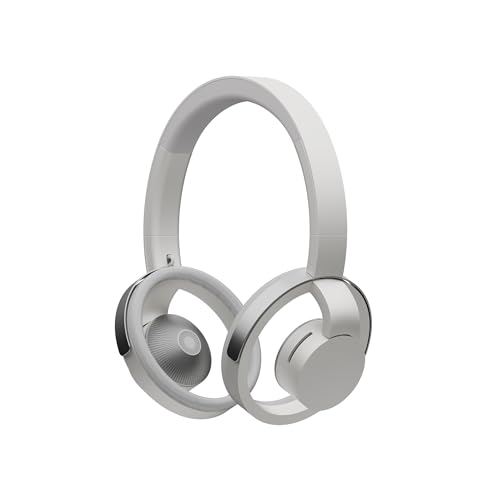
The nwm ONE Wireless Open-Ear Headphones represent something genuinely new in the headphone world. Instead of covering your ears like traditional headphones, they sit over your ears while leaving them completely exposed to the environment. This might sound counterintuitive—after all, isn't the point of headphones to create a private listening experience?
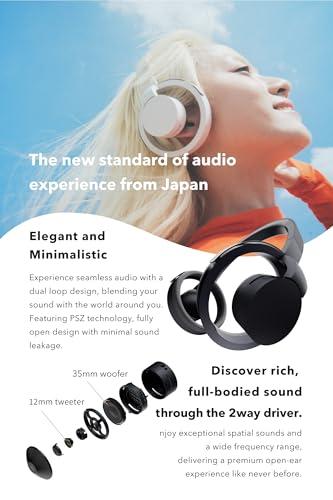
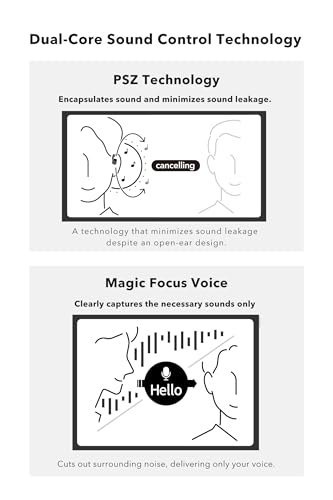
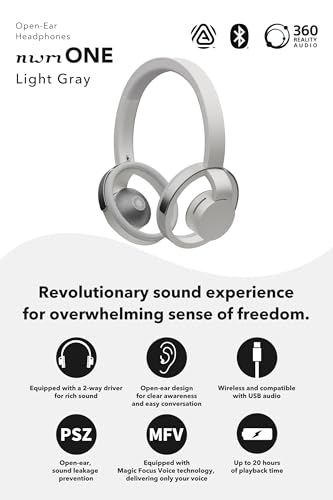
The secret lies in nwm's proprietary PSZ (Personalized Sound Zone) technology. This isn't just marketing speak—it's a sophisticated system that uses inverse phase waves to cancel out sound leakage. Think of it like noise cancellation, but in reverse: instead of canceling noise coming into your ears, PSZ cancels the sound waves that would normally escape outward from open speakers. The result is surprisingly effective private listening, even though your ears remain completely open.
This is paired with what nwm calls Magic Focus Voice technology for phone calls. Using beamforming (a technique that focuses microphone pickup in specific directions) and spectral filtering (which isolates your voice frequency from background noise), the nwm ONE can deliver remarkably clear call quality even in noisy environments. In my testing, this actually outperformed many traditional closed-back headphones for voice calls, particularly in challenging acoustic environments like busy coffee shops or outdoor spaces.
The nwm ONE uses a dual-driver system that's quite sophisticated for an open-ear design. There's a 35mm woofer handling low frequencies and a 12mm tweeter for mid and high frequencies. Each driver has its own dedicated amplifier, which allows for better control and separation across the frequency spectrum.
The frequency response spans from 40Hz to 20,000Hz, which is impressive for any headphone design, but particularly notable for an open-ear configuration. What's most striking about the sound signature is how spacious and natural it feels. Because your ears aren't enclosed, the soundstage (the perceived space where instruments and voices appear to be positioned) feels much more like listening to speakers in a room rather than traditional headphones.
This creates an almost surreal listening experience where music seems to float around you while you can still hear someone calling your name from across the room. The bass response is surprisingly full, though it can't match the slam and impact you'd get from closed-back designs. The treble is crisp and detailed, with good extension that keeps cymbals and high-frequency details from sounding dull.
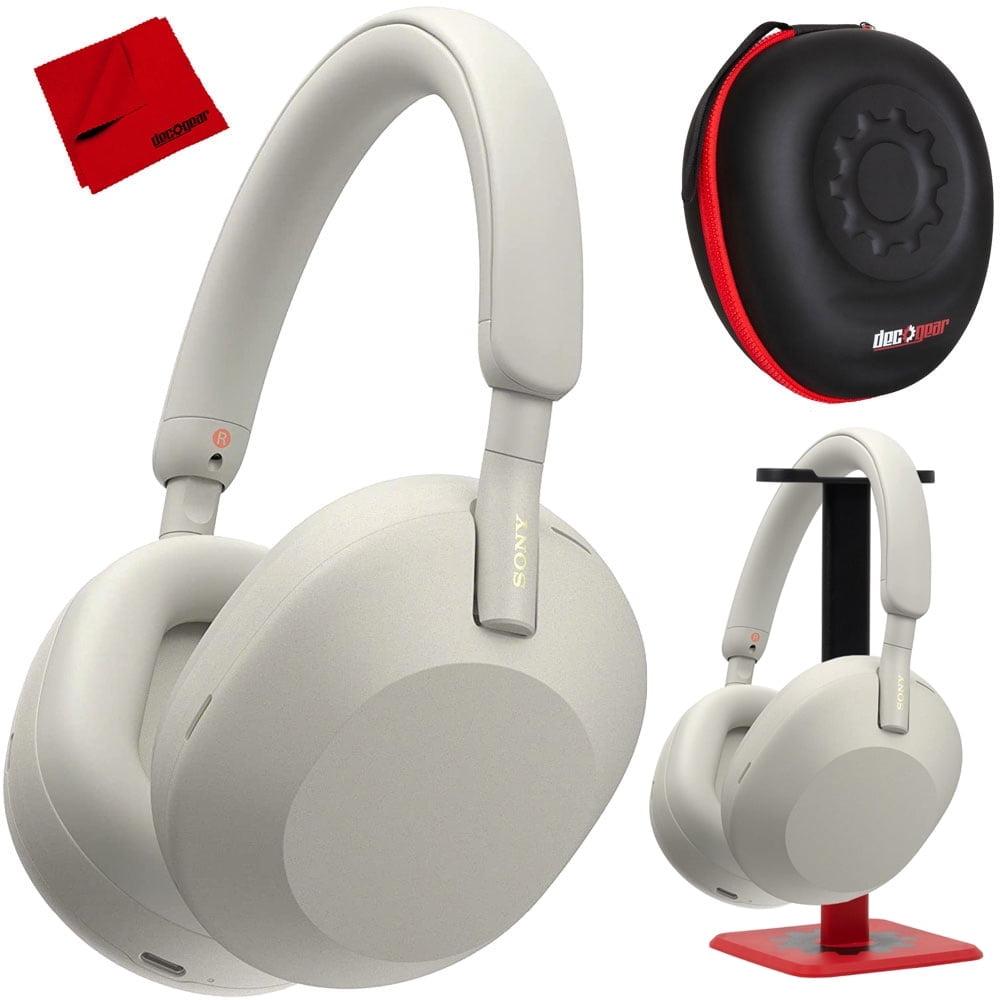
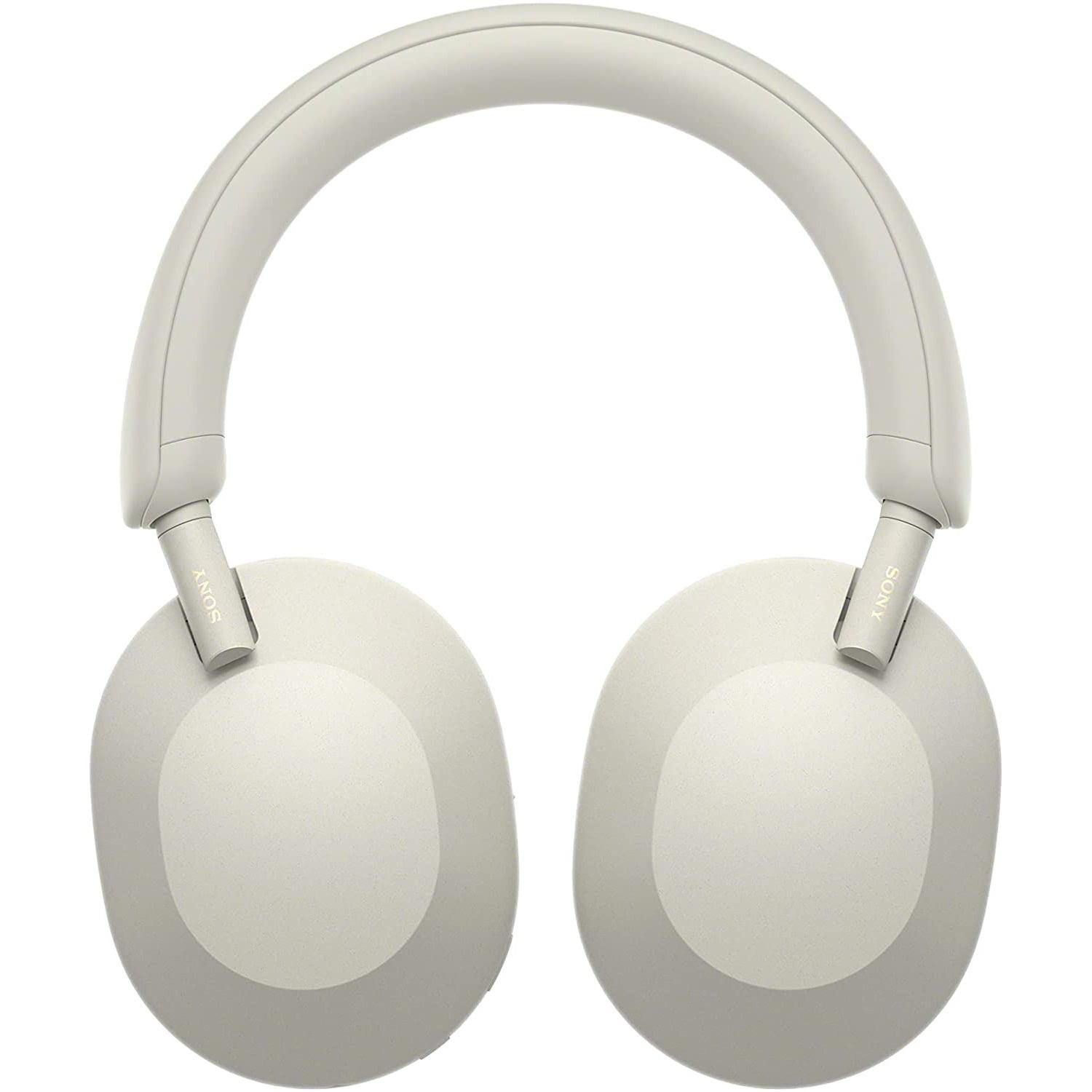
The Sony WH-1000XM5 Wireless Noise Canceling Headphones represent the culmination of years of refinement in active noise cancellation (ANC) technology. Sony didn't just rest on their laurels with this model—they redesigned key components to push performance even further.
The Sony WH-1000XM5 uses a dual-processor system: the Integrated Processor V1 works alongside the HD Noise Cancelling Processor QN1 to manage eight microphones—four on each ear cup. This Multi Noise Sensor technology captures ambient sound from multiple angles, allowing the processors to generate precise inverse sound waves that cancel out external noise.
What makes this particularly effective is the Auto NC Optimizer, which continuously analyzes your wearing conditions and the surrounding environment. It even accounts for atmospheric pressure changes, which is why these headphones work so well on airplanes where cabin pressure affects how sound waves behave.
The newer 30mm drivers (down from 40mm in previous models) might seem like a downgrade, but Sony actually improved performance by using a carbon fiber composite material for the driver dome. This material is both lighter and more rigid than traditional materials, allowing for better high-frequency response and reduced distortion.
The Sony WH-1000XM5 supports Sony's LDAC codec, which can transmit roughly three times more data than standard Bluetooth audio. This means you can get near-wired quality from wireless streaming, provided your source device supports LDAC (most recent Android phones do, though iPhones don't).
Sony's DSEE Extreme technology uses AI to upscale compressed audio in real-time. This isn't just marketing fluff—it genuinely improves the sound of streaming music from services like Spotify or Apple Music by restoring high-frequency details that get lost during compression. The difference is particularly noticeable with older recordings or heavily compressed files.
The sound signature is generally warm and consumer-friendly, with emphasis on bass and treble that makes music sound engaging and fun. However, some audio enthusiasts find the midrange slightly recessed compared to more neutral reference headphones. The good news is that Sony's Headphones Connect app provides extensive EQ options, allowing you to tailor the sound to your preferences.
Comfort is where the philosophical differences between these headphones become most apparent. The nwm ONE weighs just 185 grams compared to the Sony WH-1000XM5's 250 grams. More importantly, the nwm creates zero pressure on your ears since they don't actually touch them.
This makes the nwm ONE remarkably comfortable for extended wear, particularly in warm weather where traditional headphones can cause sweating and discomfort. I've worn them for entire workdays without any fatigue, something that's harder to achieve even with well-designed closed-back headphones.
The Sony WH-1000XM5 takes a more traditional approach to comfort, using premium materials and careful weight distribution. The synthetic leather ear pads are soft and breathable, and the headband padding distributes weight well across your head. While heavier than the nwm, many users find the Sony more comfortable in cool weather where the enclosed design provides warmth.
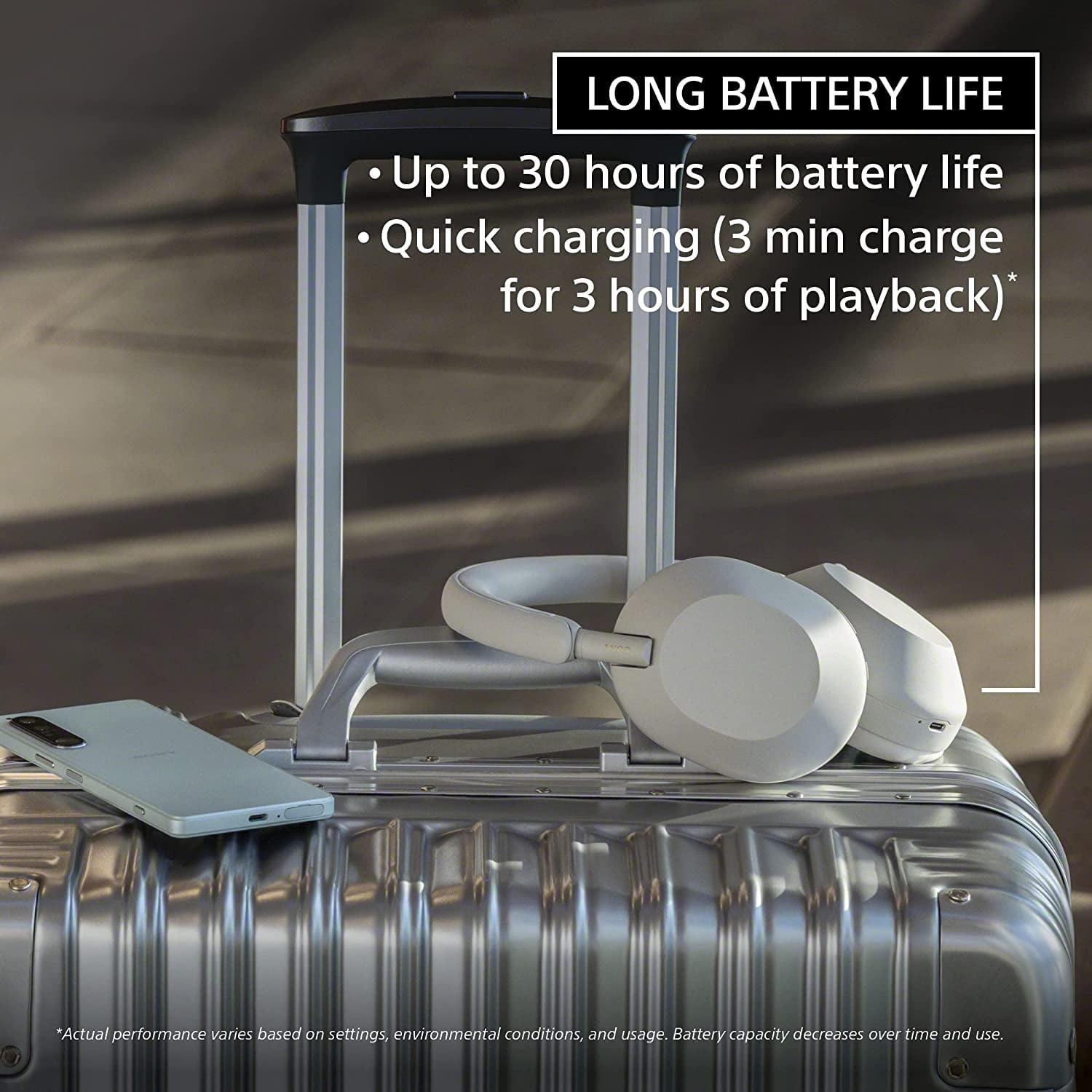
Battery performance differs significantly between these models. The Sony WH-1000XM5 offers impressive longevity with up to 30 hours of playback with ANC enabled, extending to 40 hours with ANC disabled. The quick charge feature provides three hours of listening from just three minutes of charging.
The nwm ONE provides up to 20 hours of playback, which is still excellent for daily use. Its quick charge feature gives you one hour of listening from five minutes of charging. Both use USB-C for charging and support wired audio through the same port.
Both headphones support multipoint Bluetooth connectivity, allowing you to connect to two devices simultaneously. This is incredibly useful for switching between your phone and laptop without manually disconnecting and reconnecting. The nwm ONE actually supports pairing with up to eight devices total, though only two can be active at once.
This is where the nwm ONE truly shines. The Magic Focus Voice technology creates exceptional call quality that often outperforms traditional headphones, even expensive ones. The beamforming microphones do an excellent job of isolating your voice from background noise, while the spectral filtering removes unwanted frequencies that can make your voice sound muffled or unclear.
The Sony WH-1000XM5 also offers good call quality with its four dedicated beamforming microphones and Precise Voice Pickup technology. However, in very noisy environments, the closed-back design can sometimes work against it—you might speak too loudly because you can't hear yourself clearly, or background noise can still leak through despite the ANC.
The nwm ONE excels in situations where you need to maintain situational awareness while enjoying audio content. For office workers in open-plan environments, these headphones are transformative. You can listen to music or take calls while remaining approachable to colleagues. Parents will appreciate being able to monitor their children while working from home.
For outdoor activities like running, cycling, or walking in urban areas, the safety advantages are significant. Traditional headphones can be dangerous in these situations because they block traffic sounds and other important audio cues. The nwm ONE eliminates this concern entirely while still providing an engaging listening experience.
The lightweight design and lack of ear pressure make these ideal for hot climates or extended wear situations. I've found them particularly useful for video calls, where the combination of excellent microphone performance and the ability to hear my own voice naturally creates a more comfortable conversation experience.
The Sony WH-1000XM5 dominates in scenarios where external noise is the enemy. For frequent travelers, the ability to block out airplane engines, airport announcements, and crying babies is invaluable. The ANC is so effective that it can transform a noisy flight into a peaceful listening environment.
Commuters dealing with subway noise, bus engines, or traffic will find similar benefits. The Sony WH-1000XM5 can turn a stressful commute into quality music time or make it possible to take important calls in otherwise impossible acoustic environments.
For focused work, especially in noisy offices or shared spaces, the isolation provided by the Sony WH-1000XM5 can significantly improve concentration. The combination of ANC and music creates an effective barrier against distractions.
Neither of these headphones is specifically designed for home theater use, but both can work well for private movie watching. The Sony WH-1000XM5 provides the more traditional cinematic experience with its closed-back design and strong bass response. Action movies and dramatic scenes benefit from the isolation and controlled acoustic environment.
The nwm ONE offers a unique home theater experience that's particularly appealing if you need to remain aware of your surroundings—perhaps monitoring children while watching a late-night movie. The open soundstage can actually enhance the viewing experience for certain types of content, creating an almost surround-sound-like effect.
The nwm ONE represents genuine innovation in a category that had become somewhat stagnant. The PSZ technology addresses the fundamental challenge that has limited open-ear headphones in the past: sound leakage. This breakthrough opens up new possibilities for headphone design and use cases that weren't previously practical.
Sony's approach with the WH-1000XM5 is more evolutionary, refining existing technologies to near-perfection. The improvements in driver design, processing power, and microphone arrays show how mature technologies can still be meaningfully enhanced.
Both approaches have merit and represent different solutions to the fundamental challenge of personal audio: how to deliver great sound while managing the relationship between the listener and their environment.
The choice between the nwm ONE and Sony WH-1000XM5 ultimately comes down to your personal priorities and use cases. At the time of writing, both products represent good value in their respective categories, though they serve very different needs.
Choose the nwm ONE if you value situational awareness, work in environments where you need to remain approachable, engage in outdoor activities, or simply want to experience the unique sensation of open-ear listening without sacrificing audio quality. The innovative technology and exceptional call quality make it particularly appealing for professionals who spend significant time on video calls.
Choose the Sony WH-1000XM5 if you prioritize maximum audio fidelity, need effective noise isolation for travel or focus work, or prefer the traditional premium headphone experience. The mature technology, extensive features, and proven reliability make it a safe choice for users who want the best of what traditional headphone design can offer.
Both headphones excel in their intended use cases, and the "better" choice depends entirely on which philosophy aligns with your lifestyle and listening preferences. The emergence of products like the nwm ONE expands our options beyond the traditional noise-canceling paradigm, offering new ways to think about personal audio in our daily lives.
| nwm ONE Wireless Open-Ear Headphones | Sony WH-1000XM5 Wireless Noise Canceling Headphones |
|---|---|
| Design Philosophy - Determines your entire listening experience | |
| Open-ear design keeps ears exposed for ambient awareness | Closed-back over-ear design for maximum isolation |
| Weight - Critical for all-day comfort | |
| 185g (ultralight, forget-you're-wearing-them comfort) | 250g (heavier but well-distributed weight) |
| Noise Management Approach - Fundamental difference in how you interact with your environment | |
| PSZ technology minimizes sound leakage while maintaining awareness | Industry-leading 8-microphone active noise cancellation |
| Driver Configuration - Impacts sound quality and frequency response | |
| Dual-driver: 35mm woofer + 12mm tweeter | Single 30mm carbon fiber composite driver per side |
| Frequency Response - Shows audio range capabilities | |
| 40Hz - 20,000Hz (impressive for open-ear design) | 4Hz - 40,000Hz (extends deeper and higher) |
| Battery Life - Daily usage practicality | |
| 20 hours playback time | 30 hours with ANC on, 40 hours with ANC off |
| Quick Charge Feature - Convenience for busy lifestyles | |
| 5 minutes = 1 hour playback | 3 minutes = 3 hours playbook |
| Bluetooth Version - Affects connection stability and features | |
| Bluetooth 5.3 with multipoint (8 paired devices) | Bluetooth 5.2 with multipoint connectivity |
| Audio Codecs - Determines wireless sound quality | |
| SBC, AAC, LC3, CVSD, mSBC | SBC, AAC, LDAC (high-resolution wireless) |
| Call Quality Technology - Important for work and communication | |
| Magic Focus Voice with beamforming and spectral filtering | Precise Voice Pickup with 4 beamforming microphones |
| Special Features - Unique selling points | |
| Sony 360 Reality Audio support, rotating speakers | DSEE Extreme AI upscaling, Auto NC Optimizer |
| Best Use Cases - Who should buy each product | |
| Office work, outdoor activities, parenting, hot climates | Travel, commuting, focused work, audiophile listening |
| Primary Trade-offs - What you gain vs. what you give up | |
| Situational awareness but less bass impact | Maximum isolation but no environmental awareness |
The nwm ONE Wireless Open-Ear Headphones excel for everyday situations where you need to stay aware of your surroundings, like working in an office, parenting, or outdoor activities. The Sony WH-1000XM5 Wireless Noise Canceling Headphones are better for focused listening, travel, and situations where you want to block out distractions. Your lifestyle and primary use cases should drive this decision.
Open-ear headphones like the nwm ONE sit over your ears without covering them, allowing you to hear ambient sounds while listening to music. Noise-canceling headphones like the Sony WH-1000XM5 use active technology to block external sounds, creating an isolated listening environment. It's fundamentally about connection versus isolation from your environment.
The Sony WH-1000XM5 delivers superior overall sound quality with deeper bass, more detailed highs, and better dynamics thanks to its closed-back design and advanced drivers. However, the nwm ONE offers a unique, spacious soundstage that feels more natural and speaker-like, which some listeners prefer despite less bass impact.
The nwm ONE Wireless Open-Ear Headphones work best in moderate noise environments. They struggle in very loud spaces like airplanes or busy construction sites where the Sony WH-1000XM5 would excel. The open design means external noise competes directly with your audio, unlike noise-canceling headphones that block competing sounds.
The nwm ONE typically wins for extended comfort due to their ultralight 185g weight and zero ear pressure. Many users can wear them all day without fatigue. The Sony WH-1000XM5 is heavier at 250g and can cause some heat buildup over time, though they're still comfortable for most users during typical listening sessions.
Both excel at calls, but the nwm ONE Wireless Open-Ear Headphones often perform better due to their Magic Focus Voice technology that isolates your voice exceptionally well. The open design also lets you hear your own voice naturally. The Sony WH-1000XM5 provides good call quality but may cause you to speak too loudly since you can't hear yourself clearly.
The Sony WH-1000XM5 Wireless Noise Canceling Headphones offers longer battery life with 30-40 hours depending on ANC usage, compared to the nwm ONE's 20 hours. However, both provide sufficient battery for daily use, and both feature quick charging capabilities that give you hours of playback from just a few minutes of charging.
The nwm ONE is significantly better for exercise and outdoor activities because you maintain full awareness of your surroundings for safety. They're also lighter and won't cause sweating since your ears remain open. The Sony WH-1000XM5 can be problematic for outdoor activities due to safety concerns from blocked hearing and potential sweating issues.
For home theater use, the Sony WH-1000XM5 provides a more traditional cinematic experience with better bass for action scenes and complete isolation for immersion. The nwm ONE offers a unique viewing experience where you can monitor your surroundings while watching, which is useful for parents or shared living situations.
The Sony WH-1000XM5 Wireless Noise Canceling Headphones dominate for travel scenarios. Their active noise cancellation effectively blocks airplane engines, train noise, and other transit sounds. The nwm ONE Wireless Open-Ear Headphones would allow too much ambient noise during travel, making them impractical for flights or noisy public transportation.
The nwm ONE uses PSZ technology to minimize sound leakage despite the open design, making them surprisingly private for nearby listeners. The Sony WH-1000XM5 has virtually no sound leakage due to their closed-back design. Both are appropriate for use in quiet environments like libraries or offices without disturbing others.
Both the nwm ONE Wireless Open-Ear Headphones and Sony WH-1000XM5 Wireless Noise Canceling Headphones offer excellent value in their respective categories. The nwm ONE provides innovative technology that's rare in the market, while the Sony WH-1000XM5 delivers proven, mature technology with industry-leading performance. Your specific needs and use cases determine which represents better value for your situation.
We've done our best to create useful and informative comparisons to help you decide what product to buy. Our research uses advanced automated methods to create this comparison and perfection is not possible - please contact us for corrections or questions. These are the sites we've researched in the creation of this article: gamerant.com - besttechradar.com - gamerant.com - tomsguide.com - newegg.com - youtube.com - head-fi.org - mumas.in - forum.headphones.com - soundguys.com - youtube.com - shop.imgacademy.com - us.nwm.global - us.nwm.global - thegadgetflow.com - seeyoutmrw.com - shop.imgacademy.com - rtings.com - audiosciencereview.com - techradar.com - audio46.com - recordingnow.com - electronics.sony.com - theabsolutesound.com - soundguys.com - soundguys.com - headphonesaddict.com - sony.com - sony.com - sony-mea.com - fullspecs.net - bhphotovideo.com - sony.com - helpguide.sony.net - headphones.com - androidpolice.com - sony.co.id - moon-audio.com - sony.com - bestbuy.com - sonylatvija.com

Privacy Policy
Terms and Conditions - Affiliate Policy
Home Security
© Copyright 2008-2026.
11816 Inwood Rd #1211, Dallas, TX 75244